Quote of the Day: “A man is what he thinks about all day long.” – Ralph Waldo Emerson
Photo by: Andras Vas
With a new inspirational quote every day, atop the perfect photo—collected and archived on our Quotes page—why not bookmark GNN.org for a daily uplift?
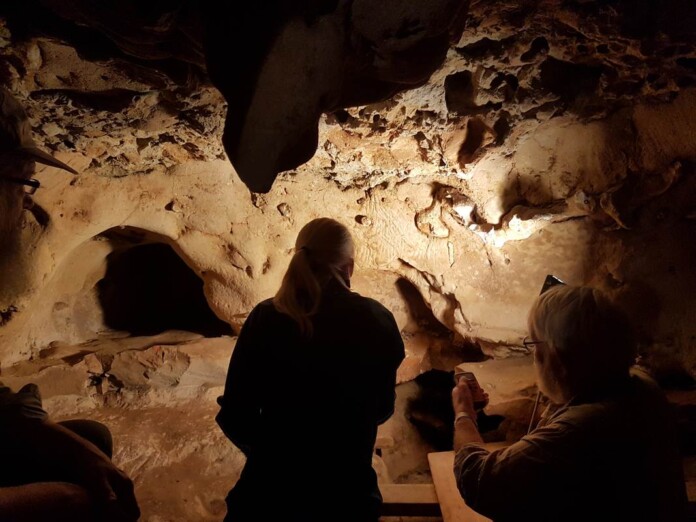
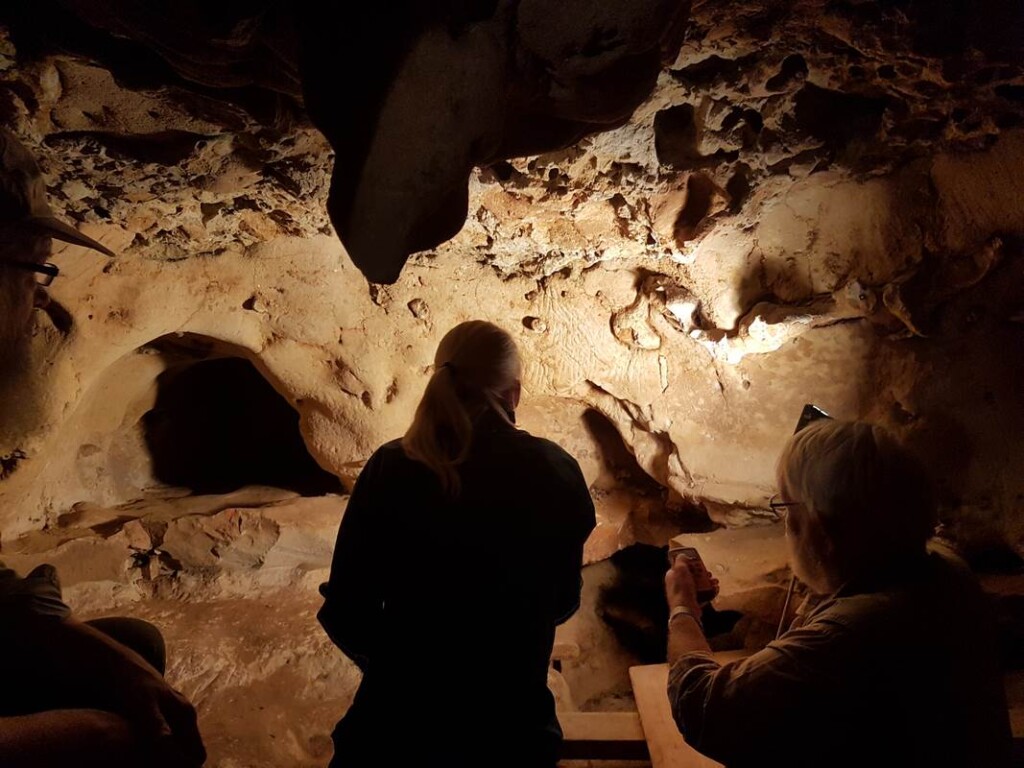
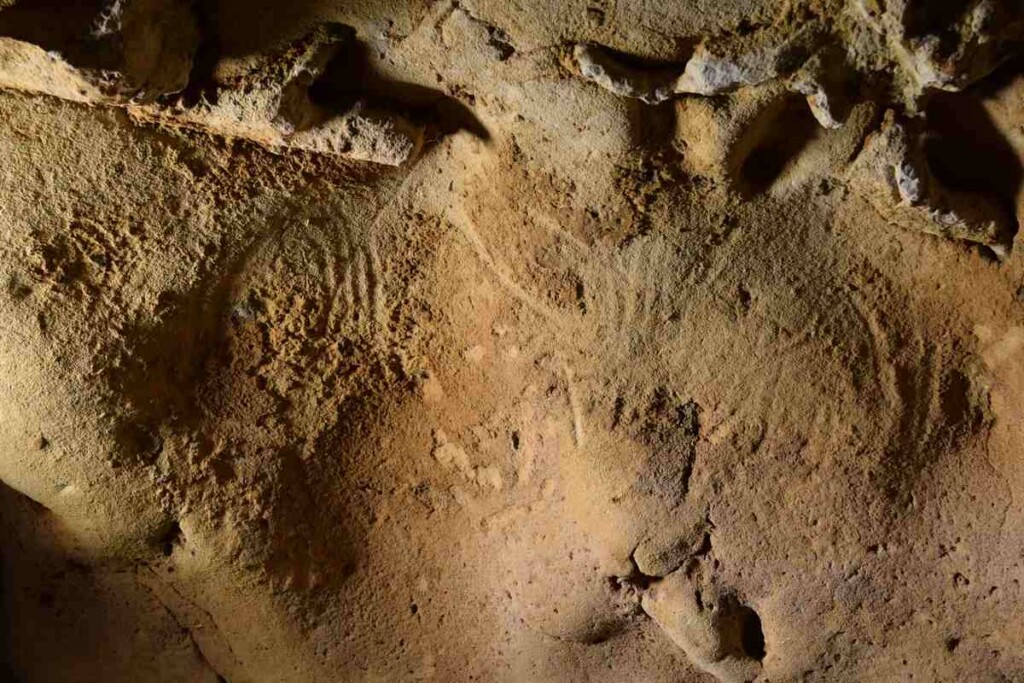
The marks on the wall of La Roche-Cotard cave in the Centre-Val de Loire are interpreted as finger-flutings, or marks made by human hands, at least 57,000 years ago.
Research in recent decades has revealed much about the cultural complexity of Neanderthals, but relatively little is known about their symbolic or artistic expression.
Only a small number of symbolic productions can be attributed to Neanderthals, and the interpretation of these is often the subject of debate.
For the new study, Dr. Jean-Claude Marquet and colleagues identified markings at La Roche-Cotard as the oldest known Neanderthal engravings.
“Two or three panels of lines at the entrance to the room are very simple and look like tests to see if contact with the surface leaves a trace,” Dr. Marquet told ABC News Australia.
“Three of the following panels were made with a great deal of application and care, and above all they were probably made after quite a lot of thought, because the intentional nature of the work is obvious.”
The researchers made a plotting analysis and used photogrammetry to create 3D models of the markings, comparing them with known and experimental human markings.
Flutted marks show perhaps a Neanderthal test scribble – Marquet et al. – via SWNS
Based on the shape, spacing, and arrangement of the engravings, the team concluded that they are “deliberate, organized and intentional” shapes created by Neanderthal hands.
The team also dated sediments, using state-of-the-art optically-stimulated luminescence techniques, to determine that the cave became closed off by infilling sediment around 57,000 years ago, well before Homo sapiens became established in the region.
The researchers say that discovery, combined with the fact that stone tools within the cave are only Mousterian—a technology associated with Neanderthals, is “strong” evidence that the engravings are the work of Neanderthals.
“Because these are non-figurative symbols, the intent behind them is unclear,” said Dr. Marquet of the University of Tours in France.
“They are, however, of a similar age with cave engravings made by Homo sapiens in other parts of the world. This adds to a growing body of evidence that the behavior and activities of Neanderthals were similarly complex and diverse as those of our own ancestors.”
“Fifteen years after the resumption of excavations at the La Roche-Cotard site, the engravings have been dated to [between] 57,000 years ago and, thanks to stratigraphy, probably to around 75,000 years ago, making this the oldest decorated cave in France, if not Europe.”
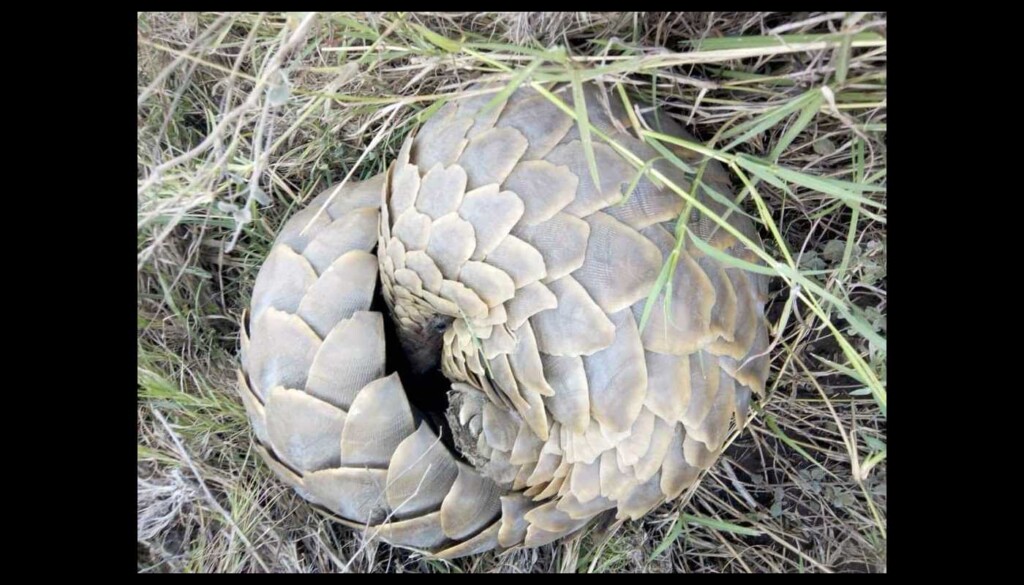
A pangolin rolled up in a ball in Serengeti National Park - Erick B. Lyimo CC 4.0.
A pangolin rolled up in a ball in Serengeti National Park – Erick B. Lyimo CC 4.0.
A pangolin-inspired small robot designed to perform safe and minimally invasive medical procedures inside of the body was revealed in a study published this week.
The untethered, soft robots may one day be capable of accessing hard-to-reach regions inside of the body—such as in the stomach and small intestine—by morphing their shape.
When most of us think of the word “robot” we think of something made of hard metal and wires, something at the cutting edge of technology and engineering, but that’s not entirely accurate.
One of the most exciting advances in the field of robotics comes from so-called “soft robotics” which refers to animated pieces of material that can perform tasks but which aren’t necessarily filled with wiring and circuitry, like this “gelbot” that can inch along from the manipulation of heat.
Untethered miniature robots working inside a human body can harvest energy made available to them remotely, such as light, magnetic, or acoustic energy, and convert them to other forms of energy in order to perform tasks.
Despite having keratin scales, pangolins can move with a flexible and unencumbered motion by organizing their rigid scales into an overlapping structure.
Inspired by pangolins, Metin Sitti and colleagues at the Max Planck Insitute in Munich, designed a millirobot, 1 cm by 2 cm by 0.2 mm in size, with an overlapping scale design and on-demand heating, shape-morphing, and rolling capabilities.
In proof-of-concept experiments in the laboratory, the robots were able to heat to 70°C and perform medical treatments on tissues with potential future clinical applications, including hyperthermia to treat cancer or stop bleeding in hard-to-reach regions. Additionally, the robots are capable of demagnetizing to release cargo onto the tissues, which could be used to deliver drugs in the future.
All this they can do via their ability to roll and tumble about, triggered by external magnetic stimulation that charges particles in the millirobot’s pangolin-like scales, allowing it to change from a flat to a curled posture, and thus locomote.
Although further testing is required, this technology could be a useful clinical tool for the delivery of therapeutic payloads and heat therapy applications.
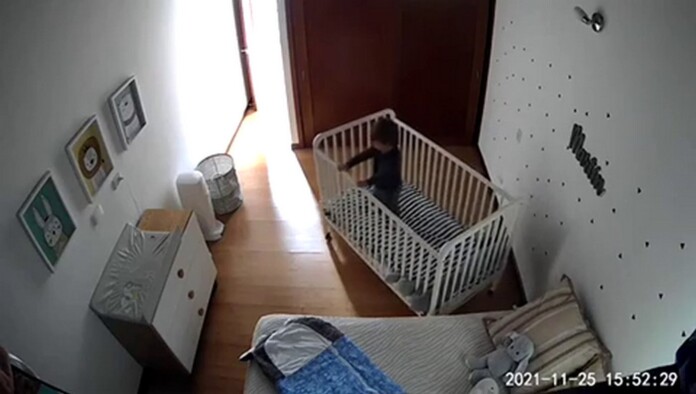
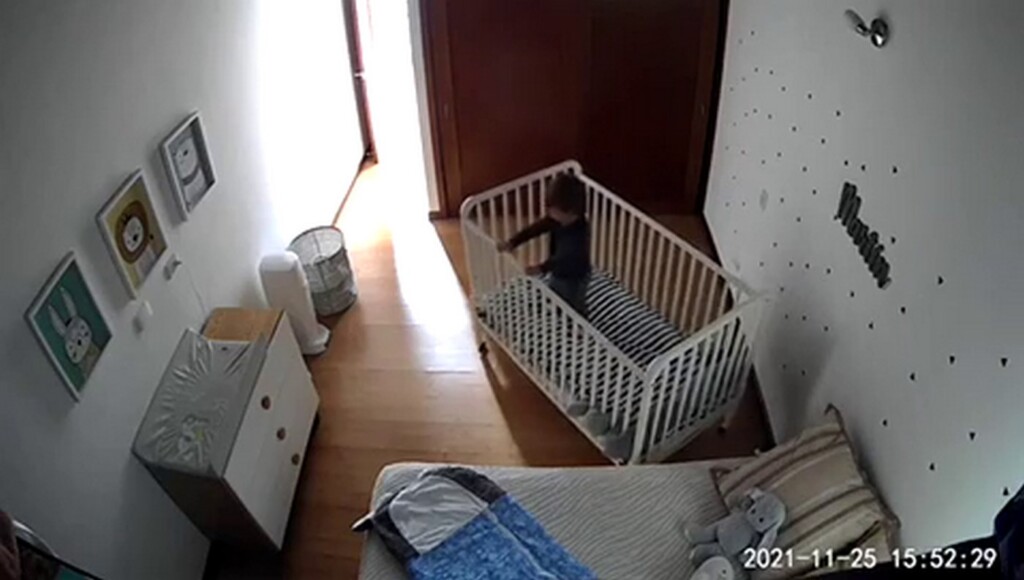
A video captured in Colombia shows a clever baby escaping from his crib—by moving it across his bedroom while still inside.
CCTV shows the toddler trying and failing to climb over the side of the cot. Eventually, he figures out he can move the crib across the room by pushing at the wall with his feet.
He eventually manages to shimmy it enough so that it’s near a bed that he can jump onto.
Climbing out of the crib with his teddy he returns to place the crib pack in its proper place against the wall, probably because his parents taught him well enough to pick up after himself, but not well enough for him to no he shouldn’t perform escape maneuvers like Ethan Hill from Mission Impossible.
WATCH the escape for yourself…
SHARE This Adorable Escape With Your Friends In Need Of A Pick Me Up…
Knuthenborg Safaripark - Museum of Evolution / YouTube (Fair use)
Knuthenborg Safaripark – Museum of Evolution / YouTube (Fair use)
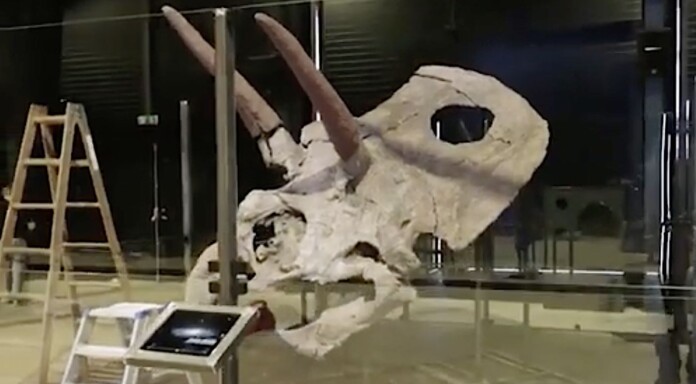
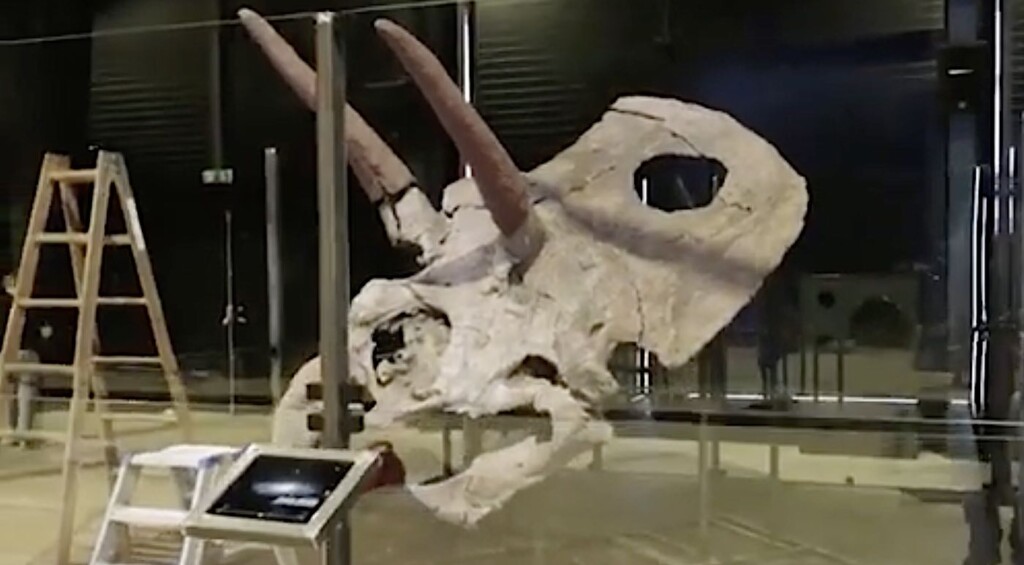
Denmark is celebrating the opening of its first dinosaur museum by shipping over the largest dino skull ever found.
Once, the enormous, 10-foot-long dome belonged to a male Torosaurus that weighed over 6.5 tons. It’s the largest skull of any known land animal ever recorded.
The beast, affectionately called “Adam” was found in the United States and shipped overseas to the Museum of Evolution in Denmark for its grand opening to be exhibited alongside “Big Joe” the best-preserved Allosaurus skeleton ever found, as well as one of the world’s twelve Archaeopteryx skeletons, called the most important fossil in the world as it proved the theory that dinosaurs evolved into birds.
“Many years of intensive work culminates today. It is a great pleasure that we are now officially inaugurating Denmark’s first museum for dinosaurs,” director Christoffer Knuth, who is also director of Knuthenborg Safaripark where the new museum is located, said in a statement.
“It is also one of the world’s most ambitious museums, because we are lucky enough to have some of the absolutely best-preserved dinosaur skeletons and several spectacular and extremely valuable fossils from dinosaurs and other prehistoric animals. Together, the museum covers 300 million years of evolutionary history.”
Knuthenborg Safaripark – Museum of Evolution / YouTube (Fair use)
The Torosaurus lived in North America between 70 and 66 million years ago, at both the end and zenith of the age of the dinosaurs. Its name means “perforated lizard” because of the large holes in its frill which would have draped colorful, scaled skin for mating displays.
It was thought to be similar in size to Triceratops, whose skull frill was solid, and meant more for dominance displays, species recognition, jousting, and if necessary, defense.
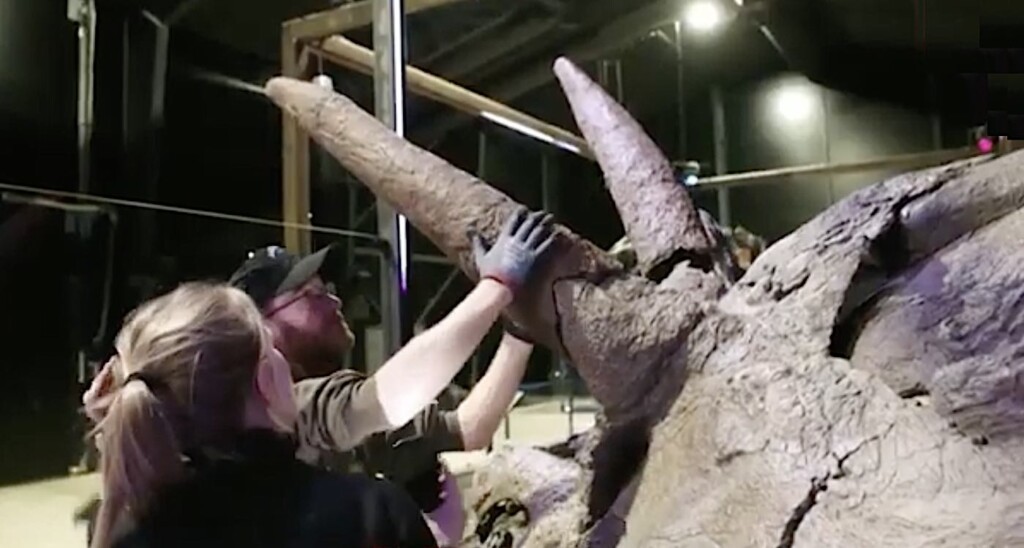
WATCH the skull being assembled below from Inside Edition…
SHARE This Must Visit Museum With Your Dinosaur Lovers…
Quote of the Day: “There are two ways of spreading light: to be the candle or the mirror that reflects it.” – Edith Wharton
Photo by: Andras Vas
With a new inspirational quote every day, atop the perfect photo—collected and archived on our Quotes page—why not bookmark GNN.org for a daily uplift?
Que Huong Charity Center - retrieved from Facebook
Que Huong Charity Center – from Facebook
In Vietnam, a remarkable woman has adopted 346 children after overcoming a life of incredible hardship which started when her parents left her on a doorstep as a foundling.
Huynh Tieu Huong, whom national media has dubbed “Mother Theresa of Vietnam” runs a non-profit organization dedicated to the adoption, support, and free offering of loving kindness to foundlings, orphans, and homeless children. Thanks to support given by donors and volunteers, these 346 children are all able to receive education, safe places to sleep and play, and the proper medical care to ensure they reach adulthood healthy.
Huong herself doesn’t really know when she was born. An ID found on her didn’t include a surname, but did say 1968. In the years following the war, An old homeless woman dedicated what was left of her life’s energies toward trying to help Huong find a home—which she did in the hands of a young couple from the city of Vinh Phu.
These turned out to be sexual predators, and it took the neighbors to help her escape a permanent fate of sexual exploitation. Her life then became year after year of vagabondry, until she found a baby girl left on her doorstep when she was about 19 years old.
She adopted the child, and in this act of generosity, the universe finally began to smile on Tieu Huong, who met a Chinese man who gave her the money to rent an apartment and start a business. When she could readily support herself and her daughter Anh Dao, she started volunteering at the Vietnam Relief Association in 1993, helping orphans and the elderly.
Que Huong Charity Center – retrieved from Facebook
In 2001 she founded the Que Huong Charity Center in the Tan Dong Hiep Commune, and gradually increased the number of her dependants until it passed the 300 mark: all bearing a surname that Mother Huong received when she was briefly adopted the second time.
She founded the Mother Houng Foundation to support this work, and has begun expanding its footprint overseas to the US.
Volunteers from all over Asia come to hang out and help the children there—for example, on (Vietnam calendar) New Year’s Eve, their Japanese sponsors paid them a visit with gifts and haircuts.
After surmounting the cruelest hardships in post-war Vietnam, everyone on Earth would understand if Ms. Huong had instead used her success to build a life of luxury, indulgence, and security. Instead, she dove headlong back into the world that made her, making a difference to others in a way that never was possible for her.
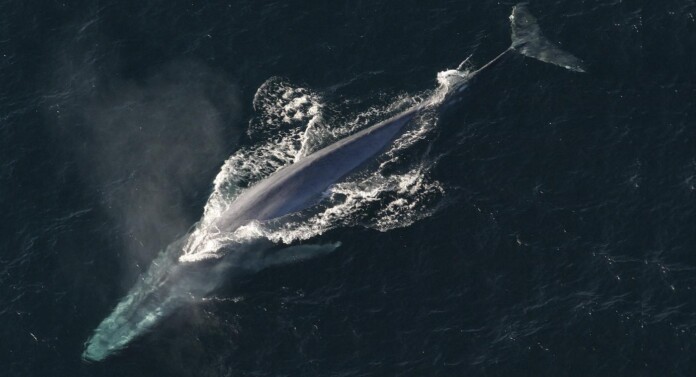
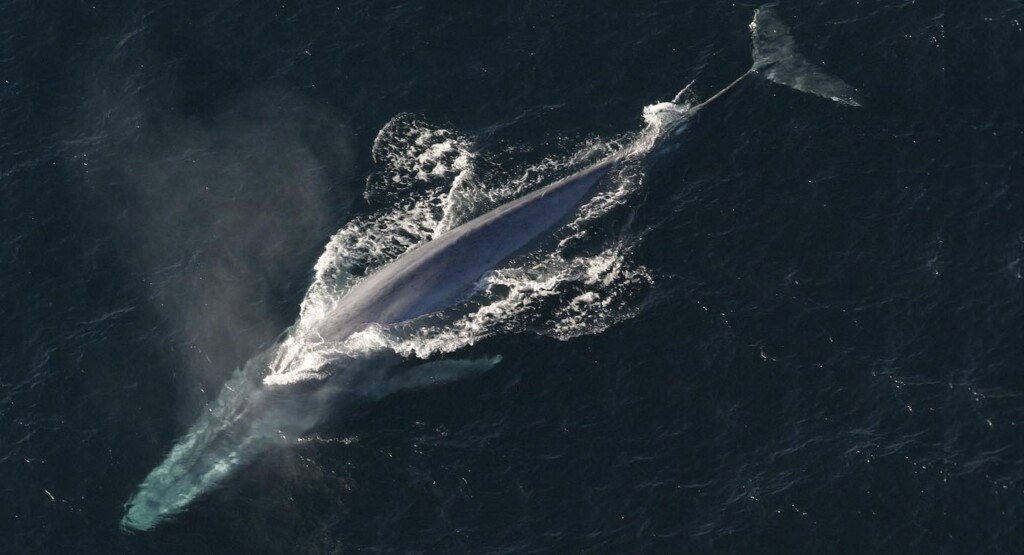
Don’t call it a comeback, blue whales have been here for years, rocking their peers and putting sailors in fear.
The largest animals on Earth are returning to the coastal Californian waters in larger and larger numbers, with sightings on whale-watching trips becoming increasingly common.
According to a 2014 study investigating the impact of ship strikes on the blue whale population, the western Pacific population of these cetaceans has reached 97% of its pre-whaling levels.
“It’s not just one entity that is contributing to the success of the populations rebounding; it’s really the efforts of everyone,” Jennie Dean, Vice President of Education and Conservation at the Aquarium of the Pacific in LA, told KTLA.
“When we’re able to take collective action and think about balance, such that people and the activities that we want to support like shipping, like recreational use, like commercial fishing, all of those things can coexist.”
Commercial fishing tackle can harm whales, and so the industry took measures to reduce this and it worked.
Too many blue whales were killed every year in ship strikes, and so Pacific shipping narrowed their lanes to avoid areas where whales congregate, and are now agreeing to reduce their speeds when entering and exiting harbor areas.
The current estimates suggest that as many as 2,000 blue whales travel up from Mexico to Southern California waters every year, a large chunk of a global population that may be topping 25,000.
Another marine mammal making a comeback are seals, which have begun regularly turning up on the beaches of Belgium for the first time in over a century. Grey seals and harbor seals turn up on the beach to rest and feed their pups, during which time they are protected from overly-excited Belgians by a volunteer force called the North Seal Team.
Scientists believe there is a population of 200 such animals near the city of Ostend.
“I was born in Ostend. I’ve lived my whole life here and I couldn’t remember seeing a seal,” says Inge De Bruycker, founder of the North Seal Team to Euronews. “It’s new. It’s like, come on, when we built this dam here about seven, eight years ago we sometimes had one. Occasionally, but just one.”
SHARE This Fantastic News With Your Friends And Plan A Whale Watching Trip…
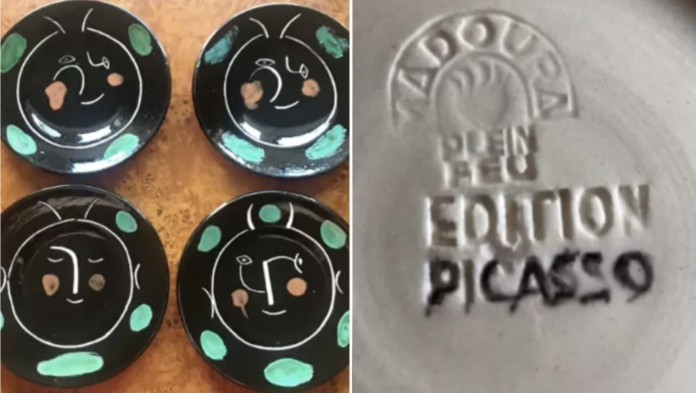
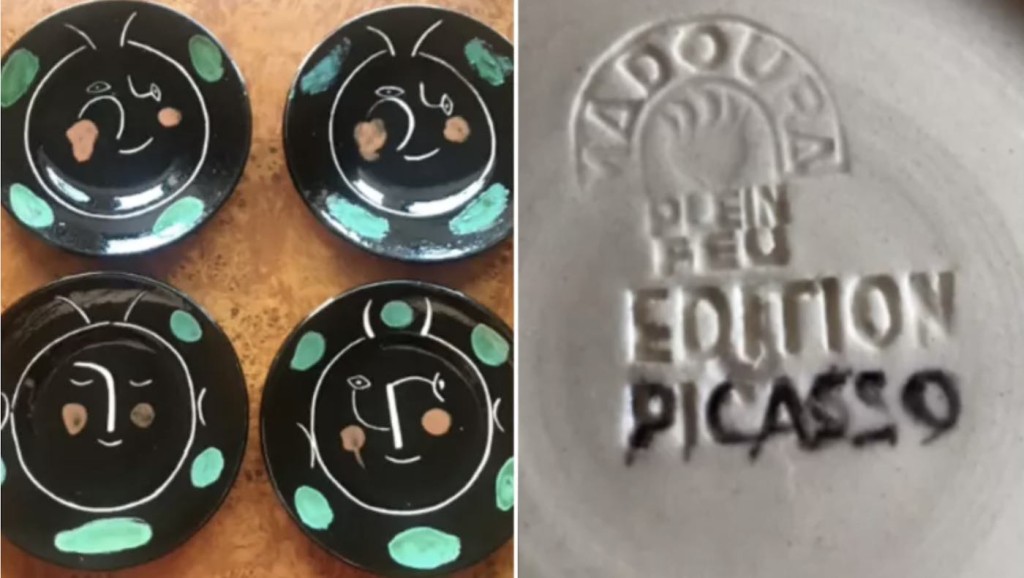
When a thrift store enthusiast found these strange-looking plates that vaguely resembled human faces, she felt they would make a great table set. The price was listed on a sticker at $1.99 per plate—right next to the name “Picasso.”
Nancy Cavaliere loves to fill up her apartment with storied pieces, but checked her enthusiasm which right there in the china aisle was threatening to boil over; she didn’t know Picasso made ceramics at the time.
“I stumbled on the plates during my daily trip to the store. On my way out I noticed some new china had been added to the shelves. My first reaction was that they would make a great tablescape, but then I turned them over and saw the Picasso tag,” Cavaliere told Newsweek.
In either case, she checked out for a grand total of $6.00 and ran back to her office to do some research.
Pablo Picasso is one of the highest-selling artists of all time, and he did in fact make all manner of ceramics, including pitchers, plates, bowls, and vases; over 600 pieces in all. These plates were part of a larger set, and when Cavaliere managed to turn up an internet page with them, she freaked out, and started crying.
Calling all the major auction houses of New York City, it became clear that they could fetch around $4,000 each—less than half of what they actually did sell for when a bidding war over her Picasso plates sent all of them over $10,000
“It was absolutely bananas,” Cavaliere said. “I was watching the auction from the office ‘screaming crying throwing up.'”
Thrifty by nature, if not in name, Cavaliere took her five-figure windfall and invested it, before getting back to thrift-drifting which she says is harder now than before the pandemic, as the demand for second-hand merchandise has increased.
SHARE This Thrift Store’s Big Take With Your Friends…
Largo Argentina in Rome where Julius Caesar was killed –Jean-Christophe BENOIST, CC license / Wikimedia
Largo Argentina in Rome where Julius Caesar was killed –Jean-Christophe BENOIST, CC license / Wikimedia
It’s one of the most infamous crime scenes in history. Now, “Beware the Ides of March,” “Why this is force!” “Et tu, Brutae?” and all the other utterances can be enjoyed by you and your friends as Rome has opened to the public the spot where Julius Caesar was assassinated.
For decades, the “Sacred Area” at Argentina Square in the Eternal City sat silent as the bustling city was built up around it. The 4 temples and the walls of Pompey’s mansion the Curia, were frequented only by ghosts and cats.
Now, with the help of the luxury jewelry brand Bulgari, the Sacred Area is open to visitation from the public. Costing just €5 for non-residents, a series of elevated walkways can take visitors through the area where aggrieved senators stabbed the Roman dictator to death on the Ideas of March (15th).
The temples were first discovered when Benito Mussolini was demolishing Medieval-era structures as part of an urban renewal program. Rome’s top archaeologist, Claudio Parisi Presicce, told the AP that they are quite sure the area contains Pompey’s Curia because latrines were discovered on the wall near 2 of the temples.
Leave it to the Romans to be so litigious as to comment on the exact placement of Pompey’s latrines.
The temples are believed to have honored female deities—like Fortuna, the goddess of chance and fertility. A colossal stone carving of a female head was found during excavations, furthering that hypothesis along.
Presicce called it one of the best-preserved ruins of Rome from the Republican period, and perhaps one day it can stage Shakespeare’s famous depiction of the life and times of the controversial figure.
SHARE This Amazing Tourist Opportunity With Your History Lovers…
Quote of the Day: “Love and compassion are necessities, not luxuries. Without them humanity cannot survive.” – Dalai Lama
Photo by: Levi Guzman
With a new inspirational quote every day, atop the perfect photo—collected and archived on our Quotes page—why not bookmark GNN.org for a daily uplift?
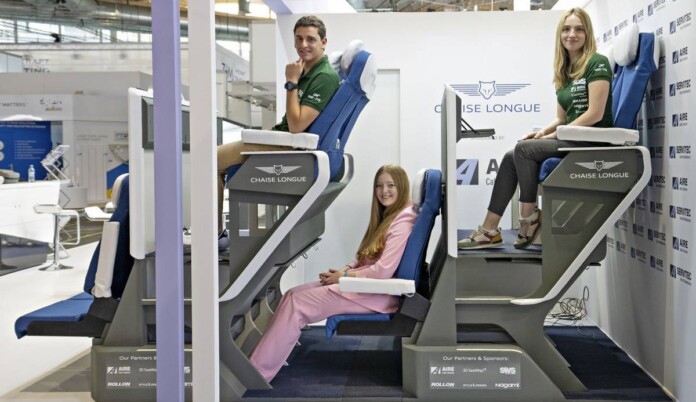
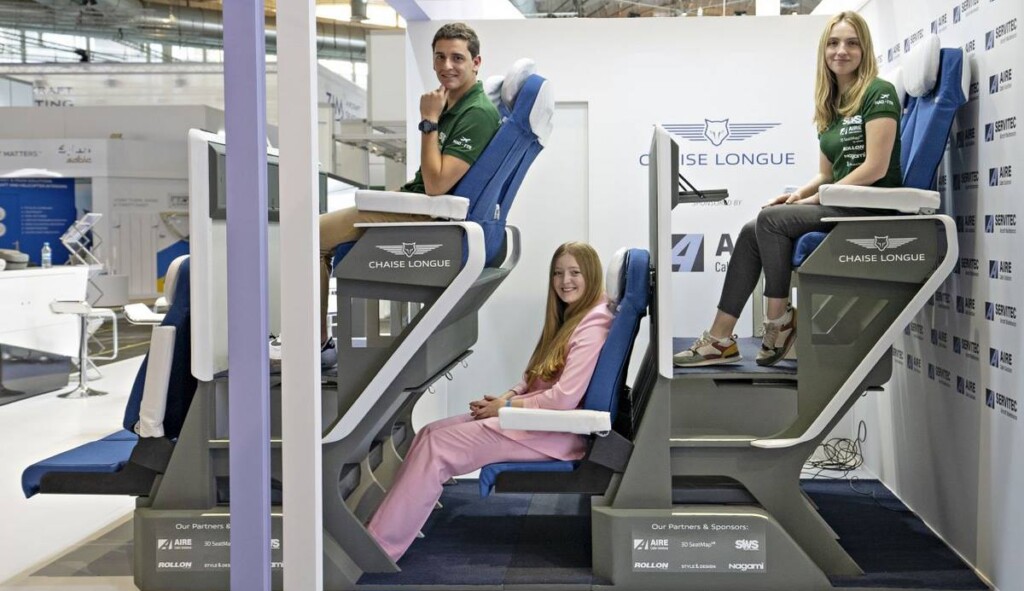
Alejandro Núñez Vicente, left, designed the Chaise Longue double level airplane seat concept – credit 1OFF Media released
At an innovation fair in Germany, a young man might have just found a way to seat more people in an aircraft while simultaneously giving them more legroom and accessibility.
How could such a thing be possible? Check out these double-decker airplane seats.
23-year-old designer Alejandro Núñez Vicente presented a revised concept of his original vision that flopped at last year’s Aircraft Interiors Expo (AIX) in Hamburg, Germany. When the expo came back around, Vicente proved himself flexible and open to constructive criticism.
His new-and-improved design solves many issues that people identified, particularly those to do with claustrophobia.
First things first—this isn’t likely to be seen aboard a flight any time soon. However, he is in the process of getting approval from all the major air travel regulatory bodies.
The Chaise ‘Longue,’ as Vicente’s design is called, would be situated in the middle row of large aircraft, with the aisle/window seats remaining how we’ve always known them.
Those opting for these seats would sacrifice the inflight entertainment system for more comfort, with legroom that would easily accommodate people above 6 feet 2 inches in height on the bottom level, and seats that recline far further back on the upper level.
The upper level is reached by 2 sturdy steps, while the seats on the bottom level can fold up movie theater-style to accomodate wheelchair passengers.
“We know that this will work at some point and people will be grateful for it even though they don’t know it now, they will be grateful that someone was pushing for a new economy class seat,” Vicente told CNN Travel.
Indeed, most airlines aren’t interested in innovations in economy seating. First class and business class is typically where innovations happen. Subject to one of the highest degrees of mass regulation of any industry, large airlines have almost no time or budgetary consideration for permanently addressing economy concerns.
For years, as Vicente pointed out, the only consideration ever given was how to fit more passengers into the plane’s economy section. The Chaise Longue is a way to clear two hurdles with one leap—getting more passengers on a plane, thereby lowering the ticket cost for everyone, and improving the flying experience—at least for those in the middle row.
FLY This Aircraft Seat Concept Over To Your Friends And See What They Say…
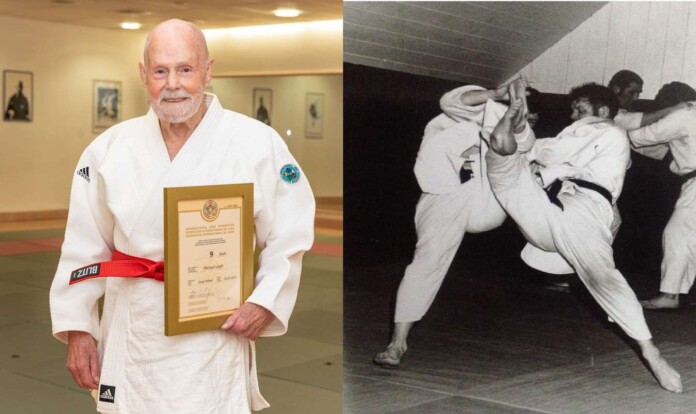
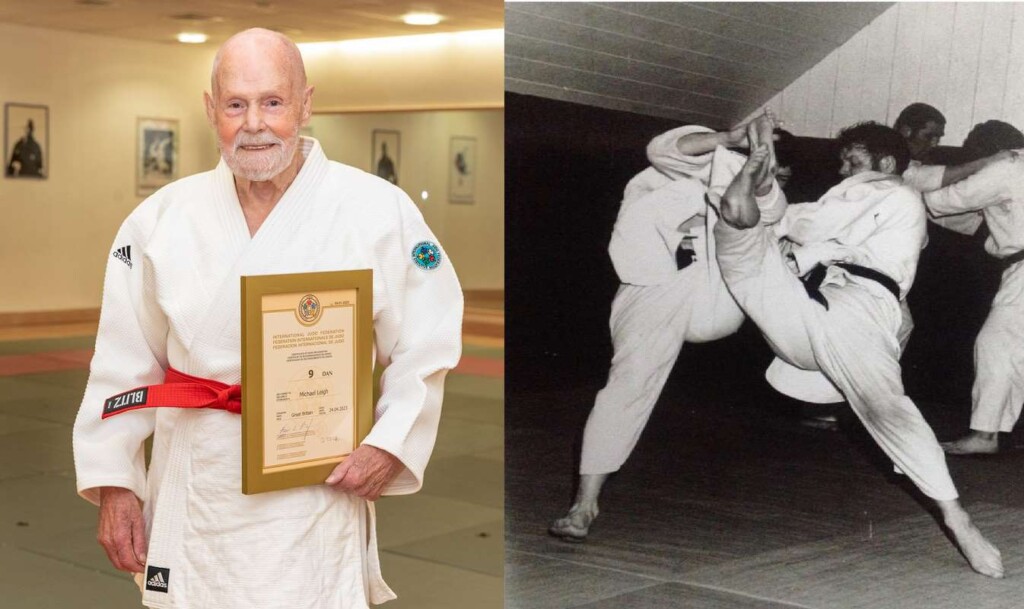
(left) Michael Leigh the judoka stands with his ninth dan, (right) Leigh performing a foot-sweep on his opponent.
(left) Michael Leigh the judoka stands with his ninth dan, (right) Leigh performing a foot sweep on his opponent; note the extreme flex in his right foot—needed to apply maximum force to sweep his opponent’s planted foot.
A 90-year-old master who’s still limber enough to get on the mat every once in a while has just been awarded his ninth degree, or dan, in Judo.
Only 6 individuals in the UK hold a ninth dan, and Michael Leigh is the oldest judoka in the country to reach what is the second-highest rank in the sport.
Michael Leigh set up the Kin Ryu Judo Club in Crawley, West Sussex, in 1976 after taking up the martial art in 1955 in London and acting as a backup on the UK ’64 Olympic team.
He first discovered the sport while working in the Royal Air Force, after he stumbled on a judo book in a charity shop written by the co-founder of the London Judo Society. He thought it “looked interesting”.
He went on to become the chairman of British Judo for two terms, a national coach, and an international referee.
“When I heard the news I couldn’t quite take it in,” Leigh wrote for his club’s news section. “Knowing that there are only five other people in the UK who have been awarded 9th dan, I find myself amongst peers I greatly admire and respect. I appreciate this recognition of my lifetime of commitment to the amazing sport of Judo and I will hold the grade with great pride and honour.”
Leigh’s school became the largest in the UK at one point, with 520 members in three locations: Crawley, Horley, and Horsham.
“I’ve had a very interesting life, I’ve been to about 160 countries,” he told the BBC, adding that it had been a “wonderful journey”.
“I’m tempted to go on the mat but until my current disabilities go away I don’t think I’ll be able to,” he said. “I miss it very much, but everything has a beginning, middle, and end.”
After obtaining the black belt, judokas move onto the ten dan levels. The last four are generally honorary, with judges at the International Judo Federation taking into consideration their lifelong accomplishments.
Judo is a grappling martial art that involves using leverage and grips to throw opponents to the ground and can be physically punishing. Perhaps the most famous Judo practitioner in popular culture was the former UFC Women’s Bantamweight Champion Rhonda Rousey.
In one respect, Rousey and Leigh have more than just their martial skill in common—both have helped make the sport more inclusive.
As a silver citizen, Leigh has organized championships in the UK for older judokas and a special needs Judo program.
Although “more of an oracle” now, Martin Rivers who co-manages the Crawley Judo club said Leigh still gets on the mat from time to time, and certainly doesn’t look a day over 75.
SHARE This Super Sensei With Your Friends On Social Media…
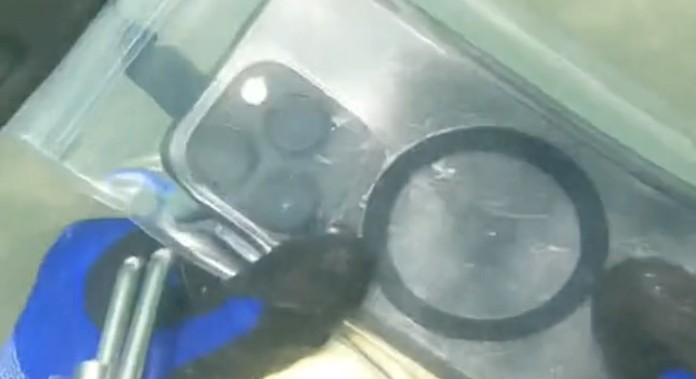
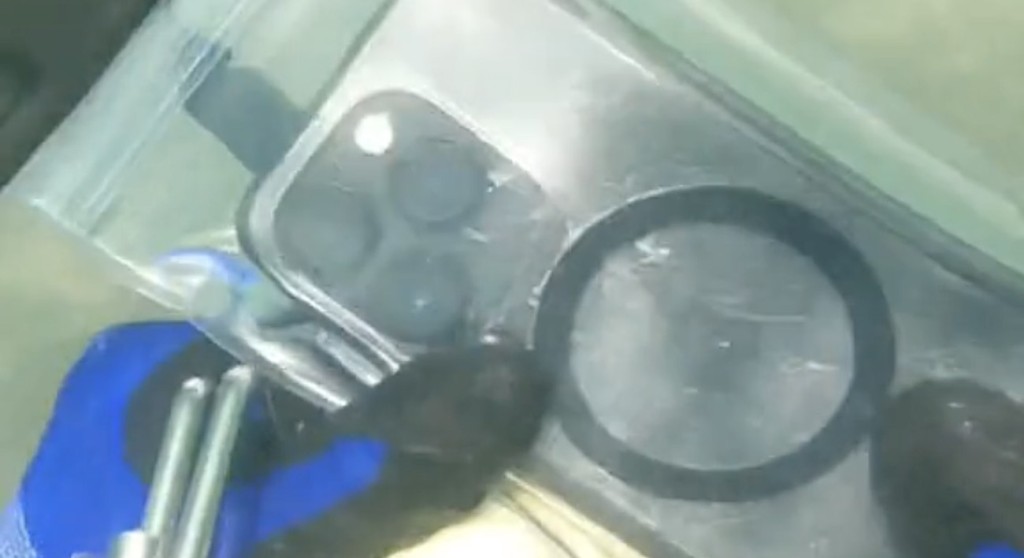
During a routine dive to clean the oceans off the coast of Florida, 4ocean CEO Alex Schulze found something that obviously still had value to someone.
The brand new iPhone sealed in a plastic bag was in far better shape than most of the smartphones found by Schulze and his cleanup crews, being waterlogged and unable to turn on.
Along with the bag, the phone was sporting a waterproof case, and Alex was able to charge the phone and get in touch with the person’s emergency contact.
Despite all odds, he was able to return the phone to its thankful owner while simultaneously triggering a viral TikTok sensation with over 3 million views on the video chronicling the discovery
“We’re always stoked about the work we do cleaning the ocean,” Alex Schulze, CEO and co-founder of 4ocean, told GNN. “But it’s even better to make someone’s day by returning what’s important to them!”
courtesy of 4ocean
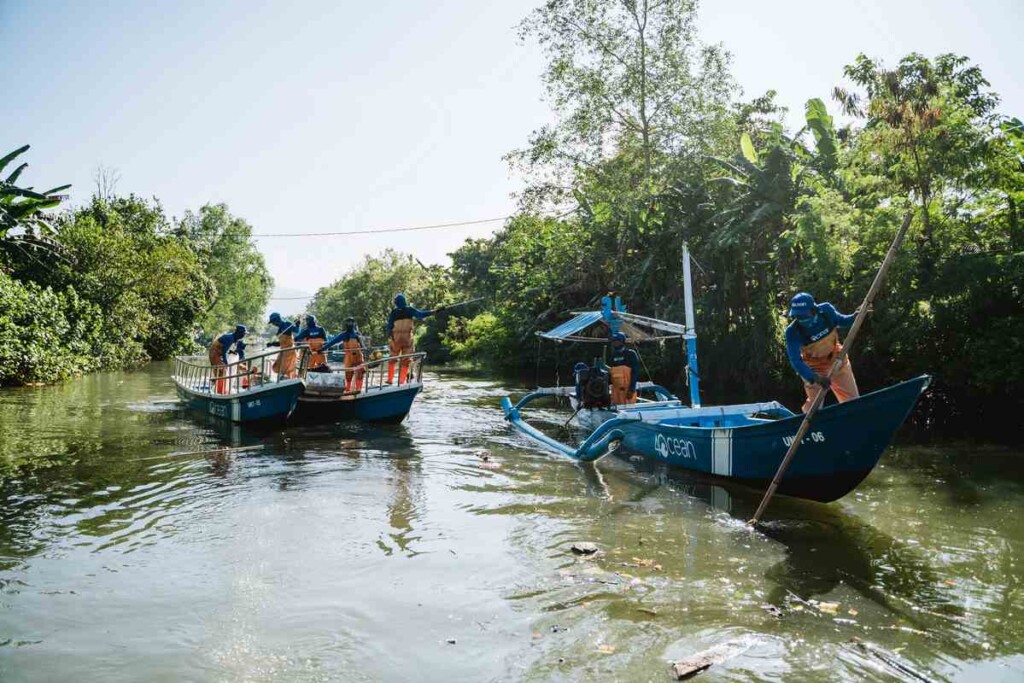
4ocean are the guys famous for selling those bracelets made of beads of ocean plastic, and their work in the US, Guatemala, and Indonesia has removed over 29 million pounds (13.1 million kg) of plastic from oceans, rivers, and coastlines.
Their newest location is on the Rio Motagua, in Guatemala. One of Central America’s longest and most polluted rivers, it deposits roughly 2% of the plastic that enters our oceans.
SHARE This Unlikely Lost And Found Success Story On Social Media…
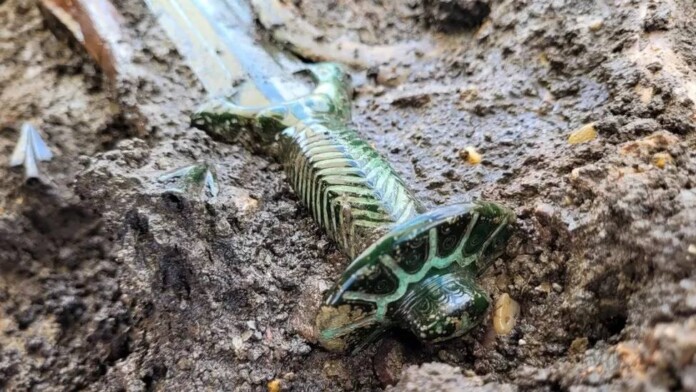
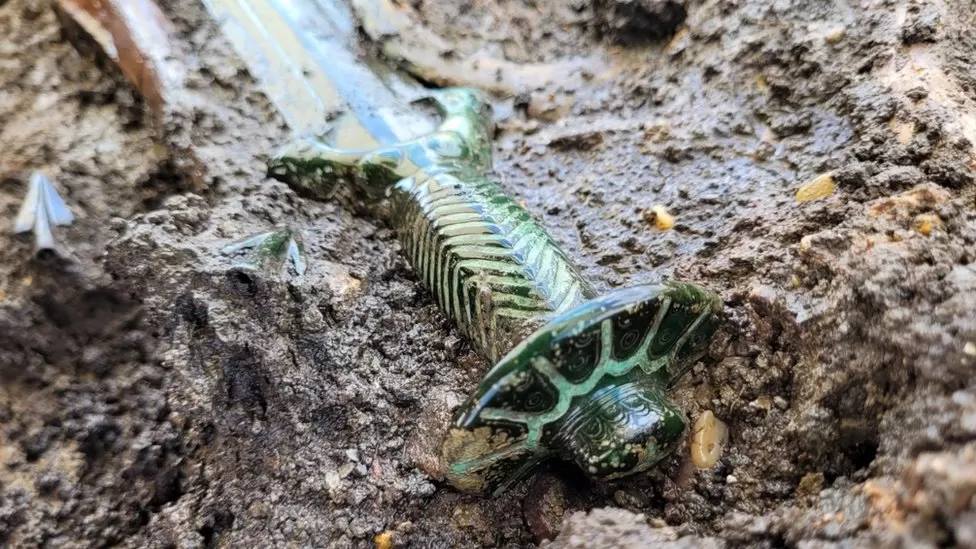
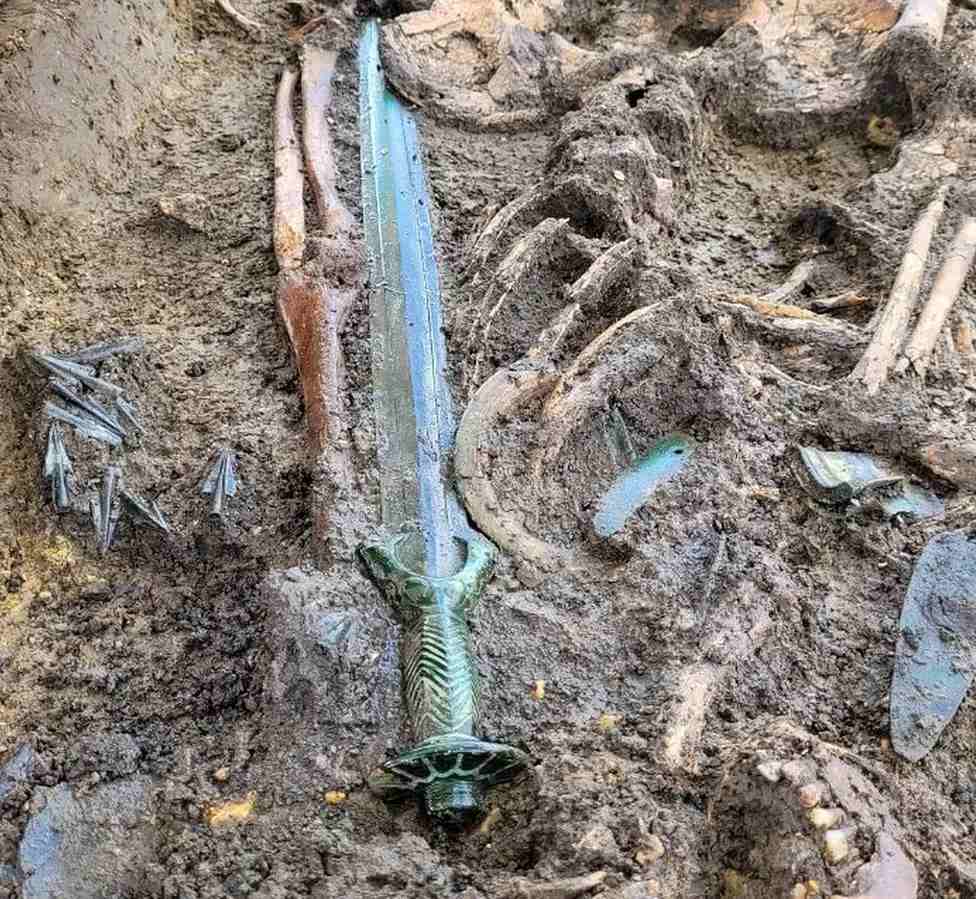
It looks fake at first glance—how could 3,400 years of time leave a hunk of metal so untouched?
Yet when archaeologists from Bavaria’s State Office for Monument Protection first uncovered the sword, it literally “almost still shines.”
Found in the grave of a man near the town of Nördlingen, the sword is thought to have been forged in bronze during the 14th century BCE using the most sophisticated methods available.
Early swords and long knives from the Homeric Bronze Age in Greece were cast in bronze from a single mold—like a bronze statue. The Nördlingen weapon by contrast was made by casting the hilt onto the previously-made blade.
The grave contained the remains of a man, a boy, and a woman along with bronze arrowheads and other objects. Archaeologists aren’t sure if they’re related.
ARCHÄOLOGIE BÜRO DR. WOIDICH
The sword, which has an octagonal pommel, is believed to have been a real, functional weapon, but was probably not meant to be used in anger.
If the dating of the weapon is correct, it was probably made in the Tumulus Culture, the dominant Middle Bronze Age Celtic society in central Europe, extending from the Carpathians to the Rhine.
A warrior society, the Tumulus people were nevertheless skilled metalworkers, especially in gold and bronze, and the earliest metallic representation of a human body part ever found in archaeology corresponds to these charismatic Europeans.
Quote of the Day: “Cheerfulness is the best promoter of health—as friendly to the mind as to body.” – Joseph Addison
Photo by: Jusdevoyage
With a new inspirational quote every day, atop the perfect photo—collected and archived on our Quotes page—why not bookmark GNN.org for a daily uplift?
By Ariffin Mohamad Annuar (via Camridge University)
By Ariffin Mohamad Annuar (via Camridge University)
Cambridge University researchers have demonstrated how carbon dioxide can be captured from industrial processes – or even directly from the air – and transformed into clean, sustainable fuels using just the energy from the sun.
They developed a solar-powered reactor that uses captured CO2 and plastic waste (which acts as a catalyst) and converts it into sustainable fuels and other valuable chemical products.
Over several years of testing, CO2 was converted into syngas, a key building block for sustainable liquid fuels, and plastic bottles were converted into glycolic acid, which is widely used in the cosmetics industry.
Unlike earlier tests of their solar fuels technology, however, the team took CO2 from real-world sources—such as industrial exhaust or the air itself. They were able to capture and concentrate the CO2 and convert it into sustainable fuel.
The researchers appreciate the advances in carbon capture and storage, where CO2 is captured and then pumped and stored underground. But instead, they believe the smart move is ‘carbon capture and utilization’—making something useful from CO2 instead of burying it underground.
Something like photosynthesis—the inspiration behind the work done by Professor Erwin Reisner and his team in the Department of Chemistry and at the Cambridge Circular Plastics Centre where they develop net-zero carbon fuels.
To date, their solar-driven experiments used pure, concentrated CO2 in cylinders, but for the technology to be of practical use, it needs to actively capture CO2 from the air, which is a huge technical challenge because the air contains many types of molecules besides CO2. That’s where the plastic came in handy.
By bubbling air through the system containing an alkaline solution, the CO2 selectively gets trapped, and the other gases in the air, such as nitrogen and oxygen, harmlessly bubble out. This bubbling process allows the researchers to concentrate the CO2 from air in a solution, making it easier to work with.
“The plastic component is an important trick to this system,” said co-first author Dr. Motiar Rahaman. “Capturing and using CO2 from the air makes the chemistry more difficult. But, if we add plastic waste to the system, the plastic donates electrons to the CO2. The plastic breaks down to glycolic acid, which is widely used in the cosmetics industry, and the CO2 is converted into syngas, which is a simple fuel.”
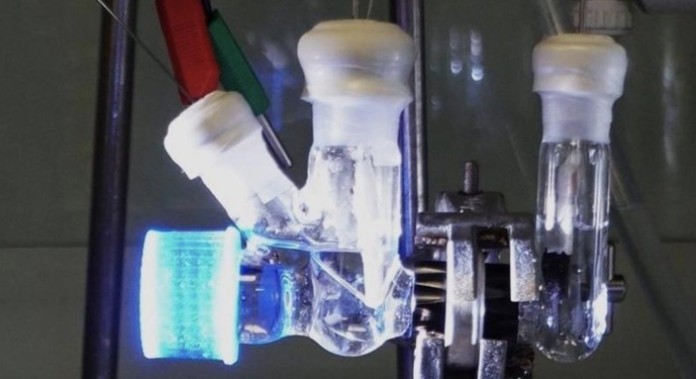
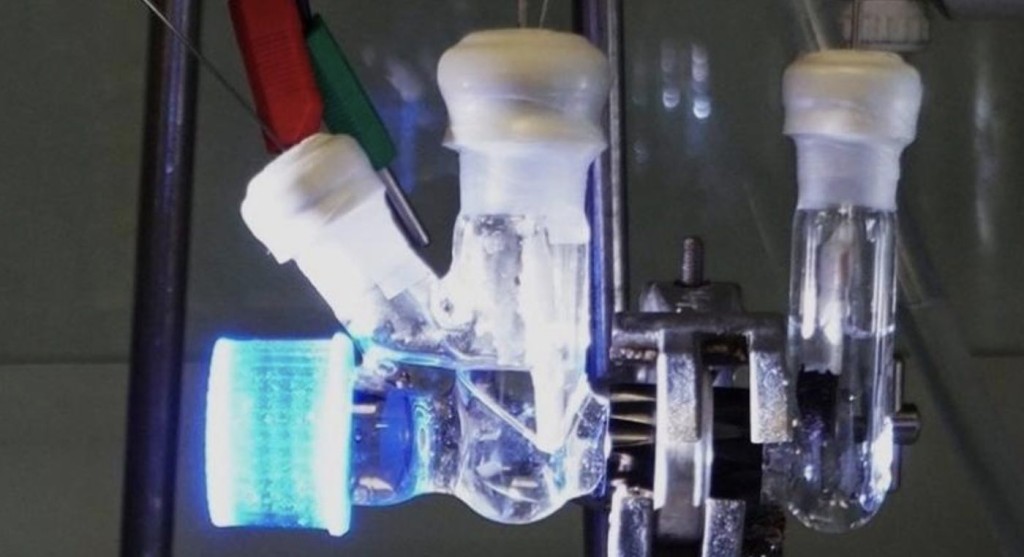
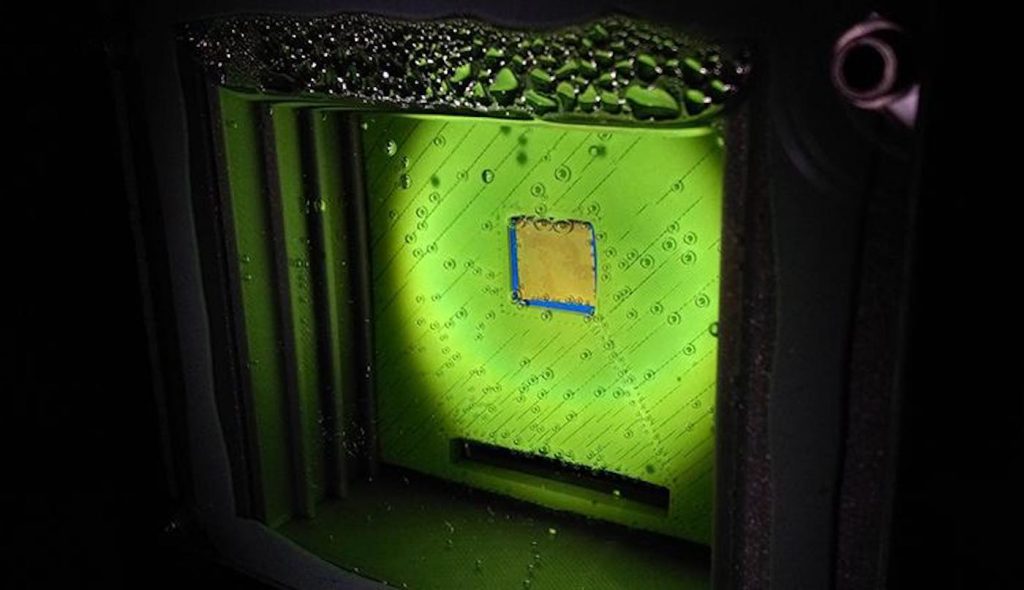
The integrated system contains a photocathode and an anode and has two compartments: on one side is captured CO2 solution that gets converted into syngas. On the other side plastics are converted into useful chemicals using only sunlight.
“This solar-powered system takes two harmful waste products—plastic and carbon emissions—and converts them into something truly useful,” said co-first author Dr. Sayan Kar.
“Instead of storing CO2 underground, we can capture it from the air and make clean fuel from it,” said Rahaman. “This way, we can cut out the fossil fuel industry from the process of fuel production, which can hopefully help us avoid climate destruction.”
“The fact that we can effectively take CO2 from air and make something useful from it is special,” said Kar. “It’s satisfying to see that we can actually do it using only sunlight.”
For years, Reisner and his team have been developing net-zero carbon fuels inspired by photosynthesis—the process by which plants convert sunlight into food—by using artificial leaves. These artificial leaves convert CO2 and water into fuels using just the power of the sun.
Photo by Virgil Andrei (via Cambridge)
The scientists are currently working on improving the efficiency of their bench-top demonstrator device. Although improvements are needed before this technology can be used at an industrial scale, the results, reported in the journal Joule, represent another important step toward the production of clean fuels to power the economy—without the need for environmentally destructive oil and gas extraction.
CONVERT The Hopeless By Sharing Real Progress on Social Media…
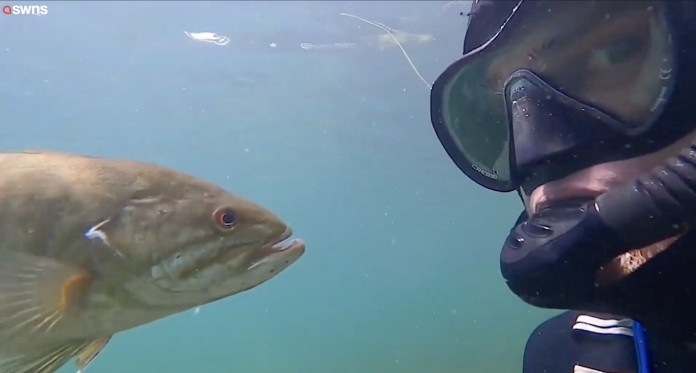
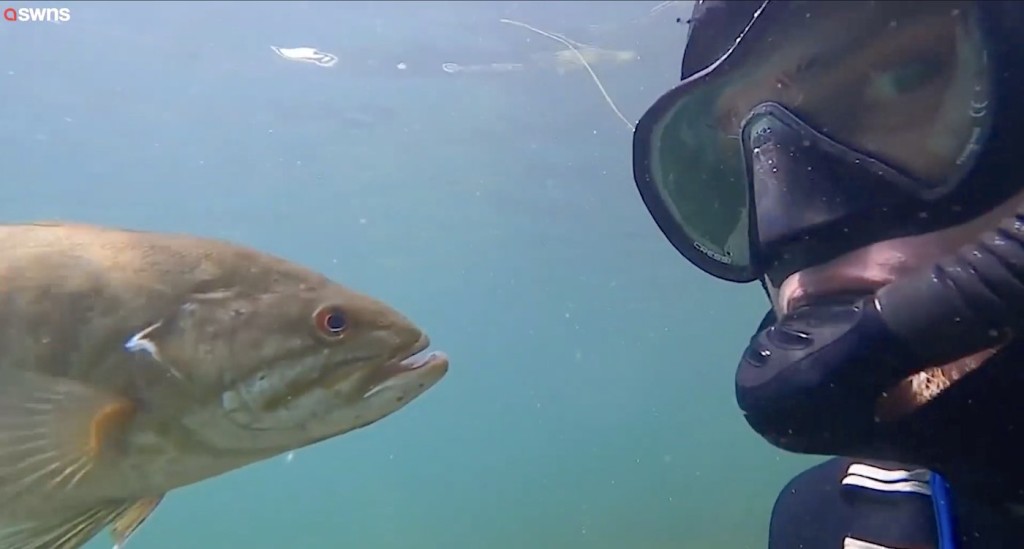
A scuba diver has forged an unlikely bond with a wild fish and the pair meet up every summer beneath the waves for a reunion.
Rex Colubra made friends with the small mouth bass while on a fresh water dive in September 2021.
The odd encounter ended with the 40-year-old naming the fish Elvis.
According to the diver, the pair now see each other every year when Rex travels back to the Wisconsin lake where Elvis lives.
If you have any doubts about the validity of this claim, watch the video below and you might be persuaded.
The 40-year-old print-shop worker says he taught Elvis a specific call, to which it will respond.
“I will do a gulping grunt sound with my throat and he’ll come find me.”
He also claims his little ‘friend’ gets jealous if other fish come around. “Elvis will literally just fight other fish if they get too close to me to keep them away.”
Speaking about their first encounter, Rex recalled, “It was like any other dive. I was checking out a new spot and all these fish where coming up to me. I noticed one was sticking closer than the rest. He wasn’t scared even when I got out. He stuck close to the surface in the shallows.”
Two weeks later, Rex returned and said the fish recognized him and approached him. Elvis is recognizable because of a scar on his face, most likely from being caught and released by a fisherman.
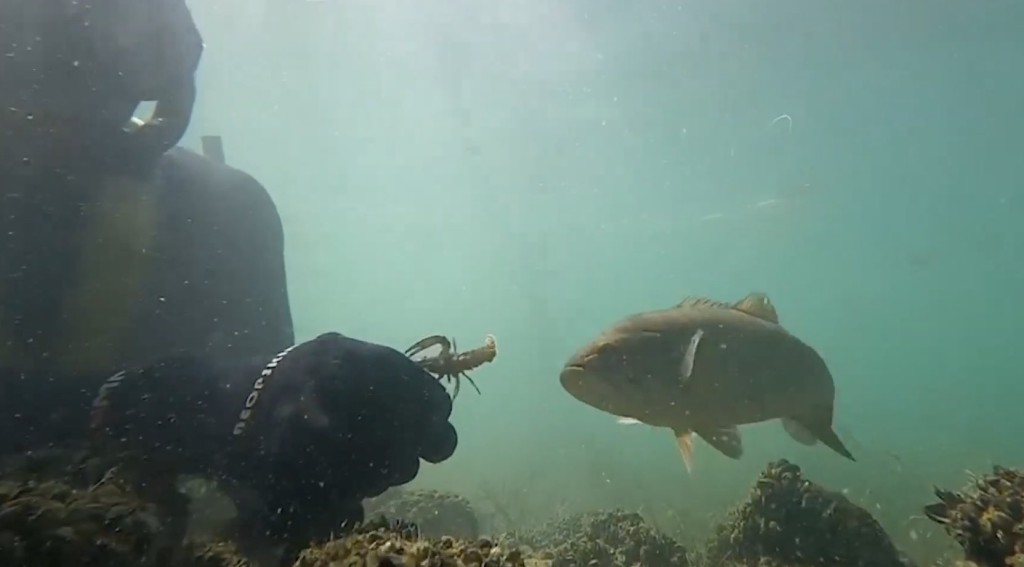
Diver Rex Colubra feeding crawfish to his buddy –SWNS
“I returned and fed him some crawfish. Now, he’s completely obsessed with me. He follows me around and just stares me in the eyes.”
Rex never reveals which lake he goes to, so he can protect the bass from fishermen. Since the two met, there have been a couple of scares. Last year, it took Rex a while to find Elvis and feared it had died.
“It’s the risk he runs every year,” added the diver, who doesn’t approve of competitive fishing done for sport alone.
NASA - Boeing demonstrator X-plane aircraft (SWNS)
NASA – Boeing demonstrator X-plane aircraft (SWNS)
NASA and Boeing have unveiled the plane they hope will save the Earth.
The aim is for the experimental aircraft to help reach a net zero aviation emissions goal by 2050 in the U.S.
Working with NASA as part of a $725 million agreement, Boeing will build, test, and fly a full-scale demonstrator aircraft with extra-long, thin wings stabilized by diagonal struts, known as a Transonic Truss-Braced Wing concept.
It is hoped the new X-plane will inform a potential new generation of more sustainable single-aisle aircraft, which is the workhorse of passenger airlines around the world.
The space agency and Boeing said the aircraft produced through the agency’s Sustainable Flight Demonstrator project has been designated by the U.S. Air Force as the X-66A.
“At NASA, our eyes are not just focused on stars,” said NASA Administrator Bill Nelson. “The Sustainable Flight Demonstrator will help shape the future of aviation, a new era where aircraft are greener, cleaner, and quieter, and create new possibilities for the flying public and American industry alike.”
The X-66A is the first plane specifically focused on helping the U.S. achieve the goal of net-zero aviation greenhouse gas emissions.
“To reach our goal of net zero aviation emissions by 2050, we need transformative aircraft concepts like the ones we’re flying on the X-66A,” said Bob Pearce, associate administrator for NASA’s Aeronautics Research Mission Directorate, who announced the designation at the American Institute of Aeronautics and Astronautics Aviation Forum in San Diego.
“We’re aiming high to demonstrate the kinds of energy-saving, emissions-reducing technologies the aviation industry needs.”
The Air Force confers X-plane status for development programs that set out to create revolutionary experimental aircraft configurations. The designation is for research aircraft and, with few exceptions, X-planes are intended to test designs and technologies that can be adopted into other aircraft designs, not serve as prototypes for full production.
“The X-66A will be the next in a long line of experimental aircraft used to validate breakthrough designs that have transformed aviation,” said Todd Citron, Boeing chief technology officer. “With the learnings gained from design, construction, and flight-testing, we’ll have an opportunity to shape the future of flight and contribute to the decarbonization of aerospace.”
The X-66A aircraft validates technologies for a Transonic Truss-Braced Wing configuration that, when combined with other advancements in propulsion systems, materials, and systems architecture, could result in up to 30% less fuel consumption and reduced emissions when compared with today’s best-in-class aircraft.
Due to their heavy usage, single-aisle aircraft today account for nearly half of worldwide aviation emissions. Creating designs and technologies for a more sustainable version of this type of aircraft has the potential for profound impact on emissions.
For the Sustainable Flight Demonstrator, NASA has a Funded Space Act Agreement with Boeing through which the agency will invest $425 million over seven years, while the company and its partners will contribute the remainder of the funding, estimated at about $725 million. NASA also will contribute technical expertise and facilities.
JET This Good News to Eco-Warriors By Sharing on Social Media…
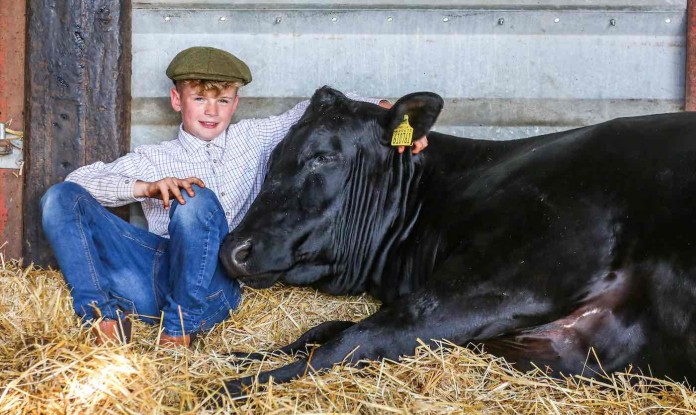
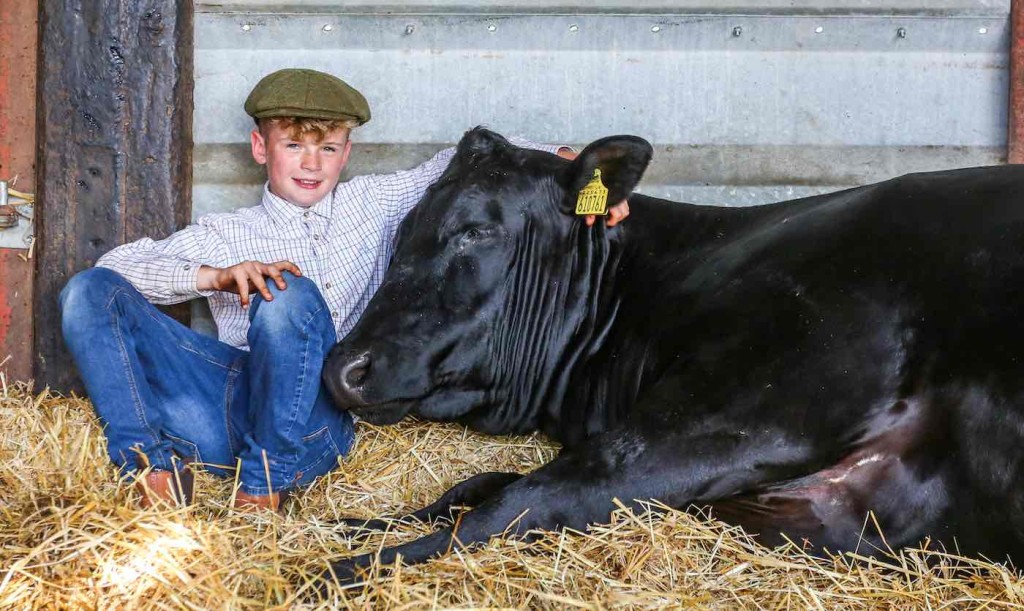
Meet the 11-year-old boy who fell in love with agriculture during the pandemic, and dreamed of becoming a farmer. Today he rents his own plot of land where he cares for chickens and breeds sheep.
Joe Trofer-Cook’s passion for farming was sparked when he planted seeds in a new raised bed that his grandfather built for his seventh birthday.
A year later, after COVID hit, he began selling homegrown produce on a trolley outside the house, and saved “every penny” to buy three chickens.
Adding eggs to his produce market helped him earn enough to buy first four sheep—that he adorably named Rhubarb, Strawberry, Pumpkin, and Radish.
His mother, Clare Trofer, said that tending to his animals is a form of “therapy” for Joe who was diagnosed with autism during the lockdowns.
With the profit made from selling veg and sheep, Joe was able to rent a plot of land from a farmer in his English village of Billinghay, Lincolnshire. Over two years later, Joe now owns 37 sheep, 12 chickens, two cows and a Border Collie named Spud.
“I was born to be a farmer—that’s what I say,” Joe quips.
“He the kindest, loveliest, quietest child you’ll ever meet – and so devoted,” said his 47-year-old mom.
Vegetables that Joe was selling outside the house – SWNS
“Most children are born into this world of farming, but this is something he’s built for himself.
“Joe was diagnosed with autism in lockdown, and it’s been the best form of therapy,” she explained. “He never asked to have friends over after school, all he wants to do is go straight to his animals.”
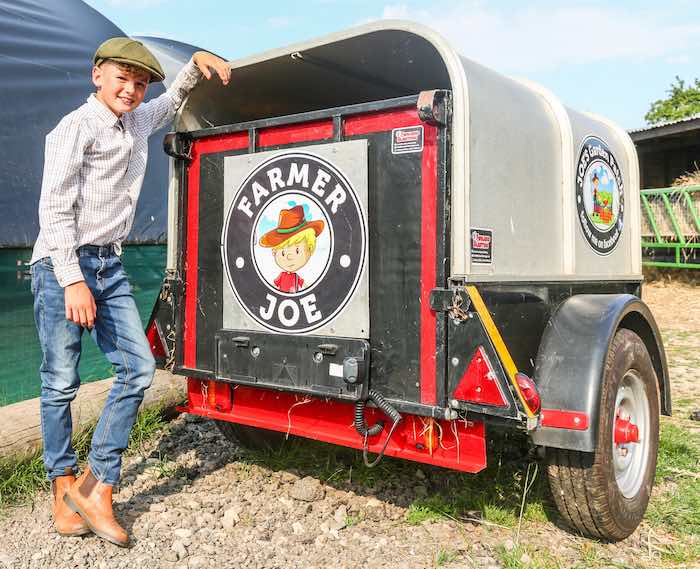
Now, ‘Farmer Joe’, as he’s known, is the youngest exhibitor of livestock at the Lincolnshire show in the 125 years it’s been running, and the dapper youth has appeared on BBC television.
Every day the young entrepreneur wakes up at 4:00am to feed his animals and recently has taken up spinning wool after someone donated a wheel so he could sell his wool.
“Joe went to a farmer’s market and bid on another ewe, called Butterbean,” Claire continues. “She didn’t have any lambs, so Joe used his trailer to take her to exhibit at country shows where he got through to the championships – it just shows how resourceful he is. I think he works harder than most full-grown men.”
In November 2021 Joe was surprised with a gift of two calves he named Rosie and Flower, donated by the TV show Christmas on the Farm.
Joe Trofer on his rented farm plot in Lincolnshire – SWNS
He keeps the sheep in a field that his grandparents own nearby, while the other animals are on land he rents from a farmer.
He recently re-homed a Border Collie, that he named Spud, who has done wonders for Joe’s anxiety, says mom. “Nighttime is hard for Joe due to his anxiety, but Spud helps comfort him when he struggles to sleep.
Joe now sells the wool, eggs, and produce he grows at local markets. He saved up for a camera to watch the sheep during lambing season and a special tunnel to house them in called a polytunnel.