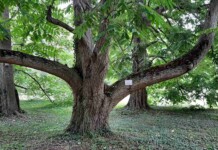
Quote of the Day: “A person will sometimes devote all his life to developing one part of his body—the wishbone.” – Robert Frost
Photo by: Dayne Topkin (cropped/edited)
With a new inspirational quote every day, atop the perfect photo—collected and archived on our Quotes page—why not bookmark GNN.org for a daily uplift?
Artist’s impression of a quasar – Credit NOIRLab / NSF / AURA / J. da Silva, CC license – SWNS
Artist’s impression of a quasar – Credit NOIRLab / NSF / AURA / J. da Silva, CC license – SWNS
Jets of light 100,000 billion times brighter than the sun have been captured by astronomers observing a quasar—the most powerful object in the universe.
The beams are at the center of a galaxy 9.6 billion light years away—meaning we are seeing them as they were then.
They were triggered when clouds of gas fell into a supermassive black hole.
Named J1144, the quasar is much closer to Earth than other sources of the same luminosity, shedding light on the black hole and its surrounding environment.
Located between the constellations of Centaurus and Hydra, observations of the galax showed some gas being ejected in the form of extremely powerful winds propelled by large amounts of energy.
“We were very surprised that no prior X-ray observatory has ever observed this source, despite its extreme power,” said lead author Dr. Elias Kammoun, of the Max Planck Institute for Extraterrestrial Physics in Germany.
For this study, researchers combined observations from several space-based observatories—the eROSITA instrument, the ESA XMM-Newton observatory, NASA’s Nuclear Spectroscopic Telescope Array (NuSTAR), and NASA’s Neil Gehrels Swift observatory—in order to measure the temperature of the X-rays being emitted from the giant quasar.
They calculated it at around 350 million Kelvin, more than 60,000 times hotter than the surface of the sun.
The mass of the black hole at the quasar’s center is around 10 billion times the mass of Earth’s sun—and it’s rapidly growing as the black hole feed on gases and particles around them.
Similar quasars are usually located much further away, so they appear much fainter. Astronomers are seeing those as they were when the Universe was only 2-3 billion years old.
“J1144 is a very rare source as it is so luminous and much closer to Earth, although still at a huge distance, giving us a unique glimpse of what such powerful quasars look like,” said Dr. Kammoun.
They outshine even the hottest burning stars—emitting vast amounts of electromagnetic radiation observable in radio, infrared, visible, ultraviolet and X-ray wavelengths. J1144 was initially observed in visible wavelengths in 2022 by the SkyMapper Southern Survey (SMSS).
The X-ray light varied on a time scale of a few days, which is not usually seen in quasars with black holes as large as the one residing in J1144. The typical timescale of variability for a black hole of this size would be on the order of months or even years.
“A new monitoring campaign of this source will start in June this year, which may reveal more surprises from this unique source,” says Kammoun.
A British grandad has become one of the world’s top arm-wrestlers after taking up the sport just three years ago.
Mark Waldon discovered professional arm wrestling during lockdown but has now captured the gold medal at the European Championships representing Great Britain in the International Federation of Arm Wrestling (IFA)
Now 53, Mark first researched on the internet how to get involved with the sport, and followed up by joining the local Milton Keynes Arm Wrestling Club as soon as pandemic restrictions were lifted.
“Members were all different shapes, sizes and ages, but it was a really friendly, inclusive culture.
His first few bouts ended in humiliating defeat, but six months later it was clear he had a special talent.
A lifelong gym member, Mark was caught off guard because a strong physique wasn’t enough to bring him success. “I got a bit of a shock to begin with because I was losing week in, week out.
“It was a challenge, but I started training the specific muscles you need, and immediately started seeing results,” said the champion from Flitwick, Bedfordshire.
During the pandemic, Mark contracted COVID and then pneumonia. He was ill for months, and at one point believed he wouldn’t live to tell the tale. While in bed recovering, he started looking at videos of arm wrestling and decided, when he got better, it was something he wanted to pursue.
He started competing all over the country in national tournaments, and turned pro in May 2021.
“To train the tiny muscles in your arms which you wouldn’t usually use, the exercises are very specific short movements—and you sometimes feel a bit silly doing them in the gym, but that’s what you have to do.”
The father-of-one was recording win after win, and was subsequently accepted by the IFA to represent Great British on the international arm wrestling team.
Along with 30 teammates, he entered the IFA World Competition in France in September, 2022 and he placed fourth in the under 105kg category for ages 50-60—otherwise known as the grand masters—in both the left and right arm competition.
This month, the grandfather of two won gold in the same categories in the right arm competition at the IFA European Championships in Finland (but had to pull out of the left arm bouts due to a training injury).
Mark says his father’s recent passing is what motivated him to win, and he’s dedicated his victory to him.
“I wanted to win it for him, and I know he’d have been extremely proud of me getting that gold medal, as are my two grandkids. Grace even calls me ‘The Hulk’.
To combat learning loss over the summer, Tennessee is funding the delivery of surprise books to keep almost a quarter million kids engaged with reading.
The Governor’s Early Literacy Foundation (GELF) expanded its K-3 Home Library program to now include all rising 1st, 2nd, and 3rd grade students enrolled in a public school. In collaboration with Scholastic publishing, the program will deliver 1.2 million books to more than 200,000 students, teachers, and librarians this summer.
Six packages consisting of grade-level books will be delivered directly to the homes of participants, at no cost to families or the 152 school districts.
Children enrolled in school districts and charter schools were signed up to receive the books with an opt-out option for families, making it easy for all K-3 students to be a part of the program, with 40,000 more students getting them this year, compared to 2022.
“My son struggles to read but is making improvements by the week,” said one parent from Warren County, who joined the program last summer. “These couldn’t have come at a more perfect time!”
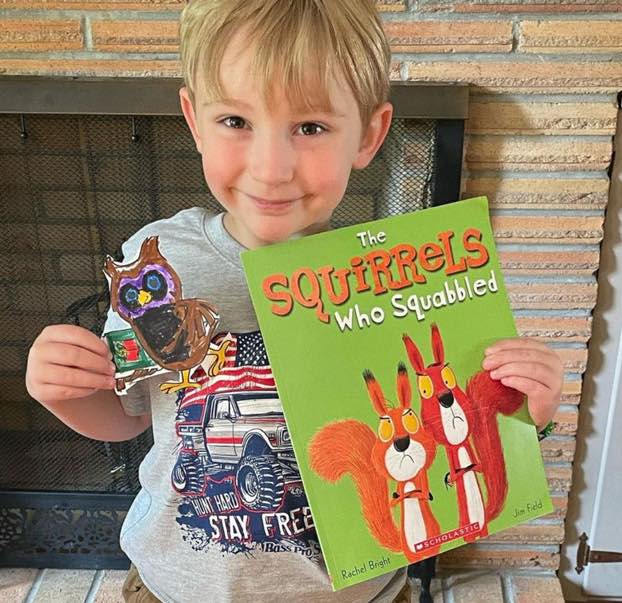
Photo from the Governor’s Early Literacy Foundation shows Nathaniel with his new book.
A Morgan County educator pointed out that when schools are closed for the summer, access to books diminishes. “Many of our students do not have access to books at home so this is a great program to get books into students’ hands.”
“If we don’t get reading right, everything else can go wrong,” said James Pond, GELF President. “Our goal is to promote a culture of reading in Tennessee by meeting students where they are with the books and resources they need to become lifelong learners—and we hope other states look to us as a leader in collaborative early literacy efforts.”
Research shows that students who do not read over the summer lose two to three months of reading proficiency—but reading four to six books has the potential to stop, mitigate, or reverse this “summer slide.”
This is GELF’s fourth summer collaborating with Scholastic to deliver books. Since 2020, the K-3 Home Library program has grown by 528%, placing more than 3.1 million books in the homes of more than 509,000 elementary school students and teachers.
Research conducted by GELF showed that 97% of parents reported that their children were thrilled to receive the books and said they were valuable to their family.
The books—including Three Hens and a Peacock (about a flashy newcomer getting attention while hens do all the work), and The Squirrels Who Squabbled (about two greedy squirrels on a chase for pinecones)— were all selected by GELF’s Educator Advisory Council, a diverse group of 28 Tennessee educators.
A baby deer was rescued and reunited with its mother this month after it disappeared into a storm drain along a suburban street.
Homeowners near Baltimore, Maryland, said they spotted a distressed adult deer circling the storm drain, and called emergency services after they heard the cries of the fawn trapped below.
After prying open the grate atop the drain, one Owings Mills firefighter climbed down and emerged with the baby deer in his arms.
By then, it was dark, and a video shows the mother deer waiting nearby on the grass—retreating, at first, when the firefighter approached.
Eventually, the doe trots over towards the firefighter when it sees the baby in his arms.
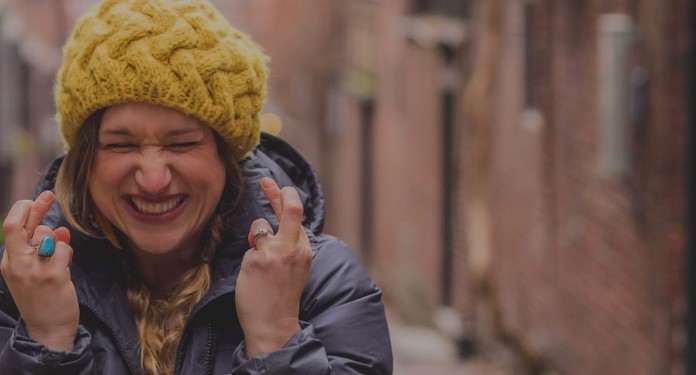
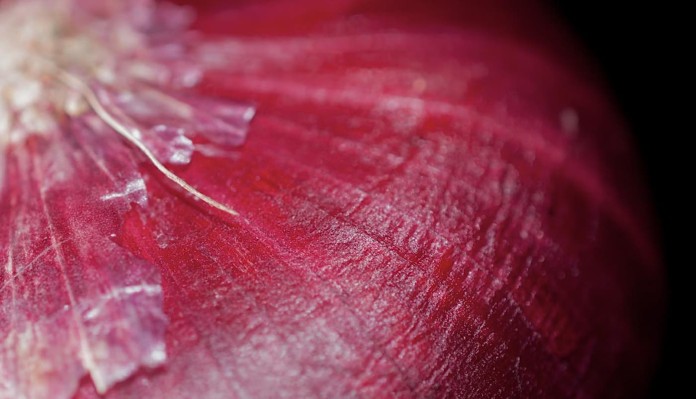
Quote of the Day: “Life is like an onion. You peel it off one layer at a time, and sometimes you weep.” – Carl Sandburg (But it’s so delicious!)
Photo by: See Kay
With a new inspirational quote every day, atop the perfect photo—collected and archived on our Quotes page—why not bookmark GNN.org for a daily uplift?
What’s the difference between dad jokes and pizza? Dad jokes can’t be topped.
The ‘best dad jokes’ have been compiled after a poll identified what Americans consider to be the top 20 cheesy gags that fathers like to try on anyone within ear shot.
The 2,000 adults voted this one to be the most popular: ‘This graveyard looks crowded—people must be dying to get in’.
Another groan-inducing joke: ‘I’m reading a book about anti-gravity. It’s impossible to put down’.
Just in time for Father’s Day, Papa Johns commissioned the survey and announced its ‘Papa Jokes’ campaign on Twitter.
“Dad jokes are a proud tradition,” said a spokesperson for the company. They tweeted, asking people to share their best dad joke using #PapaJokes for #FathersDay.
“If it’s a groan-inducing pun or punchline that only the teller finds hilarious, rest assured, no matter who tells it—it’s a dad joke.”
Six in 10 respondents admitted to being amused by dad jokes, but 67 percent find them ‘cringeworthy’ at the same time.
40 percent of respondents report they’ve gone their whole lives without telling a single terrible one-liner so far.
But of those who have, 80 percent say they cracked themselves up, even if nobody else laughed.
Of the jokesters who have kids, 39 percent say their attempts at humor bring nothing but embarrassment to the youth. Unfortunately for the kids, this only spurs adults to make even more terrible wisecracks.
Thinking about their own fathers, 47% remember them as being amusing, with 12 percent describing their dad as ‘very funny’. Overall, three in 10 believe the gags formed some of their favorite memories of dad.
From the survey (conducted by OnePoll), it’s likely that being memorable is a better reason for being a jester than actually being funny—as so many people remember their dads for them.
Pro dad tip: add in a silly accent—ideally, to make the joke deeply embarrassing for your kids.
TOP 20 FAVORITE DAD JOKES…
1. ‘This graveyard looks overcrowded. People must be dying to get in.’
2. ‘I’m reading a book about anti-gravity. It’s impossible to put down’
3. Q: ‘Dad, can you put my shoes on? A: ‘I don’t think they’ll fit me.’
4. ‘I used to hate facial hair…but then it grew on me.’
5. Q: ‘Can you put the dog out?’ A: ‘I didn’t know it was on fire.’
6. What car does Jesus drive? A Chrysler
7. ‘Ah, this takes me back’ (when putting the car into reverse)
8. ‘I only know 25 letters of the alphabet. I don’t know y.’
9. ‘What do you call a magician who lost their magic? Ian.’
10. Q: ‘How do I look?’ A: ‘With your eyes.’
11. Q: ‘Dad, did you get a haircut?’ A: ‘No, I got them all cut!’
12. ‘I’m afraid for the calendar. Its days are numbered.’
13. ‘Wanna hear a joke about a pizza? Never mind, it’s too cheesy’
14. ‘I used to be addicted to the hokey pokey, but I turned myself around.’
15. ‘I was driving to town and saw the sign Chicago-Left, so I turned around and went home.’
16. ‘What did one wall say to the other?’ ‘I’ll meet you at the corner.’
17. ‘I used to be addicted to soap, but I’m clean now.’
18. ‘How do you make holy water? You boil the hell out of it.’
19. ‘Singing in the shower is fun until you get soap in your mouth. Then it’s a soap opera’
20. ‘Why do seagulls fly over the ocean?’ ‘Because if they flew over the bay, we’d call them bagels.’
WISH a HAPPY Father’s Day on Social Media by Sharing the Beloved Dad Jokes…
A police officer was captured on her dash-cam scuttling after a tiny kitten on the side of a busy highway.
Officer Estrada is seen in the video below pulling over her vehicle on the Las Vegas, Nevada highway. She quickly approaching the terrified kitty, saying “Hi, baby. You’re OK.”
But the Nevada State Trooper had to hustle after the gray feline when it bolted further toward traffic.
She finally rounded up the animal, which hid in the glove compartment during the drive back to the station.
Nevada State Police tweeted: “(We) received calls about a kitten on the on-ramp to a busy highway… and Trooper Estrada quickly responded.”
The kitten was then given some tender loving care by officers who decided to name it ‘Trooper Kitty’.
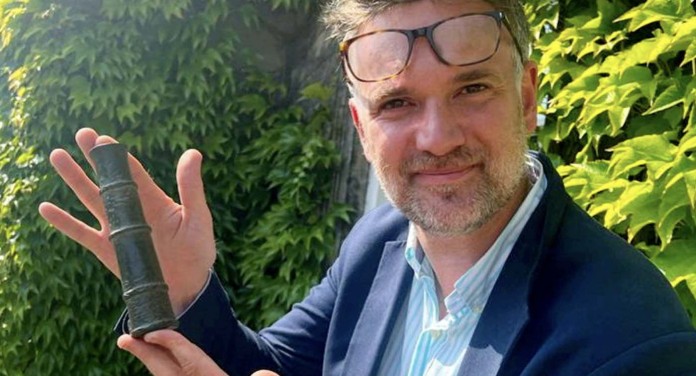
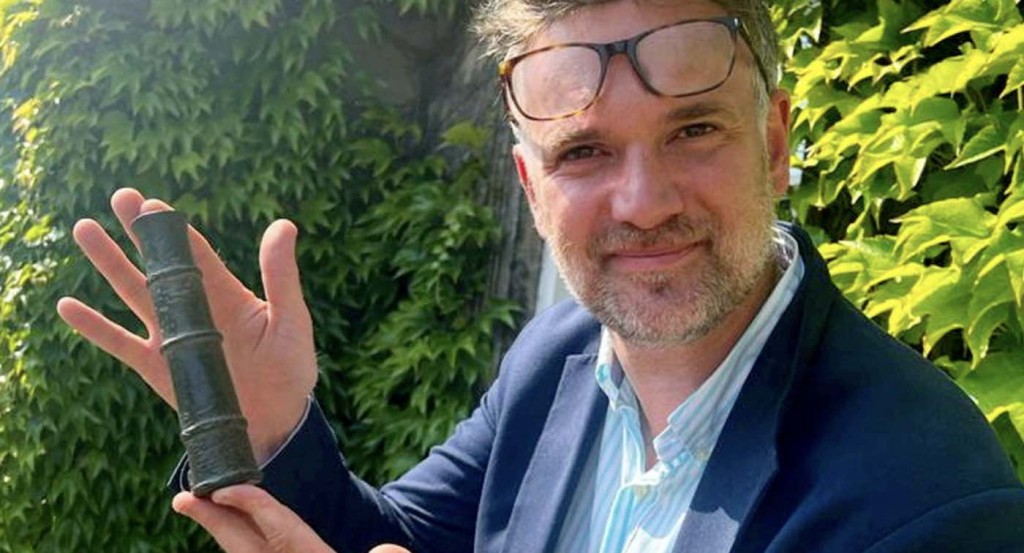
A medieval artifact bought for $20 at a flea market was initially intended to be used to decorate a garden—but now it fetched thousands of dollars at auction.
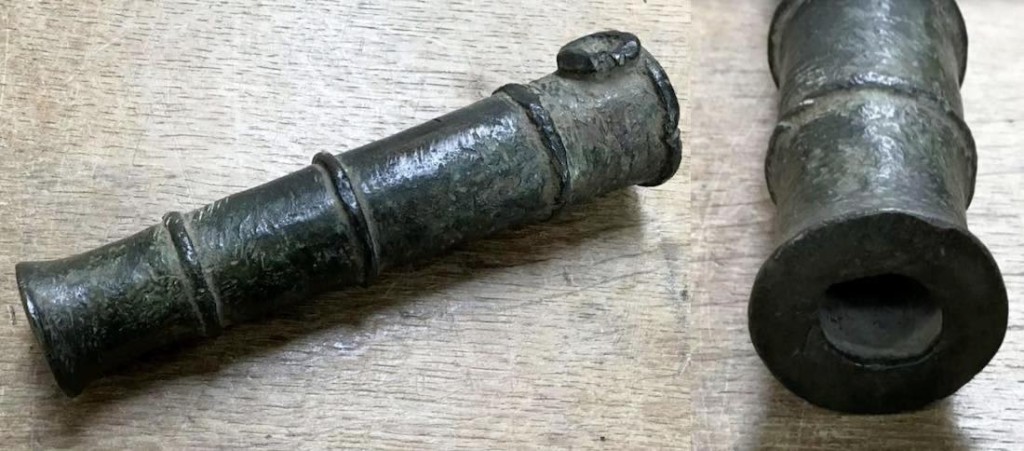
The thrifters were left stunned after auctioneers revealed it was a 600-year-old medieval hand cannon dating back to the 1400s.
The bronze gun powder weapon was purchased in Hertfordshire, England to be used as a garden ornament by its owner who had no idea of its true value.
It was sold this week by Hansons Auctioneers for £2,000—more than 200 times its flea market price.
Mystery surrounds how the original seller came to own the cannon but soil residue found inside suggests it would have been dug up at some point.
“It’s a rocket of a find,” said auctioneer Charles Hanson. “Perhaps it was used by a knight in shining armor. In more than 20 years in the antiques business I have never seen one like it.”
“When we came to assess it properly, we were amazed. It’s a heavy, triple-ring cast cannon—a type of weapon that was widely used in China beginning in the 13th century, which later made its way onto the battlefields of Europe.
“It was the first true small weapon of its kind, the most mechanically simple form of a metal-barrel firearm.
“Until now, my only knowledge of late medieval hand cannons has come from reading about them in reference books.”
The first recorded use of this type of gun powder weapon was around 1330 by two mounted German knights, wrote Hansons Auctioneers. By 1340, weapons like these were widely used in France.
Quote of the Day: “Many a trip continues long after movement in time and space have ceased.” – John Steinbeck
Photo by: Mike Swigunski
With a new inspirational quote every day, atop the perfect photo—collected and archived on our Quotes page—why not bookmark GNN.org for a daily uplift?
FREE WILL ASTROLOGY – Week of June 17, 2023
Copyright by Rob Brezsny, FreeWillAstrology.com
GEMINI (May 21-June 20):
Among her many jobs, my triple Gemini friend Alicia has worked as a deep-sea rescue diver, an environmental activist, a singer in a band, a dog food taster, an art teacher for kids, and a volunteer at a sleep lab researching the nature of dreams. Do I wonder if she would be wise to commit herself to one occupation? Not really. I respect her decision to honor her ever-shifting passions. But if there will ever come a time when she will experiment with a bit more stability and constancy, it may come during the next 11 months. You Geminis are scheduled to engage in deep ruminations about the undiscovered potentials of regularity, perseverance, and commitment.
CANCER (June 21-July 22):
As religious sects go, the Shakers are the most benign. Since their origin in the 18th century, they have had as many women as men in leadership roles. They practice pacifism, disavow consumerism, and don’t try to impose their principles on others. Their worship services feature dancing as well as singing. I’m not suggesting you become a Shaker, Cancerian, but I do hope that in the coming months, you will place a premium on associating with noble groups whose high ideals are closely aligned with your own. It’s time to build and nurture your best possible network.
LEO (July 23-Aug. 22):
For years, Mario A. Zacchini worked at a circus as a “human cannonball.” On thousands of occasions, he was shot out of a cannon at 90 miles per hour. “Flying isn’t the hard part,” he testified. “Landing in the net is.” His work might sound dangerous, but he lived to age 87. Let’s make Mario your role model for a while, Leo. I hope he will inspire you to be both adventurous and safe, daring but prudent. I trust you will seek exhilarating fun even as you insist on getting soft landings.
VIRGO (Aug. 23-Sept. 22):
One of my favorite astrology teachers, Stephen Arroyo, notes, “Most people have a strong opinion about astrology, usually quite extreme, even though 95 percent have never studied it whatsoever.” Of course, astrology is not the only subject about which people spout superficial ideas based on scant research. Viral epidemiology is another example. Anyway, Virgo, I am asking you to work hard to avoid this behavior during the rest of 2023. Of all the zodiac signs, you have the greatest potential to express thoughtful ideas based on actual evidence. Be a role model for the rest of us! Show us what it means to have articulate, well-informed opinions.
LIBRA (Sept. 23-Oct. 22):
Meditation teacher Cheri Huber wrote a book called Be the Person You Want to Find. This would be an excellent title for your life story during the next ten months. I hope you will soon ruminate on how to carry out such a quest. Here are two suggestions. 1. Make a list of qualities you yearn to experience in a dear ally and brainstorm about how to cultivate those qualities in yourself. 2. Name three high-integrity people you admire. Meditate on how you could be more like them in ways that are aligned with your life goals.
SCORPIO (Oct. 23-Nov. 21):
Now is a good time to take stock of how you have fared in the Dating and Mating Games through the years. Why? Because you are entering a new chapter of your personal Love Story. The next two years will bring rich opportunities to outgrow stale relationship patterns and derive rich benefits from novel lessons in intimacy. An excellent way to prepare is to meditate on the history of your togetherness. PS: The term “fate bait” refers to an influence that draws you toward the next turning point of your necessary destiny. Be alert for fate bait.
SAGITTARIUS (Nov. 22-Dec. 21):
Sagittarian actor Samuel Jackson loves the color purple. He insists on it being featured in his films, and he often wears purple outfits. In Black Snake Moan, he plays a purple Gibson guitar. In the animated movie, Turbo, he voices the role of a purple racing snail. In his Star Wars appearances, he wields a purple light saber. Now I am endorsing his obsession for your use. Why? First, it’s an excellent time to home in on exactly what you want and ask for exactly what you want. Second, now is a favorable phase to emphasize purple in your own adventures. Astrologers say purple is your ruling color. It stimulates your natural affinity for abundance, expansiveness, and openness.
CAPRICORN (Dec. 22-Jan. 19):
People who understand the creative process say it’s often wise to stay mum about your in-progress work. You may diminish the potency of your projects if you blab about them while they’re still underway. I don’t think that’s true for all creative efforts. For example, if we collaborate with partners on an artistic project or business venture, we must communicate well with them. However, I do suspect the transformative efforts you are currently involved in will benefit from at least some secrecy for now. Cultivate the privacy necessary to usher your masterpiece to further ripeness.
AQUARIUS (Jan. 20-Feb. 18):
Musician Frank Zappa (1940–1993) was a freaky rebel, iconoclastic weirdo, and virtuoso experimenter. Everything normal and ordinary was boring to him. He aspired to transcend all categories. And yet he refrained from taking psychedelic drugs and urged his fans to do the same. He said, “We repudiate any substances, vehicles, or procedures which might reduce the body, mind, or spirit of an individual to a state of sub-awareness or insensitivity.” Zappa might have added that some substances temporarily have a pleasing effect but ultimately diminish the life force. In my estimation, Aquarius, the coming weeks will be an excellent time to re-evaluate your relationship with influences that weaken the vitality of your body, mind, or spirit. It will also be a favorable period to seek new modes of lasting liberation.
PISCES (Feb. 19-March 20):
If you are at a festival or fair where you could win a lot of money by smashing watermelons with your head, I hope you won’t do it. Same if you imagine you could impress a potential lover by eating 25 eggs in three minutes: Please don’t. Likewise, I beg you not to let yourself be manipulated or abused by anyone for any reason. These days, it’s crucial not to believe you can succeed by doing things that would hurt or demean or diminish you. For the foreseeable future, you will be wise to show what you do best and express your highest values. That’s the most effective way to get what you want.
ARIES (March 21-April 19):
Aries-born Vincent van Gogh’s painting Potato Eatersshows five people in a dark room barely illuminated by lamplight. Seated around a small table, they use their hands to eat food they have grown themselves. Vincent wanted to convey the idea that they “dug the earth with the very hands they put into their bowls.” I don’t expect you to do anything quite so spectacularly earthy in the coming weeks, Aries, but I would love to see you get very up close and personal with nature. I’d also love to see you learn more about where the fundamental things in your life originate. Bonus points if you seek adventures to bolster your foundations and commune with your roots.
TAURUS (April 20-May 20):
Renowned Mexican artist Diego Rivera emerged from his mother’s womb in 1886. But some observers suggest that Rivera’s soul was born in 1920: a pivotal time when he found his true calling as an artist. During a visit to Italy, as he gazed at the murals of 15th-century mural painters, “he found the inspiration for a new and revolutionary public art capable of furthering the ideals of the ongoing revolution in his native land.” (In the words of art historian Linda Downs.) I will be extra dramatic and speculate that you may have a comparable experience in the coming months, dear Taurus: a rebirth of your soul that awakens vigorous visions of what your future life can be.
WANT MORE? Listen to Rob’s EXPANDED AUDIO HOROSCOPES, 4-5 minute meditations on the current state of your destiny — or subscribe to his unique daily text message service at: RealAstrology.com
The Dark Energy Spectroscopic Instrument (DESI) sits atop the Mayall Telescope at Kitt Peak National Observatory, southwest of Tucson, Arizona. (SWNS)
The Dark Energy Spectroscopic Instrument (DESI) sits atop the Mayall Telescope at Kitt Peak National Observatory, southwest of Tucson, Arizona. (SWNS)
More than 700,000 objects in the universe are available for study as part of a 3D map cleverly produced by scientists looking to study the effects of dark energy.
Most substance in the universe is either dark matter, an invisible kind of mass that pulls galaxies towards each other and builds structures, or dark energy, an even more mysterious force that causes the expansion and acceleration of the universe.
Scientists at the Lawrence Berkeley National Laboratory are using the Dark Energy Spectroscopic Instrument (DESI) to map more than 40 million galaxies, quasars, and stars in an effort to understand this force’s effect on our reality.
Last week, the collaboration publicly released its first batch of data, with nearly 2 million objects, and 100,000 galaxies for researchers to explore.
The 80-terabyte data set comes from 2,480 exposures taken over six months during the experiment’s “survey validation” phase in 2020 and 2021. In this period between turning the instrument on and beginning the official science run, researchers made sure their plan for using the telescope would meet their science goals—for example, by checking how long it took to observe galaxies of different brightness, and by validating the selection of stars and galaxies to observe.
Galaxies that are part of DESI’s survey were visualized as a fly-through using detailed images in 20 different directions to create a 3D map of 700,000 objects covering roughly 1% of the total volume that DESI will study. – Berkeley Lab (SWNS)
“The fact that DESI works so well, and that the amount of science-grade data it took during survey validation is comparable to previous completed sky surveys, is a monumental achievement,” said Nathalie Palanque-Delabrouille, co-spokesperson for DESI and a scientist at the Department of Energy and Berkeley Labs.
“This milestone shows that DESI is a unique spectroscopic factory whose data will not only allow the study of dark energy but will also be coveted by the whole scientific community to address other topics, such as dark matter, gravitational lensing, and galactic morphology.”
DESI uses 5,000 robotic positioners to move optical fibers that capture light from objects millions or billions of light-years away. It is the most powerful multi-object survey spectrograph in the world, able to measure light from more than 100,000 galaxies in one night. That light tells researchers how far away an object is, building a 3D cosmic map.
The survey image above represents just 1% of the total area of the universe DESI will study and map.
Two interesting finds have already surfaced: evidence of a mass migration of stars into the Andromeda galaxy, and incredibly distant quasars, the extremely bright and active supermassive black holes sometimes found at the center of galaxies.
“We observed some areas at very high depth. People have looked at that data and discovered very high redshift quasars, which are still so rare that basically any discovery of them is useful,” said Anthony Kremin, a postdoctoral researcher at Berkeley Lab who led the data processing for the early data release.
A red-shift quasar refers to the phenomenon of “red-shift,” when the rapid expansion of the universe stretches light from distant objects into longer and longer wavelengths. The James Webb Space Telescope was designed with this in mind, and so two of its cameras see into the infrared light spectrum.
“Those high-redshift quasars are usually found with very large telescopes, so the fact that DESI – a smaller, 4-meter survey instrument – could compete with those larger, dedicated observatories was an achievement we are pretty proud of and demonstrates the exceptional throughput of the instrument.”
“If you looked at them, the images coming directly from the camera would look like nonsense – like lines on a weird, fuzzy image,” said Laurie Stephey, a data architect at the National Energy Research Scientific Computing Center, which processes and stores DESI’s data.
“The magic happens in the processing and the software being able to decode the data. It’s exciting that we have the technology to make that data accessible to the research community and that we can support this big question of ‘what is dark energy?’”
There is plenty of data yet to come from the experiment. DESI is currently two years into its five-year run and ahead of schedule on its quest to collect more than 40 million redshifts. The survey has already catalogued more than 26 million astronomical objects in its science run, and is adding more than a million per month.
WATCH a brief video of the data collection…
Don’t Forget To SHARE This Astronomy News With Your Friends…
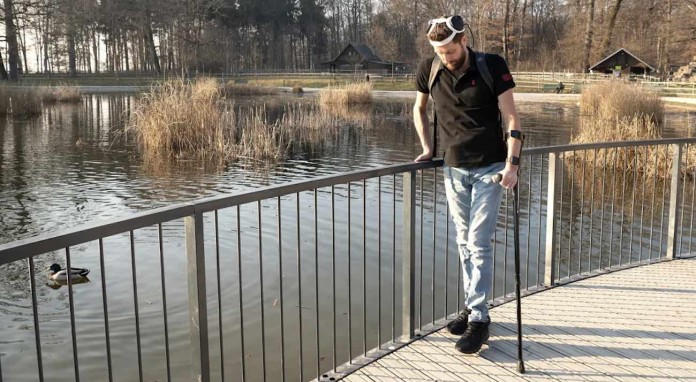
Gert-Jan photo by Weber Gilles for CHUV - Lausanne University Hospital
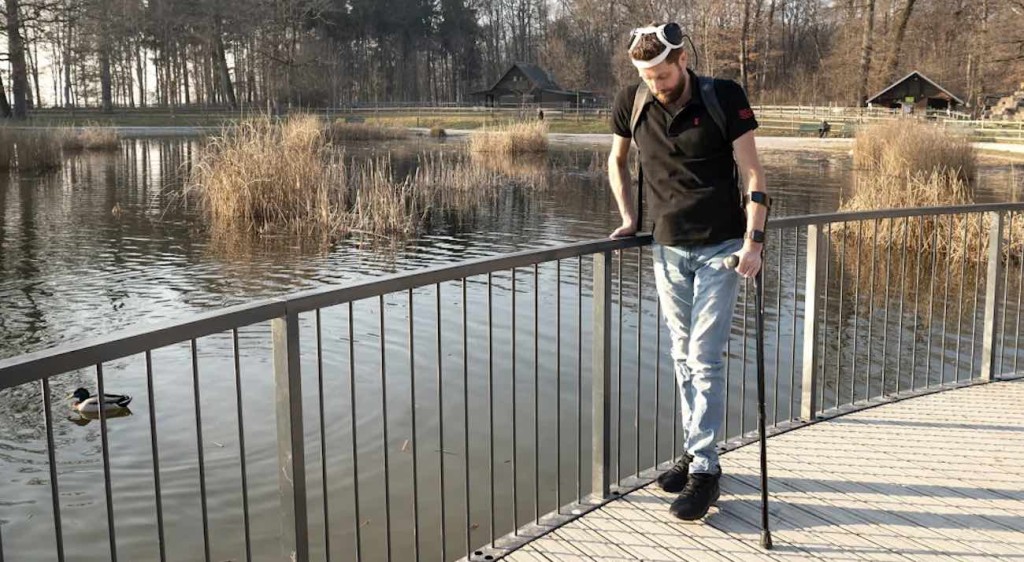
Gert-Jan photo by Weber Gilles for CHUV – Lausanne University Hospital
It’s long been supposed that implants could connect prosthetics to the brain in a way that stimulates nervous system commands with electrical signals.
Now, this idea is closer than ever to realization in a meaningful way, as one man paralyzed from the hips down is able to walk unsupported, even up stairs, thanks to such electrical nerve stimulation.
The patient, Gert-Jan Oskam, lost all movement in his legs after suffering a spinal cord injury in a motorbike accident. After using a precursor technology to gain back a little bit of mobility, Oskam enrolled in a proof of concept study to perhaps make further advances.
Previously, he would have to lift his heel, which would trigger a series of electrical impulses in an implant in his spinal cord that would allow his legs to move. But it was clunky and impossible to navigate uneven surfaces.
“The stimulation before was controlling me, and now I’m controlling the stimulation,” Oskam told NBC of his new equipment.
Now, with an implant in his brain, when Oskam thinks about moving his legs, it sends a signal to a computer he wears in a backpack that calculates how much current to send to a new pacemaker in his abdomen. It in turn sends a signal to the older implant in his spinal cord that prompts his legs to move in a more controllable manner. A helmet with antennae helps coordinate the signals.
The scientists developing the technology and working with him detail that he can walk around 200 meters a day, and stand unassisted for around 2-3 minutes. Once, Oskam details, there was some painting that needed to be done, but no one was around to help him. With the new technology, he simply took his crutch and did it himself.
Incredibly, after less than a year, and completely unexpectedly, scientists believe the technology closed the gap in his nervous system, and he can now lift himself out of a chair, and even walk with the help of a crutch, even when the device is turned off.
The scientists are planning in the future to work with patients with paralyzed arms and hands, and even with stroke victims, as the “digital bridge” is a massive advancement in nervous system stimulation technology.
WATCH the story below from NBC…
SHARE This Incredible Advancement In Biotech With Your Friends…
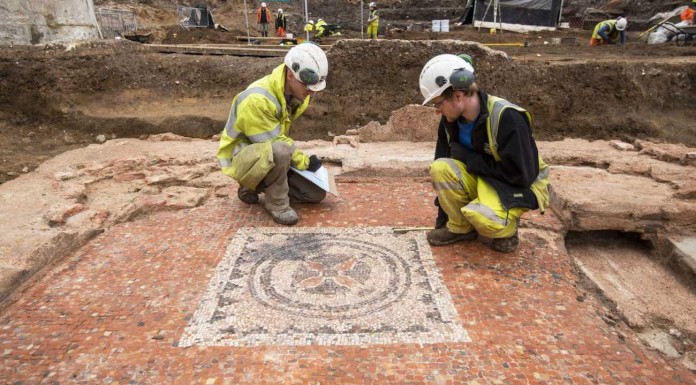
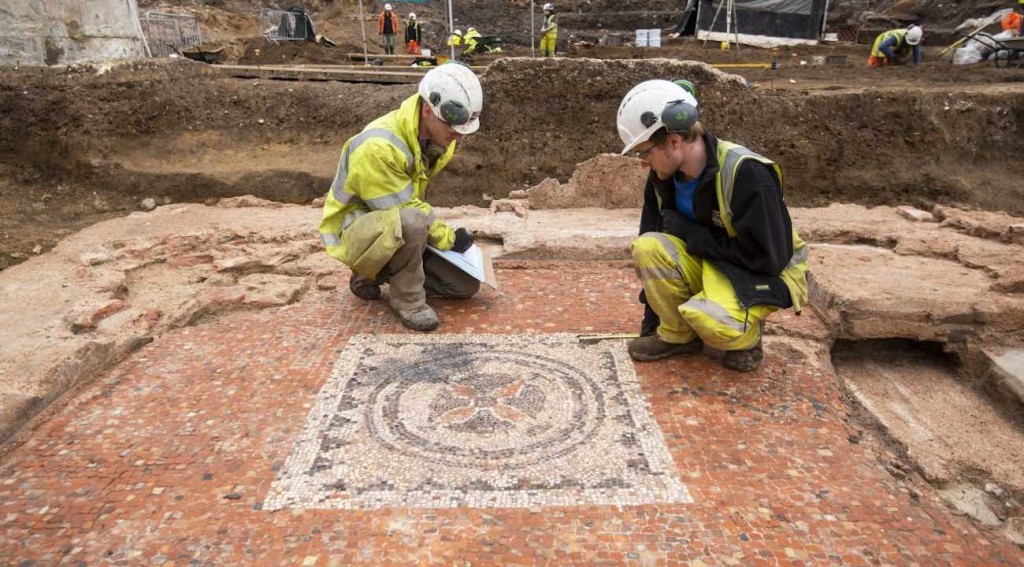
In the south London borough of Southwark, construction work uncovered a Roman mausoleum containing beautiful mosaic flooring.
The “incredibly rare” discovery was confirmed by the Museum of London Archaeology as “the most intact Roman mausoleum ever to be discovered in Britain”.
Excavations turned up coins, pottery shards, and roofing tiles, as well as 80 Roman burials, likely used by the city’s wealthy elite. No burial coffins were discovered, however.
The area, near a tourist hotspot of Borough Market, London Bridge, and the Shard, London’s tallest building, has yielded Roman finds before, including another gorgeous and intact mosaic in 2018 and a Roman sarcophagus that went on display in 2017.
Released by Museum of London Archaeology (MOLA)
The mosaic was the largest ever found in London, and was decorated with geometric, floral, and columnar motifs identical to one found in the German city of Trier.
“The rediscovery of this Roman mausoleum and mosaics is a testament to the rich tapestry of our past,” said Catherine Rose, a councilor for the London Borough of Southwark.
Landsec Developers, who co-own the site, will now begin their construction plants since the excavations have been concluded. The mausoleum will be restored to the best possible condition, and put on display to the public.
SHARE This Unexpected Surprise With Your Londoners…
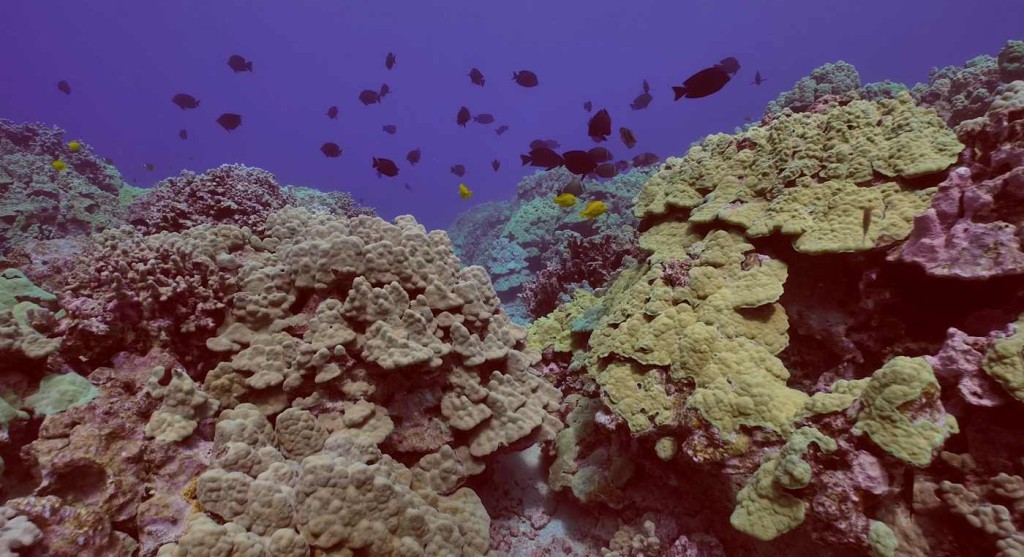
An example of West Hawaii's pristine reefs - credit Greg Asner (ASU)
An example of West Hawaii’s pristine reefs – credit Greg Asner (ASU)
A collaborative effort of scientists and Hawaiian culture-keepers is preparing to undertake the largest restoration of coral reefs in the island chain’s history.
While the scientists work to propagate and study the corals below, a cultural organization called the Kohala Center will work on land to educate how terrestrial activities impact the corals that give such rich life to Hawaiian seas.
Named ʻĀkoʻakoʻa (pronounced ah kō-a kō-a), the effort shares a dual meaning: “to assemble” and “coral,” and is characteristic of the native Hawaiian involvement.
“As a stage for the integration of cultural practice, management, and science, ʻĀkoʻakoʻa will seed a deeper connection between human and coral communities in an era of climate change,” said Greg Asner, director of Arizona State University’s Center for Global Discovery and Conservation Science, who is spearheading the restoration work.
Asner said corals are critical to reef biodiversity and home to millions of marine species, which dot the seafloor with a dizzying array of shapes and sizes, but they’re also the “canary in the coal mine” when it comes to our collective behavior—where corals flourish, land and sea are usually well stewarded.
Compared to other famously rich seas, the Hawaiian Islands have lost only about 7% of their hard corals since research began.
The initial core focus for restorative work will be on the western side of the Big Island, comprising 120 miles of reef and one of the largest coral communities in the Hawaiian Archipelago. Collectively, the West Hawaii coastline harbors a huge range of human and coral conditions.
All the contributions from these community leaders, cultural practitioners, ecologists, data scientists, and global information systems experts have been made possible by a total donation of $25 million from the Dorrance family and Dorrance Family Foundation, combined with collaborative funding from U.S. Sen. Brian Schatz’s office, the Hawaii Division of Aquatic Resources, the National Oceanic and Atmospheric Administration and ASU. The initiative looks to greatly expand restorative work on coral reefs and coastlines of Hawaii and beyond.
ASU Coral Nursery – Greg Asner (ASU)
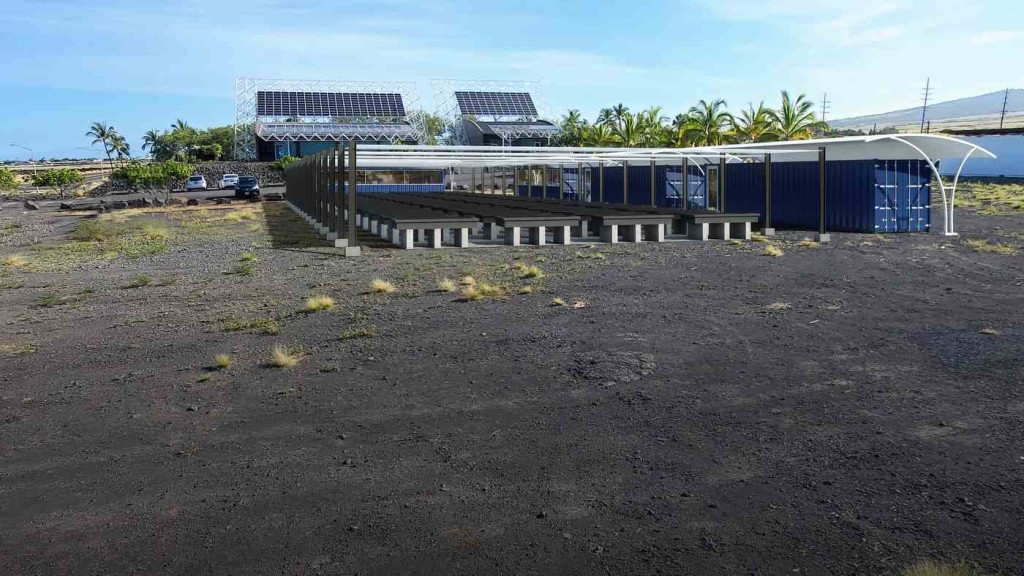
A key part of the collaboration is a new state-of-the-art coral research and propagation facility located at the joint Ridge to Reef Restoration Center in Kailua-Kona. The center is under construction now in partnership with a land restoration organization called Terraformation. The coral facility will be the largest in the world when completed and will become the hub for testing corals for subsequent reef restoration.
“We recognize that the health of our planet is tied to the health of countless interconnected systems,” said ASU President Michael Crowe.
“What happens on land affects the health of our oceans, so threats to our coral reefs stand to impact everyone. This collaboration represents the vast potential to accelerate positive change by joining scientific knowledge and cultural wisdom to address a critically important challenge facing our world.”
SHARE This Inspiring Work With Your Hoaloha On Social Media…
Quote of the Day: “It is during our darkest moments that we must focus to see the light.” – Aristotle Onassis
Photo by: Joshua Woroniecki
With a new inspirational quote every day, atop the perfect photo—collected and archived on our Quotes page—why not bookmark GNN.org for a daily uplift?
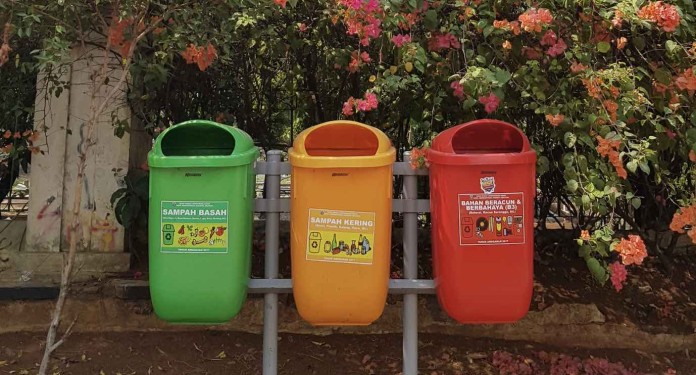
High-tech food waste recycling machines in Seoul. Wikimedia
Of South Korea’s countless kilograms of annual food scraps, very few will ever end up in a landfill. This is because of two reasons—the first is that it’s been illegal since 2005, and the second is because they have perhaps the world’s most sophisticated food waste disposal infrastructure.
While representing a significant burden on the economy, the food waste disposal nevertheless produces ample supplies of animal feed, fertilizer, and biogas that heats thousands of homes.
As the New York Times’ John Yoo and Chang Lee reported from Seoul, South Korean cuisine tends to lend itself to creating food scraps, since many staple dishes come with anywhere from a few to a few dozen sides.
With the culture erring on the side of abundance rather than restraint, many of these small dishes of tofu, kimchi, bean sprouts, and other bites would be tossed in the landfill if it wasn’t illegal to do so.
The government put the ban hammer on it because the mountainous terrain isn’t ideal for landfill construction.
Instead, restauranteurs and street hawkers pay the municipality for a sticker that goes on the outside of special bins. Once filled with food scraps, they are left on the road for collectors in the morning who take 90% of all such waste in the country to specialized collection facilities.
At apartments and among residential housing areas, hi-tech food waste disposal machines are operated by a keycard owned by residents under contract with the disposal companies.
Once taken to the recycling facilities, the food is sorted for any non-food waste that’s mixed in, drained of its moisture, and then dried and baked into a black dirt-like material that has a dirt-like smell but which is actually a protein and fiber-rich feed for monogastric animals like chickens or ducks.
This is just one of the ways in which the food scraps are processed. Another method uses giant anaerobic digestors, in which bacteria break down all the food while producing a mixture of CO2 and methane used to heat homes—3,000 in a Seoul suburb called Goyang, for example. All the water needed for this chemical process comes from the moisture separated from the food earlier.
While one such plant was shut down from locals complaining about the unbearable smell, many plants are odorless, thanks to a system of pipes built into the walls that eliminate it via chemical reaction.
It’s the way South Korea does it. Sure, it costs them around $600 million annually, but they have many admirers, including New York City which hopes to implement similar infrastructure in the coming years.
SHARE This South Korean Born Solution To Food Waste…
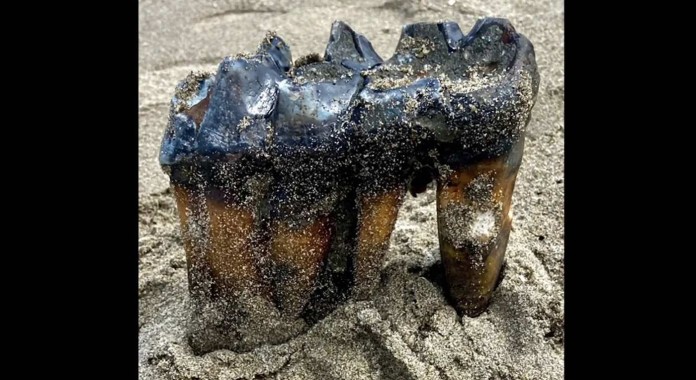
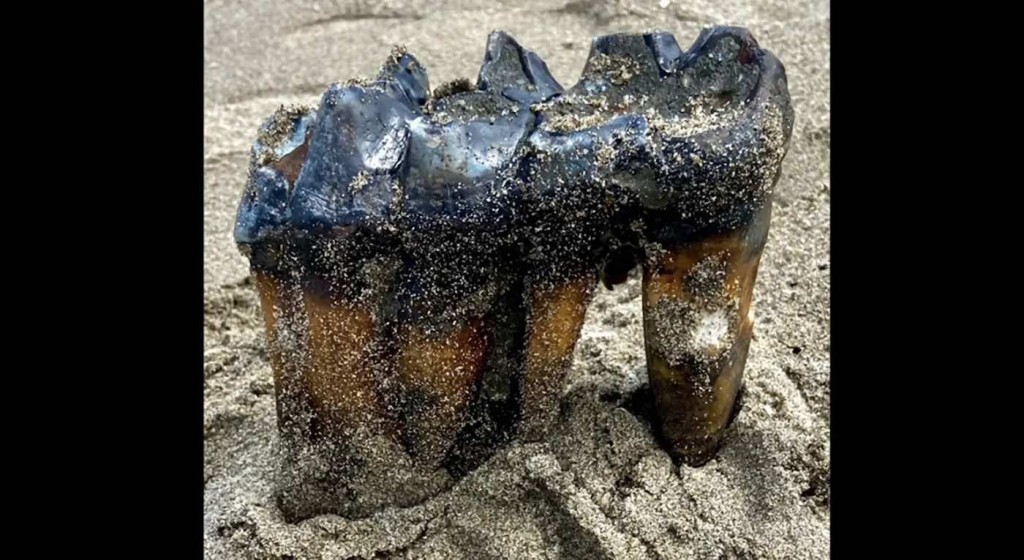
Mastodon tooth found on the beach by Jennifer Schuh
When a California woman found what looked like used firewood on a beach, she snapped some photographs of the nevertheless strange-looking object and went on her way.
As it turns out, she had stumbled across something remarkable—a mastodon tooth, and after posting pictures of it on Facebook, set off a chain reaction that led to quite the saga.
“She didn’t know what it was, the importance of it. It looks like a piece of old firewood. So she left it there. It’s understandable,” said Wayne Thompson, a paleontology collections advisor for the Santa Cruz Museum of Natural History.
KRON4 News reports that Santa Cruz is a hotspot for mastodon remains, and Thompson himself actually reassembled a whole mastodon skull for the museum once: it took 2 years.
Thompson contacted the woman, Jennifer Schuh, explaining the situation and asking her to go back and retrieve the foot-long bone, but, as she arrived there she realized that unlike her, someone else didn’t pass up the chance to pocket the super rare find.
A weekend of beachcombing didn’t turn it up, and so Thompson went to social media pleading to the new mystery owner to do the right thing and turn it over to the museum.
Then, a call came in from the nearby town of Aptos. Jim Smith had found it on a regular beach jog. According to Mr. Smith, he also didn’t know what it was but took it home rather than to social media.
Jim donated it to the museum.
“It’s super, super, super important for understanding elephant life in Santa Cruz County during the last Ice Age. There are only a few mammoth specimens, and mammoths are more common than mastodons. Aptos was a popular destination for Ice Age proboscideans,” Thompson told KRON4. “It’s a piece of Santa Cruz history.”
Alive for between 5 million and 10,000 years ago, mastodons are the smaller, rarer cousins of mammoths, and while Santa Cruz is famous for their remains, this is only the third-locally recorded mastodon fossil.
Schuh didn’t get to take home such an important piece of natural history and set it above her mantle, but she went online and bought a scaled replica to wear as a necklace, saying it’s not often one gets to touch something with so much history.
WATCH the story below from NBC…
SHARE This Rare Discovery And The Comedy Of Errors That Followed…
This is Part 2 of a two-part exclusive on World at Large. Some sections are taken from Part 1, published in April.
Out in the ultra-rural jungles of eastern Madagascar, something is happening that all climate-conscious philanthropists and investors should take note of.
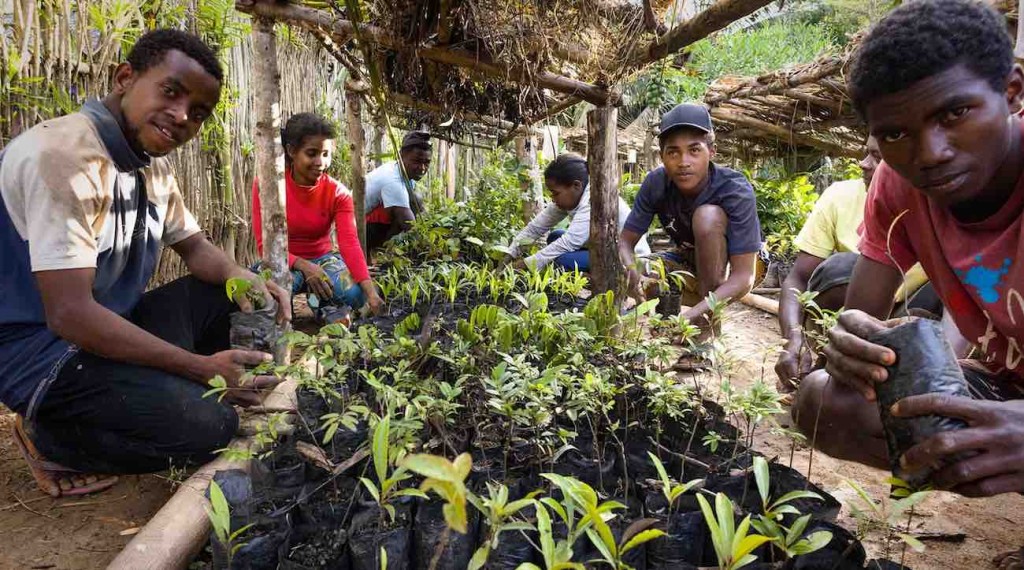
A few intrepid locals have created a 6-year, work-for-knowledge program that’s turning jobless country folk into passionate, skilled, forest management agents and entrepreneurs, ready to show the world that they themselves have the power to restore the glory of Madagascar’s stunning biodiversity.
Organized by a Malagasy woman and her Wall Street ex-pat husband, Green Again Madagascar is unlike any other tree-planting nonprofit around.
“It’s really exemplary of bottom-up restoration,” Leighton Reid, assistant professor in the School of Plant and Environmental Sciences at Virginia Tech, who conducted research for the group, told WaL.
Restoration success in Madagascar is simply different than in other countries. Madagascar split from the Indian subcontinent around 90 million years ago, allowing native plants and animals to evolve in relative isolation. Consequently, it’s a biodiversity hotspot with over 90% of wildlife being endemic.
More than 80% of Madagascar’s 14,883 plant species are found nowhere else in the world, a number which includes five whole plant families.
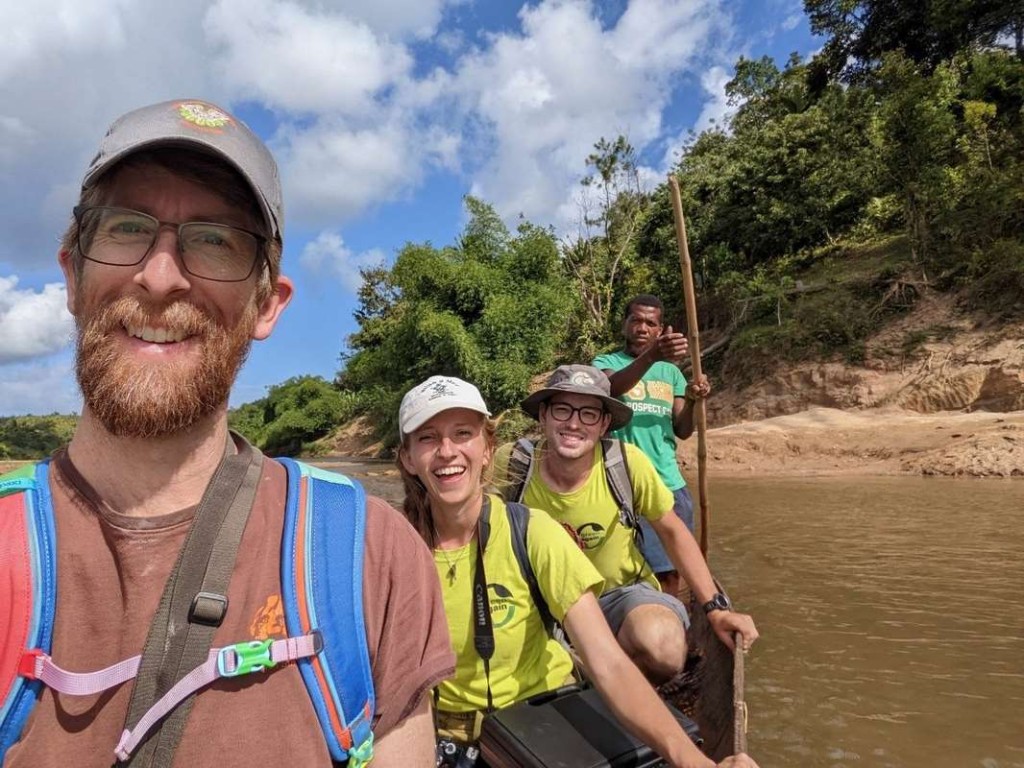
PICTURED Leighton Reid and colleagues Eva Colberg and Chris Logan cross the Ivoloina River in a dugout canoe. PC Leighton Reid.
Yet, none of this staggering biodiversity has been able to create enough urgency among conservation NGOs to develop a functional plan to stop forest loss in the country. A study published alongside Part 1 of this WaL exclusive showed that Madagascar had lost 4.85 million hectares of tree cover since 2000, equivalent to a 25% national loss.
Yet this isn’t always because of macro problems like a lack of funding, organization, or accountability. Assistant Professor Reid worked with Green Again Madagascar to gather data on how to germinate and grow various species.
“There are major technical challenges to reforestation in Madagascar, Madagascar has about 90% plant endemism, so if you’re trying to do reforestation in Madagascar, and nobody has studied how to propagate a given tree species, you can’t borrow that information from Mozambique or South Africa,” assistant professor Reid told WaL.
How to truly make a forest
Matt Hill, the CEO and Founder of Green Again Madagascar, explained that most organizations have the time and patience to plant an average of 5 species when reforesting elsewhere on the island. Green Again’s inventory, thanks in no small part to the near total staffing of the organization by Malagasy, consists of 65 species.
In order to gather data on how to ensure these trees can survive long enough so they don’t bring the whole reforested ecosystem down with them when they die, Reid, who had gotten to know Hill some years before, came out to work with Green Again in 2014-2015 to see if they could establish best practices for 17 different species.
They tried a variety of different techniques and strategies to see if they could get the trees to survive transplantation from the nursery which included additional watering, nutrient amendments, and placement around a host tree. Key among the successful strategies was the timing of planting—between October and January.
Trees planted during this 3-month window when the weather was perfect had about a 90% survival rate. Too late, and they would be drowned during the monsoon season, too early and they would fail to drought. This also means that fewer trees can be kept in nurseries since there’s nothing to do with those that aren’t planted during that 3-month window.
The only other consistently successful treatment was the construction of a small tee-pee of fronds that shaded the saplings during the hottest time of the day.
“We assumed almost that having some shade was going to be helpful, and that was based on the knowledge of local Malagasy farmers, they build these little tee-pees from fern leaves on top of their crops when they plant them, and it seems to help that,” Reid told WaL. “Trees that had those little fern tee-pees were 75% less likely to die”.
It all goes to show how difficult tree planting and reforestation—now so widely practiced as a climate mitigation strategy, can actually be, if any long-term thought of the quality of the forest and its trees is given.
Certain species fared better than others, and the data isn’t always clear why.
“Trema orientalis: it had a 94% survival after 1 year, and 0% after 6 years. That’s considered a success,” Reid explains, differentiating between ‘pioneer species’ and longer-lived ones. “If we were to see that in different species—Ficus species, 66% survival after 1 year, 0% after six years… in my mind that’s a failure”.
However, he’s confident that their data combined with Green Again’s intellectual capital on tree planting is enough to ensure replanted forests endure.
WaL asked Reid if he was able to communicate with any of the local landowners whereupon the restoration project and research were being done about why it was they were interested in restoring it.
“I think there’s some nostalgia, especially among older people, for the biodiversity that’s gone. You also hear people talk about how they used to go out and get medicines from the forest, and that they can’t do that anymore”.
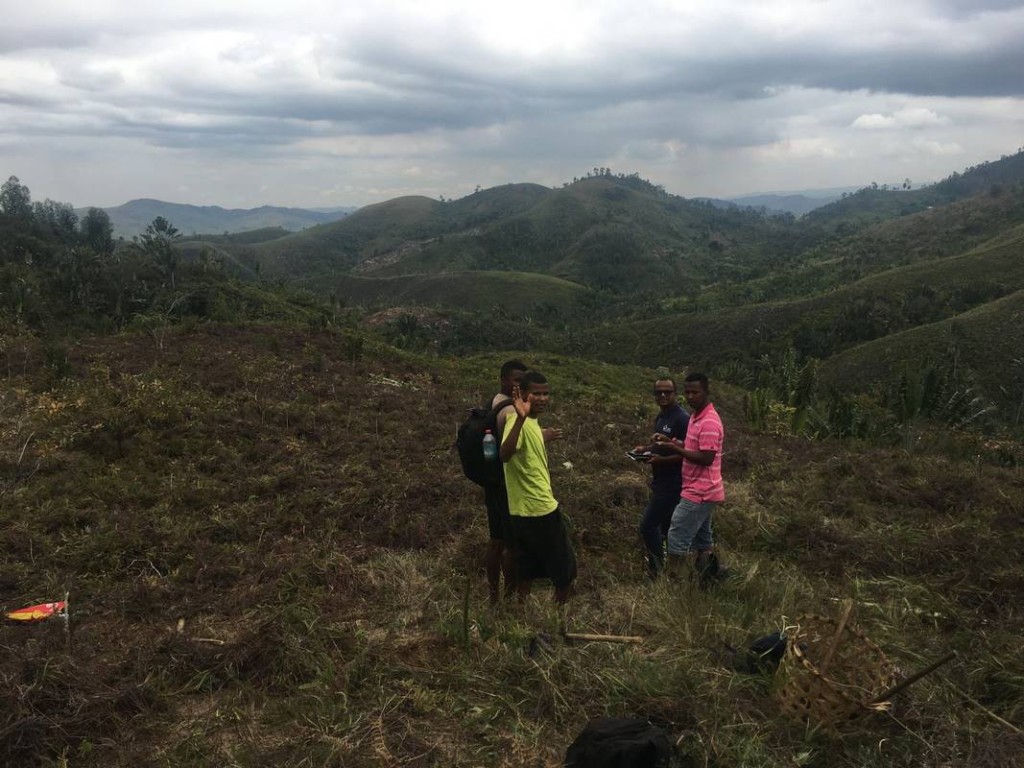
PICTURED: An example of the typical marginal land worked by Green Again, this one in Ampasimbe. PC: Matt Hill, Green Again Madagascar.
The buy-in cost and helping animals
As detailed in Part 1, Green Again Madagascar can achieve reforestation where and how no other organization can because they have the complete buy-in from the locals, with the average tree nursery crew member living within a 60-90 minute walk from the nursery in the extremely rural eastern reaches of the country.
However, accompanying that extreme locality is the necessity to work where the locals are—places where animals like lemurs haven’t been seen in a generation or more. These areas might have been burned for agriculture again and again, then abandoned or turned into marginal village land rather than being allowed to regrow naturally.
Because of this, there has been little history of protocol for interactions between Green Again’s teams and any of the iconic animals of Madagascar like the fossa, lemurs, and chameleons.
“Most of our farmers live in places without any animals, but now we’re starting some new experiments that are appropriate for doing just outside national parks, and the reason is that it depends on the animals,” explained Green Again CEO Hill. “You’ve got to tease the animals out”.
When not planting trees for corporate or Malagasy customers, Hill and Green Again have had time and resources to carry out projects on behalf of the wildlife called “applied nucleation,” a method of assisted natural regeneration that relies on creating small islands of woody pioneer plant species a short distance from existing wildlife habitat that mimics how vegetated areas naturally expand in nature.
It encourages seed dispersers like rodents, birds, moths, and bats, to adventure out into the island to help propagate the areas around it.
“We’ve been doing applied nucleation for four years now but never on a large-scale, only two or three islands. This year, we’re doing 141 islands, and next year we’re [doing…] 244,” said Hill. “By 2030, we should be doing 1 kilometer by 1-kilometer square, which is huge”.
Compared to simple plantation-style reforestation, biodiversity of birds is the same between applied nucleation and plantation-style islands, one study found—also published by Leighton Reid. The concentration of leaf-litter anthropods however, is much higher in applied nucleation islands rather than plantations. Plantations were also significantly more expensive.
“Historically, we’ve been about the trees, and we’re trying to concentrate on that because there’s so much [international] attention on the animals but not on where they live. Now… we’re putting the necessary tools out there for the lemurs to save themselves”.
The Malagasy government has made large pledges to the international community about how much of its own forests it will restore—up to 9.8 million hectares over the next 10 years. The administration of President Andry Rajoelina could do very well for these goals by looking within its own borders for guidance, capacity, and know-how for such a project rather than toward the West.
Green Again Madacasgar is changing the world in the way every bloated-budget development organization says its own various uncoordinated agencies should—through engagement with local stakeholders.
An organization cannot be more local, and their locals more of a stakeholder, than Green Again Madagascar.
SHARE This Inspiring Madagascar Solution With Your Friends…
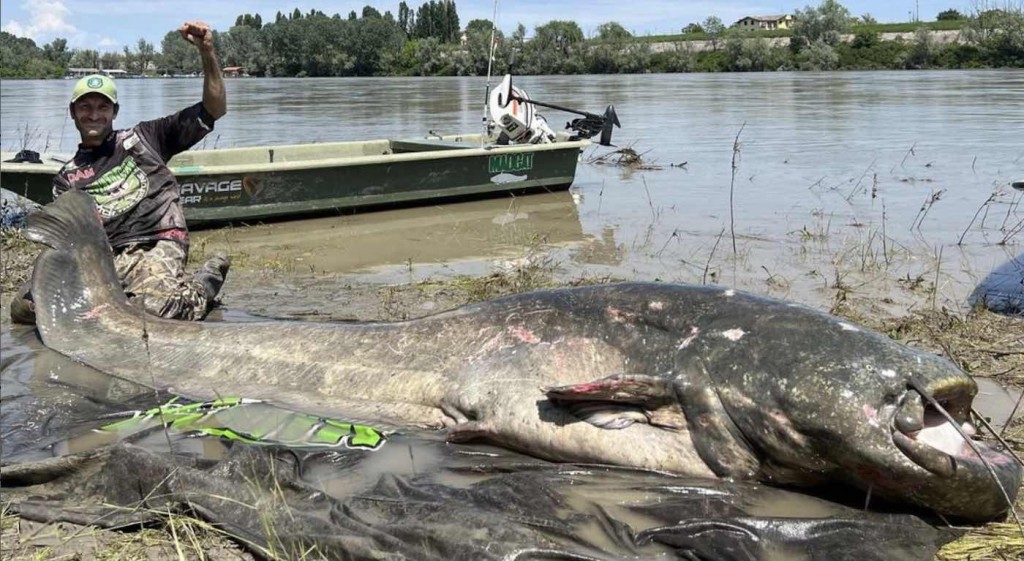
A professional Italian fisherman just reeled a 9-foot catfish out of a river that just last year was suffering so badly from Europe’s heatwave that in some places it had dried out almost completely.
As long as a U-Haul truck, he released the fish in order to allow such a specimen to continue influencing the ecosystem.
The true river monster was a giant wels catfish, and Alessandro Biancardi was alone when he had the first inklings that whatever it was that had tugged on his line on May 25th was not going to come quietly.
What was just another normal day on the Po River quickly turned into a battle as Biancardi struggled against the fish whilst negotiating sunken hazards and strong currents.
“The fear of losing it almost sent me into a panic,” he writes on the website of his fishing team, Madcat. “I was alone facing the biggest catfish I [had] ever seen in 23 years.”
Exhausted, he eventually took the beast to shallow water where he was able to land it. It was at that point that he became so preoccupied with the fish that he forgot to moor his boat, which drifted away with all his belongings.
Rushing to tie the fish up, and recovered his boat and called a friend that was staying nearby at a fishing camp full of people like him who had been hoping to land one of the Po’s famous catfish.
With 10 witnesses, Ale whipped out his measuring tape—9 feet 4 inches (285 cm) the biggest in his life, and, according to Madcat, the world.
He sent the measurements to the International Game Fish Association for consideration for the catch-and-release record. Madcat says it has beaten the previous record by 4 cm.
“I was very curious about the weight but I feared too much to stress that rare specimen,” wrote Biancardi, explaining that he then let it back into the river.
Many fear the already drought-stricken river will suffer further still after a dry winter, but the Po, which Virgil described as the king of rivers, (Fluvious rex) still has an ecosystem intact enough to produce monsters
SHARE This Once In A Lifetime Catch With Your Friends…