All News - Page 277 of 1720 - Good News Network
Home Blog Page 277

Engineers Make Clear Tape 60x Stronger, Yet Still Removable, Inspired by Ancient Japanese Paper-Cutting Art

Professor Michael Bartlett – by Alex Parrish for Virginia Tech

Kirigami, the ancient Japanese art of cutting paper, has been adapted by researchers at Virginia Tech to make sticky tape much stronger, yet easier to remove than current super-adhesives.

From quickly fixing household items to ensuring a reliable seal on a package to be mailed, it’s helpful to have tape with a strong bond—but removing it may only be possible by scraping—and hoping surface pieces don’t tear away.

Professor Michael Bartlett’s university team succeeded in massively increasing the adhesive bond but also make the substance easily removable.

“This seemingly paradoxical combination of properties could dramatically change applications in robotic grasping, wearables for health monitoring, and manufacturing for assembly and recycling,” explained Prof. Bartlett.

Easily removable masking tape was first developed in the 1920s to meet a need for car painters who wanted better options for painting two colors on vehicles. Since then, factories have rolled out invisible tape for wrapping presents, electrical tape for covering wires, and duct tape for more uses than it was ever intended to fill.

“Normally, when tapes are peeled off, they separate in a straight line along the length of the strip until the tape is completely removed. Strong adhesives are made more difficult to peel, while reusable adhesives promote the strength-limiting separation.”

Bartlett’s tried to control the “separation path”, inspired by kirigami which uses folding and cutting to transform a flat sheet of paper, the method kids use when creating paper snowflakes.

LOOK: Forget Harry Potter’s Cloak, a Real-Life Invisibility Shield is Now Taking Orders

They made a series of U-shaped cuts across an adhesive, and found that applying these cuts made the bond of the tape stronger by a factor of 60.

“An engineered cut can force the adhesive separation path to go backwards at specific locations, which we call reverse crack propagation, making the adhesive very strong. But by peeling in the opposite direction, it always goes forward, making it easy to remove.”

“This is quite unusual behavior, but it is very useful to make strong yet releasable adhesives.”

The team also reported—with published research in Nature Materials—that the type of tape didn’t matter. Kirigami increased the bonds of every type of tape tested, from packaging tapes to medical tapes. In all cases, strong adhesive bonds become even stronger and normally weaker adhesives increased in strength, too.

“What really matters is the shape and size of the cut,” said former graduate researcher Dohgyu Hwang. “We do not have to rely on the specific adhesive material, but as long as the cuts are made at a characteristic size, which is defined by the physics of the adhesive, we found that this enhanced adhesion in every system we tried.”

DISCOVERY: This Iridescent Coating Could Cool Your House Without Air-Conditioning

“We also use a rapid digital fabrication approach, so we can quickly create highly customizable adhesives with tunable strength,” said Bartlett. “This is very exciting for the development of future adhesives.”

Check out the video from Virginia Tech…

MAKE This a Sticky Post on Social Media by Sharing the Breakthrough…

Eerie Echo Detected Coming From Milky Way’s Black Hole 200 Years Ago (Listen)

NASA/CXC/UMass/Q.D. Wang

An international team of scientists has recorded a sound that came from the supermassive black hole at the center of our Milky Way galaxy, stemming from an event around 200 years ago.

The sound was emitted during an intense period of activity as the dark hole known as Sagittarius A* (pronounced ‘Sagittarius A star’) stirred from a state of dormancy, gobbling up gas and dust.

The team, led by Frédéric Marin, a CNRS researcher at the Astronomical Strasbourg Observatory in France, has revealed the past awakening of this gigantic object, which is four million times more massive than the Sun.

At the beginning of the 19th century, over a period of one year, the black hole gobbled up cosmic objects that got a little too close to it, before once again entering a state of quiescence.

No effect was felt on Earth, as the distance between Sgr A* and our planet is too great (about two billion times the distance from the Earth to the Sun).

However, the X-ray echo detected and published this week in the journal Nature, reveals that the original intensity was at least a million times greater than the frequencies currently being emitted by Sgr A*.

“To get an idea of the increase in intensity of the X-ray emission when the black hole emerged from its quiescent state, it is as if a single glow-worm hidden in a forest suddenly became as bright as the Sun,” the team said in a news release.

CHECK OUT: Astronomers Discover Hundreds of Mysterious Filaments Pointing Towards Our Milky Way’s Massive Black Hole

“These findings explain why galactic molecular clouds near Sgr A* are shining more brightly than usual: it is because they are reflecting the X-rays emitted by Sgr A* 200 years ago.”

To carry out their research, the scientists used NASA’s IXPE (Imaging X-ray Polarimetry Explorer) satellite3, which was for the very first time able to detect the directional polarization of this X-ray light with great precision and also determine its source, something that had previously proved impossible.

Rather like a compass, the polarized X-ray light points directly to its source, Sgr A*, even though the latter is now virtually extinct. The scientists are continuing their work on Sgr A* to try to determine the physical mechanisms required for a black hole to switch from a quiescent state to an active one.

RELATED: Astronomers Detect Radio Pattern ‘Like a Heartbeat’ From a Galaxy Far Away

Listen to the sonification of the detected echo from 200 years ago below…

SEND the Echo From 200 Year-old to All Your Old Friends on Social Media…

Survey Says These Are the Best Things About Raising a Child – #1 are the Cuddles

Photo by Surface
Photo by Surface

A poll of moms, dads, guardians, and caregivers of children under 13, found that 84 percent consider raising children to be the greatest thing to happen to them—and the best thing may be their cuddles.

Other favorite aspects include seeing their personalities develop and laughing often over the youngsters’ quirky questions and funny remarks.

Watching kids’ movies, seeing them do something you’ve taught them, and reading bedtime stories together, were also among the top wonders of having kids in the house.

The survey of 1,300 adults by Calpol—which is marking its five-year partnership with a British children’s helpline by launching its ‘Don’t Bottle it Up!’ campaign—found being a parent has impacted the mental wellbeing of 66 percent.

While 19 percent believe raising kids can help you appreciate the little things in life more, only 61 percent of those polled said they had enough support and resources around how to parent the kids in the first six months.

“It’s just as important to look after your own mental health as well as your child’s wellbeing,” said Kam Thandi, head of the NSPCC Helpline. “A strong support network really goes a long way.”

The poll showed that 14 percent love listening to the conversations kids have with each other. And 12 percent similarly enjoy feeling like a ‘hero’ after doing something minor like replacing a toy’s batteries.

Nearly a quarter also think having new experiences for the first time with a child is one of the greatest joys.

POPULAR: Best ‘Dad Jokes’ Compiled for Father’s Day in New American Poll

Of those respondents with more than one child surveyed via OnePoll, 72 percent believe they were a ‘better’ parent the second time around.

Parents consider patience to be the most important attribute for guardians to have (41 percent), followed by a loving nature (30 percent), and being ready for the unexpected (20 percent).

CHECK OUT: Poll Reveals The Secret to Happiness is Practicing Gratitude

Calpol, along with the NSPCC Helpline, is hosting a free online panel discussion on parental worries on July 10, from 12-1 pm.

THE 22 BEST THINGS ABOUT BEING A PARENT TO KIDS UNDER 13:

1.    The cuddles
2.    Watching their personalities develop
3.    They make you laugh
4.    Hearing some of the funny things they say
5.    Having new experiences with them for the first time
6.    They make you appreciate little things in life more
7.    Reliving the magic of Christmas through a child’s experience again
8.    Seeing them do something you’ve taught them
9.    The many quirky and wonderful questions they ask
10.   Birthday celebrations
11.   Seeing the world through their eyes
12.   Learning new things alongside them
13.   Watching kids’ films together
14.   Reading bedtime stories together
15.   Listening to conversations they have with other children
16.   Feeling like their hero when you do something like replacing the batteries in a toy
17.   The cute compliments they give
18.   You appreciate your own parents more
19.   Taking them to the zoo
20.   Getting to make friends with other moms/ dads/ caregivers
21.   Hearing them talk to themselves in bed at night
22.   Buying them toys you secretly want to play with yourself

Great Monarch Migration Seems to Owe Success to White Spots on the Butterfly’s Wings

Photos by P. Barriga / University of Georgia study

Monarchs are the only insects to attempt such a massive trek as the one from Canada to Mexico—and the success of this butterfly’s 3,000-mile journey may come down to how many white spots are on their wings.

A new study by University of Georgia researchers suggests that the butterflies with more white spots are better at reaching their long-distance wintering destination.

Although it’s not yet clear how the spots aid the species’ migration, it is believed the spots change airflow patterns around the wings.

For thousands of years, the orange-winged wonder has been traversing North America to spend the winter in oyamel fir trees in the mountain forests in south and central Mexico.

How an animal with a brain the size of a poppy seed navigates to this one special place has baffled ecologists for decades.

“We undertook this project to learn how such a small animal can make such a successful long-distance flight,” said lead author Andy Davis, an assistant researcher in the University’s Odum School of Ecology. “We actually went into this thinking that monarchs with more dark wings would be more successful at migrating because dark surfaces can improve flight efficiency. But we found the opposite.”

“It’s the white spots that seem to be the difference maker,” Davis said.

The researchers analyzed nearly 400 wild monarch wings collected at different stages of their journey, measuring their color proportions. They found the successful migrant monarchs had about 3% less black and 3% more white on their wings.

FASCINATING: Scientists Find the Secret to ‘Unhackable’ Security Systems on the Wings of Butterflies

An additional analysis of museum specimens that included monarchs and six other butterfly species showed that the monarchs had significantly larger white spots than their non-migratory cousins.


University of Georgia / P. Barriga

The only other species that came close to having the same proportion of white spots on its wing was its semi-migratory relative, the southern monarch.

The coloring is related to the amount of light and heat they receive during their journey. More white spots means less exposure to the sun’s radiation.

“The amount of solar energy monarchs are receiving along their journey is extreme, especially since they fly with their wings spread open most of the time,” Davis said. “After making this migration for thousands of years, they figured out a way to capitalize on that solar energy to improve their aerial efficiency.”

LOOK: Imperial Moth Spotted With Name ‘Anna’ Spelled Out on its Back Below a Face

But as temperatures continue to rise, altering the solar radiation reaching Earth’s surface, monarchs will likely have to adapt to survive, said Mostafa Hassanalian, co-author of the study and an associate professor at the New Mexico Institute of Mining and Technology.

But it’s certainly not all bad news for the flying insects.

Davis’ previous work showed that summer populations of monarchs have remained relatively stable over the past 25 years. That finding suggests that the species’ population growth during the summer compensates for butterfly losses due to migration, winter weather and changing environmental factors.

RELATED WIN: Monarchs Rebound Again–Beating Last Year’s Total, Proving Success is Not a Fluke

“The breeding population of monarchs seems fairly stable, so the biggest hurdles that the monarch population faces are in reaching their winter destination,” Davis said. “This study allows us to further understand how monarchs are successful in reaching their destination.”

The study, sub-titled “How the monarch got its spots,” was published in PLOS ONE.

FLY This Fascinating Study to Butterfly Lovers on Social Media…

“I wonder what it would be like to live in a world where it was always June.” – L.M. Montgomery

takahiro taguchi

Quote of the Day: “I wonder what it would be like to live in a world where it was always June.” – L.M. Montgomery 

Photo by: takahiro taguchi

With a new inspirational quote every day, atop the perfect photo—collected and archived on our Quotes page—why not bookmark GNN.org for a daily uplift?

Grocery Carts Can Tell Researchers Who May Be at Risk for Stroke –And 39 Shoppers Were Diagnosed

Grocery cart with sensor for predicting stroke -Liverpool John Moores University (video still)

Supermarket carts in Liverpool, England, were fitted with sensors that could identify people at risk of a stroke—and dozens of willing participants were diagnosed.

Atrial fibrillation, or Afib, is a common heart rhythm disorder that causes blood clots to form in the heart and can cause breathlessness and extreme tiredness while doing simple of chores.

More than 40 million people around the world have atrial fibrillation, which increases the risk of stroke five-fold, but it’s a disorder that can be spotted with a simple pulse check.

2,155 adults volunteered to participate in the study, organized by a team from Liverpool John Moores University. Professor Ian Jones sought to test the possibility of giving health checks to people out in public without disrupting their daily routines.

“Over the course of two months, we identified 39 patients who were unaware that they had atrial fibrillation. That’s 39 people at greater risk of stroke who received a cardiologist appointment.”

Jones got help from the University’s engineering department which modified the carts, adding electrocardiogram (ECG) devices embedded into the handles. The light would show as red if an irregular heartbeat was detected; otherwise it stayed green.

The team rolled out the carts (seen in the video below) to shoppers who volunteered to participate at four city supermarkets, including Sainsbury’s and Lloyds Pharmacy stores. They browsed the supermarket aisles after being asked to hold the bar for at least 60 seconds before releasing.

RELATED: Stroke Recovery Improved for 70% of Patients Taking Celery Seed Drug

An in-store pharmacist then did a manual pulse check and a second sensor-reading, this time using a standalone bar not attached to a cart, with the participant standing still.

“Nearly two-thirds of the shoppers we approached were happy to use a trolley,” said Jones, the lead author of the study’s report presented yesterday at a European Society of Cardiology meeting in Edinburgh. “The vast majority of those who declined were in a rush, rather than wary of being monitored.”

“This shows that the concept is acceptable to most people and worth testing in a larger study.”

Over the course of the SHOPS-AF study, a cardiologist reviewed data from any volunteer with a red light or irregular pulse. Participants were informed of the results, and those with unclear ECGs got an invitation to repeat the measurement. Those who were confirmed to have Afib were given a cardiologist appointment within two weeks, courtesy of the UK health system, NHS.

POPULAR: Sunshine Could Ward Off Dementia and Strokes: First-Ever Direct Link to Vitamin D Found

220 participants either had a red light on the sensor and/or an irregular manual pulse check, but only between one-quarter and one-half of those were officially diagnosed as having atrial fibrillation—and Jones has ideas about adjustments that need to made for the system to be more accurate.

“For example, having a designated position on the bar to hold onto, as hand movement interfered with the readings.

“In addition, the European Society of Cardiology Guidelines require just a 30 second ECG to diagnose atrial fibrillation, so we aim to find a sensor that will halve the time shoppers need to continuously hold the bar.”

Blood thinning medications substantially lower the future risk of stroke, but too many people only discover they have the condition when it is too late. Screening programs like this could identify vulnerable individuals so they can be treated.

GREAT NEWS: People Over 70 Who Walk Just an Extra 500 Steps a Day Lower Risk of Heart Failure or Stroke by 14 Percent

“Checking for atrial fibrillation while people do their regular shopping holds promise for preventing strokes and saving lives,” says Jones.

A crucial aspect would be providing immediate access to a health professional who can explain the findings.

HAVE a HEART–Share This on Social Media to Inspire Others…

Rescued Duckling Raised by Couple Returns to Their Home 6 Months Later–With 11 Chicks (LOOK)

SWNS / Youtube
Philip and Julia Garner with brood- SWNS

A couple who hand-reared a one-day-old duckling before releasing her back to the wild were left stunned when she returned to their home six months—and brought a few family members.

Phil Garner took the tiny mallard under his wing after finding her abandoned on a fishing lake, before bringing her back to his wife Julia, snuggled in his coat pocket.

The 67-year-old said the waterfowl, which they named Freda, became partially potty-trained using towels after she came to live in their three-bed house in Leeds, England. The couple even took turns sleeping near the “demanding” bird’s bed.

Julia said her husband of 16 years was undergoing agonizing treatment for bladder cancer when he first found Freda. She now considers the duck Phil’s “guardian angel” as he was able to focus his energy on caring for her during that difficult period.

“I wasn’t keen on my home becoming a duck sanctuary at first, but I think she was sent for a purpose… Freda helped him through it.”

They had tried for hours to find the ducking’s parents before being told by a fishery manager that she would perish if left in the wild.

“It was freezing cold that day and there was no sign of the mum, so we brought her home and then thought, ‘What do you do with a day-old duckling?’

They let Freda roam around their living room, kitchen, and garden—and allowed her to swim in a pond they’d created for goldfish. It wasn’t long before she formed a bond with her rescuers.

Freda at two weeks old – SWNS

“She’d either sleep in a box, by your feet, or under the coffee table,” said Phil. “But one of us had to sleep downstairs otherwise she started screeching and crying.

“She would sit on my shoulder and on my table while I was doing my computer work. She was that loving.”

They fed her with a diet of grubs (bought in the pet shop), until she flew the nest last October, after spending a few weeks “screeching” at other ducks she could hear on a local lake.

“It was a bit sad when Freda first went, but at the same time, it was a bit of a relief because she was hard work.”

A few months later, however, they were amazed when she came waddling up to their doorstep in April with a new boyfriend—and their newly hatched brood of ducklings which have taken up residence in their garden once again.

WATCH: 10 Ducklings Follow Mom Through Elementary School Continuing a 20-Year Tradition

In the back of his mind, Phil was expecting her to come back after being told that they “imprint on you, for life.”

Phil Garner – SWNS

“But going from one duckling to 11 was chaos,” exclaimed Phil. “It was like, ‘What do you do with this lot?’ They’re now eight inches long and as fat as butter—fluffy, very fluffy.

“They need to swim, they need to wash themselves. So we’ve got tubs everywhere. The garden looks like a bomb site, but I’m not bothered.

“We allow them in the fish pond in the front garden, but we’ve dug a separate pond in the back and feed them on cornmeal, worms, maggots and Weetabix.

CHECK OUT: Irish Farm Cat ‘Nurses’ Three Baby Ducklings

“You’ll hear them going ‘cheep, cheep’ when they want to eat or if the mother disappears, but they’re pretty quiet.”

Phil expects the love birds—Freda and Fred—to stay with them for a few more months but is prepared to re-home them on a nearby pond if they don’t go back into the wild.

“We expect her to fly off and go back to where she was before, and the ducklings will just follow her and do their own thing.

POPULAR: Farmer Filmed the Adorable Moment His Newborn Quails Caused a Mini Stampede in His Home

“If not, there’s a good local fishing pond near us that’s got a fence all the way around it, which will keep out the foxes.”

SPRING a Smile on Your Friends By Sharing on Social Media…

Some of the Best National Parks Where You Can Avoid the Summer Crowds

Dry Tortugas - NPS pub domain

Last year, America’s national parks received overflowing record crowds during the summer months. Places like Grand Canyon, Yosemite, Grand Tetons, Yellowstone, Shenandoah, Sequoia, and Great Smokey Mountains were standing room only in some places.

But as glorious as these temples to nature’s splendor are, there are 63 (pending 64) national parks in the country, some of which receive barely fifty-thousand visitors a year.

In time for planning a summer holiday, it’s worth checking some of these spectacular landscapes out, beating the heat and the crowds while enjoying the peace and tranquility of nature, rather than suffering full campgrounds and park-road traffic jams.

North Cascades – NPS

For hiking: North Cascades: Washington

Sometimes called the “American Alps” the North Cascades range has over 400 miles of trails, offering exceptional hiking opportunities year-round for kids and the elderly as well as the most adventurous. The park ensconces one of the world’s largest stretches of temperate rainforest in the world, a rare ecosystem that has the humidity of a jungle, but the tree cover of a temperate woodland.

Over 300 glaciers crown the young mouintain range, and it’s one of only two places in the Lower 48 states where grizzly bears can be seen.

“North Cascades remains well off the radar: Just over 30,000 people visited last year, a mere 2 percent of the traffic of its southern neighbor, Mount Rainier,” reports Nat Geo.

Great Basin – NPS

For stargazing: Great Basin: Nevada

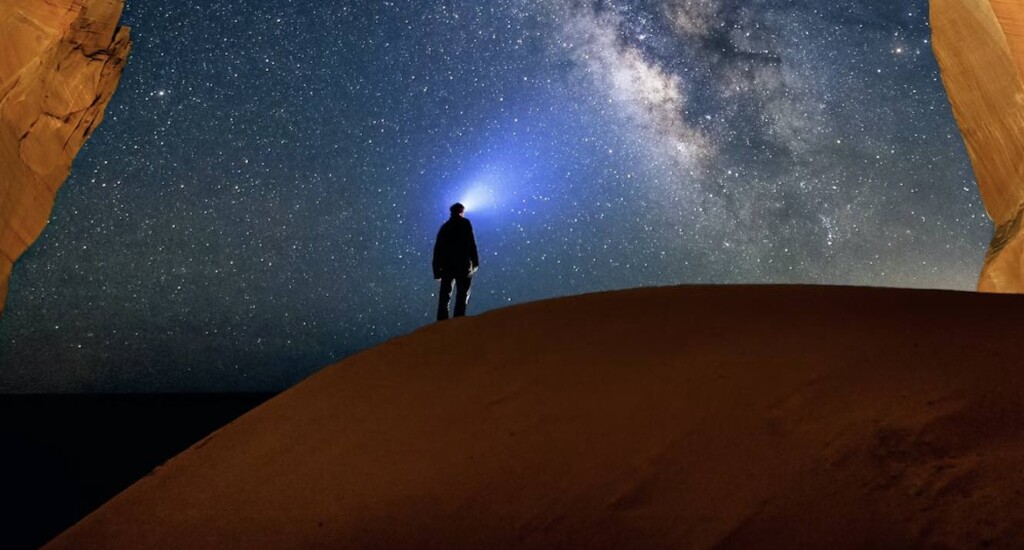
Set in an extremely dynamic landscape ranging from the baseline 5,000 feet asl typical of the Colorado Plateau to mountains as high as 13,000 feet, Great Basin has perhaps the most favorable ratio of dark skies to lack of visitors.

On a clear, moonless night in Great Basin National Park, thousands of stars, numerous planets, star clusters, meteors, man-made satellites, the Andromeda Galaxy, and the Milky Way can be seen with the naked eye. The area boasts some of the darkest night skies left in the United States. Low humidity and minimal light pollution, combined with high elevation, create a unique window to the universe.

Park rangers organize regular astronomy talks and stargazing courses. There is also a special solar telescope that allows visitors to gaze with extreme magnification, but also safety, at the sun.

Dry Tortugas – NPS

For the beach: Dry Tortugas: Florida

100 square miles of natural and historic gems located about 70 miles out from Key West, Florida, this collection of islands sits within the Florida Keys reef system, the third largest in the world, and plays host to Fort Jefferson, the largest masonry military installation in the Western Hemisphere during the 19th century.

But less than 1 square mile of this park is dry land, so the best way to enjoy it is to get in the water, either via the beautiful beige beaches, or various boats that take visitors to shipwrecks to be seen while snorkeling or diving.

One such vessel is the Avanti. Built in 1875, the three-masted, iron-hulled, sailing ship wrecked on Loggerhead Reef in 1901 on its way to Montevideo with a cargo of lumber.

Isle Royale – NPS – pub domain

For freshwater: Voyageurs/Isle Royale: Minnesota/Michigan

Neither of the middle-north national parks receives many visitors, and they rank among the bottom-fourth of visited parks. But in summer they offer an excellent way to connect with the great outdoors, whether that’s catching glimpses of moose or black bears traipsing through wildflower meadows, or landing some perch in the many lakes that make up these two ecosystems.

In the case of Isle Royale, it’s actually just one lake—Superior. A collection of 400 islets all covered in rugged boreal coastline, the best way to explore this unknown park is by canoe or kayak.

Over 200,000 acres of northern hardwood boreal forest in Voyageurs is an exceptional place to relax in nature and cool off in summer’s heat, as this park is also characterized by water—several large and many small lakes, wetlands, and creeks.

For America’s deserts: Capitol Reef: Utah

Almost entirely forsaken for the world-renowned scenery in Arches, Canyonlands, and Zion in Utah, there will always be space for solitude in Capitol Reef National Park.

Named for a collection of Navajo formation sandstone domes that appeared to early surveyors like the dome of Capitol Hill in D.C., the park also boasts exceptional “canyoning” hikes that allow visitors to improvise and scramble their way through slot canyons.

There are natural arches and natural bridges, as well as a pear and apple orchard that continued to grow even after being abandoned by early settlers over a century ago. This park is also an International Dark Sky Park, and nighttime viewing is exquisite.

Kenai Fjords – NPS

For pretty much anything: All of Alaska’s parks

Out of the 15 least-visited national parks, 8 are found in Alaska. That’s every one in Alaska by the way. These include Gates of the Arctic, into which just 8,000 Americans ventured in 2022, and Katmai, that most famous place where grizzly bears line up along streams to catch salmon.

Beyond that, there’s Denali—North America’s highest mountain, Kenai Fjords, Glacier Bay, Lake Clarke, Kobuk Valley, and Wrangell St. Elias—the nation’s largest national park. There’s really no shortage of things to see, with the oceans containing seals, orcas, and whales aplenty, and the land covered in musk oxen, caribou, moose, deer, elk, black and brown bears, lynx, wolverine, Dol sheep, mountain goats, and dozens of birds.

There are also numerous historical areas honoring and educating about the ways of the indigenous peoples, of which there are many in Alaska. While summer is an excellent place to visit, make sure you read the forecast for lake flies and mosquitos that feed on the caribou herds. That is not the kind of holiday you want to drag your kids into.

SHARE These Summer Holiday Ideas With Your Friends… 

Your Summer Solstice Horoscope From Rob Brezsny: A ‘Free Will Astrology’

Our partner Rob Brezsny provides his weekly wisdom to enlighten our thinking and motivate our mood. Rob’s Free Will Astrology, is a syndicated weekly column appearing in over a hundred publications. He is also the author of Pronoia Is the Antidote for Paranoia: How All of Creation Is Conspiring To Shower You with Blessings. (A free preview of the book is available here.)

Here is your weekly horoscope…
FREE WILL ASTROLOGY – Week of June 24, 2023
Copyright by Rob Brezsny, FreeWillAstrology.com

CANCER (June 21-July 22):
In the Northern Hemisphere, the astrological month of Cancer begins with the sun in its greatest glory. Our home star is at its highest altitude, shining with maximum brightness. So then why is the sign of the Crab ruled by the moon? Why do the longest days of the year coincide with the ascendancy of the mistress of the night? Ahhh. These are esoteric mysteries beyond the scope of this horoscope. But here’s a hint about what they signify for you personally. One of your assets can also be a liability: your innocent openness to the wonders of life. This quality is at the heart of your beauty but can also, on occasion, make you vulnerable to being overwhelmed. That’s why it’s so important that you master the art of setting boundaries, of honing your focus, of quaffing deeply from a few cups instead of sipping from many cups.

LEO (July 23-Aug. 22):
The coming weeks will be a delicate time for your spiritual unfoldment. You are primed to recover lost powers, rediscover key truths you have forgotten, and reunite with parts of your soul you got cut off from. Will these good possibilities come to pass in their fullness? Maybe, maybe not. It depends on how brave you are in seeking your healing. You must ask for what’s hard to ask for. You’ve got to find a way to feel deserving of the beauty and blessings that are available. PS: You ARE deserving. I will be cheering you on, dear Leo.

VIRGO (Aug. 23-Sept. 22):
Whether or not you have been enrolled in a learning institution during the past 12 months, I suspect you have been getting a rigorous education. Among the courses you have almost completed are lessons in intimacy, cooperation, collaboration, symbiosis, and togetherness. Have you mastered all the teachings? Probably not. There were too many of them, and they were too voluminous to grasp perfectly and completely. But that’s OK. You have done well. Now you’re ready to graduate, collect your diploma, and apply what you have learned.

LIBRA (Sept. 23-Oct. 22):
History has provided contradictory reports about Isabeau of Bavaria, who served as Queen of France from 1385 to 1422. Was she a corrupt, greedy, and indecisive fool who harmed France’s fortunes? Or was she a talented diplomat with great skill in court politics and an effective leader during the many times her husband, King Charles VI, was incapacitated by illness? I bring these facts to your attention, Libra, hoping they will inspire you to refine, adjust, and firm up your own reputation. You can’t totally control how people perceive you, but you do have some power to shape their perceptions—especially these days.

SCORPIO (Oct. 23-Nov. 21):
The next four weeks will be an excellent time to create and celebrate your own holidays. I recommend you dream up at least four new festivals, jubilees, anniversaries, and other excuses to party. Eight or more would be even better. They could be quirky and modest, like Do No Housework Day, Take Your Houseplants for a Walk Day, or Write Bad Poetry Day. They could be more profound and impactful, like Forgive Your Parents for Everything Day, Walk on the Wild Side Day, or Stay Home from Work Because You’re Feeling So Good Day. In my astrological opinion, Scorpio, you should regard playful fun as a top priority.

SAGITTARIUS (Nov. 22-Dec. 21):
In Greek mythology, Prometheus was a god who stole fire from his fellow gods and gave it to humans to help them build civilization. His divine colleagues were not pleased. Why? Maybe they feared that with the power of fire, people would become like gods themselves and have no further need for gods. Anyway, Sagittarius, I hope you’re in a fire-stealing mood. It’s a good time to raise your whole world up to a higher level—to track down and acquire prizes that will lead to major enhancements. And unlike what happened to Prometheus (the other gods punished him), I think you will get away with your gambits.

CAPRICORN (Dec. 22-Jan. 19):
Let’s discuss magical doorways. Each time you sleep, you slip through magical doorways called dreams. Whether or not you recall those adventures, they offer you interesting mysteries utterly unlike the events of your daily life. Here’s another example: A magical doorway opens when an ally or loved one shares intimate knowledge of their inner realms. Becoming absorbed in books, movies, or songs is also a way to glide through a magical doorway. Another is when you discover an aspect of yourself, a corner of your being, that you didn’t know was there. I bring these thoughts to your attention, Capricorn, because I suspect the coming weeks will present an extra inviting array of magical doorways.

AQUARIUS (Jan. 20-Feb. 18):
Psychiatrist Myron Hofer specializes in the mother-infant relationship. Among his findings: The first emotion that a newborn experiences is anxiety. Struggling to get out of the womb can be taxing, and it’s shocking to be separated from the warm, nourishing realm that has been home for months. The bad news is that most of us still carry the imprint of this original unease. The good news, Aquarius, is that the coming months will be one of the best times ever for you to heal. For optimal results, place a high priority on getting an abundance of love, support, comfort, and physical touch.

PISCES (Feb. 19-March 20):
Curious blends and intriguing juxtapositions are in the works—or at least they should be. Improbable alliances might be desirable because they’re curative. Formulas with seemingly mismatched ingredients might fix a glitch, even if they never succeeded before and won’t again. I encourage you to synergize work and play. Negotiate serious business in casual settings and make yourself at home in a wild frontier.

ARIES (March 21-April 19):
When I was still an up-and-coming horoscope columnist, before I got widely syndicated, I supplemented my income with many other jobs. During one stretch, I wrote fortunes for a line of designer fortune cookies that were covered with gourmet chocolate and sold at the luxury department store Bloomingdale’s. The salary I got paid was meager. Part of my compensation came in the form of hundreds of delicious but non-nutritious cookies. If you are offered a comparable deal in the coming weeks and months, Aries, my advice is to do what I didn’t do but should have done: Ask for what’s truly valuable to you instead of accepting a substitute of marginal worth.

TAURUS (April 20-May 20):
My mentor Ann Davies said that of all the signs of the zodiac, you Tauruses are most likely to develop finely honed intuition. At least potentially, you can tune in to the inner teacher better than the rest of us. The still, small voice rises up out of the silence and speaks to you clearly and crisply. Here’s even better news: I believe you are entering a phase when your relationship with this stellar faculty may ripen dramatically. Please take advantage of this subtly fabulous opportunity! Each day for the next 14 days, do a relaxing ritual in which you eagerly invite and welcome the guidance of your deepest inner source.

GEMINI (May 21-June 20):
New College in Oxford, UK has educated students since 1379. Among its old buildings is a dining hall that features beams made of thick oak trees. Unfortunately, most oak wood eventually attracts beetles that eat it and weaken it. Fortunately, the 14th-century founders of New College foresaw that problem. They planted an oak grove whose trees were specifically meant to be used to replace the oak beams at New College. Which they are to this day. I would love you to derive inspiration from this story, Gemini. What practical long-term plans might you be wise to formulate in the coming months?

WANT MORE? Listen to Rob’s EXPANDED AUDIO HOROSCOPES, 4-5 minute meditations on the current state of your destiny — or subscribe to his unique daily text message service at: RealAstrology.com

(Zodiac images by Numerologysign.com, CC license)

SHARE The Wisdom With Friends Who Are Stars in Your Life on Social Media…

“What we have once enjoyed we can never lose. All that we love deeply becomes a part of us.” – Helen Keller

Credit: Patty Brito

Quote of the Day: “What we have once enjoyed we can never lose. All that we love deeply becomes a part of us.” – Helen Keller

Photo by: Patty Brito

With a new inspirational quote every day, atop the perfect photo—collected and archived on our Quotes page—why not bookmark GNN.org for a daily uplift?

Hotel Honors Honeymoon Gift Certificate it Gave to Kansas City Newlyweds 40 Years Ago

- credit KMBC 9 news fair use
– credit KMBC 9 news fair use

Big corporate hotel chains have never lacked criticism and customer complaints, but in downtown Kansas City, one Marriot is honoring a promise that its representatives made almost 40 years ago.

Tim and Melinda O’Brien got married in 1983 and wanted to go “where nobody would think to look for us” for a fast honeymoon getaway.

They selected the Radisson Muehlebach hotel, but due to unforeseen circumstances, they didn’t stay there long enough for the important part.

Fast forward to 2023, and the couple is preparing to celebrate 40 years of partnership, and that’s when combing through their wedding album they came across a gift certificate certifying that “anytime you stay at the Radisson Muehlebach during your anniversary month, your room rate will be the same as your original honeymoon rate.”

Back then, that was just 38 bucks. How times change.

“I wonder if they’ll still honor this,” Tim O’Brien thought to himself.

To the credit of the hotel—now a Marriot instead of a Radisson—they did, and while the room they stayed in no longer exists, they had some very comparable ones.

“I can’t take credit for that marketing initiative,” Dustin Holcumbrink, the hotel manager told KMBC 9 news with a smile on his face.

OTHER MARRIAGE MEMORIES: Woman Who Lost Wedding Ring Shortly After Getting Married Rediscovers It Days Before 40th Anniversary

“This is what marriage is all about, memories, special things that you experience together,” said Melinda.

The couple plans to use the certificate to stay at the hotel over the weekend of their anniversary on June 25th to attend a few jazz nights, and take care of some unfinished business after that.

WATCH the story below… 
SHARE This Serendipitous Certificate With Your Friends… 

Largest Ruby Ever to Come to Auction Breaks Record

The Estrela de Fura - credit Sotheby's
The Estrela de Fura – credit Sotheby’s

Unearthed by miners in Mozambique last July, a 55.22-carat ruby has just sold for a record-breaking $34.8 million.

Dubbed the Estrela di Fura in the country’s official language of Portuguese, it was cut and polished into a symmetrical shape of deep red down from its rough carat count of 101.

Sotheby’s, which handled the sale, described the stone as “exceedingly rare” and “the most valuable and important” ruby ever to go under the hammer.

It was discovered in one of the mines of Canadian firm Fura Gems, whose CEO Dev Shetty said a stone of that size was “unprecedented”

“From the in-depth analysis and study of the stone—through the process of cutting and polishing—we have worked with the utmost care and respect for the ruby, recognizing its importance and stature,” he added.

MORE GEM STORIES: Rare Diamond Within a Diamond Is Unearthed in India and Dubbed ‘The Beating Heart’

A man named Balbir, who handles sorting for Fura, was both the first to see the jewel and hear back from laboratory work done on it.

“I have a laboratory that came back to me and said: ‘In 20 years of testing, I’ve never seen anything like this’,” Balbir told Voice of Indonesia, per Google Translate. “No one has seen anything like this before, in terms of fluorescent, color, and clarity.”

One of the most-productive ruby mining countries on Earth, rubies were only discovered in Mozambique a few decades ago, and only came to international attention after a large deposit was found in 2009.

“This is a historic moment for us, my company, and for Mozambique. I am very happy and proud of Mozambique; it deserves all the praise,” Shetty also told VOI.

The Estrela de Fura – credit Sotheby’s

The CEO is on a mission to make colored gemstones on par in consumers’ eyes with diamonds. According to Shetty, rubies are actually 20 times rarer than diamonds and traded pretty much dollar for dollar until the 1980s. That’s when the Belgian diamond brokers De Beers used considerable marketing prowess to convince the whole world diamonds were uniquely superior to sapphire, emerald, and ruby.

According to news from Mozambique, the government is implementing a multifaceted approach to ensure gem export goes through legal channels in order to contribute to the development of the country. It’s also undergoing the implementation of the “Kimberly scheme” to certify that diamonds, also discovered there, are mined without any human rights violations.

MORE GEMSTONE NEWS: Locals Digging a Well Accidentally Discover a $140 Million Star Sapphire Weighing Half a Ton

Over the last few decades, particularly with colored stones, several low and middle-income countries have been able to establish conflict-free, ethical gem mining operations, breaking the famous “Resource Curse.” Two good examples of this are the sapphire trade in Sri Lanka, a huge gem exporter that has also become a world leader in ethical mining, and the state of Veracruz in Mexico where amethyst mining is decentralized and supports thousands of families.

The Muzo Mine in Colombia produces many of the emeralds in the industry today. Muzo miners belong to a union, have access to healthcare, fixed salaries, and profits are invested into both the local community and the environment.

SHARE This Stunning Find And Price Tag With Your Friends… 

12 Famous American Waterfalls Are Looking Gorgeous on New Stamps From USPS

Images via USPS (fair use)

The US Postal Service has taken a peculiar interest in its latest commemorative stamp collection—waterfalls.

12 news stamps attempt to communicate the majesty of the nation’s most beautiful cascades, from Virginia to Washington State to Hawai’i.

Many may recognize Niagra Falls or Lower Yellowstone Falls, but not all of them are large cataracts. There are smaller, more intimate trickles by comparison, just as beautiful but in their own way, such as Harrison Wright Falls in Ricketts Glen State Park, Pennsylvania.

“The Postal Service is proud to celebrate the natural world through our stamps, and these gorgeous new stamps will bring the beauty of these waterfalls to millions of people who will see them on the cards and letters they receive in their mailboxes,” said Michael J. Elston, Secretary of the Board of Governors, U.S. Postal Service, who served as the stamps’ dedicating official.

The Postal Service also included a detailed description of the various classifications of waterfalls in case you were curious.

“One of the most familiar types is the plunge, where the stream falls vertically without making contact with the underlying cliff face; sometimes there are caverns behind the falls carved by earlier erosion.”

“As the name suggests, a fan waterfall resembles the shape of a fan as the flow spreads down the rocks. Other types include the cascade, which breaks into smaller falls as the water descends over a slope of rocks and boulders, and the cataract, where large amounts of fast-moving water plummet over a cliff to create a waterfall of great size and power.”

The stamps debuted on June 13th at the canyon visitor center in Yellowstone National Park. They include the following…

MORE AMERICAN BEAUTY:  One Year Since Bipartisan Bill Funds Repairs at National Parks: See What Projects are Underway in 40 States

Deer Creek Falls (Grand Canyon National Park, AZ) plunges 180 feet into a pool at its base. On foot, it is a strenuous hike for experienced desert backpackers, but it is also accessible as a stopping place on rafting trips along the Colorado River.

Nevada Fall (Yosemite National Park, CA) is one of hundreds of waterfalls in the park. It flows next to Liberty Cap, a dramatic granite dome, and drops 594 feet along the mountainside.

Harrison Wright Falls (Ricketts Glen State Park, PA) drops 27 feet over a rock ledge, where it spreads to create a curtain-type fall flowing into a large pool at the base.

The Lower Falls of the Yellowstone River (Yellowstone National Park, WY) has a 308-foot drop. Nearly twice as high as Niagara Falls, the sheer volume of water that descends the cliffs makes it one of the most powerful waterfalls in the United States.

Waimoku Falls (Haleakalā National Park, HI), with its dramatic 400-foot drop down sheer lava-rock, is one of the park’s great highlights.

Stewart Falls (Mount Timpanogos Wilderness, UT) falls in two tiers and is more than 200 feet tall. Also known as Stewarts Cascades, it is a moderate, slightly steep hike along a lovely forest trail on the east side of Mount Timpanogos.

MORE NEWS LIKE THIS: Grandson Accompanies His 93-year-old Grandma to Visit All 63 National Parks: ‘Greatest privilege of my life’

Niagara Falls (Niagara Falls State Park, NY) is one of North America’s natural wonders. Its force is enormous: 3,160 tons of water flows over the falls every second.

Dark Hollow Falls (Shenandoah National Park, VA) plunges 70 feet over a series of drops. It is a popular subject for photographers visiting the park.

Grotto Falls (Great Smoky Mountains National Park, TN) is the only one in the park that has a hiking trail behind the veil of falling water. The 25-foot falls is along one of the park’s most popular hikes.

Sunbeam Falls (Mount Rainier National Park, WA), while not high, features picturesque cascades of water flowing over a series of rock ledges. It is most impressive when fed by snowmelt.

LaSalle Canyon Waterfall (Starved Rock State Park, IL) features a 25-foot fall that allows access behind its curtain of water. In winter, it freezes into beautiful and alluring shapes along the rocks.

Upper Falls (Blue Ridge Parkway, NC) is a moderate hike from the parkway. The 60-foot waterfall descends the steep rock face, sending out sprays that support many types of ferns and wildflowers.

SHARE These Unmissable Photos With Your Friends…

Divers Are About to Pull a 3,000-Year-Old Shipwreck From the Depths

© Philippe Groscaux/Mission Adriboats/CNRS/CCJ

If you have ever taken an interest in underwater archaeology, you’ll know that this is a truly astonishingly well-preserved shipwreck.

It must be 200 or 300 years old to look like that right? Try 3,000 years old—the oldest hand-sewn boat ever found in the Mediterranean.

Named the “Zambratija boat” because of its location in the Bay of Zambratija, the artifact was first investigated after reports from local fishermen. It’s a lasting testament to an “ancient naval tradition” of the regions of Istria and Dalmatia.

“Its architecture and its construction, the assembly technique of the strakes, as well as the waterproofing system of the hull, have no equivalent in the Mediterranean area,” per a statement from the Camille Jullian Center, a research organization connected to the CNRS.

Now, archaeologists with the French National Center for Scientific Research (CNRS), are getting ready to raise the boat from its watery tomb. A 23-foot section of the 39-foot-long boat is in pristine condition, and special care will ensure it survives the journey to the Archaeological Museum of Istria where it will be desalinated.

The scientists will notably reconstruct the boat in 3D, they will also try to date its construction more precisely, identify the fibers used for sewing, and study the techniques used for shaping the wood. Handling remains of this caliber is a delicate matter, each stage of the process requires the greatest precautions to preserve this exceptional vessel.

© Philippe Groscaux/Mission Adriboats/CNRS/CCJ

MORE SHIPWRECK NEWS: U.S. Agency Wants Offshore Oil Companies to Look for Shipwrecks Before They Drill

Dinosaur fossils aren’t actually bones; they’re mineralized imprints of bones. In much the same way, wood that remains in water this long becomes more water than wood. The water fills every molecular nook and cranny, and if it were to move the wooden remains would disintegrate.

A water-soluble wax called polyethylene glycol is sometimes used in ancient shipwrecks which impregnates the wood. Gradually the wax takes the place of the water molecules, and after the wood is dried out, the wax forms a reinforcing part of the structure.

SHARE This Unprecedented Find From Ancient Times With Your Friends… 

“A man is what he thinks about all day long.” – Ralph Waldo Emerson

By Benjamin Davies

Quote of the Day: “A man is what he thinks about all day long.” – Ralph Waldo Emerson

Photo by: Andras Vas

With a new inspirational quote every day, atop the perfect photo—collected and archived on our Quotes page—why not bookmark GNN.org for a daily uplift?

Markings on French Cave Wall Identified as the Oldest Known Neanderthal Engravings

Dr. Marguet in the cave - credit SWNS
Dr. Marquet in the cave – credit SWNS

The marks on the wall of La Roche-Cotard cave in the Centre-Val de Loire are interpreted as finger-flutings, or marks made by human hands, at least 57,000 years ago.

Research in recent decades has revealed much about the cultural complexity of Neanderthals, but relatively little is known about their symbolic or artistic expression.

Only a small number of symbolic productions can be attributed to Neanderthals, and the interpretation of these is often the subject of debate.

For the new study, Dr. Jean-Claude Marquet and colleagues identified markings at La Roche-Cotard as the oldest known Neanderthal engravings.

“Two or three panels of lines at the entrance to the room are very simple and look like tests to see if contact with the surface leaves a trace,” Dr. Marquet told ABC News Australia.

“Three of the following panels were made with a great deal of application and care, and above all they were probably made after quite a lot of thought, because the intentional nature of the work is obvious.”

OTHER NEANDERTHAL STORIES: The First Neanderthal Family: Ancient Genome of 13 Individuals Show They Were Just Like Us in Many Ways

The researchers made a plotting analysis and used photogrammetry to create 3D models of the markings, comparing them with known and experimental human markings.

Flutted marks show perhaps a Neanderthal test scribble – Marquet et al. – via SWNS

Based on the shape, spacing, and arrangement of the engravings, the team concluded that they are “deliberate, organized and intentional” shapes created by Neanderthal hands.

The team also dated sediments, using state-of-the-art optically-stimulated luminescence techniques, to determine that the cave became closed off by infilling sediment around 57,000 years ago, well before Homo sapiens became established in the region.

The researchers say that discovery, combined with the fact that stone tools within the cave are only Mousterian—a technology associated with Neanderthals, is “strong” evidence that the engravings are the work of Neanderthals.

“Because these are non-figurative symbols, the intent behind them is unclear,” said Dr. Marquet of the University of Tours in France.

MORE CAVE ART: Newly Discovered Rock Art Panels Depict How Ancient Ancestors Envisioned Creation and Adapted to Change

“They are, however, of a similar age with cave engravings made by Homo sapiens in other parts of the world. This adds to a growing body of evidence that the behavior and activities of Neanderthals were similarly complex and diverse as those of our own ancestors.”

“Fifteen years after the resumption of excavations at the La Roche-Cotard site, the engravings have been dated to [between] 57,000 years ago and, thanks to stratigraphy, probably to around 75,000 years ago, making this the oldest decorated cave in France, if not Europe.”

WATCH a tour of the cave in 3D…

SHARE This Important Discovery With Your Friends… 

Tiny Scaled Robot Inspired by a Pangolin Can Roll About and Could Deliver Lifesaving Medications

A pangolin rolled up in a ball in Serengeti National Park - Erick B. Lyimo CC 4.0.
A pangolin rolled up in a ball in Serengeti National Park – Erick B. Lyimo CC 4.0.

A pangolin-inspired small robot designed to perform safe and minimally invasive medical procedures inside of the body was revealed in a study published this week.

The untethered, soft robots may one day be capable of accessing hard-to-reach regions inside of the body—such as in the stomach and small intestine—by morphing their shape.

When most of us think of the word “robot” we think of something made of hard metal and wires, something at the cutting edge of technology and engineering, but that’s not entirely accurate.

One of the most exciting advances in the field of robotics comes from so-called “soft robotics” which refers to animated pieces of material that can perform tasks but which aren’t necessarily filled with wiring and circuitry, like this “gelbot” that can inch along from the manipulation of heat.

Untethered miniature robots working inside a human body can harvest energy made available to them remotely, such as light, magnetic, or acoustic energy, and convert them to other forms of energy in order to perform tasks.

Despite having keratin scales, pangolins can move with a flexible and unencumbered motion by organizing their rigid scales into an overlapping structure.

MORE MICRO MACHINES: To Boost Pollination, Tiny ‘FAIRY Robots‘ Can be Propelled by the Wind Like Seeds

Inspired by pangolins, Metin Sitti and colleagues at the Max Planck Insitute in Munich, designed a millirobot, 1 cm by 2 cm by 0.2 mm in size, with an overlapping scale design and on-demand heating, shape-morphing, and rolling capabilities.

In proof-of-concept experiments in the laboratory, the robots were able to heat to 70°C and perform medical treatments on tissues with potential future clinical applications, including hyperthermia to treat cancer or stop bleeding in hard-to-reach regions. Additionally, the robots are capable of demagnetizing to release cargo onto the tissues, which could be used to deliver drugs in the future.

MORE NEWS FROM ROBOTICS: Afghan All-Girls Robotics Team Offered College Scholarships, Says Oklahoma Mom Who Helped Them Escape Taliban

All this they can do via their ability to roll and tumble about, triggered by external magnetic stimulation that charges particles in the millirobot’s pangolin-like scales, allowing it to change from a flat to a curled posture, and thus locomote.

Although further testing is required, this technology could be a useful clinical tool for the delivery of therapeutic payloads and heat therapy applications.

WATCH a video of the pangolin bot in action… 

SHARE This Wild Invention With Your Friends… 

Toddler Avoids Bedtime by Shimmying His Crib Across Floor in ‘Mission Possible’ Escape

Issac Eales - SWNS
Issac Eales – SWNS

A video captured in Colombia shows a clever baby escaping from his crib—by moving it across his bedroom while still inside.

CCTV shows the toddler trying and failing to climb over the side of the cot. Eventually, he figures out he can move the crib across the room by pushing at the wall with his feet.

He eventually manages to shimmy it enough so that it’s near a bed that he can jump onto.

Climbing out of the crib with his teddy he returns to place the crib pack in its proper place against the wall, probably because his parents taught him well enough to pick up after himself, but not well enough for him to no he shouldn’t perform escape maneuvers like Ethan Hill from Mission Impossible.

WATCH the escape for yourself… 

SHARE This Adorable Escape With Your Friends In Need Of A Pick Me Up… 

Largest Dinosaur Skull Ever Discovered Going on Display–A Torosaur Named Adam

Knuthenborg Safaripark - Museum of Evolution / YouTube (Fair use)
Knuthenborg Safaripark – Museum of Evolution / YouTube (Fair use)

Denmark is celebrating the opening of its first dinosaur museum by shipping over the largest dino skull ever found.

Once, the enormous, 10-foot-long dome belonged to a male Torosaurus that weighed over 6.5 tons. It’s the largest skull of any known land animal ever recorded.

The beast, affectionately called “Adam” was found in the United States and shipped overseas to the Museum of Evolution in Denmark for its grand opening to be exhibited alongside “Big Joe” the best-preserved Allosaurus skeleton ever found, as well as one of the world’s twelve Archaeopteryx skeletons, called the most important fossil in the world as it proved the theory that dinosaurs evolved into birds.

“Many years of intensive work culminates today. It is a great pleasure that we are now officially inaugurating Denmark’s first museum for dinosaurs,” director Christoffer Knuth, who is also director of Knuthenborg Safaripark where the new museum is located, said in a statement.

“It is also one of the world’s most ambitious museums, because we are lucky enough to have some of the absolutely best-preserved dinosaur skeletons and several spectacular and extremely valuable fossils from dinosaurs and other prehistoric animals. Together, the museum covers 300 million years of evolutionary history.”

Knuthenborg Safaripark – Museum of Evolution / YouTube (Fair use)

The Torosaurus lived in North America between 70 and 66 million years ago, at both the end and zenith of the age of the dinosaurs. Its name means “perforated lizard” because of the large holes in its frill which would have draped colorful, scaled skin for mating displays.

It was thought to be similar in size to Triceratops, whose skull frill was solid, and meant more for dominance displays, species recognition, jousting, and if necessary, defense.

WATCH the skull being assembled below from Inside Edition… 

SHARE This Must Visit Museum With Your Dinosaur Lovers… 

“There are two ways of spreading light: to be the candle or the mirror that reflects it.” – Edith Wharton

Quote of the Day: “There are two ways of spreading light: to be the candle or the mirror that reflects it.” – Edith Wharton

Photo by: Andras Vas

With a new inspirational quote every day, atop the perfect photo—collected and archived on our Quotes page—why not bookmark GNN.org for a daily uplift?