Quote of the Day: “Let every dawn be to you as the beginning of life, and every setting sun be to you as its close.” – John Ruskin
Photo by: Di Chap, CC license
With a new inspirational quote every day, atop the perfect photo—collected and archived on our Quotes page—why not bookmark GNN.org for a daily uplift?
A farmer was understandably giddy to film the adorable moment when his bumblebee-sized baby ‘king’ quails stampeded through his home.
Bernard Henry raises birds on his farm as pets and recently hatched a baker’s dozen of the small species which he now keeps in his home, and watching them charge about is too cute to handle.
The 29-year-old man from New Milford, Connecticut has been hatching birds as a hobby for a decade, but specifically “loves” quail.
Henry let the quails fluff up in the incubator for a few days and transferred them to a small heated pen in his house.
“These tiny ones in the video are called button or king quail and are the smallest species of quail that I raise,” said Henry. “They’re the size of bumblebees when they hatch!”
He now has 60 quails in total on his flower farm, as well as 90 other birds including pheasants, chickens, ducks, and peafowls.
“I name a few of my favorites but it’s hard to name them all,” he said. “Some of my favorite little quail are called Boots, Dash, Jet, Quinn, Finn, Jake, and Daisy.”
Bernard’s videos are a hit online where they have garnered over 35 million views on TikTok.
“I love that everyone’s just as obsessed with these tiny creatures as I am. In person, it’s even more incredible to see just how small these little birds are when they first hatch,” he said. “Videos and pictures sometimes don’t do them justice.”
Bernard with a quail on his shoulder –SWNS
“I try and compare them to everyday items like the tip of an iPhone charger or a water bottle cap to try and show my followers just how microscopic button quail chicks are!”
Bernard’s gang of 13 quails is set to increase in numbers as he plans to more than double the amount of chicks during the next hatch.
He gets up every morning to feed and let out the birds and animals so they can roam freely over an acre of land, while supplementing their diet with feed. For so many birds, he spends about $200 a week on food.
WATCH the stampede below…
SHARE This Adorable Video With Your Friends Who Need A Pick-Me-Up…
Canadian Family Turns Old School into Hydroponic Farm Growing Fresh Veggies, Even in Winter, For the Whole Town
credit – Let-Us Grow Facebook
A rural Saskatchewan winter is nothing to take lightly, and if there’s any farming to be done it better be in a greenhouse.
Or does it? It turns out that an old schoolhouse will do just fine for one farming couple, who provide fresh veggies to the whole town.
In Hudson Bay, June and Jan Nel run a hydroponic farm equipped with a drive-through window where they grow and distribute romaine, butter, baby romaine, red romaine, green oakleaf, red oakleaf, muir, and batavia lettuces, as well as kale, dill, basil, cucumbers, arugula, swiss chard, tomatoes, radishes, and parsley.
They do it in the old community school in the town of 1,504 after immigrating there from South Africa.
After arriving, the derelict schoolhouse next to their home was open for alternate-use plans, which is when Jan got the idea to start a hydroponics business. He made the pitch to the town and got approved to move in.
“I think when my husband first said ‘let’s grow lettuce inside an old school building,’ I did not really think that it would become what it has,” said June, who runs Let-Us Grow Hydroponics alongside Jan.
“I didn’t really realize how the community would love it and embrace it, and how much I would enjoy doing it.”
Let-Us Grow / Facebook
Most of the year, the town about 180 miles northeast of Saskatoon has its produce trucked in. The food distribution centers of Canada, Jan and June learned during the government-imposed lockdowns and travel restrictions during COVID-19, have only around 3 days’ worth of produce on hand.
At the moment they’re growing in a few classrooms and the library, but they hope to take up more space after seeing just how ecstatic the community has become over their drive-through veggie bags.
Hydroponics can supplement food insecurity to a limited degree. They can only grow certain kinds of plants, and exclude staples like beans and potatoes. Furthermore, complications with pests, temperature, and nutrients can arise extremely quickly and wipe out indoor crops much faster than field-grown ones.
But the success is there, and the Let-Us Grow Facebook page is filled with row upon row of lettuce bursting with vibrant greens and reds, as well as cucumbers stacked like lumber.
Future plans involve a cafe and conference room, to share the joy, tastes, and knowledge of hydroponic farming in rural Canada.
WATCH the story below from CBC.
SHARE This Town-Transforming Business With Your Friends…
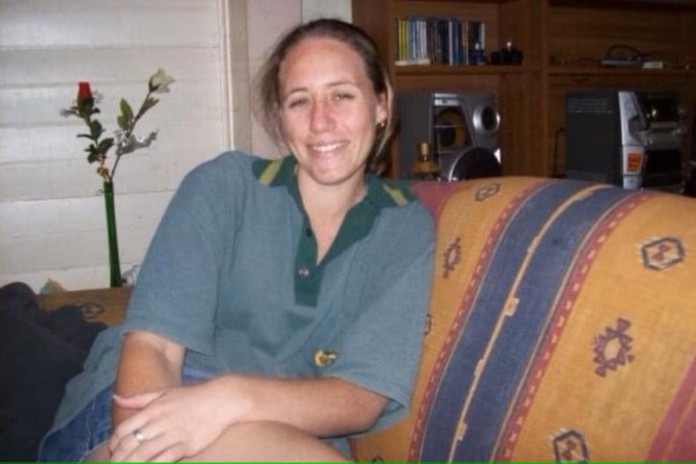
“I was ecstatic to have this outcome,” said Detective Inspector Jason Shepherd. The experienced policeman knew that someone reported missing for 8 days in Australia’s rugged outback has a slim chance.
“It is miraculous,” he told ABC News, just 30 minutes after having prepared a statement that mother-of-4 Rikki Mitchell had not been found and, that the rescue crews and homicide detectives were nearing the end of their search.
Then the 38-year-old woman from Queensland turned up on the Flinders Highway, covered in cuts and scrapes, but alive.
The ordeal started when Mitchell and her partner of 7 months were traveling from Townsville and Charters Towers in north Queensland, and they decided to stop at a rest area.
Her partner decided to go visit a friend nearby for a quick hello while she decided to do a bit of swimming and walking at a swimming area near the rest stop.
As unlikely as the story already sounds, this is surprisingly typical of stories of people getting lost in wild country. They underestimate how easy it is to become disoriented and get lost at distances of mere hundreds of yards from parking lots, campsites, or roads.
“It’s common knowledge that if you’re out in the bush in the heat [with] little food and little water, that you can become disoriented quite quickly,” Detective Inspector Shepherd said on this point. “I would imagine that she’s then probably headed off in the wrong direction.”
The report leaves out any details of the events between that moment and the moment of rescue 8 days later, when she “borrowed” an ATV she found on a ranch property she probably didn’t know she was on, and drove it until she heard the sounds of Flinders Highway, and ran into the ranch owner who knew the search was taking place in the area.
Rescue teams report her being covered in light scrapes and her feet were cut open and bleeding, but no major injuries besides.
Shepherd said that while she obviously was not a trained survivalist, she must have known a thing or two to have lasted so long in the heat without a ready source of fresh water and food.
About 20 emergency service personnel partook in a search that was difficult from the start. Because it was a rest area, footprints were everywhere, and so the few tracks they were able to follow out into the bush led nowhere.
Everyone was so happy to hear the mother-of-four was safe, and the story is a poignant reminder—whether you’re in Appalachia or the Bush—of how easy it is to accidentally walk oneself into a survival situation.
SHARE This Harrowing Yet Happy Ending With Your Friends Down Under…
The island of Korcula is something Croats are exceptionally proud of—and rightly so. It is said to be the birthplace of Marco Polo, and it’s the oldest part of the world where documents can prove that slavery was abolished (1214 CE).
Along with its stunning natural beauty, Korcula has a secret—a truly ancient past where a ‘stacked stone’ road was found underwater dating to a period 5,000 years before the Roman Empire.
At the submerged Neolithic site of Soline, an astonishingly modern-looking road of stacked stone was found under deposits of sea mud. It connected an artificial island associated with a people known as the Hvar Culture, with the coast of the island of Korcula.
The road was four meters broad, or about 12 feet. The date 7,000 BCE was determined via radiocarbon dating of preserved wood from buildings of the Hvar culture’s settlement.
Other underwater sites ringing Korcula have yielded stone axes and flint tools. The whole research endeavor was conducted by an all-Croat team of archaeologists from several museums and universities in the country.
To grasp the magnitude of this discovery, it’s necessary to watch the video below of the divers. But putting this find into its proper context almost necessitates a brief re-writing of the history of civilization.
Unsurprisingly, the confirmed oldest ‘constructed’ road, excluding blazed tracks shared by humans and animals together, dates back to 4,000 BCE to probably the world’s second-oldest city of Ur, part of ancient Sumeria. Much of Ur’s history was borrowed from the even-older Sumerian ‘capital’ of Eridu, so we can be generous and go back a few hundred years more.
Brick roads begin appearing in India about 3,000 BCE, which is also around the time they begin appearing in Greece.
But Korcula road, featuring sophisticated stone-stacking and some sort of material to encase the stones in their positions, was made around 1,000 years before Ur and Eridu, to an epoch where agriculture and animal domestication were still developing or state-of-the-art technologies.
Korcula is already one of Croatia’s top tourist destinations. It seems that the ancients, just like us today, found its beauty irresistibly captivating.
WATCH a diver cross the road below…
SHARE This Unbelievable Discovery With Your Friends…
Quote of the Day: “Against the laws of nature, there is no appeal.” – Arthur C. Clarke
Photo by: Morgane Le Breton
With a new inspirational quote every day, atop the perfect photo—collected and archived on our Quotes page—why not bookmark GNN.org for a daily uplift?
Aside from teacups and rice bowls, China doesn’t do anything on a small scale. To wit, their recently-completed solar array in Ningxia Hui is gargantuan—capable of powering 1.5 million homes.
Billed as 1 million kilowatts of capacity, and capable of generating 1.8 billion kilowatt-hours per year, the Ningxia Hui array is the first of several giant renewable energy projects slated for construction in the arid western areas like the Gobi, Tengger, and Taklamakan deserts.
China Energy Investment Corp. says it is the first solar farm in the country to include an ultrahigh-voltage power transmission channel that will bring the electricity generated there to the central Hunan Province.
The transmission is a result of Hunan having a population of 66 million people, compared to Ningxia’s 7 million.
In their most recent Five Year Plan, the Chinese government outlined their intention to install 100 gigawatts of renewable energy by 2026; particularly solar and wind in the desert regions.
The National Energy Administration said installed capacity of renewable energy in China continued to expand in the first quarter, reaching 47.4 million kW, an increase of 86.5% compared with the same period last year.
Like most rural Chinese provinces, Ningxia, along with Xinjiang and Inner Mongolia—the provinces wherein rest the three deserts mentioned above, rely heavily on coal for electricity, and the major installations of solar and wind are hoped to accelerate economic development in these mostly-agricultural economies.
SHARE This Inspiring Renewable Energy Project With Your Friends…
Native gardening isn’t only beneficial to the animals in your environment, it’s also a lot less of a hassle because you don’t need to constantly fight the climate and conditions in your area.
To that end, a group of plant-lovers created a free native-plant garden planner that contains species lists which are tailored to 19 different US biomes.
Wild Ones, the nonprofit organization behind the online service, believes in “environmentally sound landscaping practices to preserve biodiversity through the preservation, restoration, and establishment of native plant communities.”
The eco-regions included in the planner are located in major metropolitan areas, including Boston, Chattanooga, Chicago, Columbia River Basin, Denver/Front Range, Grand Rapids, Greensboro, Lafayette, Las Cruces, Milwaukee, Minneapolis, Philadelphia, Portland, Princeton, St. Louis, Tallahassee, Toledo, Tucson, and Washington, D.C.
A plant list accompanies each design and provides a quick preview of the diversity and beauty of the native plants incorporated within each design. The nonprofit ensured the plans are formatted for printers so that users can have the plan in their hands while walking through their gardens.
“We can no longer leave conservation to the conservationists,” stresses Wild Ones Honorary Director Doug Tallamy. “We must now act collectively to put our ecosystems back together again.”
So many of the most used and coveted ornamental plants were, centuries ago, brought to Europe from China and the rest of Asia. Those traditions were passed onto gardeners in the young U.S. of A., along with species like the azalea and rhododendron, camellia and gardenia, hibiscus, peony, and chrysanthemum.
There are hundreds of attractive native ornamentals that will survive better, and attract more wildlife than these imported oriental species—and it’s just a matter of getting to know them.
SHARE This Awesome Gardening Idea With Your Greenthumb Friends…
Listening to music or playing an instrument can delay cognitive decline as we age—by producing gray matter in the brain—a new study shows.
The researchers followed over 100 retired people who had never practiced music before. They were enrolled in piano and music awareness training for six months, which when finished resulted in an increase in working memory performance by 6% and a total reduction in gray matter loss in the piano playing group.
Taken altogether, the scientists believe that while musical interventions cannot rejuvenate the brain, they can prevent aging in specific regions, specifically in people with no musical background who start playing in their senior years.
As the brain ages, it loses a trait that everybody who wants to understand a little about their own neurology should remember—neuroplasticity. Neuroplasticity is the measurement of the brain’s ability to flex and work on different tasks by enhancing neuronal connections and creating new ones to suit new tasks.
Key among neuroplasticity is working memory, which describes the kind of mental effort needed to remember a whole phone number long enough to be able to reach the pen and paper to write it down, or translate a sentence from a foreign language.
A team from the University of Geneva wanted to see how much the musical domain could prevent this loss of working memory associated with age-related cognitive decline.
‘‘We wanted people whose brains did not yet show any traces of plasticity linked to musical learning. Indeed, even a brief learning experience in the course of one’s life can leave imprints on the brain, which would have biased our results’’, explains Damien Marie, first author of the study.
The participants were randomly assigned to two groups, regardless of their motivation to play an instrument. The second group had active listening lessons, which focused on instrument recognition and analysis of musical properties in a wide range of musical styles. The classes lasted one hour. Participants in both groups were required to do homework for half an hour a day.
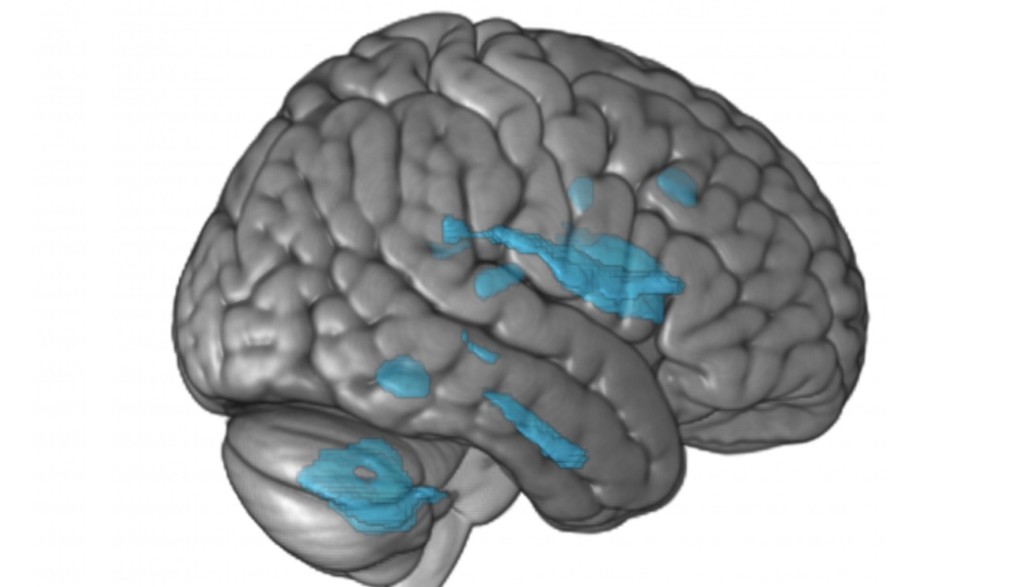
‘‘After six months, we found common effects for both interventions. Neuroimaging revealed an increase in grey matter in four brain regions involved in high-level cognitive functioning in all participants, including cerebellum areas involved in working memory. Their performance increased by 6% and this result was directly correlated to the plasticity of the cerebellum,’’ says Clara James, another author of the study.
In the pianists, the volume of gray matter around the auditory cortex remained consistent; it didn’t shrink with age. For those in the musical analysis group, the gray matter did decrease at normal rates.
Also, a general pattern of brain atrophy was still observed in both groups, suggesting that complex interactions with music are limited in their effects on our most complex organ.
These results show that practicing and listening to music promotes brain plasticity and cognitive reserve. The authors of the study believe that these playful and accessible interventions should become a major policy priority for healthy aging.
SING ALOUD This Interesting Finding To Your Senior Friends…
White's seahorse released in Australia - Supplied- by Dr. .David Harasti
White’s seahorse released in Australia – Supplied by Dr. David Harasti
Marine biologists restoring populations of seahorses off Australia’s east coast are ecstatic at the best efforts they’ve seen so far.
Hundreds of White’s seahorses, the only seahorse or seadragon species on Australia’s national endangered species list, were released into the waters north of Newcastle into specially-made “hotels.”
The project was conducted through a private-public effort consisting of the Sydney Aquarium and the Department of Primary Industries, (DPI) an agency that oversees hunting, agriculture, fishing, and forestry.
A generation ago, divers might see two dozen White’s seahorses at a time off Sydney Harbor at a refuge called Port Stephens, but coastal development and boat moorings have disrupted the habitat of these beautiful and strange creatures.
Sydney Aquarium has a very successful breeding program for the animal that uses individuals from Port Stephens as broodstock. The fathers raise the eggs of the next generation in a belly pouch—a feature unique in the entire animal kingdom—and are collected in large bags of seawater after they hatch.
They are then taken to the refuges and lowered down into their hotels. The hotels are essentially cages meant for much larger animals. They create plenty of nooks and crannies that serve as habitat for them and their prey species like crustaceans.
Quote of the Day: “He has achieved success who has worked well, laughed often, and loved much.” – Elbert Hubbard
Photo by: Sherman Yang
With a new inspirational quote every day, atop the perfect photo—collected and archived on our Quotes page—why not bookmark GNN.org for a daily uplift?
For the first time, scientists have observed a surge of energetic activity in the brains of dying patients, a discovery that reveals that our consciousness can be active even as our hearts stop beating.
Jimo Borjigin, an associate professor of neurology at the University of Michigan, found surges of brain activity in the form of gamma brain waves in the “hotspot” of conscious processing in 4 unresponsive patients who were taken off life-support with the permission of their families.
The surge, detected with electroencephalogram (EEG) sensors, correlated to data Borjigin had seen previously in her career in the brains of dying rats, and suggests an increase in brain activity during cardiac arrest in the moments of death.
The data, which Borjigin described as about as good as it could possibly get in this remote field of study, could help shed light on the phenomenon of near-death experiences, described in Borjigin’s paper as “a biological paradox that challenges current understandings of near-death consciousness, which until now was widely believed to be non-functioning.”
Vice Media, reporting on the paper, said that it’s impossible to know exactly what the surge of gamma wave oscillations in the four patients’ brains would be like in terms of sensory experience, though a hypothesis was that there could have been audio and visual components to it.
Individuals who have experienced near-death visions have remarkably similar stories: of distant lights, a sense of levitation, and a highlight reel of life’s memories. The aching question inherent in Borjigin’s discovery is whether or not those experiences are generated during this surge in gamma brain waves.
More research is needed to establish any connection between this and near-death experiences. For example, a weakness in Borjigin’s study was that it included only 4 people, and of them, only 2 had surges in gamma waves in the moments leading up to death.
Furthermore, both of these patients were susceptible to seizures, though neither had had one within the four hours leading up to their deaths.
A strength of the study was that it showed how rats experienced surges in a wide scale of brain activity, while in human brains it was concentrated in gamma waves.
“What excites me most is to probe the role of the brain in cardiac arrest from these studies,” Borjigin told Vice. “Our data reveals that the dying brain is far from hypoactive. Then, why would a dying brain be activated? What is the function of brain activation at near-death?”
“Producing an internal state of consciousness (NDE) cannot be its sole function when survival is truly at stake,” she concluded. “Much of my future research will focus on the role of the brain in cardiac arrest, including covert consciousness.”
SHARE This Crazy Discovery And Phenomenon With Your Friends…
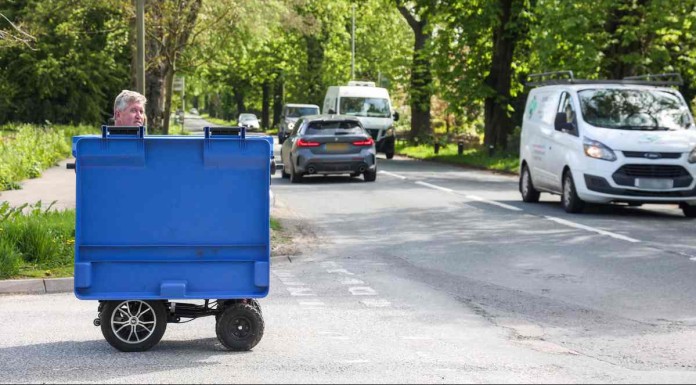
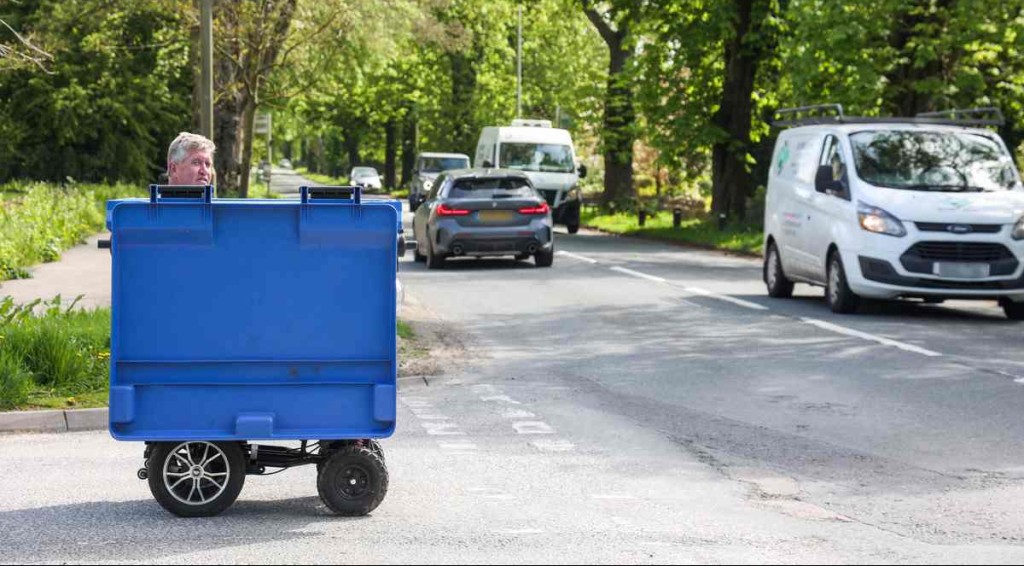
There are all kinds of ways to make people smile. You can tell jokes, offer free hugs, or, if you’re this guy, you build the world’s only road-legal wheelie bin.
Taxed and registered, the electric motor can propel the creation along England’s roads at 8 miles per hour.
Inventor Kevin Nicks says part of the reason he does what he does is “just to make people smile.”
“There’s a lot of negativity in the world one way or another at the moment, but what I try to do is bring some fun to people,” says the almost 60-year-old inventor.
He often drives with the lid open for safety reasons, although a series of mounted cameras allow to him drive with the lid closed for a real shock to passersby.
He had originally set out to make the world’s fastest lawnmower, but discovered that A: it had already been done, and B: the record was 140 miles per hour.
Kevin Nicks – SWNS
Setting his sights instead on the world record for fastest motorized wheelie bin, he discovered the record was held by a man who did it in honor of his friend who had terminal cancer.
So he decided to let the record stand and outfitted a slower model.
WATCH him driving his wheelie bin…
SHARE This Laugh-Out-Loud Story With Your Friends On Social Media…
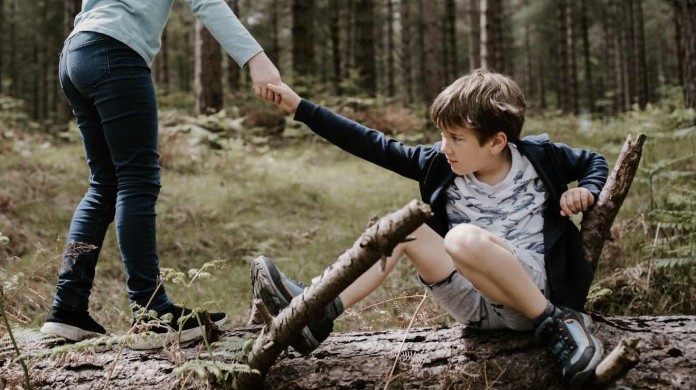
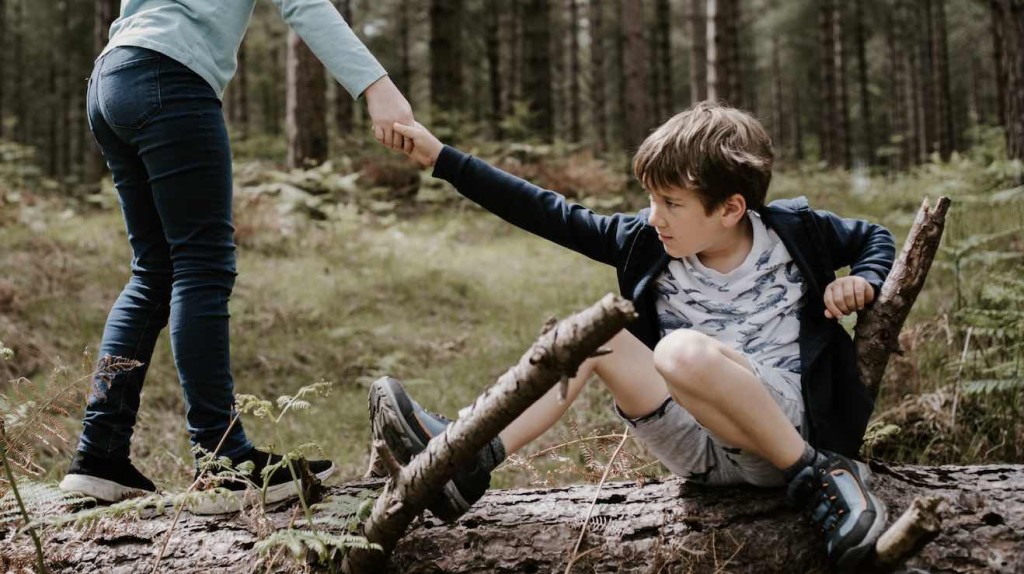
An international study of people on five continents has found that humans help each other with small things about every 2 minutes, and acquiesce to calls for help overwhelmingly more often than reject them.
For sociologists, understanding the root of any kind of human behavior first requires them to attempt to parse out how much influence on it comes from nurture, and how much from nature.
Kindness, generosity, anger, curiosity—how much are these expressions amplified or tamped down by the culture a person grows up in, and how much is built-in to the human animal?
Attempting to tackle kindness and cooperation, a team of researchers at UC Los Angeles conducted a study of observing everyday interactions between strangers and relations to see how often they helped each other.
Previous literature was, in hindsight, aiming a little too high in attempting to answer this question.
For example, the UCLA press room states in a report on the paper, that while whale hunters of Lamalera, Indonesia, follow established rules about how to share out a large catch, Hadza foragers of Tanzania share their food more out of a fear of generating negative gossip.
In Kenya, they continue, wealthier Orma villagers are expected to pay for public goods such as road projects. Wealthy Gnau villagers of Papua New Guinea, on the other hand, would reject such an offer because it creates an awkward obligation to reciprocate for their poorer neighbors.
While these are valuable insights into human social organization, they are dealing with complex phenomena with consequences, such as how to divide a whale kill among dozens of people, or financing road construction.
Instead, UCLA sociologist Giovanni Rossi aimed a bit lower. His team analyzed over 40 hours of video recordings of everyday life in towns in Italy, Poland, Russia, Aboriginal Australia, Ecuador, Laos, Ghana, and England.
“Cultural differences like these have created a puzzle for understanding cooperation and helping among humans,” said Rossi, the paper’s first author. “Are our decisions about sharing and helping shaped by the culture we grew up with? Or are humans generous and giving by nature?”
They registered signals for help, such as asking if someone could pass them the water at a dinner table, or a visual signal of help such as struggling to lift a heavy object into a truck, and identified more than 1,000 such requests.
They found that people complied with small requests seven times more often than they declined, and six times more often than they ignored them. Rejections of help came at a rate of 11% at most, but 74% of all rejections came with an explanation as to why the rendering of help wasn’t possible.
In other words, only 2.5% of all help signals were denied without explanation.
“While cultural variation comes into play for special occasions and high-cost exchange, when we zoom in on the micro level of social interaction, cultural difference mostly goes away, and our species’ tendency to give help when needed becomes universally visible,” Rossi told the UCLA press.
Ten years ago, a clumsy but enthusiastic Great Dane named Walter was out with his owners on public land near Rangely, Colorado, when he stopped near a strange-looking rock.
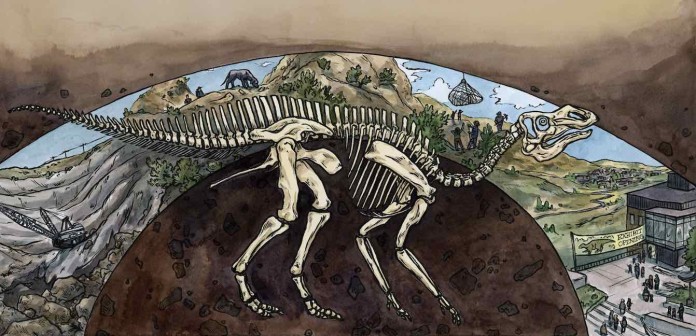
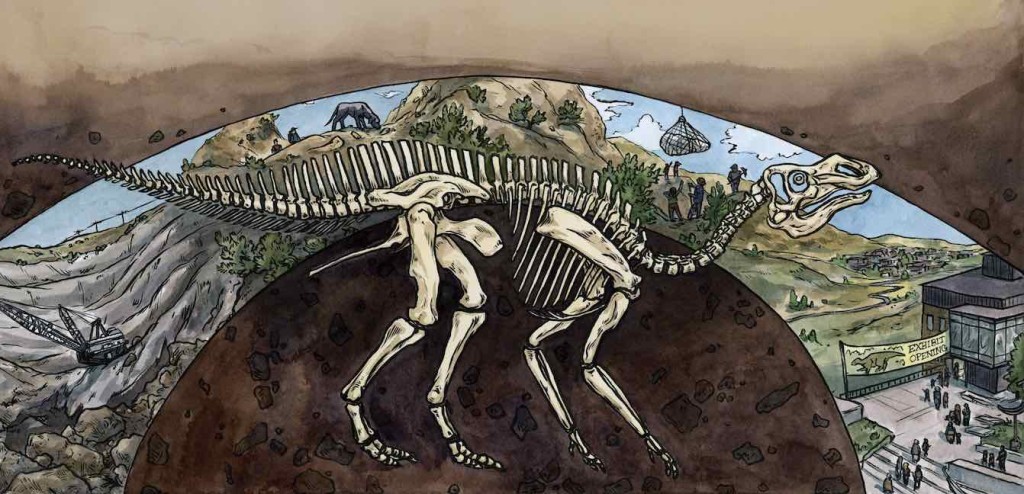
His owners investigated and found what experts say was a 74 million-year-old fossil. After painstaking work, scientists uncovered a nearly complete specimen of a hadrosaur duck-billed dinosaur.
Now, the Cretaceous-era fossil proudly carries the name of its paleontologist pooch: Walter.
The same year Walter was found, Colorado’s coal production hit a 20-year low; the town of Craig’s power plant and coal mines in the county are scheduled to shut down by 2030. Numerous businesses have closed, and Ms. Johnson dreams of turning one of those empty buildings into a dinosaur museum to attract tourists.
Rewind time just a bit, and it was near the cypresses and ferns of a brackish swamp that an aging dinosaur strained its arthritic body to drink. It was about as long as a school bus, with a bony lump on its nose and an old wound that had become infected.
Perhaps it died there, or maybe it was still lumbering about when a flood or landslide struck and sediment buried its body, along with the surrounding cypress and ferns. Heat and pressure compacted the vegetation into coal. But the dinosaur, encased in a sarcophagus of mud and sand, remained intact.
Hadrosaurs—the “cows of the Cretaceous”—once grazed in herds across prehistoric North America and Eurasia. Walter is a remarkably complete specimen, and researchers believe that this fossil represents a new species.
As the scientists, volunteers, and students excavated, they found more fossils: a Daspletosaurus tooth, chunks of what may be dinosaur skin, and imprints of ancient plants like screen prints on the rock. The Paleontological Resources Preservation Act says that such discoveries must go to approved repositories, typically at government or museum facilities in cities like Denver and Washington, D.C.
But Liz Johnson, a paleontologist at Colorado Northwestern Community College, wanted to change that.
“This is northwest Colorado history. It should stay in northwest Colorado,” she said. Fortunately, that was also in the federal government’s interest, so the Bureau of Land Management worked with the college to make it happen, short-circuiting a process that can take years, if not decades. Walter and the other finds will stay in Craig.
The town of Craig loves Walter; the county visitor center sells replicas of Walter’s tooth. Students and community volunteers worked for five summers to help uncover Walter’s remains. The most dedicated volunteers still spend weekends and holidays meticulously cleaning fossils.
In 2021, visitors to Dinosaur National Monument, about a hundred miles to the west, spent $24.3 million. That’s a lot of money, but tourism doesn’t pay as well as mining. Still, as Craig scrambles to attract investors and new industries, Walter’s fans hope paleo-tourism can add fresh appeal. “This place used to be a swamp. Now it’s high desert. Change is constant,” Johnson said. “We have to change, too.”
SHARE This Small Town Story With Your Friends On Social Media…
Quote of the Day: “Sweet mercy is nobility’s true badge.” – William Shakespeare
Photo by: Clement Souchet (Meteora, Greece)
With a new inspirational quote every day, atop the perfect photo—collected and archived on our Quotes page—why not bookmark GNN.org for a daily uplift?
When the Ancient Egyptians were still leaving offerings to Amun in their temples, a faith from more than 4,000 miles away was already turning up at the docks of the Pharaohs.
A 28-inch long (71-centimeter) statue of Gautama Buddha was found in excavations of the Egyptian port of Berenice on the Red Sea, dating back to the Roman Era.
Evidently, ships laden with goods from India and offshore islands were, even at this early stage of history, already capable of crossing the Indian Ocean routinely on trading missions, bringing spices, jewels, and religion with them.
A Polish-U.S. archaeological mission discovered the statue “dating back to the Roman era while digging at the ancient temple in Berenice.”
The find holds “important indications over the presence of trade ties between Egypt and India during the Roman era”, the head of Egypt’s supreme antiquities council Mostafa al-Waziri said.
The statue depicts Buddha with a halo around his head and holding a lotus flower in his hand.
Known as the Maritime Silk Road, the shipping lanes of the Indian Ocean were plied for thousands of years, connecting the wealth of China to that of India and the Spice Islands, back to the Arab World and North Africa, through to Constantinople and Europe beyond.
GNN has previously highlighted the incredible complexity of global trade even in the earliest periods of civilization.
Last year, cutting-edge analysis of tin isotopes has shown that tiny tribes of pastoral nomads from modern-day Uzbekistan supplied a third of all the precious tin needed to make the bronze that fueled ancient Mediterranean commerce.
Getting the tin from Uzbekistan to the Med involved a vast multi-regional, multi-vector trade network that bears comparison with our own time—3,500 years after it was developed.
SHARE This Interesting History Lesson With Your Friends…
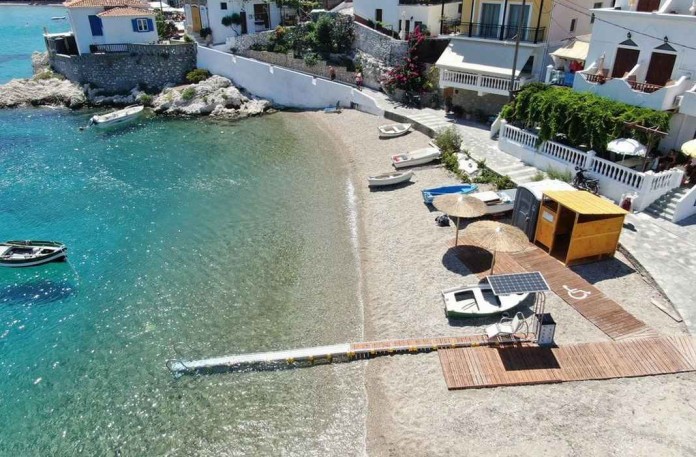
Describing access to the sea as an inalienable human right, Greek tourism authorities are retrofitting 287 beaches across the country with self-operating wheelchair ramps.
Self-operating means that wheelchair users can operate it by themselves without assistance from a friend or employee, offering a flexible freedom rarely found in difficult terrain such as beach sand.
So far, work crews have already installed the Seatrac system on 147 beaches, where disabled people can enjoy swimming in the country’s famous blue waters.
The scope of the project goes beyond beaches and has seen the Acropolis of Athens equipped with a wheelchair elevator, and many other sides receive renovations to make wheelchair-bound visitors more welcome, including bathrooms, sidewalks and walkways, snack bars, and other amenities.
“People with disabilities and people with limited mobility can engage in activities such as swimming that contribute to their physical and mental health,” Vassilis Kikilias, Greece’s tourism minister, announced at a press conference.
“Seatrac does not provide only independent access to the sea,” Ignatios Fotiou, who helped develop the technology, to the Washington Post. “It provides dignity and independence to people with mobility issues that want to enjoy swimming. They can choose where to go and ask their friends to join them, not the other way around.”
The government of the country created a website for all the info needed to plan a wheelchair-included trip to the beaches of Greece, including a map of all the beaches nearby equipped with the Seatracs.
WATCH the beach joy in their video…
SHARE This Story With Anyone You Know In A Wheelchair…
A group of middle-aged dads formed a dance crew to perform at their kids’ school but become unlikely social media stars with over 300k followers—one of which is Hugh Jackman.
The ‘Outta’ Puff Daddys first came together in 2012 in Brighton for a surprise performance at their children’s annual dance show.
Now the viral TikToks and Instagram Reels of their synchronized dancing have their kids cheering them on alongside a six-figure following.
Having never danced professionally before and ranging in age from 42 to 60, the dads were taught by their kids’ street dancing teacher for the surprise performance and received such a good reception they decided to carry on permanently.
Paul Jukes, 48, the group’s leader and artistic director, says dancing together has helped the members through bereavement, unemployment, and depression, reminiscent of the classic British comedy The Full Monty.
“The irony is that even though I’m the leader, artistic director, and choreographer of the group, I’m not normally the most confident [guy],” said Jukes, whose crew name is ‘Jukebox’, obviously. “If we’re in a party situation we’re off at the side but when we’re together those inhibitions are lost, and we just embrace life to the max.”
Jukebox remembers the moment they surprised their kids at the dance show.
“We performed at the Brighton Dome which seats 2,000 people so for your first live dance performance it was quite something. We literally took the roof off,” he said. “The noise was phenomenal and of course, the kids in the audience were like, ‘hang on a second, that’s your dad.’”
“Most people would assume our kids are going to be embarrassed by us but none of us in the crew have that. All our families and kids are really supportive and really love it.”
The Outta Puff Daddys – SWNS (2)
“And of course, it has been deemed cool by them to have the following we have with over 300,000 followers on Instagram and videos that get over one million views.”
“We all have crew names and one of our members is called Wolverine, and recently received a comment from Hugh Jackman giving him a massive thumbs up.”
The group actually began performing around the country at festivals over the last 3 years. Jukes experienced a period of depression in 2017 and he credits the group for playing a key role in his recovery.
“I believe everyone should be constantly underpinning and supporting their mental health— as we all do with our physical health—so that when those moments arise, we immediately have strategies in place,” he said.
“One of those is making sure I absolutely attend our weekly dance sessions because they are so integral to my mental health.”
The group is having to adapt to its members’ changing bodies as they get older, but that has not stopped them from continuing to dream big.
“There are a few arthritic knees in the crew, so we nurture and support each other to make sure what we do is achievable,” said Jukes. “One of our crew members is 60 years old now and he’s just incredible.”
“We joke about it as a crew but hey, let’s go to Vegas and Hollywood. An Outta Puff Daddys residency – why not?”
WATCH the daddys in action below…
SHARE This Prank-Turned-Passion With Your Friends On Social Media…
Spanish translations of Timucua (right) - credit Collections of the John Carter Brown Library, Brown University.
Spanish translations of Timucua (right) – credit Collections of the John Carter Brown Library, Brown University.
Imagine a Classics department at a University where the historians never bothered to learn the Greek or Latin of the original texts and you’ll have some idea of what the study of North American antiquity has been like.
Take for example Timucua, a dead language spoken by peoples native to Florida and Georgia, unrelated to nearby native languages, but was the most widely used tongue of any in that part of the world by the time of the Spanish Colonization.
An interesting thing happened during the predictably tragic story that followed: some Franciscan priests worked to apply the Spanish-Latin alphabet to the Timucua, in order to advance education and conversion to Christianity, which gave us a written form of a Native American language from the 16th century—a rare thing.
Now, years after a pair of scholars took on the task of translating those writings, they’ve managed to create the largest database of Timucua words in history, and put the Latin and Greek back in the Classics department, to speak allegorically. They’ve also made some startling discoveries about the mental capacities of these vanished people.
Aaron Broadwell, a linguistics professor at the University of Florida, and his colleague historian Alejandra Dubcovsky, have found that the Timucua had a rather more active role in the translation of their language into Spanish than other native peoples.
“The traditional understanding of the way this works is that the missionary appears and learns the language and then translates the stuff himself,” Broadwell told the Smithsonian. “But if we look closely at the text, we can see that it didn’t happen that way.”
The Spanish texts read more like a phrasebook than a dictionary—specifically a phrasebook for priests looking to encourage the godliness of the Timucua. As a result, and much like a phrasebook written today, there are a lot of questions—however, they have more to do with implying the Timucua traditional practices are sinful than facilitating honest communication.
“Did you make incantations over the lake before fishing in it?” reads one.
“Do you engage in the devilish practice of whistling to the wind to make the storm stop?’” reads another.
This is where the Timucua were clearly more intelligent than the Spanish believed, because the reverse translations, as Broadwell puts it, are “considerably less judgy.”
For example, the Timucua translation to that question is “did you whistle to the wind to make it stop?” and the translation of “have the man and a woman been joined together in front of a priest?” is “did you and another person consent to be married?”
“It’s very hard to learn these languages, and Native people don’t want to share everything. And those translators aren’t given any credit,” Dubcovsky also told the Smithsonian, noting that the priests probably couldn’t understand enough of the language to double-check the translations the Timucua were making, hence why potentially ‘devilish’ practices are included in the text.
It also implies to some degree that the Timucua probably did most of the work.
The details that have emerged show that while unique, Timucua bears some resemblance to the Choctaw language spoken by groups nearby, and that Timucua was a complex language capable of thoroughly addressing all manner of topics.
As to the question of why Timucua didn’t have a written alphabet, Broadwell points out that for as many people as there are on the Earth, scant few have ever developed a writing system.
SHARE This Fascinating Fragment Of American History On Social Media…