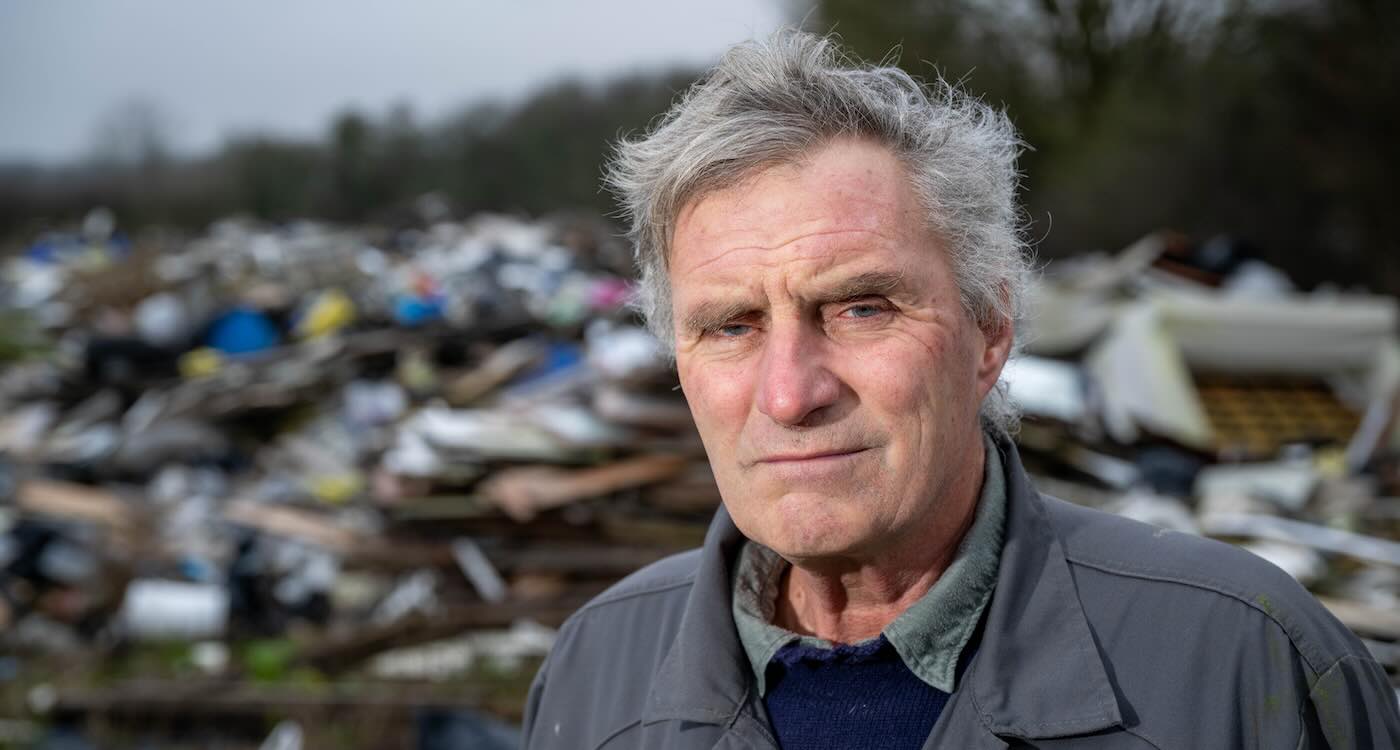
Quote of the Day: “Price is what you pay; value is what you get.” – Warren Buffett (retired this month at 95, as the world’s most successful investor)
Image by: Priscilla Du Preez
With a new inspirational quote every day, atop the perfect photo—collected and archived on our Quote of the Day page—why not bookmark GNN.org for a daily uplift?
Waiting for Godot from 1978, credit, CC 0 Fernand Michaud
73 years ago today, Waiting for Godot premiered in France. The tragicomedy play written by Irishman Samuel Beckett in interpretation of an earlier French play, En attend de Godot, it’s regarded by critics as “one of the most enigmatic plays of modern literature.” Featuring two characters spilling their thoughts out as they wait for the eponymous Godot, who never arrives, there is only one act in the whole play. READ a bit more, and some famous adaptations… (1953)
Carter Allen proposes to girlfriend via Shrek mashup –SWNS
Carter Allen proposes to girlfriend via Shrek mashup (see Prince in bottom left) –SWNS
A guy proposed to his fiancé by editing himself into the wedding scene of Shrek—a perfect way to totally surprise his girlfriend, and honor their love for the movie.
Carter Allen spent five hours adding a clip of himself seamlessly running down the aisle saying he’s ‘experienced true love, too’.
While playing the edited film for her at home last month, he left the room during that scene. He reappeared wearing the same suit he was wearing in the movie and got down on one knee to propose to Andressa Da Silva.
The young couple met four years ago on a class film set working on a project that Carter wrote.
The 26-year-old American from Georgia was predominantly a writer/director at the Georgia Institute of Technology, while she was an actress.
“When I met her I fell for her, and while editing the class film and listening to us mucking around in between takes, I fell for her all over again.
“From then on, we’ve always helped each other out and spent evenings watching films together.
“I always knew I wanted to do something film-focused, but also something intimate.”
Carter initially thought about proposing to Andressa in a movie theatre, but said ‘it didn’t feel right’.
“You’d be proposing during a film you’d never seen before, and what if it was bad?”
Instead, inspiration came from her suggestion for their next movie night.
“I started thinking about films we both have a fond memory of and, funny enough, she suggested we actually put Shrek on one evening,” he told SWNS news agency.
They ended up watching something else, but it gave Carter his perfect plan.
He worked on the edits while Andressa was sleeping—timing his appearance in the scene to just before Lord Farquaad says “the perfect bride”. (Watch the moment below…)
He was worried she might say no to watching it on the date he’d chosen—December 6. “You can only push so hard to insist on watching Shrek without raising suspicion.”
“I completely lost myself. I forgot everything I was going to say and just asked if she’d like to marry me.”
“I didn’t give myself enough time for the suit change. I nearly skipped the socks, but thankfully it all worked out. I should have done a dress rehearsal!”
Carter also scrambled to set up his phone across the room to record the special moment.
“I tripped on something on the way, but she didn’t notice,” he recalled. “She was absorbed in the film which I was thankful for.”
It also helped that he works from home so he could edit from there.
“I was humming the soundtrack constantly. I had to be careful she didn’t get suspicious.”
Carter Allen wedding proposal via SWNS
The proposal video went viral on Reddit, and the couple has been overwhelmed by the response—52,000 Likes and over a thousand comments.
Fox stuck in patio chair – RSPCA list of 2025 wacky rescues (Royal Society for the Prevention of Cruelty to Animals via SWNS)
The Royal Society for the Prevention of Cruelty to Animals has shared their wackiest animal rescues from 2025, including a fox trapped in a chair and another one stuck inside the engine of an Amazon delivery van.
The charity compiled the list with pictures showing hapless animals and pets trapped in bizarre places but they all were soon freed by baffled—but determined—rescuers.
Of the oddest rescues last year, one of the weirdest was a baby kitten that got itself trapped in the sewage system.
Stunned staff at the site in Birmingham, England, alerted the charity after hearing the tiny animal’s “booming meows”.
RSPCA Inspector Boris Lasserres and Cara Gibbon both donned dry suits to rescue the kitten, nicknamed ‘Olivia Twist’.
“She was trapped down a sewage flow system and we think she must have fallen from quite a height above as there was no other way she could have got herself in there,” said Cara, who reported that the kitten was taken to an animal hospital where she made a full recovery and was later re-homed.
RSPCA via SWNS
“We know she had been in there for at least three days and with no mum around she must have been terrified.”
In January, a not-so-cunning fox found himself stuck in a tight spot after he slipped over garden furniture and got his paw stuck between the slats in a backyard in South East London (top photo).
Fox stuck in van’s engine – RSPCA / SWNS
Another young fox cub needed rescuing after getting stuck inside the engine of an Amazon delivery van in Derby, England.
The distressed female fox was only spotted by the shocked driver after she gnawed through a cable, triggering a dashboard warning light to illuminate.
Meanwhile, in April, a peregrine falcon became tangled and trapped in anti-bird netting in a block of flats in Birmingham.
A seagull was also lucky to escape without injury after getting caught up in a football net in Ramsgate, Kent, in February.
It wasn’t only birds getting themselves in a flap negotiating nets, in Sheffield a badger found itself tied up in knots after stumbling into a football goal.
There were more animals needing help after wandering where they shouldn’t have been.
A hedgehog found herself needing urgent care after being injured by a weed whacker’s string trimmer in Cheddar, Somerset. Despite having many of her spines cut off in the mishap, she made a full recovery before being released into the wild.
Tawny owl stuck in a tree – RSPCA / SWNS
Days later a tawny owl needed rescuing after getting tangled on a branch by its wing. The bird was found hanging 20-feet above fast-flowing water in Bedwas, Caerphilly, Wales.
2025 was one of the charity’s busiest years, said RSPCA superintendent Simon Osborne.
“Every single day throughout the year, our teams rescue, rehabilitate, and re-home hundreds of animals with very special backgrounds and stories of triumph over adversity.”
HAIL THE RESCUERS By Sharing the 2025 Good News on Social Media…
At 80, Betty became oldest woman to complete a thru-hike of Appalachian Trail -Courtesy of Betty Kellenberger
The obstacles and excuses kept blocking Betty Kellenberger’s path, but she never stopped moving forward.
Kellenberger, an 80-year-old retired schoolteacher from Carson City, Michigan, became interested in the Appalachian Trail in elementary school when she learned about it in a Weekly Reader: Betty immediately thought she wanted to hike it someday.
But adult life and her work as a teacher obstructed her path for decades. Even for young people, hiking the entire Appalachian Trail is a grueling, multi-month endeavor.
The trail runs through 14 states from Maine to Georgia and is about 2,200 miles long, filled with rigorous climbs and rocky terrain and a whole host of environmental challenges.
Finishing the entire thing is such a daunting task that many people only attempt to cover stretches of it at a time.
Betty wanted to do the whole thing.
“I remember thinking, ‘How long do you think you have to think about it? You know, I’m pushing 80,” Betty told the AARP. “Am I going to wait until I’m pushing 90?’ So yeah, it sort of pushed me into action.”
She researched the trail and made her first attempt in 2022 with a trail partner, Joe Cox.
Unfortunately, Cox had a rough fall on Mount Katahdin in Maine and had to exit the trail a day later. Betty didn’t make it much longer, leaving several days afterward due to lingering effects from dehydration, Lyme disease, and a concussion.
She tried again in 2023, starting at Harpers Ferry, Virginia and heading north. Betty made it all the way to Massachusetts, but a bad fall forced her to abandon the adventure.
Then, she had knee replacement surgery and learned the sad news that Cox had passed away. Betty became determined to finish the trail in his honor. (Watch a great video of her trek below from PBS…)
She started at Harpers Ferry again in 2024, this time going southward. Unfortunately, in September Mother Nature threw her another curve ball: Hurricane Helene had toppled trees, obstructing paths all over the South, making the Appalachian Trail so impassable in parts that officials made hikers an extraordinary offer during the clean-up.
Leave now and you can count your existing mileage on day one next year.
Typically, all through-hikes have to be finished in 12 months to count as complete, so Betty had actually caught a break.
Betty breaks world record climbing the Appalachian Trail -Courtesy of Betty Kellenberger
She began training for her next shot at the Trail by climbing steps every day at the local hospital because her Michigan surroundings were so flat.
And when she headed out to the Appalachian Trail again in March 2025, she only had the northern and southern routes remaining since she had hiked between Massachusetts and Virginia before the hurricane hit.
She finished the southern end first. Only the northern end remained, but the mountains of Maine and New Hampshire are notoriously difficult, so Betty wasn’t sure she could do it—until she met a man hiking in Pennsylvania who said something unforgettable.
Hikers often call people like this trail angels, seemingly divine beings that show up in the darkest times and offer enough food, advice, or encouragement to keep people going.
“I was hiking alone, and I just thought, if I have to do this alone, I’m not sure I can do it. And he says, ‘Well, you can quit, and nobody will point fingers at you and blame you or anything. But you’ll never know whether you could have done it or not. If you go and you take it on and you try it, then you’ll at least know.’”
So Betty kept going.
The collective elevation gain along the iconic trail is equivalent to hiking Mount Everest 16 times. It’s estimated that 75% of through-hikers fail every year—and no wonder. Betty’s challenges included sore feet, heavy packs, bad weather, mud bogs, upended roots and endless, endless piles of rocks.
“Early on I decided the Lord must love rocks because He made so many of them,” Betty told The Trek website with a chuckle.
Finally, on September 12, Betty completed the northern end at age 80—besting the previous record by six full years—to become the oldest female to finish the Appalachian Trail.
“I’ve had a ‘series of unfortunate events’, I call them. But each one, I learned something,” she told AARP. “Each one, I got a little stronger. Each one, I got a better story. And so then, this year, I was able to do it.”
In addition to the record, Betty took home a simple, yet powerful lesson that she loves sharing.
“Get out, move, set a goal and work toward it. The bigger the goal, the greater the reward. Don’t let society or friends and family set your limitations.”
Quite often, you might be surprised how far you can go once you simply take the first step.
HELP BETTY’S STORY REACH EVEN GREATER HEIGHTS By Sharing This to Your Social Media Feed…
A Bryde's whale Brydes whale surprises divers – by Emily Marzilli via SWNS
A Bryde’s whale Brydes whale surprises divers – by Emily Marzilli via SWNS
A free-diving instructor had a once-in-a-lifetime moment when a massive Bryde’s whale suddenly emerged during a feeding frenzy in Mexico’s Pacific waters.
Emily Marzilli of Baja California Sur was diving near a giant sardine bait ball, which is a survival tactic for small fish against predators, when something extraordinary happened.
Without warning, a massive whale surfaced, and took a huge bite of the shimmering circular mass of fish, then vanished as soon as it appeared.
The brief two-minute encounter left Emily and her fellow divers in shock and awe, a rare experience that as divers can only be dreamed of.
Magdalena Bay is an area renowned for its “National Geographic-level action” during sardine season.
The group had discovered the bait ball, which can grow to the size of a car.
Striped marlin, measuring up to two meters long, were circling the formation as the divers maintained a safe distance of 50-60 feet.
When the marlin began attacking the bait ball, the feeding frenzy created a cloud of foam that obscured their vision.
A Bryde’s whale surprises divers observing bait ball by Emily Marzilli via SWNS
“Out of nowhere, this Bryde’s whale came and just took a huge bite out of the baitball and just swam away.”
The massive marine mammal appeared suddenly from the cloudy water like magic.
“Half of it was (spent) honestly in shock because you are expecting to see fish and then all of a sudden there’s this 20-30 ton whale that’s right in front of you.”
The Bryde’s whale is a baleen whale belonging to the same group as blue whales and humpbacks. It has no teeth, but has two rows of baleen plates.
Brydes whale surfaces for tour boat (File photo by Auckland Whale and Dolphin Safari – CC BY-SA 4.0)
The encounter lasted only about two minutes, but its impact was profound. The five divers found themselves looking at each other afterward, wondering if ‘that just happened to us or not.’
After the whale departed and the bait ball disappeared, consumed by both fish and whale, the group returned to their boat.
“We had no idea that there was even a whale in the proximity,” she said.
“When the whale comes out of nowhere, it totally surprises you,” Marzilli said. “Those are interactions that you can only dream of and wish to happen.”
IF YOU’VE NEVER SEEN ONE, Share the Bryde’s Whale With Ocean Lovers on Social Media…
Quote of the Day: “We cannot live in a world interpreted for us by others. Take back our listening, use our own voice to see our own light.” – Elaine Bellezza
Image by: Jacki Drexler
With a new inspirational quote every day, atop the perfect photo—collected and archived on our Quote of the Day page—why not bookmark GNN.org for a daily uplift?
16 years ago today, the tallest building in the world, the Burj Khalifa, officially opened in Dubai. Taking the crown from the Taipei 101 building in Taiwan’s capital, the Burj Khalifa has been the tallest building and structure on Earth since 2009, a year before it was even finished. Burj Khalifa was designed by a team led by Adrian Smith of Skidmore, Owings & Merrill, the firm that designed the Sears Tower in Chicago, a previous record holder for the world’s tallest building. READ more… (2010)
An abandoned dog has joined a mission of peace across the world and, despite some mishaps, has stayed with it every paw of the way.
During their opening 112-day peace walk in India, a group of Buddhist monks found an abandoned dog—or perhaps the dog found them.
The canine, believed to be an Indian Pariah breed, was given the name Aloka, and soon became a loyal companion, following the group of monks as they marched across India to spread messages of peace and unity.
Their four-legged friend encountered his own hardships along that arduous journey. Aloka was hit by a car, and he also fell ill for an extended period of time. The monks loaded him up in a truck, offering him an escape from all the walking.
But Aloka didn’t want to be away from his new companions. He jumped out and rejoined the mission.
“He followed us the whole time. He’s a true hero,” one of the monks said in a Tik Tok video, remembering all the obstacles Aloka overcame. “He wanted to walk. That inspires a lot.”
Now, Aloka and the monks who live in the Huong Dao Vipassana Bhavana in Fort Worth, Texas have a new mission. In October, nineteen of the Buddhist monks and their loyal companion set out from Fort Worth on a 2,300-mile walk toward Washington, D.C. with a goal of promoting unity and compassion.
“When I heard about this 2,300-mile walk, I was amazed,” Texas Representative Nicole Collier told the Star-Telegram. “It really touches the hearts and minds of people. We live in a time when the noise often drowns out understanding, where division can feel louder than unity—but this is what the community and interfaith solidarity looks like.”
The journey is expected to cover 10 states in 110 days before ending in the nation’s capital in February. By late December, the group had reached Atlanta. A live tracker on Facebook provides updates on their progress and the group has also been posting frequently to social media. (Don’t worry, Aloka the Peace Dog has his own Instagram as well).
Strangers have provided a warm welcome all along the way. A Dairy Queen store in Texas gave the monks ice cream and made sure Aloka got some too. Doctors in Alabama provided free checkups. Crowds have gathered across the Sun Belt to meet the monks and share meals and well wishes as the convoy moves north toward the capital.
“It’s a journey filled with both known and unforeseen challenges.” says the official Walk for Peace Instagram page. “Yet, with hearts anchored in calmness and minds set firmly on their purpose, the monks move forward—step by step—embodying peace, resilience, and unwavering determination on their sacred path toward the White House.”
Preemie baby Gabriel Golden at Vanderbilt NICU-SWNS
A premature baby, born so tiny his hand was smaller than his dad’s fingertip, is finally home and healthy after a year in the hospital.
Gabriel Golden was born weighing one pound in September 2024 after just 22 weeks gestation.
He endured nearly a year in the Vanderbilt NICU in Nashville, Tennessee, battling chronic lung disease and multiple infections before his parents Caroline and Garreth were finally able to bring their son home three months ago.
Little Gabriel still faces respiratory challenges, but is thriving developmentally.
“It was amazing that somehow, even though his finger was so small, I could feel his grip,” said his father Garreth.
“The strength those tiny fingers held left me speechless.”
Caroline started hemorrhaging 14 weeks into the pregnancy, and for a harrowing eight weeks, doctors warned daily that she could miscarry at any moment.
She recalls bleeding constantly while on bed rest and stuck at home. When at 18 weeks, Caroline’s water broke. The preemie wasn’t considered viable, so the couple waited in limbo until 22 weeks, when Caroline was hospitalized with hopes of buying more time for their son’s development.
The medical team presented stark statistics—and the numbers were devastating: a less than five percent survival rate, with greater than 90 percent odds of neurological problems, heart defects, and vision or hearing loss.
“The biggest thing is that their lungs are barely developed,” Caroline said.
At 22 weeks and four days, Caroline went into labor during an emergency situation that put both their lives at risk. Garreth watched helplessly as medical staff rushed his wife to surgery.
“They’re having her sign paperwork that she could die from the surgery,” recalled Garreth, who spent a lot of time “not knowing what to think or what to do.”
Against all odds, Gabriel was able to use the breathing tube and survived.
Gabriel Golden is finally home -SWNS
But he still had to battle severe broncho-pulmonary dysplasia—a chronic lung disease that left his lungs scarred and rigid. The couple said goodbye to their son on three separate occasions during his first six weeks of life.
Multiple pneumonia infections also set him back, and doctors eventually determined he would need a tracheostomy to survive.
Throughout the ordeal, Garreth traveled three hours each way to his job, continuing to work so they could pay their bills and Caroline tried to maintain a bedside vigil.
Their church community provided financial support, and four primary nurses at Vanderbilt became like family during Gabriel’s extended stay. “We couldn’t have done it without them,” Caroline said.
“One nurse specifically was with us for nine and a half months. I personally couldn’t have done it without her.”
Gabriel Golden family at Vanderbilt NICU-SWNS
Caroline, who had always dreamed of being a mother, says the experience transformed the couple’s faith and perspective on life.
“I was thrust into a situation where my faith was the only thing I had to cling to. Now it’s stronger than I ever thought it could be.”
While Gabriel is home, he still requires a tracheostomy and faces respiratory challenges, but there’s good news, too.
“By the grace of God, Gabriel is completely developmentally appropriate, and has no brain issues,” Caroline told SWNS news agency.
“Other than his lungs, his body is in wonderful working condition.”
The experience gave Garreth a new perspective when he walked through the children’s hospital and saw other families facing their own battles.
“As complex as Gabriel is—and as precious as his life is—you walk into Vanderbilt’s Children’s Hospital, and it hits you like a wave of gratitude when you see some of the things going on with these children.”
GIVE PREEMIE FAMILIES HOPE By Sharing This on Social Media…
Confetti in Times Square January 1 by Anthony Quintano / Flickr (CC BY 2.0)
As the famous New York City ball dropped downward to deliver 2026, a deluge of hopes, dreams, and wishes rained down in Times Square.
I wish for more love and kindness in 2026…
I wish for a good year with good people…
Tons of messages from the Times Square Wishing Wall have been mixed in amid the abundance of multicolored confetti that fluttered through the Big Apple skies.
For the past month, interested participants have been able to contribute their hand-written wishes for the new year in a broad assortment of colors. And people who weren’t in the city were able to enter their submissions online.
According to the Times Square New Year’s Eve Wishing Wall website, “Whether it’s a personal goal, a dream for the future or doing something for the very first time, these wishes are added to over a ton of confetti that floats down at midnight onto the revelers gathered in Times Square in celebration of the new year.”
NBC News shared a sampling of the 2026 wishes in a December video on YouTube that you can watch below…
I wish for a kinder, more peaceful world for my grandchildren to live in…
My wish this year is to finish writing my book and have it change at least one person’s life…
I wish for a cure for Type 1 diabetes….
The Wishing Wall has attracted visitors from all around the world—from all races, religions, and nationalities.
The notes were combined with the 3,000 pounds of confetti that was tossed into the Manhattan air at midnight to drift down through the crowds in Times Square crowd.
My wish is to continue to chase my dreams and never lose sight of who I want to be…
I wish for life to get a little bit lighter for all of us…
FREE WILL ASTROLOGY – Week of January 3, 2026
Copyright by Rob Brezsny, FreeWillAstrology.com
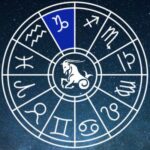
CAPRICORN (Dec. 22-Jan. 19):
Computer scientist Tim Berners-Lee invented the World Wide Web. He helped ensure its core technologies were released to the world without patents or royalties. Universal, open access mattered more to him than personal profit. That single decision was a profound gift to the world. Billions benefited. In his generous spirit, dear Capricorn, I’ll ask whether there are any ideas, knowledge, or resources you’re holding in reserve that could multiply through sharing. In 2026, I invite you to be like Berners-Lee: a magnanimous strategist who understands that things may gain value through distribution, not restriction. Your intelligence will be worth more unleashed than protected. Your innovations will need the crowd to fulfill their purpose.
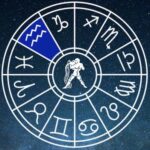
AQUARIUS (Jan. 20-Feb. 18):
In the myths of Mali’s Dogon people, Nommo is an amphibious, telepathic being who brought language, rhythm, and balance to Earth—and then departed. If things fall out of harmony, it’s believed, Nommo will return, speaking the lost syllables that realign the cosmos. You’re a bit like Nommo in 2026, Aquarius. Parts of your world may be in disarray, and your sacred task is to listen for the lost syllables. What’s missing in the dialogue? What notes aren’t being sung? If you seek gently and speak truly, restoration will follow.
PISCES (Feb. 19-March 20):
The longest chess game theoretically possible is 5,949 moves, but most games end in under 40. Chess masters don’t win by seeing every possibility. Instead, they recognize patterns and anticipate which paths are worth exploring. Let’s apply this as a useful metaphor, Pisces. In 2026, it’s crucial that you don’t waste energy by considering improbable scenarios that will never materialize. You should be determined not to miss emerging themes because you’re too busy calculating unlikely variations. According to my prognosis, you don’t need to see further; you need to see more precisely and accurately. The chess master’s advantage isn’t exhaustive analysis; it’s knowing what to ignore. Ninety percent of your options don’t matter. Ten percent do.
ARIES (March 21-April 19):
Before major eruptions, volcanoes may emit harmonic tremors. Lasting for hours or days, they are signals that pressure is building. A similar phenomenon is simmering in your sphere, Aries. Be alert in 2026. What rhythmic clues are vibrating through your system? What pressure is mounting that could eventually erupt? I’m not saying you should interpret them with a worried mind. In fact, they are offering you valuable intelligence about what needs to be released. You can either ignore them and let the eruption surprise you, or you can pay attention and arrange for controlled venting.
TAURUS (April 20-May 20):
Your heartbeat isn’t regular like a metronome, but slightly irregular. The phenomenon is called heart rate variability and is a sign of health. A perfectly regular heartbeat is actually a warning sign. Your heart knows something your mind might not believe: Perfect consistency is pathological. Variation is vitality. The rhythm of life includes the beautiful irregularity of a system that’s alive enough to respond and adapt. Keep these truths uppermost in mind during 2026, Taurus. You will thrive on changeability and fluctuation.
GEMINI (May 21-June 20):
The Greenland shark waits for animals to fall asleep, then eats them while they’re unconscious. Since it’s too slow to chase anything, it has evolved a patient approach to hunting. It acts on the understanding that everything eventually lets its guard down. I suggest you cultivate similar patience in 2026, Gemini. There’s no need to rush toward what you want. Position yourself correctly and wait for moments of opportunity. You’re playing a long game.
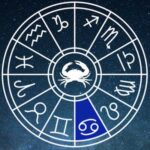
CANCER (June 21-July 22):
Atmospheric rivers are massive moisture highways in the sky. Meteorologists have been documenting newly identified patterns in how these marvels work. They’ve learned that tiny changes in ocean temperature can redirect thousands of miles of incoming rain. This will be an excellent metaphor for you in 2026, dear Cancerian. You’ll be in atmospheric-river mode. Small shifts in perspective and slight recalibrations of intention will send your momentum flowing in different and better directions. No drama required! Simple micro-adjustments will reroute larger currents. Attend devotedly and zestfully to the subtleties.
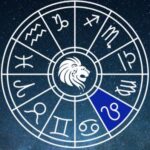
LEO (July 23-Aug. 22):
Certain fungi can break down pollutants like pesticides and plastics into less toxic substances. These mushrooms digest what’s considered indigestible, transforming poison into nutrients. I suspect you will have a metaphorically comparable capacity in 2026, dear Leo: a superpower that enables you to metabolize blight and taint. I predict you will exult as you eliminate stuff that’s useless and harmful. Please indulge your unusual talent to the max!
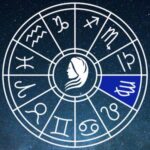
VIRGO (Aug. 23-Sept. 22):
The US Library of Congress adds 60,000 items to its collection every week but only catalogs a fraction of them immediately. So, vast amounts of knowledge sit there, acquired but not yet processed, waiting for librarians to create the finding aids that make them accessible. You’re in a similar situation, Virgo. You’ve accumulated extraordinary amounts of information, experience, and skill. But how much of it is cataloged? How much is accessible when you need it? In the coming year, I hope you *won’t* acquire more. Instead, you will spend time with your archives and process what you have already gathered. What do you know that you’ve forgotten you know? What experiences hold wisdom you’ve never extracted?
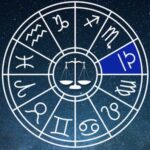
LIBRA (Sept. 23-Oct. 22):
Vault doors often require *two* keys, turned simultaneously, to open. Why? Such a practice furthers risk reduction and fraud prevention. Let’s make this a potent metaphor for you in 2026, Libra. It will symbolize cooperation and balance as well as an enhancement of your security. The treasures you’ll be trying to access will require dual input. One key is yours: intellect, agility, charm, initiative. The second must come from a collaborator, mentor, friend, an unexpected stranger, or even a spirit guide. Just assume that the vault won’t open through brilliance alone. It will require synchronization.
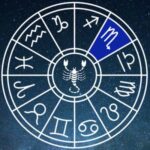
SCORPIO (Oct. 23-Nov. 21):
In December 1968, US astronaut Bill Anders was orbiting the moon inside the Apollo 8 spacecraft. He snapped a photo that showed the Earth as a blue-and-white sphere rising over the gray lunar surface against the blackness of space. This iconic image helped fuel the environmental movement and transformed how humans visualized their home. You’re at a comparable pivot, Scorpio. In 2026, you will see familiar situations from new angles, and this will reorganize your understanding of how life works. That’s a good thing! Be alert for watershed moments that bring revolutionary blessings.
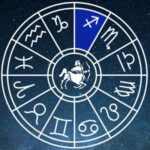
SAGITTARIUS (Nov. 22-Dec. 21):
The Giant’s Causeway in Northern Ireland is made of 40,000 interlocking basalt columns formed when ancient lava cooled and contracted. Legend says a giant built it as a bridge to Scotland. Both stories are true, one geologically and the other mythologically. Your life in 2026 will remind you that multiple explanations can coexist without canceling each other. The scientific story of lava cooling doesn’t make the giant story less meaningful. The giant story doesn’t make the geology less accurate. Conclusion: You don’t have to choose between competing narratives about your life as if only one can be true. What if both are? The practical explanation and mythic explanation describe the same phenomenon from different angles. You can be both the cooling lava and the giant building the bridge.
WANT MORE? Listen to Rob’s EXPANDED AUDIO HOROSCOPES, 4-5 minute meditations on the current state of your destiny — or subscribe to his unique daily text message service at: RealAstrology.com
Quote of the Day: “While the gentle winter sun slowly opens its eyes, let us all bring more light and compassion into the world.” – Dacha Avelin
Image by: Ravi Patel
With a new inspirational quote every day, atop the perfect photo—collected and archived on our Quote of the Day page—why not bookmark GNN.org for a daily uplift?
100 years ago today, George Martin, the English record producer, composer, audio engineer, and musician, was born. Known as “the 5th Beatle” for his extensive influence on the sound of the Beatles records, he is considered to be one of the greatest record producers of all time, with 53 number-one hit singles in the UK and US. READ more… (1926)

Tiny plants, like moss, are easy to overlook. They’re often as small as an eyelash, and they tend to grow on the ground in dark, wet places. But these small plants sometimes turn out to be big clues in forensic cases.
A team of scientists learned that firsthand in 2013, when they were asked to use bits of moss to help pinpoint the location where a body was buried. Now, the researchers have published a paper in the journal Forensic Sciences Research, compiling all the cases they could find of mosses and their relatives being used to help solve crimes.
“With our paper, we wanted to highlight the significance of botanical evidence, because chances are, investigators are simply overlooking it because they don’t know what they’re looking at,” Matt von Konrat, Head of Botanical Collections at the Field Museum in Chicago and corresponding author of the paper. “We’re hoping that our study helps show how important these tiny plants can be.”
Mosses are part of a family of plants called bryophytes. These are some of the most basic plants, and they don’t have true stems, leaves, roots, or seeds. Their simple anatomy allows them to take in water and nutrients directly from their environment, which helps them thrive in shady, wet, boggy areas where more “advanced” plants often struggle. Some bryophytes are extra-sensitive to their environment, with different species having particular affinities for different living conditions.
“Because they’re so small, they have all sorts of microhabitats— even if an area overall seems to be one sort of habitat, they can find a spot that works for them in the shade, or in the canopy, or even growing under the grasses,” says von Konrat.
“And different types of even smaller organisms can live on those mosses, which can give even further clues. This means that mosses can be a valuable tool for forensic scientists looking to confirm details of where a crime took place.”
In 2024, Jenna Merkel, then working on her Master’s degree in forensic science at George Washington University, interned with von Konrat at the Field Museum.
“I thought, why don’t we look into writing a review of how bryophytes have been used in forensics?” says von Konrat. “So we reviewed 150 years of scientific literature to see how these plants have been used in investigations. Well, it turns out, the answer was, ‘Not that much.’”
The earliest case the team found was from 1929, when the growth rate of mosses on a decomposing skeleton helped investigators determine how long ago the person had died. Over the past century, there have been at least 10 more cases, in Finland, Sweden, Italy, China, and the United States, in which bryophytes have played a role in determining when, where, or how a criminal case had occurred.
The researchers’ paper also serves as the first in-depth scientific record of a case von Konrat and several of his co-authors consulted on a decade ago.
In 2011, a baby girl named Kate was killed by her father, and her body could not be found. However, her father had given the police general information about where he’d buried her in northern Michigan, and his shoes had microscopic bits of plant material on them. In 2013, von Konrat led a team of botanists and volunteers in surveying the different grasses, trees, and mosses growing in the area, looking for a spot where the dozen plant species on the father’s shoes could be found.
“There are hundreds of species of moss and dozens of species of grasses and trees living in that area,” says von Konrat. “But based on the bits of moss, we knew what sort of micro-habitat we were looking for.”
The team ultimately identified a small area of about 50 square feet where Baby Kate was likely buried, narrowed down from the seven counties that law enforcement originally was investigating. Her father confirmed in a police interview that the spot pinpointed by the researchers is indeed where he buried his daughter.
The paper’s authors hope that bryophytes can continue to help serve justice and bring closure to families affected by violence.
“Plants, and specifically bryophytes, represent an overlooked yet powerful source of forensic evidence that can help investigators link people, places, and events,” says Merkel. “Through this paper, we aim to raise awareness of forensic botany and encourage law enforcement to recognize the value of even the smallest plant fragments during investigations.”
SHARE This True Crime Twist: The Forensic Potential Of Moss…
It was 75 years ago the last time there were as many octopus in British waters as there are now, with the UK’s Wildlife Trusts declaring that 2025 was the ‘Year of the Octopus.’
These eight-legged spineless creatures, one of the most fascinating to inhabit our planet, have been seen in record numbers by divers, and caught in record amounts by commercial fishermen.
Scientists suggest it could be milder winters leading to the “bloom,” which is the term for octopus birthing seasons.
“It really has been exceptional,” says Matt Slater from the Cornwall Wildlife Trust. “We’ve seen octopuses jet-propelling themselves along. We’ve seen octopuses camouflaging themselves, they look just like seaweeds,” he told the BBC.
“We’ve seen them cleaning themselves. And we’ve even seen them walking, using two legs just to nonchalantly cruise away from the diver underwater.”
Regarding the fisheries, it’s been a banner year for the industry. 2021 and 2023 have seen the highest yearly catches recently, when around 200 metric tons were landed. This year it was 12-times that amount.
Interestingly, their chief prey species, lobsters, crayfish, and scallops, have maintained year-over-year populations, with only crab falling.
It’s up to scientists now to figure out whether this octopu-nanza is part of a one-off event, or something that will be a more permanent feature of British seas. If the suggestion that warmer winters may be behind the massive bloom, future hatching seasons could be similarly large.
While it may be premature to celebrate an unusual effect that seems tied to climate change, it’s hard to argue with the smiles on the faces of the divers, the diners, and the fishermen.
Wells in the Hortobágy National Park Puszta, with a stable - credit Self2 CC 2.0., via Wikimedia
Wells in the Hortobágy National Park Puszta, with a stable – credit Self2 CC 2.0., via Wikimedia
Drought is affecting the Great Hungarian Plain like never before, but a team of concerned citizens have hatched a clever plan to address it in the short term.
It’s arguable what the Eastern European country is more famous for, its grasslands and horse heritage, or its thermal baths. The capital of Budapest is filled with spas, a traditional part of Hungarian culture that relies on thermally heated water from deep underground.
The citizens have successfully used this one part of their culture to ameliorate a problem with the other, pumping outflow water from a spa onto low-lying grasslands in the Great Plain to help raise the water table, irrigate cropland, and recreate natural wetland processes.
As in so many parts of Europe, the canalization of streams and rivers have removed a key ecosystem service these blue arteries had on the continent for ages—flooding. In flat areas, a simple stream bursting its banks can have far reaching consequences on the water retention and biodiversity of the surrounding ecosystem.
The region in the south of Hungary, known as the Homokhátság, has experienced an accelerated retreat in the groundwater table. Increasingly hot and dry summers have damaged this famous ag region’s production, and some studies have classified it as semiarid, a region more typical of Africa than Europe.
The Australian Outback, the American Southwest, or the African Sahel have been used as comparisons to the Homokhátság’s current state: one of little rain, depleted wells, and a retreating water table. Fields that used to receive floodwaters from as far off as the Danube and Tisza rivers, now bake in the sun, while storms passing over the plain pick up so little moisture as to remain rainless, blasting the grasslands with air and drying them out further.
Rainfall, because of this lack of moisture in the landscape, has become erratic. One of the great dangers in this cycle is that once a landscape dries out, at a certain point it becomes very difficult to reverse. Soils that were used to holding large amounts of water disaggregate, microbial populations die out, plants shrivel away, and wind blows topsoil hither and yon. The resulting sand, even if a deluge were to come, cannot hold the water long enough for good soil to regenerate.
That’s the bad news: the good news is that Hungarian farmers and citizens aren’t going to let that happen.
Oszkár Nagyapáti is a farmer and member of the volunteer “Water Guardians” who are working on regreening their lands through the repurposing of thermal water.
“I was thinking about what could be done, how could we bring the water back or somehow create water in the landscape,” Nagyapáti told Euro News. “There was a point when I felt that enough is enough. We really have to put an end to this. And that’s where we started our project to flood some areas to keep the water in the plain.”
Typically, the thermal water outflow from a nearby spa would go into a canal and out eventually to the sea, but Nagyapáti has negotiated with authorities to channel it instead onto low-lying fields in an area called Kiskunmajsa.
Following 2025’s hot dry summer, the Water Guardians blocked several channel switches along a canal, and brought thousands of gallons of water streaming down onto the land. After months of emptying the spa’s outflow, the field—about 6 acres, was totally flooded.
Scientists working with the Guardians say that even though it was only the field that was flooded, the water should have an impact on some 4 square kilometers of area around it, helping raise the water table and keep the lands moisturized.
“After the water guardians’ first attempt to mitigate the growing problem in their area, they said they experienced noticeable improvements in the groundwater level, as well as an increase of flora and fauna near the flood site,” Euro News reported.
“This initiative can serve as an example for everyone, we need more and more efforts like this,” Nagyapáti says. “We retained water from the spa, but retaining any kind of water, whether in a village or a town, is a tremendous opportunity for water replenishment.”
SHARE This Region-Saving Water Initiative, A Hungarian Solution To A Hungarian Problem…
Kicking off the new calendar this month is a tasty opportunity to see Jupiter and its four largest moons with the naked eye.
On January 10th, generally across the US time zones, Jupiter will crest the eastern horizon at sundown and continue to climb until midnight when it reaches the highest point in the sky.
On this date, our solar system’s largest planet is in opposition, which means it’s positioned on the other side of the sky from the Sun from the prospective of Earth.
After dark, one will be able to see Jupiter with the naked eye, and with a pair of binoculars or a telescope, can see Io, Ganymede, Europa, and Callisto, the four largest moons of Jupiter.
Also called the Galilean Moons, they were first identified by Galileo Galilei in 1610. Io is the most volcanic world in the solar system, while Ganymede is the largest satellite. Callisto appears spotted because of its many craters.
The 10th will be 7 days after the full Moon, which this month will be a supermoon, so there may be some light pollution from the waning half.
It is called the Wolf Moon because it was believed that wolves were more likely to howl in North American lands in January, it will peak at 2:00 a.m. Pacific time.
SHARE This Great Opportunity To Get Outside In The Black Hours…
With a new inspirational quote every day, atop the perfect photo—collected and archived on our Quote of the Day page—why not bookmark GNN.org for a daily uplift?
Today is also National Science Fiction Day, a date that honors the birth, 106 years ago, of literary sci-fi genius Isaac Asimov. A Russian immigrant in Brooklyn, he taught himself to read at age 5, skipped several grades, and got his high school diploma at 15. He sold his first short story at the age of 19, and became famous for his I, Robot and Foundation series books. READ more about the great man… (1920)