










All News - Page 297 of 1715 - Good News Network
Home Blog Page 297

4 Years After Discovery, the First Viking Ship Burial Found in Over 100 Years Reveals its Lost Secrets

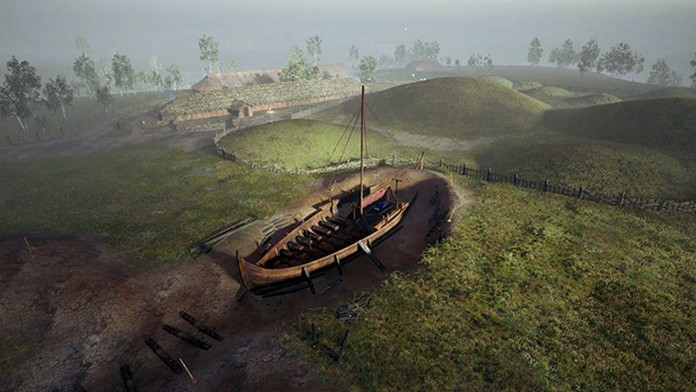
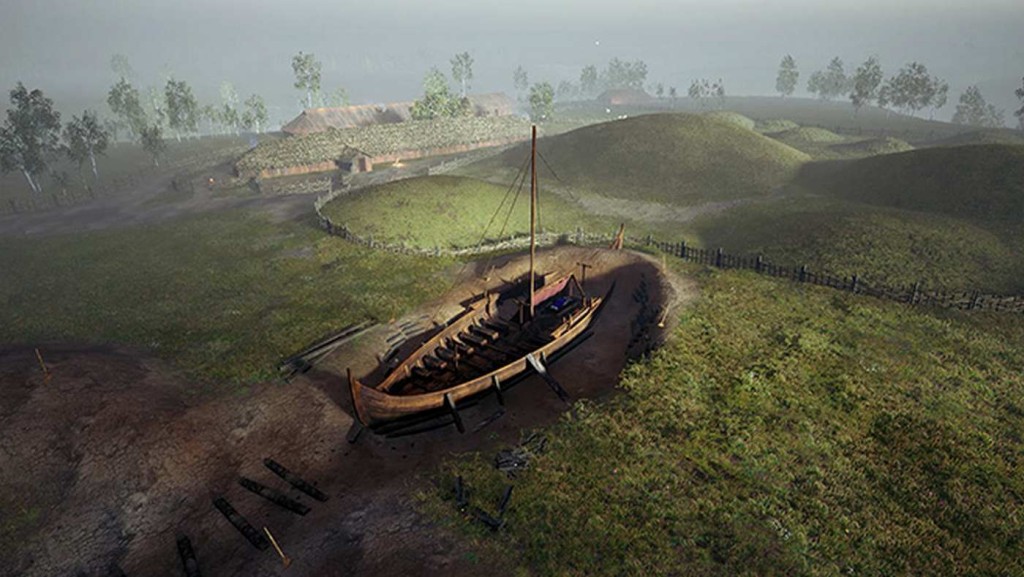
illustration from gjellestadstory.no

Reprinted with permission from World at Largean independent news outlet covering conflict, travel, science, conservation, and health and fitness.

When news broke in 2018 that another Viking-Age ship burial had been found on the shores of the Oslo Fjord, it quickly became one of the finds of the century.

Compared to its truly legendary predecessors of the Gokstad and Oseburg ships, the newly-found Gjellestad ship is not going to be mounted in a museum any time soon; most of the woods has disintegrated.

That hasn’t stopped Norwegian archaeologists from figuring out a lot about what was going on from the time of the burial and the ship.

Excavations began in 2020 and concluded in October of 2021. Early on it was clear that nothing like a ship could be removed from the earth, not only for the condition of the wood, but also the rivets. More than 1,300 of them lined the clinker-built hull, but the iron flaked away at the slightest disturbance, requiring the excavators to remove them in blocks of dirt for CT scans.

However, at the bottom of a central trench, the team found the ship’s keel, which is the beam of wood that sits underwater along the central spine of the ship. Viking Age boats are famous for having a shallow draft, in part because of their small keels. This allowed them not only to go to sea, but sail up shallow rivers as well.

Tree-ring analysis and carbon dating showed the wood for the keel was felled in the 700s, meaning the ship probably saw action between the late 8th century to the 10th century—primetime for Vikings in that part of the world.

The keel was removed and preserved by immersing it in a water-soluble wax called polyethylene glycol which impregnates archaeological wood samples found underwater or in sodden soil. Gradually the wax takes the place of the water molecules, and after the wood is dried out, the wax forms a reinforcing part of the structure.

Rivets on the ship were stored in 8 x 12 cm blocks of dirt in plastic bags to prevent oxidation. They represent the most important piece of data for what the researchers hope to do which is to digitally reconstruct the ship.

The rivets could contain vital clues just as wood residue and other evidence of how it was built and with what materials.
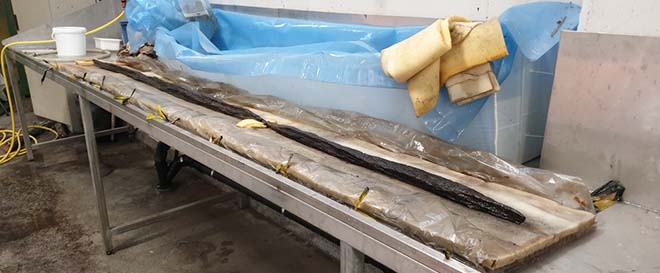
The keel being preserved – credit Ruben WithKHM, UiO

Journey to the east

The Gjellestad ship will tell the story of the eastern shore of the massive Oslo Fjord. The great Gokstad and Oseburg ship burials, filled as they were with treasure, weapons, sacrifices, and of course, complete Viking boats, represented that the western shore—an area called Vestfold, was a flourishing power center even as early as 700 CE

By contrast, less is known about the elite class in Østfold, in the area called Viken today, where the Gjellestad ship was found. Historians however have dated settlements in the area to an earlier period compared to the Vestfold.

Nearby lies Norway’s second-largest burial mound, the Jellehaugen, which was erected in 500 CE, but there had been settlements there 2,000 years before.

MORE FROM NORWAY: Norway Closes Down Its Last Arctic Coal Mine and Transforms Land into Giant National Park

“The area was thus a well-established burial ground when the Gjellestad ship and the person, or persons on board, were buried here,” writes Mari Wammer at the Museum of the Viking Age, Univ. of Oslo. “It has probably been a sacred place, which has evolved from a classic Iron Age society with settlement and burial mounds side by side, to becoming a burial ground only.”

As yet, no one has been found inside the Gjellestad ship burial, though archaeologists believe that there’s no question either someone is still inside waiting to be discovered, or someone had been there but was moved.

The latter is likely the truth, because in a summary of their findings reported on by National Geographic, the archaeologists determined through soil samples that tomb robbers entered the mound around the year 950 CE by tunneling underneath the soil and cutting a hole through the hull to get at the loot inside, where they also may have exposed the remains of whoever was buried inside to oxygen.

OTHER ARCHAEOLOGICAL TRIUMPHS: 2,000-Year-Old Roman Road Uncovered in British Field is Like No Other–And of ‘Global Importance’

Ship burials were the ultimate expression of power, and the ceremony of internment would have gone on for days and involved for days, while the grave itself continued as a center of communion with the dead. It’s a sign that the Østfold Norwegians possessed similar wealth and population density to those of the Vestfold.

“This is the first half of the Viking Age, and it indicates concurrency with the other major ship finds we know in Norway. The ship fits into a context we already know, while at the same time it is a new ship that will further complement the story,” said Christian Løchsen Rødsrud, who was project manager during the excavations last fall.

MORE VIKING NEWS: Viking Age Shipyard Uncovered at Birka is Like Nothing Ever Found Before

After the excavations were concluded, the team took all the appropriate measures to preserve the imprint of the 60-foot-long ship at the bottom of the burial by re-burying it in the hope that soon the county will have the money to construct a visitor center over the pit.

Meanwhile “Viking Nativity” a big organized survey and metal detecting project, is scouring all the nearby areas for other gravesites, building remains, or artifacts to help flush out the picture of Viking Age Viken.

Take an interactive journey through the history of the ship and its story at Gjellestad Story.no — a must for Viking enthusiasts.

Everyone Likes Vikings, SHARE The Summary Of This Incredible Discovery…
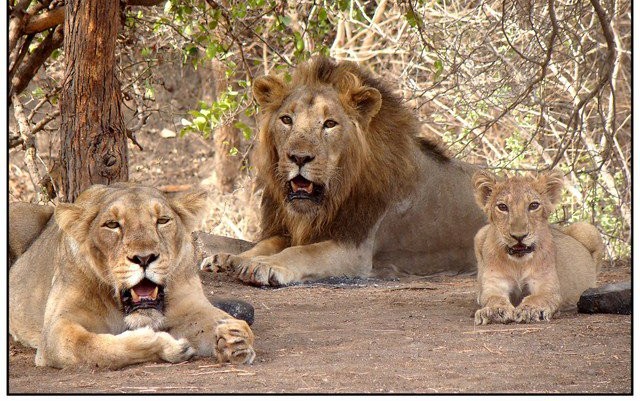
Lions in India Get New Sanctuary as Numbers of Asiatic Lions Soar in Their Last Stronghold

A family of Asiatic Lions in Gir National Forest - CC 3.0. Mayankvagadiya
A family of Asiatic Lions in Gir National Forest – CC 3.0. Mayankvagadiya

The Indian state of Gujarat is the only place outside of Africa where one can hear the roar of a lion in its natural habitat.

Now, conservation programs have raised the numbers of these animals so much that the state government will be relocating some to a new wildlife sanctuary to expand their territory and ensure this growth continues.

The northern lion subspecies once stretched from West Africa to India, and several regional populations, including the now-extinct Barbary and Caspian lions, and the Asiatic lion in the case of India, developed unique genetic signatures.

Iran is the only place left where Asiatic cheetahs can be found, and India, where the cheetah was extirpated, managed to hold onto the Asiatic lion.

Gir National Park is 544 square miles of ideal lion territory. In 2015, the lion population was 523, while in 2010 it was 411, and 359 in 2005. With so many lions about, other states become curious if it were possible for Gujarat to share.

MORE BIG CAT NEWS:

For the moment, they will remain in Gujarat, though nearby Barda Wildlife Sanctuary will soon become the second protected area on Earth where these animals can be seen.

In 2013, an Indian Supreme Court ruling ordered some of the lions in Gir to be moved elsewhere to prevent disease and other dangers from imperiling the whole of the population.

SHARE This Good Conservation News With Your Friends… 

New Yellowstone Spin-off Series Dramatizes Life of Historic Black U.S. Marshall Bass Reeves in the Wild West

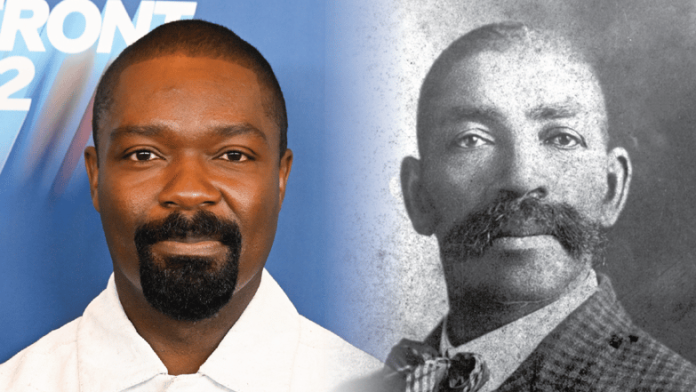
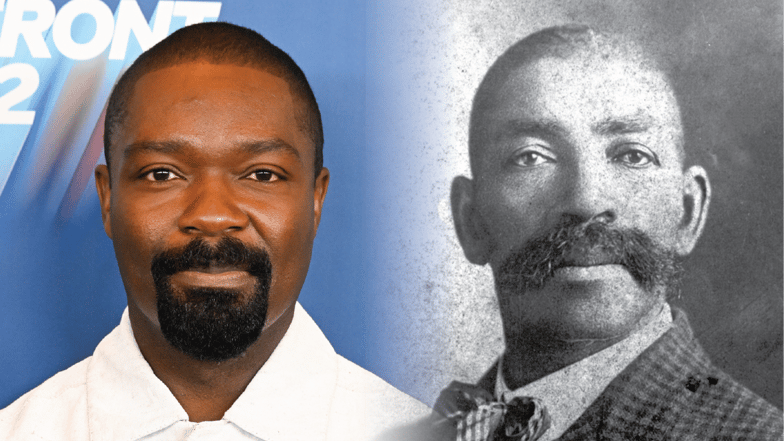
(left) David Oyelowo (right) Bass Reeves - credit CBS press gallery, University of Oklahoma Library.
(left) David Oyelowo (right) Bass Reeves – credit CBS press gallery, University of Oklahoma Library.

The popular television drama Yellowstone is producing a spinoff season to dramatize one of the most legendary figures in the Wild West, Bass Reeves.

Interest in Reeves as a historical figure with as much potential for film and television as Wyatt Earp, has grown since the turn of the millennium.

For those who aren’t read up on potentially the greatest lawman of the West, GNN reported on his career and life in 2022 for Black History Month.

Born in 1838, Bass Reeves made over 3,000 arrests over a 32-year career as a deputy marshal and shot down 14 criminals in self-defense in a part of the country where one-third of all law enforcement agents were killed by outlaws.

A freed slave who knocked his enslaver out during a fight over a card game, Reeves fled to the Indian Territory and lived among the Cherokee, Creeks, and Seminoles until he was freed by the 13th Amendment, after which he moved to Arkansas to start a new life as a farmer.

Now, nearly 200 years later, British actor David Oyelowo is set to portray Reeves in a spinoff series of the popular Paramount Pictures TV drama, Yellowstone. 

Following a lackluster reception for its debut, Yellowstone became a sensation over the following three seasons, at one point scoring a 100% on Rotten Tomatoes. After its modern-day version ran 5 seasons, another series called 1883 followed the characters’ ancestors moving to the Yellowstone area along the Oregon Trail.

In the new series set at the same time, entitled simply Bass Reeves, Yellowstone creator Taylor Sheridan is once again taking the lead, while Dennis Quaid has joined on to play a deputy US marshall.

Perhaps trying to capitalize on the recent success of Corsicanaa feature-length motion picture of Bass Reeves’ life, the connection between Reeves and the intergenerational family of the Duttons in Yellowstone is unclear.

But it’s sure to be a wild ride, and you can learn all about it with this explainer video below, though there are multiple spoilers of past seasons if you had any desire to start Yellowstone from the beginning.

SPOILER ALERT below…

KNOW Any Yellowstone Fans? SHARE This Awesome Spinoff With Them…

Evidence of Cheese-Making to Circumvent Lactose Intolerance 6,000 Years Ago Found in Poland

Azzedine Rouichi - Unsplash
Azzedine Rouichi – Unsplash

Analysis of neolithic pottery shards shows that in Northern Europe, where poor soils and low sunlight made primitive agriculture extremely difficult, people were making cheese in places like Poland potentially as far back as 9,000 years ago.

Examinations of perforated vessels not only found the presence of the dairy protein casein which suggests the creation of curd-enriched products from raw milk, but casein from cows, goats, and sheep, suggesting they were making a kind La Tur long before most other forms of modern food production ever reached the continent.

Common arguments for cutting out dairy products from the diet stem from the idea that we have only been consuming dairy for a few thousand years, and that no other mammal consumes lactose after infancy.

Rather than a few, new research points to dairy consumption from herd animals as far back as at least the sixth millennium BCE—or 8,000 years ago.

Researchers from the University of York point out that lactose intolerance would have been common in nearly all European populations at the time, but that the processing methods still used today to create yogurt, kefir, and cheese were being used to overcome this intolerance.

“Whilst previous research has shown that dairy products were widely available in some European regions during this period, here, for the first time, we have clear evidence for a diversified dairy herd, including cattle, sheep, and goats, from the analysis of ceramics,” said Dr. Harry Robson, from the Department of Archaeology at the University of York.

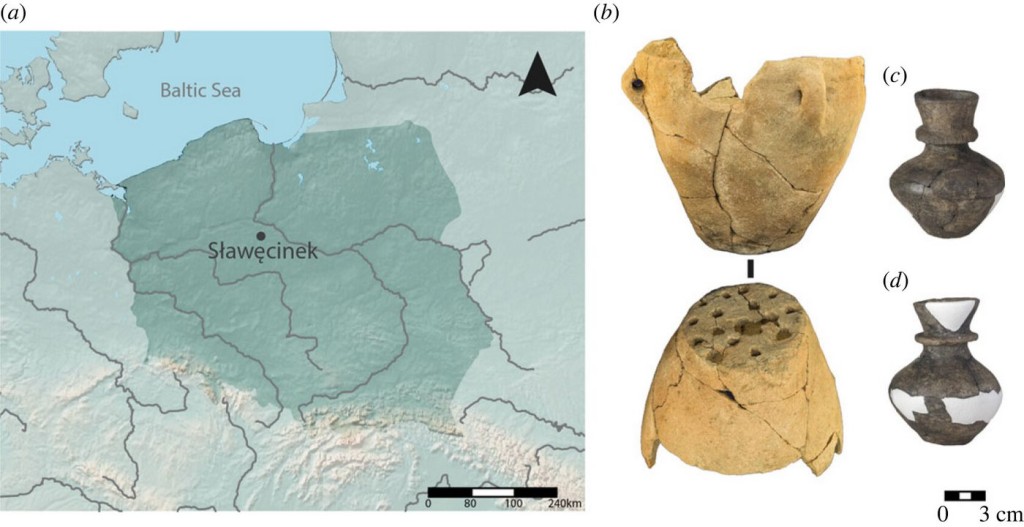
credit: Robson et al. Royal Society Open Publishing

Robson and his colleagues along with a team from the University of Krakow looked at a neolithic site in Poland called Sławęcinek, which shows activity from around 3,600 BCE.

Small numbers of vessels had a white mineral residue that when examined via proteomic and lipid analyses revealed evidence of dairying from cattle and caprids, probably both sheep and goats.

MORE STONE AGE NEWS: Ancient Cave Markings Finally Decoded By Amateur Scientist–A Calendar of When Animals Mated 20,000 Years Ago

“The dominance of caseins… could suggest that the residues formed on these vessels are the result of the presence of casein-rich curd products, rather than milk or whey products,” the authors write in the journal Royal Society Open Science.

“Cheese is composed primarily of curd proteins while the whey proteins and the majority of the lactose remain in the whey portion when the curds coagulate.”

MORE ANCIENT DIETS: Remains of Prehistoric BBQ Suggests Dinner was Served 780,000 Years Ago–600,000 Years Earlier than we Thought

This shows that the clever ancient Poles were managing to circumnavigate their own genetic lactose intolerance to add a sustainable and protein-rich food source to their diets.

Today, people who are lactose intolerant can still eat well-aged cheeses, owing to the removal of lactose both during the cheese-making and aging process, although they probably don’t realize this knowledge is as ancient as pottery.

SHARE This Neolithic Heritage With Your Cheese-Loving Friends… 

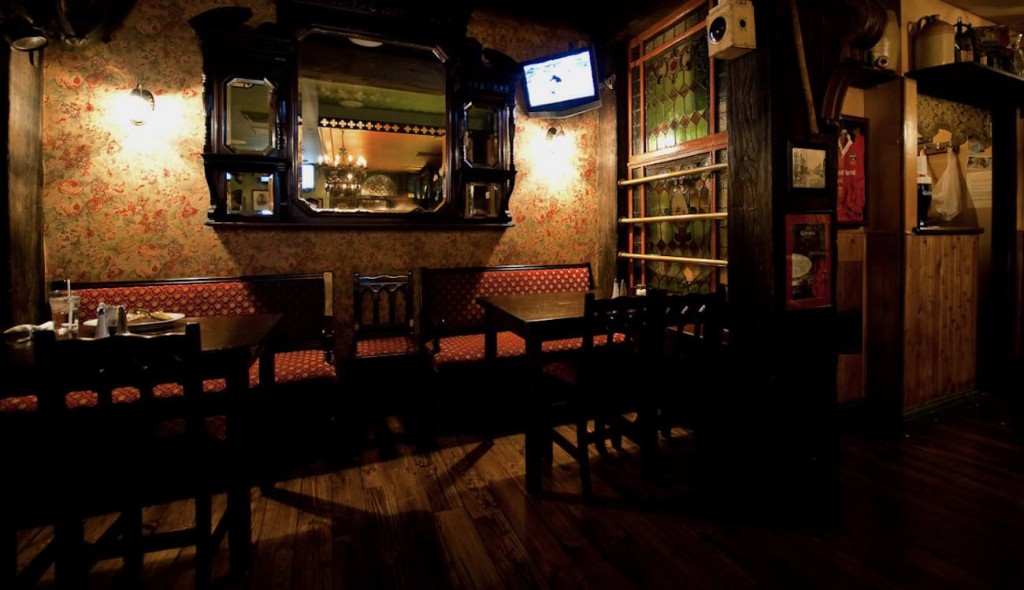
“You can’t hear Irish tunes without knowing you’re Irish, and wanting to pound that fact into the floor.” – Jennifer Armstrong (Happy St. Patrick’s Day)

Quote of the Day: “You can’t hear Irish tunes without knowing you’re Irish—and wanting to pound that fact into the floor.” – Jennifer Armstrong  (HAPPY ST. PATRICK’S DAY!)

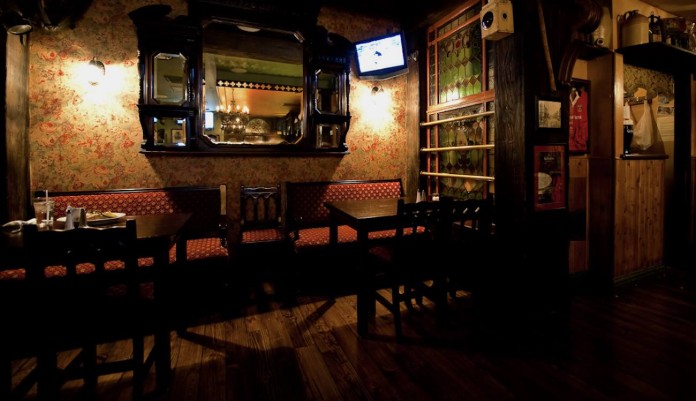
Photo by: Jazz-Guy, CC license – The Tír na nÓg Irish Pub in New York City

With a new inspirational quote every day, atop the perfect photo—collected and archived on our Quotes page—why not bookmark GNN.org for a daily uplift?

Strangers Who Set Off to Travel World in Double Decker Bus Reunite 50 Years Later: ‘The bus was the hero’

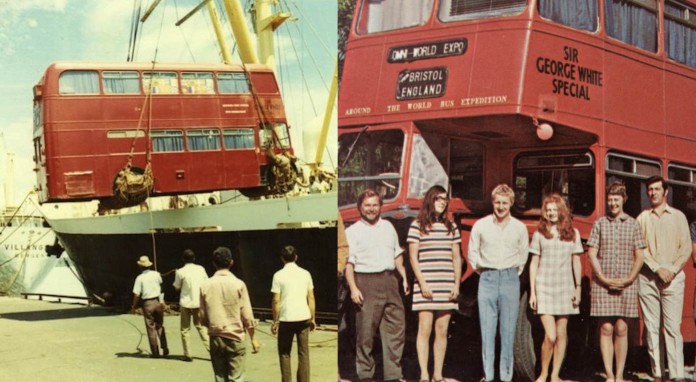
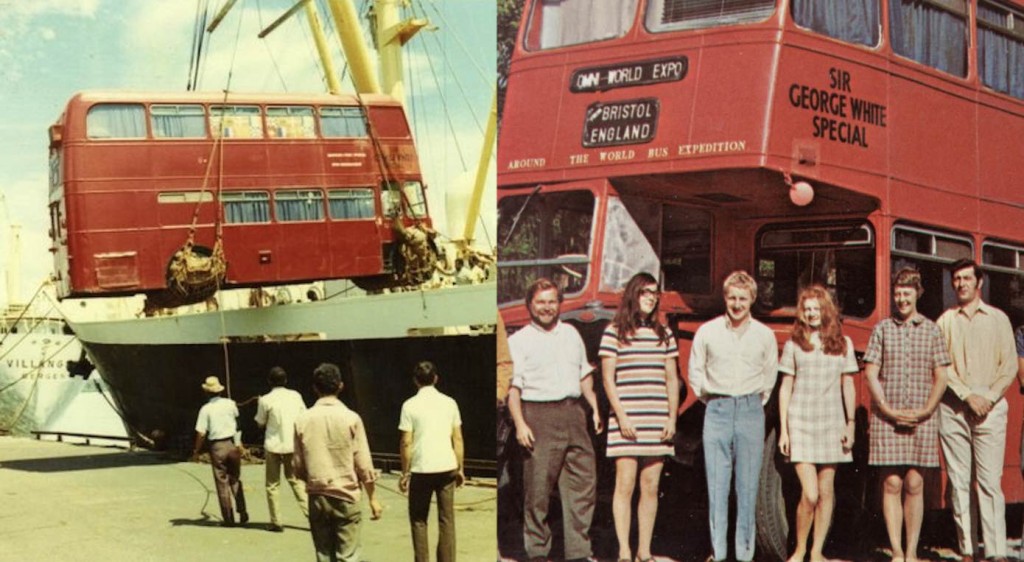
Sir George White Special / SWNS

A group of friends who took a London double-decker bus 40,000 miles around the Americas have reunited 50 years later at the release of a travelogue of their adventure.

Over a hard country cider, the remaining crew members reminisced about how the idea first came to Mr. Roger Poole and his new wife Joan, who have since died, and all the trails and tribulations which followed.

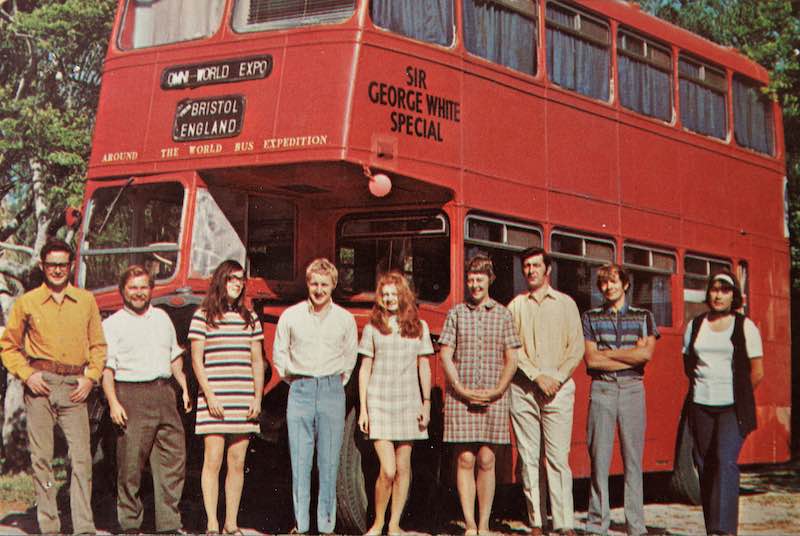
Of the 11 that set out, Mike Conway, Sally Rich, Bernice Poole, David McLaughlin, and John Winter reunited in Bristol on the 50th anniversary.

Mr. and Mrs. Poole advertised the idea twice in the local paper, drawing in John Winter, who tagged along for 1 year and is now publishing Bus to Bust about their journey.

“The bus really was the hero of the story, we had totally torn out the upper floor to fit beds and living space,” said Winter. ”But it was unlike anything any of us had ever done. I stayed with the group for about a year.”

The eleven men and women were just strangers when in March of 1970, they sailed the bus called the ‘Sir George White Special’ from Bristol to Canada before embarking on a 40,000-mile trip.

Braving ‘blistering’ desert heat and bone-chilling cold in the prairies the group spent 22 months aboard a bus that couldn’t go past 50 mph.

The group traveled thousands of miles and worked along the way, picking fruit, planting lily bulbs, cleaning restaurants, and chauffeuring cars.

They had to negotiate tricky routes and mountains and because the bus was too big for US roads they caused damage to bridges and overhead wires.

“Usually the police were very good and gave us escorts sometimes, but eventually in California we were stopped by a determined policeman who wouldn’t let us go,” Winter said.

“We had to take the bus off the road, but eventually were given permission to drive on by Ronald Reagan – who was Governor of California at the time. We met him briefly which was fun, though only for a moment.”

Their epic trip came to an end when the bus sank trying to cross a river in Peru.

The Sir George White Special in 1970 – SWNS
Five of the 11 strangers who set off in the ‘Sir George White Special’ (L to R) Mike Conway, Bernice Poole, David McLaughlin, Sally Mears, and John Winter

An epic trip

David McLaughlin, the driver and mechanic, told the BBC that “Central and South America, the roads are entirely different and it was an adventure.”

Their intent after California was to make it to Mexico City for the FIFA World Cup in 1970, where England couldn’t make the final four years after winning it for the first and only time.

ADVENTURE STORIES ON THE SEA: An Epic Adventure Few have Heard of: ‘The Great Loop’ Circles the Eastern US on Waterways Never Far from Shore

“While leaving Mexico City too we almost got the bus knocked over by fans shaking it – it was quite scary and we kept having to drive the bus back and forth,” said Winter.

Going south, McLaughlin explained that double-decker buses are not geared for climbing mountains, but in the end, it was a body of water that set Sir George down for good.

“The final stretch of the journey only had five or so members of the group left – and by the time the bus was lost in the River Chira, there were just three left,” wrote Winter.

They had come across a low-lying bridge that the double-decker could not pass. Instead, they floated the bus on the river using a special raft, but as it drifted across it slid into the water. Everyone came home on a container ship in 1972.

MORE ADVENTURE STORIES: Old Friends Go On the Adventure of a Lifetime: Around the World in 80 Days (LOOK)

“That part of the world is just much more dangerous now and the US has much harsher visiting laws,” Winter wrote observantly. ”I think people would struggle to do it again. These days I can only imagine it would be a very different experience.”

Sally Mears, who was a member of the crew, told the BBC her heart sank “when I saw the bus [go down] I knew it was the end of a journey of a lifetime.”

SHARE These Fond Memories Of A Grand Adventure With Your Friends… 

MIND and Mediterranean Diets are Associated with Fewer Alzheimer’s Plaques and Tangles

Tangerine Newt
Tangerine Newt

Eating leafy greens, nuts, and fish, among other food items typical of the Mediterranean Diet, was found to be associated in elderly brains with fewer plaques thought to cause Alzheimer’s.

It is believed that the disease is caused by a build-up of tau proteins called amyloid-beta, which block neuron connections.

Scientists at the American Academy of Neurology have found an association between the diet and reduced amounts of these tau proteins.

The scientist looked at how closely 561 adults with an average age of 84 followed the so-called Mediterranean Diet or the MIND Diet, which both emphasize more fish than red meat, and more vegetables than fruit. The former calls for a lot of olive oil, while the latter diverges with a call specifically for berries over other fruits.

The participants died an average of seven years after the start of the study. Right before death, 39% of participants had been diagnosed with dementia. When examined after death, 66% met the criteria for Alzheimer’s disease.

At autopsy, researchers examined participants’ brains to determine the amounts of amyloid plaques and tau tangles. Researchers then looked back at a series of food questionnaires regarding adherence to the two diets which were collected over years and ranked the quality of the diet for each person.

For the Mediterranean diet, there were 11 food categories. Participants were given a score of zero to 55, with higher scores if they adhered to the diet in these categories: whole grain cereals, fruits, vegetables, legumes, olive oil, fish, and potatoes. They were given lower scores if they ate red meat, poultry, and full-fat dairy products.

For the MIND diet, there were 15 categories. Participants were given a score of zero to 15, with one point each for 10 brain-healthy food groups including green leafy vegetables, other vegetables, nuts, berries, beans, whole grains, fish, poultry, olive oil, and wine. They lost a point if they ate foods more than recommended in five unhealthy food groups, including red meats, butter and margarine, cheese, pastries and sweets, and fried and fast food.

Researchers then divided participants into three groups for each diet and compared those in the highest groups to those in the lowest groups.

A stock image of Mediterranean Diet – unsplash

The results: grains of salt needed

After adjusting for age at death, sex, education, total calorie intake, and whether people had a gene linked to a greater risk of Alzheimer’s disease, researchers found people who scored highest for adhering to the Mediterranean diet had average plaque and tangle amounts in their brains similar to being 18 years younger than people who scored lowest.

Researchers also found people who scored highest for adhering to the MIND diet had average plaque and tangle amounts similar to being 12 years younger than those who scored lowest.

YOU MAY ALSO APPRECIATE: Fasting-Mimicking Diet Shown to Be ‘Safe and Effective Supplement’ to Chemotherapy in Breast Cancer Patients

A MIND diet score one point higher corresponded to typical plaque amounts of participants who were 4.25 years younger in age.

When looking at single diet components, researchers found people who ate the highest amounts of green leafy vegetables, or seven or more servings per week, had plaque amounts in their brains corresponding to being almost 19 years younger than people who ate the fewest, with one or fewer servings per week.

“These results are exciting—improvement in people’s diets in just one area—such as eating more than six servings of green leafy vegetables per week, or not eating fried foods—was associated with fewer amyloid plaques in the brain similar to being about four years younger,” said study author Puja Agarwal, Ph.D., of RUSH University in Chicago.

“While our research doesn’t prove that a healthy diet resulted in fewer brain deposits of amyloid plaques, also known as an indicator of Alzheimer’s disease, we know there is a relationship and following the MIND and Mediterranean diets may be one way that people can improve their brain health and protect cognition as they age.”

ALZHEIMER’S DEVELOPMENTS: Six Lifestyle Choices to Slow Memory Decline Identified in 10-Year Study of Aging

However, the data is not conclusive and a cause-and-effect relationship was not established. Self-reporting questionnaires are an inexact means of gathering evidence.

The Mediterranean Diet is a difficult scholarly tool. The idea is that long lifespans and lower incidences of cardiovascular disease, stroke, and cancer are seen in Mediterranean populations, but more than any dietary component, these things are determined by income level—with richer countries having better outcomes, and poorer countries having worse ones.

MORE DIET INFO: Changing Your Diet Could Add Up to 13 Years to Your Life, Study Says

Also, the Mediterranean Dieters in this study were marked down for the consumption of full-fat dairy and red meat—which the Mediterranean nations of Italy, France, and Spain eat at higher rates than almost anywhere else in Europe. The problem for the scientists is that these countries have some of the highest life expectancies on the continent, despite their love affair with cured meats and cheeses, not to mention pizza and pasta.

What’s likely to do with the improvements if Alzheimer’s markers is that adhering to diets that emphasize certain foods requires cutting out the obviously unhealthy effects of fried and ultra-processed foods.

SHARE This Important Brain-Diet Info With Your Friends… 

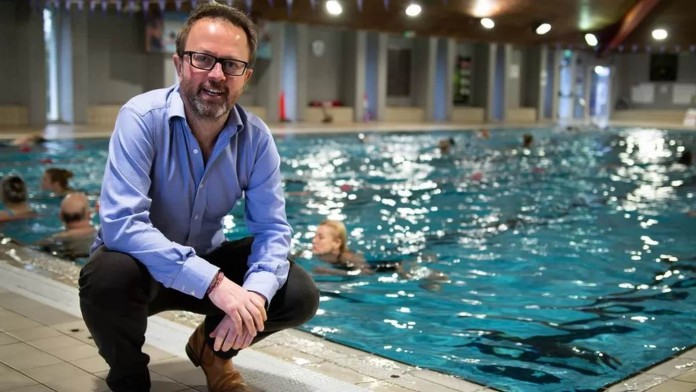
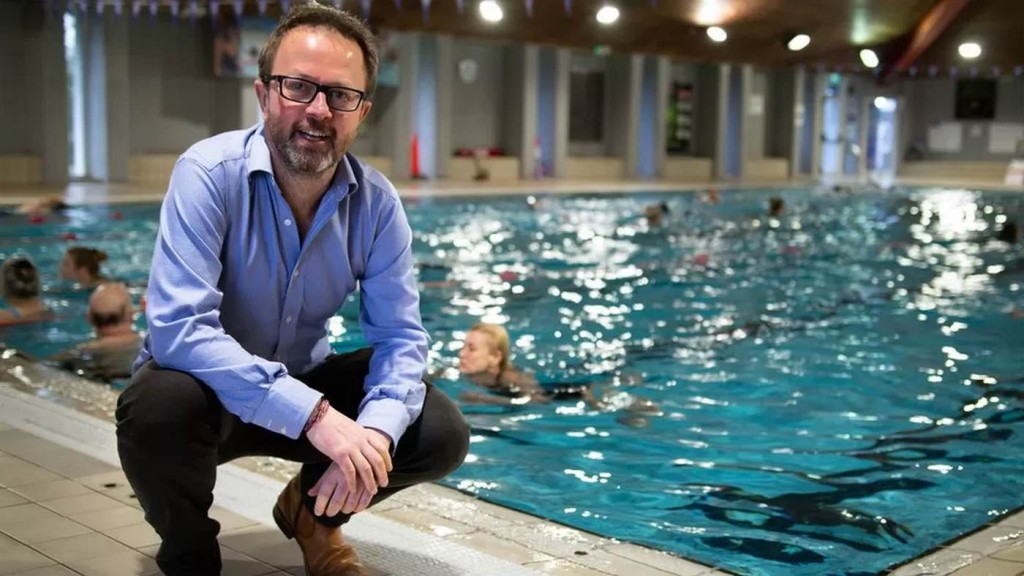
Refrigerator-Sized Data Center Transfers Its Heat to English Swimming Pool, Saving Thousands in Energy Costs

Credit [email protected]

A refrigerator-sized data center is being used as an innovative solution to pool heating, saving thousands in fuel costs in England.

The “digital boiler” was designed and implemented by Mark Bjornsgaard, founder of the start-up Deep Green, which charges clients to use its computing power for artificial intelligence and machine learning.

It also charges a smaller fee to the Exmouth Leisure Center in Devon to transfer the significant amount of heat generated through the data banks into a mineral oil which can be used to keep the swimming pool to 88°F (30°C) for about 60% of the day like regular heating oil.

“The partnership has really helped us reduce the costs of what has been astronomical over the last 12 months – our energy prices and gas prices have gone through the roof,” said Sean Day, owner of the leisure center. “Looking at different ways of how we can save money as an organization has been awesome.”

In total, 7 English swimming pools have signed up for the service, which uses a simple heat exchanger to help cool down the computers as well as heat the pools.

Credit [email protected]

Data centers have a massive overhead cost for keeping the technology cool. They’ve been built underwater, and even in caves—wherever the natural environment offers some assistance in cooling them down.

MORE GOOD IDEAS: Machine Recycles Plastic Bottles into 3D Printer Filament–And the Design was Released, Instead of Patented

The BBC, reporting on the innovation in Devon, says that in Sweden and Denmark, the biggest data centers have even become purveyors of electricity for homes due to the massive concentration of heat that keeps the internet’s archives running.

SHARE This Perfect Idea With Your Friends On Social Media… 

Stranded in Snow With No Reception He Tied His iPhone to a Drone to Get Above Trees to Send SOS Text

Eugene, Oregon photographer Casey Ryan

An experienced mountain-going photographer got stuck in a snowdrift while trying to rescue another stranded vehicle on a remote mountain road in Oregon.

He knew he needed to tell someone of his predicament so he picked up his phone and made a ‘drone call.’

Attaching an iPhone to the underside of his camera drone, Casey Ryan managed to Mcgyver an SOS text by flying the drone above the treeline where the phone could grab a signal, leading to his rescue the following morning.

It was a snowy morning on January 29th when Casey Ryan from Eugene, Oregon, and his friend decided to travel up into the mountains of Willamette National Forest for a bit of hiking.

Recounting his rescue story to the Washington Post, Ryan explained he was familiar with many of the roads in the area stemming from time spent volunteering on a roadside litter cleanup crew. He also frequently went into the mountains for his favorite hobby, photographing the wilderness with his camera and his drone.

The conditions that day were icy, but seeing cars come from the opposite direction of the road he was taking, he assumed that everything was okay. Eventually though, he came upon the stranded driver of a Mercedes van, and when he volunteered to help tow the van out, he reversed into a snowdrift.

MORE SEARCH AND RESCUE HEROES: 80-Year-old Man Walks Through Blizzard to Rescue 3 Cars of People

It was already late afternoon and the temperature was falling as Ryan, his friend, and the other driver tried to dig him out, but the snow was turning to ice on his wheels.

Holding a meeting to decide what to do next, Ryan’s friend suggested that they use his drone to fly above the tree line and get an SOS text away.

It worked, even though the drone was not designed to carry a bulky phone. When the drone landed and they checked to see if their text to Ryan’s wife had been sent, they were left mind-boggled when they saw that it had worked.

MORE WINTER WEATHER RESCUES: Kind Stranger Rescues Kitty Frozen to the Ground in a Storm–and He Now Looks Amazing

After a night in their cars, Lane County Sheriff’s Office arrived in the late morning to rescue them, Ryan’s wife having alerted them the night before.

“I’ve been doing search and rescue since 2007,” said Jason Bowman, a search-and-rescue coordinator with the Lane County Sheriff’s Office, who spoke to the Post.

“And this was by far the most unique way I’ve ever seen somebody call for help.”

WATCH Casey Recreate His Drone Call…

SHARE This Rescue That Mcgyver Would Have Been Proud Of… 

“Look deep into nature, and then you will understand everything better.” – Albert Einstein

Quote of the Day: “Look deep into nature, and then you will understand everything better.” – Albert Einstein

Photo by: David Marcu (cropped)

With a new inspirational quote every day, atop the perfect photo—collected and archived on our Quotes page—why not bookmark GNN.org for a daily uplift?

Studies Link Marijuana Legalization to All Sorts of Positive Public Health Outcomes

credit - Budding Dispensary
credit – Budding Dispensary

In a landmark paper, economists have collected evidence on the societal implications of cannabis legalization and found it lowered the rates of suicide, binge drinking, traffic fatalities, and perhaps ironically, cannabis use in teenagers.

Now that recreational cannabis is available in 18 states, and medically authorized in 36 states, concerns over the effects of widespread societal access are appearing as the motivation behind scientific research.

Much of that scientific research has now been collected in a meta-analysis of 36 different papers published between 2013 to 2021. It shows that the societal impact of cannabis legalization has led to some significant positive outcomes.

One criticism from concerned parents or conservative politicians was that increased legalization would lead to increased teenage consumption of cannabis.

It’s a criticism that exemplifies the theory of the author Jonathan Haidt, who showed in his classic volume The Righteous Mind that most people form their opnions by making an emotional conclusion—teenage consumption of cannabis is bad—and then using ad-hoc rationalization backwards to find whatever intuitive reasoning is needed to justify their gut instinct.

It seems logical to say that if cannabis were legal it would be more commonly consumed—but that wasn’t the case. In fact, the meta-analysis, published in the Journal of Economic Literature, found that teenage access to cannabis decreased by 8%, and frequent use decreased by 9%.

The reason was believed to be that once drug dealers were replaced by dispensaries with a legal obligation to check ID, far fewer teens were able to access it.

In another study, cannabis legalization was found, during the period 1999–2010, to be inversely associated with opioid overdose deaths, although once the years 2011-2017 were added into the analysis, the effect waned.

This was believed to be representative of the evolution of the opioid epidemic, reasoning that “perhaps marijuana and prescription pain medications are substitutes, but marijuana and heroin are not.”

MORE SOCIETAL ADVANCES: Poets in Europe Are Writing Tributes For the Lonely Funerals of Society’s ‘Unclaimed’ Citizens

However that wasn’t the only study which linked cannabis legalization to reduced opioid deaths. Two others published in 2019 and 2020 found the same; the second of which determined it to be 16-21%.

Another finding significant for individual health concerns was “strong evidence that legalizing marijuana discourages the use of alcohol, especially binge drinking.”

Perhaps as a result of this decrease in alcohol consumption, there were significant reductions in annual numbers of traffic fatalities.

“Anderson, Hansen, and Rees (2013) were the first researchers to estimate the effects of [medical marijuana law] adoption on traffic fatality rates,” the authors write.

HOW CANNABIS AFFECTS SOCIETY: Cannabis-Fed Chickens May Cut Antibiotic Use on Thailand Farms

“These authors found that legalizing marijuana for medicinal purposes was associated with a 9–10% reduction in traffic fatalities… with larger negative effects on traffic fatalities involving alcohol, traffic fatalities on the weekends, and traffic fatalities at night.”

In yet more good news, cannabis legalization was linked with reduced state-wide rates of suicide in males, with an 11% reduction in 20–29-year-olds, and a 9% reduction among 30–39-year-olds.

SHARE This Pot-Positive Story With Your Friends…

Firefighter Lures Trapped Dog Off the Ice Using Treats–Then Lifts it Up a 10-Foot Wall

Firefighters rescue the trapped dog Ivy - released by Alicia Rosa, Pound Buddies
Firefighters rescue the trapped dog Ivy – released by Alicia Rosa, Pound Buddies

Patience, bribery, laughter, and a heck of a bicep muscle were all needed to rescue a helpless dog trapped after falling 10 feet into an ice-covered pool.

The Michigan animal shelter Pound Buddies received several “frantic” calls on March 7th about a dog trapped in the old water filtration pond.

The pond was frozen over, but with water clearly sloshing about over the ice, how long until the 60 lbs. husky plunged through was anyone’s guess.

Pound Buddies called in the Muskegon Heights Fire Department, which arrived “within minutes” to rescue the pup. Video footage shows the moment Lieutenant John Kriger climbs over the wall and gains the dog’s trust with a treat.

Kriger remained with his hand out calling the dog by name for 3 minutes or so, whilst his comrades jeered about making “no sudden movements.”

Finally, the timid dog came in for more of Lieutenant Kriger’s scratches, allowing him to reach the dog’s collar. Displaying remarkable strength, he grabbed the not-entirely-cooperative pooch under his right arm and slowly climbed up the ladder and over the wall to safety.

The pup was later checked out and found to be completely unharmed despite the 10ft fall into the pond.

Pound Buddies shared clips of the incident to their Facebook page, describing why they called in “the big dogs” and the moment the animal was rescued.

MORE PET RESCUES: Firefighters Save Kitten Stuck in an ATM – And His New Name is Cash

“The logistics of getting the dog appeared a bit challenging at first, but then the BIG DOG was called in!” they wrote. “Once again, words don’t seem adequate for expressing the gratitude we have for these amazing firefighters and the Muskegon Heights Fire Department! Thank you! Thank you! Thank you!”

The entire unedited rescue video is available here on Yahoo News.

TAKE A Moment To Appreciate These Firefighters’ Heroics…

Dutch 27-Year-Old Finds 1000-Year-Old Medieval Treasure Using Metal Detector

Hoogwoud Treasure - Rijksmuseum Van Oudheden - CC 0
Hoogwoud Treasure – Rijksmuseum Van Oudheden – CC 0

A young man in The Netherlands recently fulfilled what seemed to be his destiny by finding an “extremely rare” hoard of gold jewelry from the High Middle Ages.

An avid metal detective since the age of 10, the 27-year-old is all grown up and now a professional historian.

Discovered in Hoogwoud back in 2021, Lorenzo Ruijter said it’s been hard to keep it a secret for 2 years while the National Museum of Antiquities cleaned, dated, and identified the objects.

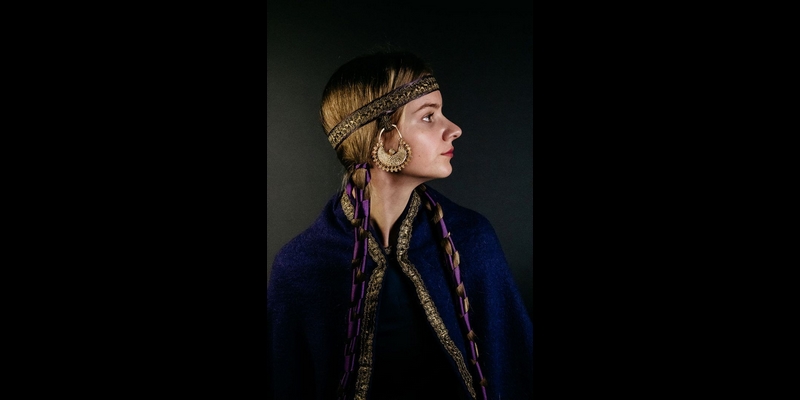
It consists of four decorated gold pendant earrings shaped like crescent moons, along with two pieces of gold leaf that fit together, and 39 small silver coins which date the treasure back to the years 1,000-1,250 CE.

MORE FROM ARCHAEOLOGY: Metal Detectorist Unearths Pristine Gold Pendant Linked to Henry VIII—With Initials of Katherine of Aragon

“It was very special discovering something this valuable, I can’t really describe it. I never expected to discover anything like this”, Ruijter told Reuters.

Reconstruction of the Hoogwoud Treasure – Rijksmuseum Van Oudheden – CC 0

“The 39 small silver pennies, as the coins are called, give a clue to the date when the treasure find was buried: in, or shortly after 1248,” the museum stated in a translated press release. “Small pieces of textile found with the pennies indicate that they were wrapped in a cloth or bag.”

“These are coins from the Diocese of Utrecht, from various counties (Holland, Guelders, and Cleves,) and from the German Empire. The youngest copies were struck in 1247 or 1248, under William II as king of the Holy Roman Empire.”

The jewelry however is around 200 years older, with the museum saying that it must have been a cherished possession. Northern Europe is rich in silver mines, but gold was much rarer at the time.

MORE MEDIEVAL TREASURES: 10-Year-old Finds Medieval Priory Seal Within Minutes of Using Metal Detector and Gets $5,000 For it

A serious civil war between the counties of West Friesland and Holland was ongoing at the time the treasure was buried, with Hoogwoud being the epicenter of it all. The Dutch count and national figure Willem II died at Hoogwoud during the war, making the treasure potentially one of national significance.

It’s currently on loan for a Rijksmuseum exhibition called “Year 1,000,” after which it will return to the possession of Mr. Ruijter, a safe pair of hands no doubt.

SHARE This Beautiful Discovery 17 Years In The Making With Your Friends… 

Finland is Looking for 10 People to Attend Free ‘Masterclass of Happiness’ to Find Their Inner Finn at Beautiful Resort

Visit Finland – Asko Kuittinen

Countries are always looking for ways to promote their unique culture to attract tourists, and Finland may have just knocked the ball out of the park.

Having been named the world’s happiest country by the World Happiness Report for five consecutive years, Finland wants to share its secret to happiness with the world.

To do this, they are offering an all-expenses-paid retreat to attend a Masterclass on Happiness through their tourism arm, Visit Finland.

The first country to ever host its own masterclass, Finland will connect the lucky participants with expert coaches who will guide them towards a balanced way of life that promotes happiness the Finnish way. The coaching will cover four key themes: nature and lifestyle, health and balance, design and everyday, and food and well-being.

The Masterclass of Happiness will be held from June 12-15, 2023 at the Kuru Resort in Finland. Ten chosen participants from around the world will arrive in Finland on June 11 and depart on June 16.

GNN reached out to the organizers who’ve confirmed that all travel expenses, including flights and accommodations, are included for the ten people selected.

LOOKING FOR HAPPINESS?: Couple Quit Jobs to Travel the World in Van They Renovated and Transformed for 25K – LOOK

Applications are open until April 2. Applicants can apply individually or with one other person by visiting www.visitfinland.com/en/find-your-inner-finn.

The coaches of the Masterclass are leading experts in their various fields who will help the participants find inner balance and connect with nature and themselves.

“Finns are often asked, ‘why are you so happy?’ We believe Finnish happiness stems from a close relationship with nature and our down-to-earth lifestyle,” said Heli Jimenez, Senior Director of International Marketing at Business Finland.

“Finland is full of immersive experiences among nature. Our energizing forests, charming lakes, and vibrant archipelago landscapes are all perfect places to relax, unwind and get in touch with your inner happiness.”

MORE UNIQUE GETAWAYS: Stunning ‘Bubble Hotel’ Under the Icelandic Stars is Truly the Perfect ‘Socially Distancing’ Destination

British media often portrays the secret to Scandinavian or Dutch happiness as being an attitude of low expectations; the understanding that you as an individual aren’t a special unique snowflake, in contrast to the Southern European attitudes of looking for the sweet life.

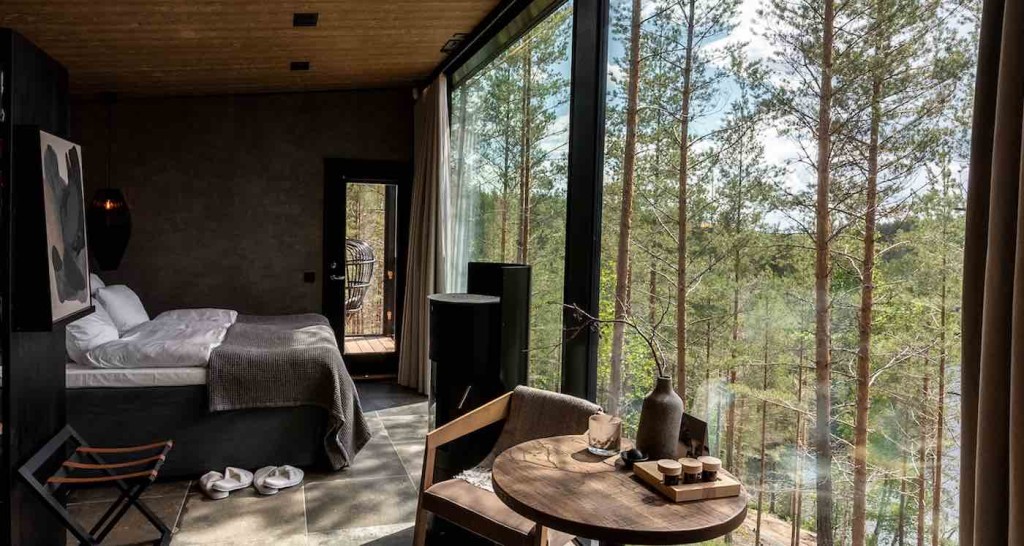
Perched in the Finnish Lakeland region however, the Kuru Resort has access to unique and stunning natural environs that certainly offer a sweet life of their own.

SHARE This Lifechanging Getaway With Your Friends On Social Media…

“The more I think about it, the more I realize there is nothing more artistic than to love others.” – Vincent Van Gogh

Quote of the Day: “The more I think about it, the more I realize there is nothing more artistic than to love others.” – Vincent van Gogh

Photo by: jpellgen @1179_jp, CC license (cropped)

With a new inspirational quote every day, atop the perfect photo—collected and archived on our Quotes page—why not bookmark GNN.org for a daily uplift?

Scientists Simulate a Small Universe as a Preview of What This New Space Telescope Will Discover – LOOK

Credit: NASA Goddard Spaceflight Center. Caltech-IPAC/R. Hurt

By creating a simulated universe, scientists working in concert with NASA have replicated how we can expect the soon-to-be-launched Nancy Grace Roman Space Telescope can study the influence of dark matter on the universe.

The simulation will help scientists plan the best observing strategies, test different ways to mine the mission’s vast quantities of data, and explore what we can learn from tandem observations with other telescopes.

This cool animation shows how the gravity of intervening galaxy clusters and dark matter can lens the light from farther objects, warping their appearance. By studying this distorted light, astronomers can study both dark matter and dark energy, which are still topics of deep curiosity and little information.

Have you heard of the Nancy Grace Roman Space Telescope (NGR)? This fantastic piece of hardware slated for launch into space by 2027 has a unique role in NASA’s space science directorate.

With the launch and operational debut of James Webb last year, humanity got to see the perfect detail that state-of-the-art magnification and resolution can offer. In contrast, NGR will take large surveys of the sky, but with much higher angular resolution than ground-based telescopes conducting similar surveys.

“If you want to do something like the Hubble Deep Field, Roman [NGR] can do this hundreds of times, to thousands of times faster. So you can contemplate doing in a month what would have taken Hubble a century,” Dominic Benford, Program Scientist for NGR, told World at Large. 

Hubble’s ultra-deep field is the small square in the middle of an area capable of being surveyed with the same definition by Roman. credit: NASA’s Goddard Space Flight Center.

In many ways it’s the perfect foil to the James Webb Space Telescope, whereby the NGR surveys huge areas of the sky in great detail, allowing scientists to quickly find interesting objects or areas which can then be passed onto Webb scientists for a closer look.

When not feeding information to Webb, NGR will be searching for the effects of dark matter and dark energy on the placement and formation of galaxies throughout the universe.

MORE TELESCOPE ASTRONOMY: Black Hole Spews Out Material Years After Shredding a Star: ‘We’ve Never Seen Anything Like This’

Dark matter acts gravitationally on everything else around it, pulling galaxies together to form clusters, while dark energy on the other hand acts as a repulsive force, pushing objects out of structures, and structures farther away from one another.

“Major surveys necessary for dark matter and dark energy measurements require a variety of different techniques, but all require large datasets taken uniformly over much more sky and much more time than has been possible for any other space telescope,” said Dr. Benford.

“One way in which to study how these two forces act in the universe is to measure the positions of galaxies now, and compare them to where they were 1 billion years ago, and then maybe 3 billion years ago. Measuring the characteristics of the galaxies’ movements allows scientists to draw hypothetical dark matter/energy structures in a game of connect the dots in which the lines connecting them are invisible,” reports World at Large.

“The gradual slowing of the expansion of the universe after the Big Bang is thought to have been a result of dark matter’s gravitational pull gathering much of the visible matter together again, but the increase in the expansion rate ever afterward is thought to be a result of dark energy pushing it away again.”

MORE ASTROPHYSICS NEWS: Hubble Captures Rare Event: Star Eaten By a Black Hole 300 Million Light Years Away (LOOK)

“One of the long-term questions Roman is supposed to address is what the influence of dark energy has been across cosmic time,” said Dr. Benford. “So we can look forward and extrapolate which of these two is really going to dominate in the universe: does dark energy essentially win out and push the universe apart faster and faster, or does dark matter perhaps win and cause the universe to slow down, or is it in perfect balance?”

WATCH a video on how NGR looks for dark matter… 

SHARE This Preview Of A New Chapter On Space Science On Social Media… 

US Mail to be Delivered in 9,000 New Electric Vehicles, With USPS Installing 14,000 Charging Stations

USPS Ram ProMaster - CC 4.0.
USPS Ram ProMaster – CC 4.0.

The US Postal Service is going to try and reduce its carbon footprint by buying 9,000 new Ford electric vehicles.

To support the new EVs, the USPS will construct 14,000 additional charging stations in 75 different counties and municipalities.

“We are moving forward with our plans to simultaneously improve our service, reduce our cost, grow our revenue, and improve the working environment for our employees,” said Postmaster General Louis DeJoy, in a statement.

“Electrification of our vehicle fleet is now an important component of these initiatives. We have developed a strategy that mitigates both cost and risk of deployment, which enables execution on this initiative to begin now.”

The benefits of electric vehicles are well-known, and for inner city delivery routes they are the optimal choice for a service dependent mostly on a 0-35 mpg average speed.

MORE EV BUYING: Ford Announces ‘Transformative’ $11.4 Billion Investment in New Electric Vehicle Plants in Tennessee and Kentucky

The USPS inspector general recently found in an analysis that 99% of all postal routes are between 24-70 miles long, as even the smallest towns have a post office. This makes them serviceable by nearly any commercially available EV.

“As the technology has evolved, there is no longer any question that electric vehicles can serve the functions necessary for postal delivery,” the IG wrote in a recent white paper.

By 2026, DeJoy has said that all new purchases of EVs will be electric.

SHARE This Good EV News With Your Friends On Social Media… 

Refugee is Reunited With Beloved Dog After a Year Apart Since Fleeing Afghanistan

Lori Kalef -SPCA International

An Afghan refugee living in British Colombia was finally reunited with her dog Lucky after 10 months apart.

Sending Lucky and her cat Leo aboard an SPCA International flight from Kabul to Vancouver in February of 2022, Freshta Siddiqui, wasn’t sure if or when she would see them again.

SPCA Int. was flying home pets belonging to those worried for their safety after the Islamic Emirate took control of Afghanistan, and said that Siddiqui’s story “really touched our hearts.”

Having arrived in Pakistan, Siddiqui and her mother had to wait 10 months before coming to Canada to collect her animals, who the SPCA had been paying to house in a shelter and foster home all that time.

“Lucky means family to me,” Siddiqui told CBC News. “Lucky means a part of my heart that was gone and now, I’ve got him.”

When she finally saw Lucky she ran to him saying “Salem, salem”—Arabic for peace and hello together, though Lucky had no plans on being peaceful, being hardly able to sit still long enough for a kiss on the nose.

She adopted the now-3-year-old Anatolian shepherd dog after she saw him being abused by some kids on the streets of Kabul.

RELATED REUNION STORIES: Ukraine Girl Bereft Without Her Cat is Reunited Thanks to Kind Strangers in 5 Countries and 7,000 Miles–WATCH

After he and Leo arrived at Vancouver International Airport, Lori Kalef, director of programs for SPCA International, said his separation anxiety, trauma, and knack for opening doors made it very hard to find a foster home for him.

They did eventually find one south of the border in Portland, Oregon.

“Lucky is a very, very funny, big goofy dog. He has no idea how big he is, he thinks he’s a lapdog,” said Kalef. “He loves to play, he loves toys, and he loves to open doors.”

WATCH the story below from CBC News… 

SHARE This Tearful, Tail-wagging Reunion With Your Friends… 

New Tool Can 3D Bio-Print Inside Human Body to Construct Natural Tissue-Like Structures

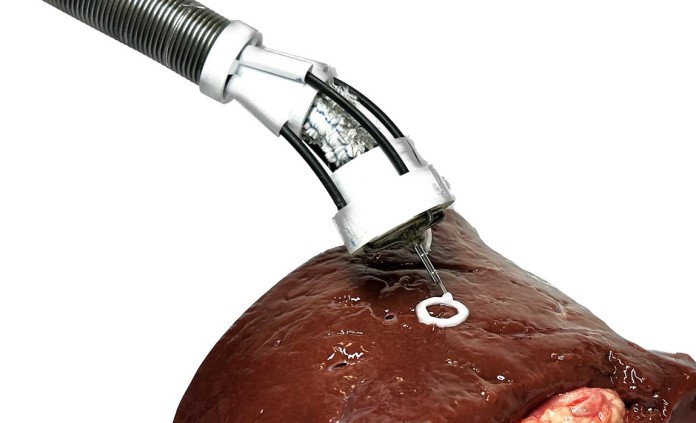
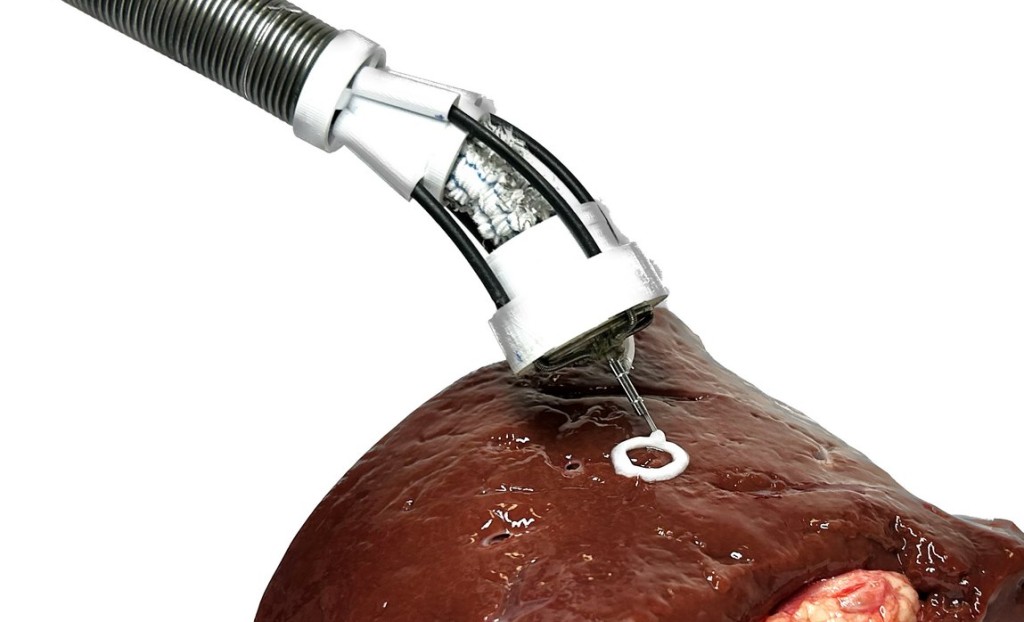
3D-printing surgical robot - SWNS
3D-printing surgical robot – SWNS

It’s wild what they can do with robots these days. A new device that acts as a three-in-one surgical tool can also 3D-print living cells inside the human body in real-time.

Developed by engineers from Univ. of New South Wales, Sydney, the device includes a water jet, scalpel, and endoscopic camera.

3D bioprinting is a process whereby biomedical parts are fabricated from so-called “bioink” to form natural tissue-like structures.

Bioprinting is predominantly used for research purposes such as tissue engineering and in the development of new drugs, and normally requires the use of large 3D printing machines to produce cellular structures outside the living body.

The research team tested the device inside an artificial colon where it was able to traverse through confined spaces before successfully 3D printing.

The new research from UNSW Medical Robotics Lab, led by Dr. Thanh Nho Do and his Ph.D. student, Mai Thanh Thai, is in collaboration with other researchers from UNSW.

Their work has resulted in a tiny flexible 3D bioprinter that has the ability to be inserted into the body just like an endoscope and directly deliver multilayered biomaterials onto the surface of internal organs and tissues.

The proof-of-concept device, known as F3DB, features a highly maneuverable swivel head that prints the bioink, attached to the end of a long and flexible snake-like robotic arm, all of which can be controlled externally.

The research team says that with further development, and potentially within five to seven years, the technology could be used by medical professionals to access hard-to-reach areas inside the body via small skin incisions or natural orifices.

SURGERY TOOLS EXPANDED: Wasps Have Inspired an Innovative New Tool for Surgery

Dr. Do and his team have tested their device inside an artificial colon, as well as 3D printing a variety of materials with different shapes on the surface of a pig’s kidney.

“Existing 3D bioprinting techniques require biomaterials to be made outside the body and implanting that into a person would usually require large open-field open surgery which increases infection risks,” said Dr. Do.

“Our flexible 3D bioprinter means biomaterials can be directly delivered into the target tissue or organs with a minimally invasive approach. This system offers the potential for the precise reconstruction of three-dimensional wounds inside the body, such as gastric wall injuries or damage and disease inside the colon.”

MORE MEDICAL MIRACLES: Aussie Dad Recovers from Brain Tumor, Stroke, and Coma in 5-Month ‘Miracle’ to Spend Christmas at Home

The next stage of development for the system, which has been granted a provisional patent, is in vivo testing on living animals to demonstrate its practical use.

The researchers also plan to implement additional features, such as an integrated camera and real-time scanning system which would reconstruct the 3D tomography of the moving tissue inside the body.

WATCH the robot in action… 

SHARE This Stunning Medical Breakthrough With Your Friends… 

“A good laugh is sunshine in the house.” – William Makepeace Thackeray

Quote of the Day: “A good laugh is sunshine in the house.” – William Makepeace Thackeray

Photo by: Oksana Zub

With a new inspirational quote every day, atop the perfect photo—collected and archived on our Quotes page—why not bookmark GNN.org for a daily uplift?