










Quote of the Day: “When you doubt, abstain.” – Ambrose Bierce
Photo by: Ed Menendez, CC license
With a new inspirational quote every day, atop the perfect photo—collected and archived on our Quotes page—why not bookmark GNN.org for a daily uplift?
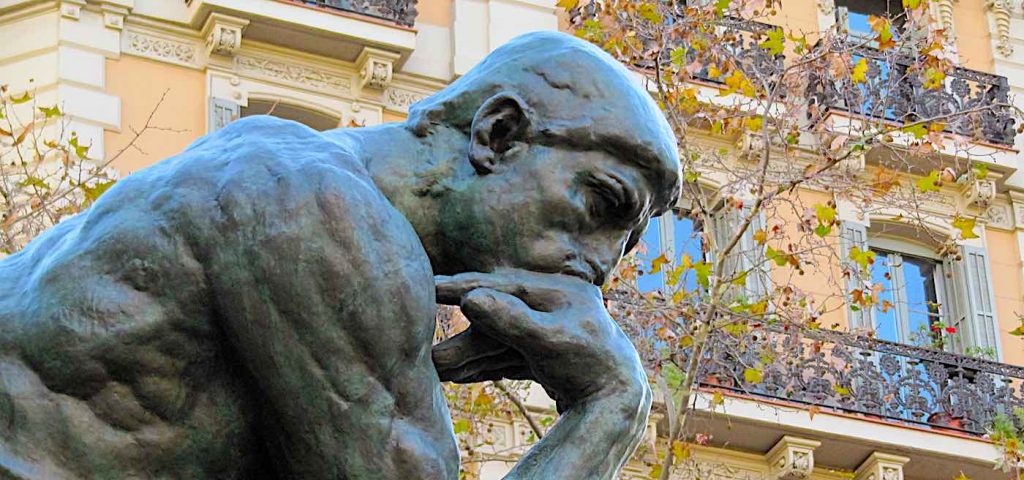


Quote of the Day: “When you doubt, abstain.” – Ambrose Bierce
Photo by: Ed Menendez, CC license
With a new inspirational quote every day, atop the perfect photo—collected and archived on our Quotes page—why not bookmark GNN.org for a daily uplift?


A supermassive black hole discovered at the edge of the universe is one of the biggest ever detected, containing over a billion solar masses worth of interstellar dust and forming stars 1,000 times faster than our own Milky Way.
The cosmic colossus lies at the center of an extreme galaxy and dates back more than 13 billion years—just 750 million years after the Big Bang.
“This is something others have been predicting for a few years now, and it’s really nice to see the first direct observational evidence supporting this scenario,” said lead author Dr. Ryan Endsley, of The University of Texas at Austin.
“These results suggest very early supermassive black holes were often heavily obscured by dust, perhaps as a consequence of the intense star formation activity in their host galaxies.
The discovery, described online in the Royal Astronomical Society, could help answer one of the biggest mysteries in astronomy: how supermassive black holes in space evolved. It may even be a ‘missing link’ between galaxies that produce lots of stars like our Sun and the first supermassive black holes.
The American team made the discovery using data collected by ALMA (Atacama Large Millimeter Array), a radio observatory in the Chilean Andes Mountains.
The galaxy, nicknamed COS-87259, was shining bright from the intense burst of star formation. The primordial black hole is heavily enshrouded by cosmic ‘dust’, causing nearly all of its light to be emitted in the mid-infrared range of the electromagnetic spectrum. Its active galactic nucleus is generating a strong jet of material moving close to the speed of light.
RELATED: Astronomers Observe 2 Neutron Stars Colliding and the Extreme Reaction ‘Defies All Expectations’
Black holes that have masses millions-to-billions of times greater than our own Sun, are sitting at the center of nearly every galaxy.
The pull of gravity is so strong that even light can’t escape it. This is what makes them invisible.
Several have been detected that were created when the universe was very young. Their light takes so long to reach us that we see them as they existed back in the distant past—in this case, approximately five percent of the current age of the universe.
What is particularly astonishing about the new black hole is it was identified over a relatively small patch of the sky. This suggests there could be thousands of similar black holes in the very early universe, which was completely unexpected from previous data.
The only other class of supermassive black holes we knew about in the very early universe are quasars, which are powered by black holes that give off large amounts of light and energy, relatively unobscured by cosmic dust.
POPULAR: Ringed Planet That Defies Known Physics Discovered in Outer Reaches of Our Solar System
They are extremely rare, with only a few located over the full sky.
“While nobody expected to find this kind of object in the very early Universe, its discovery takes a step towards building a much better understanding of how billion solar mass black holes were able to form so early on in the lifetime of the Universe, as well how the most massive galaxies first evolved,” added Dr. Endsley.
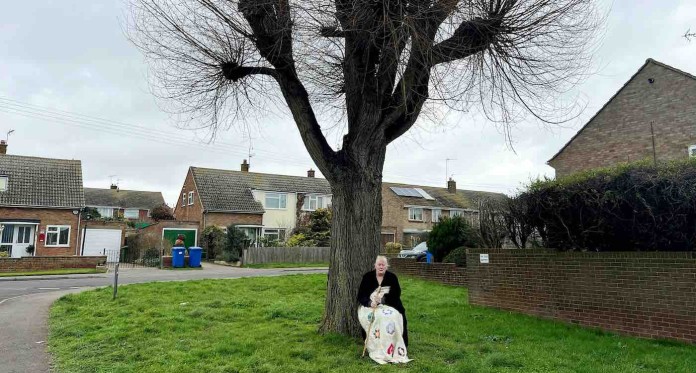
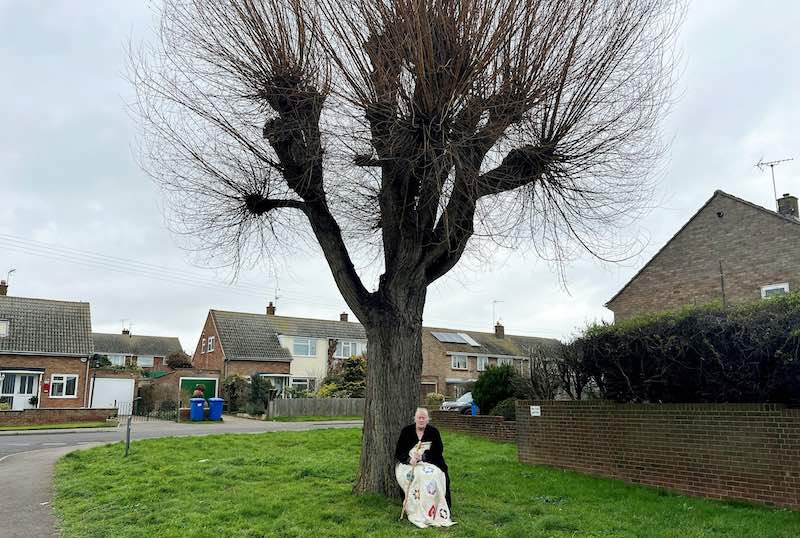
A disabled, nature-loving grandmother staged a one-woman protest to get a stay of execution for a healthy willow tree about to be chopped down.
Workers arrived in the neighborhood on Tuesday, where Virginia Hanley has lived since 2007.
When she looked out the window, she was shocked to see workers preparing to chop the tree down, after the local Council decided to remove the 61-year-old willow due to issues at a nearby property.
The Englishwoman from Minster in Sheppey, Kent, said they were under orders from Swale Borough Council and the tree was set to be gone in four hours.
“I replied saying ‘oh, so I’ve got four hours to try and sort this out?’ and he said, ‘oh no, I’m starting it now’”.
Grabbing her walking stick, a chair, and quilt, the 70-year-old bundled up for the cold and planted herself at the foot of the tree.
The act of defiance was no easy feat, as she was living with nerve malfunction following a road accident decades ago that left her unable to walk for long distances.
“While I was under the tree the workers told me they couldn’t wait while I was there because it was costing them money, so they left and they promised me they wouldn’t be back. But 15 minutes later, they were.
“I told them that I wasn’t going anywhere and that I wanted to know why this tree is coming down.”
Ms. Hanley was told that the Council assumed the willow had caused a neighbor’s porch and house to subside after their insurance company inspected the property and blamed the tree.
But Virginia’s home had experienced the same phenomenon and, she explained in a video below, when experts dug up her home they said it wasn’t the willow tree.
“So the chances of them having a willow tree problem and me not having one seemed odd to me.”
The US Geological Survey says land subsidence, which is a gradual settling (or sudden sinking) of the Earth’s surface, is principally caused by aquifer-system compaction, drainage of organic soils, underground mining, hydro-compaction, natural compaction, sinkholes, and thawing permafrost.
RELATED: Planting Trees in a City 30 Years Ago May Have Lowered the Risk of Deaths From Diseases
Hanley’s neighbor, who has lived in his home for 25 years, said, “My insurance company, Direct Line, dug up my front garden to confirm it is the tree that is causing the subsidence.
“I don’t know what all this rubbish is about with her trying to save the tree. I can’t understand why she is worrying about a poxy tree, it’s like flogging a dead horse.
“I called the council and they told me on the phone that the tree is on their property and she has no right to sit under their trees.”
But, thanks to Virginia, at the moment the old willow is still standing.
“There are three beautiful trees by my home which make living here a pleasure. They make it look nice, and trees are essential, essential for our well being.
“We all know that, everybody knows that, SBC knows that. Those trees have been here since 1962, when this bungalow was built.
A Swale council spokesman confirmed that despite the protest they believe it is necessary for the willow to be taken down.
“Unfortunately, we have had to take the decision to fell this tree. This is not a decision we have taken lightly, and only after we have investigated the issue thoroughly, including root analysis reports which highlighted the tree’s impact on the property.
“In these situations, we do aim to replace any felled trees where practical, and we will review this location for suitability once the felling work has been completed.”
GREAT TRENDS: Precious Rainforests Are Being Preserved at Highest Rate in 30 Years, After Palm Oil Moratorium
But Virginia is not ready to give up. “If they try and take this tree down, I’m going to be sitting under it.
“I’ve got to do what I said I would do, because it’s the right thing to do.”
See the interview with Ms. Hanley…
HAIL the Tree Rescuer By Sharing Her Story on Social Media…
This is the incredible moment a missing backcountry skier buried under snow was able to wave down a rescue chopper with only his one arm sticking out.
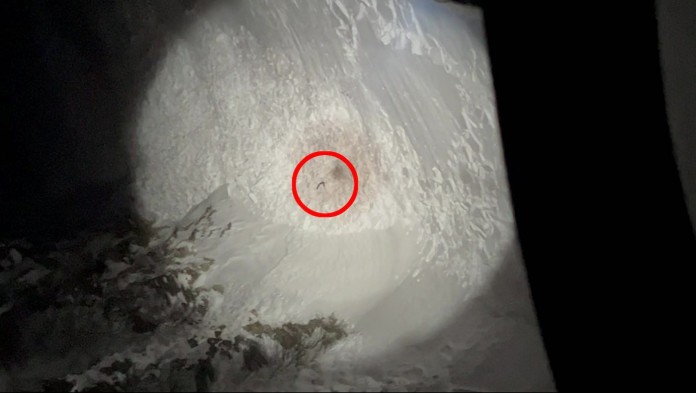
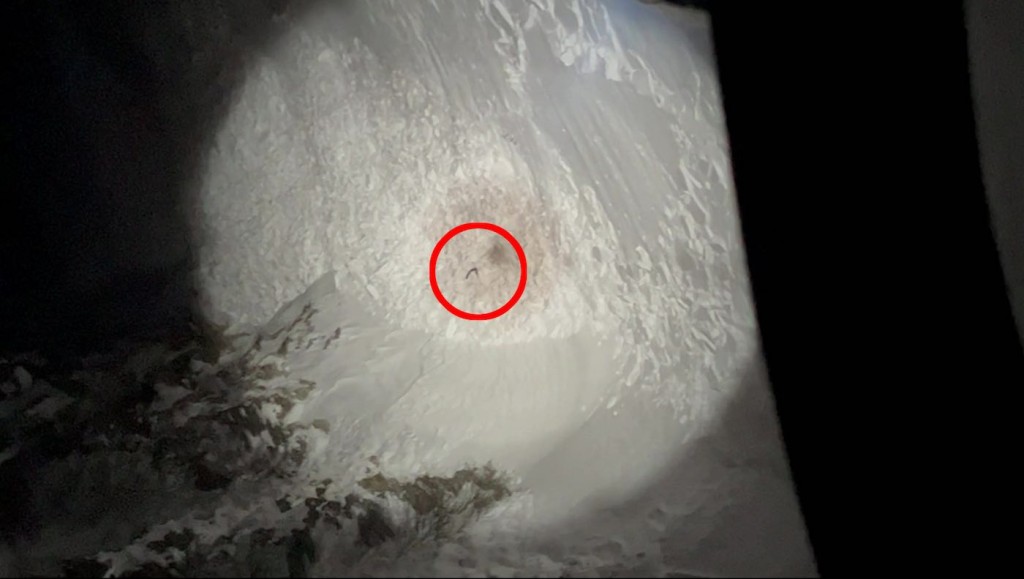
The video, shot by paramedic Mathieu Lambert, shows the man desperately waving with his only free limb as the helicopter hovered above, while shining a light on the mountain.
The young man, who has not been named, had been ski touring in the Lidairdes region of Switzerland when an avalanche hit.
His family alerted rescue services when he didn’t return on time.
Air Glaciers, a rescue and transport company, received the alert at 5:41 pm on February 8 and dispatched a helicopter with a paramedic and two rescue guides.
After checking the parking lot where the man had started his journey to ensure that he had not returned to his car, the team began flying over the route he had provided his family.
The team eventually located visible ski tracks and one of the guides was dropped off to trace them.
LOOK: Boston Officers Rescue Father and Son Floating on Cooler
Miraculously, only using the search light on the helicopter, the team was able to spot the man’s arm waving at them.
They then successfully extracted him from the large pile of snow blocks. He was then hoisted 30 meters to safety.
Watch the footage below…
SHARE The Miracle Rescue With Adventurers on Social Media…


A leading cardiologist has revealed the top 10 heart symptoms you should never ignore—including nausea with chest ache and being tired upon waking. But a recent survey found 54 percent of adults wouldn’t guess these symptoms were related to poor heart health.
Dr. Ameet Bakhai, a consultant cardiologist at Spire Bushey Hospital in North London, listed other signs that could indicate your heart is in less than tip-top condition, including heaviness in the arm upon exertion, shortness of breath walking up stairs, and frequent extra or missed heartbeats.
Difficulty bending down and standing up, feeling dizzy when standing up quickly, and swollen legs are also indicators that your heart is not adapting to your positions, or is holding spare fluid in the body and needs attention.
Half of the 2,000 British adults surveyed reported they have suffered at least one of these symptoms before.
Bakhai, who has a special interest in how lifestyle factors can impact cardiac health says an adult with a healthy heart should be able to run up two flights of stairs without getting out of breath and squat on a toilet, providing they have no other health conditions.
Similarly, a healthy adult should be able to hold their breath comfortably for 20 seconds.
“We often ignore our heart health and it’s signals until it’s too late,” said Bakhai, who has been advising Healthspan, which commissioned the poll, about their Love Your Heart supplements in the UK.
“There’s no annual measurements, observations or tests (MOT) to be passed for most of us, so we ignore the small signals that our own engine is not performing ideally.
“Heart issues can often get progressively worse, until one day you have a more complicated issue – that could have been avoided if you’d heeded the warning signs.
“Heart issues can be connected to other things – you might consider not being able to run up two flights of stairs more of a lung condition or a lack of fitness or of weight gain, but there is a lot of overlap with coronary artery disease or heart valve problems or irregular heart rhythms.
That’s why looking after your heart health is essential.
The poll also found one in five adults have reported feeling dizzy after standing up too quickly, while 11 percent have experienced chest tightness.
But a third think such symptoms could be from a number of different things, while 26 percent just didn’t see them as serious. 17 percent didn’t raise these issues with other people because they didn’t want to be seen as melodramatic—and 13 percent consider themselves simply too young to have heart issues.
PREVENTION TIP: Short Brisk Walks Instead of Long Strolls May Cut Risk of Heart Disease, Says Key Study of 88,000
Bakhai explained, “This is sadly a misunderstanding as heart disease can affect people of all ages, particularly in the era of COVID, as the virus can attack the heart lining as a condition called myopericarditis (inflamed heart and heart covering).
“Warning signs like chest tightness, aches in your arms or jaw, dizziness on standing, breathlessness with bending down should act like a wake-up call that your heart is calling out for help.
A quarter of those polled said they had medical conditions, such as high blood pressure, while 20 percent said they had high cholesterol.
72 percent of those surveyed by OnePoll had never seen a medical professional about heart conditions, although 68 percent consider heart health very important to them, rising to 80 percent of those aged over 65. Around half admitted they need to do more to keep their hearts in good working condition.
10 HEART HEALTH SYMPTOMS
Dizziness on standing up quickly
Shortness of breath
Difficulty bending down
Palpitations
Tightness of the chest
Arm pain – often on the left
Difficulty standing up
Chest discomfort (excluding tightness)
Swollen legs
Frequent extra or skipped heartbeats
POLL Your Friends By Sharing The Poll on Social Media…
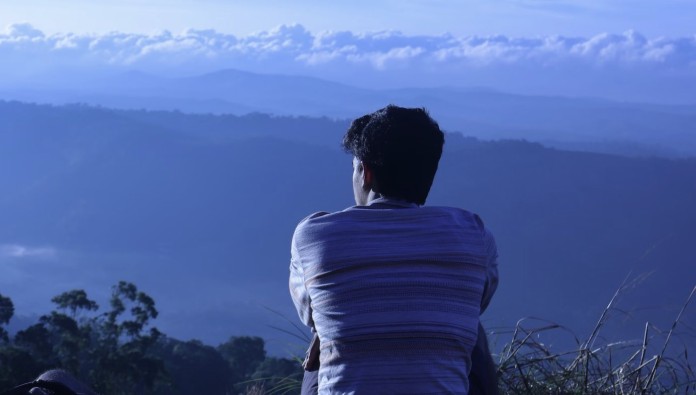
Quote of the Day: “Whoever you are, no matter how lonely, the world offers itself to your imagination.” –Mary Oliver
Photo by: Abhijith P
With a new inspirational quote every day, atop the perfect photo—collected and archived on our Quotes page—why not bookmark GNN.org for a daily uplift?


A mother who was told her 1-pound-11-ounce baby “would not survive” after arriving three months early now says he’s defied the odds and is thriving.
Saniah Poindexter was 19 when she discovered she was pregnant.
She was having a normal pregnancy until 26 weeks later, when Saniah came home from college with a stomach ache and a sky-high temperature.
Saniah was in active labor and her baby would arrive 14 weeks early.
“I did everything I could in my pregnancy to be healthy.
“I cried about it a lot when I was warned he “would not survive”. They told me I would be lucky if he came home.”
Born micro-premature, Kayden weighed just 1lb 11oz and was kept in an NICU ward for 65 days.
But now he’s been discharged from a Michigan hospital weighing 4-lbs 8-oz—and his mom says he’s “thriving” at home.
WATCH: Preemie Given 10% Chance of Survival is Now ‘a Genius’ Who Outsmarts His Teachers

“He’s defied the odds. He’s doing really great, despite us being told differently,” said Saniah, who studies business management at Grand Rapids Community College.
“Bringing him home was the happiest day of my life.”
MORE SUCCESSES: Miracle Preemie Baby Born the Size of an iPhone Came Home For Christmas After a Year of Fears That He May Not Survive
Now, Kayden is a “very feisty” four months old.
Though technically he is one month old, he is making noises and knows how to roll over.
“He is always looking for me, which shows he is a really advanced baby,” Saniah told SWNS news service.
“I knew he was special.”
SHARE The Hope For Other Families on Social Media…
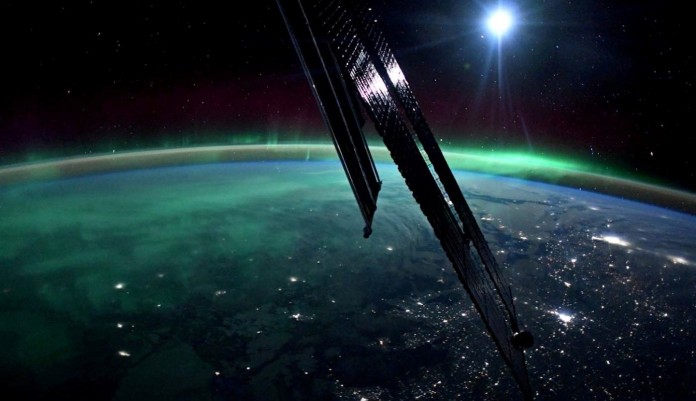
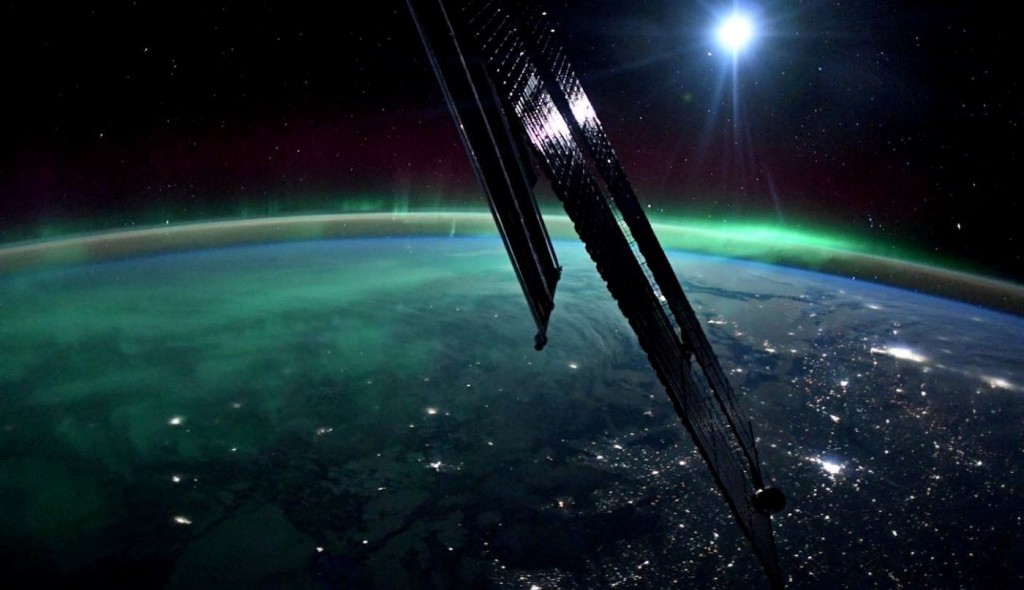
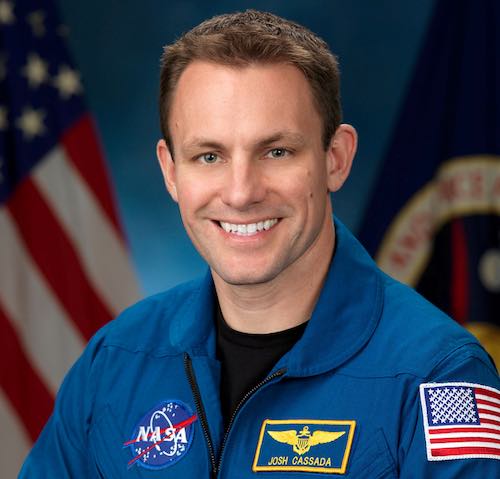
An astronaut snapped a jaw-dropping picture of this week’s aurora borealis from space.
NASA’s Josh Cassada captured the light display aboard the International Space Station (ISS), while it was 250 miles from Earth.
Seemingly at a loss for words, the Minnesota-born physicist and US Navy test pilot commented on Tuesday, calling it “absolutely unreal”.
An aurora is a natural light display in Earth’s sky, predominantly seen in high-latitude regions around the Arctic and Antarctic.
They are the result of disturbances in the magnetosphere caused by the solar wind.
Auroras display moving patterns of brilliant lights that appear as curtains, rays, spirals, or dynamic flickers covering the entire sky—the way only a photo like Josh’s can portray.
LOOK: See Stunning Winners of Northern Lights Photographer of the Year Competition
You can check out an amazing video captured in Canada featuring Northern lights pulsing across the sky–with Southern lights, too.
POST the ‘Unreal’ Photo–And Wave to Josh From Earth–On Social Media…


Taking vitamin D supplements may help ward off dementia, according to a new, large-scale study with 12,388 participants who were dementia-free when they signed up.
To examine the vitamin’s association for participants with a mean age of 71, researchers at the University of Calgary’s Brain Institute in Canada and the University of Exeter in the UK partnered with the US National Alzheimer’s Coordinating Center.
Of the group, 37 percent (4,637) took vitamin D supplements.
The team found that it was associated with 40 percent fewer dementia diagnoses in the group who took supplements.
Across the entire sample, 2,696 participants progressed to dementia over ten years; amongst them, 2,017 (75%) had no exposure to vitamin D throughout all visits prior to dementia diagnosis, and 679 (25%) had baseline exposure.
They also found the vitamin linked to living dementia-free for longer periods.
RELATED: Sunshine Could Ward Off Dementia and Strokes: First-Ever Direct Link to Vitamin D Found
Professor Zahinoor Ismail, of the University of Calgary and University of Exeter, who led the research, said, “We know that vitamin D has some effects in the brain that could have implications for reducing dementia, however so far, research has yielded conflicting results.
“Our findings give key insights into groups who might be specifically targeted for vitamin D supplementation. Overall, we found evidence to suggest that earlier supplementation might be particularly beneficial, before the onset of cognitive decline.”
While Vitamin D was effective in all groups, the team found that effects were significantly greater in females, compared to males.
Previous research has found that insufficient levels of vitamin D are linked to higher dementia risk. Vitamin D is involved in the clearance of amyloid in the brain, the accumulation of which is one of the hallmarks of Alzheimer’s disease. Studies have also found that vitamin D may provide help to protect the brain against build-up of tau, another protein involved in the development of dementia.
POPULAR: 6 Lifestyle Choices to Slow Memory Decline Identified in 10-Year Study of Aging
The effects of vitamin D were also significantly greater in people who did not carry the APOEe4 gene, known to present a higher risk for Alzheimer’s dementia, compared to non-carriers. The authors suggest that people who carry the APOEe4 gene absorb vitamin D better from their intestine, which might reduce the vitamin D supplementation effect. However, no blood levels were drawn to test this hypothesis.
“We now need clinical trials to confirm whether this is really the case,” said Exeter’s Dr. Byron Creese, who co-authored the study published in Alzheimer’s & Dementia: Diagnosis, Assessment & Disease Monitoring. “The ongoing VitaMIND study at the University of Exeter is exploring this issue further by randomly assigning participants to either take vitamin D or placebo and examining changes in memory and thinking tests over time.”
CHECK OUT: Vitamin D Could Help Protect Women Against and Even Reverse Ovarian Cancer – Study
The VitaMIND study is run via PROTECT, an online study open to people aged 40 and over. In PROTECT annual questionnaires on detailed lifestyle factors combine with cognitive testing, to determine what keeps the brain sharp in later life. To find out more or to sign up, visit their website. In Canada, the associated CAN-PROTECT study on aging, in people over 40 additionally focus on caregiving in dementia.
WIN an A+ For Sharing This Tip on Social Media to Help Protect Loved Ones…

Our partner Rob Brezsny provides his weekly wisdom to enlighten our thinking and motivate our mood. Rob’s Free Will Astrology, is a syndicated weekly column appearing in over a hundred publications. He is also the author of Pronoia Is the Antidote for Paranoia: How All of Creation Is Conspiring To Shower You with Blessings. (A free preview of the book is available here.)
Here is your weekly horoscope…
FREE WILL ASTROLOGY – Week of March 4, 2023
Copyright by Rob Brezsny, FreeWillAstrology.com
PISCES (Feb. 19-March 20):
Piscean author and activist W. E. B. Dubois advised us to always be willing to give up what we are. Why? Because that’s how we transform into a deeper and stronger version of ourselves. I think you would benefit from using his strategy. My reading of the astrological omens tells me that you are primed to add through subtraction, to gain power by shedding what has become outworn and irrelevant. Suggested step one: Identify dispiriting self-images you can jettison. Step two: Visualize a familiar burden you could live without. Step three: Drop an activity that bores you. Step four: Stop doing something that wastes your time.
ARIES (March 21-April 19):
In 1993, I began work on my memoirish novel The Televisionary Oracle. It took me seven years to finish. The early part of the process was tough. I generated a lot of material I didn’t like. Then one day, I discovered an approach that liberated me: I wrote about aspects of my character and behavior that needed improvement. Suddenly everything clicked, and my fruitless adventure transformed into a fluidic joy. Soon I was writing about other themes and experiences. But dealing with self-correction was a key catalyst. Are there any such qualities in yourself you might benefit from tackling, Aries? If so, I recommend you try my approach.
TAURUS (April 20-May 20):
Two Taurus readers complained that my horoscopes contain too much poetry and flair to be useful. In response, I’m offering you a prosaic message. It’s all true, though in a way that’s more like a typical horoscope. (I wonder if this approach will spur your emotional intelligence and your soul’s lust for life, which are crucial areas of growth for you these days.) Anyway, here’s the oracle: Take a risk and extend feelers to interesting people outside your usual sphere. But don’t let your social adventures distract you from your ambitions, which also need your wise attention. Your complex task: Mix work and play; synergize business and pleasure.
GEMINI (May 21-June 20):
Astrologer Jessica Shepherd advises us to sidle up to the Infinite Source of Life and say, “Show me what you’ve got.” When we do, we often get lucky. That’s because the Infinite Source of Life delights in bringing us captivating paradoxes. Yes and no may both be true in enchanting ways. Independence and interdependence can interweave to provide us with brisk teachings. If we dare to experiment with organized wildness and aggressive receptivity, our awareness will expand, and our heart will open. What about it, Gemini? Are you interested in the charming power that comes from engaging with cosmic contradictions? Now’s a favorable time to do so. Go ahead and say, “Show me what you’ve got” to the Infinite Source of Life.
CANCER (June 21-July 22):
“Only a lunatic would dance when sober,” declared the ancient Roman philosopher Cicero. As a musician who loves to dance, I reject that limiting idea—especially for you. In the upcoming weeks, I hope you will do a lot of dancing-while-sober. Singing-while-sober, too. Maybe some crying-for-joy-while-sober, as well as freewheeling-your-way-through-
LEO (July 23-Aug. 22):
Poet Mary Oliver wondered whether the soul is solid and unbreakable, like an iron bar. Or is it tender and fragile, like a moth in an owl’s beak? She fantasized that maybe it’s shaped like an iceberg or a hummingbird’s eye. I am poetically inclined to imagine the soul as a silver diadem bedecked with emeralds, roses, and live butterflies. What about you, Leo? How do you experience your soul? The coming weeks will be a ripe time to home in on this treasured part of you. Feel it, consult with it, feed it. Ask it to surprise you!
VIRGO (Aug. 23-Sept. 22):
According to the color consultant company Pantone, Viva Magenta is 2023’s color of the year. According to me, Viva Magenta is the lucky hue and power pigment for you Virgos during the next ten months. Designer Amber Guyton says that Viva Magenta “is a rich shade of red that is both daring and warm.” She adds that its “purple undertone gives it a warmth that sets it apart from mere red and makes it more versatile.” For your purposes, Virgo, Viva Magenta is earthy and exciting; nurturing and inspiring; soothing yet arousing. The coming weeks will be a good time to get the hang of incorporating its spirit into your life.
LIBRA (Sept. 23-Oct. 22):
If you are not working to forge a gritty solution, you may be reinforcing a cozy predicament. If you’re not expanding your imagination to conjure up fresh perspectives, you could be contributing to some ignorance or repression. If you’re not pushing to expose dodgy secrets and secret agendas, you might be supporting the whitewash. Know what I’m saying, Libra? Here’s a further twist. If you’re not peeved about the times you have wielded your anger unproductively, you may not use it brilliantly in the near future. And I really hope you will use it brilliantly.
SCORPIO (Oct. 23-Nov. 21):
Storyteller Martin Shaw believes that logic and factual information are not enough to sustain us. To nourish our depths, we need the mysterious stories provided by myths and fairy tales. He also says that conventional hero sagas starring big, strong, violent men are outmoded. Going forward, we require wily, lyrical tales imbued with the spirit of the Greek word *metis*, meaning “divine cunning in service to wisdom.” That’s what I wish for you now, Scorpio. I hope you will tap into it abundantly. As you do, your creative struggles will lead to personal liberations. For inspiration, read myths and fairy tales.
SAGITTARIUS (Nov. 22-Dec. 21):
Many astrologers don’t give enough encouragement to you Sagittarians on the subject of home. I will compensate for that. I believe it’s a perfect time to prioritize your feelings of belonging and your sense of security. I urge you to focus energy on creating serenity and stability for yourself. Honor the buildings and lands you rely on. Give extra appreciation to the people you regard as your family and tribe. Offer blessings to the community that supports you.
CAPRICORN (Dec. 22-Jan. 19):
If you are like 95 percent of the population, you weren’t given all the love and care you needed as a child. You may have made adaptations to partly compensate for this lack, but you are still running a deficit. That’s the bad news, Capricorn. The good news is that the coming weeks will be a favorable time to overcome at least some of the hurt and sadness caused by your original deprivation. Life will offer you experiences that make you feel more at home in the world and at peace with your destiny and in love with your body. Please help life help you! Make yourself receptive to kindness and charity and generosity.
AQUARIUS (Jan. 20-Feb. 18):
The philosopher Aldous Huxley was ambitious and driven. Author of almost 50 books, he was a passionate pacifist and explorer of consciousness. He was a visionary who expressed both dystopian and utopian perspectives. Later in his life, though, his views softened. “Do not burn yourselves out,” he advised readers. “Be as I am: a part-time crusader, a half-hearted fanatic. Save the other half of yourselves for pleasure and adventure. It is not enough to fight for the land; it is even more important to enjoy it.” Now I’m offering you Huxley’s counsel, Aquarius. As much as I love your zealous idealism and majestic quests, I hope that in the coming weeks, you will recharge yourself with creature comforts.
WANT MORE? Listen to Rob’s EXPANDED AUDIO HOROSCOPES, 4-5 minute meditations on the current state of your destiny — or subscribe to his unique daily text message service at: RealAstrology.com
(Zodiac images by Numerologysign.com, CC license)
SHARE The Wisdom With Friends Who Are Stars in Your Life on Social Media…

Quote of the Day: “Freedom is the ability to pause between stimulus and response. And in the pause choose.” – Rollo May
Photo by: Su San Lee
With a new inspirational quote every day, atop the perfect photo—collected and archived on our Quotes page—why not bookmark GNN.org for a daily uplift?

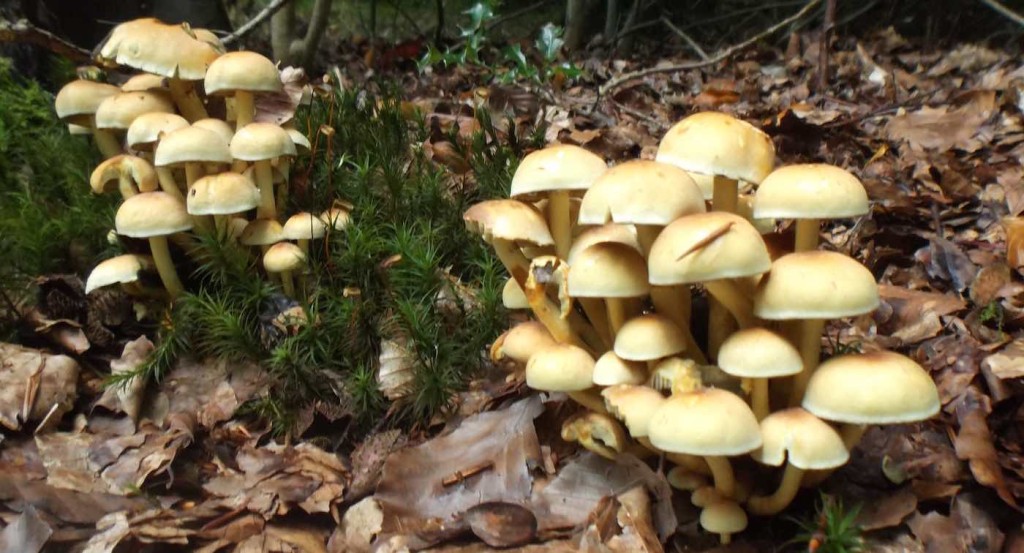
With Southern California stuck in a 20-year drought, the torrential rains this winter have given the state’s wood wide web a bumper crop of mushrooms not seen in 26 years.
600% more rain has fallen this year than in any other this century, and when combined with chilly nights and a waxing moon that’s past half-size, mushrooms can start coming out everywhere there’s grass.
Across the world, every mushroom picker knows that a day or two after heavy rains is the best time to look for mushrooms, and California is no exception.
National Geographic reports citizen scientists and fungal researchers, called mycologists, are plucking dozens of never-before-identified species of shrooms out of the woods, while the typically prized specimens of chanterelles and morels are being carted out by the truckload.
Mushrooms are fascinating in more ways than you can count. And only in a true perfect coalescing of weather conditions does the true nature of their total infiltration across the whole of our world and society becomes clear.
Hunters are collecting a lot of mushrooms from the Santa Ana Mountains to the Los Angeles city parks.
MORE ON FORAGING: Autumn Foraging Guide: Find Yourself a Harvest Haul of Mushrooms, Berries, and Nuts
Hunting for mushrooms is always best done with local experts, and if a hunter has the courage to use a guidebook, it’s preferable to use a guidebook specifically for a condensed region, rather than the whole of North America, for instance.
This is because we know that there may be more than 3 million species of fungi, but we’ve only cataloged about 150,000. Many species that are healthy and delicious to eat have poisonous doppelgangers, and it’s no exaggeration to say that some species will simply put you in the grave in an hour’s span of minutes, mostly via kidney and liver failure.
MORE ON MUSHROOM HUNTING: The Many Health Benefits of Eating Mushrooms That Are Wild – And Picking Them Doesn’t Deplete Supply
Local hunting groups are also a great resource, and Facebook mushroom foraging parties will often post updates of where the greatest bounty can be found.
I have reported extensively on mushrooms, both as nutrition and as a prize to be sought in the mountains. This story about the Fungiatt or mushroom hunters of Northern Italy is perfect inspiration to get out into the woods and put your hands on members of the Third Kingdom of Life.
KNOW Anyone Who Likes Foraging? SHARE This Story With Them…
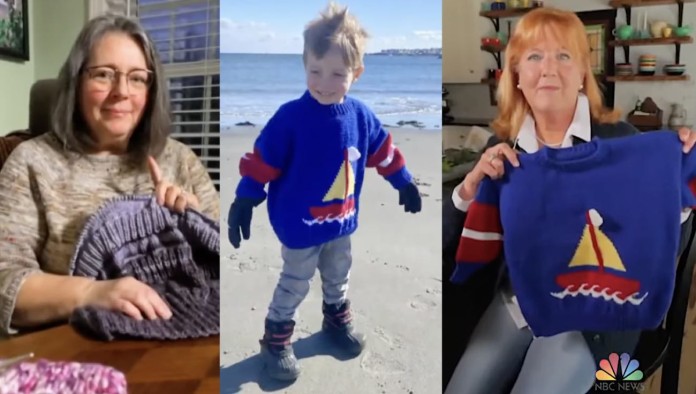
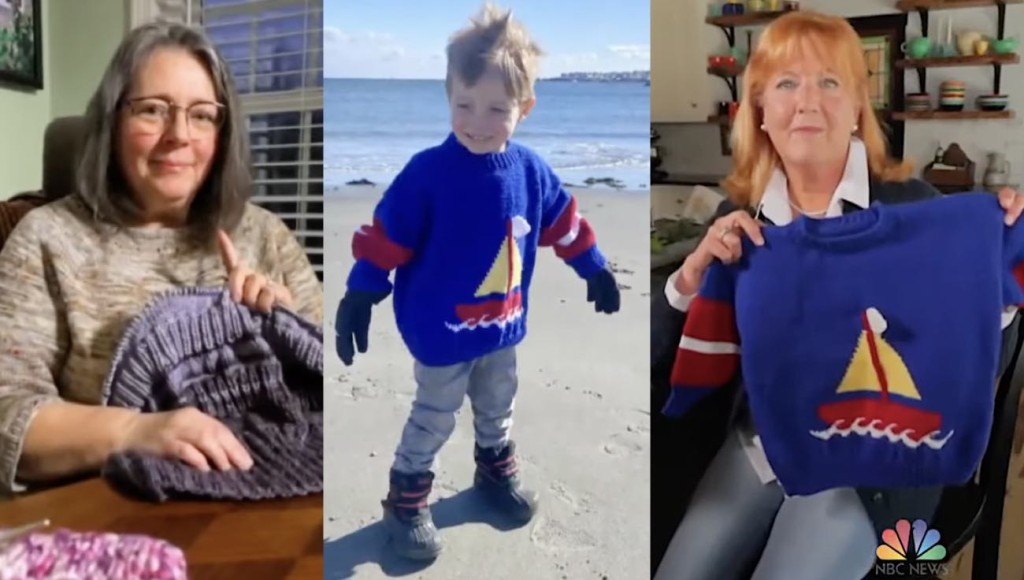
An American non-profit is helping bereaved families recover from loss one crocheted sweater at a time.
Loose Ends is a niche yet important outlet for those whose mothers and grandmothers left behind unfinished knitting or crochet work. Their volunteer knitters finish projects left behind by those who have passed away.
While it seems too specific to be of much use, Loose Ends has already connected 5,000 volunteers or “finishers” with families who have lost a knitting member, and they’ve been able to complete 20 projects, with another 200 in the works.
“There was a sense of peace for me,” said Annie Gatewood, a Maine resident whose mother had died of lymphoma during a project of knitting sweaters for her grandchildren. “I absolutely know that my mother would’ve been delighted.”
Gatewood told As it Happens that it took a leap of faith to mail away the unfinished sweaters, but was absolutely delighted when they were finished and sent back.
For the finishers, it’s an opportunity for their talents to be put to seriously appreciated work, and perhaps make a new friend or two. Gatewood met her finisher, Sarah DeDoes, and described it as a special experience.
MORE CRAFT STORIES: Dad Wakes From Coma to Discover Artistic Skills he Never Had Before–And is Now a Carpenter and Model Maker
It isn’t just knitting and crochet projects which Loose Ends manages, but basket weaving, embroidery, quilting, sewing, rug weaving, cross-stitch, needlework, and felting.
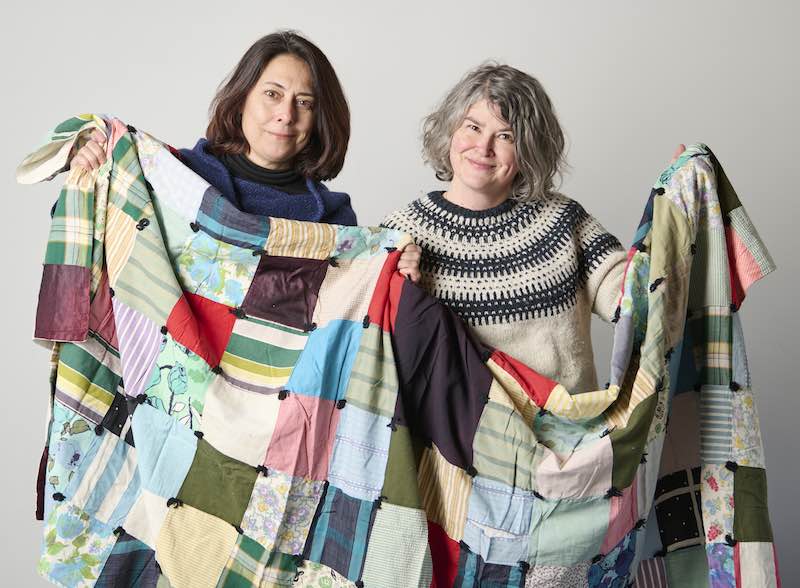
Headquartered in Maine and Seattle, Loose Ends was started by two avid knitters, Jen Simonic and Masey Kaplan, who say that friends would often ask them to finish blankets, sweaters, or other projects left undone by deceased loved ones.
MORE GOOD GRIEVING: Author of ‘Rainbow Bridge’ Poem About an Animal Heaven was Finally Revealed–She Had No Idea it Went Viral
NBC News recently covered the story of Robin Maclean, whose mother Barabara passed away before being able to finish a sweater and a pair of mittens for her great-grandson Ethan.
The company provides finishing services for Dutch, French, German, Hebrew, Spanish, and Czech-speaking families.
WATCH NBC’s coverage of the story below…
SHARE This Touching Story With Your Social Knitwork Below…
An Australian demographic researcher has a fun side gig that has accumulated 225k followers on Facebook.
“Simon Shows You Maps” is a simple page that sprinkles your social media with all kinds of tiny eureka moments, all put together and carefully explained by Simon Kuestenmacher.
Co-Founder and Director at The Demographics Group, Simon posts a map of a continent, the world, a country, or a city, with all sorts of curious details, every 5 hours or so.
For example, Simon shared this map 4 days ago to help those being eaten to know if they’re being eaten by a crocodile or an alligator, based on the ranges of the animals!
In this map, he shows his native Australia divided by vegetation.
There are more offerings every day, and they aren’t all about the natural world—many involve business trends and demographic details as well—all expressed through maps.
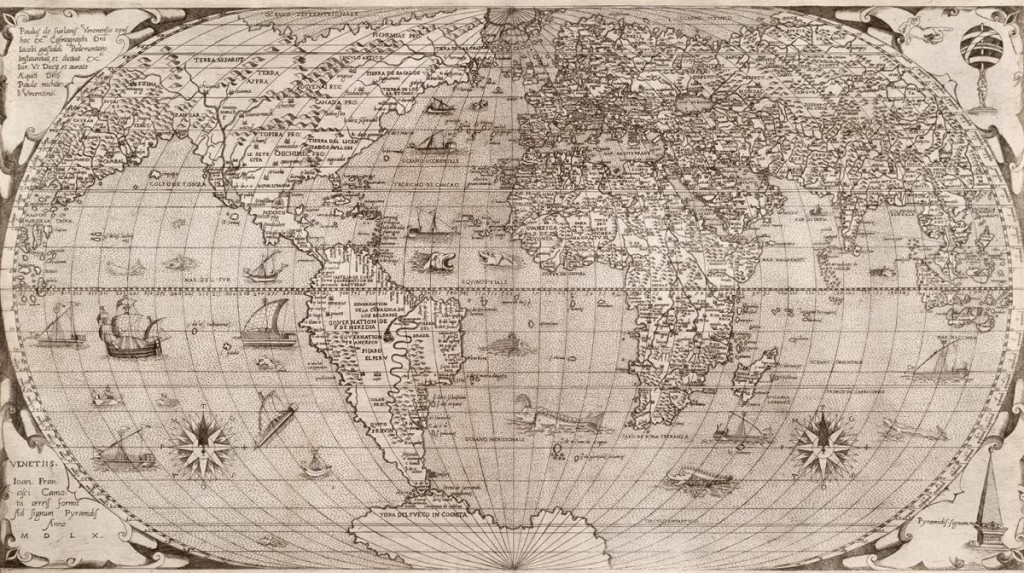
For hundreds of years, maps have deeply influenced how we perceive the world, mostly because the concept of the continents layered over a sphere is difficult to express in two dimensions.
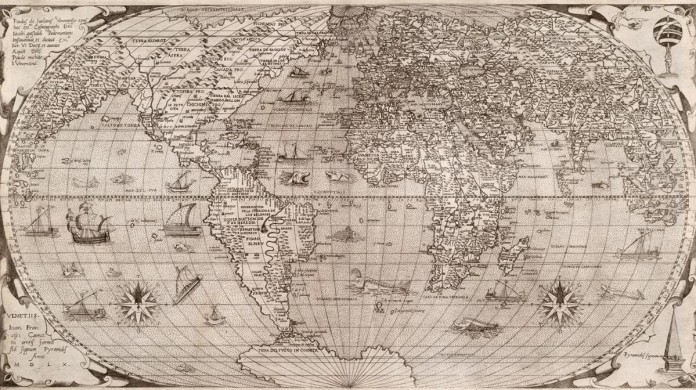
But the challenge of depicting vast territories on small spaces goes way beyond just the standard (and deeply flawed) Mercator Projection maps that we all recognize from our elementary school classrooms. Indeed people have been struggling with this problem since Roman times.
The Tabula Peutingeriana, a map of the cursus publicus, or public Roman road network, was copied by monks in the early Medieval Period onto a 6.75-yard-long scroll, on which essentially the entire world from Spain to India is depicted as simply going east.
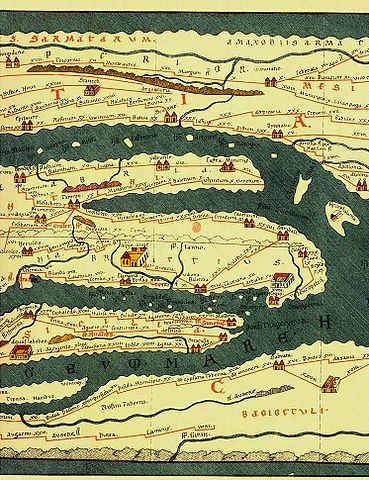
Maps are exceptional tools for learning and discovery, and looking at those overlayed by geological forces or topographical features, compared to political boundaries, can reveal so much more about the world.
Simon shares all this and more and is worth a follow
SHARE This Great Page Follow With Your Facebook Friends Below…
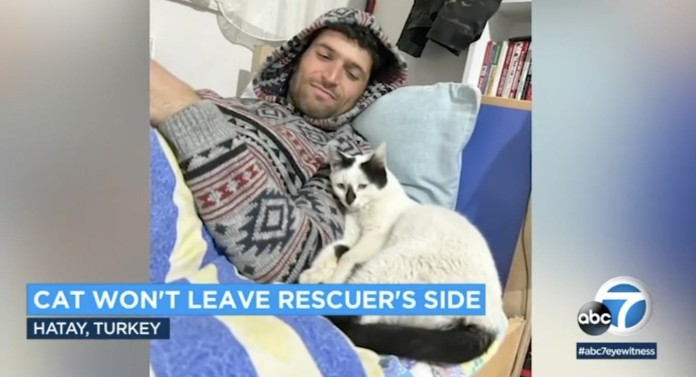
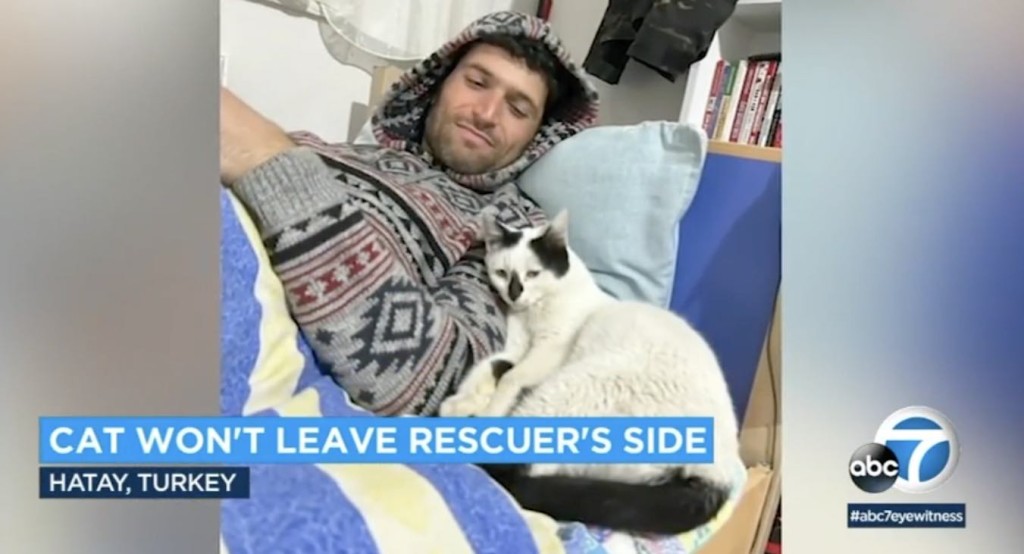
Cats often get a bad rap for being loners, but one lucky kitty trapped under rubble in the Turkish quakes, will not allow himself to be parted from his rescuer.
When the devastating earthquakes hit Gaziantep in Turkey, they struck a country where cats are loved harder than perhaps any other.
A viral post on social media saw a Turkish firefighter named Ali Cakas with a dust-covered cat perched on his shoulder. Cakas found the animal buried in the rubble where it had been for ten days.
It refused to leave his side as he continued working with his fire department to save people and animals.
ABC news did a little digging around on social media and found out that Cakas, pictured in the video wearing a bike helmet and snowboarding goggles for protection, is actually a world-class mountain biker, and works as a coach for the Turkish national mountain biking team.
MORE ON THE QUAKES: Turkish Stadium Sees Teddy Bears Rain Down on Field for Earthquake Victims (WATCH)
Cakas has since taken the cat home and adopted him. He’s named it “Enkas,” which means “rubble” in Turkish, and Rubble the cat has now become the official mascot of Cakas’ fire department.
WATCH the video below…
SHARE This Pawsome Story With Your Friends…
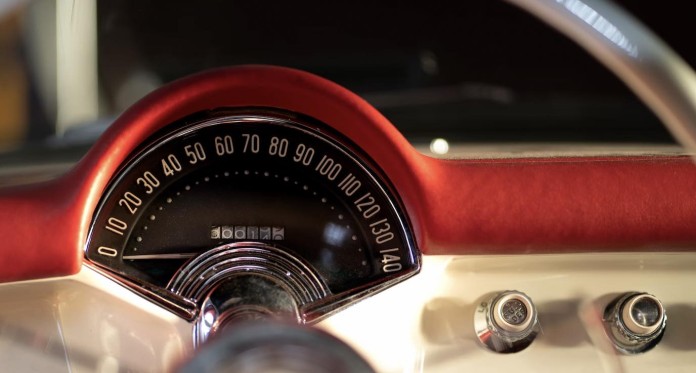
Quote of the Day: “The whole secret of life is to be interested in one thing profoundly and in a thousand things well.” – Horace Walpole
Photo by: Ryan De Hamer (Chevrolet Corvette)
With a new inspirational quote every day, atop the perfect photo—collected and archived on our Quotes page—why not bookmark GNN.org for a daily uplift?
Birds of a feather really do flock together according to a new study that found flamingos with similar personality traits “form cliques” with like-minded friends.
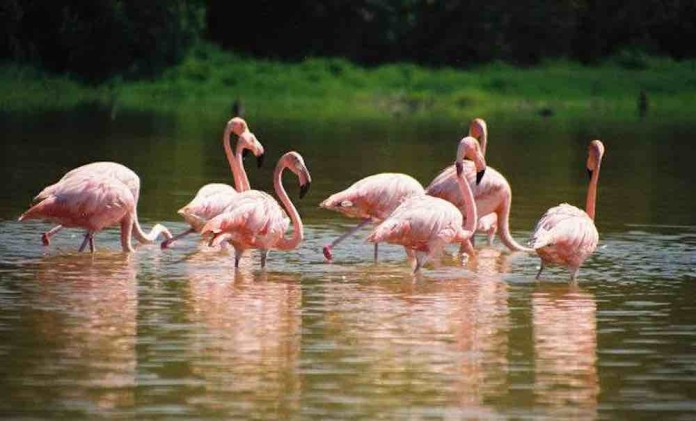
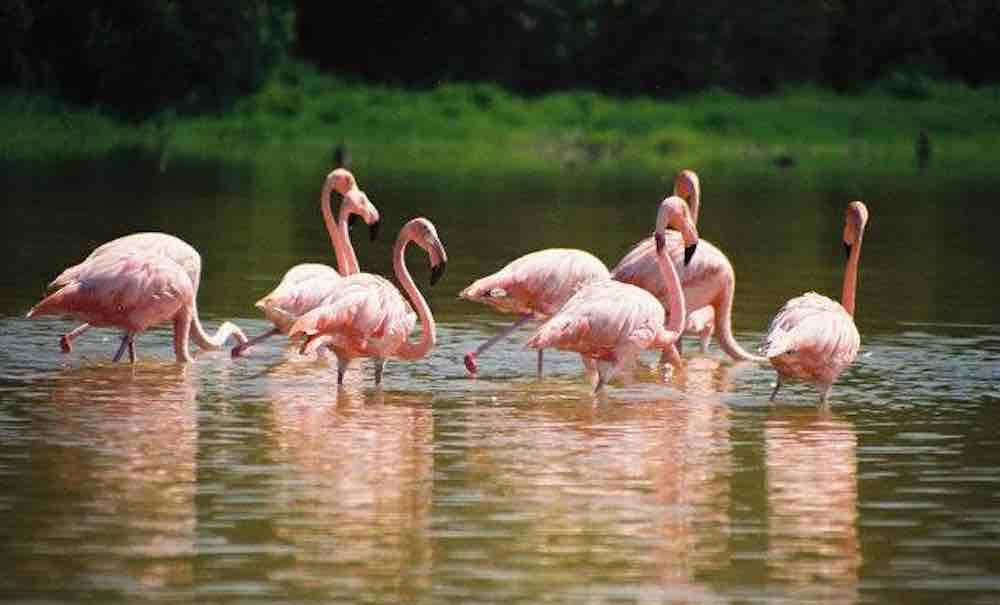
In Chilean and Caribbean flamingos, birds with similar personality traits tended to form cliques separate from differently-wired peers, much like humans.
For example, bolder birds were shown to stick together, whilst more submissive flamingos formed another group.
It’s hoped that the research, conducted by experts at the University of Exeter and the Wildfowl & Wetlands Trust (WWT), will help us better understand the evolution of social behaviour in birds and improve the welfare of zoo flamingos in particular the famous pink birds are actually found very sparsely throughout the world.
To conduct the research, scientists observed captive Chilean and Caribbean flamingos at wetland and wildlife reserve WWT Slimbridge, between Bristol and Gloucestershire in the southwest of England.
The two species can be distinguished by their colour differences: Caribbean flamingos display a brighter crimson or vermilion colour, whilst Chilean flamingos are instead a pale pink.
The personalities of each of the flamingos were first assessed by measuring consistent individual differences such as a bird’s aggression or willingness to explore.
SIMILAR SCIENCE: Birds Have Self Control Just Like Humans–And Some Have a Lot of It
“Our previous research has shown that individual flamingos have particular friends within the flock,” said Dr. Paul Rose, a Research Associate at WWT. “In this study, we wanted to find out whether individual character traits explain why these friendships form. The answer is yes: birds of a feather flock together.”
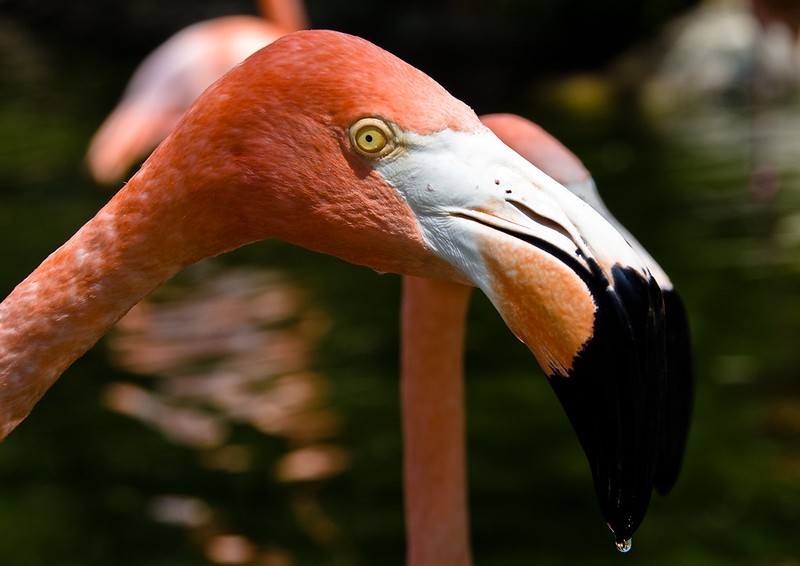
“Like humans, flamingos appear to carve out different roles in society based on their personality,” said Fionnuala McCully, a research student at Exeter who helped gather the data. “For example, we observed groups of aggressive birds which attempt to dominate rivals and tend to get into more fights.”
“Meanwhile, the role of submissive birds may be more complex than simply being lower down the pecking order—they may be using a different approach to get what they need.”
While both species formed their own cliques, it was only among Caribbean flamingos where birds with a certain personality type had particular roles within their flock. The same evidence was not found in Chilean flamingos.
MORE ANIMAL INTELLIGENCE: Clever Cockatoos Craft 3-Piece Tool Set to Extract Fruit – Becoming Only 4th Animal Species to Do So
Though the reasons for this are at present unclear, further studies like this could shed light on such patterns.
“Our findings need further investigation, both to help us understand the evolution of social behaviour and to improve the welfare of zoo animals,” said Dr. Rose.
“But it is clear from this research that a flamingo’s social life is much more complicated than we first realised.”
SHARE These Surprisingly Social Animals With Your Own Clique…
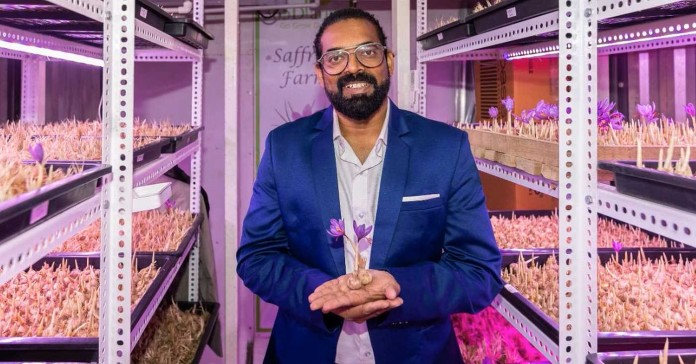
Feeling like the 9-5 office life of a software developer was too empty, an Indian man flipped his own script and became an entrepreneur, developed a method of hydroponically growing saffron, and wants to share it with the world.
Shailesh Modak didn’t have an easy road to the point where he would make around $12,000 for less than a kilogram of the world’s most expensive common spice, and like many entrepreneurs, he had to face a bit of disappointment first.
It started while driving on a highway from his native Kashmir to Pune when Modak heard on the radio about the worldwide plight of bees. He set up a business renting bee hives out to farmers for pollination purposes.
However, he eventually had to close the business down because he couldn’t keep on enough beekeepers, even though he was making a profit on several clients.
MORE AGRI-BUSINESS NEWS: New Bank in The Spirit of Walden Will Lend and Invest Only in Local New England Agriculture
He learned a lot about farming during this time, particularly about the crocus flower’s great bounty: saffron. In South Asia, Kashmiri and Chinese accounts date its arrival anywhere between 2,500 and 900 years ago. Persian accounts also date to 500 BCE, when the stamens of the Crocus sativus were harvested for dyes and sold to the Phoenicians.
“I was looking at cash crops and realized that 95% of saffron comes from Pampore in Kashmir,” Modak told The Better India. “While we have so much demand for the spice, we do not have the same amount of supply.”
His biggest problem was the bulbs that saffron farmers rely on to cultivate this strange, triploid, independently-reproducing plant that’s never found in the wild. They often reached him in poor condition.
MORE GLOBAL SOUTH NEWS: This Wonder Tree is a Game-Changer for Rainforest Agriculture in Honduras And Deforested Sites Worldwide
“I came up with the idea of using shipping containers to develop controlled environments, where crops can be grown. I went to Mumbai, bought a shipping container for [₹100,000], and had it shipped to Pune. The reason behind using a shipping container is that they are very good insulators,” said Modak.
He turned to using hydroponics, which cultivates plants in tubes of nutrient-containing mist and water rather than soil. The advantage, as Modak explains, is that when grown indoors the farmer can control the climate, amount of sunlight, and temperature, reducing the risk of damage and disease.
“The feeling of seeing those flower buds for the first time was incredible. I was so happy, as we were so unsure of whether the flower would bloom or not.”
He now receives near-daily calls from other agriculturalists and entrepreneurs hoping to learn about the techniques and specifics of growing saffron in containers via hydroponics, which if widely adopted could drastically lower its price.
SHARE This Entrepreneur’s Brilliant Journey With Your Friends…

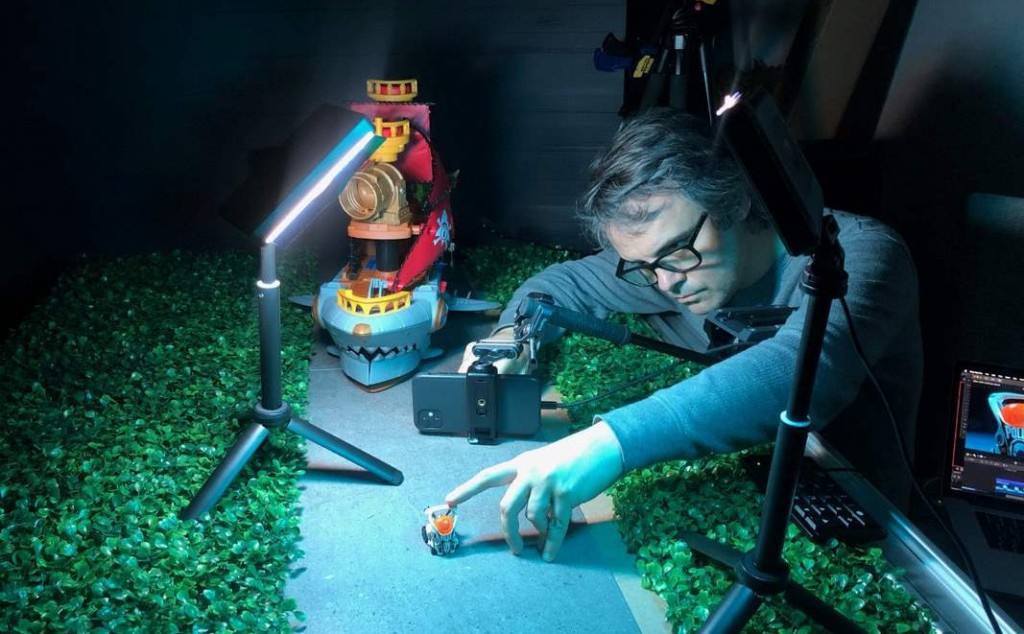
A home filmmaker has created incredible stop-motion miniature chase scenes using Hot-Wheels toy cars.
Director and producer Paul Greer spent six months creating his first stop-motion film in 2013.
Stop-motion films are made by taking an image of a scene, before slightly changing the position of the models and snapping another image, which creates the sense of movement. In his first film, Paul built a custom camera rig and used an iPhone to record the scenes.
“I was walking through a Waitrose, and I saw some toy cars, so I thought, I should do something with this.”
He enlisted the help of four friends and spent up to six hours a day working on the project.
The process proved grueling and only produced about between five and 10 seconds of footage for a day’s work. After six months and more than 1,000 hours of work, Nitro Warriors was born.
The film proved to be very successful. Paul was contacted by the French video-sharing technology platform DailyMotion to create a sequel.
SIMILAR: Artist Creates Fantasy Sculptures By Repurposing Dead Insects
Soon after, Hot Wheels also reached out to him and asked him to create an advert for their toys.
Paul has now created over 10 films and founded a stop motion studio called Vanguard Pictures.
“I take breaks from my regular career to work on this and work solely on this,” said Greer. “It’s so all-encompassing that you need to dedicate yourself to it completely.”
MORE CREATIVE WORK: Danish Artist Hides Enormous Trolls in Forests Around the World Using Recycled Wood—LOOK
“The most overwhelming thing was when Hot-Wheels came and said, ‘we have a lot of money, and we want you to promote our entire line of toys.'”
Greer said he doesn’t really know why he’s fallen into the interest of doing it, it just sort of came about.
“For me, the biggest reward is that there are people out there enjoying what I make.”
WATCH Nitro Warriors below…
SHARE This Man’s Unique Creative Outlet And Spirit With Your Friends…


A US warship has been renamed to honor a Civil War hero with ties to the Navy, who escaped slavery by highjacking a steamship. He joined the Yankee navy, and eventually served 5 consecutive terms in Congress.
In 1839, Robert Smalls was born into slavery in South Carolina. He became a skilled sailor and was an expert navigator of southern coasts.
Conscripted in 1862 to serve as the pilot of the Confederate steamer Planter at Charleston, he executed a daring escape out of the heavily fortified Charleston harbor.
He carried with him his family, other enslaved people, and valuable military cargo onboard, and successfully surrendered Planter to the U.S. Navy. The then had a career as pilot for several ironclads, becoming the first African American in history to do so for the Navy, and he eventually returned to captain Planter after the war.
An ardent advocate for African Americans, Smalls led one of the first boycotts of segregated public transportation in 1864. This movement led to the city of Philadelphia integrating streetcars in 1867.
Beginning a political career, Smalls was appointed a brigadier general of the South Carolina militia, and from 1868 to 1874 he served in the South Carolina legislature. In 1874, he was elected to the U.S. House of Representatives and served for five terms, advocating for greater integration.
“The renaming of these assets is not about rewriting history, but to remove the focus on the parts of our history that don’t align with the tenets of this country, and instead allows us to highlight the events and people in history who may have been overlooked,” said Sect. of the Navy, Carlos Del Toro.
“Robert Smalls is a man who deserves a namesake ship and with this renaming, his story will continue to be retold and highlighted.”
MORE AMERICAN HISTORY: Honoring The Black Astrophysicist at NASA Whose Innovative Space Telescope is Still on the Moon (1939-2020)
The Tichondaroga-class missile cruiser isn’t the first military vessel to bear Smalls’ name. In 2021, Karla Moore, the wife of Robert Smalls’ great-great-grandson, and her daughter got to ride on the Army transport vessel also named the Maj. Gen. Robert Smalls—christened in 2007 as the first vessel to be named after an African-American.
On March 16th, 2021, Moore and her daughter got to take a tour of the ship as it entered the harbor of Charleston where Smalls had escaped all those years ago.
“It’s profound for the ship to be in Charleston,” Karla Moore told the Post and Courier at the time. “This is the region where Robert Smalls was born and it was where he had a major impact on our state’s history.”
SHARE This Little Piece Of Naval History With Another Sailor You Might Know…