All News - Page 312 of 1714 - Good News Network
Home Blog Page 312

Singing Bus Driver Becomes a Star After Making Music Video to Show Family in India What He Did for Work (WATCH)

Ranjit Singh with fellow drivers - YouTube / SWNS
Ranjit Singh – SWNS

A singing bus driver has become an unlikely Youtube sensation after a feel-good music video he made about his job racked up tens of thousands of views.

Ranjit Singh wanted to show his family in India what he did for a living so he made the film with the help of his colleagues at National Express.

His song celebrates multi-cultural Britain and what it’s like to serve a multi-faith community while driving buses across the industrial heartlands of the Black Country.

Despite what some might consider a mundane subject matter, the heart-warming video about the pride Ranjit takes in his work has attracted him thousands of adorning fans.

Since the four-minute long footage was uploaded to Youtube, a video which was originally just meant for family, has been viewed more than 66,000 times.

The uplifting track was recorded against the backdrop of one of the company’s garages and at West Bromwich Bus Station.

“I have a great passion for driving and singing, so I wanted to combine the two together,” said the 59-year-old from West Bromwich in the West Midlands of England.

“I thought there was no better way than a video to show my family back home what I do for a living.

WATCH: New U.S. Citizen From Cuba Celebrates ‘First Paycheck in America’ in Viral Video

“I have worked at National Express West Midlands for 13 years and take great pride in what I do.

“There’s a real team spirit and I wanted to do something that celebrated the many different communities we have at our West Bromwich depot and how we all work together as one team.”

Ranjit Singh with fellow drivers – YouTube / SWNS

Recorded in the Punjabi language, but with English subtitles, sprightly Ranjit dances away as he sings: “Friends drive buses together.”

“With honest working hands, we drive the buses. From different countries brothers drive buses together…we all drive the buses from our different faiths.

“All the different cultures and nations drive buses together as friends. Working in the offices as brothers. We sit together in the canteen as brothers.

“Doing overtime shifts we exhaust the buses. Within different countries friends drive the buses together.

LOOK: Watch Elephant Give Back a Child’s Shoe That Fell Into Zoo Enclosure – SO SWEET

“If any drivers need moral support we give it to each other. Health and safety priorities must be taken before holding the steering wheel.

“We check the bus condition before holding the steering wheel.

“Sisters also drive the buses from different cultures and nations from all over the world. Sisters also became bus drivers within the UK.

“Staying happy and in high spirits we work together singing with our brother Ranjit.”

“Fabulous!” said one fan on YouTube. “Thanks to Ranjit and everyone working so hard to keep us all moving.”

Another gushed, “This is why we should be proud of multi-cultural Britain. All colours and creeds coming together. Keep up the good work Ranjit.”

POPULAR: Man in Pakistan Needed Surgery in Alabama – Got So Much Love That He Invited the Entire City to His Wedding

David Bradford, managing director for National Express West Midlands, said: “Our staff really are our greatest assets.

“They all work incredibly hard to keep our customers moving, and to see the enthusiasm that they have for their roles in the company is great.

WATCH the music video below…

SHARE The Inspiring Video to Inspire Friends on Social Media… 

Two-Thirds Feel Guilty For Getting Rid of Sentimental Items, So Resale Stores are Thriving

By Robyn Budlender
By Robyn Budlender

Most of the items within the average American household arrived there secondhand, a new poll suggests—with 66% reporting that more than half of the items in their home were previously owned by someone else.

In the survey of 2,000 respondents, three-fourths of people (77%) reported forming emotional connections with the items in their home, regardless of whether or not those items have been used.

Maybe that’s why almost two-thirds (63%) feel guilty tossing an item that “still has a little bit of life left in it,” or that could be passed on to another household.

One in five (20%) even experience significant guilt every time they declutter—which for half of respondents happens once every six to 12 months.

And, 39% would part with one of their belongings if they believe “someone else will enjoy it more” than they do.

When it comes time to declutter, respondents are most likely to relinquish clothing (46%) and papers or other files (44%) above other items like books (29%), toys (25%) or appliances (24%).

Conducted by OnePoll on behalf of resale company Winmark, the random double-opt-in survey also confirmed that a whopping 92% of respondents have shopped at secondhand, thrift or resale shops—which a third (33%) believe are among the “most fun” stores to shop at—at least once in their lives.

RELATED: More Than Half of Adults Would Welcome a Pre-Owned Gift

“Shopping at your local resale store is a great way to keep money circulating in your home community,” Winmark Chief Executive Officer Brett Heffes said. “In particular, it cuts down on shipping-related fuel and packaging consumption, which can be just as wasteful as the product manufacturing process itself.”

Four in 10 purported to be frequent secondhand shoppers, with almost one in 10 (11%) claiming they “exclusively” purchase pre-owned items.

Among those polled, secondhand stores are also thought to offer the most value (37%), just ahead of dollar stores (36%) and outlets (34%).

INTERESTING: Six in 10 Americans Believe They Can Build Generational Wealth in Several Ways

Although 33% consider an item’s value to be of top importance, sustainability also plays a meaningful role in consumers’ choices.

TOP ITEMS DISCARDED WHILE DECLUTTERING

1. Clothing – 46%
2. Papers/files – 44%
3. Books – 29%
4. Toys – 25%
5. Hobby equipment or supplies – 25%
6. Appliances – 24%
7. Kids’ items – 24%
8. Furniture – 22%
9. Sports/exercise equipment – 20%

Compounds That Can Stop COVID From Infecting Human Cells Discovered in a Sea Sponge

Dr. Jimena Perez-Vargas working in the Jean lab – Credit: Paul Joseph

Compounds that could stop coronavirus and flu viruses from infecting human cells have been discovered in sea sponges.

Researchers unearthed 26 such compounds found in nature, including in plants and fungi.

The international research team say their discovery paves the way for new “natural” medicines and antivirals than can help treat contagious viruses.

They claim the compounds will help tackle existing and future variants—as well as flu—because they target human cells, which evolve more slowly than viruses.

They are effective in very small doses in the lab, where the compounds completely stopped viral infection in human cells.

“The advantage of these compounds is that they are targeting the cells, rather than the virus, blocking the virus from replicating and helping the cell to recover,” explained Dr. Jimena Pérez-Vargas from the University of British Columbia in Canada, who co-authored the study.

For the study, which was published in the journal Antiviral Research, the team investigated more than 350 compounds derived from natural sources including plants, fungi, and marine sponges, in a bid to find new antiviral drugs that can be used to treat the novel disease—or in 26 cases, completely stop coronavirus infection in cells.

They bathed human lung cells in solutions made from these compounds and then infected the cells with Covid variants.

Human lung cells to go bright green when they became infected with COVID-19 variants – Credit: Perez-Vargus et al, Antiviral Research

The researchers used a version of the coronavirus which causes cells to go bright green when they are infected, as well as a special screening technique, to make the discovery.

They say the fluorescent virus is a powerful tool that enable scientists to check thousands of compounds, track the virus as it moves from one cell to another and makes extremely laborious steps that used to be necessary completely redundant.

POPULAR: Vaccine that Could Cure and Even Prevent Brain Cancer Developed by Scientists

All three of the most effective compounds were found in Canada: alotaketal C, from a sea sponge in Howe Sound, British Columbia; bafilomycin D from a marine bacteria in Barkley Sound, British Columbia; and holyrine A from marine bacteria collected in waters off Newfoundland.

Further tests showed the three compounds were effective against the delta variant and several omicron variants.

Bafilomycin D was found to work synergistically with an existing antiviral nasal spray against omicron sub-variant BA.2. This paves the way for multi-drug treatments that work against the coronavirus as well as other common viruses.

MORE: New Nasal Spray That Could Protect People From All COVID Variants to Start Human Trials

The team now want to test the compounds in animal models in the next six months.

The study’s senior author, UBC’s Dr. François Jean, added: “Our research is also paving the way for large-scale testing of natural product medicines that can block infection associated with other respiratory viruses of great concern in Canada and around the world, such as influenza A and RSV.”

SPREAD the Good News Like a Virus By Sharing the Breakthrough on Social Media…

Bizarre Creature From China Had a Dinosaur Head on Bird’s Body – a Missing Link From 120 Million Years Ago

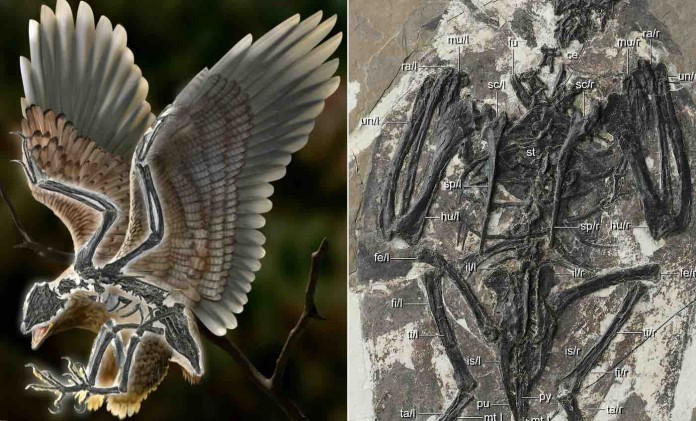
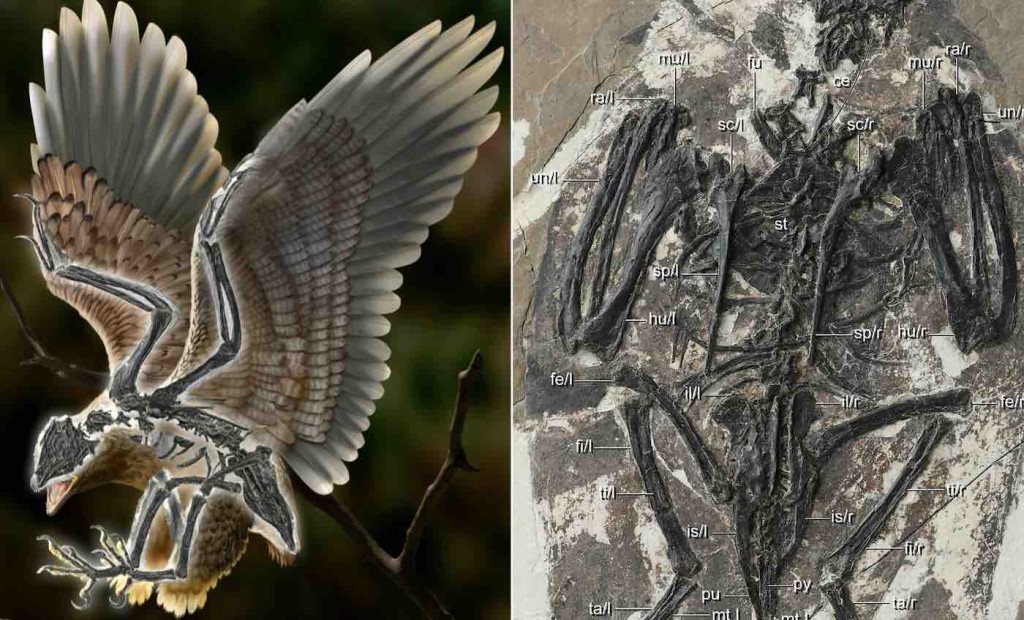
Cratonavis zhui – Chinese Academy of Sciences via SWNS

The evolution of dinosaurs into birds is a transition that encompasses such dramatic morphological changes that paleontologists are still scratching their heads to understand how the fantastic event occurred.

Now, a new 120-million-year-old fossil of a creature in China, called ‘bizarre’ by scientists, shines fresh light on the mystery with its T-rex-like skull attached to the body of a bird.

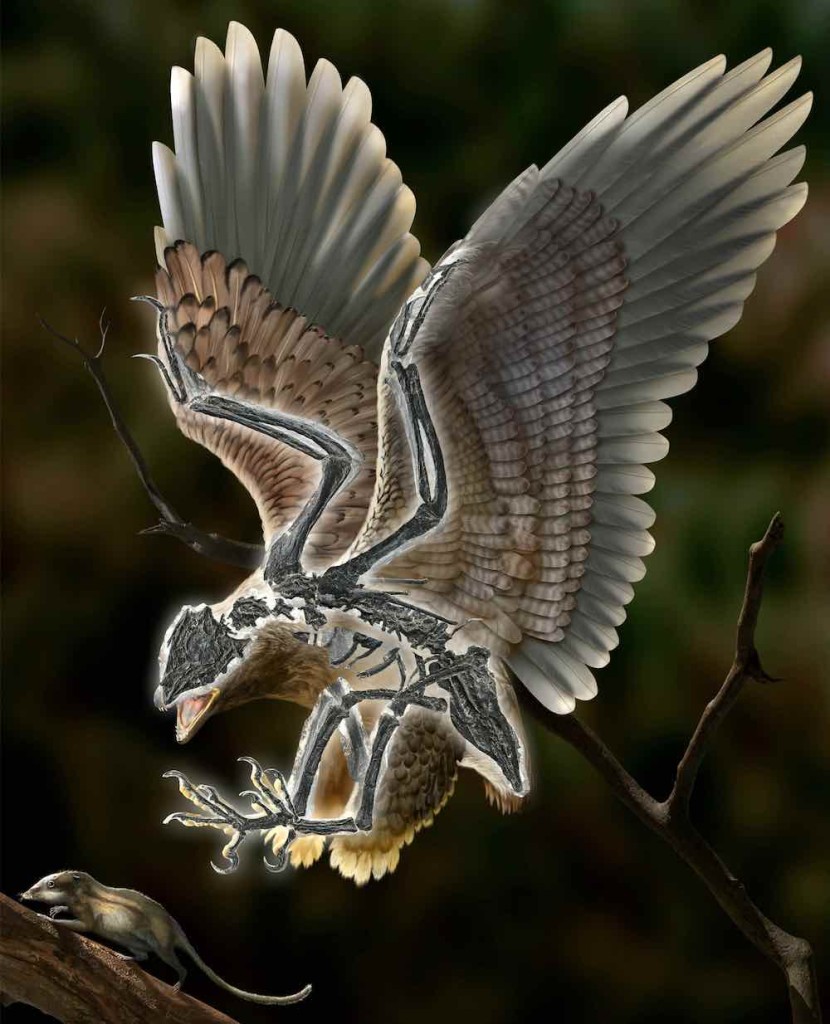
Named Cratonavis zhui, the chicken-sized hybrid had long shoulder blades, or scapulas, and claws. But its large skull was shaped in an almost identical way to that of T Rex and other meat-eating theropods.

The fossil, with its surprisingly elongate shoulder blade (scapula) and first metatarsal, makes it stand out from all other birds—including fossil ones—and fills in some of the gaps as to how some dinosaurs evolved into birds.

The news, published in Nature Ecology & Evolution on Jan. 2, describes a study conducted by paleontologists from the Chinese Academy of Sciences.

“The primitive cranial features speak to the fact that most Cretaceous birds such as Cratonavis could not move their upper bill independently with respect to the lower jaw,” said lead author Dr. Li Zhiheng. “This is a functional innovation widely distributed among living birds that contributes to their enormous ecological diversity.”

In the avian evolutionary tree, Cratonavis came before Ornithothoraces, which evolved to have many traits of modern birds.

Birds have been dubbed ‘living dinosaurs’; the first primitive species looked like a small, feathered dinosaur. Their mouths still contained sharp teeth. But over time, birds lost them and evolved beaks.

POPULAR: At Long Last, Paleontologists Find the Remains of a Swimming Dinosaur—’a Cretaceous Cormorant’

Life reconstruction of the 120-million-year-old bird Cratonavis zhui – Chinese Academy of Sciences via SWNS

Corresponding author Dr. Wang Min commented on the shoulder extension discovered in the fossil: “The scapula is functionally vital to avian flight and it conveys stability and flexibility.

“We trace changes of the scapula across the Theropod-Bird transition, and posit that the elongate scapula could augment the mechanical advantage of muscle for wingbone retraction and rotation.

“It compensates for the overall underdeveloped flight apparatus in this early bird, and these differences represent morphological experimentation in flight behavior early in bird diversification.”

LOOK: ‘Impossible Fossil’ Preserves the Exact Moment the Dinosaurs Died: ‘It’s Absolutely Bonkers’

The study also found the first metatarsal (big toe) was subjected to selection, during the dinosaur-bird transition, to favor a shorter one.

It then lost its evolutionary flexibility toward change once it reached optimal size—less than a quarter of the length of the second metatarsal.

Co-author Dr. Thomas Stidham said: “It may have resulted from conflicting demands associated with its direct employment of the first toe in locomotion and feeding.”

For Cratonavis, it likely stemmed from a selection advantage for catching prey. It was a carnivore that ate small reptiles, amphibians, mammals and insects.

RELATED: This 120-Million Year Old Bird/Dinosaur Hybrid Is Teaching Us How Birds Came to Be

The abnormal anatomy preserved in the fossil highlights the breadth of skeletal plasticity in early birds, explained co-author Dr. Zhou Zhonghe.

He said: “Changes in these elements across the theropod tree show clade-specific evolutionary lability resulting from the interplay among development, natural selection and ecological opportunity.”

Cratonavis stands out from all other birds—including fossil ones—illuminating how our feathered friends evolved from the largest animals that ever roamed land.

DON’T MISS the Chance to Fly This Wonder to Friends on Social Media…

“If someone asks me what inspires me, I always say, ‘That which is missing.’” – Pharrell Williams

Quote of the Day: “If someone asks me what inspires me, I always say, ‘That which is missing.’” – Pharrell Williams

Photo by: Christopher Kumm (chriscrosscrash)

With a new inspirational quote every day, atop the perfect photo—collected and archived on our Quotes page—why not bookmark GNN.org for a daily uplift?

Professional Puzzler in Jigsaw Championships Can Complete a 500-piece Puzzle in 50 Minutes (LOOK)

Professional puzzler Karen Kavett / SWNS

Meet the 32-year-old who became a professional puzzler and now competes in jigsaw championships.

Karen Kavett has always loved puzzles and she turned her hobby into her job, after sharing videos of her skills over the last five years.

The Los Angeles-based content creator likes to try her hand at jigsaws with a twist—such as gradient and patterned puzzles—and has even completed one with her feet.

She’s so good that when she competed in the National Jigsaw Puzzle Championships in San Diego, California in October, she finished in second place even though her entire puzzle edge fell on the floor. She clocked a time of 50 minutes for the 500-piece puzzle while competing against 99 top puzzlers.

“I was less than a minute away from winning,” said told SWNS news. “It was so exciting and so validating after the many hours I have spent doing puzzles.”

During the lockdown puzzle boom, Karen decided to focus her YouTube channel on her hobby after she discovered their popularity. She says “people like to see me suffer and try tricky puzzles”.

She uses time-lapse to creates satisfying videos for her 202,000 subscribers, including her quest to finish a 24,000-piece puzzle (which took 157 hours) and a 9,000-piece Despicable Me jigsaw that took 67 hours.

LOOK: Artist Makes Spectacular Sand Art Portraits That Sell for Thousands After Quitting His Engineering Job

Karen Kavett / SWNS

A second bedroom in her home has been turned into her puzzle studio, where she has even completed a tiny puzzle that she needed to do with tweezers. (Watch a great video below…)

She became part of a global community of speed puzzlers and hopes to compete in the world championships this year.

WATCH: He Taught Parents How to Play Drums and Bass So he’d Have People to Jam With–Now They Have Album

Karen has now designed her own puzzle and was able to complete it herself for the first time recently.

“It was so surreal solving my puzzle for the first time,” she said. “It’s a puzzle of a puzzle.

Karen continues to grow her puzzle collection, consisting of around 400 jigsaws—and gives away dozens that she doesn’t want to keep.

See the most difficult puzzle she ever tried in the video below—a plain brown one with weird shapes that she will definitely be giving away. “I’ll never be doing this puzzle EVER again,” she joked.

INSPIRE Your Friends to Turn Their Hobby into a Gig By Sharing on Social Media…

How Successful Has the Endangered Species Act Been in its 5 Decades of Protection? Hint: It’s Very Good News

Credit: Jongsun Lee
Jongsun Lee photo of bald eagle with fish

Reprinted via EarthTalk®, From the Editors of E – The Environmental Magazine

Dear EarthTalk: The Endangered Species Act has been around for five decades. How successful has it been in protecting and restoring threatened and endangered species? – A.J. Munson, Bern, North Carolina

The Endangered Species Act (ESA) has been successful in preventing the extinction of hundreds of wildlife species and in promoting the recovery of thousands more since its inception in 1973.

Some of the species that have successfully recovered and been removed from the list of threatened and endangered species include American alligators, gray wolves, bald eagles (which soared off the list in 2007), peregrine falcons (the fastest animal on Earth), and humpback whales, which leapt off the list over a decade ago.

According to the Center of Biological Diversity, a leading nonprofit with the simple mission of “saving life on Earth,” the ESA has protected more than 1,600 species in the U.S., preventing the extinction of 99 percent of the species listed under it.

Hundreds of species would have gone extinct

Without the ESA, at least 227 species would likely have gone extinct by now since the law’s passage in 1973. In addition, 110 species have seen tremendous recovery since being protected by the act.

The ESA also supports conservation outside the U.S., as the federal government uses the law to enforce the Convention on International Trade in Endangered Species (CITES), a global agreement between nations to regulate trade on species under threat. Examples of the ESA’s reach beyond U.S. borders is in helping save giant pandas as well as several species of tiger.

POPULAR: Wildfires Have Helped These Endangered Woodpeckers Make a Comeback, and It’s a Reminder of Nature’s Resiliency

However, it’s important to note that some species have not recovered as expected, despite being protected under the Act, especially in more recent years. There are many factors that can affect the success or failure of recovery efforts—including habitat loss, climate change, and disease.

Because of the ESA, Arctic oil drilling was not allowed because of the threat to polar bears – Photo by Hans-Jurgen Mager

But researchers from Columbia and Princeton concluded in their October 2022 study that one threat looms even larger: lack of adequate funding for conservation efforts.

Since 1985, ESA funding has decreased by almost 50 percent when measured on a per species basis. Furthermore, they uncovered that the average wait time for a species to be listed has almost doubled over the decades from 5.9 years during the 1990s to some 9.1 years more recently. The upshot is that by the time a species receives protection, it may have already reached a point where the ESA may be ineffective.

But, the ESA, which is managed by the US Fish and Wildlife agency, has played a crucial role and continues to be a key tool for protecting and recovering these species. This groundbreaking piece of legislation, now in its 50th year, has done incredible things for American wildlife.

SEE MORE SPECIES SAVED: Endangered Species Act Turns 40, With Hundreds of Comeback Stories

It continues to protected precious species of plants and animals, bringing them back to sustainability.

EarthTalk® is produced by Roddy Scheer & Doug Moss for the 501(c)3 nonprofit EarthTalk. See more at emagazine.com. To donate, visit Earthtalk.org. Send questions to: [email protected].

HAIL This Government Successes by Sharing With Earth Lovers on Social Media…

New Artificial Pancreas for Type 2 Diabetes Manages Blood Sugar Twice as Well as Jabs –Now Approved in UK

Towfiqu barbhuiya

Scientists at Cambridge University just completed a successful trial of their artificial pancreas that helps Type 2 diabetes patients better manage their blood sugar levels.

In fact, researchers say the device and app, powered by an algorithm, doubled the duration of time that patients’ blood sugar levels were on target. It also reduced by 50% the time they spent with blood sugar that was too high.

The announcement comes just days after UK’s National Health Service gave the green light to its usage for patients.

The device, created by the University’s Wellcome-MRC Institute of Metabolic Science, combines an off-the-shelf glucose monitor and insulin pump with an app known as CamAPS HX.

The app predicts how much insulin is needed to keep blood glucose at healthy levels.

Earlier studies, including one based on 875 patients, have found that an artificial pancreas running on a similar algorithm works in patients with type-1 diabetes, including very young children.

Unlike the earlier devices, this new one runs completely automatically and patients do not need to tell their artificial pancreas when they are about to eat.

Charlotte Abbott-Pierce with her artificial pancreas to manage type-1 diabetes – NHS

For the study, the researchers recruited 26 patients from a Cambridge diabetes clinic and patients were randomly assigned to two groups.

The first group tried the artificial pancreas for eight weeks and then switched to the standard therapy of multiple daily insulin injections while the second group began on standard therapy and then switched to the artificial pancreas after eight weeks.

POPULAR: A New Stem-Cell Treatment Looks to Have Cured a Man of Type 1 Diabetes

The team used several measures to assess the effectiveness of the artificial pancreas. The first was the proportion of time that patients spent with their glucose levels within a target range of between 3.9 and 10 millimoles per liter, the standard measure of glucose levels in blood.

Patients using the artificial pancreas spent two thirds (66 percent) of their time with their glucose levels within target range, double that for the control group (32 percent).

In contrast, patients taking the standard therapy spent 67 percent of their time with high glucose levels, which halved to 33 per cent when they used the artificial pancreas.

Average glucose levels fell from 12.6 millimoles/liter when taking the control therapy to 9.2 when they used the artificial pancreas. The app also reduced levels of a molecule known as glycated hemoglobin in patients.

NHS

Glycated hemoglobin develops when hemoglobin, a protein within red blood cells that carries oxygen throughout the body, joins with glucose in the blood and becomes ‘glycated’. By measuring it, doctors are able to get an overall picture of what a person’s average blood sugar levels have been over a period of weeks or months. For people with diabetes, the higher the glycated hemoglobin levels, the greater the risk of developing diabetes-related complications.

RELATED: Stem-Cell Based ‘Cure’ for Type-1 Diabetes Draws Nearer, With FDA Trials Launched

After the control therapy, average levels of glycated hemoglobin were 8.7 percent but this fell to 7.3 percent while using the artificial pancreas.

No patients experienced dangerously-low blood sugar levels, known as hypoglycemia, according to the findings published January 2 in the journal Nature Medicine.

Participants said they were happy to have their blood sugar managed in this way and nine out of ten of them reported spending less time overall managing their condition. Users liked the fact that they no longer needed to jab themselves and say it made them more confident in managing their blood sugar.

Downsides were increased anxiety about developing hyperglycaemia, which the team say may reflect greater awareness and monitoring of blood sugar levels, and practical annoyances with wearing devices.

The team also successfully tried out their creation on patients who need kidney dialysis.

“The artificial pancreas can provide a safe and effective approach to help them, and the technology is simple to use and can be implemented safely at home,” said study co-lead author Dr. Charlotte Boughton.

Study author Dr. Aideen Daly added: “One of the barriers to widespread use of insulin therapy has been concern over the risk of severe ‘hypos’ – dangerously low blood sugar levels.

CHECK OUT: Walmart Unveils Low-Priced Insulin to Diabetes Patients Who Can’t Easily Afford it

“We found that no patients on our trial experienced these and patients spent very little time with blood sugar levels lower than the target levels.”

Globally, around 415 million people suffer from the condition, with more than 4.9 million Brits having diabetes which is estimated to cost the NHS £10 billion per year.

Ordinarily, blood sugar levels are controlled by the release of insulin, but in patients with type two diabetes insulin production is disrupted—and if left untreated can cause serious problems including eye, kidney, and nerve damage as well as heart disease.

The team now plan to carry out a much larger study to build on their findings and have submitted the device for regulatory approval in the hope it will become commercially available for patients.

SHARE This Sweet Breakthrough For Diabetes Patients on Social Media…

Your Inspired Weekly Horoscope From Rob Brezsny: A ‘Free Will Astrology’

Our partner Rob Brezsny provides his weekly wisdom to enlighten our thinking and motivate our mood. Rob’s Free Will Astrology, is a syndicated weekly column appearing in over a hundred publications. He is also the author of Pronoia Is the Antidote for Paranoia: How All of Creation Is Conspiring To Shower You with Blessings. (A free preview of the book is available here.)

Here is your weekly horoscope…

FREE WILL ASTROLOGY – Week of January 14, 2023
Copyright by Rob Brezsny, FreeWillAstrology.com

CAPRICORN (Dec. 22-Jan. 19):
When he was 74 years old, Capricorn author Norman Maclean published his first novel, A River Runs Through It. It became a best-seller. Capricorn film director Takeshi Kitano directed his first film at age 42. Now 75, he has since won many awards for his work in his native Japan. Capricorn activist Melchora Aquino, who was a leader in the Philippines’ fight for independence from Spain, launched her career as a revolutionary when she was in her eighties. She’s known as the “Mother of the Revolution.” I hope these heroes inspire you, dear Capricorn. I believe that 2023 is the year you will get an upgrade in any area of your life where you have seemed to be a late bloomer.

AQUARIUS (Jan. 20-Feb. 18):
According to my analysis of the astrological omens, you will soon be called upon to summon grace under pressure; to express magnanimity while being challenged; to prove that your devotion to your high standards is more important than the transitory agendas of your ego. The good news is that you are primed and ready to succeed at these exact assignments. I have confidence in your power to activate the necessary courage and integrity with maximum poise and composure.

PISCES (Feb. 19-March 20):
“By dying daily, I have come to be,” wrote poet Theodore Roethke. He didn’t mean he suffered literal deaths. He was referring to the discipline of letting go of the past; shedding worn-out habits; leaving behind theories and attitudes that once served him well but no longer did; killing off parts of himself that were interfering with the arrival of the fresh future. I recommend his strategy to you, Pisces. To the degree that you agree to die daily, you will earn the right to be reborn big-time in a few weeks.

ARIES (March 21-April 19):
Nigerian author Wole Soyinka reworked the ancient Greek play, The Bacchae. In one passage, the god Dionysus criticizes King Pentheus, who is supposedly all-powerful. “You are a man of chains,” Dionysus tells him. “You love chains. You breathe chains, talk chains, eat chains, dream chains, think chains. Your world is bound in manacles.” The bad news, Aries, is that many of us have some resemblances to Pentheus. The good news is that the coming months will be a favorable time to shed at least some of your chains. Have fun liberating yourself! Try to help a few others wriggle free from their chains, too. Doing so will aid your own emancipation.

TAURUS (April 20-May 20):
The coming weeks will be a great time to fill your journal with more intense ruminations than you have for many moons. If you don’t have a journal, think about starting one. Reveal yourself to yourself, Taurus! Make conscious that which has been vague, unnamed, or hiding. Here are assignments to help launch your flood of intimate self-talk. 1. Write passionately about an experience you’ve always wanted to try but have never done. 2. Conduct imaginary interviews with people who rouse strong feelings in you. 3. Describe what deity, superhero, or animal you are and how your special intelligence works. 4. Visualize a dream in which you appear as a bolder, more confident version of yourself. 5. Talk about a time you felt rousingly alive and how you plan to feel that way again.

GEMINI (May 21-June 20):
A stranger approached me at Wild Birds Unlimited, a store that sells bird food and accessories. “You write the horoscopes, right?” she asked. “I’m a Gemini, and I want to thank you for helping me tone down my relentless fidgeting. You made me realize I have been secretly proud of tapping my fingers on the table while talking with people, and constantly darting my eyes around the room to check out the ever-changing views. I’d unconsciously believed that stuff was a sign of my incredible vitality. But you’ve been a steadying influence. You’ve shown me ways to settle down and focus my energy better. I can see how restlessness sometimes saps my energy.” I told the woman, “You’re welcome!” and let her know that 2023 will be a favorable time to do much more of this good work. Homework: Meditate on channeling your incredible vitality into being grounded and centered.

CANCER (June 21-July 22):
According to Cancerian author Ronald Sukenick, the writer’s work is “to destroy restrictive viewpoints, notice the unnoticed, speak the unspeakable, shake stale habits, ward off evil, give vent to sorrow, pulverize doctrine, attack and uphold tradition as needed, and make life worth living.” I believe 2023 will be an excellent time for you to carry out those actions, even if you’re not a writer. You will have abundant power to bless and heal through creative rebellion and disruption. You will thrive as you seek out interesting novelty.

LEO (July 23-Aug. 22):
Psychotherapist Ryan Howes has wisdom you’ll benefit from heeding in the coming weeks. “We need to accept our age,” he writes. “We need to accept illnesses and addictions. We need to accept the past. We need to accept others as they are.” He goes on to say that this doesn’t mean we must like all these situations. And we can certainly try to make the best of them. But when we don’t struggle in vain to change what’s beyond our control to change, we have more energy for things that we can actually affect.

VIRGO (Aug. 23-Sept. 22):
Here’s testimony from musician Pharrell Williams: “If someone asks me what inspires me, I always say, ‘That which is missing.'” Yes! This is an apt message for you, Virgo. The best way for you to generate motivation and excitement in the coming weeks will be to explore what is lacking, what is invisible, what’s lost or incomplete. Check in with your deep intuition right now. Do you feel a stirring in your gut? It may tell you where to find important and intriguing things that are missing.

LIBRA (Sept. 23-Oct. 22):
“Every animal knows far more than you do,” declares a proverb of the Nimíipuu people, also known as the Nez Perce. Author Russell Banks provides further testimony to convince us we should be humble about our powers of awareness. “There is a wonderful intelligence to the unconscious,” he says. “It’s always smarter than we are.” These are good pointers for you to heed in the coming weeks, Libra. You will have a special power to enhance your understanding of the world by calling on the savvy of animals and your unconscious mind. They will be especially rich sources of wisdom. Seek out their educational input!

SCORPIO (Oct. 23-Nov. 21):
Psychologist Carl Jung said that the whole point of Jesus Christ’s story was not that we should become exactly like him. Rather, we should aspire to be our best and highest selves in the same way that he fulfilled his unique mission. I bring these meditations to your attention, Scorpio, because I believe life in 2023 will conspire to make you, more than ever before, the hero of your own destiny. You will be inspired to honor only your own standards of success and reject all others’. You will clearly see that you are progressing at your own natural and righteous pace, which is why it makes no sense to compare your evolution to anyone else’s.

SAGITTARIUS (Nov. 22-Dec. 21):
A reader named Mary Roseberry describes her experience of being a Sagittarius: “I hate to be bored. I hate imperfections. I hate to wait. I hate sadness. I hate conflict. I hate to be wrong. I hate tension.” Wow! I admire Mary’s succinct understanding of who she doesn’t want to be and what she doesn’t like to do. I invite you to compose a similar testimony. You would benefit from getting clear about the experiences you intend to avoid in 2023. Once you have done that, write a list of the interesting feelings and situations you will seek out with intense devotion during the coming months.

WANT MORE? Listen to Rob’s EXPANDED AUDIO HOROSCOPES, 4-5 minute meditations on the current state of your destiny — or subscribe to his unique daily text message service at: RealAstrology.com

(Zodiac images by Numerologysign.com, CC license)

SHARE The Wisdom With Friends Who Are Stars in Your Life on Social Media…

“Ask yourself, and yourself alone, one question. Does this path have a heart? If it does, the path is good.” – Carlos Castañeda

Quote of the Day: “Ask yourself, and yourself alone, one question. Does this path have a heart? If it does, the path is good.” – Carlos Castañeda

Photo by: Jack Skinner

With a new inspirational quote every day, atop the perfect photo—collected and archived on our Quotes page—why not bookmark GNN.org for a daily uplift?

Man Who Spent his Life Helping Disabled People Find a Home Has Won a £2.5million Country House in a Raffle

- SWNS
– SWNS

A man who has spent years helping disabled people find homes has won a £2.5million country house in a raffle.

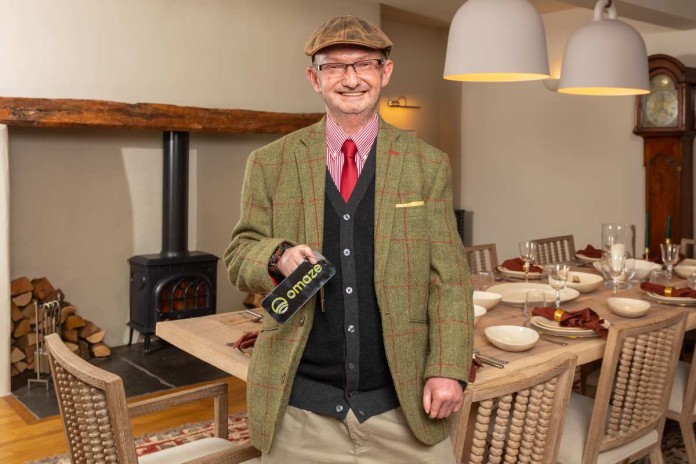
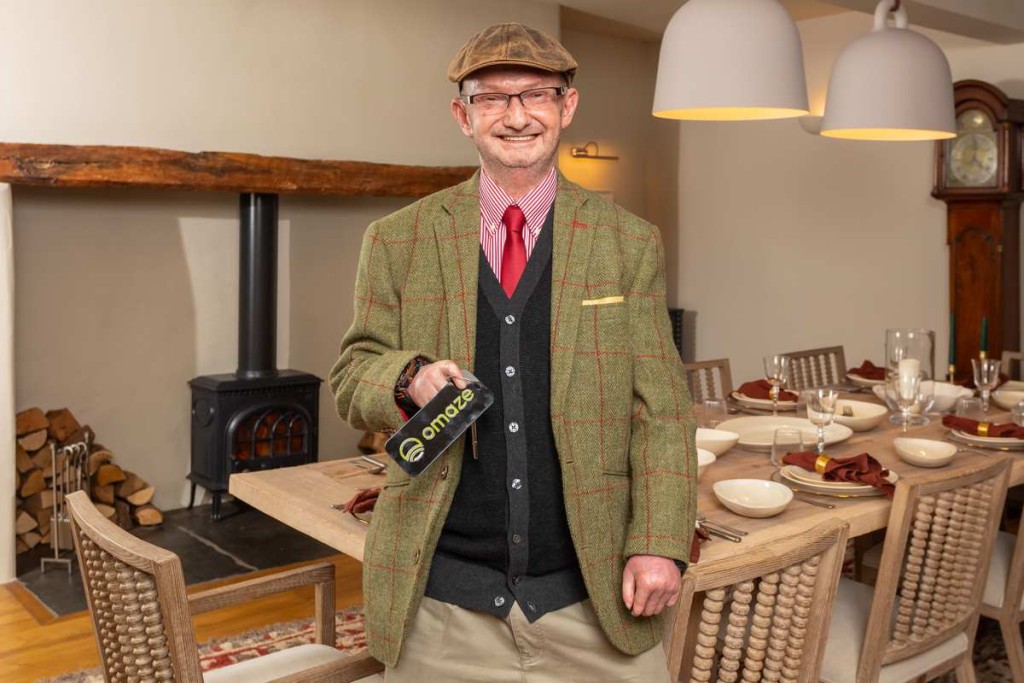
Grant Carson scooped up the five-bedroom farmhouse complete with eight acres of the Lake District after entering the Omaze Million Pound House Draw.

The 58-year-old windower said that he can now get a dog, which was what he always wanted, but was always out of the question due to chronic arthritis he has had since he was seven.

The new home is surrounded by such “idyllic countryside” and he can “definitely afford a dog walker,” because along with the house he was also given £100,000 in cash.

The house raffle was organized by Omaze, a charity raffle that lets people support a good cause with the hopes to win a prize, such as a guitar played by Jimi Hendrix, or lunch with George Clooney, or in this case a house.

Carson worked at the same Glasgow charity for 27 years helping disabled people with all aspects of life, and had never won anything before. He was understandably stunned when the Omaze team surprised him at his three-bedroom home in Glasgow.

– SWNS

”It’s not your average Friday night that someone comes to your door and tells you that you’ve won a £2,500,000 house,” said Carson. “I might be one of the luckiest men in Scotland.”

SIMILAR: TikTok Video Raises $100,000 to Allow an 82-Year-Old Walmart Employee to Retire

He recently decided to embark on a new career path as a freelance consultant.

“I’ve just left my old job helping disabled people across Glasgow, which I had done for 27 years, but this win has given me a financial security I’d never dreamed of, which means I can focus on my new venture helping organizations to meet the needs of disabled customers with a lot less pressure.”

Carson is not compelled to live in or keep the house. He can either move in, rent it, or sell it.

If he does decide to rent it out, local real estate agents estimate the property could yield more than £5,000 a month from rentals.

“I love the Lake District, it’s one of the most beautiful places in the country, I’m still pinching myself that I actually own a house here,” said Carson. “I’m not sure what I’ll do long-term yet, but I’m going to move in for a while and enjoy it.”

On that note, the 18th century house is surrounded by stunning scenery, with a tree-lined garden and wild hay meadows surrounded by rolling green hills. It boasts a standalone guest suite with vaulted ceilings and its own kitchen, bedroom, bathroom and living space.

READ MORE: One Man’s Crazy Idea For Michigan Town Lands Them As Finalist in ‘Nicest Places in America’ Contest

The Omaze drawing was held to raise money for Dogs Trust, the UK’s largest dog welfare charity. Together, the raffle raised £850,000, about $1 million.

“We’re so grateful to everyone who entered,” said Owen Sharp, chief executive of Dogs Trust. “The money raised will go towards our vital ongoing work to take care of dogs and find them their forever homes—which at the moment, sadly, so many are in need of.”

“Having worked at a charity for so long, I know first-hand how important it is to raise money, I think these Omaze draws are fantastic for the charitable sector,” Carson said.

SHARE This Win-Win Story Of A Good Man, A Beautiful Home, And Good Cause…

‘Wearable Muscles’ Restore Mobility in Those Who Have Trouble Moving Their Arms

The Myoshirt ©Florian Haufe, ETH Zurich

A pioneering set of “wearable muscles” with a profile similar to a shoulder sling could increase mobility and strength in the arms of people who have lost it.

As algorithmic intelligence advances, more and more engineers are attempting to design different prosthetics to replace lost mobility, but many are large, bulky, complicated, or extremely expensive.

Michael Hagmann has a rare form of muscular dystrophy called Bethlem myopathy, but his muscular output was increased 61% thanks to a kind of exo-tendon called “Myoshirt” which learns the movements Hagmann wants to make before raising and lowering a cable similar to a human tendon in order to apply mechanical advantage to his actions.

“Although hospitals have numerous good therapy devices, they are often very expensive and unwieldy,” said Marie Georgarakis, a former doctoral student at the Swiss Federal Institute for Technology’s Sensory Motor Systems Lab in Zurich.

“And there are few technical aids that patients can use directly in their everyday lives and draw on for assistance in performing exercises at home. We want to close this gap.”

The Myoshirt is a soft, wearable exomuscle for the arms and shoulders; a kind of vest with cuffs for the upper arms accompanied by a small box containing all the technology that is not used directly on the body.

CHECK OUT: Bionic Leg Wrap Uses AI to Correct Walking Patterns For Cerebral Palsy, MS, and Stroke Patients

Smart algorithms detect the user’s movements and the assistance remains always in tune with them. The mechanical movements can be tailored to their individual preferences, and the user is always in control and can override the device at any time.

In an alpha-stage test, 12 people including Hagmann and another with a spinal cord injury, performed arm strength tests wearing the Myoshirt. In the 10 who had no mobility issues, Georgarakis et al. found that “onset of muscle fatigue” was delayed by 51 seconds compared to an unsupported arm.

READ MORE LIKE THIS: Revolutionary Jab that Could Repair Spinal Cord Injuries Developed by Scientists

Hagmann experienced a 254 second-delay in the onset of fatigue doing unloaded arm lifts, and the participant with the injured spinal column was able to lift his arms repeatedly for nearly 7-and-a-half minutes more than without the Myoshirt.

At the moment the box containing the motor and computer parts weighs close to 9 pounds, so the team’s first priority is to develop a full prototype with an even more discreet profile to allow people to use it in day to day life as often as possible.

WATCH how effortlessly it works…

SHARE This Radical Mobility Device With Your Friends On Social Media…

Bus Stops in Scotland Go Green – With Roofs Covered in Plants as a Gift For Honeybees

Credit - Aberdeenshire Council
credit – Aberdeenshire Council

Dozens of bus stops around the city center of Aberdeen, Scotland, are set for a renovation to turn them into “Bee Bus Stops.”

Covered in sedum, a flowering plant also known as stonecrop, they will hopefully encourage biodiversity, keep shelters cooler in summer, and absorb pollutants.

Described as “quite miserable places” in December by council member Kairin Van Sweeden, this new update put’s Scottish heritage as triumphant innovators at the forefront of public transit.

At present the conversion is limited to a test run of 9 stops, but the city could soon make it a blanket policy for all new bus stops, and require the re-fitting of old ones. City planners hope they can draft volunteer programs to water and care for the plants atop the stops as means to encourage a sort of community spirit amid the Union Street area.

They could look like a pilot program in the county of Aberdeenshire, where a Park & Ride has been given a green makeover including a sedum-planted roof, solar panels, and the latest energy-saving LED light displays.

The Ellon Park & Ride features “Papercast” displays, an electrified piece of paper that costs no energy to display an image, making them the lowest-consuming piece of electronic signage on Earth.

RELATED: 316 Dutch Bus Stops Are Getting Green Roofs Covered in Plants For Bees

The station features three different bus shelters, all outfitted with sedum roofs and Papercast travel displays.

Cities elsewhere in Europe have already switched over to bee-friendly bus stops, for example in Utrecht, The Netherlands.

Bus stops might be small, but they can easily be changed from having ab environmental footprint, into a collective network of zero-impact city infrastructure.

MULTIPLY THE BUZZ: Share This Green Gem With Your Friends on Social Media… 

World’s Largest Prehistoric Flower Preserved in Amber is Stunning Reminder of Nature’s Wonder –LOOK

The world’s largest flower encased in amber has recently been re-examined by scientists who discovered it was producing pollen at the exact same time it was covered in the tree resin which forms amber.

This remarkably lucky discovery allowed the scientists to study the pollen grains and assign the ancient flower to its still-living cousins.

Amber is like a time capsule. It famously preserves plants and insects visible over millions of years in incredible detail. Plant inclusions in amber are rare but very valuable for research. They make it possible to reconstruct the vegetation in different phases of the Earth’s history and to draw conclusions about the flora of the amber-producing forests.

One of the largest deposits in the world is in Kaliningrad on the Baltic Sea, where Baltic amber for jewelry is mined, 90% of the world’s total supply. Hundreds of metric tonnes are mined there every year, and the forests may have created 100,000 tonnes of this miraculous resin.

Discovered almost 150 years ago, a 1.1 inch-long flower encased in amber was assigned as the Stewartia genus, known colloquially as camellia flowers, and then sheleved.
.
Now, Eva-Maria Sadowski from the Museum of Natural History Berlin and Dr. Christa-Charlotte Hofmann from the University of Vienna, examined this fossil from the collection of the Federal Institute for Geosciences and Natural Resources for the first time since its discovery.

They found that numerous pollen grains that had escaped from the stamens of the enclosed flower.

It was thought the flower inclusion was related to the modern day camellia flower, like this Stewartia pseudocamellia – CC 3.0. Reggaeman

“It is very unusual to find such a large blossom in amber, which, moreover, releases its pollen exactly at the time of embedding in the resin,” Dr. Sadowski said in a translated press release. The pollen was scraped out with a scalpel for examination under the scanning electron microscope.

“Only under extremely high magnification can morphological details be recognized on the pollen grains, which are only a few micrometers in size,” adds Dr. Hofmann.

MORE PREHISTORIC NEWS: Spectacular Fossils Discovered from Prehistoric Rainforest Reveal Intimate Details From 11 Million Years Ago

Based on the pollen and some flower characteristics, the researchers were able to assign the fossil to the Asian representative of the genus Symplocos from the Symplocaceae family. Also known as “sweetleaf” in English-speaking countries, this family includes shrubs and small trees.

It is the first find of this plant genus from Baltic amber, but Symplocos was not alone in the Baltic amber forest at the time. Around 34 to 38 million years ago, it housed numerous other plants whose descendants are now only found thousands of miles away in East and Southeast Asia.

Symplocos tinctoria – CC 4.0. Eric Hunt

At that time it was even warmer and rainier in Europe than today, so that many representatives of the beech family, like false chestnuts, (Castanopsis) and conifers like the cedar Cryptomeria which today is endemic only in Japan and China, could feel at home.

Together they formed a diverse ecosystem consisting of coastal swamps, bogs, and mixed forests.

RELATED: Ginkgo Trees Were Going Extinct on Their Own; Then Humans Saved These ‘Living Fossils’ So Now They’re Everywhere

“Our new findings about this uniquely beautiful flower inclusion are an additional piece of the puzzle that will help us to further decode the flora of the Baltic Amber Forest and thus to draw conclusions about the climate of past times,” said Dr. Sadowski. “Only with such insights can we gain deeper insights into the forests of the earth’s history and understand their change over time.”

SHARE This Beautiful Flower Preserved In Time With Your Friends…

“The voice within is what I’m married to… where an honest yes and no comes from.” – Byron Katie

Quote of the Day: “The voice within is what I’m married to… where an honest yes and no comes from.” – Byron Katie

Photo by: Jaime Dantas

With a new inspirational quote every day, atop the perfect photo—collected and archived on our Quotes page—why not bookmark GNN.org for a daily uplift?

Planned Resort Boasts Tents Suspended in the Air Surrounded by Gorgeous Mountains

Floating Retreat – By Ardh Architect (via SWNS)

In the UAE’s Sharjah Mountains, a concept resort spans a vast mountain gully with floating tents hanging in the air.

The ultimate in mountain “glamping,” the so-called Floating Retreat is the brainchild of Dubai-based design studio Ardh Architect, who were tasked to investigate a new kind of hospitality that blended environmental awareness and appreciation for nature with modern comfort.

The images, while striking, create a whorl of questions, not least of which involve safety.

The idea that the pods are actual tents creates the confusion. Essentially the ten luxury hotel rooms designed with state-of-the-art fabric walls, sit docked to a large bridge spanning the gully between two mountain peaks.

Visitors check in at a reception desk at the bottom of the mountain before presumably taking an elevator to the bridge level. Once inside, the tent/room can be raised and lowered according to the guests’ desires.

MORE LEISURE NEWS: World’s Biggest Treehouse Resort Opening Near U.S. National Park is Gorgeous –LOOK

“The Floating Retreat project has several key values at its core,” writes Ardh. “One of the main goals of the project is to re-energize the local community through tourism, by providing a space for people to connect with the natural beauty of the region and to learn about its rich culture and heritage.”

Concept images show people along the deck connected to a series of harnesses to prevent them from falling off the railingless edge.

Floating Retreat – By Ardh Architect (via SWNS)

The tents are designed with privacy in mind and can be positioned in various configurations to prevent overlap or proximity to other tents. The side fabric of the tents is made of a blur fabric, while the front of the tent is made of clear material to provide uninterrupted views.

There are several layout options available, including configurations that are suitable for business retreats or yoga sessions, and others that are suitable for spiritual or psychedelic retreats. The layouts can be chosen to suit the specific needs and preferences of the guests.

RELATED: 30 Years of Research Shows Sauna Bathing is Game-Changer for Longevity and Heart Disease

“Individual tents/pods of the floating retreat are designed to bring luxury and comfort to those who cannot participate in mountain climbing or other adrenaline-filled outdoor activities,” said Ardh.

Amenities such as guided tours in the area, a 5-star spa facility at the top of one of the mountains, and a restaurant at the foot, are all planned for as well.

SHARE These Spectacular Mountain Vistas With Your Friends….

Most Distant Stars in Milky Way Detected by Astronomers

NASA, ESA, and A. Feild

Astronomers have identified 208 different stars just under 1 million light years from the center of the Milky Way, placing a pretty convincing stellar road sign for the end of our home galaxy.

With the reveal photos of the James Webb Space Telescope, astronomy headlines tend to involve the universe at large, but studying our own galaxy not only helps to inform the structure of other galaxies in the universe, but also features in our own cosmic neighborhood.

Called RR Lyrae stars, the 208 most distant stars were actually found in the residual data of a ground-based telescope survey of a cluster of galaxies beyond the Milky Way.

The Milky Way consists of a “bulge”—the galactic center, around which can be found the thin spiral-arm disk where our own solar system resides, followed by the inner and outer “halo” a region that’s typified by large amounts of dark matter and less information than the inner regions.

Our disk is about 100,000 light years across, but the outer halo extends in every direction for hundreds of thousands of light years. In this region the stars were found “beating” like hearts in the darkness due to their unique characteristics.

“The way their brightness varies looks like an EKG—they’re like the heartbeats of the galaxy—so the brightness goes up quickly and comes down slowly, and the cycle repeats perfectly with this very characteristic shape,” said Raja GuhaThakurta, professor and chair of astronomy and astrophysics at UC Santa Cruz.

“In addition, if you measure their average brightness, it is the same from star to star. This combination is fantastic for studying the structure of the galaxy.”

RELATED: Scientists May Have Detected the ‘Hum’ of the Universe That Could Change Astronomy Forever

The RR Lyrae stars are very old stars in the galaxy, and placing 208 of them in the outer reaches of the halo will make for an excellent data point for astronomers studying the formation of the Milky Way.

Astronomers measure galactic distance in kiloparsecs; each one representing 3,260 light years. Some of the farthest RR Lyrae stars identified were 320 kiloparsecs from the bulge, or around 1.04 million light years, with that decimal figure representing a fair expansion of the previous estimations on the outer reaches of the outer halo.

It’s around 2.5 million light years to the nearest neighboring galaxy of Andromeda.

MORE ASTRONOMY NEWS: A Star Nursery That Fuels the Formation of New Stars is Seen by VISTA Telescope in Chile

“This study is redefining what constitutes the outer limits of our galaxy,” said GuhaThakurta. “Our galaxy and Andromeda are both so big, there’s hardly any space between the two galaxies.”

BLAST OFF This Interstellar News To Your Friends… 

Thousand-Year-Old Viking Hall Fit for the Gods Unearthed By Archaeologists in Denmark

- Nordjskye Museer
– Nordjskye Museer

Archaeologists working in Denmark’s Jutland peninsula have discovered the foundation and remains of a great hall from the high Viking Age.

Structural features and remains date to between the late-9th to 11th century, but mostly from the era of Denmark’s king Harald Blåtand Gormsson, known colloquially as Harald “Bluetooth” from which the modern technology derives its name.

The archaeologists from the Historical Museum of Northern Jutland have little doubt that the hall would have played a monumental role in day-to-day life. It would have almost certainly been a political seat, as well as the center of get-togethers for all manner of reasons.

“This is the largest Viking Age find of this nature in more than ten years, and we have not seen anything like it before here in North Jutland, even though it has only been partially excavated,” archaeologist and excavation leader Thomas Rune Knudsen said in a statement.

“We only had the opportunity to excavate part of the hall, but there are probably several houses hidden under the mulch to the east. A hall building of this nature rarely stands alone.”

In its design, the long hall is reminiscent of the houses found at Harald Blåtand’s ring castles, which include Fyrkat at Hobro and Aggersborg at Aggersund. It is around 130 feet (40 meters) long and 32 feet (8-10 meters) long. Ten or possibly twelve rectangular oak posts would have securely held up the roof.

SIMILAR: 2 Viking Swords Buried Upright May Have Been a Guide to Odin and Valhalla – Discovered By Road Crew

The excavators noted that a lot more needs to be done to truly understand the place of this hall in the times of history in which it was erected, but a nearby runestone may offer a clue as to its former chieftain.

A wealthy landowner named Runulv den Rådsnilde is memorialized in a carved standing stone near to the site, and while it’s difficult to prove the hall belonged to him, “it’s certainly a possibility,” said the team.

MORE VIKING NEWS: Viking Age Shipyard Uncovered at Birka is Like Nothing Ever Found Before

It’s common even in journalism to call everything from the late 8th to 11th century from Scandinavia “Viking,” but Nordic writers closest to the time of the Viking Age used the word as an adverb—as in “he went that summer to go Viking in Northern France.”

In other words, it wasn’t a person, warrior, or profession, but more like a seasonal activity, and the word included all kinds of behavior such as raiding, trading, enslaving, or elisting as foreign mercenaries.

SHARE This Exciting Discovery With Your Viking-Loving Friends… 

TikTok Video Raises $100,000 to Allow an 82-Year-Old Walmart Employee to Retire

Warren Marion and Rory McCarty
Warren Marion (left) – courtesy of Rory McCarty (right)

Rory McCarty was shocked to find an 82-year-old Navy veteran and widower still “grinding” out 8-9 hour shifts at a Walmart. He realized at that moment he could put his social media influence towards a good cause.

Helping raise $108,000 in just a few days, McCarty gave it all to help the man finally retire.

Warren Marion walked into Walmart in Cumberland, Maryland, for the final time last week after having handed in a two-week notice. He was greeted with cheers, balloons, and a large check for $108,000.

McCarty runs an extermination business called Bug Boys, and in a true 21st century story, managed to amass a TikTok following of 300,000 by showing videos of creepy crawlies he finds during work.

“As a business owner … I was astounded seeing this little older man still grinding. Working eight to nine hour shifts,” Mr McCarty said on the GoFundMe page he set up on December 19th to help fund Marion’s retirement.

“I wanted to help this Navy Veteran to live the remainder of his years traveling to see his kids in Florida. Get him off his feet for 8 hrs at a time. And do the things he would love to do that he may not be able to for financial reasons.”

MORE SOCIAL MEDIA KINDNESS: Rags-to-Riches Story Sees Human Compassion and Social Media Turn Homeless Painter into LA’s Next Big Artist

A video he posted of them both in December has been viewed over three million times, and the GoFundMe met its goal within a few days.

It’s actually the third Walmart employee that TikTok users have managed to coax into retirement, and Marion is the second 82-year-old to receive the generosity of this particular social media platform.

An elderly woman named Nola was filmed on break at another WalMart by TikTok user Devon Bonagura, who managed to raise a whopping $175,000 for her retirement.

KEEP The Social Media Love Flowing And Share This Story With Your Friends…

“There is one path in the world that none can walk but you. Don’t ask where it leads…walk!” – Friedrich Nietzsche

Quote of the Day: “There is one path in the world that none can walk but you. Don’t ask where it leads…walk!” – Friedrich Nietzsche

Photo by: Lili Popper

With a new inspirational quote every day, atop the perfect photo—collected and archived on our Quotes page—why not bookmark GNN.org for a daily uplift?