All News - Page 322 of 1714 - Good News Network
Home Blog Page 322

Livin’ Good Currency Ep. 23: Miriam Nelson on Wielding the Power of Fresh Food to Help Kids

The Lesson: Newman’s Own brand pizzas, pasta, lemonade, salad dressing, etc. has raised $600 million through its for-profit operations and its purpose-driven foundation, in what is now its 40th year of operations since Paul Newman first bottled up his homemade salad dressing, caused a market craze, and then gave away all the money he earned that fiscal year. Now following the actor’s death in 2008, the foundation gives away all the profits and royalties from its sales in order to support children—nutritionally and otherwise—for children that face adversity.

Notable Excerpt: “We look at food as one of the essential school supplies. It’s hard for a child to learn if they aren’t well-nourished, and when a kid grows something, I can tell you they love everything they grow; but it’s even more than that. That’s critical but it’s also changing the system and that’s really what our foundation is all about is really thinking about the ecosystem change.”

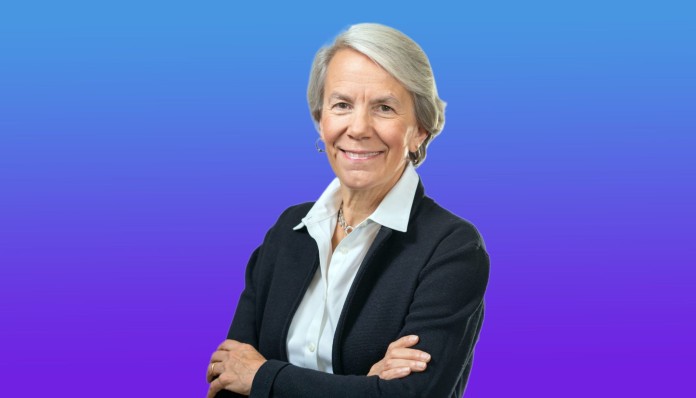
The Guest: Dr. Miriam Nelson is an international leader, scientist, author and social entrepreneur renowned for her extensive research, policy work, and civic action in public health, children’s wellness, sustainability, and food systems. In her current role as the President and CEO of the Newman’s Own Foundation, she is leading the Foundation’s new and more focused mission to nourish and transform the lives of children who face adversity.

In addition to authoring the bestselling Strong Women books, a series of ten including five New York Times bestsellers that provide evidence-based strategies to help woman live strong and healthy lives (more than one million copies in 14 languages), she has authored or co-authored more than 100 scientific studies, research papers, and policy reports, many of them introducing groundbreaking findings.

The Podcast: Livin’ Good Currency explores the relationship of time to our lives. It focuses on learning how super-successful people align their purpose with their passions to do good for themselves and others daily, and features a co-host who knows better than anyone the value of time (see below). How do you want to spend your life? This hour can inspire you, along with upcoming guests, to be sure you are ‘Livin’ Good Currency’ and never get caught running out of time.

The Hosts: Good News Network fans will know Tony (Anthony) Samadani as the co-owner of GNN and its Chief of Strategic Partnerships. Co-host Tobias Tubbs was handed a double life sentence without the possibility of parole for a crime he didn’t commit. Behind bars, he used his own version of the Livin’ Good Currency formula to inspire young men in prison to turn their hours into honors. An expert in conflict resolution, spirituality, and philosophy, Tobias is a master gardener who employs ex-felons to grow their Good Currency by planting crops and feeding neighborhoods.

Episode Resources:

Are you ready to start your health journey today? Go to viome.com/goodcurrency to get $50 off Viome’s Full Body Intelligence test or bundle, the most advanced at-home health test currently available to consumers. Use Promo Code: CURRENCY50

Join us and over 400,000 like-minded people who have already discovered the Viome difference. Get personalized and precise recommendations on how to optimize your health and help you function at peak performance.

Believe it or Not, Leprosy Offers the Potential to Regenerate Livers – Cutting Transplant Wait Times

Seven banded armadillo, a natural carrier of leprosy, by Warren Garst – CC 4.0

Leprosy has appeared in medical literature as far back as there has been medical literature, but its latest appearance doesn’t involve talk of a treatment or cure, but rather a unique ability the parasites that cause leprosy have to regenerate livers.

The findings suggest the possibility of adapting this natural process to renew aging livers and repair damaged ones to increase health span in humans and remove a significant number of those waiting on liver transplant lists.

Working with the US Department of Health and Human Services in Baton Rouge, Louisiana, a team from the Univ. of Edinburgh observed that the livers of 57 armadillos, a natural carrier of the leprosy parasite, were enlarged compared to uninfected ones, but healthy and without damage.

“If we can identify how bacteria grow the liver as a functional organ without causing adverse effects in living animals, we may be able to translate that knowledge to develop safer therapeutic interventions to rejuvenate aging livers and to regenerate damaged tissues,” said Professor Anura Rambukkana, lead author from University of Edinburgh’s Centre for Regenerative Medicine.

READ ALSO: Twin ‘Saved Sister’s Life’ in Womb by Sending Distress Signal Forcing Early Delivery That Uncovered Major Problem

Inside, the team found the infected livers demonstrated gene-expression similar to those of young livers or even fetal livers, suggesting that the “rejuvenated state” observed in the liver cells was due to their biological age being reversed.

Genes related to metabolism, growth and cell proliferation were activated and those linked with aging were down-regulated, or suppressed.

Scientists think this is because the bacteria reprogramed the liver cells, returning them to the earlier stage of progenitor cells, which in turn became new hepatocytes and grow new liver tissues.

RELATED: Manuka Honey Could Help to Clear Deadly Bacteria Which Cause Cystic Fibrosis

The team are hopeful that the discovery has the potential to help develop interventions for aging and damaged livers in humans. Liver diseases currently result in two million deaths a year worldwide.

This is not to be construed as a PSA to go find an armadillo to kiss if you have a liver disease.

SHARE This Bizarre Story With Your Friends… 

He’s Earned a CNN HERO Award for Transforming Lives on City Streets Where he Once Sold Drugs

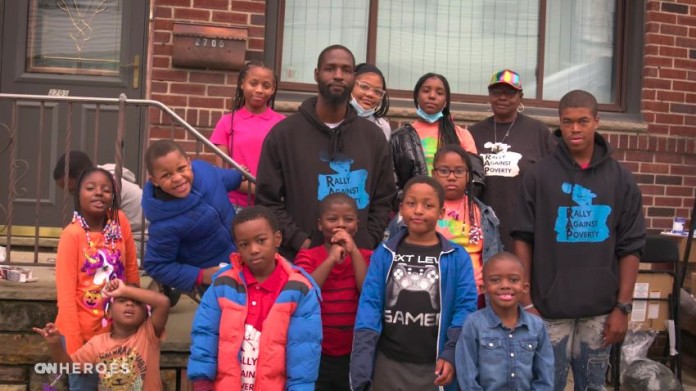
Tyrique Glasgow with kids - CNN Heroes.
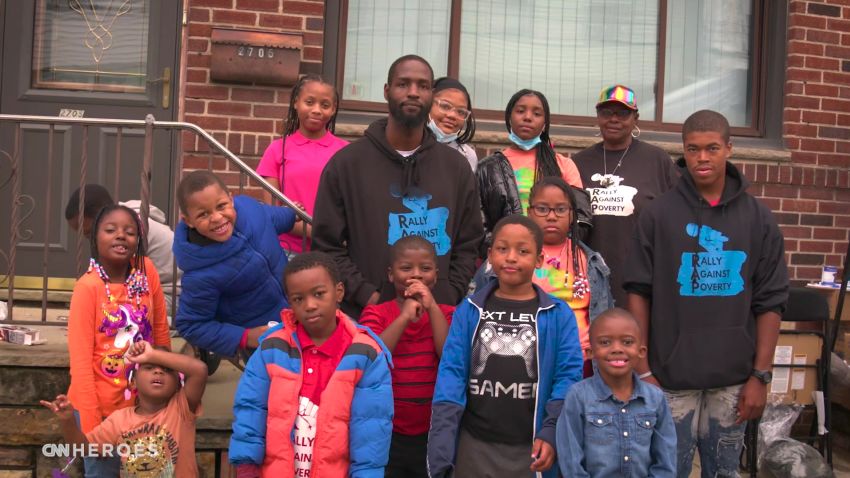
Tyrique Glasgow with kids – CNN Heroes.

If you walked into Tyrique’s community center on Taney Street in South Phillidelphia, you’d see a kind man devoting his working hours everyday to supporting the children of his neighborhood.

What you wouldn’t see is the long, hard, and tragic road Tyrique Glasgow took to arrive there, through a life of drug-dealing, crime, prison, and accumulating 11 gunshot wounds.

“When you run a block, like, you are the face. You’re the one who that community of people know. You set rules and boundaries,” Glasgow, now 39, told CNN. “It’s a dangerous life, but it’s a normal life.”

“I got tired of my community following me in a negative direction and I wanted them to follow me in a positive direction,” he said. “The kids really gave me a purpose.”

Today, Glasgow is up for a CNN Hero award. He runs the community center out of a building he used to use for drug-dealing, and which now gives children a safe place to enjoy summer camps, afterschool activities, or just play and get away from the violence and despair that has become all too common in the area.

He coaches a flag football team, a girl’s dance squad, and runs the Young Chances Foundation to create safe programing for urban youths and low resource families to grow and thrive. He recently renovated a vacant lot from an eyesore and known drug stash into a community vegetable garden.

WATCH: Master Violinist Performing for Inmates Receives Unexpectedly Enthusiastic Ovation (Watch)

His approach of activities and community roundtable engagements with police officers has had a radical effect on the well-being of his neighborhood, with shooting rates dramatically falling within the 17th police district, even while increasing elsewhere in the city.

Glasgow doesn’t stop at youth however, he also helps connect people with addiction therapy, rental assistance, GED classes, and mental health counseling.

RELATED: English Footballer Marcus Rashford Donates Millions For Child Poverty, Becomes Youngest-Ever to Top ‘Giving List’

“It helps reduce poverty, stress, trauma, and when your quality of life is up, the crime goes down,” said Glasgow. “I try to bring people to the table to take them off the menu. They accept me because I don’t point the finger at them. I look at them and see me. I’m one of them.”

HAIL The Hero By Sharing the Inspiring Story on Social Media…

‘Turning Back the Tide of Extinction’ Australian Mammals Are Coming Back: Bandicoots, Bilbies, Potoroos

Gilbert's potoroo released at Two Peoples Bay – DBCA
Gilbert’s potoroo released at Two Peoples Bay – DBCA

For all those roo-ting for Australian wildlife, there are reasons to jump for joy as several endangered marsupials begin the road to recovery in their native habitats.

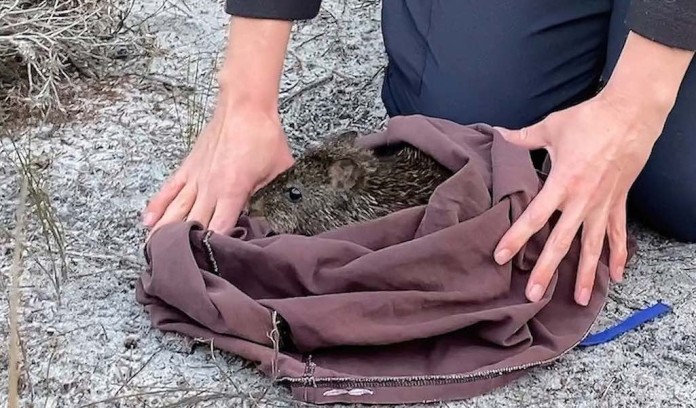
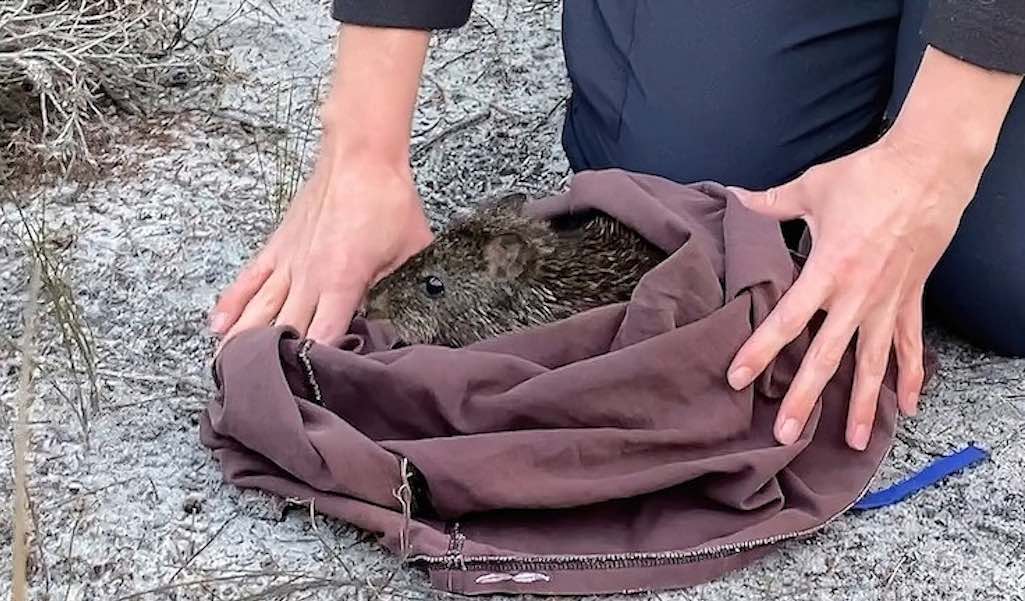
Starting with the world’s most-endangered marsupial, 4 male and 2 female Gilbert’s potoroos were released into the great southern region of the state of Western Australia.

After being threatened with extinction from a bushfire that reduced their numbers to 100, an insurance population was established on Bald Island, and a specially fenced-off area within Waychinicup National Park.

From these populations come the six pioneers that will hopefully lead to a rapid recovery in Two Peoples Bay, on the slopes of Mount Gardner, Western Australia.

The potoroos were fitted with GPS trackers and radio transmitters.

“We’ll be able to find out where they move, where they feed, and where they sleep,” said Potoroo researcher Tony Friend. “It’s important as we hope to learn if the potoroos can use the area that was burnt in 2015 … the vegetation is not as thick.”

MORE AUSTRALIA NEWS: A Baby Boom For Cutest Animal Not Seen in Australia for Decades: ‘Feels Like a Modern Jurassic Park’

Australia’s small marsupials can breed fast if food is plentiful and they are not over-hunted by feral cats and invasive foxes, something that conservationists in New South Wales, working with the golden banicoot are seeing.

These smaller marsupials have been locally-extirpated from the far north-west for over 100 years. Now, after being reintroduced earlier this year in May, they are breeding at exceedlingly-fast rates within Sturt National Park.

Golden bandicoot by Amareta Kelly – CC 2.0

Their gestation period is mere weeks, and their young are protected in their mother’s pouch until they’re old enough to move freely.

The reintroduction was handled by Wild Deserts, a project from the Univ. of New South Wales that reintroduced bilbies—another marsupial extinct locally for over 100 years—back to Sturt in 2020.

Indeed the AUD$40 million program has saved and expanded 7 other species beyond the golden bandicoot and bilbies, and NSW Environment Minister James Griffin said it’s not only leading Australia “but the world,” as well.

SIMILAR: Destroyed by Fire, Drought, and Dust Storms, These Australian Marshes Needed Only Two Years to Completely Recover

“We’re turning back that tide of extinction,” said Atticus Fleming, NSW Acting Coordinator General, “We’re bringing back bandicoots, bilbies, numbats…”

A recent trapping campaign to count how many golden bandicoot joeys were among the breeding females showed “absolutely flourishing popluations.”

Wild Deserts project coordinator Reece Pedler said the project has more species on the list, and are working through the approvals on what animals to reintroduce next year.

WATCH the golden bandicoot release from May…

SHARE All These Tiny Mammals’ Returns To Wild Australia On Social Media…

Historians Stunned: Uzbekistan Nomads Supplied a Third of the Bronze Used Across Ancient Mediterranean

Uluburun shipwreck by Markus Studer – CC 2.0

Cutting edge analysis of tin isotopes has shown that tiny tribes of pastoral nomads from modern-day Uzbekistan supplied a third of all the precious tin needed to make the bronze which fueled Ancient Mediterranean commerce.

Getting the tin from Uzbekistan to the Med involved a vast multi-regional, multi-vector trade network that bears comparison with our own time—3,500 years after it was developed.

In the year 1,320 BCE, a ship left port at modern-day Haifa loaded with copper and tin—the two metals needed to make bronze—the hi tech of the era. The ship was wrecked in a storm, and when discovered in 1982, became the world’s largest Bronze Age collection of raw metals ever found, and a brilliantly-preserved, international treasure of marine archeology.

Called the “Uluburun shipwreck” the new research showed that while two-thirds of the tin onboard was mined in the Taurus Mountains within the vast empire of the Hittites, in modern day Turkey, one-third came from mines thousands of miles away in Uzbekistan, a land believed to be inhabited by monsters and tribes of barbarians called “the horde from who-knows-where.”

“To put it into perspective, this would be the trade equivalent of the entire United States sourcing its energy needs from small backyard oil rigs in central Kansas,” said Michael Frachetti, professor of archeology at Washington University St. Louis, and lead author of the study that utilized the new tin isotope data. 

The terrain between Mušiston mine in Uzbekistan passes through Iran and Mesopotamia, and would have featured a mixture of rugged ground and mountains, no doubt filled with potential bandits, which would have made it extremely difficult to pass tons of heavy metal.

“It appears these local miners had access to vast international networks and, through overland trade and other forms of connectivity, were able to pass this all-important commodity all the way to the Mediterranean,” Frachetti said.

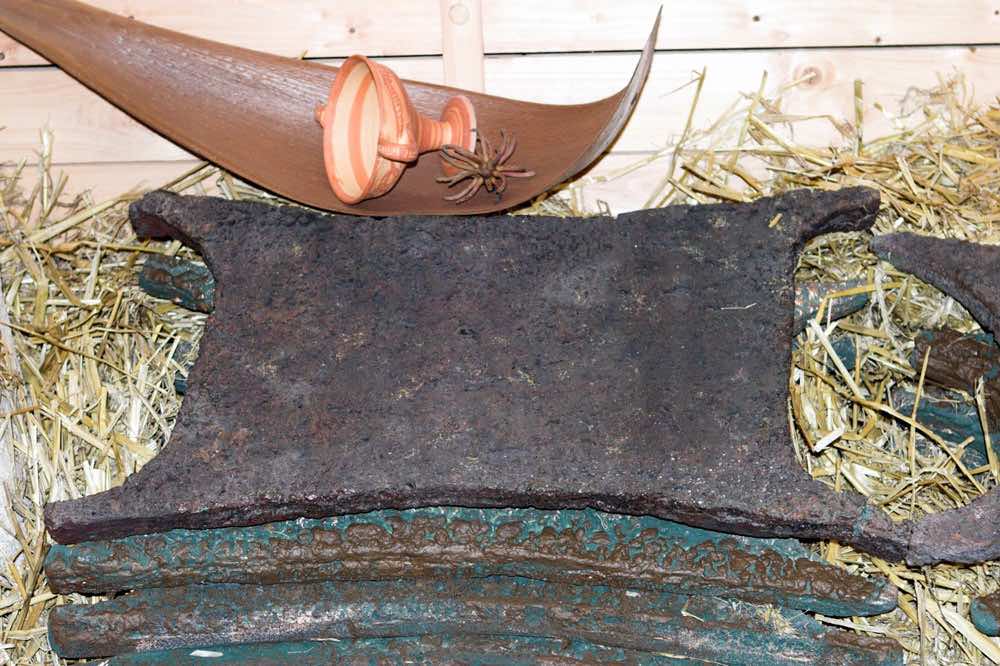
Uluburun copper ingots, the same shape that the tin would be been hammered into, by Martin Bahmann – CC 2.0

Adding to the mystique is the fact that these small-scale local communities of free laborers were able to negotiate within a vast, disparate network that relied as much on the participation of communities like them as on supposedly hegemonic institutions of large, centralized states. It relied on inter-lingual, inter-cultural, and inter-geographic exchange, and really brings ancient commerce alive with all the complexities of our modern times.

Copper was commonly found all over the Ancient Near East, but tin was much rarer, and the loss of the ship would have devastated the respective merchant(s) business. Had it not been lost to sea, that metal would have been enough to outfit a force of almost 5,000 Bronze Age soldiers with swords.

SIMILAR: Ancient 3,000 Year-old Canoe Discovered Beneath Wisconsin Lake Carved From Single Piece of Oak

Today, rare commodities and trade disruptions are common topics—from chip and natural gas shortages to disruptions in the grain supply. These are conversations that Scythian barbarians, who practiced polyamory and drank liquor from the skulls of their defeated enemies, could have just as easily had with Hittite tin brokers on the shores of the Mediterranean, as with floor-traders on Wall Street.

“With the disruptions due to COVID-19 and the war in Ukraine, we have become aware of how we are reliant on complex supply chains to maintain our economy, military and standard of living,” Wayne Powell, professor of earth and environmental sciences at Brooklyn College and a lead author on the study.

RELATED: Stunning Ancient Artwork Found at Site Sacked by ISIS: Assyrian Depictions Not Seen For 2,600 Years–LOOK

“This is true in prehistory as well. Kingdoms rose and fell, climatic conditions shifted and new peoples migrated across Eurasia, potentially disrupting or redistributing access to tin, which was essential for both weapons and agricultural tools.”

SHARE This Big Discovery With Your Archeologically-Inclined Friends...

“All possible feelings do not yet exist. There are still those that lie beyond our capacity and imagination.” – Nicole Krauss

Credit: Julian Hochgesang

Quote of the Day: “All possible feelings do not yet exist. There are still those that lie beyond our capacity and imagination.” – Nicole Krauss

Photo: Julian Hochgesang (cropped)

With a new inspirational quote every day, atop the perfect photo—collected and archived on our Quotes page—why not bookmark GNN.org for a daily uplift?

Half of People Say Holiday Season Should Last Longer–With 74% Saying Holiday Prepping Puts Them in a Good Mood

Casey Chae
Casey Chae

Half of Americans said there’s not enough time in the holiday season to do everything they want to do, according to a new poll—but it all puts them in a good mood.

The survey asked 2,000 adults about how they spend time during the holiday season and found that 52% try to fit in as many festive activities as possible.

This may be why half of Americans wish the holiday season lasted longer than it actually does (54%). While most of these respondents said up to two more weeks would suffice (59%), four in ten wouldn’t mind if the holidays went on even longer.

Conducted by OnePoll on behalf of Dutch Bros coffee, 74% of those surveyed reported that prepping for the holiday season puts them in a good mood—with a third claiming that they are the most festive person they know.

Some respondents shared their unique holiday traditions, such as wearing costumes on Christmas morning, hiding a pickle ornament on the tree (and whoever finds it gets a special extra gift), and putting a candle in a scoop of ice cream (and whoever’s candle burns the longest opens the first present.)

One respondent said their family eats pizza on Christmas Eve. Another has a group of friends that get together to create a holiday craft that they use as a gift for someone less fortunate.

POPULAR: Christmas is Coming… on a Vintage Train Wrapped in Neon Lights and Steam – WATCH

But even with those unique traditions, the results found that Americans haven’t abandoned the classics like eating/drinking their favorite holiday treats (72%), watching classic holiday movies (65%), decorating the home (61%), or baking for loved ones (53%).

On average, people invest about 30 hours of work into holiday chores like planning or wrapping presents.

From last-minute shopping to wrapping presents, the holidays can be a lot to keep up with, leaving 40% struggling to keep themselves energized during the season.

RELATED: Ralphie’s House From ‘A Christmas Story’ is Up for Sale

Whether you love the bustle of the busy holiday season or not, let your holiday season be a time to enjoy yourself and appreciate the festive surroundings.

Twin ‘Saved Sister’s Life’ in Womb by Sending Distress Signal Forcing Early Delivery That Uncovered Major Problem

Winnie & Poppy McBride - SWNS
Winnie (L) and Poppy (R) – SWNS

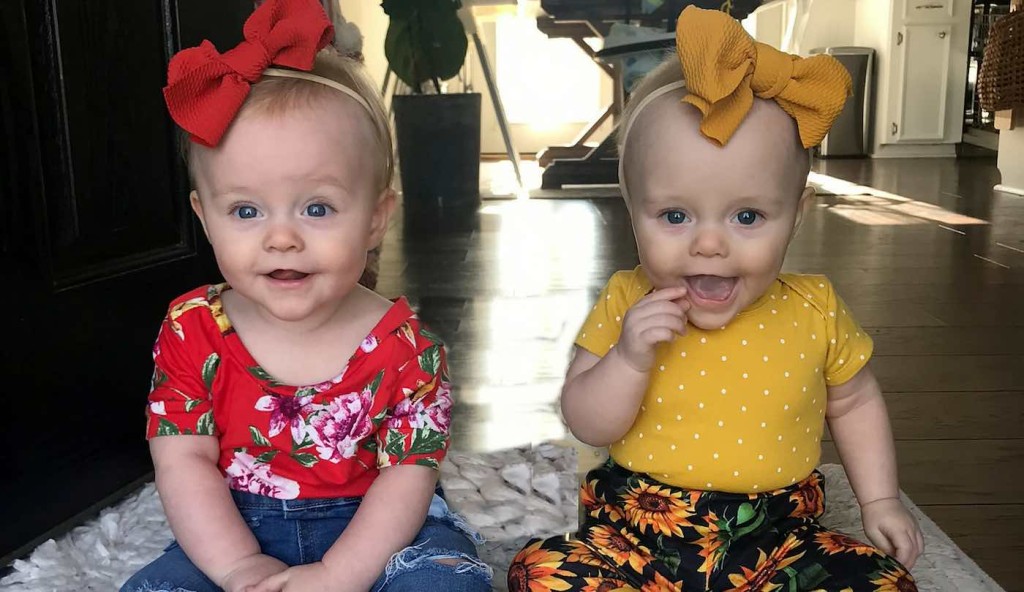
A twin saved her sister’s life while still in the womb, by sending out distress signals prompting doctors to deliver them early—which turned out to be critical for the other twin’s survival.

Preemie Poppy McBride’s heart rate began to waver on the monitor at 31 weeks and five days into the pregnancy, which doctors say forced them to deliver her and her twin, Winnie.

Despite being the smaller of the twins—at 1lb 11oz—Poppy was perfectly healthy, and nothing was wrong with her heart.

Doctors had never been concerned about her sister, Winnie—who weighed more than three times that of Poppy. But, at 3lbs 8oz, she emerged with underdeveloped lungs and was whisked into the intensive care unit.

The mother, Leah McBride, says she was told by doctors that Poppy saved her sister’s life and if they had waited any longer to deliver the twins, Winnie would not have made it.

She still had to have surgery at 14 days old to relieve a build-up of fluid on her brain, but has since recovered fully.

“Our doctors told us, ‘I think your tiny twin saved her sister’s life,’” said the stay-at-home mom from Lake Jackson, Texas. “Poppy’s heart rate had been all over the place, so they had to deliver, but when she was born, she was completely fine.”

POPULARPremature Baby Born So Small She Was Kept Alive in a Sandwich Bag Has Defied the Odds to Start School

Winnie & Poppy McBride – SWNS

“They think she was sending out distress signals because she knew her sister wouldn’t survive if they weren’t delivered then.

“Even now Poppy takes care of Winnie, though she is still much smaller,” said the 28-year-old mom.

“Doctors said she was feisty, but she was smaller than a little elf on the shelf.”

Now both twins have nothing wrong with them, and they’re the best of friends and thriving.

“They are as smart as can be,” Leah said. “Winnie is smarter than average. She can read books from memory at three.”

LOOK: Miracle Preemie Baby Born the Size of an iPhone Came Home For Christmas After a Year of Fears That He May Not Survive

Winnie & Poppy McBride – SWNS

“I tried to move their beds apart recently and they weren’t having it. They are so close.”

SHARE the Hope With Preemie Families on Social Media…

World’s Oldest Pen Pals Turn 100, After 84 Years of Transatlantic Letters–And Now They’re Meeting on Zoom

Pen pals Geoff Banks and Celesta Byrne – via SWNS

The world’s oldest pen pals have both turned 100 years old, and are celebrating 80 years of letters sent across the pond.

Geoff Banks from Devon, England, and American Celesta Byrne from New Jersey started writing to each other in 1938, when they were just 16-years-old.

They were paired by an educational project that sought to connect British and American students—and 84 years later are still corresponding.

“Somehow I ended up with this letter from an American girl, and we just kept writing ever since,” Geoff told SWNS news.

Former engineer Geoff even kept in touch during World War II, while he was serving as a mechanic on the British aircraft carrier HMS Illustrious in the Pacific.

“There were a couple of years where we struggled to keep in touch because of the war,” he explained, saying that some of his letters sent during the war were finally forwarded to her after it ended.

They began using email a while back, to give Geoff a break from putting pen to paper, which became difficult—and recently they had their first Zoom call

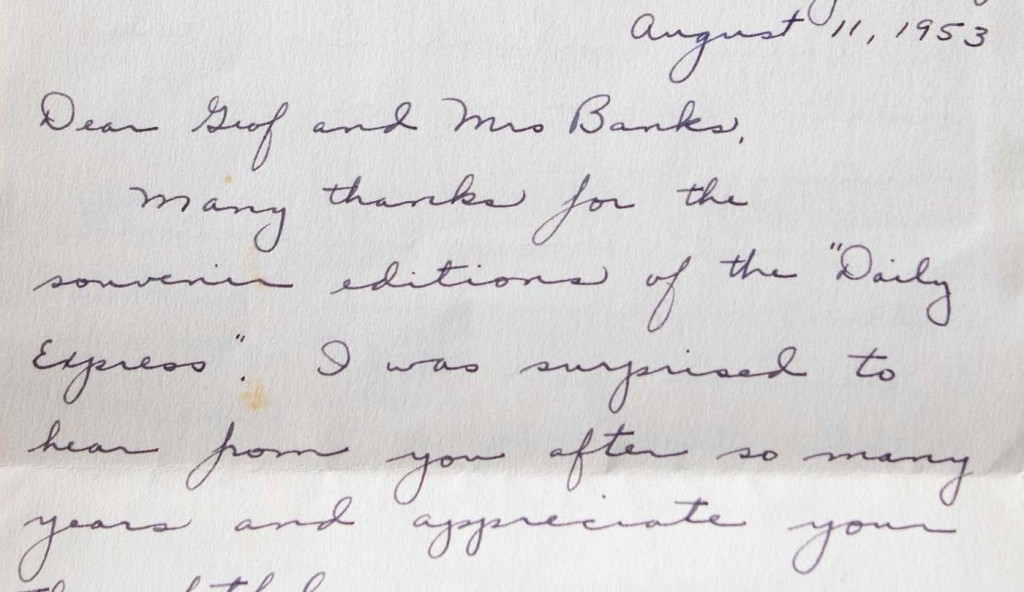
“In one of my early letters I sent her a copy of a British paper in 1953 which had Queen Elizabeth II’s coronation on the front of it. But we generally just chat about daily lives and our families—and put the world to rights, you know.”

A letter Geoff Banks received from his pen pal Celesta Byrne, dated 1953 – SWNS

“She’s a very interesting person. She’s always been there to write to, even if it was just birthday cards and Christmas cards.”

Despite having chatted for decades (6 years longer than the current Guinness World record pen pal relationship of 78 years), the centenarian pair only met for the first time in 2002—when Geoff visited New York City at 80-years-old for Christmas. They also met for a second time two years later, when Celesta invited the traveler to her New Jersey home for lunch.

RELATED: Pen Pals Finally Embrace With Tears After Writing For 38 Years (WATCH)

Despite having such a unique relationship, the pair never became romantic, even after Geoff’s wife passed eleven years ago.

Celesta confirmed the claim, saying, “No, we’re just friends, like people who live next door.”

Nowadays, Geoff relies on young people to assist him in setting up a chat with her, using “this new thing called Zoom”.

Celesta does the same from her new residence in Texas, where she moved to be close to family.

POPULAR: Heartwarming Annual Pen-pal Relationship With Santa Began When She Got a Gift From Him at Burning Man

“It’s nice to hear his voice,” she said.

SEND This Story of Friendship to Your (Pen) Pals on Social Media…

Teen Lifts a Truck to Free His Trapped Father: ‘My Son is My Hero’ (WATCH)

A 15-year-old is being hailed as a hero after lifting a truck that had fallen on his father’s chest.

The brakes on the truck that Matthew Wilkinson uses for work needed immediate repair last Monday and, fortunately, his son had come out to the garage and agreed to help his dad.

As Mr. Wilkinson tried to take off the rotor, he found it was stuck and needed a better angle for leverage, so he slid his body underneath the truck

“The second it popped off, the truck fell,” he told KCRA news. “All I could think about was the breath coming out of me. I was just squished. I couldn’t talk. I couldn’t yell.”

Dalin Wilkinson, a freshman in high school, told the news team it was “crazy” scary.

“I heard him make a noise like his soul was leaving his body.”

Dalin tried as hard as he could to lift it just enough to get him out—and the adrenaline of the moment helped him succeed.

While the Oakdale, California dad was in the hospital being treated for a punctured lung and broken ribs, he couldn’t figure out how he was able to get free—until he later checked the surveillance camera.

POPULAR: Utah Man Jumps Into Icy River to Save Woman Attempting Suicide at the Same Spot Where he First Dated His Wife

The family’s home security system captured the moment Dalin had lifted the truck enough for his father to roll out.

“My son is my hero. He saved my life.”

Watch the scene in the KCRA news report below…

LIFT The Burden of Negative News By Sharing This Hero on Social Media…

When asked how he stayed so young, a 90-year-old William Shatner answered, “I’m into the bewilderment of the world.” 

Quote of the Day: When asked how he stayed so young, a 90-year-old William Shatner answered, “I’m into the bewilderment of the world.”

Photo: Sigmund

With a new inspirational quote every day, atop the perfect photo—collected and archived on our Quotes page—why not bookmark GNN.org for a daily uplift?

Tortoise Celebrates its 190th Birthday as the World’s Oldest Land Animal

St. Helena Tourism
St. Helena Tourism

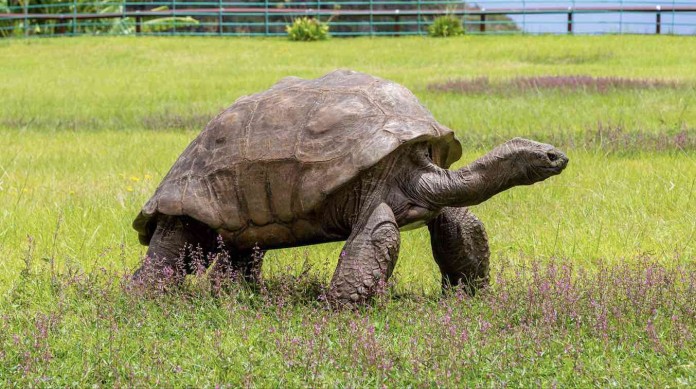
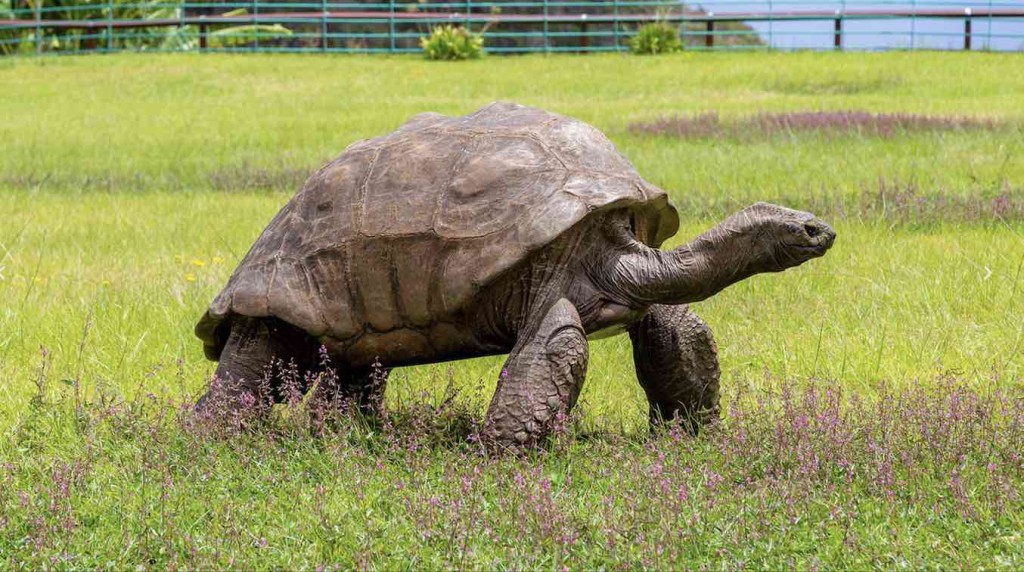
A tortoise which is the world’s oldest living land animal is celebrating its 190th birthday.

Jonathan was born nearly two centuries ago, in the early 1800s, which makes him not only the oldest tortoise ever recorded, but the oldest living land animal.

For 140 years, he has resided on the remote island of St. Helena situated in the midst of the South Atlantic Ocean, a 6-hour flight west from Johannesburg, South Africa.

Shell measurements taken upon his arrival to the island show that he was at least 50 years old at that time, and it is likely that he is even older.

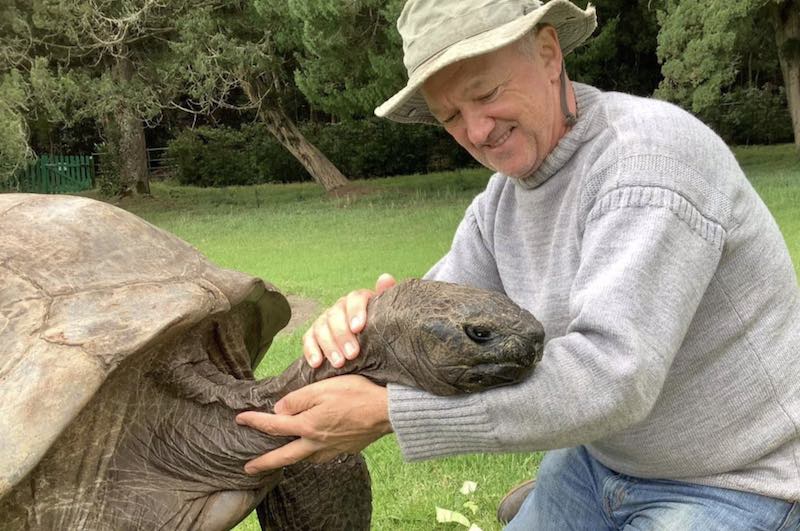
Joe Hollins cared for the giant turtle during his decades as St. Helena’s resident veterinarian, and still does so now during his retirement.

“When you think, if he was hatched in 1832—the Georgian era—my goodness, the changes in the world.

“The World Wars, the rise and fall of the British Empire, the many governors, kings, and queens that have passed, it’s quite extraordinary. And he’s just been here, enjoying himself.

POPULAR: Cat Walks Across France to Their Old Home Before Being Reunited With ‘Stunned’ Owners 13 Months Later

“I do think he’s fabulous, actually. He’s a great animal. And as a vet, what greater privilege is there than to be looking after the oldest known living land animal in the world?

Joe Hollins with Jonathan – St Helena Tourism

“I mean, how often does that happen—to be able to care for this magnificent animal?”

As a much loved member of his island community, and the most permanent resident, locals have thrown the lucky tortoise a three-day birthday party, where he can feast on all his favorite veggies throughout.”

Beginning on Friday, December 2, a range of posters celebrating Jonathan’s life, with pictures and messages from those who have visited him over the years, will be put on display at the grounds of his home, Plantation House.

RELATED: 100-Year-Old Galápagos Giant Tortoise Found on Fernandina Island is Indeed Member of ‘Extinct’ Species

Today, a series of activities honoring Jonathan’s big day are planned, including a big veggie feast that will be live streamed across the world on from Plantation House on St. Helena Tourism’s Facebook page.

To conclude the three-day festivities, Jonathan’s birthday will be celebrated at an open-air market at Plantation House on Sunday, with an animated video and song about Jonathon’s life will premiere.

Finally, Jonathan will be given his ‘birthday cake’, crafted entirely out of his favorite healthy foods—and to remember the occasion, a special stamp will be issued for sale.

LOOK: This Tortoise Accidentally Saved a Bunny’s Life – and Now They’re Best Buds

WATCH the celebration video from St. Helena Tourism…

SEND BEST Wishes to Jonathan by Sharing the Party on Social Media…

Artwork That Can Exist Only in Space Delights Everyone Aboard the International Space Station–LOOK

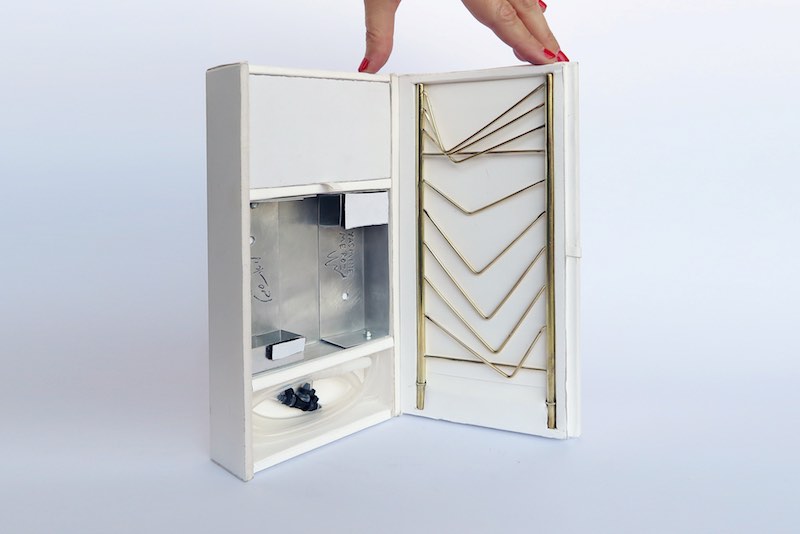
Liat Segal and Dr. Yasmine Meroz's artwork, Impossible Object - via SWNS
Liat Segal and Dr. Yasmine Meroz’s artwork, Impossible Object – via SWNS

Artwork that can exist only in outer space came to life aboard the International Space Station after it was delivered by the first ever private mission to arrive there.

A doctor of physics worked with an artist to devise the work ‘Impossible Object’, but they would not see the results until the AX-1 mission reached the space hub.

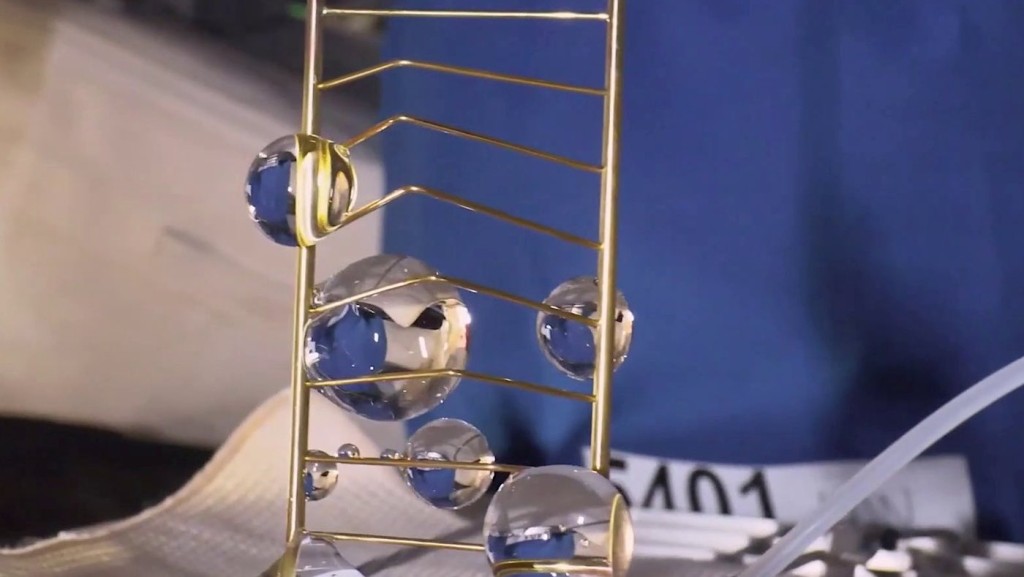
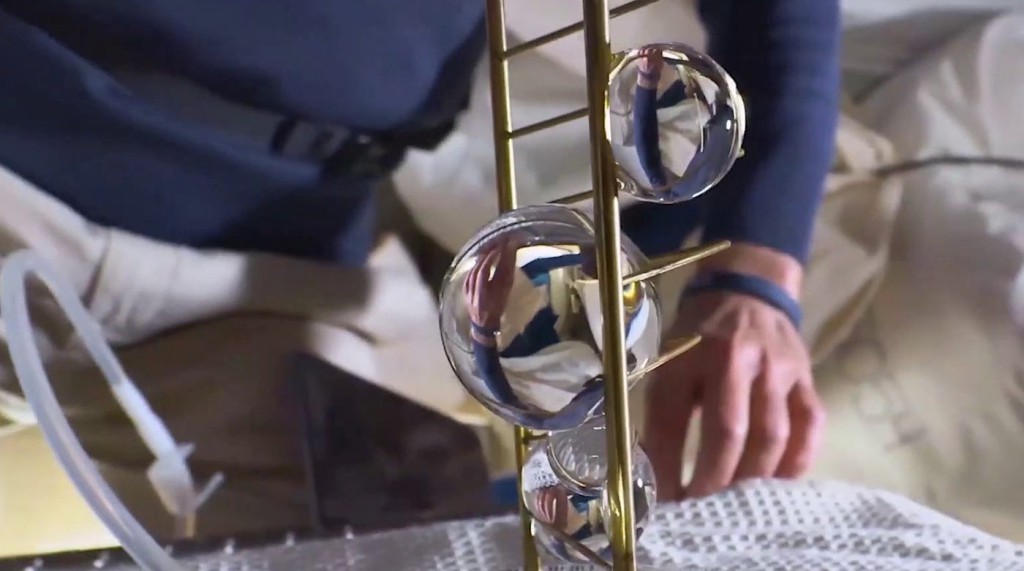
The sculpture is created by liquid water traveling upon a tapestry of brass rods and tubes—but only when there is an absence of gravity.

Without any gravity to direct the water downward, it sticks to the ladder-like metallic structure, and makes bubbles of varying size—whereas, on Earth, the water simply dribbles away.

Its creators say the structure “questions shape and form”.

“In the absence of gravitation, what is the shape of a piece of sea or a handful of a wave?” says Liat Segal, the artist involved in developing the statue.

The movement of the liquid in zero gravity surprised even its creators, who thought the water might wrap itself around the structure. They also speculated that the water’s shape would be wavy, like the ladder.

The two women suggested that their artwork taps into our passion for unveiling the unknown.

“It doesn’t have any up and down because that is the way it is in space.”

LOOK: Artist’s Painting is the First to Be Curated on the Moon: ‘It Will Last Forever’

The physicist, Dr. Yasmin Maroz of Tel Aviv University, was intrigued to create a shape that couldn’t be predicted.

Artwork unveiled on the ISS – SWNS

“I think that one of the really cool things about this project is that the medium here is basically the physics of water. When we wanted to try and plan and develop our sculpture, we really had to understand what are the underlying forces.

“It was odd because we kind of stepped back and wow, we are trying to imagine how this is going to look in space.”

The sculpture which is folded and packed within a compact white box was taken to the ISS station by astronaut Eytan Stibbe, who simply had to unfold it and activate it with water. (Watch the results below…)

LOOK: Danish Artist Hides Enormous Trolls in Forests Around the World Using Recycled Wood

The Impossible Object – the Rakia Mission

“When I saw it for the first time I had tears in my eyes because I was so excited for the opportunity that we had. The results, I think, were spectacular.

“Part of what was so spectacular about it was that it wasn’t what we expected, and it was beautiful.

“The sculpture has this kind of jewel-y quality to it, it is very polished and clean and on a white pedestal as if you just took it out of an art gallery.”

RELATED: Plants Have Been Grown in Lunar Soil For The First Time Ever

Ms. Segal and Dr. Meroz first met when they were studying for their masters degrees at Tel Aviv University, but their paths diverged when Meroz decided to become a physicist and Segal pursued fine art.

Years later they were recruited by the Rakia Mission that seeks to launch art in space, and they see their collaboration as the ‘fairy dust’ that sparks ideas in both fields.

Watch the unveiling of ‘Impossible Object’ in space…

LAUNCH This Bubbly Joy to Artists and Physicists by Sharing on Social Media…

Childhood Best Friends Who Lost Touch Reunited 60 Years Later–in a Senior Care Home

Irene Gresty and Janet Henderson – SWNS

Two childhood best friends who were ‘joined at the hip’ as kids were reunited over a half-century later—when they least expected it.

Irene Gresty and Janet Henderson were neighbors in the 1940s, growing up in Linlithgow, West Lothian, England, but, like so many friendships, they lost touch over the years.

Irene got married and moved away with her husband who was in the Navy and got shipped around to places like Singapore.

She wanted to retire closer to her family, so she moved back—and had been living for three years very close to Janet without knowing it.

Now 80-years-old, the pair ran into each other at an event organized at the Bield senior home, and Irene said her heart skipped a beat when she saw her long-lost pal.

“We knew immediately who each other were.

“We sat down beside each other and she turned to me and said, ‘Is that you Irene?’ and I just laughed and said, ‘Yes Janet’!

“She said her mind was made up that it was me—and I’m very glad she said something as the last time we seen each other was a long time ago.

“I can’t believe my luck that it happened, I was delighted to have seen her again.”

POPULAR: Holocaust Survivors Reunite in Florida After a Labor Camp Friendship was Broken 80 Years Ago

The two women vowed to never let it go that long again without seeing each other and spent all afternoon catching up.

“We have many fond memories of sticking up for each other and playing in the park.”

“I hadn’t thought anything of it when someone told me Irene Gresty had moved back to the area as I didn’t recognize her married name,” Janet recalled. “So when I saw her at the event it was pretty surreal.

SWNS

“We exchanged numbers so I’m really looking forward to meeting up in the future, we have many years to catch up on.”

CHECK OUT: Heartwarming Annual Pen-pal Relationship With Santa Began When She Got a Gift From Him at Burning Man

Tracey Howatt, Director of Customer Experience at Bield, said: “We often have friends reuniting after not seeing each other for a long period of time, but I don’t think we have ever had anything like this before.

“It’s lovely for the two ladies to reunite and it just shows, you never know when you’ll bump into an old friend again.”

SHARE the Good Fortune With Old Friends on Social Media…

Your Inspired Weekly Horoscope From Rob Brezsny: A ‘Free Will Astrology’

Our partner Rob Brezsny provides his weekly wisdom to enlighten our thinking and motivate our mood. Rob’s Free Will Astrology, is a syndicated weekly column appearing in over a hundred publications. He is also the author of Pronoia Is the Antidote for Paranoia: How All of Creation Is Conspiring To Shower You with Blessings. (A free preview of the book is available here.)

Here is your weekly horoscope…

FREE WILL ASTROLOGY – Week of December 3, 2022
Copyright by Rob Brezsny, FreeWillAstrology.com

SAGITTARIUS (Nov. 22-Dec. 21):
Sagittarian comedian Margaret Cho dealt with floods of ignorant criticism while growing up. She testifies, “Being called ugly and fat from the time I could barely understand what the words meant has scarred me so deep inside that I have learned to hunt, stalk, claim, own, and defend my own loveliness.” You may not have ever experienced such extreme forms of disapproval, Sagittarius, but—like all of us—you have on some occasions been berated or undervalued simply for being who you are. The good news is that the coming months will be a favorable time to do what Cho has done: hunt, stalk, claim, own, and defend your own loveliness. It’s time to intensify your efforts in this noble project.

CAPRICORN (Dec. 22-Jan. 19):
The bad news: In 1998, Shon Hopwood was sentenced to 12 years in prison for committing bank robberies. The good news: While incarcerated, he studied law and helped a number of his fellow prisoners win their legal cases—including one heard by the US Supreme Court. After his release, he became a full-fledged lawyer, and is now a professor of law at Georgetown University. Your current trouble isn’t anywhere as severe as Hopwood’s was, Capricorn, but I expect your current kerfuffle could motivate you to accomplish a very fine redemption.

AQUARIUS (Jan. 20-Feb. 18):
“I stopped going to therapy because I knew my therapist was right, and I wanted to keep being wrong,” writes poet Clementine von Radics. “I wanted to keep my bad habits like charms on a bracelet. I did not want to be brave.” Dear Aquarius, I hope you will do the opposite of her in the coming weeks. You are, I suspect, very near to a major healing. You’re on the verge of at least partially fixing a problem that has plagued you for a while. So please keep calling on whatever help you’ve been receiving. Maybe ask for even more support and inspiration from the influences that have been contributing to your slow, steady progress.

PISCES (Feb. 19-March 20):
As you have roused your personal power to defeat your fears in the past, what methods and approaches have worked best for you? Are there brave people who have inspired you? Are there stories and symbols that have taught you useful tricks? I urge you to survey all you have learned about the art of summoning extra courage. In the coming weeks, you will be glad you have this information to draw on. I don’t mean to imply that your challenges will be scarier or more daunting than usual. My point is that you will have unprecedented opportunities to create vigorous new trends in your life if you are as bold and audacious as you can be.

ARIES (March 21-April 19):
Journalist Hadley Freeman interviewed Aries actor William Shatner when he was 90. She was surprised to find that the man who played Star Trek’s Captain Kirk looked 30 years younger than his actual age. “How do you account for your robustness?” she asked him. “I ride a lot of horses, and I’m into the bewilderment of the world,” said Shatner. “I open my heart and head into the curiosity of how things work.” I suggest you adopt Shatner’s approach in the coming weeks, Aries. Be intoxicated with the emotional richness of mysteries and perplexities. Feel the joy of how unknowable and unpredictable everything is. Bask in the blessings of the beautiful and bountiful questions that life sends your way.

TAURUS (April 20-May 20):
Of all the objects on earth, which is most likely to be carelessly cast away and turned into litter? Cigarette butts, of course. That’s why an Indian entrepreneur named Naman Guota is such a revolutionary. Thus far, he has recycled and transformed over 300 million butts into mosquito repellant, toys, keyrings, and compost, which he and his company have sold for over a million dollars. I predict that in the coming weeks, you will have a comparable genius for converting debris and scraps into useful, valuable stuff. You will be skilled at recycling dross. Meditate on how you might accomplish this metaphorically and psychologically.

GEMINI (May 21-June 20):
Tips on how to be the best Gemini you can be in the coming weeks: 1. Think laterally or in spirals rather than straight lines. 2. Gleefully solve problems in your daydreams. 3. Try not to hurt anyone accidentally. Maybe go overboard in being sensitive and kind. 4. Cultivate even more variety than usual in the influences you surround yourself with. 5. Speak the diplomatic truth to people who truly need to hear it. 6. Make creative use of your mostly hidden side. 7. Never let people figure you out completely.

CANCER (June 21-July 22):
In my dream, I gathered with my five favorite astrologers to ruminate on your immediate future. After much discussion, we decided the following advice would be helpful for you in December. 1. Make the most useful and inspirational errors you’ve dared in a long time. 2. Try experiments that teach you interesting lessons even if they aren’t completely successful. 3. Identify and honor the blessings in every mess.

LEO (July 23-Aug. 22):
“All possible feelings do not yet exist,” writes Leo novelist Nicole Krauss in her book The History of Love. “There are still those that lie beyond our capacity and our imagination. From time to time, when a piece of music no one has ever written, or something else impossible to predict, fathom, or yet describe takes place, a new feeling enters the world. And then, for the millionth time in the history of feeling, the heart surges and absorbs the impact.” I suspect that some of these novel moods will soon be welling up in you, Leo. I’m confident your heart will absorb the influx with intelligence and fascination.

VIRGO (Aug. 23-Sept. 22):
Virgo author Jeanette Winterson writes, “I have always tried to make a home for myself, but I have not felt at home in myself. I have worked hard at being the hero of my own life, but every time I checked the register of displaced persons, I was still on it. I didn’t know how to belong. Longing? Yes. Belonging? No.” Let’s unpack Winterson’s complex testimony as it relates to you right now. I think you are closer than ever before to feeling at home in yourself—maybe not perfectly so, but more than in the past. I also suspect you have a greater-than-usual capacity for belonging. That’s why I invite you to be clear about what or whom you want to belong to and what your belonging will feel like. One more thing: You now have extraordinary power to learn more about what it means to be the hero of your own life.

LIBRA (Sept. 23-Oct. 22):
It’s tempting for you to entertain balanced views about every subject. You might prefer to never come to definitive conclusions about anything, because it’s so much fun basking in the pretty glow of prismatic ambiguity. You LOVE there being five sides to every story. I’m not here to scold you about this predilection. As a person with three Libran planets in my chart, I understand the appeal of considering all options. But I will advise you to take a brief break from this tendency. If you avoid making decisions in the coming weeks, they will be made for you by others. I don’t recommend that. Be proactive.

SCORPIO (Oct. 23-Nov. 21):
Scorpio poet David Whyte makes the surprising statement that “anger is the deepest form of compassion.” What does he mean? As long as it doesn’t result in violence, he says, “anger is the purest form of care. The internal living flame of anger always illuminates what we belong to, what we wish to protect, and what we are willing to hazard ourselves for.” Invoking Whyte’s definition, I will urge you to savor your anger in the coming days. I will invite you to honor and celebrate your anger, and use it to guide your constructive efforts to fix some problem or ease some hurt.

WANT MORE? Listen to Rob’s EXPANDED AUDIO HOROSCOPES, 4-5 minute meditations on the current state of your destiny — or subscribe to his unique daily text message service at: RealAstrology.com

(Zodiac images by Numerologysign.com, CC license)

SHARE The Wisdom With Friends Who Are Stars in Your Life on Social Media…

“Peace of mind for five minutes, that’s what I crave.” – Alanis Morissette

Raimond Klavins - Unsplash

Quote of the Day: “Peace of mind for five minutes, that’s what I crave.” – Alanis Morissette

Photo: Raimond Klavins

With a new inspirational quote every day, atop the perfect photo—collected and archived on our Quotes page—why not bookmark GNN.org for a daily uplift?

A Fruit So Sweet, Yet Grown Indoors: Will the Japanese Cultivar Become This Tesla of Strawberries?

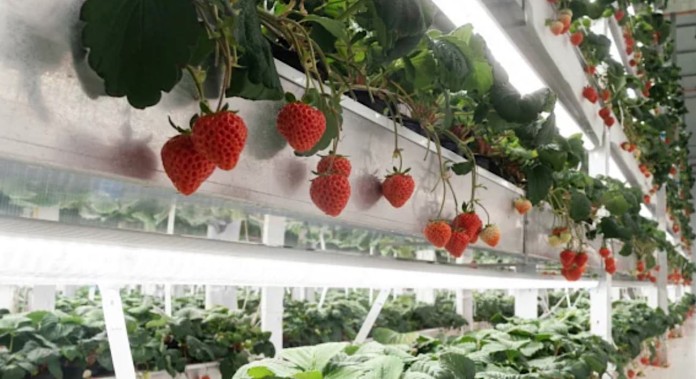
Photo by Oishii
Photo by Oishii

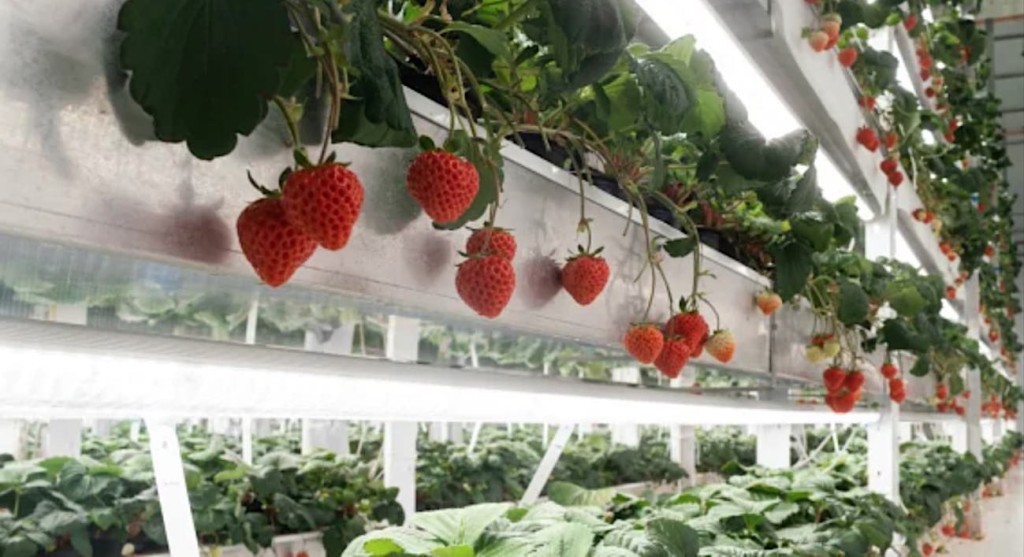
A pair of talented agri-scientists have developed a strain of exquisitely-tasty, melt-in-your-mouth strawberries that are putting a foodie spotlight on the capabilities of vertical hydroponic farming.

Hiroki Koga and Brendan Somerville are the masterminds behind the Oishii fruit company, whose flagship “Omakase” berries have become all the rage among foodies and New York City chefs.

The Omakase berries, which hail from Japan, are grown hydroponically, meaning they are cultivated in soil-less tubes of mist and liquid fertilizer in controlled, indoor environments.

Strawberries are one of the crops that take to large-scale hydroponic farming quite well, and since the red fruit is the most pesticide-ridden crop at the supermarket, being able to grow them at scale in controlled environments could be a huge benefit to ecosystems.

However producing these beautiful succulent berries, which can fetch $50 for a tray of 8, required a bone-rattling amount of work that involved getting the export/import licenses for Somerville and Koga to tote their ideal Japanese strawberry cultivars all the way from the Land of the Rising Sun to New Jersey, where they rented a warehouse for their vertical farm.

In a long profile by Fast Company, the pair detail how they were duty bound to this first wave of leafy immigrants. The conditions in the warehouse were manipulated to replicate the perfect Japanese alpine weather 24-hours a day—and sensors that monitored moisture levels, carbon-dioxide, temperature, and other factors would send alerts to Koga and Somerville’s phones if anything was out of order, sometimes sending them rushing down from their shared apartment to the farm in the middle of the night.

SIMILAR: Lettuce is Grown Right Inside the Supermarket to Sell Without Packaging—a Hydroponic Garden in a Fridge

Koga comes not only from a profession, but from a country, which values exceptional quality fruit, but while the Omakase are prohibitively expensive for supermarket-scale sales, his plan is to bring over other Japanese strawberry cultivars.

He just raised $50 million in Series A funding, to introduce more and more Americans to crops that are selected and grown for taste rather than shelf life or ability to travel for days on a highway.

He also wants to expand Oishii’s offerings to include grapes and melons, two other fruits the Japanese prize.

At the moment though, the team are very reluctant to expand their product line too fast and without the proper preparation. Like Tesla, they are entering into a market with the most expensive product, and hoping to branch out from there.

The superiority of the Omakase strawberry over all others sold in the U.S. has created quite a rabid following, and Koga told Fast Company that they plan to firmly entrench their super-sweet product in the high-end restaurant and gift-giving markets, wherever demand can be found, before entering any uncharted territory.

Photo by Oishii

RELATED: The Largest Urban Rooftop Farm in the World is Now Bearing Fruit (and More) in Paris

Venture capitalists have been predicting a big move inside to indoor vertical farming for years, but it hasn’t really gained traction as fast as the early pioneer investors and entrepreneurs had predicted.

This has a lot to do with the products they’ve produced—almost all of which are leafy greens that don’t require pollination.

Having solved the pollination problem, Koga and Somerville are ready to experiment with other fruiting bodies, that will hopefully re-ignite some of the earlier passions in this innovative food production method.

Dive down to the roots of the story with a mini-doc shot on the farm, below…

SHARE This Succulent Success Story With Your Friends…

To Cut Neighbors’ Fuel Costs ‘Baker Ed’ Revived Tradition of a Village Oven – Baking for Others for Free

Ed Hamilton-Trewhitt at his Brickyard Bakery, Guisborough. Credit Goffy Media PR.

A baker in the English town of Guisborough, pop. 17k or thereabouts, is reviving an ancient tradition to help his neighbors endure high energy costs.

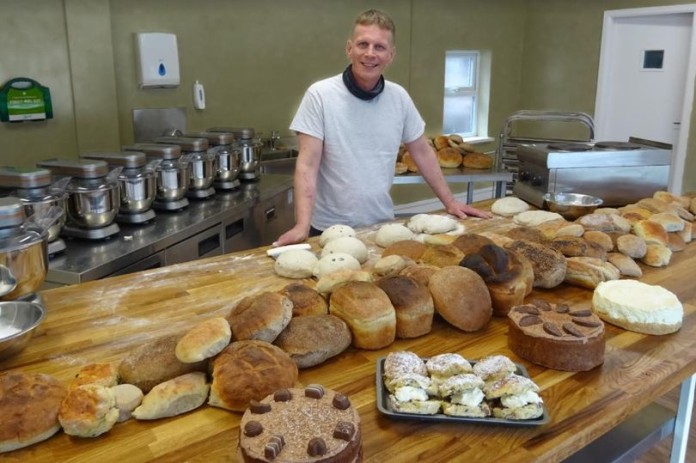
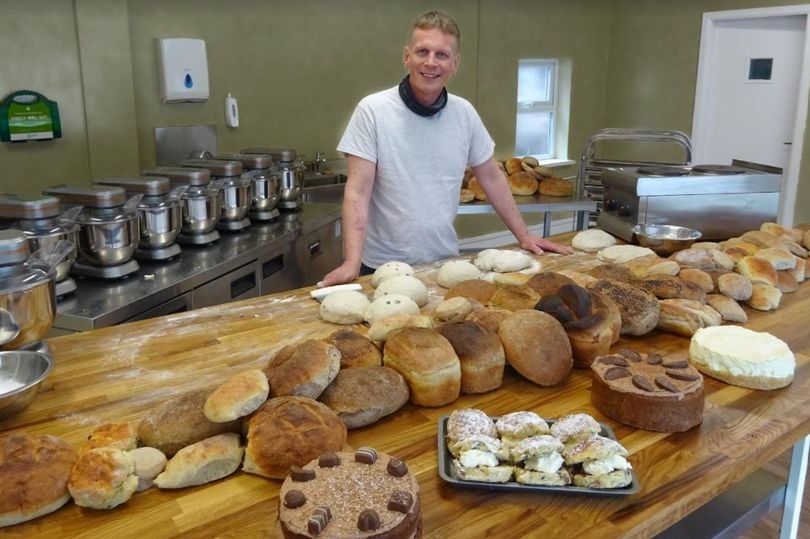
Thousands of years ago, societies built one oven in town where everyone went to bake their bread, and now Ed Hamilton-Trewhitt from Brickyard Bakery is offering to bake Christmas cakes for anyone worried about the energy costs of turning on the oven for several hours.

“At this time of year, there can be no greater expression of love than baking the family Christmas cake, but that is being lost because of the prohibitive energy costs in running an oven for a few hours,” said Baker Ed. “At Brickyard, we want to help by reviving a tradition lost to our community for centuries, the community oven.”

Anyone who has already prepared a cake can bring it to Brickyard Bakery on a Friday, and retrieve it baked and decorated the following Monday.

This is not Hamilton-Trewhitt’s first foray into good-deeding, as earlier in September, he realized the excess heat from his ovens could be used to create a community “warm lounge” for people without the means to heat their home continuously throughout the day.

SIMILAR: This Group Has Rerouted 250 Million Pounds of Food From Landfills to Feed People in Need

This small act of kindness brought the village baker international acclaim, as he reported on his Facebook.

He has also been offering pay-what-you-want cooking classes, which he described as “a tremendous success with lots of folk enjoying learning how to cook some cost effective tasty meals,” and some free hot tea or coffee to boot.

Local Sharon Bulmer remembered the tradition which Ed is trying to revive, commenting: “After the Baker had made his bread he allowed locals to bring their dishes to be cooked in the oven. Probably why we have so many casseroles etc.”

RELATED: Kindhearted Boy Used His Birthday Money to Start a Food Bank in His Garden Shed

“What an amazing thing to do, it used to be a way of live for families struggling when the cotton Mills and factories and coal mines were at their height. What an amazing thing to do, to give back to your customers and community. May your kindness be rewarded.”

Hamilton-Trewhitt has been interviewed for The Metro, the BBC, and on Radio 4, and has touched many with his actions.

SHARE This Inspiring Baker And His Acts Of Generosity On Facebook…

U.S. Gives First Ever Approval to Gut Microbiota Transplant Therapy

For years scientists have been demonstrating the therapeutic potential of gut microbiota transplants in mice for a variety of medical conditions; now the FDA has approved this procedure for the first time to treat a murderous bacterial infection.

The exact method may make someone squeamish, as its technical term is a “fecal matter transplant,” which is exactly the method approved for use.

We now know for certain that one of the most important markers for overall wellness is the size and species diversity of the bacterial community in our intestines, stomach, and colon. Its influence goes way beyond anything related to digestion, and affects the immune system, cognition, hormonal regulation, athletic performance, and more.

Fecal matter transplants have been shown in some cases in humans to reduce symptoms of irritable bowel syndrome, and in mice to counteract pulmonary hypertension, reduce symptoms of multiple sclerosis, and even to reduce biological age clocks.

However Switzerland-based Ferring Pharmaceuticals’ procedure is meant to treat Clostridium difficile, or C. difficile, a superbug responsible for 15,000 – 30,000 deaths every year in the US.

RELATED: In a Revolutionary Medical Treatment, Man’s Lung Was Removed, Cleaned, and Replaced—No Transplant Necessary

It works through an enema that uses a distillation of microbes from the stool sample donation of an individual with a healthy, robust gut microbiota which can clear the dangerous infection. It has been the standard of care in the US under an investigational license.

The FDA approval panel convened in September and most regulators on the panel sought standardization of the treatment, which would pave the way to its application for more diseases and infections.

SHARE This Important Medical Milestone With Your Friends… 

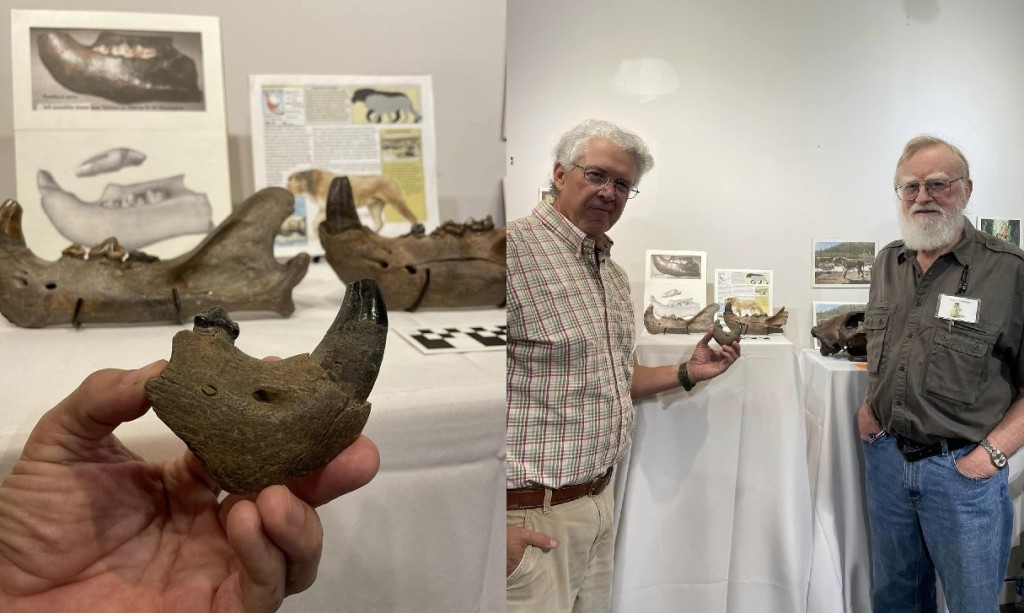
Man Finding an American Lion Tooth Fossil in Shallow Mississippi is ‘the Biggest of Deals‘ to Scientists

Prewitt with his tooth. credit-Anna Reginelli facebook

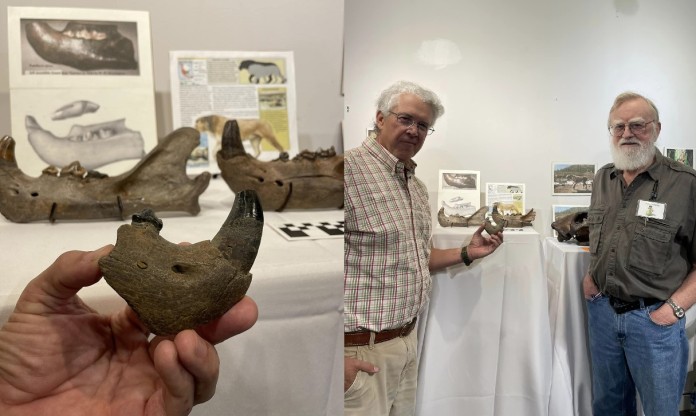
Locals are discovering all kinds of weird things preserved in the mud of a drought-stricken Mississippi River, but the mandible and canine of an extinct American lion may be the most astonishing.

In October, Wiley Prewitt found something black sticking out of a sandbar on a stretch of the mighty river in Rosedale, near the Arkansas border. He imagined it to belonged to a carnivore—plant eaters could never need something so pointy—and took it to a Mississippi Fossil Artifact Symposium & Exhibition event that was happening nearby.

Almost all animals iconic to Africa’s wild savannahs today once lived in North America. There were rhinos, mastadons, giant ungulates, and yes, lions. Panthera atrox has been extinct for 11,000 years, but would have looked pretty much the same as African lions today.

When Prewitt entered the Symposium with his find, he must have been shocked to find that one of the exhibitions was on nothing other than the American lion.

MORE FOSSIL NEWS: Canada Schoolteacher Finds Fossil that May Be 300 Million Years Old and Could Re-Write Fossil Record

Just 3 fossils of the great beast have been found in Mississippi, but when George Phillips, curator of paleontology at the Mississippi Museum of Natural Science, saw Prewitt’s discovery, it was “one of those true moments where you blink a couple of times, because you can’t believe your eyes.”

“This fossil is so rare, that any information learned from it will help us understand so much more about this animal, not just as a species and but about its role in the Mississippi River alluvial plain habitat during the Pleistocene,” said George Starnes, a state-employed geologist, who called the fossil “the biggest of deals.”

SIMILAR: Watch How Texas Man Found Huge Dinosaur Tracks in Riverbed Dried From Drought

The American lion may have reached 1,000 pounds, stood 4-feet at the shoulder and reached 8-feet in length. Whether it had a mane like lions of today is not known as all remains of this animal, much less any continaing hair and skin, are extremely rare.

Other finds have turned up in a shallow Mississippi River of late, including the remains of a riverboat casino, and a 100-year-old ferry, beautifully preserved in the silt.

SHARE This Double-Stroke Of Luck Down South With Your Friends…