All News - Page 324 of 1714 - Good News Network
Home Blog Page 324

25-Year-old Window Cleaner is Scrubbing Road Signs for Free to Improve Safety and Give Back to Community

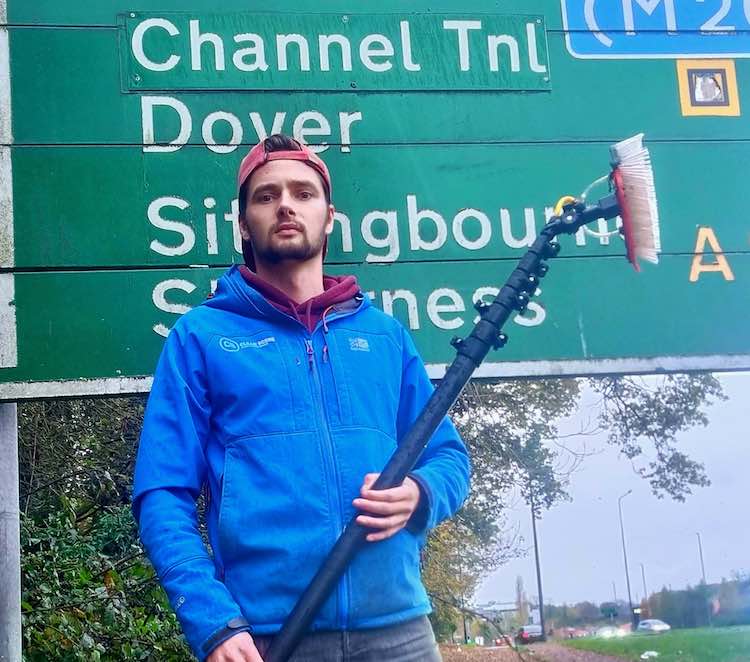
Liam Wildish - SWNS photo
Liam Wildish – SWNS photo

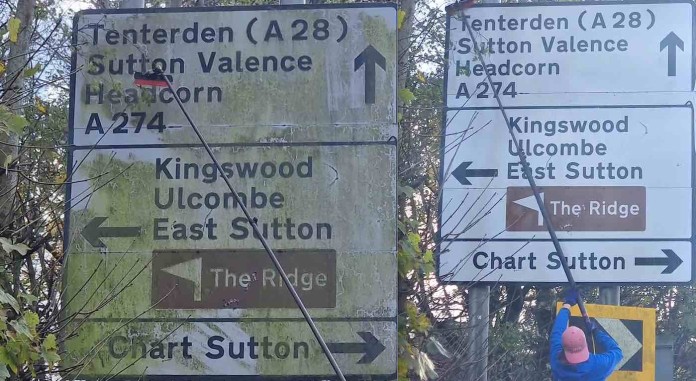
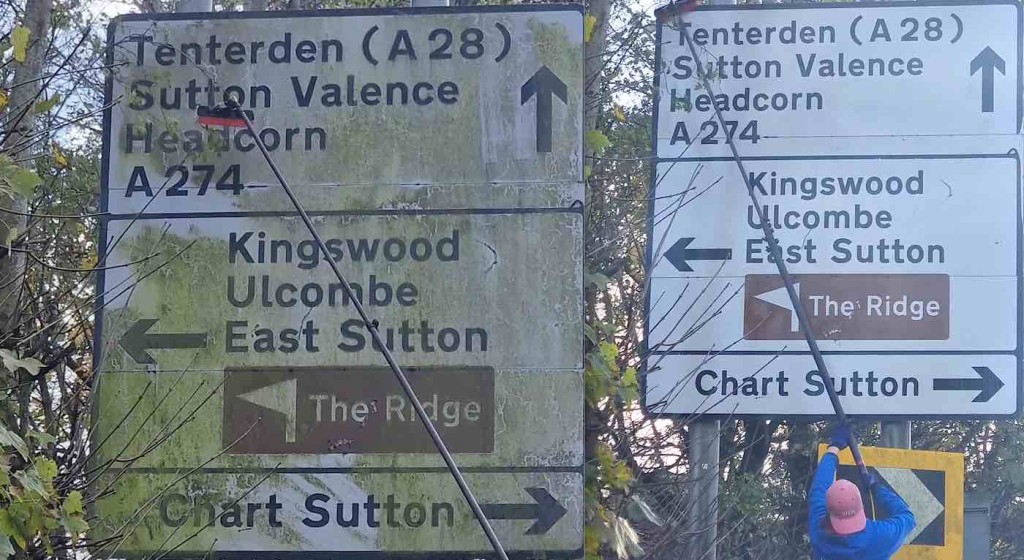
A young man who started a window washing business has been cleaning road signs for free in his spare time to give back to his community.

Liam Wildish started scrubbing signs in Maidstone, England this year, after launching his new window service—and he’s already become a notable local figure.

“Some of the signs in Maidstone are in terrible condition so when I pass them I pull up and give them a clean up,” the 25-year-old told SWNS news.

“I like to think it makes a difference to the appearance of the area and hopefully improves road safety during these long winter nights.”

The young man from Nottinghamshire makes himself noticeable, always dressed in a red cap and his bright blue company jacket—and his Facebook posts are inundated with strangers saying they spotted him.

“People wave at me or beep their horns, or comment on my videos to say they saw me out.”

When he arrived in Maidstone this year he didn’t know anyone, so had to build a new client base from scratch. After six weeks running his new business, Clean Scene, he began tackling the road signs as a way to thank those in the community who’d helped him through word-of-mouth recommendations and positive feedback.

RELATED: Woman Hailed as Hero For Using Drone to Locate Over 200 Lost Pups For Free

Liam Wildish – SWNS

It also promotes his business. The entrepreneur shoots videos of himself and shares them on Maidstone community pages.

“It’s a bit of a win-win for everybody.”

Liam loves the quiet reflectiveness of the solitary work, but he’s also chatty and loves meeting everyone.

RELATED: Teens Show Holiday Spirit Grabbing Rakes to Help Elderly with Leaf Removal

Up next, Liam wants to look into organizing litter clean-ups with youth clubs.

“It’s very rewarding,” he concluded.

SHARE the Kindness on Social Media to Inspire Others…

“Remember that sometimes we screw up—for the better.” – Legends of Tomorrow

Quote of the Day: “Remember that sometimes we screw up—for the better.” – Legends of Tomorrow

Photo by: Aziz Acharki

With a new inspirational quote every day, atop the perfect photo—collected and archived on our Quotes page—why not bookmark GNN.org for a daily uplift?

Three Rare White Reindeer Calves Get Ready For Christmas, Joining the UK’s Only Herd

SWNS
SWNS

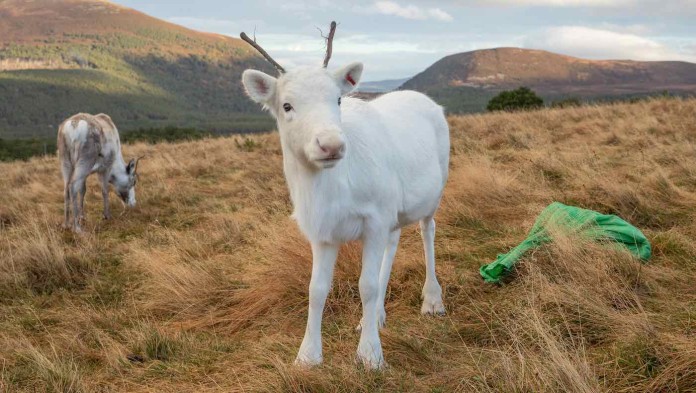
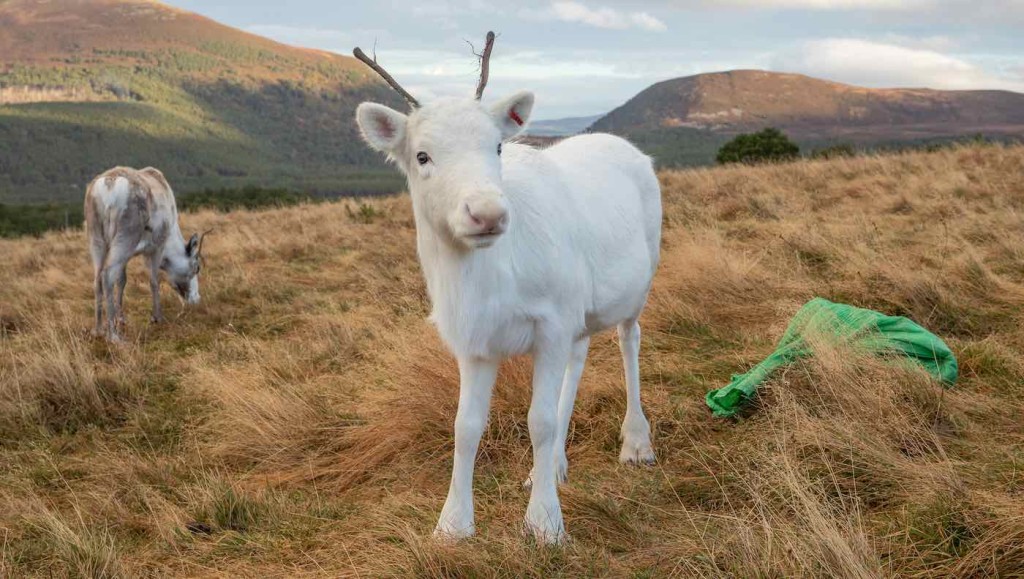
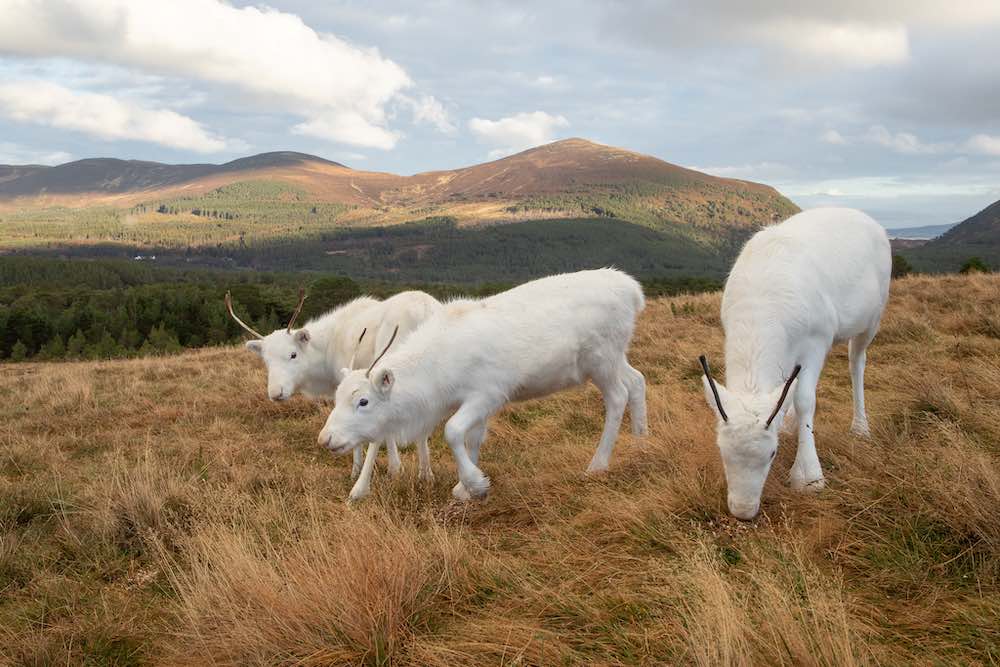
These three adorable white reindeer calves are getting ready for Christmas as the UK’s only herd.

The three babies, named Mr. Whippy, Vanilla, and 99, were born in the summer and are now ready to join the rest of the herd on a tour around the country in the run up to Christmas.

During the rest of the year, the free-ranging herd lives at the Cairngorms National Park where the snowy, arctic conditions provide the best vegetation.

The first ones were brought over from Swedish Lapland in 1952 by Mikel Utsi and his wife Dr. Ethel Lindgren as an experiment—and they have grazed the land ever since.

“We’re centrally positioned within the highlands which means we have a more continental climate,” said Tilly Smith, owner of the Cairngorm Reindeer Centre.

“The Cairngorms is ideal for the reindeer. We’re more likely to have cold, snowy, arctic-like conditions.

RELATED: ‘Like Finding a Unicorn’: Researchers Rediscover Black-Naped Pheasant-Pigeon, a Bird Lost to Science for 140 Years

SWNS

She said that although the mountains are “vast and impressive“, they’re also “gentle” which suits these less-than-nimble grazers.

“They are beautiful, calming animals,” said Mark Tate of Visit Cairngorms. “They add to the magical winter wonderland feel that really does make winter come to life in the Cairngorms National Park.”

WATCH: Incredible Birth of Endangered Baby Rhino is Captured on Zoo’s Cameras, and Galloping Within Minutes

“It’s thanks to the really special environment we have here in the Cairngorms that they’ve thrived and grown.”

SHARE the Beautiful Creatures to Lift Spirits on Social Media…

Two-Thirds Will Tell People They’re ‘Fine’ Over the Holidays Even When They’re Not: Here are 12 Better Responses

Walkers and Comic Relief campaign with Roman Kemp / SWNS / OnePoll

A poll of 2,000 adults found that two-thirds will tell friends and family they are ‘fine’ over the holiday period, even when they’re not.

Half of the respondents believe others don’t want to hear about their troubles because it dampens the mood, so they keep the conversation light-hearted.

But the study, commissioned by British snack food company Walkers to shine a light on the benefits of opening up and talking more, found that 87 percent confessed to just saying they’re ‘fine’ on autopilot, without even thinking about how they actually feel.

Walkers and Comic Relief teamed up with TV and radio presenter, and mental wellbeing campaigner, Roman Kemp to inspire people to open up and talk more—challenging them to give up the F*** word (Fine) to support their mental wellbeing.

“As someone who has been open about their own battle with mental health and seen first-hand the devastating consequences of people bottling up their feelings, this is a campaign very close to my heart,” said Kemp.

“So, I’m hoping that through this campaign we can help open up the conversation surrounding mental wellbeing—and get people having open and honest conversations about how they’re really feeling.

POPULAR: Lonely 67-Year-Old Sets Up Woodworking ‘Shed’ to Combat Loneliness in Men, Following Global Trend

“Let’s stop saying we’re fine because we think it’s polite, or because we think it’s what the other person wants to hear.

Kemp believes that most of the time, if a friend or family member is asking, they really do care and genuinely want to know.

Three of the top reasons why people use the autopilot ‘I’m fine’ response, instead of telling the truth, are: not wanting to bring other people down, not knowing how people are going to deal with your emotions, and being afraid of feeling uncomfortable.

Philippa Pennington, from Walkers, which has donated £2 million to Comic Relief for mental wellbeing projects, said: “The message of our Christmas campaign—that it can actually help to open up and talk about your feelings—is so important and we hope to be able to encourage people to talk a little more.”

RELATED: People Enjoy Surprisingly Deep Conversations With Strangers, And New Study Finds Benefits

The survey, carried out by OnePoll, also found that people don’t want to go into detail about how they’re feeling. However, while one-quarter of those surveyed don’t believe people genuinely want to know how you’re doing, half of the respondents claimed they DO genuinely want people to tell them how they’re feeling.

Samir Patel, CEO of Comic Relief, suggests an ice-breaker. “Humor can be a great way to help start conversations that can sometimes be difficult.

Here are 12 responses that might open-up conversations:

Can’t complain…I have tried, but no one listens.
Not bad. Could be better, though.
I have a pulse, so that’s good.
How do you think that I am doing?
I don’t feel great, but my hair looks amazing!
I am doing well…but that could be my anti-depressants speaking.
Things are fine when you’re around.
Fair to partly cloudy.
You go first. Then, we can compare.
Not quite there yet.
Do you want the short or the detailed version?
I’m under renovation.

SHARE the Options With Friends and Family on Social Media…

Guy Finds $40,000 Diamond Ring Buried on Florida Beach and Tracks Down the Owner Who Broke into Tears

Joseph Cook via SWNS

A man was overjoyed when he discovered a diamond ring worth $40,000 on a beach in Florida last month, and soon became a metal detector angel.

Joseph Cook found the ring buried in the sand at Hammock Beach in St Augustine and immediately posted a video he shot while digging it up to his social media channels searching for people who may have lost rings.

The 37-year-old is heard exclaiming in shock: “No way, man. Whoah, look at that bad boy. Holy crap, that’s real.”

“This is the biggest diamond I ever found on the beach.”

When he went to the jewelers, they reportedly told him the precious gem set in a platinum band was worth $40,000.

“I couldn’t believe it.”

Two weeks later, Joseph began receiving calls from a number he didn’t recognize.He initially ignored them, but then realized it could be the owners of the ring.

LOOK: Exquisite Mosaic Unearthed by Farmer Planting Olive Tree, ‘Perfectly Preserved’ From Byzantine Era

Joseph Cook via SWNS

He joined a video call with the couple from Jacksonville, who had lost one that was similar.

“The wife said, ‘oh my god I can’t believe it’, and then she just started crying.”

Three weeks after finding the ring, Joseph met the owners near the same beach in St. Johns County and returned the piece.

“It felt really good,” he recalled. “I’ve returned sixty-thousand dollars of stuff this year, but nothing even close to this before.”

He said he really wasn’t disappointed that he had to return it, and is looking for owners of other rings he’s found in the past. He even wears a necklace with about 25 rings on it just so might be able to return them to their owners.

POPULAR: Teen Finds Woman’s Purse and is Rewarded With $17,000 After He Delivers it to Her Door

“Karma’s always good. Every time I return an item, I find something better, so I’m happy I could give it back.”

FIND This Story of Kindness on Your Social Media Page By Sharing the Love…

Your Inspired Weekly Horoscope From Rob Brezsny: A ‘Free Will Astrology’

Our partner Rob Brezsny provides his weekly wisdom to enlighten our thinking and motivate our mood. Rob’s Free Will Astrology, is a syndicated weekly column appearing in over a hundred publications. He is also the author of Pronoia Is the Antidote for Paranoia: How All of Creation Is Conspiring To Shower You with Blessings. (A free preview of the book is available here.)

Here is your weekly horoscope…

FREE WILL ASTROLOGY – Week of November 26, 2022
Copyright by Rob Brezsny, FreeWillAstrology.com

SAGITTARIUS (Nov. 22-Dec. 21):
Sagittarian rapper and entrepreneur Jay-Z has stellar advice for his fellow Sagittarians to contemplate regularly: “Ain’t nothin’ wrong with the aim; just gotta change the target.” In offering Jay-Z’s advice, I don’t mean to suggest that you *always* need to change the target you’re aiming at. On many occasions, it’s exactly right. But the act of checking in to evaluate whether it is or isn’t the right target will usually be valuable. And on occasion, you may realize that you should indeed aim at a different target.

CAPRICORN (Dec. 22-Jan. 19):
You now have extra power to exorcise ghosts and demons that are still lingering from the old days and old ways. You are able to transform the way your history affects you. You have a sixth sense about how to graduate from lessons you have been studying for a long time. In honor of this joyfully tumultuous opportunity, draw inspiration from poet Charles Wright: “Knot by knot I untie myself from the past / And let it rise away from me like a balloon. / What a small thing it becomes. / What a bright tweak at the vanishing point, blue on blue.”

AQUARIUS (Jan. 20-Feb. 18):
In accordance with current astrological rhythms, I am handing over your horoscope to essayist Anne Fadiman. She writes, “I have always felt that the action most worth watching is not at the center of things, but where edges meet. I like shorelines, weather fronts, international borders. There are interesting frictions and incongruities in these places, and often, if you stand at the point of tangency, you can see both sides better than if you were in the middle of either one.”

PISCES (Feb. 19-March 20):
Over the course of my life, I have been fortunate to work with 13 psychotherapists. They have helped keep my mental health flourishing. One of them regularly reminded me that if I hoped to get what I wanted, I had to know precisely what I wanted. Once a year, she would give me a giant piece of thick paper and felt-tip markers. “Draw your personal vision of paradise,” she instructed me. “Outline the contours of the welcoming paradise that would make your life eminently delightful and worthwhile.” She would also ask me to finish the sentence that begins with these words: “I am mobilizing all the energy and ingenuity and connections I have at my disposal so as to accomplish the following goal.” In my astrological opinion, Pisces, now is a perfect time to do these two exercises yourself.

ARIES (March 21-April 19):
One of your callings as an Aries is to take risks. You’re inclined to take more leaps of faith than other people, and you’re also more likely to navigate them to your advantage—or at least not get burned. A key reason for your success is your keen intuition about which gambles are relatively smart and which are ill-advised. But even when your chancy ventures bring you exciting new experiences, they may still run you afoul of conventional wisdom, peer pressure, and the way things have always been done. Everything I have described here will be in maximum play for you in the coming weeks.

TAURUS (April 20-May 20):
Your keynote comes from teacher Caroline Myss. She writes, “Becoming adept at the process of self-inquiry and symbolic insight is a vital spiritual task that leads to the growth of faith in oneself.” Encouraging you to grow your faith in yourself will be one of my prime intentions in the next 12 months. Let’s get started! How can you become more adept at self-inquiry and symbolic insight? One idea is to ask yourself a probing new question every Sunday morning, like “What teachings and healings do I most want to attract into my life during the next seven days?” Spend the subsequent week gathering experiences and revelations that will address that query. Another idea is to remember and study your dreams, since doing so is the number one way to develop symbolic insight.

GEMINI (May 21-June 20):
The TV science fiction show Legends of Tomorrow features a ragtag team of imperfect but effective superheroes. They travel through time trying to fix aberrations in the timelines caused by various villains. As they experiment and improvise, sometimes resorting to wildly daring gambits, their successes outnumber their stumbles and bumbles. And on occasion, even their apparent mistakes lead to good fortune that unfolds in unexpected ways. One member of the team, Nate, observes, “Sometimes we screw up—for the better.” I foresee you Geminis as having a similar modus operandi in the coming weeks.

CANCER (June 21-July 22):
I like how Cancerian poet Stephen Dunn begins his poem, “Before We Leave.” He writes, “Just so it’s clear—no whining on the journey.” I am offering this greeting to you and me, my fellow Cancerians, as we launch the next chapter of our story. In the early stages, our efforts may feel like drudgery, and our progress could seem slow. But as long as we don’t complain excessively and don’t blame others for our own limitations, our labors will become easier and quite productive.

LEO (July 23-Aug. 22):
Leo poet Kim Addonizio writes a lot about love and sex. In her book Wild Nights, she says, “I’m thinking of dating trees next. We could just stand around all night together. I’d murmur, they’d rustle, the wind would, like, do its wind thing.” Now might be a favorable time for you, too, to experiment with evergreen romance and trysts with your favorite plants. When was the last time you hugged an oak or kissed an elm? JUST KIDDING! The coming weeks will indeed be an excellent time to try creative innovations in your approach to intimacy and adoration. But I’d rather see your experiments in togetherness unfold with humans.

VIRGO (Aug. 23-Sept. 22):
In her book Daughters of the Stone, Virgo novelist Dahlma Llanos-Figueroa tells the tale of five generations of Afro-Cuban women, her ancestors. “These are the stories of a time lost to flesh and bone,” she writes, “a time that lives only in dreams and memories. Like a primeval wave, these stories have carried me, and deposited me on the morning of today. They are the stories of how I came to be who I am, where I am.” I’d love to see you explore your own history with as much passion and focus, Virgo. In my astrological opinion, it’s a favorable time for you to commune with the influences that have made you who you are.

LIBRA (Sept. 23-Oct. 22):
In accordance with astrological omens, here’s my advice for you in the coming weeks: 1. Know what it takes to please everyone, even if you don’t always choose to please everyone. 2. Know how to be what everyone wants you to be and when they need you to be it, even if you only fulfill that wish when it has selfish value for you. 3. DO NOT give others all you have and thereby neglect to keep enough to give yourself. 4. When others are being closed-minded, help them develop more expansive finesse by sharing your own reasonable views. 5. Start thinking about how, in 2023, you will grow your roots as big and strong as your branches.

SCORPIO (Oct. 23-Nov. 21):
Even if some people are nervous or intimidated around you, they may be drawn to you nonetheless. When that happens, you probably enjoy the power you feel. But I wonder what would happen if you made a conscious effort to cut back just a bit on the daunting vibes you emanate. I’m not saying they’re bad. I understand they serve as a protective measure, and I appreciate the fact that they may help you get the cooperation you want. As an experiment, though, I invite you to be more reassuring and welcoming to those who might be inclined to fear you. See if it alters their behavior in ways you enjoy and benefit from.

WANT MORE? Listen to Rob’s EXPANDED AUDIO HOROSCOPES, 4-5 minute meditations on the current state of your destiny — or subscribe to his unique daily text message service at: RealAstrology.com

(Zodiac images by Numerologysign.com, CC license)

SHARE The Wisdom With Friends Who Are Stars in Your Life on Social Media…

“Without fail, life will deliver the creative energy we need to change into the new thing we must become.” – Rob Brezsny

Quote of the Day: “Without fail, life will deliver the creative energy we need to change into the new thing we must become.” – Rob Brezsny

Photo by: William Farlow

With a new inspirational quote every day, atop the perfect photo—collected and archived on our Quotes page—why not bookmark GNN.org for a daily uplift?

Historic Italian Town Will Pay You $30,000 to Move There – Near Turquoise Seas and Olive-Clad Hills

Piazza di Presicce, Lecce, in Italy - Photo byLupiae CC license, Wikimedia
Piazza di Presicce, Lecce, in Italy – Photo byLupiae CC license, Wikimedia

Last year, GNN reported that many towns across Italy were selling houses for $1.00 in order to stem the tide of migration to the major cities.

Now in Puglia, the region of Italy’s heel, the town of Presicce is doing one better—it will pay you $30,000 to move there.

In this picturesque and near-the-sea town, historic houses can go for as little as $25,000, and the government hopes that new arrivals can perk up the town’s social side and business offerings.

“There are many empty homes in the historical center built before 1991 which we would like to see alive again with new residents,” local councilor Alfredo Palese tells CNN. “It is a pity witnessing how our old districts full of history, wonderful architecture and art are slowly emptying.”

Presicce was founded as a collection of villages that spread out around an old Saracen fortress. The city grew thanks to the wealth of a renowned olive harvest which the Presiccese turned into oil largely through a series of 23 underground chambers dug into the rock under their homes.

YOU MAY ALSO LIKE: These 6 Cities and This State Will Pay You to Move There

In the dim light, they would employ a donkey to turn a stone mill and grind the olives into oil, a trade which created a rural aristocracy that poured money into the decorative chapels and frescoed plazas in the city.

SantAndrea-di-Presicce, Italy – By Lupiae, CC license 3.0, Wikimedia

Nearby are the rocky hills of Puglia dotted with Medieval ruins, rugged hiking paths, and Byzantine crypts, as well as underground shelters meant for hiding from pirates.

SIMILAR: These Beautiful Italian Towns Will Pay You to Move There if You Work Remotely

Recently, in order to secure more financial and governmental support for the town, it merged with nearby Acquarica to become Presicce-Acquarica, and the expanded size increased the amount of funds the municipality has to finance these sorts of restorative projects to about €1 million per year.

“We will be offering up to 30,000 euros to people willing to move here and buy one of these abandoned dwellings,” Alfredo says. “The total funding will be split in two: it will go partly into buying an old home and partly into restyling it, if needed.”

RELATED: A Town Near Rome is Selling Old Homes for $1, a Trend Across Italy in Many Beautiful Villages

As wild as it sounds that towns like Presicce, or others in the 1-Euro House Project are being abandoned, one must reason it’s the case that if you grow up in these historic towns, it loses its charm over the years.

Watch a video showing the local sites…

KNOW Someone Looking For A Home? Share This Story!

Words Engraved on a Bronze Hand May Rewrite History for a Small but Special People

A very peculiar decorative ornament was found in an archeological dig last year in Spain—a bronze amulet shaped like a hand that would lead researchers to a fascinating discovery.

Just recently however, the restoration of the artifact revealed strange words believed to be part of the precursor to the modern Basque Language, also called Euskara.

The Basque Language today is spoken by hundreds of thousands of people in Northern Spain and Southwest France. It is Europe’s only surviving “language isolate,” a term meaning that Basque is not related either to the Greek-Romano language of the south, or the Indo-European Celtic languages from the north and east.

The amulet, found in Pamplona, carries the word “sorioneku,” which closely resembles the Basque word zorioneku, which means “fortunate.” The current theory is that it was hung around the 60s BCE above the door to a mud brick hut.

The researchers at the Aranzadi Science Society haven’t been able to place any of the other words on the hand, which has led to the hypothesis that it could be from the precursor language of the Basque people, before a gradual borrowing of Romance words contributed about 40% of the modern Basque vocabulary.

In fact, the owners of the hand, which the researchers have called the Hand of Irulegi after where it was found, is believed to date to an Iron Age tribe called the Vascones who inhabited Spain’s Navarra region.

RELATED: Priceless Lost Jewels From Legendary Maravillas Shipwreck Are Finally Found in Bahamas

“This piece turns upside down what until now we thought about the Basques and writing,” says Joaquín Gorrochategui, a philologist at the University of the Basque Country, in a statement from the Aranzadi Science Society, which has been excavating the site since 2017.

“We were almost convinced that the Basques were illiterate in ancient times.”

The bronze hand during cleaning – Courtesy of Carmen Usua

It’s possible that Euskara was already fully developed as a language before the turn of the millennium.

The letters on the hand were written by carving out tiny dots rather than straight lines, something that has never been seen in any writing in the ancient Western World.

MORE LIKE THIS: Stunning Ancient Artwork Found at Site Sacked by ISIS: Assyrian Depictions Not Seen For 2,600 Years–LOOK

Clearly the Basque have secrets yet to unveil, and it’s no wonder given the potential cultural development at even so early an age that their language and identity has lasted so long.

A mini-doc was produced on the discovery of the hand which you can watch here on YouTube with auto-generated English subtitles.

SHARE This Fascinating Discovery With Your Friends… 

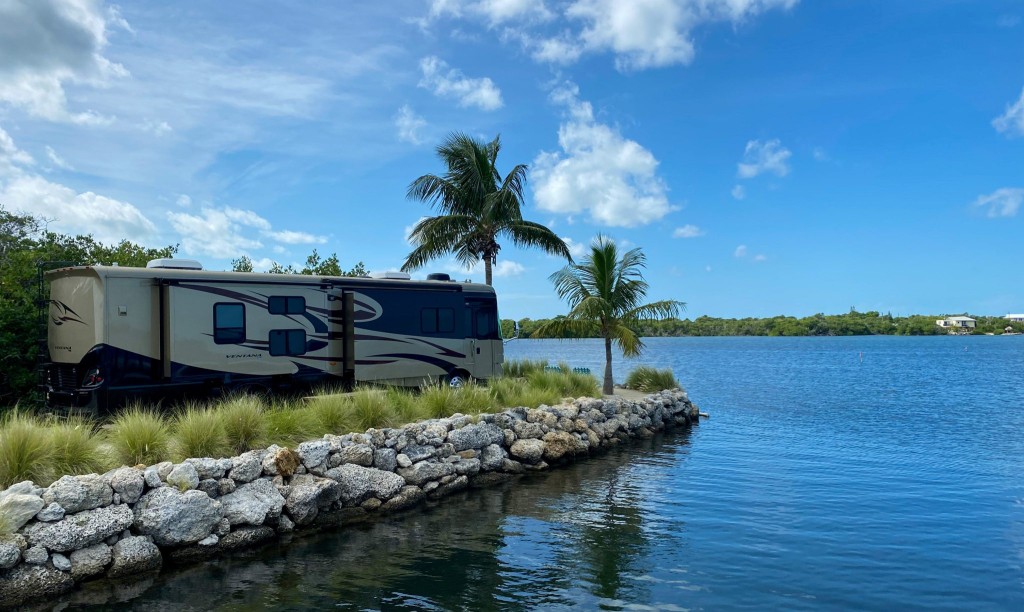
Family Swaps Their Mortgage for Motorhome to Travel USA and Have No Regrets While Saving $1,800 a Month

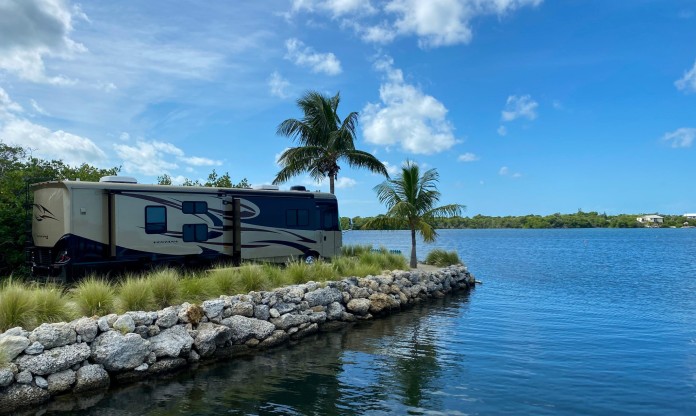
An American family that decided to sell their house and travel the country in a motorhome say they have no regrets, as well as a savings per year of more than $30,000.

After renovating a 300 square foot motorhome in March 2021 they hit the road, homeschooling their kids, working remotely, and exploring the country.

Jen Omohundro and her husband JR made the leap from mortgage to motorhome after hearing a podcast about a family doing the same. What started as a pleasant day dream got serious after Jen was shocked that JR was game for the big decision.

“The family was talking about how incredible it was and what the kids were then experiencing,” said Omohundro. “I thought it sounded so unique and cool, but I never thought my husband would go for it. But he surprised me and said he would be up for it.”

“We started researching how we’d go about it and a week later we’d put our house up for sale.”

That was in mid-2020. Now the family have visited 36 states, typically spending up to two weeks in each spot in order to thoroughly experience the region,

The family spent $314,000 on their motorhome, spent an average of just under $800 on fuel a month and an average of $1,450 on motorhome sites, which amounts to around $1,850 in savings per month compared to mortgage payments and utilities.

RELATED: Couple Spends Nearly $100k Turning School Bus Into Dream Home — Now They’re Raffling It Off

Except that it’s the non-monetary equations that matter most—like the opportunity to go ziplining in the foothills of Pikes Peak or kayaking in the Mangroves, all the while exposing their 14-year-old daughter Kelsey and 10-year-old son Lane to all kinds of real world experiences to match what they’re learning in school.

– SWNS

“We’ve had so many experiences as a family that we never would have had without doing this,” said Omohundra. “We’ve done mountain hikes, swam with whales, and ridden on a pedal railway.”

“Home schooling has been great for the kids as we use an online program but back it up with real experiences. My son is now a year ahead of where he would be if he was still in school,” she added.

YOU MAY ALSO LIKE: Rather Than Slip into Depression, Man Quits Job, Sells Possessions, and Travels the World With a Ferret

“We took them to an archeological site where they were digging up mammoths, it was amazing. We love this lifestyle, but we’ll always go with the flow and what is best for the family.”

They’ve since upgraded to a 400 square foot motorhome, which has given them their own rooms, but they maintain that if the lifestyle ever becomes too much or too little as the case may be, they remain open to buying a house again.

SHARE This Inspirational Family Transformation On Social Media… 

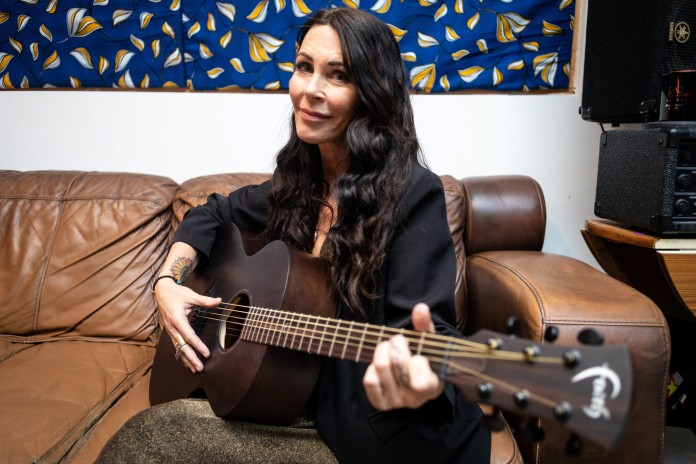
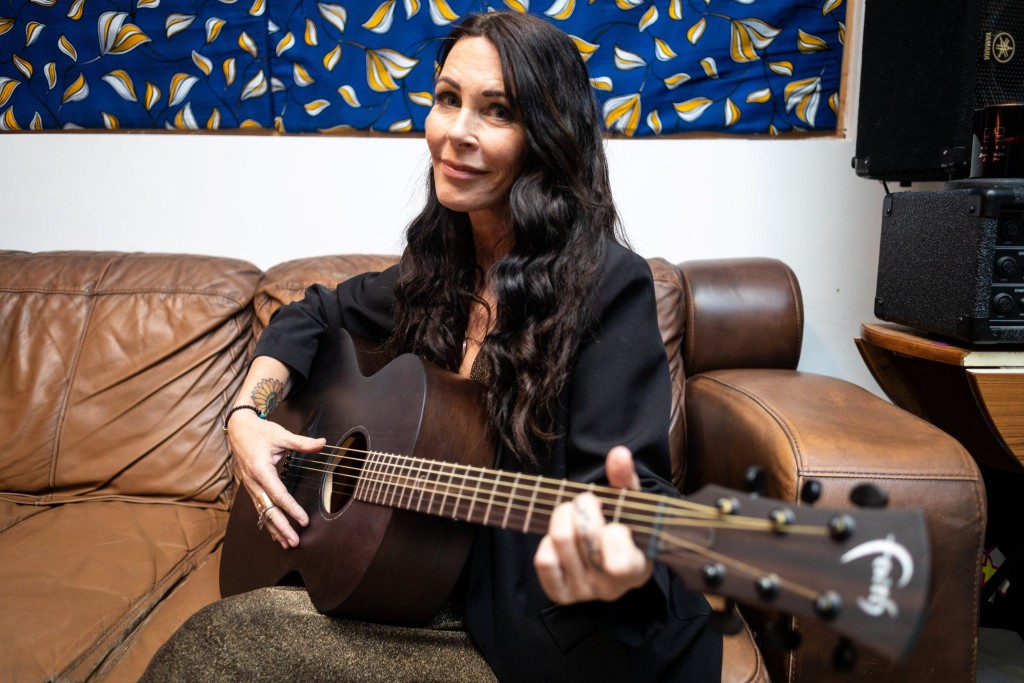
60-yo Who Taught Herself to Play Guitar in Lockdown Launches Music Career with #1 Blues Single–LISTEN

Kym Vincenti - SWNS.
Kym Vincenti – SWNS.

A woman has found a new career in her 60s as a chart-topping musician just 2 years after teaching herself the guitar in lockdown.

Kym Vincenti has since signed with a label and released three singles, one of which topped the blues charts on Apple Music.

Vincenti had never picked up the instrument before April 2020, but after her ex-boyfriend left a guitar lying around, she decided to give it a pluck.

The 60-year-old ghostwriter by trade split up with her boyfriend during lockdown, and started practicing using basic fingering charts to teach herself the chord positions. As it turned out, she was a natural.

“To have a career in music so late in life has been so unexpected, but I’m loving every minute of it,” says Vincenti. “Like millions of others in the country, I was at a loose end during lockdown so I decided to try my hand at music.”

As the months progressed, and she became more confident with the instrument, Vincenti began writing her own music and adding lyrics to go with it.

She uploaded clips of herself performing to social media, sharing them with friends and family—and their positive feedback inspired her to dedicate more time to making music.

“I had been playing on and off for two years, when Dutch Van Spall contacted me,” she remembers. Van Spall runs Big Help Music, a small studio in Warwickshire, England.

READ ALSO: Plumber Has Landed Record Deal After Music Mogul Heard Him Singing –While He Fitted His Bathroom

“He was an acquiantance of mine with his own record label, and when I played him some clips he invited me up to his record studio. We recorded one of my songs in the studio, and he offered me a record deal there and then; I couldn’t quite believe it.”

She has since released music across multiple platforms including Apple Music, Spotify, YouTube, Soundcloud and Amazon Music.

Her songs have been streamed by thousands of users and she hopes to make a career out of it in the future when she reaches enough streams across all platforms.

Her next song Let Him Go will be out on all platforms on December 9th.

SIMILAR: Man Taught Himself to Play the Trumpet Solely So He Could Play Taps for Fallen Soldiers

“Since I released my debut single in August I’ve been releasing one song every six weeks or so,” said Vincenti. “My first song got in to the top 20 on Apple Music in the country chart, and my second in the top ten on the jazz chart.”

“The last few months have been a whirlwind of a journey, and launching a new career at this age feels strange for sure, but I’m just taking it slowly and enjoying recording songs and working on new projects,” she said.

SHARE This Radical Late-Life Turnaround With Friends And Give Kym A Listen…

“The capacity to care is the thing which gives life its deepest significance.” – Pablo Casais

Quote of the Day: “The capacity to care is the thing which gives life its deepest significance.” – Pablo Casais

Photo by: Randy Fath

With a new inspirational quote every day, atop the perfect photo—collected and archived on our Quotes page—why not bookmark GNN.org for a daily uplift?

Free Quiz Designed by Functional Medicine Doctor Rates Your Risk of Nutritional Deficiencies

Reprinted with permission from World At Large, a news website of nature, politics, science, health, and travel.

Chris Kresser, MD is one of the most influential doctors in the health field, informed by a 15-year career of diagnosing and treating nutrient deficiencies.

Co-director of the California Institute for Functional Medicine and Director of the Kresser Institute for functional medicine training, his work often focuses on the un-enviable task of sifting through the tens of thousands of studies on diet and nutrition to understand all the nuances of how our bodies turn food into everything we need to thrive.

Dr. Kresser has described nutrient deficiencies in America as a “silent epidemic”. Many of the recommended daily allowances for vitamins, amino acids, and minerals were set during leaner times like the Great Depression or World War II, and designed to prevent scurvy, rickets, or stunting.

Combined with the increased prevalence of calorie-dense hyper-processed foods in the human diet, and increases in the cost of fresh produce, these forces have created a population that is very much deficient in certain key nutrients.

It’s safe to say that Americans have higher aspirations for health than simply avoiding rickets or scurvy. That’s why Dr. Kresser created a free quiz that will calculate a rough estimate of your risk for nutrient deficiencies

RELATED: Holy Mackerel! Fish Really Is Brain Food – Even if You Only Eat a Small Amount

Currently some deficiencies are almost universal. According to the Linus Pauling Institute at Oregon State University, almost nobody in America consumes enough potassium.

Their research estimates that 97% of Americans don’t absorb enough magnesium, which primes the immune system to fight cancer and infections, and 94% don’t get enough vitamin D. These two compounds require each other for proper absorption—and the high levels of insufficiencies are likely a result of that.

World at Large has reported that 92% don’t get enough choline, which isn’t classified as a vitamin or a mineral, and therefore isn’t required to be reported on nutrition labels. WaL also commented on the fact that, as recently as 2018, the government agency USDA recommended Americans eat chocolate cakes and McDonalds breakfast sandwiches to combat choline deficiency—revealing the depth of ignorance about that critical micronutrient.

FUN: Baboon, Bear, or Bison: Find Out Which Animal Personality Best Matches Yours in a Free Fun Quiz

Linus Pauling also found that 89% of Americans are deficient in vitamin E, while Dr. Kresser’s own research shows that most Americans are supplementing with a mildly-toxic form of vitamin E.

The quiz takes just 3 minutes, can be done here, and includes the download of a free e-book at the end.

CHECK OUT: 8 Under-Appreciated Autumn Veggies and Fruits You Should Be Eating

ASK Your Loved Ones to Take The Quiz And Find Out How To Be Healthier…

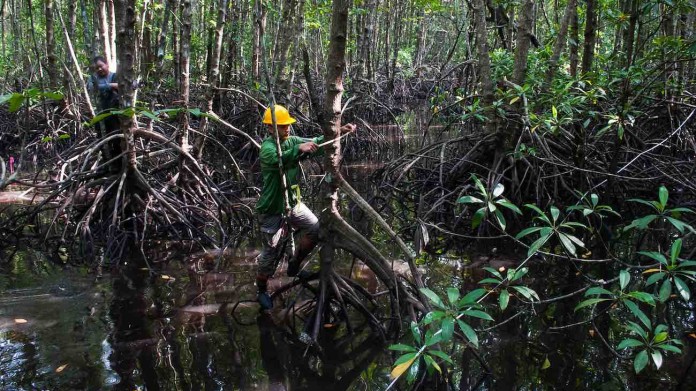
Loss of Climate-Crucial Mangrove Forests Has Slowed to Near-Negligible Amount Worldwide, Report Hails

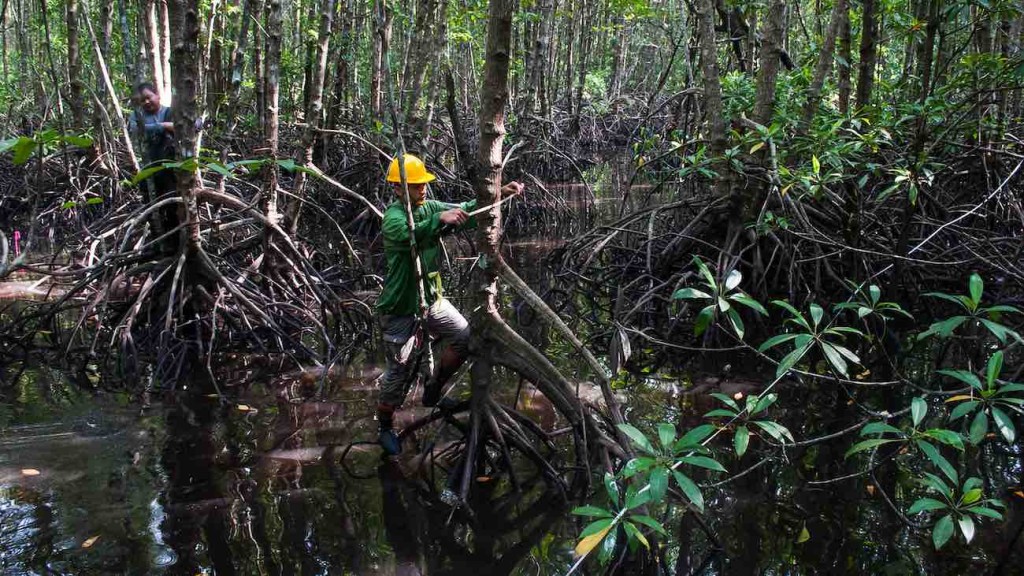
Mangrove Forests in Indonesia - Photo by CIFOR, CC 2.0 License

Reprinted with permission from World at Large, a news website of nature, politics, science, health, and travel.

Mangrove Forests in Indonesia – Photo by CIFOR, CC 2.0 License

They are one of the most unique and fundamental types of forest on our planet, and for a few decades they were being lost at a rate that seemed soon-to-be-fatal. But with the 2022 State of the Mangrove report, a new picture is emerging of changing trends and attitudes towards these trees, which have a crucial role in easing the effects of climate change.

This is the second annual report, and it uses brand new Global Mangrove Watch satellite maps that provide much better detail for this year’s analysis.

Globally today, 42% of all mangrove forests lie under some level of protection. The updated maps calculate that 147,000 square kilometers of the Earth’s surface (57,000 sq-miles) are covered in mangroves, more than previously thought.

Compared to the previous 14 years, the average loss rate between 2010 and 2022 dropped by 600%—to just 25 sq-miles per year (66 km2), or 0.04%.

Conditions for the coastal trees are also improving, not only because of dedicated efforts to reforest mangroves but also because, as climate change policy around the world has narrowed to a carbon-in carbon-out equation, aquatic ecosystems like mangroves have clearly become the most important ecosystems of all.

The report aims to present a clear and simple cost-benefit analysis to policymakers to show that for three key issues that face coastal populations, a mission of “halt loss, restore half, double protection,” is the most effective and achievable strategy available.

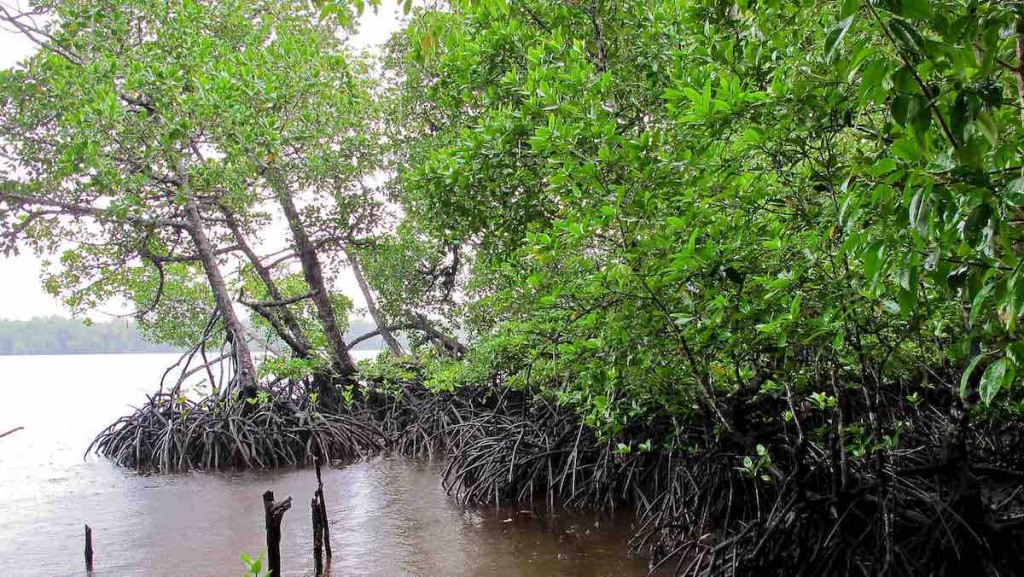
Mangrove forest on Lake Tabarisia in Papua – Photo by Mokhamad Edliadi / CIFOR, CC 2.0 License

Halt, Reverse, Protect

Conservation outlet Mongabay reported on the summary and detailed that in the aftermath of the December 2004 Asian tsunami that killed 200,000 people, Sri Lankan researchers estimated that—per hectare per household—mangroves, which Sri Lanka had very few of, conferred $14,500 in economic value, in part because they can absorb 70-90% of the kinetic energy of a tsunami wave.

RELATED: Mangrove Trees Can Save Americans Tens of Billions in Flood Damages–So a New Alliance Gets Planting

The State of the Mangrove 2022 estimates that coastal communities near mangroves around the world enjoy protections of property and real estate equal to around $65 billion through this protection from storms and waves.

For this and for other reasons, the report recommends countries and partners work to do three things: halt the loss of mangroves entirely, restore half of what was lost since 1996, which equates to some 1,580 sq-miles of restoration (4,092 km2), and double the area of protected trees worldwide.

With the addition of the new maps, the report has identified around 3,100 sq-miles of mangroves that can be restored (8,100 km2), with a particular focus on Southeast Asia and in countries like Papua New Guinea, Indonesia, and others, where much of the world’s mangroves can be found.

CHECK OUT: A Teen Plants Hundreds of Mangroves to Replace Trees Trampled by Hurricane Irma

More reasons to love mangroves

Worldwide, around 4.1 million working fishermen rely on mangroves to act as nurseries for all manner of creatures. The executive summary claims that more than 600 billion shrimp and fish, and 100 billion bivalves and crustaceans develop every year in mangrove forests.

Mangroves are critical to an estimated 893,000 small-scale fishers in Indonesia alone, while an estimated 82% and 89% of those in Bangladesh and Nigeria fish predominantly in and around mangroves.

LOOK: What Can One Person Do in 10 Years? This Man Got 152 Million Mangrove Trees Planted

But in the halls of power around the world, what will likely evolve to become the real value of mangroves is their potential power for storing carbon. Based on the chemical, geological, and biological reality of growing in waterlogged soil, mangroves are estimated to hold up to four times the amount of carbon as some other forested ecosystems.

Mangrove soils worldwide store the equivalent of 22.86 gigatons of CO2, or around 6.23 gigatons of soil carbon. This is more than half of what the human population currently emits every year.

“The loss of even just 1% of remaining mangroves could lead to the emission of 0.23 gigatons of CO2 equivalent—equating to over 520 million barrels of oil, or the annual emissions of 49 million cars in the US,” the authors write.

YOU MAY ALSO LIKE: Precious Rainforests Are Being Preserved at Highest Rate in 30 Years, After Palm Oil Moratorium in Indonesia

For this reason, the protection recommendations for an additional half of all mangrove forests is critical. The report’s recommended restorations would store another 1.27 gigatons of CO2 equivalent.

Some of the largest restoration programs going on in the world right now include Senegal— where in the regions of Casamance and Sine Saloum, 80 km2 has so far been reforested, totaling nearly 80 million trees—and Indonesia, where President Joko Widodo has attempted to reforest 6,000 km2. China has successfully restored 4 km2 of mangrove forests in Zhanjian, Guangdong province, totaling around 4 million trees.

PREACH Some Gratitude for the Mission of Mangroves On Social Media… 

Sharp-Shooting Farm Robot Can Treat 500,000 Plants Per Hour With 95% Decrease in Chemical Sprays

Verdant Robotics
Verdant Robotics

With 50 spray nozzles and a sophisticated computer system, tractors out in California’s central valley are towing artificially-intelligent robots behind them that look set to launch a fourth revolution in agriculture.

Passing over a field they can specifically target individual weeds and crops at a rate of 20 per second, before blasting them with either de-weeder or fertilizer within a millimeter of accuracy.

Verdant Robotics’ SprayBox robot can identify and treat 500,000 plants per hour while using 95% less chemical weedkiller.

Physically mobile robots are already probably more common on big farms than in most other sectors of the economy, but Verdant Robotics feel this is as much a step backwards as forwards.

“Increasingly folks are turning towards things like cover-cropping again, and inter-cropping and other regenerative agriculture techniques that allow us to keep the soil healthy,” said Gabe Siblev, Founder and CEO of Verdant Robotics, in a little mini-doc about their new technology.

“The challenges there have been that it’s difficult to do this at the same sort of scale that we can do monocropping, which is how we feed the world.”

But their robots have a party piece that could create a breakthrough—traditional management techniques that keep the soil healthier, produce more nutritious food and protect the environment, but at the scale currently enjoyed by monocropping.

SIMILAR: New John Deere Tractors Plow Day and Night With No One in the Cab: Autonomous Farming Debuts in 2022

The party piece is that when robots like the SprayBox identify a plant, they don’t simply fire and forget. Rather they’re actively building a centimeter-by-centimeter map of the whole field, complete with the geolocation and ID of every plant therein. This kind of mass data collection is thought to be key to making regenerative agriculture possible at a wide scale, where large numbers of workers would have to be employed otherwise.

“Ironically, it’s kind of returning to how we farmed you know, 100 years ago. Unlocking knowledge that a lot of older growers have, and bringing it back through technology,” said Siblev.

RELATED: Leaving No Molecule Behind: ‘Landfill of the Future’ Turns Farming Waste Into Soaps, Compost, and Candles

The labor shortage of farm workers is one of the reasons that a robotics company is targeting agriculture; another reason is to drastically cut the amount of chemical sprays that can impact our waterways and health.

In a 2019 California Farm Bureau Federation survey, 56% of participating farmers indicated that they had difficulty hiring the number of employees they needed for production of their main crop.

WATCH the mini-doc here… 

SHARE This Awesome Robotic Farmer With Your Friends… 

Great-Grandfather Dubbed ‘Super Mario’ Joined a Gym in Retirement and Still Pumps Iron at 94

A 94-year-old retiree still hits the gym twice a week to fit in a two-hour workout, and has no plans to stop.

“Super” Mario Sanna considers the gym a “second home,” and the gym rats there his “second family.”

The former railway engineer said his job laying train tracks kept him in good shape, but he fell in love with the gym when started going to stay fit post-retirement.

That was 30 years ago. His normal rigorous workout routine includes exercise bikes, rowing machines, leg presses, and biceps curls, but he’s not beyond a pilates class.

“I use everything the gym supplies—any type of machinery, from spinning classes to lifting weights and going on the walking machine,” said Sanna. “In my opinion, the body needs to be moving. I probably keep moving even when I’m asleep. It’s a machine itself. If you leave it idle, it begins to deteriorate.”

If the name didn’t give it away, Sanna began working for British Rail in 1954 after arriving in the UK from Sardinia, Italy two years earlier.

And during those early days, the physical exertion he needed to shift hefty tracks around had been enough to keep him in top shape.

When Mario finally downed his tools in the early 1990s, he recognized he needed a new way of staying fit and got his first gym membership.

Only an eye condition prevents him from driving to the gym as frequently as he’d like. He’s hoping to return more regularly after an operation, but for now a friend picks him up on Friday and Monday.

RELATED: 80-Year Old Powerlifter Can Still Pump 800 Pounds And Inspire Seniors to Hit the Gym

“I worked every Sunday because I was getting married, and I needed a lot of money at the time,” he recalls. “It was very manual work all the time.”

“I always think I need to stretch my legs as they’re carrying the rest of my body, and that’s one thing I’ll treat as the number one,” he said, detailing his normal routine. “Then I’ll do the other parts of the body—from legs to the arms.”

MORE LIKE THIS: Grandma Lost 250 Pounds and is Now a Bodybuilder After Saggy Skin Removal

“I also do Pilates and anything that helps me to be physically more fit than I am now. I’ll also lift a 25kg bar, and I go on the cables. I’ll normally spend between one and two hours at the gym. But if the coffee machine is working, I might stay two and a half hours.”

In America, there’s a shifting focus in senior healthcare away from cardiovascular exercise like brisk walking or swimming and towards weightlifting, which can not only elevate your heart rate like an execising bike, but helps maintain bone density and fight off muscle atrophy.

Mario said he regards the friends he’s made at the gym as a “family” and recently celebrated his 94th birthday with a group of them.

“They all wish to see you all the time. It’s like a family,” he said. “For my birthday they had a party—and this is the place. They celebrated it here.”

WATCH: 78-Year-old Iron Woman Is Powerlifting Champion Who Does 400 Squats and Holds 19 World Records

Mario said he was the oldest person that uses his gym, but recommended other oldies give it a try if they want to keep in shape.

“I think I’m the oldest one. I can recommend it to anybody to do it, especially if they’re on their own, to come out of their house and do something.”

If you don’t believe him, check him out yourself…

SHARE This Inspiring Senior With Your Friends Who Need A Lift…

“When you arise in the morning give thanks for the food and for the joy of living. If you see no reason for giving thanks, the fault lies only in yourself.” – Chief Tecumseh

Faith Goble, CC license

Happy Thanksgiving! 

Quote of the Day: “When you arise in the morning give thanks for the food and for the joy of living. If you see no reason for giving thanks, the fault lies only in yourself.” – Chief Tecumseh, Shawnee Nation

Photo by: Faith Goble, CC license

With a new inspirational quote every day, atop the perfect photo—collected and archived on our Quotes page—why not bookmark GNN.org for a daily uplift?

Faith Goble, CC license

Remains of Prehistoric BBQ Suggests Dinner was Served 780,000 Years Ago–600,000 Years Earlier than we Thought

A whopping 780,000 years ago, early humans sat down in front of a roaring fire for a BBQ of carp fish in what’s modern-day Israel.

The remains of their meal, now discovered by archeologists, pushes back the confirmed date of the first known use of fire for cooking by 600,000 years, back into the earliest periods of upright man.

It proved that fish was critical for Paleolithic diets, that neither cooking nor BBQ originated with homo sapiens, and that our evolutionary tendency to eat cooked food likely began far earlier than anyone thought.

The previous record for a fire-cooked meal was around 180,000 years ago, and made by homo sapiens in what is known as the Upper Paleolithic, the final stage before the evolution of civilization.

In this case the overwhelming likelihood would be that either Neanderthals or even potentially homo erectus, have been cooking their food as one of the earliest technological developments in our history.

The fish was found at the Gesher Benot Ya’aqov archeological site of Achulian hunter-gatherer communities in Israel.

In the study, the researchers focused on pharyngeal teeth (used to grind up hard food such as shells) belonging to fish from the carp family. These teeth were found in large quantities at different archeological strata at the site.

By studying the structure of the crystals that form the teeth enamel (whose size increases through exposure to heat), the researchers were able to prove that the fish caught at the ancient Hula Lake, adjacent to the site, were exposed to temperatures suitable for cooking, and were not simply burned by a spontaneous fire.

SIMILAR: Prehistoric Human Footprints Unearthed in Spain are Nearly 300,000 Years Old and Unique in All of Europe

The authors note that the transition from eating raw food to eating cooked food had dramatic implications for human development and behavior.

Eating cooked food reduces the bodily energy required to break down and digest food, allowing other physical systems to develop. It also leads to changes in the structure of the human jaw and skull. This change freed humans from the daily, intensive work of searching for and digesting raw food, providing them free time in which to develop new social and behavioral systems.

RELATED: Prehistoric People Created Art by Flickering Firelight, New Research Reveals

Some scientists view eating fish as a milestone in the quantum leap in human cognitive evolution, providing a central catalyst for the development of the human brain. They claim that eating fish is what made us human. Even today, it is widely known that the contents of fish flesh, such as omega-3 fatty acids, zinc, iodine and more, contribute greatly to brain development.

SHED Some Light On This Prehistoric BBQ With Social Media… 

Millions of Sharks Could be Saved from Fishing Hooks with Use of New Pulsing Device

SharkGuard via SWNS
SharkGuard via SWNS

Millions of sharks could be saved from being caught on fishing hooks with a recent invention that acts like a car’s hazard lights.

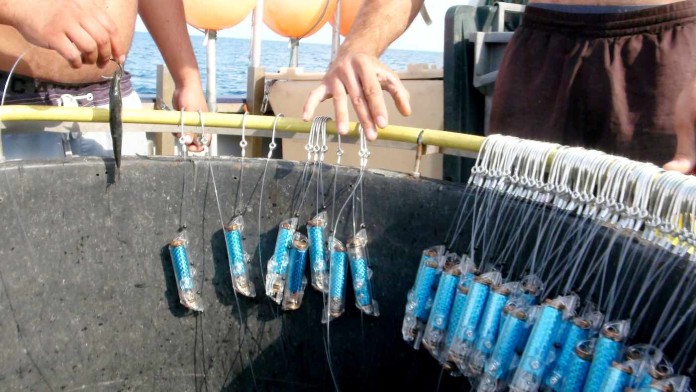
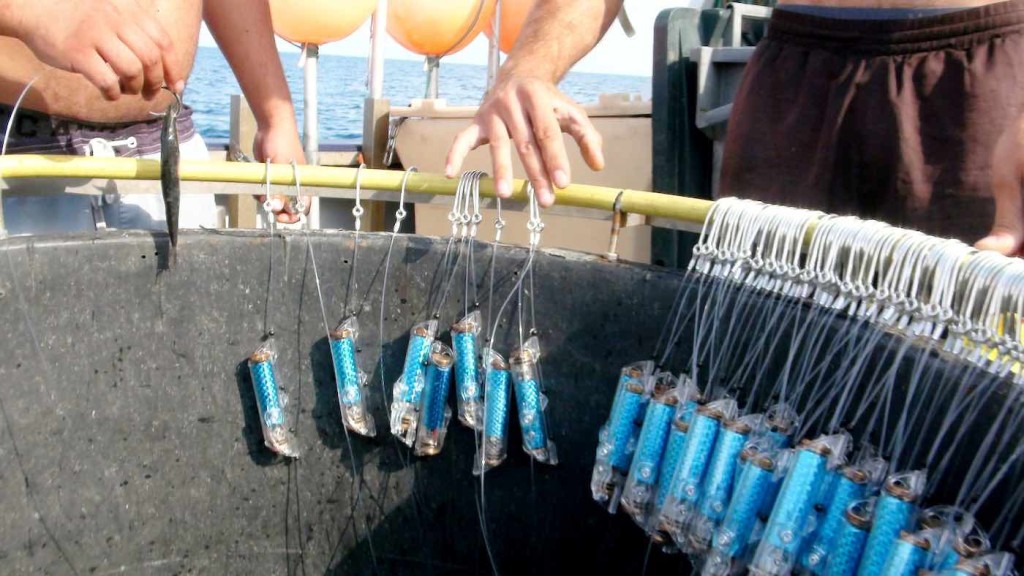
Called SharkGuard, the device fits onto the longlines used by fishermen and creates an electrical field around a baited hook, which sharks and rays pick up with their electroreceptors.

Tests have shown that it can reduce the bycatch of these animals by 91% for sharks and 71% for rays.

Sharks often don’t get the conservation attention they deserve due to their rare but occasional penchant for nibbling on swimmers. The inventors say this technology could reverse the dramatic decline of endangered sharks around the world.

“The main implication is that commercial longline fishing may continue, but it won’t always necessarily result in the mass bycatch of sharks and rays,” said Dr. Robert Enever of the conservation company Fishtek Marine, producers of SharkGuard.

Longline tuna fishing is the number-one threat for sharks living in the open ocean.

In looking to mitigate this threat to the animals, Dr. Enever and his colleagues thought that shark deterrents which worked for protecting scuba divers and surfers could also be applied to tuna fisheries to protect sharks from bycatch.

The team ran sea trials of their device in July and August 2021 in southern France and have published their results in the journal Current Biology.

Two fishing vessels fished 22 longlines on 11 separate trips, deploying a total of more than 18,000 hooks.

The researchers found that SharkGuard hooks significantly reduced the number of blue sharks and pelagic stingrays caught in comparison to standard control hooks.

The catch rate of these species per unit effort dropped by 91% and 71% for sharks and rays, respectively, whereas catch rates of bluefin tuna were not significantly influenced by the presence of SharkGuard on the hook.

READ ALSO: Simple Green LED Lights Save Sharks and Turtles from Accidental Bycatch in Fishing Nets

The researchers also said that if the use of SharkGuard was scaled up to the level of whole fisheries, it would mean much less sharks being caught on fishing gear.

It could therefore help to slow the dramatic decline of shark populations around the world.

With efficacy proven, Dr. Enever and colleagues said they are now working to overcome a barrier of battery life so fishers can “fit it and forget it.”

A full set of induction-charged SharkGuard devices for 2,000 hooks would cost around $20,000 (£16,790) and would last three to five years, which the researchers say is a modest annual cost for most commercial tuna fishing operations.

They are now encouraging fishers who experience high shark and ray bycatch, as well as retail companies who want to improve the sustainability of their supply chain, to seek contact with Fishtek Marine early as sea trials and engineering developments are planned for commercialisation.

RELATED: Floating ‘WALL-E’ Scarecrow Stops Seabirds from Diving into Fishing Nets

“There is hope! Against the relentless backdrop of stories of dramatic declines occurring across all species, it is important to remember that there are people working hard to find solutions,” said Enever enthusiastically.

“SharkGuard is an example of where, given the appropriate backing, it would be possible to roll the solution out on a sufficient scale to reverse the current decline in global shark populations.”

WATCH SharkGuard in action below…

SHOW Your Support For Sharks and Rays by Casting This Over to Social Media…

California Tribe Reignites Age-Old Practice of Intermittent Burns to Prevent Wildfires

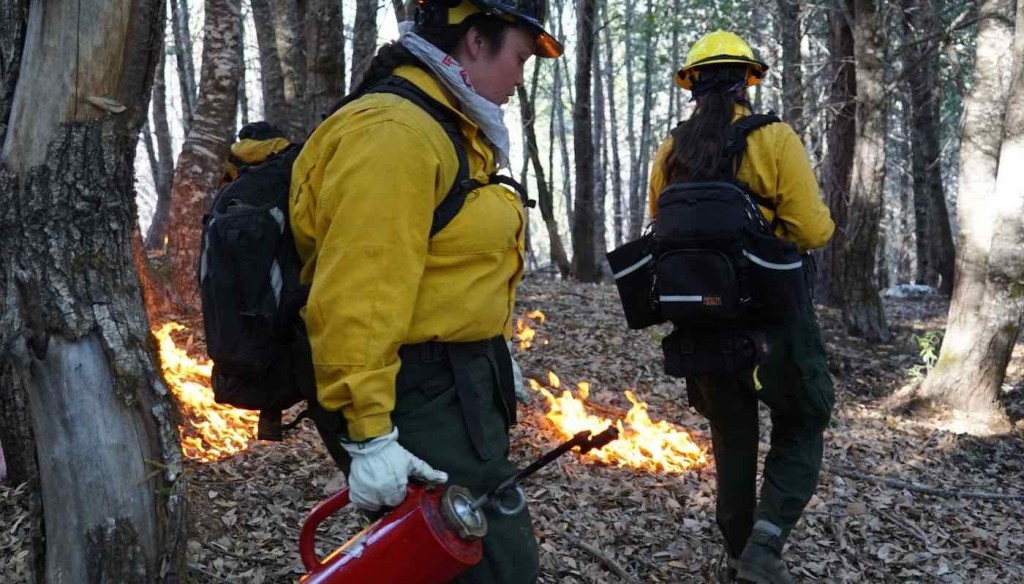
Out in the Klamath Mountains of northern California, fires are rushing through the underbrush, lighting everything they touch between the trees ablaze.

However these aren’t a danger to the rich hardwood forests, they are deliberately set by the Yurok and Karuk tribal nations—as a wildfire prevention strategy of all things.

As strange as it might sound to literally fight fire with fire, it’s something the tribes of these mountains have done for at least 1,000 years according to oral tradition.

Low-level and controlled burnings are in fact an ancient and successful forest-management practice. A cleared forest floor and less fine fuels such as leaves and ferns, makes it more difficult for wildfires to ignite and spread.

Wildfires have raged across California over the last half-decade, and out of these ashes sprouted a partnership between the U.S. Forest Service and the tribal nations of the Klamath Mountains.

In 2018 they began collaborating on the Somes Bar Restoration Project to use traditional fire techniques to safeguard 5,570 acres (2,254 hectares) of land covered in white, black, and tan oaks, Douglas fir, red fir, and madrones on steep slopes.

So far, the project’s results have been encouraging. By removing the clutter of the forest floor, it allows mature trees to grow more fully and access the nutrients contained in that litter faster. It brings about increased seed germination of the larger species, and better visibility and paths in between the trees.

Mongabay reports that some forest managers have seen wildfires reach the edges of the forests managed by the Karuk and Yurok and simply go out on their own due to a combination of fuel-shortage and bigger, healthier trees.

MORE GOOD FIRE NEWS: Cardboard Habitat Pods Give a Fighting Chance to Animals Displaced by Wildfires

Scientists will brazenly state that wildfires are becoming more intense and destructive as the planet warms with climate change, but it’s known that from Australia to Europe to North America, people for thousands of years have been using traditional land management techniques to prevent large forest fires.

In Europe, this has been the case with shepherds, who allowed their flocks to pass through forest underbrush eating woody shrubs and leaves. In Australia, the Aborigines regularly burned areas both for forest management and for hunting, while the Native Americans are known to have done the same.

RELATED: Goats: The Surprising Solution to Saving a Country From Wildfires

Across all these traditional management strategies, the last 100 years have seen them disappear almost entirely. The Mongabay story bears witness to the red tape of government management laws that prevent the Yurok and Karuk from managing forests even after the Service requested them to.

By returning some of these practices to the land, it could be that Earth’s forests today escape the risk of wildfires even under the worst case scenarios of temperature rises.

SHARE This Tribal Power Story With Your Friends…