












All News - Page 363 of 1714 - Good News Network
Home Blog Page 363

Bone Loss Meds May be Lowering Ovarian Cancer Risk, Scientists Find

Medicines used to prevent bone loss may help lower the risk of ovarian cancer. That’s according to research by The University of Queensland.

UQ researchers compared medications taken by more than 50,000 women aged over 50, using de-identified medical records from 2004–2013, to analyze differences in those with ovarian cancer and without.

UQ School of Public Health PhD Candidate Karen Tuesley said women who used nitrogen-based bisphosphonates were found to be less likely to develop ovarian cancer.

“The findings varied between ovarian cancer subtypes and included a 50 per cent lower risk for endometrioid cancers and 16 percent for serous ovarian cancers,” Ms Tuesley said.

“We don’t yet know why these medicines may lower the risk of ovarian cancer in women, but previous studies have shown that nitrogen-based bisphosphonates can stop the disease spreading in laboratory grown cells.

“Ovarian cancer is the eighth most common cancer in Australian women with fewer than 50 percent of patients alive five years after diagnosis.”

MORE: Protein Destroys ‘Hard to Treat’ Cancers, Could Become ‘One Size Fits All’ Pill

In 2021, there were 1720 cases of ovarian cancer diagnosed, and 83 percent of these occurred in women aged over 50 years, according to the Australian Institute of Health and Welfare.

More than 200,000 Australians are prescribed bisphosphonates containing nitrogen each year, making them one of the most prescribed medicines of their type in the country.

The medicines prevent bone loss and help reduce fractures in osteoporosis patients.

PhD Supervisor Associate Professor Susan Jordan said this study is important because most known risk factors for ovarian cancer cannot be easily modified.

“Earlier studies have found medicines used to treat other diseases may be useful in preventing cancer, prompting this investigation into bisphosphonates,” Dr Jordan said.

“Further research is needed to understand why these medicines might affect ovarian cancer subtypes differently.

RELATED: New Hope for Reversing Acute Leukemia Patients’ Resistance to Treatment

“We know ovarian cancer subtypes look different under the microscope and have unique risk factors.

“However, it is important to look at each subtype separately to improve our knowledge and understanding of these cancers.

“This study may help inform medicine choice for women with osteoporosis and suggest areas for further research to better understand how ovarian cancer develops.”

The paper is published in the JNCI: Journal of the National Cancer Institute.

Source: The University of Queensland

SHARE the Hope; Share This Story With Others…
Stranger Finds Phone in a River and Tracks Down Owner to Return Sentimental Photos

OWAIN DAVIES _ MIGUEL PACHACO family photos supplied phone
OWAIN DAVIES/MIGUEL PACHACO

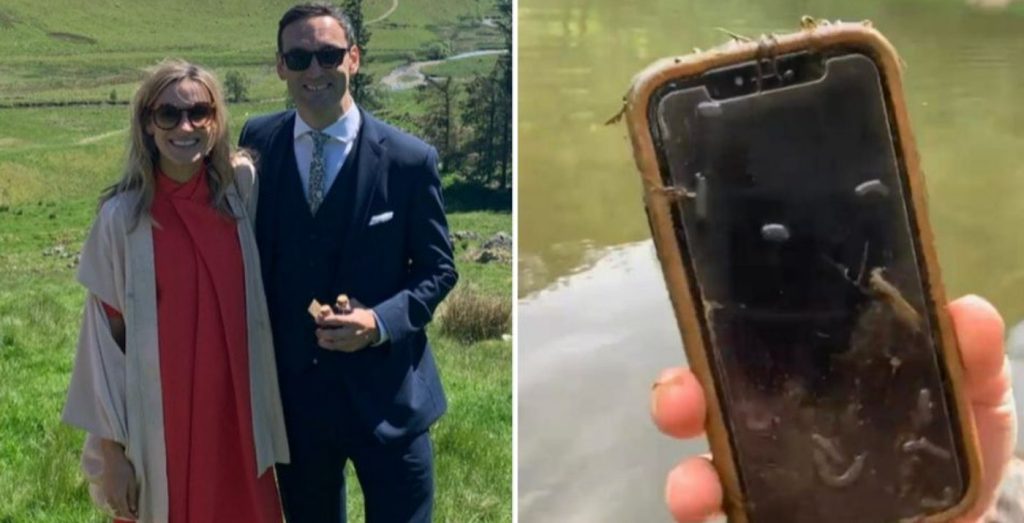
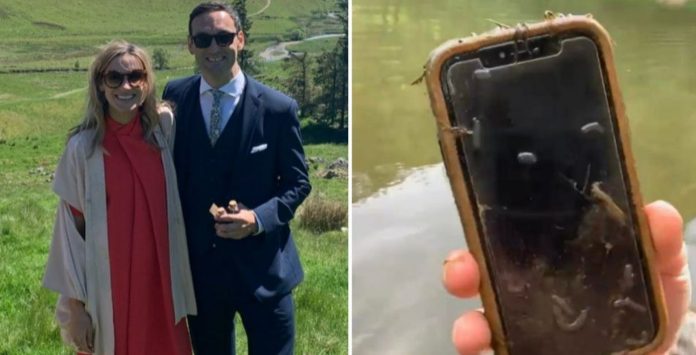
A man who—when canoeing for his bachelor party lost his iPhone on a river in Gloucestershire—was absolutely amazed when, ten months later, he saw sentimental photos of the party posted on Facebook in an effort to reunite the phone with the owner.

“I was in a two-man canoe and my partner probably shouldn’t have stood up, and needless to say we fell in,” Owain Davies, told BBC Radio Gloucestershire. “The phone was in my back pocket and as soon as it was in the water I realized the phone was gone.”

Gone for good perhaps, as water and electrical devices hardly mix.

After being immersed for ten months, another canoer, Miguel Pachaco, spotted something blue in the water.

Discovering Davies’ iPhone, some people would have thrown it away or hawked it to a phone refurbishment store.

MORE: A Stranger’s Kindness Helped Boy Escape the Nazis Who Would Go On to Win Nobel Prize–And He Never Knew it

Instead, Pachaco, imagining there would be memories and important information on the phone, took it home, took it apart, and thoroughly dried every component out using an airline and compressor, and an airing cupboard.

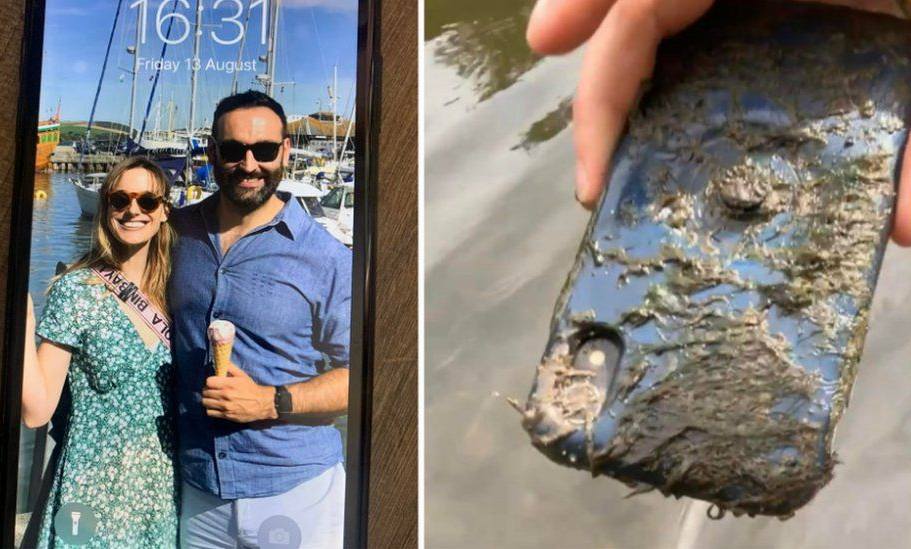
In the morning, he attached it to a charger and boom, it turned on to reveal a homepage image of a beautiful couple and a date marked more than 10 months ago.

Pachaco shared pictures of the phone, and the screensaver on a Facebook group for Cinderford, the town that the river passes through—they were shared more than 4,000 times.

OWAIN DAVIES/MIGUEL PACHACO

Eventually, friends of Davies, who by then had moved to Edinburgh with his fiancé, saw the photos and alerted him.

He told the BBC that he couldn’t believe that after ten months of sitting in water, the phone could be not only restored to working order, but that someone would make the effort to find him

RELATED:  High School Teens Swoop in to Support 6th Grade Stranger When No One Would Sign His Yearbook

“I know if I lost my phone, I’ve got a lot of pictures of my children, I know I’d want that back, ” Pachaco told the BBC.

CHARGE Up Those Feeds With Good News; Share This Story…

New York Libraries Are Giving Away 500,000 Books for Keeping Kids Engaged This Summer

NYPL
NYPL

At New York Public Libraries this summer, kids and teens will get to participate in a giveaway of half a million books.

Drop by neighborhood NYPL locations in the Bronx, Manhattan, or Staten Island anytime to choose between 500,000 new and diverse tomes: they’re to take home and keep forever, the idea being that “a lifelong love of reading—and your own home library—begin with choosing your first book.”

Source: NYPL

SHARE a Page of the Good Community News With Chums…

“I am still determined to be cheerful… for our happiness or misery depends upon our dispositions, and not upon our circumstances.” – Martha Washington

Ed Yourdon, CC license

Quote of the Day: “I am still determined to be cheerful… for our happiness or misery depends upon our dispositions, and not upon our circumstances.” – Martha Washington

Photo by: Ed Yourdon, CC license

With a new inspirational quote every day, atop the perfect photo—collected and archived on our Quotes page—why not bookmark GNN.org for a daily uplift?

Ed Yourdon, CC license

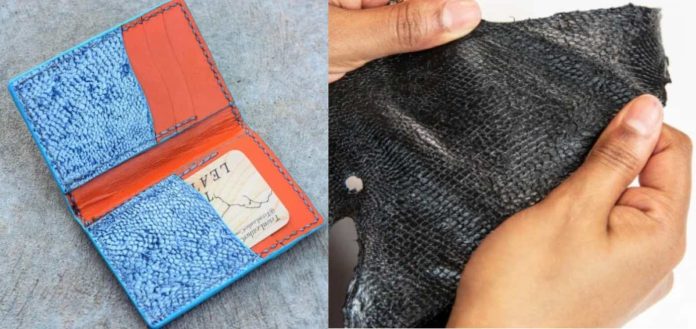
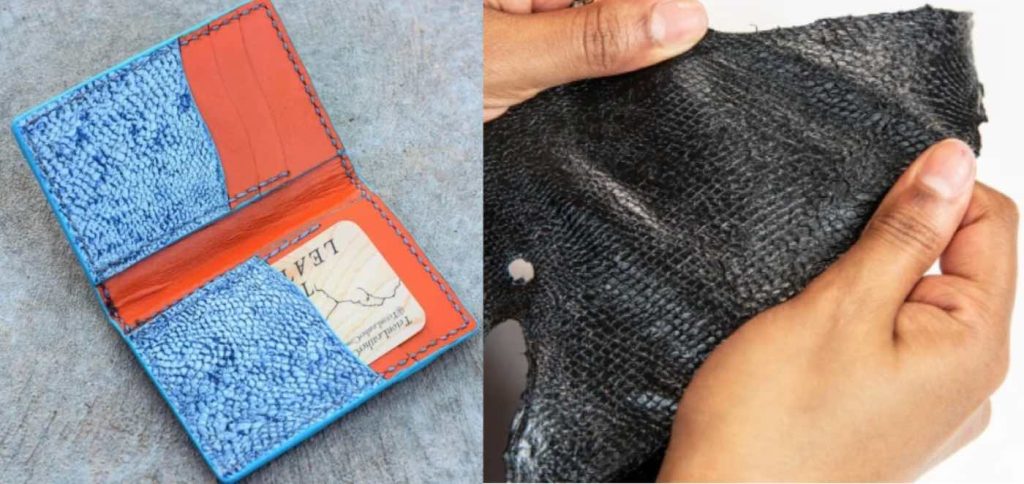
This Gorgeous Leather is Made From the Hide of an Invasive Predatory Fish

Inversa Leathers
Inversa Leathers

An exotic aquarium staple, the spectacular lionfish is unfortunately an invasive species that spells catastrophe for Atlantic and Caribbean ecosystems it happens upon.

Fortunately for these seas, Inversa Leathers is harvesting these fish every day to make equally-spectacular leather for fashion products.

The garment and fashion industries are some of the largest polluters in the consumer goods sector. Invasive species, however, represent a uniquely beneficial opportunity to transform supply chains into ones which work for the planet, not against it.

For Aarav Chavda, an avid scuba diver and engineer who had seen many of his favorite reefs off the Florida coast become barren and lifeless, that meant launching Inversa with his childhood friend as a way to save these habitats. The lionfish were major culprits in their devastation, and so the lionfish had to go.

“Unfortunately, there are millions of lionfish in these ecosystems, and we have a long way to go to thinning out this population,” Chavda told Fast Company. “But there are many other invasive species out there. We believe all of them can be used in fashion products.”

LOOK: European Cities Are Turning Rooftops Into Community and Sustainability Hubs: ‘A revolution in urban planning’

His company buys lionfish from fishermen and fishing firms across Florida, Mexico, and the Caribbean, to the tune of several thousand per day. It wasn’t that these fisherrmen didn’t know the lionfish were destroying reef and shallow sea ecosystems before, but there was no-one paying for them.

MORE: Sustainable Wind Turbine Towers Being Made of Eco-Friendly Wood

Inversa ships the lionfish to a tanning facility in Ohio after selling all the meat to local restaurants in Tampa. In Ohio, the leather is put through a sixty-step tanning process, and sold to a variety of designers, including Italian shoe brand P448, Teton Leather Company, and others.

At the moment, these projects are priced more for celebrities than regular people (maybe the famous can do their part by purchasing one or two items?).

RELATED: Solar Covered Skyscraper Will Produce All its Own Energy

Turning invasive species into mass-harvestable resources is a great way to monetize the capture of them—which usually costs governments tens of millions of dollars. In Berlin, a food truck offers a menu filled with invasive species, suggesting that if you can’t beat them, eat them.

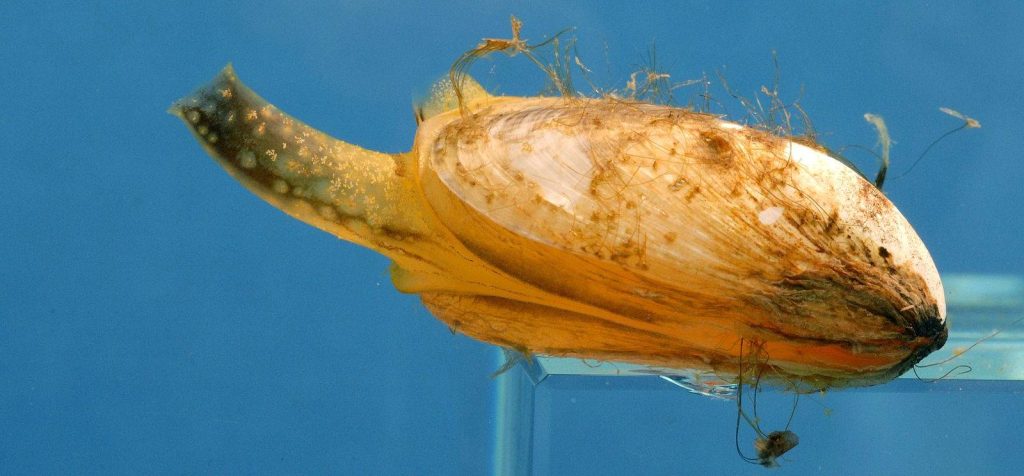
In London, designers are utilizing the government’s multi-million pound project to clear city water pipes of quagga mussels—by grinding the bivalves’ shells up to make powder for biological glass tiling.

GIVE a Flash of These Stylish Purses in Those News Feeds…

Daredevil Dad Launches Tiny Boat He Hopes to Sail 1,900 Miles Across the Atlantic – LOOK

SWNS
SWNS

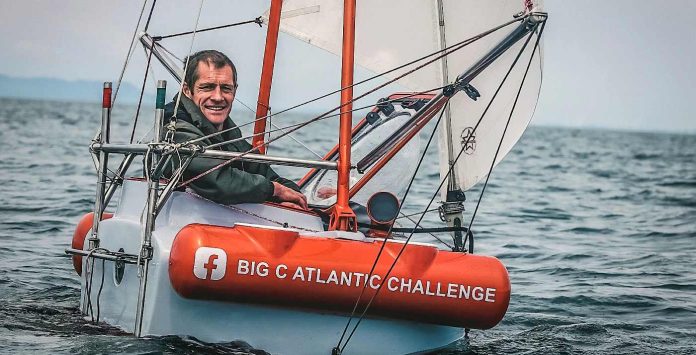
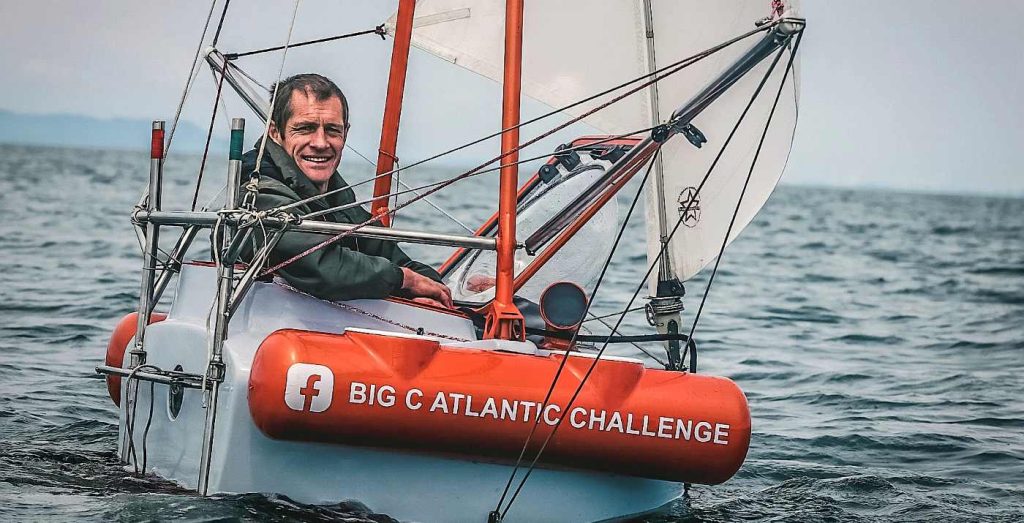
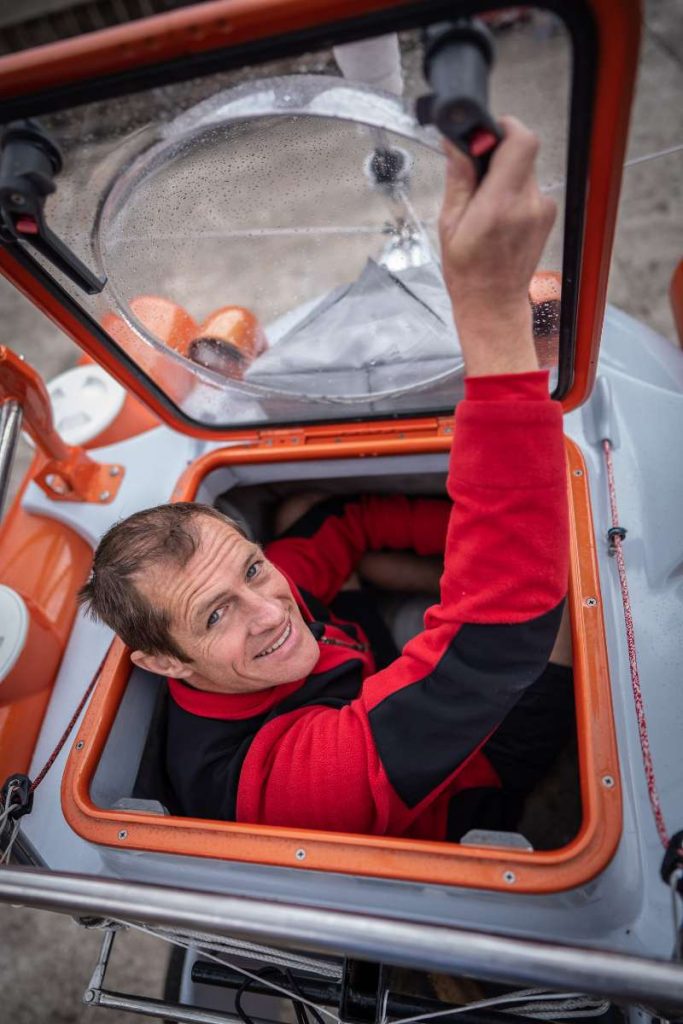
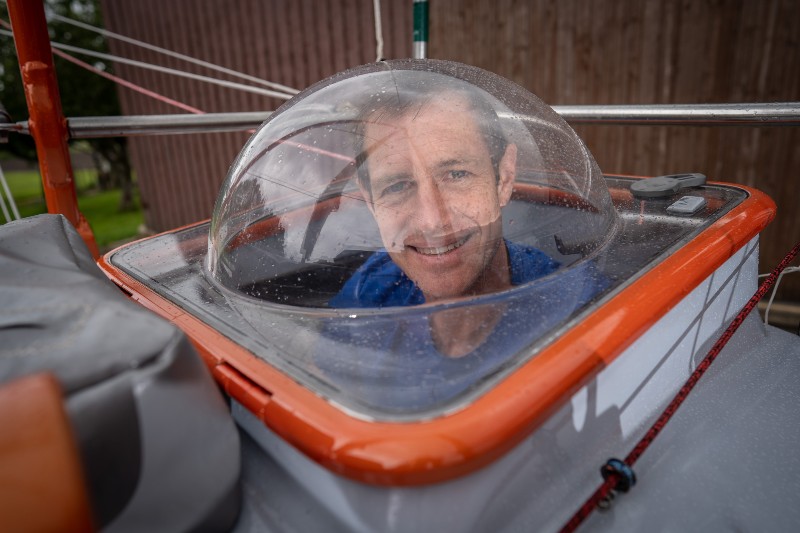
These incredible photos show a daredevil dad taking to the water in his three foot (one-meter) long boat for the first time, which he hopes to sail 1,900 miles across the Atlantic.

48-year-old Andrew Bedwell made the maiden voyage in his tiny self-built fibreglass vessel, Big C, at the port of Whitehaven, in Cumbria, last week.

During his trip out, the experienced mariner gave his support boat the “thumbs up” from his cramped cockpit, which is just big enough to accommodate his 6ft tall frame.

And he seemed at ease in the tiny ship ahead of the massive transatlantic crossing, which he compared to being “stuck in a wheelie bin, on a rollercoaster for 90 days.”

The intrepid sailor plans to depart from Newfoundland, Canada, in May next year, before trade winds bring him to Lizards Point, in Cornwall.

His boat is roughly 1.5 feet (half a meter) shorter than the last record-breaking small boat to make the journey across the Atlantic and has a top speed of just 2.5 mph.

MORE: 83-Year-old Sets World Record Sailing Alone Across the Pacific Without Stopping

Throughout his expected three-month crossing, he’ll survive off a cold protein-rich substance that’s moulded around the internal walls of the boat to save space.

SWNS

The thrill-seeking father-of-one admitted his wife thinks he’s a bit “crackers,” but said he wanted to achieve something “amazing” before he turned 50.

“All my life, I’ve done unusual challenges, and it’s slowly got more and more important to myself to get smaller and smaller and smaller, he said.

RELATED: All-Black Climbing Team Makes History Reaching Top of Everest, Inspiring Diverse Adventurers

And speaking about his purpose-built tiny boat, Big C, he said, “I think a space rocket would have more room.

SWNS

“This is like being stuck in a wheelie bin, on a rollercoaster for 90 days – and that’s what it could be in the worst-case scenario.”

SHARE This Daredevil Adventurer’s Story With All Your Buddies…

Sunshine Could Ward Off Dementia and Strokes: First-Ever Direct Link to Vitamin D Found

By Tim Foster

Sunshine could ward off dementia and strokes after scientists have shown a direct link between vitamin D and the conditions in a world-first study.

A new study based on British people said that cases of dementia could drop by nearly a fifth if people who were deficient in the vitamin took supplements to bring them up to healthy levels,

It is known as the sunshine vitamin because the skin makes it when exposed to light.

The team from the University of South Australia looked at nearly 300,000 people from the UK Biobank examining the impact of low levels of vitamin D and the risk of dementia and stroke.

They found that low levels of vitamin D were associated with lower brain volumes and an increased risk of dementia and stroke.

Further genetic analyses supported a causal effect of vitamin D deficiency and dementia.

MORE: Listening to Music With a Groove Actually Boosts Brain Function

They said that in some populations as much as 17 percent of dementia cases might be prevented by increasing everyone to normal levels of vitamin D.

Dementia is one of the major causes of disability and dependency among older people worldwide, affecting thinking and behaviours as you age.

Globally, more than 55 million people have dementia with 10 million new cases diagnosed every year. With no cure in sight, there is an increasing focus on preventative behaviors.

Alzheimer’s and other forms of dementia affect over 920,000 people in the UK—a figure that will rise to two million in the next three decades.

Study author Professor Elina Hyppönen, Senior investigator and Director of UniSA’s Australian Centre for Precision Health, said the findings are important for the prevention of dementia and appreciating the need to abolish vitamin D deficiency.

RELATED: Listening to Music With a Groove Actually Boosts Brain Function

“In this UK population we observed that up to 17 per cent of dementia cases might have been avoided by boosting vitamin D levels to be within a normal range,” she said.

“Our study is the first to examine the effect of very low levels of vitamin D on the risks of dementia and stroke, using robust genetic analyses among a large population.

“Vitamin D is a hormone precursor that is increasingly recognized for widespread effects, including on brain health, but until now it has been very difficult to examine what would happen if we were able to prevent vitamin D deficiency.

“In some contexts, where vitamin D deficiency is relatively common, our findings have important implications for dementia risks.

“Dementia is a progressive and debilitating disease that can devastate individuals and families alike.

“If we’re able to change this reality through ensuring that none of us is severely vitamin D deficient, it would also have further benefits and we could change the health and wellbeing for thousands.

“Most of us are likely to be ok, but for anyone who for whatever reason may not receive enough vitamin D from the sun, modifications to diet may not be enough, and supplementation may well be needed.”

CHECK OUT: New Study of ‘MIND’ Diet Shows It May Improve Memory and Thinking Skills in Old Age

The genetic study analyzed data from 294,514 participants from the UK Biobank, examining the impact of low levels of vitamin D (25 nmol/L) and the risk of dementia and stroke.

Nonlinear Mendelian randomization (MR)—a method of using measured variation in genes to examine the causal effect of a modifiable exposure on disease – were used to test for underlying causality for neuroimaging outcomes, dementia, and stroke.

The study was published in the American Journal of Clinical Nutrition.

SHARE These Findings With Others Who’re Looking for Sunny Findings…

Designer Turns Mussel Shells That Once Clogged London’s Water Pipes into Gorgeous Tile

Bureau de Change
Bureau de Change

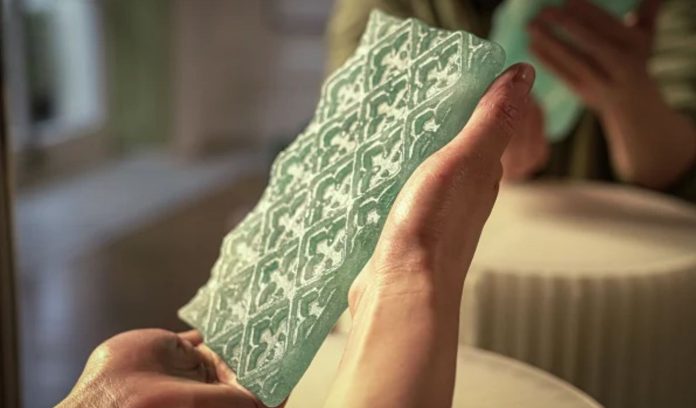
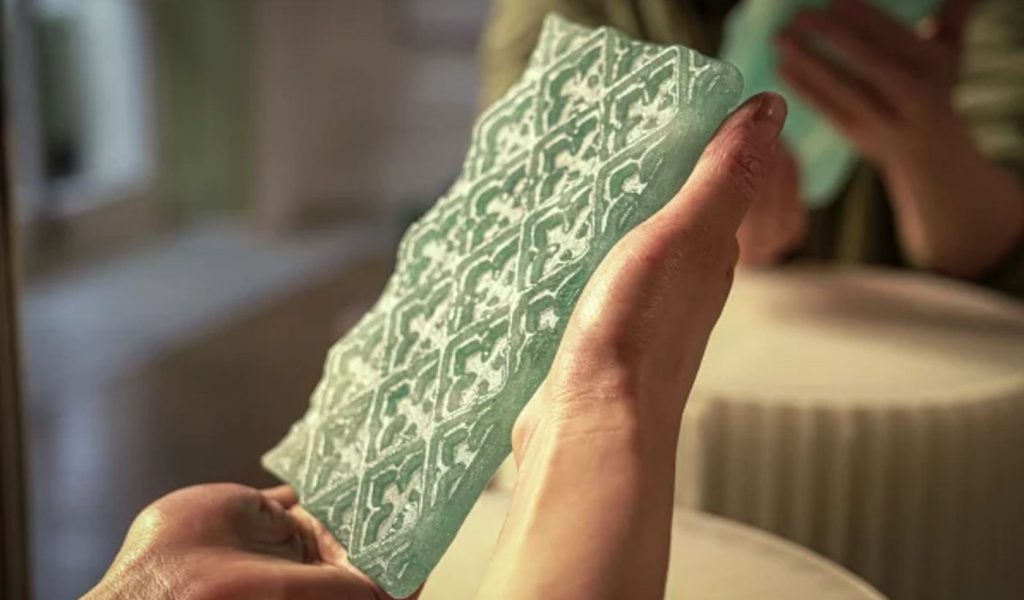
Some designers in London are taking an invasive mussel species and turning it into beautiful tiling.

Aside from preventing the mussel shells breaking down in landfills, the process creates a rigid material that is translucent—something that has never been done before.

Invasive species can require tens of millions in financing to eradicate, but what if the incoming investment was paired with outgoing profits—how much faster could invasive species be cleared out then?

When London water pipes began being clogged by an invasive species native to the Dnieper River in Ukraine called the quagga mussel, Thames Water had to spend millions of pounds to remove them. Most of the load ended up in landfills around the British capital, but a certain amount is now found in the workshop of designer Lulu Harrison, and at the London Craft Week’s Beautility exhibit, where her use of quagga mussel shell powder to make glass caught the eye.

Glass is infinitely recyclable, making it one of the least polluting container materials available. However sand mining is an ecologically-damaging practice, particularly for rivers.

NOAA Great Lakes Environmental Research Laboratory, CC license

Harrison has said that her method is similar to ancient glass-making techniques. She uses about 60% River Thames sand, 20% mussel shells, 20% locally-sourced wood ash, and a bit of “soda ash,” which is the principle ingredient in normal glass. Harrison thinks manufacturers following in her footsteps could make a “geo-specific glass” industry, by producing glass products based on locally-available substrates to produce different colors and levels of translucence.

MORE: This Gorgeous Leather is Made From the Hide of an Invasive Predatory Fish

Bureau de Change, an architecture firm founded by Katerina Dionysopoulou and Billy Mavropoulos, teamed up with Harrison to produce Thames Glass, a series of tiling for building façades that celebrate the patterns of old London.

“Looking back at the Royal Doulton, which manufactured the city’s water pipes in the mid-19th century, as well as the city’s ornamental terracotta chimney pots, the cast glass tiles replicate some of the same intricate 19th-century patterns,” write Bureau de Change.

RELATED: Sustainable Wind Turbine Towers Being Made of Eco-Friendly Wood

To make the tiles, the mussels are washed, dried in the sun, ground and sieved into a fine powder, cooked into molten glass, then rapidly cooled to be shattered and ground up again. This is finally fed into a 3D printer to create the tiles.

CHECK OUT: Students Create Edible Tortilla Tape to Keep Your Wraps Wrapped

English building codes are famously strict, and expensive tests will need to be performed on the tiles before they can be approved for use on actual buildings—but given that the quagga mussel is known to invasively reside in many locations, including in the Great Lakes of North America, the hope is that we’ll soon be seeing beautiful tiles like these wherever they could make a difference.

SHARE These Stunning Designs With All Your Buddies…

“In the mist of Difficulty lies Opportunity.” – Oprah Winfrey

Quote of the Day: “In the mist of Difficulty lies Opportunity.” – Oprah Winfrey

Photo by: Shashank Sahay

With a new inspirational quote every day, atop the perfect photo—collected and archived on our Quotes page—why not bookmark GNN.org for a daily uplift?

Beautiful Image of International Space Station Passing in Front of Sun Captured in Less Than a Second

SWNS
SWNS

The International Space Station (ISS) is seen transiting the Sun in these fascinating images taken from England.

Jamie Cooper captured the spectacle in just one second from his home in Whilton, Northamptonshire.

“On the late morning of 17th June 2022, a pass of the International Space Station in front of the Sun was predicted to be visible from my own home. This was an opportunity not to be missed,” he says.

SWNS

“I shot the entire transit event, that lasted less than one second, using a high speed ZWO ASI290MM video camera, capturing frames of one millisecond exposure at 80 frames per second.”

MORE: Black Hole at the Heart of Our Own Galaxy is Pictured For First Time

“There’s a very narrow band where you, the space station and Sun are all in a straight line and it’s about three miles wide,” he told the BBC.

SWNS

“I’d checked the data three days before and it was going to miss my house, I checked the day before and it was going to be over my house, so I was lucky.”

And for the chance to see these fantastic photos, so are we.

HELP This Photo Orbit Further; Share It On Social Media… 

How Fog Nets Are Making Water Abundant in Arid Africa – And May Be Useful in California

Aqualonis / YouTube
Aqualonis

During the Moroccan desert summertime drought, fog nets are being used to provide drinking water to hundreds of thousands of people in remote mountain villages.

Now villagers can irrigate agricultural fields, turning desertified land back into green gardens, all thanks to mathematician and businessman Aissa Derhem.

Derhem lived in Canada while studying for a Ph.D. in mathematics during the 1980s. It was there he learned about how in the driest place on Earth—the Atacama Desert in Chile, where it has officially never rained—the inhabitants use fog nets to catch what little moisture does enter the landscape.

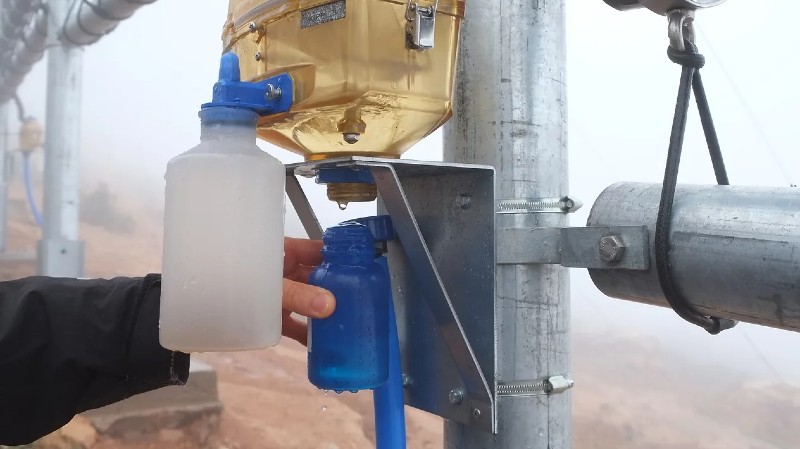
The fog net is a multilayered mesh designed to attract and accumulate the water particles in places where ocean-born fog is common, but rain is not. Derhem began to wonder if the same idea couldn’t help address the myriad of water-related issues in his birthplace on the slopes of Mount Boutmezguida, in southwestern Morocco’s Lesser-Atlas range.

The population there is largely made up of Berber communities, especially women, children and elderly people; the men are often absent for months at a time, looking for work in the towns. In recent years, the region has been increasingly threatened by drought; the desert has spread, and the water table is steadily sinking.

MORE: Cheap Gel Packs Can Pull Many Liters of Water From Even Desert Air

There, however, compared to the Atacama, winds regularly top 70 miles per hour, and then-existing fog net designs couldn’t cope. Behind the wheel of his Moroccan NGO Dar Si Hmad, Derhem partnered with a German water charity known as Wasserstiftung, who helped create the innovative technology known as Aqualonis, formally known as CloudFisher, to catch drinking water and withstand much higher wind speeds than previous versions.

Aqualonis / YouTube

When stakeholders were developing the fog catchers in Chile’s Atacama, the funding they received from the Australian embassy allowed them to build six of these fog nets. Across an area of around 2,600 square feet, they used nearly a mile of tubing and a fiber glass container to capture more than 1,000 liters of water daily.

At over ten-thousand square feet of installed capacity, Dehrem’s is the largest fog collection site on Earth, and around 1,600 inhabitants in this remote region will each have a water supply of 18 liters per day, exclusively from the fog collection nets.

It’s just another example of modern innovations coming from the Global South.

The drought-affected state of California, which has already borrowed water-saving strategies from India, could utilize these nets along the coastlines of San Francisco, Oakland, Point Reyes, Monterrey, and Santa Barbara.

RELATED:  Turning Seawater Into Drinking Water – With the Push of a Button

Mount Boutmezguida is remote, and dry, and the fog nets could provide three-times as much water if placed closer to the coast at a lower elevation. As with everything in economics, one of the clearest indicators for entrepreneurs is watching how people vote with their feet.

Families are returning to the villages on the mountains from which they were born, the ultimate proof of Derhem’s success.

(WATCH the video for this story below.)

SHARE This Story With Others Who Love Hopeful Innovations…

Legendary Spanish Galleon Shipwreck Discovered After Vanishing 300 Years Ago

In 1693, a Spanish trading ship left the colony in Manilla heading for Mexico. It was never to be seen again until our generation.

Now, 15 years of volunteer maritime archeology and plumbing of royal Spanish archives have discovered the identify of the ship—solving a local mystery that has endured since before America was colonized.

It was to be a normal trading voyage upon a normal trading ship. The Santo Cristo de Burgos, a Manilla-class trading galleon meant for high seas and big cargo, was setting out across the northern Pacific with a hull full of beeswax, Chinese porcelain, and silk for markets in Mexico, when a disaster of some kind lost the ship.

Seven years later, an earthquake of about 9.0 Richter swallowed the sea along the Oregon coastline, before spitting it back upon the shore in a terrifying tsunami; which just so happened to gather up the downed Spanish galleon and its lost cargo before throwing it against the rugged coast.

We know this thanks to the Astoria Oregon all-volunteer Maritime Archeological Society (MAS), who—inspired by local legends of sunken treasure, oral tales from the Nehalem Indians about a burning ship and its survivors, and beachcombing locals routinely finding shards of porcelain—decided to follow the trail of the ‘Beeswax Wreck’ to the end.

The hunt begins

MAS/Facebook

For MAS, finding the truth about the local mystery of the Beeswax Wreck began with the porcelain shards.

MORE: They Found World’s Largest Intact Mosaic at Site of Turkish Hotel – Where it’s Now a Stunning Feature

“Archaeologists have recovered assemblages of Chinese porcelain shards from nearby archaeological sites, including some which were modified into projectile points by the local Nehalem Indians,” report MAS in their triumphant summary of the Santo Cristo de Burgos wreck.

Chinese porcelain was not only widely traded, but also tended to follow closely to styles and trends of a given period. Comparing the porcelain recovered at Nehalem Spit and other beaches with collections held around the world, it was determined to have come from the Kangxi period of the late 17th century.

Next came the consulting of the meticulous and extensive archives of naval activity from the Spanish government, kept from its Age of Exploration days.

“Spanish archival records of the galleon trade list only one galleon sailing from Manila to Acapulco as missing during this time period: the Santo Cristo de Burgos,” write MAS. “We also know, from Nehalem Indian oral histories, that some of the crew survived the wrecking and lived with the coastal Indians for some time, leaving behind descendants whose families continue to this day.”

RELATED: Iraqi Drought Reveals Stunning 3,400-Year-Old City Covered By Tigris River

National Geographic, reporting on the conclusion of the mystery, note that the archives also contained the name of another such galleon lost to stormy seas soon after the loss of the Burgos. She was christened the San Francisco Xavier, and was lost in 1705.

However, as MAS began to survey the numerous bits of large wooden timbers in various sea caves and beaches along the coastline, they found that they were embedded in or under the sediment layer datable to the massive tsunami, meaning they were either contemporary to, or before, the disaster, ruling out the San Francisco Xavier. 

Santo Cristo de Burgos revealed

Many pieces of wood have now been recovered by a public-private partner expedition, involving a grant from the Nat Geo Society, the work of the Oregon parks department, and SEARCH Inc, a cultural conservation and recovery firm that recently worked on the wreck of the HMS Endurance. 

Radio carbon dating on the timbers reveal that, indeed, the ship they belonged to was being built in the 1650s from Asian lumber.

CHECK OUT: Incredible Discovery Beneath the Southern Amazon Reveals Urban-Agrarian Society Never Seen Before

The evidence all points to it being the Santo Cristo de Burgos, and now the various groups involved are putting the word out for any beachcombers or residents who may have additional artifacts and information to come forward and share their findings, hoping that maybe a coin bearing a name and date could further correlate their already extensive evidence.

A local museum managed by the Oregon Parks and Recreation Dept. will now display the Beeswax Wreck timbers. The fonts of the currently-endless porcelain and beeswax pieces are still somewhere out to sea, and MAS explain they will consider their location as the final part of their work on the project.

UNCOVER This Historical Story and Share It With Others…

Give Your Feline Some Catnip – Getting Hooked on it Has Benefits

SWNS
MASAO MIYAZAKI

Catnip, renowned for bringing an adrenaline-like rush to even the most docile cats, has actually been discovered to have distinct benefits.

It is widely accepted that this plant, and its Asian counterpart, silvervine, have intoxicative properties—but this might not be the only reason that cats rub on it and chew up the plants so enthusiastically.

Researchers in Japan have found that when cats dig into catnip, high amounts of strong insect repellents are released, indicating that the addictive behavior of our furry friends is protecting them from pests.

Cats’ reaction to catnip and silvervine is so ubiquitous that lead author Masao Miyazaki, an animal behavioral researcher at Iwate University, wanted to know what was going on. “Even in the famous musical Cats there are scenes where you see a cat intoxicate another cat using catnip powder,” he says. Miyazaki began his career in veterinary medicine and developed an interest in how chemicals, such as pheromones, drive companion animals’ instinctual behaviors.

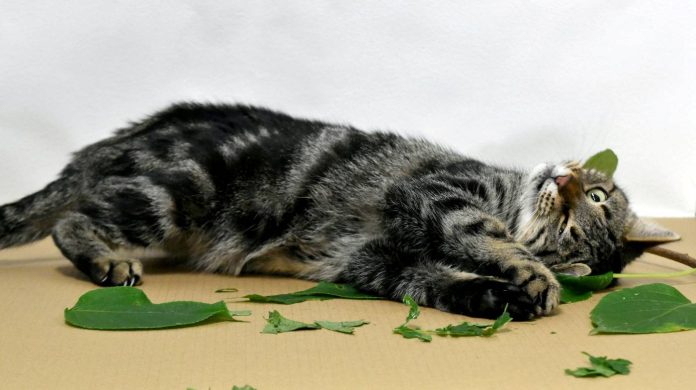
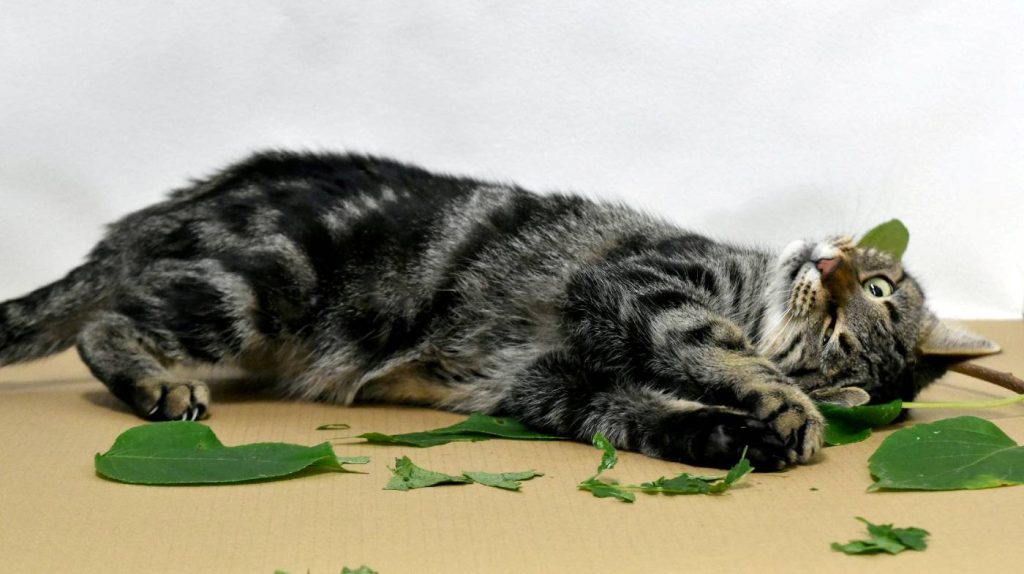
Catnip and silvervine leaves contain the compounds nepetalactol and nepetalactone, iridoids that protect these plants from pests. The iridoids trigger an endorphin rush in cats, causing them to lick, chew, rub against, or roll around on catnip (Nepeta cataria) and silver vine (Actinidia polygama).

Other animals, like chimpanzees, use these natural plant-based compounds as bug repellents, too.

LOOK: Man Goes to Rescue a Kitty and is ‘Ambushed’ By 12 More in a Roadside Meet-Cute

To see how cats’ behavior was affecting the chemicals released by the plants, Miyazaki worked with chemists at Nagoya University. “We found that physical damage of silvervine by cats promoted the immediate emission of total iridoids, which was 10-fold higher than from intact leaves,” says Miyazaki.

“Although this has often been interpreted by pet owners as a playful behavior among cats that appeared to be intoxicated by these specific plant species, we demonstrated in a recent study that the rubbing and rolling behavior can protect cats from mosquito bites,” wrote the authors of a new paper published in iScience.

It seems that cats, whether consciously or unconsciously, know exactly what they must do to benefit from the iridoids contained within these two plants. For example, the incessant chewing of the silver vine leaves in the study, greatly increased the secretion of iridoids necessary for insect protection, but the cats swallowed very little—often none, of the plant material.

MORE: Cats Track Their Owners’ Movements, Research Finds

Furthermore, if given the choice between unchewed leaves and chewed-up leaves, the cats overwhelmingly will go and interact with the chewed leaves, and when non-chewed leaves were coated in a synthetically-produced complex of these iridoids, the majority of cats chose to interact with the more diverse complex, which in turn dissuaded the largest number of mosquitoes.

Not only were more iridoids released, but their composition changed in ways that seemed to encourage the cats. “Nepetalactol accounts for over 90% of total iridoids in intact leaves, but this drops to about 45% in damaged leaves as other iridoids greatly increase,” says Miyazaki. “The altered iridoid mixture corresponding to damaged leaves promoted a much more prolonged response in cats.”

In previous work, Miyazaki and his team showed that these compounds effectively repel Aedes albopictus mosquitoes. And, before investigating house cats, the same team had observed both jaguars and cougars rubbing their heads against paper soaked in nepetalactol, the main iridoid in silver vine.

RELATED: Cats Are Less Stressed in Families With Children Who Have Autism, Study Finds

To test if the felines were reacting to these compounds specifically, the cats were given dishes with pure nepetalactone and nepetalactol.

“When iridoid cocktails were applied on the bottom of dishes that were then covered by a punctured plastic cover, cats still exhibited licking and chewing even though they couldn’t contact the chemicals directly,” says Miyazaki. “This means that licking and chewing is an instinctive behavior elicited by olfactory stimulation of iridoids.”

LOOK: Stray Cats Saved a Restaurant During the Pandemic By Lounging On Miniature Models in the Window (LOOK)

“Catnip and silver vine could be useful for protecting humans from insects as well,” reports Smithsonian. “The species of mosquito used in this study transmits roundworms to cats and dogs and also spreads many human viruses, like dengue and chikungunya.”

Catnip grows pretty easily and can be bought online or at many garden stores. Letting it grow in your garden means you can also benefit from its flowers and mint-like properties for homemade tea. The plant is drought-tolerant and deer-resistant. It can be a repellent for certain insects, including aphids and squash bugs, as well as mozzys!

RAISE a Paw for Fascinating Research; Share This Story…

“It was June, and the world smelled of roses. The sunshine was like powdered gold over the grassy hillside.” – Maud Hart Lovelace (Happy Solstice!)

Geoff McKay, CC license

Quote of the Day: “It was June, and the world smelled of roses. The sunshine was like powdered gold over the grassy hillside.” – Maud Hart Lovelace (Happy Summer Solstice!)

Photo by: Geoff McKayell, CC license

With a new inspirational quote every day, atop the perfect photo—collected and archived on our Quotes page—why not bookmark GNN.org for a daily uplift?

Geoff McKay, CC license

Livin’ Good Currency Ep. 14: Fred and Keith on ‘Producing’ Justice for Emmet Till

The Lesson: A dog-eared moment in the early American Civil Rights movement, the racially-motivated murder of 14-year-old African American lad, Emmett Till, and its subsequent acquittal, always inspired Keith Beauchamp to fight for better criminal justice, and to elevate man’s consciousness so that such events no longer need dog-earing because they no longer happen. Frederick Zollo, catching Keith’s infectious enthusiasm, felt he could lend his talents to a similar end.

Notable Excerpt: “She [Emmett’s mother] used to say to me all the time, Keith we must continuously tell Emmett’s story until man’s consciousness is risen, only then will there be justice for Emmett Till. I truly believe that she had the blueprint to man’s liberation when it comes to racial progression in this country.”

The Guests: Frederick Zollo is an American film and theatre producer. He has produced more than 100 plays in New York, London, and On-Tour. Zollo is a 20-time Tony nominee, winning the award seven times. He is also known for his film work on Best Picture Oscar Nominees Mississippi Burning (1988), and Quiz Show (1994). 

Keith A. Beauchamp is an activist and award-winning filmmaker. He began his life’s work at the young age of 10 after he saw a Jet magazine that contained a picture of Emmett Till’s dead body and was told the story behind Till’s murder. In 1999, Beauchamp founded Till Freedom Come Productions, a company devoted to socially significant projects that can both teach and entertain. He has devoted the past twenty-six years of his life telling the story of Emmett Till and has traveled extensively between New York, Chicago and Mississippi to investigate the historic murder.

On May 10th, 2004, the United States Department of Justice re-opened this 50 year-old murder case citing Beauchamp’s documentary “The Untold Story of Emmett Louis Till” as both a major factor in their decision and the starting point for their investigation.

The Podcast: Livin’ Good Currency explores the relationship of time to our lives. It gives a simple, straight-forward formula that anyone can use to be present in the moment—and features a co-host who knows better than anyone the value of time (see below). How do you want to spend your life? This hour can inspire you, along with upcoming guests, to be sure you are ‘Livin’ Good Currency’ and never get caught running out of time.

The Hosts: Good News Network fans will know Tony (Anthony) Samadani as the co-owner of GNN and its Chief of Strategic Partnerships. Co-host Tobias Tubbs was handed a double life sentence without the possibility of parole for a crime he didn’t commit. Behind bars, he used his own version of the Livin’ Good Currency formula to inspire young men in prison to turn their hours into honors. An expert in conflict resolution, spirituality, and philosophy, Tobias is a master gardener who employs ex-felons to grow their Good Currency by planting crops and feeding neighborhoods.

Keith Beauchamp | Twitter

Keith Beauchamp | Instagram

Emmett Till | Documentary

FDA Approves First Alopecia Drug That Restores Hair Growth in Many Patients

Brett King_Yale School of Medicine released
Brett King/Yale School of Medicine

The U.S. Food and Drug Administration approved the use of the Janus kinase (JAK) inhibitor baricitinib as a treatment for severe alopecia areata, a disfiguring skin disease.

It is the first approved treatment for alopecia areata, an autoimmune disorder that affects about 7 million people in the United States. The often-disfiguring disease, in which the body’s immune system attacks hair follicles, is marked by patchy or complete loss of scalp hair and sometimes eyebrows, eyelashes, facial hair, and body hair.

Dr. Brett King, an associate professor of dermatology at Yale Medical School, worked with the pharmaceutical company Eli Lilly and Company to conduct a series of clinical trials with the new medicine, a once-daily pill which goes by the product name Olumiant.

In the trials, Olumiant helped one in three patients with severe alopecia areata regrow their hair—almost half of the patients had no scalp hair at the start of the trials—resulting in 80% or more scalp coverage. Improvements were also achieved for patients with significant eyebrow or eyelash hair loss.

Over the past decade, King has conducted innovative research using JAK inhibitors—which were originally designed to treat rheumatoid arthritis and certain blood disorders—to treat a range of intractable skin diseases, including eczema, vitiligo, granuloma annulare, sarcoidosis, and erosive lichen planus.

MORE: New Treatment Helps Alopecia Patients Regrow Their Hair

“Until now, there have been no FDA-approved treatments for alopecia areata,” King explained, “and the medicines that have been used in the past to treat severe cases of alopecia areata are largely ineffective. There is, however, lots of data to show that a relatively new class of medicines called JAK inhibitors work for the treatment of severe alopecia areata. Patient access to these medicines is extremely limited, though, because JAK inhibitors were not FDA-approved for this purpose. FDA approval will bring greater access, via insurance coverage, to patients.”

He said that FDA approval has an additional benefit, as well. “When a medicine is approved for treatment of a disease, doctors feel more comfortable prescribing the medicine for that purpose. Therefore, FDA approval will empower and enable health care providers to treat patients with severe alopecia areata.”

LOOK: Scientists Create Algorithm That Uses Routine Eye Scans to Identify Heart Attack Risk—With Accuracy of 70%-80%

He remembers the first patient he treated. “He had almost no scalp hair, his eyebrows and eyelashes and facial hair were missing, and, in addition, he had red, scaly psoriasis plaques all over his body. It was in 2013… I explained to the patient that use of tofacitinib in him would be exploratory, and he agreed to try it…. Not long after he started taking tofacitinib, his hair started to grow. I published the results of his treatment not long after that and history was made, forever changing this disease.”

That’s revolutionary indeed.

The results of the recent trials were published in New England Journal of Medicine.

Source: YaleNews

SHARE This Hopeful News With Others Who’d Love to Know It…

Stray Dog Becomes a Fierce Crossing Guard for These Children Every Day – WATCH

https://www.instagram.com/lovelykupata/
Instagram/@lovelykupata

A stray dog in the country of Georgia has appointed himself as the local crossing guard for young children crossing a busy intersection.

Every morning, he strongly discourages drivers from encroaching upon the crosswalk by barking wildly at them until the kids, who cross hand-to-hand with their teacher, have made it across.

“He’s a very serious boy. He never goes to other streets,” said Tamta, who is part of the community that takes care of Kupata the dog. Kupata, by the way, is Georgian for ‘sausage’.

According to ecstatic YouTube commenters, this particular ‘sausage’ is an Australian shepherd—it’s his breed that may have given him his instincts to go running up and down beside the little boys and girls he cares for.

Tamta explained that her friend Beqa videotape Kupata’s work in order to help show that stray dogs are not as dangerous as old customs would have people believe.

MORE: Dogs Became Perfect Human Companion Thanks to a Gene that Lowered Their Stress: New Study

“Kupata is the lucky one because we all take care of him, but there are other dogs that aren’t lucky—that don’t have shelter, they don’t have food,” explains Tamta. “This is a problem in our country.”

RELATED: New York Woman Finds Her Lost Dachshund — in Hilary Swank’s Lap

Hopefully footage like this one will help others to see strays differently.

(WATCH the video for this story below.)

BARK Your Approval of Amazing Stories Like This One; Share It…

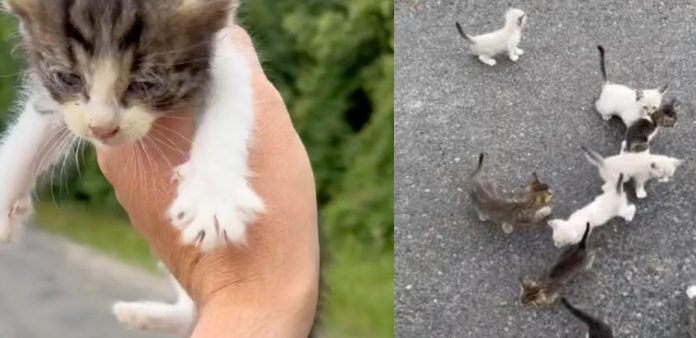
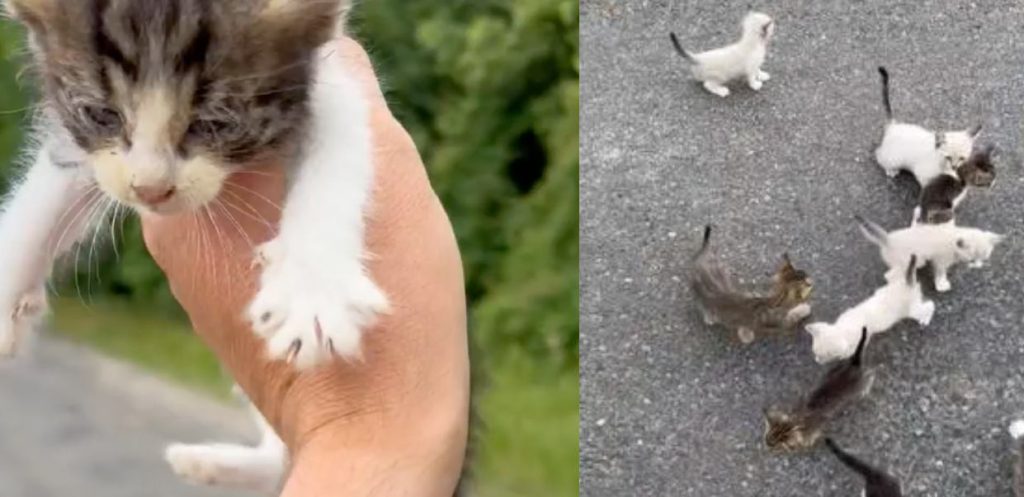
Man Goes to Rescue One Kitty and is ‘Ambushed’ By 12 More in a Roadside Meet-Cute (Look)

Instagram/@robertbrantley_

A Louisiana man was surprised to find a stray kitten in the middle of the road. The poor thing was weary and dirty, and not shy about approaching him.

Robert Brantley picked up the grey-striped kitten, an act which was, to quote Gandalf the White, “the falling of small stones that begins an avalanche.”

A stampede of kittens soon came pattering out from the bushes. They swarmed Brantley’s feet, clearly wanting to be the next to go for a hand-held ride through the air. There were a dozen in all, but that didn’t stop Brantley from loading them up into his car and taking them all home for a bath and some milk.

“Anyone wanting a kitten at a screaming price? I’ll cut you a deal,” he wrote as the caption of a video that went viral on Instagram. Soon he was receiving hundreds of adoption offers for the little ones.

RELATED: One-eyed Cat Missing For 5 Years Shows Up on Offshore Oil Rig Baffling Owners

Shortly after, he posted another video when all 12 kittens were loaded up in his car—he noted that “the tactical Honda was not prepared for this.”

It bears repeating that in many instances, people think they’re rescuing kittens when in reality, the mother cat is out hunting, or hiding from the approaching rescuer. Indeed some of the Instagram comments note that when people find kitten(s) who seem lost, they should look around, or wait a fair few hours, to see if they can find the mother.

(WATCH the TODAY video for this story below.)

RAISE a Paw and Share This Adorable Story…

Astronomers Think They’ve Detected a ‘Dark’ Free-Floating Black Hole For the First Time

UC Berkeley
UC Berkeley

If, as astronomers believe, the death of large stars leave behind black holes, there should be hundreds of millions of them scattered throughout the Milky Way galaxy. The problem is, isolated black holes are invisible.

Now, a team led by University of California, Berkeley, astronomers has for the first time discovered what may be a free-floating black hole by observing the brightening of a more distant star as its light was distorted by the object’s strong gravitational field—so-called gravitational microlensing.

The team, led by graduate student Casey Lam and Jessica Lu, a UC Berkeley associate professor of astronomy, estimates that the mass of the invisible compact object is between 1.6 and 4.4 times that of the sun. Because astronomers think that the leftover remnant of a dead star must be heavier than 2.2 solar masses in order to collapse to a black hole, the UC Berkeley researchers caution that the object could be a neutron star instead of a black hole. Neutron stars are also dense, highly compact objects, but their gravity is balanced by internal neutron pressure, which prevents further collapse to a black hole.

Whether a black hole or a neutron star, the object is the first dark stellar remnant — a stellar “ghost”—discovered wandering through the galaxy unpaired with another star.

“This is the first free-floating black hole or neutron star discovered with gravitational microlensing,” Lu said. “With microlensing, we’re able to probe these lonely, compact objects and weigh them. I think we have opened a new window onto these dark objects, which can’t be seen any other way.”

MORE: Don’t Miss Celestial Show as Five Planets Align With the Moon for All to See

Determining how many of these compact objects populate the Milky Way galaxy will help astronomers understand the evolution of stars—in particular, how they die—and of our galaxy, and perhaps reveal whether any of the unseen black holes are primordial black holes, which some cosmologists think were produced in large quantities during the Big Bang.

The analysis by Lam, Lu and their international team has been accepted for publication in The Astrophysical Journal Letters.

RELATED: Ice May Be Hiding in Ancient Moon Volcanoes

The analysis includes four other microlensing events that the team concluded were not caused by a black hole, though two were likely caused by a white dwarf or a neutron star. The team also concluded that the likely population of black holes in the galaxy is 200 million—about what most theorists predicted.

Same data, different conclusions

Notably, a competing team from the Space Telescope Science Institute (STScI) in Baltimore analyzed the same microlensing event and claims that the mass of the compact object is closer to 7.1 solar masses and indisputably a black hole. A paper describing the analysis by the STScI team, led by Kailash Sahu, has been accepted for publication in The Astrophysical Journal.

(WATCH the video for this story below.)

Source: University of California, Berkeley

SHARE This ‘Out There’ News With Pals…

“Maybe the art of life is to convert tough times to great experiences.” – Joan Marques

Quote of the Day: “Maybe the art of life is to convert tough times to great experiences.” – Joan Marques

Photo by: Vonecia Carswell

With a new inspirational quote every day, atop the perfect photo—collected and archived on our Quotes page—why not bookmark GNN.org for a daily uplift?