











All News - Page 390 of 1727 - Good News Network
Home Blog Page 390

Ukrainian Refugees Find Comfort in Italy From Unlikely Source – A Bunch of Lawyers

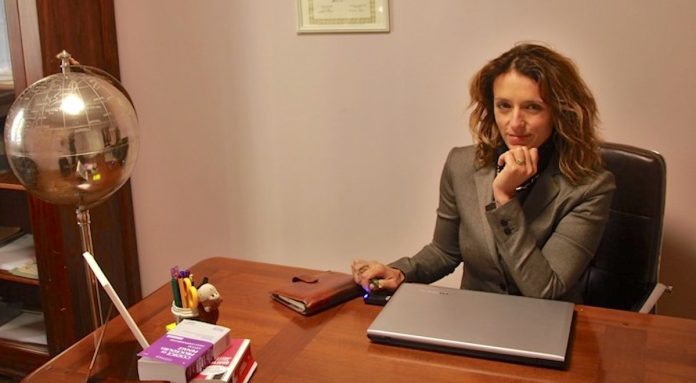
Mara Braghini, who volunteered to represent several Ukrainian children arriving in Italy.

Ukrainians fleeing across the border to Poland have found an unlikely yet devoted group of supporters in the form of a north Italian law practice.

It’s not a characteristic that one immediately associates with lawyers—free labor—but whether it’s driving through the night to personally bring people to temporary homes or volunteering to legally-represent refugees needing integration into society, Studio Legale in the city of Varese is a credit to the profession.
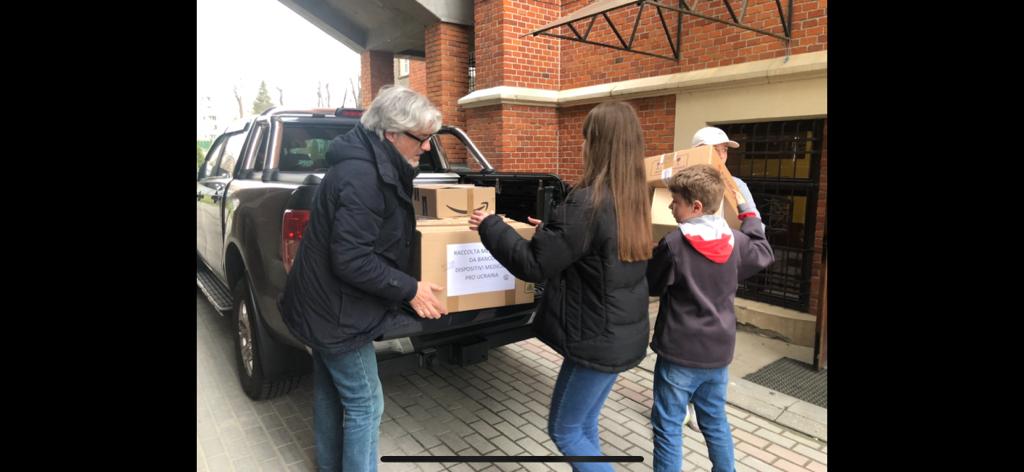
Andrea Boni helps unload supplies he brought from Italy to Ukraine

In the sagas of the Icelanders, we can read that no-one played a more critical role, and no-one was more respected in Viking-Age society, than lawyers.

Avv. (attorney-at-law) Andrea Boni is a kind fellow, but doesn’t have a long history of volunteering. But just ten days after the Russia-Ukraine war began, he jumped in a van and drove from Lombardy to Przemyśl, the Polish town on the border with Ukraine.

“We left on the 6th [of March] with an organization from the parish Almavera near Varese,” Boni told GNN. “The parish had a contact in an association in the camp near the border with Ukraine. We had different things we were bringing—food, medicine, clothing, and there were around 15 people ready to come here in Italy. They already had referrals for where they could go.”

MORE: Ukrainian Refugees Move Into Medieval Irish Castle Owned by Good Samaritan

Boni had witnessed a refugee camp from the Lebanon War in the 1980s, but that was the extent of his experience with relief efforts.

“I remember the human tragedy,” he said. “I never thought I would do something of the sort, to go into a refugee camp for people escaping from war.”

“I tried to put myself in their position. I thought, ‘What would I want if it were my family?’” he said.

No sleep ’til Przemysl

Neighborly conduct

Northern Italy is a part of the country where immigration from eastern Europe is common. It’s just a short boat ride from Albania, and those from the former Soviet republics need only cross through Slovenia (a country about half the size of Switzerland) to arrive in Veneto. Like many people here, Boni was struck by the near-ness of the conflict.

“This war is really close, and we can see it on the television in real time. It’s 1,600 kilometers away, yes, but it’s Europe. It’s your home,” he told GNN. “So I didn’t think even for a moment: ‘It’s 1,600 kilometers, it’s 20 hours travel, should I go, shouldn’t I?’ No. We left immediately because it was the right thing to do.”

RELATED: Vancouver Couple Converts Their Huge Resort Property into a Ukrainian Refugee Home for Dozens

Boni left with two vans loaded with supplies, and drove 20 hours through Austria, the Czech Republic, and through Poland to Przemyśl where a shopping mall has been turned into a shelter for those arriving via train.

He was expecting 15 people, but when he reached the mall only three had arrived. Since Russia had struck targets in the vicinity of the railways, service had been temporarily suspended to protect people fleeing the country. Nine were unable to leave, but a separate group of three, a mother and two children, had been able to take a train to Budapest.

“So we left for Budapest, arrived at the station, and found them. Then we came back to Italy.”

CHECK OUT: Danish Company Creates Children’s Book to Make Ukrainian Refugees Feel at Home – And it’s Adorable (LOOK)

Since his intervention, Boni has already returned along the same route for a second trip, while the family he brought back have settled in the city of Varese, about fifty minutes outside of Milan, where he practices.

Mara Braghini, who volunteered to represent several Ukrainian children arriving in Italy.

Helping Viacheslav

The courts of Varese and Milan are trying to do what they can to quickly and seamlessly integrate Ukrainians minors into society. They needed volunteers to act as representatives of refugees to ensure they have access to the opportunities insured to them by EU refugee law.

Avv. Mara Braghini, who practices in the same firm as Boni, immediately volunteered.

“Some weeks ago the Child Court of Milan nominated me the representative of this 16-year-old Ukrainian guy, Viacheslav,” Braghini told GNN. “He left Ukraine after his mom and little brother. He wanted to stay with his father, but his father decided to volunteer to fight.”

With the help from an association called Us with You, Viacheslav arrived Lombardy in March.

“They arrived here after a long bus ride at 5:00 in the afternoon, and the group called a woman who had volunteered to host him named Patrizia, and said, ‘Okay they are here, he needs you,'” says Braghini, who offered to help another child named Yulia, who is staying next door to Viacheslav’s host family.

MORE: Strangers are Leaving Strollers, Diapers, and Toys at the Border for Ukrainian Refugee Moms (LOOK)

“She speaks English fortunately, so it’s easier to speak with her, but with Viacheslav it’s not so easy but we’ve had some good moments,” she adds. “I told (Yulia’s family) if they have any difficulties, if they have any problems, I will be there to help them.”

“At the moment he’s in school, and there’s an old teacher who speaks Ukrainian and who can help them with their Italian,” she says. “I saw the difference in Viacheslav with respect to the first time I met him ten days ago, he speaks quite well. He told me and Patrizia that he’d love to stay in Italy, which isn’t something common among Ukrainians because they usually want to go back to their families.”

At the time of writing, Viacheslav has acclimatized very well.

There are two other lawyers at Studio Legale, both of whom pitched in financially to fill up Boni’s vans with supplies.

In Italy, lawyers are always addressed as “Avvocato,” which is like being called “doctor,” or “officer.” Many believe the Italian Bar exam is the hardest in Europe. They are always addressed in the formal tense—the equivalent of referring to someone in English as “the Gentleman,” or “the Madame.”

People like Mara and Andrea are a credit to the fundamental humanity of their ancient profession.

SHARE This Story of True Generosity in Northern Italy…

Editor’s note: This story has been altered to correct the name of the group that brought Viacheslav to Italy. 

Two-Thirds of Americans are More Interested in Staycations This Year to Feel Nostalgia

By Anders Nielsen
By Anders Nielsen

Three out of five Americans think they’ve wasted their summer if they haven’t traveled anywhere, according to a new poll.

The poll, which surveyed 2,000 adults, revealed that 58% are either planning a summer vacation or already have one in place for this year.

Meanwhile, the average respondent took about four different vacations per year when they were a kid.

So it’s no surprise that more than two in five (42%) identified vacations as their favorite type of trip as a child, more so than family visits (41%) and school field trips (35%).

Conducted by OnePoll on behalf of Roadpass Digital, the survey asked respondents to explore how their past childhood travels might inform their current plans.

Today, almost two-thirds (63%) of respondents are more interested in planning “staycations”—trips that are closer to home—than they were a few years ago.

MORE: World’s Biggest Treehouse Resort Opening Near U.S. National Park is Gorgeous –LOOK

This could be because of issues that weren’t at the forefront of people’s minds during previous years—like uncertainty surrounding the pandemic (59%) and overcrowding (55%), which respondents cited as concerns for this upcoming summer.

Another 63% said they are looking to travel more within their home state during the summer than other seasons, possibly due to similar worries.

Whether in their home state or not, 68% have fond memories of going on summer vacation as a kid, and 71% say they enjoy the nostalgia that comes with revisiting childhood vacation destinations.

Three in five would consider returning to those destinations, but only if they could plan the trip differently.
The biggest changes: more than half (51%) would change the length of their stay, and 42% would opt for a different method of travel than they took with their parents when they were a child.

RELATED: He Quit His Job to Offer Scottish Highland Trips in New York School Bus – A ‘Hostel on Wheels’

In fact, two-thirds of respondents overall said they prefer to use different methods of travel than their parents or guardians did on family trips.

“With so much beauty in North America, it’s no surprise that Americans are creating memories in their own backyards,” said Steven Hileman, Roadtrippers spokesperson. “Because the data shows nostalgia is a powerful factor when it comes to making travel decisions, we can see how today’s travelers are reinventing the age-old American pastime of road trips to fit their flexible lifestyles.”

Almost half (48%) of respondents are planning to drive to their destination this summer— perhaps because they seem more concerned about plane ticket prices (67%) than they are gas prices (59%).

Only 10% of respondents feel less concerned about travel costs than their parents were in the past, and 53% actually reported feeling more concerned instead.

LOOK:  Out of Ideas For Entertaining the Kids? Here’s Some FREE Family Fun to Try While on Vacations

Fifty-four percent expressed concern about lodging for their upcoming summer trips, and 57% would consider booking an RV, camper, overnight train or other transportation method that doubles as lodging.

In fact, 58% of respondents are more interested in going on road trips now compared to when they were a kid.

“Despite higher fuel prices, people are still getting on the road,” said Mona Kishore, Campendium spokesperson. “Other studies show that traveling by RV is a more affordable way to travel, especially for young families and those with pets. Additional data shows that more young adults are purchasing RVs now than ever.”

HELP Good News Travel Far and Wide; Share This Story…

Hadron Super Collider Reboots After 3 Years And Immediately Breaks World Record

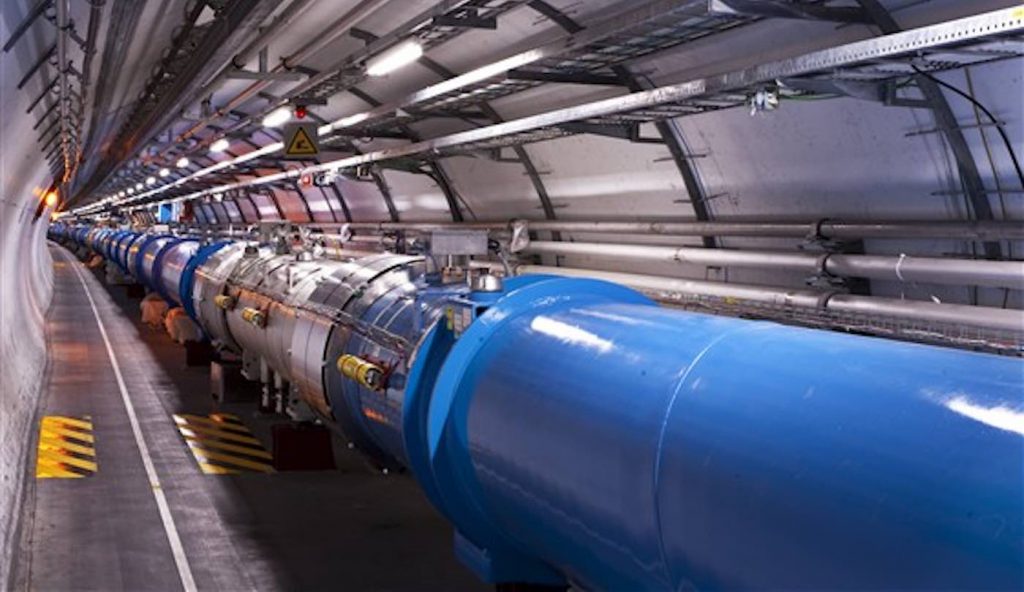
Photo by Maximilien Brice, CC license
Large Hadron Collider by Maximilien Brice, CC license

The world’s largest and most powerful particle accelerator has restarted after a break of more than three years for maintenance, consolidation and upgrade work.

On April 22, two beams of protons circulated in opposite directions around the Large Hadron Collider’s 27-kilometre ring at their injection energy of 450 billion electronvolts (450 GeV).

“These beams circulated at injection energy and contained a relatively small number of protons. High-intensity, high-energy collisions are a couple of months away,” says the Head of CERN’s Beams department, Rhodri Jones. “But first beams represent the successful restart of the accelerator after all the hard work of the long shutdown.”

“The machines and facilities underwent major upgrades during the second long shutdown of CERN’s accelerator complex,” says CERN’s Director for Accelerators and Technology, Mike Lamont. “The LHC itself has undergone an extensive consolidation programme and will now operate at an even higher energy and, thanks to major improvements in the injector complex, it will deliver significantly more data to the upgraded LHC experiments.”

Pilot beams circulated in the LHC for a brief period in October 2021. However, the beams that circulated today mark not only the end of the second long shutdown for the LHC but also the beginning of preparations for four years of physics-data taking, which is expected to start this summer.

RELATED: Nuclear-Fusion Reactor in UK Smashes Energy Record in Ambitious Power Bid, ‘Really, Really Impressive’

Until then, LHC experts will work around the clock to progressively recommission the machine and safely ramp up the energy and intensity of the beams before delivering collisions to the experiments at a record energy of 13.6 trillion electronvolts (13.6 TeV).

This third run of the LHC, called Run 3, will see the machine’s experiments collecting data from collisions not only at a record energy but also in unparalleled numbers.

CHECK OUT: Scientists Achieve Milestone in Self-Sustaining Fusion Energy, Burning Plasma in U.S. Experiments for First Time

The ATLAS and CMS experiments can each expect to receive more collisions during this physics run than in the two previous physics runs combined, while LHCb, which underwent a complete revamp during the shutdown, can hope to see its collision count increase by a factor of three. Meanwhile, ALICE, a specialized detector for studying heavy-ion collisions, can expect a fifty times increase in the total number of recorded ion collisions, thanks to the recent completion of a major upgrade.

MORE: The Perfect Energy Source Is Already Here – Endless Geothermal Is Poised for Release From Deep in the Earth

The unprecedented number of collisions will allow international teams of physicists at CERN and across the world to study the Higgs boson in great detail and put the Standard Model of particle physics and its various extensions to the most stringent tests yet.

Other things to look forward to in Run 3 include the operation of two new experiments, FASER and SND@LHC, designed to look for physics beyond the Standard Model; special proton–helium collisions to measure how often the antimatter counterparts of protons are produced in these collisions; and collisions involving oxygen ions that will improve physicists’ knowledge of cosmic-ray physics and the quark–gluon plasma, a state of matter that existed shortly after the Big Bang.

Source: CERN

(WATCH the video for this story below.)

SHARE This Breakthrough Story Far and Wide…

One-eyed Cat Missing For 5 Years Shows Up on Offshore Oil Rig Baffling Owners

Scottish SPCA
Scottish SPCA

A five-year odyssey for a cat named Dexter seems to have finally come to an end, after a long, covert stay at a prison was interrupted by his arrival onboard an offshore oil rig, which finally resulted in a call to animal services.

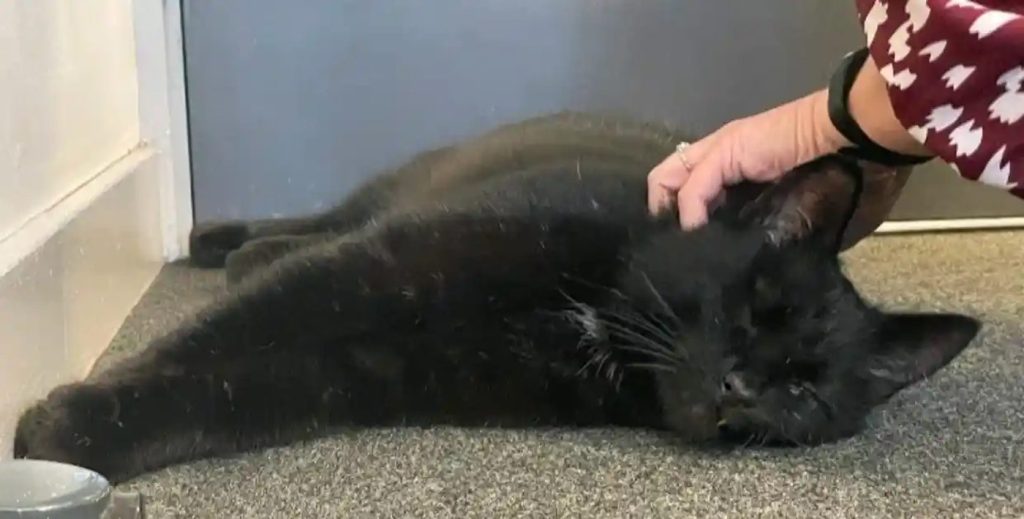
The cat was a regular “well-loved” hangabout at Her Majesty’s Prison Grampian in Peterhead, Scotland, where staff used to “fuss over” him and even gave him the nickname One-eyed Joe.

Then a most unexplainable thing happened: One-eyed Joe somehow ended up in a shipping container a mile-and-a-half away at the town’s port, before being shipped onto an offshore oil rig, where workers “ran away frightened” after the all-black cat jumped out of the container.

After filling out an incident card, (which must have been humorous) the staff aboard the rig took to Joe most kindly, who was now quite comfortable with living alongside the rig workers. According to The National, he was “spoiled rotten” during his time there.

Eventually though, someone called the Society for the Prevention of Cruelty to Animals (SPCA) in Aberdeen, who retrieved Joe after the cat had been flown off the rig on a helicopter—a remarkable feat considering how hard it is normally just to get a cat into a carrier.

RELATED: Watch the Love Between Men and Their Cats in New Film Purr-fect for Home Viewing With Your Pet

“We were alerted to an incident of a cat being found in a shipping container offshore,” Aimee Findlay, a Scottish SPCA animal rescue officer, said in a statement. “We’ve no idea how the cat ended up there, but attended the heliport to collect him.”

One-eyed Joe was microchipped, and upon scanning the staff learned his name was actually Dexter, and that his owner had lost the cat five years ago.

MORE: 9-Year-old’s Lemonade Stand Raises $2,000 For Shelter Cats After He Saw They Had No Toys

“We are so glad that he was well looked after for the time he was missing but we’re even more delighted to be able to reunite him with his original owner, thanks to his microchip being up to date,” Findlay said.

SHARE the Wild News of Dexter’s Nine (Or, So Far, Three?) Fortuitous Lives…

“What you DO is what matters, not what you think or say or plan.” – Jason Fried

Quote of the Day: “What you DO is what matters, not what you think or say or plan.” – Jason Fried

Photo by: @Morshanik (Mor Shani)

With a new inspirational quote every day, atop the perfect photo—collected and archived on our Quotes page—why not bookmark GNN.org for a daily uplift?

Prehistoric People Created Art by Flickering Firelight, New Research Reveals

Our early ancestors probably created intricate artwork by firelight, an examination of 50 engraved stones unearthed in France has revealed.

The stones were incised with artistic designs around 15,000 years ago and have patterns of heat damage which suggests they were carved close to the flickering light of a fire, the new study has found.

The study, by researchers at the Universities of York and Durham, looked at the collection of engraved stones, known as plaquettes, which are now held in the British Museum. They are likely to have been made using stone tools by Magdalenian people, an early hunter-gatherer culture dating from between 23,000 and 14,000 years ago.

The researchers identified patterns of pink heat damage around the edges of some of the stones, providing evidence that they had been placed in close proximity to a fire.

Following their discovery, the researchers have experimented with replicating the stones themselves and used 3D models and virtual reality software to recreate the plaquettes as prehistoric artists would have seen them: under fireside light conditions and with the fresh white lines engravers would have made as they first cut into the rock thousands of years ago.

Lead author of the study, Dr Andy Needham from the Department of Archaeology at the University of York and Co-Director of the York Experimental Archaeology Research Centre said, “It has previously been assumed that the heat damage visible on some plaquettes was likely to have been caused by accident, but experiments with replica plaquettes showed the damage was more consistent with being purposefully positioned close to a fire.

“In the modern day, we might think of art as being created on a blank canvas in daylight or with a fixed light source; but we now know that people 15,000 years ago were creating art around a fire at night, with flickering shapes and shadows.”

MORE: Metal Detector Left Him Stunned After Unearthing Ancient Ring Belonging to the Sheriff of Nottingham

Working under these conditions would have had a dramatic effect on the way prehistoric people experienced the creation of art, the researchers say. It may have activated an evolutionary capacity designed to protect us from predators called “Pareidolia,” where perception imposes a meaningful interpretation such as the form of an animal, a face or a pattern where there is none.


A journey to the past

Dr Needham added, “Creating art by firelight would have been a very visceral experience, activating different parts of the human brain. We know that flickering shadows and light enhance our evolutionary capacity to see forms and faces in inanimate objects and this might help explain why it’s common to see plaquette designs that have used or integrated natural features in the rock to draw animals or artistic forms.”

The Magdalenian era saw a flourishing of early art, from cave art and the decoration of tools and weapons to the engraving of stones and bones.

CHECK OUT: Friendship Ornaments From the Stone Age Were Crafted and Worn as a ‘Symbol of connection’

Co-author of the study, published in PLUS One, PhD student Izzy Wisher from the Department of Archaeology at the University of Durham, said, “During the Magdalenian period conditions were very cold and the landscape was more exposed. While people were well-adapted to the cold, wearing warm clothing made from animal hides and fur, fire was still really important for keeping warm. Our findings reinforce the theory that the warm glow of the fire would have made it the hub of the community for social gatherings, telling stories and making art.

“At a time when huge amounts of time and effort would have gone into finding food, water and shelter, it’s fascinating to think that people still found the time and capacity to create art. It shows how these activities have formed part of what makes us human for thousands of years and demonstrates the cognitive complexity of prehistoric people.”

Source: University of York
SHARE the Glow of Stories From the Past With Others in Your Circle…

Ukrainian Refugees Move Into Medieval Irish Castle Owned by Good Samaritan

castle released Reuters video via Rumble license
Reuters video via Rumble license

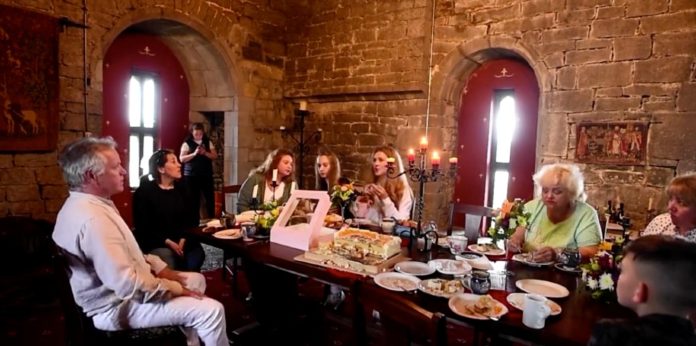
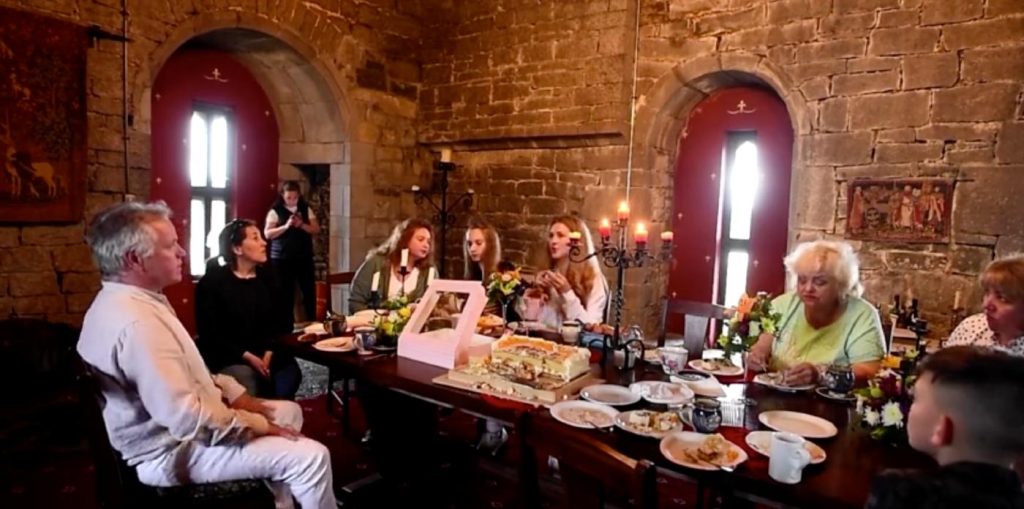
From the bombed-out streets of Mariupol to the rustic walls of a 15th-century Irish castle, a group of eleven Ukrainians have found a safe place to stay.

Having no space in Madrid where he lives with his Spanish wife Lola, Barry Haughian decided to quickly open up their second home when shells started falling on Ukraine.

That second home just happens to be Ballindooley Castle in County Galway. Haughian (pronounced HOY-en) flew to Poland to pick up a group of eleven refugees, some from Mariupol, and others from Dnipro.

“We were emotional wrecks for probably more than a week. We weren’t sure what we were doing, and just trying to make things better for them,” Haughian told Reuters.

“So now, every week it gets better… You can see the weight coming off their shoulders. We’ve got people dropping in all the time trying to help them. It’s a real ‘céad míle fáilte’ (a hundred thousand welcomes) from the people of Ireland.”

The kids play about the castle grounds, and the group has been able to celebrate a birthday together as they gradually find their feet.

MORE: Pink Floyd Reunites to Record First New Material in 28 years – a Protest Song Against the Ukraine War

Now one month into their new routines, five of the group have found jobs, including Maria Nazarchuk, who works at a garden center near the castle—and hopes to continue her accounting studies at the National University of Galway in September.

Ireland is proud of its contribution to the EU refugee sharing policy, and two months ago, when national registration opened via the Irish Red Cross to hosting Ukrainians, the website crashed due to the number of applicants.

RELATED: Vancouver Couple Converts Their Huge Resort Property into a Ukrainian Refugee Home for Dozens

Neighbors routinely stop by to lighten the mood with whatever supplies they can offer, including everything Nazarchuk needs to continue pursuing her passion for baking outside of her studies.

(WATCH the video for this story below.)

SHARE This Grand Story of Irish Kindness With Your Pals…

John Kerry’s Global Ocean Conference Raises 400+ Commitments Worth $16 Billion to Protect Ocean Health

John Kerry at Our Oceans Conference - Official Photos released by Jesse Alpert/U.S. Department of State
John Kerry at Our Oceans Conference – Official Photos released by Jesse Alpert/U.S. Department of State

The seventh annual Our Ocean Conference concluded recently with the announcement a grand tally of 410 commitments to protect the the oceans and the living beings surrounding them—pledges worth $16.35 Billion. The conference, co-hosted by the Republic of Palau and the United States, was the first to be held in a small island developing state.

Titled “Our Ocean, Our People, Our Prosperity,” the conference highlighted the importance of a healthy ocean to small island developing states—and to all communities where the ocean is a primary source of sustenance.

More than 600 participants representing over 70 foreign delegations attended—all to commit to concrete action to advance ocean issues (see the list below).

Former U.S. Senator John Kerry is not only the current Special Presidential Envoy for Climate. He started the Our Ocean Conferences in 2014—and since then they have mobilized more than 1,800 commitments worth nearly $108 billion across the issue areas of the conference, which include sustainable fisheries, sustainable blue economies, marine protected areas, maritime security, marine pollution, and climate change.

The conference highlighted the importance of ocean-based climate solutions, including shipping decarbonization, marine nature-based solutions, and offshore renewable energy, in keeping the 1.5-degree target within reach and improving global climate resilience.

MORE: Bigger than Texas: Huge New Marine Park Will Protect ‘Australia’s Galapagos’

“Together, we realized extraordinary new commitments and ambition across many sectors,” said Kerry. “Our goal this week was to shine a spotlight on what is happening to our ocean – not just talk, but real commitments to take real actions and make a real difference.”

The conference also featured 22 events focusing on issues from marine protected areas and blue foods to clean shipping and ocean-climate finance.

RELATED: Nonprofit Protects More Than a Million Acres of Rainforest So Far This Year – All With Public Donations

“We recognize the stakes, and we are committed to acting with the urgency this moment demands,” insisted Kerry.

Commitments by issue area

Climate: 89 commitments worth $4.9 billion
Sustainable fisheries:60 commitments worth $668 million
Sustainable blue economies: 89 commitments worth $5.7 billion
Marine protected areas:58 commitments worth $1.3 billion
Maritime security: 42 commitments worth $358 million
Marine pollution: 71 commitments worth $3.3 billion

Commitment videos from the range of donors—from citizen, to governmental, business, and nonprofit—can be browsed here. The full agenda is available on the conference website, www.ourocean2022.pw.

SHARE the Hope; Share This Good Green (Blue) Story…

Vermont Startup’s Electric Plane That Lifts-Off Vertically is Really Taking Off

BETA Technologies Alia aircraft

A Vermont-based company pioneering electric vertical take off and landing planes, or “eVTOL” in the industry, is attracting huge investment and orders from different transportation companies.

The company, called Beta, is now the only western aviation firm to really push the envelope of what is a science-fiction standard—a vehicle that can reach the altitude and speed of a jet, but with the flexible take off and landing of a helicopter.

It’s all happening very fast for what is now the most successful fundraiser in the history of Vermont startups. Beta just achieved their airworthiness certificate for their Alia plane from the U.S. Air Force last May, which represents the first eVTOL to make it that far off the drawing board. In early March of 2022, the Air Force conducted the first test flights.

Beta also recently completing a $375 million financing round, after which Alias were ordered by United Therapeutics to rapidly transport organs, and 10 were purchased by UPS, with the option for an additional 140 planes in the future.

Blade, a private shuttle company that flies passengers from Manhattan in helicopters around New York, ordered five Aliases and reserved up to 20 additional aircraft.

MORE: An Airbus Jumbo Jet Just Completed Two Flights Powered by Cooking Oil

The Alia can carry either five passengers plus the pilot, or 1,400 lbs. of cargo. The real party piece in terms of advanced technologies is the charging time—one hour for a full charge. Frequent fliers will know how much time a jet can be delayed on the tarmac for refueling, especially if there’s a leak.

The company’s first financing round secured over $300 million from Amazon’s Climate Pledge Fund.

RELATED: Jet Flown by United Airlines Entirely Powered by 100% Plant-Based Fuel from Corn Stalk Waste

“Zero emissions aviation is a critical part of turning the corner on climate change, and we are thrilled that our investors see our electric aviation system as a meaningful step towards this ambitious goal,” Kyle Clark, executive director of Beta, said in a news release.

Beta has already begun construction on 65 charging stations in areas across the United States, some of which are finished. They’re filing permits for hundreds more, with plans to cover the whole country by 2025.

HELP Good News Soar by Sharing This Story With Friends…

“Innocence is knowing everything and still being attracted to the good.” – Clarissa Pinkola Estés

Quote of the Day: “Innocence is knowing everything and still being attracted to the good.” – Clarissa Pinkola Estés

Photo by: sebastiaan stam

With a new inspirational quote every day, atop the perfect photo—collected and archived on our Quotes page—why not bookmark GNN.org for a daily uplift?

NASA Develops ‘Lunar Backpack’ to Aid New Moon Explorers

The prototype in Alabama released Credits- NASA_Michael Zanetti
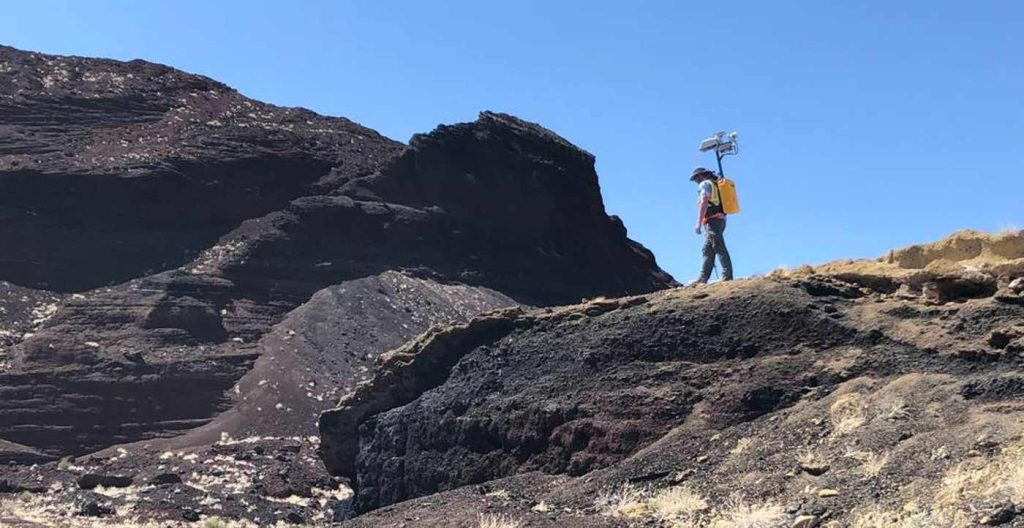
The prototype being used in Alabama; NASA, Michael Zanetti

Imagine a mountaineering expedition in a wholly uncharted environment, where the hikers had the ability to generate a real-time 3D map of the terrain.

NASA researchers and their partners have developed a remote-sensing mapping system set to aid explorers in the most isolated wilderness imaginable: the airless wastes at the South Pole of the Moon.

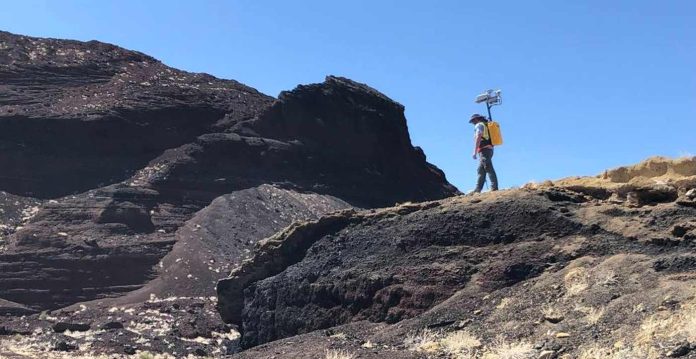
The Kinematic Navigation and Cartography Knapsack (KNaCK) is a mobile lidar scanner—a remote sensing method that uses light detection and ranging laser light to measure range.

Donned like a hiker’s backpack, it makes use of an innovative type of lidar called frequency modulated continuous wave (FMCW) lidar in order to provide Doppler velocity and range for millions of measurement points per second. These measurement points instantly create a real-time navigation system, delivering to the explorer a 3D “point cloud” or high-resolution map of the surrounding terrain.

Think of it as a superpowered version of laser range finders used by surveyors or the highly sensitive proximity alarms that help smart cars avoid collisions, said planetary scientist Dr. Michael Zanetti, who leads the KNaCK project at NASA’s Marshall Space Flight Center in Huntsville, Alabama.

CHECK OUT: Pluto Has Giant Ice Volcanoes that Could Hint at Existence of an Underground Ocean With Life

“Basically, the sensor is a surveying tool for both navigation and science mapping, able to create ultra-high-resolution 3D maps at centimeter-level precision and give them a rich scientific context,” Zanetti said. “It also will help ensure the safety of astronauts and rover vehicles in a GPS-denied environment such as the Moon, identifying actual distances to far-off landmarks and showing explorers in real time how far they’ve come and how far is left to go to reach their destination.”

Probing shadow lands

That’s a key challenge as Artemis-era explorers prepare to undertake the first modern missions to the Moon, and the first ever to its South Pole. The Sun never rises more than 3 degrees above the lunar horizon there, leaving much of the terrain in deep shadow. That makes distances to various points of interest difficult to eyeball.

Initiated in 2020 with funding by NASA’s Early Career Initiative, the KNaCK project has partnered with Torch Technologies Inc. of Huntsville to develop the backpack prototype and associated navigation algorithms that permit accurate mapping without GPS.

Using KNaCK during rover excursions and when traveling on foot, explorers could precisely map the topography of the landscape, including deep ravines, mountains, and caves. Lidar even works in pitch blackness, relieving astronauts of the need to haul cumbersome lighting rigs everywhere they go.

RELATED: Hubble Telescope Spots Most Distant Star Ever Seen on Record, From 12 Billion Light Years Away

“As human beings, we tend to orient ourselves based on landmarks—a specific building, a grove of trees,” Zanetti said. “Those things don’t exist on the Moon. KNaCK will continuously enable explorers traversing the surface to determine their movement, direction, and orientation to distant peaks or to their base of operations. They can even mark specific sites where they found some unique mineral or rock formation, so others can easily return for further study.”

LOOK: Artist’s Painting is the First to Be Curated on the Moon: ‘It Will Last Forever’

That’s vital for astronauts on a clock, their excursions limited by the oxygen supply in their suits. KNaCK’s ultra-high-resolution precision—an order of magnitude greater than conventional lunar topography maps and elevation models—makes it a vital resource for conducting science and mission operations 238,900 miles away from mission control, Zanetti said.

The hardware will get another major field test in late April at NASA’s Solar System Exploration Research Virtual Institute (SSERVI) in Kilbourne Hole, New Mexico. The team previously put the KNaCK system through its paces at that ancient volcanic crater— estimated to be 25,000-80,000 years old—in November 2021.

They also used it recently to conduct a 3D reconstruction of the 6-mile-long sea barrier dunes at NASA’s Kennedy Space Center in Florida, which protect its primary rocket launch pads. Kennedy and Marshall engineers will continue to use KNaCK to assess the impact of storms on dune erosion, ensuring the safety of future flight missions as they further refine the system.

MORE: NASA Perseverance Rover Captures a Stunning Solar Eclipse Video on Mars

Next, the KNaCK team will work to miniaturize the hardware—the backpack prototype weighs about 40 pounds—and harden the sensitive electronics against the punishing effects of microgravity and solar radiation.

“Taking advantage of the latest advancements in lidar technology from Aeva, our next-generation space-hardened unit with support from Torch Technologies will be about the size of a soda can and could enable lunar surface operations like never before,” Zanetti said. He envisions mounting it on a rover or on the side of an astronaut’s helmet—which should leave plenty of room in future lunar mountaineers’ all-purpose backpacks.

Source: NASA

SHARE This Far Out News Far and Wide in Those News Feeds…

Florida Chihuahua is World’s Oldest Living Dog Setting Guinness Record

Guinness World Records
Guinness World Records/Gisela Shore

A new record for the world’s oldest dog living has been official confirmed in Florida: Born on 9 January, 2001, meet 21-year-old chihuahua TobyKeith.

TobyKeith’s owner, Gisela Shore, has been with him for much of his life after adopting him from a shelter.

“I was a volunteer at Peggy Adams Animal Rescue and one of the employees told me about an elderly couple trying to surrender a puppy because they could not take care of him any longer,” Gisela told Guinness World Records.

“I met with the elderly couple and I was introduced to a tiny tan Chihuahua. They had named him Peanut Butter.  I later changed his name to TobyKeith.”

TobyKeith has a close friendship with Gisela’s 28-year-old umbrella cockatoo Coco, and often walks around with her. Otherwise, he enjoys eating slices of turkey, going on little walks, and lying next to Gisela’s work station while she works from home.

MORE: Miracle Dog Survives 12 Days Trapped in Badger Holes After Owner Refuses to Give Up, Camping in the Woods

To celebrate being named the world’s oldest dog, on the day Guinness confirmed the news, TobyKeith got a bath, he had his nails trimmed down, and then he went on a car ride—his favorite treat.

(WATCH the video for this story below.)

RAISE a Paw for This Big Record; Share This Story…

New Hydrogen Fuel Cells Use Cheap Iron Instead of Costly Platinum for Green Vehicles

the fuel cell being tested in teh lab released Imperial College London
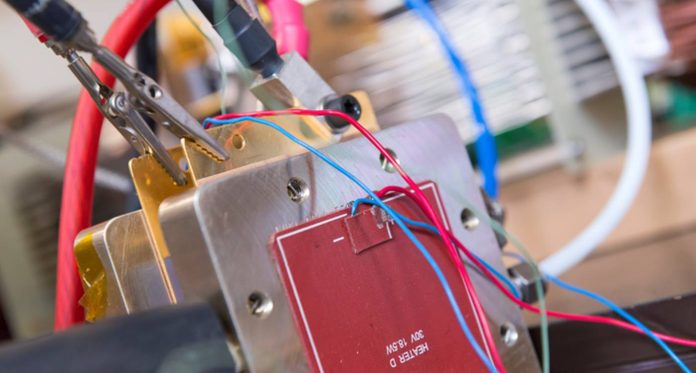
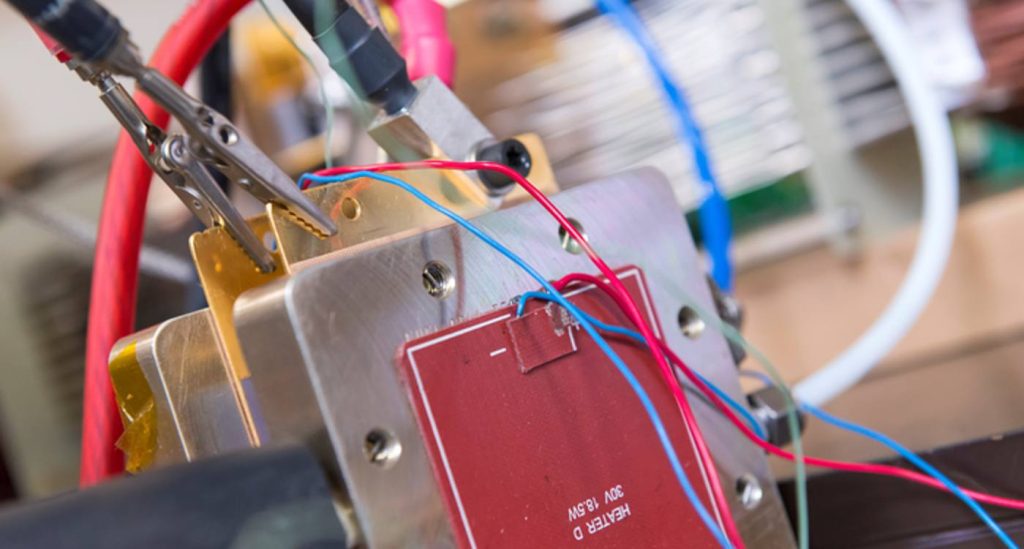
The fuel cell being tested in the lab; Imperial College London

Researchers have developed a hydrogen fuel cell that uses iron instead of rare and costly platinum, enabling greater use of the technology.

Hydrogen fuel cells convert hydrogen to electricity with water vapor as the only by-product, making them an attractive green alternative for portable power, particularly for vehicles.

However, their widespread use has been hampered in part by the cost of one of the primary components. To facilitate the reaction that produces the electricity, the fuel cells rely on a catalyst made of platinum, which is expensive and scarce.

Now, a European team led by Imperial College London researchers has created a catalyst using only iron, carbon, and nitrogen—materials that are cheap and readily available—and shown that it can be used to operate a fuel cell at high power.

Lead researcher Professor Anthony Kucernak, from the Department of Chemistry at Imperial, said, “Currently, around 60% of the cost of a single fuel cell is the platinum for the catalyst. To make fuel cells a real viable alternative to fossil-fuel-powered vehicles, for example, we need to bring that cost down.

RELATED: Scientists Develop Breakthrough Method for Recycling Industrial Plastics at Room Temperature in 20 Minutes

“Our cheaper catalyst design should make this a reality, and allow deployment of significantly more renewable energy systems that use hydrogen as fuel, ultimately reducing greenhouse gas emissions and putting the world on a path to net-zero emissions.”

An iron boost

The team’s innovation was to produce a catalyst where all the iron was dispersed as single atoms within an electrically conducting carbon matrix. Single-atom iron has different chemical properties than bulk iron, where all the atoms are clustered together, making it more reactive.

These properties mean the iron boosts the reactions needed in the fuel cell, acting as a good substitute for platinum. In lab tests, the team showed that a single-atom iron catalyst has performance approaching that of platinum-based catalysts in a real fuel cell system.

MORE: Solar Panels Built From Waste Crops Can Make Energy Without Direct Light

As well as producing a cheaper catalyst for fuel cells, the method the team developed to create could be adapted for other catalysts for other processes, such as chemical reactions using atmospheric oxygen as a reactant instead of expensive chemical oxidants, and in the treatment of wastewater using air to remove harmful contaminants.

Unique synthetic method

First author Dr Asad Mehmood, from the Department of Chemistry at Imperial, said, “We have developed a new approach to make a range of ‘single atom’ catalysts that offer an opportunity to allow a range of new chemical and electrochemical processes.

RELATED: Researchers Make ‘Giant Leap’ to Produce Affordable Renewable Hydrogen

“Specifically, we used a unique synthetic method, called transmetallation, to avoid forming iron clusters during synthesis. This process should be beneficial to other scientists looking to prepare a similar type of catalyst.”

The team, whose results are published Nature Catalysis, collaborated with UK fuel cell catalyst manufacturer Johnson Matthey to test the catalyst in appropriate systems and hope to scale up their new catalyst so it can be used in commercial fuel cells.

In the meantime, they are working to improve the stability of the catalyst, so it matches platinum in durability as well as performance. That’s an exciting development indeed.

Source: Imperial College London

GREEN UP Those News Feeds With the Good News…

Bartender Immediately Drops Beer to Save Family Swept By Rogue Wave Into Rip Current

Tongai Matandirotya
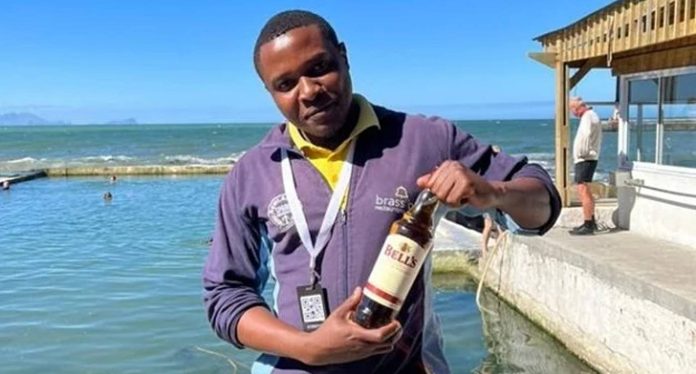
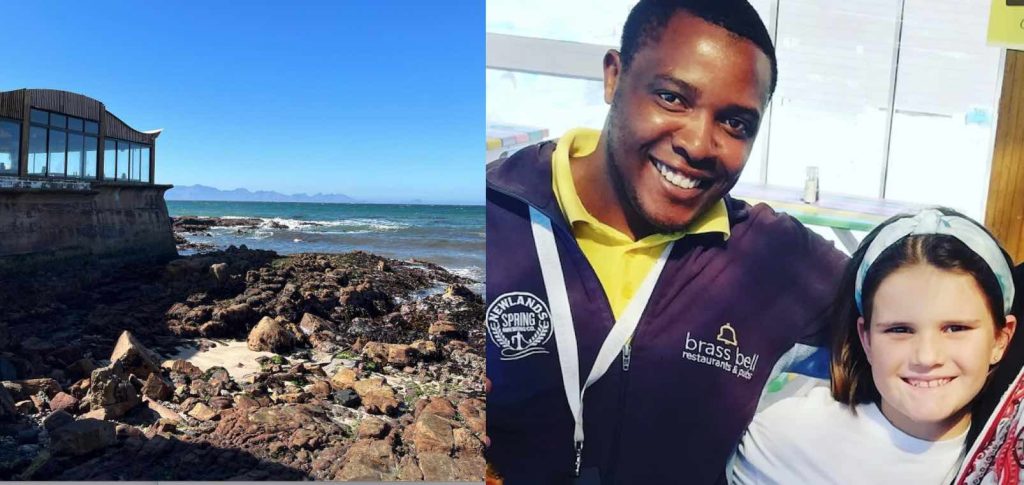
Ayra with rescuer Tongai Matandirotya – Brass Bell Kalk Bay on FB

An ordinary shift at the bar became an exercise in heroism for one bartender in South Africa recently.

Tongai Matandirotya, who works at Brass Bell Restaurant near Cape Town left behind any thoughts of his own safety—and of the drink he was pouring for a customer—to dive into the cold Atlantic ocean to rescue a mother and daughter swept off the pier by a rogue wave.

It was a relatively calm day in the fishing village of Kalk Bay. Several people were walking by the window of Brass Bells looking out to the water. Then the scene changed dramatically.

“I saw this wave come over the harbor and it covered the people, dragging them into the ocean. I immediately ran outside, undressed myself, and dived into the water because I saw a child go in as well. I have a very soft spot for kids, and my instinct just kicked in to see if I could help,” Matandirotya told News 24 Cape Town.

37-year-old Clair Gardiner and her 8-year-old daughter Arya van Hilten were two of the people swept away. Gardiner knew they were being pulled into the water as soon as the wave rushed over them, and she managed to wrap her arms around little Arya.

RELATED: Wheelchair Tumbles into Lake, But 81-Year-old is Saved From Drowning By His Dog’s Barking

By now Matandirotya had dropped the drink he was pouring, taken off his belt and jumped into the water—followed by a tourist unnamed by the news reports.  By then the ferocity of the waves, even just a few meters from shore, had pulled Gardiner and Arya apart; he used his belt to rescue Arya who wasn’t able to stay afloat by herself.

MORE: Woman Ensures Safety of Passengers By Waving Her Red Sari to Stop a Train After Spotting Broken Track

“I recently went to the restaurant to thank him,” Gardiner told local news. “My daughter recognized him immediately, and we all embraced each other. We are so thankful to Tongai and the tourist man who risked their lives to save ours; we’ll forever be grateful to them.”

Tongai noticed he had been badly scratched up by the concrete wall of the pier, but only after finishing his heroics, and reckoned the mostly-cosmetic damage wasn’t anything to worry about.

Brass Bell congratulated their man on Facebook, saying they were “so proud” of him, and appreciative of his heroism, with several commenters adding reminders to “tip him well.”

MAKE SOME WAVES – Share This Hero Story on Social Media…

“Chaos in the world brings uneasiness, but it also allows the opportunity for creativity and growth.” – Tom Barrett

Markus Spiske - public domain.

Quote of the Day: “Chaos in the world brings uneasiness, but it also allows the opportunity for creativity and growth.” – Tom Barrett

Photo by: Markus Spiske

With a new inspirational quote every day, atop the perfect photo—collected and archived on our Quotes page—why not bookmark GNN.org for a daily uplift?


Friendship Ornaments From the Stone Age Were Crafted and Worn as a ‘Symbol of connection’

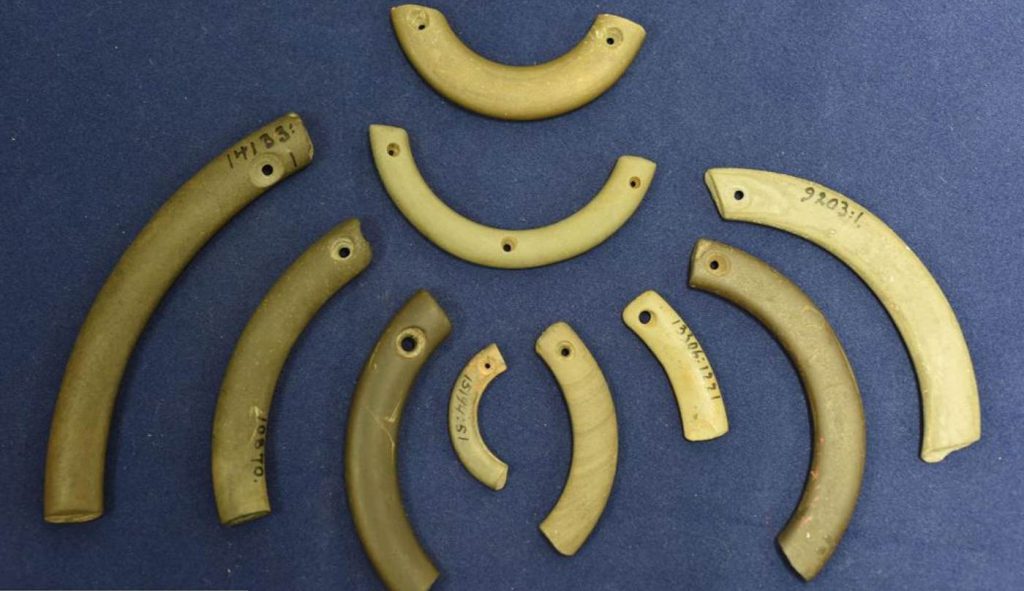
Ornamental slate rings from the Stone Age. (Image- Marja Ahola) released university of helsinki featured
Ornamental slate rings from the Stone Age; Marja Ahola, University of Helsinki

Roughly 6,000 years ago, hunter-gatherer communities in northeast Europe produced skillfully manufactured slate ring ornaments in great numbers. While these ornaments are commonly referred to as ‘slate rings’, they were rarely used as intact rings. Instead, the ornaments were fragmented on purpose, using pieces of rings as tokens. These fragments were further processed into pendants.

The fragments have most likely served as symbols of the social relations of Stone Age hunter-gatherers.

Purposeful fragmentation of ornaments

As most archaeological material is found in a fragmented state, the phenomenon has been considered a natural consequence of objects’ having been long buried underground. However, according to Postdoctoral Researcher Marja Ahola from the University of Helsinki, not all objects have necessarily been broken by accident.

Instead, it is possible some were fragmented on purpose as part of maintaining social relations, bartering, or ritual activities. The research now completed has demonstrated that a substantial number of ornaments have been found in extensive and central locations. As some of the ornaments originate in Lake Onega region and have been transported to Finland through a widespread exchange network, it is possible that they symbolize the connections established within the network.

By matching pieces of slate ring ornaments, analyzing their geochemical composition and investigating traces of use and manufacture in the objects, a research group at the University of Helsinki and the University of Turku demonstrated that the ornaments had not only been worn, but also intentionally broken.

RELATED: 10-Year-old Finds Medieval Priory Seal Within Minutes of Using Metal Detector and Gets $5,000 For it

Because fragments from the same ornament were found in two different locations, it is possible that they were worn by two different individuals. Another indication of this is the fact that one of the fragments had been worked on more finely than the other.

Handprints that tell a story

“These fragments of the same object may show the handprint and preferences of two individuals. Perhaps they wore the ornaments as a symbol of a connection established,” Ahola muses.

A similar link was found in slate ring ornaments created during the same manufacturing process, one of which was found in a settlement-site context and the other in a burial site investigated near the settlement.

RELATED: 10-Year-old Finds Medieval Priory Seal Within Minutes of Using Metal Detector and Gets $5,000 For it

“What we see here may be one way of maintaining connection between the living and the dead. This is also the first clear material connection between a certain place of residence and a burial site. In other words, the people who lived there most likely buried their dead in a site close to them,” Ahola explains.

An X-ray fluorescence analysis (XRF) of a little over 50 slate ring ornaments demonstrated that some of the ornaments or fragments thereof had been imported from Lake Onega region, Russia, hundreds of kilometers from the site where they were found. XRF analyses can be used to determine the element concentrations and raw materials of inorganic archaeological materials with a very high precision.

The technique can be applied as an entirely non-invasive surface analysis, which makes it perfectly suited to the study of archaeological objects.

MORE: Metal Detector Left Him Stunned After Unearthing Ancient Ring Belonging to the Sheriff of Nottingham

“By comparing the elemental concentrations of the objects under investigation with findings published on the basis of international datasets, we were able to demonstrate that some of the ornaments or the stone material used in them was transported to Finland through an extensive exchange network, primarily from the Lake Onega region.

There was also variation in the chemical composition of the objects, which correlates with their design. These factors indicate that the ornaments were produced at Lake Onega region in several batches, most likely in different locations and by a number of makers,” says Docent Elisabeth Holmqvist-Sipilä from the University of Helsinki, whose research on these ancient friendship ornaments has been published in the Journal of Archaeological Method and Theory.

Source: University of Helsinki

TAKE Friends Back in Time; Share This Story…

Family’s New Puppy is Seriously a Golden – After Digging Up Rare Coins Worth $8k

SWNS
SWNS

A family’s new puppy is already worth his weight in gold, after digging up sovereign coins worth nearly £6,000 ($7,564).

51-year-old Adam Clark bought Ollie, a lagotto romagnolo, as a surprise for his nine-year-old daughter Alicia last month.

The breed is known for digging—especially for truffles—and on March 30, on his first walk around the local English fields, the young dog stumbled upon a small fortune.

To his Blackpool-based owner’s delight and utter disbelief, Ollie instinctively dug up a total of 15 gold sovereign pieces likely dating back to the 19th century.

Adam, who works in property, took the gold coins to be examined by Chards, one of the leading gold dealers in the country—who valued them at a staggering £5,943.96 ($7,564).

RELATED: Vast Majority of Dog Owners Believe They Can Read Their Pooch’s Mind

The landlord is thrilled with the return from the treasure, but believes the real prize is Ollie himself, dubbing him his very own “gold hunter.”

SWNS

Adam said, “When we got him we thought he seemed special. Alicia was over the moon and we couldn’t wait to take him out for his first walk around the gala fields.

MORE: Miracle Dog Survives 12 Days Trapped in Badger Holes After Owner Refuses to Give Up, Camping in the Woods

“We’d literally been walking for around ten minutes when Ollie suddenly stopped and started frantically digging away at the soil. That’s when he uncovered the pile of gold pieces—I couldn’t quite believe it.”

SWNS

The proud pup’s owner said, “The treasure is one thing, but, the fact is, I’ve bought myself my very own gold hunter, and I cannot wait to take him out again. He is obviously a very special pup and I’m thrilled with what he brings to the table—quite literally!”

RAISE a PAW for This Gold Digger’s Story; Share it on Social Media…

Dutch Visionary Helps Refugee Camp Recycling All of its Plastic Trash into New Products

Precious Plastic
Precious Plastic

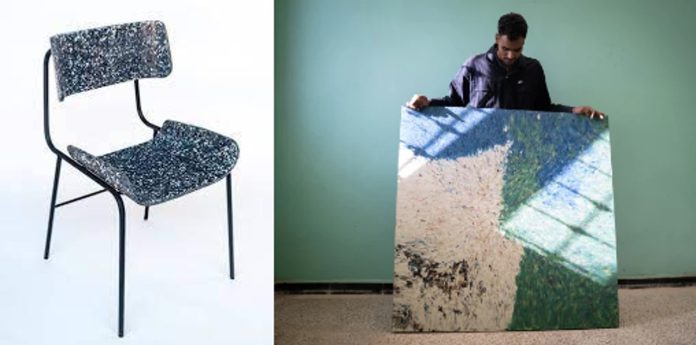
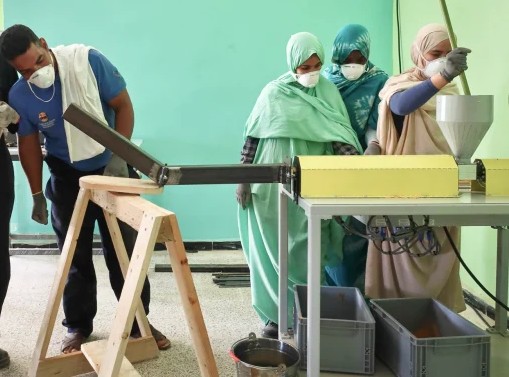
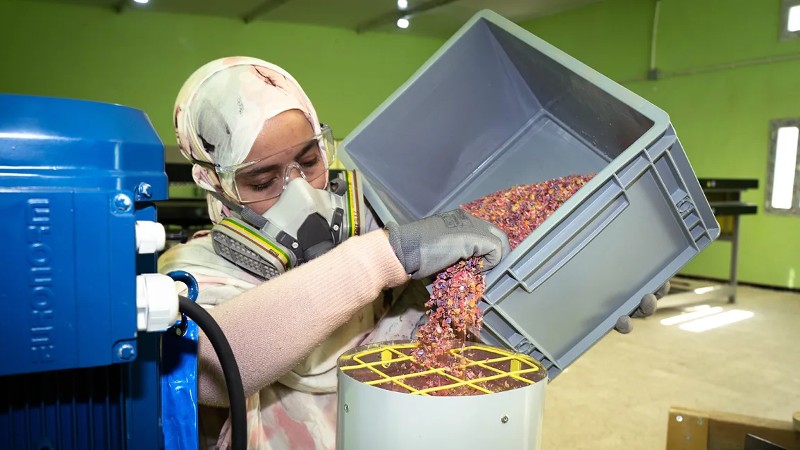
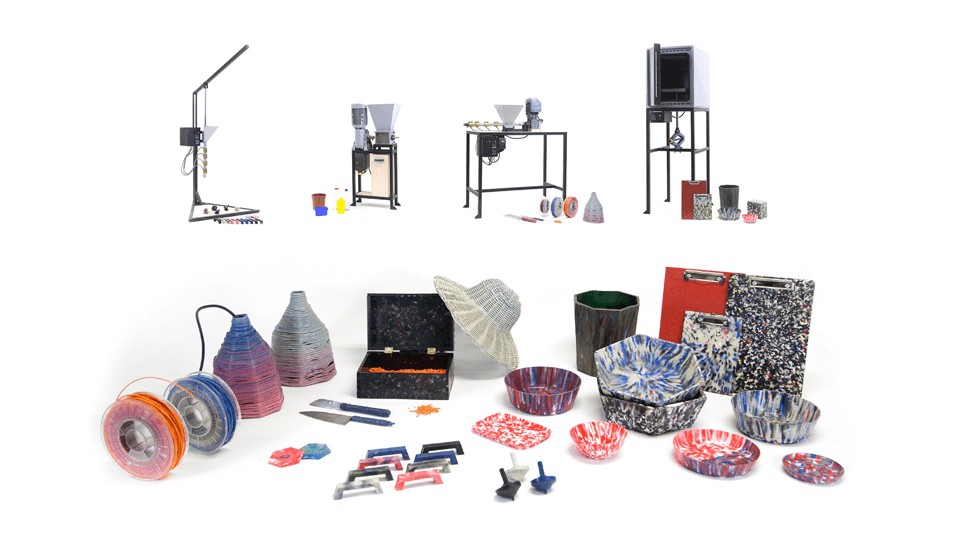
A refugee camp in the northern Sahara that relies on international aid for everything has gotten their hands on small, relatively-portable plastic recycling machines to turn the camp’s waste plastic into furniture, bricks, and other useful objects.

For years, pallets of supplies containing food, water, and medicine would arrive—then they went into a sandy, makeshift landfill. Now that waste is being placed in two machines, which either presses plastic waste into sheets, or melts itinto blocks.

Far from being just another line of government aid, Precious Plastic—which was started by Dave Hakkens as part of his studies at the Design Academy in Eindhoven in 2012—is fully-intending to train a workforce at the camp. It will donate the machines, and let the people build their own business there.

Entrepreneurship goes a long way in helping alleviate poverty, and the Precious Plastic project understands this.

At the camp there is a “large refugee population there with a high unemployment rate,” Joseph Klatt, managing director at Precious Plastic, told Adele Peters at Fast Company.

“Everything is brought into the camps, so there’s not a lot of economic activity going on. And secondarily, there’s a lot of waste in the camp. [This solution helps in the creation of] a new business from processing the plastic waste and providing some economic activity for the refugees.”

RELATED: Amazon Joins the U.S. Department of Energy and MIT to Tackle Plastic Waste With New Science

The machines were packed up into a single shipping container in 2021—which included shredders, washer/dryers, smelters, and presses.

Precious Plastic

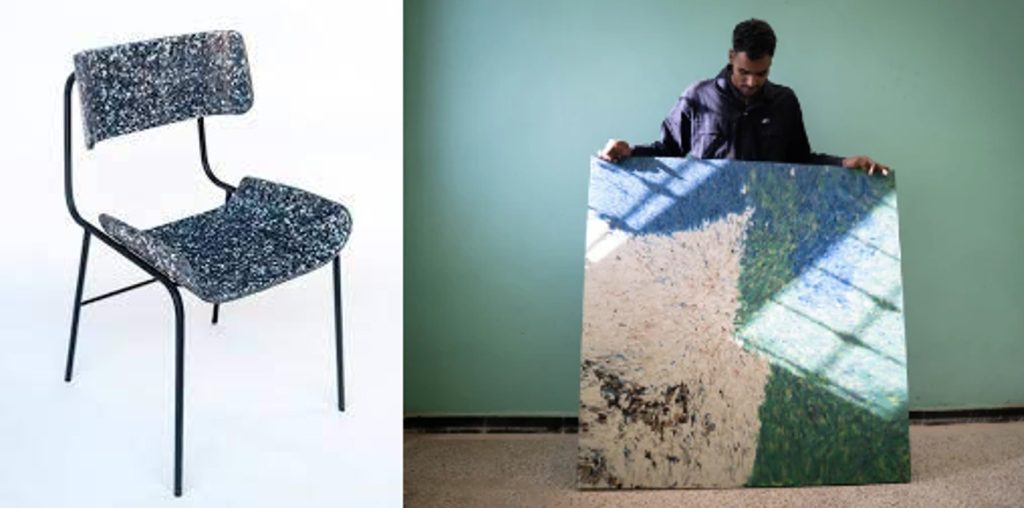
After some introductory instruction, refugees at the camp got on with making benches, chairs, and desks for the school, and tea sets to support the Sahara’s most widespread drinking habit.

Precious Plastic

Precious Plastic isn’t a humanitarian aid group though; they call themselves an open hardware plastic recycling project, and they want anyone around the world who cares about the plastic pollution problem to start their own recycling business using their machines.

MORE: Texas Researchers Use Okra to Remove Microplastics from Wastewater

They even offer business starter kits, including work sheets and logos to help kickstart operations. All Precious Plastic businesses are connected to all others via the use of open source technology, allowing entrepreneurs to share best practices and operating data.

Precious Plastic

On their website, users can expand operations by purchasing more equipment, community-made molds for making products, and even shop for final products themselves, which far from looking like they’re made of LEGO bricks, tend instead towards looking like tie-dye artworks or watercolors.

(WATCH the video for this story below.)

SHARE This Visionary’s Story With All Your Buddies…

Facebook, Google, Stripe, Shopify Investing a Billion Dollars in Pre-Orders for Captured Carbon

Four gargantuan tech companies have put together a $1.2 billion fund to pull carbon out of the atmosphere with a unique model that could go a long way to preventing 1.5°C of warming.

The money will be fronted by companies looking to purchase a security which guarantees a certain amount of carbon removed from the atmosphere, but rather than bidding up prices for existing methods of carbon capture, Frontier will fund additional methods.

Set up by Meta (Facebook), Alphabet (Google), Shopify, and Stripe, their fund—called Frontier—has its own motto: Build and We Will Buy.

A wholly-owned subsidiary of Stripe, Frontier will also be funded by the tens of thousands of businesses who purchase carbon removal via Stripe Climate. This will make Frontier the world’s largest coalition of carbon removal purchasers through funding and membership.

MORE: Man Wins 200 Million on the Lottery and Donates Almost All of It to Save the Earth

The fund will build an eight-year, $925 million commitment to accelerate the development of permanent carbon removal technologies, by aggregating demand from buyers looking to offset the carbon emissions from their supply chain, before distributing that demand among suppliers—in this case firms with proven technology to pull carbon from the air.

Frontier, managed by McKinsey Sustainability, will focus on solutions with permanence, or the ability to store carbon for more than a thousand years; solutions which will be affordable at less than $100 per ton of carbon; can be verifiable; don’t rely on arable land, and remove carbon already in the atmosphere rather than relying on preventing carbon from entering it.

“Frontier aims to send a strong demand signal to researchers, entrepreneurs, and investors that there is a market for carbon removal,” Alphabet said in their release.

Following the recent report by the IPCC regarding the lack of progress made on carbon-cutting goals, McKinsey Sustainability joined up with the Frontier effort in support of developing carbon removal technology by offering pro-bono advisory support to carbon removal startups and businesses taking part in the initiative.

RELATED: Tiny Marine Microbe ‘Could Turn Out to be Secret Weapon in Battle Against Climate Change’

Carbon can be pulled from the air in various ways, some more effective than others, and some are more scalable.

Among these are strategies as varied as giant fans which suck up CO2, separate it from oxygen, and then deposit it deep underground—and vodka made from ethanol created with CO2 from the air.

Other methods trap carbon in building materials like concrete made by this Richard Branson-backed startup, or into lifeforms like algae before being made into household products.

DON’T CAPTURE Good News All to Yourself; Share It With Friends…

Livin’ Good Currency – Ep 7: The Big Record Executive Who’s Setting Innocent Prisoners Free

The Lesson: In many circumstances, the U.S. government, and those governing the 50 states, will place extraordinary, ruinous sentences on men and women who are simply in a difficult period of their lives socially, or who happen to be in the wrong place at the wrong time. Well these loaded convictions are not always the end of the story, as there are many people and organizations around the country, whose effort often goes unreported, working to free first-time or non-violent offenders.

Notable Excerpt: “It was Winston Churchill who said ‘we make a living by what we get we make a life by what we give,’ and it’s also true [that] at the end of the day I’ve been very fortunate in the music industry. I’ve discovered a lot of great artists, helped to launch their careers—but nobody really cares, it doesn’t matter. Nobody really cares next week. Nobody cares who discovered the Beatles! Who discovered the Beatles, do you guys even know? I don’t know, it doesn’t even matter! The Beatles matter, they’ll always matter. But what does matter is that I’ve helped so many people get out of prison, start their lives again, help put their families back together, that actually does matter.”

The Guest: Jason Flom was described by the New Yorker as one of the most successful record-men of the last 20 years, and serves as CEO of Lava Media. He held previous positions as chairman of Atlantic Records, Virgin Records, and Capitol Music Group, and played a major part in the breakouts of artists like Katy Perry, Lorde, Gretta Van Fleet, and Kid Rock. His other life is in criminal justice reform, and hosts the podcast Righteous Convictions, which features interviews of people working for change in criminal justice. His work with criminal defense attorneys has seen dozens of first-time, non-violent, or innocent convicts regain their freedom.

The Podcast: Livin’ Good Currency explores the relationship of time to our lives. It gives a simple, straight-forward formula that anyone can use to be present in the moment—and features a co-host who knows better than anyone the value of time (see below). How do you want to spend your life? This hour can inspire you, along with upcoming guests, to be sure you are ‘Livin’ Good Currency’ and never get caught running out of time.

The Hosts: Good News Network fans will know Tony (Anthony) Samadani as the co-owner of GNN and its Chief of Strategic Partnerships. Co-host Tobias Tubbs was handed a double life sentence without the possibility of parole for a crime he didn’t commit. Behind bars, he used his own version of the Livin’ Good Currency formula to inspire young men in prison to turn their hours into honors. An expert in conflict resolution, spirituality, and philosophy, Tobias is a master gardener who employs ex-felons to grow their Good Currency by planting crops and feeding neighborhoods.

Subscribe to the Pod:  On iTunes… On Spotify… On Amazon Music… Or Google Play.