All News - Page 397 of 1715 - Good News Network
Home Blog Page 397

Banjo Player Serenades a Fox in Colorado – Watch It Come Back for an Encore

Every musician hopes for an attentive audience—but how about if that audience consists of a wild and curious fox? 

Colorado’s Andy Thorn loves nature and music, and recently decided to take his banjo out to his yard in the foothills above Boulder for sunset. What happened next was a curious meeting that feels straight out of the classic children’s book The Little Prince.

He told the Kelly Clarkson Show, “One day the fox wandered over and we thought ‘oh wow I think he’s really loving the music’, and then another day I was on a rock in the yard and he literally came and sat right next to me and just stared at me as I played banjo. It was the coolest thing.'”

Thorn’s new friend has since become the inspiration behind his new collection Fox Songs and Other Tales From the Pandemic. 

MORE: 65 Different Species of Animals Laugh, Says a New Study

(WATCH the video below of the ultimate cute-meet.)

GO WILD for This Story; Share It…

“Happiness is a perfume you cannot pour on others without getting a few drops on yourself.” – Og Mandino

Quote of the Day: “Happiness is a perfume you cannot pour on others without getting a few drops on yourself.” – Og Mandino

Photo: by Laura Chouette

With a new inspirational quote every day, atop the perfect photo—collected and archived on our Quotes page—why not bookmark GNN.org for a daily uplift?

Woman Races to Save World’s Largest–and Stinkiest—Flower, the 3-ft Wide ‘Corpse Flower‘

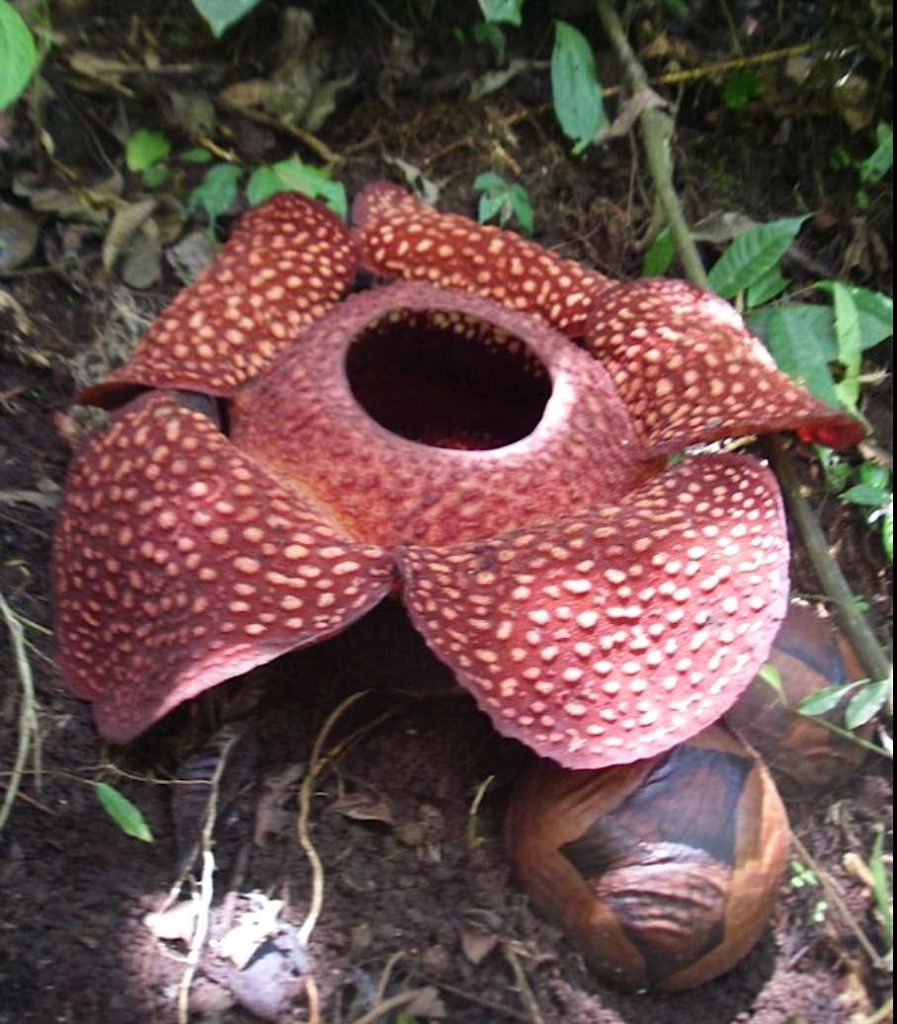
Rafflesia arnoldii flower with buds – By Raphaelhui, CC license / Wikipedia
Rafflesia arnoldii flower with buds/Raphaelhui; CC license

What scientist wouldn’t be drawn to try and save the world’s largest flower, especially when it, Rafflesia, is their country’s national flower?

However when you add in the fact that the world’s largest flower is also the world’s foulest, and that its life cycle is unlike any other plant species on Earth, then suddenly the “panda of the plant world” begins to look more like a headache than the remarkable organism it is.

Sofi Mursidawati, a Ph.D. in agriculture at the Bogor Botanical Gardens on the island of Java, is one of the world’s foremost experts on this strange flower, and her efforts to build a body of knowledge that will allow for the cultivation of the ‘corpse flower’ into the future could save it from extinction.

Rafflesia, also known as the corpse flower, or the giant padma, is a parasitic specimen that has no leaves, roots, or stems, but rather only one giant, one meter-long, 20-pound bloom that smells like rotting meat. Found only in the rainforests of Sumatra and Borneo, its artificial cultivation in the face of habitat loss is problematic, because for more than 70 years of attempts, no botanist has ever successfully created a Rafflesia nursery.

With seeds the size of sawdust grains, pollinated flowers infect a genus of vines called Tetrastygma, before slowly growing over many months into an enormous cabbage-sized bulb. The curiosities don’t end there. In fact, it barely qualifies as a plant.

It branched away from having genetics that code for photosynthesis millions of years ago, and relies entirely upon its host for energy. Furthermore, and unlike most flowers that have pollinating and pollination equipment, Rafflesia blooms are sexually monomorphic, which means that even after taking a year to grow a flower once it’s time to reproduce, it can only succeed if there is another flower of the opposite sex within the same territory of the carrion flies attracted to the scent of rot from its nectar.

RELATED: Huge Field is Planted With More Than 100,000 Sunflowers to Read the Word ‘Hope’ – LOOK

Just as it’s difficult to get pandas to breed, Rafflesia are a pain in the neck, as the blooms last only a week, giving precious little time for coordination.

Tender patient hands

Rafflesia arnoldii flower with buds/ma_suska; CC license

“I don’t think there was anybody who was willing to work with Rafflesia because of the difficulties,” Mursidawati, who started a nursery for Rafflesia patma in 2004, told National Geographic. “Everybody also told me that it was impossible.”

After collecting Rafflesia seeds, and a variety of Tetrastygma vines, both cuttings and whole plants from the mountains of Pangandaran Nature Reserve, in West Java, it took her four years to welcome the first stinking flower into the Bogo Botanical Gardens.

A decade later and the work was still slow going. In fact, Manchester United F.C. won as many trophies over the same period as Mursidawati managed to raise flowers from bud to bloom. The bud mortality rate is around 90%, and so many don’t make it to adulthood.

MORE: A Floating Flower Garden in Tokyo Immerses Visitors With Orchids That Move as You Approach (WATCH)

However the cultivation is doing one thing very well: creating specimens to send to botanic gardens around the world, creating what will likely be the strange flower’s greatest chance for survival—in the form of interest in Indonesian eco-travel.

“It doesn’t really matter where it grows, as long as it promotes conservation of that organism,” Jeanmaire Molina, a biologist at Long Island University who studied Rafflesia  told National Geographic.

Nat Geo was also detailing how anywhere conservationists finds Rafflesia, they are beginning to immediately campaign for local and federal protection, due to a growing understanding of the unique, if stinky, blessing the rainforests of Malaysia, and of the Indonesian islands, have in the form of the world’s largest flower.

SHARE This Hopeful Conservation News With Flower-Loving Friends…

The Caring Moment a Chimpanzee Mom Applies an Insect to Her Son’s Wound

SWNS
SWNS

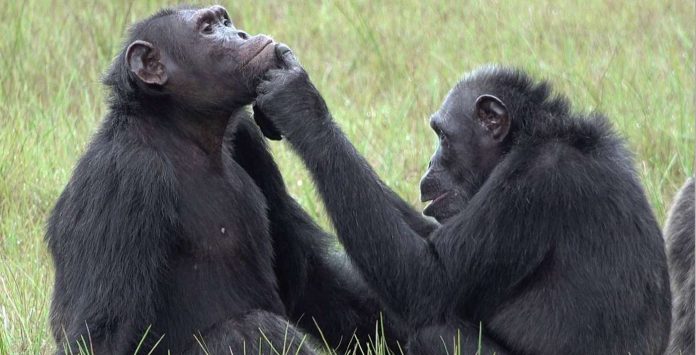
The incredible world-first moment a chimpanzee mom applies an insect to her son’s wound has been caught on video.

Researchers watched chimps in the wild in Gabon applying insects to their wounds and the wounds of loved ones.

Suzee the chimp was captured on camera inspecting a wound on her adolescent son Sia’s foot before catching an insect out of the air, putting it in her mouth, pressing it between her lips, and applying it to the wound as her daughter Sassandra watches on.

Scientists say it shows the primates can show love and empathy for each other just like humans.

The footage was captured in November 2019 by volunteer biologist Alessandra Mascaro in Loango National Park in the West African country.

Researchers from the Ozouga Chimpanzee Project had been studying the group of chimps for seven years but had never seen anything like this before.

After they made the discovery, they started looking for more evidence of this wound-tending behaviour, and over the next 15 months they unearthed 76 examples of the same group applying insects to their own and each other’s wounds.

MORE: Adorable Pictures Show A Critically Endangered Female Chimpanzee Cradling Her Newborn Baby

Later they recorded their findings in a study published today in the journal Current Biology.

It is not the first time animals have been seen treating themselves for ailments- researchers have reported examples of bears, elephants and bees doing similar things before.

However, applying insects to wounds has never been seen in animals before and the researchers say it is remarkable the chimps apply the tiny creatures to others as well as themselves.

The academics say it is a very clear example of empathetic ‘prosocial behaviour’ which is also seen in humans.

It is not yet clear why insects are used to treat illness and which creatures are being used.

The scientists say the unique behaviour may be a way of relieving pain.

Ms Mascaro said, “In the video, you can see that Suzee is first looking at the foot of her son, and then it’s as if she is thinking, ‘What could I do?’ and then she looks up, sees the insect, and catches it for her son.”

RELATED: ‘World’s Loneliest Elephant’ Finally Headed For Sanctuary After Pakistan Ordered Him Released From Zoo

Study author Dr Simone Pika said, “This is, for me, especially breathtaking because so many people doubt prosocial abilities in other animals.

“Suddenly we have a species where we really see individuals caring for others.

“Humans use many species of insect as remedies against sickness—there have been studies showing that insects can have antibiotic, antiviral, and anthelmintic functions.”

Study author Dr Tobias Dreschner said, “Studying great apes in their natural environments is crucial to shed light on our own cognitive evolution.

“We need to still put much more effort into studying and protecting them and also protecting their natural habitats.”

The study is published in Current Biology

(WATCH the video for this story below.)

GO APE For The News And Share The Story on Social Media…

Man Needs to Make Friends, So He Nervously Makes Pancakes for Dozens of Neighbors – It Was a Huge Hit

One of the flyers Kimball hung in his neighborhood to invite community members to the event. (Curtis Kimball) family photo

A nervous and self-conscious San Franciscan was looking to make new friends, and in hosting a Saturday morning pancake party he ended up starting a new neighborhood tradition.

Figuring that while there are many differences between individuals‚some might enjoy sport, while others might much prefer a book club, for example—no-one would say no to free homemade pancakes.

Curtis Kimball, owner of The Crème Brûlée Cart, put up comical flyers around his San Fran neighborhood which read “My wife says I’m getting weird. She says I need to make friends. So I’m making pancakes.”

It was a huge hit, surprising the nervous Kimball.

“I actually didn’t know what to expect at all and I was terrified setting up for it. Even putting up the flyers made me nervous and self-conscious,” Kimball told TODAY Food.

MORE: Idaho Man Breaks 52 World Records in 52 Weeks – Watch the Highlights of His Wild Year

“Like, this could be a really dumb idea and everyone might hate it. But the first people showed up right away, they lived two doors down and they were very excited.”

RELATED: Mystery ‘Garbage Man’ in Wisconsin Neighborhood is Revealed to Be a 75-Year-old Man

Kimball documented the event, to which people brought their kids and dogs, and said it was a major relief from “the last two years (six years really)” noting San Francisco’s struggles with homelessness, crime, rising cost of living, and other civic challenges.

It was such a hit among the neighbors that Kimball will be replicating it, and hopes to do so in other neighborhoods around SF to expand his social circle beyond his own zip code.

His dream, Yahoo reports, is to have Saturday morning pancake parties across the country.

FLIP Bad News for Good; Share This Fun Story…

The Ashes of Star Trek Founder’s Wife Get Blasted Into Space on a Mission to Advance Science

Rendering, United Launch Alliance

Reprinted with permission from World At Large, a news website of nature, politics, science, health, and travel.

Star Trek creator Gene Roddenberry died in 1991, then six years later some of his ashes were launched into deep space by an outer-spatial funerary company called Celestis in what most people found a fitting end for the science-fiction titan. Now his wife, Majel Barrett Roddenberry, who passed away in 2008, will join her husband’s ashes floating around space when hers are launched aboard a “Vulcan” rocket.

Celestis’ Enterprise Mission reflects most of what’s great about the modern space industry, and science-fiction fans. As well as being sent up to space with the ashes of Star Trek actor, James “Scotty” Doohan and those of other die-hard Trekkies, the mission will also be sporting a state-of-the-art moon lander designed by Astrobotics for payload missions to the moon.

In total 150 ash-containing capsules will be launched into space, along with DNA samples should the odd spacefaring alien race happen upon them, as well as messages from other Star Trek fans. Altogether the payload is one that celebrates fiction and fact, as well as the unquenchable enthusiasm of spacebound firms and sci-fi fans, two groups that largely intersect. Evidenced by the fact that the rocket is called a Vulcan, and the mission is called Enterprise.

“We’re very pleased to be fulfilling, with this mission, a promise I made to Majel Barrett Roddenberry in 1997 that one day we would fly her and husband Star Trek creator Gene Roddenberry together on a deep space memorial spaceflight,” said Celestis Co-Founder and CEO Charles M. Chafer. “The mission is named Enterprise in tribute to them.”

RELATED: Gigantic Planet Found Hidden in Plain Sight

It’s the funerary company’s 20th flight, and with costs starting at $12,500, it’s more than competitive with traditional funerary services. Furthermore, it sponsors launches for which Celestis hires the services of the United Launch Alliance (ULA) whose rockets have carried missions to the Sun, Moon, and every planet in the solar system. Companies like Astrobotic can hire space on the ULA rockets then, to develop their own equipment.

The falcon has landed

In this case the lander in question will be the backbone of a Lunar delivery service called the Peregrine lander. This small spacecraft can deliver equipment onto the Lunar surface, orbit, and even with a rover, in case a scientist needs a particular delivery in a particular area, all for the low low price of just $1.2 million per kilogram for the lander, and $4.5 million per kilo for the rover.

MORE: Are We About to Witness a Super-Massive Black Hole Merger?

Their 2022 ride with ULA will be the Peregrine’s first ever mission, the first commercial lander to touch down on the moon, and the first U.S. lander to do so since the final Apollo mission. Peregrine will carry a diverse suite of scientific instruments, technologies, mementos, and other payloads from six different countries, dozens of science teams, and hundreds of individuals.

Among these will be five NASA spectrometers. One is to search for near-surface water and ice, another for monitoring radiation, another two for finding volatile molecules that can be used as rocket propellent or other resources, and one for looking into the near near-infrared spectrum of light.

LOOK: Even Dying Stars Can Still Give Birth to Planets, Scientists Discover

Peregrine will also be carrying three mini rovers. One from British firm Spacebit, another from the company Dyno in Japan, and a third from the Carnegie Mellon University.

NASA will also be deploying prototypal advanced solar energy cells to test their capacity to provide electricity for Lunar projects including a future base, and the Mexican Space Agency will put the first Latin-American anything on the surface of the moon in the form of a suite of instruments for data collection.

LAUNCH This Story Over to More Star Trek Fans; Share It…

“What men and women need is encouragement. Instead of always harping on a man’s faults, tell him of his virtues. Hold up to him his better self.” – Eleanor H. Porter

Quote of the Day: “What men and women need is encouragement. Instead of always harping on a man’s faults, tell him of his virtues. Hold up to him his better self.” – Eleanor H. Porter (Pollyanna)

Photo: by Count Chris

With a new inspirational quote every day, atop the perfect photo—collected and archived on our Quotes page—why not bookmark GNN.org for a daily uplift?

1,000 Doctors Now Prescribing Nature By Giving Free Admissions With National Park Passes

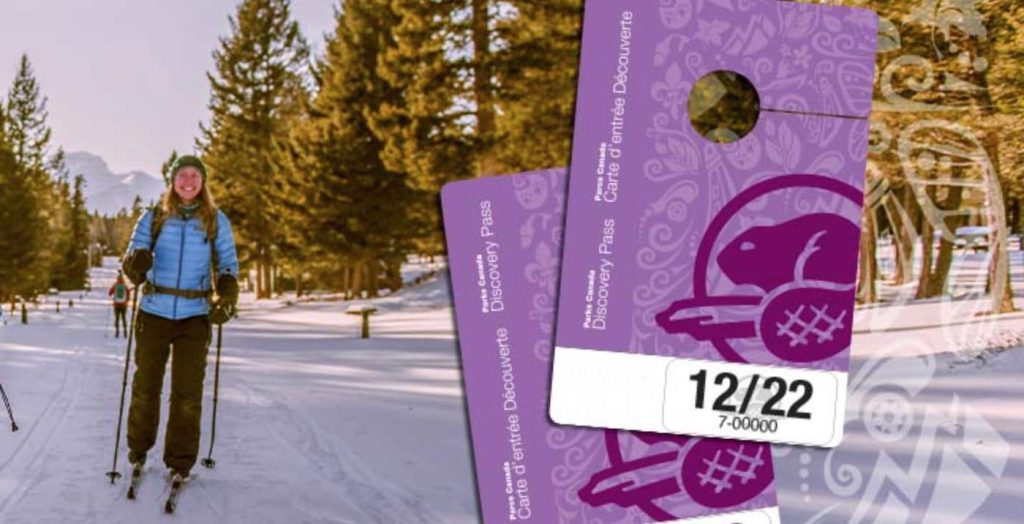
Discovery Pass by Parks Canada

Possessing parallel tracts of stunning and unspoiled lands, Canadian healthcare practitioners are joining onto an American movement to prescribe national parks to improve their patients’ physical and mental health.

PaRx Canada now consists of over 1,000 physicians, nurses, and other medical professionals in B.C., Manitoba, Saskatchewan, and Ontario who can prescribe the annual Adult Parks Canada Discovery Pass from the Canadian parks authority—which is normally $72.25 annually for adults aged 18-64 and $61.75 for seniors (65+).

The pass gives people free entrance to over 80 national parks, national historic sites, and national marine conservation areas—and the nature prescription program is expected to spread across every province and territory by the end of 2022.

A growing movement

As a growing body of evidence began to find that being in nature can have a profound influence on our health and well-being, Park Prescriptions America began as a grassroots movement in the United States over a decade ago, and has now spread to countries around the world.

In the States, the program allows physicians to use zip codes to find nearby parks to prescribe to patients. Once a script has been written, through a simple software it’s easy for physicians to send reminders to fulfill it, and to track how many times a patient has visited the prescribed park.

Park Prescriptions Canada, founded in 2020, is the first such organization in the Great White North.

“There are no costs to patients for participating in our program,” a spokesperson for PaRx told GNN. “Participating healthcare providers have the opportunity to prescribe an Adult Parks Canada Discovery Pass, which provides free admission to over 80 locations,” they said, adding that various park-like spaces within major cities, such as the University of British Colombia Botanical Gardens, will also be free under the program.

RELATED: The Small Victories That Make a Huge Difference in Our Daily Lives

“We are very lucky in Canada to have a world of beautiful natural spaces at our doorstep to enjoy healthy outdoor activities. Medical research now clearly shows the positive health benefits of connecting with nature. This exciting collaboration with PaRx is a breakthrough for how we treat mental and physical health challenges, and couldn’t come at a better time… ” said Steven Guilbeault, Minister of Environment and Climate Change and Minister responsible for Parks Canada in a statement.

MORE: How Good News Saved His Life – Anthony Samadani

A University of Saskatchewan student, speaking with CBC news, described the idea that nature should be looked at as the “fourth pillar” of health, alongside diet, exercise, and sleep.

Dr. Melissa Lem, a Vancouver-based family physician who launched PaRX in Canada with the BC Parks Foundation, has described being proud to help grow Canada’s first national, evidence-based nature prescription program.

She told reporters that PaRX is hoping to expand the nature prescription to include transportation options that stop at or include parks on their transit lines. This way those inside major cities, or people who may not have access to a car, can share in nature’s benefits.

(WATCH the CBC video for this story below.)

GIVE This News That’s a Breath of Fresh Air to Friends; Share It…

A Good Night’s Sleep Helps Cut Appetite By Up to 500 Calories a Day

A good night’s sleep helps cut appetite by up to 500 calories a day, according to a new study.

Getting enough sleep could save millions of people from putting on unwanted weight, say scientists.

It is estimated that two out of every three men and six out of 10 women in England are either obese or overweight.

Obesity increases a person’s chances of suffering from mental health problems and has been linked with heart conditions, diabetes, and cancer, all leading causes of death.

Now scientists at the University of Chicago Medicine have come up with a simple solution which many people are likely to welcome; that’s getting more snoozing in.

Author Dr Esra Tasali said, “Over the years, we and others have shown that sleep restriction has an effect on appetite regulation that leads to increased food intake, and thus puts you at risk for weight gain over time.

“More recently, the question that everyone was asking was, ‘Well, if this is what happens with sleep loss, can we extend sleep and reverse some of these adverse outcomes?’”

The researchers recruited 80 young, overweight adults, who would usually only sleep for six and half hours a night.

They were asked to wear a sleep monitor and given counseling sessions to bring their shut eye up to eight and half hours per night.

This way, participants were able to continue sleeping in their own beds and did not have to change their diets.

TRY THIS FOR OBESITY: How Self-Compassion Can Help People Achieve Weight Loss Goals Despite Setbacks–and Resume Dieting Faster

Dr Tasali said, “Most other studies on this topic in labs are short-lived, for a couple of days, and food intake is measured by how much participants consume from an offered diet.

“In our study, we only manipulated sleep, and had the participants eat whatever they wanted, with no food logging or anything else to track their nutrition by themselves.”

Participants increased their average sleep duration by over an hour a night after just one counseling session.

To track their calorie intake, the researchers used a special urine test called the “doubly labelled water method.”

It involves giving participants water where the hydrogen and oxygen atoms have been replaced with less common harmless substances.

Senior author Professor Dale Schoeller said, “This is considered the gold standard for objectively measuring daily energy expenditure in a non-laboratory, real-world setting and it has changed the way human obesity is studied.”

LOOK: The ‘Sioux Chef’ Brings Indigenous Food Back to the Forefront of American Diets

People who get more sleep reduce their calorie intake by an average of 270 kcal per day, with some even cutting out 500, the researchers found.

This translates to roughly 12 kg [26 lbs] of weight loss over three years, provided the effects were maintained over a long term.

Dr Tasali said, “We saw that after just a single sleep counselling session, participants could change their bedtime habits enough to lead to an increase in sleep duration.

“We simply coached each individual on good sleep hygiene, and discussed their own personal sleep environments, providing tailored advice on changes they could make to improve their sleep duration.

“Importantly, to blind participants to sleep intervention, recruitment materials did not mention sleep intervention, allowing us to capture true habitual sleep patterns at baseline.”

The study lasted four weeks, with the first two being dedicated to finding out how many hours participants enjoyed.

MORE: Higher Olive Oil Intake Associated With Much Lower Risk of Death From Various Diseases

Dr Tasali said, “This was not a weight-loss study.

“But even within just two weeks, we have quantified evidence showing a decrease in caloric intake and a negative energy balance—caloric intake is less than calories burned.”

A healthy sleep pattern could therefore be used to combat obesity, which affects around 13 percent of the world’s population.

Dr Tasali said, “If healthy sleep habits are maintained over longer duration, this would lead to clinically important weight loss over time.

“Many people are working hard to find ways to decrease their caloric intake to lose weight —well, just by sleeping more, you may be able to reduce it substantially.”

The findings were published in the journal JAMA Internal Medicine.

HELP Your Friends Sleep Soundly; Share This Study…

Simple Green LED Lights Save Sharks and Turtles from Accidental Bycatch in Fishing Nets

NOAA Fisheries
NOAA Fisheries

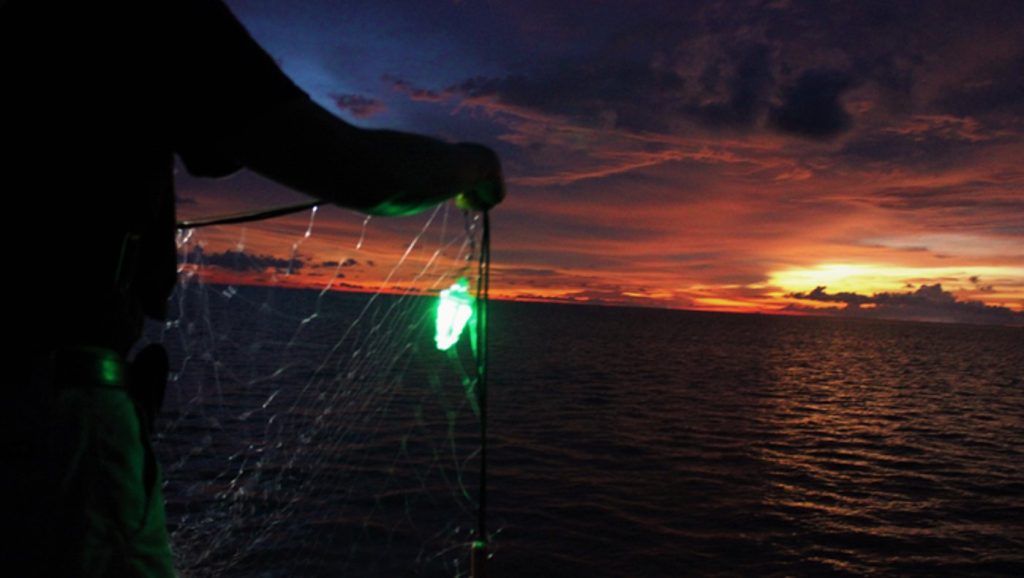
Marine biologists have found that $8 green LED lights affixed to fishermen’s gill nets were enough to dissuade huge amounts of sea animals like turtles, rays, and sharks from ever swimming toward the nets.

Originally tested by the National Oceanic and Atmospheric Administration on sea turtles off the coast of Hawai’i, they are proving even more effective on squid and the elasmobranch family, which contains sharks and rays.

Gill nets are indiscriminate, and fishermen end up catching marine life without meaning to, after they get entangled and sometimes killed in the nets.

Jesse Senko, a biologist at the State University of Arizona’s School of Life Sciences, found that just a few green lights reduced the amount of elasmobranch and squid caught in fisherman’s nets by 95% and 81% respectively.

The endangered loggerhead sea turtle also fared well, with the green glowing nets reducing their incidence of bycatch by 51%.

Furthermore, even non-game species of fish steered clear of the green light more than in the unlit control nets. Overall, the lit nets reduced all bycatch by 63%.

“We were stunned with our findings,” one researcher told Reuters.

In their study published in Cell, Senko and the rest of the research team compared 5,000 lit nets to 5,000 unlit nets off the coast of the Baja Peninsula in Mexico, where several species of sharks and rays are declining due to bycatch, including the devil and manta rays.

MORE: See 1,000 Glorious Fin Whales Feeding Together: Share Their Comeback From Near Extinction

Somehow, even though regular non-game fish were reduced, there was no difference statistically in the amount of game species caught in the lit and unlit nets, meaning there was no change to fishermen’s income.

“Regardless, the increased operational efficiency and reduction in total bycatch could justify the costs to fishers that convert to illuminated nets. In cases of high biodiversity and conservation importance, governments and NGOs could subsidize their adoption,” Senko wrote.

“In other gillnet fisheries, net illumination has been estimated to cost as little as $16 to $34 to prevent a sea turtle bycatch event. We encourage conservation practitioners, fishery managers, and other stakeholders to work with industry to develop new technologies, domestically manufacture LED lights, and seek new methods to increase efficiency and availability.”

RELATED: Whales Once Walked Along the Coasts of North America … Wait, What?

One of the unexpected and rather cool reactions of reducing this bycatch was the amount of time it took to haul in and untangle nets, saving an average of 63 minutes per trip.

SHARE This Good News From the Ocean With Your Buddies…

8-Year-old Slips His Handwritten Book Onto a Library Shelf—And It Now Has a Years-Long Waitlist

The Helbig Family_ALEX HARTMAN:ADA COMMUNITY LIBRARY family photos
(L) ALEX HARTMAN:ADA COMMUNITY LIBRARY; (R) The HELBIG FAMILY

Just because a book’s not on the bestseller list doesn’t mean it can’t be the most popular read in town. At one library in Boise, Idaho there’s a years-long waiting list for one title. You’d think they’d order another copy, right?

Well, they can’t because, technically speaking, the book’s never been published.

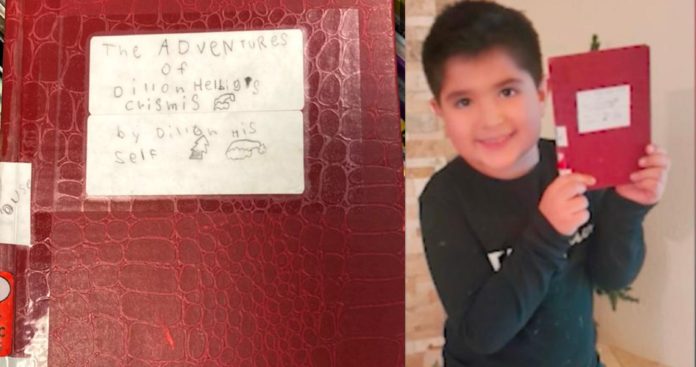
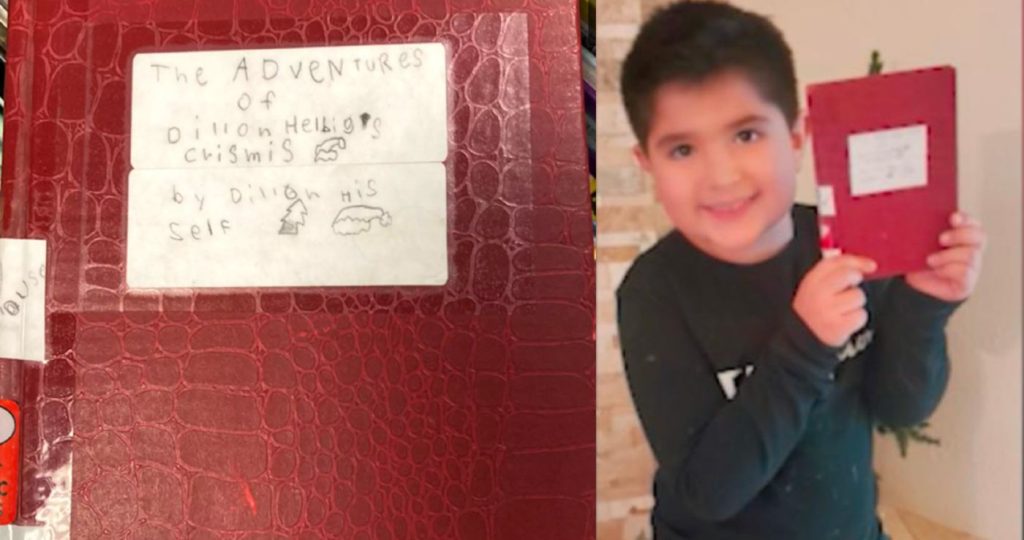
Its author, an 8-year-old second-grader named Dillon Helbig, surreptitiously slipped his hand-written, 81-page, self-illustrated masterpiece into the stacks of the children’s section of his local library because he simply wanted to share the holiday-themed story he’d created with other kids.

Dillon, a regular patron, was on a visit to the Ada Community Library’s Hazel Branch when he deposited the lone copy of The Adventures of Dillon Helbig’s Crismis (signed “by Dillon His Self”) between some other picture books on the shelves. His random act of literature went unnoticed at the time… but not for long.

When Dillon got home, he confessed the day’s exploits to his mom, Susan. She wasn’t surprised by what he’d done. She knew Dillon had long harbored a hankering to add his name to the ranks of the library’s authors.

“I’ve been wanting to put a book in the library since I was 5,” Dillon told KTVB-7 News.

Concerned that Dillon’s book would be discarded or lost, Susan contacted the library to see if they’d found it and would hold onto it for them. She was in for a bit of a surprise.

MORE: 19-Year-Old Just Set the Record for the Youngest Woman to Fly Solo Around the World

Not only had the staff found it, they thought it was pretty exceptional and even though the circumstances were unusual, they felt it would be a perfect addition to their collection. (The fact Branch manager Alex Hartman’s 6-year-old son Cruzen gave the fantastical tale that includes Santa Claus, an exploding Christmas tree ornament, time travel, and a giant turkey an enthusiastic thumbs up probably didn’t hurt.)

“Dillon is a confident guy and a generous guy. He wanted to share the story,” Hartman told The Washington Post. “I don’t think it’s a self-promotion thing. He just genuinely wanted other people to be able to enjoy his story… He’s been a lifelong library user, so he knows how books are shared.”
LOOK: Tom Brady FaceTimes With High School Team After They Dialed the Wrong Number

With an official bar code and labels affixed to its distinctive red cover, Dillon’s wish of earning a place in the library’s card catalog came true. Before long, The Adventures of Dillon Helbig’s Crismis proved so popular, it had one of the longest waiting lists in the library’s history.

For his efforts, the library awarded Dillon its inaugural Whoodini Award for Best Young Novelist. Named for the library’s owl mascot, it was a category created just for him.

While readers as far away as Texas had hoped to have the chance to borrow the coveted title through an exchange program, with only one copy, that wasn’t possible. To meet the demand, Hartman and Dillon’s mom are exploring options for an e-book version so the book can be loaned out to a broader audience.

RELATED: Teens Build Bus Stop Shelter for 5-Year-old Wheelchair User, Protecting Him From Harsh Weather

Flush with success, Dillon isn’t resting on his laurels. He’s already working on his next opus. “It’s about a jacket-eating closet,” he told TODAY.

With his boundless imagination combined an unstoppable determination, at 8, Dillon Helbig is already a literary force to be reckoned with. We can hardly wait to see what he accomplishes when he grows up.

HELP Pals See the World Through a Child’s Eyes; Share This Sweet Story…
“Without imagination, love stales into sentiment, duty, boredom. Relationships fail not because we have stopped loving but because we stopped imagining.” – James Hillman

By Everton Vila

Quote of the Day: “Without imagination, love stales into sentiment, duty, boredom. Relationships fail not because we have stopped loving but because we stopped imagining.” – James Hillman

Photo: by Everton Vila

With a new inspirational quote every day, atop the perfect photo—collected and archived on our Quotes page—why not bookmark GNN.org for a daily uplift?


Lucky Cat Gets His Own ‘Mini SeaWorld’ After Owner Spends $2,400 Turning Fish Tank Into Underwater Peep Show – LOOK

SWNS

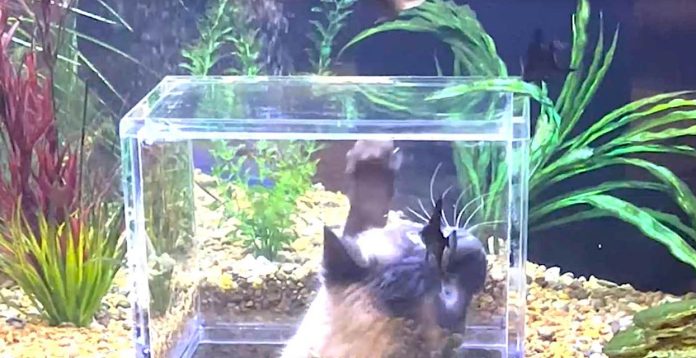
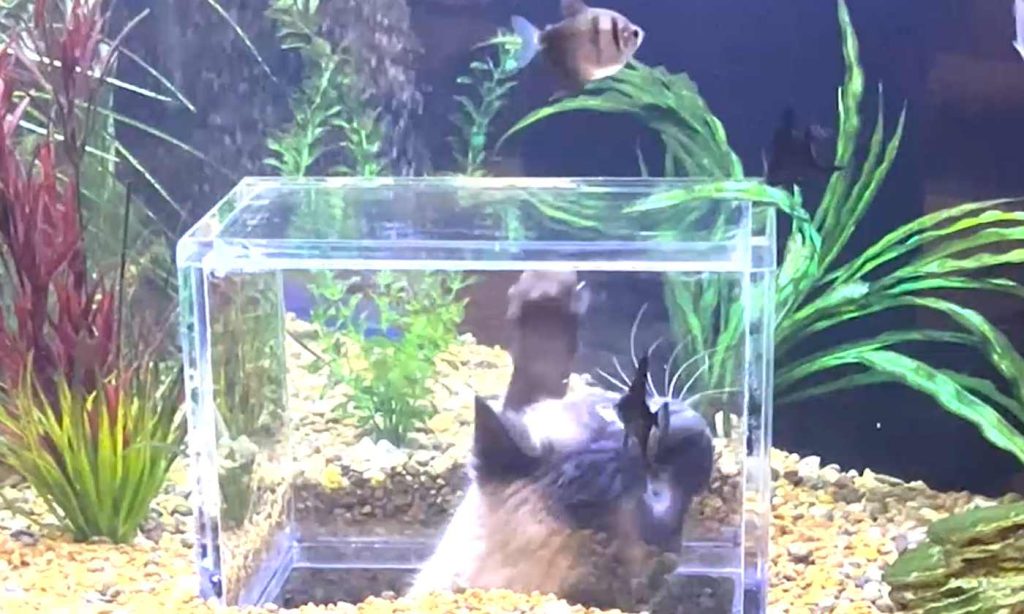
This curious cat is living the dream after his owner splashed out £1,800 ($2,400) transforming his fish tank into a ‘mini SeaWorld’—so he can spend every day pawing at the fish through an underwater viewing chamber.

Jasper the Siamese cat used to spend hours entranced by Melissa Krieger’s exotic pets as he gazed through the saltwater enclosure from a dining room chair.

When the 53-year-old’s fish supplier Jason Hering was cleaning the tank late last year, the pair devised a plan to build a unique design so the intrigued feline could feel he’s underwater too.

Jason, who cleans Melissa’s multiple tanks every fortnight, spent 16 hours molding the new tank’s see-through acrylic panes and building its wooden base before fitting it in December.

Adorable viral footage shows three-year-old Jasper sitting upright on a cushion beneath the purpose-built acrylic case with only his head poking through a cube-shaped hatch.

RELATED: Mom Finds Cat After 8 Months When She Recognized His Meow On a Phone Call

The mesmerized kitty looks up and around the tank at the array of colorful fish and he even paws at the hatch to try and touch the tropical pets—just like a child at an aquarium.

Mom-of-four Melissa shared her video at the end of January on Facebook, and since then it’s been widely shared racking up more than 10 million views.

She insists of the 125-gallon tank that “it’s definitely been worth the money” to keep her “easily bored” feline occupied.

Jasper and the family’s other Siamese cat Willow were a little anxious giving their hatch a try at first, but last month Jasper braved the unknown.

MORE: Ginger Cat is Local Star for Stealing Hundreds of Toys and Presenting Them Sweetly to Neighbors

Melissa, from Cincinnati in Ohio, said, “It’s great to see him so happy because you’ve got to stimulate their brains.

Of the steep cost she said, “You spend that much on a TV and this is like a TV for cats. As soon as we feed the fish, he comes running. He’s living the dream.”

Describing Jasper’s first experience with the tank, she said, “His eyes just got huge when he looked up and saw the parrotfish and they were staring back at him. That’s what made him want to go inside it more.”

CHECK OUT: Kefir the Maine Coon Cat is So Big People Mistake Him For a Dog

Now the videos of Jasper have gone internet-famous, here’s what commenters have been saying:

Lizzie Beth: “This is the most amazing aquarium modification, EVER!!!!”

Vicki Pedeferri: “Great idea! Keep your feline entertained all day.”

(WATCH the fun video for this story below.)

RAISE a Paw For Sweet Stories and Share This One on Social Media…

80-Year-old Man Walks Through Blizzard to Rescue 3 Cars of People

ideo still embedded cbc shannon st. onge

A retiree rescuer hiked half a kilometer through a winter whiteout to reach a woman that had used social media to alert the local neighborhood that she was stuck and afraid for her safety.

At 80-years old, Andre Bouvier Sr. is being hailed as a hero for rescuing not only the woman, but three other cars likewise stuck in an impassable blizzard which locals describe as a “Saskatchewan Screamer.”

Many have had the same thought as Shannon St. Onge when looking at the approach of snow on a weather forecast—that they have time to finish their errands. The director of finance at the First Nations University of Canada, her signature on a check required her to drive her usual commute of 25 kilometers (15 miles) from her home in Pense, over to the city of Regina.

As she was leaving, the winter snow began to fall, and taking a dirt road for better traction on her tires, she quickly became lost, with no ability to see more than a sliver of the road’s edge from a rolled-down window. After a while she stopped and called 911, with the operator suggesting she wait out the storm as her tank was full and she was warm.

“She (the operator) took my information and told me an officer would call me back. Almost 14 hours and counting and nobody has called me yet to check in,” she wrote in a Facebook post.

“Would the gas tank last until morning? What if I was hit by another vehicle? What if I fell asleep and the tailpipe was blocked? What if I didn’t make it home at all?” St. Onge wondered.

CHECK OUT: Rookie Lifeguard Faced With Saving a Kangaroo From Rough Surf in Her First Ever Rescue

Determined to ensure the safest end to her turn for the worse, she went out in the storm and discovered her location on a road sign, then found a neighborhood Facebook group for the area she was passing through—alerting those it contained of her plight through a Google Maps pin.

That’s when Andre Bouvier Sr., doing some at-home genealogy research, got a call about St. Onge’s situation, and bundling up while ignoring his wife’s concern for his safety, the 80-year-old went out to find her, on foot, since he couldn’t manage to start his tractor.

RELATED: Drone Helps Save the Life of a 71-Year-old Man Who Has Cardiac Arrest While Shoveling Snow

On the way he found three other stranded vehicles, totaling seven people, and walking the quarter mile there and back, he led the helpless cars one by one to his home.

“Once we arrived to [his] house, and I parked the car, I got out and jumped into his arms and gave him a great big bear hug,” St. Onge told CBC News. “I was sobbing with gratitude, I was so grateful.”

MORE: A Hero Just Passing By Saves Young Mom and Son From Dying in Wyoming House Fire

Bouvier let the survivors sleep at his house, where they ate and laughed, and departed the next morning after he had plowed the driveway.

Bouvier remarked that everyone would have done the same, and that it took very few thoughts or courage to help.

(WATCH the CBC video for this story below.)

RESCUE Beautiful Stories of Human Kindness; Share This One…

Scotland Aims to Save Wild Salmon By Planting Millions of Trees Along the Rivers

Mick Garrett/CC license

With salmon spawning rivers in Scotland reaching record temperatures, the country has launched a mass native tree-planting campaign to cloak the shallows in shade in order to protect the frigid waters the salmon prefer.

Last spawning season for at least one day, the water temperatures in 70% of the spawning grounds were recorded as “too high” for salmon eggs to survive. But freshwater biologists discovered that only 30% of the riverine mileage had adequate tree cover to keep water temperatures cool throughout the day.

There are a total of 64,000 miles (103,000 km) of salmon river habitat in Scotland, and the tree planting is hoped to increase the overall biodiversity of insect, bird, and plant life along them.

The tree nurseries include aspen, willow, hawthorn, Scots pine, native rowan, juniper, and birch, and will start with 250,000 individuals and grow to more than a million. The areas are to be fenced off to prevent them being eaten by deer.

The angling season just started for salmon along rivers like the Dee, in Aberdeenshire, near Cairngorms National Park. Deeside is one of the world’s most famous salmon fishing rivers, and it’s estimated to provide between £5-6 million ($7-8 million) annually to the local communities.

MORE: 500 Acres of Old Growth Redwood Forests Donated to Tribal Council for Lasting Protection in Mendocino

“We need more people fishing, not just women and children,” local angler Cameron Stewart told the Guardian. “We gain so much from it. Just being outside and being in the wild. Even if you don’t catch anything, you come back from the day fulfilled.”

RELATED: Bee Bricks That Help Thousands of Solitary Bees Are Now a Requirement for New Buildings in Brighton

The River Dee is not the first river to feature these tree planting programs to create shade. Fishery boards across the country have experimented with shade tree planting and seen benefits in biodiversity.

CONSERVE the Good News; Swim This Story Over to Friends…

Cannabis Could Hold the Key to Preventing Neurodegenerative Diseases Like Parkinson’s and Alzheimer’s

Cannabis could hold the key to preventing neurodegenerative diseases like Parkinson’s and Alzheimer’s, as it contains a chemical that protects brain cells against aging, according to new research.

What’s more, the ‘miracle compound’ CBN (cannabinol) is non-psychoactive. In other words, it doesn’t get people high.

Senior author Professor Pamela Maher said, “We’ve found cannabinol protects neurons from oxidative stress and cell death—two of the major contributors to Alzheimer’s.

“This discovery could one day lead to the development of new therapeutics for treating this disease and other neuro-degenerative disorders—like Parkinson’s disease.”

Studies on medical cannabis have focused on the active substances THC (delta-9 tetrahydrocannabinol) and CBD (cannabidiol).

Little is known about the therapeutic powers of CBN—which is molecularly similar but less heavily regulated.

The team at The Salk Institute in California previously identified the neuro-protective properties. Now they have worked out the mechanism.

MORE: World’s Largest Real-Life Study on CBD Products Finds Improvements in Pain, Anxiety, and Sleep

Lab experiments showed CBN stops a type of cell death called oxitosis. The process is triggered by the loss of an antioxidant called glutathione.

In experiments, nerve cells were treated with CBN—before oxidative damage was stimulated.

Further analysis found CBN boosted mitochondria—the power stations of cells.

In damaged neurons, oxidation caused them to curl up like donuts—a change that’s been seen in the brains of people with Alzheimer’s.

Impregnating cells with CBN maintained their healthy shape—and kept them functioning well.

When the test was replicated in nerve cells with mitochondria removed, CBN was no longer effective—confirming the finding.

RELATED: U.S. DEA is Finally Allowing Companies to Grow Their Own Cannabis for Scientific Research

Prof Maher said, “We were able to directly show maintenance of mitochondrial function was specifically required for the protective effects of the compound.”

The study also showed CBN did not activate cannabinoid receptor—which happens during a psychoactive response.

So medications containing it would work without causing the individual to become ‘high.’

First author Dr Zhibin Liang said,”CBN is not a controlled substance like THC—the psychotropic compound in cannabis.

“Evidence has shown CBN is safe in animals and humans. And because CBN works independently of cannabinoid receptors, it could also work in a wide variety of cells with ample therapeutic potential.”

The study has implications for a range of neuro-degenerative diseases such as Parkinson’s—which is also linked to glutathione loss.

LOOK: Georgia Lab Experiments Shows CBD Reduces Plaque And Improves Cognition in Early Onset Alzheimer’s

Prof Maher said, “Mitochondrial dysfunction is implicated in changes in various tissues—not just in the brain and aging.

“So the fact this compound is able to maintain mitochondrial function suggests it could have more benefits beyond the context of Alzheimer’s disease.”

She called for further research into CBN and other lesser-studied cannabinoids in the marijuana plant.

Prof Maher and colleagues are now seeing if they can reproduce the results in a pre-clinical mouse model.

The study is in Free Radical Biology and Medicine.

GROW the Good News; Share This Story…

“This world is your best teacher. There is a lesson in everything. There is a lesson in each experience. Learn it and become wise.” – Sivananda

Credit: Suhash Villuri

Quote of the Day: “This world is your best teacher. There is a lesson in everything. There is a lesson in each experience. Learn it and become wise.” – Sivananda

Photo: by Suhash Villuri

With a new inspirational quote every day, atop the perfect photo—collected and archived on our Quotes page—why not bookmark GNN.org for a daily uplift?


Pregnant Mom Saves Unborn Baby’s Life By Rushing to Hospital Despite Showing No Warning Signs: ‘It was Instinct’

SWNS
SWNS

A mom says her mother’s instinct saved her unborn baby’s life—after she rushed to hospital convinced something was wrong despite showing no warning signs.

43-year-old Jemma Austin had a gut feeling that something wasn’t quite right when she was 22 weeks pregnant.

Jemma said, “I was on a walk with the dog and I just had this feeling I should go and see my consultant. I didn’t have any symptoms, but I just knew I should go in. I couldn’t ignore it. It was a mother’s instinct.

Jemma and her partner, Paul Jordan had been trying for a baby for five years, and had gone through two rounds of IVF.

It was lucky she did go in, as the doctors found that her cervix was open and measuring 8mm.

“They asked me why I came in,” she said. “Was I in any pain? But I just said it was my instinct.”

MORE: Babies Use Kissing and Sharing Their Food as Signals to Interpret Their Social World, Says New Study

The medical team managed to put a cervical stitch in, and Jemma stayed on bed rest in Worcestershire Royal Hospital for two weeks until she went into labor at 24 weeks.

SWNS

The couple’s baby boy, named Axel, was born 14 weeks early on February 12, 2020, weighing just 1lb 7oz.

“He was so tiny when he was born. I got to hold him for just a moment before he was taken away. It was so up and down but he pulled through.

Both Jemma and Axel battled sepsis after the birth and their baby boy had a seizure in his first week.

“He was on and off his ventilator,” Jemma said. “But he was such a little fighter. I knew he’d make it.”

RELATED: Most Parents Say They Develop ‘Superpowers’ After Having a Baby, According to New Poll

Axel spent 107 days in the hospital, but finally came home with his parents last June.

Now he’s approaching his first birthday and is a happy little boy.

SWNS

“He’s such a miracle,” Jemma said. “I feel so lucky to have him.”

SHARE This Happy News of a Mother’s Instinct With Chums…

Idaho Man Breaks 52 World Records in 52 Weeks – Watch the Highlights of His Wild Year

Jennifer Rush
Jennifer Rush

What better way to show kids that anything is possible than by setting a world record for most kiwifruits sliced over the duration of one minute, with a samurai sword, while standing on an exercise ball?

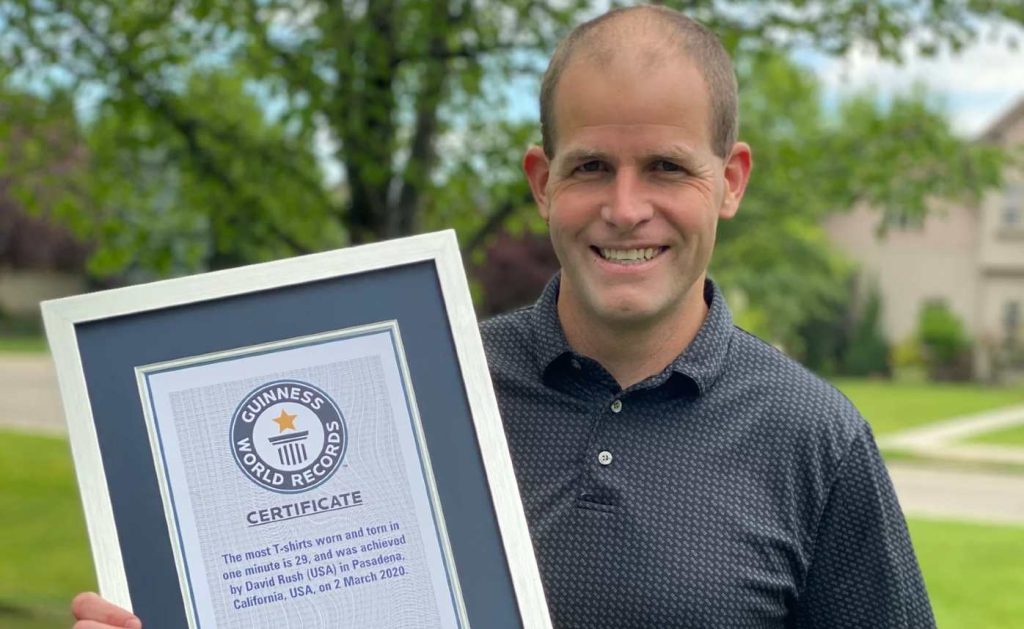
That’s just another week in the life of David Rush, one of the world’s most prolific Guinness World Record holders with over 200 titles, and now the owner of what is probably a world record in its own right: breaking a Guinness World Record every week for all 52 weeks in a year.

The process is thorough and complicated and will take much longer than 52 weeks to verify, but NPR confirms that Guinness has so far approved 43 of Rush’s 52 submitted records.

Throughout 2021 Rush, an author, speaker, entertainer, and STEM advocate from MIT, wanted to help inspire kids to pursue STEM education and not to get discouraged and give up. His method of communication was to break a variety of world records.

His YouTube channel features the aforementioned Kiwi-slicing, as well as a wide variety of juggling records such as fastest 100-meter dash while juggling blindfolded, longest time juggling three objects while standing on an exercise ball, most consecutive razor-sharp axes juggled and caught, and most thrown grapes caught in one’s mouth whilst juggling three objects.

There was also a variety of beat-the-clock records, like fastest time to set up a chessboard, most t-shirts put on in 30 seconds, most bars of wet soap stacked in one minute, and the fastest time to burst 10 balloons.

MORE: Teen Folds a Thousand Origami Cranes in One Sitting – For Guinness World Record

“STEM is hard and when a student struggles with science or fails at math they may say they can never be an engineer,” he wrote. “In 2015 I broke my first GWR to create a tangible example for folks to show that if you set your mind to a goal, believe in yourself, and pursue it with a passion, you can accomplish nearly anything. Going on to break an average of 1 a week is an extension of that to inspire kids to pursue hard STEM subjects and anyone to pursue anything that’s hard.”

RELATED: Midwestern Dad Breaks 31-Year World Record For 1.5 Million Push Ups – All For Charity

He saved the hardest for last, which involved legitimate athletic ability, which was the fastest 100-meter dash while blindfolded. The principal challenge, Rush detailed, was staying within the track markers.

Guinness commented on Rush’s video record-breaking on his YouTube page. The organization expects 53 more records in 2022.

(WATCH the video showing a 52-week montage of Rush in his element.)

SHARE This Incredible Achievement With All Your Chums…

Doctors Say Cancer Patients Cured a Decade After Immune Cell Therapy at University of Pennsylvania

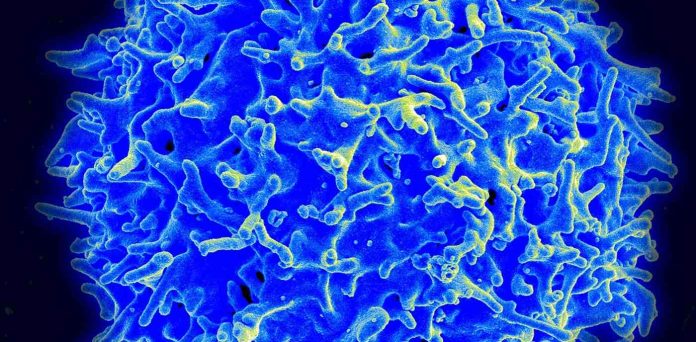
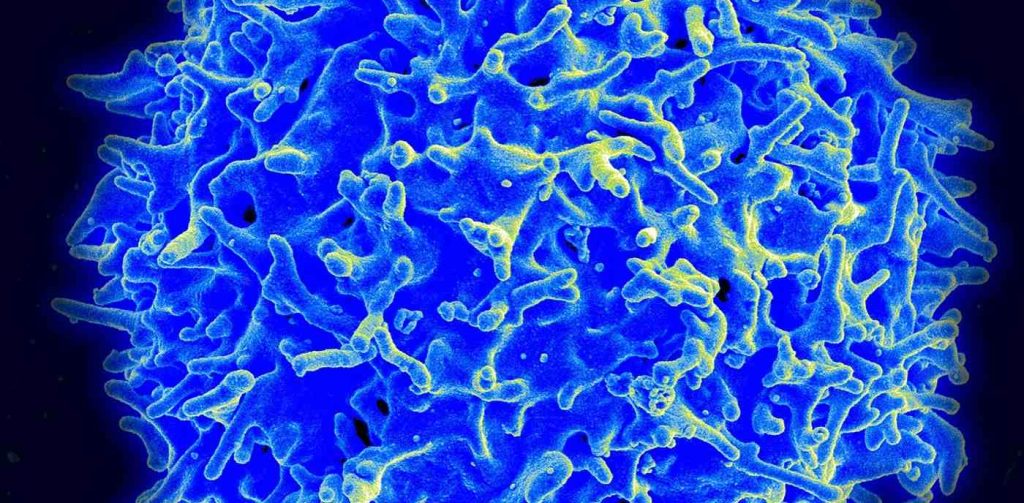
A healthy human T-Cell; National Institutes of Health

A 75-year-old California man has, after ten years of observation, been declared free of cancer after an immune cell treatment wiped out his blood cancer and a decade passed without it returning.

The treatment is one of several next-generation treatments for cancer, called CAR-T cell therapy, which retrains one of the most effective immune cells to target cancer fast, and then stay on patrol for years, evolving to keep the cancer at bay.

“I’m doing great right now. I’m still very active. I was running half marathons until 2018,” Doug Olson who lives in Pleasanton, California, told local news. “This is a cure. And they don’t use the word lightly.”

In fact, it was only three weeks after the experimental treatment was administered that Olson’s University of Pennsylvania doctors, Carl June and David Porter, got to sit Olson down and tell him the good news that they were not able to find a single cancer cell in his body.

The cancer-fighting paradigm for years had been to attack cancer cells radioactively, or with other chemicals, due to the cancer’s ability to disguise itself from the host’s immune system. Now several methods of therapies that involve reconfiguring the immune system to do its job right are being used on thousands of patients.

MORE: Experimental Treatment in Spain Puts 18 Cancer Patients in Complete Remission

CAR stands for the protein “chimeric antigen receptors” which can detect tumors and allow the T-cells to attack them. They’re extracted from the patient, genetically-engineered to produce CAR, and then reintroduced. So far, five such treatments have been approved by the FDA to treat leukemias, lymphomas, and myelomas. Dr. June estimates that tens of thousands of people have received CAR-T cell treatment so far.

While it can cure people, it’s not a miracle cure. It remains expensive and technically demanding, while leading to only around 25%-35% of people into total remission, as is the case with Olson. Dr. June and Porter believe that with continual refinement, that percentage can increase.

RELATED: Your Body’s Own ‘Cannabis-Like’ Substance Can Reduce Chronic Inflammation During Exercise

As for Olson, he’s regularly running with his son to try and keep himself in prime condition. “If my cancer was gone, I certainly didn’t want to die of a heart attack,” he told Nature.

(WATCH the ABC6 video for this story below.)

SHARE This Hopeful News With Your Social Media Cohort…