All News - Page 402 of 1727 - Good News Network
Home Blog Page 402

“Any real ecstasy is a sign you are moving in the right direction” – Saint Teresa of Avila

Quote of the Day:  “Any real ecstasy is a sign you are moving in the right direction” – Saint Teresa of Avila

Photo by: Victoria Quirk

With a new inspirational quote every day, atop the perfect photo—collected and archived on our Quotes page—why not bookmark GNN.org for a daily uplift?

Your Inspired Weekly Horoscope From Rob Brezsny’s ‘Free Will Astrology’

Our partner Rob Brezsny provides his weekly wisdom to enlighten our thinking and motivate our mood. Rob’s Free Will Astrology, is a syndicated weekly column appearing in over a hundred publications. He is also the author of Pronoia Is the Antidote for Paranoia: How All of Creation Is Conspiring To Shower You with Blessings. (A free preview of the book is available here.)

Here is your weekly horoscope…

FREE WILL ASTROLOGY – Week of March 12, 2022
Copyright by Rob Brezsny, FreeWillAstrology.com

PISCES (Feb. 19-March 20):
Singer-songwriter Jill Scott has earned one platinum and two gold records. She approaches her craft with diligence and intensity. On one occasion, she was frying a burger at her boyfriend’s house when she sensed a new song forming in her imagination. Abandoning the stove, she ran into the next room to grab pen and paper. Soon she had transcribed the beginning of a melody and lyrics. In the meantime, though, the kitchen caught on fire. Luckily, she doused it. Later Jill testified, “His cabinets were charred, and he was furious. But it was worth it for a song.” I don’t think you’ll have to make as big a sacrifice as hers in the coming days, Pisces. But you should respond robustly whenever inspiration arrives.

ARIES (March 21-April 19):
Aries author Isak Dinesen defined “true piety” as “loving one’s destiny unconditionally.” That’s a worthy goal for you to aspire to in the coming weeks. I hope you will summon your deepest reserves of ingenuity and imagination as you cultivate a state of mind in which you adore your life just as it is. You won’t compare it negatively to anyone else’s fate, and you won’t wish it were different from what it actually is. Instead, you will be pleased and at peace with the truth of exactly who you are right now.

TAURUS (April 20-May 20):
As author Mary Ruefle points out, “In the beginning, William Shakespeare was a baby, and knew absolutely nothing. He couldn’t even speak.” And yet eventually, he became a literary superstar—among history’s greatest authors. What happened in between? I’m not exaggerating when I attribute part of the transformation to magic. Vast amounts of hard work and help and luck were involved, too. But to change from a wordless, uncoordinated sprout to a potent, influential maestro, Taurus-born Shakespeare had to be the beneficiary of mysterious powers. I bring this up, Taurus, because I think you will have access to comparable mojo during the next four weeks.

GEMINI (May 21-June 20):
As talented and financially successful as Kanye West is, the Gemini singer-songwriter experiences a lot of emotional suffering. But no one lives an ideal life, right? And we can learn from everyone. In any case, I’ve chosen quotes by Kanye that are in rapt alignment with your astrological omens. Here they are: 1. “I’m in pursuit of awesomeness; excellence is the bare minimum.” 2. “You’re not perfect, but you’re not your mistakes.” 3. “I’m not comfortable with comfort. I’m only comfortable when I’m in a place where I’m constantly learning and growing.” 4. “Everything I’m not makes me everything I am.”

CANCER (June 21-July 22):
“Any real ecstasy is a sign you are moving in the right direction,” wrote philosopher Saint Teresa of Avila, who was renowned for her euphoric spiritual experiences. So is there any such thing as “fake ecstasy,” as she implies? Maybe fake ecstasy would be perverse bliss at the misfortune of an enemy, or the trivial joy that comes from realizing your house keys aren’t missing. Real ecstasy, on the other hand, might arise from a visceral sense of the presence of God, or the elation you feel when you commune with your favorite animal. Anyway, Cancerian, I predict that in the coming days, you will have an extra rich potential for the *real* kinds of rhapsodic delight and enchantment.

LEO (July 23-Aug. 22):
Leo actor Jennifer Lawrence portrayed a rugged, fierce, resourceful champion in The Hunger Games film trilogy. In real life, however, she has few resemblances to that stalwart hero. “I have the street smarts and survival skills of a poodle,” she has confessed. But I’ve got potentially good news for her and all the rest of you Leos. The coming months will be a favorable time for you to cultivate the qualities of a rugged, fierce, resourceful champion. And right now would be an excellent time to launch your efforts.

VIRGO (Aug. 23-Sept. 22):
Each of us periodically has to deal with conflict. There come times when we must face the fact that a specific situation in our lives isn’t working well and needs to be adjusted, fixed, or transformed. We might prefer to pretend the problem doesn’t exist. We may be inclined to endure the stressful discomfort rather than engage with its causes. But such an approach won’t be right for you in the coming days, dear Virgo. For the sake of your mental and spiritual health, you have a sacred duty to bravely risk a struggle to improve things. I’ll provide you with advice from novelist John Fowles. He said, “I must fight with my weapons. Not his. Not selfishness and brutality and shame and resentment.” Fowles goes on to say that he will offer generosity and gentleness and no-shame and forgiveness.

LIBRA (Sept. 23-Oct. 22):
A blogger named MysteryOfWhat expressed appreciation for her errors and wrong turns. “I love all my mistakes!” she exclaimed. “I had fun!” She has a theory that she would not have been able to completely fulfill her interesting destiny without her blunders and her brilliant adjustments to those blunders. I won’t encourage you to be quite so boisterously unconditional in celebrating your fumbles and miscues, Libra. My inclination is to urge you to honor them and feel grateful for them, but I’m not sure I should advise you to shout out, “I love all my mistakes! I had fun!” But what do you think?

SCORPIO (Oct. 23-Nov. 21):
Scorpio poet Norman MacCaig wrote, “Ask me, go on, ask me to do something impossible, something freakishly useless, something unimaginable and inimitable like making a finger break into blossom or walking for half an hour in twenty minutes or remembering tomorrow.” I hope people say things like that to you soon, Scorpio. I hope allies playfully nudge you to stretch your limits, expand your consciousness, and experiment on the frontier. To encourage such a development, you could do the same for your beloved allies: nudge them to stretch their limits, expand their consciousness, and experiment on the frontier.

SAGITTARIUS (Nov. 22-Dec. 21):
“Look at your body not as a source of physical attraction but as a shrine,” wrote teacher Sobonfu Somé. Personally, I have no problem if you regard your body as a source of physical attraction—as a gorgeous, radiant expression of your life energy, worthy of inspiring the appreciation of others. But I agree with Somé that you should also treat your body as a sacred sanctuary deserving of your reverence—especially now. Please boost your intention to provide your beloved organism with all the tender care it needs and warrants.

CAPRICORN (Dec. 22-Jan. 19):
“It’s surprising how much memory is built around things unnoticed at the time,” writes author Barbara Kingsolver. Yes! I agree. And by providing you with this heads-up from her, I’m hoping that the subtly potent events unfolding for you in the coming weeks *will not* go unnoticed. I’m hoping you will be alert for seemingly small but in fact crucial developments—and thereby give them all the focus and intelligence they deserve. Later, you’ll remember this delicately pivotal time with amazed gratitude.

AQUARIUS (Jan. 20-Feb. 18):
What’s more important: to learn or to unlearn? The answer, of course, is they are equally important. But sometimes, the most crucial preparation for a new learning phase is to initiate a surge of unlearning. That’s what I’m recommending for you right now. I foresee you embarking on a series of extravagant educational experiences in a couple of weeks. And the best way to ensure you take maximum advantage of the available lessons is by dumping useless knowledge and irrelevant information and numbing habits.

WANT MORE? Listen to Rob’s EXPANDED AUDIO HOROSCOPES, 4-5 minute meditations on the current state of your destiny — or subscribe to his unique daily text message service at: RealAstrology.com

(Zodiac images by Numerologysign.com, CC license)

SHARE The Wisdom With Friends Who Are Stars in Your Life on Social Media…

Volkswagen Gets A Lot of Buzz Premiering Their New Electric Throwback Bus – the ID. Buzz (LOOK) 

Volkswagen unveiled their new ID. Buzz in Hamburg, calling it “Europe’s first all-electric bus”.

From its iconic roots in the 1950s, the latest CO2 friendly version is affectionately known as a “Bulli” (resurrecting a popular German nickname for the 2011 VW Bus).

“It’s the proportions that make the ID. Buzz so unique,” says Volkswagen chief designer Jozef Kabaň. He made a direct link back to the original classic vehicle: “In the T1 you are practically sitting on top of the front axle – there’s no front overhang.” Even after the safety and technology features are loaded up front, the ID. Buzz has “super short overhangs,” says Kabaň.

Another feature that has always been typical of the model line is its V-shaped front panel—sans the charismatic round headlights of old, though.

Five people have ample room for traveling and for their luggage. Like any van, the second row of seats can be folded down, doubling the storage capacity.

Carbon-neutral in production and shipping

“In the 1950s, the Volkswagen Bulli stood for a new feeling of automotive freedom, independence and great emotion,” said Ralf Brandstätter, Chairman of the Board of Management. “The ID. Buzz picks up on this lifestyle and transfers it into our time: emission-free, sustainable, fully networked”—and adaptable for future autonomous driving.

The model line is being produced at Volkswagen’s main plant in Hanover Germany. The majority of the electric drive system modules will also be made in Germany “to the highest quality standards,” according to the media release, and the vehicles will exit the production line as “zero-emission vehicles.”

POPULAR: They’ve Designed a Livable Pontoon Boat Inspired by a Volkswagen Bus

The company says the vehicle’s manufacture and shipping has a carbon-neutral footprint, and the entire interior uses recycled synthetic materials, free of leather.

Available across Europe this Fall (with orders starting in May), the Buzz will come with:

  • A 77 kWh lithium ion battery (gross energy content: 82 kWh) that provides current to a 150 kW electric motor, which drives the rear axle.
  • ‘Plug & Charge’ technology enables the ID. Buzz to be easily charged while out and about with up to 170 kW
  • Bidirectional charging enables the ID. Buzz to feed unneeded energy from the battery into the customer’s home power network (Vehicle-to-Home)

“The position of the battery, integrated deep down in the sandwich floor, and the lightweight electric drive system result in a good distribution of weight and a low vehicle centre of gravity. Both factors optimize the handling and agility,” said the release.

They say it also has an “unusually small” turning circle of 11.1 meters.

Expect a starting price of around $40,000.

LOOK: Students Build Solar-Powered Pop-Up Van For Touring in a Brilliant Mobile Home That Has Zero Emissions

The line also offers a larger cargo van, with double the storage space, called the ID. Buzz Cargo. SEE both the vans in the video below…

SHARE This ‘Back to the Future’ VW Bus on Social Media…

Man Finally Receives Grandfather’s Purple Heart Awarded 75 Years Ago, After Stranger Searches to Find Her 2nd Cousin

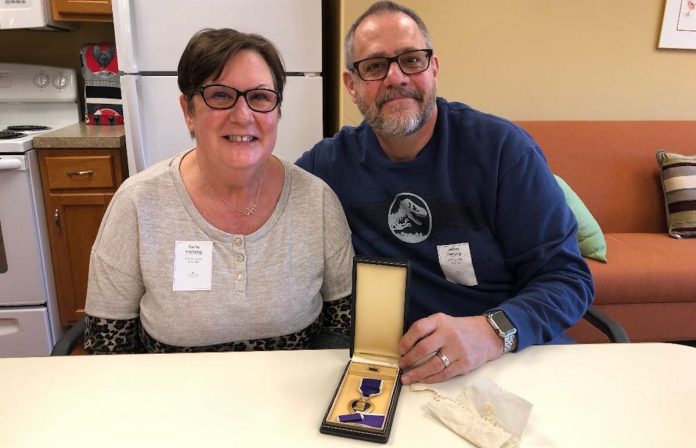
Jeff Hertzog (right)
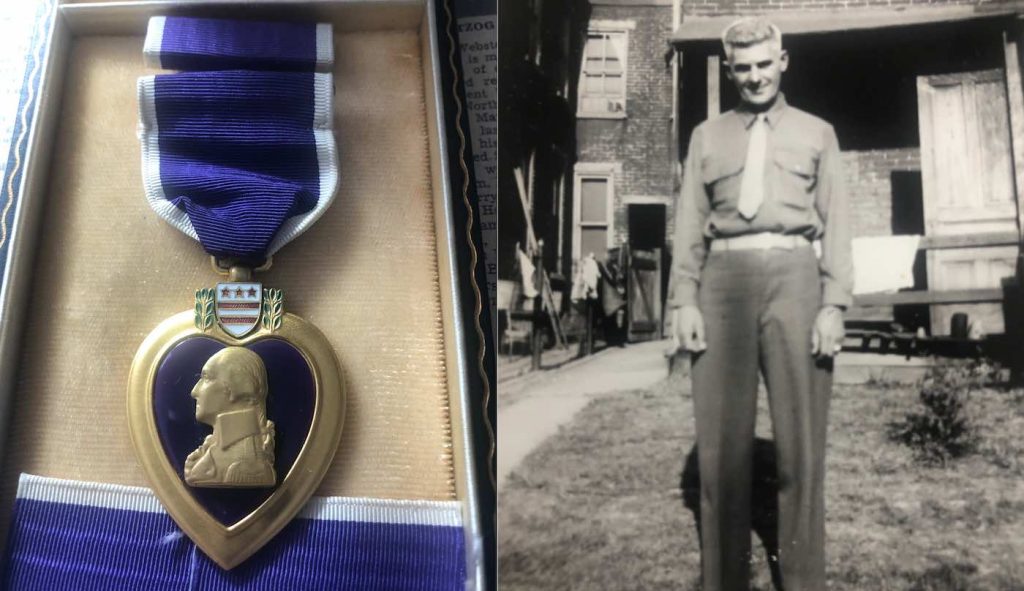
Webster E. Hertzog with Purple Heart medal posthumously awarded

Jeff Hertzog was recently contacted by a stranger who searched tirelessly so she could return his grandfather’s Purple Heart war medal.

She is not just any stranger, however. She turned out to be a second cousin, and the act of kindness brought together members of their families who had never met.

The Purple Heart was awarded to Webster E. Hertzog, who died in battle in Belgium in 1944. The above photo was the last picture taken of him.

“My father didn’t know him well, as my grandparents divorced before he enlisted in the Army.”

The medal, awarded by the U.S. military to any soldier injured or killed in battle, was presented to Hertzog’s parents—and it was passed to various relatives over the last 78 years until it ended up with Edith Gettis, the soldier’s brother’s daughter.

The 84-year-old and her daughter, Dawn Cambria, spent time trying to track down the grandfather’s firstborn son, in order to get the award into the hands of the proper family.

After searching through Ancestry.com and other social media avenues, Dawn found Jeff and reached out to her “new second cousin”.

CHECK OUT: This 104-Year-old Veteran Who Never Before Celebrated Valentine’s Day Gets 70,000 Love Letters

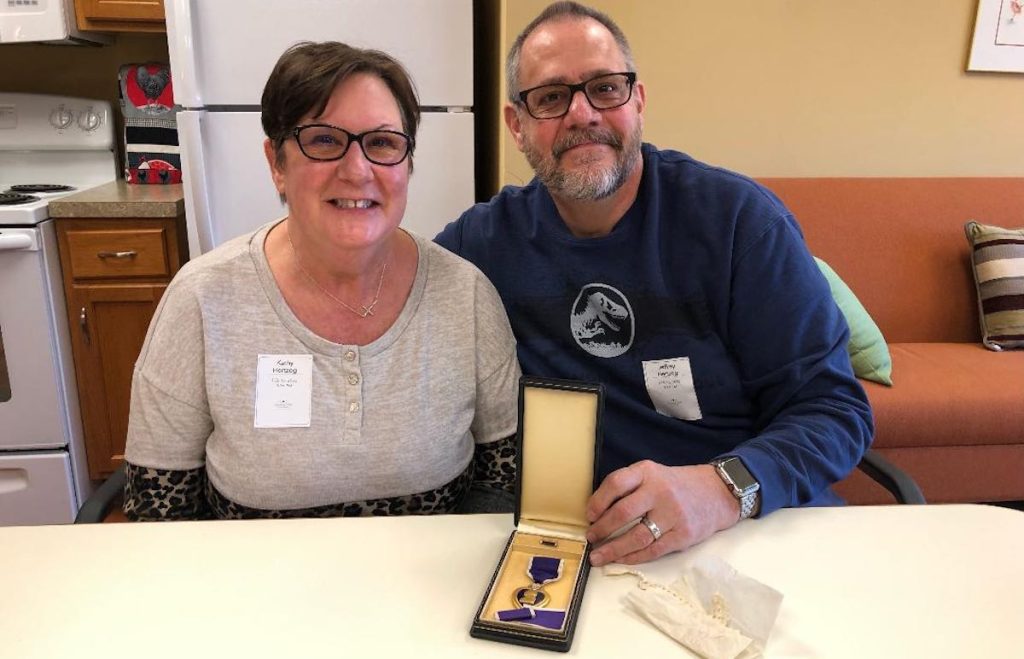
Jeff and his wife Kathleen finally got to meet Dawn—and her mother Edith when she arrived to hand him the Purple Heart.

Jeff Hertzog (right)

“We then learned that we all had a lot in common, and will continue getting together in the future,” Jeff told GNN.

The meeting “proves it’s a small world,” says Jeff.

“Dawn’s husband knows many friends of mine. His family was also the owner of a swimming pool association that my family belonged to in the 1990’s.”

RELATED: When WWII Veteran is Saddened By Upcoming Birthday, 50,000 Strangers Give Him Reason to Smile

“I will be ever grateful for this kindness and the meeting it inspired. It was truly a blessing—one which I will never forget.

SPREAD the Kindness and Love to Families on Social Media…

Denver’s Program to Dispatch Mental Health Teams Instead of Police is So Successful it is Expanding 5-Fold

Denver Police Department

After dispatching mental health teams, instead of police officers, to certain 911 emergency calls, the city of Denver is proclaiming their pilot program a huge success—and expanding it significantly.

Since June 2020, the Support Team Assisted Response (STAR) has deployed medical and behavioral health clinicians to respond to over 2,200 low risk calls reporting trespassing, intoxication, or mental health crises involving poverty, homelessness or addiction.

In all that time, STAR teams have never called for police back-up due to a safety issue, according to their January report.

In January, the City Council unanimously allocated a $1.4 million contract for the STAR program’s expansion, paying for five additional white vans and hiring 7 clinicians, 4 paramedics, and two emergency medical technicians.

The Denver Post reports that STAR teams have driven hundreds of miles, assisted suicidal people and schizophrenics; they’ve also handed out water and socks and connected people to shelter, food and resources.

STAR’s advisory team, consisting of 15 volunteer citizens, hope that with six vans, they can respond to more than 10,000 calls a year. Funding for the expansion was bolstered by a $1.4 million grant from the Caring For Denver Foundation.

“This innovative approach—meeting people where they are, with the right services, at the right time—is a game-changer for Denver,” said Bob McDonald, DDPHE Executive Director and Public Health Administrator for the City of Denver.”

POPULAR: A Homemade Bumper Sticker Saved a Stranger’s Life After She Asked the Universe For ‘a Sign’

Importantly, it is also saving money for the city. If the STAR vans can help someone in crisis, that frees up police to handle a robbery or domestic violence call.

“STAR is minimizing unnecessary arrests and unnecessary costs—whether that be jail costs or emergency room costs,” Councilwoman Robin Kniech said.

Denver residents can specifically request STAR assistance by calling 720-913-STAR (7827) or by calling the non-emergency number 720-913-2000.

“When STAR pulls up, people in crisis can be assured that two non-judgmental, client-centered, supportive people who are willing to listen are getting out of that van to help,” said Chris Richardson, LCSW, the Mental Health Center of Denver’s Associate Director of Criminal Justice.

Expanding to other cities

Other cities in Colorado, including Pueblo, Colorado Springs, and Fort Collins, have called Denver with intentions to start similar emergency services to dispatch unarmed health professionals.

Nearby Aurora was among the first to replicate the model, launching their Aurora Mobile Response Team in September.

Data collected from 759 of the residents served so far shows that nearly three-quarters had been medically diagnosed with bipolar disorder, schizophrenia, anxiety, or major depression.

RELATED: 1,000 Doctors Now Prescribing Nature By Giving Free Admissions With National Park Passes

“It’s the future of law enforcement,” Denver police Chief Paul Pazen said in a 2020 interview with the Denver Post. “We want to meet people where they are and address those needs and address those needs outside of the criminal justice system.”

Watch a local news report from KUSA-TV 9…

MULTIPLY the Good News By Sharing it on Social Media…

“If you do not expect the unexpected you will not find it.” – Heraclitus

Quote of the Day:  “If you do not expect the unexpected you will not find it, for it is not to be reached by search or trail.” – Heraclitus

Photo by: Johannes Plenio

With a new inspirational quote every day, atop the perfect photo—collected and archived on our Quotes page—why not bookmark GNN.org for a daily uplift?

Scientists Create Algorithm That Uses Routine Eye Scans to Identify Heart Attack Risk—With Accuracy of 70%-80%

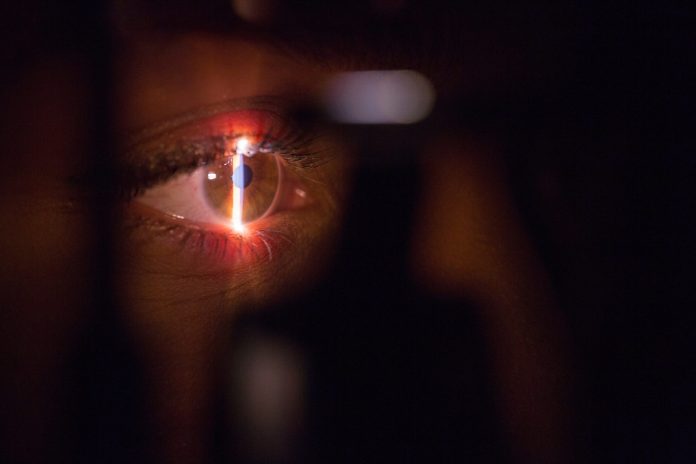
Scientists have developed an artificial intelligence system that can analyze eye scans taken during a routine visit to an optician or eye clinic and identify patients at a high risk of a heart attack.

Doctors have recognized that changes to the tiny blood vessels in the retina are indicators of broader vascular disease, including problems with the heart.

In the research, led by the University of Leeds, deep learning techniques were used to train an AI system to automatically read retinal scans and identify those people who, over the following year, were likely to have a heart attack.

Deep learning is a complex series of algorithms that enable computers to identify patterns in data and to make predictions.

Writing in the journal Nature Machine Intelligence, the researchers report in their paper—Predicting Infarction through your retinal scans and minimal personal Informationthat the AI system had an accuracy of between 70% and 80% and could be used as a second referral mechanism for in-depth cardiovascular examination.

RELATED: Man Saved by CPR After Heart Attack During the Perfectly Titled Bond Movie – ‘No Time to Die’

The use of deep learning in the analysis of retinal scans could revolutionize the way patients are regularly screened for signs of heart disease.

Earlier identification of heart disease

Professor Alex Frangi, who holds the Diamond Jubilee Chair in Computational Medicine in the School of Computing at the University of Leeds and is a Turing Fellow at the Alan Turing Institute, supervised the research. He said, “Cardiovascular diseases, including heart attacks, are the leading cause of early death worldwide and the second-largest killer in the UK. This causes chronic ill-health and misery worldwide.

“This technique opens-up the possibility of revolutionizing the screening of cardiac disease. Retinal scans are comparatively cheap and routinely used in many optician practices. As a result of automated screening, patients who are at high risk of becoming ill could be referred for specialist cardiac services.

CHECK OUT: Pecan-Rich Diet Shown to Reduce Cholesterol in New Study

“The system could also be used to track early signs of heart disease.”

The UK Biobank provided data for the study.

Chris Gale, Professor of Cardiovascular Medicine at the University of Leeds and a Consultant Cardiologist at Leeds Teaching Hospitals NHS Trust, was one of the authors of the research paper.

He said, “The AI system has the potential to identify individuals attending routine eye screening who are at higher future risk of cardiovascular disease, whereby preventative treatments could be started earlier to prevent premature cardiovascular disease.”

Deep learning

During the deep learning process, the AI system analysed the retinal scans and cardiac scans from more than 5,000 people. The AI system identified associations between pathology in the retina and changes in the patient’s heart.

MORE: People Who’ve Tried Psychedelics Have Lower Risk of Heart Disease and Diabetes

Once the image patterns were learned, the AI system could estimate the size and pumping efficiency of the left ventricle, one of the heart’s four chambers, from retinal scans alone. An enlarged ventricle is linked with an increased risk of heart disease.

With information on the estimated size of the left ventricle and its pumping efficiency combined with basic demographic data about the patient, their age and sex, the AI system could make a prediction about their risk of a heart attack over the subsequent 12 months.

Currently, details about the size and pumping efficiency of a patient’s left ventricle can only be determined if they have diagnostic tests such as echocardiography or magnetic resonance imaging of the heart. Those diagnostic tests can be expensive and often only available in a hospital setting, making them inaccessible for people in countries with less well-resourced healthcare systems—or unnecessarily increasing healthcare costs and waiting times in developed countries.

Sven Plein, British Heart Foundation Professor of Cardiovascular Imaging at the University of Leeds and one of the authors of the research paper, said: “The AI system is an excellent tool for unravelling the complex patterns that exist in nature, and that is what we have found—the intricate pattern of changes in the retina linked to changes in the heart.”

Source: Leeds University

SHARE an Eyeful of the Good News With Others…

Solar Panels Built From Waste Crops Can Make Energy Without Direct Light

The James Dyson Foundation

In a twist for solar energy, a Filipino inventor has created resinous panels that harvest solar energy out of recycled vegetables, and it can work even when it’s cloudy, rainy, or out of direct sunlight.

It turns out that there are extremely sensitive chemicals in vegetables that turn UV light from the sun into visible light which can in turn be used to generate electricity from photovoltaic cells.

When placed between the glass of a double-glazed window, the different colored panels push sunlight into the edges of the window pane where PV cells then turn it into electricity—enough to charge two smartphones, but if used to clad an entire building, it can power major systems as well as delight onlookers with its Andy Warhol-like usage of bright colors.

Made from upcycled vegetable waste, the innovation won its creator, 29-year-old Carvey Ehren Maigue, the 2020 Dyson Foundation Sustainability Award. Maigue called it AuREUS, as its multi-colored nature looks like the Aurora Borealis.

Unlike the bulky solar panels we all think off, AuREUS is a vegetable polymer sheet, and can be bent, molded, and clamped, onto pretty much any shape. Furthermore, they don’t need UV light to strike them directly, harvesting as plants do from the UV light through clouds. If placed on a roof entirely in shadow, they can still generate energy if the UV light was bouncing off, say, a nearby skyscraper or field.

LOOKTiny Wind Turbine That Generates Power From Your Apartment Balcony Wins Dyson Award

“We are also looking to create curved plates, for use on electric cars, airplanes and even boats,” Maigue told the Dyson Foundation in a 2020 interview. “AuREUS has the chance to bring solar energy capture closer to people. In the same way computers were only used by the government or the military and now the same technology is in our smartphones, I want solar energy harvesting to be more accessible.”

MOREA Low Cost Inflatable Incubator for Babies Wins Dyson Award

He says that there’s nothing stopping the base polymer from being used even to make thread for clothing, allowing people to generate electricity as they walk around.

Designed to be as low-impact as possible, Maigue sought not just vegetable waste, but also crops destroyed in storms and typhoons. The panels come in red, orange, yellow, green and blue, with a suitable and natural blue coloring agent remaining undiscovered.

(WATCH the EuroNews video for this story below.)

LET Others See the Good News–Share on Social Media…

73% of These Women Who Started Businesses During Pandemic Say It’s Easier Than Ever to Be Successful

As a business owner, being your own boss certainly has its perks, but 33% of female small business owners were motivated to start their own businesses to inspire other women.

That’s according to a new random double-opt-in survey of 1,013 female small business owners, including 505 who identified tmselves as white and 508 as people of color.

One in three (36%) respondents said they currently have a female mentor or role model in the business world—particularly women of color, who were almost 1.5x more likely to have a mentor than their white counterparts. (42% vs. 29%).

And three out of four mentored respondents (75%) credited that mentor with the success of their business.

Women of color also expressed a stronger interest in “inspiring other women” with their business (39% vs. 26%), and 82% said they want their success to show others that it’s possible to overcome stigmas.

MORE: 56% of Small Biz Owners Think Remote Working Has Made Them Better Leaders Says Poll

Conducted by OnePoll on behalf of Office Depot, the survey also asked women about the challenges they faced when opening their businesses.

Overall, respondents cited lacking funds (47%) and trying to maintain a work-life balance (38%) as the toughest hurdles to overcome.

Eighty-four percent said they’ve wanted to start their business as long as they could remember, with 80% launching their venture based on a hobby or activity they were already passionate about.

Sixty-one percent even worked a day job so they could save up enough money to open their business, including more women of color (71% vs 51%).

Of the 417 respondents who started their business in the past two years, 61% say the pandemic played a big factor in their decision.

RELATED: The Small Victories That Make a Huge Difference in Our Daily Lives

“The growing number of women who have turned their passion projects into successful small businesses is incredible,” said Zoë Maloney, executive vice president and chief human resources officer for The ODP Corporation. “Seeing female entrepreneurs come together to empower and mentor one another while developing the next generation of powerful female leaders is so inspiring and impactful.”

Respondents said that helpful assets like cash grants (38%) or marketing materials (29%) would have helped get their business off the ground.

Still, nearly three-quarters of all respondents said they feel that it’s easier for a woman to become a successful business owner today than 10 years ago (73%).

And most said owning their business has been an overall positive experience (81%), citing being their own boss (66%) and watching their business grow (40%) as the fruits of their labor.

MOST REWARDING PARTS OF BEING A BUSINESS OWNER
Being your own boss – 66%
Watching your business grow – 40%
Putting an idea into action – 36%
Work-life balance – 25%
Inspiring other women – 24%

BE Entrepreneurial With the News; Share This Article…

A Pod of Whales Adopted a Young Stray Narwhal – and They May Have Little ‘Narwhales’

It’s rare to find a narwhal as far south as Canada’s St. Lawrence river, but it does occasionally happen.

But when a narwhal travels so far south, and returns every year amid a pod of beluga whales, “rare” hardly fits the billing.

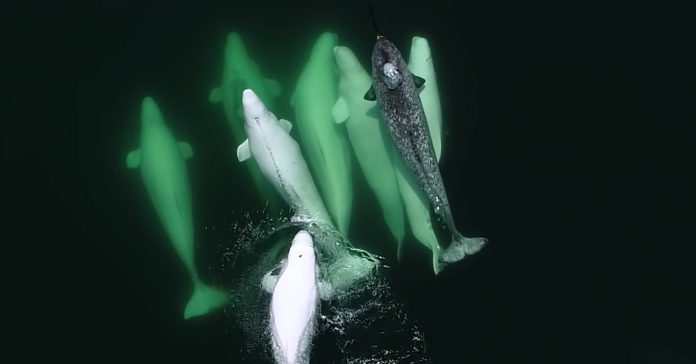
Marine biologists in Quebec have had the pleasure of studying this fascinating phenomenon: a narwhal traveling, eating, and living with a pod of young male beluga whales as they cruise down the province’s famous river. Drone footage indicates this unique black sheep is a male, and well-fed, indicating that he’s been adopted into the pod.

“There are a lot of social interactions between the narwhal and the others,” said Robert Michaud, president and scientific director of the Group for Research and Education on Marine Mammals (GREMM). “He is one of the crew; he is one of the buddies in there.”

GREMM has been studying this pod of belugas, who have returned every year since 2016, and believe that they are now reaching sexual maturity, when they will venture out to find a pod of females to court. Michaud is fascinated to see if the adopted narwhal has integrated enough to breed, and produce a hybrid known colloquially as a “narluga,” though GNN feels an opportunity has been missed to call them “narwhales.”

RELATED: See 1,000 Glorious Fin Whales Feeding Together: Share Their Comeback From Near Extinction

In 2019, an Ontario/Denmark team of researchers confirmed the existence of narlugas through analysis of a skull received by a hunter-gatherer in Greenland. Lacking the long horn of the narwhal (which is actually a canine tooth) yet possessing characteristics of both animals, it gave some forensic evidence to known first-hand accounts of hybrids between the species.

“It was a first generation hybrid, meaning the parents were a beluga and a narwhal. Particularly a narwhal mom and a beluga dad,” Paul Szpak from Trent University Ontario, told CBC in 2019. The narluga was bigger than both animals, similar to the way a “liger,” the result of a tiger and a lion breeding, is also bigger than both.

MORE: Iceland To Hang Up Her Harpoons For Good, Issuing No More Whaling Permits

The St. Lawrence narwhal has a lot to learn if it’s to secure itself a beluga-lover, since the whales communicate with a vast array of vocalizations unknown to their horned cousins. However it’s not clear to Michaud whether or not the narwhal knows itself to be a narwhal, or knows itself to be a beluga.

“What does a narwhal know about narwhals, and would he now know about belugas? Well, these are fascinating questions,” Michaud said on the CBC radio show The Current.

(WATCH the crew cruise in the Baleines En Direct video below.)

Featured image: Baleines En Direct/YouTube

SHARE The Video With Your Own Pod…

“Life is short. Kiss slowly, laugh insanely, love truly and forgive quickly.” – Paulo Coelho

Kurt Stocker (CC license)

Quote of the Day:  “Life is short. Kiss slowly, laugh insanely, love truly and forgive quickly.” – Paulo Coelho

Photo by: Kurt Stocker, CC license

With a new inspirational quote every day, atop the perfect photo—collected and archived on our Quotes page—why not bookmark GNN.org for a daily uplift?

Canadian Millionaire Donates His Life Savings to Plant 100,000 Daffodils – And They’ve Just Begun to Bloom

SWNS
SWNS

More than 100,000 daffodils planted in a town as part of a generous gift from a Canadian banker in his will are finally beginning to bloom.

The valley of bulbs were planted after a dying wish by Keith Owen, who planned to retire in Sidmouth in Devon, southwest England.

He was diagnosed with terminal cancer in 2007 and decided to leave his life savings of £2.3m ($3 million) to a local voluntary conservation society.

He contacted the Sid Vale Association (SVA) and told them he wished for his money to be used to “support local projects, which made use of voluntary labour, and in particular to sustain the ambience and way of life, recognised in Sidmouth and its surroundings.”

Now the 153,000 bulbs planted across the town are finally beginning to bloom.

MORE: Career Oil Exec Dedicates Himself to Capping Millions of Abandoned Oil Wells to Help the Planet

Ed Harrison of the Sidmouth Civic Society said, “Every year it brings back happy memories of this man who did this amazing thing for the town.”

Snowdrops, daffodils, and crocus bulbs were among the 153,000 flowers worth £166,000 planted at over 50 sites.

The daffodils were planted on Peak Hill in Sidmouth.

SWNS

Mr Owen died on December 3, 2007 in Victoria Hospital in Sidmouth.

RELATED: 93-Year-Old in Quebec Donates Cherished Island, After Protecting it From City Sprawl for 50 Years

The millionaire was born in 1938 in nearby Totnes, and went to school at Montpelier Preparatory School in Paignton.

SWNS

In 1976, after 20 years of RAF service with the British armed forces, he retired with the rank of Squadron Leader and set up home in Ottawa, Canada.

HELP Good News Flutter and Dance in the Breeze—Or in News Feeds…

Photographer Takes Hilarious Pictures of Dogs Catching Cheese to Raise Money for Charity – LOOK

SWNS

A dog photographer who captures hilarious pictures of pooches trying to catch cubes of cheese has been busy raising money to buy pet food for food banks.

56-year-old Carolyne Cowan recently snapped pictures of 41 dogs lunging for cheese at a charity ‘catchathon’ event.

Mom-of-two Carolyne pictured everything from Rottweilers and Greyhounds to little Border Terriers.

Her husband Alasdair diced up 10kg of cheese to throw at the pooches while Carolyne snapped away, taking around 50 pictures per pet.

Hilarious behind-the-scenes footage shows impatient Rottweiler Zeus getting set up to catch the cheese.

MORE: Cats and Dogs May Protect Owners From Memory Loss in Later Life, Study Finds

Carolyne started the event in 2018 and put it on for 14 months, raising £15,000 ($20,000), but was forced to pull the plug on it when the pandemic hit.

Carolyne, who owns Carrie Southerton Photography, said of their recent event, “It was a crazy day but we have never laughed so much ever.

RELATED: Farmer’s Donkey Acts Like a Dog After Spending Months Living In Home With Family Pups – LOOK

“The owners had a ball, it was brilliant.

“There were only six dogs who didn’t or couldn’t catch the cheese.

SWNS

“Some were being princesses and just looking at Alasdair after he threw the cheese with great distain, as if to say, how dare you throw something at me.

“But you get the hilarious outtakes with the ones who don’t catch so it was great fun and the dogs loved it.

SWNS

“We started a fundraising page because someone in America contacted us saying they could be there but would like to donate.

“So we are hoping to get up to our target through that.”

To donate visit the GoFundMe page here.

Take a look at some of those cheese fans in the pictures below…

SWNS
SWNS
SWNS

RAISE a PAW For These Adorable Images; Share Them on Social…

The Endurance Ship Wreck, Lost for 100 Years is Finally Found, 10,000-ft Below the Ice

Library of Congress

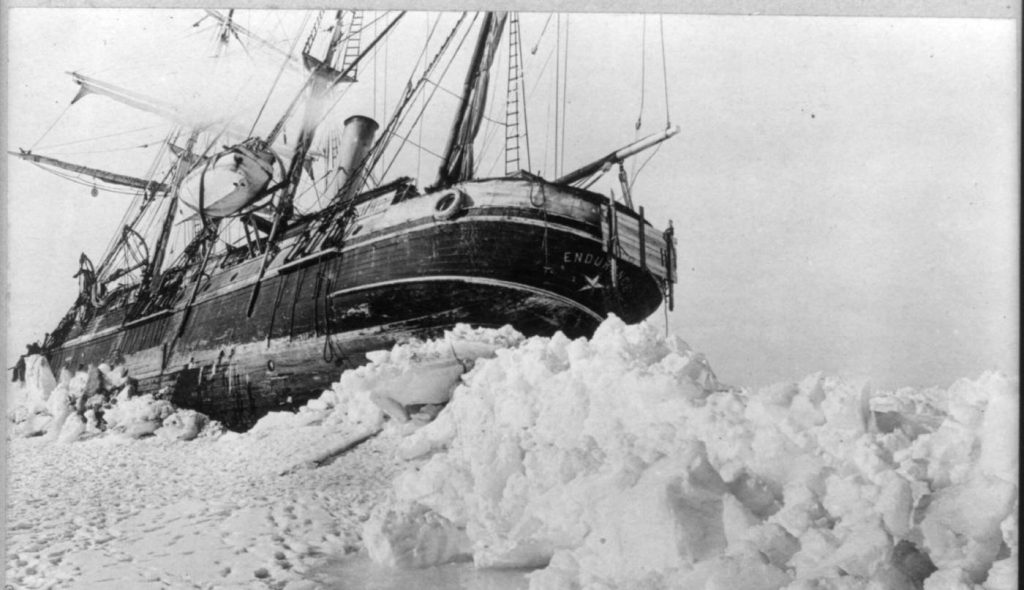
107 years ago, Endurance, the ship of legendary Antarctic explorer Ernest Shackleton went down in the Weddell Sea. On the 100th anniversary of the captain’s burial, it was found.

The ship now sits as a monument in a state of preservation rivaling or exceeding the finest maritime archaeological discoveries.

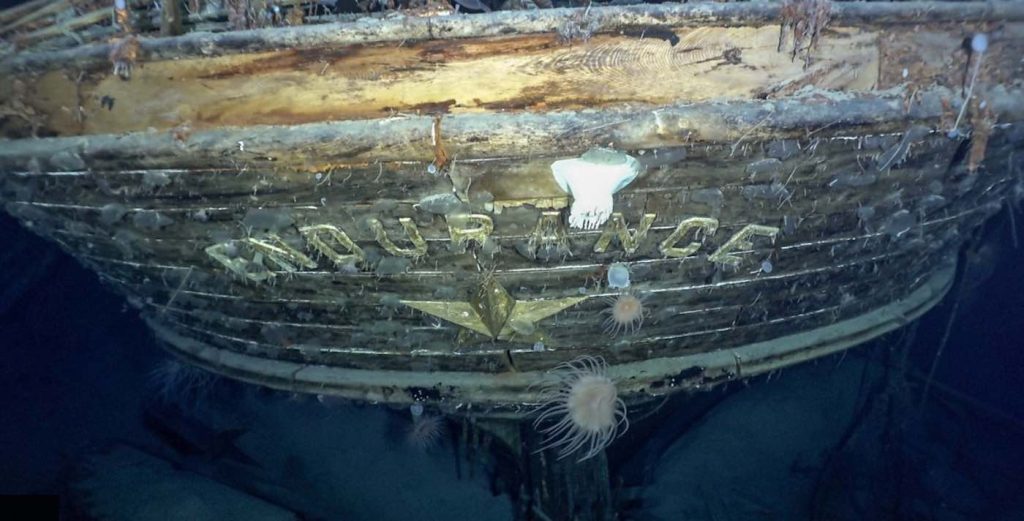
“We are overwhelmed by our good fortune in having located and captured images of Endurance,” said expedition leader Mensun Bound. “This is by far the finest wooden shipwreck I have ever seen. It is upright, well proud of the seabed, intact, and in a brilliant state of preservation. You can even see ‘Endurance’ arced across the stern, directly below the taffrail.”

Not a single plank, from what the explorers could see, had been disturbed by time or eaten by parasites. Only the damage from when the boat struck the ocean floor, and the hole which caused it to sink in the first place, were visible.

Bound was joined by Dr. John Shear, and together they set out with their colleagues and crew aboard S.A. Agulhas II a South African icebreaker ship to find the wreck. The expedition was called Endurance22 and funded by the Falklands Maritime Heritage Trust.

“The discovery of the wreck is an incredible achievement,” added Shears. “We have successfully completed the world’s most difficult shipwreck search, battling constantly shifting sea-ice, blizzards, and temperatures dropping down to -18C.”

Falklands Maritime Heritage Trust / National Geographic

Saturday, when the wreck was found, was the 100th anniversary of Shackleton’s funeral, and the Agulhas II, on route to its port in Cape Town, will stop at the famous captain’s gravesite on South Georgia to pay their respects.

Historian Dan Snow was working with the explorers and described that when Endurance was found the presence of excitement aboard was palpable. “You could hear doors slamming, you could hear people running down the corridors, it was something in the air,” he told the BBC.

Disaster struck, disaster averted.

“Scott for scientific method, Amundsen for speed and efficiency but when disaster strikes and all hope is gone, get down on your knees and pray for Shackleton,” said Sir Raymond Priestley, a contemporary of Shackleton’s, in 1956.

During Shackleton’s previous expedition to Antarctica, he found the South Magnetic Pole, and also became the first person to summit Mount Erebus, the volcano-mountain of Antarctica.

Following up on this success, Shackleton departed England on Endurance in 1914. Upon reaching the Weddell Sea, the ship became stuck in the ice for so long that it froze fast to it. The crew attempted to stay by the boat’s side as it floated with the ice, but on 21 November 1915, the wreck finally slipped beneath the surface.

RELATED: Stunning 2,000-Year-old Glass Bowl is Still Flawless After Archaeologists Dig it Up in Netherlands

After floating on sea ice until April, Shackleton ordered his men into three lifeboats, where they eventually reached Elephant Island, an inhospitable environment. From there, some of the crew set off in the largest of the lifeboats towards South Georgia, a 720 nautical mile journey. They made it, and sent back help for the men remaining on Elephant Island, despite being delayed by the weather three times. Not one soul was lost in the disaster.

“Looking like a ghost ship”

At 10,000 feet (3,000 meters) below the ice-bound sea, Endurance was described as “looking like a ghost ship,” where it sat beyond the reach of any sunlight. While filter feeders had colonized the wreck, no wood-boring worms were found, but the translucent anemones found almost added to its beauty.

Courtesy of Falklands Maritime Heritage Trust / National Geographic

MORE: British Museum Unveils Ancient Artifacts Illuminating the World of Stonehenge in New Exhibit

Much of the paint and wood stain could even be seen through the robotic submersible’s camera, which found crockery, a boot, both anchors, and astoundingly even the ship’s steering wheel, as it explored.

Seeing the name Endurance above the five pointed star which is supposed to resemble Polaris was the most special moment, according to Bound.

“I tell you, you would have to be made of stone not to feel a bit squishy at the sight of that star and the name above,” he told the BBC. “You can see a porthole that is Shackleton’s cabin. At that moment, you really do feel the breath of the great man upon the back of your neck.”

CHECK OUT: ‘Most Important Prehistoric Discovery in a Century’ Revealed by British Museum

Species like brittle stars, stalked sea squirt, anemones, and urchins were all filter feeding but not contributing to deterioration.

The ship lies in waters under the International Treaty of Antarctica, and therefore must not be disturbed. No artifacts will be brought to the surface, and it will now be considered a monument.

(WATCH the BBC video showing the ship after all these years.)

SHARE This Brilliant Discovery With Friends…

People Are Booking So Many Airbnbs in Ukraine–They Raise $2M for Hosts in Need, and Never Even Check-in

From March 2nd to March 3rd, people from around the world booked 61,000 nights in Ukrainian cities via Airbnb, likely not one ever planning to check-in, or reschedule.

It’s part of a creative social media campaign to channel funds into besieged cities where something like aid drops or supply trucks can’t reach, and it has seen $1.9 million raised for Ukrainians in just those 48 hours.

In the Ukrainian capital of Kyiv, Volodymyr Bondarenko had 10 people book into his room in a single day. “This was surprising, it’s very supportive at the moment,” 36-year-old Bondarenko told CNN early Friday. “I told many of my relatives and friends that I plan to use this money to help our people who need it at this time.”

Airbnb has said it is offering temporary housing in neighboring countries to up to 100,000 Ukrainians who are fleeing. It’s also waiving guest and host fees in the country to support individuals donating.

RELATED: Ukraine Receives Truckload of Starlink Terminals From Elon Musk For Uninterrupted Internet

“We are so humbled by the inspiring generosity of our community during this moment of crisis,” said Haven Thorn, a company spokesperson. He asked those willing to help by hosting Ukrainians or donating to their efforts to visit Airbnb’s website to find additional ways to support or information.

One way anyone can help is by opening their home to Ukrainian refugees as an Airbnb host, for which the company will cover you with Aircover, a one million dollar hosting insurance policy. Airbnb also partners with non-profits and charities to help contribute to the guests’ basic needs.

The hospitality service isn’t the only community-based service that is helping out. Etsy has decided to cancel the current balances owed to Etsy by all sellers in Ukraine, which includes listing fees, transaction fees, advertising fees, and more—a roughly $4 million relief package.

Pledging the house down

An online portal in Ireland for hosting refugees crashed Monday night after receiving more than 4,000 pledges.

MORE: Former Marine Drove 1,000 Miles to Ukraine Border in Minibus Loaded with Supplies, Toys, and Blankets for Refugees

Organized by the Irish Red Cross, medium- to long-term accommodation pledges of 6-12 months stay flooded in. Secretary General of the Irish Red Cross, Liam O’Dwyer, said he was “astonished” by the number of housing pledges.

The Temporary Protection Directive was activated in Ireland, as by all EU member states in response to the Ukraine Crisis. It sets prevailing norms for the treatment of displaced persons in order to ensure no EU country is singled out for mass influxes of refugees based on favorable social policies.

It establishes access to basic medical care, temporary housing, access to the labor market, and education and social welfare.

SHARE This Inspiring Story From Ukraine With Friends…

“Each man should frame life so that at some future hour fact and his dreaming meet.” – Victor Hugo

Vinod Patil

Quote of the Day:  “Each man should frame life so that at some future hour fact and his dreaming meet.” – Victor Hugo

Photo by: Vinod Patil

With a new inspirational quote every day, atop the perfect photo—collected and archived on our Quotes page—why not bookmark GNN.org for a daily uplift?

Vinod Patil

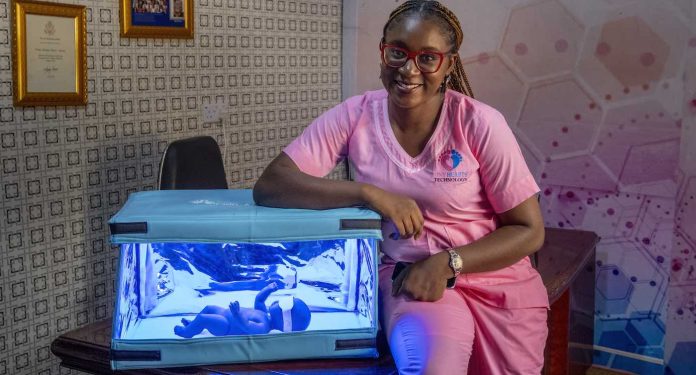
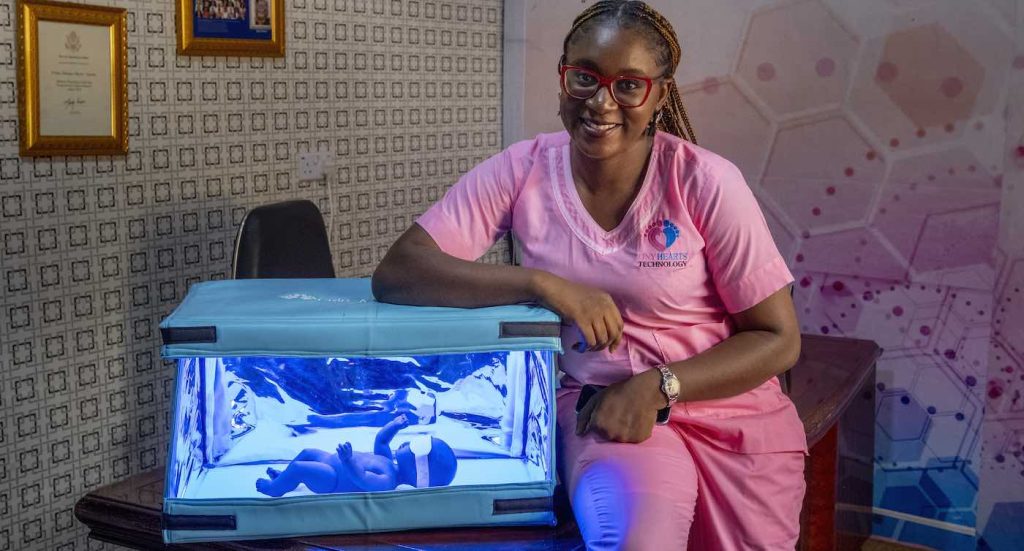
Nigerian Mom Designs Solar-Powered Cribs That Put an End to Baby Jaundice Disease

Benson Ibeabuchi/GGImages/RAEng

A Nigerian mom found out the hard way that jaundice is still a dangerous disease in Africa—but now she’s putting an end to the infant disease with her new tech startup, making solar-powered cribs.

After her traumatic experience with jaundice as a new mother, Virtue Oboro pivoted 180° in her professional life, in an effort to help prevent the terrifying situation from befalling other moms.

Oboro’s son, Tombra, was just 48 hours old when he had to be rushed to the NICU, suffering from a build-up of bilirubin, which causes yellow skin and can lead to permanent damage or even death.

The treatment is fairly simple and widespread in developing countries: blue-light phototherapy.

Virtue’s hospital had no phototherapy devices, so Tombra had to receive a risky emergency blood transfusion. Her son would make a full recovery, but Virtue was changed by the experience.

“I felt like some of the things I experienced could have been avoided,” the visual designer told CNN. “I thought, is there something I could do to make the pain less for the babies and the mothers?”

POPULAR: Kenyan Woman’s Startup Recycles Plastic Waste into Bricks That Are 5x Stronger Than Concrete

What could a visual designer do? She designed the Crib A’Glow and named her new company Tiny Hearts.

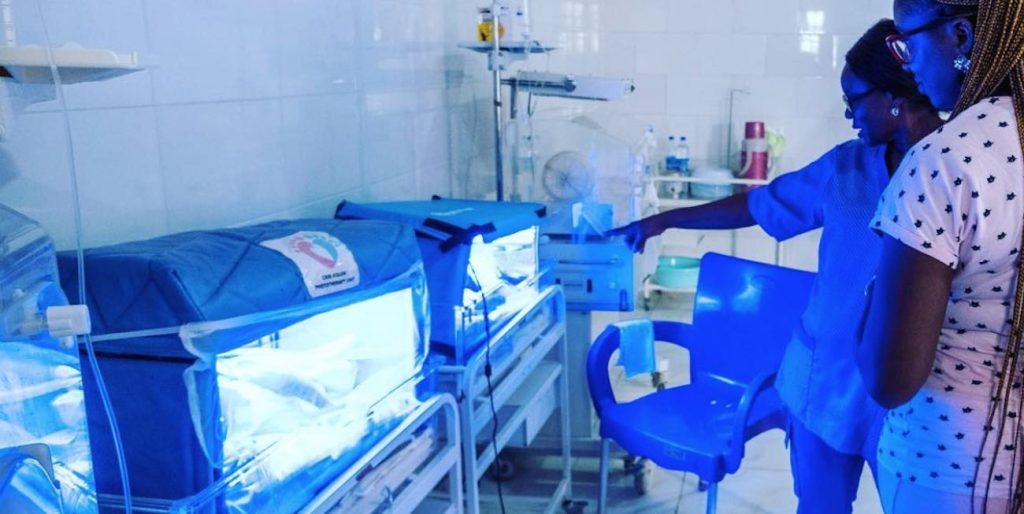
The portable, deployable phototherapy unit is powered by the African sun, and costs one-sixth the price of a normal phototherapy crib—and manufactured in her homeland of Nigeria.

Tiny Hearts / Facebook

Virtue’s husband had some experience working with solar panels before, so he lent a hand to the visual designer, who was busy navigating the unknown waters of a new profession. She worked with a pediatrician through the design process to ensure all the details would benefit the tiny babies.

Two years ago, Crib A’Glow picked up a $50,000 grant from Johnson & Johnson through the Africa Innovation Challenge, and the Crib A’Glow can now be found in 500 hospitals across Nigeria and neighboring Ghana. Already it has been used on 300,000 babies.

CHECK OUT: Miracle Preemie Baby Born the Size of an iPhone Came Home After Year of Fears That He May Not Survive

Virtue, who has also become a 2022 awardee for The Africa Prize for Engineering Innovation, says a further 200,000 babies were saved from jaundice by deploying the cribs to rural areas—no hospitals or electricity needed.

CURE Those Feeds of Negativity; Share the Hope–Share the Good News…

‘High Hopes’ For Treating Severe Asthma After Scientists Identify Anti-Inflammatory Molecule

Scientists have uncovered a new approach for treating severe asthma. They have high hopes their discovery may pave the way for effective new treatments, especially in children.

The research comes from the School of Biochemistry and Immunology at the Trinity Biomedical Sciences Institute (TBSI) in Ireland, which has one of the highest rates of asthma in the world.

Luke O’Neill, lead investigator and Professor of Biochemistry at Trinity, said,  “We have found that a molecule made by our own bodies, called Itaconate, can suppress key events that promote asthma by targeting an important immune protein called JAK1. By shutting off JAK1 we have shown remarkable efficacy in lab-based models of asthma.”

The protein JAK1 is important in driving the immune response but in some cases it causes an over-the top reaction, leading to excessive stimulation of macrophages, which cruise around the body looking for intruders. This excessive stimulation causes inflammation and is problematic in a suite of conditions, such as asthma.

Dr Marah Runtsch, lead author of the research article just published in Cell Metabolism, said, “We have high hopes that new medicines based on Itaconate could well have potential as a wholly new therapeutic approach for treating severe asthma, where there is a pressing need for new treatments.

MORE: As Coal Usage Declines, New Study Finds Dramatic Decrease in Asthma Symptoms and Hospitalizations

“We tested a molecule called 4-OI, which is based on itaconate, and it was able to suppress severe asthma in a model of the disease which doesn’t respond to anti-inflammatory steroids.”

HELP Your Friends Inhale This Good News; Share the Story…

Want Students to Do Better in Class? Take Them on Culturally Enriching Field Trips

Natural history museum in Chicago
Natural History Museum in Chicago

School field trips have been part of the educational experience for children for decades. While many school administrators believe there’s intrinsic value in letting students develop socially with out-of-classroom experiences, quantifying the impact and the value of field trips has been difficult. And justifying out-of-class time can be burdensome for teachers tasked with providing a good education amid the pandemic.

As such, many art venues, science museums, and zoos have reported declines in field trip attendance. Teachers and students have also reported decreasing amounts of school-sponsored trips, particularly for minority students in academically low-performing schools.

But thanks to new research from BYU, Johns Hopkins University and the Heritage Foundation, the value of field trips is finally being understood and measured.

The study found that students who participate in multiple field trips during the school year have higher test scores, perform better in class and have increased cultural conscientiousness over time.

“Contrary to practice where schools, facing accountability pressures, trade extracurriculars for increased seat time, we found that there’s no harm to academics by taking time out of the classroom,” said Heidi Holmes Erickson, assistant professor of educational leadership at BYU and lead author of the study. “It’s possible to expose students to a broader world and have culturally enriching curriculum without sacrificing academic outcomes, and it may actually improve academic outcomes.”

LOOK: Zimbabwe Youth at Berkeley Creates Free Online Coding Classes to Help Others Get Similar Scholarships

The study, published in The Journal of Human Resources., used an experimental design and randomly assigned fourth- and fifth-grade students from fifteen elementary schools in the Atlanta, Georgia, area to participate in three culturally enriching field trips during a school year. The field trips included a trip to an art museum, a live theater performance and a symphony concert.

Students who attended three different field trips in fourth or fifth grade scored higher on end-of-grade exams, received higher course grades, were absent less often and had fewer behavioral infractions. These benefits were strongest when students entered middle school.

Adam Winger

“We anticipated that field trips wouldn’t harm test scores. However, we started seeing academic improvements and realized that students who participated in these field trips were doing better in class,” said Erickson. “One potential reason for this is that field trips expand students’ world concept and expose them to new ideas. Similarly, students might be more engaged in school thanks to field trips. Students find school more exciting and want to try harder in class.”

CHECK OUT: Teacher Shares Brilliant Band-Aid Lesson to Teach Kids About Fairness – And it Goes Viral (WATCH)

In addition to the academic improvements, students who participated in multiple field trips were 12% of a standard deviation more likely to express a desire to consume arts in the future and nearly 14% of a standard deviation more likely to agree with the statement, “I believe people can have different opinions about the same thing.”

Researchers say this is more evidence that field trips are beneficial not only for academic success but for individual character development as well.

“Parents are very interested in the academic quality of their child’s school, but they’re also interested in the social skills and social engagement habits they develop. Cultural field trips are easy ways to help facilitate both.”

MORE: Top Skills American Teens Want to Learn and Do After School

Erickson says she’s hopeful this study will be a resource for policymakers and school principals who are interested in improving children’s growth during the children’s school experience. When considered in the context of the pandemic, she says this research should be a caution to administrators who are considering eliminating out-of-class opportunities.

“Field trips have been non-existent for the last two years, and many cultural institutions like museums and science centers were closed. Schools want to make up learning loss from the pandemic and might feel pressure to sacrifice a well-rounded education for increased seat-time,” says Erickson. “Field trips might be the first thing to go. Addressing student learning loss is crucial, but schools should be thoughtful in their approach.”

HELP Good News Go Far; Share This Story…

Key Building Block For Life Discovered on a Planet 444 Light-Years Away

SWNS
SWNS

Planet forming gas, dust, and ice 444 light years away contains a complex organic molecule that could lead to life, according to new research.

The chemical, known as dimethyl ether, is a key building block of life—turning into prebiotics such as amino acids and sugars..

Co-author Dr. Nienke van der Marel, of Leiden Observatory, said, “Dimethyl ether is the largest molecule ever detected in a planet-forming disc.

“It has been seen before in the cold clouds in which stars are forming, but not yet in an environment where planets are forming.

“This means that such molecules may end up on the planets directly as they form.

“The molecule is particularly important as it is a ‘complex organic molecule’, which is the starting point of large molecules that are the building blocks of life through further chemical reactions.”

CHECK OUT: Mysterious Object Unlike Anything Astronomers Have Seen Before Discovered

It was found around the young star IRS 48, located in the southern sky in the constellation Ophiuchus.

It has been the focus of numerous studies because the disc contains an asymmetric, cashew-nut-shaped “dust trap.”

Large numbers of millimeter-sized icy particles clump together and grow into comets, asteroids, and even planets.

They form within the extremely cold environments before the stars themselves are born.

Atoms and simple molecules like carbon monoxide undergo chemical reactions to produce more complex molecules.

The beginnings of life

Lead author Nashanty Brunken, a master’s student, said, “From these results, we can learn more about the origin of life on our planet and therefore get a better idea of the potential for life in other planetary systems.

“It is very exciting to see how these findings fit into the bigger picture.”

Dimethyl has been commonly detected in star-forming clouds, but never before in a proto-planetary disc.

Fledgling worlds can arise out of the rotating balls that develop around a newborn sun.

LOOK: What Wintering Squirrels Can Teach Astronauts

With nine atoms, the chemical is the largest complex organic molecule (COM) identified in such a disc to date.

It sheds fresh light in how they are incorporated into planets, including our own.

The Dutch team used ALMA (Atacama Large Millimetre/submillimetre Array) in Chile, which is the largest radio telescope in the world.

Co-author Dr Alice Booth said, “It is really exciting to finally detect these larger molecules in discs. For a while, we thought it might not be possible to observe them.”

They only become detectable when heating from IRS 48 causes the ice to turn from a solid to a gas, freeing them.

RELATED: Even Dying Stars Can Still Give Birth to Planets, Scientists Discover

Explained Dr Booth, “What makes this even more exciting is that we now know these larger complex molecules are available to feed forming planets in the disc.

“This was not known before as in most systems these molecules are hidden in the ice.”

The study, published in Astronomy & Astrophysics, suggests other COMs may also be lurking.

Added Dr van der Marel, “We are incredibly pleased that we can now start to follow the entire journey of these complex molecules from the clouds that form stars, to planet-forming discs, and to comets.

MORE: Astronomers Discover a New Type of Star Covered in Helium Burning Ashes

“Hopefully with more observations we can get a step closer to understanding the origin of prebiotic molecules in our own solar system.”

It improves the chances life has evolved elsewhere, and could be widespread.

The James Webb Space Telescope, which launched on Christmas Day, can analyze atmospheres of planets floating around the galaxy in unprecedented detail.

It has been hailed as a game-changer in the search for extra-terrestrials. The most promising, known as K2-18b, is 110 light years away.

SHARE This Far Out Story on Social Media…