They call themselves the oldest brewery in America after David Yuengling arrived from Germany in 1829 and decided to make beer in the coal-mining town of Pottsville, Pennsylvania.
This month, they made a special delivery to a woman who might be the oldest beer-drinker in America.
The brewery drove up with a big truck to Margaret Dilullo’s home in Spring Township to deliver an early birthday gift of 20 cases of her favorite beverage.
Soon, she will turn 107 years old, and the silver haired churchgoer has famously attributed her longevity to drinking a can of Yuengling Lager every day.
“There’s five generations of her family,” said Debbie Yuengling, who works at her family’s business, D.G. Yuengling & Son—just like six generations of Yuenglings have done.
WATCH the cute local news coverage below…
RAISE a Toast to Merry Margaret By Sharing on Social Media…
Quote of the Day: “Complain and remain. Praise and be raised.” – Joyce Meyer (Authentically, Uniquely You: Living Free from Comparison and the Need to Please)
Photo: by Jacqueline Munguía
With a new inspirational quote every day, atop the perfect photo—collected and archived on our Quotes page—why not bookmark GNN.org for a daily uplift?
Wrexham’s Hollywood owners Ryan Reynolds and Rob McElhenney have just visited the club’s stadium for the first time.
The pair met fans and posed for photos outside the gate of the 10,000-seater Racecourse Ground, known in Welsh as Y Cae, before walking onto the pitch.
At one point, Reynolds laid down on the turf while McElhenney surveyed the terraces. Both also took selfies with each other.
The actors, who purchased the fifth-tier club in February, got their first taste of live action when they watched Wrexham take on Maidenhead in an away fixture.
But instead of witnessing a triumph, Wrexham was punished with a 3-2 loss, which featured a first-half red card for the losing team.
Reynolds and McElhenney were flanked by a film crew at the game, which is part of an all-access documentary, focusing on their ownership of the club.
So far, they have managed to secure TikTok as a major sponsor, along with Wrexham’s inclusion in FIFA’s most recent football video game release.
McElhenney, in particular, was showing off his support for the team last night by donning a Wrexham United jacket, while Reynolds opted for a dark coat and shirt.
SWNS
“A big priority for us is expanding and growing the club in every way we can,” Reynolds told reporters. “And, hopefully to make sure that Wrexham’s name is a little bit more global than it is.”
“And the fact that the club has been around 160 years… that’s really important to us,” said McElhenney. “We want to win right now while we’re alive, and we also want to set up the structure for the club to win long after we’re dead.”
Wrexham manager Phil Parkinson, who was appointed in July, said of coaching under the famous duo, “It’s certainly different having Hollywood owners.
“But taking their status in Hollywood away, it is their genuine determination to make a mark in this football club and the area that really appeals to me.
“They are so committed to putting into practice what they have promised. I’m determined to give everything I’ve got to play my part in that.”
After the stars watched their team lose on home turf, they decided to commiserate with the best of them. “I wasn’t expecting to do multiple shots of gin, which is exactly what we did,” said Mcelhenney after meeting with locals at the pub. “They just kept lining them up.”
Reynolds quipped, “Yeah, I’m surprised we didn’t end up out here on the pitch!”
(WATCH the Hollywood stars talk in their first football press conference.)
STRIKE This Fun Story Far Afield; Share It On Social Media…
An Italian design studio is making a line of small river and lake boats inspired by some of the best classic cars ever made.
The models are super-accurately rendered from fiberglass, and mounted to a vide variety of pontoon shapes and sizes to go with your local freshwater source—whether a wide choppy lake or a narrow and silent canal.
Floating Motors by Studio Lazzarini has a lineup which appears to feature an old Mini, what could be an E-type Jag, an American muscle car, one of Bond’s Aston Martins (perhaps the DB5), an old Merc, a Lamborghini Countach, and even a great big VW Bus.
Their introductory offering is called La Dolce, and the shape reminds this reporter of a Nissan Figaro that almost ran him over in Galway one time.
They also take custom orders, so if there’s a particular cult classic-car you like, they’ll take care of the rest.
Currently the company is raising capital, and taking investments with big kickbacks if they manage to get enough to launch.
A $1,000 investment will get you a $5,000 discount from your first order, and $50,000 will get you a 1% stake in the company and a founder’s edition La Dolce.
“We strictly respect the original car model proportions and sizes, applying the most modern nautical techniques for the floating hull (catamaran, conventional or foil), and delivering exceptional quality concerning construction materials and applied technology, for the longest durability into harsh condition,” the company writes.
Lazzarini Design
“Our products are top-luxury motorboats, shaped like mythical cars.”
Lazzarini Design
There are a lot of firms that will retrofit retro cars with state-of-the art engines, brakes, and suspension. For example, Eagle has modernized all the best-looking Jaguar sports cars from the 1960s.
Personally, we at GNN like the idea of the VW Bus as a luxury pontoon boat, transforming the van lifestyle into the river van lifestyle—perfect for an ultimate cross country road trip like this one we reported on, done entirely by river and canal.
(WATCH the video rendering of the pontoon boats below.)
In 2019, drought choked off the Macquarie River in Australia, and fires swept through the marshes which it fed and left firefighters helpless to intervene.
Unbelievably though, just two years later and the land looks as if nothing happened. Plentiful rains mean the river is back to lazily meandering through the internationally protected Macquarie Marshes, and the reservoir behind the dam is more than 100% full.
A reminder to us all of nature’s resilience, and welcome news for those in the U.S. who hear of the devastating fire seasons in Australia, the recovery of the Macquarie Marshes is important not only for the country, but to the world, as they are listed under the RAMSAR Convention for wetlands of international importance.
An aerial survey following the drought, the fires, and then the dust storms, found two black geese across the nearly 60,000 acre reserve, a mere 12% of the total acreage of the marshes, tens of thousands of which had been completely scorched.
It was the first time the Burrendong Dam reservoir had ever run dry since the dam was built on the Macquarie river in the 1960s. Now officials say they have made major infrastructure improvements to ensure this kind of double-whammy can’t paralyze fire response ever again.
The 2021 waterbird survey by the University of New South Wales in Sydney found that most of the bird life was returning, including magpie geese, green teal, straw-necked ibis, intermediate egret, rufous night heron, royal spoonbill, and other ducks and waterfowl.
“It’s just so great to be able to fly over the marshes because you see this water everywhere and biodiversity and lots of water birds,” Professor Richard Kingsford told ABC News Australia.
Kingsford, who had been doing the survey for 30 years, said 2019 was the single worst year he can remember.
Another part of the Macquarie Marshes’ rise from the ashes is the completion of a multi-million dollar boardwalk project that allows visitors to access far more of the wetlands, much of which is set on privately-owned land, which Milton Quigley, the mayor of the nearby town of Warren, says will be a big boost to those coming out of COVID-19 lockdowns.
We’ve all been there before: There’s a party, balloons are around, one person starts trying to keep the gently falling spheres from hitting the floor—this desire spreads through everyone in the room until moms and dads start trying to break up the fun after a child knocks over a piece of furniture.
Yes, balloon-keepy-upy is a fun past time, but a TikTok video of a brother and sister playing the game during quarantine has spawned an international sporting tournament with a hilarious level of seriousness.
The inaugural Balloon World Cup was won by Peru, who beat Germany 6-2 in the final in front of a sold-out crowd and 8 million twitch streamers tuning in—about 4 million more than watched the Pay Per View mega-boxing event of Floyd Mayweather vs Manny Pacquiao.
32 nations took part in the game, including Antonio and Diego Arredondo, two brothers from Oregon who, along with their sister Isabel, provided the inspiration for the game with their viral video on social media.
“We played the game as kids, and then, during the start of quarantine for COVID, we wanted to play it again,” Antonio Arredondo told Reuters.
He explained that in order to ensure the siblings knew who allowed the balloon to touch the floor, they began to use slow -motion cameras, making their diving-across-the-sofa saves all the more dramatic.
Among those who enjoyed their video was celebrity Spanish sports streamer Ibai Llanos, and central defender for Barcelona FC and Spain, Gerard Pique—who noted if Llanos’ tweet about how the Arredondo’s balloon game should have its own World Cup got 50k retweets, Pique would organize the tournament himself. It got way more than 50k.
At the highest level
This revolution in sport is played in an 8×8 meter court encased in glass, filled with living room furniture to simulate the real thing. The rules are simple: Athletes strike the balloon in any manner they want, so long as it’s made to travel straight or up (no spiking allowed); then it’s their opposition’s turn to keep it up. If it strikes the floor, a point is earned.
Pique organized it for Tarragona, Peru, and even managed to secure some high-value sponsorship, which became obvious in the later rounds when a Renault hatchback was parked without explanation in the center of the playing field.
Llanos provided the commentary, which if one closes their eyes, is just as adrenaline-filled as soccer commentary. All the matches are neatly and expertly organized on Llanos’ YouTube channel, and the highlights provide wild fun.
Similar to the real World Cup, a German was in the final. But it was to the host nation’s supreme joy that the home town hero, Francesco De La Cruz emerged as the first-ever champion after beating his opponent Jan Spiess.
“I am very, very happy, I thank God that I have been able to achieve this,” said the Peruvian teenager.
Hilariously to those reading who watch soccer, VAR was employed throughout the tournament, and a veteran La Liga referee was called upon to officiate the matches who repeatedly drew a small box in the air to consult the slow-motion replay.
Pique was in the commentary box, offering his opinion as if he were some kind of expert on the nascent sport.
(WATCH the highlights of USA-Cuba.)
(WATCH a short clips of highlights from Sweden-Morocco)
Tap water produces a natural protective shield against harmful microplastics, which can help prevent household products from releasing them.
That’s according to a team of scientists from AMBER, the SFI Centre for Advanced Materials and Bioengineering Research, Trinity, and University College Dublin.
The research from Ireland reveals that tap water contains trace elements and minerals, which prevent plastics from degrading in the water and releasing microplastics.
Microplastics can carry a range of contaminants such as trace metals and some potentially harmful organic chemicals.
Previous studies investigating microplastics release have used forms of pure water, which only exist in laboratories and do not specifically take into account the ions and impurities found in tap water.
Professor John J Boland from AMBER, and Trinity’s School of Chemistry, who was a co-leader of the research team, said, “It is well known that plastics can degrade and release microplastics, which can get into the environment and be consumed by humans.”
Boland cites plastic kettles—which are still fairly common in the UK for boiling water in—as an example, saying, “Our research shows that many items such as plastic kettles, which are repeatedly used with tap water, can develop over time a protective skin that prevents the release of microplastics entirely.”
Lisa
“Because tap water is not 100% pure H2O—since it contains trace elements and minerals, what we showed is that if you include these trace elements and minerals the degradation of plastics in tap water is completely different. Rather than the plastics falling apart, the minerals coat the plastic and prevent any kind of degradation and so the product becomes microplastic-free.
“For example, that dark brown colour in your kettle [for boiling water] is a good thing. It is copper oxide that forms from copper minerals in your tap water, which in turn comes from the copper pipes in your house—all these combine to give a perfect protection to the kettle.”
Of the research, published inChemical Engineering Journal, Boland said, “This discovery is important because we have learned that these types of protective skins can be manufactured in the laboratory and directly applied to the plastic without having to wait for it to build up naturally. This discovery also shows that nature is leading the way, pointing to solutions to what is a very significant problem facing our modern high-tech society.”
Quote of the Day: “Learn the rules like a pro, so you can break them like an artist.” – Pablo Picasso
Photo: by Niket Nigde
With a new inspirational quote every day, atop the perfect photo—collected and archived on our Quotes page—why not bookmark GNN.org for a daily uplift?
One high school in Farmington Hills, Michigan, has a unique annual tradition for its senior graduating class which demonstrates that folks around here—even the administrators—have a great sense of humor.
When students reach their senior year at North Farmington High School, they are allowed, and encouraged, to dress up in costumes for their school ID pictures.
The class of 2022 tweeted photos of their new IDs, alongside which character was their creative inspiration—usually scenes from popular movies.
A photographer captured the incredible peak of a meteor shower—as sparks are seen shooting across the night sky.
31-year-old Uroš Fink photographed the annual Perseid meteor shower, which takes place every summer, from a mountain in Slovenia.
His image shows the colorful Milky Way dotted with nebulas as the Perseid meteors shoot across the night sky.
The Perseids “are considered the best meteor shower of the year,” according to NASA. You can be anywhere in the Northern Hemisphere to enjoy this show of speed and light.
The shop worker took the photo from the Mangart Saddle, the highest lying road in Slovenia.
Uroš said, “I could hardly wait for the day to come. Every year I am full of expectation to see the Perseids.
“I was standing on the edge of the abyss—sometimes it’s necessary to make a little effort and go outside your comfort zone to get a top image.
“I did it because I have great desire and motivation to photograph the universe in combination with nature.
“I simply adore nature and everything related to the universe, so combining these two things into one image is something invaluable.”
Up there, high on the mountain on August 7, Fink says he kept thinking to himself, “Just let the weather hold out so I can capture as many meteors as possible on camera.”
According to Farmer’s Almanac, “Meteors occur when Earth rushes through a stream of dust and debris left behind by a passing comet (the Swift-Tuttle comet, in the case of the Perseids). When the bits strike Earth’s upper atmosphere, friction with the air causes each particle to heat and burn up. We see the result as a meteor.”
We’re so glad the night sky cooperated so Fink could get his beautiful shot.
SHARE This Stunning Image For a Starry-Eyed News Feed…
A laser mapping survey from airplane recently revealed nearly 500 Mesoamerican monuments hiding in plain sight, many for the first time.
The new discoveries challenge the current timeline surrounding the rise and fall of the ancient Olmec and Maya civilizations, and scientists estimate they will lead to decades of research in the two areas.
Southern Mexico is in some ways like Rome or the Middle East’s Fertile Crescent: In this part of the world, there are archeological sites on archeological sites going back to some of the earliest permanent settlements on the planet.
The 478 “formal complexes” found in the LIDAR survey (laser imaging, detection and ranging) date back 3,000 years, and were overgrown with vegetation. They primarily include large rectangular manmade plateaus which have some correspondence to number systems and cosmology, and which may have been used for ceremonial gatherings.
The scientific team consisted of many of the same researchers who last year uncovered the site of Aguada Fenix in the Eastern Yucatan on the border with Guatemala, which was dated to between 1,000 and 800 BCE, recalibrating the rise and formation of Mayan Civilization which was believed to have originated slightly later through small villages forming sedentary population centers.
Aguada Fenix, like the recent discovery, featured a large artificial plateau, which measured 4,600 meters in length and between 32 and 45 feet in height, with nine causeways radiating out from it. Ten smaller platforms flanked it on either side, totaling twenty, the basis for many Mesoamerican counting systems and cosmological beliefs, reports Science.
Hiding in plain site
To make the new discovery, Takeshi Inomata at the University of Arizona used publicly-available LIDAR data from the Mexican government to survey 32,600 miles of ground. In a place called San Lorenzo in the Olmec archeological region, a similar layout of platforms was discovered, which Inomata and the rest of the research team believe suggests the Maya built their ceremonial earthworks at Aguada Fenix in relation to San Lorenzo.
“This format was probably formalized and spread after the decline of San Lorenzo through intensive interaction across various regions,” wrote the authors in their paper.
This is striking, and raises fascinating questions for several reasons. The first is that scant evidence of sedentary habitation exists prior to 500 BCE, including the lack of any monumental stone structures, meaning it’s possible the San Lorenzo platforms were built by a mobile people. This challenges the idea that kings, monuments, temples, and agricultural all arrived in lockstep.
Secondly, it calls into question whether the Olmec and Maya were a sister people, or whether one was like a mother to the other. Science reports that further radiocarbon dating is needed to compare San Lorenzo to Aguada Fenix and determine which came first. We’ll be sure to keep you updated on future news from the region.
SHARE This Fantastic Maya Finding With More Folks on Social Media…
Artist's concept of M51-ULS-1 and its exoplanet eclipsing its X-ray sourceNASA_CXC_SAO_R. DiStefano_et al
Illustration of M51-ULS-1 and its exoplanet eclipsing X-ray source; NASA_CXC_SAO_R. DiStefano_et al
Scientists have confirmed observations of the first-ever exoplanet in another galaxy, 28 million light years away.
While this massive distance diminishes the natural mystique of exoplanet science, as reaching it will be forever impossible to us, it can inform more closely how planets form around their stars under the different gravitational conditions of another galaxy, particularly because the orbit of this new exoplanet is that of a black hole.
Having found all known exoplanets in the Milky Way, nearly 4,800 of which are all within 3,000 light years in distance from us, the Whirlpool Galaxy of Messier 51 becomes the site of the first exo-galactic exoplanet.
“We are trying to open up a whole new arena for finding other worlds by searching for planet candidates at X-ray wavelengths, a strategy that makes it possible to discover them in other galaxies,” said Rosanne Di Stefano of the Center for Astrophysics at Harvard University, who led the corresponding study.
Normally, the identification of an exoplanet is done when the continual measurements of light coming from a star in our galaxy is briefly interrupted on a consistent basis, represented by the orbit of the exoplanet eclipsing it for a moment. At 28 million light years away, this strategy was repeated, but with X-rays instead of visible light.
Searching in this way means that the solar systems found will come from “X-ray bright binaries,” meaning systems established around the orbit of either a neutron star (a collapsed, high-density star), or a black hole, paired with a smaller, but still massive star.
Location of M51-ULS-1 in M51NASA_CXC_SAO_R; NASA, DiStefano_et al
Around a black hole, gasses are pulled into and heated by gravity’s force to extreme temperatures, which can be measured as X-rays. This was the case for Di Stefano and the rest of the research team, who used the Chandra X-ray Observatory to identify the characteristic dip in light from the transiting of a planet.
“The X-ray transit the [authors] found using Chandra data lasted about three hours, during which the X-ray emission decreased to zero,” NASA wrote in a release. “Based on this and other information, the researchers estimate the exoplanet candidate in M51-ULS-1 would be roughly the size of Saturn, and orbit the neutron star or black hole at about twice the distance of Saturn from the Sun.”
To confirm whether or not the orbiting characteristics are consistent with a planet, the researchers would have to wait an estimated 70 years for it to pass in front of the star again. In the meantime, debate will stir, and some astronomers are already rightly assigning massive coincidence to the nature behind the discovery.
“We know we are making an exciting and bold claim so we expect that other astronomers will look at it very carefully,” said co-author Julia Berndtsson of Princeton University. “We think we have a strong argument, and this process is how science works.”
One suggestion is it could have been a dense cloud of gas, though the researchers disagree that the X-rays could be blotted out entirely if that were the case.
The planet, NASA points out, had a violent history, as the star around which it orbits would have already gone supernova, that is, to explode with radioactive waves. The planet continues to exist, however, probably because its mass facilitated the survival from such an event.
While hydroponic farms, also known as “vertical farms,” swap land use for electricity use— one project is trying to take the best of both worlds.
Using only natural light for photosynthesis and heat, Shockingly Fresh’s greenhouse in Offenham, England, can produce four-times the yield compared with regular farming, while using much less energy than other vertical farms.
This is because other vertical farms are closed systems—relying on artificial LED light and indoor heating to keep crops cozy.
“It is ultimately better for the environment. I can’t say it’s carbon-neutral but it isn’t as carbon-hungry as an LED vertical farm would be,” the aptly-named Nick Green, development director of Shockingly Fresh, told The Guardian.
While other producers might say that Shockingly Fresh’s use of natural light means they can’t keep up the 24-7 production typical of farms that can leave the lights on all night, the company stresses that they match the consumption patterns of humans and use far less energy in the process.
“Production isn’t completely linear as it would be in a fully-lit vertical farm, but people don’t eat as much lettuce in winter as they do in summer,” he explained.
Shockingly Fresh
Offenham was completed in 2021, and is already producing lettuce and bok choy for sale at supermarkets, with strawberries planned for winter when the days become shorter. Even though Green reckons they can produce 2 million heads of lettuce per year, the location is just one-tenth of the size of future projects.
Offenham covers 3 acres. The Longford Vertical Farm, currently in the planning phase, will cover 32. Situated in between Glasgow and Edinburgh, with good access to major roads, Longford will include rainwater catching systems to aid with cutting energy costs, and native landscaping around the former mining area.
Hydroponics are allowing cities to have access to fresh produce much nearer to their high-rises, for example when a 51-story “farmscraper” is cloaked in hydroponic farms that grow food for those who live within, in Shenzhen, China.
They’re also appearing on rooftops, like in Montreal, which will provide 2% of all food consumed in the Canadian metropolis.
Quote of the Day: “Your own positive future begins in this moment. All you have is right now. Every goal is possible from here.” – Lao Tzu
Photo: by John Mccann
With a new inspirational quote every day, atop the perfect photo—collected and archived on our Quotes page—why not bookmark GNN.org for a daily uplift?
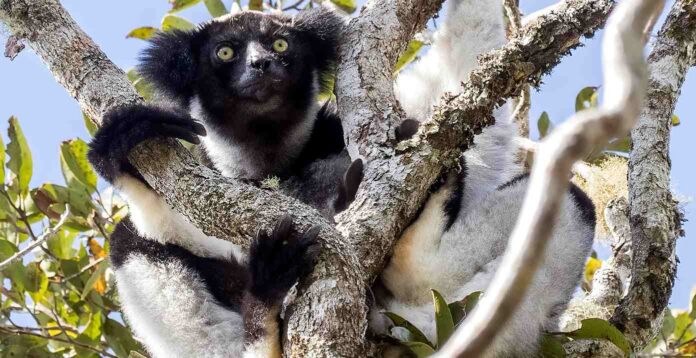
Songbirds share the human sense of rhythm, but it is a rare trait in non-human mammals—now, it’s been found, we can add the indri lemur to the short list of animals we know appreciate a sense of beat.
“There is longstanding interest in understanding how human musicality evolved, but musicality is not restricted to humans”, says MPI’s Andrea Ravignani, who led an international research team that set out to look for musical abilities in primates. “Looking for musical features in other species allows us to build an ‘evolutionary tree’ of musical traits, and understand how rhythm capacities originated and evolved in humans.”
To find out whether non-human mammals have a sense of rhythm, the research team decided to study one of the few ‘singing’ primates, the critically endangered lemur Indri indri.
The researchers wanted to know whether indri songs have categorical rhythm, a ‘rhythmic universal’ found across human musical cultures.
Rhythm is categorical when intervals between sounds have exactly the same duration (1:1 rhythm) or doubled duration (1:2 rhythm). This type of rhythm makes a song easily recognizable, even if it is sung at different speeds. Would indri songs show this “uniquely human” rhythm?
Ritardando in the rainforest
Over a period of twelve years, the researchers from Turin in Italy visited the rainforest of Madagascar to collaborate with a local primate study group. The investigators recorded songs from twenty indri groups (39 animals), living in their natural habitat.
Members of an indri family group tend to sing together, in harmonized duets and choruses.
The team found that indri songs had the classic rhythmic categories (both 1:1 and 1:2), as well as the typical ‘ritardando’ or slowing down found in several musical traditions. Male and female songs had a different tempo but showed the same rhythm.
According to first author Chiara de Gregorio and her colleagues, this is the first evidence of a ‘rhythmic universal’ in a non-human mammal. But why should another primate produce categorical ‘music-like’ rhythms?
The ability may have evolved independently among ‘singing’ species, as the last common ancestor between humans and indri lived 77.5 million years ago. Rhythm may make it easier to produce and process songs, or even to learn them.
Endangered species
“Categorical rhythms are just one of the six universals that have been identified so far”, explains Ravignani.
“We would like to look for evidence of others, including an underlying ‘repetitive’ beat and a hierarchical organization of beats—in indri and other species.”
The authors encourage other researchers to gather data on indri and other endangered species, to witness their “breath-taking singing displays.”
Bakers created this impressive alligator sculpture—crafted entirely out of bread.
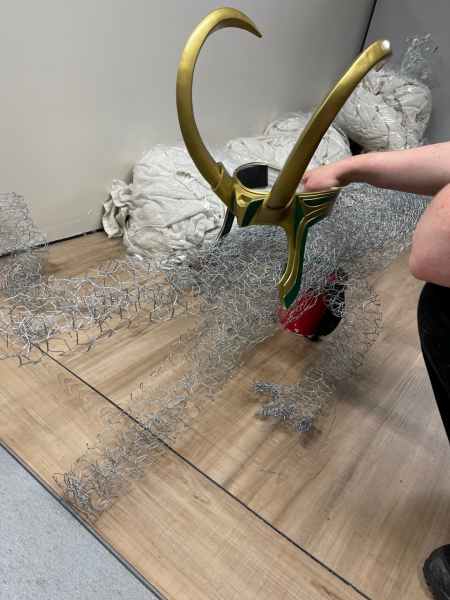
Based on a character in the Marvel series Loki, One House Bakery crafted the gator as their entry for a local scarecrow contest, where downtown businesses compete to make the best sculpture.
Dough-ki was made of ‘dead dough’, a mix without yeast.
The base of the alligator is made of chicken wire.
SWNS
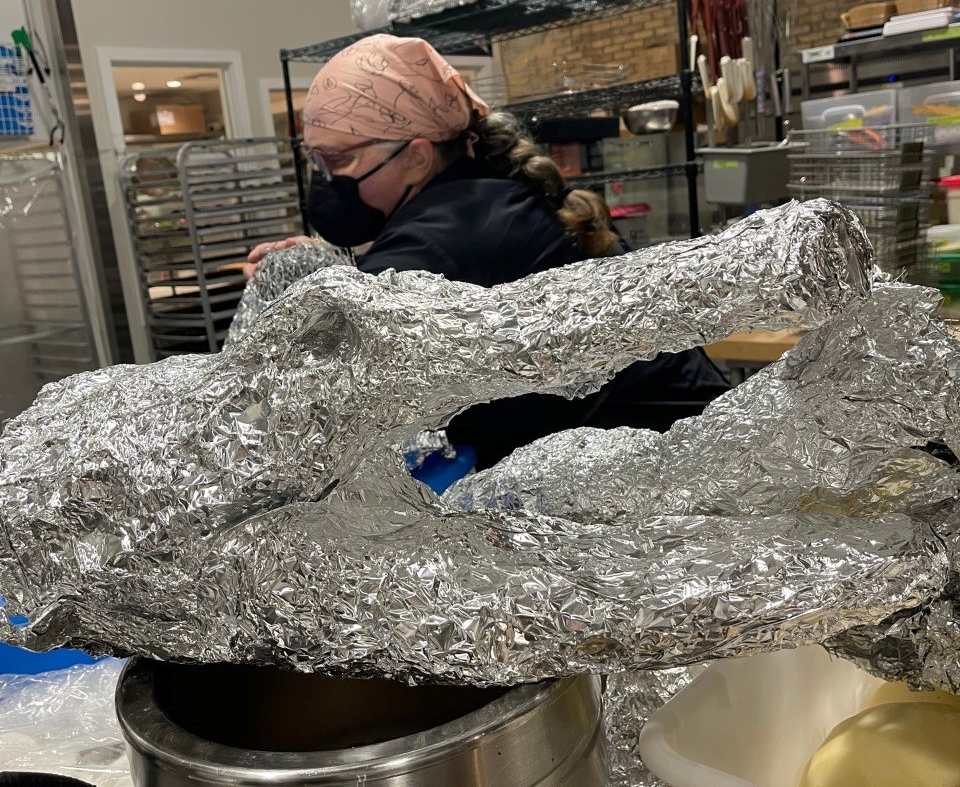
Tinfoil which held the dough into position before it was baked.
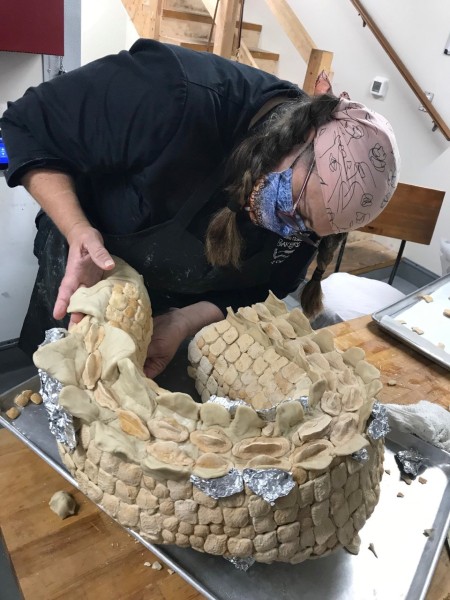
After molding and sculpting the dough around the metal base, the alligator was put into into the oven multiple times, each time with an extra layer of dough.
SWNS
The team from Benicia in California started the project in August, ahead of the competition showcase on October 25th.
SWNS
36-year-old Hannahlee Pervan, whose parents own the bakery, said, “It took over two months of intricate work to get the alligator ready for the contest.
“You have to sculpt the dough first, and once you bake it, the sculpture will change in the oven.
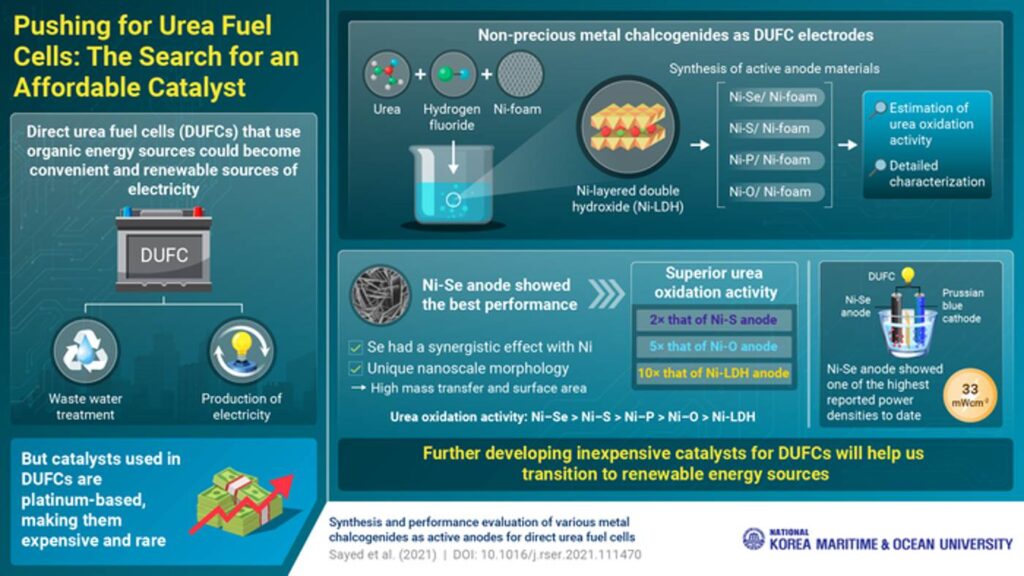
South Korean scientists are leading a revolution in pee-powered fuel cells that generate “clean” energy and purify wastewater.
A common organic molecule in fertilizer and a principle component of human urine, scientists achieved state-of-the-art performance using urea fuel cells—built with inexpensive electrodes and without precious metals.
Direct urea fuel cells (DUFC) could turn any wastewater treatment plant into a renewable power station thanks to the development from the Korea Maritime and Ocean University.
These flexible energy generators offer novel and unique ways to equip a house, a town, or a parish with renewable electricity that cuts down on the footprint and upkeep of other infrastructures.
Utilizing a nickel and selenium anode and nickel microfoam, Professor Kyu-Jung Chae found inexpensive metal components to act as the catalyst in the DUFC, facilitating critical chemical reactions that allow it to work, which up until now had been made only with precious metals like platinum.
Several nickel-based catalysts were tested and selenium was found to have a synergistic effect. Furthermore, when paired together with a cathode made from Prussian Blue, they outperformed precious metals, creating the highest power densities ever found in a DUFC with nickel.
Korea Maritime & Ocean University
Because urea fuel cells generate electricity while also helping in the treatment of urea-ridden wastewater, providing clean water in the process, they are a versatile option in remote places without access to a stable power grid, such as in rural areas, ships, or even aboard spacecraft.
Across the ocean border, a Japanese university is opting to try and turn “number 2” into the number 1 power source for its buildings.
The invention of a toilet that composts human excrement and turns it into methane biogas for use in the school’s energy system has the students there re-evaluating waste like never before, GNN reported, as the amount of waste they contribute to the electric bills is returned to them in the form of a digital currency.
On average, a human’s daily excrement can generate around 0.5 kilowatt hours of electricity. Bacteria breaks down the feces of student and faculty alike, and biomethane produced as a byproduct is channeled into a solid-oxide fuel cell which powers several building functions such as the hot water heater.
SHARE the Latest Research With Others in Search of Great News…
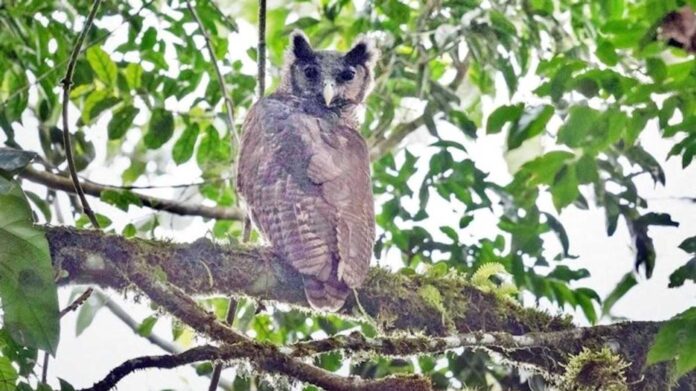
When Dr. Joseph Tobias saw how big the bird which had just flown over his head was, he had just assumed it was an eagle. After all, no other bird in Ghana could be so large.
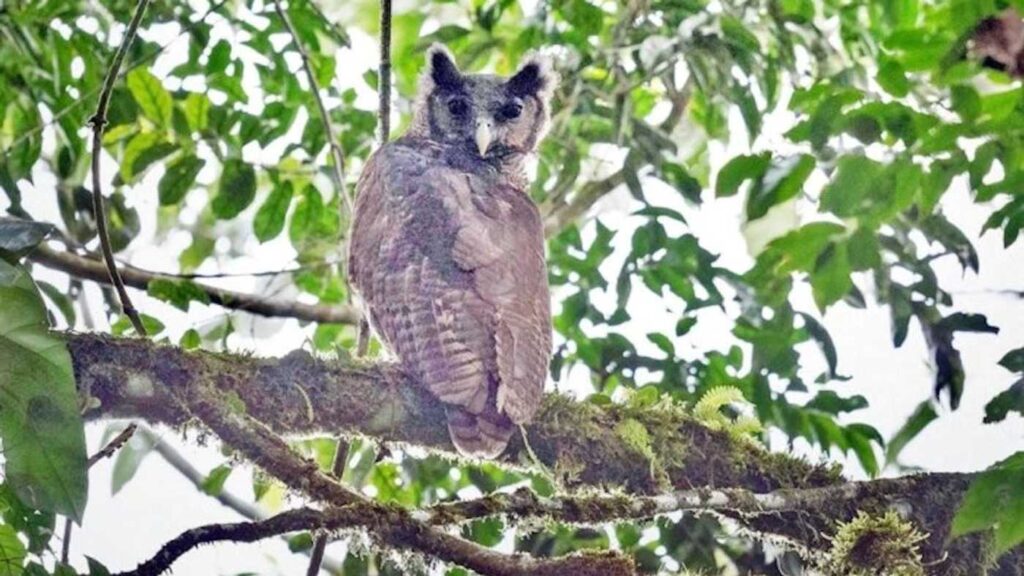
He was wrong. The Imperial College researcher and his colleague were the first to see a Shelley’s eagle owl in the wilds of Ghana since the 1870s—and the first ever to produce a clear photograph of one of the world’s largest owls.
Dr. Tobias said of the special moment, “It perched on a low branch and when we lifted our binoculars our jaws dropped. There is no other owl in Africa’s rainforests that big.”
Dr. Robert Williams, a freelance ecologist, was with Tobias in the moment, and the two took photographs of the bird which remained only for 10-15 seconds.
Fortunately the photos clearly displayed its yellow beak, huge stature, and black eyes—a combination which ruled out all other African forest owls.
Listed as Vulnerable by the IUCN, the Shelley’s eagle owl is estimated to exist in numbers of only around 1,500 to 7,000—it’s difficult to get exact figures as it’s notoriously reclusive.
Dr. Nathaniel Annorbah, University of Environment and Sustainable Development of Ghana, celebrated the sighting. “This is a sensational discovery,” he was quoted as saying. “We’ve been searching for this mysterious bird for years in the western lowlands, so to find it here in ridge top forests of Eastern Region is a huge surprise.”
Tobias and Williams found the bird in the Atewa Forest Reserve, a biodiverse area that is now receiving calls to be turned into a national park after the sighting.
“We hope this sighting draws attention to Atewa forest and its importance for conserving local biodiversity,” Dr. Williams said in a release. “Hopefully, the discovery of such a rare and magnificent owl will boost these efforts to save one of the last wild forests in Ghana.”
Emmanuel Laloux — Eléonore Laloux's father's camera cc license wikimedia commons
Emmanuel Laloux, CC license
In the town of Arras in northern France, the country’s first ever appointed official with Down syndrome is leading from the front, changing hearts and minds and bringing a new perspective on mental disability.
In 2020, Éléonore Laloux was appointed municipal councilor of Arras under the mayor Frédéric Leturque, for which she has received continual praise for her colorful nature, her insatiable desire to make people smile, and for promoting the inclusivity of disabled persons in society.
On October 15th, Ms. Laloux was awarded membership of the National Order of Merit, the second highest civilian honor roll in the country.
“Inclusion isn’t something that we just think about; it’s not a generous act. It’s our duty,” Mayor Leturque told the Christian Science Monitor. “Eléonore has helped the entire town progress in terms of how we see disability.”
Along with holding down a part-time job at a hospital, a packed volunteer schedule, and a board position on Down Up, a nonprofit her father launched to support community members with Down syndrome and their families, Laloux has made numerous adjustments to everyday community features in Arras to support disabled people; not exclusively those with Down syndrome, but other forms as well.
Arras’ famous town center, town hall, and belfry are a UNESCO Heritage Site, and for those who can’t ascend to the top, Laloux organized and commissioned the creation of a virtual tour.
Down below, crosswalk lights now sound off verbal instructions for those who can’t hear or see. She has also scheduled an “incluthon” for next summer, an event to inspire disabled people and the community at large through sports and culture.
“I’m a very committed and dynamic person, and I like to be out working with people,” said Ms. Laloux, who in 2014 wrote a book which roughly translates to Down Syndrome, So What?!
Perhaps unsurprisingly, this upbeat attitude has made her a very popular figure in town and country, and she has made numerous television and other public appearances, including alongside many national politicians and cabinet members. But her appointment is by no means a gimmick to gain support from sensitive constituents; she’s made some brilliant changes in civil life.
One such accomplishment is opening Arras to a Dutch method of civil society called “the Nudge” a sort of “c’mon then,” to the community to get them to treat it better. Nothing could better represent this than putting small imitation basketball hoops over public trash bins.
She’s continued her activism on behalf of those with Down syndrome, with her “Friends of Eléonore,” foundation, even during public life, and argues vociferously against those with a limited understanding of the capabilities of disabled persons.
SHARE This Inspiring Woman’s Bright Story on Social Media…
Quote of the Day: “A wonderful thing about true laughter is that it just destroys any kind of system of dividing people.” – John Cleese (turns 82 today)
Photo: by Nathan Anderson
With a new inspirational quote every day, atop the perfect photo—collected and archived on our Quotes page—why not bookmark GNN.org for a daily uplift?