












All News - Page 470 of 1716 - Good News Network
Home Blog Page 470

These Beautiful Italian Towns Will Pay You to Move There if You Work Remotely

Commune Santa Fiora
Commune Santa Fiora

As the COVID-19 malaise slowly lifts around the world, governments are looking for quick and innovative ways to kickstart their travel industries.

Portugal is building a remote worker village on the stunning island of Madeira, and now two Italian towns are paying 50% of the rental costs for remote workers looking to swap their current digs for a slice of medieval Italian rusticity.

Rieti in the Lazio region, and Santa Fiora in Tuscany, are both having problems keeping young people in town, and the populations of both communes are stagnating.

Maybe for coiffured Italian youths the lure of medieval walls, renaissance piazzas, and baroque palaces set amid vineyards, rivers, local markets, and chestnut forests doesn’t find purchase, but for most Americans it’s the quintessential vision of European life.

And all that can be yours if you just prove to Santa Fiora mayor Federico Balocchi that you are a full-time remote worker, and that you’ll sign on for a stay greater than two months.

It’s a serious government initiative, not a paid holiday, and Balocchi stressed to CNN Travel that the purpose is not only to bring outside money in, but to find people looking to revitalize Santa Fiora.

Dreams of Tuscany

Commune Santa Fiora

Just cabled with high-speed fiber optic internet, Santa Fiora has only recently garnered the option to host telecommuters, or “smart workers” as the Italians call them.

MORE: These 6 Cities and This State Will Pay You to Move There

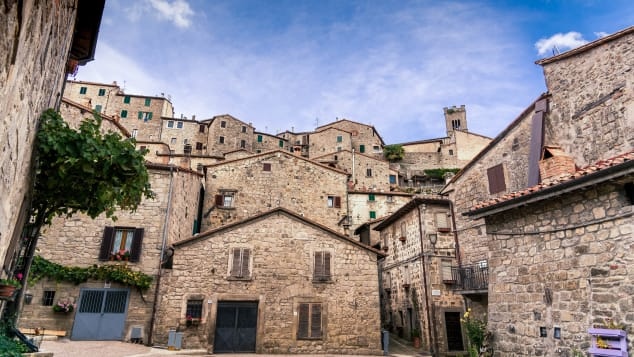
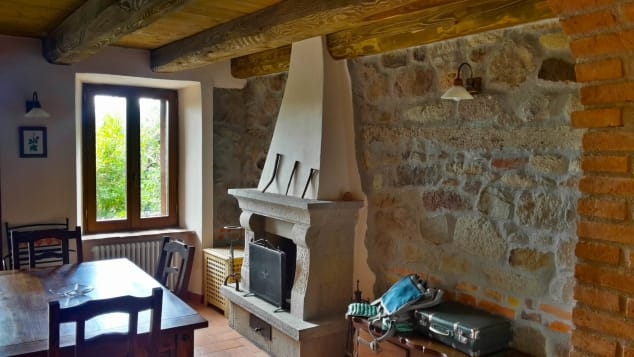
Nestled in the heart of Tuscany’s Montepulciano province, it’s located within the Monte Amiata Nature Reserve close to Val D’Orcia, or Dorcia Valley. Not far from Sienna, the houses are affordable, costing between €300 – €500 monthly, for which an approved remote worker would receive a check for 50% of the total, potentially transporting you from your lousy studio apartment to this dream-inspired village for around €200, or $240 per month.
Commune Santa Fiora

For investors or entrepreneurs, particularly those with Italian heritage or connections, Balocchi is also offering a €30,000 grant for those looking to open a B&B or hostel business in town, and is also willing to provide childcare assistance.

“The goal is to incentivize people to move in and virtually work from here. We want Santa Fiora to become their flexible office,” said Balocchi. “Each time a youth leaves to search for a job elsewhere a piece of our village is taken away.”
The commune has set up a website for people looking to take advantage of the offer, and they’ve included links to local services like plumbing, other utilities, and childcare. The town is perfect for nature lovers, and horseback riding, trekking and mountain biking are popular hobbies.

A little closer to Rome

Commune Rieti

Rieti, with a population of 50,000, is also witnessing a stagnation in youth opportunity and wants to invite remote workers to bring an outside perspective into the Roman-era town.

An hour and a half from the Eternal City, Rieti was founded by Italian tribesmen before Rome controlled all of the peninsula, and remains from the Roman period can be found under the streets, houses, and out in the countryside.

RELATED: Mississippi City Will Pay You a Monthly Stipend and Relocation Costs to Move There

“Rents in town are in the range of €250 to €500,” explains deputy mayor of Rieti, Daniele Sinbaldi, to CNN. “For €600 you can have an entire little villa in the peaceful countryside. Also, the voucher can be used in the entire territory of Rieti, including the rural hamlets of Sant’Elia, Cerchiara, and the skiing resort of Terminillo but we’d love to have people move in to live in the historical center.”

For employees, they would need a letter from their boss that they are in fact a remote worker with enough hours and money to pay for a minimum 6-month rental (Italian lease and rental conditions are much stricter than in the U.S.) but self-employed folks only need a detailed description of their work, and some proof of income to secure rent assistance.

Located on one of the most important highways in Roman times and surrounded by creeks, ponds, canals, and lakes, Rieti is known as the “fresh water Venice,” and by the less-charming “Umbilicus Italiae” or Italy’s belly-button, as they claim their historical town center is the geographical center of the country.

There is no convenient website like Santa Fiora has, and perspective movers would need to use subito.it, casa.it, or immobilare.it—all Italian rental sites—to find lodging.

As this author, who himself is an American remote worker living in Italy, often says, many Americans will think nothing about spending 30 years dreaming of living in Europe, even though modern telecommunications have made it beyond possible to do so.

SHARE This Story With Friends Who Might be Looking For a Fresh Start in Life…
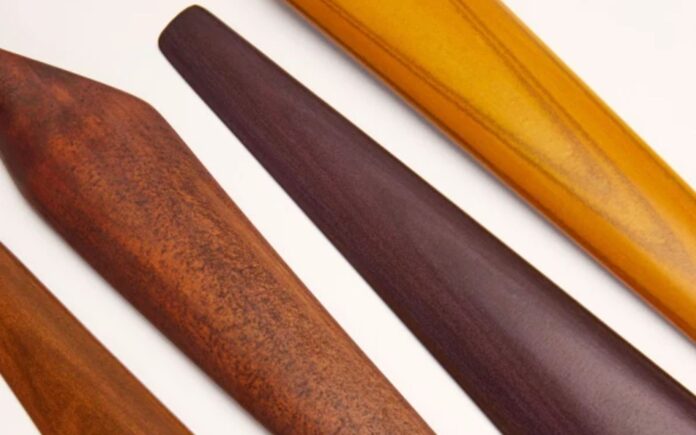
The Quest for Rare Wood is Endangering Forests. Now We Can Just 3D-Print Replicas Made from Wood Waste Instead

Desktop Metal
Desktop Metal

While pangolin scales, shark fins, elephant ivory, and rhino horn are famed for their value on the black market, the most illegally trafficked of them all is the rosewood tree, which generates more dollars than all four put together.

Famed for quality in furniture and instruments, the advent of 3D printers has given a team of designers at San Jose State University the idea to save the tree species by 3D printing rosewood using wood scraps.

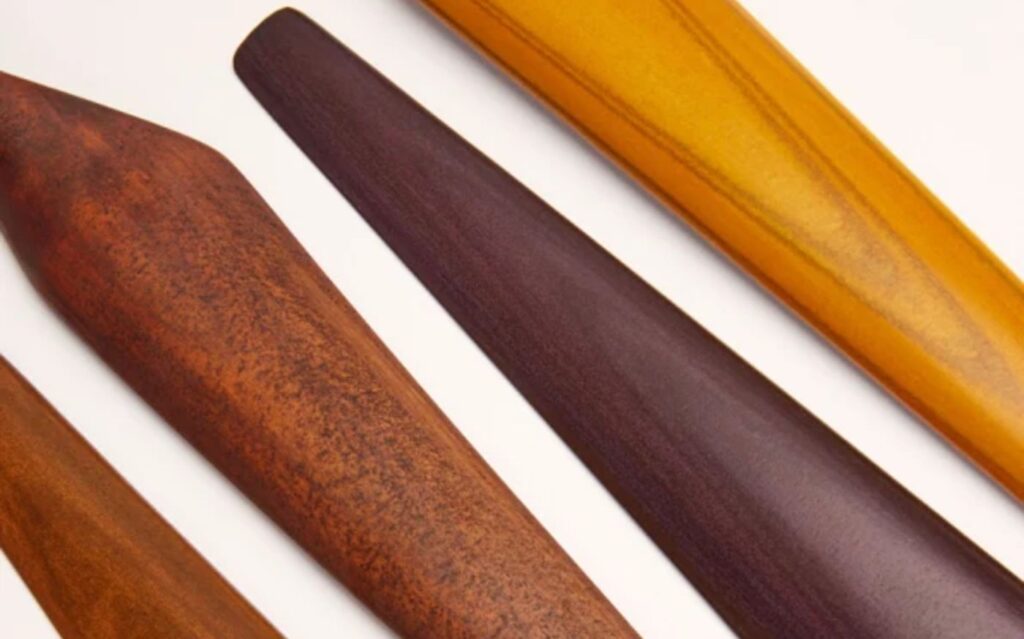
Their startup, Forust, can 3D print a wood grain that mimics the properties of any kind of prized wood, whether ash, pine, or rosewood—which is considered vulnerable to extinction due to harvesting for the Chinese luxury furniture trade, an enterprise with a global value of $95 billion.

Trees, as beautiful and complex as they are, are essentially made of two products, explains Ric Fulop, CEO of Desktop Metal, the parent company of Forust. Cellulose and lignin give wood its grain, the strings of material that run vertically up the trunk. Fulop explains that all the 3D printer does is re-construct what furniture makers work to deconstruct, by injecting a non-toxic binder with lignin onto layers of sawdust.

Once finished, the resulting mock-wood can be sanded and refinished like normal timber. The Chinese market typically prizes furniture with traditional designs, that when combined with the deep red of the rosewood, a lucky color in China, indeed creates a stunning piece of furniture.

MORE: Amid the Green Funeral Movement, Scattering Ashes Ensures These Forests Remain Pristine Forever

Speaking with Fast CompanyForust say they can map incredibly complex geometric patterns and shapes onto furniture, which they can print with grain in its finished form— work that would normally take a craftsperson weeks to complete by hand.

Desktop Metal

In the U.S. lignin and sawdust from the lumber industry are produced as waste to the tune of millions of tons per year, which all could go into being upcycled via 3D printing into mock luxury hardwoods. This fact actually changes the entire picture of the furniture industry, since once the material wears out it could be ground down and used again as 3D printing fuel.

RELATED: Tribe in Panama Wins Landmark Case Granting Them Stewardship of 400,000 Acres of Pristine Ancestral Forests

For circular-aiming companies like IKEA, it could be the biggest invention since particle board, and for rosewood forests around the world, it could be the most significant invention since the axe.

FOSTER Sustainability in Your Friends—Share This Story With Them…

Kids Have Been Reading Longer, More Difficult Books in Lockdown, and It’s Boosting Moods

Literacy skills have actually improved in the pandemic, with children reportedly picking up more challenging books and getting lost in fiction to combat isolation, a study from the UK has shown.

With schools often closed, many more pupils began to enjoy reading again—with 56 percent of young people saying they enjoyed reading either very much (24 percent) or quite a lot (32 percent).

During the first British lockdown, One of Us is Lying by Karen M McManus and Harry Potter and the Prisoner of Azkaban by J.K Rowling were ranked favourite books by high school and elementary school pupils respectively.

A major study by learning and assessment provider Renaissance Learning analyzed the reading habits of more than 1.1 million pupils across the UK and the Republic of Ireland, including 46,722 Scottish youngsters.

The study showed reading skills have improved over lockdown periods, with many children picking up longer books of greater difficulty.

The National Literacy Trust’s Annual Literacy survey of 4,141 pupils across the UK found reading for pleasure dipped at the beginning of 2020, and recorded its lowest level of self-reported reading enjoyment since 2005 (48 per cent of children).

But this changed drastically with three in five children saying reading made them feel better during the lockdown.

More than a third also said reading helped them when they felt sad because they could not see friends or family.

Elementary school children, in particular, improved on their reading levels by focusing on more demanding texts.

RELATED: World’s First 3-D Printed School Poised to Be Built in Madagascar For Half the Price of Traditional

At Scottish elementary level and particularly year two (the equivalent of first grade), pupils were reading a larger variety of titles compared to their English counterparts.

Book reading difficulty in year two was at its highest for Scottish children, who were reading books almost two years ahead of their chronological age.

Professor Topping, from the University of Dundee’s School of Education and Social Work, said: “During the lockdown overall, pupils were tending to read longer books of greater difficulty and with greater comprehension.

CHECK OUT:  She Began Making Braille Children’s Books to Cut the Cost By 90% And Donate Them Worldwide

Renaissance Learning director John Moore said, “Lockdown has been difficult for many children, especially when schools were closed and they could not access school libraries or see their friends.

MORE: Study Arts and Science Together Like Da Vinci Did, And You’ll Get Best Outcome, Researchers Say

“Knowing that reading really helped younger children to feel better throughout the pandemic is very encouraging.

“It’s promising to see that when pupils had a choice of books to hand many chose a more challenging book, and one that perhaps allows for more escapism.”

HELP Your Pals Read the Good News by Sharing This Story With Them…

First Grader Wrote to Old Navy Asking for Girls’ Jeans to Have Pockets —And They Sent Her 4 Pairs

Evening Star Elementary

A kid recently wrote to Old Navy asking them to put pockets on girls’ jeans, and her powers of persuasion seem to have done the trick.

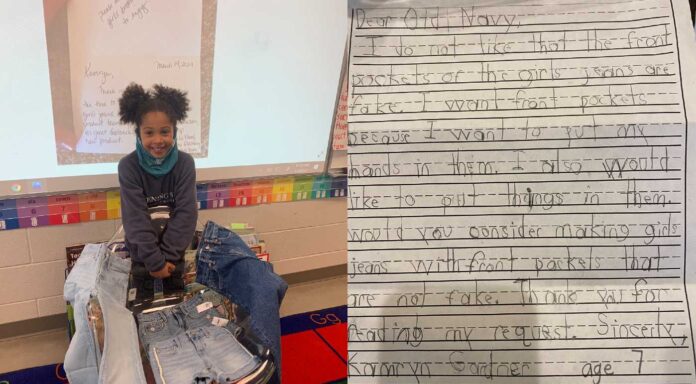
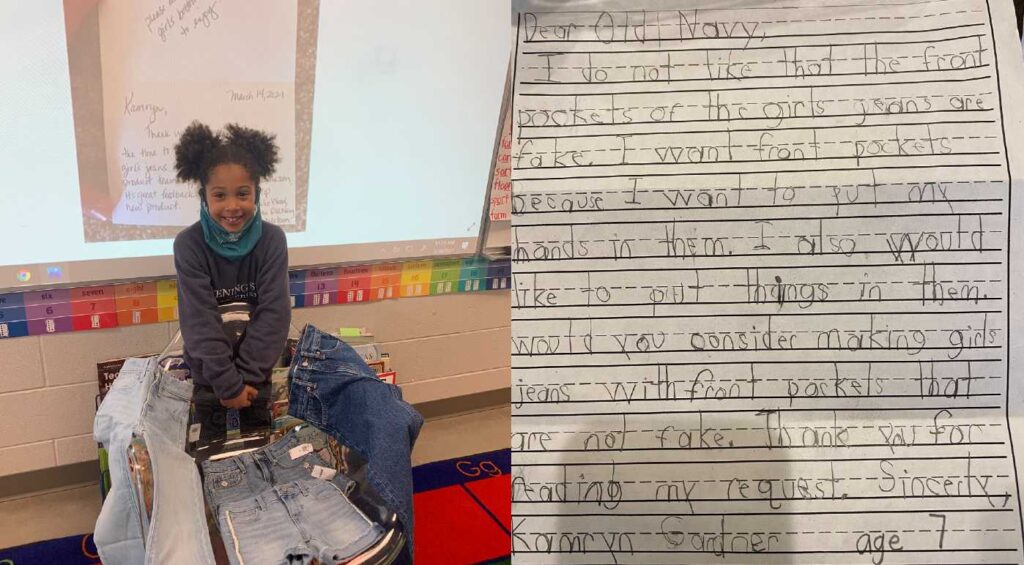
Kamryn Gardner from Arkansas wrote to her favorite clothing brand because she was learning to write persuasive letters in first grade. She said that real pockets should be on girls’ jeans. More specifically, she wrote:

“Dear Old Navy, I do not like that the front pockets of the girls’ jeans are fake. I want front pockets because I want to put my hand in them. I also would like to put things in them. Would you consider making girls’ jeans with front pockets that are not fake? Thank you for reading my request. Sincerely, Kamryn Gardner, age 7.”

MORE: Phenomenal 6-yo Skateboarder Performs in Pink Party Dress and Leopard Print Helmet

The retailer responded by sending her four pairs with real, awesome pockets. Just check them out.

(WATCH the TODAY video about this story below.)

SHARE This Fun Story With Friends on Social Media…

“In the long run, the sharpest weapon of all is a kind and gentle spirit.” – Anne Frank

Quote of the Day: “In the long run, the sharpest weapon of all is a kind and gentle spirit.” – Anne Frank

Photo: by @K8_iv

With a new inspirational quote every day, atop the perfect photo—collected and archived on our Quote of the Day page—why not bookmark GNN.org for a daily uplift?


Canadians Buy Home for Man Who Needs Kidney and Had to Quit His Job (Which Was Helping Others)

Threesixfive Media/YouTube

They say home is where the heart is, but when the home you’re living in isn’t safe, the heartache can be a real headache. That was the situation for one Nova Scotia family—until neighbors stepped in to turn things around.

When Alvero Wiggins was diagnosed with kidney failure it created a domino effect. The rigors of treatment meant spending nine hours a day on dialysis. That meant giving up work. Unable to earn a living, Wiggins, his wife, and their three children were forced to move into public housing. The hazardous conditions they faced there made for a harsh adjustment.

Fortunately, Wiggins had forged strong ties to his community. Prior to his illness, he’d earned his stripes as a neighborhood activist with two local youth-related organizations, Hope Blooms and LOVE Nova Scotia.

Sarah MacLaren had worked alongside him for years. Having seen how much of himself Wiggins invested in the pursuit of helping others, she felt he more than deserved to get something back. Finding his family a safe and healthy place to live became her top priority.

This past spring, MacLaren launched a GoFundMe campaign in hopes of bringing in enough money to purchase the house and defray some of the Wiggins’ living expenses. Though donations came in by the thousands, it wasn’t nearly enough to make a dent in Halifax’s red-hot housing market.

While MacLaren fretted her efforts would fall short of hitting the mark, she wasn’t destined to be the only fairy godmother in this story. Enter real estate agent Brenda MacKenzie.

RELATED: Compassionate Cops Replace a Beloved Tractor For 4-Year-old After it’s Stolen—WATCH

MacKenzie heads a local housing initiative, A Home For Everyone. For the past 15 years, she and her peers have donated a portion of their commissions to various housing-related charities.

For MacKenzie, who is likewise on dialysis awaiting a kidney donor, the Wiggins family’s story struck a special chord. Along with her charitable board, the decision was made that this year’s earnings would go toward helping Alvero, his wife Chelcie, and their kids Alaya, Javier, and Jaden find a new place to call home.

But even with the boost in capital, hunting down an appropriate dwelling was proving to be a challenge. Yet again, fate stepped in.

One of MacKenzie’s Halifax listings—a four-bedroom townhouse in close proximity to a park and swimming pool—had been inundated with multiple offers when it hit the market. All of them fell through.

“Team Wiggins” rushed in with a bid, which was accepted.

“This specific house was a miracle house, it was a unicorn house,” MacLaren told CBC News. “It’s probably the most beautiful thing I’ve been a part of in my lifetime.”

The family expects to be able to move into their new digs by month’s end. In the meantime, A Home For Everyone has rounded up a volunteer attorney and home inspector, as well as a crew of businesses to donate a slew of home upgrades and furnishings.

MORE: 5-Year-old is a Neighborhood Hero For Drawing Colorful Messages of Hope on Her House During Lockdown (Look)

“It will mean everything, it will be a sense of security to live here, to have a home, to have a place to call home. My kids love it here. It will be so joyful for them,” Wiggins told CBC. “I don’t even know how to find the words to thank everybody who has supported this dream.”

(WATCH the threesixfive Media video about this story today.)

SHARE This Story of Real Generosity With Friends…

Amazing Tech Developed by Private Firms Are on the Verge of Creating Nuclear Fusion Reactors to Power Humanity

magnet, CFS

While industries are harnessing solar, hydro, and geothermal power to solve the world’s energy problems, it’s been thought by many for sometime that the eventual source of unlimited clean energy will be nuclear fusion.

Fusion reactors replicate the power and process of the sun down here on Earth by creating plasma, the fourth material state, inside a controlled device that harnesses the heat given off as energy to be turned into electricity.

Now a pair of private firms, one near MIT in Boston, and another in England, are developing something that could be described as a “portable” fusion reactor, by utilizing rare minerals and some of the most powerful magnets ever made.

If the firms are able to finish solving some of the most complex technological problems imaginable, coal and oil could stay in the ground, there’d be no need to risk another Fukushima, the enormous inefficiencies with renewable energies could all be forgotten, and all those engineers and technologists could lend their talents to other areas of the economy.

“It’s every engineer’s dream, really, to have a project that’s technically challenging, which requires you to develop new technology and solutions to hard problems, but that are also simultaneously important for the world to have,” Dr. Greg Brittles at Tokamak Energy, the UK firm developing a new fusion reactor, told the BBC

The squeeze

Unlike other physics equations, the fusion reactor theory is actually quite simple to explain. Hydrogen atoms go into the reactor, immense pressure causes them to fuse and become helium. Some of this hydrogen mass is converted into heat, which can be used to generate electricity. Simple.

MORE: U.S. Can Run Primarily on Renewable Energy by 2050 For Cost of $1 Per Person Per Day—Says New Research

The difficulty comes with the process. In order to make fusion occur on Earth, scientists like Brittle must heat hydrogen isotopes to degrees in the hundreds of millions, at which point they break apart and form a plasma.

The sun has its gravitational field to contain the plasma within it. Lacking an object 330,000 times the mass of the Earth, Tokamak Energy and other firms are planning to keep the plasma controlled with super powerful magnets.

Herein lies the problem: how can you build a device that can heat and contain matter in such extremes which doesn’t just use more energy than it generates?

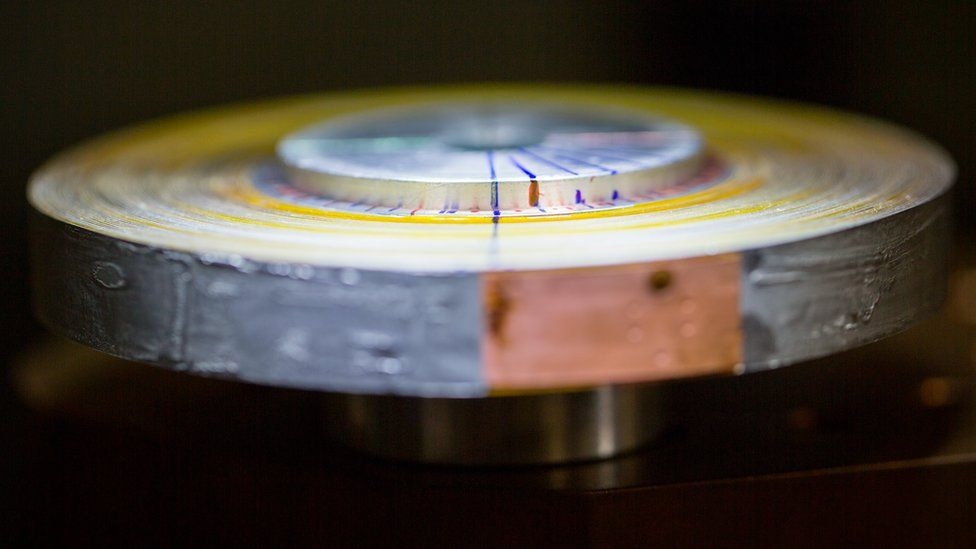
For five years Brittles has helped develop a series of power magnets wrapped with layers of superconducting tape, to be arranged in a spherical or apple-shaped fusion chamber called a tokamak.

RELATED: Scientists Are Turning Nuclear Waste into Super-Efficient Batteries

As the magnetic forces interact with one another, the pressure in the chamber builds to an incredible level—about two times more intense than at the deepest point in the ocean. The superconducting tape draws large amounts of energy from tokamak, allowing the reactor to produce more than it consumes.

Tokamak Energy

“It will be an assembly of many, many coils generating forces that are all interacting and pulling on one another forming a balanced set. This has to be controlled or the forces could become imbalanced,” he explains to the BBC.

A race to the top

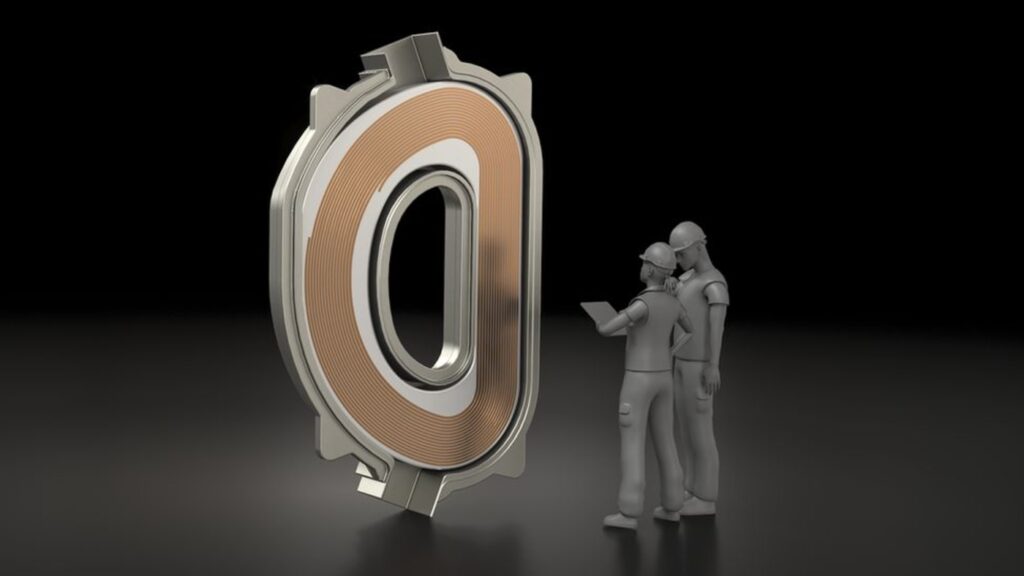
More of this Tony Stark-like tech, this time from America’s Commonwealth Fusion Systems (CFS), is also gunning to solve the inefficiency problem. Forming a D-shape large enough for a human to stand in, powerful magnets are wrapped with 300 kilograms (660 pounds) of superconducting tape made from a barium copper oxide.

CHECK OUT: Amazing Fungus Discovered at Chernobyl Could Be Grown On Rockets to Protect Astronauts from Toxic Space Radiation

This tape has taken decades to develop, and when cooled to -253 °C, which used to take a refrigerator the size of a house, it conducts nearly all of the 40,000 amps passing through the tokamak at any one time, and very efficiently.

18 of CFS’s magnets are to be arranged in this doughnut shape, similar to a particle accelerator, and their research and development team boasts that their reactor will be able to turn a glass of water into the electricity usage of one human for their entire lifetime.

CFS

Government funding has gone into fusion reactors before, tens of billions of dollars in fact, but so far this haven’t solved the fundamental problems. For example, the super-intriguing international nuclear fusion research project, ITER, which GNN reported on and which is funded by dozens of countries, is years behind schedule.

The leviathan of metal and magnets being constructed in France by all these nations may one day be able to produce fusion, but it will be in a facility that requires many employees, with components that require gobs more rare Earth minerals, and it will be completely immobile—not to mention that humanity perhaps would require more than one such reactor.

READ: More Renewable Energy Used in 2020 Than Fossil Fuels For the First Time in World’s 4th Largest Economy

Meanwhile, this private innovation, this “race” as Kingham calls it, done with limited resources, always produces the most innovative technologies. There’s no reason to make a reactor that weighs and costs as much as a cruise ship if you can make it the size of a phone box.

ENERGIZE Your Friends’ Feeds With Innovative News…

Researchers Find That Wild Donkeys and Horses Dig Desert Watering Holes Vital For Entire Ecosystem

A wild donkey digging in the Arizona's Sonoran Desert/E. Lundgren
E. Lundgren

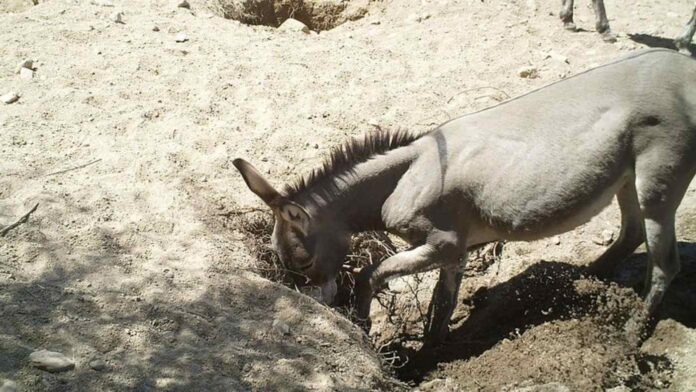
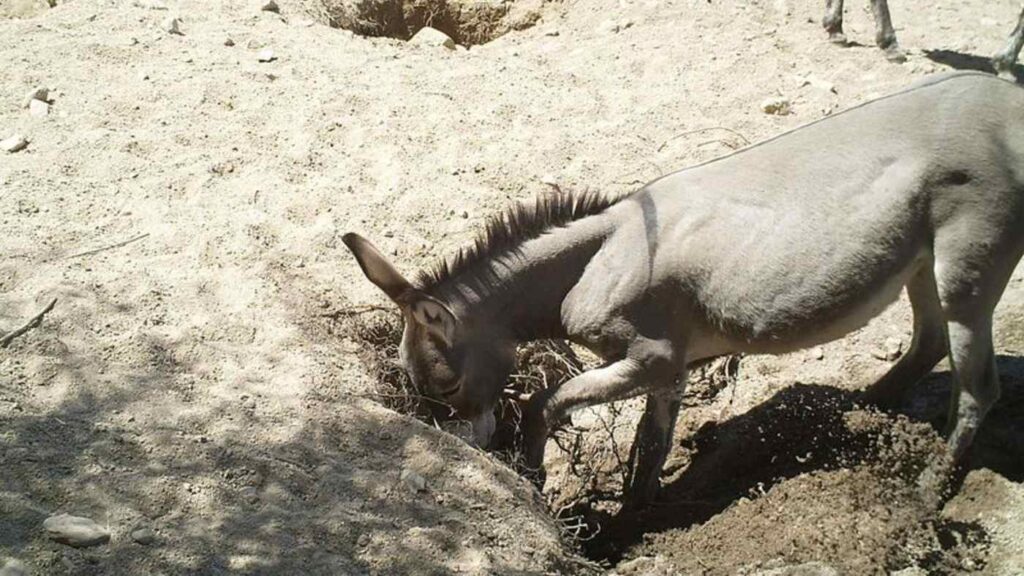
Research on feral horses and wild donkeys in the American southwest show they dig desert wells with their hooves in the soft sand of riverbeds, thus creating a network of extra fresh water sources for the creatures that are native to the area.

This find has thrown a wrench in the prevailing wisdom that feral equids, who were introduced by the Spanish, are pests that should be removed—as the scientist behind the research suggests they could be fulfilling a vital function once performed by now-extinct mammals from the Pleistocene.

In modern conservation, if an animal turns up where it didn’t live a few hundred years ago and thrives there, it’s typically considered invasive. Invasive species are almost always seen as a menace, with animals like foxes, cats, goats, mice, sheep, pigs, cane toads, rats, carp, and others terrorizing delicate ecosystems in Madagascar, Galapagos, and Australia, to name a few examples.

The Sonoran and Mojave Desert ecosystems currently host 95,000 wild horses and donkeys, which are considered invasive pests that outcompete other native herbivores, and suppress or trample native plants.

Conservation doctrine would say they should be exterminated or removed, but sometimes it’s more complex than that, and Erick Lundgren from the University of Aarhus in Denmark has shown that the desert fauna’s eagerness to drink from these equine wells should be considered before making any decisions about the species’ future.

Lundgren found that 59 different species frequented the water holes, and that species diversity around them was 64% higher than the ecosystem’s square-mile average.

Landscape engineers

“Equid wells strongly reduced the isolation of water features, reducing average nearest-neighbor distances between water features by an average of 65%, and at most by 99%,” wrote Lundgren and his co-authors in the paper they published in Science.

Monitoring four different sites in the Sonoran and Mojave Deserts, and sampling over 3,258 trap nights from 2015-2017, Lundgren found bobcats, javelina, mule deer, scrub jays, and 55 other vertebrates enjoying a drink.

“There was a cacophony of organisms,” he told New Scientist.

Digging for water is a common behavior among large mammals across the world, and in Africa, the elephant’s water wells are a gift to surrounding species. Certain animals, such as the elephant, beaver, and bison, are called “ecosystem engineers” because they shape their environment so dramatically, the flora and fauna therein depend and expect their impact, and have adapted to accommodate or exploit it.

In his paper, Lundgren posits that American wild equids should be categorized as ecosystem engineers.

MORE: Farms in UK Saved This Beautiful Duke of Burgundy Butterfly From Extinction

“By changing the abiotic environment around them, certain organisms can really strongly facilitate other species and processes,” Lundgren said in a recent interview with Science. “The most notable aspect of deserts is the scarcity of water, and these animals can really enhance the availability of it through drought and in the hot summers where natural sources of water tend to dry up.”

A role to play

Questions like whether the wild equids’ presence has changed the landscape in positive ways, what really constitutes invasive and how far back is that measured, and whether our role is to constantly try to preserve what exists now, understanding that 99% of all species have gone extinct, and that Earth’s history has seen constant change, are common in mammal conservation.

RELATED: The World’s Oldest-Known Wild Bird—Named Wisdom—Hatches Another Chick at 70 (WATCH)

In another of Lundgren’s papers, the author points out that since the Pleistocene, a large variety of worldwide megafauna has gone extinct in many different kinds of ecosystems. The services, or engineering those species performed on the landscape to the benefits of many animals and plants that still exist today are largely a mystery.

Yet in number, introduced megafauna have restored about 15% of the estimated Pleistocene megafauna populations around the world.

Nowhere is this perhaps more distinct than in North America, which not only had prehistoric pachyderms in the form of the mastodon, but also hyenas, sprinting cougars, the largest bear ever, and interestingly, several species of wild horse.

“Recent and ancient extinctions and range contractions of megafauna, and the loss of their distinct ecological functions, has led to highly modified modern landscapes,” he writes. “Although introduced megafauna have primarily been studied as threats to conservation goals, growing evidence suggests that they present a countercurrent to ancient losses, and may replace lost ecological functions.”

CHECK OUT: Check Out This Interactive Map Showing All the Conservation Land Near You in the U.S.

Could the desert animals observed in Lundgren’s study be reacting to a function which the ancestors of these modern donkeys and horses performed on the landscape tens of thousands of years ago? It’s a thought-provoking question, one which Smithsonian details has hit the community in different ways, with some choosing to remain with the current doctrine, and others reconsidering the pest-status of wild American equids.

SHARE This Story With Pals Who Thirst for Good News…

Mirrored Illusion Creates Never-Ending ‘Palace’ of Books Inside Beautiful New Bookstore

SWNS
SWNS

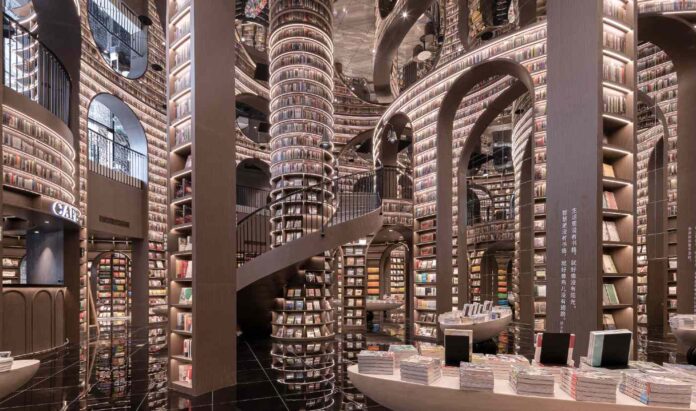
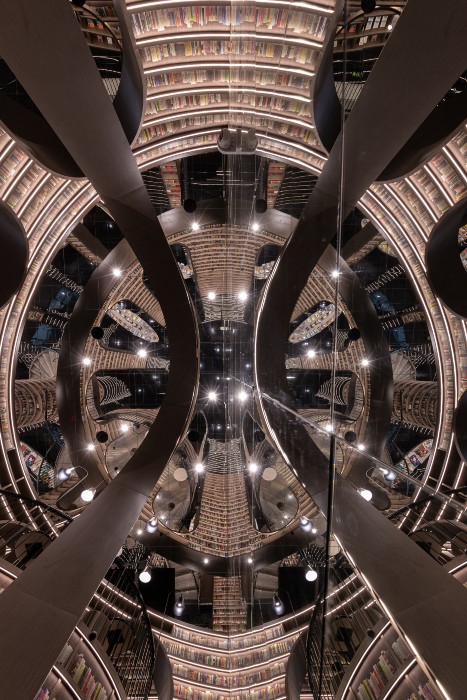
An incredible new bookstore uses gleaming black-tiled floors and mirrored ceilings to transform the location into a ‘never-ending’ palace of books.

The magical Dujiangyan Zhongshuge bookstore, in southwest China’s Sichuan province, is home to over 80,000 volumes in more than 20,000 genres.

SWNS

The books stored inside the stunning store stretch from floor to ceiling—with mirrored ceilings creating the illusion that the room stretches on infinitely.

All of the books are within easy reach of customers, who can ascend the bookstore’s spiral staircase and pass under towering 50-foot archways lined with yet more books, to get to the items they’d like.

Laid out over two stories, and filling an area of almost 1,000 square metres, the bookstore was designed by Li Xiang, founder of Chinese architecture firm X+Living.

CHECK OUT: The City of Berlin Now Runs a Department Store That Sells All Recycled Goods

Li said her latest project was inspired by the ancient city of Dujiangyan in which the bookstore is built.

SWNS

She said, “Using the technique of architecture, the designer moves the magnificent spirit of mountains and rivers into the indoor space. We present readers with their own elegant and powerful artistic landscape… a visual feast.”

MORE: Pulling Vodka From the Air: This Award Winning Carbon-Negative Spirit Comes From Captured CO2

That vision seems to be working, with Li explaining that on entering the store, “Many people associate the space with a magical world, with the magic feeling coming from the structure of the bookshelves, and the reflection of the mirrored ceiling.”

SHARE This Shining Dream Store With Other Book Lovers…
The Area of Forests Regrown Since 2000 Covers the Size of France, Potentially Absorbing a Full Year of US Emissions

WackyBadger, CC license

The naturalist John Muir once said, in regards to the passage of the law that protected Yosemite Valley, that as a result “every pine tree will be waving his arms for joy.”

It’s lovely to think how he’d remark on the news from WWF that the regeneration of natural forests around the world has covered an area the size of France—59 million hectares—over the last 20 years.

According to the various scientific and conservation groups engaged in the project, the restored forest—which was tracked using satellite data—while only being as large as France, has the potential to absorb 5.9 gigatons of carbon dioxide, more than the annual emissions of the U.S.

“This map will be a valuable tool for conservationists, policymakers, and funders to better understand the multiple ways we can work to increase forest cover for the good of the planet,” said John Lotspeich, executive director of Trillion Trees. “The data show the enormous potential of natural habitats to recover when given the chance to do so.”

1.2 million hectares of regrowth were seen in the forests along Mongolia’s northern border, while Canada and the central African basin were also regrowth hotspots.

MORE: After Massive Wildfires, DroneSeed is Replanting Forests 6x Faster By Using Special Drones

Additionally, the forestlands along the Atlantic coast of Brazil, second in biodiversity only to the Amazon, saw an area the size of the Netherlands return back to trees since the year 2000.

All the forests being tracked are natural, and the NGOs have included in their data both areas that have needed nothing more than to be left alone to regenerate, and stands of trees that have needed active assistance to grow back. They deliberately excluded commercial plantations from the project.

The resulting satellite map, which was a joint effort between WWF, Birdlife International, and Wildlife Conservation Society, is described as an exploratory one, and the contributors behind it are calling for it to be reviewed and refined.

Trees are a great and inexpensive way to withdraw CO2 from the atmosphere, one of the principle aims scientists have designated for mitigating the worst effects of climate change.

RE-GROW the Good News in Friends’ Social Feeds—Share This Story…

“Midlife crisis is the intermission of the movie—all the thrill is later on. The success of a movie is determined after the intermission.” – Sri Sri Ravi Shankar (turns 65 today)

Quote of the Day: “Midlife crisis is the intermission of the movie—all the thrill is later on. The success of a movie is determined after the intermission.” – Sri Sri Ravi Shankar (turns 65 today)

Photo: by Andrea Enríquez Cousiño

With a new inspirational quote every day, atop the perfect photo—collected and archived on our Quote of the Day page—why not bookmark GNN.org for a daily uplift?


New Tech Makes Perishable Food Last For Months Without a Fridge, Helping Farmers and the Planet

Farther Farms
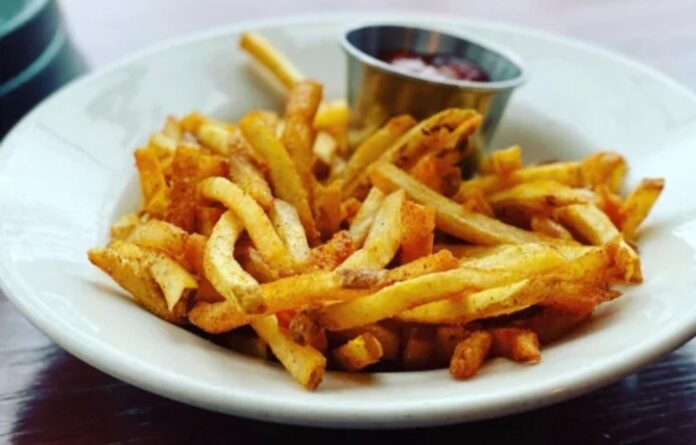
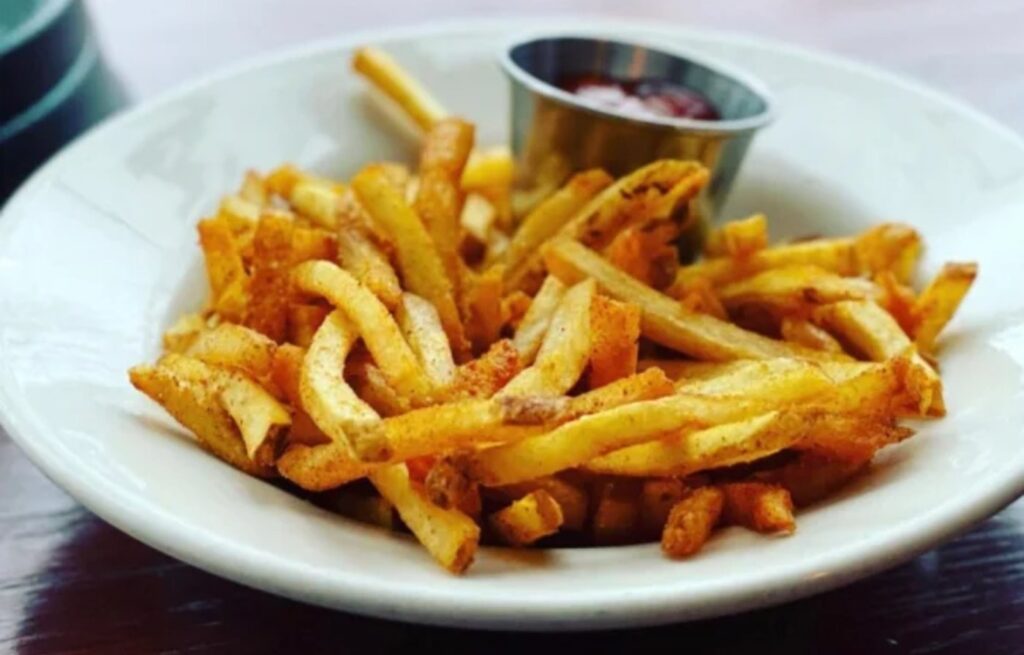
French Fries – Farther Farms

A food-tech startup in upstate New York has developed technology to preserve food without refrigeration for months beyond when it would normally spoil, without the use of artificial preservatives.

Poised to cut down on the millions of tons of food waste worldwide, it also has the potential to transform agriculture in developing countries where refrigerated shipping containers and trains are rare or expensive.

Have you ever wondered why we don’t devote more cropland to growing fruits and vegetables instead of grain since they’re much more nutritious? The reason is food spoilage, a problem that costs $14 billion in waste in India alone.

As soon as a harvest is reaped, a clock begins to tick until oxygen damage and bacteria render a product inedible. Farther Farms’ proprietary CO2 pasteurization technology is a simple fix that can prolong packaged foods’ shelf life in room temperature past 90 days.

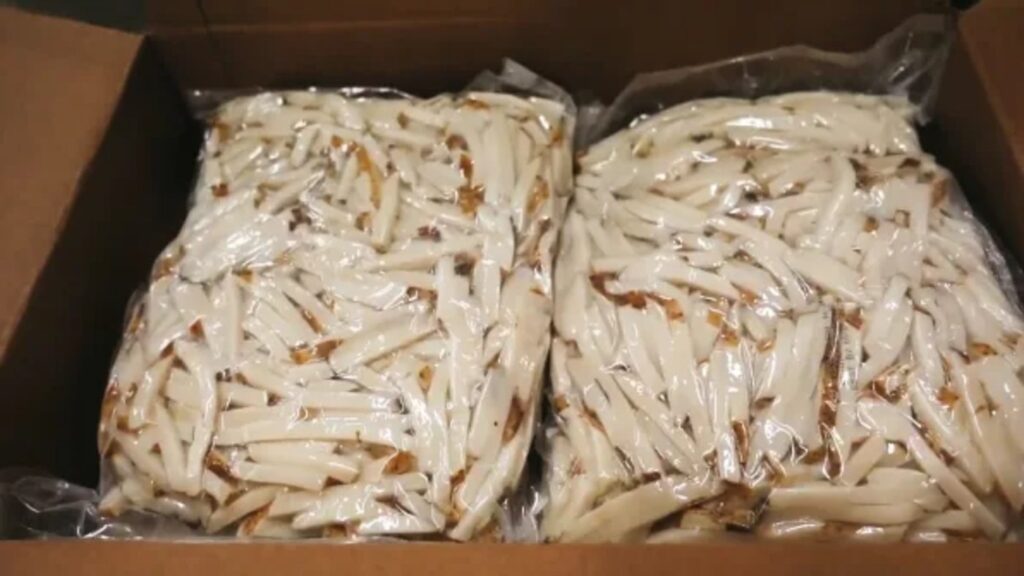
Their first demonstration, French fries, would normally need to be frozen to survive trips between production facilities and supermarkets. They can’t be pasteurized like other goods, since the rapid heating with steam would turn them into mush.

Instead, Farther Farms puts them into special packaging, and fills it with supercritical CO2, preventing damage from oxidation, and suffocating bacteria.

The frozen supply chain

Farther Farms

Growing up in India in a farming family, co-founder Vipul Saran developed Farther Farms as a grad student at Cornell University. His familiarity with the costs and difficulties of managing to move agricultural products, in his case potatoes, from farms into towns and cities before they spoiled informed his development of the technology.

RELATED: The First Farmer in the US to Sequester Carbon for Cash in Private Marketplace Earns $115,000 For His Planting Strategy

“The whole goal was, basically, how can we look into new, innovative food processing technologies that can allow us to create value-added food products from these perishable food products, which avoids the need and the dependency as much as possible on refrigeration and freezing?” Saran told Adele Peters at Fast Company

Rather than packaging apples or potatoes in a plastic bag, the Farther Farms tech is ideal for value-added food products, not only because they necessitate packaging of some kind, but also because they earn farmers more money, for example turning tomatoes into salsa.

Rather than needing to transport them via refrigerated box car or shipping container, methods that are not only expensive, but limited in their reach to countries in Asia, Africa, and South America, Farther Farms would allow them to bypass the frozen supply chain and ship them at any temperature, thereby allowing farmers and food producers of all kinds to reach the maximal number of markets.

MORE: The Nation’s Largest Farmers Market: FarmMatch Allows You to Shop Online at Local Farms in Your Area

“If you can begin producing internationally and create markets for value-added food products that don’t currently exist, you’re going to do the most to help farmers,” says Saran.

Peters notes that in the States we throw out 30 million tons of food a year, and if you’ve ever pulled out a bag of freezer-burned food from the fridge that you had forgotten about, you can see how this technology would be ideal for family meal planning.

SHARE This Story of Real Innovation With Your Friends…

Scientists Discover Psychedelic-Like Drug That Doesn’t Cause Hallucinations

SWNS
via Tripsitter

A new psychedelic-like ‘wonder drug’ could treat depression and post-traumatic stress disorder—without causing hallucinogenic ‘tripping’.

Psychedelics have long shown promise for treating a host of mental illnesses, and now scientists have identified a compound that provides only the benefits.

Named AAZ-A-154, it has the potential to repair chemical pathways in the brain, say the US researchers.

Study co-author Dr David Olson, a chemist at University of California, Davis, explained: “One of the problems with psychedelic therapies is they require close guidance and supervision from a medical team…  A drug that doesn’t cause hallucinations could be taken at home.”

Experiments using a fluorescent sensor called psychLight showed the new drug activates a gene that makes serotonin—the body’s ‘feel good’ hormone.

The most common antidepressants, such as Prozac, also work by triggering the serotonin 2A receptor.

MORE: Magnetic Brain Treatment Found to Relieve Depression in 90% of Participants With No Negative Side Effects

The study, published in Cell journal, found there is no hallucinogenic impact of AAZ-A-154—and therefore no nasty comedown.

Experts believe one of the advantages of psychedelic drugs is they promote neural plasticity—allowing the brain to rewire itself. It opens the door to a medication that works in a single dose or a small number of doses, rather than having to be taken indefinitely.

Mental illness affects an estimated billion people across the world, with depression being the most common type—blighting the lives of 250 million. But patients having to undergo a “psychedelic trip” raises ethical and health concerns.

For example previous research has shown psilocybin, a constituent of psychedelic ‘magic mushrooms‘, quickly reduces symptoms, but also causes side effects.

CHECK OUT: Can Mild ‘Depression’ Be Good For You? An Enlightened Look at the ‘Epidemic’

That AAZ-A-154 comes without a ‘trip’ is hopeful news indeed, and we’ll be sure to post updates to this story as they come in.

SEND This Research Tripping Over to Friends By Sharing on Social Media…

Once a Janitor at the School, Now She’s Their Beloved Teacher After Continuous Study to Earn Degree

TODAY/YouTube
TODAY/YouTube

What’s the difference between having the dream and living the dream? Hard work and perseverance.

Wanda Smith always wanted to be a school teacher but sometimes meeting life’s demanding realities can mean a dream deferred.

A mother of three, Smith also cared for her mom. Squarely shouldering her family responsibilities, she took jobs as bus monitor and custodian for Brenham Independent School District in Texas.

The hours were grueling, but rather than let her dream die, at age 37, with the support and encouragement of her husband, she added night classes to her schedule.

Nine years on, she finally graduated with a bachelor’s degree from Sam Houston State University. She was a certified teacher at last.

Smith’s story came full circle when she was hired as a first-grade teacher back at Brenham Elementary School. Unfortunately, her mom and beloved sisters didn’t live to see her accomplishment, but she knows they would have been proud of her.

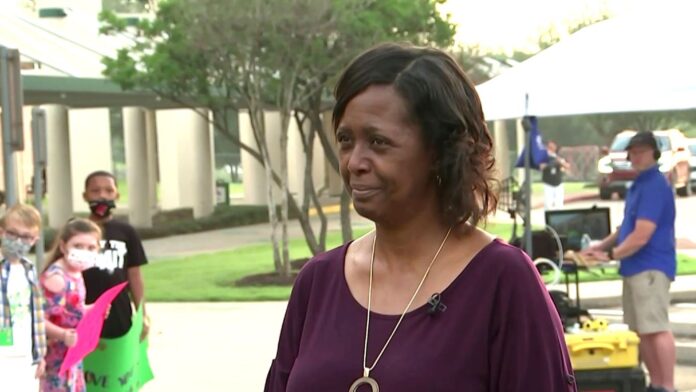
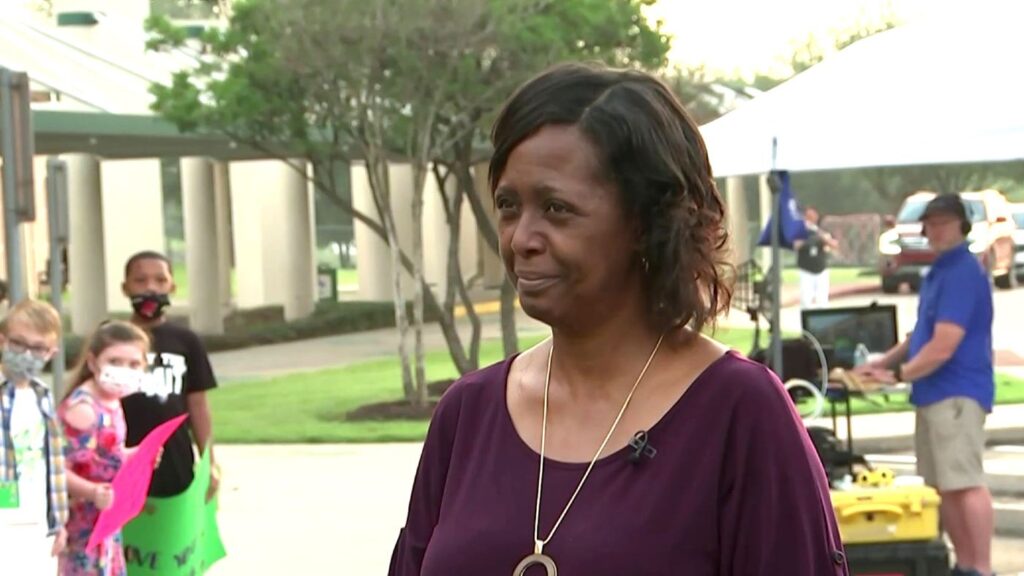
“When I stand in front of my classroom—my classroom—I am living my dream,” Smith said during a TODAY show Teacher Appreciation Day segment with Jenna Bush Hager.

During the pandemic, as some of her students struggled to meet the demands of distance learning, Smith stepped up to the challenge. Noting that many of the kids she teaches come from single-parent families, she began delivering packets of schoolwork to them at home.

MORE: Embarrassed Student Hid Bad Haircut Under a Hat, Then the Principal Gave Him a Great New Do (WATCH)

It’s no wonder Smith’s kids adore her. In a special surprise ceremony, they shouted their praise and held up big colorful signs declaring their devotion.

The sentiment was echoed by Brenham’s mayor, Milton Tate Jr, who—using one of Smith’s own signature lines—officially declared May 4, 2021 as “Be the Best You Can Be” Wanda Smith Day.

The phrase was also inscribed on a commemorative schoolyard bench, and in addition, a scholarship for up-and-coming teachers at Sam Houston State has been established in her name.

CHECK OUT: Preschool Director With Big Heart Drives For Uber to Ensure Kids Get Holiday Gifts – So Community Rallies to Buy Her a Car

Smith’s life is an example as well as an inspiration. By always striving to be the best she could be, with heart and devotion she graduated from cleaning classrooms to leading classrooms—and that certainly puts her on our honor roll.

(WATCH the TODAY video about this story below.)

SHARE This Teaching Moment With Your Friends on Social Media…

Hero Jumps Into Maryland Bay to Save Toddler’s Life After Crash Flings Her Car Seat Into the Water

TODAY/YouTube
TODAY/YouTube

Jonathan Bauer is afraid of heights, but that didn’t stop him from leaping off a bridge some 25 to 40 feet to the water below to save a little girl’s life.

On May 2, Bauer and his teenage daughter Ava were running errands when they got caught in a serious five-car pileup on the Route 90 bridge over Maryland’s Assawoman Bay. The accident sent eight people to the hospital and left a pickup truck dangling precariously over the guardrail.

After making sure Ava was okay, Bauer got out of his car to see if anyone needed help. As he headed toward the teetering truck, its passenger alerted him to a heart-wrenching sight—a toddler, ejected from the passenger side, was floating in the bay, her pink dress billowing in the waves.

“I looked over and I saw the car seat, some other items, and then about six feet away from the car seat, I saw the little girl and she was on her back floating perfectly on her back, arms moving, legs kicking,” Bauer said, as reported by WJLA.

Scanning the water for nearby boats that might be able to help, Bauer found none close by. When he turned his attention back to the little girl, he saw she was in trouble. “She had flipped over onto her stomach and her face was in the water,” he said.

Bauer yelled to his daughter to pull over the first firefighter or paramedic she saw. Then he simply peeled off his shoes and jumped in, feet first.

MORE: He Saved a Stranger From Drowning in India, Now They’re Married in the Netherlands

Surfacing without injury, he swam to the toddler, who appeared to be only semi-conscious. Hefting the child over his shoulder, he patted her back until she started to cough and expel the water from her system.

Ocean City Fire Department

Moments later, boaters Joe and Alayna Oertel, who’d witnessed the events unfold, arrived. After pulling Bauer and the 2-year-old to safety, the Oertels rushed the pair to the 66th Street ramp where they were met by waiting paramedics.

The little girl was airlifted to Johns Hopkins Children’s Center in Baltimore for evaluation and treatment. (She’s since been released and is expected to make a full recovery.)

Bauer, overwhelmed by the experience, quietly slipped away without taking credit for his brave actions. Even after reports of the incident went public, he initially tried to keep his involvement quiet, preferring to remain an anonymous good Samaritan.

CHECK OUT: Trucker Hero Pulls Over When He Sees ‘Frantic’ Man Running Up Highway After Wreck Flings His Toddler into the Dark

His community, however, was determined to show its appreciation. They got their wish.

On May 7, in a “kitchen table” press conference held at Ocean City’s Fire Station 3, Bauer was reunited with Joe and Alayna Oertel and a number of the first responders who were on the scene that day. Also in attendance, along with wife Wendi and daughter Ava, were City Council President (himself a volunteer firefighter) Matt James and Ocean City mayor, Rick Meehan.

During the event, an emotional Bauer recounted his experiences of the fateful events. While he was heaped with praise and even awarded a plaque to commemorate his heroism, it was clear having saved a life was all that truly mattered.

RELATED: Lost and Desperate Hiker Saved by Man’s ‘Very Weird’ GPS Hobby

“Jonathan’s truly a humble hero and that’s what makes this even more special than it already was,” Mayor Meehan said, including Ava in his accolades as well. “This is a day of thank yous. This was a really tragic accident… [but] the ending of the story is everyone is okay, and they’re okay because of everyone in this room.”

(WATCH the TODAY video about this story below.)

RESCUE Hope In Your Friends—Share This Good News Story…

App Lets You Buy Leftover Food From Your Favorite Restaurants—Saving 150k Meals a Day Globally

Too Good to Go
Too Good to Go

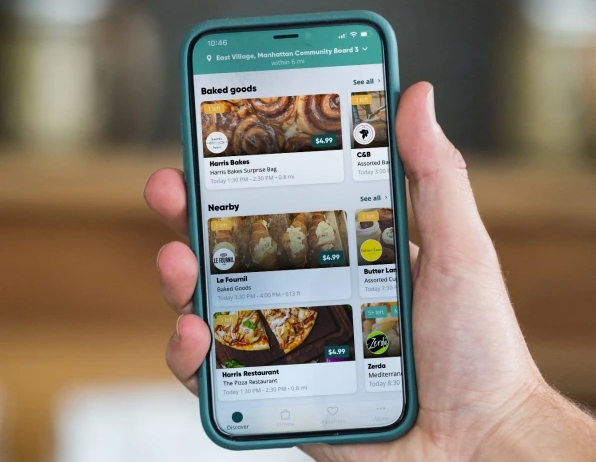
A different kind of food service app is allowing loyal customers to pay cut rates in order to rescue restaurant food before it goes into the waste bin.

Too Good To Go, (get it, to go?) offers buyers a grab bag of nearly wasted, yet perfectly good food for take away as a method of cutting back on food waste and helping support the restaurant industry.

“As easy as throwing it away” the simplicity of Too Good To Go is the key to its success. Rather than other apps of a similar sort that allow customers to pick and choose which items they want to save, Too Good To Go offers only bags of whatever food the restaurants have; truer to the spirit of the enterprise, one would think.

The app was among several winners of Fast Company’s 2021 World Changing Ideas Award, who reports that 40% of food in America is wasted.

It’s impossible to know how much food really does end up in landfills, but it is possible to know how many meals Too Good To Go has prevented from going there. Originally available only in a few select American cities, they’ve sold 200,000 meals that were merely hours from going into the garbage.

MORE: Wisdom and Loneliness May Be Shaped by Healthy Gut Microbes, Researchers Believe

Over 1,500 restaurants have signed up in cities like D.C., New York, Boston, Philadelphia, San Francisco, Portland, Seattle, and Los Angeles.

Now present in 15 countries, 150,000 orders are going out the door per day, across a user base of around 37 million people, saving a mind-boggling amount of food waste.

Too Good to Go

This also is easier on the restaurants since it’s nearly impossible to guess and predict what will be available at the end of any given night. Decomposing food in landfills is a major source of methane, a short-term greenhouse gas that nevertheless could, in theory, cause climate-related damages before disintegrating after a decade.

RELATED: Sustainable Seagrass High in Omega-6 and Protein is Better Than Rice For This Master Chef

“We think we can save more than 2 million meals from the trash in the U.S. in 2021 already,” Lucie Basch, co-founder of Too Good To Go, told Fast Company. “That’s thousands of tons of emissions avoided.”

DON’T LET Good News Go to Waste—Share This Story With Pals…

“The more man meditates upon good thoughts, the better will be his world, and the world at large.” – Confucius

Quote of the Day: “The more man meditates upon good thoughts, the better will be his world, and the world at large.” – Confucius

Photo: by Omid Armin

With a new inspirational quote every day, atop the perfect photo—collected and archived on our Quote of the Day page—why not bookmark GNN.org for a daily uplift?


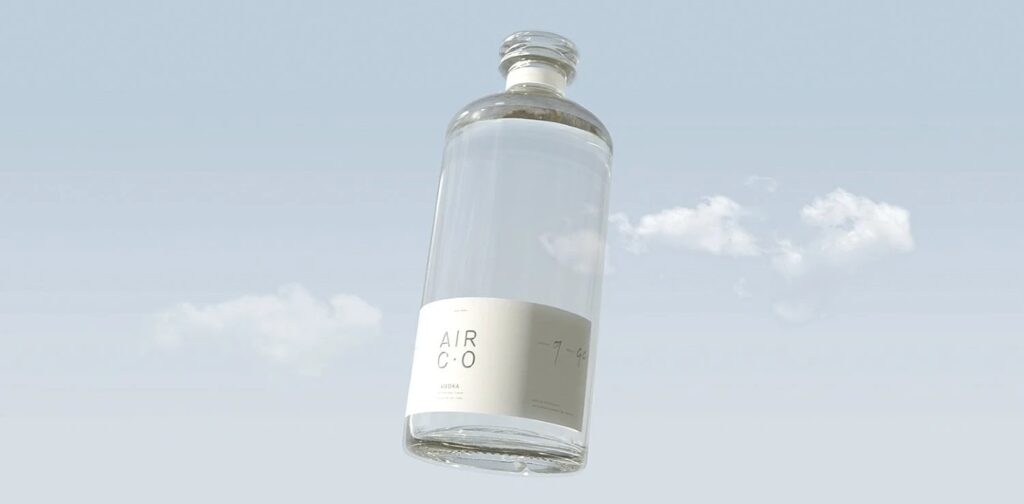
Pulling Vodka From the Air: This Award Winning Carbon-Negative Spirit Comes From Captured CO2

Air Company
Air Company

The potential for tapping into humanity’s CO2 emissions as a cheap and free source of carbon and oxygen is on full display with Air Company, a startup that produces premium vodka from deposited atmospheric carbon.

Air Company converts CO2 into ethanol in the same way that plants use photosynthesis. The ethanol, which was originally intended for other purposes, was of such high purity that they decided to make premium spirits instead.

Their bespoke vodka, sold at $75 a bottle at high-end New York City bars before the pandemic began to shut things down, is now back after winning a World Changing Idea Award from Fast Company, who spoke to the founders about their invention.

“We’re doing what we’re doing not just to contribute ourselves to fighting climate change, but to try to help empower other people to fight climate change in the everyday decisions that they make,” said CTO Stafford Sheehan. “And that’s one of the reasons that we target consumer goods.”

MORE: New Smart Farming Robot Unveiled That ‘Smokes’ Weeds With High-Powered Lasers For Healthy Weeding

Their technology of producing ethanol is now being turned towards the fragrance and perfume sector, another consumer good that needs high-purity ethanol.

Carbon dioxide gets a bad rap for the greenhouse effect it causes in the atmosphere, but the its constituent elements are among the most fundamental building blocks of nature.

If harvested, anthropogenic emissions can be used with modern technology to create practically anything. Air Company tech, thanks to a partnership with NASA, is being used to capture CO2, convert it into ethanol, and then into glucose—a basic sugar molecule that can be used to produce food aboard space ships, including lab grown meat.

CHECK OUT: Dutch Citizens are Using a “Doorbell” to Help Fish Pass Through the Canal Gate

These are the dreams of the alchemist’s stone, the transmutation of one kind of matter into an entirely different kind, only instead of gold, it’s booze or lab meat.

PASS on the Innovation—Share This Story With Friends…

Newly Discovered Species of Saber-Toothed Cat Was So Big It Hunted Rhinos in America

Artist's impression of the new saber-toothed cat/Roger Witter
Artist’s impression of the new saber-toothed cat/Roger Witter

The last 10 or 15 million years have given us some truly mega mammals, like mammoths, bears, cats, rhinos, and deer that were all much larger than their modern relatives.

Now a new species of saber-toothed cat has been described by paleontologists who found the ancient cat’s humerus bone among North American museum collections.

It turns out there is not one, but perhaps several other saber-toothed feline genetic branches, and Machairodus lahayishupup would have been one of the largest felines to ever prowl the Earth.

An analysis of the humerus, which forms a part of the front leg, showed it was 1.4x as big as the same bone found in an adult male lion. The scientists then calculated the body-mass to humerus-size ratio in different species of modern cats to estimate just how big M. lahayishupup was.

Depending on the species, smilodon, aka ‘the’ saber-toothed cat, could weigh anywhere from 120 to 600 pounds. The newly identified cat by contrast could reach 900 pounds.

Scientists have dated the bones to place the animal’s time on Earth to between 5 million and 9 million years ago, when it would have roamed the North American prairie devouring the largest game around, likely bison, but also forms of rhinoceros, and even the famous ground sloth, a colossus much bigger than any sloth species we would recognize today.

MORE: Paleontologists Uncover Rarer-than-Rare Fossil of Oviraptor on Nest of Eggs With 24 Embryos Inside

“We believe these were animals that were routinely taking down bison-sized animals,” said paleontologist Jonathan Calede from Ohio State University. “This was by far the largest cat alive at that time.”

Another paleontologist notes how surprising it was that all these specimens were collecting dust in museums around western North America. They have forearm bones, and some small teeth, but without cranial fragments or the famous saber-like teeth themselves, it would be difficult to prove beyond doubt how large they really were, and how large their prey species were.

Calde told his university press that it’s “an interesting paleontological question.”

CHECK OUT: Archaeologists in Egypt have Unearthed the World’s Oldest Known Beer Factory, Thought to Date Back 5,000 Years

“It’s been known that there were giant cats in Europe, Asia, and Africa, and now we have our own giant saber-toothed cat in North America during this period as well,” he said.

“There’s a very interesting pattern of either repeated independent evolution on every continent of this giant body size in what remains a pretty hyperspecialized way of hunting, or we have this ancestral giant saber-toothed cat that dispersed to all of those continents.”

SHARE This Giant Find With Pals on Social Media…

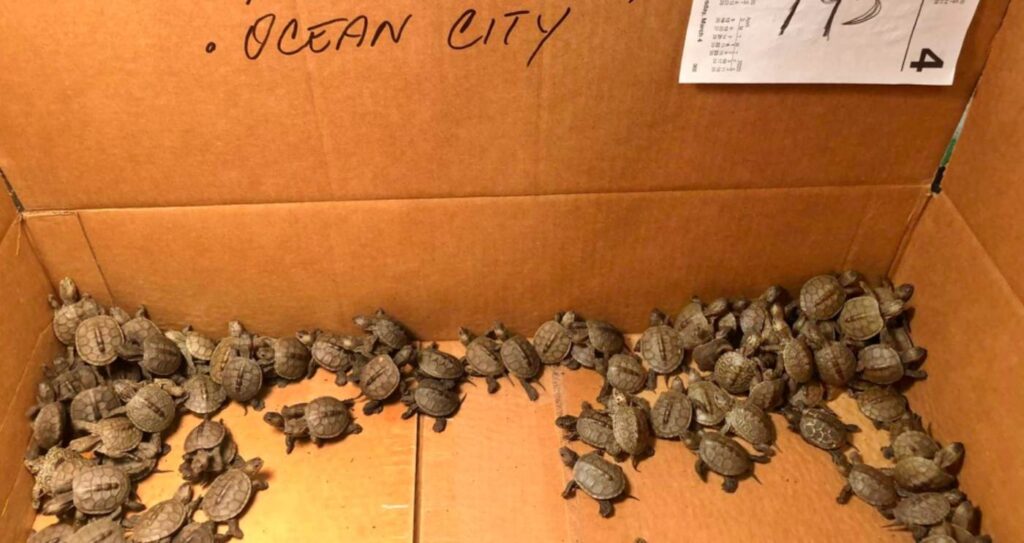
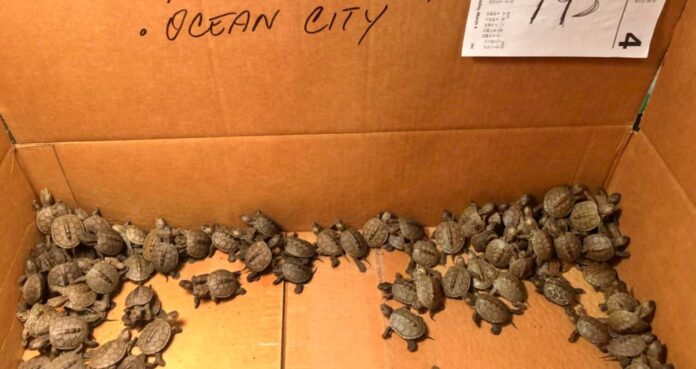
Folks in New Jersey Are Caring For More Than 800 Baby Turtles Rescued From Storm Drains

turtle hatchlings released stockton university lester block facebook social media
Stockton University; Lester Block/Facebook

Hundreds of diamondback terrapin hatchlings have been rescued from underground storm drains along the Jersey Shore.

Small terrapins can slip into drains when attempting to cross the street, and these ones were found surviving off their yolk sacs.

Volunteers successfully rescued a total of 826 baby turtles using a specially crafted scooper made from a telescopic aquarium net attached to a bamboo pole.

RELATED: New Technology for Saving Endangered Sea Turtles Uses Decoy GPS Eggs to Catch Poachers – And it Works

Now staff at Stockton University in Galloway, NJ are caring for and rehabilitating them under their Head Start program.

Once the creatures are ready—in about a year—they’ll be placed back in the wild where they can thrive.

HATCH This Hopeful News Story in Your Friends’ News Feeds…