All News - Page 506 of 1736 - Good News Network
Home Blog Page 506

Cannabis Compound Inhibits COVID-19 Replication in Human Lung Cells, Study Says

Martin Vincente

In a study undergoing peer review, the CBD compound from cannabis has been found to stop COVID-19 replication in lung epithelial cells, suggesting the plant medicine holds yet another astounding quality.

Furthermore, observational data from patients who were taking CBD before they were tested for coronavirus showed that its use was associated with a significantly lower infection incidence rate than those not taking CBD.

Measured together with its metabolite 7-OH-CBD, cannabidiol (CBD) inhibited the expression of certain genes within the viral cells, and reversed changes in gene expression within the lung cells resulting from the presence of COVID-19—in other words it had both a protective and a therapeutic role.

It was also found to block viral RNA expression, including the coding for the spike protein, the tool with which the virus enters our cells.

Another crucial finding was that CBD “effectively reversed” the triggering of a hyperinflammatory response—the so-called “cytokine storm” brought on by the presence of the virus, restoring cells not to a previral level of inflation, but a state as if the cells had been treated with CBD alone.

MORE: First-of-its-Kind Clinical Study Finds That Microdosing THC Can Reduce Chronic Pain

Cytokine storm is one of the principal causes of death resulting from a COVID-19 infection.

A range of other cannabinoids were also tested, but by trial’s-end only CBD was found to have any effect at all on COVID-19-infected cells.

“We advocate carefully designed placebo-controlled clinical trials with known concentrations and highly-characterized formulations in order to define CBD’s role in preventing and treating early SARS-CoV-2 infection,” the authors recommend.

A preprint of the study is available in the journal Bio RXIV while it goes under peer review.

RELATED: Cannabis Can Be 30x More Powerful Than Aspirin for Inflammation, Says New Study Eyeing Future Opioid Substitute

CBD is available legally, in various forms and in various ways, in Alaska, Maine, Colorado, California, Washington state, Oregon, Massachusetts, Vermont, Michigan, Nevada, and the District of Columbia.

Featured image: Martin Vincente, CC license

SHARE This Hopeful Study With Friends on Social Media…

Admirable Bosses Lead to More Productive Employees, Says Survey

American office workers would rather have more feedback from their managers than more money, a new poll has revealed.

The survey of 2,000 Americans examined the vital role manager-worker relationships play in the workplace.

Over a third of respondents are office workers (many of whom are now working from home due to the pandemic). They listed more feedback on their role as the number one thing (53%) they want to see more of from their boss, beating out extra compensation (48%), and more honest communication (48%).

The survey, conducted by OnePoll on behalf of Motivosity, took a dive into our relationship with our bosses.

CHECK OUT: Survey Reveals Employees Would Likely Work Harder If Their Bosses Do One Simple Thing

The results found that, of respondents who have been employed (78%), seven in ten have admired one of their managers as a role model.

When it came to the top qualities respondents appreciated in a boss, positive attitude topped the list with 46%.

Communication skills (46%) and organizational skills (43%) also made it into the top three.

Logan Mallory, Vice President of Marketing at Motivosity said, “Managers are key to great company cultures. They impact how people feel about showing up to work every day. Essentially 46% of your team is asking for leaders who bring a positive attitude to work and communicate consistently. That requires an intentional approach and the right tools, but it doesn’t take massive budgets or years of training.”

A positive influence like an admirable boss can have a long-term influence, as 71% of respondents said their role models impact their behavior on a daily basis.

The average person has four role models in their lifetime, and range from family members like mothers (59%), fathers (61%), and grandparents (44%) to people respondents have never met.

Beyond personal relationships 45% of respondents said they admire a historical figure and two in five (42%) look up to a writer.

Forty percent have a politician as a motivator while over a third (35%) admire an activist and 38% consider a director or actor worthy of praise.

RELATED: Companies With Co-Workers Who Don’t Get Along Should Encourage Gratitude Journaling, Says Study

“Team members give their best effort when they’re working for someone they respect and trust,” said Logan Mallory of Motivosity. “The best managers act more like coaches: Set the right priorities, check-in with consistent 1 on 1s and take a consultative approach rather than being directive. If managers do that and make sure their team’s day-to-day work is noticed and appreciated, it makes all the difference.”

TOP THINGS WORKERS WANT MORE OF FROM THEIR BOSSES

  1. More feedback on their role 53%
  2. More money 48%
  3. More honest communication 48%
  4. Higher title 47%
  5. More appreciation 41%
  6. More recognition 41%
  7. More frequent one-on-one meetings 40%
  8. More responsibilities 38%
  9. More transparency on company direction 38%
  10. More willingness to listen to my feedback/concerns 21%

TOP THINGS WORKERS WANT LESS OF FROM THEIR BOSSES

  1. Fewer pointless meetings 55%
  2. Less last-minute emergencies 47%
  3. Less micromanagement 40%
  4. Fewer requests for me to work late/overtime 32%

SHARE the Results of This Intriguing Survey on Social Media—And Your Boss? 

“Too many of us are not living our dreams because we are living our fears.” – Les Brown

Quote of the Day: “Too many of us are not living our dreams because we are living our fears.” – Les Brown

Photo by: Matthew Henry

With a new inspirational quote every day, atop the perfect photo—collected and archived on our Quote of the Day page—why not bookmark GNN.org for a daily uplift?

One of Archaeology’s Great Mysteries Nearly Solved as Scientists Piece Together 2,000-yo Astronomy Calculator

Computer model of how the Antikythera mechanism may have worked/UCL

Ever since the Antikythera Mechanism was fished out of the Peloponnesian Sea in 1901, it has remained one of the longest unsolved mysteries of archaeology.

Computer model of the mechanism’s gears/UCL

Akin to something portrayed in the Da Vinci Code or Dungeons and Dragons, the hand-powered, clockwork brass planetarium has befuddled everyone who has beheld it.

Yet more than a century since its discovery, researchers may have finally cracked the code and believe they understand enough about how all the different gearwheels work to build a functioning replica with modern tools.

“Many unsuccessful attempts have been made to reconcile the evidence with a display of the ancient Greek Cosmos of Sun, Moon, and all five planets known in antiquity,” reads the study of their findings, published in Nature. 

Rehm, Price, Wright, Freeth, Jones, Carmen, Throndike, Evans—the names of scientists whose models and attempts to reproduce what’s described as the world’s first analogue computer stack like corded wood as the authors from University College London explain the history of understanding in the device.

The Antikythera Mechanism, Giovanni Dall’Orto/Wikimedia Commons

The Antikythera Mechanism is one of the most technologically sophisticated discoveries in the ancient world: a desk-mounted, computational, celestial observatory made of brass, powered by more than 30 individually formed gears mounted on other gears.

The device tracked the movements of the entire cosmos known at the time, displaying the location of all the planets up to Saturn, the phases of the moon, and the timing of eclipses.

MORE: Archaeologists in Egypt have Unearthed the World’s Oldest Known Beer Factory, Thought to Date Back 5,000 Years

The Antikythera Code

82 parts were fished out of the ruins of a merchant ship that wrecked off the coast of Antikythera, Greece, the brass pieces are badly corroded. X-ray and CT scans revealed the extent of the numerous inscriptions (see below) carved into the brass panels at the back and front—an operator’s manual essentially.

Encased in a wooden box about one foot tall, the device would swing into action with the turn of a hand crank.

The model of the cosmos in the device is consistent with the epicyclic theories of a 3rd-century BCE Greek astronomer called Apollonios of Perga, and another named Parmenides. Taken with Babylonian astronomical calculations, the UCL team used these ancient sources to decipher where each gear would have to have been fit to ensure everything moved in a way consistent with the models of the time.

Their model suggests that the front display of the planetarium would have depicted the cosmos in motion on concentric brass rings.

UCL

Unfortunately, for the scientists’ model to be accurate, they had to depict the movement of each celestial body with the Earth at the center, as ancient theory held, which made it far harder to reproduce than if the sun were placed at the center as is the case in reality.

UCL

Furthermore, while their calculations are correct, and inside of their reproduction they managed to fit all the gears into an extremely tight space, it relied upon the abilities of ancient Greeks to create a very unique component—a hollow, modular, central axel, each module of which would have to nest within another, handiwork that’s never been recorded from the period before.

“The concentric tubes at the core of the planetarium are where my faith in Greek tech falters, and where the model might also falter,” said Adam Wojcik to the Guardian, a materials scientist at UCL and part of the research team. “Lathes would be the way today, but we can’t assume they had those for metal.”

UCL

Who made the planetarium, what it was used for: whether it was a teaching device or something to astound warlords, and whether the team could successfully back-engineer it with the technologies of its day, are all still unknowns.

RELATED: Amateur Treasure Hunter Unearths Missing Centerpiece of Henry VIII’s Crown — And It’s Worth Millions

“Solving this complex 3D puzzle reveals a creation of genius—combining cycles from Babylonian astronomy, mathematics from Plato’s Academy, and ancient Greek astronomical theories,” write the authors.

(WATCH the video about the ancient computer below.)

SHARE the Amazing Antikythera Mechanismon Breakthrough on Social Media…

Texas and Philly Join Movement to Dim Lights at Night – Making it Safer for Migrating Birds

Since 1990, cities around the U.S. have gradually been cutting or dimming outdoor lights in order to help one of their most vulnerable populations—migratory birds.

Lights Out programs, organized by conservation and civil society groups like the Audubon Society, have sprung up in 20 different states, plus D.C. and Toronto, and involve enlisting the help of landlords, their tenants, and business owners to make cities safe for migratory birds in the spring and fall.

Birds use celestial clues to navigate thousands of miles along migration routes. Some of these routes involve passing through some of the largest and brightest cities in North America. The light pollution blots out the stars and other navigation points the birds use, causing them to collide with buildings.

Climate change, feral cats, habitat loss, and more take their toll on bird populations all over the country already, and collisions with buildings and powerlines are also a major hazard.

The most recent Lights Out program has organized itself in Philadelphia, where a squadron of different advocates are trying to get multi-story apartments and businesses to dim or cut their outdoor lights between April 1 through May 31, and from August 15 to November 15.

RELATED: Air Pollution Laws May Have Saved Over 1.5 Billion Birds in American Skies, Finds New Cornell Study

The advocates include the Building Owners and Managers Association of Philadelphia, (BOMA) which includes 475 addresses, and has managed to get an “extremely robust” response.

“We have some early adopters and the list is approaching 20 buildings, many of which are iconic and very recognizable members of the Philadelphia skyline, such as One and Two Liberty Place, Comcast Technology Center and Comcast Center, Mellon Bank Building and all of Brandywine Realty Trust’s Center City and University City buildings,” said BOMA executive director Kristine Kiphorn, according to Associated Press. 

“We get to do our part in the community to help preserve the bird population, and we get to conserve energy at the same time, saving money for our tenants and our assets.”

MORE: Being Around Birds Makes Us Much Happier Says New Science

Gray catbirds, ovenbirds, common yellowthroats, and white-throated sparrows are among the most vulnerable species that pass through Philadelphia, falling prey not only to light pollution but reflective glass that may mirror the sky or trees.

Taking Conservation to Texas

Elsewhere, Laura Bush’s nonprofit, Texan By Nature, has helped bring about several Lights Out initiatives in Texas, as one out of every three migrating birds in the U.S—around one billion in total, pass through the Lone Star State.

“I know that you and all Texans care deeply about protecting wildlife and the ecosystems that will sustain us for generations to come,” Bush said in a letter, according to local news reports. “My vision is of a dark Texas sky, ensuring a safe flight for birds on their journey home.”

Lights Out Houston is organized solely by the local Audubon chapter, while Lights Out Dallas is supported by the Cornell Lab of Ornithology, the Texas Conservation Alliance, and others.

SHARE the Positive City Trend That’s Making a Difference for Migratory Birds…

Medals Found in Dumpster Reveal Her Dad Was a WWII Hero But Never Told Anyone—WATCH

Family photos on Fox 46 News exclusive - Fair use

You can find the most amazing things—from valuable artifacts to kitschy treasures—when you’re dumpster diving. But sometimes, trash trawling yields an heirloom that’s truly priceless—like the personal history of a hero.

Family photos on Fox 46 News exclusive – Fair use

U.S. Navy veteran Donald Helfer flew in 28 missions over enemy territory during WWII and was decorated for his bravery. Along with the Navy Flying Cross and a Bronze Star, Helfer even received a stirring letter from Harry Truman in which the President expressed his gratitude for helping “bring about the total defeat of the enemy” and offering the “heartfelt thanks of a grateful Nation.”

But Helfer was never one to seek glory. After leaving the military, he went on to become a police officer in upstate New York, eventually retiring to Florida. He passed away in 1993, taking the memories of his impressive military achievements with him—almost.

While Helfer’s children were aware of their dad’s stint in the navy, they never knew the true nature of his service. They were, however, about to make an incredible discovery concerning his forgotten legacy—all thanks to a serendipitous dumpster find in Hickory, North Carolina.

When a treasure trove of Helfer’s personal items—including medals, photos, identification, and military records—turned up in the Hickory dumpster, the man who found them immediately recognized their worth. (Helfer’s effects were likely discarded by whoever sorted through his late second wife’s Hickory estate and deemed them “not worth keeping.”)

MORE: D-Day Hero’s Lost Postcard Finally Delivered to his Family 77 Years After Being Sent

The finder turned over the cache to Navy vet and American Legion Post 544 Commander Jeff Truitt for safekeeping until Helfer’s relatives could be found. Truitt was able to locate Helfer’s grown children in Rochester, New York, and his daughter, Linda Delorey, living in North Wilkesboro, North Carolina.

“This could have just been left in the trash, but maybe this family can now have some closure and learn some things about what their father did,” Truitt told FOX News 46. “He was a hero.”

At the end of this past February, Delorey drove from Wilkesboro to Hickory to meet up with Truitt. Delorey found herself in awe as she turned the pages of the neatly organized binder Truitt had put together containing her father’s precious mementos.

RELATED: A 93-Year-old Veteran Whittling Walking Sticks Has Raised $16,000 For Food Pantry

Along with the never-before-seen snaps of her dad, for the first time, Delorey also saw a photo of her grandfather. It was like history unfolding before her eyes. Now that the family treasure has been restored, Delorey plans to share the bounty with her relatives as soon as she’s able.

“This guy was a hero in World War II,” Truitt told FOX. “He was just one of millions who served—and that’s his story that can be told forever now.”

(WATCH the Fox 46 News video about Truitt below.)

North Carolina-based writer Judy Cole has a new murder mystery / rom-com debuting on Kindle at Amazon: And Jilly Came Tumbling After (from Red Sky Presents).

NO NEED to be Modest With Good News—Share This Story on Social Media…

#WallStreetBets Traders Donate $300,000 to Adopt Gorillas From Dian Fossey Fund

Max Christian

Reddit’s #WallStreetBets community has spent a combined $300,000 dollars on endangered wildlife conservation thanks to their recent plundering of New York hedge funds.

Max Christian

The snowballing philanthropy started when members suggested they ceremonially adopt a gorilla through the Dian Fossey Gorilla Fund—which operates in the Virunga Mountains of the eastern Democratic Republic of the Congo (DRC) and Rwanda.

Further adoption ideas spawned from the gorilla initiative, as Redditors began posting images of their receipts from contributing to various wildlife programs including on behalf of snow leopards, bonobos, manatees, and warthogs.

By the time contributions had reached $300,000 on gorillas, even CNBC had featured a story about the Redditors’ charitable acts.

The original idea was an off-shoot of an internal moniker for the subreddit—The Ape Gang—reflecting their wild button pressing and mob rule strategy of stock investing. After the Fossey Fund took notice, they updated their homepage with a banner that quoted Planet of the Apes, and which read “Apes Together Strong.”

“The money these individuals have donated is an investment, not just in the Fossey Fund’s mission of Helping People, Saving Gorillas, but in our planet’s future,” Dr. Tara Stoinski, the director of Fossey, told Insider in a statement. “We rely on individual donors who give to us year after year because they know we can be relied upon to be careful stewards of their donations, no matter how large or small.”

Stoinski made a thank you video to the WallStreetBets community, thanking them for their support, which received more Reddit ‘awards’ than you could possibly count, and more than 158,000 upvotes.

Many of the gorillas were adopted under names like “Jim Cramer’s Tears,” and other troll-like aliases in response to the upsetting of the established apple cart, when WallStreetBets made headlines and history by leading their members in the equivalent of a 9th century-style Viking raid of the stock market.

Reddit/GriffyTizzle

Having discovered that major hedge funds had “shorted” a pair of stocks—AMC Entertainment and GameStop—to the tune of billions of dollars, the members grouped together and began bidding the price of these stocks up more than 300%, with GameStop reaching the five-hundreds at one point, having before sat at around $3 before the madness began.

RELATED: Investors Who Beat Wall Street By Buying GameStock Shares Pay it Forward, Donating Winnings to Charity

The reason for the bidding was that the “shorting” the hedge funds were doing meant the hedge funds were beholden to buy back the stock after a period of time, regardless of where the price was. Essentially, if a Redditor bought in even at the inflated price of $100, he would sell it to the hedge funds for $300 if the “short squeeze” reached that high.

CHECK OUT: Majority of Millennials Are Investing – and They’re Actually Quite Good At It

Some of the WallStreetBets members pillaged tens of thousands of dollars this way, and the shock was so substantial to the system that trading platforms like Robin Hood, TD Ameritrade, and more, blocked all buying and selling orders at one point, something that’s never happened before.

INVEST in the Good News—Tip This Story Off to Your Pals…

The Ever-Growing Pile of Electronic Waste is Now On the Decline, Study Finds

John Cameron

A new study has found that the total mass of electronic waste generated by Americans has been declining since 2015.

In an age when most of us can’t imagine life without our digital devices, this surprising finding has ramifications for both how we think about electronic waste’s future and for the laws and regulations regarding e-waste recycling, according to the study’s authors.

The study, led by a researcher at the Yale School of the Environment’s Center for Industrial Ecology and published recently in the Journal of Industrial Ecology, says the biggest contributor to this decline is the disappearance of the large, bulky cathode-ray tube (CRT) televisions and computer monitors from American homes,.

Callie Babbitt, a professor at Rochester Institute of Technology’s Golisano Institute for Sustainability and one of the study’s authors, explains that since about 2011, CRT displays have been on the decline in the waste stream, helping to lead the overall decline in total e-waste mass.

The actual number of electronic devices entering the waste stream is also leveling off or slightly declining, Babbitt and Althaf say. This is due to something that Babbitt terms “convergence”: gaming consoles, for example, can act as DVD players; smartphones are also cameras and video recorders. In the past, says Babbitt, people needed separate devices for each of those applications.

To amass the data necessary for their study, the authors focused on twenty categories of digital devices—including computers, smartphones, digital cameras, and audio-visual equipment—and disassembled dozens of products in a lab in order to determine the relative content of various important elements, in addition to relying on previously published data.

MORE: They Recycle Electronics – And People’s Lives – By Giving Ex-Felons Good Jobs to Imagine a Better World

“This is a very important finding that cuts against the widely held idea that electronic waste is the ‘fastest growing waste stream,’ ” says Reid Lifset, the editor-in-chief of the Yale-based Journal of Industrial Ecology. “It shifts our understanding of the problem with e-waste,” he says.

RELATED: Scientists Turn Plastic Waste Into Valuable Commodities, to Create a Bigger Market for Waste Materials

In the United States, since e-waste recycling is regulated at the state level, the patchwork of regulations makes it harder for companies to navigate if they wanted to make their products easier to recycle, says Babbitt.

A more holistic, federal approach could also help increase the overall capture of rare and crucial elements—like cobalt (used in lithium-ion batteries) or indium (found in flat-panel displays)—which are not environmentally toxic.

Shahana Althaf, the lead author on the study and a postdoctoral associate at the Yale Center for Industrial Ecology, notes that we should “see waste as a resource,” an opportunity, rather than a problem.

Source: Yale School of the Environment

DON’T WASTE the Good News—Share It With Your Friends…

“Everything you’ve ever wanted is on the other side of fear.” – George Addair

Quote of the Day: “Everything you’ve ever wanted is on the other side of fear.” – George Addair

Photo by: Kiwihug

With a new inspirational quote every day, atop the perfect photo—collected and archived on our Quote of the Day page—why not bookmark GNN.org for a daily uplift?


Pioneering Arthritis Treatment For Dogs is Rolled Out And Vets Call it ‘Groundbreaking’

SWNS
SWNS

A world-first arthritis treatment for dogs is being rolled out, and vets are hailing it as “groundbreaking.”

The new biological therapy involves the synthesis of antibody molecules to eradicate pain caused by arthritis.

The antibodies have been manufactured in the USA by Zoeitus, the largest global animal health company, and Scotland’s dogs will be the first country to benefit—with eight veterinary clinics across the country distributing the treatments.

Apex Vets, near Falkirk, is one of those clinics, and 13-year-old cocker spaniel Chloe was recently brought in for treatment by her owner Anne McMenemy.

SWNS

The pooch suffered for nearly ten years with dysplasia in her hind legs and front elbow, which later developed into arthritis. Unfortunately, the medicines available caused liver damage.

McMenemy said: “With this treatment… it’ll be a godsend not just for Chloe but for other dogs living with arthritis too. With her arthritis she’s not able to go out for much walks, if she can walk for 10 minutes instead of five that’d be good progress.”

Chloe will get treatments once a month, and Apex Vets’ co-director Doug Paterson says the new treatment feels like “the next big leap in science.”

MORE: 10 Years After Fukushima Nuclear Disaster, Two Men Are Still Living There Taking Care of Everyone’s Pets

“You are not going to have the kidneys suffering or have gastric ulcerations which can be side effects from arthritis medicines,” he explained. “As dogs get older, we have to be careful of giving them anti-inflammatory drugs. With these antibodies, you don’t have these issues.”

RELATED: New Study Reveals a Dog’s Heart Rate Increases When Their Owner Simply Says ‘I Love You’

That’s hopeful news indeed.

PAW The Good News Over to Your Friends By Sharing It To Social Media…

Look for These Celestial Wonders in the Night Sky Through the Rest of March

We’re halfway through the month of March, and though the days are getting longer—these crisp, clear nights are still a perfect time for stargazing.

What can you expect to see if you look up at the darkness over the coming weeks? So much, it turns out. Let’s take a look at three celestial highlights that will bring us through till April.

Ursa Major ‘springs’ up

When: Through March

Bruno Bucar

Identified more than 30,000 years ago, Ursa Major—or the Great Bear—has appeared low in the sky through winter.

Now that it’s springtime, that iconic asterism of seven bright stars has ‘sprung’ back up from its low position to appear high in the northeast sky. All this to say, the Big Dipper is back.

The Moon and Mars have a meet-up

When: March 19

Anna Asryan

Earth’s only natural satellite and the Red Planet will appear very closely together on Friday evening. Look up then and see a waxing crescent moon appear in conjunction with Mars, with both just above the Taurus star of Aldebaran.

The night of March 19 is a special one for one more reason: As the clock hands swipe past midnight, at 4:37am Central Daylight Time on March 20 it’ll become vernal equinox in the Northern Hemisphere.

Each night from then on, as the lengthening days move closer to the summer solstice, you’ll find the sun setting just that bit farther north.

The ‘Super Worm Moon’ glitters, full and bright

When: March 28

Dave Xu

Also called the Crow Moon, the Sugar Moon, the Wind Strong Moon, and the Sap Moon, watch the full ‘Super Worm Moon’ rise on March 28.

When it’s low on the horizon it’ll appear a brilliant, rich orange—and very, very large.

As the super moon climbs farther and farther in the sky, it’ll lose its orange hue and outsized appearance. All that to say, make sure to look up around dusk. Enjoy the view.

CHECK OUT: See the Stunning Winners of the Northern Lights Photographer of the Year Competition

SHARE The News With Starry-Eyed Pals on Social Media…

Watch the Stunning Single-Shot Drone Video That is ‘Bowling’ Over Hollywood in 87 Seconds

A breakneck-speed tour of a Minneapolis bowling alley has seen millions of people watching—and even Hollywood impressed by the slick skills of the pilot.

The 87-second video, produced by Sky Candy Studios, starts above Bryant Lake Bowl before speeding through the doorway, completing several turns around the lanes, and flying up behind the pin-setting machines before passing through the maintenance room and even between a bowler’s legs.

Several Hollywood A-list technicians praised the video as “jaw-dropping,” and the YouTube post quickly accumulated more than a million views.

Farrah Donovan, a bartender at Bryant Lake Bowl, told local news that “everyone is like doubting it. I can vouch that it’s 100% real. I was here.”

Director Anthony Jaska said it wasn’t a commercial shoot, but rather just a way to highlight the amazing capabilities of first-person view (FPV) drone footage.

The pilot was Jay Byrd Christiansen, who nailed 15 out of 15 takes, not crashing the drone a single time—even through tight spaces like between the legs of one person who was polishing a ball in a nod to John Turturro’s character in The Big Lebowski.

MORE: Watch 600 Drones Recreate Van Gogh’s Famous Paintings in Dazzling Starry Night Show

“We probably did 10 takes with the camera running,” Christensen told KARE11. “The first few, the timing was way off and we would get to a certain part and the bowler wouldn’t be there, or maybe the drone was a little out of position… “

The final shoot was completed in a single take, remained unedited, and used no CGI. The only alterations of any kind were dubbing in the bowling actors’ voices, again a nod to the most famous bowling film of all time when one bowler can he heard saying, “Mark it 8, dude.”

CHECK OUT: Giant Corn Crop Planted in the Shape of a Sea Turtle Was Created Using GPS –LOOK

Sky Candy Studios could now have some big money interest in the skills of its pilots and producers, as Guardians of the Galaxy Director James Gunn tweeted Tuesday: “Oh my God this drone shot is stupendous,” and later “I want them to come with us to London later this year when we shoot Guardians of the Galaxy Vol. 3.”

We’ll be sure to let you know where the Sky Candy crew show up next.

(WATCH the impressive video below.)

SHARE the Slick Drone Skills With Pals on Social Media…

This is the Surprising Outcome When a California City Gave Struggling Folks Free Money for a Year

LPS.1, CC license

In an encouraging flip of the narrative, an experiment demonstrated that basic income recipients in a California city displayed intelligence and ambition, not lethargy.

LPS.1, CC license

The randomized, controlled trial in the city of Stockton is being viewed by sociologists as a good jumping-off point for further research into the effects of a no-strings-attached cash payment to alleviate the difficulties of living with a lower-income.

The project called SEED (Stockton Economic Empowerment Demonstration), which ending in February 2021, distributed $500 every month for two years to 125 random people living at or below the city’s median household income—around $48,000. The results of what happened in the first year, ending Feb. 2020, may be surprising to some.

The most compelling fact was that people who received the cash managed to secure full-time jobs at more than twice the rate of people in a control group who did not receive the income. Full time employment spiked from 28 percent to 40 percent for folks who received the added cash cushion. In contrast, the control group saw only a 5 percent increase in full-time employment over the first year—from 32% to just 37% one year later.

Unlike unemployment benefits though, participants were not told that their injection of cash would hinge on their searching for a job. Instead they received their money on a debit card and were told to spend it on whatever they liked.

The vast majority of the spending was on things one might imagine it would go towards, such as food, utilities, rent, auto-maintenance, and so on.

Another significant finding was that it allowed participants a little more time in the day to enjoy life, spend time with their families, or study to potentially improve their skillsets.

“The $500 spilled into their extended networks in material and immaterial
ways that alleviated financial strain across fragile networks and generated more time for relationships,” the authors wrote.

One man had spent an entire year being eligible to receive a real estate license, but he never actually had time to begin the process. The $500 allowed him to take time off work to get his certificate and switch careers, resulting in a “360-degree” turnaround in his fortunes.

MORE: Canadian Researchers Gave Homeless People $7,500 Each and the Results Are So Uplifting

Lastly, despite the fact that every participant spent 100% of their monthly $500, 25% of the participants by trial’s end had managed to cover the $400 cost of an unexpected expense, suggesting that rather than going on spending sprees or committing the money immediately to rent, at least some were able to extend the life of the $500 and other sources of income much further, perhaps by saving more than normal—the most fundamentally important aspect of financial strength and growth.

CHECK OUT: Retiree Has Driven Over 64,000 Miles to Ensure Low-Income Students Can Get to Class

It’s an encouraging sign that a randomized placebo-controlled trial was able to find so many benefits.

A basic income may be a more flexible and effective alternative than other existing welfare programs that limit the scope of the handout to particular requirements and circumstances, because it allows the individual to maintain their own agency and manage their own affairs, and who—as the economists of centuries past recognized—are the only ones who can do so.

SHARE The Results of This Unique Experiment on Social Media… 

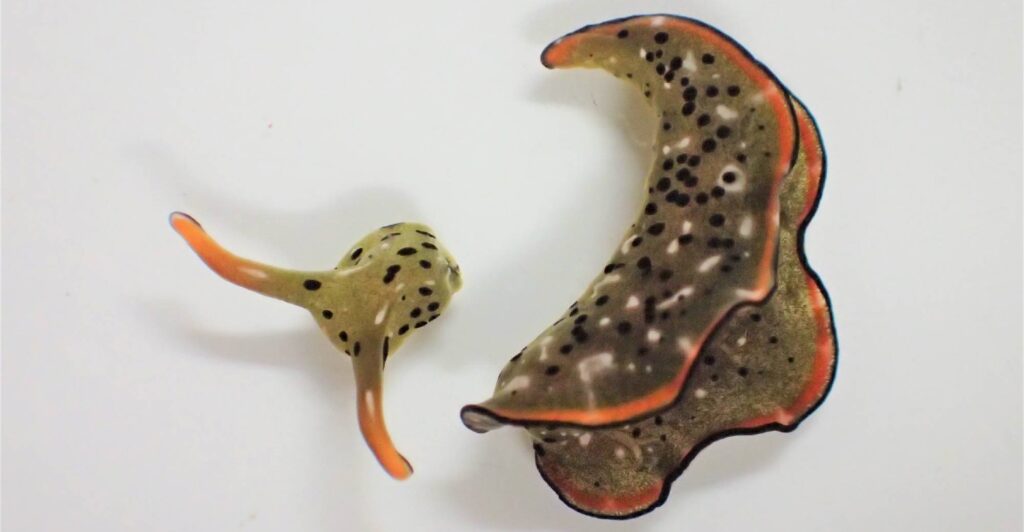
Meet the Sea Slugs That Chop Off Their Heads and Then Grow New Bodies

Sayaka Mitoh

Since the days of BBC’s original Planet Earth, nature documentaries have brilliantly revealed the bizarreness of life. But, the behavior of a sea slug observed in a Japanese lab might be the one to steal the prize and leave you speechless.

Sayaka Mitoh

As remarkable as dancing birds of paradise, as strange as bioluminescent sea life, as startling as young goslings diving off a cliff—nothing will make your jaw drop like this video of a sea slug decapitating itself before cruising around as if nothing had happened.

Researcher Sayaka Mitoh discovered that among her university’s extensive collection of sacoglossan sea slugs—the largest in the world—one of the elysia marginata had mysteriously had its head separated from its body.

Oddly, its head was moving around on its own, seemingly without issue. Odder still, within hours it began eating—despite the fact that its kidneys, heart, sexual organs, and digestive equipment, were all absent.

Then, oddest of all, within weeks it had regenerated an entirely new body. 

The findings of this extraordinary regenerative ability have been described by Ms. Mitoh in a paper titled Extreme autotomy and whole-body regeneration in photosynthetic sea slugs.

Autotomy is the scientific term for self-amputation, a not uncommon trait found most commonly in lizards such as newts and geckos, and also crustaceans like crabs and lobsters. Purposely dissolving the bonds between a lizard’s tail or a crab’s leg allows them to escape predators who manage to grab them by the appendage.

However, autotomy of the head, the ditching of the entire body, has never been observed in the animal kingdom.

Autotomy in sea slugs: by the numbers

Sayaka Mitoh and Yoichi Yusa, Current Biology

Five of 15 laboratory-bred individuals of E. marginata, and one wild caught individual, autotomized their head at some point during their lifetime. One even did so twice.

In all cases, all the major organs were left behind. In most cases the head moved immediately, began feeding on algae within a few hours, and the neck wound healed completely within one day.

Young individuals regenerated their entire body in an average of 20 days, while older individuals never regenerated and eventually died. Their discarded bodies reacted to tactile stimuli immediately, and continued to do so for months in some cases. Eventually though they would decompose, though the heart would continue to beat until moments before the highest stage of decomposition.

Ms. Mitoh recorded a video of the entire process here, featuring groovy music to make it less disturbing.

But… why?

Sayaka Mitoh

Two theories categorized the study of this remarkable phenomenon. The first was the constant co-factor of internal parasites present in the body at the time of autotomy.

The purpose behind the ditching of the body is presumed to be a way to prevent parasites from destroying the organism completely, as in every case that members of another species E. atroviridis, autotomized their bodies, they were infected with internal parasites.

SHARE: Photographer Unites With Cuban Scientists to Save the World’s Most Beautiful Snail

It’s not a perfect hypothesis, as E. marginata never had any parasites in the cases when it autotomized. It’s unlikely, Ms. Mitoh states in her paper, to be related to predation, since “adult sacoglossans generally have few predators due to their cryptic coloration andani presence of toxic chemicals incorporated from their food”.

“Our experiments also showed that autotomy of E. marginata took several hours, which is not effective to avoid predation, and that imitated predator attacks did not induce autotomy,” writes Mithoh.

CHECK OUT: Giant Sharks That Glow in the Dark Discovered by Scientists Who Got Wise to Their Camouflage

As for how they survive and regenerate so quickly, the answer requires expanding your idea of what an animal is. The digestive gland in the slugs is actually a single organ spread across the majority of the surface of their bodies, including over their heads, which is lined by cells that actually commit theft of algal chloroplasts—cells that react to light.

The theft of the plant cells lead to the creation of a new kind of cell known as a kleptoplast, that allows them, once decapitated, to continue living on by generating energy like plants through photosynthesis, even when they have no heart, and there’s no physical way for them to digest food.

MORE: Being Around Birds Makes Us Much Happier Says New Science

The discovery must be one of the most striking sets of evolutionary equipment ever observed, and for Ms. Mitoh, her job watching slugs decapitate themselves, strangely represents the frontiers of biological science.

(WATCH the video of the autotomized sea slug below.)

DON’T Be Sluggish—Share This Fascinating Story With Friends…

“The beauty you see in me is a reflection of you.” – Rumi

Quote of the Day: “The beauty you see in me is a reflection of you.” – Rumi

Photo by: freestocks (cropped)

With a new inspirational quote every day, atop the perfect photo—collected and archived on our Quote of the Day page—why not bookmark GNN.org for a daily uplift?


Grandson Finds Grandpa’s Lost WWII Army Band Recordings –The Only Known Live Music Recording Near a Battlefield

Richard Burt

A World War II recording that had been lost for nearly a half-century was discovered in an attic—and it’s believed to be the only known recording by a frontline military band stationed with troops near a battlefield. The band was spontaneously celebrating the end of WWII by laying down a track of music—and now one of their grandsons has rediscovered it, and remastered the discs, with the hopes of winning a Grammy.

Jason Burt grew up hearing his grandfather playing classical and jazz music with his lifelong passion, the trumpet.

As a teen he grew even closer with his grandpa, bonding over a fascination that turned into Jason’s true passion—World War II history.

They spoke often about Richard Burt’s experience as a military musician during the war, where as a 19-year-old private with the 746th Far East Air Force Band in the South Pacific, he played music for front line troops, generals, and foreign dignitaries.

As the war came to an end, the 20-piece band decided to record themselves playing 10 chart-topping songs of the era, including Sentimental Journey. Upon completion of the recording session in a jungle tent, Jason’s grandpa brought the recordings home, where he pressed them into 78rpm records.

The only known album of a frontline band unit that was recorded where the war was taking place, Richard would keep the recordings safe for the next 75 years. In the 80s, he thought he had lost them—and after he passed away, the family had no idea that the records were hiding in the garage.

RELATED: D-Day Hero’s Lost Postcard Finally Delivered to his Family 77 Years After Being Sent

“In 2019, I came across my grandpa’s recordings, in his garage attic,” Jason told GNN. “The 75-year-old vinyl looked to be in great physical shape.”

As the only grandchild in a musical family that couldn’t read music or play an instrument, it wasn’t clear to Jason, who became a history teacher, what he should do with his grandpa’s most treasured musical items sitting in the closet.

“Six months later, as I sat alone in my house, I decided that it was time to listen to the records. When the needle pressed against the vinyl, I was transported back to 1945 for a private concert with my grandpa—and the sound of his trumpet filled me with joy.”

Watch these young musicians in the jungle in historical 8mm film, shot by band member Joe Milazzo, which was also found in the attic with the records.

“His skill and solos on the recordings were extraordinary for someone so young, and made it clear why he would graduate from Juilliard, after the war,” recalls Jason.

“When the last song on the album ended, it was clear what I needed to do.”

His grandfather had given up on his musical ambitions in order to raise a family, so Jason decided to publish the performances and try to win a Grammy Award on behalf of the 746th Army Air Force Band. (Buy or stream the music with links below)

Richard Burt

Working tirelessly with two of the best sound engineers in the music industry, he produced the recordings into a full length album that features his grandpa telling the story of the band’s time in the Pacific, and 9 minutes of historical film of the band practicing in the Philippines.

POPULAR: Rare Archeological Treasures Discovered Beneath Attic Floorboards of English Tudor Mansion

Share this story to help Jason win a Grammy for his Grandpa

Jasons says they are “relentless” in their current pursuit to earn for the wartime band a Best Historical Album Grammy nomination in 2022.

And, to that end, they’ve partnered with the USO, to raise money for the iconic military charity, donating a portion of the earnings while hoping to sell a million albums.

“If you want to help my grandpa reach the pinnacle of today’s musicianship and raise money for the USO, you can own a piece of history by downloading a copy of the album on the 746th Band Website.”

If you stream on Spotify, please follow the artist page, and create playlists of their album, and stream it every day—until the Greatest Generation has a platinum album and a Grammy to go with it. Stream it on Apple Music, too, or purchase on iTunes.

“He’s told me all the stories of the band, and ever since I started the project, I always had the feeling that he was preparing me my whole life to do this for him and his bandmates,” Jason told GNN. “It’s the greatest feeling in the world to be doing this.”

WATCH some local TV news coverage and meet Jason…

HELP Win a Grammy For This Grandpa By Sharing The Album on Social Media…

Wife’s Humorous Obituary For Late Husband Goes Viral – ‘Cause of death: Being dead sexy’

Crowd shot by Christin Noelle

Laughing in the face of death is often ‘just what the doctor ordered’ because humor can be a powerful weapon against grief—and one widow’s wise-cracking obituary went viral because we all want that prescription.

Crowd shot by Christin Noelle

The devoted wife in Omaha, Nebraska, chose to transform her despair into an affirmation of giggles in the epitaph she wrote for her “dead sexy husband”.

Crystal and Eric Sauser were married for 13 years until on February 26, Eric lost a two-year battle with cancer.

One of the things Crystal holds most dear about her husband Eric was his uniquely warm and quirky sense of humor. When it came time to write his obituary, the standard death notice templates just wouldn’t do. She needed something less-than-grave.

Deciding to depart from convention, Crystal penned an elegy that instead spoke to the exceptional kind of man Eric truly was. “His departure was just in time for him to make his spiritual appearance at every Red Sox spring game,” she observed. “If you knew Eric, you knew you were loved, and there is a good chance he told you that—probably sober, but maybe not.”

She also wryly listed her husband’s priorities: “Eric loved, in this order: his smoking hot wife, his brilliant kids and family, his many friends, the Boston Red Sox, the Kansas City Chiefs (before being a Chiefs fan was cool), the Huskers, Liverpool Futbol, QT iced tea, Adidas sneakers, fishing, backpacking, hiking, hunting, and any old Chevy he saw on the road.”

POPULAR: After Losing My Dog, Neighbors on Nextdoor Loaned Me Their Own Pups to Grieve

In terms of the memorial service being held March 4, she wrote: “Admission is free to all who attend this once in a lifetime show for the greatest man on earth. Following the Service, the family requests jamming out to Ozzy Osborne and raising a cold beer (preferably Busch Light) in celebration of Eric’s life.

“In lieu of flowers, please pray that the Huskers have a winning season..”

After the obituary was published online, Crystal was surprised to learn that the post had gone viral. While she thinks Eric might have been a bit embarrassed, he would have very much appreciated the way in which she’d captured his spirit.

“He would be happy that this story is generating inspiration and love,” she told Good Morning America. “If there’s anything Eric and I can do, it’s send some love out there.”

And there’s no better way to be remembered than that.

LOOK: School Bus Driver Who Transported Generations of Students Laid to Rest in Decorated Casket He Always Wanted

Canada Launches Satellite Technology That Identifies ‘Dark Vessels’ Illegally Catching Billions of Fish

vsatellite detection of illegal fishing-Dark Vessel Program-Fisheries and Oceans Canada-released

Canada’s new Dark Vessel Detection program is using cutting-edge satellite technology to find illegal fishing vessels that attempt to hide in plain sight stealing fish from waters around the world.

“Dark” vessels switch off their location transmitters to avoid detection so they can engage in illegal, unreported and unregulated fishing, called IUU.

IUU fishing is a major contributor to the decline of fish stocks and marine habitat destruction, which undermines the livelihoods of legitimate fish harvesters.

Now, the government’s Fisheries and Oceans Canada, in partnership with the Department of National Defense and MDA (Canada’s largest space technology manufacturer which owns RADARSAT-2), has launched a new program that has already led to significant fines on five foreign vessels.

The $7 million Dark Vessel Detection program uses satellite technology to locate and track vessels whose location transmitting devices have been switched off, sometimes in an attempt to evade monitoring, control and surveillance.

RELATED: Scientists Find Half the World’s Fish Stocks Are Recovered—or Increasing—in Oceans That Used to Be Overfished

Fisheries and Oceans Canada launched the pilot program this year to track dark vessels and is working with the Canadian Space Agency and NGOs to detect dark vessels in the Bahamas and Costa Rica. Its law enforcement partners include the Forum Fisheries Agency, which represents 15 fishing island nations in the Pacific, and the Ecuadorian Maritime Authority—home to the Galapagos Islands – a UNESCO World Heritage site.

The program provides state-of-the-art satellite data and analysis from MDA to small island nations and coastal states around the world where IUU fishing has a major impact on local economies and the health of fish stocks.

Identifying “dark” vessels from space will now allow these small island nations to focus their investigations and maximize their enforcement effort to protect their fish stocks.

MORE: For the First Time in 17 Years, No Whales Will Be Harpooned in Icelandic Waters

“Illegal fishing threatens the health of our fish stocks and takes resources away from hard-working, law-abiding fishers, said Bernadette Jordan, the Minister of Fisheries, Oceans and the Canadian Coast Guard. “We’re investing in one of the leading, most innovative systems on the planet to ensure our fish stocks are protected, our fisheries remain lucrative, and the law is upheld at sea.”

“This state-of-the-art system will help Ecuador and small island nations in the Pacific region respond to illegal fishing impacting the Galapagos Islands and the food and economic security of its people,” added Marc Garneau, Canada’s Minister of Foreign Affairs.

ALSO: Canada Passed Most Progressive Fishery Act Yet, Requiring the Rebuilding of Fish Populations

It is estimated that IUU fishing accounts for about 30 percent of all fishing activity worldwide, representing up to 26 million tons of fish caught annually at a cost to the global economy of more than $23 billion a year. Illegal fishing occurs both on the high seas and within the 200 mile limits of coastal states, which has an especially negative impact on coastal rural populations in vulnerable areas.

(Source: Fisheries and Oceans Canada)

RELEASE This Story to Your Ocean of Friends on Social Media…

This Week’s Inspiring Horoscopes From Rob Brezsny’s ‘Free Will Astrology’

Our friend Rob Brezsny provides his weekly wisdom to enlighten our thinking and motivate our mood. Rob’s Free Will Astrology, is a syndicated weekly column appearing in over a hundred publications. He is also the author of Pronoia Is the Antidote for Paranoia: How All of Creation Is Conspiring To Shower You with Blessings. (A free preview of the book is available here.)

Here is your weekly horoscope…

FREE WILL ASTROLOGY – Week beginning March 12, 2021
Copyright by Rob Brezsny, FreeWillAstrology.com

PISCES (Feb. 19-March 20):
The bad news is that the narrow buffer zone between North Korea and South Korea is laced with landmines. Anyone who walks there is at risk for getting blown up. The good news is that because people avoid the place, it has become an unprecedented nature preserve—a wildlife refuge where endangered species like the red-crowned crane and Korean fox can thrive. In the coming weeks and months, I’d love to see you engage in a comparable project, Pisces: finding a benevolent use for a previously taboo or wasted part of your life.

ARIES (March 21-April 19):
Artist Richard Kehl tells this traditional Jewish story: God said to Abraham, “But for me, you would not be here.” Abraham answered, “I know that Lord, but were I not here there would be no one to think about you”… I’m bringing this tale to your attention, dear Aries, because I think the coming weeks will be a favorable time to summon a comparable cheekiness with authorities, including even the Divine Wow Herself. So I invite you to consider the possibility of being sassy, saucy, and bold. Risk being an articulate maverick with a point of view that the honchos and experts should entertain.

TAURUS (April 20-May 20):
Spiritual author Ernest Holmes wrote, “True imagination is not fanciful daydreaming; it is fire from heaven.” Unfortunately, however, many people do indeed regard imagination as mostly just a source of fanciful daydreaming. And it is also true that when our imaginations are lazy and out of control, when they conjure delusional fears and worries, they can be debilitating. I bring this to your attention, Taurus, because I believe the coming weeks will be a favorable time for you to harness the highest powers of your imagination—to channel the fire from heaven—as you visualize all the wonderful and interesting things you want to do with your life in the next nine months.

GEMINI (May 21-June 20):
“I’m always waiting for a door to open in a wall without doors,” wrote Gemini author Fernando Pessoa. Huh? Pessoa was consistently eccentric in his many writings, and I find this particular statement especially odd. I’m going to alter it so it makes more sense and fits your current needs. Here’s your motto for the coming weeks: “I’m always ready to figure out how to make a new door in a wall without doors, and call on all necessary help to make it.”

CANCER (June 21-July 22):
You can’t drive to the Kamchatka Peninsula. It’s a 104,000-square-mile area with a sub-Arctic climate in the far east of Russia. No roads connect it to the rest of the world. Its major city, Petropavlovsk-Kamchatsky, is surrounded by volcanoes. If you want to travel there, you must arrive by plane or ship. And yet Petropavlovsk-Kamchatsky has long had a thriving tourist industry. More so before the pandemic, but even now, outsiders have come to paraglide, hunt for bears, and marvel at the scenery. In this horoscope, I am making an outlandish metaphorical comparison of you to the Kamchatka Peninsula. Like that land, people sometimes find it a challenge to reach you. And yet when they do, you can be quite welcoming. Is this a problem? Maybe, maybe not. What do you think? Now is a good time to re-evaluate.

LEO (July 23-Aug. 22):
Biting midges, also known as no-see-ums, are blood-sucking flies that spread various diseases. Yuck, right? Wouldn’t the world be a better place if we used science to kill off all biting midges everywhere? Well, there would be a disappointing trade-off if we did. The creepy bugs are the primary pollinators for several crops grown in the topics, including cacao. So if we got rid of the no-see-ums, there’d probably be no more chocolate. I’m guessing that you may be dealing with a comparable dilemma, Leo: an influence that has both a downside and an upside. The central question is: Can you be all you want to be without it in your life? Or not? Now is a good time to ponder the best way to shape your future relationship.

VIRGO (Aug. 23-Sept. 22):
According to my analysis of your imminent astrological potentials, you already are or will soon be floating and whirling and churning along on an ocean of emotion. In other words, you will be experiencing more feelings and stronger feelings than you have in quite some time. This doesn’t have to be a problem as long as you do the following: 1. Be proud and appreciative about being able to feel so much. 2. Since only a small percentage of your feelings need to be translated into practical actions, don’t take them too seriously. 3. Enjoy the ride!

LIBRA (Sept. 23-Oct. 22):
Poet Wendell Berry says “it’s the immemorial feelings” he likes best: “hunger and thirst and their satisfaction; work-weariness and earned rest; the falling again from loneliness to love.” Notice that he doesn’t merely love the gratification that comes from quenching his hunger and thirst. The hunger and thirst are themselves essential components of his joy. Work-weariness and loneliness are not simply inconvenient discomforts that he’d rather live without. He celebrates them, as well. I think his way of thinking is especially worthy of your imitation in the next three weeks.

SCORPIO (Oct. 23-Nov. 21):
Famous and influential science fiction novelist Philip K. Dick relied on amphetamines to fuel his first 43 novels. Beginning with A Scanner Darkly, his 44th, he did without his favorite drug. It wasn’t his best book, but it was far from his worst. It sold well and was made into a movie featuring Keanu Reeves, Robert Downey Jr., and two other celebrity actors. Inspired by Dick’s success without relying on his dependency—and in accordance with current astrological omens—I’m inviting you to try doing without one of your addictions or compulsions or obsessions as you work on your labor of love.

SAGITTARIUS (Nov. 22-Dec. 21):
Ninety percent of all apples in the world are descended from a forest of apple trees in southeast Kazakhstan. Most of us have tasted just a few types of apples, but there’s a much wider assortment of flavors in that natural wonderland. You know how wine is described as having taste notes and aromas? The apple flavor of Kazakhstan’s apples may be tinged with hints of roses, strawberries, anise, pineapples, coconuts, lemon peels, pears, potatoes, or popcorn. Can you imagine traveling to that forest and exploring a far more complex and nuanced relationship with a commonplace food? During the coming weeks, I invite you to experiment with arousing metaphorically similar experiences. In what old familiar persons, places, or things could you find a surprising wealth of previously unexplored depth and variety?

CAPRICORN (Dec. 22-Jan. 19):
Author Andrew Tilin testified that he sometimes had the feeling that his life was in pieces—but then realized that most of the pieces were good and interesting. So his sense of being a mess of unassembled puzzle parts gave way to a deeper contentment—an understanding that the jumble was just fine the way it was. I recommend you cultivate and enjoy an experience like that in the coming weeks, Capricorn.

AQUARIUS (Jan. 20-Feb. 18):
Indian poet Meena Alexander (1951–2018) was bon under the sign of Aquarius. She became famous after she moved to the US at age 29, but was raised in India and the Sudan. In her poem “Where Do You Come From?,” she wrote, “Mama beat me when I was a child for stealing honey from a honey pot.” I’m sorry to hear she was treated so badly for enjoying herself. She wasn’t committing a crime! The honey belonged to her family, and her family had plenty of money to buy more honey. This vignette is my way of advising you, in accordance with astrological omens, to carry out your personal version of “stealing the honey from the honeypot,” dear Aquarius. Take what’s rightfully yours.

WANT MORE? Listen to Rob’s EXPANDED AUDIO HOROSCOPES, 4-5 minute meditations on the current state of your destiny — or subscribe to his unique daily text message service at: RealAstrology.com

(Zodiac images by Numerologysign.com, CC license)

SHARE The Wisdom With Friends Who Are Stars in Your Life on Social Media…

“True imagination is not fanciful daydreaming; it is fire from heaven.” – Ernest Holmes

Quote of the Day: “True imagination is not fanciful daydreaming; it is fire from heaven.” – Ernest Holmes

Photo by: Jan Canty

With a new inspirational quote every day, atop the perfect photo—collected and archived on our Quote of the Day page—why not bookmark GNN.org for a daily uplift?