













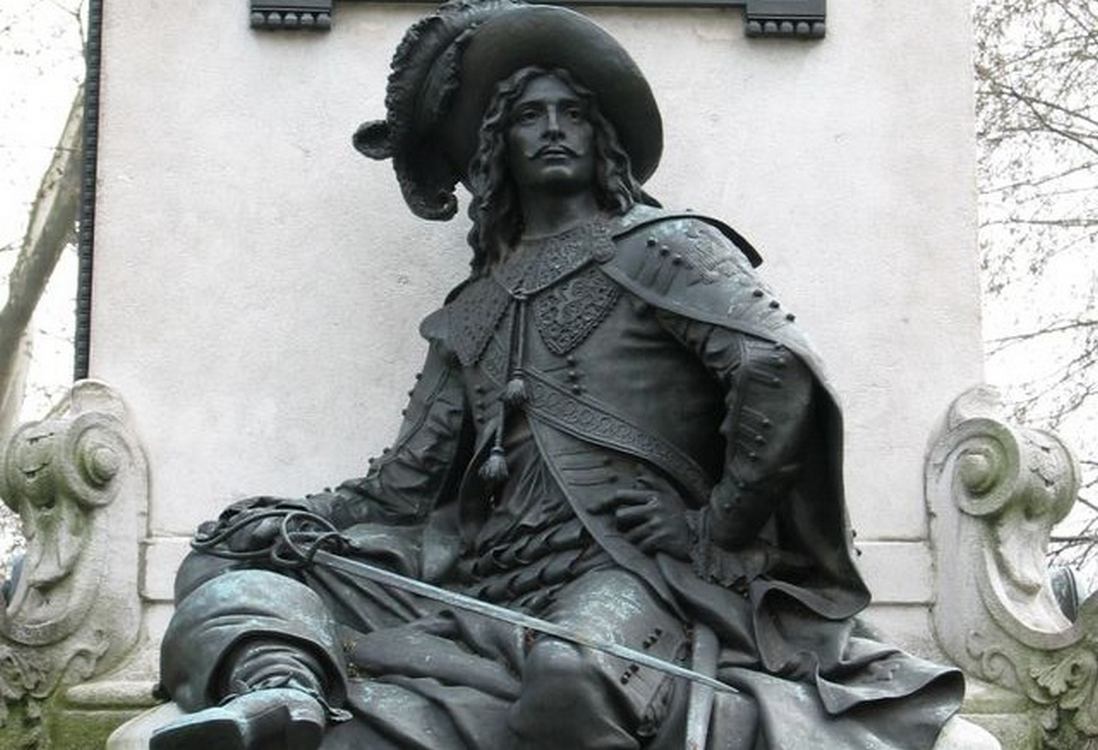
It had long been suspected that somewhere in or under the Church of Peter and Paul in Wolder, the Netherlands, lay the remains of the man who inspired the character of d’Artagnan, immortalized in Alexandre Dumas’ The Three Musketeers.
Real name Charles de Batz de Castelmore, this wartime participant was a close aid of the Sun King Louis XIV, who was killed during the siege of Maastricht in the 17th century.
De Batz was also called Count d’Artagnan, hence why it’s believed he was the model of Dumas’ character, who helps the entirely-fictional Musketeers in the timeless classic.
It happened that recently, the Deacon of the church in Wolder, in the southwest corner of Maastricht, decided to perform a bit of digging to see if someone had been buried there after a few floor tiles had come loose.
“We prized up some loose flagstones to carry out repairs and we saw there was a skeleton in sacred ground near where the altar used to be,” Deacon Jos Valke told the London Times.
Using delicate excavation methods, they found a bone, and eventually an entire skeleton, just as the old rumors had suggested.
“Only royals or other people of rank would have been buried there. We thought it could be d’Artagnan so we called in an archaeologist.”
Archaeologist Wim Dijkman, who’s previously stated that there is neither historic nor physical evidence for the belief that the Count was buried in Wolder, took some samples that contain DNA and sent them off to Germany, while a few of the bones were personally moved to the Dutch city of Deventer where they will be assessed for their age and sex.
FICTION MEETS FACT: Myth Collides With History in Greece Where Tiles Found Marked ‘Odysseus’ Confirm Hero Worship of Homer’s Trojan War King
These scientific protocols are what might be called “due diligence,” since found along with the skeleton were artifacts which left Valke 99% certain they’d found their man.
“He was buried on sacred ground below where the altar was; we found the [musket ball] that put an end to his life and we found a coin from 1660 in his grave, and it was from the bishop who attended Mass for the Roi Soleil,” he told the BBC.
LONG DEAD CELEBRITIES: Lost Bach Pieces Performed for First Time in 320 Years: ‘Great moment for the world of music’
Dijkman admitted he needed to leverage his scientist reserve to remain calm, since he’s been researching d’Artagnan’s ultimate fate for over 20 years, and believes the deacon may have helped him solve the biggest mystery of his career.
That Count d’Artagnan was involved in the fighting at Maastricht has given some historians the notion that the Three Musketeers, while themselves being entirely fictional, could have embodied certain elite fighting men the Count was somehow associated with.
SHARE This Fictional Hero Made Real Bone In Holland With Your Friends…