














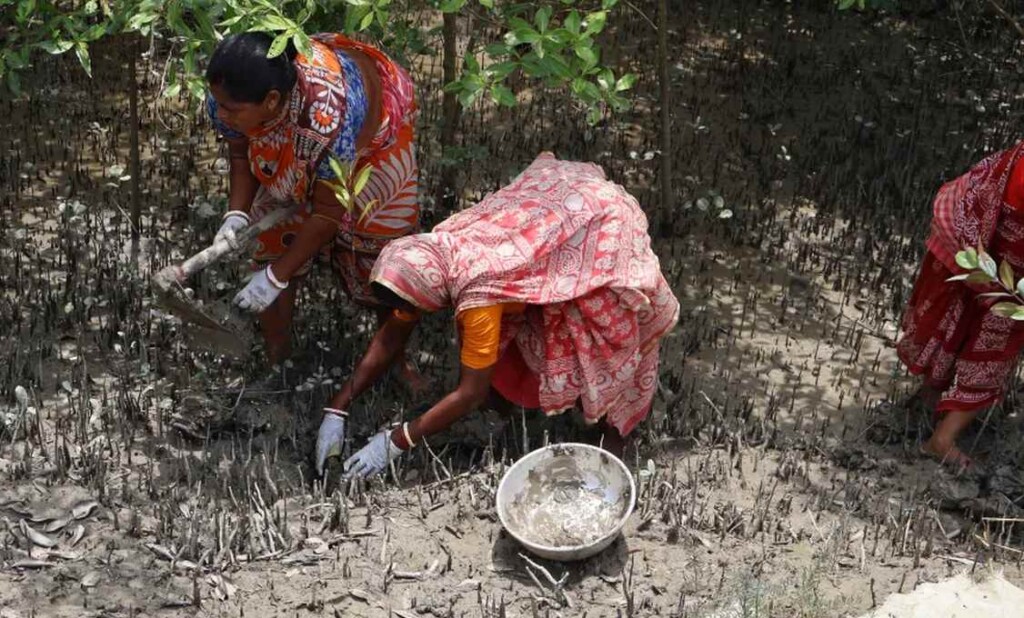
They are called “swami khejos,” translated to “Husband Eaters.”
In reality, it’s just a superstition, as it was the tigers of the Sundarbans forest that ate these husbands, not the women.
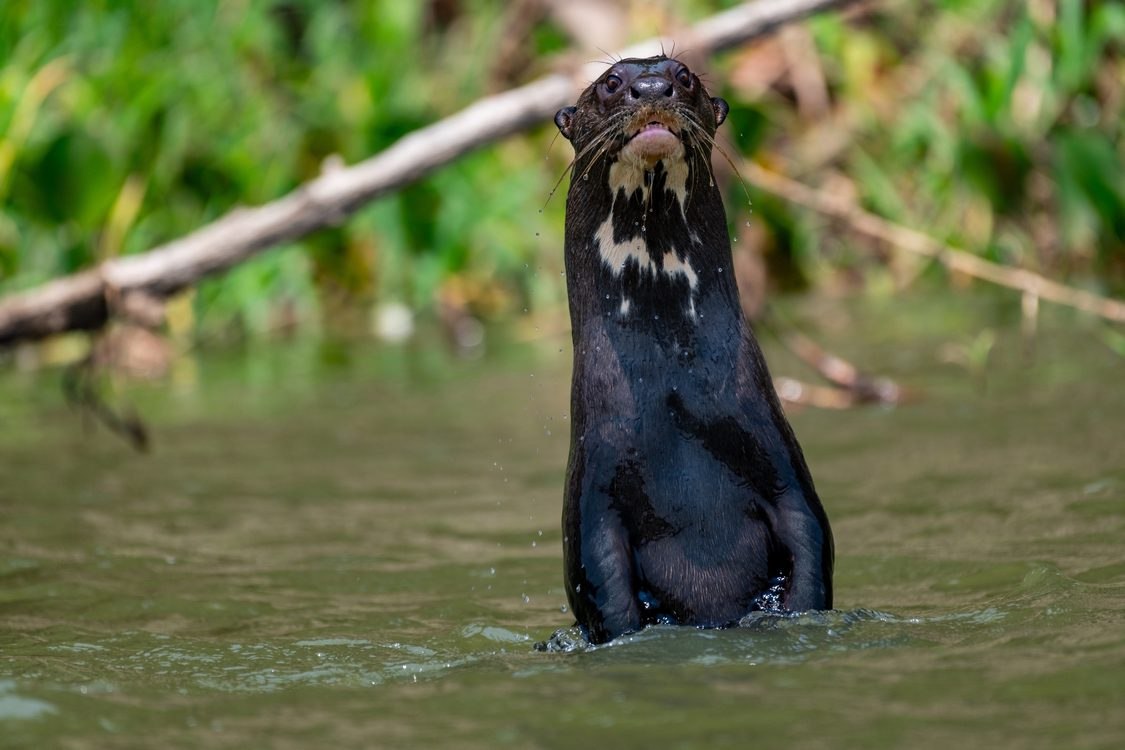
This unique region of eastern India/western Bangladesh contains the world’s largest mangrove forest, and the 200 or so Bengal tigers that live there inhabit a watery world that they thrive in, consuming a diet of fish and crabs while swimming several miles at a time in search of prey.
The translation above was provided to CNN by the environmentalist and editor Arun Krishnamurthy, who reported on the extraordinary story of how these “tiger widows” have teamed up with young conservationists to help protect and restore the mangrove swamps, and, inadvertently, the tigers who widowed them.
“The women are working towards a cause that has disrupted their own life,” Saurav Malhotra, a project leader at international nonprofit Conservation International, told CNN. “It’s about restoring dignity and building resilience for these women and for the broader community.”
It’s not known how many tiger widows there are in the Sundarbans region, where villagers make much of their subsistence livelihoods through fishing the deep mangroves. But what is known is that this massive ecosystem enshrined as a UNESCO Natural Heritage Site is in danger.
Mangrove forests play crucial roles in the stability of coastal ecosystems. Their network of aerial roots help dampen storm surges, and they take up salt in their tissues that allow for a brackish water quality that’s permissible to both freshwater and saltwater fish.
Deforestation, however, has the effect of taking bricks out of a wall: it’s compromising this great swampy wall’s integrity. Fewer trees means increasing salinity, which means fewer fish. It also means the strength of monsoon winds and waves is absorbed by smaller root systems, increasing the potential for flooded cropland and destroyed villages.
MORE MANGROVE NEWS: The Largest Landfill in Latin America has Been Turned into a Mangrove Forest
Restoring the mangroves allow the villagers of the region and the tigers to thrive. The social organization and youth rewilding movement I-Behind-the-Ink is working with these tiger widows in the Jharkhali region of the Sundarbans, along the Matla River to restore 240 acres of mangrove forests.
It’s no mean feat, and will require hundreds of thousands of trees, but villages in the area like Laskarpur and Vivekananda Palli are no longer protected by mangrove swamps. A single man-made embankment prevents floods from the ocean from destroying their homes. Time is, quite straightforwardly, of the essence.
CONSERVATION INDIAN-STYLE: 12-Year-old Girl Plants 150,000 Trees in India, Becoming a Reforestation Leader
Saplings tended lovingly by the villagers for the last six months are now being planted in front of the embankment in a location that was previously cleared for easier fishing. The idea is that with time, and with every hectare restored, salinity and storms will ease, fish populations will increase, and there will be more food both for humans and tigers.
That latter aspect should result in less human-tiger conflict, and fewer tiger widows.
SHARE This Extraordinary Tale Of Coexistence And Recovery In The Face Of Tragedy…