











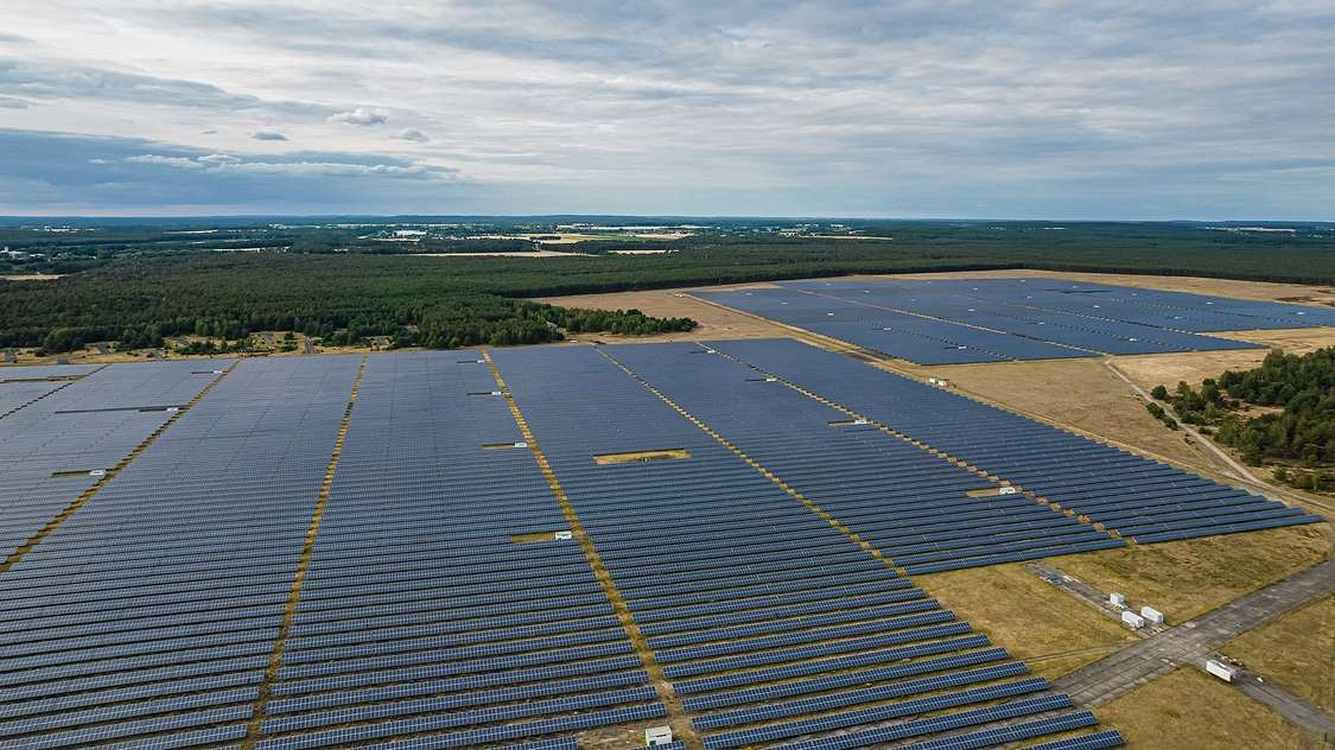
A huge scientific survey of over 1 million German solar installations has revealed a surprising statistic: their potential to degrade year by year has been significantly exaggerated.
Previous models have overestimated the rate of degradation in a solar installation’s ability to generate power by between 20% to 50% according to this new survey.
“Back of the envelope,” the authors admit, “the estimated cost of degradation would decrease, compared to previous findings, by about €638 million per year to maintain installed capacity in 2040.”
Germany has been steaming forward with green energy installation for 20 years. Having decommissioned many of its coal power plants, and controversially eliminated its entire nuclear fleet as well, the country has installed some 60 gigawatts just of solar capacity since 2006.
A common criticism of solar is that photovoltaic panels—like all electrical hardware—lose efficiency over time, and, being exposed to the elements 365 days a year, frost, heat, wind, and dust beat them down such that the power you expected to receive when you built the solar installation isn’t what you are receiving a decade after.
The survey, conducted by scientists from Brandenburg University of Technology alongside a collaborator from University College London, involved around 1.25 million large and small solar installations across Germany, totaling 34 gigawatts of capacity. At 16 years, the study period was longer than any other examination, while the study period accounted for newer generations of solar panels.
The authors found annual degradation rates of 0.52–0.61%, roughly half the average reported in prior studies, which also had limitations of smaller sample sizes (the largest other survey of this kind was with 4,200 installations) and shorter study durations averaging between 2 and 7 years.
Other key findings support the value of large-scale solar installations. Degradation rates slow as the PV panels age. In other words, new PV panels lose capacity faster than older ones. Additionally, larger installations like solar farms degrade slower than smaller ones like rooftop arrays.
“That is important because it suggests that utility-scale PV cannot simply be treated as a scaled-up version of rooftop solar,” said lead author Peitro Melo, speaking with PV Magazine. “Reliability and maintenance strategies have a measurably different impact on outcomes.”
PV POSITIVITY: Planned Expansion to Take Latin America’s Largest Solar Plant Beyond 1 Gigawatt Capacity
Frost, extreme heat, and air pollution affect PV panels differently at different stages of their lifespan. Extreme heat tends to reduce the efficiency of older panels more than newer ones, even though for frost and air pollution, it’s the opposite.
“This is a positive result for the solar industry, from households who have bought systems up to investors in megaprojects. Lower degradation means greater output and revenue over a project’s lifetime.”
GERMAN NEWS:
- Record Harvest Dubbed the ‘Potato Flood’ and Prompts Mass Spud Giveaways Across Berlin
- German Households Pass €10 Trillion in Savings After Disciplined Decade of Highest Savings Rates
- Lost Bach Pieces Performed for First Time in 320 Years: ‘Great moment for the world of music’
Another way to summarize the team’s findings is that this new and more accurately-estimated degradation rate for PV systems translates to a 4.8% reduction in the levelized cost of electricity from solar panels. This means that, in order to maintain nameplate power production across the entire German fleet, 2.3 gigawatts of PV panels would have to be installed every year, while under previous assumptions, replacement rates have reached as high as 4.5 gigawatts.
SHARE This Positive Revaluation Of The Power Of Solar Panels…