














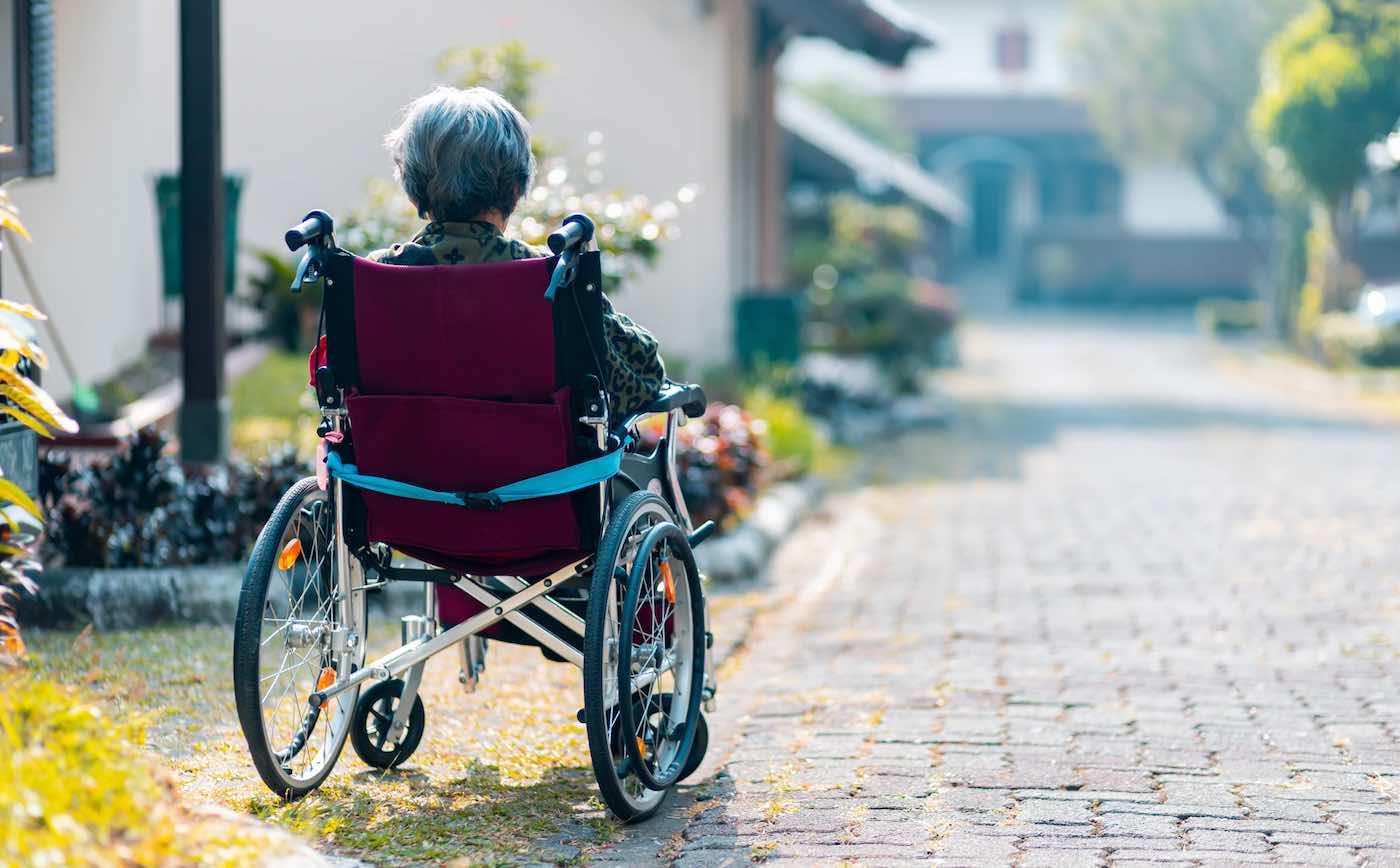
From the May issue of Frontiers in Neuroscience comes the truly remarkable case study of a woman crippled by Alzheimer’s recovering speech, bladder control, and motor function after a single dose of psilocybin mushrooms.
Living with Alzheimer’s for a decade and under family supervision for almost as long, the Japanese American woman in her 80s was given 5 grams of psychedelic mushrooms, went into a deep, sweaty sleep, awoke, and launched into an autobiographical tirade for 4 hours.
This was a woman on death’s door from the most common form of neurodegenerative disease. She had, for 5 years, spoken only single syllables, had lost control of her urinary continence, was unable to stand or walk without assistance, couldn’t recognize anyone or much of anything from her past or family, and suffered from severe motor skill dysfunction so that she could neither perform basic grooming nor dress herself.
No details about why the woman was the subject of the experiment have been revealed by media reports, but the 3 research scientists from the Medical Department at Associação Cruz de Ankh, in São Paulo, authors of this observational case study, administered one 5-gram dose of mushrooms containing the psychedelic compound psilocybin—one of the most common found in nature—and documented its effects.
The acute period—what is commonly called the “trip”—was characterized by hyperthermia, sweating, sleep-movement, and a deep, restful sleep that lasted 19 hours. Then, the woman opened her eyes, sat up, and began to talk.
And talk, and talk, as if everything she’d been trying to say for the previous 10 years was flooding out—which it did, for 4 hours straight. During that 1st day post-treatment, she became much more social and could remember family members and their identities. On day 2, she regained the ability to move about independently. On day 3, she dressed herself, while the researchers documented episodes of “spontaneous initiative.”
Also on day 3, she regained bladder control, even while asleep. By days 6 and 7, she would maintain reciprocal eye contact, smile, laugh, and remember things on a short-term basis—a different circuitry, if you will, from long-term memory. She is supposed to have said spontaneously at the time: “it is pleasant to come here.”
“One month after the initial session, the patient remained continent and functionally improved compared with baseline, the authors wrote.
“A second supervised psilocybin session using 3 grams was subsequently performed and was associated with greater verbal expressivity, improved facial mimicry, spontaneous humor, emotionally valenced autobiographical imagery, and increased agility while walking.”
On the one hand, this is clearly a groundbreaking finding. Billions of dollars have been invested into finding a drug that can slow or reverse Alzheimer’s, and most if not all attempts have been met with failure. At the same time, rates of Alzheimer’s disease around the world are increasing, placing an ever larger burden of care on families and society.
PSILOCYBIN STUDIES: Psilocybin Microdosing Study Finds Improved Mental Health and Psychomotor Dexterity in Those Over 55
Psilocybin has been researched in many models of psychiatric or psychological impairment, such as post-traumatic stress disorder, and depression. It’s also been identified as a compound that increases brain neuroplasticity, a term that refers to the ability of brain cells called neurons to forge new connections repeatedly—which could be thought of as a kind of cognitive flexibility.
Brain imaging studies have shown that psilocybin alters communication pathways between brain regions—a hallmark of neuroplasticity, while animal studies have found that psilocybin may help encourage the formation of dendritic spines: tiny protrusions on nerve cells that facilitate better communication.
The study didn’t include any brain scans, control groups, double-blinding, sensitivity analysis, placebo controls—nor even standardized cognitive tests. In short, it lacked anything that would allow for extrapolation of this totally observational finding beyond what it was: the reported observations of a few people on a single person.
ALTERNATIVE MEDICINE: Traditional Chinese Herb Delivered by IV Improves Stroke Victims’ Recovery, Shows Large Scientific Study
“The findings do not imply disease reversal but suggest that residual functional capacity may persist in late-stage neurodegeneration and may become transiently accessible under specific neuromodulatory conditions,” the authors write.
In other words, everything which seems to be taken away by Alzheimer’s may still be there, and that there exists some chemical key that can unlock it. Is psilocybin that key? Hopefully more, higher-quality research can follow-up on this incredible case study.
SHARE The Incredible Story Of Psilocybin Mushrooms Reversing Alzheimer’s…