














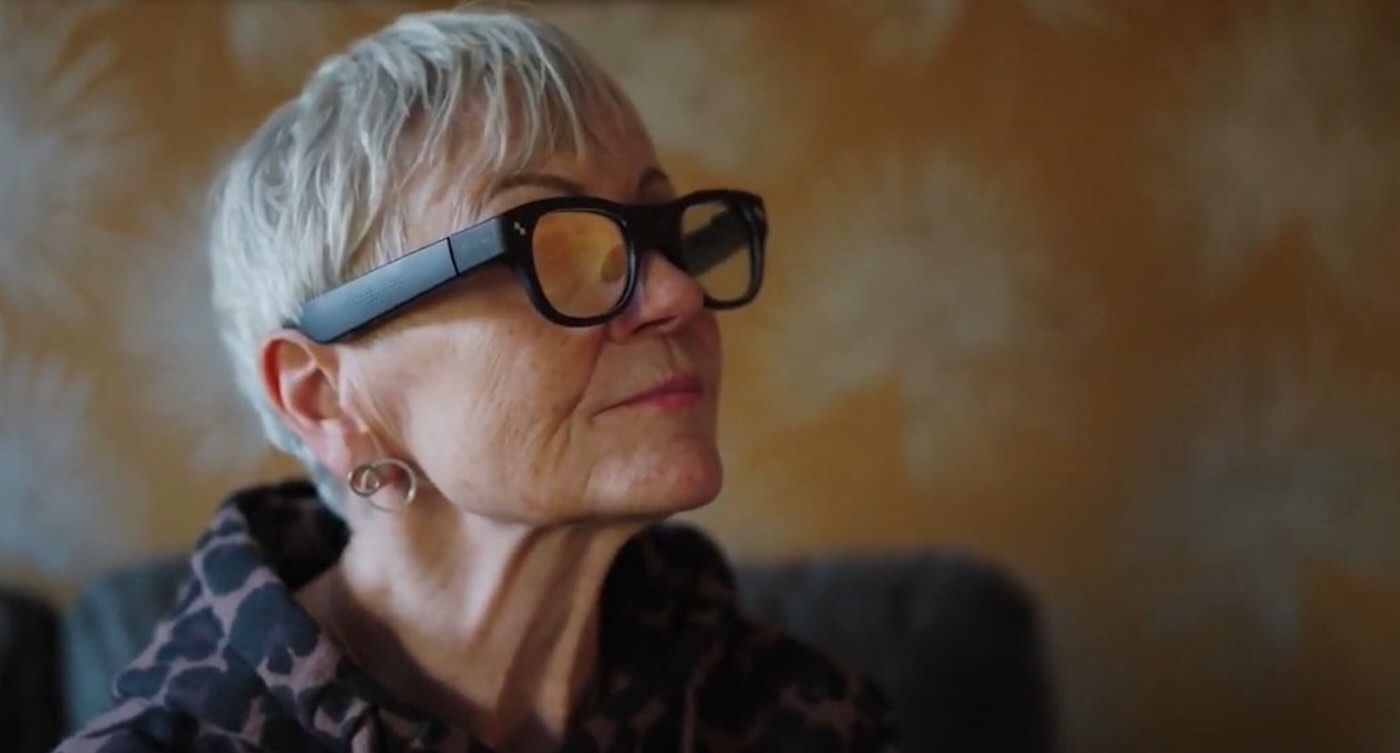
New AI glasses for people with dementia are able to project visual prompts onto the lenses to help folks live more independently—and they could be available in the UK in 2027.
The latest news comes after the glasses wowed both test patients in their homes and a panel of outside judges.
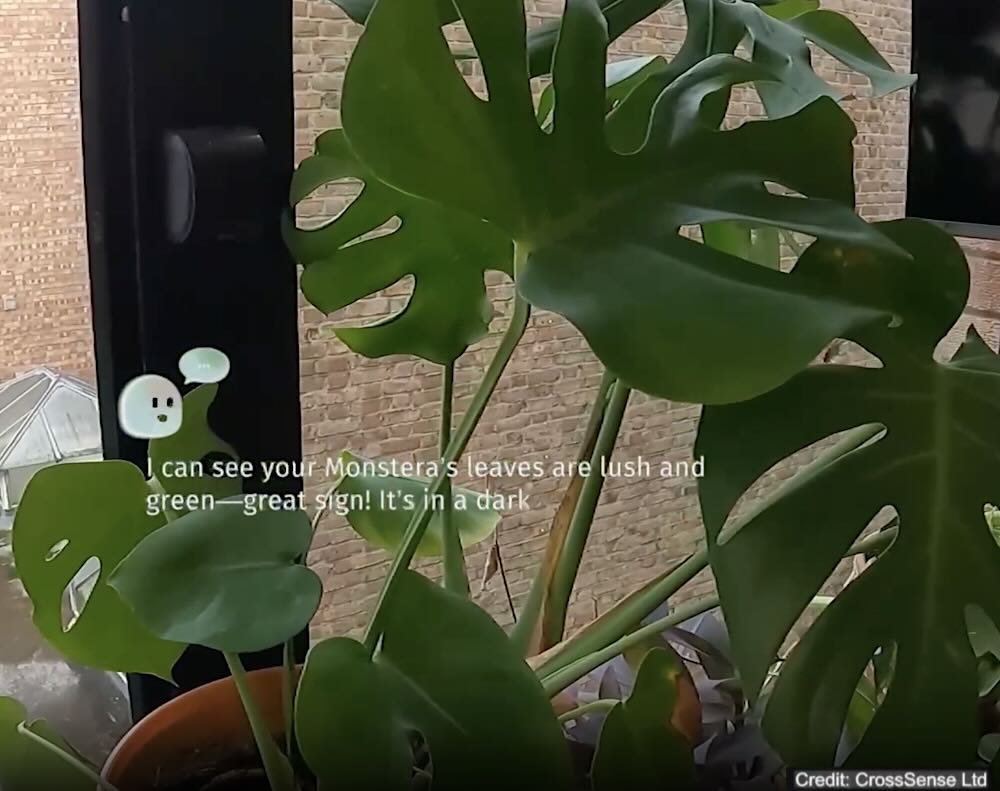
They can guide people living with early-stage dementia through daily activities by identifying common objects and providing audio commentary or answer questions while projecting visual prompts onto the lenses.
By asking gentle questions, the glasses’ AI companion, called ‘Wispy’, understands and learns a person’s unique way of doing things, with the AI adapting to each user’s needs as their dementia progresses.
Wispy will even talk through what to do when a person cannot remember a particular step in a process.
In test trials, three out of four patients reported a significant improvement to their quality of life, thanks to the glasses and Wispy’s tips developed from UK company CrossSense.
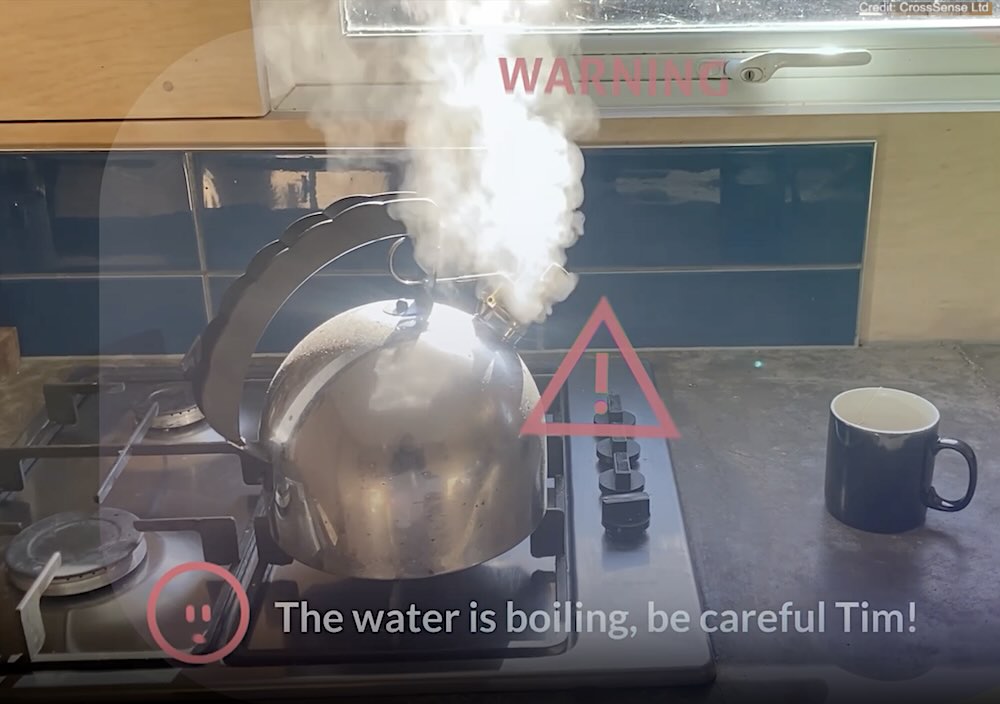
Spending over a decade creating and tweaking prototypes of the app and gadget, a team of AI engineers trained the glasses with dozens of everyday activities including getting dressed, managing household chores safely, making a cup of tea and interacting with loved ones.
The specs, which work with people’s prescription lens inserts and hearing aids, also capture the environment of the person living with dementia and the AI interprets that information to help the user to do the things that define independence.
“This includes feeling confident in their own home, taking good care of themselves, planning the day ahead, completing planned activities and hosting friends and family,” said the creators.
PREVENTING DEMENTING:
• Seniors Who Listen to Music May Slash Their Dementia Risk by Over a Third
• Cheese May Help Stave Off Dementia Shows Study of 27k People Followed For 25 Years
With a release date set for early 2027 in the UK, the inventors hope the specs, which weigh less than 3 ounces (75g), will be used by local authorities, care providers, and NHS hospital memory clinics.
Last week, the London-based team behind the technology, CrossSense, won the Longitude Prize on Dementia with its million dollar prize funded by the Alzheimer’s Society and Innovate UK.
The panel of international expert judges agreed that the winning solution was a genuine breakthrough technology with revolutionary potential for people living with dementia and their families.
CrossSense says the gadget includes a built-in battery that lasts for one hour, but also a portable power bank that can keep the glasses running all day long.
70-year-old Carole Grieg from London (pictured above), who founded a dementia support group called ForgetMeNots, tried the new glasses and is convinced they could help her fellow dementia patients maintain their independence.
“I thought it was an amazing concept, with the potential to provide real, reliable support for people like me, helping to compensate for the cognitive skills we gradually lose as dementia progresses.”
“For many of us, our world slowly becomes smaller as the condition progresses. Innovations like this offer real hope, and I know that as my own circumstances change, I will certainly be relying on them.”
Professor Fiona Carragher, chief research officer at Alzheimer’s Society admires the way the technology can develop its ‘intuitive personal support’.
LATEST ALZHEIMER’S BREAKTHOUGHS:
• Tiny Protein Confirmed to Dismantle the Toxic Clumps Linked to Alzheimer’s
• Compound in Rosemary and Sage was Turned into Alzheimer’s Treatment That Boosted Memory and Cut Amayloid
“By anticipating people’s needs as their condition progresses, easing daily living challenges, and providing reassurance to families, this revolutionary tech will allow people with dementia to maintain their independence for longer, within the familiar environment of home.”
SHARE THE DEMENTIA INNOVATION Projecting Hope On Social Media…
Now THIS is what AI should be used for: making life easier.