Quote of the Day: “Tact is the ability to describe others as they see themselves.” – Abraham Lincoln
Photo by: Marcos Assis
With a new inspirational quote every day, atop the perfect photo—collected and archived on our Quote of the Day page—why not bookmark GNN.org for a daily uplift?
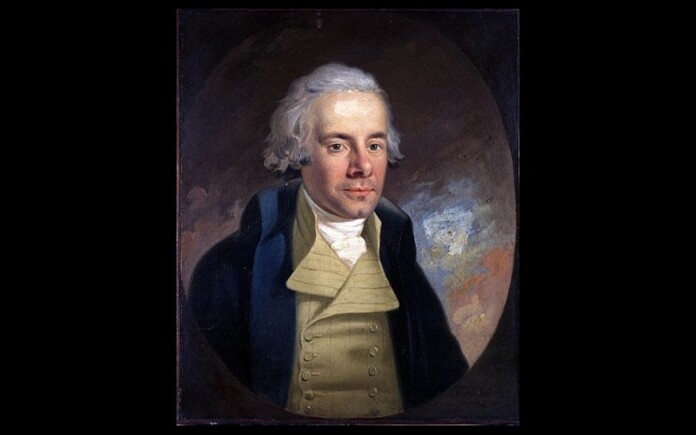
William Wilberforce, the leader of the British campaign to abolish the slave trade.
218 years ago today, the Slave Trade Act of 1807 entered into force in Great Britain, abolishing the British participation in the Transatlantic Slave Trade and pressed other nation states to abolish their own slave trades. Sometimes in history, the abandonment of a previous widespread practice occurs naturally after its practice diminishes, but the Slave Trade Act was passed at a time when slavery was still an incredibly lucrative business, demonstrating, at least partially, the resolve of the abolitionists in Britain who lobbied and campaigned for 18 years for a bill. READ more… (1807)
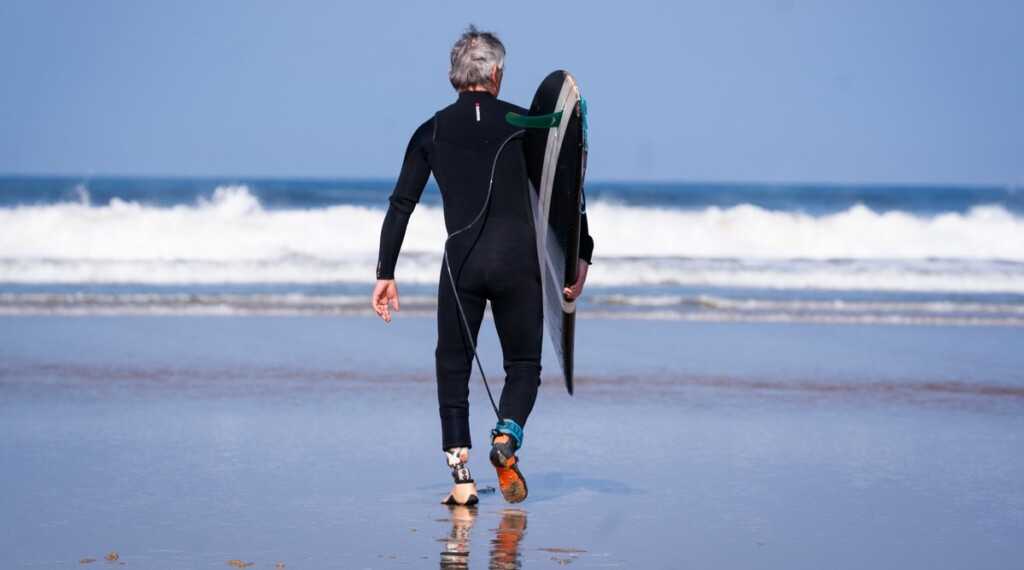
Pegleg Bennett during a surf session at Perranporth Beach - credit, William Dax, SWNS
Pegleg Bennett during a surf session at Perranporth Beach – credit, William Dax, SWNS
‘Pegleg’ Bennett was born with a birth defect that led to the amputation of his foot when he was a baby, but the 55-year-old never let it impede the pursuit of his passion: surfing.
The father of three has traveled the world surfing, making it to some of the most famous big wave surfing spots in places like Indonesia, Hawaii, Australia, and Portugal. He’s also represented his country in a para-surfing championship, and pioneered some best practices in making prosthetic legs for surfers.
Bennett was born with the ankle of his left leg missing and his foot looking twisted and mangled.
At the hospital, his parents were given the choice of amputation—which the doctors said would actually ensure he had better quality of living.
“The ocean is my happy place,” said Bennett, who legally changed his name to Pegleg—a childhood nickname—in 2016. “When I’m riding a wave nothing else matters, nothing else is there—it is just me and that wave and feeling that glide and that ride.”
He told the British media outlet SWNS that he grew up a “water baby” and given that his father was a big swimmer, the progression to surfing came naturally, despite his missing foot.
He describes “harassing” the UK’s National Health Service for years, “and eventually they gave me what they call a ‘beach activities leg’ and then my surfing progressed at a phenomenal rate after that.”
Pegleg Bennett during a surf session at Perranporth Beach – credit, William Dax, SWNS
After learning to surf on it, Bennett drilled holes in that first prosthetic leg to improve its functionality, and this led to a phenomenal surfing career.
“There is a big wave spot in Portugal called Nazaré,” he said, at the start of listing every spot he’s enjoyed. “I have also done the entire European coast, I have driven the Moroccan coast right down into the occidental Sahara, Hawaii, all over the States, Indonesia, Japan. I have surfed on the Arctic circle.”
His new leg, made from carbon fiber and titanium, has taken his surfing to a “new level”, he said.
“I have got a surf specific leg—it’s got a titanium ankle joint in it so I can stand on the board a lot better than I used to.”
For his whole adult life, Bennett has been at the crest of the wave of para-surfing, which has undergone a revolutionary transformation.
The turning point came in 2015 when the International Surfing Association (ISA) hosted the first Adaptive Surfing World Championships—bringing together surfers from all the nations.
Since then, the sport has exploded in popularity with the adaptive surfing, or para-surfing, community becoming the fastest-growing segment of the surfing world. Team England para-surfing team is now ranked seventh in the world, led by Bennett’s instruction and inspiration.
He explained that within the para-surfing community there are people with all kinds of disabilities.
“I coached someone with cerebral palsy, MS, I have got some blind guys that I coach, obviously some amputees,” he said. “If somebody has got a disability and they want to get in the ocean and catch waves, I can make it happen.”
“I don’t believe in barriers. I believe in we can do it.”
Although para-surfing narrowly missed out on the 2028 Los Angeles Games, there is strong hope for its inclusion in the Paralympics in Brisbane in 2032, and the opportunities that could bring for extra funding.
SHARE Pegleg’s Inspirational Story With Your Friends who Need A Pick-Me-Up…
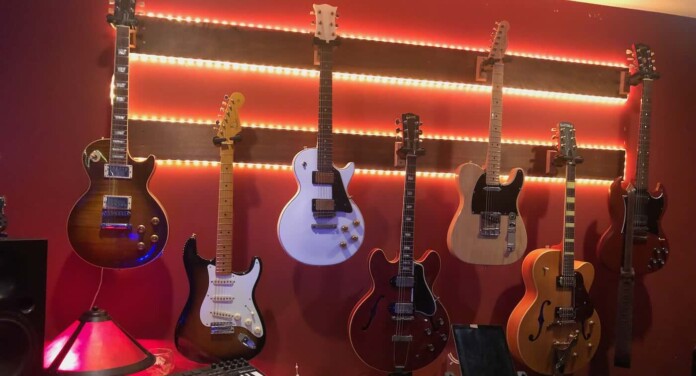
Guitar manufacturers like Taylor and Gryphon are utilizing native California trees marked for removal in the state’s urban areas to birth a new generation of acoustic instruments.
The motive: helping musicians and consumers dodge the increasing prices for prized woods needed to make guitars, as well as helping memorialize condemned native trees in the state.
If you look at the product catalogue for any major guitar retailer, you see the same few words mentioned over and over: rosewood, ebony, mahogany.
These are also the words you may see while reading news reports about the ongoing deforestation in the Amazon.
The sound quality of the world’s instruments depend on these rainforest trees—and demand for guitars is expected to increase.
So, what about a guitar made from shamel ash, red ironbark, or black acacia?
These are three species now being used by Taylor Guitars and Gryphon Stringed Instruments, which are commonly found growing along sidewalks and median strips all over Central and Northern California.
Playing a lead role in this movement is West Coast Arborists (WCA), a family-run business of tree surgeons that manage urban trees for 320 towns and municipalities, public agencies, and private communities in 4 different states.
WCA believes that trees in cities do more than just offer shade and beauty, they are means of connecting to a fundamental Earth circuitry amidst areas covered in concrete. That’s why for every tree they’re instructed to remove, they plant two.
WCA also believes that a large urban tree deserves to have a second life, and that these species which shade us and our dogs offer quality, craft-ready lumber.
In fact, a quarter-century ago, reports CBS in San Francisco, WCA created an urban wood recycling program called Street Tree Revival.
Now, if a large tree is marked for felling, its dimensions and location will be uploaded to a central database that can be accessed by craftsmen in the area, who can then buy the wood from the tree.
Bob Taylor, who founded Taylor Guitars 50 years ago, has identified several species that possess the acoustic properties necessary for use in guitars.
“We developed a system where our IT department could use any time [sic] a list comes out with trees that are going to be removed. And they see a shamal ash is identified, it automatically sends a notification to me at area manager and to our Street Revival people that, ‘Hey, here’s a possible tree we can send to Taylor,'” said Tim Patterson, a manager with WCA.
Ebony and irony
That’s not all he identified, however. As good an idea as the use of native California trees in making instruments was, Taylor found that ebony, one of the woods traditionally used to make guitar bridges and fretboards is harvested with extremely wasteful practices; with about one tree used for every 6-10 cut down.
The reason? Not all ebony trees found in the Congo Basin contain the black wood that we associate with guitar woods. In Africa, where the trees are harvested, loggers don’t know which ones possess the jet black wood. If after felling, they find the interior is streaked with brown, they leave it to rot.
Taylor’s use of native California trees, such as red ironbark, are about providing alternatives to this kind of logging—as much as it is about saving consumers money.
During a visit to the jungle, Taylor told his Cameroonian contacts that he would buy the streaked wood.
“But they said ‘Sir you can’t sell that wood!’ They’re used to decades—a century, of only black wood, and so are the consumers,” Taylor told CBS in a separate story.
“Now, if you buy a Taylor guitar, that’s the wood you’re going to get.”
Ironically, that streaked wood the Cameroonians said Taylor wouldn’t be able to sell is gorgeous, and very similar to natural wood grains which are sold by instrument manufacturers specifically for its aesthetic taste. Mechanically, it’s exactly the same as totally black ebony.
Back in California, CBS got to accompany WCA to the felling of one such tree—a 30-foot-tall shamal ash that was pruned, cut, and gently lowered to the ground via a crane. The tree had to be removed because it posed a risk to a pair of utility lines, and was then taken to WCA’s facilities to be milled and shipped off to Taylor or Gryphon.
“The topic does not even come up, you know ‘what this wood is and where did it come from.’ Instead, it’s like “Wow, this sounds great, and it looks beautiful,” said Richard Johnson, one of the founders of Gryphon.
WATCH the story of WCA and Taylor’s ebony inspiration below from CBS News…
SHARE This Awesome Story Of Recycling And Sustainability In Music With Your Friends…
Last July, GNN reported on the California city of Petaluma and its experiment collaborating with local restaurants to create a city-wide return-and-reuse beverage cup program.
At the time, the plan was a 3-month trial: the results of which are in. It was a home run.
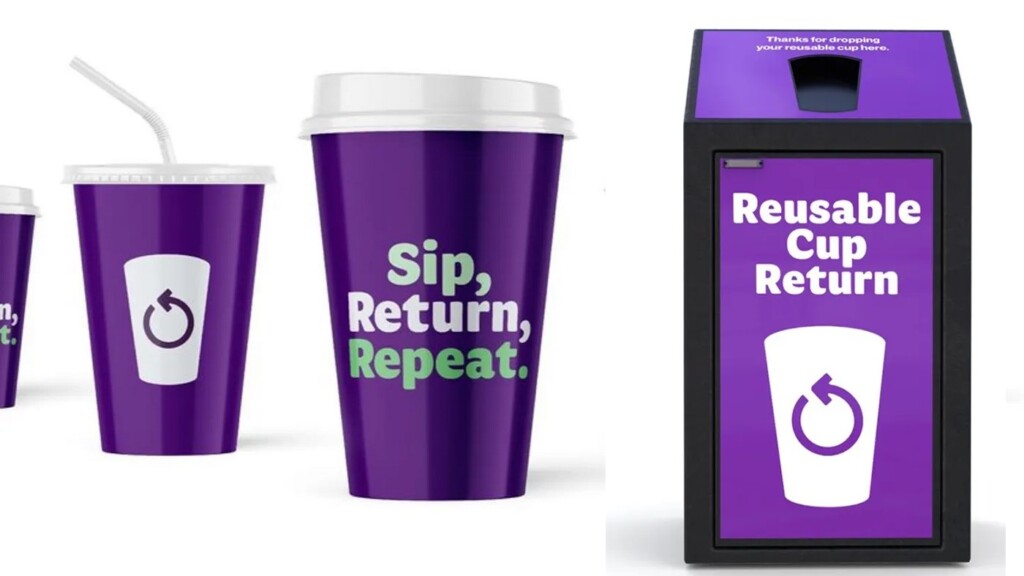
With major chains like Starbucks and Taco Bell joining in alongside local mom-and-pop stores, the program ensured customers wouldn’t be charged a penny more for the reusable, but were merely asked to deposit their cup in one of many purple bins around the city center.
“I think this was a very exciting thing to be part of to be the only city in the country to do this,” proclaimed Ashley Harris, a manager at the Petaluma branch of Coffee & Tea Company.
CBS News in the Bay Area reported on the project’s launch, and is now happily trumpeting its success. Set up by the Closed Loop Partners investment firm’s Center for the Circular Economy, the program aimed to cut back on the 50 billion disposable drink cups used by Americans every day.
The program’s organizers, NextGen Consortium, employed the local firm Muuse to provide the collection, washing, and distribution of the cups.
“I really liked it. There were a million places where you could put the cup back,” resident Kadi Newlan told CBS.
According to a report published by NextGen, over 220,000 cups were used and returned in the city of 60,000. Customers were not required to return the cup immediately after first use, and they could carry it around and use it, for example, like a refillable coffee cup.
With a vibrant purple exterior, the cups could be easily picked out of waste streams in case someone tossed them in with the normal garbage or recycling. The bins, advertisements, cups, and stations inside restaurants all shared the same color to help connect the infrastructure in people’s minds.
And this helped the project massively. NextGen Consortium’s report showed that 83% of customers knew of the program’s existence, of whom 88% knew how to return the cup, and 80% wanted the program to continue, something the owner of a local slushie and ice cream shop, Once Upon A Slush, noticed himself.
“We haven’t seen that level of community engagement, awareness, understanding, satisfaction, and pride. Petaluma was very proud of the project,” Carolina Lobel, senior director at the Center for the Circular Economy, told CBS.
The experiment is over, and most Petalumans are back using either disposable drink cups or their own reusable ones, and both the Center and Consortium are left to decide what to do with the knowledge.
Given that Petaluma business leaders like Harris hope to see the project become permanent, Lobel said they’re investigating how to do just that—by turning over the knowledge and materials to private partners.
WATCH the report’s success below…
SHARE This Inspiring Success Promising City-Wide Sustainability With Your Friends…
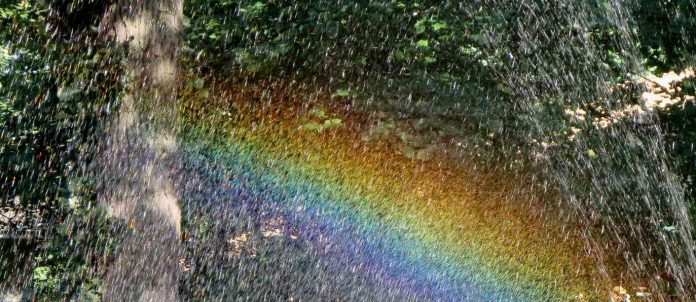
Scientists in Singapore have broken a long-standing limitation on the ability to generate electricity from flowing water, suggesting that another elemental force of nature could be leveraged for renewable electricity: rain.
With the simplest and smallest scale test setup, the team could power around 12 LED lightbulbs with simulated rain droplets flowing through a tube, but at scale, their method could generate meaningful amounts that could rival rooftop solar arrays.
Singapore experiences significant rainfall throughout the year, averaging 101 inches (2581 millimeters) of precipitation annually. The idea of generating electricity from such falling water is attractive, but the method has long been constrained by a principle called the Debye Length.
Nevertheless, the concept is possible because of a simple physical principle that charged entities on the surface of materials get nudged when they rub together—as true for water droplets as it is for a balloon rubbed against the hair on one’s head.
While this is true, the power values thus generated have been negligible, and electricity from flowing water has been limited to the driving of turbines in hydropower plants.
However, in a study published in the journal ACS Central Science, a team of physicists has found a way to break through the constraints of water’s Debye Length, and generate power from simulated rain.
“Water that falls through a vertical tube generates a substantial amount of electricity by using a specific pattern of water flow: plug flow,” says Siowling Soh, author of the study. “This plug flow pattern could allow rain energy to be harvested for generating clean and renewable electricity.”
The authors write in their study that in existing tests of the power production from water flows, pumps are always used to drive liquid through the small channels. But the pumps require so much energy to run that outputs are limited to miniscule amounts.
Instead, their setup to harness this plug flow pattern was scandalously simple. No moving parts or mechanisms of any kind were required. A simple plastic tube just 2 millimeters in diameter; a large plastic bottle; a small metallic needle. Water coming out of the bottle ran along the needle and bumped into the top section of the tube that had been cut in half, interrupting the water flow and allowing pockets of air to slide down the tube along with the water.
The air was the key to breaking through the limits set by the Debye Length, and key to the feasibility of electricity generation from water. Wires placed at the top of the tube and in the cup harvested the electricity.
The total generation rate of greater than 10% resulted in about 100 watts per square meter of tube. For context, a 100-watt solar panel can power an appliance as large as a blender or ceiling fan, charge a laptop, provide for several light bulbs, or even a Wi-Fi router.
Because the droplet speeds tested were much slower than rain, the researchers suggest that the real thing would provide even more than their tests, which were of course on a microscale.
SHARE This Awesome Scientific Breakthrough With Your Friends…
Quote of the Day: “Never retreat. Never explain. Get it done and let them howl.” – Benjamin Jowett
Photo by: Nghia Le
With a new inspirational quote every day, atop the perfect photo—collected and archived on our Quote of the Day page—why not bookmark GNN.org for a daily uplift?
Hydrogen atomic orbitals at different energy levels. The more opaque areas are where one is most likely to find an electron at any given time - CC 4.0.
128 years ago today, J. J. Thomson announced his discovery of the electron as a subatomic particle, over 1,800 times smaller than a proton (in the atomic nucleus), at a lecture at the Royal Institution in London. It put to rest a long history of experimentation seeking to determine whether or not a “cathode ray” as the electron was first studied, was a ray or a wave. Thomson discovered that, in fact, it was neither. READ more about this groundbreaking discovery… (1897)
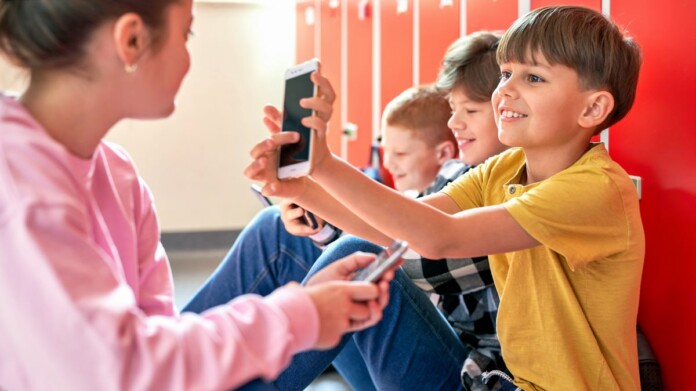
Without a government body to legislate the result, UK education authorities have discovered that over 90% of national schools have instituted smartphone bans, a measure still being debated by industry members and scientists.
Representing a triumph of distributed sovereignty, a survey of more than 15,000 schools found that 99.8% of elementary schools and 90% of middle schools had instituted some form of ban, the Guardian reports.
The paper further claimed that education leaders in the UK have largely supported school autonomy and guidance rather than government regulation on the question of smartphones, and the schools seem to have used that autonomy quite decisively.
Current Education Secretary Bridget Philipson said that the results of the survey represents “comprehensive evidence,” that “shows our approach of backing headteachers to implement bans in their schools is working.”
Individual school action has showed before that prohibiting smartphone use in schools, or at least while classes are in session, can improve student performance. Some classes used tablets and phones as teaching materials, and such usage wasn’t included in the survey findings of device usage.
“A lot of this is about a battle for attention, a battle for focus and concentration. It’s not just about having your phone out and using it, it’s the mere presence of the phone,” Tom Rees, chief executive of the Ormiston academies trust, one of the largest private school businesses in the country, told the Guardian.
“There’s evidence that tells us that even if your phone is in the same room, it could be in your bag or pocket, your brain is leaking attention, still thinking about it and being drawn to it, wondering if there has been a notification on it and what it might be.”
Ormiston was the first academy chain to go smartphone-free,
Justine Elbourne-Cload, co-chair of the St Albans primary schools consortium, the first institution in the country to implement a total smartphone ban for under-14 age groups, said that parents’ reactions had been “phenomenal.”
“They are really onboard. Parents are crying out for that support.”
In the United States, policies on phone usage are being left up to the states, and several have already implemented some forms of restrictions.
In Delaware, Pennsylvania, and Arkansas, governments have allocated grant money to any school district that wants to begin controlling smartphone and device usage by closing them away in secure pouches or boxes at the beginning of lessons.
Florida and California have passed prohibitions already, with the latter mandating its effect by the end of the next school year (July 1st). Ohio, Virginia, Minnesota, Indiana, and Louisiana have all passed measures that compel schools to come up with their own programs and methods for reducing, controlling, or eliminating smartphone and device usage during school hours or in classrooms.
Several other states, including Washington and Alabama, have taken a lighter touch, passing non-binding measures that encourage schools to take action, rather than mandating it.
“The research is clear: Reducing the use of cellphones in class improves concentration and learning, improves mental and physical health, and reduces pressures caused by social media,” said Washington schools superintendent Chris Reykdal in an official guidance document.
SHARE This Movement Toward Device-Free Classrooms…
(Left to right) Andrew Little, project lead, Carl Hickey, and Stuart Barr who donated their time to help build aa extension with charity Band of Builders - credit, SWNS.
(Left to right) Andrew Little, project lead, Carl Hickey, and Stuart Barr who donated their time to help build an extension with charity Band of Builders – credit, SWNS
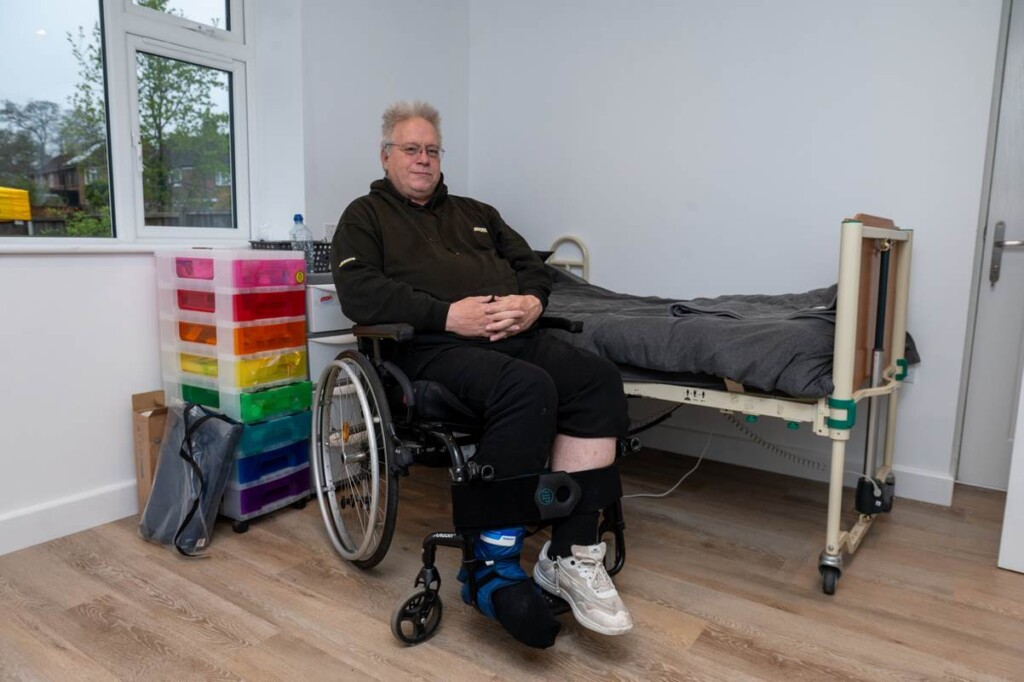
A charity in the UK organized a team of volunteer builders to add an extension onto the house of a disabled man who’s been forced to sleep in his dining room for 3 years.
58-year-old Paul Kitterman hasn’t been able to walk since getting an abscess on his back three-and-a-half years ago, but without a bedroom on the ground floor, he’s had to sleep in the dining room.
But now, thanks to a team of volunteer builders, gathered together by the charity ‘Band of Builders,’ Paul will have a bedroom and bathroom of his own.
The team, of at least 25 laborers, started building the extension to the three-bed home home in Addlestone, Surrey, that Kitterman shares with wife Sasha, their son, and Paul’s mother-in-law, in March 2025.
The project was labeled by the English media outlet SWNS as a “DIY SOS” after a famous British television show of the same name.
“The first night was the best sleep and the best shower ever,” said Kitterman, speaking with SWNS.
“I can’t thank everyone enough—the volunteers from Band of Builders for giving their time and expertise, and all the builders’ merchants who have donated the materials… It’s overwhelming to realize that people would do this for me.”
Kitterman felt an excruciating pain in his back in October 2021, and after developing a fever and collapsing repeatedly, he was taken to St. George’s hospital. He was found to have an abscess on his spine, which required surgery to remove that resulted in sepsis and pneumonia.
Paul Kitterman, who has had an extension built by Band of Builders – credit SWNSThe extension built by Band of Builders – credit SWNS
He was put in an induced coma for a week, and upon waking, doctors said he wouldn’t be able to walk again because the abscess had crushed his spinal cord.
After 6 months of recovery and rehab, Kitterman went home but has been confined to the downstairs where he sleeps on his hospital bed in the dining room.
Sasha contacted Band of Builders—a charity which pulls together volunteers and donations for projects to help construction-industry workers battling illness or injury—while he was still recovering in the hospital.
They agreed to come and help in March, and put out a call for volunteers to work on the extension. The volunteers work for free and all the materials are donated. Paul estimates the project has a market value of nearly $200,000. Friends and family raised over $25,000 to put towards the work.
“I still can’t believe that all these people are turning up just to help me—this makes me feel very lucky!” said Kitterman. “This will make a massive difference to my life. I think things will feel a bit more normal.”
– SWNS
Tim Winstanley, senior brand manager for DeWALT, a company which has contributed to the project, said that when he heard about Kitterman’s situation “we knew this was a project that we wanted to help with.”
“Our team is excited to donate their time to the project, alongside the tools required to complete the build, as we all know it will make a real difference to Paul’s life, and that of his family.”
Pro bono work from professionals has been in the news feed at GNN recently, with a story of a surgical team donating time and expertise to help deliver a baby grown inside a transplanted womb in March followed by the story of a local landscaping business that built a garden retaining wall for an elderly couple for free after hearing they were scammed by another contractor.
SHARE This Great Story Of Generosity And Compassion For A Man Who’s Lost So Much…
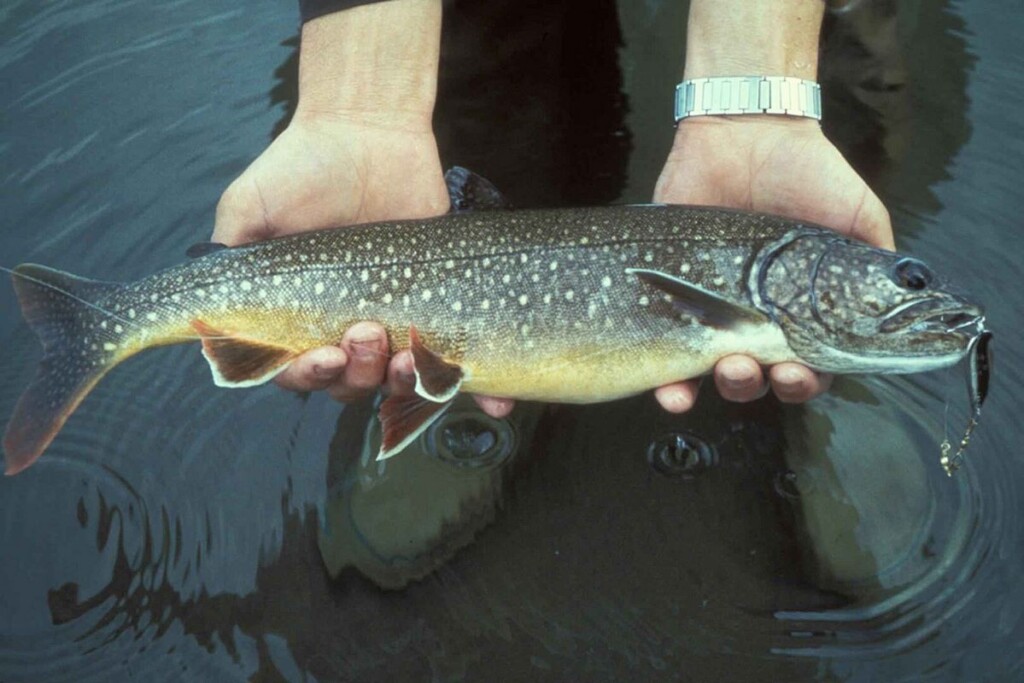
A lake trout in spawning colors - credit, FWS, public domain
A lake trout in spawning colors – credit, FWS, public domain
Through a combination of invasive species control and stocking with captive-raised fish, it’s now believed that a self-sustaining and harvestable population of lake trout has returned to Lake Champlain.
Following this historic success, a decision has been made to suspend the stocking of the New York lake, believing wild-born, wild-grown trout will be able to survive and spawn to adulthood without human assistance.
The decision was announced by the Lake Champlain Fish and Wildlife Management Cooperative—a working group from the three state and federal agencies—at its annual meeting on April 10th, 2025, and represents the culmination of 50 years of conservation work.
“It’s kind of dismaying how rarely we get to declare ‘job done,’ because often there are things we can’t overcome like habitat damage or invasive species,” Ellen Marsden, a University of Vermont fisheries scientist and the region’s leading lake trout expert, said Tuesday. “This is one of those quite rare events. It was rapid and obviously successful.”
The cooperative will stock trout once more this spring, then continue to assess the health of the population and prepare a plan that includes benchmarks for reinstituting stocking if wild lake trout numbers appear to be declining.
Adirondack Explorer wrote of the decision that it puts the cooperative in uncharted waters, with no previously-successful effort of its kind to look to for direction. Lake trout can live for 30 years, so effects on the population from these kinds of management decisions will take time to manifest.
“It’s a new and exciting situation for us to be in,” Rob Fiorentino, DEC Region 5 fisheries supervisor, said in an interview last year according to the Explorer. “There’s nothing really written for us to work off.”
Stocking began back in 1972, but controlling sea lamprey started 18 years later. Sea lamprey is an invasive parasitic species that preys on the fish.
While stocking was critical given losses to sea lamprey, successful re-establishment of a wild lake trout population would not have been possible without strong measures to control the invasive species.
Native to the Atlantic Ocean, lamprey play an important role in ocean and coastal river ecosystems but cause havoc when they invade inland waters with no natural predators. Lamprey latch onto fish like lake trout and feed off their bodily fluids, seriously harming or killing the hosts.
The Fish and Wildlife Service’s lamprey control program is multifaceted and includes adding physical barriers to rivers and streams entering Lake Champlain; applying lampricides that target and kill larval sea lamprey before they prey on fish; and trapping and removing adults before they can spawn.
After reaching a high of 99 sea lamprey woundings per 100 lake trout in 2006, the rate dropped to 23 per 100 in 2022. The wounding rate has hovered around the cooperative’s target of 25 for the last two years.
Continued control of this invasive species will support restoration of other native fish species and sustain a thriving recreational lake trout fishery that bolsters local economies. For every $1 invested in the sea lamprey control program, $3.50 is returned to the economy, of which over $450 million is derived from commercial fishing each year on the lake.
“The Service is proud to be a partner in this cooperative and of our contributions towards improving conditions to restore this native species in Lake Champlain,” said Wendi Weber, regional director for the US Fish and Wildlife Service in the Northeast Region. “It’s exciting to see the return on investments in the sea lamprey program, by rebuilding an important recreational fishery and supporting the regional economy.”
SHARE This Wonderful Win For Water-Based Conservation In America…
How many mouths could 3,000 loaves of bread feed? Whatever the answer is, that’s how many could be made from wheat grown with a special liquid fertilizer.
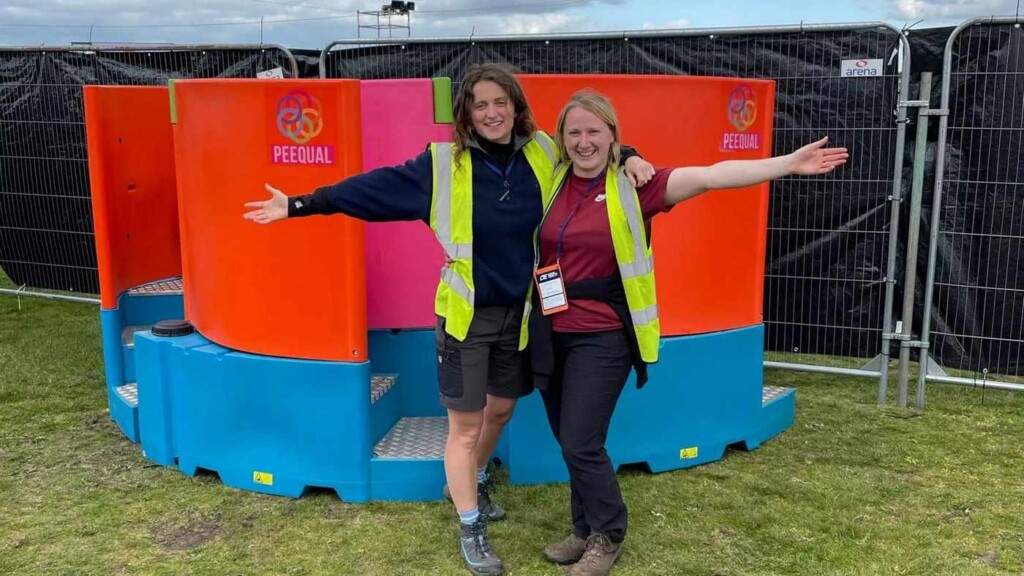
Armed with specially designed female port-a-potties, a team of firms in London thinks that solely using urine from female competitors at the London Marathon, a significant amount of cropland can be fertilized.
Why just female toilets, you may ask? That’s because the startup called Peequal initially aimed to design a urinal-style portable event toilet since the lines at female toilets tend to be far longer than at men’s
Stricken by nerves and jitters, and filled up with water for a long run, hundreds of female runners run to the toilets long before they run through the streets of London. Peequal’s unique design is claimed to reduce the time of a woman’s average toilet visit by 270%.
Now, at Peequal’s third London Marathon, the firm is teaming up with NPK Recovery which estimates that 1,000 liters of urine from the toilets at the starting line, if scaled to capture every runner’s pee throughout the whole day, it could fertilize enough wheat for 3,000 loaves of bread.
“Urine doesn’t have to be a waste product,” said Hannah Vandenbergh, founder of NPK Recovery.
“We’re excited to be playing a small part in helping support the sustainability commitments of the iconic TCS London Marathon. Ultimately, we want to help event organizers all over recycle their urine and reduce their carbon footprints.”
The NPK Recovery technology uses bacteria to treat and sanitize the urine, while at the same time turning it into a fertilizer. Last year, over 53,000 runners participated in the marathon, a veritable goldmine of potential urea, nitrogen, and ammonia—key ingredients in both urine and plant fertilizers.
Quote of the Day: “Your emotional sense of well-being dictates your life.” – Neville Goddard
Photo by: Andrej Lišakov for Unsplash+
With a new inspirational quote every day, atop the perfect photo—collected and archived on our Quote of the Day page—why not bookmark GNN.org for a daily uplift?
Arouca Bridge - credit CC 2.0. Luis Ascenso from Lisbon
4 years ago today, the world’s longest pedestrian footbridge opened for public use in recreation. The Arouca 516 spans the Paiva River in northern Portugal, and has a length of 1,693 feet. The bridge was designed by the Portuguese research institution Itecons and cost about €2.3 million to build. It takes about 10 minutes to cross if you’re taking in the views, and four, reports CNN, if you say your prayers and make a run of it. READ more about the bridge… (2021)
The stem on the right is JRT, a new drug just two atoms of difference to LSD, seen to the left as 'control' -credit, Manor et al.
The stem on the right is JRT, a new drug just two atoms of difference to LSD, seen to the left as ‘control’ -credit, Manor et al.
With its ability to aid in enhancing neuroplasticity, the famous hallucinogenic compound LSD has been theorized as a treatment option for neurological disorders like cognitive decline and schizophrenia.
One wouldn’t want to dose a schizophrenic with LSD, but following the synthesis of a new molecule based on LSD at a laboratory in California, they may never need to.
JRT is identical to LSD within a margin of two atoms, and it was created at the Univ. of California Davis to solve existing shortages of potent neurotherapeutics for use in treating schizophrenia and cognitive decline.
A study that tested JRT in mice found that it could elicit a 46% growth in the density of dendritic spines on the exteriors of neurons. These organelles work a little like antennae, and receive input from synapses, or the connections between neurons that drive cognitive function.
Synapses were also found to be increased under the influence of JRT—by 18% in the pre-frontal cortex.
However unlike LSD, there was no indication whatsoever that the mice were undergoing hallucinogenic effects, nor did it promote gene expression associated with schizophrenia, something that is amplified in LSD use.
“Basically, what we did here is a tire rotation,” said corresponding author David E. Olson, director of the Institute for Psychedelics and Neurotherapeutics at UC Davis. “By just transposing two atoms in LSD, we significantly improved JRT’s selectivity profile and reduced its hallucinogenic potential.”
“The development of JRT emphasizes that we can use psychedelics like LSD as starting points to make better medicines—medicines that can be used in patient populations where psychedelic use is precluded.”
The work was overseen by Uri Manor, Assistant Professor at UC San Diego School of Biological Sciences, whose lab provided state-of-the-art electron microscopy of the mice’s brains.
JRT produced robust anti-depressant effects, with it being around 100-fold more potent than ketamine, the state-of-the-art fast-acting anti-depressant. It also promoted cognitive flexibility, successfully addressing deficits in reversal learning that are associated with schizophrenia.
Existing pharmaceutical options for schizophrenia, the authors explain, come with major side effects and are only administered as a last resort.
Though the principle target of the study was schizophrenia, the improvement in neuroplasticity could have therapeutic effects in other neuropsychiatric and neurodegenerative diseases characterized by synaptic loss and brain atrophy, something the team is currently testing more and which represents the next phase of this exciting research.
SHARE This Exciting Development In Psychedelic-Based Neuropharmaceuticals…
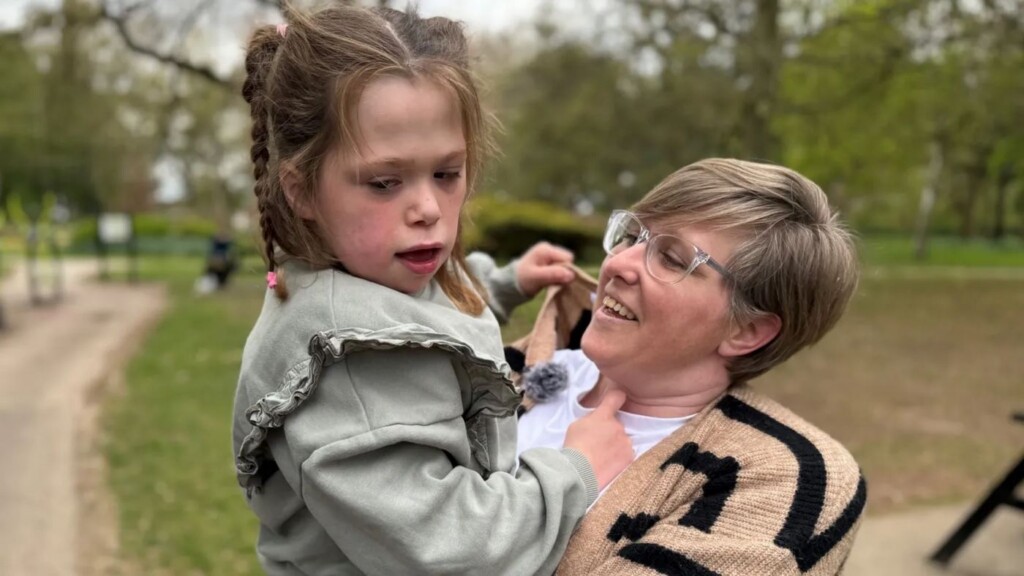
Vanelope with her mom - credit, supplied by the family
Vanellope with her mom – credit, supplied by the family
Last Wednesday, a team of English surgeons and attendants arrived in the city of Leicester to be briefed on an upcoming surgery never before attempted or imagined in the history of the country.
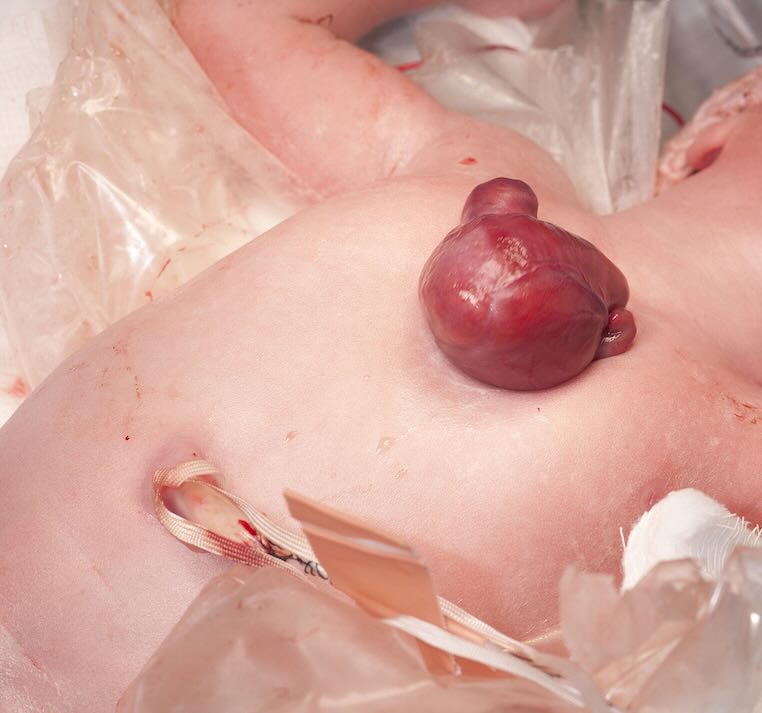
Their patient was Vanellope Wilkins, the solitary survivor known to British medicine of ectopia cordis, a condition where a fetus develops with its heart outside its body.
Over a period of 9 hours, the team which included visiting surgeons from London would form a protective cage around Vanellope’s heart by reforming her ribs, and though her team included some of the best pediatric surgeons in the country, the procedure had never been done before, and was invented specifically for Vanellope’s case.
Born in November 2017, the child had to be kept in intensive neonatal care for the first 14 months of her life.
Requiring a large amount of medical supervision, she is both autistic and nonverbal. Graphic imagery obtained by the BBC shows Vanellope—her heart exposed in the center of her chest after it got caught and then fused onto her skin during development.
Ectopia cordis occurs in just a few babies per million births and has a low survival rate, and Vanellope required surgery immediately upon entering the world, a process which itself required 50 people to oversee.
SWNS
Consultant pediatric surgeon Nitin Patwardhan was there when it happened, and was one of the surgeons who recently stitched Vanellope’s heart back behind her chest bone.
“I’d lie if I say I don’t get nervous,” Dr. Patwardhan told the BBC on the morning of the surgery. “But having been in this profession for so many years, you actually look forward to it because at the end of the day, you’re doing something that will change somebody’s life.”
A handful of children in the US have also survived this condition, and now at 7 years of age, Vanellope has been deemed suitable for a permanent solution to her unique medical hazard.
Placed on a bypass machine, Dr. Patwardhan and his team detached her right ventricular outflow tract and pulmonary artery from where they were attached to the skin, before breaking her ribs and reforming them in a protective cage around the heart’s new location.
A sense of history and anticipation was present in the theater before and during the procedure, BBC reports. The operation was a success, and when the team was allowed to retire from the day’s work, they dubbed Vanellope “one of a kind,” in the truest sense of the word.
“The best satisfaction we derive from this is when you get a text message from the mom to say ‘thank you, you guys are amazing’,” Ikenna Omeje, another of the surgical team who also operated on Vanellope when she was born, told the BBC.
“I think personally, I have just done my job, but it has made a difference to someone and that is very satisfying.”
Naomi Findlay, Vanellope’s mother, says that in the past, bringing her into the hospital has always been a frightful episode, but now, with her daughter recovering in the pediatric intensive care unit, she’s become quietly confidant, and can’t wait to take her back home to see her brothers and younger sister.
SHARE This Young Girl’s Miracle Survival Story With Your Friends…
Quote of the Day: “The mouth obeys poorly when the heart murmurs.” – Voltaire
Photo by: Brian Wangenheim
With a new inspirational quote every day, atop the perfect photo—collected and archived on our Quote of the Day page—why not bookmark GNN.org for a daily uplift?
Artist impression of NASA’s Lucy space probe. Scientists have flown a spacecraft by an odd 5-mile-long asteroid - credit, NASA, via SWNS
An artist’s impression of NASA’s Lucy space probe. Scientists have flown a spacecraft by an odd 5-mile-long asteroid – credit, NASA, via SWNS
Asteroids are hugely significant features of our solar system, and a NASA space probe just sent back a photo of one as it passed close-by, revealing its odd, peanut-like shape.
NASA’s Lucy space probe is on a 12-year journey to study Jupiter’s Trojan and main-belt asteroids, aiming to uncover insights into the early solar system’s formation and planetary origins.
On its way, she passed within approximately 600 miles (960 km) of the asteroid Donaldjohanson on April 20th.
The bizarrely-shaped object has been compared to a lumpy bowling pin by space-watchers, with NASA describing it as looking like two ice cream cones, and GNN, being based in Virginia, deciding it was more peanut-shaped.
The space rock is so large that Lucy could not capture its entirety in its first set of images beamed back to Earth.
It will take up to a week to downlink the remainder of the encounter data from the spacecraft, which should give a more complete picture of the asteroid’s overall shape. Donaldjohanson is approximately 135 million miles from Earth.
An image of asteroid Donaldjohanson captured by NASA’s Lucy space probe – credit, NASA via SWNSAn image of asteroid Donaldjohanson captured by NASA’s Lucy space probe – credit, NASA via SWNS
“In its second asteroid encounter, NASA’s Lucy spacecraft obtained a close look at a uniquely shaped fragment of an asteroid that formed about 150 million years ago,” a statement from NASA read.
“The asteroid was previously observed to have large brightness variations over a 10-day period, so some of Lucy team members’ expectations were confirmed when the first images showed what appeared to be an elongated contact binary (an object formed when two smaller bodies collide).”
However, the team was surprised by the odd shape of the narrow neck connecting the two lobes.
Hal Levison, principal investigator for Lucy at Southwest Research Institute, said that Donaldjohanson reveals how asteroids are capable of being far more complex than simple space rock debris.
“As we study the complex structures in detail, they will reveal important information about the building blocks and collisional processes that formed the planets in our Solar System,” Levison said.
Lucy will spend most of the remainder of 2025 traveling through the main asteroid belt and should encounter the mission’s first main target, the Jupiter Trojan asteroid Eurybates, in August 2027.
“These early images of Donaldjohanson are again showing the tremendous capabilities of the Lucy spacecraft as an engine of discovery. The potential to really open a new window into the history of our solar system when Lucy gets to the Trojan asteroids is immense,” said Tom Statler, program scientist—one of the highest roles—for the Lucy mission.
WATCH an explainer video from NASA…
SHARE This Story Of An Interplanetary Close-up With A Giant Asteroid…
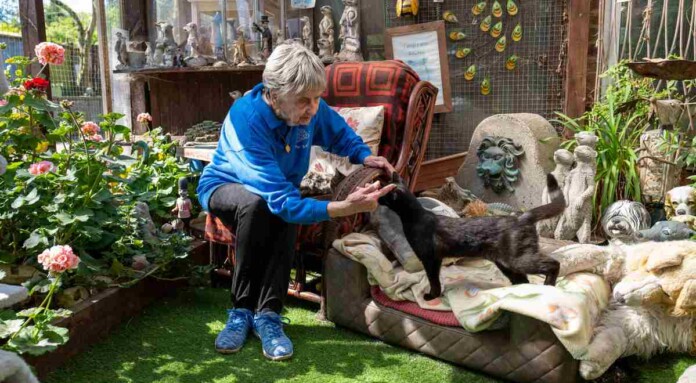
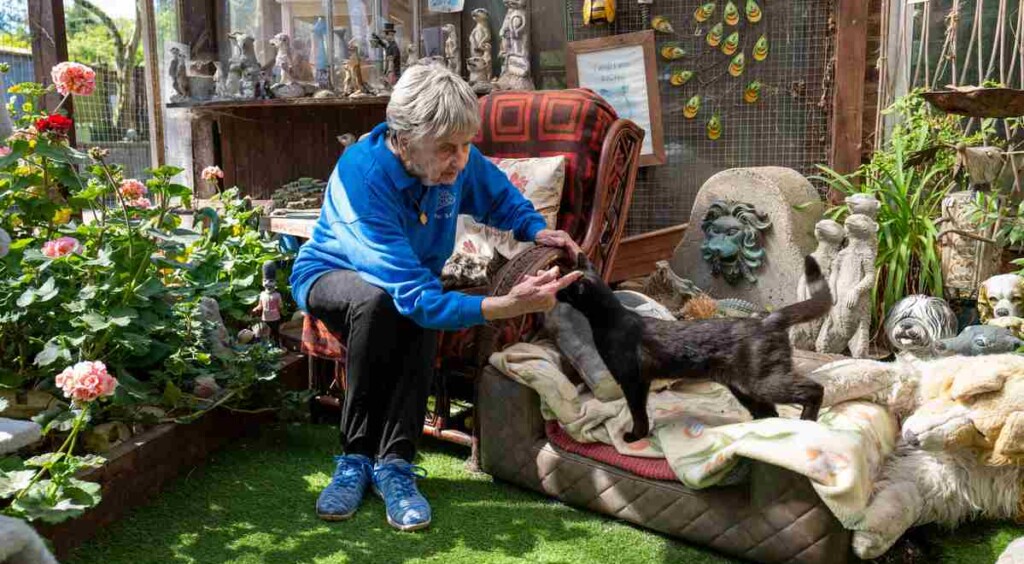
A 90-year-old Englishwoman who owns an animal rescue sanctuary has reportedly rescued 10,000 animals from abuse or abandonment.
Barby Keel has dedicated 54 years to running the Barby Keel Animal Sanctuary in Sussex, UK, a long journey that she admits won’t come to an end anytime soon, provided she can stay on her feet.
Keel’s story began in the 1970s, when a British army soldier stationed in Northern Ireland asked her to watch his dog while he was deployed.
Whatever gravitational pull attracts animals to certain individuals, Keel’s was so strong that the dog decided to stay.
She took in another dog before a charity called the Bexhill Cats Club asked her to take in some cats. Fast-forward 50 years and she looks after more than 600 animals including 160 cats, 16 pigs, 8 dogs, 6 horses, 100 chickens, and 80 rabbits.
“Before long I had about 40 cats, and started taking in farm animals like sheep, cows, pigs, and goats,” she told the SWNS media outlet.
“Some of the animals are re-homed, liked the cats, dogs, and some rabbits, but the majority of them will stay on the farm and live out their days here.”
The 12-acre sanctuary, which she ran for 20 years all by herself but now manages with a “motley” crew of volunteers, provides a refuge for hundreds of abandoned, rescued, or abused animals from farms, kennels, or private owners.
Keel tends to the animals daily, and only leaves the sanctuary every few weeks to go shopping or play for the local male darts team. In fact, despite her advanced age, she “never” takes a day off.
Despite having battled cancer three times, the animal-lover says she has “no plans” to slow down or retire.
Barby Keel admits that a ‘nose boop’ can keep her going when she’s too tired to continue the work – credit SWNS
“Some days I am shattered—it’s hard work,” she admits. “But then I get a little nose ‘boop’ or a face peers up at me, and I remember why I’m doing this. My animals come first and always will.”
That promise included ending a long-term relationship on their behalf, after her ex-partner gave her an ultimatum: ‘me or the animals.’
The Barby Keel Sanctuary is a nonprofit organization and runs entirely on donations. It has recently re-opened to the public and will be free to visit every Sunday until October 2025 where guest can see the animals, or visit the café, souvenir shop, or vivarium.
“We also run a shop on site, and I buy bulk food with my pension money and sell it for cheap, so people can afford to feed their pets,” she said. “It was packed for the reopening, which was amazing.”
“I’m so grateful to my motley crew of volunteers—they keep everything running—and the generous public,” Keel said. “I know I’m getting older so I know my limitations.”
“I don’t deal with the big animals anymore but I still get up every morning to feed all the cats and see them all. It’s a good life.”
SHARE This Woman’s Dedication With Your Animal Loving Friends…
99 years ago today, Harper Lee, the author of To Kill a Mockingbird, was born. During the two and a half years spent writing the novel in New York, the Alabama-born author became so frustrated that she tossed the manuscript out the window, into the snow—but her agent made her retrieve it! Published in 1960, the book was immediately successful, winning the Pulitzer Prize. READ More… (1926)