













All News - Page 131 of 1713 - Good News Network
Home Blog Page 131

Beyond the ‘Dragon Arc’ Astronomers Unveil a Treasure Trove of Hidden Stars

Hubble image of Abell 370, a galaxy cluster located nearly 45 billion light-years away from Earth that features several arcs of light, including the Dragon Arc (lower left of center) - credit: ASU press, via NASA.
Hubble image of Abell 370, a galaxy cluster located nearly 45 billion light-years away from Earth that features several arcs of light, including the Dragon Arc (lower left of center) – credit: ASU press, via NASA.

Observing individual stars halfway across the observable universe has generally been regarded as impossible in astronomy, akin to trying to use binoculars to see individual grains of dust in the Moon’s craters—yet that’s exactly what the James Webb Space Telescope just accomplished.

Leveraging a pair of remarkable cosmic phenomena, an international team of astronomers accomplished this seemingly unattainable goal—now set to change our understanding of the cosmos.

Using JWST data, the astronomers observed a galaxy nearly 6.5 billion light-years from Earth, a time when the universe was half its current age. In this distant galaxy, the team identified many individual stars, which were made visible thanks to an effect known as gravitational lensing and JWST’s high light-collecting power.

The paper describing the discovery has been published in Nature Astronomy, and is led by Yoshinobu Fudamoto, an assistant professor at Chiba University in Japan and a visiting scholar at Univ. of Arizona Steward Observatory.

Recent advances in astronomy have opened new possibilities by leveraging gravitational lensing—a natural magnification effect caused by the strong gravitational fields of massive objects.

As predicted by Albert Einstein, gravitational lenses can amplify the light of distant stars by factors of hundreds or even thousands, making them detectable with sensitive instruments like JWST.

“When we predicted in 2018 that stars in galaxies at cosmological distances might be observed with Webb individually as they go across these nearly infinite magnification lines (the so-called ‘caustics’), I never dreamed of Webb seeing them in such large numbers,” said Rogier Windhorst from ASU.

“And now here we are observing these stars popping in and out of the images taken only a year apart, like fireflies in the night. Webb continues to amaze us all.”

Most galaxies, including the Milky Way, contain tens of billions of stars. Astronomers can observe stars one by one in nearby galaxies such as the Andromeda galaxy. However, in galaxies billions of light-years away, stars appear blended together. This presents a long-standing challenge to scientists studying how galaxies form and evolve.

“It was amazing to see the observations taken over time of the Dragon Arc. Stars would appear and disappear from image to image like a twinkling Christmas tree,” said Nicholas Foo, a graduate research associate at ASU’s School of Earth and Space Exploration, and co-author on the paper.

“These findings have typically been limited to just one or two stars per galaxy,” Fudamoto told ASU press. “To study stellar populations in a statistically meaningful way, we need many more observations of individual stars.”

Study co-author Fengwu Sun was inspecting JWST images of a galaxy known as the Dragon Arc, located along the line of sight from Earth behind a massive cluster of galaxies called Abell 370. Due to its gravitational lensing effect, Abell 370 stretches the Dragon Arc’s signature spiral into an elongated shape—like a hall of mirrors of cosmic proportions.

In December 2022 and 2023, JWST obtained two pictures of the Dragon Arc. Within these images, astronomers counted 44 individual stars whose brightness changed over time due to variations in the gravitational lensing landscape.

“This groundbreaking discovery demonstrates, for the first time, that studying large numbers of individual stars in a distant galaxy is possible,” Sun said, as long as nature is there to lend a helping hand.

However, even powerful gravitational magnification from a galaxy cluster is not sufficient to magnify individual stars in galaxies so far away. In this case, the discovery was made possible by a serendipitous alignment of “lucky stars.”

Illustration courtesy of Yoshinobu Fudamoto

“Inside the galaxy cluster, there are many stars floating around that are not bound by any galaxy,” said co-author Eiichi Egami, a research professor at Steward Observatory. “When one of them happens to pass in front of the background star in the distant galaxy along the line of sight with Earth, it acts as a microlens, in addition to the microlensing effect of the galaxy cluster as a whole.”

MORE WORK FROM JAMES WEBB: Earliest, Most Distant Galaxy Discovered with Webb Telescope Dates to 300Mil Years After Big Bang

While the extra-galactic stars provided a microlensing effect, large clusters of dark matter provided a macrolensing effect, ten times stronger than that provided by the stars.

Over a brief time frame—ranging from a few days to a week—when these two effects perfectly align with distant stars, the magnification and the apparent brightness of the stars increase significantly.

THE BEAUTY OF OUR COSMOS: Once Bright and Lively the Sombrero Galaxy Mellows Out Under James Webb Telescope’s Infrared Light

The combined effects of microlensing dramatically increase the magnification factor, allowing JWST to pick up individual stars that would otherwise be too far and faint to be detected.

By observing the same galaxy multiple times, astronomers can detect stars in distant galaxies as they appear to twinkle due to the varying effective magnifications created by the combined macrolens/microlens effect.

SHARE This Fascinating Stellar Research From ASU With Your Friends…

Consumer Protection Bureau Will Soon Remove Medical Bills from Your Credit Reports

A little-known federal regulatory agency called the Consumer Financial Protection Bureau (CFPB) just finalized a rule that will prevent medical debt from affecting consumer credit scores.

Millions of Americans live in fear of developing too many bad marks on their credit score. This mysterious number shared between financial institutions can govern whether or not an American can receive a loan. Any missed payment or default is likely to show up as a black mark, and may hinder them from receiving a mortgage, car loan, or other kind of liability.

The CFPB’s ruling will remove an estimated $49 billion in medical bills from the credit reports of about 15 million Americans. The CFPB’s action will ban the inclusion of medical bills on credit reports used by lenders and prohibit lenders from using medical information in their lending decisions.

The CFPB has found that medical debts provide little predictive value to lenders about borrowers’ ability to repay other debts, often because large medical expenses are typically incurred involuntarily. They frequently represent absolutely necessary expenses that would be prioritized above most other discretionary spending had they been seen ahead of time.

FICO and VantageScore, two major credit scoring companies, have agreed to reduce the degree to which medical-related costs affect credit scores, while Equifax, Experian, and TransUnion, three national credit reporting conglomerates have agreed to remove $50 billion of medical debt from affecting credit scores.

MORE ON THIS TOPIC:

The CFPB expects the rule will lead to the approval of approximately 22,000 additional, affordable mortgages every year and that Americans with medical debt on their credit reports could see their credit scores rise by an average of 20 points.

“People who get sick shouldn’t have their financial future upended,” said CFPB Director Rohit Chopra. “The CFPB’s final rule will close a special carveout that has allowed debt collectors to abuse the credit reporting system to coerce people into paying medical bills they may not even owe.”

SHARE This Positive Consumer Protection With Your Friends…

“You have to participate relentlessly in the manifestations of your own blessings.” – Elizabeth Gilbert

Quote of the Day: “You have to participate relentlessly in the manifestations of your own blessings.” – Elizabeth Gilbert

Photo by: Marcos Paulo Prado

With a new inspirational quote every day, atop the perfect photo—collected and archived on our Quote of the Day page—why not bookmark GNN.org for a daily uplift?

US Newspapers Are Deleting Old Crime Stories, Offering Subjects the ‘Right to be Forgotten’

- credit: Chris Quinn / Cleveland.com.
– credit: Chris Quinn / Cleveland.com.

An Ohio news outlet is leading a change of tradition in American reporting which their editor-in-chief calls the “right to be forgotten.”

Long considered taboo to retract or erase old stories from newspaper archives, those that feature mug shots and report on residents charged with crimes can, in our search engine-powered world, continue to detract from their professional lives years after they’ve paid their debt to society.

Now, in much the same way that civil rights attorneys fight to get citizens’ criminal and court records sealed, Chris Quinn, editor of Cleveland.com and Plain Dealer newspaper is advocating that newspapers remove old stories regarding crimes or misdemeanors that have been atoned for.

The Guardian reports that the concept has since spread to the Boston Globe, the Atlanta Journal-Constitution, the Bangor Daily News in Maine, the Oregonian, and New Jersey’s NJ.com.

Quinn explained the reasoning behind his efforts in an article on Cleveland.com, which began back in 2018 and had just finished taking 5 names and mug shots out of the archives.

“One was someone who had been in the health field and stole some drugs from her employer. A judge eventually declared that she not only had completed her sentence but had completely rehabilitated herself.”

“She lost her license to work in her healthcare field, but as she sought to begin a new career, any Google search of her name brought up our stories about her crime, along with her mug shot. Another was a man who stole some scrap metal years ago, completed his sentence, and had his record sealed. Yet our story dogged him.”

Quinn was interviewed in the Guardian and said he regularly received phone calls and emails from these people, asking for their stories to be taken down. He was tired of “standing on tradition” instead of just being compassionate.

“I couldn’t take it anymore
 I just got tired of telling people no,” he said.

FORGIVING AND FORGETTING: Michigan Clears Criminal Records for Thousands of Low-Level, Nonviolent Offenders–‘Meaningful 2nd Chances’

An ironic ally in the fight to be forgotten came from Google, who in 2022 paid Quinn and his team $200,000 to proactively search their own archives of 1.4 million content pieces and delete stories that may be embarrassing to citizens who have served time and or paid their debt to society, or even just those who committed embarrassing acts.

The Oregonian is also taking action to ease the burden of past misdemeanors on their perpetrators. According to editor Therese Bottomly, each request is taken very seriously and looked at individually. Some are removed, others are deindexed from Google so they don’t appear in a search query but can still be found on the Oregon archives for one reason or another.

OTHER STORIES LIKE THIS: Jobs, Not Jail: A Judge Was Sick of Sending Kids to Prison, So He Found a Better Way

Some, however, are maintained because the subject’s behavior rose to certain levels.

“These folks are going to be our neighbors, our co-workers and hopefully contributing members of society someday,” Bottomly told the Guardian. “So should we figure out ways to at least not be an unnecessary barrier to re-entry for something truly minor and in the past, and for which somebody has paid their debt?”

SHARE These Good Works From The Nation’s Ethical Reporters…

Coffee Drinkers Less at Risk of Head and Neck Cancers, New Research Suggests

- credit: Katelyn Perry, via Unsplash
– credit: Katelyn Perry, via Unsplash

The last 15 years have seen a remarkable change in the clinical considerations of coffee.

Studies examining the caffeinated beverage for its potential effects on more than several different biological systems, from the kidneys to mood, have pinned it as something like a health drink.

Now, research from the University of Utah published in the journal Cancer has shown that people who drink 4 cups of caffeinated coffee per day were at a lower risk of developing head and neck cancer.

The seventh most common form of cancer worldwide, head and neck cancer had an almost 50% mortality rate among 750,000 patients in 2020—the last year worldwide data on head and neck cancer was collected.

The team from Utah examined 14 older studies covering around 9,500 head and neck cancer patients and almost 16,000 cancer-free people to see how the diagnosis rates stacked up when the patients’ coffee consumption was factored in.

People who drank more than 4 cups a day “had 17% lower odds of having head and neck cancer overall, 30% lower odds of having cancer of the oral cavity, and 22% lower odds of having throat cancer.”

A 2016 meta-analysis found that coffee consumption was linked to a reduced risk of oral, pharynx, liver, colon, prostate, endometrial cancer, and melanoma but an increased lung cancer risk, while a separate paper from the same year showed a dose-dependent reduction in risk of colorectal cancer.

COFFEE AS A CURE: 

Speaking in the broadest and least scientific language, plants that contain strongly flavored chemical compounds, such as cinnamon, ginger, garlic, turmeric, clove, or tea, generally prove to be strong promoters of wellness.

Perhaps this trend extends to coffee.

TELL Your Friends About Yet Another Reason To Drink Coffee, SHARE This Story…

‘Road-Tripping Auntie’ Broke with Husband and Tradition to Travel Around China, Becoming Viral Celebrity

The 'Road-tripping Auntie' next to her third car - credit: Su Min, released.
The ‘Road-tripping Auntie’ next to her third car – credit: Su Min, released.

For millions of Chinese women, this road-tripping grandmother divorcĂš is an inspirational figure of freedom from convention.

Separating from an abusive, violent husband, she has spent the last four years traveling around her vast country all alone, while amassing a gargantuan social media following that refers to her affectionately as “auntie.”

Reporting from Beijing, BBC’s Chinese correspondent Laura Bicker spoke with social media celebrity Su Min about her adventures and the marriage she has worked hard to terminate.

“I was a traditional woman and I wanted to stay in my marriage for life,” she says. “But eventually I saw that I got nothing in return for all my energy and effort—only beatings, violence, emotional abuse, and gaslighting.”

Virtually, her whole life has been that of a traditional Confucian woman, supporting her brothers, then supporting her husband, then supporting her daughter, and then supporting her granddaughters.

Throughout it all, however, life was brutally hard with her husband, whom she married via arrangement.

Diagnosed with depression after nearly 40 years together, she made an agreement with her daughter that after the grandkids had left Kindergarten, she would leave her husband—a promise she kept in the most extraordinary way after watching a TikTok video of a couple living together in a van and traveling the country.

She thought this was her way out.

Even the country’s COVID-19 response couldn’t stop Su Min, who told her husband in 2019 that they were finished and entered into divorce court where she paid out a settlement of around $21,000. Shortly thereafter, she was on the road in a VW hatchback with a rooftop tent, a pension, and true liberty.

Her followers call her the “road-tripping auntie,” and she was named one of BBC’s 100 most influential women of the year.

“We women are not just someone’s wife or mother
 Let’s live for ourselves!” wrote one follower of Su’s on a video.

– credit: Su Min, released.

Another mentioned the settlement was “worth every penny,” adding it was her turn to “see the world and live a vibrant, unrestrained life.”

OTHER VIRAL SOCIAL STARS: 3rd Generation Shoemaker Goes Viral–Has Millions Watch Him Fix Shoes as ‘America’s Cobbler’

Over the last 48 months, she has driven in 3 different cars across 20 Chinese provinces, and through 400 cities. She hopes to take her travels internationally but is afraid of language barriers.

MORE STORIES FROM CHINA: China ‘Angel’ Stops 469 Suicidal People Jumping off Bridge Over 21 years

Many of the travel experiences she enjoys are little acts of defiance, allegorically even, in the face of her old life—not just visiting a street market in her home province of Henan, but stopping to smell the chili peppers her husband forbade her from bringing into the home.

VAN LIFE: English Couple Quit Their Jobs to Travel Four Years Around the World in a Van Becoming Social Media Stars

Su never imagined becoming a figure of inspiration, but believes that all women, no matter where they’re from or what their circumstances are, must be good to themselves.

“I want to tell you that no matter how old you are, as long as you work hard, you will definitely find your answer. Just like me, even though I’m 60 now, I found what I was looking for,” she said.

SHARE This Inspiring Woman’s Late-Life Revolution With Your Friends… 

NBA’s Mikal Bridges Nets his Dream Job as Second Grade Teacher for a Day – (WATCH)

Composite image (left) Getty Images for Unsplash+ (right) Brooklyn Nets' Mikal Bridges shooting a free-throw - credit Leaf8613, CC 4.0., via Wikimedia.
Composite image (left) Getty Images for Unsplash+ (right) Brooklyn Nets’ Mikal Bridges shooting a free-throw – credit Leaf8613, CC 4.0., via Wikimedia.

One might imagine a star NBA forward would already feel he had achieved his dreams, but not for the Brooklyn Nets’ Mikal Bridges.

Since he was young, there was something else he had always wanted to do—teach second grade.

Getting back to Brooklyn after 1:00 a.m. following a March 2024 victory over the Cavaliers 120-101, Bridges was up the next morning teaching a second-grade class at PS 134 in the borough.

Despite the dearth of sleep, Bridges told CBS News that the kids helped energize him.

“Their energy was just like, what got me going so fast. They got me excited,” Bridges said.

“I loved second grade when I was young,” he added. “I feel like that was one of the years I really remember. Just having a great year. I had a great teacher named Ms. Porter and just I feel like I always loved second grade.”

Bridges got to lead PE class, teach math, which he says was his most successful subject, and also sit in on the xylophone course.

POST-COURT CAREERS: Former NBA Star Rick Fox is Manufacturing Concrete That Absorbs More CO2 Than it Creates

Bridges told both the kids and CBS that he has his eye on a teaching position after his career in the NBA comes to an end.

“But basketball doesn’t go forever,” he answered to a child’s question. “This is just the first part of my journey, so I think teacher is going to come up next. Trying to do both.”

WATCH the story below from CBS News… 

SHARE This Gentleman Sports Star Turned Talented Teacher On Social Media… 

“Faith makes all things possible… love makes all things easy.” Dwight L. Moody

Octavio Fossatti

Quote of the Day: “Faith makes all things possible… love makes all things easy.” Dwight L. Moody

Photo by: Octavio Fossatti

With a new inspirational quote every day, atop the perfect photo—collected and archived on our Quote of the Day page—why not bookmark GNN.org for a daily uplift?

Octavio Fossatti

Young Boy Survives 5 Days in ‘Lion-infested’ Game Park in Zimbabwe

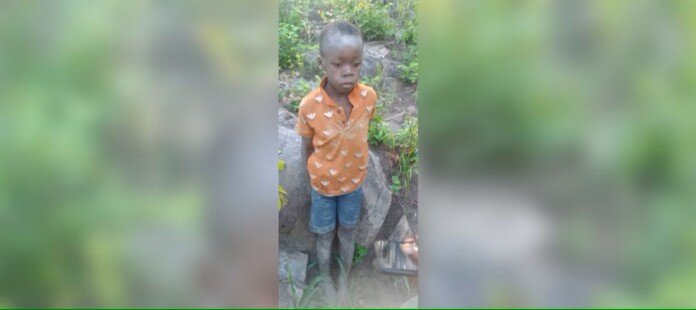
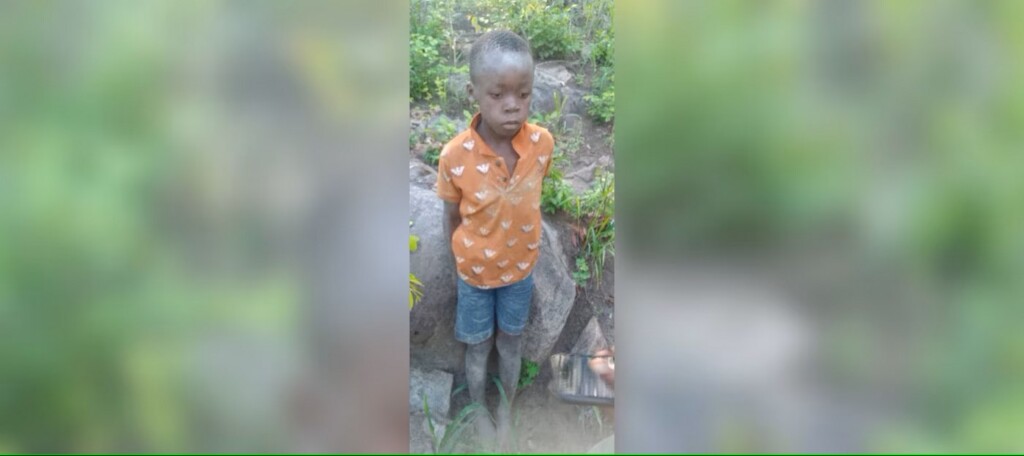
The boy after he was found - credit: Mutsa Murombedzi X.
The boy after he was found – credit: Mutsa Murombedzi X.

A 7-year-old boy has survived nearly a week lost on the savannah in Zimbabwe.

Returning home to his rural village on New Year’s Eve, he avoided lions and ornery herbivores while using a clever trick to stave off dehydration. For food, he ate berries.

Zimbabwe Parks and Wildlife Management Authority (ZimParks) received notice of a missing boy on the evening of December 27th.

A statement from ZimParks explained that fellow villagers, police officers, and park rangers organized a search party, but were hindered by heavy rains. On December 30th, human footprints were found that eventually led rescuers to the boy in the early morning hours of the following day.

“Remarkably, it is estimated that he walked through the harsh terrain of the lion-infested Matusadona National Park for 49 kilometers (30 miles) from his village to the point where he was found,” ZimParks said.

“During this period, he survived on wild fruits and would dig a small hole along the dry river bank to access underground water to drink.”

According to the parliamentarian for the province in which Matusadona lies, the boy “was very frail when he was rescued” and “had to be put on [an IV] drip.”

“What saved him is the technique learnt from a young age in dry [and] drought prone areas of drawing water from a dry river bank — digging a mufuku,” the parliamentarian, Mutsa Murombedzi, wrote on X.

She thanked everyone in and around the community who lent their efforts to the search, calling it “a testament to the power of unity, hope, prayer and never giving up.”

MORE SURVIVAL STORIES: 20-yo Hiker Survives to See Family Again After Incredible 50 Days Lost in the Rockies

Stretching 570 square miles, Matusadona is a vibrant ecosystem where much of the classic African megafauna live, breed, and die in peace. Populations of lions, rhino, buffalo, and elephants flourish, making it a real challenge to avoid encountering them, which as a small boy, one could only imagine the consequences.

His technique of digging a mufuku, sometimes called a “gypsy well” in English, was well remembered, and is a day-1 survival technique for getting uncontaminated drinking water if none is available.

ANOTHER INSTANCE OF THIS: Little Boy Lost for 6 Days in Harsh Kenyan Wilderness is Rescued: ‘An Amazing Moment’

The method is perfectly straightforward. Find a stream or creek where the bank is flat and beach-like. Measure about four hands-width from the water and dig a trench. Smooth down the sides as best as possible.

The river water will eventually seep through the hole, where the gravel, sand, and dirt will help to make the water safer from water-born parasites. The first liter or so of water will be brown and muddy. The more water one scoops out, the clearer it eventually will become.

CELEBRATE This Community Getting Their Little Fellow Back Home…

All of the Chicago City Buildings Now Run on Renewable Energy

Chicago skyline - Photo by Max Bender on Unsplash
Chicago skyline – Photo by Max Bender on Unsplash

In a laudable civic accomplishment, all 411 buildings owned and operated by the City of Chicago now either run on renewable energy or offset their emissions through financing renewables across the country.

The news helped ring in the new year and marks three years since the city signed a major agreement to receive solar power from the largest solar farm east of the Mississippi.

Former Chicago mayor Lori Lightfoot signed an agreement to buy power from Constellation, an electricity supplier, in 2022.

Constellation Energy now furnishes the supply from the 593-megawatt Double Black Diamond solar farm in Sangamon and Morgan counties, about 30 miles from Springfield, which has been under construction since the same year.

Owned and developed by Swift Current Energy, the farm will deliver about 70% of the municipal buildings’ total electricity needs.

“Every Chicagoan interacts with a city-owned building, whether the cultural center, City Hall, Harold Washington Library, O’Hare and Midway (international airports) or your local library. To be able to achieve this milestone on behalf of city residents is exciting,” Angela Tovar, chief sustainability officer for Chicago, told the Chicago Tribune.

The move will reduce the city’s carbon emissions by around 290,000 metric tons—or around the same effect as taking 62,000 vehicles off the roads, according to Grist.org.

LOOKING BACK BRIGHTLY: Renewable Electricity Generation Overtakes Fossil Fuels in UK for First Time Ever in a Calendar Year

However, since 30% of the emissions totals are accounted for by financing for renewable energy rather than renewable energy itself, the move has attracted criticism.

Tovar explained the financing allows time for the city to explore alternative sustainable methods to eventually remove that remaining 30%, such as rooftop solar.

MORE STORIES LIKE THIS: New York Hits Solar Energy Goals a Year Ahead of Schedule Adding Enough to Power a Million Homes

With the Double Black Diamond farm beginning to power the city this year, authorities have reportedly set a new goal of powering all buildings in the city limits with renewable energy by 2035, an ambitious goal that would make it the largest city in America to do so.

SHARE This Positive New Year’s News With Your Friends…
Man Finds Christmas Gift in Wall with His Name on it 46 Years Later

Credit: TKING Construction, via Instagram

A 53-year-old man was tearing down some old drywall this holiday season when he stumbled upon a time capsule.

It was a Christmas present, wrapped 46 years ago in vintage Disney paper from a bygone era. Meant for a stocking or to be placed under the tree, it was forgotten behind the wall all this time.

Tim King, who runs a construction business, was helping his parents with some home renovations when he found the package.

“Before we closed up the drywall on the wall, I was like, ‘I should probably look and see that there is nothing back there,’ and sure enough, there was a present,” King, from Lombard, Illinois, told KTLA 5.

“So when I pulled that out, it was super old wrapping paper, and then I was like, ‘Oh crap, that has my name on it.’”

According to King’s best guess, since his parents weren’t able to remember anything about it, it must have fallen through a gap in the wall or floor since they used to hide his Christmas presents in the attic above and there have been several additions since then.

CHRISTMAS 2024:

Documenting the discovery and unwrapping of the find, King’s Instagram videos accumulated 37,000 views.

Underneath the yellowed wrapping paper was a set of Matchbox Thunder Jets, which King said would have been a great gift since he was 6 when they were bought.

It can be agony for a kid to wait all 25 days to open a present, and if next year one of yours is bellyaching, try reminding them of Illinois’s Timothy King, who waited 46 years.

WATCH the two videos below…

SHARE This Man’s Christmas Surprise With Your Friends On Social Media… 

Donated Christmas Trees Enrich Zoo Animal Habitats While Reducing Landfill Waste

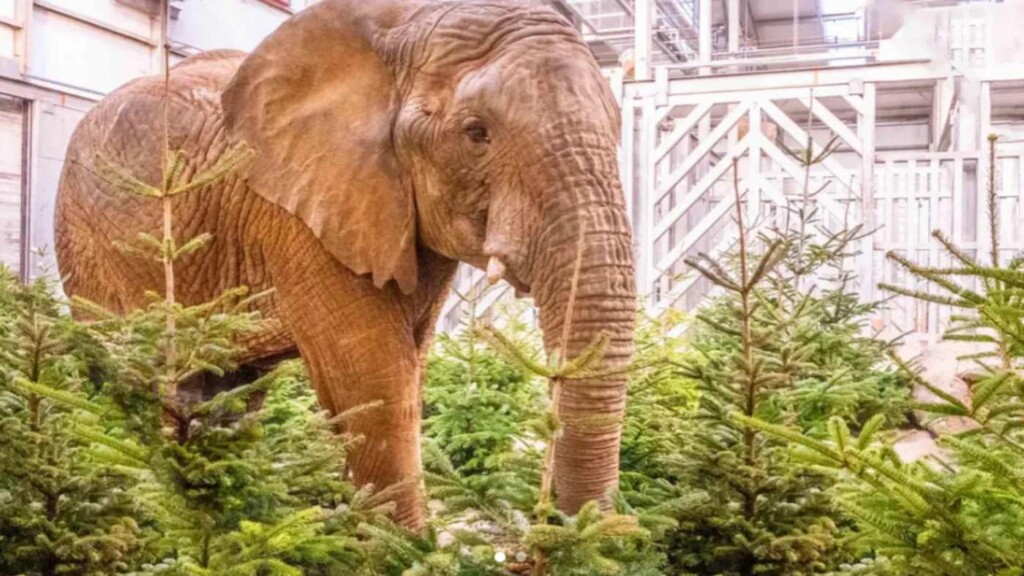
The elephants like to eat and throw them around - credit: Noah's Ark Zoo
The elephants like to eat and throw them around – credit: Noah’s Ark Zoo

A zoo in England is asking residents to donate their used Christmas trees to help enrich the lives of their residents, be they bear, elephant, or meerkat.

Noah’s Ark Zoo Farm in Bristol is now in its 5th year of asking for Christmas trees, which are often tossed in landfills following the conclusion of the holidays. They’ve diverted 15,000 Christmas trees from contributing to landfill waste, but the real joy is the Christmas spirit it lends to their resident animals.

The zoo’s curator Chris Wilkinson, said the trees make a real difference in the animals’ lives. Some, like their elephants, like to eat them, while others like the spectacled bears and rhinos, like to forage in between them.

Still others like to rub up against the trees and enjoy the pine scent, while for smaller animals, they provide a paradise of play and exploration.

“These meerkats live as a mob, and they have a group structure,” explains Larry Bush, one of the farm’s wildlife biologists. “So when we create a new stimulation inside their space like these Christmas trees, they’re really curious, they’re foraging in the trees, they’re using all of their senses to explore this new enrichment.”

“For the elephants—their habitat is full of sand, which means we can bury the trees and stand them up to make a whole forest for them to come and explore,” Wilkinson told the BBC. “They’ll eat them a bit, they’ll throw them around, they’ll explore for the food we put in.”

ZOO NEWS: Owl Escapes NYC Zoo But After Survival Instincts Kick-in Officials Give it Some Freedom in Central Park

This year they did the same for their spectacled bears, a small member of the species from the Andes Mountains. Planting a forest in their enclosure was an alternative to piling all the trees up in an enormous mass which they say the bears treat like a dog treats a pile of leaves in autumn.

This isn’t the only way local Brits can recycle their Christmas trees. One Christmas tree rental business in Yorkshire rents potted trees for the holiday season, replanting them in January so they can continue to grow.

MORE STORIES LIKE THIS: FedEx Delivers 300,000 Free Christmas Trees to Military Families With Annual Trees for Troops Program

Trees that are dying or too tall are then used as natural flood protection along the slopes of the Calder Valley, where small villages have been ravaged by floods for the last few years.

SHARE These Great Ways To Get More Out Of Your Christmas Tree… 

“The great thing about getting older is that you don’t lose all the other ages you’ve been.” – Madeleine L’Engle

Quote of the Day: “The great thing about getting older is that you don’t lose all the other ages you’ve been.” – Madeleine L’Engle

Photo by: Andrea Riondino

With a new inspirational quote every day, atop the perfect photo—collected and archived on our Quote of the Day page—why not bookmark GNN.org for a daily uplift?

Old Retired Police Dog Snaps Back into Service and Rescues Lost Hiker

Bear received his award from the Thin Blue Paw Foundation for locating a missing man while on a walk (Image Thin Blue Paw Foundation)

In a story which reminds us that heroes never really hang up their capes, a retired police dog in the UK saved a missing person on a walk.

The 12-year-old German Shepherd named Bear received the lifesaver award from the Thin Blue Paw Foundation, a charity that helps police dogs and which had previously partially paid for one of Bear’s surgeries.

It happened that on November 28th during a walk aimed at rehabilitating Bear’s stamina following surgery to remove some tumors, Bear’s sense of heroism was rehabilitated as well.

His owners, both retired officers themselves, had taken him to the South Downs—the beautiful green hills of southern England, to celebrate the pooch’s 12th birthday. Julia Pope, Bear’s owner, adopted him after a long career as a general police dog ended in 2020.

“Bear found several people during his working life who probably wouldn’t have survived without him, but he and his handler never got any recognition at the time because they were simply doing their job,” she told the Argus.

During their walk Bear led Julia and her husband Ian into deep brush where a man had fallen down. Wet, immobile, and confused, authorities were already looking for him when Bear found him.

DOGS TREATED LIKE HEROES:

Either the Thin Blue Paw Foundation, or Sussex Police Department got word that one of their former canines had performed an additional rescue post-service career, and Bear was recommended for the Lifesaver Award which was presented during a ceremony at Sussex HQ, something which Julia said was “completely unexpected.”

“For him to get this award now, in his retirement, and for his former handler, Iain, to have been there too, is very special. We’re all super proud of him.”

CELEBRATE This Elderly Dog Who Rescues Elderly People…

Gorgeous Suspension Bridge Set for Completion in 2025 Will Make History Immediately – (LOOK)

The Danjiang Bridge - credit: negativ.com via Zaha Hadid Architects, released
The Danjiang Bridge – credit: negativ.com via Zaha Hadid Architects, released

2025 will see the completion of some amazing buildings, but few will hold the eye as well as the prestige of the Danjiang Bridge in Taiwan—one of the last projects ever overseen by the legendary Iraqi-British architect Zaha Hadid.

Dubbed “The Queen of Curves,” Hadid died in 2016, a year following the completion of the bridge’s design plans. It will be the longest single-span, single-mast, cable-stayed bridge in the world.

– credit: negativ.com via Zaha Hadid Architects, released

With the aim of reducing congestion along another bridge across the Tamsui River, the Danjiang Bridge will host dedicated pedestrian, cycling, and roadways, with room to expand a light rail network across its 3,000-foot-long deck.

The bridge seeks to minimize its visual impact on the still-natural estuarine surroundings by using a single concrete mast erected as slenderly as possible. Rising 200 meters—or around 620 feet, it will bear the strain of two separate lines of cables stretching along the span which will wrap around one side of the mast.

This is referred to as an asymmetrical cable-stayed bridge, and the mast’s placement has been selected to avoid interfering with views of the sunset, while also reducing the impact on both the sensitive estuary ecosystem and boat traffic.

– credit: negativ.com via Zaha Hadid Architects, released

According to the late Hadid’s architectural firm, the Danjian Bridge will reduce through traffic by 30% on an existing bridge upriver, helping to improve Taiwan’s northern coastal traffic network while also enhancing accessibility throughout the region with the Port of Taipei and Taoyuan International Airport.

ANOTHER STUNNING BRIDGE NEWLY MADE: Awesome Bridge Swings Back and Forth to Allow Boats to Pass Over Long-Divided Scottish River (LOOK)

Personally overseen by Hadid herself, it will be one of the last glimpses of her genius revealed to the world, before she enters fully the annals of the profession’s history.

SHARE This Slender, Curvy Crossing Point With Your Friends… 

Once Like a War Zone, El Salvador’s Homicide Rate Is Now Freakishly Low–and Public Celebrates

Traditional dance in El Salvador, an activity that would have been unthinkable 10 years ago - credit: President of El Salvador, via Flickr CC 1.0.
Traditional dance in El Salvador, an activity that would have been unthinkable 10 years ago – credit: President of El Salvador, via Flickr CC 1.0.

GNN has reported several times since the end of 2023 about falling violent crime rates across American cities. But the latest homicide statistics coming out of neighboring El Salvador are truly something to celebrate.

Put simply, the Bukele Administration has turned the country from the most murderous in Latin America to the safest, across a single 5-year term.

With a rate of 1.9 per 100,000 inhabitants and a total homicide count of 119 during 2024, El Salvador is safer than many major cities in America.

It represents a 98% drop over 9 years.

President Nayib Bukele took power in 2019 and has enjoyed the backing of a friendly legislature and supreme court that has granted him extraordinary executive powers to combat paramilitary-like street gangs that controlled parts of the country.

Since 2022, the country has been under a state of emergency, during which time 83,000 arrests were made, and national policing forces took the fight to the gangs. Constitutional rights were suspended in some cases, and many were charged and imprisoned without due process of law, something the administration has been criticized for.

It’s difficult to argue with the results, however, since in 2015, El Salvador witnessed 6,656 homicides, placing it among war zones as one of the most dangerous countries on the planet.

FALLING CRIME RATES: Nigerian Authorities Seize 2 Tons of Pangolin Scales and Arrest Key Broker in Major Wildlife Trafficking Bust

Residents of the capital San Salvador told AP News that they can safely walk the streets again, where before the gangs controlled the movement of people in and out of neighborhoods.

Riding an enormous wave of popularity, Bukele won his February 2024 reelection campaign at a canter.

SHARE This Incredible Turn Around In Our Near Neighbor With Your Friends… 

Hummingbirds Live an Extreme Lifestyle Thriving on All-Sugar Diet That Would Put Us in a Coma

Anna's hummingbird/Becky Matsubara, CC license
Anna’s hummingbird/Becky Matsubara, CC license

(Originally published by Knowable Magazine—Written by Bob Holmes)

Everyone loves to watch hummingbirds—tiny, brightly colored blurs that dart about, hovering at flowers and pugnaciously defending their ownership of a feeder.

But to the scientists who study them, hummingbirds offer much more than an entertaining spectacle. Their small size and blazing metabolism mean they live life on a knife-edge, sometimes needing to shut down their bodies almost completely just to conserve enough energy to survive the night—or to migrate thousands of miles, at times across open ocean.

Their nectar-rich diet leads to blood sugar levels that would put a person in a coma. And their zipping, zooming flight sometimes generates g-forces high enough to make a fighter pilot black out. The more researchers look, the more surprises lurk within those tiny bodies, the smallest in the avian world.

“They’re the only bird in the world that can fly upside down and backwards,” says Holly Ernest, a conservation ecologist with the University of Wyoming. “They drink pure sugar and don’t die of diabetes.”

Ernest is one of a small number of researchers studying how hummingbirds cope with the extreme demands of their lifestyles. Here’s some of what scientists have learned about the unique adaptations of hummingbirds.

Put in the work

For years, most researchers had assumed that hummingbirds spent only about 30% of their day engaged in the energy-intensive business of flitting from flower to flower and guzzling nectar, while resting most of the other time. But when physiological ecologist Anusha Shankar looked closely, she found they’re often working a lot harder than that.

Shankar, now of the Tata Institute of Fundamental Research in Hyderabad, India, tried to figure out how broad-billed hummingbirds in Southern Arizona spend their days. Using a mix of experimental methods, she measured the birds’ metabolic rate during various activities and estimated their total daily energy expenditure. Adding in previous published data, Shankar was able to calculate the per-minute energy cost of perching, flying, and hovering—basically a bird’s three options for spending time.

She then inferred how much time the birds must have spent feeding versus perching over the course of a day.

“We ended up finding that it’s super variable,” Shankar says. During the early part of the summer when flowers are abundant, birds could meet their daily energy needs with as little as a few hours of feeding, spending as much as 70% of the day just perching, she found. But when flowers became scarcer after the arrival of the summer monsoon rains, birds at one site perched just 20% of the time and used the rest of the day for feeding.

“That’s 13 hours a day!” Shankar says. “There’s no way I can spend 13 hours a day running. I don’t know how they do it.”

Seriously chill

Hummingbirds have a trick to help them eke out their energy reserves. When a bird is in danger of running out of energy, it may go torpid at night, dropping its body temperature nearly to that of the surrounding air—sometimes just a few degrees above freezing. While in torpor, the bird appears almost comatose, unable to respond quickly to stimuli, and breathing only intermittently. The strategy can save up to 95% of hourly metabolic costs during cold nights, Shankar has calculated. That can be essential after days when a bird has fed less than usual, such as after a thunderstorm. It also helps birds save energy to pack on fat before migration.

Shankar is now studying which parts of their physiology hummingbirds prioritize during torpor, by looking to see which gene products they can’t do without. “If you’re a hummingbird functioning at 10% of your normal metabolism, what is that 10% that’s keeping you alive?” she asks.

THE PERFECT WAY TO WATCH THESE: These Bird Feeders Have Onboard Cameras That Deliver Close-Ups and Live Streaming of Feathered Friends

One set of genes that the birds seem to leave untouched are those responsible for their internal clock. “It’s important for them to do things at the right time when they’re in torpor,” Shankar says. To be ready to meet the day, for example, the birds begin to rouse from their torpor about an hour before sunrise, well before visible light cues.

A hummingbird hanging upside down – credit Matt Cummings CC 2.0. via Flickr

Deal with the sugar

To fuel their sky-high metabolic rate, hummingbirds suck down about 80% of their body weight in nectar each day. That’s the equivalent of a 150-pound person drinking nearly a hundred 20-ounce Cokes daily—and nectar is often much sweeter than a soda.

The human gut is incapable of absorbing sugar that fast, which is one reason why consuming too much soda or Halloween candy upsets the stomach, says Ken Welch, a comparative physiologist at the University of Toronto at Scarborough. Hummingbirds cope with the onslaught by having leaky guts so that sugars can enter the bloodstream between gut cells instead of only through them. This gets sugar out of the gut quickly, before it can cause upset. That rapid transport, and probably other adaptations as well, allows hummingbirds to reach blood sugar levels as much as six times higher than those seen in people, Welch says.

ALSO CHECK OUT: Rescued Crow Is Boy’s Best Friend, Waiting for Him to Get Home from School Every Day: ‘We’re his flock’

That much sugar in the blood leads to serious physiological problems in people. It causes more sugar molecules to glom onto body proteins, a process known as glycation; in the long run, excess glycation causes many of the complications of diabetes, such as nerve damage. It’s still unclear how hummingbirds avoid the problems of glycation, Welch says, but clues are beginning to emerge. One study, for example, found that bird proteins contain fewer of the amino acids most prone to glycation than mammal proteins, and those that remain are often tucked deep within the protein where they’re less exposed to circulating sugars.

Other, as yet unknown strategies to cope with high blood sugar may one day yield practical benefits for managing diabetes in people. “There could be a gold mine in the genome of the hummingbird,” says Welch.

Do a metabolic flip

By the end of its nightly fast, a hummingbird has nearly depleted its sugar stores—which poses an opposite metabolic challenge. “How does it wake up and fly?” Welch asks. “There’s nothing but fat available to burn.”

Hummingbirds have evolved to be remarkably nimble at switching their metabolism from sugar-burning to fat-burning, he has found. “This requires an enormous shift in the biochemical pathways that are involved,” Welch says—and it happens in mere minutes, far more quickly than other organisms can manage. “If we could have that kind of control over our fuel use, we’d love that.”

MORE AMAZING BIRDS: Out-of-Place ‘Devil Bird’ Wows Spectators in Maine, the First Anhinga Ever Seen in the State

Sugar isn’t the only challenge posed by a nectar-rich diet. After all, nectar is mostly water—and birds that drink in so much liquid must get rid of most of it, without losing electrolytes. As a result, hummingbird kidneys are highly adapted to recapture electrolytes before they are excreted. “They pee almost distilled water,” says Carlos Martinez del Rio, an ecophysiologist now retired from the University of Wyoming.

But that brings a further problem: If a hummingbird kept producing dilute urine overnight, it would die of dehydration before morning. To avoid that, hummingbirds shut down their kidneys every night. “They go into what, in a human, would be considered acute renal failure,” says Martinez del Rio. “Hummingbirds have to do this, or they would [pee] themselves to death.”

Fly higher—gradually

The metabolic demands on a hummingbird are tough enough at sea level. But many species live at high elevations, where thin air contains less oxygen and offers less resistance to push against when hovering. Consider the giant hummingbird, the world’s largest, which can live in the Andes Mountains at elevations over 14,000 feet—higher than many helicopters can fly. To cope with these conditions, the birds have evolved more hemoglobin-rich blood, says Jessie Williamson, an ornithologist at Cornell University.

But some of the birds face an even steeper challenge, as Williamson found. Giant hummingbirds are large enough that researchers can attach satellite tracking tags, as well as smaller geolocators. So Williamson and her colleagues decided to fit the birds with trackers. After thousands of hours spent trying to capture birds with netting, the researchers managed to attach trackers to 57 birds using custom-made harnesses of elastic jewelry cord.

OTHER OUTRAGEOUS ETHNOLOGIES: Mountain Chickadees have Remarkable Memories–with Ability to Recall Locations of 10,000 Hidden Snacks

Though they recovered tracking data from only eight birds, even that tiny sample had a big surprise: Some of the birds lived in the high Andes year-round, while others—which turned out to be a separate, hitherto unrecognized species—migrate to the Andes annually from breeding grounds along the coast of Chile. That means they face not only the obvious challenges of a long migration—a round trip of roughly 5,000 miles—but also the need to adapt to thinner air as they travel.

Their secret? Do it gradually. “It looks a lot like how human mountaineers summit something like Mount Everest, with bursts of climbing and pauses to acclimatize,” Williamson says. “The journey takes months.”

As tracking technology becomes lighter and cheaper, researchers like Williamson hope to follow smaller hummingbird species as well. That, together with other progress in research technology, may offer plenty of new surprises about the biology of these tiny, amazing birds.

SHARE The Ups And Downs Of This Animal’s Wild Lifestyle With Your Friends… 

This article originally appeared in Knowable Magazine, a nonprofit publication dedicated to making scientific knowledge accessible to all. Sign up for Knowable Magazine’s newsletter.

“Remember that children, marriages, and flower gardens reflect the kind of care they get.” – H. Jackson Brown, Jr.

By Kevin Delvecchio

Quote of the Day: “Remember that children, marriages, and flower gardens reflect the kind of care they get.” – H. Jackson Brown, Jr.

Photo by: Kevin Delvecchio

With a new inspirational quote every day, atop the perfect photo—collected and archived on our Quote of the Day page—why not bookmark GNN.org for a daily uplift?

By Kevin Delvecchio

Want to Learn a New Language? Study Says Be Sure to Get Enough Sleep First

Cottonbro / Pexels
Cottonbro / Pexels

People wanting to learn a new language should make sure they get plenty of sleep, suggests a new study.

Shut-eye is critical for all sorts of reasons, but an international team of scientists has discovered a new incentive for getting eight hours of sleep every night: it helps the brain to store and learn a new language.

The study, led by the University of South Australia, revealed that the coordination of two electrical events in the sleeping brain “significantly” improves our ability to remember new words and complex grammatical rules.

In an experiment with 35 native English-speaking adults, researchers tracked the brain activity of participants learning a miniature language called Mini Pinyin that is based on Mandarin but with similar grammatical rules to English.

Mini Pinyin contains 32 verbs and 25 nouns, including 10 human entities, 10 animals and five objects. Overall, the language contains 576 unique sentences.

Half of the participants learned Mini Pinyin in the morning and then returned in the evening to have their memory tested.

The other half learned Mini Pinyin in the evening and then slept in the laboratory overnight while their brain activity was recorded. Researchers tested their progress in the morning.

The results showed that the act of sleeping “significantly” aided the learning of the new language. Those who didn’t sleep between their lessons and their test performed much worse that the group who got to sleep after lessons, according to the findings published in the Journal of Neuroscience

Lead researcher Dr. Zachariah Cross says sleep-based improvements were linked to the coupling of slow oscillations and sleep spindles—brainwave patterns that synchronize during NREM sleep.

THE DEEPEST SLEEP? Englishwoman Wakes Up From Stroke Speaking Italian With an Accent–And She’s Never Even Been to the Country

“This coupling likely reflects the transfer of learned information from the hippocampus to the cortex, enhancing long-term memory storage,” said Dr. Cross, who did his PhD at the University of South Australia but is now based at Northwestern University in the US.

“Post-sleep neural activity showed unique patterns of theta oscillations associated with cognitive control and memory consolidation, suggesting a strong link between sleep-induced brainwave co-ordination and learning outcomes.”

University of South Australia researcher Dr. Scott Coussens says the study underscores the importance of sleep in learning complex linguistic rules.

“By demonstrating how specific neural processes during sleep support memory consolidation, we provide a new perspective on how sleep disruption impacts language learning.

“Sleep is not just restful; it’s an active, transformative state for the brain.”

NAPPING IS GOOD TOO: Amount of Brain Matter May Remain Higher In People Who Love Taking a Nap

The researchers say their findings could also potentially inform treatments for people with language-related impairments—including autism spectrum disorder (ASD) and aphasia—as these patients experience greater sleep disturbances than other adults.

Research on both animals and humans shows that slow oscillations improve neural plasticity, the brain’s ability to change and adapt in response to experiences and injury.

“From this perspective, slow oscillations could be increased via methods such as transcranial magnetic stimulation to accelerate aphasia-based speech and language therapy,” added Cross.

GOOD SLEEP TIP: Smell of Simple Fragrance While Sleeping Produces Major Memory Boost in Older Adults

The research team plan to explore how sleep and wake dynamics influence the learning of other complex cognitive tasks.

Dr. Cross added: “Understanding how the brain works during sleep has implications beyond language learning.

“It could revolutionize how we approach education, rehabilitation, and cognitive training.”

HELP THOSE LEARNING LANGUAGES By Sharing the Sleep Tip On Social Media…

Indian Farmer Changes His Fortunes–Finding Two Diamonds in His Field Worth $46,000

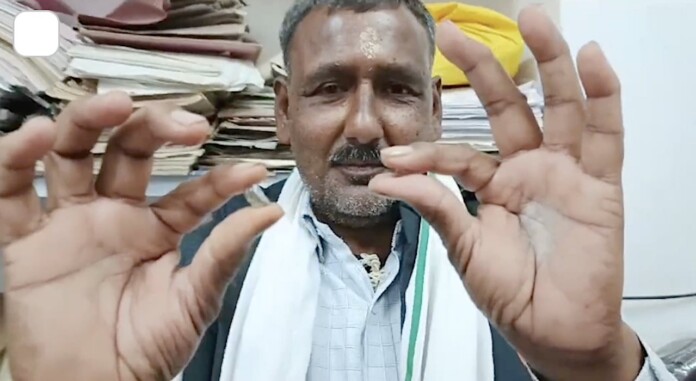
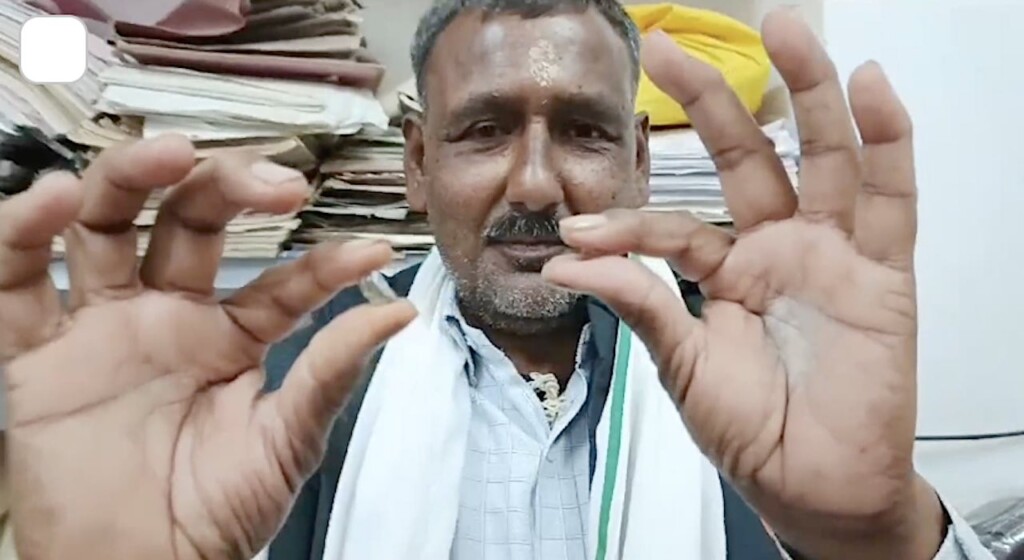
Ramnaresh Dubey finds two diamonds in his field – via SWNS
Ramnaresh Dubey finds two diamonds in his field – via SWNSge

A poor Indian farmer has seen his fortunes change in the blink of an eye after he found two diamonds worth almost $50,000 in his field.

Ramnaresh Dubey had been sifting through dirt at a shallow depth for the past six months—and his luck finally paid off with the remarkable find.

The two valuable stones—one weighing an astonishing 8.30 carats—were found in the central Indian state of Madhya Pradesh.

Mr. Dubey took the diamonds to be assessed by Indian government officials, who valued them together at $46,841 (ÂŁ37,261).

Videos show the gleaming diamonds displayed on a tray at the diamond office, with the proud Mr. Dubey looking on.

Officials claimed both of the farmer’s diamonds were off-color, decreasing the market value. The small one weighed a little less than one carat.

The resident of the village called Ramkhiriya in the Panna district had to obtain permission to mine gemstones on his farmland—well worth the paperwork.

The 2 diamonds found in Indian farmer’s field – via SWNS

He intends to use the proceeds from the diamonds to buy land and open a shop, whilst continuing to mine for more gems.

WOW, LOOK: Man Finds Surprise of a Lifetime in His Field: 700 Coins from Civil War, ‘The Great Kentucky Hoard’

Diamond officer Ravi Patel confirmed that the diamonds would be auctioned in an upcoming sale, with a royalty fee of 11.5 percent deducted from profits.

ENCOURAGE GEM HUNTERS By Sharing This Story On Social Media…