Here’s an idea: get a jump on holiday decorating next year by dumpster-diving for brand new Christmas items headed for the landfills.
Melanie Diaz recovers the magic of the holidays from behind department stories, saving tons of money while helping the environment.
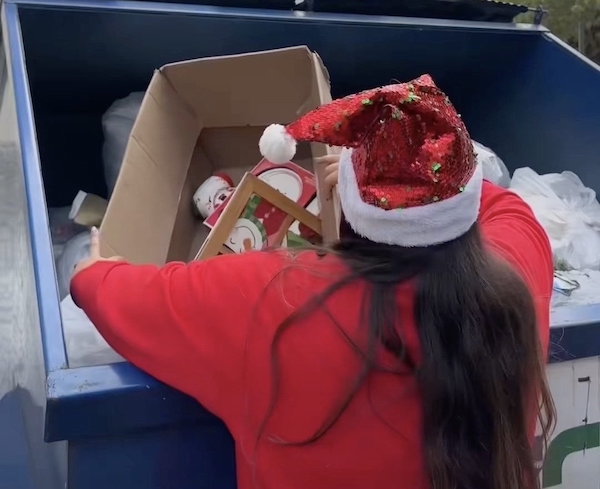
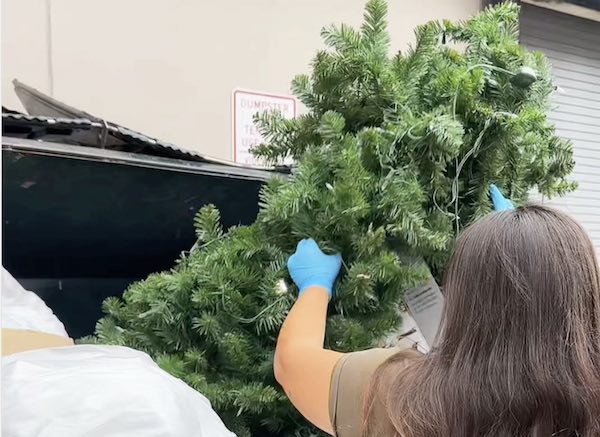
The dumpster diver says she has saved thousands of dollars by retrieving gifts, seasonal toys, wreaths, artificial trees, and ornaments from the trash bins behind Michaels and TJ Maxx.
A resident of Tampa, Florida, she’s spent the past two years dumpster diving in December and January to uncover discarded holiday treasures that would otherwise go to the landfill.
“It is my favorite time going dumpster diving at the end of the year because they start throwing out a lot of Christmas stuff,” said the 22-year-old.
“I love saving everything so I can put it in my house and decorate it for the next year.”
She also visits the dumpsters behind popular retailers like Burlington, Jo-Ann Stores, Pop Shelf, and Home Goods.
SWNS
Some of her biggest jackpots happen in January, when stores begin clearing out their leftover holiday inventory.
“I went dumpster-diving at the TJ Maxx store, and I found a lot,” Diaz explained. “It was full to the top.”
SWNSMelanie Diaz / SWNS
From ten wreaths salvaged at Michael’s—worth approximately $400—to $500 Christmas trees, Diaz has curated a festive collection.
She’s also retrieved puzzles and dog toys from TJ Maxx, saving around $200, and countless other holiday staples, including advent calendars and stockings.
The abundance was so overwhelming, Diaz had to enlist help. “I even had to bring my family to help me because it was too much,” she recalled.
“I remember we took everything into cars, and the next day we did a garage sale. We also kept most of the stuff. It was incredible.”
Play-Doh advent calendars – Melanie Diaz / SWNS
Her discoveries also include festive clothing and kitchenware.
And it’s not just about saving money and helping the environment. Diaz enjoys sharing her finds with others: “I love giving stuff to my friends and to my family.”
Quote of the Day: “Comparison is the thief of joy.” – Theodore Roosevelt
Photo by: Nick Fancher for Unsplash+ (cropped)
With a new inspirational quote every day, atop the perfect photo—collected and archived on our Quote of the Day page—why not bookmark GNN.org for a daily uplift?
Artist’s illustration of a neutron star emitting radio beam from its magnetic environment that splits into multiple paths and looks like flickering from a distance – Credit: Daniel Liévano / MIT News
Artist’s illustration of a neutron star emitting radio beam from its magnetic environment that splits into multiple paths and looks like flickering from a distance – Credit: Daniel Liévano / MIT News
Mysterious radio bursts from outer space first discovered in 2007, last only a millisecond but can carry an enormous amount of energy—enough to briefly outshine entire galaxies.
Since that first fast radio burst, or FRB, astronomers have detected thousands more, whose locations range from within our own galaxy to as far as 8 billion light-years away—yet, exactly how these brief and brilliant explosions were launched had remained a highly-contested unknown.
Now, astronomers at the Massachusetts Institute of Technology (MIT) have pinned down the origin of at least one of these cosmic radio flares using a novel technique that could do the same for other FRBs.
In their new study, published this week in the journal Nature, the team focused on a previously discovered fast radio burst that was detected from a galaxy about 200 million light-years away.
They zeroed in to determine the precise location of the radio signal by analyzing its “scintillation,” which is similar to how stars twinkle in the night sky.
The scientists studied changes in the FRB’s brightness and determined that the burst must have originated from the immediate vicinity of its source, rather than much further out, as some models have predicted.
The fleeting fireworks known as FRB 20221022A exploded from a region that is extremely close to a rotating neutron star, up to 10,000 kilometers away—less than the distance between New York and Singapore.
At such close range, the burst likely emerged from the neutron star’s magnetosphere—a highly magnetic region immediately surrounding the extremely compacted star.
The team’s findings provide the first conclusive evidence that a FRB can originate from the magnetosphere immediately surrounding an ultracompact object, such as a neutron star or possibly a black hole.
“In these environments of neutron stars, the magnetic fields are really at the limits of what the universe can produce,” said the study’s lead author Kenzie Nimmo, a postdoc in MIT’s Institute for Astrophysics and Space Research. “There’s been a lot of debate about whether this bright radio emission could even escape from that extreme plasma.”
“Around these highly magnetic neutron stars, also known as magnetars, atoms can’t exist — they would just get torn apart by the magnetic fields,” says Kiyoshi Masui, associate professor of physics at MIT.
“The exciting thing here is, we find that the energy stored in those magnetic fields, close to the source, is twisting and reconfiguring such that it can be released as radio waves that we can see halfway across the universe.”
Detections of FRBs have soared since 2020, thanks to the Canadian Hydrogen Intensity Mapping Experiment (CHIME).
The radio telescope array comprises four large, stationary receivers, each shaped like a half-pipe, that are tuned to detect radio emissions within a range that is highly sensitive to fast radio bursts.
The exact physics driving the FRBs have remained unclear. Some models predict that they should come from the turbulent magnetosphere immediately surrounding a compact object, while others predict that the bursts should originate much further out, as part of a shockwave that propagates away from the central object.
To determine where FRBs arise, the MIT team considered scintillation, the effect that occurs when light from a small bright source such as a star, filters through some medium, such as a galaxy’s dense gas.
As the starlight filters through the gas, it bends in ways that make it appear, to a distant observer, as if the star is twinkling. The smaller or the farther away an object is, the more it twinkles.
The light from larger or closer objects, such as planets in our own solar system, experience less bending, and therefore do not appear to twinkle.
The team reasoned that if they could estimate the degree to which an FRB scintillates, they might determine the relative size of the region from where the FRB originated. The smaller the region, the closer in the burst would be to its source, and the more likely it is to have come from a magnetically turbulent environment. The larger the region, the farther the burst would be, giving support to the idea that FRBs stem from far-out shockwaves.
To test their idea, the researchers looked to FRB 20221022A, a signal that lasts about two-thousandths of one second, which is average for FRBs, in terms of its brightness.
Collaborators at McGill University in Canada found that it exhibited one standout property: The light from the burst was highly polarized, with the angle of polarization tracing a smooth S-shaped curve.
The pattern is interpreted as evidence that the FRB emission site is rotating—a characteristic previously observed in pulsars, which are highly magnetized, rotating neutron stars.
This is a first for FRBs, suggesting that the signal may have arisen from the close-in vicinity of a neutron star.
The MIT team realized that if FRB 20221022A originated from close to a neutron star, they should be able to prove this, using scintillation.
Dr. Nimmo and her colleagues analysed data from CHIME and observed steep variations in brightness that signalled scintillation — in other words, the FRB was twinkling.
They confirmed that there is gas somewhere between the telescope and FRB that is bending and filtering the radio waves.
The team then determined where the gas could be located, confirming that gas within the FRB’s host galaxy was responsible for some of the scintillation observed. The gas acted as a “natural lens” – allowing the researchers to zoom in on the FRB site and determine that the burst originated from an extremely small region, estimated to be about 10,000 kms wide.
“This means that the FRB is probably within hundreds of thousands of kilometers from the source,” said Nimmo. “That’s very close. For comparison, we would expect the signal would be more than tens of millions of kilometers away if it originated from a shockwave, and we would see no scintillation at all.”
“Zooming in to a 10,000-kilometer region, from a distance of 200 million light years, is like being able to measure the width of a DNA helix, which is about 2 nanometers wide, on the surface of the moon,” Dr. Masui said.
The findings prove for the first time that FRBs can originate from very close to a neutron star, in highly chaotic magnetic environments.
“These bursts are always happening, and CHIME detects several a day,” Masui added. “There may be a lot of diversity in how and where they occur, and this scintillation technique will be really useful in helping to disentangle the various physics that drive these bursts.”
SHINE SOME LIGHT For Astronomy-Lovers By Sharing On Social Media…
Sophie the cat reunited after 7 years with Glenn Stupar's daughter – Photos by Glenn Stupar
Sophie the cat (before and after) was reunited with Glenn Stupar’s daughter 7 years later – Photos by Glenn Stupar
All his 14-year-old daughter Keisha wanted for Christmas was a cat. So in 2014 her dad Glenn Stupar adopted a beautiful calico from a local animal rescue in Edmonton, Canada.
The family renamed her Sophie and she lived happily in the their apartment for three years, until the fluffy feline escaped from the balcony.
It was days before Christmas, and they searched and searched but never found her.
Now, 7 years later—and days before Christmas—the family, including Keisha’s fiance, were sitting around reminiscing about the cat when they received a phone call from Community Cats Edmonton.
Sophie had been found living outside a car wash just 3 miles from their home.
Car wash employees and a couple living nearby, had been feeding the cat for more than a year—and the nonprofit group had spent months attempting to capture the wily creature. Finally they succeeded.
They checked to see if the cat had a microchip—the existence of which the family was unaware—and they soon were all reunited after thinking their fur-ball was gone forever.
World Plogging Championship 2023-By Stefano Jeantet (press release)
World Plogging Championship 2023-By Stefano Jeantet (press release)
An eco-friendly fitness trend that started in 2016 is now growing in popularity with its own world championship competition in Italy.
Originating in Sweden, when Erik Ahlström began picking up litter while jogging in Stockholm, the term is a combination of the Swedish word plocka, which means “to pick up”, and the English word “jogging”.
The activity of picking up litter while on your outdoor jog, has spread to other countries, and now an estimated 2 million people ‘plog’ regularly in over 100 countries.
The workout adds bending, squatting, and stretching to the main action of running—with ‘pliking’ being the latest offshoot for hikers who want to clean up the trail.
The third annual World Plogging Championship in 2023, resulted in approximately 6,600 pounds of litter (3,000 kg) removed from the environment around the city of Genoa.
Later this year, a British team will be traveling to the competition with the goal of running the farthest and picking up the most rubbish.
World Plogging Championship 2023
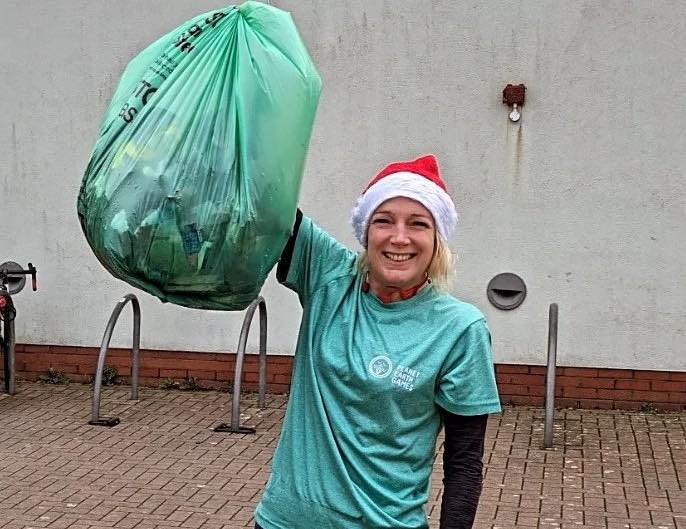
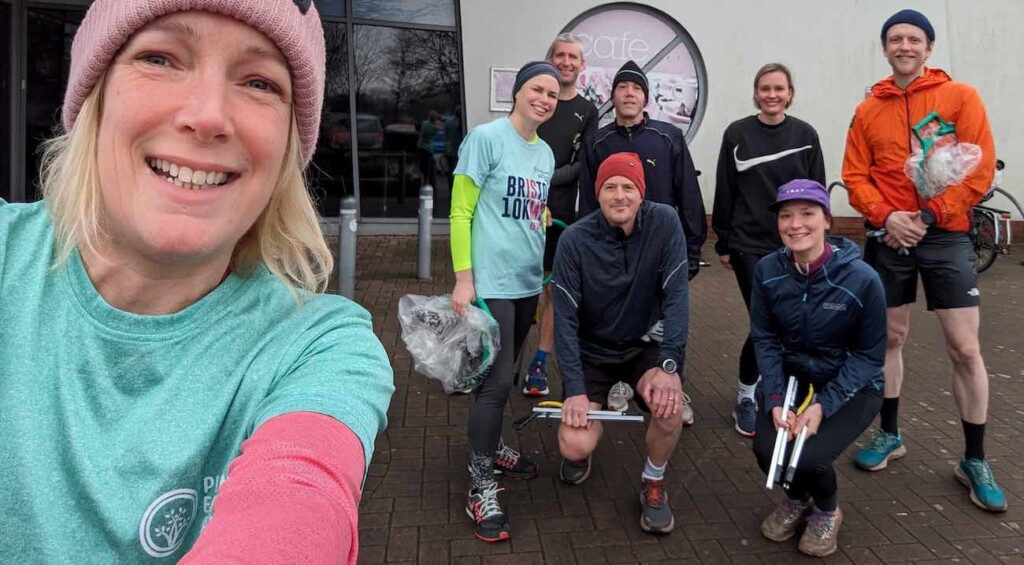
Claire Petrie recently kick-started her training with community events in her hometown of Bristol.
“I love that you help the environment, the planet and meet new people,” said the 48-year-old personal trainer who became passionate about combining health and the environment.
“We want to grow plogging in as many cities as possible.”
Claire Petrie trains for plogging on the Great Britain team –via SWNS
The four members of the Great Britain team include Cherrelle Amo and Luke Douglas-Home, from London, and Chris Broadbent, from Devon, who have launched their training with community events in London and Exeter.
Supported by environmental organizations, A Future Without Rubbish and Planet Earth Games, the team is encouraging members of the public to get involved, regardless of their fitness levels.
“We advertise it all on Facebook where we tell everyone where to meet,” Claire told SWNS news.
“We run 2k and then we stop and litter pick a certain area and then we leave all the bags by the bins–and then we run back,” said Claire, who then contacts the local council to collect the bags.
“It is very enjoyable and we make sure everyone is welcomed.”
During the past year, Claire’s group, which plans to expand into other areas in Bristol but currently has an average of 9 people joining in, collected 220 pounds of trash (100 kg).
Since 2021, the World Plogging Championships have taken place on paved paths and roads according to the principles of trail and mountain running. After their 2023 event, they reported keeping 6 million grams of CO2 from being released into the atmosphere by correctly separating and recycling the waste they collected.
Luke, who is founder of A Future Without Rubbish, has been plogging for many years, covering the UK’s coastline and canals.
Claire Petrie plogging group in Bristol England – via SWNS
“Collecting rubbish and putting it in the bin is a tiny action – something we can all do, and it’s this idea of working together than has such an impact,” said Luke. “It’s not just about running; it’s about making a tangible positive long-term impact on our planet.”
Chris, who founded Planet Earth Games, hosts monthly plogging events and confirms that the British team will keep the competition as green as possible by avoiding air travel and, instead, taking the train to Genoa.
“People are looking for a way to contribute to a healthier environment and plogging is the perfect activity to make an immediate impact and support your own physical and mental wellbeing with like-minded people.”
FREE WILL ASTROLOGY – Week of January 4, 2025
Copyright by Rob Brezsny, FreeWillAstrology.com
CAPRICORN (Dec. 22-Jan. 19):
You’re the most pragmatic sign of the zodiac and are most highly skilled at getting constructive things done. It’s also true that you thrive on organizing the chaotic details of our messy world into smooth-functioning systems. But I periodically need to remind you that these superpowers of yours require you to nurture a vigorous and rigorous imagination. So much of what you ultimately accomplish originates in the fantasy realm. This will be especially crucial for you to keep in mind during 2025.
AQUARIUS (Jan. 20-Feb. 18):
The Mona Lisa is a world-famous painting by Leonardo da Vinci. Beneath its visible surface is evidence that the artist reworked it extensively. There are at least three earlier versions with different facial features. In one, the figure has eyebrows and is wearing hairpins and a headdress. These details were scrubbed out of the image that now hangs in the Louvre Museum in Paris. I bring this to your attention, Aquarius, because I suspect you have been engaged in a comparable process as you’ve worked on your labor of love. In my reckoning, you’re finished with your false starts, practice runs, and dress rehearsals. In the coming months, you can make excellent progress toward ripening and culminating your creation.
PISCES (Feb. 19-March 20):
Ancient Greek literature references a drug called nepenthe. Anyone who ingested it would forget memories that stirred pain and sorrow. Many of us modern people might consider taking such medicine if it were available. But let’s imagine a very different potion: one that arouses vivid memories of all the wonderful experiences we have been blessed with. If there were such a thing, I would recommend that you sample it frequently in the months to come. That’s because your relationship with the good parts of your past will be especially useful and inspirational. In fact, drawing on their power will be instrumental in helping you create your best possible future.
ARIES (March 21-April 19):
There are experiences, people, and places that can either be good for you or bad for you. Which way they tilt at any particular time may depend on your mood or their mood or forces beyond your immediate control. An example for me is social media. Sometimes it’s a mediocre drug that dulls my sensibilities and aggravates my fears. On other occasions, it brings rich connections and teaches me lessons I’m thrilled to learn. What about you, Aries? In my astrological view, 2025 will be a time when you will be wise to re-evaluate and redefine your relationships with these paradoxical resources. If there are some whose influence is far more likely to be bad than good, consider ending your bond. For those that are equally bad and good, do what you can do to enhance the goodness.
TAURUS (April 20-May 20):
Taurus supermodel Linda Evangelista has supreme levels of self-esteem. At the height of her career, she bragged that she got out of bed each morning with the intention of earning no less than $10,000 in the coming day. I’m not advocating that you be equally audacious in your expectations during 2025, dear Taurus. But it’s reasonable for you to adopt at least a measure of Evangelista’s financial confidence. According to my analysis of your destiny, cosmic rhythms will be conspiring to open up economic opportunities for you.
GEMINI (May 21-June 20):
I invite you to make ample use of at least five of the following eleven tactics during 2025: 1. Shatter the mold. 2. Defy the conventions. 3. Challenge the norms. 4. Redefine the boundaries. 5. Disrupt the status quo. 6. Defy old rules and create new ones. 7. Go against the flow and against the grain. 8. Bushwhack through frontiers. 9. Dance to unfamiliar rhythms. 10. Search for curious treasures. 11. Change the way you change.
CANCER (June 21-July 22):
Good advice for the first half of 2025: 1. Lose your respect for tangled complications that have begun to rot. 2. Keep some of your necessary protective defenses, yes, but shed those that no longer serve you and are weighing you down. 3. Bury a broken-down dream to make room in your heart for a sweet new dream. 4. Scour away as much resentment as you can. 5. Sneak away from people and situations that are too demanding. 6. Discard as much as you can of what’s inessential, unhelpful, and defunct. 7. Don’t make a radical break for freedom yet, but begin plotting to do so by your birthday.
LEO (July 23-Aug. 22):
The coming months will be an excellent time to dream up bigger, better, more original sins and seek out wilder, more interesting problems. You should experiment with being sweetly wicked as you uplift your spirit and deepen your love for life. You are being invited by your future self to experiment with daring departures from tradition that bring you exciting challenges. Dear Leo, may you be cheerfully courageous as you become both smarter and wiser than you have ever been before.
VIRGO (Aug. 23-Sept. 22):
Aztecs were originally known as the Mēxihcah people. Before they forged an empire, they were semi-nomadic tribes. But even then, early on, they were guided by a prophecy that they would eventually settle permanently in a place where they found an eagle roosting on a cactus holding a snake in its talons. In 1325, wanderers spied this precise scenario on a small island in Lake Texcoco. Soon they began to construct the city of Tenochtitlan, the capital of their future kingdom. I bring this true myth to your attention, Virgo, because I want to invite you to formulate a similar prophecy—and then fulfill it in 2025. Your personal empire is primed for expansion and consolidation.
LIBRA (Sept. 23-Oct. 22):
As 2025 unfolds, your burdens will grow lighter, and your duties will become more interesting. Joyless missions and trivial hopes will be increasingly irrelevant and easy to relinquish, opening up opportunities for fresh assignments that motivate you to play more and to work smarter rather than harder. During the coming months, dear Libra, I predict you will be basking in extra good karma and tapping into more fertile mojo than you have in a long time. Would you like more freedom than ever before? It’s yours for the plucking.
SCORPIO (Oct. 23-Nov. 21):
Painter P. K. Mahanandia is well-known because of his fine art. He is even more famous for an amazing adventure he had in the name of love. It’s a long story, but his wife was living in her native Sweden while he was stuck in his native India. Mahanandia was still at an early stage of his career and couldn’t afford to fly by plane. Instead, he bought a used bicycle and headed west, covering about 27 miles per day. He pedaled through Afghanistan, Iran, and Turkey until he arrived in Europe 127 days later. He had raised money by drawing portraits of people he met along the way, so he had enough to travel by train the rest of the way to Sweden. I’m thinking you may have an epic romantic adventure yourself in 2025, Scorpio. Maybe not quite as extreme, but very interesting.
SAGITTARIUS (Nov. 22-Dec. 21):
To symbolize your destiny in 2025, I drew a Tarot card. It was the 9 of Cups. Here’s my four-part interpretation: 1. Sometime soon, you should identify your top desires and ruminate about how to express them in the most beautiful and fulfilling ways possible. 2. Take a vow that you will shed half-hearted, insecure approaches for bringing them to fruition. 3. Be uninhibited about seeking not just a partial but a complete version of each fulfillment. 4. Figure out which allies you will need in your life to manifest the happiest and most meaningful outcomes.
WANT MORE? Listen to Rob’s EXPANDED AUDIO HOROSCOPES, 4-5 minute meditations on the current state of your destiny — or subscribe to his unique daily text message service at: RealAstrology.com
Quote of the Day: “Happiness is the consequence of personal effort. You fight for it, strive for it, insist upon it, and sometimes travel the world looking for it.” – Elizabeth Gilbert
Photo by: Austin Distel
With a new inspirational quote every day, atop the perfect photo—collected and archived on our Quote of the Day page—why not bookmark GNN.org for a daily uplift?
A Utah student decided to dedicate her master’s thesis to the pursuit of getting a historic piece of land art inscribed on the National Registry of Historic Places.
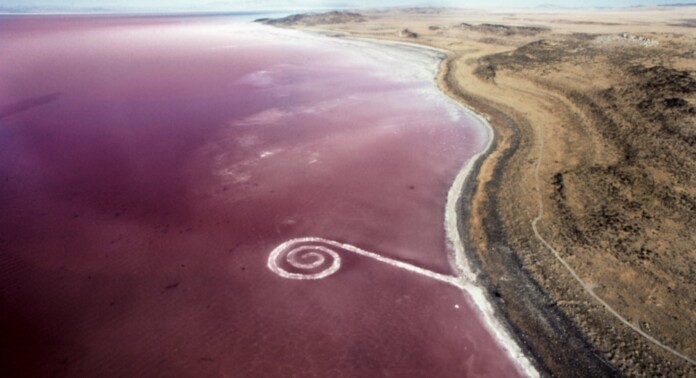
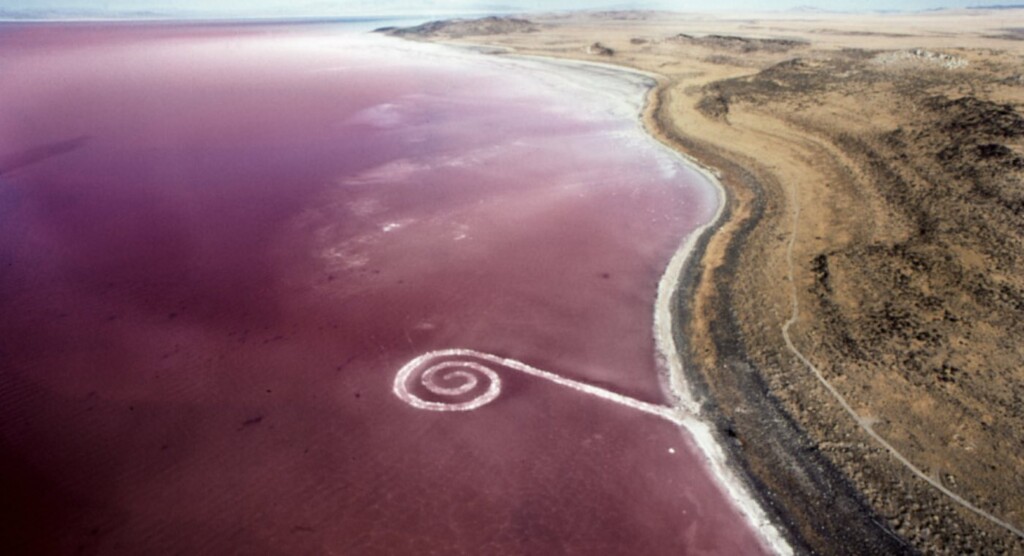
Succeeding on all fronts, ‘Spiral Jetty,’ the famous creation on the shores of the Great Salt Lake, becomes the first feature of the Land Art movement to make it onto the registry.
Getting a property placed on the registry, which protects places of historic significance to America—such as Waldon Pond in Massachusetts—requires permission from the site’s owner or caretaker, and was one of several tasks that Amy Reid, who now holds a master’s degree in landscape architecture from Utah State University, had to accomplish.
Spiral Jetty is a testament to creator Robert Smithson’s enduring fascination with entropy, a statement from the Dia Art Foundation which manages the site explains.
Smithson created the earthwork in the spring of 1970 at Rozel Point, on the northeastern shore of Utah’s Great Salt Lake. Constructed from 6,650 tons of rock and earth gathered directly from the site, the spiral continuously changes form as nature, industry, and time take effect.
A short time after it was completed, the level of the lake rose, and the work was submerged. Over the years it’s re-emerged and been sunk again and again, but since 1997 has always been visible.
Not native to the state, Reid has lived in Utah for the last 15 years, and learned about the Spiral Jetty work from her sister who visited it in 2002 whilst studying art at UC Berkeley. It took several months of work contacting the Dia Foundation, the Utah Department of Natural Resources, and the Holt/Smithson Foundation to explain her mission and gather critical details about the history of the sculpture and its maker.
Unrelated to the famous James Smithson whose endowment created the Smithsonian Institute in Washington DC, Robert and collaborator/wife Nancy Holt were pioneers in the Land Art Movement of the 1960s and 70s. Smithson liked to see in his works something of a dialectic between man and nature.
For this he didn’t like the idea of a work to be permanent or protected. He enjoyed grit, imperfections, and decay, and Reid says her thesis project isn’t about protecting the Jetty forever.
“It really is to provide a formal record of this site in a way that has not been done before,” she told the Salt Lake Tribune in a feature story on the site’s designation.
“For history, for the record, we now have a very complete view of the landscape, the natural forces, the man-made impacts on the landscape—all these things that influenced Smithson to choose this site.”
In a statement, Jessica Morgan, Director of the Dia Art Foundation, said that she and her colleagues are “delighted” the Spiral Jetty has received the important recognition, which “will help us spread awareness of the iconic artwork and advocate for its long-term preservation.”
“In the fifty-four years that Spiral Jetty has existed, it has been both submerged by the Great Salt Lake and stood far from the lake front, bearing witness to the changing landscape around it,” Morgan wrote.
“Beloved in Utah and far beyond, this artwork has come to mean many things to many people, and we are proud to continue our work caring and advocating for Spiral Jetty to preserve it for generations to come.”
SHARE This Pioneering Work And The Dedicated Student Who Got It Recognized…
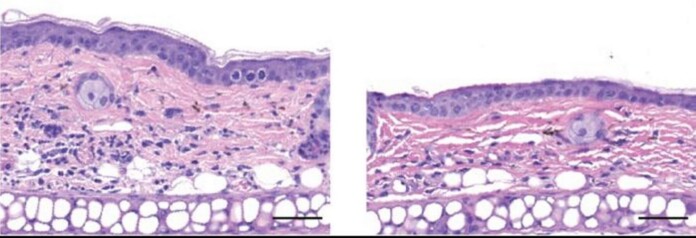
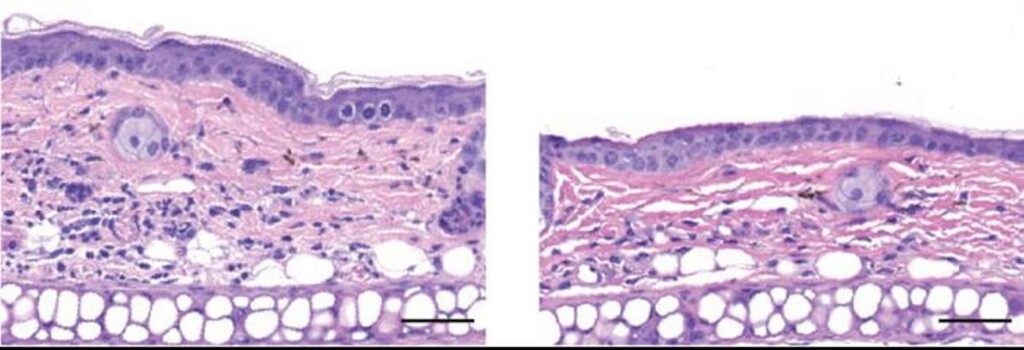
In a mouse model of contact dermatitis, preventive application of a cream containing SYM2081 (right image) reduced skin swelling compared to placebo (left image). – credit: Daniel Kaplan / SWNS
A new way of treating common inflammatory skin conditions such as eczema is on the horizon, according to a new study.
American researchers discovered that a compound called SYM2081 inhibited certain cells that drive inflammation in mice and human skin samples.
They say it paves the way for new treatments to prevent itching, hives, and other symptoms of skin conditions—such as eczema and rosacea—driven by mast cells.
Rosacea is a long-term skin condition that mainly affects the face. It may cause acne-like pimples, broken blood vessels, skin thickening, and facial flushing.
“I’m really excited about the clinical possibilities of this research,” said study senior author Professor Daniel Kaplan, of the University of Pittsburgh. “Currently, there aren’t a lot of good therapies that target mast cells, so we think that our approach could potentially have huge benefits in many skin conditions, including rosacea, eczema, urticaria, and mastocytosis.”
He explained that mast cells are filled with tiny granules “brimming” with histamine and other compounds that act as signals or activators of inflammatory pathways. When mast cells are activated, the granules spill open, releasing compounds that trigger a suite of immune responses.
Kaplan says the process—known as degranulation—is essential for protection against threats such as bee venom, snake bites, and pathogenic bacteria, but erroneous activation of mast cells also triggers allergic reactions, including swelling, hives, itching, and in severe cases, anaphylaxis, according to the findings published in the journal Science Translational Medicine.
In a previous paper, Kaplan and his team found that neurons in the skin release a neurotransmitter called glutamate that suppresses mast cells. When they deleted the neurons or inhibited the receptor that recognizes glutamate, mast cells became hyperactive, leading to more inflammation.
“This finding led us to wonder if doing the opposite would have a beneficial effect,” he said. “If we activate the glutamate receptor, maybe we can suppress mast cell activity and inflammation.”
To test the hypothesis, the research team looked at a compound called SYM2081, or 4-methylglutamate, which activates a glutamate receptor called GluK2 found almost exclusively on mast cells.
They found that SYM2081 effectively suppressed mast cell degranulation and proliferation in both mice and human skin samples. When the mice received a topical cream containing SYM2081 before the induction of rosacea or eczema-like symptoms, skin inflammation and other symptoms of disease were much milder.
A daily cream containing a GluK2-activating compound could therefore be a promising way to prevent rosacea and other inflammatory skin conditions.
“Although there are excellent therapies available for different types of rosacea, many are antibiotic-based and they only target some of the symptoms. There are no good therapies for flushing, so this is a significant unmet need,” said Kaplan.
Now that the research team has shown proof-of-concept of their approach, they hope to engineer new GluK2-activating compounds that could eventually be tested in clinical trials.
SHARE This Research Team’s Brilliant Findings On Social Media…
Pat Surtain gives football to boy in stands – Credit: Denver Broncos / Twitter
Pat Surtain gives football to boy in stands – Credit: Denver Broncos / Twitter
A young boy who had his dream snatched away by a stadium security guard has reason to cheer again after officials eventually returned his game ball.
Even though Levi Still’s father has been a lifelong Cincinnati Bengals fan, his son somehow ended up devoted to the Denver Broncos.
This year for Christmas, Levi received a Patrick Surtain II jersey and tickets to the next Bengals game—against the Broncos.
It was mild weather on game day, during which the visitors took the home team into overtime, with Surtain II recovering a fumble in the fourth quarter to the delight of Levi, wearing his name on the back of his shirt.
Though the Broncos fell in overtime, Levi had plenty to cheer for, as after the final whistle he received a surprise.
“All of a sudden, we see Pat Surtain walking to us. We just freaked out and he ended up handing [Levi] the football,” said Tracey Ewing, Levi’s mom.
But as they were getting ready to leave the stadium, security guards said it belonged to the NFL and under no circumstances—childhood dreams included—could it be allowed to leave. Devastated, Ewing took to Facebook and X to try and find a solution.
“The only thing I knew to do was go to social media and try to get my boy’s ball back,” she said.
Just now seeing this… Before the game yesterday I gave away a game ball to a little kid. Just for it to be taken away from him if anybody can put me in contact with the kid and his family hmu asap !!
Word even reached Pat Surtain, whose help would fortunately not be required, as Ewing told WCPO 9 Cincinnati that on Sunday morning, one of the security guards reached out.
“He instant messaged me and just said he, you know, [sic] the steps that he had taken to get it verified and to make sure he could have it, and then he reached out,” Ewing said.
“I felt happy because I thought I was never going to get it back,” Levi said after their family made a little road trip down to Paycor Stadium for the recovery.
WATCH the story below…
SHARE In This Young Broncos Fan’s Delight On Social Media…
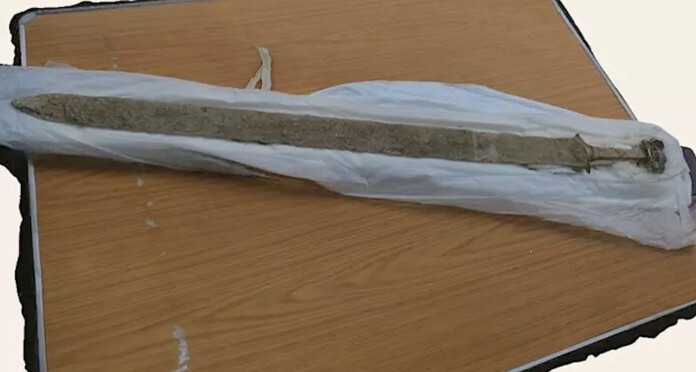
3D scan of 6th Century sword –Credit: Dr. Ash Lenton at Australian National University
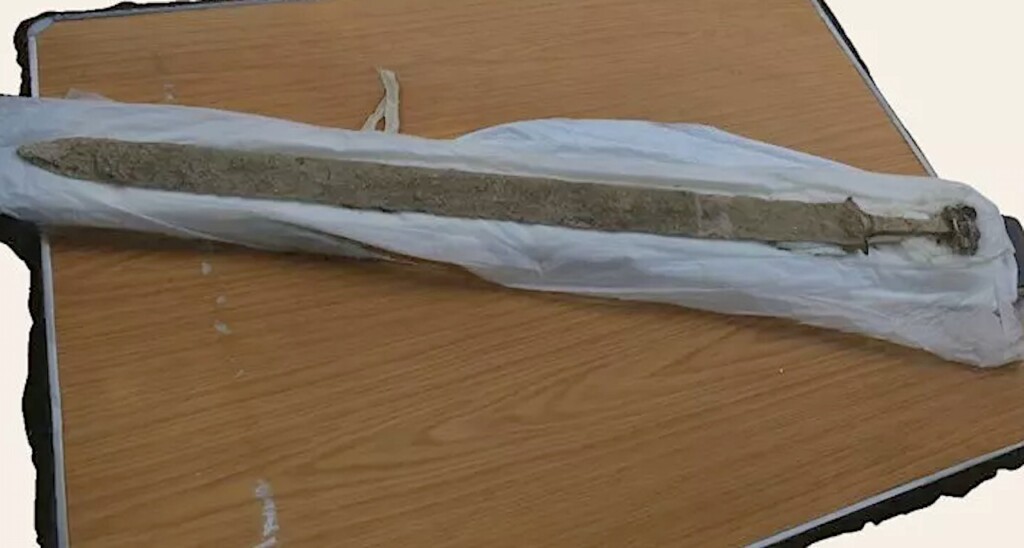
3D scan of 6th Century sword –Credit: Dr. Ash Lenton at Australian National University
An astonishingly well-preserved sword has been uncovered in England among other grave goods that are helping to reveal critical details about the Anglo-Saxons.
Dating back to the 6th century, it was found in a cemetery for high-social-status individuals that’s being kept secret from the public due to the value, both historical and monetary, of the site.
Inferior forging techniques and damp burial conditions mean that most swords recovered in excavations in Britain are corroded and broken shadows of their former glory. This example by contrast contains gilt and silver inlays along the hilt, or handle, while the surprisingly intact blade is inscribed with runes.
“It’s really incredible, in the top echelons of swords, an elite object in every way, which is wonderful. It rivals the swords from Dover and from Sutton Hoo,” said Duncan Sayer, the lead archaeologist on the excavation and professor of archaeology at the University of Central Lancashire, referring to the burial mound in Suffolk where the famous Anglo-Saxon helmet was discovered.
The sword, discovered in Kent, is the focus of the 12th season of the BBC television program Digging for Britain, whose presenter Professor Alice Roberts, said she’s never seen anything of the sort in the more than a decade of hosting the show.
“It’s an extraordinary Anglo-Saxon cemetery, with really beautifully furnished graves,” she told the Guardian. “We have fairly sparse historical sources when it comes to this period, which used to be called the Dark Ages. We don’t have much in the way of contemporary writing.”
Dating to the Anglo-Saxon heyday stretching from the receding of the Roman Empire to the scourge of the Vikings, the cemetery is revealing new details about their life. For example, one of the skeletons was found with remnants of fly pupae on his bones, suggesting he may have spent time lying in state, with countrymen and loved ones coming to pay respects.
Genetic analyses of the bones of the cemetery show that most of the DNA contains similarities with northern Europe, hinting at a migration event shortly after the Romans ceded the British Isles to native officials. However, some of the female graves contained artifacts of Frankish origin.
Following proper conservation and the filming of the show, the sword will go on display in the Folkestone Museum in Kent.
SHARE The Story Of This Top Eschelon Sword With Your Friends…
With a new inspirational quote every day, atop the perfect photo—collected and archived on our Quote of the Day page—why not bookmark GNN.org for a daily uplift?
A photo found after hurricane cleanup - credit: Photos from Helene
A photo found after hurricane cleanup – credit: Photos from Helene
A North Carolinian is reuniting families with precious photographs blown away in the storm, offering them critical links to their pasts as they rebuild their homes and lives.
Taylor Schenker, who lives in Canton near hard-hit Asheville, was searching through debris along the Swannanoa River hoping to recover some things from her friend’s house which was completely destroyed.
As they sifted through mud and torn-up vegetation, Schenker was continually finding photographs that had survived the elements thanks to the waterproof glossy paper.
“It was [a photo of] a middle school basketball team. It was a photo of a beloved dog. I found a wedding photo of a bride hugging somebody,” Schenker told CBS News. “You take photos because you have a moment you want to remember and so, they did all seem just special.”
That night, she imagined the loved ones behind the shutter and in front of it having those memories taken away from them forever, and the thought affected her deeply.
She decided to use Instagram to help reunite families with their missing photographs. Photos from Helene is a tearful page, as over two dozen photos have been returned. Often commenters recognize themselves or a loved one.
Schenker has found about 100 photos herself, but she’s also gathered many more from local search and rescue teams.
“Being able to have that moment where you hand something so special to somebody and then also just give them a hug—because they’ve lost likely their entire home in this situation—it’s such a privilege to have an insight into this moment in their lives through these photographs and be able to give them back to them,” she said.
Schenker says she will sometimes mail the photos to families if they’ve left the area, but if there’s an opportunity for a hand-delivery, she prefers that.
WATCH the story below from CBS News…
SHARE This Young Woman’s Heroic And Touching Efforts In North Carolina…
A crescent moon with Venus below - credit poppet with a camera, CC 2.0. via Flickr
A crescent moon with Venus below – credit poppet with a camera, CC 2.0. via Flickr
It’s not an alignment, but the January sky will be lit up with the lights of our solar system neighbors.
As the eight planets move about our star along the plane of the ecliptic, certain periods of certain years offer extra-special opportunities to see them shining bright.
This January is one such time, when Venus, Mars, Jupiter, and Saturn will all be extremely visible. Venus and Saturn will illuminate the southwestern horizon for a couple of hours, be brighter than usual, and be quite close to one another.
By January 17th and 18th, they will appear at their closest points in the sky, known as a conjunction, even though they’re actually hundreds of millions of miles apart.
Directly above our heads, Jupiter will be shining bright. To the east, Mars will reach opposition in mid-January.
Opposition occurs when the Earth sits directly between the Sun and another planet. We see its light hitting the planet directly, and as such it’s the best time to see any planet. On January 13th, the full Moon will pass in front of Mars as we see it, lasting a couple of hours.
The best time for viewing these planets will be the middle of the month, which is when the Moon will be in its fullest stages. They will be the only other things likely to be seen in the sky on these days, and therefore fairly obvious to spot.
Uranus and Neptune will also be more visible than normal, but one will need a telescope to see them.
SHARE These Great Stargazing Days With Your Friends On Social Media…
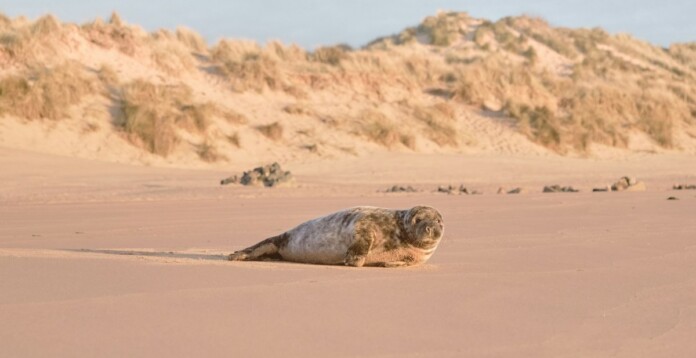
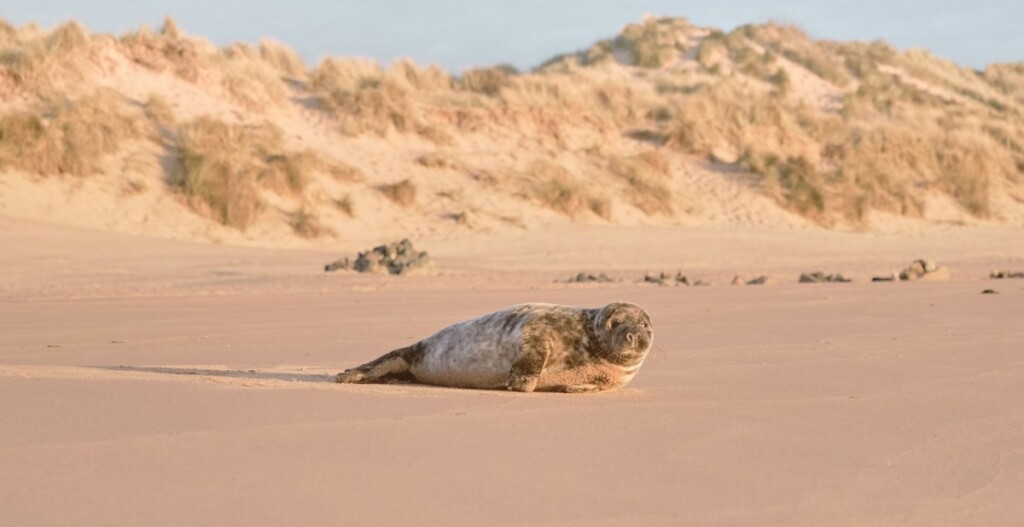
A grey seal in Scotland – Photo by Kevin Mueller on Unsplash
Grey seal colonies are flourishing along England’s east coast after being absent or scarce for years.
Thousands of pups are born every year along beaches that are closed to the public in winter, something which one ‘seal warden’ described as Britain’s greatest “wildlife safari.”
Even though lower England is one of the most densely populated regions on the planet, there are places one can see megafauna gather in numbers one would expect to see in Africa.
The 10-mile beach at Orford Ness in Suffolk, and Horsey beach 50 miles north in Norfolk teem with these big grey and white lumps during the November-January breeding season. By Christmas day, 1,200 seal pups had been born at Horsey, a number expected to grow by 2,500 before the breeding season ends.
At Orford Ness, their return came out of nowhere. Back in 2021, along a beach that belongs to England’s National Heritage Trust and where Cold War-era weapons were tested, the norm was to see zero seals. Then, one day, everything changed.
“One day, there were none, and the next day there were 200,” says Matt Wilson, a countryside manager for the trust. “Since then, they’ve come back each year, and the juveniles have stayed.”
This year, 600 pups were born on the beach, and according to seal conservationists, the current pup mortality rate is lower than the birth rate.
Storms are significant mortality events as they blow pups out to sea, and part of a grey seal’s normal behavior is to waddle up beaches to shelter behind vegetated dunes. To that end, Friends of Horsey Seals, a local volunteer wildlife charity, has fenced off a section where the colony can escape to in the event of bad weather.
According to Wilson and others speaking with the Guardian, the rapid increase in the grey seal population may be down to the presence of offshore wind farms. These structures offer ample space for mollusks and bivalves to glom on, more strongly anchoring the marine food web.
Another cause might be cleaner water resulting from reductions in pollution along non-tourist beaches observed in the last 10 years.
SHARE This Amazing Wildlife Viewing Opportunity With Your Friends…
Lupus effects on the skin - credit Nephron, CC BY-SA 3.0
Lupus effects on the skin – credit Nephron, CC BY-SA 3.0
Using a cancer treatment method, a small study has seen sufferers of Lupus go into remission such that they were able to halt their regular medication within just three months.
The results were hailed as a groundbreaking achievement in the treatment of Lupus, a debilitating life-long disease experienced by 5 million people around the world, and the results even bear the hallmarks of a potential cure.
Two studies, the first published in Germany, and the second in the UK with patients of the most severe form of the disease, refractory systemic lupus erythematosus, (SLE) saw patients receive CAR T-cell therapy, which genetically modifies a patient’s own immune cells ex vivo.
They are then injected back into the patient carrying an important mission in their genetic code. In almost all use cases of CAR T-cell therapy, this has been the targeting of cancer cells that use signaling molecules to evade detection by the immune system. But in this case, it was used to target the faulty biological equipment that causes the disease.
Lupus is an autoimmune disorder, meaning that defects in a patient’s genetics lead to their immune system targeting normal, healthy cells. Lupus is driven by a particular kind of immune cell called a B cell, and the treatment addressed T cells with orders to attack B cells carrying the defect.
In the German study, which was conducted in 2022, all five patients experienced a depletion of B cells, which eventually came back through normal cellular replenishment in the bloodstream, but without a return of Lupus symptoms.
“We’ve always known that in principle, CAR T therapies could have broad applications, and it’s very encouraging to see early evidence that this promise is now being realized,” said Dr. Carl June at the time; a professor at Penn State University Medicine and Director of the Center for Cellular Immunotherapies at Penn’s Abramson Cancer Center, who wasn’t involved with the study.
Recently, the same trial was replicated with three patients in the UK, including a 32-year-old and a 50-year-old who had been living with Lupus for 30 years.
The patients will be monitored for 15 years as a follow-up to examine the long-term effects. As it stands, the short-term effects relate to a significant weakening of the immune system, and or a hyperactivity of the immune system.
Lupus, particularly SLE, involves inflammation of internal organs, joint pain, acute swelling, and other effects that many patients would consider far worse than even the long-term side effects of the treatment.
“Lupus is a disease that requires lifelong medication, but this therapy has the potential to change that, which is incredibly exciting. This groundbreaking new therapy marks a significant milestone in our research into lupus,” said Professor Ben Parker, a consultant rheumatologist at Manchester Royal Infirmary, where the procedure was in part conducted.
SHARE This Amazing Advance With Those You Whose Loved Ones Have Lupus…
Quote of the Day: “Great minds have purposes; others have wishes.” – Washington Irving
Photo by: Dim Hou
With a new inspirational quote every day, atop the perfect photo—collected and archived on our Quote of the Day page—why not bookmark GNN.org for a daily uplift?
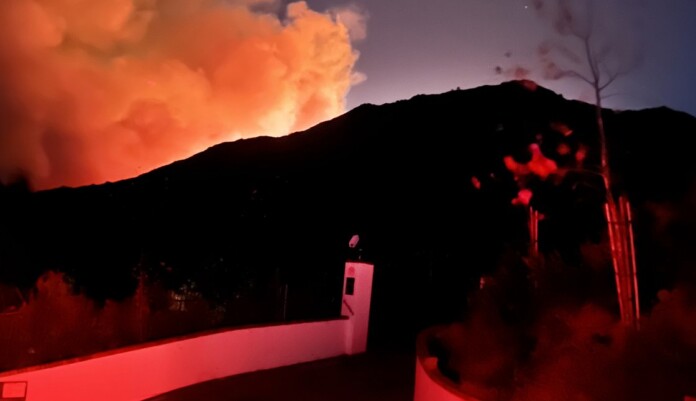
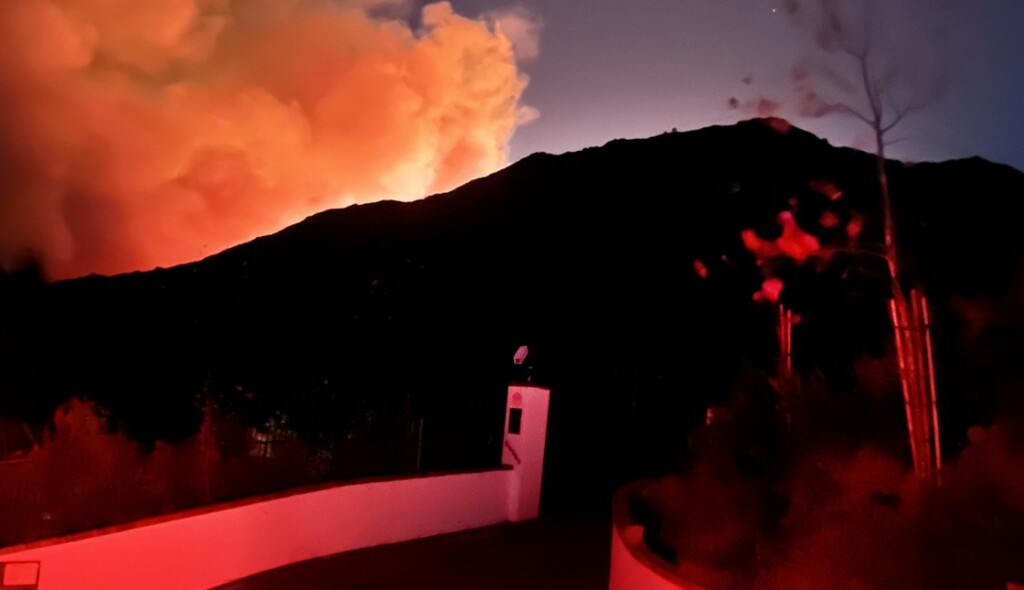
Flames from the Franklin Fire threaten to burn this Malibu home - credit: courtesy of Jonny Constantine
Flames from the Franklin Fire threaten to burn this Malibu home – credit: courtesy of Jonny Constantine
From California comes a story of heroism buried in the ashes of a recent wildfire.
As reported by the American Red Cross, Malibu resident Johnny Constantine might have saved himself first, but instead raced towards the fire as it approached his friend’s house, determined to ensure they escaped as well.
Smoke and embers from the recent Franklin Fire filled the air as the red glow illuminated his friends’ backyard.
“I saw the lights were out, but the bell worked. I kept hitting the button and yelling from their gate to wake up,” Constantine recounted. “The fire was so close—the smoke, red glow, and embers looked like it was going to come over the hill onto their property at any moment.”
After 15-20 tense minutes of honking, shouting, and ringing the bell, his friends finally woke up and escaped just as the fire neared their home. “I didn’t leave until they were safe,” Constantine said.
Thanks to a mixture of rain, low temperatures, and a lack of wind, the Franklin Fire stalled on its path across the Malibu hills. Shortly after Constantine’s evacuation, the fire was around 30% contained.
State officials said fire activity was minimal and there was no significant fire growth by mid-December. The last update placed the number of structures destroyed at 13, compared to the over 1,200 destroyed in the Dixie Fire.
GNN recently reported on the partnership between CAL Fire and Univ. of California San Diego that aims to monitor over 1,000 cameras for forest fire activity with AI. The use of these cameras alerted firefighters to the beginnings of 77 forest fires before a 911 call had been made about any of them.
Constantine was able to visit an American Red Cross evacuation shelter at Palisades, just one that the organization maintains for sheltering those fleeing these fires.
SHARE The Story Of This Man Refusing To Leave His Friend Behind…
-credit: CCCC First Harbor Engineering Co. Ltd. courtesy
The dry dock where the tubes were assembled – credit: CCCC First Harbor Engineering Co. Ltd. courtesy
The frigid waters of a bay in northeastern China are the site of a remarkable feat of engineering that’s won global recognition for its accomplishments.
Bolted to the seafloor in six individual segments, the Dalian Bay Undersea Tunnel spans over 2 miles of water and connects the peninsula-bound city of the same name with the mainland.
It was announced as Best Project of the Year by the decades-old American Engineering review, ENR, for its mixture of first-of-its-kind technologies and methodologies used in the construction.
Allowing motorists to avoid the lengthy C-shaped stretch of road around the bay, the trip has been shrunk from one hour to just 5 minutes.
“The team conducted an investigation on offshore concrete structures ranging from 15 to 86 years naturally exposed in the cold sea areas of China,” Sun Zhu, deputy chief engineer with CCCC First Harbor Engineering Co., the lead contractor on the project, told ENR. “Based on this research, a theoretical model was established to predict the 100-year service life of concrete structures in the marine environment of Dalian’s cold region.”
18 tubes of continuously poured concrete make up the undersea structure, each consisting of 7 segments containing 6 lanes for traffic. The tubes, some of which curve to form the tunnel’s path, were assembled 6 at a time along the edge of the bay in the highest capacity dry dock in all of Asia, which was built just for the project.
The total length of the curve adds up to around 1,050 meters, or around 3,200 feet; making it the tightest curve in an undersea tunnel in China. The segments were bolted onto rocks 32 meters below the sea.
– credit: CCCC First Harbor Engineering Co. Ltd. courtesy– credit: CCCC First Harbor Engineering Co. Ltd. courtesy
Because no such tunnel had ever been built in such cold temperatures, an on-site laboratory was established by First Harbor and its partners that ended up conducting 20 large-scale engineering and physics experiments.
Before each of the 60,000-ton tubes was sunk into their positions, they were pre-stressed with cables that would eventually be cut, rendering the tubes of concrete flexible.
“The technological research and development, as well as the preparatory work undertaken in the early stages, played a pivotal role” in the project, Zhu says. “It underscores the importance of advanced planning and prioritizing technology in engineering projects, particularly for large-scale undertakings.”
Campers paddle on a Willow River lake at One Heartland - credit One Heartland, submitted
Campers paddle on a Willow River lake at One Heartland – credit One Heartland, submitted
For those in the market, an 80-acre campground complete with river, lake, boat ramps, docks, and cabins in northern Minnesota is available after the previous owners were forced to close.
That’s because thanks to rock-bottom rates of HIV infection among babies in the state, One Heartland, one of the nation’s largest summer campgrounds for HIV-positive kids, is no longer needed.
Perinatal transmission of HIV, occurring when children contract the virus while in the womb or breastfeeding, has fallen to below 1% in HIV-positive mothers in the United States thanks to antiretroviral medications.
Globally, new HIV infections among children up to age 14 have declined by 38% since 2015.
One Heartland was founded in 1993 after Neil Willenson, a college student who wanted to be an actor, read about a 5-year-old HIV-positive child in Milwaukee facing isolation and stigma at school.
He created One Heartland as a short project, but ended up running it for the next 30 years.
“The impact was so transformative the first summer in 1993 that during the week the children were already saying ‘When can we come back?’” Willenson told Minnesota Star Tribune.
Willenson used to rent space in camps every summer, but he soon grew tired of being rejected for health concerns. Raising money, including from former Minnesota Twins player and manager Paul Molitor, he went and bought the Willow River property to turn it into One Heartland.
“We wanted to create a safe haven where children affected by the disease, perhaps for the first time in their young lives, could speak openly about it and be in an environment of unconditional love and acceptance,” added Willenson.
Children arrived at Willow River from all over the country, courtesy of a referral from the NIH, and donations from generous benefactors.
“That there’s no longer a need for the camp’s original purpose ‘is the greatest story that I ever could have imagined, it’s something I never could have predicted,'” Minnesota Star Tribune’s Jana Hollingsworth writes.
SHARE This Bittersweet Ending To A Man’s Heartwarming Work…