











All News - Page 140 of 1714 - Good News Network
Home Blog Page 140

Billions of People Could Benefit from This Breakthrough in Desalination That Ensures Freshwater for the World

A novel approach to making seawater evaporate faster has been hailed as a significant breakthrough in desalination technology that will benefit billions of people worldwide.

Up to 36% of the world’s eight billion people currently suffer from severe freshwater shortages for at least four months of the year, and this could potentially increase to 75% by 2050.

Seawater desalination is one of the most effective strategies to alleviate the impending scarcity, but existing processes consume massive amounts of energy, leaving a large carbon footprint.

Other problems plague the production of fresh water from the sea, including the necessity to de-scale membranes used in the reverse-osmosis desalination process with chemicals that are toxic to sea life. Furthermore, once the water is produced, the briny by-product is so overly rich in salt that it has the effect of an ecological contaminant.

Researchers from the University of South Australia (UniSA) have already demonstrated the potential of solar-powered evaporation as an energy-efficient, sustainable alternative to current desalination methods, but they are still limited by a lower evaporation rate for seawater compared to pure water due to the negative effect of salt ions on water evaporation.

UniSA materials science researcher Professor Haolan Xu has now collaborated with researchers from China on a project to develop a simple yet effective strategy to reverse this limitation.

By introducing inexpensive and common clay minerals like zeolite and bentonite into a floating photothermal hydrogel evaporator, the team achieved seawater evaporation rates that were 18.8% higher than pure water. This is a significant breakthrough since previous studies all found seawater evaporation rates were around 8% lower than pure water.

The researchers say the hydrogel evaporator maintained its performance even after months of immersion in seawater.

“The key to this breakthrough lies in the ion exchange process at the air-water interface,” Xu says.

ALSO CHECK OUT: Wave-Powered Desalination System Produces 13,000 Gallons of Drinking Water a Day From Each Buoy

“The minerals selectively enrich magnesium and calcium ions from seawater to the evaporation surfaces, which boosts the evaporation rate of seawater. This ion exchange process occurs spontaneously during solar evaporation, making it highly convenient and cost-effective.”

Considering the global desalination market numbers around 21,000 operational plants worldwide, even small declines in desalination performance can result in the loss of tens of millions of tons of clean water.

MORE SALTY STORIES: Solar-Powered Desalination Device Will Turn Sea Water Into Fresh Water For 400,000 People

“This new strategy, which could be easily integrated into existing evaporation-based desalination systems, will provide additional access to massive amounts of clean water, benefitting billions of people worldwide,” Xu says.

Fossil fuels are what power most of the world’s desalination plants, and experimental machines trying to de-carbonize the industry have used solar power, and mechanical energy from the movement of waves.

Take The Salt Out Of The News And Share This Fresh Innovation…
Visionary Fuels First Car Powered By Seaweed Piling Up on Beaches That Reduces Tourism

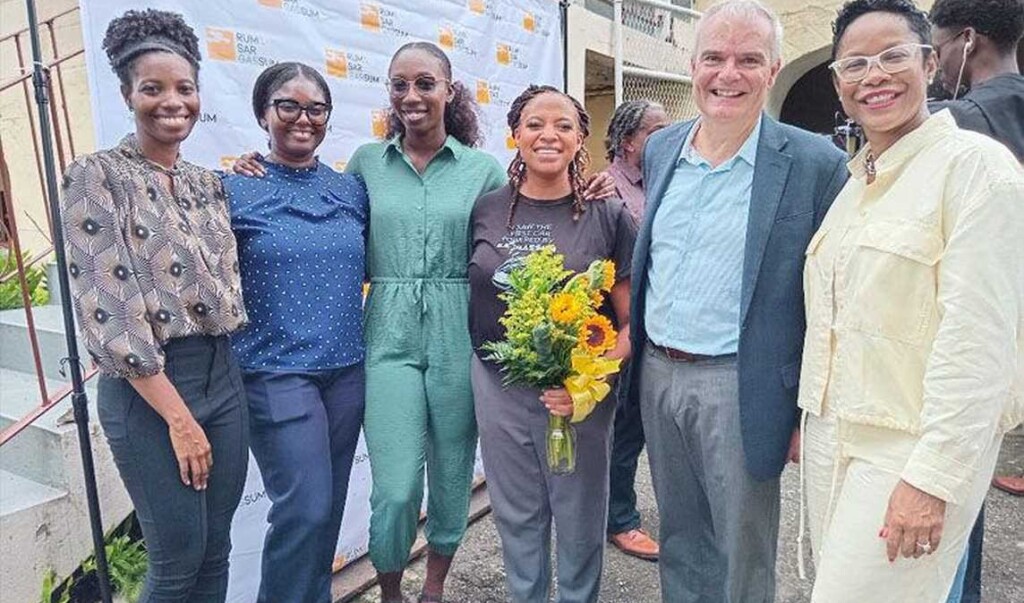
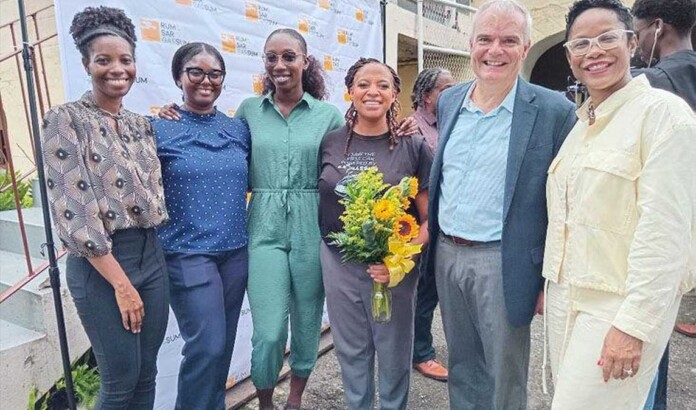
Credit: Dr. Legena Henry, supplied to the Daily Express.

A woman from Trinidad and Tobago has created a startup that’s turning heaps of smelly seaweed and other waste from the island’s rum distilleries into a new, low-emission fuel for cars.

Along with members of her team, she is working on creating the first product under the brand name Rum and Sargassum—a mixture that produces energy when burned, and which they had no idea would work when they started.

The story begins when Dr. Legena Henry began teaching a sustainable energy course at the University of the West Indies Cave Hill campus on the island of Barbados.

“One day in class, while we were discussing transportation, a student raised her hand and said, ‘I am seeing all these electric vehicles around Barbados, but I cannot afford an electric car’,” Henry told the Trinidad Daily Express.

That got Henry thinking—how could Barbados transition 150,000 gasoline cars off gasoline if people can’t afford the alternative? At first, she and a group of students began looking over the summer into one of the great industrializations of Brazil.

Two-thirds of all ICE cars in that country are powered by a renewable fuel derived from sugarcane. However, after three weeks of research, Henry and her students realized that the sugarcane industry on Barbados was shrinking, and couldn’t supply nearly enough feedstock to replicate Brazil’s success.

Instead, Univ. of West Indies student Brittney McKenzie came to a team meeting one day with the suggestion that they look into using sargassum seaweed.

Millions of dollars are spent by Barbados’ beach resorts every year to remove sargassum seaweed that piles up on the beaches, releasing a salty smell similar to rotten fish and driving tourists away.

Tourists are the islands’ largest economic driver, so there was no risk of a drop in production of waste sargassum unless the winds and currents bring it elsewhere in the Caribbean.

While Dr. Henry was doubtful, she didn’t want to dampen her students’ enthusiasm, and with three weeks into summer break, there wasn’t much time left to think of other ideas.

Henry explained that, typically at the start of such a project, she would have her students do a review of the literature to find out if sargassum had ever been used for energy, whether could it generate substantial energy like the kind needed to power a vehicle, or if there were any other inputs needed.

But she deigned there wasn’t enough time left in their project, and advised them to just go ahead and run the experiment.

INSPIRATIONAL EFFORTS LIKE THIS: Compostable Plastic Wrap Made from Seaweed Can Withstand Heat–and Biodegrade in Weeks

“So we did not read the articles. The journals would have told us don’t put sargassum in any biodigester because you are not going to get any energy out of it. But we didn’t read. We didn’t read so we went and did it and guess what? Energy came out of it we got a biogas from sargassum, but it was mixed with rum wastewater,” Henry said.

The rum was the key, and suddenly they had a lead, and began seeking capital from various development agencies and funds to expand their research into a business.

The students involved in the business are now working to study sargassum. Where does it come from and where does it grow, and whether one can map the patterns of its distribution across the Caribbean where it’s a colossal menace to many different countries.

MORE ON SEAWEED: Visionary Gardener Turns Piles of Beached Seaweed Into Bricks for Sustainable Construction

Dr. Henry sees the hypothetical market offering of a simple conversion kit to change ICE cars from burning gasoline into burning Rum and Sargassum fuel products as substantially attractive compared with the cost of a new electric vehicle.

The project could potentially remove 103,000 metric tons of carbon dioxide emissions annually in Barbados, she estimated.

SHARE This Brilliant Woman And Her Brilliant Students’ Brilliant Idea For Barbados…

Knee Arthritis Treatment Relieves Pain and Could Prevent Need for Replacement Surgery

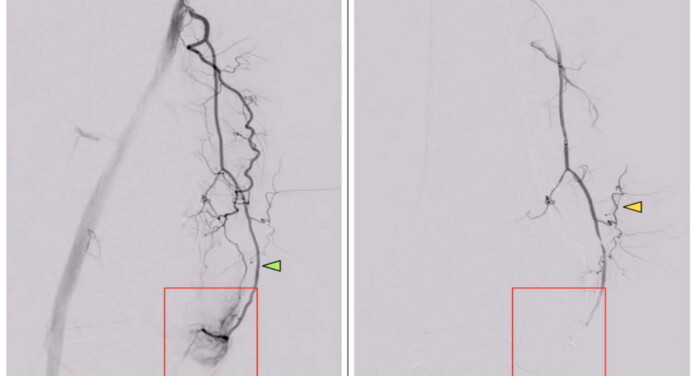
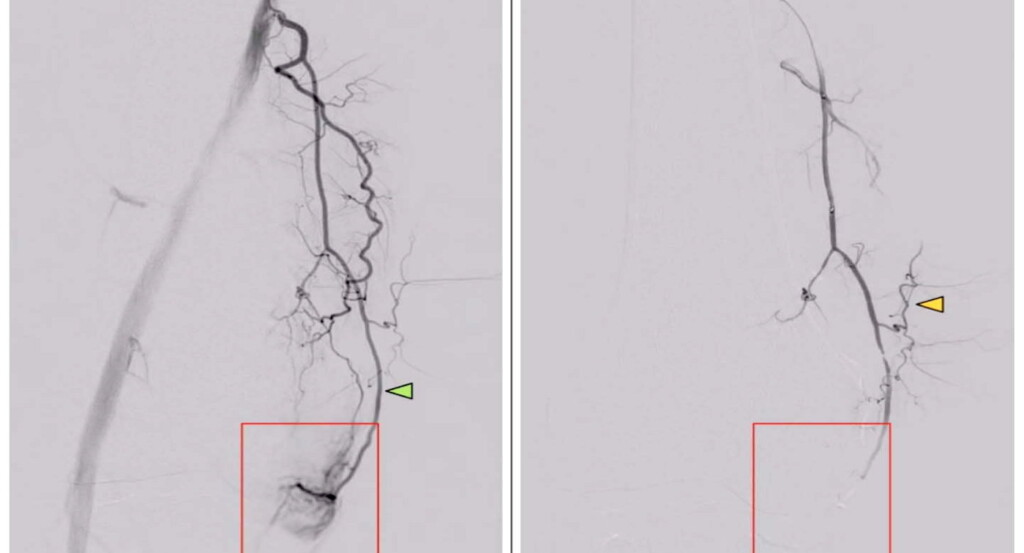
Knee osteoarthritis before and after treatment by genicular artery embolization – Dr. Florian Nima Fleckenstein / Charite University Hospital Berlin / SWNS

A minimally invasive procedure provided significant relief from knee pain and may prevent the need for knee replacement surgery in people with osteoarthritis, according to a new study.

Osteoarthritis, a chronic, degenerative, and progressive condition, is the most common cause of chronic joint disorders. According to the World Health Organization, knee osteoarthritis affects over 365 million adults worldwide.

Most available therapies, such as pain medication and steroid injections, only mask the symptoms. They don’t slow the progression of the disease. As osteoarthritis worsens and conservative treatments become ineffective, many people turn to joint replacement surgery.

“This study addresses osteoarthritis, which is a significant public health issue and the leading cause of chronic pain and disability worldwide,” said the study’s lead author, Florian Nima Fleckenstein from University Hospital Berlin in Germany.

“With millions of people affected by knee osteoarthritis, particularly in aging populations, finding effective, minimally invasive treatments is critical.”

The presented treatment is called genicular artery embolization (GAE). The genicular arteries have several branches that form a network around the knee joint. These vessels are altered in patients suffering from osteoarthritis.

In GAE, an interventional radiologist injects small particles into selected branches that correspond to the site of knee pain to block blood flow to that area. Embolization of the abnormal blood vessels helps to disrupt the cycle of inflammation, cartilage destruction, and sensory nerve growth that characterizes osteoarthritis.

For the study, Dr. Fleckenstein and colleagues conducted a retrospective analysis of 403 cases from patients aged 40 to 90 with moderate to severe knee osteoarthritis who didn’t respond to conservative treatments. They were assessed with pain and quality of life scores, recorded at baseline and during follow-up visits at 6 weeks, 3 months, 6 months, and 1 year post-procedure.

No severe complications were reported and the quality-of-life index and pain score improved by 87% and 71% respectively at the end of 1 year.

NEW OSTEO TREATMENTS: New Procedure Could Improve Quality of Life for Millions of People after Knee Replacement Surgery

The findings show that GAE is a safe and effective treatment option across all severity grades of knee osteoarthritis, including advanced cases where other treatments have very limited efficacy.

“Our study found that GAE can effectively reduce knee pain and improve quality of life early after the treatment, with these benefits being maintained over the long term, especially for people who haven’t had success with other treatments like physical therapy or pain medications,” Dr. Fleckenstein said. “This could potentially offer a new lease on life for many patients who suffer from debilitating pain and mobility issues, caused by osteoarthritis.”

However, the study also showed that GAE is particularly effective in the early stages of knee osteoarthritis. This indicates that early intervention could potentially delay or even prevent disease progression, reducing the need for more invasive treatments, such as surgery.

MORE STUDIES LIKE THIS: Analysis Strongly Supports Turmeric Supplementation to Improve Arthritis and Osteopenia

The researchers hope that by demonstrating the procedure’s success in a large and diverse patient population, the study could influence medical practice and policy, encouraging broader adoption of GAE in clinical settings worldwide.

“GAE has the potential to reduce the need for more invasive surgeries, lower health care costs, and significantly improve the quality of life for countless individuals suffering from knee osteoarthritis,” Dr. Fleckenstein said.

AVOIDING SURGERY: Patients Could Avoid Thyroid Surgery With New Minimally Invasive Procedure

He and his team plan to continue their research on degenerative joint disorders to provide patients with new options in the field of interventional radiology.

WHO WANTS SURGERY? Share This Exciting Alternative Treatment…

“I am grateful for what I am and have. My thanksgiving is perpetual.” – Henry David Thoreau

Getty Images / Unsplash+ (cropped)

Quote of the Day: “I am grateful for what I am and have. My thanksgiving is perpetual.” – Henry David Thoreau

Photo by: Getty Images / Unsplash+ (cropped)

With a new inspirational quote every day, atop the perfect photo—collected and archived on our Quote of the Day page—why not bookmark GNN.org for a daily uplift?

Woman Looking for Birth Parents Learns That Dad Was a ‘Friend’ on Facebook

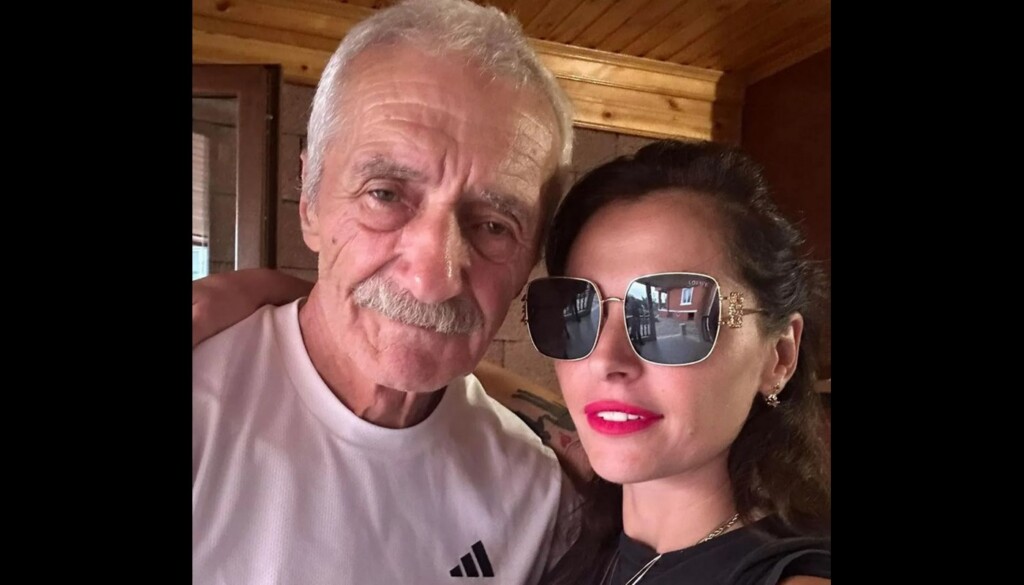
Credit: Tamuna Muserhidze, supplied to the BBC
Credit: Tamuna Museridze, supplied to the BBC

A woman in Eastern Europe has found her biological father after suddenly discovering she was adopted from birth.

Moreover, her search eventually landed him at her virtual doorstep on Facebook—where the two had been friends for three years.

It all began in 2016, when Tamuna Museridze was going through the personal effects of the woman whom she once thought was her mother. Among them, she found a birth certificate with her name on it, but the wrong date.

A journalist by trade, Tamuna began to wonder if she were adopted—or perhaps a victim of a child trafficking ring in her home country of Georgia.

After doing some research, she set up a Facebook group called Vedzeb, or ‘I’m Searching’ in the beautiful Georgian language. Time passed, and eventually someone from rural Georgia messaged her on the social media platform saying that, on the off-chance it might help Tamuna’s search, she knew a woman who had concealed a pregnancy and traveled to the capital of Tbilisi in September 1984—the month of Tamuna’s birth.

This message included a name—but it didn’t exist on social media, so Tamuna posted as far as her virtual words could carry: did anyone know this woman? As it turned out, someone did, and they reached out saying if Tamuna would agree to take the post down for privacy’s sake, she would take a DNA test in sync with Tamuna.

The name was the stranger’s aunt, and the DNA test confirmed the two women were cousins. It wasn’t long before she found the name of her biological father as well.

“The first two months were shocking, I couldn’t believe these things were happening to me,” Tamuna told the BBC. “I couldn’t believe I had found them.”

Gurgen Khorava, a man from a rural village in western Georgia, had been following Tamuna’s work as a journalist, and the two had been friends on Facebook for three years.

“He didn’t even know my birth mother had been pregnant,” says Tamuna. “It was a huge surprise for him.”

LOST SISTERS MEET: Sisters Who Found Each Other Through DNA Discover They Had Mysteriously Named Their Kids After Each Other

The two reached out and organized a meeting at the 72-year-old’s home. When she arrived, the stunned daughter explained they just sat together for some time staring at each other trying to create a connection that matched the feeling of connection they both had in their hearts from the moment they saw each other.

Tamuna (L) with her newly-found half-sister Rusiko (C) and cousin Manoni (R), who Gurgen introduced her to.

Eventually, a very Georgian connection arose—a love of dancing. Gurgen had been a renowned man at the State Ballet of Georgia, while Tamuna’s daughters practice the same art form.

Tamuna also got in contact with her biological mother, but unfortunately this meeting was not a merry one.

MORE FAMILY REUNIONS: After Decades Searching, Woman Finds Biological Mom on Facebook and Meets Grandma Days Before her Death

Gurgen decided to invite his whole family—up to the level of second cousins—for a dinner and reunion to welcome Tamuna into the family, delightful clips of which were captured by the BBC. 

“It was strange, the moment he looked at me, he knew that I was his daughter,” she recalls. “I had so many mixed emotions.”

SHARE This Amazing Story Of Personal Coincidence And Reunion On Social Media…

Spray-on ‘Tattoos’ Are Easily Attached for Making Brain Scans, Replacing Outdated EEGs

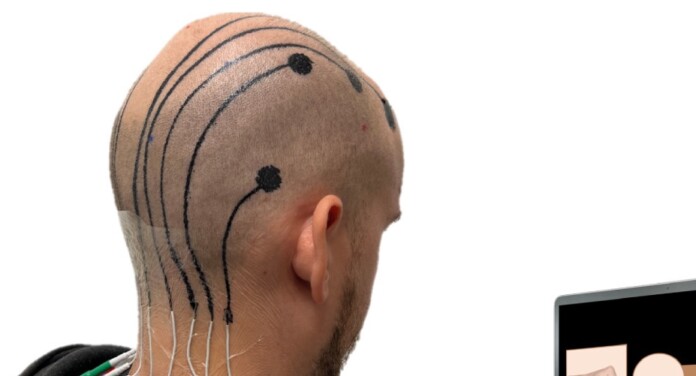
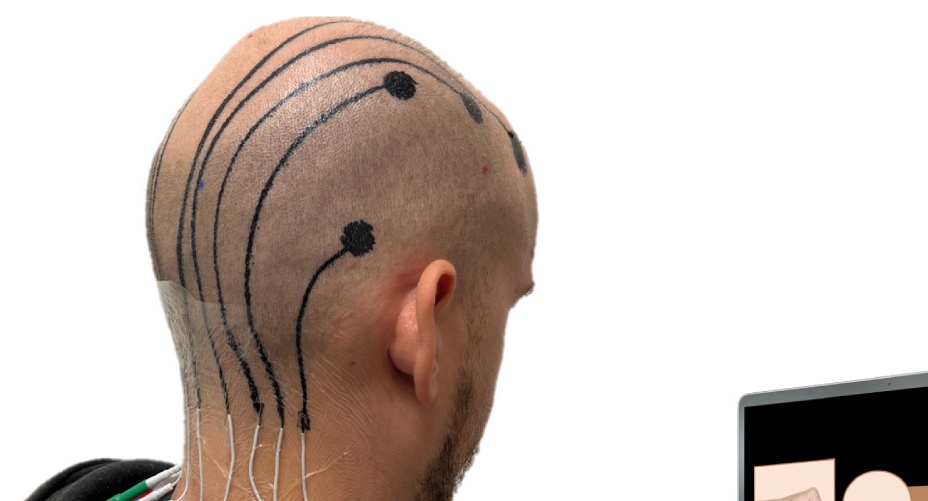
EEG setup with e-tattoo electrodes –Credit: Nanshu Lu / University of Texas at Austin

From Texas comes a bio-technology interface nearly impossible to believe: tattoos that double as brain sensors.

The engineers of this technology explain how for almost 100 years, the electroencephalogram (EEG) has been the standard method for monitoring brain activity, but along with being prohibitive to long or dense hair, it loses efficacy after about 6 hours.

The tattoos by contrast are applied via a spray-on, biocompatible gel made of conductive polymer that’s filled with hundreds of tiny sensors that read brain activity like a standard EEG.

The benefits are legion—including percolating effortlessly through hair and 24-hour effectiveness.

“Our innovations in sensor design, biocompatible ink, and high-speed printing pave the way for future on-body manufacturing of electronic tattoo sensors,” Nanshu Lu, one of the lead researchers at the University of Texas at Austin who designed the technology, told ZME Science. “It has broad applications both within and beyond clinical settings.”

The application is remarkably simple. The positions where the EEG-tattoo points should sit are mapped out by a computer, then a specialized inkjet printer applies the ink which dries within minutes into the tattoo.

There’s no discomfort, no long hours needed to apply each individual EEG which must be connected with wires to a bulky machine, and no need to reapply anything within the same day.

Lu and her colleagues tested the EEG-tattoo against a traditional EEG and found that by 6 hours, the traditional electrodes applied with the gel began delivering weaker and fainter signals as the gel dried out, while one third stopped working altogether.

The EEG-tattoo spray had not lost any signal 24 hours after the first application.

ALSO CHECK OUT: Device from MIT Startup Helps People Fall Asleep–Putting Your Mind on ‘Do Not Disturb’

Taking their project further, and with a little tweak to the ink mixture, the researchers were also able to spray on the ‘wires’ which were able to transmit data effectively to a small collection device.

“E-tattoos represent a new frontier in wearable technology,” says Lu. “This is just the beginning of what we can achieve.”

ZME noted that athletes are already using similar technologies on their torsos to monitor athletic performance.

MORE BLENDING OF MACHINE AND MAN: Incredible Internal Cochlear Implants on the Way as Massachusetts Engineers Overcame All Obstacles

“Our study can potentially revolutionize the way non-invasive brain-computer interface devices are designed,” added José Millán, another co-author. “By printing sensors directly onto the scalp, e-tattoos could eliminate the need for headsets altogether, making these devices more accessible and easier to use.”

SHARE This Wild Futuristic Bio-Tech With Your Friends On Social Media… 

Illinois Deputies Save Pregnant Driver Whose Runaway Car Was Heading Straight for a Lake

Credit: Williamson Sheriff's Office
Credit: Williamson Sheriff’s Office

A pregnant motorist was recently saved from plunging into a lake when her brakes failed.

Shortly after 2 a.m. on Monday, 911 received a call from a distressed woman saying her car would not stop.

Moving at approximately 30 miles an hour, Williamson County Sheriff’s Office deputies eventually reached her on Old Route 13 near Carterville, Illinois, and found that the Chevrolet’s brake lights were on, but the car wouldn’t slow.

The deputies then performed a ‘rolling roadblock’ maneuver, wherein they positioned themselves in front of the distressed motorist and gradually slowed until the front bumper of her car touched the back bumper of the patrol car.

The deputy then applied his thankfully functional brakes, which slowed both cars until the danger was over.

The site of the car’s ultimate stop was just a quarter of a mile from the local Crab Orchard Lake.

MORE RESCUES LIKE THIS: Adrift for Days in an Inflatable Tube, Woman Rescued Off Coast of Japan by Passing Sailors

“Had the Deputy not been on scene or delayed performing this maneuver the driver and vehicle would have likely gone into the water upon reaching the lake,” stated Williamson County Sheriff Jeff Diederich in a Facebook post.

EMS arrived on the scene out of “an abundance of caution,” as the driver later informed the deputy she was pregnant. [CORRECTION: An early version of this story said it took place in Missouri, rather than Illinois.]

SHARE This Knick-Of-Time Rescue With Your Friends… 

Spending Time in the Great Outdoors Helps Children with Mental Health Issues, Says New Study

Credit Webster, Unsplash

It’s new news; it’s old news; it’s news that can never be repeated too often: spending time in nature reduces emotional distress among troubled 10 to 12-year-olds.

The Canadian researchers behind the new study say their findings suggest that an inexpensive school-based, nature-born program may help the most vulnerable youngsters.

Canadian researchers discovered that spending two hours a week of class time in a natural environment can reduce emotional distress among child participants who had the most significant mental health problems before the program began.

The research, published in the journal JAMA Network Open, follows the recent publication of a UNICEF report pointing to the importance of green space for children’s development.

The Canadian team looked at the effects of spending time in nature on the behavior and mental health symptoms of more than 500 schoolchildren across Quebec in the spring of 2023.

“The idea for the project came up during the pandemic when people were worried about the health risks of children spending so much time inside the school each day,” said study senior author Professor Marie-Claude Geoffroy, of McGill University.

They found that at the end of a three-month period, teachers noted that the biggest changes in behavior occurred in children with the most significant problemsat the outset. These included anxiety and depression, aggressivity and impulsivity, and social problems relating to interaction with their peers.

Interviews with the teachers following the program also suggested that children were more calm, relaxed, and attentive in class after time spent in nature.

“This suggests that nature-based programs may offer targeted benefits for children with higher levels of mental health vulnerabilities and potentially act as an equalizer of mental health among school-age children,” co-author Professor Sylvana Côté, from the University of Montreal, added.

The research builds on earlier observational studies but is the first to use a randomized controlled trial—the gold standard of medical research—to provide concrete information about the benefits to children of spending time in nature.

All the schools involved in the study were within a mile of a park or green space, and half of the children stayed in school, while a similar number of children took part in the nature-based intervention.

YOU WILL SURELY LIKE: Teens Launch Hotline for Isolated Seniors to Listen to Pre-Recorded Jokes, Stories, and Messages of Hope

“My kids and I spend lots of time in parks, so I’ve seen the benefits of spending time in nature, both for myself and for them,” added Professor Geoffrey. “So, I thought maybe we can have a free and accessible intervention where school children can spend time in nature, and we can measure the effects this has on their mood and behavior.”

During the two hours they spent in the park each week, teachers were asked to offer their regular classes in subjects such as math, languages, or science.

They were also asked to incorporate a 10- to 15-minute activity designed to promote mental health, with examples drawn from a teachers’ kit designed by the research team.

MORE STUDIES LIKE THIS: Visiting Green Spaces 3-4 Times Weekly May Lower Your Need for Meds, According to New Study

The activities included drawing a tree, writing haikus, and mindful walking.

Study first author Tianna Loose, a post-doctoral fellow at the University of Montreal, added that the intervention was low-cost, well-received, and posed no risks, making it a promising strategy for schools.

SHARE This Great, Important Science On Social Media… 

“A loving heart is the truest wisdom.” – Charles Dickens

Fanny Beckman For Unsplash+

Quote of the Day: “A loving heart is the truest wisdom.” – Charles Dickens

Photo by: Fanny Beckman / Unsplash+

With a new inspirational quote every day, atop the perfect photo—collected and archived on our Quote of the Day page—why not bookmark GNN.org for a daily uplift?

Bride’s Venue Burns Down Only for Her Big Day to Rise from the Ashes, ‘It took a village’

The venue after the fire - Credit: Meredith Dietrich, released to People
The venue after the fire – Credit: Meredith Dietrich, released to People

What’s the worst wedding day disaster you’ve ever heard? For Meredith Diedrich, a wedding venue that burns to the ground and a hospitalized hair and makeup artist promised to ruin one of her most memorable days—and it all happened in an instant.

On the morning of the wedding day, Three Notch’d Brewery, Distillery & Craft Kitchen in Nellysford, Virginia, burnt down, with nothing but fragments of the timber frame left standing.

Meredith’s mother got the call from the venue organizer at 7 a.m. explaining what happened. Initially, she thought her mom was joking, but when she arrived to survey the damage, she had “no clue even how to react.”

A video made by Meredith’s sister captured the bride joking on TikTok that it was all “typical wedding day s&%$t.”

Simultaneously, Meredith’s hair and makeup artist was admitted to the hospital for pregnancy related health complications.

@bl.starke if we dont laugh we will cry #unreal #photographer #photographersoftiktok ♬ Type Shit - Future & Metro Boomin & Travis Scott & Playboi Carti

“My bridesmaids had stayed overnight with me, so I called them into the room and told them what had happened. We all were in shock for a few minutes, then started to laugh,” Meredith told People Magazine. “I had thought, ‘what else is there to do but laugh?'”

Taking it all in stride, and boosted by a team of dedicated bridesmaids, Meredith got to work calling all the guests and explaining what happened while the venue organizer at Three Notch’d began to contact other potential venues in the area to see if a space was available.

OTHER NEAR DISASTERS: When Tornado Interrupts Wedding They Had First Dance in Basement Shelter: ‘Restored my faith in humanity’

“The moment we got the confirmation for the new venue we all got to work,” Meredith told People Magazine. “Me, the bridesmaids, some family friends, my parents, and the staff at both venues all worked to put everything together as quickly as possible at our new location, seven minutes down the street at Blue Toad Hard Cider.”

The effort to move all the catering, favors, table sets, and more “took a village” but produced a beautiful, intimate wedding that rose like a phoenix from the ashes of a near disaster.

DISASTER STRIKES: 4-month-old Baby Sucked Up into Tornado is Found Asleep and Unharmed in a ‘Cradle’ of Fallen Tree Limbs

“It wasn’t what we originally planned, but it turned into a day filled with deep love, meaningful moments, and memories we’ll treasure forever. It was a testament to love and resilience.”

SHARE This Bride’s Resilient Wedding Day With Newlyweds On Social Media… 

Once Bright and Lively the Sombrero Galaxy Mellows Out Under James Webb Telescope’s Infrared Light

The Sombrero galaxy seen in mid-infrared light - Credit: NASA
The Sombrero galaxy seen in mid-infrared light – Credit NASA

In a new image from NASA’s James Webb Space Telescope, the nature of the Sombrero galaxy seems completely different.

When seen in visible light, the galactic core whites out the inner disk, while the outer disk roils with dust and gas.

The Sombrero galaxy seen imaged by the Hubble Space Telescope in visible light – Credit: NASA

But when seen under Webb’s mid-infrared view, the Sombrero galaxy, also known as Messier 104 (M104), the core does not shine; instead, a smooth inner disk is revealed.

The sharp resolution of Webb’s MIRI (Mid-Infrared Instrument) also brings into focus details of the galaxy’s outer ring, providing insights into how the dust, an essential building block for astronomical objects in the universe, is distributed. The galaxy’s outer ring, which appeared smooth like a blanket in imaging from NASA’s retired Spitzer Space Telescope, shows intricate clumps in the infrared for the first time.

Researchers say the clumpy nature of the dust, where MIRI detects carbon-containing molecules called polycyclic aromatic hydrocarbons, can indicate the presence of young star-forming regions.

However, unlike some galaxies studied with Webb, the Sombrero galaxy is not a particular hotbed of star formation. The rings of the Sombrero galaxy produce less than one solar mass of stars per year, in comparison to the Milky Way’s roughly two solar masses a year.

Even the supermassive black hole, also known as an active galactic nucleus, at the center of the Sombrero galaxy is rather docile, despite its hefty 9-billion-solar masses. It’s classified as a low-luminosity nucleus.

JAMES WEBB IMAGES: New James Webb Image Shows ‘Crowded, Tumultuous’ Heart of Our Galaxy in Never-Before-Seen Detail

Also within the Sombrero galaxy dwell some 2,000 globular clusters, collections of hundreds of thousands of old stars held together by gravity. This type of system serves as a pseudo laboratory for astronomers to study thousands of stars within one system with the same age, but of varying masses and other properties; an intriguing opportunity for comparison studies.

MORE GALACTIC ANALYSES: Hubble Telescope Still Hard at Work Snapping Photos Like This Star-Packed ‘Triangulum Galaxy’

In the MIRI image, galaxies of varying shapes and colors litter the background of space. The different colors of these background galaxies can tell astronomers about their properties, including how far away they are.

The Sombrero galaxy is around 30 million light-years from Earth in the constellation Virgo.

WHO Do You Know Who Likes Outer Space? SHARE This Story With Them…

Once Locally Extinct, ‘Top Predator’ River Otter Flourishing Again in New Mexico

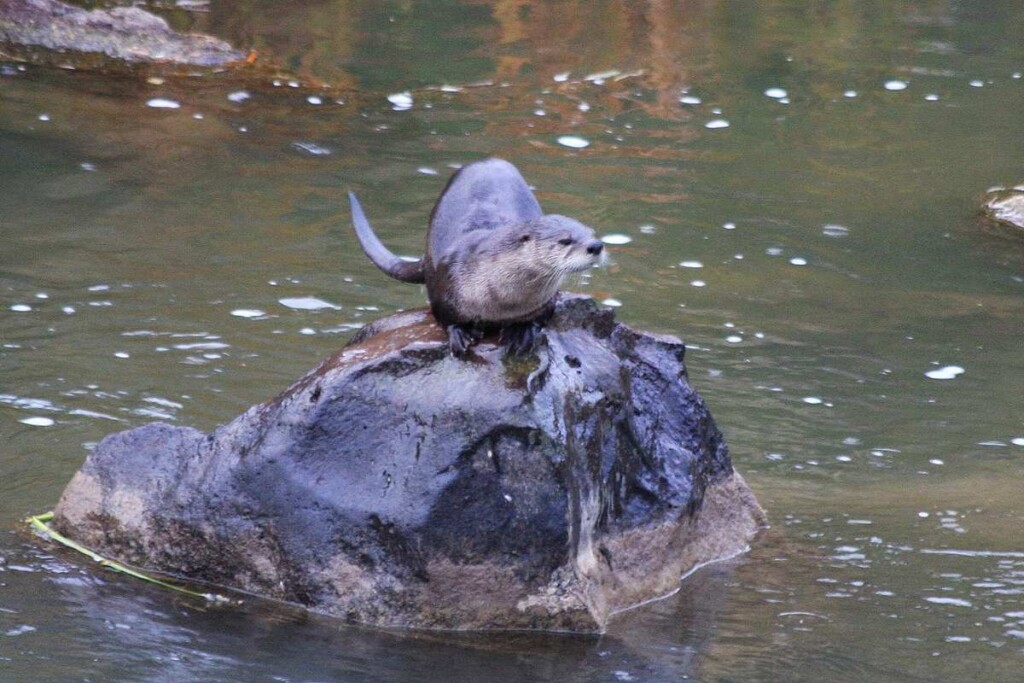
A river otter the moment it was released into the Rio Grande - Credit J.N. Stuart, CC 2.0.
A river otter the moment it was released into the Rio Grande – Credit J.N. Stuart, CC 2.0.

Conservationists in New Mexico are celebrating the state’s expanding population of wild river otters, as their numbers have tripled in the last 14 years.

Though native to the state, the beasts were extirpated completely during the 1900s, likely due to a mixture of overtrapping and habitat destruction.

However, groups can now be seen swimming about in waterways located in communities like Taos, Angel Fire, Pilar, and Corrales along the Rio Grande, and there’s every chance this expansion will continue.

“In 2008 to 2010, the department released 33 otters, and those reintroduction efforts took otters from Washington and brought them into the upper Rio Grande,” said Carnivore and Small Mammal Program Manager for the New Mexico Dept. of Game and Fish Nick Forman to KRQE News 13.

A 2018 study showed that this initial population has expanded to 100 individuals, complemented more recently when the department released another 9 otters from Louisiana to aid genetic diversity.

A river otter the moment it was released into the Rio Grande – Credit J.N. Stuart, CC 2.0.

Ecologists say they help riverine ecosystems by keeping prey species in check and improving water quality.

“They provide that ecosystem service of being a top predator,” Forman added. “It’s good to have this species back in the role it’s always played in our rivers and lakes.”

MORE REINTRODUCTIONS AT HOME: American Marten May Be Set for Return to Pennsylvania Forests After 100 Year Absence

The department now is asking members of the public to send them any photos or videos of otters in the wild they take, hoping to use citizen science to better map their distribution around the state whilst conservationists mull over whether to continue with future release efforts.

WATCH the story from KRQE…

SHARE This Adorable Predator’s Long-Awaited Return To New Mexican Rivers…

Oldest Known Alphabet Unearthed in Ancient Syria–Predating All Others by 500 Years

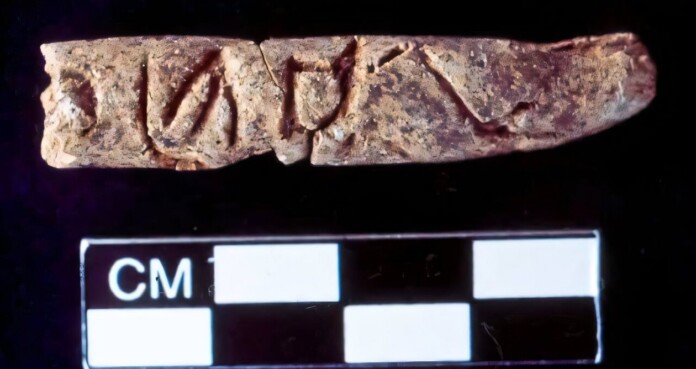
Credit: Glenn Schwartz, Johns Hopkins University

In western Syria, archaeologists believe they have unearthed evidence of the earliest use of an alphabet in the world.

The site, called Tell Umm el-Marra was an important urban center in Syria and one of the first to ever pop up in the region. It’s been under excavation for 16 years.

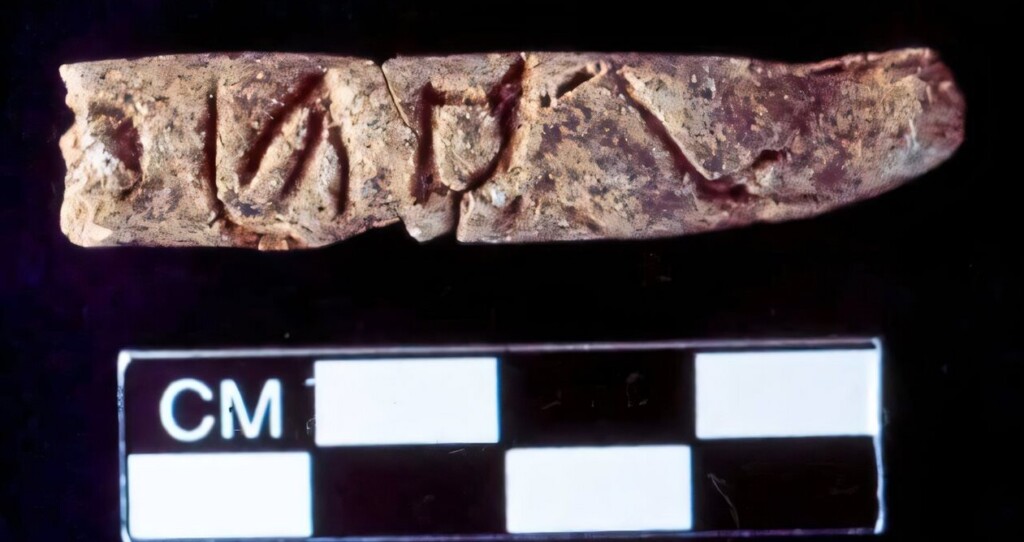
In one of the best-preserved tombs—remarkably unlooted—dating from the Early Bronze Age, 6 skeletons were found alongside grave goods and four, small, perforated clay cylinders.

Stamped on the cylinders seems to be some form of Semitic alphabet, but carbon dating revealed the clay to be around 500 years older than the previous oldest recorded alphabetic script.

“Alphabets revolutionized writing by making it accessible to people beyond royalty and the socially elite. Alphabetic writing changed the way people lived, how they thought, how they communicated,” said Glenn Schwartz, a professor of archaeology at Johns Hopkins University who discovered the clay cylinders.

“And this new discovery shows that people were experimenting with new communication technologies much earlier and in a different location than we had imagined before now.”

“Previously, scholars thought the alphabet was invented in or around Egypt sometime after 1900 BCE,” Schwartz said. “But our artifacts are older and from a different area on the map, suggesting the alphabet may have an entirely different origin story than we thought.”

ANCIENT ARCHAEOLOGY: 

The earliest forms of the Semitic alphabet come from the proto-Sinaitic inscriptions, discovered in 1905 on the Sinai Peninsula of which 20 to 40 examples exist. These are believed to represent a state of writing between the Egyptian hieroglyphics and the North Semitic alphabet.

However, as Schwartz explains, these new clay cylinders date to the 20th century BCE at the latest, 500 years before the Sinaitic inscriptions were carved.

“The cylinders were perforated, so I’m imagining a string tethering them to another object to act as a label. Maybe they detail the contents of a vessel, or maybe where the vessel came from, or who it belonged to,” Schwartz said. “Without a means to translate the writing, we can only speculate.”

SHARE This Amazing Back-Dating Of This Most Important Social Innovation…

“If you don’t define yourself for yourself then you will be eaten alive by others’ fantasies of you.” – Audre Lorde

Credit: Joshua Rawson-Harris

Quote of the Day: “If you don’t define yourself for yourself then you will be eaten alive by others’ fantasies of you.” – Audre Lorde

Photo by: Joshua Rawson-Harris

With a new inspirational quote every day, atop the perfect photo—collected and archived on our Quote of the Day page—why not bookmark GNN.org for a daily uplift?

Octopus Suction Cup Design Could Help Dentures Stick to the Mouth

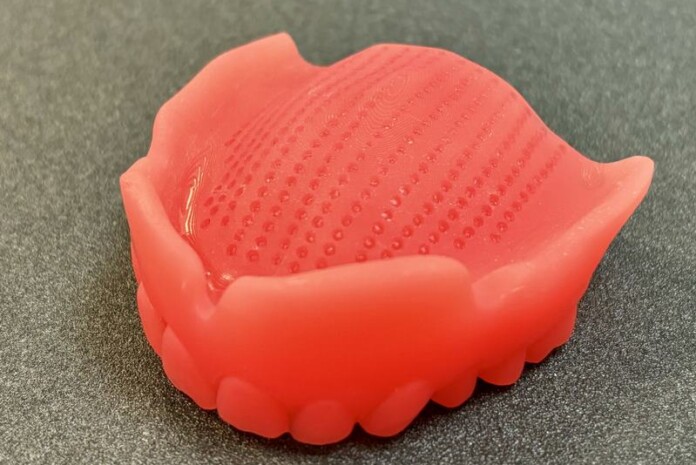
3D printed dentures covered with suction cups - Credit KCL, via SWNS
3D printed dentures covered with suction cups – Credit KCL, via SWNS

Scientists have found a way to help dentures better stick to the mouth—which is a bigger problem than you think—by mimicking the powerful suction cups found on octopus tentacles.

Since 1 in every 10 users of dentures have trouble keeping them in place, they sometimes have to resort to various denture cements and adhesives to keep them in their mouth.

These are as widely unpopular as they sound; with users claiming they are unhygienic, unpleasant, and change the taste of food.

However, scientists from King’s College London (KCL) believe they have finally found an alternative to these products—one that is modeled on the octopus.

The team from the KCL Faculty of Dentistry, Oral, and Craniofacial Sciences, explored how they could replicate the process that helps these animals to stick to slippery surfaces in the sea.

Octopuses have suction cups on the underside of their tentacles which create a negative pressure vacuum that fixes them firmly to things like rocks.

The team theorized that something similar could be done for dentures, allowing them to attach to the soft mucosa of the mouth. For the first time ever, tiny suction cups have been designed into 3D-printed dentures.

Analysis of the models shows that these new dentures have twice the amount of retention as standard ones but are thankfully not so strong that users cannot remove them from their mouths.

“Having worked with denture wearers, who I often see in clinic, for several years, I really wanted to improve their experiences,” said lead author Dr. Sherif Elsharkawy, from King’s College London. “Octopus suckers seemed like the perfect place to start.”

“I first had the idea to replicate sticky surfaces in nature while biting into a peach. I noticed how the furry skin stuck to the palate of my mouth and decided to investigate other sticky surfaces in nature.”

INSPIRED BY ANIMALS: Less Invasive Way to Collect Blood Is Inspired by Leeches and Needs No Medical Training

“By mimicking the ingenious adhesive strategies found in octopus suction cups, we have developed a prototype that offers improved grip and comfort in even the most demanding oral environments,” said Dr. Elsharkawy.

It has always been popular in engineering and inventing to rely on inspiration from nature. This kind of “biomimicry” shows how many ready-made solutions can be found in nature.

MORE BIOMIMICRY: Indian IT Worker Designs New Eco-Friendly Sewage Treatment Method with the Sacred Cow as His Inspiration

“It’s inspiring to see how insights from nature, combined with cutting-edge manufacturing techniques, can lead to innovations that improve both functionality and patient satisfaction,” Dr. Eda Dzinovic, researcher in dental materials, added.

“Contributing to this project has been an incredible opportunity to push the boundaries of dental material science.”

Give Your Friends A Bite Of This News By Sharing It On Social Media…

Archaeologists Uncover Gateway to Ancient Greek Temple Alongside the Nile in Egypt

The entrance at the Sohag Temple Pylon - Credit: Supreme Council of Antiquities
The entrance at the Athribis Temple Pylon – Credit: Supreme Council of Antiquities

Ongoing excavations at a sprawling temple 125 miles north of Luxor have unearthed a towering discovery: a temple pylon measuring 150 feet wide made of sandstone blocks.

It was found at the Athribis site dating to the Ptolemy dynasty when Egypt was ruled by the descendants of one of Alexander of Macedon’s generals, where excavations are currently in their 21st year.

Athribis Temple Pylon – Photo Credit: Supreme Council of Antiquities.

The discovery by a joint Egyptian-German team is considered a “significant milestone” that will pave the way for further excavation at the temple site, where even after uncovering walls carved with high relief, halls, dozens of rooms, pillars and pillar bases, and over 1,200 hieroglyphic inscriptions, the majority remains buried.

“The slope angle of the towers suggests the original height of the pylon could have been up to 18 meters, rivaling the dimensions of the Luxor Temple pylon,” said Dr. Mohamed Ismail Khaled, Secretary General of the Supreme Council of Antiquities.

Mohamed Abdel Badie, head of the Central Administration for Upper Egypt Antiquities and head of the Egyptian side of the mission, stated that on the interior walls of the gate, hieroglyphic inscriptions were found depicting a Ptolemaic king welcoming Repyt, the lion-headed goddess and patron of the Athribis temple.

ANCIENT EGYPT HEADLINES: Period of Ancient Egypt Illuminated by Intricate Coffins for ‘The Lady of the House’

“Through studying the cartouches discovered at the entrance and on one of the interior sides, it was determined that this gate dates back to the reign of King Ptolemy VIII, who may have been the founder of the temple,” Abdel Badie said.

Dr, Marcus Miller, an archaeologist on the German team, said that a hidden room on a second floor accessible by a door on the exterior of the pylon, was discovered during the unearthing. Floor steps led up to the chamber which is guessed to have been destroyed during the 7th century CE.

EMERGING FROM THE SANDS: Ancient Egyptian Observatory is Unlocking Celestial Secrets of Their Cosmic Culture

The Athribis project is one of the most important ongoing in Egypt at the moment, and along with the impressive structures, has unearthed 30,000 artifacts.

SHARE This Impressive News In Egyptology With Your Friends… 

1,000 Endangered Animals Set to Return Home to Madagascar in Anti-Trafficking Victory

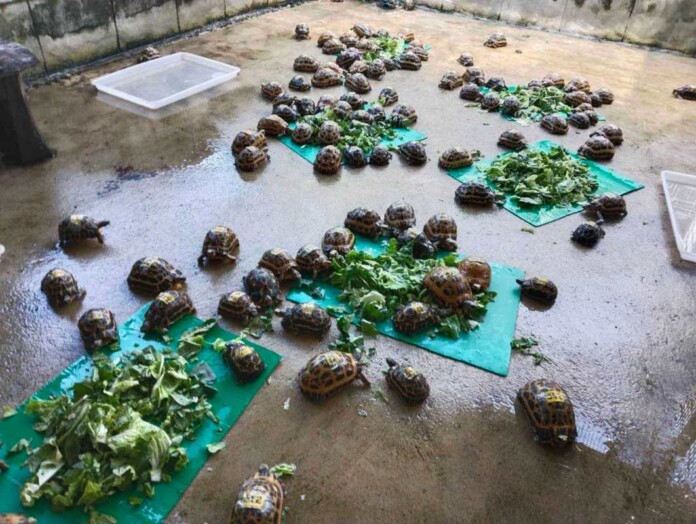
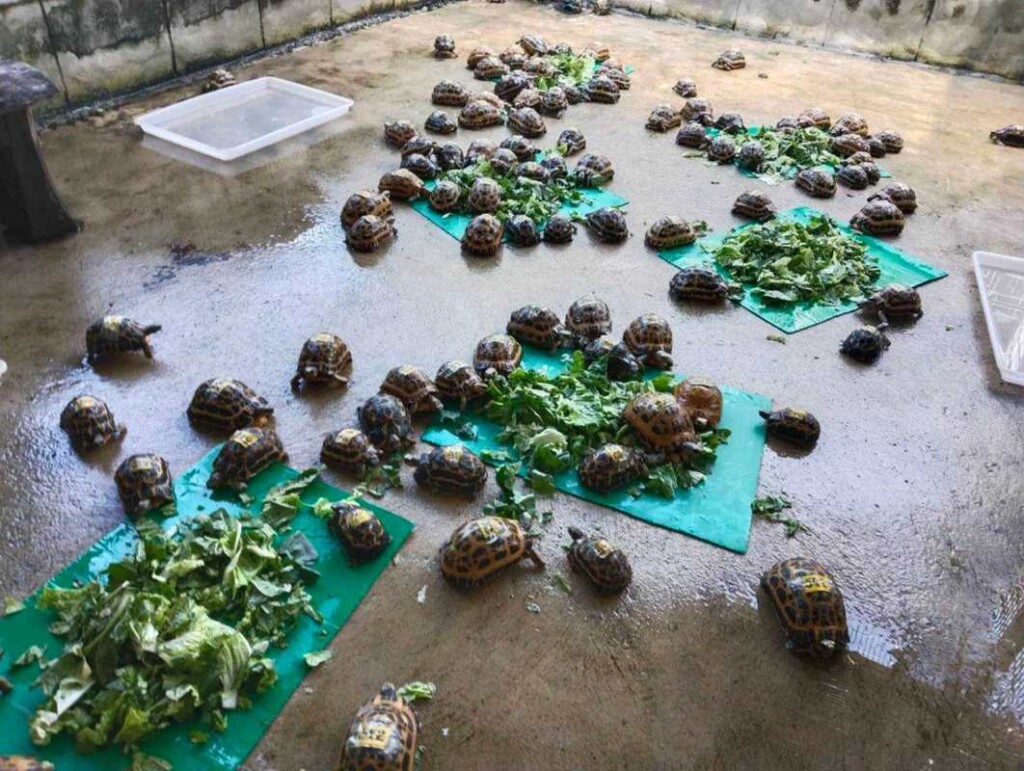
The seized radiated tortoises - Credit: Department of National Parks, Wildlife and Plant Conservation
The seized radiated tortoises – Credit: Department of National Parks, Wildlife and Plant Conservation

In May, GNN reported that 48 lemurs, 30 primates of various species, several crocodiles, and over 1,000 rare tortoises were seized when a convoy of four smuggling trucks was raided in Thailand.

The bust was valued at around $2 million on the black market, but now, these animals are set for a return to their wild homes on Madagascar.

Some of the lemurs after they were rescued – credit Wildlife Justice Commission Released

In a ceremony in Bangkok, Thai authorities transferred the 961 healthy animals over to members of the Malagasy Department of National Parks, Wildlife, and Plant Conservation, in advance of their flight home on three separate planes operated by Qatar Airways.

“By conducting operations like this and broadcasting them globally, it shows that there are arrests and exchanges happening, making people worldwide aware that possessing these animals is not right,” said the department’s director, Attapol Charoenchansa.

Radiated tortoises and all the lemur species seized are listed under the Convention on International Trade in Endangered Species (CITES) Appendix I, meaning that trade in specimens of these species is permitted only in exceptional circumstances, and that trafficking them comes with the most severe sentencing.

Both species are native to Madagascar and are highly sought-after commodities in the global illegal pet trade market.

READ ALSO: 109 Countries Coordinate Sting Operation to Seize Illegally-Captured Wildlife, Leading to 600 Arrests

Wildlife, including plants and seeds, make up the third largest illegal market in the world behind drugs and weaponry. But whereas the other two can always be easily replaced through manufacturing, endangered species are finite.

MORE TRAFFICKING VICTORIES: Life Savings of an Entire Small Town Recovered from the Depths of Crypto-Scam, Thanks to FBI

In other words, the seizure will not only be significantly disruptive to the criminals’ operations, but create an extremely positive impact as they return to the wild and help their species recover.

SHARE This Great News For Endangered Species With Your Friends… 

Scientists Discover Simple Supplement That Causes Prostate Cancer Cells To Self-Destruct

Credit: Netherlands Cancer Institute

Vitamin K is found in leafy greens and is crucial for blood coagulation and calcium synthesis in tissues—but may also cure prostate cancer.

Not vitamin K specifically, but a precursor called menadione, which was found in a recent trial to interfere with the survival process of tumor cells and ultimately saw them explode.

Prostate cancer is one of the most lethal in men, and while multiple treatments exist, there are some varieties that are both highly resistant and highly aggressive. In 2001, a trial of 35,000 patients was funded to try and find out if vitamin E, a potent antioxidant, could help treat prostate cancer.

After just three years, however, it was found that more men taking the supplement started to get the disease. The trial organizers reasoned simply that if an antioxidant accelerated prostate cancer, could a pro-oxidant prevent it?

Researchers at Cold Spring Harbor Laboratory (CSHL) tested menadione, a precursor to vitamin K, in mice. In their animal model, it was found that the menadione depleted a lipid called PI(3)P, which works like an ID tag. Without it, the tumor cells failed to continue to recycle incoming material. They eventually exploded.

“It’s like a transport hub, like JFK. If everything that goes in is immediately de-identified, nobody knows where the airplanes should go next. New stuff keeps coming in, and the hub starts to swell. This ultimately leads to the cell bursting,” said Professor Lloyd Trotman, leader of the research from CSHL.

YOU MAY ALSO LIKE: New Cervical Cancer Treatment Regime Shows ‘Biggest Gain in Survival Since 1999’

Trotman would like to see the results replicated in men who receive an early cancer diagnosis.

“Our target group would be men who get biopsies and have an early form of the disease diagnosed. We wonder if they start to take the supplement, whether we would be able to slow that disease down,” she said.

UNLIKELY CANCER TREATMENTS: Manuka Honey Reduces Breast Cancer Cell Growth by 84% in Human Cells and Mice

Sci-tech Daily reports that menadione may also be effective in slowing the progression of myotubular myopathy, a deadly birth defect in infant boys that prevents them from growing; eventually leading to death prior to childhood.

SHARE This Unlikely Candidate For A Cancer Treatment With Your Friends… 

“Earth knows no desolation. She smells regeneration in the moist breath of decay.” – George Meredith

Quote of the Day: “Earth knows no desolation. She smells regeneration in the moist breath of decay.” – George Meredith

Photo by: Drazen Nesic (cropped)

With a new inspirational quote every day, atop the perfect photo—collected and archived on our Quote of the Day page—why not bookmark GNN.org for a daily uplift?

20-yo Hiker Survives to See Family Again After Incredible 50 Days Lost in the Rockies

A screengrab of Sam recovering in the hospital - Credit: Sandra Crocker, released
A screengrab of Sam recovering in the hospital – Credit: Sandra Crocker, released

From the mountains of British Columbia comes the story of a hiker who’s been found alive after being lost in the woods for five weeks.

In a remote provincial park, with nighttime temperatures plunging to minus-four, (-20C°), Sam Benastick struck out on October 7th for a 10-day camping and fishing trip.

An image of Benastick released by RCMP

Relatives said he was well-prepared and packed a wool hat and gloves, a hatchet, and “plenty of peanut butter,” but when he failed to return to his family’s home on the 17th, fear circulated among the small communities in northeast BC.

CBC News confirmed from Sam’s mother, Sandra Crocker, that he had been found on a remote access road and taken to the hospital for frostbite, exhaustion, and smoke inhalation.

In an update published on November 29th, CBC confirmed he had been discharged from the hospital. The story was followed by veteran reporter Andrew Kurjata, and is flush with details.

Borrowing his mother’s Honda dirt bike, Benastick landed at a trailhead and planned to hike in about 80 kilometers to catch Arctic grayling. Crocker told the CBC that Benastick was feeling a bit “listless” after returning from an extended trip to Europe, and felt he needed an adventure.

That adventure, coupled with the 10 days of planned excursion, lasted 50 days, but in a picture shared with CBC, Crocker showed her son giving a thumbs up from his hospital bed with the caption “he complained he didn’t even catch one fish.”

Redfern-Keily Provincial Park is a remote area 660 miles north of Vancouver, and boasts exquisite Rocky Mountain scenery, but threatens visitors with unpredictable weather, wolves, bears, no potable water, and no telecommunications coverage.

According to the BC Search and Rescue Association, more than 120 volunteers were involved in efforts to find Benastick with motor vehicles and aircraft across the vast park, in part informed by Timber Bigfoot, land and environment manager and member of the Prophet River First Nation, whose territory extends to the park.

“It’s an amazing environment and climate to try to survive,” Bigfoot told Kurjata, adding he’d love the opportunity to debrief the lost hiker. “I think it’s a miracle, and I congratulate him for being such a tough person.”

The Royal Canadian Mounted Police were also involved in the search effort, but haven’t shared many details about the case as there was no criminal element.

In a release last Wednesday, RCMP said Benastick stayed in his car for a couple of days, then walked to a “creek, mountainside” where he camped for 10 to 15 days, before he “moved down the valley and built a camp and shelter in a dried-out creek bed.”

GETTING OUT OF TROUBLE: Woman Lost 8 Days in the Australian Bush Survives to See Her 4 Children Again ‘It is miraculous’

The only person who has since spoken with Sam or Sandra has been Mike Reid, the general manager of the Buffalo Inn in Pink Mountain where Sam’s relatives stayed while looking for him.

According to Reid, Benastick’s plans went awry when he had to retreat from either one or multiple wolves. After escaping their unfriendly jaws, he may have made camp to avoid the worst of several inches of snow that blanketed the park in October.

OTHER MIRACULOUS ESCAPES: Four Colombian Children Found Alive in Jungle Five Weeks After Plane Crash

He was eventually found on an access road by surveyors who had been on the series of remote tracks for a week marking trees around potential well sites when they saw someone walking down towards them. According to Reid, they were surprised, because although they had seen a lot of ATVs and snowmobiles, it was not the place for hikers.

Eileen Stevens, Sam’s step-grandmother on his father’s side, joked she would be buying the boy a GPS for Christmas.

MORE STORIES LIKE THIS: Little Boy Lost for 6 Days in Harsh Kenyan Wilderness is Rescued: ‘An Amazing Moment’

“Sam is a guy who knows the woods. He’s been raised—he’s a hiker. He’s a passionate fisherman,” she told CBC. “I don’t know his story, but I’m sure it’s going to be friggin’ amazing.”

His uncle, Al Benastick, agreed whilst adding that he couldn’t imagine the ordeal turning Sam off from his love of the Great Outdoors.

WATCH the story from CBC News…

SHARE This Young Man’s Incredible Survival Story That Les Stroud Would Be Proud Of…