











All News - Page 149 of 1714 - Good News Network
Home Blog Page 149

Newly-Found Metropolis with Pyramids Shows We’re Not Even Close to Discovering Every Mayan City

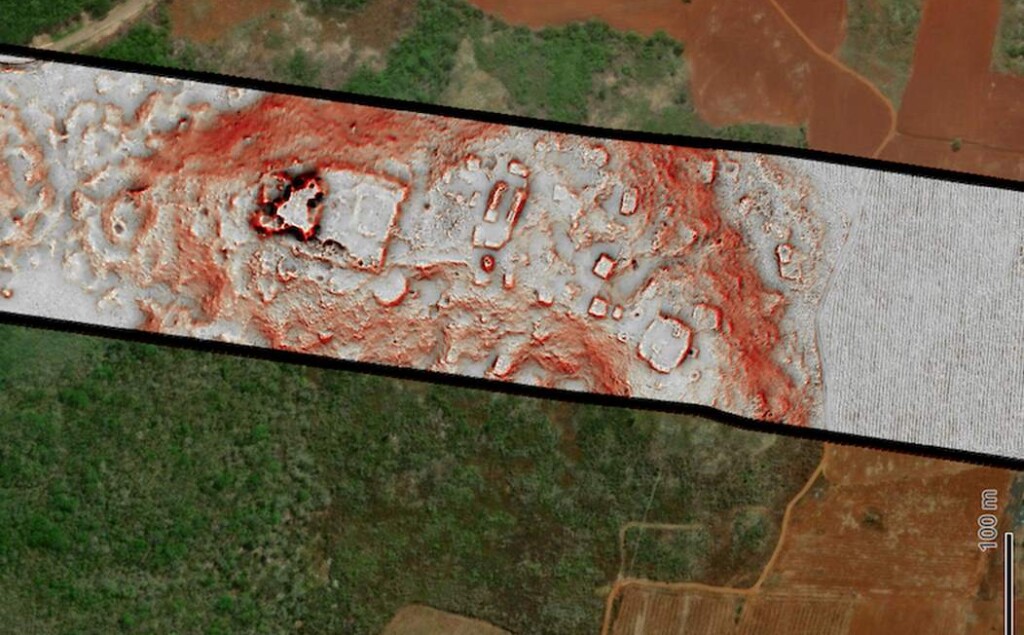
In this composite image, topographical data from a lidar survey is superimposed over the green forest canopy it surveyed, revealing how easily it is to hide even dramatic buildings in the jungle, and how easy it is for lidar to find them - Photo courtesy Luke Auld-Thomas.
In this composite image, topographical data from a lidar survey is superimposed over the green forest canopy it surveyed, revealing how easily it is to hide even dramatic buildings in the jungle, and how easy it is for lidar to find them – Photo courtesy Luke Auld-Thomas.

A major Mayan urban center has been found in a recent lidar survey on the Yucatan Peninsula that includes pyramids and ball courts.

The archaeologists triumphantly declare that the world is yet far away from the last major discovery under the jungles of Central America.

The survey was published in a recent study wherein the authors sought to answer a simple question: was the Mayan Lowland densely populated, or does it merely seem that way because of the collection of famous sites located there?

Lidar is an aerial survey tool that uses laser pulses to measure distances. It allows archaeologists to create detailed 3D topographs of forest area quickly whilst completely removing the trees from obscuring the view below, and as such has revolutionized archaeology in South and Central America.

Researchers avilaing themselves of lidar’s powers have shown that “low-density urbanism” is widely spread around many parts of Central and South America, where tens of thousands, even millions of inhabitants lived in collections of sophisticated settlements centered around keystone structures like the pyramid in Tikal or Tulum.

But doctoral student Luke Auld-Thomas and Francisco Estrada-Belli, a research professor in Tulane’s Department of Anthropology, wanted to test just how densely-populated the Mexican state of Campeche was during the Mayan Classical Period (250 CE – 900 CE) by essentially picking several survey plots in the state’s unexplored southeastern forests at random.

What they found is proof of what many of the most radical historians and archaeologists in the world are now proposing: that low-density urbanism in tropical forest was widespread across the continents.

“We didn’t just find rural areas and smaller settlements. We also found a large city with pyramids right next to the area’s only highway, near a town where people have been actively farming among the ruins for years,” said Auld-Thomas to his university press.
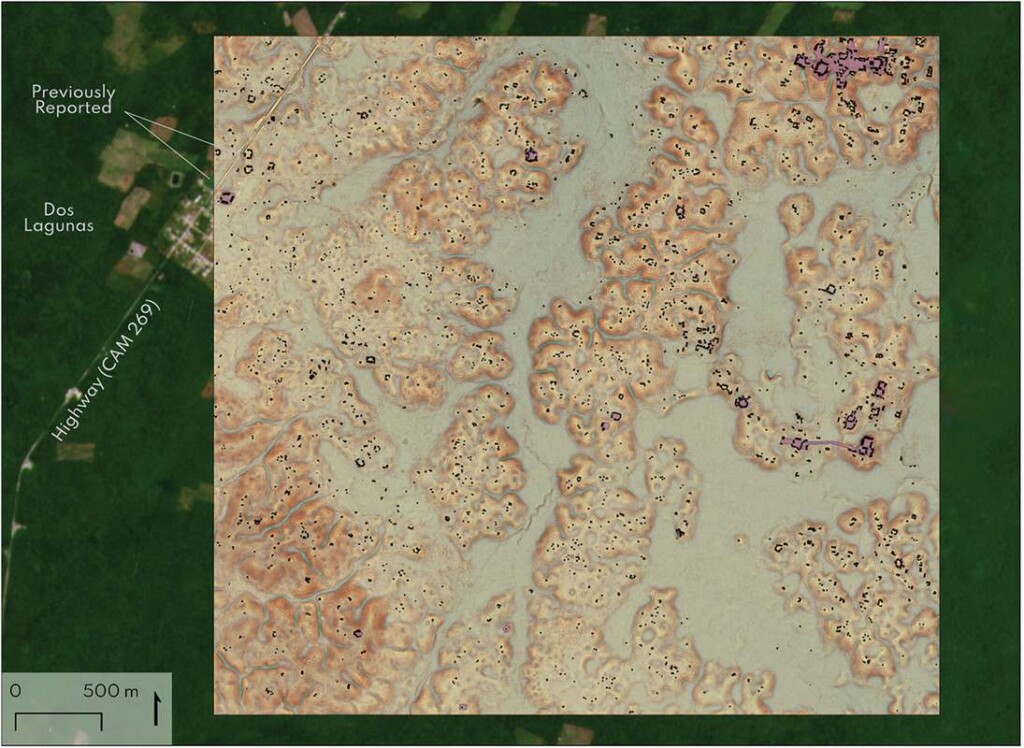
The most populated survey area, with the city of Valeriana to the northeast corner – credit, Auld-Thomas, Canuto, et al.

“The government never knew about it; the scientific community never knew about it. That really puts an exclamation point behind the statement that, no, we have not found everything, and yes, there’s a lot more to be discovered.”

6,500 pre-Hispanic structures, including both habitation and landscape elements, were turned up across 5 survey blocks of about 50 square miles, or about 32,000 acres.

The city was dubbed Valeriana by the authors of the study, who note that none of the structures, to their knowledge, have ever seen archaeological fieldwork. As such, the number of buildings may be less, though the authors add that never has the number of sites in a lidar survey been subsequently reduced after field excavations—the technology has a robust track record of accuracy.

LEARNING TO LOVE LIDAR: 

“The larger of Valeriana’s two monumental precincts has all the hallmarks of a Classic Maya political capital: multiple enclosed plazas connected by a broad causeway; temple pyramids; a ballcourt; a reservoir formed by damming an arroyo; and a probable E-Group assemblage, an architectural arrangement that generally indicates a founding date prior to [150 CE]” the authors describe.

Settlement and agricultural infrastructure completely fill the 4,000 acre survey area, dominated by landscape engineering spilling over the topography to the south and west.

“Lidar is teaching us that, like many other ancient civilizations, the lowland Maya built a diverse tapestry of towns and communities over their tropical landscape,” said Professor Marcello A. Canuto, advisor to Auld-Thomas, and co-author on the study.

“While some areas are replete with vast agricultural patches and dense populations, others have only small communities. Nonetheless, we can now see how much the ancient Maya changed their environment to support a long-lived complex society.”

SHARE This Unbelievably Important Discovery On Social Media… 

This Innovation Could Extend Little-Used Zinc Battery Lifespan Hundreds of Times to Create Battery Revolution

- credit, Advanced Energy Materials (2024). DOI 10.1002aenm.202403030
– credit, Advanced Energy Materials (2024). DOI 10.1002aenm.202403030

German scientists have found a way to extend the lifespan of zinc-ion batteries more than 100-fold, allowing the fringe battery technology to potentially replace the controversial lithium-ion standard found in today’s mobile phones and EVs.

This means instead of just a few thousand charge-discharge cycles, a zinc-ion battery could last hundreds of thousands of cycles—exactly the kind of reliability society needs for a major energy transition.

Fully-developed in 2011, aqueous zinc-ion batteries haven’t entered the market in any truly measurable way. The most publicized use in the modern economy today is probably the EOS 1.0 GWh energy storage plant for solar power in Texas.

In theory, zinc-ion batteries hold many advantages over lithium-ions, but problems, including the growth of needle-like zinc structures—known as zinc dendrites—as well as unwanted chemical side reactions that trigger hydrogen formation and corrosion, remain.

Engineers at the Technical University of Munich crafted a unique material to counter these unwanted reactions in the form of a porous organic polymer called TpBD-2F.

This material forms a stable, ultra-thin, and highly ordered film on the zinc anode, allowing zinc ions to flow efficiently through nano channels while keeping water away from the anode.

“Zinc-ion batteries with this new protective layer could replace lithium-ion batteries in large-scale energy storage applications, such as in combination with solar or wind power plants. They last longer, are safer, and zinc is both cheaper and more readily available than lithium,” said Da Lei, Ph.D. student and lead author of the research published in Advanced Energy Materials.

Known as a ‘base metal,’ zinc is the 23rd most abundant mineral in the world, and is produced in large quantities in many of the world’s top mining nations and by many of the world’s largest gold and copper mining companies which end up with zinc as a common byproduct of their operations.

ALSO CHECK OUT: Long-lasting Solid-state Lithium Battery From Harvard May Solve a 40-year Problem

A firm like Southern Copper Corporation can generate gold, silver, zinc, and copper from a single pit, lithium is often mined from deposits of brine in once salt-rich areas, often without yielding any other materials.

“This is truly a spectacular research result. We have shown that the chemical approach developed by Da Lei not only works, but is also controllable,” said Professor Roland A. Fischer, Chair of Inorganic and Metal-Organic Chemistry at the TUM School of Natural Sciences.

MORE BATTERY REVOLUTIONS: World’s Largest Battery to Revolutionize Renewable Energy Storage in Maine with ‘Reverse Rusting’

“As fundamental researchers, we are primarily interested in new scientific principles—and here we have discovered one. We have already developed a first prototype in the form of a button cell. I see no reason why our findings couldn’t be translated to larger applications. Now, it’s up to engineers to take up the idea and develop appropriate production processes.”

SHARE This Great Innovation In Battery Technology With Your Friends…

Boston Hospital Is Treating Food as Medicine with its Own Rooftop Garden

First Hospital Rooftop garden-released by Boston Medical Center

It’s a paradox found all over the world: why is it so common for hospital food to be essentially bad for you?

Tackling the problem head-on, Boston Medical Center—already one of the greenest hospitals in the nation—has opened two large rooftop gardens, giving patients and physicians alike access to fresh food while adding green space to the hospital campus.

BMC had one rooftop garden through which it supplied fresh foods to its cafeteria and inpatient catering, but now a second one, utilizing the ample rooftop space of the hospital campus, is also able to provide fresh foods to underserved communities, cementing the BMC as a place of healing, whether through a shot in the arm, or a vibrant kale salad.

Through a partnership with Boston Area Gleaners, fruits and vegetables cultivated in the 4,915-square-foot grow space will be distributed to local non-profits and community centers twice weekly during the growing season, addressing food insecurity and increasing access to essential fresh foods across Boston.

Called the ‘Newmarket Farm,’ it triples the total grow space at BMC and quadruples the amount of produce BMC expects to grow annually. The new garden will specialize in growing vegetables, including collard greens, kale, and arugula, as well as culturally relevant crops including Aji Dulce peppers, bok choy, and callaloo.

It will also advance BMC Health System’s commitment to sustainability. The green space reduces heat-absorbing pavement in the community and slows stormwater runoff impact, as plants directly collect and retain rainwater. The garden operates while reducing water waste through high-tech irrigation that waters the crops directly at the root.

ROOFTOP GARDENING: Rooftop Forest Planned for London Courthouse Includes 100 Trees, 10,000 Plants, and Much More

“Our rooftop farms increase green space in our community, reduce the hospital’s carbon footprint, and strengthen at-risk local food systems. We are proud to expand fresh food availability in the local community while adding more pathways to support critical clinical programs, like the Preventive Food Pantry, in our hospital,” said David Maffeo, Senior Director of Support Services at BMC.

“The Newmarket Farm models how hospitals can further invest in the health of our communities while building environmentally resilient spaces.”

BMC actually has a program called Food Is Medicine, which works with a local grocer to craft labeling formats that speak directly to citizens’ disease risks and/or desire for knowledge about better nutrition.

OTHER STORIES LIKE THIS: Spain’s Olive Oil Producers Turn Tons of Their Pits into Fuel–For Homes, Planes and Industry

For example, food items that may help control blood sugar are expressed as being better for diabetics on the packaging, or foods that may help lower blood pressure are labeled as being potentially heart-healthy.

The cultural diversity of the city has seen the labeling materials printed in a variety of languages, from Vietnamese to Haitian-Creole.

SHARE This Story Of A Hospital Practicing What Its Doctors Preach… 

“When we ask for advice, we are usually looking for an accomplice.” – Saul Bellow

ePi.Longo-CC BY-SA 2

Quote of the Day: “When we ask for advice, we are usually looking for an accomplice.” – Saul Bellow

Photo by: ePi.Longo, CC BY-SA 2

With a new inspirational quote every day, atop the perfect photo—collected and archived on our Quote of the Day page—why not bookmark GNN.org for a daily uplift?

ePi.Longo-CC BY-SA 2

2 Unwanted Dogs Spending Months in Shelter Become Best Friends–Now They’re Family After Adoption of Both

credit - Greenville Humane Society
credit – Greenville Humane Society

When added together, Boone and Rellie spent over 450 days at a shelter in a South Carolina human society.

One was deaf, the other shy, but a prospective owner who had been following their stories through social media decided enough was enough—and both deserved a happy loving home.

Rellie, with a reputation of being sweet to dogs and shy to strangers, had been up for adoption at the Greenville Humane Society for 10 months, the last 4 of which were spent tail-in-tail with a new arrival named Boone.

Another long-term resident, Boone’s stay would end up spanning 150 days.

“He was deaf and we were struggling to find him a home that would be patient and understanding with him,” the shelter wrote in a Facebook post. 

“Boone and Rellie took daily walks together at the shelter,” said Emily Zheng, marketing manager for the Greenville Humane Society, according to The Herald. “They played every day in the play group. They were the best of friends.”

Boone’s owner was unable to continue to provide the care he needed, but in his previous life the large white dog with different colored eyes had learned to understand sign language and use a vibrating collar to help better navigate his surroundings.

The new owners had followed Rellie’s story online and decided to come in and meet her. She had to live with another dog, the society told them. With spare room in their home and hearts, they met Boone and decided he was the one.

NEW HOMES FOR HARD-TO-ADOPT DOGS: Abused and Stuck in Shelter for 450 Days ‘Mind-blowing’ Dog Charms Everyone at Rehab and Finds Forever Home

“This is a reminder of why we do what we do. Why we show up every day for the homeless pets in our community. Why we never give up,” the society wrote on Facebook.

SHARE This Happy Ending For Too Furry Friends Who Became Siblings… 

30-50% of Twins Develop a Language Exclusive to Them During Childhood

retrieved from Superpolyglotbros.com
– retrieved from Superpolyglotbros.com

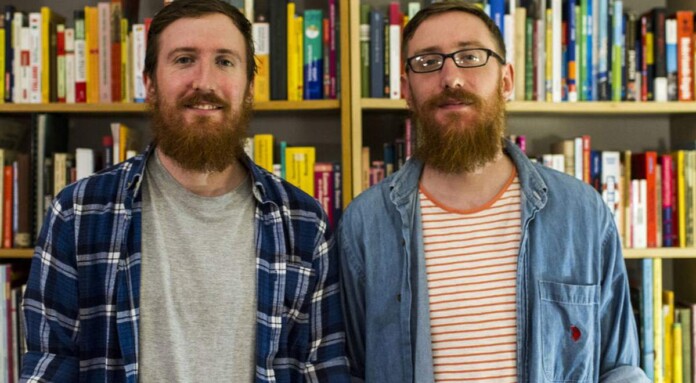
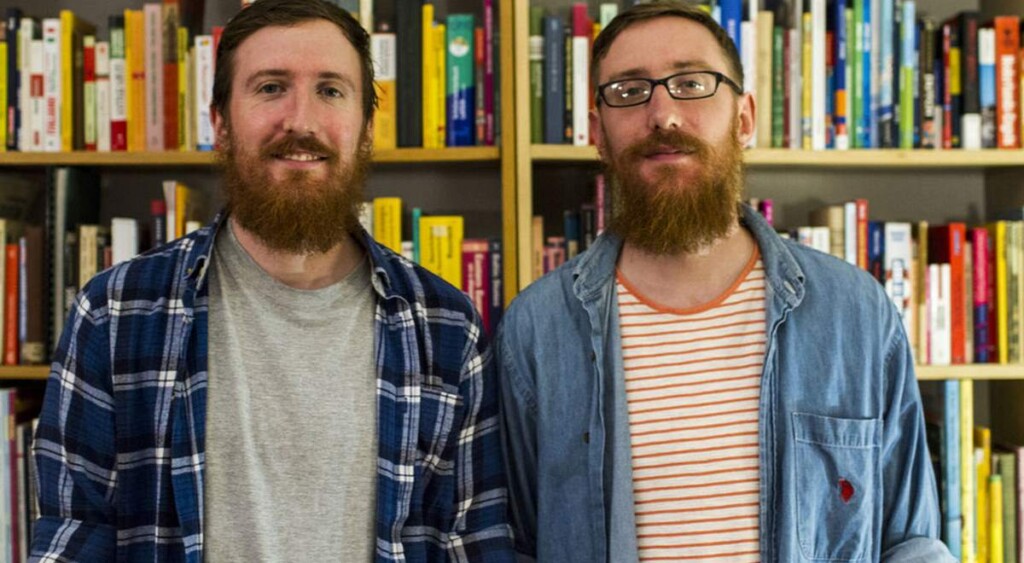
From the BBC comes a delightfully educational story about a pair of identical twins who developed their own language.

‘Umeri’ is not anything you’ll find on Google Translate: it has only two speakers, Matthew and Michael Youlden.

It’s written here as being “developed” rather than invented because Umeri is a sophisticated and extremely rare example of a phenomenon known as “twin speak.”

Twin speak is a mutually intelligible communication pattern developed by twins that is typically unintelligible by anyone else. It arises naturally in twins—or even very closely aged non-twin siblings, around the time that the child is developing their earliest concepts in language.

The technical term is “cryptophasia” or ‘secret talk’ but this Greek designation is a rather cold and heartless way of viewing the fascinating phenomenon. Experts in the little-researched field of understanding twin speak say it has nothing to do with keeping dialogue secret from parents, but rather emerges as both children babble their way to correct speech.

“In most cases it seemed to be a developmental phenomenon occurring in the second year of life with the emergence of immature speech, and decreasing considerably over the next 16 months,” reads a cohort study published in 2010 examining twin speak. “A small group of children, primarily male twins, was reported to use a private language at 36 months.”

However, the Youlden Twins insist Umeri isn’t about keeping anything private.

“Umeri isn’t ever reduced to a language used to keep things private,” the twins told the BBC in an email. “It definitely has a very sentimental value to us, as it reflects the deep bond we share as identical twins.”

Their story of developing their twin speak into a flushed-out language comes from their fascination with languages in general. With the social media handle Superpolyglotbros, they work as language consultants, and speak a whopping 25 languages each.

It started during a trip to Spain when the twins were 8 years old. Worried they’d be unable to order ice cream, they set about learning Spanish armed only with a phrase book. Worrying not a wink for the grammar, they directly translated English phrases into Spanish, before slowly doing the same for Italian and Portuguese, building up a love of languages to last a lifetime.

As the 2010 study notes, flourishing twin speak can often be attributed to less stimulative, less responsible household environments. This can sometimes happen when twins learn to communicate with each other, and parents don’t speak to each twin individually.

ALSO CHECK OUT: This Inuk Woman Is Teaching Her Indigenous Language Online to Help Others Reconnect With Inuit Culture

The study found that the twins who had the poorest language skills between the ages of 4 to 6 were those twins who had the most robust twin speech. However, continued research on the topic eventually found that use of a private language was not a statistically significant factor in the delay of speech in twins.

SUPERPOLYGLOTS: Carpet Cleaner With Autism Has Learned 40 Languages – Watch His Talent in Action

To wit, the Youldens were never discouraged from using their twin speak, they were just “off doing their language thing.”

The Youldens are constantly developing Umeri, and always have been, by adopting grammatical structures that stimulated their curiosity from other languages into it.

MORE LANGUAGE STORIES: Cree Leader Surprises Tribe With Genius YouTuber Who Learns Dying Language to Promote it (WATCH)

They routinely have to decide words for modern terminology, particularly as it relates to technology. However, neither has any intention of sharing Umeri with, for example, their own children.

It’s an intimate language spoken by two people, and as such, they admitted, it has an expiry date.

SHARE This Fascinating Story About Language Development On Social Media… 

$20 Bill Found on Ground Leads to $1 Million Win for North Carolina Lottery Player

Photo by Pete Alexopoulos on Unsplash

It was the easiest payday that master carpenter Jerry Hicks ever made—and the biggest too.

He must have thought it was his lucky day when he stopped outside a convenience store and noticed $20 dollars on the ground. He didn’t know the half of it.

Hicks, from Banner Elk, North Carolina, took the $20 and walked into the Speedway on state Highway 105 in Boone on Tuesday evening and bought an Extreme Cash scratch-off, officials said.

Hicks said that the Speedway didn’t have the lottery game he preferred to play, so bought a different one he was unfamiliar with.

It’s interesting how all these little choices can seem so consequential when the result was that Mr. Hicks won a million dollars with the ticket he bought.

HEADLINES: A Man from Luck Won the Lottery

“We are going to head straight to Golden Corral and eat everything they’ve got,” he laughed, speaking with North Carolina Education Lottery officials.

Offered the choice of an annuity of $50,000 over 20 years or a lump sum of $600,000, he chose the single payout and took home $429,007 after taxes.

CHARMING LOTTERY WINNERS: Mom Wins Lottery with Ticket She Bought Celebrating Daughter’s Victory Over Cancer

Hicks said he plans to use his winnings to retire after working as a carpenter for 56 years, and using what’s left after that (and Golden Corral) to even better support his children.

DELIGHT In This Tradesman’s Lucky Day—SHARE It On Social Media… 

New Jersey Teacher Uses Body as Human Shield to Protect Teen from Group Attack

Courtesy of Cathy Hurley

For many young people, teachers play the role of mentors, counselors, and friends, but for one isolated New Jersey student, his teacher became a guardian.

Outnumbered 5 to 1, a student at William Shemin Midtown Community School in Bayonne, was set upon by his peers, only for his teacher to intervene, shielding his prone body with her own.

Recorded by nearby security cameras, the scene saw 56-year-old Cathy Hurley try and prevent violence from starting between a group of teens while she was walking to her parked car.

Hurley’s daughter, speaking with ABC 7 News, said her mother must have known that something was wrong, and because she was “raised to stick up for the underdog,” tried to talk the teens out of fighting. They ignored her.

Throwing one boy to the ground, repeatedly punching and kicking him, Hurley tried to push them away before eventually lowering herself over the defenseless student, dissuading the assailants from throwing further blows.

ABC 7 reports that all five teens were charged with assault, endangering an injured victim, and rioting, while the young boy was taken to the hospital.

MORE NEW JERSEY NEWS: She Wanted Her Son with Autism to Explore Nature So She Created a Whimsical Fairy Forest Trail

Bayonne School District Superintendent John Niesz in a statement said in part, “I can tell you this, that teacher embodies what each and everyone who works and lives in Bayonne is all about.”

OTHER EXCELLENT TEACHERS: A Teacher Promised His 1978 Class an Eclipse Party in 50 Years–And He Just Hosted It

“She was raised that way,” said Hurley’s daughter Frankie Sielski. “I was raised that way to stick up for the underdog and I know that her responding was an instinct.”

Sielski added that her mom is living proof that society is full of good, selfless people.

WATCH the story below from ABC 7…

SHARE The Story Of This Heroic Teacher’s Actions With Your Friends… 

“Life is the art of drawing without an eraser.” – John W. Gardner

Quote of the Day: “Life is the art of drawing without an eraser.” – John W. Gardner

Photo by: Benoît Deschasaux / Unsplash+

With a new inspirational quote every day, atop the perfect photo—collected and archived on our Quote of the Day page—why not bookmark GNN.org for a daily uplift?

Scientists Perfecting New Way to Turn Desert Air into Water at Much Higher Yields

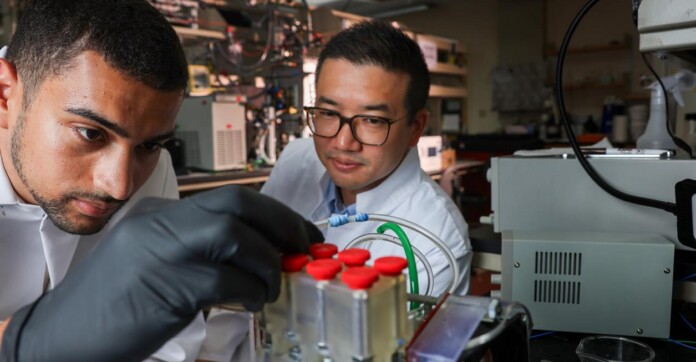
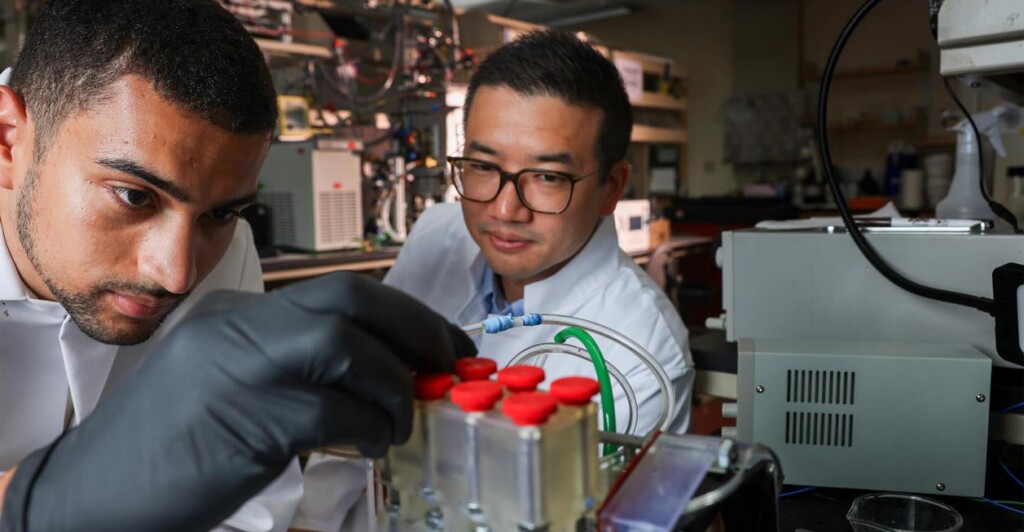
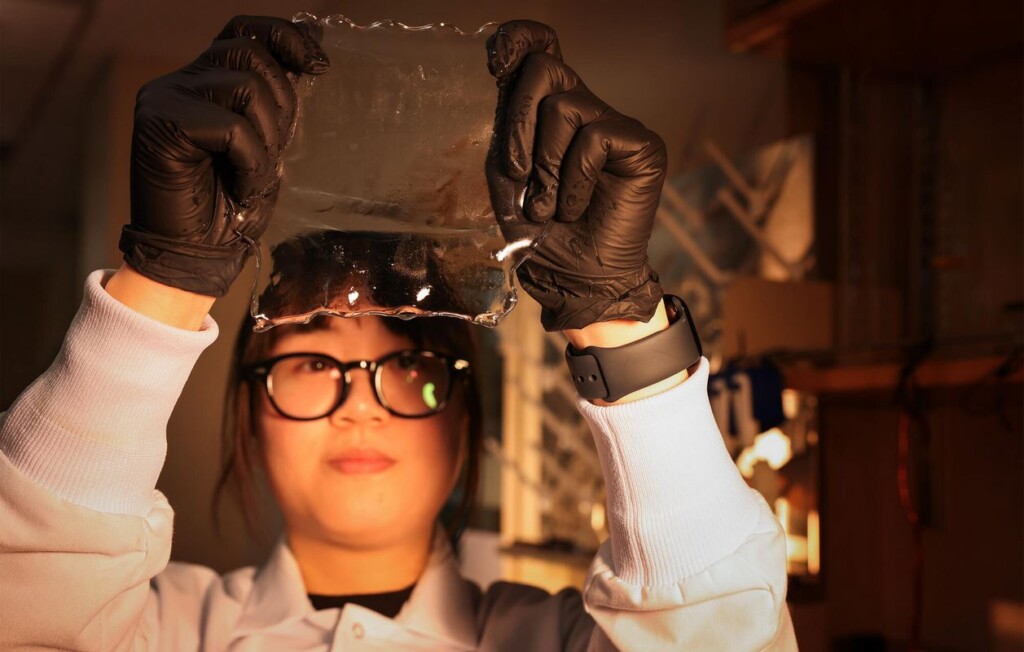
Undergrad researcher Benjamin Sabir helps H. Jeremy Cho examine the atmospheric water harvesting device. (Jeff Scheid/UNLV)

With government funding, a team of engineers at Univ. of Las Vegas are poised to revolutionize how water is supplied in desert climes.

Their new system pulls gallons of water a day out of the air around us, and far from sitting on a bench in a laboratory, this incredible innovation is already moving to market.

Dubbed a ‘watershed moment,’ UNLV mechanical engineering professor H. Jeremy Cho. took a look at all the ways that modern societies use technology to pull water from the air and believed he could make it substantially better.

Desert-dwelling cultures have been creating and sharing innovations for tackling this challenge of nature for millennia, and Professor Cho used nature itself as an inspiration.

Existing mechanical systems of atmospheric water capture typically yield less-than a gallon a day and suffer from diminishing returns at under 30% humidity. Cho’s design relies on a hydrogel membrane inspired by frog’s skin as well as certain plants.

“We took that biological idea and tried to do it in our own way,” Cho told UNLV press. “There are so many cool things happening in nature—you just have to look around, learn, and be inspired.”

Undergrad researcher Emilie Luong holds a hydrogel membrane, an integral part of WAVR’s atmospheric water harvesting process. (Jeff Scheid/UNLV)

But just how much water could realistically be harvested from the air in a place as dry as Las Vegas? Actually, Cho says that of the hundreds of millions of gallons of water that Clark County consumes every day, there is about the same moisturizing the 30 feet of air closest to the ground.

Cho encourages people to view the atmosphere as a big invisible river.

To the end of tapping that river, Cho teamed up with UNLV undergrad researchers Emilie Luong and Benjamin Sabir and others

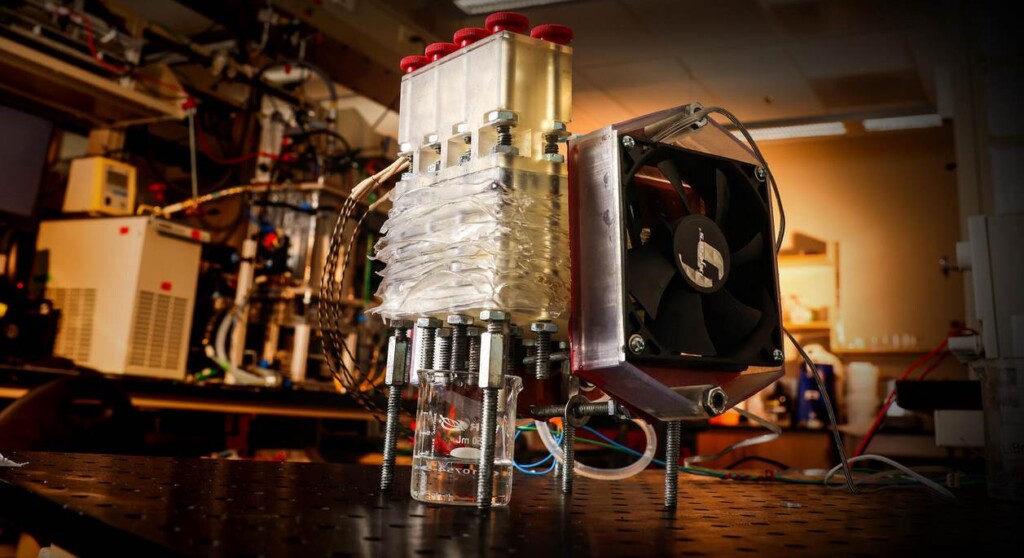
A device capable of atmospheric water harvesting in H. Jeremy Cho’s lab. (Jeff Scheid/UNLV)

to launch WAVR, a UNLV-startup and the first effort of its kind spun off from the National Science Foundation’s Southwest Sustainability Innovation Engine (SWSIE), which gave Cho a generous grant for his research.

GOOD TECH STORIES: Creating Electricity From Moisture in the Air, Even in the Sahara Desert

WAVR’s patented technology can capture 5-times more water than any other atmospheric water harvesting system, and with so much water available, stands to be a life-changing invention for the Southwest.

SIMILAR TECHNOLOGIES: Device Pulls Dozens of Liters of Water from the Air–Already Being Installed in Jordanian Desert Homes

The first paper published on the WAVR devices established that certain conditions allowed for between 0.75 to 1.5 gallons of water per square meter of membrane, per day, could be generated in Las Vegas’s arid air.

“This paper really establishes that you can capture water at a very fast rate,” said Cho. “We can start to forecast how big of a system we would need to produce a set amount of water. If I have one square meter, which is around three feet by three feet, we can generate about a gallon of water per day in Las Vegas, and up to three times more in humid environments.”

The water is collected via the aqua-conductive powers of salt, and can be then turned either into drinking water or via simple electrolysis into green hydrogen fuel to power fuel cell vehicles like planes, trains, cars, or heavy equipment.

OTHER DESERT NEWS: After Mojave Fires, Camels Help Restore Iconic Joshua Tree Groves in the Cherished California Desert

“Identifying technologies and innovations that can transform lives for the better, create jobs, and diversify the local economy is a critical function of what we’re doing at UNLV and throughout the region,” said Zach Miles, senior associate vice president for UNLV’s Office of Economic Development and SWSIE workforce development lead. “In the case of WAVR, you can see all of this in action, which I believe has helped move this startup forward.”

WATCH the story below from UNLV…

SHARE This Amazing Innovation With Your Friends In The Southwest… 

Tiny House with Elaborate Frescoes of Mythical Scenes Unearthed From the Ashes at Pompeii

credit - Archaeological Park of Pompeii
Credit – Archaeological Park of Pompeii

Another amazing building, preserved under the ash of Vesuvius, has been excavated at Pompeii.

This one demonstrates changes in the taste and design of Roman homes at the time of the eruption but also exhibits a variety of mythical scenes depicted in frescoes on the walls.

Found in the central district of the city, the first thing archaeologists and excavators noted was the lack of an open-air courtyard called an atrium that’s so typical of Roman domiciles large and small.

The volcanic ash and pumice that buried the large city have preserved artifacts in incredible detail, including the last ritual materials burned at the family shrine to the gods, called a lararium.

“We have archaeologists, restorers, archaeobotanists here to understand exactly how the ritual of the last sacrifice was carried out before the eruption,” said Gabriel Zuchtriegel, the park’s director, in a statement. “There are still the burnt remains of this ritual, there is the knife that was used.”

This excavation, Zuchtriegel added, “takes place under the eyes of the public” who can access the site on suspended walkways and watch archaeologists working.

Apart from these details, the most thrilling discoveries are the ornate frescoes that cover the walls, depicting various motifs of flowers and animals, but also scenes from mythology such as Venus with her mortal lover Adonis, a satyr engaged in intercourse with a nymph, and the judgment of Paris.

Another shows Theseus’ son Hippolytus and his stepmother Phaedra who fell in love with him. In the painting, Hippolytus is turning away, capturing the part of the story where Phaedra’s love is rejected, and she kills herself in anguish.

ALSO LOOK: Astonishingly Wealthy Pompeii Home of Two Men Freed from Slavery Reopens to Public

The preservation of frescoes at Pompeii is one of the many reasons why it stands among the most important historical/archaeological sites in all the world; not only for its significance in the story of humanity like that of Babylon or the Pyramids, but also the way it captures so many details—both big and small—about humanity and our story.

A great example of this is a wholesaler’s shop found in 2022 that amongst the wall decorations included a fresco with something that looks quite like a pizza.

OTHER DISCOVERIES FROM THE FAMOUS CITY: 2,000-Year-old Scroll Burnt in Pompeii Decoded and Read for First Time by Three Genius Students

Regarding the “pizza,” historians on staff were quick to remind the public that tomatoes are native to South America and mozzarella cheese hadn’t been invented yet, but the fresco could very well depict focaccia bread.

SHARE This Latest Discovery From Pompeii With Italian-Loving Friends… 

Luke Combs, James Taylor Headline Star-Studded Concert for Carolina–Raises $24 Million for Hurricane Relief

credit - David Newton, via X @DNewtonespn
credit – David Newton, via X @DNewtonespn

Some of the biggest stars in country music teamed up on a Saturday night to see how much money they could raise for hurricane relief.

Headlined by Luke Combs and Eric Church, the Concert for Carolina generated $24 million to help North and South Carolina communities recover from the double whammy of hurricanes Helene and Milton, with names like Sheryl Crowe, James Taylor, and Keith Urban making guest appearances.

More than 80,000 people packed the Bank of America Arena in Charlotte—the use of which was offered pro bono by Carolina Panther’s owner David Tepper, whose foundation donated $3 million to relief efforts immediately following the effects of Milton—smashing as it did towns hundreds of miles from the coast.

“This will undoubtedly go down as the night I am most proud of in my career,” Combs wrote on Instagram. “Being able to give back to the place that gave me so much.”

Other guest performers included Billy Strings, Bailey Zimmerman, The Avett Brothers, Scotty McCreery, Chase Rice, and Parmalee.

Born in Huntersville, NC, Combs told 104.3 KCY Country that he vividly remembered watching the devastation at his home in Nashville, unable to hear from friends and family who had lost cell reception.

ALSO CHECK OUT: This Hurricane-Proof Florida Development Easily Endured Helene, Ian, and Idalia–Proving Climate Designs Work

Wondering “how I can be of service,” Combs called his fellow country star, friend, and North Carolina native Eric Church to pitch the idea of a benefit. The answer was never in doubt.

“North Carolina is both of our homes. The small communities that specifically make up western North Carolina are these strong, independent, proud communities,” Church said during a press conference in advance of the Saturday show.

MORE HURRICANE RELIEF: ‘It’s Been Amazing’ the Outpouring of Support From Pilots, Business, Celebrities and Government After Hurricane

“[T]hey’re the exact community that when the community next door is in trouble, out can count on that community to come help you. And in this situation, there is no community next door. It’s all been destroyed. So, what you’re seeing tonight, is we are the community next door. The people that are in this stadium are the community next door.”

Combs, who was also at the press conference, added that “a show like this usually takes a year, or a year and a half, to plan, and we were able to get it done in three weeks.”

WATCH James Taylor singing about Carolina from the show… 

SHARE This Fantastic Benefit Gig With Your Friends Who Like Country…

Editor’s Note: A previous version of this story incorrectly stated the location of the venue as Charlottesville. The mistake has been corrected.

Four Astronauts Returned to Earth After Unexpected 8 Months Stuck in Space

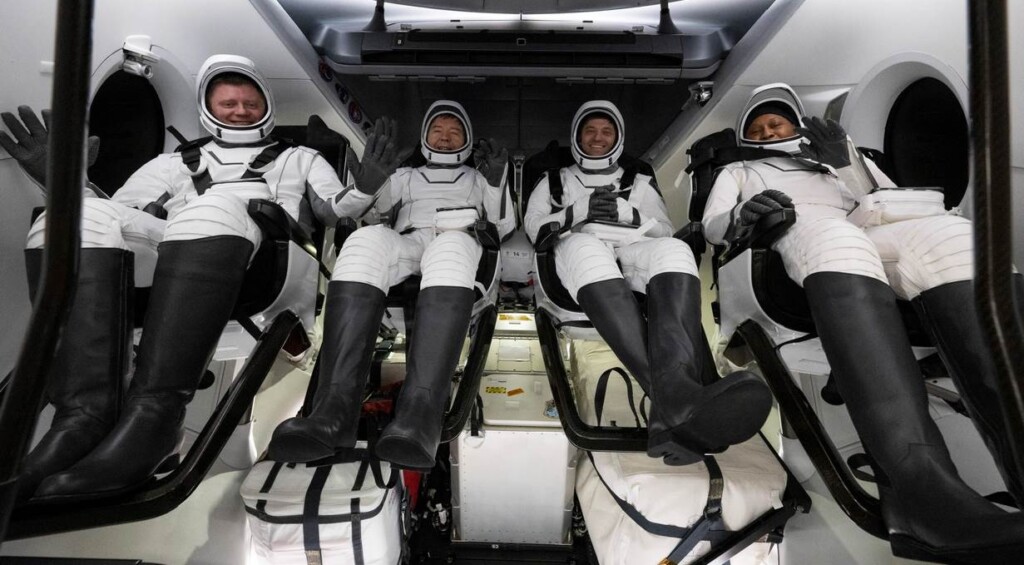
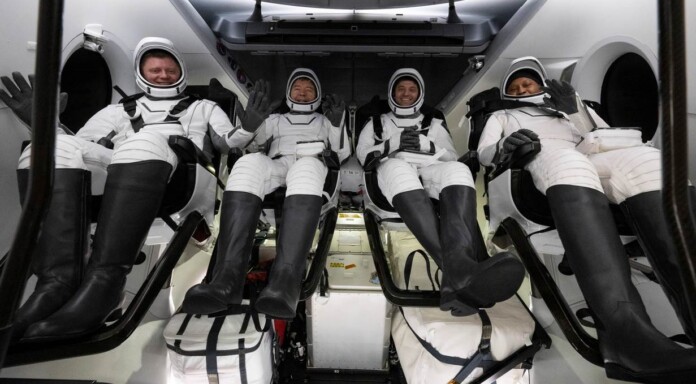
NASA’s SpaceX Crew-8 members, from left to right, Roscosmos cosmonaut Alexander Grebenkin and NASA astronauts Michael Barratt, Matthew Dominick, and Jeanette Epps, are seen inside the Dragon spacecraft shortly after having landed off the coast of Pensacola, Florida, on Oct. 25, 2024. Credit: NASA/Joel Kowsky.

The astronauts who were stranded aboard the International Space Station have splashed down on Earth following their unexpected 8-month stay.

It wasn’t quite Lost in Space—they weren’t lost, for example—but in August when Boeing’s Starliner space capsule scheduled to pick them up had to return to the Earth empty for malfunctions and safety concerns, there must have been a small measure of concern.

NASA’s Crew 8 Mission consisting of Matthew Dominick, Michael Barratt, Jeanette Epps, and Roscosmos’ Alexander Grebenkin, arrived via SpaceX’s Dragon capsule back in March.

Barratt is the only one of the team to have entered space previously, and all four were deemed “fashionably late” by Danish space station commander Andreas Mogensen, after a small crack in the capsule’s hatch prompted a late flurry of diagnostics reports and associated delays.

The ISS was at over-capacity for inhabitants during the two months when the Starliner mission failed, and Barratt told the AP that the ground crews and support staff of NASA had to “to replan, retool and kind of redo everything right along with us … and helped us to roll with all those punches.”

They’ve now parachuted back down into the Gulf of Mexico after a SpaceX capsule retrieved them last week. One, unnamed astronaut was taken to the hospital to be treated for an undisclosed injury, the other three are recuperating at NASA’s Johnson Space Center in Houston, Texas.

It can take several weeks for the body to adjust to Earth’s gravity after a prolonged stay in microgravity.

OTHER NASA NEWS: First Spacewalk Performed by Private Citizen Proves Smaller Flexible Spacesuit Is Winning Design for Polaris Dawn

They conducted new scientific research including stem cell research to develop organoid models for studying degenerative diseases, exploring how fuel temperature affects material flammability, and studying how spaceflight affects immune function in astronauts. Their work aims to improve astronaut health during long-duration spaceflights, contributing to critical advancements in space medicine and benefitting humanity.

FOR SPACE LOVERS: SpaceX Lands its Rocket On a Dime– So it Can Be Reused and Launched Back into Orbit

The crew of four were replaced by two pairs of ISS visitors: the two astronauts sent up in the capsule that eventually brought the stranded astronauts back home, and two Starliner test pilots.

SHARE This Potential Disaster Avoided On Social Media… 
“With renunciation life begins.” – Amelia Barr

by Valeria Nikitina / Unsplash+

Quote of the Day: “With renunciation life begins.” – Amelia Barr

Photo by: Valeria Nikitina / Unsplash+

With a new inspirational quote every day, atop the perfect photo—collected and archived on our Quote of the Day page—why not bookmark GNN.org for a daily uplift?

by Valeria Nikitina / Unsplash+

Device from MIT Startup Helps People Fall Asleep–Putting Your Mind on ‘Do Not Disturb’

credit - Elemind, released
credit – Elemind, released

A team of MIT graduates has invented a commercial device that will give an alternative to sleeping pills for those who struggle to sleep.

It’s a minimally disruptive headband that looks like something that would be sold at an Apple Store. Technically speaking it’s an electroencephalogram (EEG) that sends audio waves into the brain to better align the brain regions to help the onset of sleep.

In a small study of the effects of the EEG headband, called Elemind, individuals with sleep-onset insomnia were able to fall asleep 10 to 15 minutes faster when wearing the Elemind.

Elemind was founded by David Wang and Ed Boyden—both graduates of MIT, and along with helping people who have trouble sleeping, the method may also be effective for slowing or preventing cognitive decline.

“We wanted to create a nonchemical option for people who wanted to get great sleep without side effects, so you could get all the benefits of natural sleep without the risks,” says Meredith Perry, Elemind’s CEO.

“There’s a number of people that we think would benefit from this device, whether you’re a breastfeeding mom that might not want to take a sleep drug, somebody traveling across time zones that wants to fight jet lag, or someone that simply wants to improve your next-day performance and feel like you have more control over your sleep.”

The founding scientists got their start using transcranial electric stimulation to try and moderate essential tremor syndrome but later moved to a less-regulated, less-explored field: sleep.

SIMILAR SCIENCE: Targeted Sound Waves Treat Pain and Depression in as Little as One 40-minute Session

“We have a theory that the sound that we play triggers an auditory-evoked response in the brain,” Wang told MIT press. “That means we get your auditory cortex to basically release this voltage burst that sweeps across your brain and interferes with other regions. Some people who have worn Elemind call it a brain jammer. For folks that ruminate a lot before they go to sleep, their brains are actively running. This encourages their brain to quiet down.”

Indeed, one of the marketing angles is “put your brain on Do Not Disturb” which is a pretty convincing pitch.

SIMILAR SCIENCE: Visiting the Gym Today Could Trigger a Bright Idea Next Week, New Study Shows

Those interested in the headband can preorder it through Elemind for $350.

SHARE This Potentially Great Product With Your Friends Who Might Need One…

New York Hits Solar Energy Goals a Year Ahead of Schedule Adding Enough to Power a Million Homes

- credit, energy.gov, released.
– credit, energy.gov, released.

The state of New York recently met its goal of installing 6 gigawatts of solar power one year ahead of schedule.

Outlined in a 2019 clean energy and climate change law, a state agency said that the accomplishment in advance of the 2025 deadline underscores the state’s position as one of the strongest ‘distributed’ solar markets in the nation.

The term refers to the quantity of solar power contributions to energy demand that come from panels owned by both individual homes and businesses, and larger solar farms.

The announcement was made by New York State Energy Research and Development Authority (NYSERDA) at the opening of a recent solar array in New Scotland, managed by, New Leaf Energy, that will power 1,000 nearby homes.

“Today we celebrate the early achievement of New York’s 6-GW milepost, which brings us one step closer to a reliable and resilient zero-emission grid,” Governor Kathy Hochul said.

“Distributed solar is at the heart of reducing greenhouse gas emissions, expanding the availability of renewable energy, and delivering substantial benefits for our health, our environment, and our economy.”

NYSERDA claims that solar projects in New York have created more than 14,000 solar jobs statewide in a variety of roles.

It also stated that in 2023 alone, 885 megawatts worth of solar projects were installed, raising the total amount of private equity invested into the state’s solar energy market to $9.2 billion.

READ ABOUT THE ENERGY TRANSITION: Geothermal Power is Finally a Reality After Next-Generation Breakthrough of Carbon-Free Energy in Nevada

In anticipation of the success, three years ago Governor Hochul directed NYSERDA and the Department of Public Service to expand the goal to 10 GW by 2030. 3.4 GW of new installations are already in development.

The State’s far neighbor Maine also recently accomplished an energy transition goal ahead of schedule, with 100,000 heat pumps installed 2 years in advance of their original 2025 target.

GOOD SOLAR STORIES: A Coal Billionaire Is Building the World’s Biggest Clean Energy Plant to Power 16 Million Homes in India

Maine Governor Janet Mills, like Hochul now, also unveiled a new target after achieving the first: installing another 175,000 additional heat pumps in Maine by 2027.

SHARE This Energy Transition News With Your Friends… 

17-Year-old Rescued After 12 Hours Lost in Rough Seas Clinging to a Capsized Kayak

Screenshots from video by U.S. Coast Guard Sector Honolulu

A teenager was rescued recently off the coast of Honolulu following a 12-hour ordeal drifting through choppy waters filled with zigzagging currents.

Through the long darkness of a night near the equator, Kahiau Kawai bobbed up and down clinging to a kayak while seeing the lights of the search parties looking for him in vain far away back near the shore.

The response had been organized around 6:30 p.m. when Kawai’s high school kayaking team found that he hadn’t made it back to Diamond Head during a kayaking practice meet that evening.

911 organized on-shore lifeguards, US Coast Guard, and other assets to try and find the young man. Kawai’s surf ski kayak had been capsized, and in the struggle he had lost his paddle. With nothing to propel the craft through the currents he knew were dragging him out to sea, he tried to stay calm.

One of those rescuers, Noland Keaulana, an experienced native Hawai’ian waterman and lifeguard with the Honolulu Ocean Safety Department, had been alerted to 17-year-old Kawai’s plight by his wife, who called Keaulana while he was fixing his truck and said the son of their friends had gone missing in the ocean.

Speaking with CNN, Keaulana said that he treats every Islander like his own family.

“I treat everyone like as [sic] they’re my own family member. Pretty much that whole night, I’m out there searching for my own son,” he said. “Being able to find him was very emotional.”

Kawai said he tried to keep his faith in god while he swam gently and constantly towards the shore, but admitted he was afraid of the dark, churning water beneath. Seeing the searchlights of the helicopter and vessels in the distance was particularly dismaying.

“I saw them go to a certain point a bunch of times but they weren’t going as far out as I was and that scared me a little bit,” Kahiau said.

MORE NEWS FROM HAWAI’I: High Schooler Wins $10,000 for Discovery Solution to Mysterious Outbreak Killing Sea Turtles in His Hawaii Hometown

At around 4 a.m. Thursday, after searching for over eight hours, a US Coast Guard airplane crew spotted the kayak and the teenager clinging onto it. They marked his location with a flare, where Keaulana came to find him on what was his day off.

The lifeguard remembered that the first thing Kawai said when climbing onto the boat was that he was scared his family was worried about him. Luckily, Keaulana had his family’s number, and, calling them to share the good news, he said the celebrations sounded like a bunch of monkeys and hyenas through the phone.

MORE STORIES LIKE THIS: Vessel Rescued in English Channel After Emergency Call to Dover, Delaware, Instead of Dover, England

At 5:25 a.m., Keaulana transported Kawai to the Ala Wai Harbor emergency room, where he was treated for injuries and hypothermia. He was in serious but stable condition.

“To ensure this does not happen again, we have initiated a thorough review of the incident and will hold ourselves accountable to take all necessary actions,” Kamehameha Schools, whose kayaking team Kawai is a member of, told CNN in a statement. “We can and will do better.”

WATCH the moments leading up to the rescue below… 

SHARE This Great Hawai’ian News With Your Friends… 

First Salmon Since 1912 Spotted in Klamath Basin Just Weeks After Dam Removal in Oregon

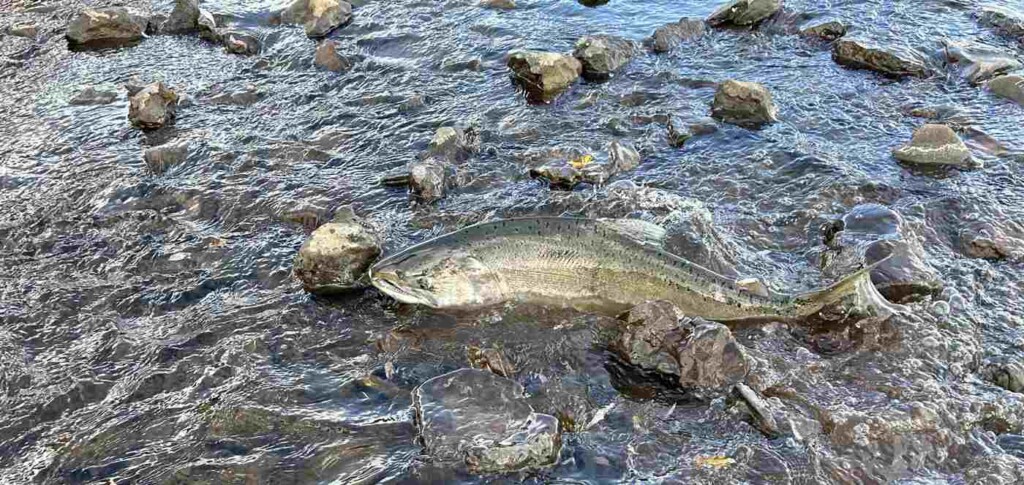
The first salmon to enter the upper Klamath River - credit Oregon Dept. of Fish and Wildlife, released
credit – Oregon Dept. of Fish and Wildlife, released

This little fellow carried the flag for his species’ triumphant return into the Klamath River Basin following a massive recent dam removal.

On October 16th, a fall-run Chinook salmon was identified by the Oregon Department of Fish and Wildlife (ODFW) in a tributary to the Klamath River above the now-demolished J.C. Boyle Dam, becoming the first fish to return to the Klamath Basin in Oregon since 1912 when the first of four hydroelectric dams was constructed, blocking migration.

The salmon and others likely traveled about 230 miles from the Pacific Ocean to reach the tributary, even though all four dams were removed just two months ago.

Fish biologists have been surveying the Klamath River and its tributaries since the dam removal as part of the agency’s responsibility to monitor the repopulation of various fish species to the basin in collaboration with the Klamath Tribes.

“This is an exciting and historic development in the Klamath Basin that demonstrates the resiliency of salmon and steelhead,” said ODFW Director Debbie Colbert. “It also inspires us to continue restoration work in the upper basin. I want to thank everyone that has contributed to this effort over the last two decades.”

“The return of our relatives the c’iyaal’s is overwhelming for our tribe. This is what our members worked for and believed in for so many decades,” said Roberta Frost, Klamath Tribes Secretary, using their word for salmon.

“I want to honor that work and thank them for their persistence in the face of what felt like an unmovable obstacle. The salmon are just like our tribal people, and they know where home is and returned as soon as they were able.”

Mark Hereford, ODFW’s Klamath Fisheries Reintroduction Project Leader, was part of the survey team that identified the fall-run Chinook. His team was ecstatic when they saw the first salmon.

SALMON DOING WELL: Maine Sets Records for Atlantic Herring and Salmon Runs in the Penobscot River

“We saw a large fish the day before rise to surface in the Klamath River, but we only saw a dorsal fin,” said Hereford. “I thought, was that a salmon or maybe it was a very large rainbow trout?” Once the team returned on the 16th and 17th, they were able to confirm that salmon were in the tributary.

It took 20 years of advocacy and legal challenges from the Yurok Tribe and other tribal, local, and federal groups and agencies to see the four dams on the river demolished.

MORE GREAT RIVER NEWS: Salmon Return to the Heart of UK for First Time in 100 Years After Dam Removal: ‘It’s very rewarding’

It began in 2004 when the water flow volume into one of the reservoirs downstream led to overly warm, overly stagnant water and an outbreak of disease. Tens of thousands of salmon died, and an investigation into the causes discovered that it had been negligent monitoring of water flow from Irongate Dam.

This raised the inquiry as to whether the dams, which had ceased to be a significant electricity source to the community, were still necessary.

SHARE This Great Follow-up From The News Of The Freeing Of This River… 

“They’re only truly great who are truly good.” – George Chapman

Abdulla Faiz, CC license

Quote of the Day: “They’re only truly great who are truly good.” – George Chapman

Photo by: Abdulla Faiz, CC license

With a new inspirational quote every day, atop the perfect photo—collected and archived on our Quote of the Day page—why not bookmark GNN.org for a daily uplift?

Abdulla Faiz, CC license

Huge Mastiff Poses in Human Clothes and Earns $1,000 a Month for Herself and her Loving Owner

Mastiff Dog named Mist dressed as a human for owner Calumn Barber on TikTok – SWNS

A human-sized dog is earning its keep—and more—by posing for TikTok dressed as a human.

Calumn Barber dresses his two-year-old Cane Corso (a type of Mastiff), and stuffs the arms and legs with padding to make her look like a buff dude.

Fans are won over by the pet’s deadpan expression and huge patience, despite being posed as if she were doing pull-ups, driving a four-wheeler, or chilling in a deck chair.

Her footage has become so popular, the pooch named Mist is pulling in an average of nearly $1,000 per month from TikTok views and sponsorship from the likes of Universal and Expedia.

Calumn, a landscape gardener in Coventry, England, says he banks all the money in a separate account for Mist in case she ever needs it—for vet bills, for example.

Every time she does a social media appearance Calumn buys her an $18 steak, which she loves.

“She’s very spoiled but she absolutely deserves it,” said her 25-year-old owner. “It’s amazing that she’s making money from it. I’m always impressed by her and I’m very proud of her.”

It all started because Calumn went out one day and “found her sitting on the 4-wheeler,” he said.

“She was just sitting, looking like one of us and I thought it would be fun to put it on TikTok. I thought, ‘let’s just go for it’.

“She often sits on the sofa like a human, with her arms just drooping down, looking at the telly or out the window, so we started it as a bit of a laugh.”

SO CUTE! Sunday Funnies: Cat Teaches New Kitten The House Rules By Dragging Him Off Kitchen Counter (Watch)

Calumn and his dog Mist – SWNS

“All the money is hers. I use it for treats and toys, and bank the rest for her.

“Touch wood she won’t need it but the money is there if she does, and if there’s ever a situation where it’s leftover then I’ll donate it to a pet rescue charity.

“I’m not sure she knows that she’s a huge success; I show her the videos and sometimes I think they get a smile.” (Watch all the fun scenes in the video below…)

Calumn always positions Mist so she’s comfortable.

“Sometimes I put my arms in the jacket and sit her on top of me then use my arms so, for example, it looks like she’s eating the food. It sounds crazy but nine-out-of-ten times she does these things herself.”

Mist’s first video went live on his TikTok channel in February, and since then she’s done promotions for brands such as Unidays, EMI, Universal, MG Media, and Expedia—and she already has thousands in her account and 68,000 followers.

At 97 lbs (44 kg), Mist is described as a gentle giant, who shares his bed at night and spends her days cuddling up on the sofa.

MORE PUP ANTICS: Watch a Dog Mimic a Weightlifter By Doing Squats and Lifting Invisible Barbells 

“She looks terrifying because she’s so big, but she’s basically a lap dog,” mused Calumn. “As soon as you sit down she’s sitting on you: it’s very loving—but hard on the legs.

“She’s very caring. She can lift the quilt to get under the covers and if it’s cold she’s careful to pull the quilt over me as well. We’re very close.”

Watch the amazing scenes below… (Note the Funky music is the only audio.)

SEND YOUR FRIENDS THE PAW-SOME LAUGHS–Share This on Social Media…