












All News - Page 210 of 1715 - Good News Network
Home Blog Page 210

Women Get the Same Exercise Benefits As Men, But With Less Effort, Huge Study Shows

By Elena Kloppenburg

Researchers have discovered a “gender gap” between men and women when it comes to working out—and it favors women, who are not likely to exercise as often.

Data analyzed from 412,000 adults in the U.S. showed that females get more ‘heart health benefit’ from exercise than males.

They can get the same benefits from exercise as men, but with less effort, according to Professor Martha Gulati, director of Preventive Cardiology at Cedars-Sinai Medical Center in Los Angeles.

She explained that women have historically lagged behind men in how often they engaged in meaningful exercise.

“The beauty of this study is learning that women can get more out of each minute of moderate to vigorous activity than men do.”

The team analyzed 22 years of data gathered by the National Health Interview Survey, and published their findings in the Journal of the American College of Cardiology (JACC).

They revealed that women can exercise less often than men, yet receive greater heart gains.

MORE MOTIVATION: Even Exercising Just Once a Week Can Help You Lose Weight, Says New Study

“For all adults engaging in any regular physical activity, compared to being inactive, mortality risk was lower,” said study senior author Professor Susan Cheng.

“Intriguingly, though, mortality risk was reduced by 24 percent in women and 15 percent in men.”

The team also studied moderate to vigorous physical activity—such as brisk walking or cycling—and found that men reached their maximal survival benefit from doing this level of exercise for about five hours per week while women achieved the same from only two-and-a-half hours per week.

When it came to weightlifting and other muscle-strengthening body exercises, men reach their peak from doing three sessions per week compared to women who only need one.

CHECK OUT: Slow Moving Tai Chi is ‘More Effective Than Aerobic Exercise’ For Reducing High Blood Pressure

The study also showed that women achieved maximal survival benefit if they exercised for 140 minutes per week, while men need to perform twice as much at 300 minutes per week to gain the same benefits.

Women continue to get further benefits for up to 300 minutes a week.

Prof. Christine Albert hopes women will take the research to heart.

“I am hopeful that this pioneering research will motivate women who are not currently engaged in regular physical activity to understand that they are in a position to gain tremendous benefit for each increment of regular exercise they are able to invest in their longer-term health.”

SHARE the Motivation With Women on Social Media…

Your Horoscope for the Week – ‘Free Will Astrology’ From Rob Brezsny

Our partner Rob Brezsny, who has a new book out, Astrology Is Real: Revelations from My Life as an Oracle, provides his weekly wisdom to enlighten our thinking and motivate our mood. Rob’s Free Will Astrology, is a syndicated weekly column appearing in over a hundred publications. He is also the author of Pronoia Is the Antidote for Paranoia: How All of Creation Is Conspiring To Shower You with Blessings. (A free preview of the book is available here.)

Here is your weekly horoscope…

FREE WILL ASTROLOGY – Week of March 2, 2024
Copyright by Rob Brezsny, FreeWillAstrology.com

PISCES (Feb. 19-March 20):
In old Hawaii, the people loved their deities but also demanded productive results. If a god stopped providing worshipers with what they wanted, they might dismiss him and adopt a replacement. I love that! And I invite you to experiment with a similar approach in the coming weeks. Are your divine helpers doing a good job? Are they supplying you with steady streams of inspiration, love, and fulfillment? If not, fire them and scout around for substitutes. If they are performing well, pour out your soul in gratitude.

ARIES (March 21-April 19):
In my astrological estimation, the coming weeks will be an ideal time for you to declare amnesty, negotiate truces, and shed long-simmering resentments. Other recommended activities: Find ways to joke about embarrassing memories, break a bad habit just because it’s fun to do so, and throw away outdated stuff you no longer need. Just do the best you can as you carry out these challenging assignments; you don’t have to be perfect. For inspiration, read these wise words from poet David Whyte: “When you forgive others, they may not notice, but you will heal. Forgiveness is not something we do for others; it is a gift to ourselves.”

TAURUS (April 20-May 20):
Many of you Tauruses have a robust capacity for doing diligent, effective work. Many of you also have a robust capacity for pursuing sensual delights and cultivating healing beauty. When your mental health is functioning at peak levels, these two drives to enjoy life are complementary; they don’t get in each other’s way. If you ever fall out of your healthy rhythm, these two drives may conflict. My wish for you in the coming months is that they will be in synergistic harmony, humming along with grace. That’s also my prediction: I foresee you will do just that.

GEMINI (May 21-June 20):
Many people choose wealthy entertainers and celebrity athletes for their heroes. It doesn’t bother me if they do. Why should it? But the superstars who provoke my adoration are more likely to be artists and activists. Author Rebecca Solnit is one. Potawatomi biologist and author Robin Wall Kimmerer. The four musicians in the Ukrainian band DahkaBrakha. Poet Rita Dove and novelist Haruki Murakami. My capacity to be inspired by these maestros seems inexhaustible. What about you, Gemini? Who are the heroes who move you and shake you in all the best ways? Now is a time to be extra proactive in learning from your heroes—and rounding up new heroes to be influenced by.

CANCER (June 21-July 22):
Your homework assignment is to work on coordinating two issues that are key to your life’s purpose. The first of these issues is your fervent longing to make your distinctive mark on this crazy, chaotic world. The second issue is your need to cultivate sweet privacy and protective self-care. These themes may sometimes seem to be opposed. But with even just a little ingenious effort, you can get them to weave together beautifully. Now is a good time to cultivate this healing magic.

LEO (July 23-Aug. 22):
If you don’t recognize the face in the mirror right now, that’s a good thing. If you feel unfamiliar feelings rising up in you or find yourself entertaining unusual longings, those are also good things. The voice of reason may say you should be worried about such phenomena. But as the voice of mischievous sagacity, I urge you to be curious and receptive. You are being invited to explore fertile possibilities that have previously been unavailable or off-limits. Fate is offering you the chance to discover more about your future potentials. At least for now, power can come from being unpredictable and investigating taboos.

VIRGO (Aug. 23-Sept. 22):
I invite you to study the fine art of relationships in the coming weeks. Life’s rhythms will redound in your favor as you enjoy expressing tenderly and freely with the special people you care for. To aid you in your efforts, here are three questions to ponder. 1. What aspects of togetherness might flourish if you approach them with less solemnity and more fun? 2. Could you give more of yourself to your relationships in ways that are purely enjoyable, not done mostly out of duty? 3. Would you be willing to explore the possibility that the two of you could educate each other about your dark sides?

LIBRA (Sept. 23-Oct. 22):
Creativity teacher Roger von Oech tells how bandleader Count Basie asked a club owner to fix his piano. It was always out of tune. A few weeks later, the owner called Basie to say everything was good. But when Basie arrived to play, the piano still had sour notes. “I thought you said you fixed it!” Basie complained. The owner said, “I did. I painted it.” The moral of the story for the rest of us, concludes von Oech, is that we’ve got to solve the right problems. I want you Libras to do that in the coming weeks. Make sure you identify what really needs changing, not some distracting minor glitch.

SCORPIO (Oct. 23-Nov. 21):
Most of us have received an inadequate or downright poor education about love and intimate togetherness. Given how much misinformation and trivializing propaganda we have absorbed, it’s amazing any of us have figured out how to create healthy, vigorous relationships. That’s the bad news, Scorpio. The good news is that you are cruising through a sustained phase of your astrological cycle when you’re far more likely than usual to acquire vibrant teachings about this essential part of your life. I urge you to draw up a plan for how to take maximum advantage of the cosmic opportunity. For inspiration, here’s poet Rainer Maria Rilke: “For one human being to love another human being: that is perhaps the most difficult task entrusted to us, the ultimate task, the final test and proof, the work for which all other work is merely preparation.”

SAGITTARIUS (Nov. 22-Dec. 21):
The myths and legends of many cultures postulate the existence of spirits who are mischievous but not malevolent. They play harmless pranks. Their main purpose may be to remind us that another world, a less material realm, overlaps with ours. And sometimes, the intention of these ethereal tricksters seems to be downright benevolent. They nudge us out of our staid rhythms, and suggest reality is not as solid and predictable as we might imagine. I suspect you may soon have encounters with some of these characters—and that they will bring you odd but genuine blessings.

CAPRICORN (Dec. 22-Jan. 19):
Some studies suggest that less than half of us have best friends. Men are even less likely to have beloved buddies than the other genders do. If you are one of these people, the coming weeks and months will be an excellent time to remedy the deficiency. Your ability to attract and bond with interesting allies will be higher than usual. If you do have best friends, I suggest you intensify your appreciation for and devotion to them. You need and deserve companions who respect you deeply, know you intimately, and listen well. But you’ve got to remember that relationships like these require deep thought, hard work, and honest expressions of feelings!

AQUARIUS (Jan. 20-Feb. 18):
Among all the zodiac signs, you Aquarians are among the best at enjoying a bird’s-eye perspective on the world. Soaring high above the mad chatter and clatter is your birthright and specialty. I love that about you, which is why I hardly ever shout up in your direction, “Get your a** back down to earth!” However, I now suspect you are overdue to spend some quality time here on the ground level. At least temporarily, I advise you to trade the bird’s-eye view for a worm’s-eye view. Don’t fret. It’s only for a short time. You’ll be aloft again soon.

WANT MORE? Listen to Rob’s EXPANDED AUDIO HOROSCOPES, 4-5 minute meditations on the current state of your destiny — or subscribe to his unique daily text message service at: RealAstrology.com

(Zodiac images by Numerologysign.com, CC license)

SHARE The Wisdom With Friends Who Are Stars in Your Life on Social Media…

“I cook with wine; sometimes I even add it to the food.” – W. C. Fields

Quote of the Day: “I cook with wine; sometimes I even add it to the food.” – W. C. Fields

Photo by: Boryslav Shoot

With a new inspirational quote every day, atop the perfect photo—collected and archived on our Quotes page—why not bookmark GNN.org for a daily uplift?

Kyoto Passes Law to Protect Traditional Geisha From the Obnoxious Tourist ‘Paparazzi’

A geisha on Gion's Hanamikoji street - Jay, unsplash
A geisha on Gion’s Hanamikoji street – Jay, unsplash

GNN has long been an employer of travelers, and is quick to point out positive developments in tourism—which includes when malbehaved tourists are ‘corrected’ by the application of a smart law.

In Japan, Kyoto has installed a new schedule of fines for “Geisha paparazzi” as a means of preventing tasteless tourists from harassing the city’s professional female entertainers for photographs.

Furthermore, the citizens of the famous Gion quarter, where geisha and their understudies (called maiko) are most often found, have taken it upon themselves to staunchly enforce Japanese etiquette on their own—like a kind of citizen’s arrest.

Isokazu Ota, Representative Secretary of the Gion-town South Side District Council, tells CNN that unauthorized geisha photography is punishable by a fine of up to ¥10,000 ($67). Technically non-enforceable on the large public thoroughfare of Gion called Hanamikoji Street, the signs posted that warn of the fine don’t mention this particular detail of Japanese legal codes.

FAMOUS PLACES SAVED FROM OVERTOURISM: Italy Bans Cruise Ships from Entering Historic Venice City Center

Additionally, many of the picturesque side alleys of Gion, which geisha and maiko use to avoid paparazzi, can be subject to the ban, though Ota’s didn’t tell CNN exactly why—perhaps because the alleys are home to restaurants, teahouses, and private residences.

Walking down the streets of the historic neighborhood, these geisha transport the scenery back 200 years with their colorful kimonos, makeup, and fans.

MORE STORIES LIKE THIS: Ten Years After a Tsunami Devastated Eastern Japan, a 1,000km Hiking Trail Reclaims the Coast

But being that Gion is one of the most tourist-heavy districts in the tourist-heavy city of Kyoto, the geisha and maiko (these words are already plural) are too often bothered by visitors looking for photographers at all costs, and incidents of these women being physically harassed are not uncommon.

Geisha are quite simply entertainers. They practice traditional Japanese activities like singing, playing musical instruments, and serving tea, to those dining and eating at restaurants. They fit in so well with the scenery of Gion, that foreign tourists come to believe they’re part of it, when in reality they are often simply on their way to work.

SHARE This Story With Anyone You Know Heading To Japan… 

Earn Credit From J. Crew by Helping Them Recycle Your Old Swimwear–Keeping Clothes Out of Landfills

Publicity image - J. Crew
Publicity image – J. Crew

American swimwear and accessory brand J. Crew is offering free store credit to anyone who feels like taking the time to recycle their old bathing suits and bikinis.

Unlike cotton jeans, swimwear is often made of blends of different fabrics, both artificial and organic. While this makes them ideal for the sea, it essentially destines them for the landfill.

Looking to make the extra effort to cut out fashion waste from their supply chain, J. Crew has partnered with a recycling firm called SuperCircle to help gather up and properly dispose of old, ripped, or unwanted swimwear.

“…[W]e needed to help our customers responsibly dispose of their swimsuits—either ours or other brands—when they were done wearing them and avoid them going into landfill,” Lisa Greenwald, the company’s chief merchandising officer, told Adele Peters at Fast Company Magazine.

J. Crew already uses some recycled fibers for making new products, but Greenwald and the rest of the execs felt they had to do more.

MORE TAKE-BACK RECYCLING PROGRAMS: Ikea to Buy Back Used Furniture Worldwide in Recycling Push For Black Friday

A take-back program organized by J. Crew but fulfilled by SuperCircle is present at all of its stores. $5.00 in store credit is given to anyone who brings a ruined or unwanted swimsuit from their brand or any other brand. You can even get free shipping labels online to send them in via the mail.

MORE TAKE-BACK RECYCLING PROGRAMS: H&M In-Store Recycling Machine Turns Old Clothes into New Threads—A World First

Once collected, SuperCircle uses company data to sort bathing suits and bikinis by textile type. Tags are removed, and the clothing is shredded into loose fiber and baled into large bundles to be united with those of other corporations. Then these large bales are sent to textile manufacturers to make new thread, or elsewhere for downcycled products like packaging or insulation.

SHARE This With Your Friends—Maybe They Have Something To Recycle… 

12-yo Leap Year Quadruplets Celebrate ‘Third Birthday’–Brothers Are All Unique But 3 Are Triplets

Quadruplets (L-R) Samuel, Joshua, Zachary and Reuben – SWNS
Quadruplets (L-R) Samuel, Joshua, Zachary, and Reuben – SWNS

Britain’s only leap year quadruplets are celebrating their ‘third’ birthday this week—12 years after birth.

Reuben, Samuel, Zachary, and Joshua Robbins were all born within six minutes of each other on February 29th, 2012.

They celebrate their birthdays on March 1 each year, but every four years they get to mark the real day, being that it disappears from the calender for three.

Their sire Martin Robbins has a real handful this time around, as each child wants to do something different to celebrate the real day.

“One wants to go bowling, another go-karting, one wants to do archery, so we’ve got to come to a happy decision!” he said.

Martin has been speaking to the media about their very unusual litter, and if readers were ever curious about what it’s like having quadruplets, the interview is a great opportunity to hear first hand.

Mother Emma Robbins gave birth to the boys via emergency Caesarean section, with Reuben being delivered first, followed by the second, Zachary. Zachary’s identical twin Joshua was the heaviest, and Samuel, who doesn’t look the same as the other three, was delivered last; with dark hair no less.

All four Robbins brothers were conceived naturally – SWNS

The quads have an older brother too, 14-year-old Luke, whom the quads “love very much”.

They often shadow him around because they look up to him, Martin said.

Three of the quadruplets are genetically identical—Reuben, Zachery, and Joshua, and while Samuel is not identical to his brothers he looks like his older brother Luke, and his mom.

OTHER UNUSUAL FAMILY SITUATIONS: Family Adopts Elderly Neighbor as ‘Honorary Grandpa’ for Holidays and Heartwarming Daily Moments (LOOK)

“Sam is like the ring leader, who socially and mentally seems to be the boss of the four,” said their father. “The other three are all one and the same! Just like me, they are fair-haired and Sam has dark hair.”

“All the boys are quite different in themselves and as they’ve gotten older, they have become more engaged in other interests. They are all individual in their own rights, sometimes people want to put them in a basket and I’ve never understood that.”

BIG HAPPY FAMILIES: She’s Happily Married with 6 Kids–All Because of a Text Sent to the Wrong Number

“Josh is very sporty, he loves football and basketball. Zach and Reuben are very musical,  they like to sing and dance and play keyboard. Reuben and Zach are very artsy and creative. Sam is the technical one; he has a curious mind and is always asking questions,” Mr. Robbins elaborates, adding that at their new school in Bristol, the four enjoy the collective nickname ‘copy-paste’.

“It’s the most important time for them, and is important for their social development so they can come into their own individuality,” he added. “It helps them make new and solid friends and have something to talk about when they come home”.

SHARE The Nature And Character Of This Most Unlikely Birthday Celebrations… 

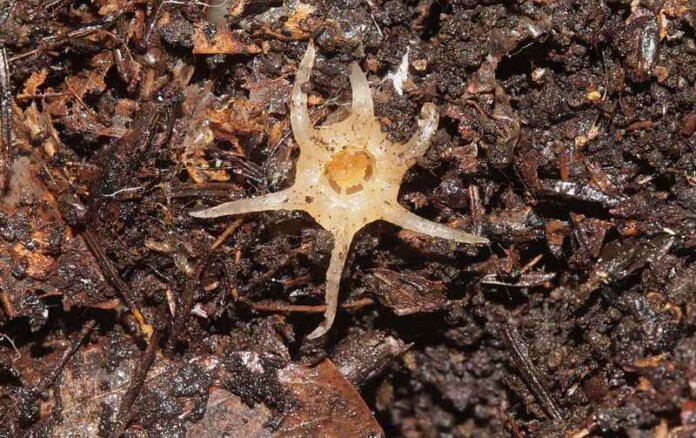
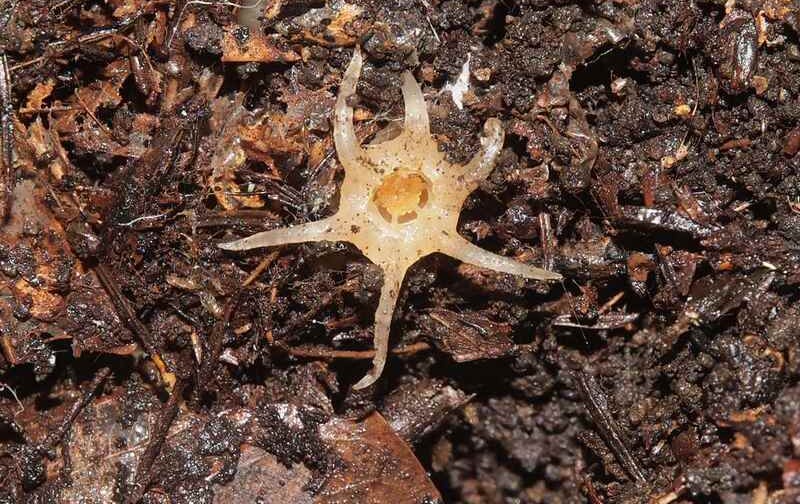
Bizarre New Plant Species Feeds on Fungi: First New Flora Species in 100 Years to Be Discovered in Japan

The Mujina-no-shokudai, or Badger's Candleholder
The Mujina-no-shokudai, or Badger’s Candleholder

In botany, it’s well-established that plants and fungi have multiple symbiotic relationships under the dirt of the forest floor, but a new species of plant identified in Japan has been found actually consuming fungi—a behavior never observed before.

Scientists also say it’s the first time a new plant has been identified in Japan—a country renowned for its extensive flora research—in almost 100 years.

The new species of fairy lantern, a group of tiny glass-like plants, is white and doesn’t engage in photosynthesis, but rather feeds on fungal mycelia in the ground.

Fairy lanterns, or Thismiaceae as they are known to botanists, are very unusual plants found mainly in tropical but also in subtropical and temperate regions.

The Japanese researchers explained that they are often hidden under fallen leaves and only for a brief period produce above-ground flowers that look like glasswork.

The Japanese name for Thismia, one of the major groups within this family, is Tanuki-no-shokudai—which means “raccoon dog’s candleholder” and refers both to their shape and their underground lifestyle.

However, they are also extremely rare and difficult to find.

“At present, approximately 100 species within the family have been identified, nearly half of which are known only from their first discovery, sometimes from a single specimen,” said Kobe University botanist Dr. Kenji Suetsugu.

Dr. Suetsugu has long-term collaborations with local botanists who have access to secluded areas all over Japan.

“The dedication of Japanese amateur researchers to revealing the hidden flora of these regions has been crucial in identifying species unknown to science.”

When he was sent a specimen of a fairy lantern that a hobby botanist had found and that a local expert thought represented a new species of the genus of Tanuki-no-shokudai, he knew he had to investigate.

“This plant was not included in any of the existing genera, such as Thismia, because of its unique features, and it became necessary to obtain additional individuals for further examination,” said Dr. Suetsugu.

MORE WILD JAPAN: Japanese Eels Found Living in Polluted River are Shining Example of Resilience

He went to Kimotsuki, where the discovery had been made, but could not find any other samples. A year later he tried again and got lucky, finding four more plants in the same narrow area.

Based both on morphological and genetic analysis, the research team concluded that the plant is not only a new species, but in fact different enough from Tanuki-no-shokudai to be a different genus.

The researchers, whose findings were published in the Journal of Plant Research, believe that the plant probably diverged at an early stage in the evolution of the whole Thismiaceae family and retains characteristics that are common to the family but have been lost in the Thismia genus.

Dr. Suetsugu chose the name Mujina-no-shokudai—meaning “badger’s candleholder” for the new plant.

YOU MAY ALSO LIKE: Fungi Species New to Science Discovered in Scottish Highlands

He explained that “Mujina” is an old Japanese word for a badger, but sometimes has also been used for the raccoon dog which it resembles but is different from.

“Japan is one of the regions in the world where botanical surveys are most advanced, making the discovery of new plant species extremely rare, and the discovery of a new genus even more so,” adds Dr. Suetsugu, who explained that the last discovery of a new vascular plant concurrently identified as a separate genus was the discovery of Japonolirion in 1930, almost 100 years ago.

“This research might suggest that many other new species may be hiding in regions previously thought to be well-studied and underscores the critical need for ongoing exploration and investigation of the planet’s flora both abroad and at home.”

A plant that feeds on fungi and is so limited in its local spread is also exceptionally vulnerable to environmental change, according to the research team.

“A segment of our future research will be dedicated to ecological studies aimed at deciphering the interactions between Relictithismia and its fungal hosts, in addition to assessing the impact of environmental alterations on these associations,” said Suetsugu.

SHARE This Wonderful Discovery Of A Badger’s Candleholder With Your Friends…

“One-fifth of the people are against everything all the time.” – Bobby Kennedy

Quote of the Day: “One-fifth of the people are against everything all the time.” – Robert F. (Bobby) Kennedy

Photo by: Courtesy of John F. Kennedy Presidential Library & Museum, Boston (Senator Robert F. Kennedy addressing a crowd at San Fernando Valley College during 1968 presidential primary campaign)

With a new inspirational quote every day, atop the perfect photo—collected and archived on our Quotes page—why not bookmark GNN.org for a daily uplift?

Hero Garbageman Rescues Man, Woman, and Dog from House Fire

Kevin Marriott (left) and Steve Whitehouse – Courtesy of Serco

GNN often reports on lifesaving rescues by firemen, risking life and lung to pull people from burning buildings, but these two are not firemen, and are a different sort of hero.

They’re heroes, no doubt, but by trade they haul trash. Nonetheless, while working in Tipton, England, on Tuesday morning, they saw fires ripping through a small brick townhome, and rescued a man, woman, and their dog.

Steve Whitehouse and Kevin Marriott work for Serco garbage collection, and it was Whitehouse who first jumped into action.

“I saw a young woman screaming from the balcony and all I could think was that I needed to get to her as quickly as possible,” Whitehouse told the BBC.

Whitehouse climbed up to a first-floor balcony three times to rescue the trio from the flames. He first carried the woman down, but when he turned back to help the young man, he found he was shouting to his dog, still inside. Bundling the dog in a blanket, Whitehouse climbed down and told the owner throw the dog to him. After catching him, the garbageman returned up to the balcony to help the man.

MORE UNLIKELY HEROES: Massachusetts Mailman Scoops Toddler Away from Traffic After Day Care Escape: ‘Right place at the right time’

Meanwhile Whitehouse’ partner Marriott went door to door shouting for people to get clear of the connected townhomes.

Both the man and the dog were suffering from smoke inhalation when 19 firefighters arrived from West Midlands Fire and Rescue. The dog was treated on site while the man was rushed to the hospital.

BRITISH RESCUE STORIES: Crane Operator is Hero for Saving Man From Top of Burning Skyscraper After Seeing Him Wave His Coat (VIDEO)

“I have no doubt that without Steve’s incredible bravery the outcome could have been very different,” said senior firefighter Chris Green. “I have no idea how he managed to do what he did. It was heroic. The fire and smoke were coming out of the property’s rear door like a blow torch.”

According to the BBC, the two garbagemen debriefed and recovered over a cup of coffee, and went right back out to finish their collection rounds.

Not all heroes wear capes, some of them wear, well, whatever garbagemen wear.

SHARE These Awesome Heroes With Your Friends In England… 

Cavemen Used Glue to Make Stone Tools 40,000 Years Ago–the Evidence is Sticky

Image courtesy of Patrick Schmidt, University of Tübingen.

Neanderthals created stone tools held together with a glue made from scratch, a team of scientists has discovered.

They are the earliest evidence of a complex adhesive in Europe, suggest these predecessors to modern humans had a higher level of cognition and cultural development than previously thought.

The stone tools from an archaeological site in Le Moustier, France, were used by Neanderthals during the Middle Paleolithic period of the Mousterian between 120,000 and 40,000 years ago. Kept in the collection of Berlin’s Museum of Prehistory and Early History, they had not previously been examined in detail.

The tools were rediscovered during an internal review of the collection and their scientific value was recognized.

“The items had been individually wrapped and untouched since the 1960s,” said Ewa Dutkiewicz, from the Berlin museum. “As a result, the adhering remains of organic substances were very well preserved.”

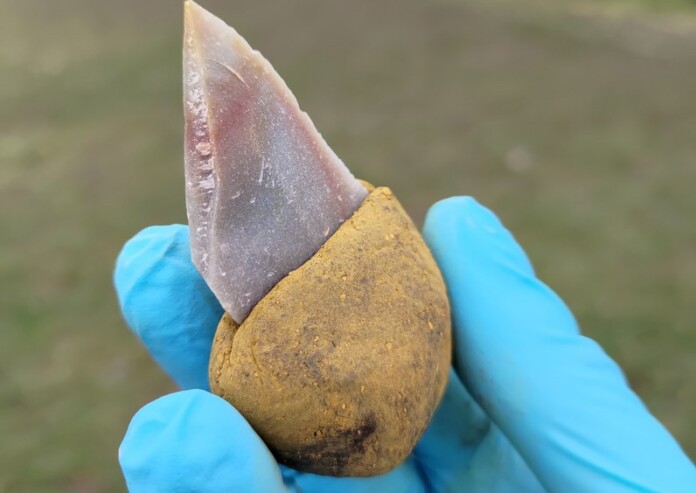
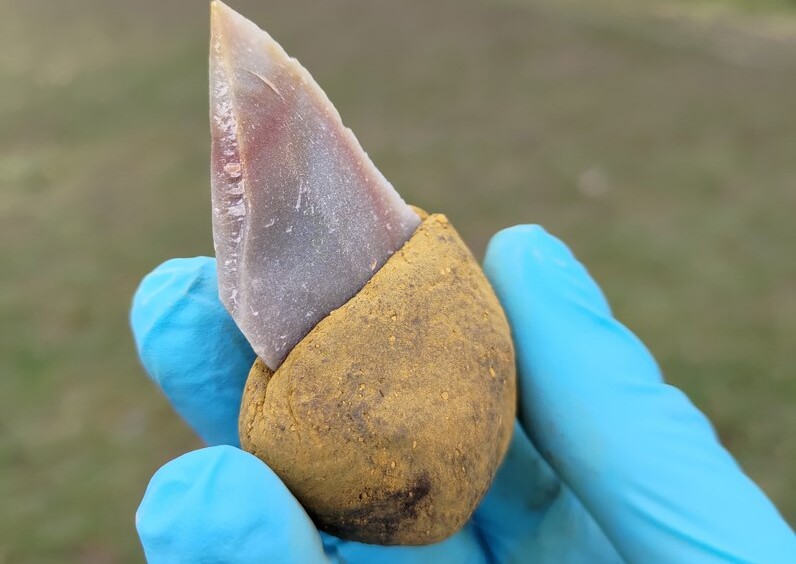
The researchers discovered traces of a mixture of ochre and bitumen on several stone tools, such as scrapers, flakes, and blades. Ochre is a naturally occurring earth pigment; bitumen is a component of asphalt and can be produced from crude oil, but also occurs naturally in the soil.

“We were surprised that the ochre content was more than 50%,” said Patrick Schmidt from the University of Tübingen’s Early Prehistory and Quaternary Ecology section, who lead the reseach.

“This is because air-dried bitumen can be used unaltered as an adhesive, but loses its adhesive properties when such large proportions of ochre are added.”

He and his team examined these materials in tensile tests—used to determine strength—and other measures.

“It was different when we used liquid bitumen, which is not really suitable for gluing. If 55 percent ochre is added, a malleable mass is formed,” Schmidt says.

The mixture was just sticky enough for a stone tool to remain stuck in it, but without adhering to hands, making it suitable material for adding a convenient handle to a small blade of flint—like a cheese knife—allowing for much greater manipulation of the small tool by thick Neanderthal hands.

“The tools showed two kinds of microscopic wear: one is the typical polish on the sharp edges that is generally caused by working other materials,” explains Radu Iovita, an associate professor at NYU’s Center for the Study of Human Origins, who conducted this analysis.

MORE NEANDERTHAL TECH: Remains of Prehistoric BBQ Suggests Dinner was Served 780,000 Years Ago–600,000 Years Earlier than we Thought

“The other is a bright polish distributed all over the presumed hand-held part, but not elsewhere, which we interpreted as the results of abrasion from the ochre due to movement of the tool within the grip.”

The use of adhesives with several components, including various sticky substances such as tree resins and ochre, was previously known from early modern humans, Homo sapiens, in Africa but not from earlier Neanderthals in Europe. Overall, the development of adhesives and their use in the manufacture of tools is considered to be some of the best material evidence of the cultural evolution and cognitive abilities of early humans.

OTHER TECHNOLOGY THAT GOES WAY BACK: Thousands of Years Ago, a Woman Underwent Two Surgeries to Her Head–and Survived Both Procedures

“Compound adhesives are considered to be among the first expressions of the modern cognitive processes that are still active today,” says Schmidt.

In the Le Moustier region, ochre and bitumen had to be collected from distant locations, which meant a great deal of effort, planning, and a targeted approach, the authors note.

“What our study shows is that early Homo sapiens in Africa and Neanderthals in Europe had similar thought patterns,” adds Schmidt. “Their adhesive technologies have the same significance for our understanding of human evolution.”

The study was published in Science Advances. 

DO Your Friends Know That Neanderthals Invented Glue? SHARE The News…

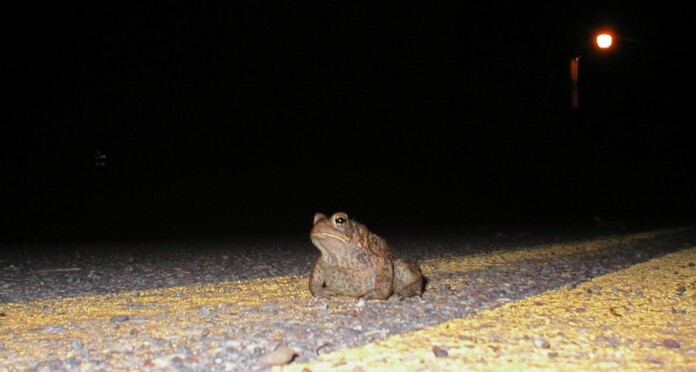
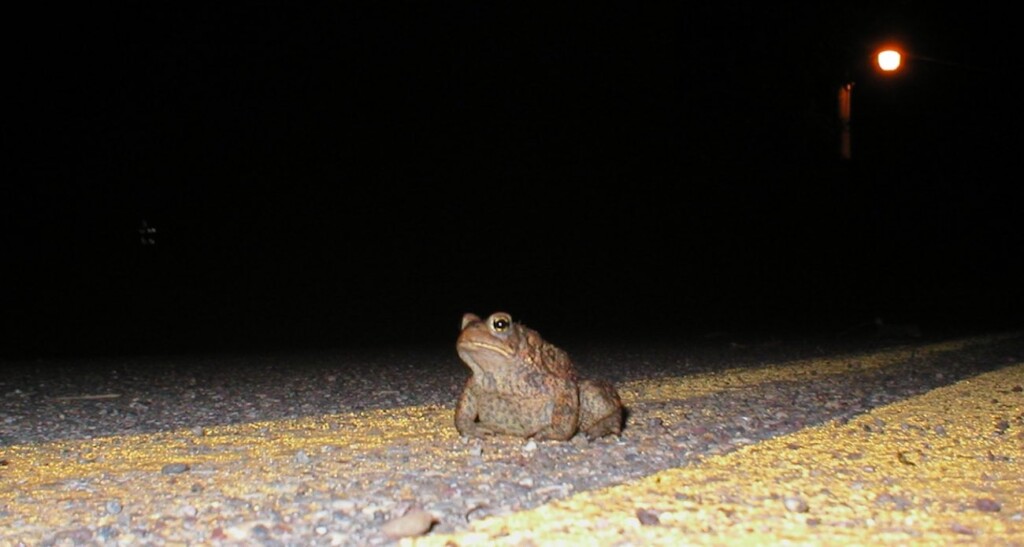
Village Saves 45,000 Toads From Roadway Deaths Cutting Casualties By 60%—All the Way Down to 3% Rate

toad on road at night
Photo by T-Bone Sandwich, CC license
toad on road at night
Photo by T-Bone Sandwich, CC license

Dispersed around the UK, hundreds of heroic volunteers soak themselves to the skin on early spring nights in order to save toads, frogs, and newts from being squished under the tires of passing cars.

This network of volunteer societies are literally transforming England by slowly walking across dark asphalt with a high beam flashlight and a high-visibility jacket, picking up amphibians and dropping them into a bucket for safe transport across the road.

They are reducing the toll of roadkill on local amphibian populations by enormous amounts, and ensuring they can keep up their valuable ecosystem services like keeping insect populations in check, and filling the spring air with their soft croaking songs.

If you don’t live in a wet or rain-prone area, and you’ve never been on the road during frog/toad mating season, you might think “how hard is it to just avoid running them over?” But it’s not that simple, for starters because they can gather in such numbers that swerving to avoid one puts your tires on another, and small frogs and news look just like leaves and twigs on the dark tarmac through a rain-splattered windshield.

Last year, England’s 203 amphibian rescue groups saved at least 115,000 animals from roads.

The Guardian’s Adrian Sherratt went out one night with Charlcombe Toad Rescue, near the ancient city of Bath, to photograph and participate in a rainy night’s rescue operations.

This group has brought the numbers of amphibian deaths from road crossings down to 3% from 60%. When you think that in March, hundreds of mama toads and frogs cross the street with bellies full of eggs, that equates to the survival of thousands of animals.

MORE AMPHIBIAN KINDNESS: Endangered Frogs See ‘Population Explosion’ After 422 Ponds Were Built in Switzerland

Bath is renowned for wet areas and hot springs, and frogs and toads need to reach these bodies of water to mate or lay eggs. But being a well-developed area, it involves crossing a lot of roads.

“I find it very emotional, actually,” said Angela, a Charlcombe volunteer. “And it becomes more emotional as you do it. You see a creature that’s so vulnerable just sat there, and you can see it’s pregnant and bulging with babies. You want them to have a fighting chance of making it to their breeding grounds.”

KINDNESSSS TOWARDSSSS REPTILESSSS: A Tiny Gecko is Enjoying a Big Recovery After International Collaboration has Nearly Doubled Their Numbers

Charlcombe has been active during the breeding seasons since 2003, and have saved over 40,000 animals from roads. There is a waiting list to join the 50 or so volunteers needed for the operation, which also crowdfunds a £1,500 sum to pay for the main road to be closed during the breeding season.

Froglife is a charity that coordinates the mass data collection that these efforts generate. They also help connect those desiring to volunteer with toad patrols in their area.

On that note, there are dozens and dozens of toad patrol groups that need new members, particularly in Cheshire, Lancashire, and the Isle of Wight.

SHARE This Heroic Effort To Save Innocent Animals From The Squish… 

Teen’s Family Struggled to Afford Size 23 Shoes–Shaq Sent a Dozen Pairs, Including Superman Slippers

Jor'el Bolden - credit, Tamika Neal, GoFundMe
Jor’el Bolden – credit, Tamika Neal, GoFundMe

A 16-year-old from Independence Missouri wears shoes so big you could fit your arm in them—but they were too small.

That’s because young Jor’el Bolden wears a size 23, which essentially means he wears nothing because most companies don’t sell shoes that big.

The Independence community rallied around Bolden and his mother Tamika, raising $12,000 through a GoFundMe which attracted the attention of national news, and one very famous, very generous, and very large celebrity.

“Entertainment Tonight, they messaged me and she was like ‘someone special wants to talk to you’,” his mother, Tamika Neal, told KCTV 5 where the story originally aired.

NBA legend and renowned good-guy Shaquille O’Neal, who’s heard his fair share of bigfoot jokes, got abreast of KCTV 5’s story and organized to have a Zoom call with Jor’el.

In the call, Shaq told him to expect some goodies in the mail, and within three days there were several large boxes full of Shaq-sized, Jor’el-sized clothes, and 20 pairs of size 23 shoes.

“It’s better than Christmas morning. Santa didn’t send this, Shaq did,” Neal told KCTV 5.

The 6-foot-5, 380-pound lad wants to become an athlete, specifically a heavyweight boxer, but was never really able to train properly because all the size 22 shoes the family had managed to find on eBay hurt his feet.

This isn’t the first time Shaq has come through for fast-growing young man.

MORE GENEROUS CELEBRITIES: Country Star Steps in to Pay Woman’s $250,000 Court Damages for Using His Likeness–a Case he Was Unaware of

In 2019, GNN reported on Shaquille O’Neal bringing a young basketball player named Zack Keith to his favorite shoe store in Georgia to outfit him with 10 pairs of size 18 shoes.

The king of big-boy generosity struck again—this time in Michigan, when in 2023 Shaq had to work in concert with Puma and Under Armor to outfit Eric Killburn Jr. with “Eric Killburn-size” shoes. It’s believed, though not confirmed, that Eric has the largest feet ever recorded in a human teenager.

Puma declined to say whether or not they were size 23—noting that the custom dimensions that Eric needed were not those of a shoe one size larger than 22. Shaq himself wears size 23, but couldn’t send any of his own shoes to help the 16-year-old defensive tackle.

YOU MAY ALSO ENJOY: Shaq Brings 2,000 Nintendo Switches and PS5s To Underprivileged Kids On Christmas: A Long List of His Good Deeds

Eric’s mom had similar struggles providing footwear for her son to those of Tamika, at one point requiring a specially made pair constructed by orthopedic surgeons to the tune of $1,500.

It’s clear that if you’ve got a big, big boy under your roof, there’s only place to turn.

WATCH the story below from KCTV 5… 

SHARE This Latest Shaq-Attack Of Kindness Towards The World… 

“Forgiveness is the final form of love.” – Reinhold Niebuhr

Quote of the Day: “Forgiveness is the final form of love.” – Reinhold Niebuhr

Photo by: Melanie Stander

With a new inspirational quote every day, atop the perfect photo—collected and archived on our Quotes page—why not bookmark GNN.org for a daily uplift?

Good News in History, February 29

US representative Zalmay Khalilzad (left) and Taliban representative Abdul Ghani Baradar (right) sign the agreement in Doha, Qatar - State Department.

4 years ago today, the Taliban and representatives from the United States signed the Doha Agreement to end hostilities in Afghanistan, 18 years after the US had invaded the South Asian country. The treaty came after months and months of backchannel negotiations between the Pashtuns and the Afghan-American diplomat Zalmay Khalilzad, a special representative appointed for the task. READ a bit more about the end of decades of war… (2020)

UK Gardeners Playing Key Role on Frontlines of Detecting Future Invasive Plants–Get Involved

Mexican fleabane (Erigeron karvinskianus) Photo by: KENPEI via Wikimedia Commons, CC License / SWNS

Gardeners are playing a critical role in detecting invasive plants before it’s too late, according to a new study.

Along with detecting, gardeners are best positioned to act on the information by taking measures to prevent the spread of the plants they detect.

An online survey has revealed that even though gardeners aren’t scientists, they’re effective as a community in identifying ‘future invaders’—or ornamental plants that could become invasive species.

Recent research has put together a shortlist of these decorative plants that have the potential to spread out of control and can become harmful to the environment, economy, or human health.

The researchers from the University of Reading and the Royal Horticultural Society (RHS) studied survey answers from 558 gardeners on ornamentals that showed ‘invasive behavior’ in their gardens.

The results, published in the journal NeoBiota, identified 251 different plants as potential invaders that they believe need their invasive potential in Britain and Ireland assessed.

Cypress spurge (Euphorbia cyparissias) – Photo by AnRo0002, via Wikimedia Commons / SWNS

The shortlisted plants include, for example: Mexican fleabane (Erigeron karvinskianus);cypress spurge (Euphorbia cyparissias); chameleon plant (Houttuynia cordata); Himalayan honeysuckle (Leycesteria formosa); and purple top (Verbena bonariensis).

Invasive Chameleon plant (Houttuynia cordata) CREDIT: Mariko GODA via Wikimedia Commons, CC License / SWNS

The researchers say that their findings highlight the critical role of gardeners in the early detection of invasive species.

“The simple yet structured scheme we developed was used to prioritize which of the around 70,000 ornamental plants available to buy in the UK could be future invaders,” said lead author Tomos Jones, a Ph.D. student at Reading University.

SIMILAR STORY IN THE US: Wash. D.C’s ‘Weed Warrior’ Volunteers Tackle ‘Mile-a-Minute’ Invasives to Save the Capital’s Trees

“This is crucial for focusing research efforts and resources, such as conducting formal risk assessments to explore the invasive potential of those shortlisted.”

The team encourages gardeners to get involved in helping identify future invaders through an ongoing project called Plant Alert, run by the Botanical Society of Britain and Ireland and Coventry University.

“It’s important to remember that these shortlisted plants are not yet officially invasive, and that many non-native plants that occur in the wild present no threat to our native biodiversity,” said Dr. John David, RHS Head of Horticultural Taxonomy.

MORE GARDENING STORIES: 8 in 10 Youth Think Gardening is Cool, and Half Would Rather Visit a Garden Center Than a Nightclub

It’s a good point. Invasive species are uniquely disruptive, through no fault of their own, for their ability to exploit niches in a local ecosystem. The niche could be a certain height, for example, where no other native species grow to occupy, or it could be that a particular species grows extremely fast and monopolizes available sunlight.

It could involve the relationship between plant and pollinator, like in Italy where the North American black locust tree attracts disproportionate numbers of pollinators.

SHARE This Noble Mission With Greenthumbs Near You… 

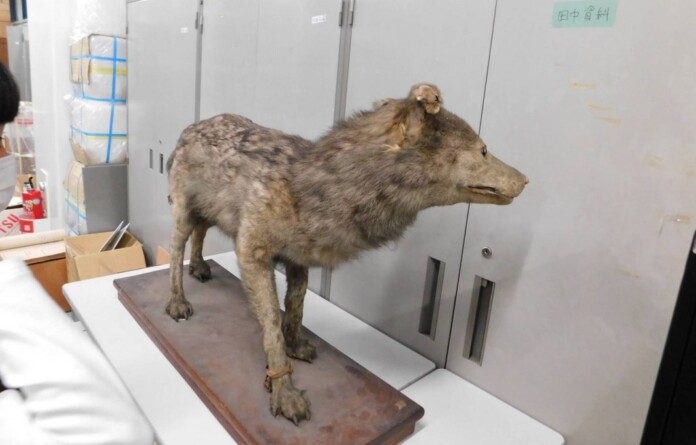
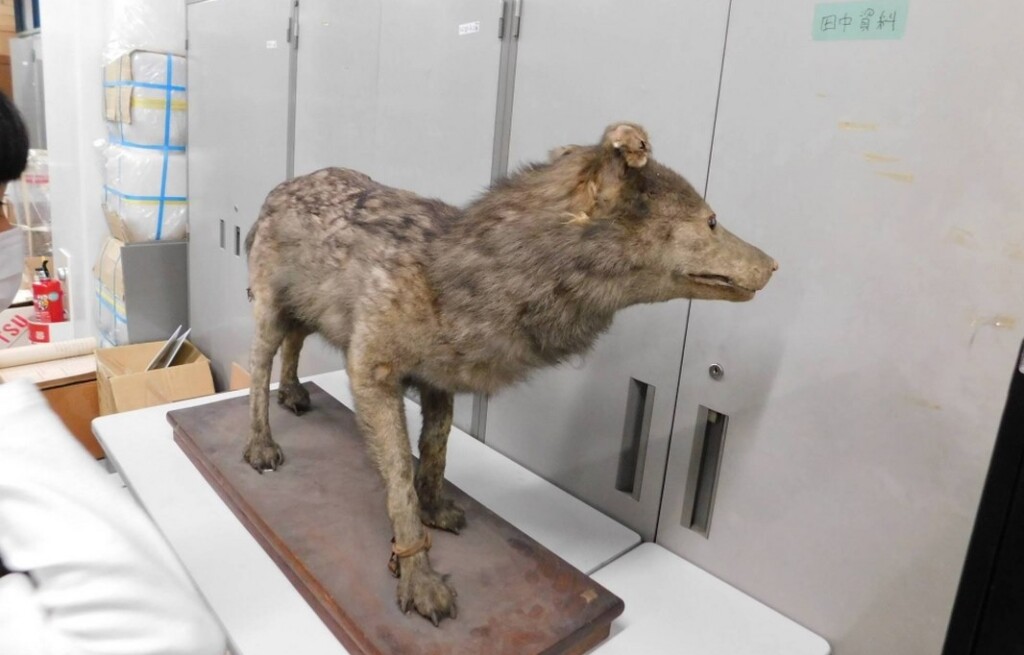
Precocious Child Identifies Japanese Wolf Specimen Amid Museum Collection, Encouraged to Publish Scientific Paper

Courtesy of Hinako Komori

From Japan’s metropolitan heart comes the story of a young woman with a love for nature getting her paws in the door of a scientific career after identifying a taxidermied Japanese wolf gathering dust in a museum collection.

The Japanese wolf has been extinct for over a century, but for 10-year-old elementary schooler Hinako Komori, they epitomize her love and fascination with the natural side of her country.

Only four specimens of this subspecies exist in the entire world, and it was on a guided tour through the Tsukuba Research Departments of the National Museum of Nature and Science that young Hinako spotted a narrow-nosed canine with a bushy tail.

2 million specimens of the three visible kingdoms of life are held in the National Museum, and among all these she noticed the canine literally hiding in the shadows on a bottom shelf in a room on the 7th floor of the department.

Pausing, memorized features of the Japanese wolf from dozens of illustrations and antique photographs flashed through her mind. Asking the tour guide what the animal is, he replied that he really didn’t know.

But Hianko did—she was sure it was the same beast as the one at the Naturalis Biodiversity Center in Leiden, Netherlands, where one of the 4 Japanese wolf specimens is kept, or the more famously publicized one held at the National Museum.

Despite Nippon folklore elevating the wolf to the role of a benevolent spirit for their tendency to prey on animals that ruined farmers’ crops, the Japanese wolf (Canis lupus hodophilax) is believed to have gone extinct due to pressure from humans trying to protect livestock. Rabies, which had not been present on the island until the Meiji Period, also contributed to its decline.

Phylogenetic evidence indicates that the Japanese wolf was the last surviving wild member of the Pleistocene wolf lineage, and may have been the closest living relative to the first wolves ever domesticated by humans.

“When I came across that stuffed animal, I instantly fell into a state of excitement because it matched my image of a Japanese wolf,” Hinako, who is now 13 and attending junior high school, told Alex Martin at the Japan Times.

That day in the museum began a 3-year-long mission to study the specimen, labeled M831, that culminated in the publishing of a scientific paper, accepted by the Bulletin of the National Museum of Nature and Science.

MORE STORIES LIKE THIS: Teen Finds Whale Skull from 34 Million Years Ago While Fossil Hunting in Alabama

Hinako was a co-author alongside Sayaka Kobayashi, a researcher at the Yamashina Institute for Ornithology, and Shin-ichiro Kawada, a researcher at the National Museum’s Department of Zoology.

“In researching the Japanese wolf, I found that each taxidermy of the Japanese wolf is different, and that there are many questions that remain unanswered,” she told Martin.

However, after devouring every last scrap of scientific literature and poring over reports written in the 19th century from hunters and keepers at the Ueno Zoo where the last two wolves were held, it is the authors’ belief that M831 is one of these two wolves, with the other being publicly displayed at the National Museum.

MORE PASSIONATE YOUNG PEOPLE: California Teen Passes the Bar Exam at 17– Now He’s a Practicing Attorney

How it fell into obscurity is not known, but during her research Hinako noticed a half-scraped off sticker on the base of the taxidermied specimen that had a different number, suggesting a lost storage record.

They can’t be 100% certain that M831 is one of two wolf pups brought to the Ueno Zoo from the Iwate Prefecture (another historical discovery of Hinako’s) because the taxidermied specimen lacks a skull. Nevertheless, co-author Kawada’s DNA analysis shows that there is more than a good chance that M831 is the real deal.

MORE JAPAN NEWS: Japanese Eels Found Living in Polluted River are Shining Example of Resilience

There’s also a chance that the specimen is a yamainu or “mountain dog” which was a local name for a wolf-dog hybrid.

“To be able to pick out from a room full of specimens one that appeared like a Japanese wolf, I think she has great talent for noticing things,” Mr. Kobayashi said of his teenage co-author.

As an important part of Japan’s natural history, the museum will undoubtedly be taking better care of the canine.

Read the full story from Alex Martin at the Japan Times.

SHARE This Passionate Young Woman’s Fascination With The Wolf… 

New York Medical School Surprises Students with Free Tuition in Perpetuity After $1Billion Gift–WATCH

Albert Einstein College of Medicine (via YouTube)

When a woman was left an inheritance of $1 billion from her late husband, she used it to pay forward the tuition of students at a Bronx medical school.

The widow, Dr. Ruth Gottesman, was left the money by her late husband ‘Sandy’ Gottesman, who was an early investor in Berkshire Hathaway, and when her gift to the school was announced, the cheers—and tears—filled the auditorium of Albert Einstein Medical College.

Gottesman’s gift is the largest ever given to an American medical school, and one of the largest ever received by any American institute of higher learning.

“This donation radically revolutionizes our ability to continue attracting students who are committed to our mission, not just those who can afford it,” said Dean Yaron Tomer.

With this donation, all current fourth-year students will be reimbursed for their spring 2024 semester tuition, and effective August of this year, all students moving forward will receive free tuition.

“I am very thankful to my late husband, Sandy, for leaving these funds in my care, and l feel blessed to be given the great privilege of making this gift to such a worthy cause,” said Ruth Gottesman in a statement.

MORE PHILANTHROPY: Ocean Cleanup Nonprofit Gets $25Mil From Airbnb Co-Founder to Launch Massive Plastic Pollution Cleanup

Dr. Gottesman joined Einstein’s Children’s Evaluation and Rehabilitation Center (CERC) in 1968, and went on to become a Clinical Professor Emerita of Pediatrics.

At a time when learning problems were often unrecognized and misdiagnosed, she developed widely used screening, evaluation, and treatment modalities that have helped tens of thousands of children. In 1992, she started the Adult Literacy Program at CERC, the first of its kind, which is still in operation.

BILLIONAIRES COVERING STUDENT LOANS: Students Learn at Graduation the Snapchat Founder Paid Off Their College Debt With More Than $10 Million

In a note from her beloved Sandy, the investment house manager left a portfolio of Berkshire Hathaway stock and told her to do what she thought was best with the money.

In response, Dr. Gottesman hopes that from wherever Sandy is looking down, she hopes he approves of her choice.

Watch the moment the students heard the news…

SHARE This Incredible Act Of Philanthropy With Your Friends…

Italian-Made Exoskeleton Gets Disabled Users Walking and Standing

Twin robotic exoskeleton By Istituto Italiano di Tecnologia

This is a new robotic exoskeleton manufactured in Italy that promises to improve the quality of life and mobility of disabled or injured people in a creative way.

The controls feature three modes of operation depending on the level of use the wearer has in his or her legs, and it’s made up of lightweight, interchangeable parts.

Developed through a partnership by the Italian Institute of Technology and the National Insurance Institute of Workplace Injuries, the exoskeleton is called the ‘Twin’ and was unveiled this Friday during a press conference held at the Museum of Science and Technology in Milan.

Battery-powered motors located at the knee and hip joints power normal motion based on three different modes, Walk mode, Retrain mode, and TwinCare mode.

Walk mode is for users who are paralyzed from the waist down, and moves their legs for them with adjustable gait and walk speeds.

OTHER BIONIC NEWS: A Paralyzed Man Walks Again Using Device that Connects His Thoughts to His Spinal Cord

Retrain mode is for users who have some control over their legs and need to build up strength and mobility. To accommodate this, the exoskeleton provides assistance when it feels motion, similar to electric pedal assistance on electric bicycles.

Lastly in TwinCare mode, the exoskeleton helps people who are injured in only one leg. Software onboard an Android tablet matches the movement and gait of a functional leg to the exoskeleton wrapped around the non-functional leg, ensuring the movements are even and balanced.

YOU MAY ALSO LIKE: ‘Wearable Muscles’ Restore Mobility in Those Who Have Trouble Moving Their Arms

In development since 2013, the Twin has a battery life of about 4 hours, and is made with lightweight aluminum alloy modules that can be disassembled for transport or if they need to be upgraded.

It’s still just a prototype, and crutches need to be used to help maintain balance, but it’s an inspiring sight to see such cutting edge technology being developed on behalf of the disabled.

WATCH the Twin in action below… 

SHARE This Cutting Edge Work Dedicated To The Infortuni…

“For the mind disturbed, the still beauty of dawn is nature’s finest balm.” – Edwin Way Teale

Quote of the Day: “For the mind disturbed, the still beauty of dawn is nature’s finest balm.” – Edwin Way Teale

Photo by: Tim Vrtiska, CC License

With a new inspirational quote every day, atop the perfect photo—collected and archived on our Quotes page—why not bookmark GNN.org for a daily uplift?

A Mom’s Love Helps Woman Wake From Coma After Five Years

Jennifer Flewellen finally leaves Mary Free Bed Rehabilitation Hospital in Grand Rapids, Michigan

From Grand Rapids comes a story too magical to believe—of a mother’s love creating a medical miracle, and a woman who cared for a comatose daughter in silence for half a decade.

Jennifer Flewellen was 35 when, according to a feature on Good Morning America, she was put into a medically induced coma after crashing her car into a pole. Flewellen had just dropped her three boys off at school, but began to feel light-headed on the way home.

Placed on life-support at a large hospital, nurses were certain she would never recover, and though there are no hard or fast rules for when a person wakes up from a coma, by day 2, physicians were encouraging Flewellen’s mother, Peggy Means, to take her off life-support.

“I remember one respiratory nurse, she told me, ‘Well, you know, she’ll only get worse,’ and I told her, ‘Don’t you ever say that to me again, and never say it around my daughter,'” Means told GMA. “I’d say, ‘It’s very easy to be negative, but we have no room for negativity.'”

Weeks turned to months, which turned into years, but Means’ love for her daughter kept her strong and faithful through the long hours of silence. Means did as much as was possible and then some—transferring her to different care centers, battling with insurance to keep covering the treatment, arguing with hospital administrators, all the while working full time as an industrial sewer, and pampering the unconscious Jennifer with all kinds of TLC.

Means would give her daughter “spa days” even though Flewellen was unresponsive to all stimuli. She would wheel her around the hospital talking to her as if she were awake; recounting the progress of her three sons in school. Visting her nearly every day, this continued for 5 long years, through the pandemic and out the other side.

Then, one day, the truly unthinkable happened. Five years after the fateful crash, Means was sitting with her daughter in a sunny spot outside the hospital telling jokes. Flewellen laughed. Means could hardly believe it.

MORE INCREDIBLE STORIES OF RECOVERY: After Taking Vitamin B2 Baby Becomes Solitary Case of Recovery from Rare Genetic Disease

“I started to wheel her up to the building,” Means said, being scared at first, “and then I thought, she’s laughing, so I stopped and got my phone out.”

After all that time, what Means believed all along with all her heart was true: her daughter was still in there.

“I would ask her questions about the boys and stuff, and she couldn’t she couldn’t speak even a sound, but she could shake her head yes and no,” Means recalled. “I said, ‘Jen, am I your dad,’ and she made a face like, ‘no.’ And then I’d ask about the boys, I’d mix up their names, like one middle name to another one.'”

Flewellen was answering the questions correctly, so Means immediately organized speech therapy.

MORE HEROIC MOMS: ‘Mother Theresa of Vietnam’ Overcame Decades of Homelessness to Help Hundreds of Orphans

And that was the beginning of the end—Flewellen was indeed still there, and as the weeks went by, more and more of her was reemerging, like a butterfly breaking loose of its cocoon.

Mom Peggy Means watches Jennifer Flewellen during a physical therapy session at Mary Free Bed Rehabilitation in Grand Rapids – Mary Free Bed Rehabilitation

GMA says that just 2 to 3% of people left in a vegetative state for that long will ever wake up, but Means is ensuring her daughter will be able to do more than that. She organized occupational, speech, and physical therapy. She has organized surgeries to loosen the rigor mortis-like tension that had set into her joints so she can regain movement.

At Mary Free Bed Rehabilitation Center in Grand Rapids, Michigan, one doctor said that the case study is so rare that Means is basically driving scientific discovery. No one can say for certain how much faculty Flewellen will recover, because the instance is just too rare. But because the answer isn’t known, Means is driving forward with all the love and determination that kept her going through the unresponsive years.

READ ALSO: Man Paralyzed from the Neck Down from Rare Disease Makes Incredible Recovery, Now Back at the Gym

Eventually, Jennifer Flewellen, at age 41, and a new grandmother to a 1-year-old granddaughter, left Mary Free Bed and came home to stay with Means—herself newly retired. Flewellen’s oldest son moved in with the two to help out.

The road to recovery is long—and no one knows where the end will be—but mother and daughter carry on with a mantra given by a nurse practitioner who once told Means that ‘you have to dream it, then you have to believe it.’

WATCH the incredible true story below from GMA… 

SHARE This Example Of The Power Of A Mother’s Love On Social Media…