












All News - Page 220 of 1715 - Good News Network
Home Blog Page 220

Teen Who Was Told He’d Never Walk with Cerebral Palsy Just Took 1st Place in Bodybuilding Competition

Instagram - @hunter_moore_123
Instagram – @hunter_moore_123

Hunter Moore is just like any other teen athlete. He loves to play sports, made the varsity team, and doesn’t mind throwing up a few gym selfies on his Instagram.

“It’s all genetics, bro,” he says laughingly while pumping his nearly 20-inch bicep. The genetics, in Moore’s case, is Dystonic Cerebral Palsy from a stroke he suffered as an infant that left him partially paralyzed on his left side.

In this case, the genetics are the obstacle to overcome, not the immutable advantage some athletes enjoy. Yet Moore was born into a military family, and so received an upbringing full of dictates to never give up, to prove them all wrong, and it drove Hunter to spend most of his childhood building a body that was capable of the rigors of athletics.

For 7 years he always made his schools’ soccer teams, and now plays as the long snapper for his junior varsity football team, while regularly posting pretty impressive weightlifting numbers that even a non-paralyzed person could feel safe bragging about.

Even though he can’t use his left arm for isolated lifts, he still tries to incorporate it as often as possible for the sake of symmetry—one of bodybuilding’s most important judging criteria. He’ll lock his left arm around a bar, and pry it away from where it usually sits tucked up into his armpit. Like this, he can do a squat or a deadlift.

By the time he competed last summer in the Professional Natural Bodybuilding Association, he was pressing 120 lbs. with one arm, and deadlifting 405. He took first place in his category in Dallas, Texas, and competed again in November in Las Vegas to win first place in the professional class for Men’s Disabled Standing.

In an interview, Moore described posing on stage as “one of the scariest things that I have ever attempted,” but the whistles and cheers he received were a tangible reward for an amount of hard work that the majority of people, disabled or not, cannot manage.

MORE INSPIRING AND UNLIKELY LIFTERS: 78-Year-old Iron Woman Is Powerlifting Champion Who Does 400 Squats and Holds 19 World Records

“I will define myself and not let cerebral palsy or anyone else define me,” he told Joker Magazine, adding that he plans to go to university to study marine biology and hopes to also pursue motivational speaking.

CELEBRATE This Young Man’s Dedication To Overcoming The Odds… 

A New Drinking Game Is Sweeping Britain: Sending Pints to Strangers Across the Nation

Rick Barrett - Unsplash
Rick Barrett – Unsplash

A new drinking game is sweeping the British nation—it involves losing money and no drinking.

If that sounds farfetched, it’s because the game consists of ordering pints and other drinks to people you’ll never meet out of the goodness of your heart—like Italy’s caffe sospesa, but with alcohol and in English.

Called “Wetherspoons: The Game” the activity has attracted international media attention, and the story goes like this. One day, Chris Illman from Portsmouth was out drowning his sorrows after a bad breakup and a cancer diagnosis at the local JD Wetherspoons, the largest UK pub chain which has over 800 locations.

Illman discovered a sort of loophole in the Wetherspoons app where one can select their location manually rather than activating their phone’s automatic location services. This would allow them to enter a table number and order drinks anywhere in the nation. After the discovery, Illman created a closed Facebook group for him and his buddies to buy each other drinks this way.

Then one day, the group became open, and in a few days there were 500,000 members.

The way that the Wetherspoons Game works is that people post a photograph of themselves, their ID card, and their location and table number along with an explanation of why someone should buy them a drink.

A group of dedicated volunteer moderators then check the ID, and approve only the polite and good-natured posts to the wall, where anyone can check the feed and decide to send them a drink.

“Hi, we’re 3 overworked and underpaid ICU nurses playing for the first time after a hard day’s work. Any contributions are extremely welcomed,” wrote a group of friends last night.

“One bottle of fizz on route from a tired 2nd yr student nurse 😜🤣 enjoy xx and thanks for your patience with us students,” a generous commenter replied.

YOU MIGHT ALSO LIKE: 30 Wineries Sign Up to Refillable Wine Bottle Service in Oregon

“We are out tonight to cheer ourselves up after an emotional day, my hamster of 3 years sadly died today and having to bury her in the garden whilst it was snowing was quite the challenge!!! my hands were numb and so was my heart,” wrote a woman from East London, who was sent, among other things, a strawberry daiquiri.

In Italy since the time of the Second World War, under-caffeinated patrons coming into a bar might leave a tip in a jar marked “caffe sospesa” or “suspended coffee.” The tip was to pay forward a coffee for the next person to come into the bar—as if you were buying a coffee for the whole world, the Italians say.

OTHER INTERESTING TRENDS: Everyone in England is Planting Wildflower Meadows After Prince Charles Replants 60 of Them to Honor Queen

However, il caffe sospesa takes place in the bar, and not online. As a result, it can’t go viral—but the Wetherspoons game can, and sometimes recipients are doused in so much booze they end up having to pass the drinks all around the pub just to avoid having to take a taxi home.

“It’s really hard to explain,” Illman told the Wall Street Journal. “People, it turns out, love sitting on their sofas during nights in ordering drinks for people enjoying a night out, he says. Very few of them give to receive.”

SHARE This Awesome English Invention With Your Friends In The Country…

Fascinating Species of 200 Million-Year-old Flying Reptile Discovered in Britain

Kuehneosaurus latus (right) and Kuehneosuchus latissimus (left) - two animals found in Britain from the late Triassic. CC 3.0. BY Nobu Tamura
Kuehneosaurus latus (right) and Kuehneosuchus latissimus (left) – two animals found in Britain from the late Triassic. CC 3.0. BY Nobu Tamura

In fantasy fiction, the dragon is one of the most common mythical beasts, but these giant flying lizards defy the reality that flying lizards have actually been found on Earth through many once upon a times—they were just really small.

Case in point, this small fry from 200 million years ago, a Kuehneosaur, a flying reptile that used a membrane of skin that stretched out along a set of fantastically elongated rib bones that allowed them to glide from tree to tree.

The discovery was made by University of Bristol masters student Mike Cawthorne, and the university press reports that he has been researching numerous reptile fossils from limestone quarries which formed Mendip Palaeo-island—the biggest sub-tropical island at a time when Great Britain was an archipelago.

Mendip Palaeo Island would have stretched 18 miles across and was home to many small reptiles that roamed the Triassic-Jurassic boundary eon eating plants and insects.

“All the beasts were small,” said Mike. “I had hoped to find some dinosaur bones, or even their isolated teeth, but in fact I found everything else but dinosaurs.”

The Kuehneosaurus discovered by Cawthorne is actually not a true lizard, and is more closely related to crocodiles, which for those interested in such things means it’s classified as an Archosaur, rather than a Lepidosaur.

MORE REPTILIAN HISTORY: Exquisite New Fossil Shows Scientists How Much More Ferocious Australia’s Crocs Once Were

“It took a lot of work identifying the fossil bones, most of which were separate and not in a skeleton,” explained Professor Mike Benton, from Bristol’s School of Earth Sciences, who was a co-author on Cawthorne’s paper describing the various animals.

Along with the glider, Cawthorne found the teeth of a Trilophosauruscalled Variodens inopinatus, which was a stocky-headed plant-eater that grew as long as a large monitor lizard does today, and an aquatic lizard called Pachystropheus which swam and ate shrimp.

MORE FOSSILS FROM PREHISTORIC BRITAIN: One of the Largest ‘Sea Dragon’ Fossils Ever Found in Britain Unearthed As a Complete Ichthyosaur

“Mike Cawthorne was able to compare the isolated jaws and other bones with more complete specimens from the other sites around Bristol,” said Benton. “He didn’t find any dinosaur bones, but it’s likely that they were there because we have found dinosaur bones in other locations of the same geological age around Bristol.”

Under the cloak of winter temps at between 9° and 3°C, or between 40° and 49°F, with clouds and scattered showers, the residents of Great Britain might find it strange to think that their island was once sitting in a subtropical sea of islets where dozens of lizards climbed trees in steamy forests.

SHARE This Look Back Into Early England With Your Friends… 

“People who know little are usually great talkers, while men who know much say little.” – Rousseau

Quote of the Day: “People who know little are usually great talkers, while men who know much say little.” – Jean-Jacques Rousseau

Photo by: Muhammed Nishal

With a new inspirational quote every day, atop the perfect photo—collected and archived on our Quotes page—why not bookmark GNN.org for a daily uplift?

Ghanaian Woman Entrepreneur is Revolutionizing Transportation–Building Electric Bikes to Improve Air Quality

Delivery drivers on their Wahu! bikes - courtesy of Valerie Labi-Wahu Mobility
Delivery drivers on their Wahu! bikes – courtesy of Valerie Labi-Wahu Mobility

A Ghanaian-English entrepreneur has designed an electric bike from the ground up that’s transforming short-range transportation in her home country, proving that problem-solving in Africa can be done in Africa, by Africans.

Her company, Wahu!, assembles each bike by hand, and they can travel up to 80 miles on a single charge. This means that a delivery rider for Glovo or Bolt can comfortably cover a whole day’s work without refueling.

Anyone who’s visited Accra, Ghana, in the dry season will remember the incredibly poor air quality. Poor roads mean that cars are stuck in second and third gears, and old cars traveling in second and third gears mean plenty of extra car exhaust.

Poor roads also mean exposed dirt, and exposed dirt means fine-grained dust. Combined with a lack of rain, the smog, dust, and car exhaust make the air in parts of the capital unfit for human health.

Wahu! bikes help alleviate all three of these problems, and despite her English nativity and education, the bikes were designed and manufactured in Spintex, Accra.

“By introducing electric bikes into Ghana’s transportation ecosystem, we’re not only providing a greener alternative but also offering speed and convenience,” Labi told The Mirror. “Our bikes are a testament to how service delivery can be seamlessly merged with environmental conservation.”

MORE SUSTAINABLE SOLUTIONS: Virgin Atlantic Flight from London Makes History as First Transatlantic Jet Using 100% Sustainable Fuel

Valerie Labi is a true inspiration, and besides her transportation company, she got her start in the Ghanaian economy in sanitation. She holds a chieftaincy title as Gundugu Sabtanaa, given to her by the previous Chief of the Dagbon traditional area in the Northern Region of Ghana. She has three children, holds a double major in Economics and Sustainability from two separate universities, and has visited 59 countries.

Valerie Labi, her three children, and the ebike – courtesy of Valerie Labi-Wahu Mobility

Getting her start in Northern Ghana, she founded the social enterprise Sama Sama, a mobile toilet and sanitation company that now boasts 300,000 clients.

During her travels around the small, densely populated country, she also recognized that transportation was not only a problem, but offered real potential for eco-friendly solutions.

“It took us two years to effectively design a bike that we thought was fit for the African road, then we connected with Jumia and other delivery companies to get started,” she told The Mirror. “Currently, I have over 100 bikes in circulation and we give the bikes on a ‘work and pay’ basis directly to delivery riders.”

A SIMILAR VENTURE IN KENYA:  Kenyan Physics Teacher Powers E-Motorbikes With Old Laptop Batteries

According to Labi, each driver pays about 300 Ghana cedis, or about $24.00, per week to use the bike, which can travel 24 miles per hour, and hold over 300 pounds of weight. The fat tires are supported by double-crown front/double-spring rear suspension.

The bikes are also guaranteed by the company’s proprietary anti-theft system of trackers. Only a single bike has been stolen, and it was quickly located and returned to the owner.

SHARE This Inspiring Woman And Her Social Venture For Good In Ghana…

Five Top Headlines that Showcase the World’s Progress in the Climate Fight

Before the sensation of New Year’s completely wears off, it pays to look back on what was a no-nonsense year in humanity’s attempt to prevent the planet from warming 1.5°C.

A lot of the big players stepped up with major adoption of climate technologies, and past efforts to mitigate or reduce emissions are now shown to be working.

It doesn’t seem to be all token gestures either, as the International Energy Agency said that the progress made this year may actually help achieve the 2030 goals agreed to in the Paris climate agreement.

Let’s take a look back before a great leap forward.

1) Solar investment shines

Nowhere were these sunny headlines more true than in China, which led the world in the installation of new solar farms. The PRC was already the world’s largest market for solar panels and solar power, and it’s estimated that the government has overseen the installation of between 90 and 120 gigawatts of solar power—a truly remarkable figure.

It represents a 30% rise year-over-year in the installation of new solar energy, with 87.1 gigawatts brought online in 2022.

2) Renewables might beat out global warming

China led the way in renewable energy installation, but only in the way that one bicycle sits at the top of a peloton. At COP last year, 200 countries signed an agreement to triple the global renewable energy capacity to 11,000 gigawatts by 2023.

A subsequent report from the IEA found that such an increase is around where humanity needs to be to prevent 1.5°C of warming by 2030.

The key to this goal, some have speculated, is the complete buy-in from the world’s superpowers.

Dan Christian Padure – Unsplash

3) USA coal use plummets

Insulated from the global energy crisis that followed in the wake of the Ukraine War, the US continued to phase out coal even while demand for the fuel rose or remained steady in other parts of the world during 2022.

The IEA expects that now that the EU in particular, but the world more broadly, has settled into the new energy market conditions, coal use worldwide will have fallen another 20% in 2023 when the true numbers finally come in; offset by a rise in China of about 5%.

By 2026, however, the predictions are that China too will begin to phase out coal.

4) Electric vehicle use grows

In the US, the adoption, sales, and R&D of electric vehicles continue to increase, with over 1.4 million EVs being sold in the country last year. Servicing the battery needs of this market are nearly 200,000 charging stations across the country.

The trend could continue strongly, since 2023 saw a significant fall in the cost of battery prices, amounting to 40% year-over-year. Goldman Sachs estimates this is driven mainly by a reduction in the cost of raw battery materials like lithium and nickel.

5) Southeast Asia cleaning up its energy sector

Southeast Asian countries are some of the largest per capita investors in new coal projects, but they are also, potentially, on their way toward meeting renewable energy commitments as well.

In the Association of Southeast Asian Nations, or ASEAN, wind and solar capacity increased by 20% in 2023, bringing the total to more than 28 gigawatts (GW). These are not rich nations, with the exception of Singapore, which in any case has very little land for solar farms of any meaningful size.

The bloc would need just 66% of last year’s total to meet the goal they set for themselves of one-third renewable energy by 2025.

SHARE This Inspiring News Round-up On Social Media… 

A Scientific Observation of Love and Loss on the Cellular Level

Anastasia Skylar - Unsplash
Anastasia Skylar – Unsplash

Dopamine—the same chemical signal that drives us to seek out everything from water to intimacy to cocaine, leaves a lasting imprint on the brains of monogamous animals, a new study reveals.

While the role of oxytocin, also known as the ‘love hormone’ has been well studied in the context of human and animal pair bonding, it’s the reward hormone, or dopamine, that’s responsible for why we desire to be with some people more than others.

Hormones are endogenous chemical signals that drive behavior and organ function, and dopamine is sent into the brain’s nucleus accumbens region as both the metaphorical carrot on a stick and pat on the back for accomplishing a task, whether that’s climbing Mount Everest, or going into the kitchen to get a snack.

In a study that looked at prairie voles, a small rodent that mates for life, scientists at the University of Colorado in Boulder, found that dopamine is also responsible for driving these little animals to want to be with their pair-bonded partners.

“What we have found, essentially, is a biological signature of desire that helps us explain why we want to be with some people more than other people,” said senior author Zoe Donaldson, associate professor of behavioral neuroscience. “This research suggests that certain people leave a unique chemical imprint on our brain that drives us to maintain these bonds over time.”

Only 3 to 5% of mammals mate for life, and these little high-plains furballs share a home, raise offspring together, and experience something akin to grief when they lose their partner.

In the study, a tiny fiber-optic sensor neuroimaged the voles’ nuclei accumbens during a series of tests to see what they would be willing to do in order to physically get back to their pair-bonded partner.

MORE INTERESTING HUMAN SCIENCE: A Certain Kind of Smiling Can Repair Relationships that Have Been Damaged by Mistrust

In one experiment, a vole and her partner were separated by a gate, which the vole could get through if she pulled a level. In another experiment, they were separated by a fence which she decided to scale just to return to her partner’s side.

The imaging fiber “lit up like a rave” when she decided to scale the fence, and it continued “like a glowstick” as she snuggled up to her vole.

When it was a stranger on the other side of the fence, the dopamine image was dim, and the vole didn’t work nearly as hard to reach the stranger.

In another trial, pair-bonded voles were separated for 4 weeks, which while difficult for human lovers, is an eternity in vole-time. The chemical signaling of dopamine after such a timespan had reset to the same profile as when seeing a mere acquaintance, suggesting that vole brains have a mechanism to protect their reproductive potential from endless loss or unrequited love.

MORE NEWS FOR THE HEARTBROKEN: ‘Me-Time’ is More Important Than Date Nights for Healthy Relationships, Says New Survey of Adults

“We think of this as sort of a reset within the brain that allows the animal to now go on and potentially form a new bond,” Donaldson said.

While a vole is no human, the research shows that humans may also have such as reset; meaning that when we tell our friends who are going through a tough separation that time heals all wounds, chemically speaking, it could be true; that eventually the chemical imprint as Donaldson calls it will fade away, and we won’t feel so drawn to be near to a previous love.

SHARE This Fascinating Study On Love And Loss With Your Friends… 

Cicadas Are Coming: Rare ‘Dual Emergence’ Could Awaken a Trillion Bugs of 2 Species – First Time in 221 yrs

Cicads from Brood X - Kristin Johnson, CC 2.0. Flickr
Cicadas from Brood X – Kristin Johnson, CC 2.0. Flickr

No one alive today will see it again—the convergence of two cicada broods that will practically shake the Midwest with their chirping.

The appearance of cicadas en mass is one of the most amazing natural phenomena of the insect world, and we Americans are uniquely positioned to witness it. But this spring, the synchronized emergence of Brood 13 and Brood 19 will fill the air from Iowa to Virginia with over a trillion bugs, an event not seen since Thomas Jefferson’s day.

1803 was the last time that this convergence occurred, and it involves the periodic cicadas of the 13-year brood and the 17-year brood,

It’s not true that the cicadas are born this way. They actually live their whole lives underground and then burrow up to the surface as part of a mass breeding and egg-laying frenzy.

Entomologists estimate that the two broods together will number more than 1 trillion bugs, enough to go to the moon and back, head-to-tail, 33 times.

The two broods will overlap in Iowa and Illinois, and the 17-year cicadas, confusingly called Brood 19 (XIX), will extend into Arkansas, Mississippi, Alabama, Georgia, Kentucky Tennessee, North Carolina, South Carolina, and Virginia, with a few also popping up in Louisiana.

The next time that these two will emerge together will be 2245.

OTHER UPCOMING TRAVEL OPPORTUNITIES: 100-Year-old Dreams of Airship Travel Through Europe are Revived With This Modern Zero-Emissions Dirigible

“It’s pretty much this big spectacular macabre Mardi Gras,” Jonathan Larson, an entomologist at the University of Kentucky, told NPR. “It’s a lot of singing, lots of paramours pairing up and then lots of dying.”

Smithsonian Magazine provides this interesting tidbit that the decibel level of so many cicadas mating can reach the same as a motorcycle or chainsaw passing by your house.

They will emerge this spring, and shuffle off their mortal coils in July, during which time they will not sting, bite, envenom, or pass disease onto any human. Their emergence will aerate the soils of woodland, and their bodies will provide such a smorgasbord for wildlife, that even herbivorous animals like deer will begin to eagerly throw back the tasty morsels.

SHARE This Literal Once-In-A-Lifetime Opportunity With Your Friends… 

“Nothing is more beautiful than the loveliness of the woods before sunrise.” – George Washington Carver

By Hannes Flo, CC license
Credit: Hannes Flo, CC license

Quote of the Day: “Nothing is more beautiful than the loveliness of the woods before sunrise.” – George Washington Carver

Photo by: Hannes Flo – CC license

With a new inspirational quote every day, atop the perfect photo—collected and archived on our Quotes page—why not bookmark GNN.org for a daily uplift?

By Hannes Flo, CC license

Getting On the Dance Floor Will Shred Pounds in Overweight People, Improve Blood Pressure and Mental Health

Ardian Lumi - Unsplash
Ardian Lumi – Unsplash

Boogying the night away produces meaningful improvements in one’s body mass and waist circumference in people who are overweight or obese, a new study found.

Dancing was also seen to improve blood pressure, insulin sensitivity, physical fitness, cognitive disorders, hypertension, cardiovascular ailments, diabetes, and mental health—in other words, all the root causes of the non-communicable diseases that kill most people in the West.

The researchers believed that dance would be a more ideal form of exercise because it is sustainable—it’s a sociable, entertaining way of exercising that participants will enjoy, rather than a drudgery they have to push themselves through.

“Dance is effective on fat loss in people overweight and obese and has a significant improvement on body composition and morphology,” said Zhang Yaya, a Ph.D. student at Hunan University, China. “As a form of physical activity that integrates exercise, entertainment, and sociality, dance possesses innate advantages in fostering motivation for exercise.”

To get their results, published in the journal PLoS ONE, the team studied data from 646 participants who were overweight and obese across ten different studies.

They found that dance is very effective for improving body composition and showed that more creative dance types had the most pronounced body composition improvement when compared with traditional dance.

Improvements were also found in overweight children and patients with Parkinson’s disease.

MORE DANCING STORIES: Hula Dancing is Proving to Be an Unlikely Source of Reform for Male Prisoners

Although similar fat loss was seen in aerobic exercise, resistance training, and high-intensity interval training, dance had the additional advantage of reducing fat percentage because of the full-body range of motions that are also less fatiguing, the authors wrote.

Best of all, it is much easier to sustain than other forms of exercise.

The team notes that more research is needed on the topic, but they can confidently conclude that dance is super effective for weight loss.

GRAB Your Friends That Need To Shed A Few And Head Down To The Discoteca…

White House Issues Unprecedented Pardons After FDA Finds Cannabis to Be More Like Tylenol Than Heroin

David Gabric
David Gabric

On Friday, January 20th, the federal government waved the white flag in the war on drugs as it regards the cannabis plant.

President Biden issued presidential pardons to any American or lawful permanent resident who has a conviction of cannabis possession on their record.

At the same time, he ordered the Dept. of Health and Human Services to compile a case for the reclassifying of cannabis from a Schedule 1 drug, such as heroin and cocaine, to a Schedule 3 drug, like testosterone and fortified Tylenol.

Decades of advocacy have created a national picture where 38 states have legalized cannabis for medicinal use, and 24 states, two territories, and D.C. have legalized cannabis for recreational use.

The United States FDA Controlled Substance Staff writes in the HHS report that their agency is recommending the rescheduling of cannabis as it meets all three criteria for doing so, namely a lower potential for abuse compared to Schedule 2 substances, an existing and established medical use, and a lower psycho-physical dependency potential.

“The marijuana withdrawal syndrome appears to be relatively mild compared to the withdrawal syndrome associated with alcohol, which can include more serious symptoms such as agitation, paranoia, seizures, and even death,” writes the FDA, which added that while there are many unproven claims about the medicinal use of cannabis, there is “credible” scientific evidence for its use in reducing the side effects of chemotherapy.

Sweeping changes would take place if such a rescheduling would occur, which will ultimately be decided by the Drug Enforcement Agency.

The already multi-billion dollar cannabis industry would benefit from a much safer banking and tax environment, hundreds of thousands of people, particularly young adults, wouldn’t be turned into criminals by choosing to use a largely harmless substance for recreation, and people—particularly veterans—who live in states where recreational and medicinal cannabis is not available could obtain it safely.

SIMILAR NEWS: Oregon Pardons 45,000 People of Cannabis Possession Charges While Forgiving $14 million in Fines

Relating to the Presidential Pardon, Biden announced the war on drugs had failed, and that it was time to “right these wrongs”.

Anyone who has a possession charge of cannabis, which may be impeding employment or housing opportunities, can apply for a certificate that shows they have been pardoned, and the conviction is off their record, at Justice.gov here. 

“Criminal records for marijuana use and possession have imposed needless barriers to employment, housing, and educational opportunities. Too many lives have been upended because of our failed approach to marijuana. It’s time that we right these wrongs,” Biden said.

MORE GOOD GREEN NEWS: Cannabis Products With High THC Levels Do ‘Cut Chronic Pain’

This does not apply to use imprisoned or convicted of selling cannabis.

A Gallup poll conducted in October 2023 found that 70% of Americans believe cannabis should be completely legalized in all its forms.

SHARE This Historic Turning Point Of Recreation And Reconciliation… 

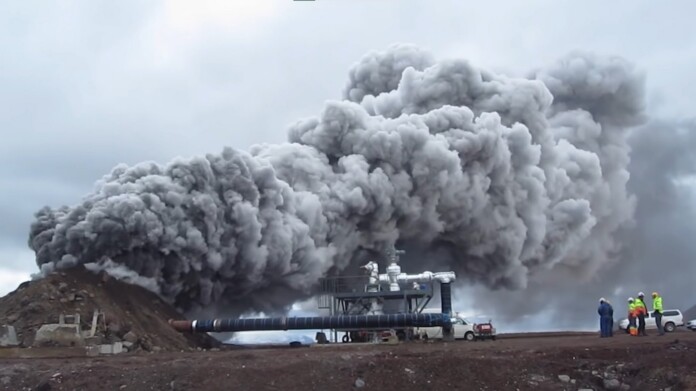
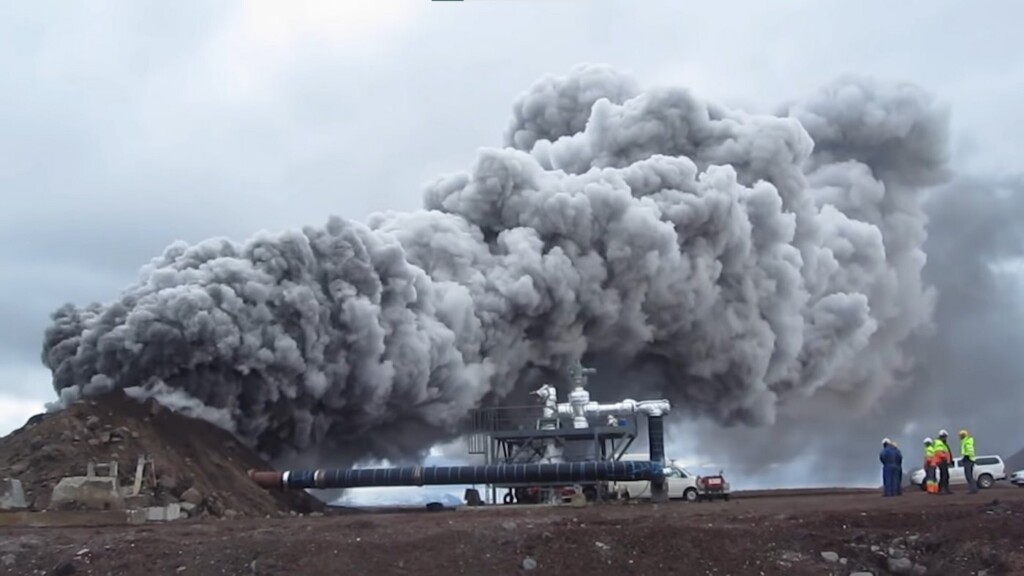
World’s First Magma Observatory Poised to Monitor Volcanoes While Generating Tons of Energy

Screengrab- credit Landsvirkjun, the National Power Company of Iceland, YouTube.

Reprinted with permission and alterations from World at Large, an independent news outlet covering world news, conflicts, travel stories, conservation, and science news.

Theorized as a potential future center of volcanology on Earth, a “magma well” in remote Iceland is the site of the world’s first magma observatory.

The hopes are that the observatory, called the Krafla Magma Testbed, can lead to breakthroughs in volcanology and geothermal energy technology, as well as offer seismologists the ability to monitor potential eruptions much more accurately.

While scientists have found many substandard workarounds throughout history, direct observation and recording of magma under the Earth’s crust has never been done before, but the molten rock under the Krafla Magma Testbed (KMT) is so close to the surface that such observations can be achieved.

Work on the KMT goes all the way back to 2009, when the state-owned geothermal energy company Landsvirkjun was looking to drill down around 5,000 meters to tap the energy from supercritical water reservoirs above magma flows as part of the Icelandic Deep Drilling Project.

Their project in the remote Krafla Caldera was brought to an abrupt end when after just 2,100 meters, it was clear they struck something totally unlike what they were boring for.

“We were unable to retrieve the whole thing, but a section of the drill string that was freed was filled with fragments of freshly quenched glass. When that happens it’s clear we have penetrated magma,” said Sveinbjorn Holgeirsson, project manager for Landsvirkjun, in a 2015 video documentary.

Krafla is unique because never before has magma been found so close to the surface of the Earth, giving those in the field essentially a once-in-a-lifetime opportunity.

Now however, financing from the International Continental Scientific Drilling Program, and several million in additional funding from Icelandic and EU government programs has allowed the Krafla Magma Testbed (KMT) to enter a testing phase to see if a long-term magma observatory is feasible.

“What we know about magma comes from interpreting activity measured at the surface, the geology of fossil magma chambers, and laboratory experiments. The Krafla drilling project will provide direct samples and observations, helping the world to read signs of volcanic unrest better,” said Univ. of Alaska Volcanologist John Eichelberger.

“It will improve civil protection for the 800 million people who live within 100km of an active volcano: be they the millions of Indonesian citizens living under the veil of the archipelago‘s active volcanoes or the millions of tourists visiting America‘s Yellowstone National Park”.

MORE STORIES LIKE THIS: New Google Geothermal Electricity Project Could Be a Milestone for Clean Energy

Highly corrosive gas and superheated steam of 450°C pose supreme technological challenges, but the rewards are immense, for example 13 megawatts of geothermal energy, or enough to power 60,000 homes from just 2 boreholes over the magma well, compared to 18 boreholes in a similar situation elsewhere on the island.

Such energy potential could only be available when drilling into magma chambers, which are almost always out of reach of drilling equipment.

By drilling through the rock–magma interface and into magma, KMT can establish where and under what conditions magma is stored beneath a volcano, and use fluid injection to measure reactions to test all manner of scientific theories. Further still, operators will eventually place sensors near and even in magma to provide direct measurements of things like a sudden rise in temperature, extent of crystallization in and around the magma, change in gas content, or increases in pressure that could lead to an eruption.

YOU MAY ALSO LIKE: The Perfect Energy Source Is Already Here – Endless Geothermal Is Poised for Release From Deep in the Earth

Most of us have an image of magma as an underground pit of lava, but in reality they tend to be pockets of liquid snaking between crystallized grains, surrounded by superheated gas.

Currently, KMT’s drilling partners are developing steel that can expand and contract with extreme heat of up to 1,000°C, while others are working on electronics that can endure the conditions, both of which could be used many times over to explore Venus, writes Paul Voolsen for Science.

Recent project updates have set a date for the initial drilling attempt in 2026.

SHARE This Fascinating, Exciting Project Going On In Iceland With Your Friends…

Woylies Are the Ecosystem Engineers of Australia–Critically Endangered but They’re Making a Comeback

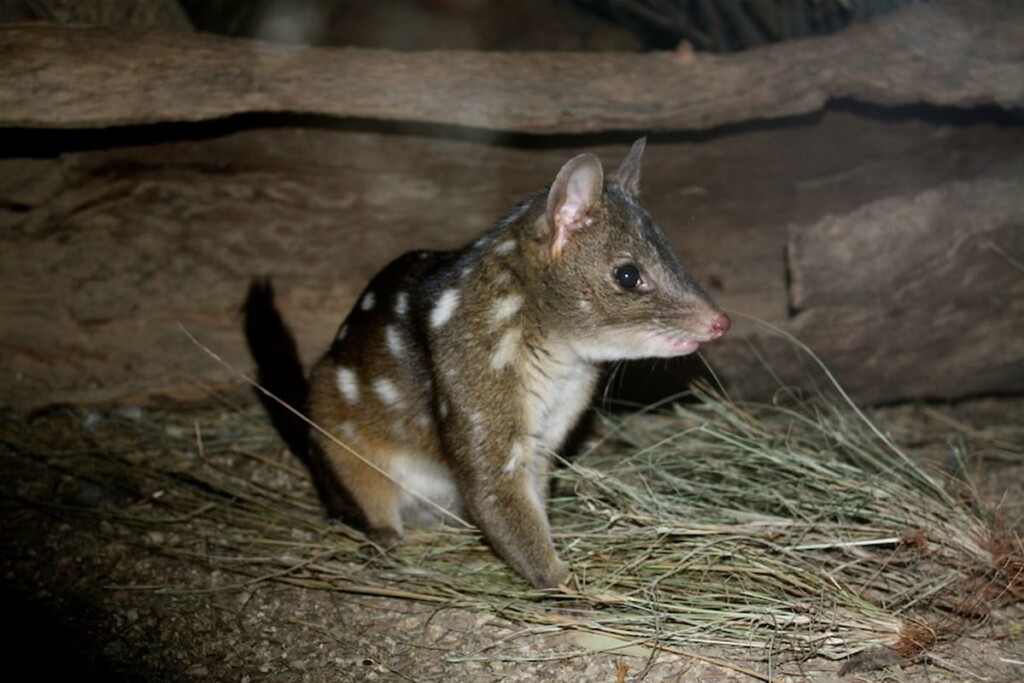
A Western quoll, or 'chuditch' - credit Department of Biodiversity, Conservation and Attractions
A woylie eating the roots and tubers it loves – credit Department of Biodiversity, Conservation and Attractions

A critically endangered Australian marsupial is being seen at the greatest-ever frequency since a government agency started working to conserve them.

Australia is filled with small endangered marsupials that have been overhunted by feral foxes and cats, and the woylie, an herbivore native to the state of Western Australia, is an unhappy example of this invasive predation.

But in a forest landscape 3 hours south of Perth, a conservation program initiated by the Department of Biodiversity, Conservation and Attractions of Western Australia has recorded a record number of woylie sightings this year.

34 woylies have been trapped and tagged with GPS tracking anklets, where just 2 were found in the Batalling State Forest in all of 2019.

“There are a lot of challenges for our native fauna and flora across Western Australia and Australia due to the threats to biodiversity, but these kinds of results are really promising,” program coordinator Ashley Millar told ABC News Australia.

Woylies are one of Australia’s native ecosystem engineers—like bison and beavers in Europe and North America—meaning a species whose behaviors cause cascading changes that alter the entire ecosystem in which they live.

MORE ON AUSTRALIAN ANIMALS: ‘Turning Back the Tide of Extinction’ Australian Mammals Are Coming Back: Bandicoots, Bilbies, Potoroos

Beavers do it by building dams, bison do it by trampling things, and woylies do it by digging for the roots and tubers that they eat.

Their preferred food item is actually the truffle—the same one that bumps up the price of a bowl of pasta by $10, and which some dog species are specially-bred to find.

A Western quoll, or ‘chuditch’ – credit Department of Biodiversity, Conservation and Attractions

Part of the conservation program has involved the management of wild foxes and cats; brought to Australia by European settlers and unwittingly caused an ecosystem disruption. The ground-dwelling marsupials never needed to evolve the speed or stealth to escape such successful predators as cats and foxes, and all across Australia these species have to be managed so as not to overhunt the local wildlife.

MORE GOOD NEWS FOR MARSUPIALS: Threatened Western Quolls Return to Western Australia After 100 Year Absence

Also in Batalling were found a growing number of Western quolls, or ‘chuditch’ another of the continent’s endangered marsupials, and despite being no bigger than a raccoon is Western Australia’s largest carnivorous mammal.

SHARE This Encouraging Return Of The Woylie On Social Media… 

“If you find it in your heart to care for somebody else, you will have succeeded.” – Maya Angelou

Quote of the Day: “If you find it in your heart to care for somebody else, you will have succeeded.” – Maya Angelou

Photo by: Jackson David

With a new inspirational quote every day, atop the perfect photo—collected and archived on our Quotes page—why not bookmark GNN.org for a daily uplift?

Indian Teen Invents Gadget to Transform Dementia Care – Out of Concern for His Grandmother

Courtesy of Hemesh Chadalavada family photo

An Indian teen who is a self-confessed ‘nerd’ who loves robotics, also loved his grandmother Jayasree dearly. Together, they led him to create a new invention that could greatly improve care for Alzheimer’s patients.

Hemesh Chadalavada was 12 years old when one summer evening in 2018, he observed his grandmother go to the kitchen to make tea for herself. When she exited the room, she had left the gas on.

It shocked Hemesh, but also drove him to convert the hours spent on YouTube learning about robotics into a solution that would help ensure accidents like this could be detected if he weren’t there—a question he found himself asking several times.

Jayasree was diagnosed with Alzheimer’s the year before, and in 2023 passed away from the delibating neurodegenerative disease.

By then, Hemesh had invented the Alpha Monitor, a badge-like monitoring device that sends out alerts if the person wearing it wanders off or falls.

MORE NEWS LIKE THIS: Devoted Son Took His Mom With Alzheimer’s on Incredible Round-the-World Adventure–And She Improved

“She used to get up at 3 or 4 in the morning and go outside, thinking she was on a train,” Hemesh told the Guardian, who developed the wearable with information gleaned from a visit to a care center run by Alzheimer’s and Related Disorders Society of India.

They told him that it couldn’t be a watch because the patients often take them off if they’re heavy or uncomfortable, and that it couldn’t use Bluetooth, which has a very limited range. Even though still in high school, Hemesh was determined to get his wearable ready for manufacture.

Hemesh Chadalavada at the Samsung Solve for Tomorrow Contest

In 2022 he beat 18,000 entries to win a Samsung-sponsored science fair called Samsung Solve for Tomorrow, from which he pocketed a $120,000 grant and the opportunity to mentor under some of Samsung’s most experienced engineers.

ALSO CHECK OUT: Boy Invents Smart Spoon for His Uncle’s Trembling Hands that Is Affordable in India

His victory also won the admiration of his country’s Prime Minister, Narendra Modi, who posted on X that he “really admired” the young man.

Hemesh’s exams conclude in March, and it’s then that he says he will throw his full weight of time and effort into getting the Alpha Monitor on the market by September. After that, he wants to go abroad and continue studying robotics.

SHARE This Inspiring Young Man’s Mission To Help Combat Dementia… 

100-Year-old Walks Around Garden 40,000 Times to Raise Money for Charity

Lance Corporal Harold Jones - SWNS
Lance Corporal Harold Jones – SWNS

A 100-year-old veteran of World War II has walked hundreds of miles around his garden to raise money for charity—every day, rain or shine.

Strolling behind his 3-wheeled walker, Lance Corporal Harold Jones circles his back garden 30 times every day no matter the weather, and has been doing so since 2020. He was inspired by the worldwide media stories during the early days of the pandemic that hailed the late ‘Captain Tom’, who did the same thing and raised a huge amount for hospitals.

Corporal Jones is a great-grandfather-of-six, and he started walking circuits around his bungalow during lockdown like Captain Tom, and has so far taken his walker a total of 661 miles, equating to 41,550 laps around his garden, or about the same distance as his home in Birmingham to the border of Germany.

“I always refer to myself as Lance Corporal Harold. Captain Tom was a captain so I thought I’d go to the other end of the spectrum,” said the centenarian, referring to the military hierarchy. “One other reason I started was to keep fit and keep moving. With Covid we had to stay in and all sorts of things.”

“I saw it was what Captain Tom had done to raise money. I had lost three friends with Motor Neurone Disease and I thought I’d do the same,” he said.

OTHER PEOPLE TOM INSPIRED: Inspired by Captain Tom, 5-Year-old Walks On New Prosthetic Limbs Raising $1Million for Hospital That Saved Him

As the anniversary of Captain Tom’s death approaches in two weeks’ time, Jones is still racking up the steps in honor of the Captain who touched the hearts of the nation.

The spritely pensioner reckons the secret to his long-lasting fitness is down to his time in the Armed Forces setting him up with a “high level of endurance.”

Harold, who served in the British Army from 1942 until 1947, was stationed first in India and then in Burma during WW2 as a non-combat office worker. He began fundraising for the MND Association and has since raised over £43,000 in just under four years.

“It has become a daily routine ever since. I [first] set out to try and get to £1,000,” he explained. “I didn’t know how people would respond. I reached a grand in a year. When I reached £10,000 a friend doubled it.”

IN THE NAME OF THE CAPTAIN: Captain Tom Moore’s Family Launches Online Bulletin Board Where Strangers Share Favorite Moments of Kindness

“It’s the walking that keeps me fit. I previously broke my back in three places but my ankles, knee joints, and hips are perfect. I walk in the morning after breakfast in whatever weather, You have to have the determination to get up and go,” said Harold. “That’s so important.”

He has since been awarded a Points of Light award by the Prime Minister for his valiant efforts after the MND Association put his name forward.

WATCH the Lance Corporal Go go go… 

SHARE This Inspiring Centenarian And His ‘Get Up And Go’ Attitude… 

Stranger on Airplane Quickly Crochets Beanie for Baby Mesmerized by the Yarn in Motion Across the Aisle

By Kelly Levine
By Kelly Levine

Kelly and Jake were nervous about taking their 5-month-old daughter on an airplane, as most new parents would be. Flying from New Jersey to Mexico isn’t a short haul, and they weren’t sure what to expect.

But it was on the flight home that the unexpected arose, when little Romey was calmly fascinated by the woman across the aisle who was crocheting—her hands constantly moving was transfixing the tot.

The crocheter, Meegan Rubin, noticed the baby watching her, and also realized the yarn she was using for her project matched the little girl’s outfit. With an hour left on the flight, she decided to make a beanie for Romey, and surprised the family with the hat once they landed.

Captured and summarized by the mom on her TikTok account, it went viral and has racked up almost 8 million views to date.

“Never seen someone work so fast in my life. I had no idea it was for us,” the Mom recalled to Good Morning America. “What a cool way to just do something nice for a stranger,’ and in turn, light up everyone else’s day.”

“I couldn’t help it. I was like, this baby is getting something because she’s too cute,” Rubin who only took up crocheting during the pandemic, admitted.

MORE KITTING STORIES: Stray Cat With No Ears Finally Adopted After Shelter Worker Crochets Her a Pair of Purple Ones

“It just took my mind off everything and it’s really a zen, great place to be,” Rubin said. “Creating something out of a string is so rewarding. It’s like holding the entire universe inside your hands.”

WATCH the video on TikTok… 

@kellyryan49 Good people are the best #babies #babiesoftiktok #flyingwithkids #payitforward #goodnews #goodnewsmovement #firstflight #flyinghacks #united @United Airlines ♬ Gods creation - daniel.mp3

SHARE This Sweet Story From A Quick-Handed And Generous Stranger… 

2,000-Year-Old Home Found Under a Seaside Playground May Be Pliny the Elder’s Villa

Photo courtesy of Comune Di Bacoli

If you’ve ever felt that planning permission is hard to get in an American city because of zoning regs, imagine the difficulty in a country that’s both orders of magnitude smaller, and ground zero for the archaeological remains of one of the world’s most sophisticated classical civilizations.

The Commune of Bacoli outside Naples was trying to build a children’s playground, but the kids will have to make do with their backyards because preliminary surveys uncovered a Roman villa on the same spot.

2,000 years ago, the villa would have sat on a cliffside and commanded 360° views of the Gulf of Naples, with the islands of Ischia and Procida visible in the distance. In fact, the archaeologists excavating the ruins believe it could have been the oppulent haunt of Pliny the Elder.

An author, naturalist, and natural philosopher, Pliny Sr. wrote the Naturalis Historia which became a publishing model for encyclopediae in our time. He was also a naval and army commander of the early Roman Empire, and Bacoli sits today where the city of Misenum was located—the dockyard of the Roman navy’s Tyrhennian Sea fleet.

He died from inhaling the toxic gasses of Mount Vesuvius’ eruption, which he witnessed from his villa across the Gulf, and into which he organized several ships for a rescue mission. Overweight and asthmatic, he couldn’t flee from the plumes of gas after arriving at the town of Stabiae with a team to rescue the citizens trapped there.

“It is likely that the majestic villa had a 360-degree view of the gulf of Naples for strategic military purposes,” Simona Formola, lead archaeologist at Naples’ art heritage, told CNN in an interview. “We think (the excavation of) deeper layers could reveal more rooms and even frescoes — potentially also precious findings.”

The archaeologists found that the walls were made of limestone blocks cut into diamonds and arranged in a pattern that resembled a fisherman’s net.

Commune of Bacoli, released to the press

Currently, the terraces of the villa are just a few meters above the sea, whereas in the time of Misenum they would have been higher up the cliff. The whole area is sinking ever-so-slowly into the sea with each century of seismic and volcanic activity, and the dock where boats to service the villa would have arrived is now underwater.

MORE NEWS LIKE THIS: Tiny Italian Town Dug Up an Extremely Rare Roman Temple while Trying to Build Supermarket

The whole area south of Naples was a suburban area of Roman settlements, including Mesinum and Puteoli, which attracted visitors across the empire to relax in the natural thermal springs and warm mud pools.

The villa is going to open in a few months as an open air museum.

SHARE This Amazing Discovery With Your Friends Who Love Roman History…

“Thank you, God, for this good life and forgive us if we do not love it enough.” – Garrison Keillor

Quote of the Day: “Thank you, God, for this good life and forgive us if we do not love it enough.” – Garrison Keillor

Photo by: Krisztina Papp

With a new inspirational quote every day, atop the perfect photo—collected and archived on our Quotes page—why not bookmark GNN.org for a daily uplift?

Astronomers Discover Blockbuster Star They Nicknamed Barbenheimer Because ‘We’ve Never Seen Anything Like This’

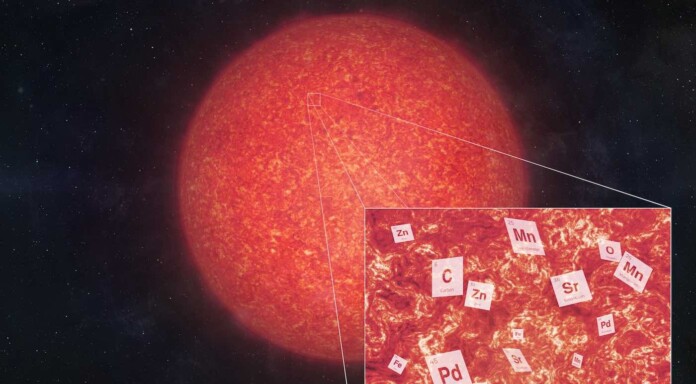
An illustration accompanying the Barbenheimer Star study shows an artist depiction of a red giant star with pullout showing elements measured in the star J0931+0038 AKA The Barbenheimer Star. See SWNS story SWMRbarbieheimer. Astronomers have discovered a blockbuster star so unusual they named it the 'Barbenheimer Star'. Sky-watchers from the Sloan Digital Sky Survey (SDSS) have uncovered evidence for an enormous ancient star that exploded in a way previously thought impossible; resulting in an unusual pattern of elemental ashes that left behind a trail of evidence still visible billions of years later. SDSS believe the star, scientific name J0931+0038, could have been at least 50 to 80 times the mass of our Sun. It formed from the supernova remnant of whatever star was there before. SDSS say: "In fact, that ancient supernova must have been so massive that astronomers are surprised it could happen at all – previous theories predicted that such big stars should collapse straight into black holes, without creating a supernova first. So its unusual composition means that the star that was there before must have also been highly unusual. It is that ancient, weird star whose remains we see preserved today that astronomers have nicknamed the Barbenheimer Star." Alex Ji of the University of Chicago and SDSS, the lead author of the study, says: "We’ve never seen anything like this. Whatever happened back then, it must have been amazing. We nicknamed it the ‘Barbenheimer Star’ for its spectacular nucleosynthesis.” The humourous moniker is a reference to the headline-making blockbuster performance of the thematically opposed Barbie and Oppenheimer films released in 2023.
The unusual mix of chemical elements measured helped reconstruct the giant star’s history – University of Chicago / SDSS-V / Melissa Weiss (SWNS)

Astronomers have discovered an enormous celestial entity so unusual they named it ‘the Barbenheimer Star’ – a moniker referring to the recent cultural phenomenon of two blockbuster movies, Barbie and Oppenheimer, which were so opposite, yet so successful at the same moment (‘Barbenheimer’).

The team from the Sloan Digital Sky Survey (SDSS) uncovered evidence of a ‘blockbuster’ ancient star that exploded in a way previously thought impossible.

The explosion resulted in an unusual pattern of elemental ashes that left behind a trail of evidence still visible billions of years later.

“We’ve never seen anything like this,” said the lead author of the study, Alex Ji of the University of Chicago and SDSS. “Whatever happened back then, it must have been amazing.”

Ji and colleagues followed the trail back in time using a process called ‘stellar archaeology.’

Just as archaeologists use evidence found in the present to reconstruct the past, astronomers use evidence found in today’s stars to reconstruct conditions in the ancient universe. Today’s stars are like chemical time capsules: they preserve what a piece of the universe was like when the star was born.

The star (scientific name J0931+0038) was captured in an image by the SDSS Milky Way Mapper program, which observes a star’s spectrum, its temperature, and chemical composition—and it was chemistry that first led Ji and his team of stellar archaeologists to notice it.

CHECK OUT: Ringed Planet That Defies Known Physics Discovered in Outer Reaches of Our Solar System

Stars are mostly made of hydrogen and helium, but they also incorporate some of the heavier elements, which were created in previous generations of stars and released into the universe in supernova explosions.

Illustration of supernova explosion with elements flying out from the center of J0931+0038, The Barbenheimer Star – Credit: University of Chicago / SDSS-V / Melissa Weiss via SWNS

J0931+0038 had an unusually low amount of magnesium, prompting further followup from the Magellan telescopes in Chile. When Ji and colleagues first viewed the followup spectrum of J0931+0038, they were amazed.

“As soon as I saw the spectrum, I immediately emailed the rest of the team to talk about how to learn more,” said Ji, who eventually nicknamed it the ‘Barbenheimer Star’ for its “spectacular nucleosynthesis”.

Several things made the star different from other stars: low abundances of elements with odd numbers on the periodic table like sodium and aluminum; a large amount of elements close to iron in the periodic table like nickel and zinc; and an overabundance of heavier elements like strontium and palladium.

“We sometimes see one of these features at a time, but we’ve never before seen all of them in the same star,” says Jennifer Johnson of the Ohio State University, another member of the stellar archaeology team.

What makes it a blockbuster?

So what made J0931+0038 look the way it looks? The star formed from the supernova remnant of whatever star was there before – and so its unusual composition means that the star that was there before must have also been highly unusual. It is that ancient, weird star whose remains we see preserved today.

WOW: NASA Captures The Sun in a Big Smiley Face Made of Wind (LOOK)

Whatever the Barbenheimer Star was, it must have been a blockbuster—at least 50 to 80 times the mass of our Sun. In fact, that ancient supernova must have been so massive that astronomers are surprised it could happen at all.

Previous theories predicted that such big stars should collapse straight into black holes, without creating a supernova first. As surprising as it is to learn that such a massive star could go supernova, even that doesn’t explain the full picture.

“Amazingly, no existing model of element formation can explain what we see,” says Sanjana Curtis of the University of California, Berkeley, co-lead of the published study. “It’s not just, ‘oh, you can tweak something here and there and it’ll work out – the whole pattern of elements seems almost self-contradictory.”

WANT MORE? Astronomers Detect Radio Pattern ‘Like a Heartbeat’ From a Galaxy Far Away

To resolve the apparent contradiction, the astronomers need more and better computer simulations to make predictions about what happened with stars in the early Universe. And they need more observations of today’s stars to provide evidence for the simulations. Considering that the SDSS team discovered evidence for the Barbenheimer Star the very first night they followed up their initial observations, we can expect many more blockbuster results in the coming years.

“The Universe directed this movie, we are just the camera crew,” says Keith Hawkins of the University of Texas at Austin and SDSS spokesperson. “We don’t yet know how the story will end.”

BLOW Some Minds By Sharing The Discovery on Social Media…