










All News - Page 223 of 1715 - Good News Network
Home Blog Page 223

Your Horoscope for the Week: A ‘Free Will Astrology’ From Rob Brezsny

Our partner Rob Brezsny, who has a new book out, Astrology Is Real: Revelations from My Life as an Oracle, provides his weekly wisdom to enlighten our thinking and motivate our mood. Rob’s Free Will Astrology, is a syndicated weekly column appearing in over a hundred publications. He is also the author of Pronoia Is the Antidote for Paranoia: How All of Creation Is Conspiring To Shower You with Blessings. (A free preview of the book is available here.)

Here is your weekly horoscope…

FREE WILL ASTROLOGY – Week of January 13, 2024
Copyright by Rob Brezsny, FreeWillAstrology.com

CAPRICORN (Dec. 22-Jan. 19):
In 2024, I predict you will be blessed with elegant and educational expansion—but also challenged by the possibility of excessive, messy expansion. Soulful magnificence could vie for your attention with exorbitant extravagance. Even as you are offered valuable novelties that enhance your sacred and practical quests, you may be tempted with lesser inducements you don’t really need. For optimal results, Capricorn, I urge you to avoid getting distracted by irrelevant goodies. Usher your fate away from pretty baubles and towards felicitous beauty.

AQUARIUS (Jan. 20-Feb. 18):
Some people feel that “wealth” refers primarily to financial resources. If you’re wealthy, it means you have a lot of money, luxurious possessions, and lavish opportunities to travel. But wealth can also be measured in other ways. Do you have an abundance of love in your life? Have you enjoyed many soulful adventures? Does your emotional intelligence provide rich support for your heady intelligence? I bring this up, Aquarius, because I believe 2024 will be a time when your wealth will increase. The question for you to ruminate on: How do you define wealth?

PISCES (Feb. 19-March 20):
“No one can build you the bridge on which you, and only you, must cross the river of life,” said philosopher Friedrich Nietzsche. Here’s my response to that bold declaration: It’s utterly WRONG! No one in the history of the world has ever built anything solely by their own efforts, let alone a bridge to cross the river of life. Even if you are holed up in your studio working on a novel, painting, or invention, you are absolutely dependent on the efforts of many people to provide you with food, water, electricity, clothes, furniture, and all the other goodies that keep you functioning. It’s also unlikely that anyone could create anything of value without having received a whole lot of love and support from other humans. Sorry for the rant, Pisces. It’s a preface for my very positive prediction: In 2024, you will have substantial help in building your bridge across the river of life.

ARIES (March 21-April 19):
Why do birds sing? They must be expressing their joy at being alive, right? And in some cases, they are trying to impress and attract potential mates. Ornithologists tell us that birds are also staking out their turf by chirping their melodies. Flaunting their vigor is a sign to other birds of how strong and commanding they are. In accordance with astrological omens, I invite you Aries humans to sing more than ever before in 2024. Like birds, you have a mandate to boost your joie de vivre and wield more authority. Singing is even good for your health—so let loose in the shower, find a choir, or join a jam session near you.

TAURUS (April 20-May 20):
Which zodiac sign is most likely to have a green thumb? Who would most astrologers regard as the best gardener? Who would I call on if I wanted advice on when to harvest peaches, how to love and care for roses as they grow, or how to discern which weeds might be helpful and useful? The answer, according to my survey, is Taurus. And I believe you Bulls will be even more fecund than usual around plants in 2024. Even further, I expect you to be extra fertile and creative in every area of your life. I hereby dub you Maestro of the Magic of Germination and Growth.

GEMINI (May 21-June 20):
Research I’ve found suggests that 70 percent of us have experienced at least one traumatic event in our lives. But I suspect the percentage is higher. For starters, everyone has experienced the dicey expulsion from the warm, nurturing womb. That’s usually not a low-stress event. The good news, Gemini, is that now and then there come phases when we have more power than usual to heal from our traumas. According to my analysis of the astrological omens, the coming months will be one of those curative times for you.

CANCER (June 21-July 22):
At their best, Libras foster vibrant harmony that energizes social situations. At their best, Scorpios stimulate the talents and beauty of those they engage with. Generous Leos and Sagittarians inspire enthusiasm in others by expressing their innate radiance. Many of us may get contact highs from visionary, deep-feeling Pisceans. In 2024, Cancerian, I believe you can call on all these modes as you brighten and nurture the people in your sphere—even if you have no Libra, Scorpio, Sagittarius, Leo, or Pisces influences in your astrological chart.

LEO (July 23-Aug. 22):
Here are my wishes for you in 2024. 1. I hope you will rigorously study historical patterns in your life story. I hope you will gather robust insights into the rhythms and themes of your amazing journey. 2. You will see clearly what parts of your past are worth keeping and which are better outgrown and left behind. 3. You will come to a new appreciation of the heroic quest you have been on. You will feel excited about how much further your quest can go. 4. You will feel gratitude for the deep inner sources that have been guiding you all these years. 5. You will be pleased to realize how much you have grown and ripened.

VIRGO (Aug. 23-Sept. 22):
Virgo author Eduardo Galeano mourned how our institutions condition us to divorce our minds from our hearts and our bodies from our souls. Even sadder, many of us deal with these daunting schisms by becoming numb to them. The good news, Virgo, is that I expect 2024 to be one of the best times ever for you to foster reconciliation between the split-off parts of yourself. Let’s call this the Year of Unification. May you be inspired to create both subtle and spectacular fusions of your fragmented parts. Visualize your thoughts and feelings weaving together in elegant harmony. Imagine your material and spiritual needs finding common sources of nourishment.

LIBRA (Sept. 23-Oct. 22):
According to ancient Greek myth, the half-divine hero Heracles consulted the Oracle of Delphi for guidance. He was assigned to perform 12 daunting feats, most of which modern people would regard as unethical, like killing and stealing. There was one labor that encouraged integrity, though. Heracles had to clean the stables where over a thousand divine cattle lived. The place hadn’t been scrubbed in 30 years! As I meditated on your hero’s journey in the coming months, Libra, I concluded that you’d be wise to begin with a less grandiose version of Heracles’ work in the stables. Have fun as you cheerfully tidy up everything in your life! By doing so, you will earn the power to experience many deep and colorful adventures in the coming months.

SCORPIO (Oct. 23-Nov. 21):
I will name two taboos I think you should break in 2024. The first is the theory that you must hurt or suppress yourself to help others. The second is that you must hurt or suppress others to benefit yourself. Please scour away any delusion you might have that those two strategies could genuinely serve you. In their place, substitute these hypotheses: 1. Being good to yourself is the best way to prepare for helping others. 2. Being good to others is the best way to benefit yourself.

SAGITTARIUS (Nov. 22-Dec. 21):
“Doubt has killed more dreams than failure ever will,” says Sagittarian author Suzy Kassem. Many of us have had the experience of avoiding a quest for success because we are too afraid of being defeated or demoralized. “Loss aversion” is a well-known psychological concept that applies when we are so anxious about potential loss that we don’t pursue the possible gain. In my astrological estimation, you Centaurs should be especially on guard against this inhibiting factor in 2024. I am confident you can rise above it, but to do so, you must be alert for its temptation—and eager to summon new reserves of courage.

WANT MORE? Listen to Rob’s EXPANDED AUDIO HOROSCOPES, 4-5 minute meditations on the current state of your destiny — or subscribe to his unique daily text message service at: RealAstrology.com

(Zodiac images by Numerologysign.com, CC license)

SHARE The Wisdom With Friends Who Are Stars in Your Life on Social Media…

“Sincerity is the way to heaven.” – Mencius

Quote of the Day: “Sincerity is the way to heaven.” – Mencius

Photo by: Omid Armin

With a new inspirational quote every day, atop the perfect photo—collected and archived on our Quotes page—why not bookmark GNN.org for a daily uplift?

Cardboard Steering Wheels Let Children Pretend to Be Steering New Driverless Trains Through London

The front cabin of the new DLR trains with stickers instead of controls; steering wheels to be added later - credit TfL, released.
The front cabin of the new DLR trains with stickers instead of controls; steering wheels to be added later – credit Transport for London, released.

Governments can so often appear like grey, amorphous, by-the-bookworms with no imagination or taste visible in their duties, but in designing the new light rail cars for east and southeast London, the city’s transportation department is thinking of making the seats in the front car a children’s make-believe area.

With fake steering wheels, and a suite of buttons which do nothing, Transport for London (TfL) is looking to increase “community engagement” with their new fleet of driverless trains.

The Mayor of London, Sadiq Khan, said TfL is considering different ways to bring a “driving the train” experience to the new DLR carriages.

“[TfL is] exploring a number of other customer and community engagement activities to support the introduction of new DLR trains,” Mr. Khan said, according to the Weekly Standard. “TfL will review learnings from the front seat ‘driving the train’ vinyl sticker trial in early 2024 before finalizing plans.”

The front seats of the front cars are being changed to two, forward-facing benches, across from control stations that control nothing, and steering wheels that steer nothing.

YOUR KIDS MAY ALSO LIKE: UK University Installs Free ‘Vending Machines’ to Dispense Tiny Short Stories Printed on Eco-Friendly Paper

“We have made sure we’ve got a front seat on the new DLR trains as well, because I know what a prize that is,” said Khan, after referencing his childhood of always trying to call shotgun, or “bagsies” as it’s called in Britain.

The Docklands Light Rail (DLR) network serves a variety of locations in South London, and can bring passengers to several key transfer areas where they can board the London Tube to wherever it is they are going.

SHARE This Fun Idea For Civic Transport With Your Friends From London… 

Scientists Spot Mysterious Aurora on Distant Celestial Object

This artist concept portrays the brown dwarf W1935, located 47 light-years from Earth – NASA

Everyone who’s given five seconds to look into it knows that the Aurora Borealis is cause by charged particles from the Sun interacting with the Earth’s magnetic field, but what if there were no Sun, could there still be an aurora?

That’s what astronomers using NASA’s James Webb Space Telescope seem to have observed after finding an object displaying what is probably an aurora like the familiar Northern Lights on our world.

The object in question is a brown dwarf, something larger than Jupiter but smaller than a star, known as W1935, and unlike any planets in our solar system that experience aurorae, it’s an isolated object in space with no nearby star to create one.

“This is an unexpected discovery because the brown dwarf is cold and lacks a host star; therefore, there is no obvious source of energy to heat its upper atmosphere and make the methane glow,” NASA writes.

The findings are being presented at the 243rd meeting of the American Astronomical Society in New Orleans this week.

To help explain the mystery of the infrared emission from methane, the team turned to our solar system.

“Methane in emission is a common feature in gas giants like Jupiter and Saturn. The upper-atmosphere heating that powers this emission is linked to aurorae.

On Earth, the energetic particles that create the Northern Lights cascade down into our atmosphere along magnetic field lines near Earth’s poles, colliding with gas molecules and creating eerie, dancing curtains of light.

Jupiter and Saturn have similar auroral processes that involve interacting with the solar wind, but they also get auroral contributions from nearby active moons like Io (for Jupiter) and Enceladus (for Saturn).

OTHER COSMIC MYSTERIES: Record-Breaking Fast Radio Burst from Space Alerts Astronomers to Fascinating Blob of Galaxies

NASA say that for isolated brown dwarfs like W1935, the absence of a stellar wind to contribute to the auroral process and explain the extra energy in the upper atmosphere required for the methane emission is “a mystery”.

A team led by Jackie Faherty, an astronomer at the American Museum of Natural History in New York, was awarded time with the Webb telescope to investigate 12 cold brown dwarfs. Among those were W1935—an object that was discovered by citizen scientist Dan Caselden.

MORE NEWS LIKE THIS: NASA Astronaut Thrilled by His ‘Absolutely Unreal’ Photo of Aurora From Space

The team surmises that either unaccounted internal processes like the atmospheric phenomena of Jupiter and Saturn, or external interactions with either interstellar plasma or a nearby active moon, may help account for the emission.

“With W1935, we now have a spectacular extension of a solar system phenomenon without any stellar irradiation to help in the explanation.” Faherty noted. “With Webb, we can really ‘open the hood’ on the chemistry and unpack how similar or different the auroral process may be beyond our solar system.”

SHARE This Discovery In Empty Space With Your Friends…

New Non-Invasive Test Could Make it Easier for Doctors to Predict Success for Women Undergoing IVF

jordy clarke (cc license)

A new non-invasive test could make it easier for doctors to predict successful pregnancies for women undergoing IVF, improving the accuracy and outcomes of this procedure among couples struggling to conceive.

In-vitro-fertilization (IVF), a treatment that involves fertilizing eggs in a laboratory and later implanting them in the uterus, has been a source of hope for many couples.

However, IVF is a complex process, with success rates among women younger than 40 in the United States being only 20 to 40 percent.

This is because it can be challenging for doctors to determine which IVF embryos are most likely to result in a successful pregnancy.

But now, a brand-new non-invasive test for embryo quality, developed by scientists at University of California San Diego, has the potential to solve this challenge.

“Unfortunately, IVF success still involves a big element of chance, but that’s something we’re hoping our research can change,” said Professor Irene Su, of UC San Diego School of Medicine. “IVF is challenging enough as it is, so it was extremely important to us that our research didn’t interfere with this already-delicate process.

“What we’ve done is more akin to looking at what’s left behind at an archaeological site to help us learn more about who lived there and what they did.”

The new test works by detecting small particles of genetic material, called exRNAs, that are left behind in the liquid young embryos are grown in.

Instead of relying on biopsies of embryos, the new approach works similar to blood tests by detecting exRNAs in a sample of fluid.

This means that the new approach is completely non-invasive and involves no extra steps on the part of women going through IVF treatment.

YOU MAY ALSO LIKE: Newly-Identified Molecule Could Be the Key to Targeting Obesity and Osteoporosis

Although scientists are still unsure of the biological function of exRNAs, their discovery in the early 2000s has opened up new avenues into medical research, offering insights into cell-to-cell communication and disease processes, with further potential for it to be applied to diagnostics and therapeutics.

“It’s really only in the last decade that we have started to uncover the uses for exRNAs, and there could be countless other applications we haven’t yet discovered,” said Sheng Zhong, professor in the Department of Bioengineering at University of California.

“This is just the beginning.”

MORE MEDICAL ADVANCEMENTS: Deaf Children Are First Humans to Have Hearing Pathway Restored in Dramatic Demonstration of New Gene Therapy

Still, the researchers caution that it will take additional research to confirm whether their test can be used directly to predict positive IVF outcomes, such as successful births.

“Once that work is done, we hope this will make the overall process of IVF simpler, more efficient, and ultimately less of an ordeal for the families seeking this treatment,” said Professor Su.

SHARE This Hopeful Advance In Family Planning Sciences… 

Discovery of Immense Fortifications Dating Back 4,000 Years Enclose Khaybar Oasis in Northwest Arabia

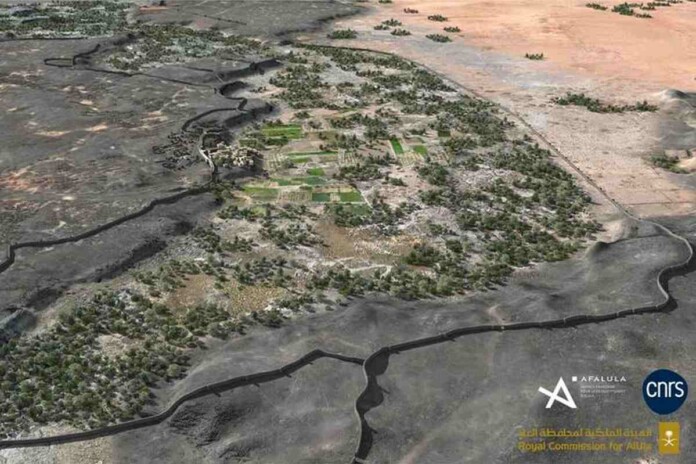
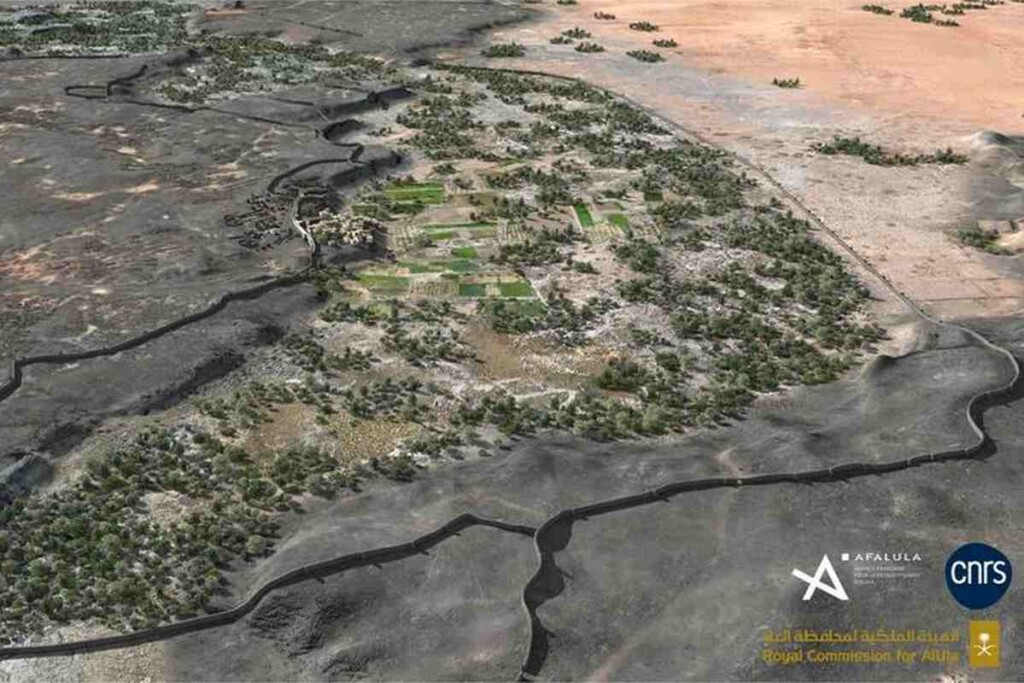
Digital reconstruction of the rampart network from the northern section of the Khaybar walled oasis 4,000 years ago—credit © Khaybar Longue Durée Archaeological Project (CNRS-AFALULA-RCU), M. Bussy & G. Charloux
Digital reconstruction of the rampart network from the northern section of the Khaybar walled oasis 4,000 years ago—credit © Khaybar Longue Durée Archaeological Project (CNRS-AFALULA-RCU), M. Bussy & G. Charloux.

Far from the archaeological hotspots of the world like the Fertile Crescent or Italy that produce new finds every month, an incredible discovery on the Arabian Peninsula shows how organized and complex societies were 4,000 years ago.

Back then, the Arabian Desert had mostly changed into the dry, sandy environments we know them to be today, and people had to make their living in between oases.

These hotspots of water and plants were magnets for life, and nomadic peoples of the peninsula are known to have fortified them in ancient times, but excavations and surveys done on the Khaybar Oasis in modern-day Saudi Arabia show that this fortification activity was extensive.

Cross-referencing field surveys and remote sensing data with architectural studies, the team estimated the original dimensions of the fortifications at 7.2 miles in total length, between 3 and 5 feet in thickness, and approximately 15 feet in height fortified by 180 individual bastions along its course.

Preserved today over a little less than half of its original length, this colossal edifice enclosed a rural and sedentary territory of nearly 2,600 acres. The fortification’s date of construction is estimated between 2250 and 1950 BCE, on the basis of radiocarbon dating of samples collected during excavations.

“In the basaltic environment of Khaybar, where plateau sedimentation is very low, archaeological remains have been exposed above ground and superimposed for millennia, creating a lunar landscape dotted with thousands of megalithic archaeological structures from all periods: desert kites, mustatils, funerary avenues and dense necropolises, encampments, forts, plot walls, and so on,” the authors write in their study, published in Journal of Archaeological Science. “Ongoing surveys have counted over 16,000 such structures within the 56 sq. km sample area.”

While the study confirms that the Khaybar Oasis clearly belonged to a network of walled oases in Northwestern Arabia, the discovery of this rampart also raises questions regarding why it was built as well as the nature of the populations that built it, in particular their relations with populations outside the oasis.

SIMILAR BEHAVIOR BY ROME: Spy Satellite Photos Reveal Hundreds of Long-Lost Roman Forts, Challenging Decades-Old Theory

With a simpler insinuation, you don’t need to pile sandstone and dirt up 15 feet—as tall as three men—and build 180 bastions to keep your camels from wandering off; ramparts of that nature were meant to keep people out.

But the archaeological team write in their study that they don’t believe the rampart was solely for defense, even though the bastions always faced outward toward the desert and never inward to the oasis.

MORE ANCIENT WALLS: 4,200-Year-Old Ceramic Storm Drains in Ancient Chinese Town Are the Oldest of Their Kind

“It was about delimiting a living space, a rural settlement, and separating it from a desert area,” they write. “The monumental construction of the rampart in the Bronze Age thus strengthened group cohesion while acting as a territorial marker and defining social identity.”

The discovery paves the way for major advances in understanding the prehistoric, pre-Islamic, and Islamic past of the northwestern reaches of the Arabian Peninsula, as there are more of these walled oases to investigate.

SHARE This Awesome Bit Of Ancient History With Your Friends… 

“Don’t worry about the world coming to an end today. It is already tomorrow in Australia.” – Charles Schulz

Quote of the Day: “Don’t worry about the world coming to an end today. It is already tomorrow in Australia.” – Charles M. Schulz

Photo by: NASA

With a new inspirational quote every day, atop the perfect photo—collected and archived on our Quotes page—why not bookmark GNN.org for a daily uplift?

In 30 Years East Palo Alto Went From ‘Murder Capital’ to Zero Homicides in 2023: A Complete Turnaround

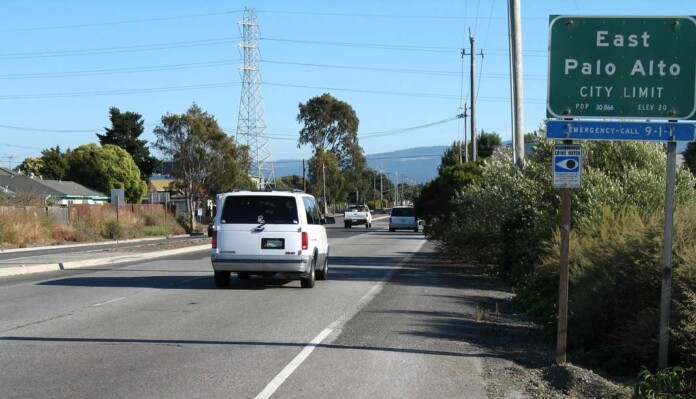
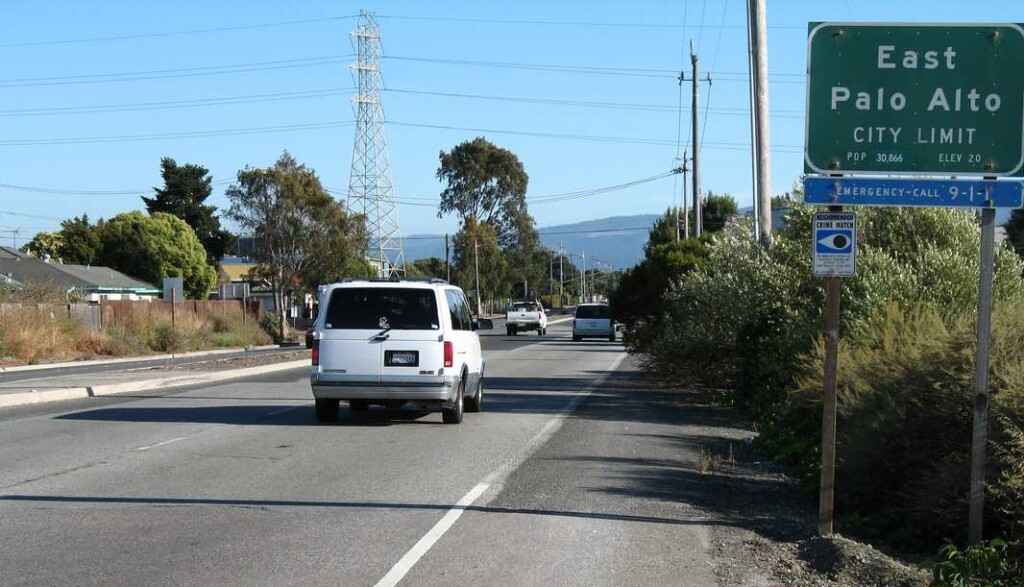
East Palo Alto city limits - CC 2.0. Richard Masoner
East Palo Alto city limits – CC 2.0. Richard Masoner

When an American uses the phrase “murder capital” to describe a city, it tends to be cities with periods of very sad history like Chicago or Los Angeles, but I’ll bet you’ve never heard anyone say East Palo Alto in that sentence.

In 1992 the murder rate in East Palo Alto was the highest in the country, but today, 31 years later, the rate has fallen significantly.

How significantly? Try 100%.

Now called the safest city on the peninsula, East Palo Alto is located on the San Francisco Peninsula in San Mateo County between Palo Alto and the big tech centers of the nation.

In 1992 there were 42 homicides out of a population of just 24,000 people. The majority-black city suffered as black neighborhoods did all across the country from the crack cocaine epidemic, but after initial action to increase the police presence, an all-hands-on-deck approach from local nonprofits, faith-based groups, neighborhood watch organizations, and what few business leaders there were eventually saw the number plummet down to single digits even while drug sales continued to flourish.

One innovative tactic was from a neighborhood watch-type organization called “Just Us” that would frequent street corners and copy the license plates of any car that came to buy drugs. The police would then find the owner of the car, and simply write them a strongly worded letter letting them know that their car was recorded in a high-crime, high-drug use area.

Once of these letters, the LA Times reports, arrived at the desk of a city judge, whose son as it turns out was using the judge’s car to buy crack.

“East Palo Alto has always been a resilient community. People there are really concerned and care about the community where they live,” Sharifa Wilson, the city mayor during these troubled years, told the Times.

YOU MAY ALSO ENJOY: This is the Surprising Outcome When a California City Gave Struggling Folks Free Money for a Year

“The fact that we were labeled the homicide capital gave us an attention that we needed, and then we took that attention and turned it into something positive,” she added. “If you give us lemons, we’re gonna make lemonade.”

Following 1992, the city closed out the decade with only one year where homicides climbed back into the teens, while between 2000 and 2023, the city averaged about 7 excluding 2005 which was noticeably higher. But every life is precious, and the city kept on trying to improve conditions for kids in low-income households and improve economic opportunities for their parents.

OTHER CIVIC TURNAROUNDS: Houston Has Housed 25,000 Homeless People With Apartments of Their Own

Now, 30 years after that fateful label of murder capital, the city ended a whole calendar year without a single homicide.

“We’ve always had at least one, and to reach zero is just such a monumental achievement for our whole community,” said Police Chief Jeff Liu, who said he texted the whole force on New Year’s Eve to celebrate.

SHARE This Inspiring Turn Around With Your Friends From California… 

The Long-Lost ‘Legend’ Leopard Fish Found Again in Turkey’s Rivers Confirming the Stories from Locals

Leopard Barbel (Photo by Metin Yoksu)

A team of ichthyologists in Türkiye (Turkey) has rediscovered a “legend” in the form of a carp-like, spotted fish called the leopard barbel (Luciobarbus subquincunciatus) in the Turkish section of the Tigris River.

The leopard barbel was once abundant, ranging from Eastern Türkiye, Eastern Syria, Iran and Iraq in the Tigris-Euphrates river system. Over the last three decades, however, fishing, pollution, habitat destruction and dam construction have pushed the species to the edge of extinction, and was last scientifically documented in 2011.

Anecdotal evidence from local fishers however suggested that the fish may have still been out there, so associate professor Cüneyt Kaya and assistant professor Münevver Oral at Recep Tayyip Erdogan University, enlisted their help to find one.

“There is nothing quite like the feeling of finding that a species that has been pushed to the brink of extinction is still hanging on, despite the odds,” said Kaya upon their success. “It is even more thrilling than discovering a new species because it means that we can give a rare species a second chance.

The team started by looking at the scientific literature about where the species had been previously found. However, those data were collected before nine dams were built in the Turkish portion of the Tigris River.

The dams alter water flow regimes, and cold water that accumulates at the bottom of reservoirs is sometimes released downstream. The release of cold water drives many freshwater fish toward warmer waters, so the team had to adjust its strategy to look further downstream from the dams.

Just days after the second of two expeditions, Kaya and Oral got a video call from local fisherman Mehmet Ülkü. He had caught a 20-inch (50 centimeter), 4.4-pound (2-kilogram) fish with conspicuous black spots and the telltale fleshy filament that dangles from the mouths of this type of freshwater fish.

Ülkü kept the fish alive in a tank with a constant oxygen supply overnight, while Kaya took a direct flight to the region and then drove nearly six hours to Cizre in the far southeastern reaches of Turkish Kurdistan, where the species was found, while Oral drove more than 11 hours through the night to see the fish and confirm its identity.

By the time they arrived, Ülkü had caught a second leopard barbel safely in his nets, and they were able to help him release the first one as well.

MORE OF RE:WILD’S WORK: Long-Beaked Creature Is Proven Not Extinct in First Ever Photos: ‘Blows My Mind’ After 60 Years

Leopard Barbel after it was released (Photo by Metin Yoksu)

“We dropped everything and would have gone to the ends of the Earth to see this fish, this legend, alive in the wild,” Oral said. “I have never seen a fish as beautiful as this. It was the realization not only of our dream to find this lost species, but of the hope that not all is lost—we still have a chance to protect the leopard barbel and all of the other incredible freshwater species it shares its home with.”

After Kaya and Oral took photos and measured the size and shape of the two fish, they were joined by the local Cizre fisheries aquaculture department to safely release the fish, which they described as a joyous event.

“We all have a role to play in protecting our incredible natural heritage and I am proud to have used my skills to help rediscover the leopard barbel,” Ülkü the fisherman said. “Safeguarding this species into the future is going to require educating other fishers and continuing to bring together scientific knowledge and local expertise.”

ALSO CHECK OUT: ‘Like Finding a Unicorn’: Researchers Rediscover Black-Naped Pheasant-Pigeon, a Bird Lost to Science for 140 Years

Kaya and Oral are planning to conduct a series of seminars for fishers and teachers to help build pride in their riverways and wildlife, using the rediscovery as a case study to protect the Tigris River and its rich biodiversity. They are also hoping to get a better understanding of how many leopard barbel might still exist and where they are still found across their historic range.

The expedition to confirm the leopard barbel still exists was co-funded by Re:wild, the world leaders rediscovering lost species and protecting them. The fish is the second on Re:wild and SHOAL’s Most Wanted Lost Fishes list to be rediscovered. The first, the Batman River loach, was found by the same intrepid team in Southeastern Türkiye in late 2021.

SHARE This Important Conservation Work Being Done In Turkey’s Rivers… 

Palace of Alexander the Great Reopens After 16 Years of Renovations

credit Angeliki Kottaridi, Facebook.

Phillip II of Macedon was one of the most famous names in the Classical Greek world. He changed Macedon from a rustic backwater into the capital of a small empire, but today, you have to be particularly interested in Phillip’s son to have even heard of him.

That’s because his son is Alexander the Great, but now in Macedonia visitors have a chance to reacquaint themselves with the Alexander story starting with his impressive father, whose royal palace has just reopened as an archaeological museum after 16 long years of renovations.

Called Aigai, the palace was the largest building in Classical Greece, and today is almost at par with the US Capitol building for square footage. Among the many feasts and war councils held within its walls, there was also the coronation of Alexander after his father was assassinated.

“After many years of painstaking work, we can reveal the palace … What we are doing today is an event of global importance,” Prime Minister of Greece Kyriakos Mitsotakis said at an inauguration event at the site Friday.

Aigai required €20 million, or around $22 million in restoration costs, and boasts column-rimmed courtyards, spacious banquet halls, and patterned marble/mosaic floors.

MORE NEWS FROM GREECE: Greece Makes Hundreds of Beaches Accessible to Wheelchairs With Self-Operating Ramps into the Water

A large central chamber supported by impressive marble columns is surrounded by 15 smaller chambers, many of which sport complete mosaic floors. Archaeologists and restorers speaking to AP about the project said much of the palace’s remains had to be reassembled over years of excavation and guesswork.

OTHER EXCITING NEW OPENINGS: They Found World’s Largest Intact Mosaic at Site of Turkish Hotel – Where it’s Now a Stunning Feature

First excavated in the 1970s, Aigai was covered by shallow mounds, and the original work uncovered a golden funerary casket and bones believed to belong to Philip II.

Today, it and so much of the surrounding area including the small town of Vergina is part of a UNESCO Heritage Site, and the new museum on the premises houses many of the relics found in Philip’s tomb and those of his retainers and nobles.

SHARE This Exciting Reason To Visit Northern Greece With Your Friends… 

Montreal Teens Hailed as Heroes for Saving Couple from Drowning in Barbados

Emma Bassermann and Zoe Meklensek are congratulated
Emma Bassermann and Zoe Meklensek-Ireland are congratulated

A pair of British vacationers were saved from drowning by two Canadian teens who happened to be on the same beach at the same time, and excellent swimmers to boot.

Emma Bassermann, 14, and Zoe Meklensek-Ireland, 13, have both trained competitively for years. Zoe has a dream of making the Olympic trials with her father as her coach, and trains at the Dorval Swim Club in Quebec with the hopes of making that happen.

It was 3 p.m. on the south shore of Barbados when Emma and Zoe finished boogie boarding. They were on the island as part of a training camp, but wouldn’t go in for practice until sometime later.

Suddenly, they heard a shout.

“I heard someone yelling for help in the distance. I was looking around for her and I spotted her and she was about 50 feet out from where I was,” Zoe told Global News. “So I went out to her and she told me that her husband was further out and he was struggling to swim and he needed assistance.”

Belinda Stone, from England, had been caught in a riptide with her husband Robert. With Emma’s help, Zoe quickly got Belinda to shore, but Robert was way further out.

Belinda urged them not to risk their young lives to save her 60-year-old husband, but without lifeguards on the beach that morning, fate had them as the two most experienced swimmers anywhere nearby.

Fortunately they had their boogie boards, and could save their energy as they went out for a 6-minute swim to reach Robert, who was trying to swim against the current.

OTHER TOP TEENS: Seven Swimmers Owe Their Lives to Australian Teens on Boogie Boards–2 Rescues in One Week

Many people may vacation on beaches their whole lives and never be taught what to do if caught in a riptide. Zoe and Emma, however, understood the situation well, and after loading the exhausted Robert Stone onto the board, Zoe strapped it to her ankle and the three started to swim—parallel to the shore—until they got out of the both the current and the diagonal wave pattern.

It was a long, long swim, but the girls were strong. Together they made it back to the beach.

MORE SWIMMING HEROES: Man Abandons His Own Birthday Party to Rescue Panicked Dog Swimming Through Chilly NYC River

It was more than just the visiting Brits who celebrated the two teens’ spectacular swimming skills, but the president of the local youth democratic party, who presented the girls with an award for their bravery.

Zoe’s father, Chuck Meklensek, was so proud and partly astonished at what his daughter accomplished, and said it’s a good example of why he thinks every child should take swimming lessons for at least a few years.

“My feeling is every child should be doing swimming until at least age 10 or even 12. If the boat tips over, you want to swim to shore, these girls know how to swim to shore and pull someone in,” he told Global News. “It’s the only sport that is a life-or-death sport and they learned it really well.”

WATCH the story below from Global News… 

CELEBRATE These Courage Quebecois With Your Friends On Social Media..

“Art is anything people do with distinction.” – Louis Dudek

By Adam Hoffman

Quote of the Day: “Art is anything people do with distinction.” – Louis Dudek

Photo by: Adam Hoffman

With a new inspirational quote every day, atop the perfect photo—collected and archived on our Quotes page—why not bookmark GNN.org for a daily uplift?

When Dog Shelter Makes Appeal for Homes as Temps Plummet Below Zero People Arrive in Droves

credit KTOZ Schroniske
KTOZ Schroniske in Krakow, where hundreds of people came in to adopt dogs either permanently or temporarily to get them out of the weater. credit KTOZ Schronisko

An animal shelter in Krakow was left without words after a weekend of action saw lines out of the door of people who came in to temporarily adopt a dog in the face of an onrushing cold front.

Dubbed “Operation Frost,” the KTOZ Schronisko, or animal shelter, asked on Friday the 5th if anyone interested in adopting a dog could come in immediately as the weather over the first weekend of January was predicted to fall to -5°F.

“Due to the fact that some of our animals live in kennels, we urgently need to make room for them in a closed pavilion,” the shelter wrote on Facebook, according to a proprietary translation from Polish.

The shelter was also asking folks to consider opening their homes for merely a few days of foster care, but what they got instead was a late-Christmas miracle.

This is what it looked like Saturday morning.

And it kept on going through Sunday.

“This was an emotional but very challenging day for our staff and volunteers,” after closing on Sunday. “The amount of people that visited our shelter seemed endless and it is absolutely beautiful.”

By that time the shelter had seen over 100 canines find temporary or permanent homes.

“I saw an ad for winter action on my boss’s story and I’ve been talking to my mum about owning a dog for a long time,” wrote Ms. Pani Ola on Facebook alongside pictures of her new dog Hugo. “This freezing cold gave me such a kick to act that while sitting at work I thought, ‘if not now then never.'”

In a separate post announcing the conclusion of Operation Frost, the shelter thanked everyone for their “kind and open hearts.”

“All dogs from outdoor boxes were moved to indoor rooms thanks to your adoptions. We are very grateful and extremely blessed,” they wrote. “Thank you to everyone, without exception, for every adoption, for your kind and open hearts.”

SHARE This Inspiring Community Response To A Winter Crisis On Social Media… 

Record-Breaking Fast Radio Burst from Space Alerts Astronomers to Fascinating Blob of Galaxies

Credit NASA, ESA, STScI, Alexa Gordon (Northwestern)

A burst of radio waves from deep space—the largest ever detected—was found to have originated from a collection of tighly-packed galaxies which may be interacting in ways never seen before, a new study finds.

Called an “FRB” or a fast radio burst, astronomers from Northwestern University detected the most distant, oldest, and most energetic FRB ever recorded. Dubbed FRB 20220610A, it originated when the universe was just 5 billion years old.

First discovered in 2007, fast radio bursts last only a millisecond. Some experts have suggested they may be from an extraterrestrial life form trying to contact other civilizations, because we humans use radio waves to communicate with each other.

But the exact cause and origins of FRBs still remain unconfirmed.

Initially, the Northwestern team thought the FBR originated near an amorphous object which they believed to be either a single, irregular galaxy or a group of three distant galaxies.

But thanks to images from NASA’s Hubble Space Telescope, the team have discovered that the FBR’s birthplace is no less than seven galaxies packed together in such close proximity that they could fit inside our own Milky Way.

The images also suggest that the collection of galaxies are interacting with one another, giving both a possible explanation for the FRB and the potential for scientists to witness a galactic merger.

These conditions are incredibly rare, and the lead author on the paper, Alexa Gordan, said that Hubble’s help is the only reason they were able to expand on their record-breaking discovery, and put any context of use around it.

“It’s these types of environments—these weird ones—that drive us toward a better understanding of the mystery of FRBs,” she told her university press.

“Despite hundreds of FRB events discovered to date, only a fraction of those have been pinpointed to their host galaxies,” said study co-author Yuxin Dong, an astronomy Ph.D. “Within that small fraction, only a few came from a dense galactic environment, but none have ever been seen in such a compact group. So, its birthplace is truly rare.”

Although up to 1,000 FRBs have been documented since they were first discovered in 2007, astronomers have yet to reach a consensus on the possible mechanisms that generate them.

MORE GALAXTIC MYSTERIES: Astronomers Detect Radio Pattern ‘Like a Heartbeat’ From a Galaxy Far Away

It’s generally agreed that FRBs must involve a compact object such as a black hole or a neutron star, but the exact source behind them remains stubbornly uncertain.

“There are some signs that the galaxies are ‘interacting,'” said study co-author Wen-Fai Fong, an associate professor of physics and astronomy. “In other words, they could be trading materials or possibly on a path to merging. This interaction could trigger bursts of star formations.”

Northwestern University’s discovery could therefore be a step towards understanding the mysterious phenomena of FBRs, which could in turn be a step towards understanding the true nature of the universe itself.

KEEP EXPLORING THE UNIVERSE: Astronomers May Have Spotted the First Known Exoplanet in Another Galaxy

“This,” Fong explained, “is because when FRBs finally meet our telescopes they have already travelled for billions of years from the distant, early universe. During this cross-universe odyssey, they interact with material along the way…[and] from a time delay in the FRB signal itself, we can measure the sum of all of these contributions.”

To continue to probe FRBs and their origins, astronomers need to detect and study more of them. And with technology continually becoming more sensitive, the team at Northwestern University believes that more detections—and possibly the prospect of capturing incredibly faint FRBs—are right around the corner.

SHARE This Awesome Discovery In A Galaxy Far, Far Away… 

A Rare Pair of Singing Gibbons Released into the Wild Bring Hope for Species (Video)

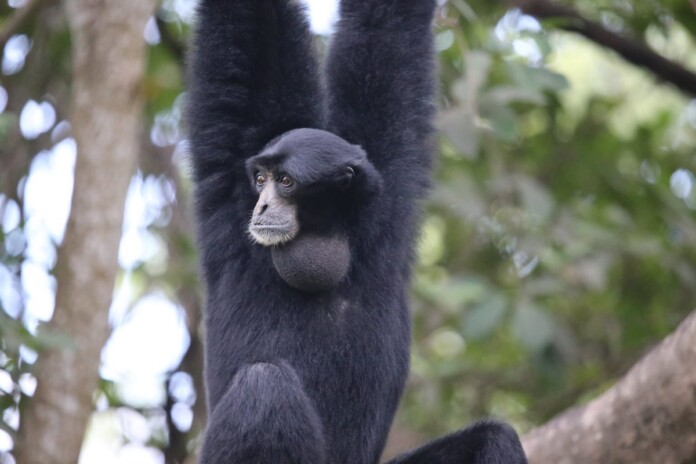
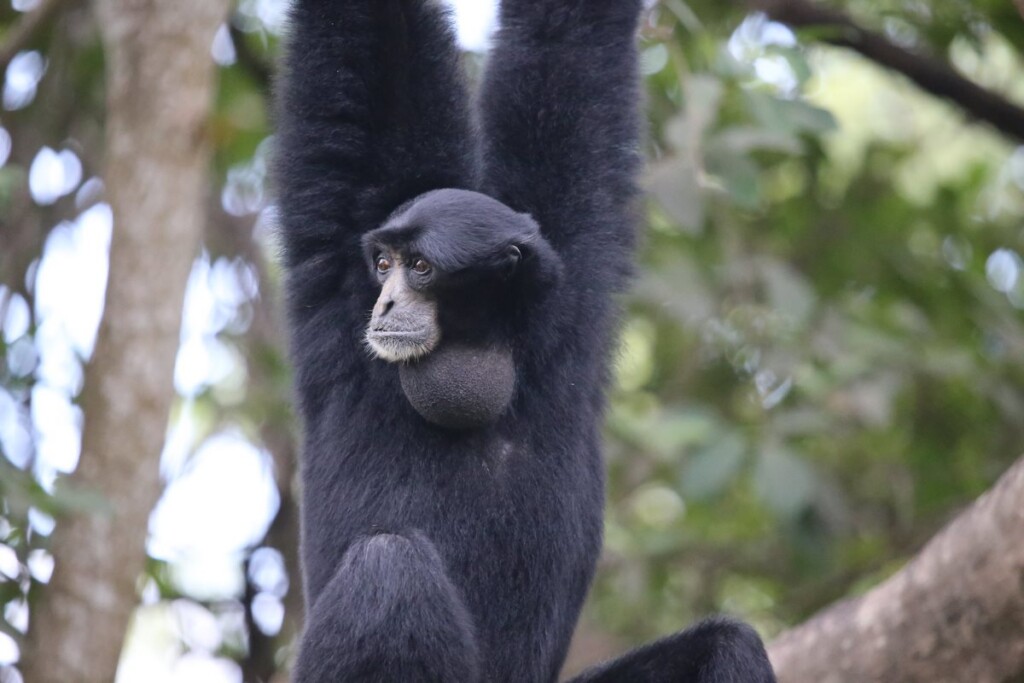
A siamang gibbon in a Florida zoo - CC 2.0. cuatrok77
A siamang gibbon in a Florida zoo – CC 2.0. cuatrok77

In Sumatra’s first-ever rehabilitation center for a special kind of singing primate, their first two residents not only recovered from stints in illegal captivity, but have also been reintroduced successfully back into the wild.

Siamang gibbons are famous for their various calling tones which they generate with their large throat sacks and can be heard from 2 miles away. For this reason, they’re often taken and sold illegally as pets.

The Aspinall Foundation teamed up with national and local government ministries in Indonesia to create a dedicated rehabilitation center at a place called Punti Kayu in the southern reaches of the island of Sumatra.

Here, siamang gibbons held by wildlife authorities or captured by police can re-learn how to live alongside other members of their species, how to find food, how to pursue their monogamous relationships, and how to call.

The center’s first resident siamangs, Jon and Cimung, were released on December 23rd into a protected forest area. Conservationists followed them as they made their way through the trees and eventually started calling—the perfect sign that their wild instincts were intact.

YOU MAY ALSO LIKE: With Only 2500 Silvery Gibbons Left, Group Rescues Dozens to Return to Island Forests of Java

“All gibbons sing, but siamangs are the loudest,” said Made Wedana, country director for the Indonesia program of the Aspinall Foundation wildlife charity. They’re also very beautiful animals, and… very rare in the wild.”

The siamang gibbon is classified as endangered by the IUCN’s Red List, and little information exists for the rehabilitation center to build off of. Instead, the Aspinall Foundation is utilizing years of work from the Javan Primate Rehab and Release program which it runs on the principal island of Indonesia.

MORE UNHERALDED CONSERVATION WORK: World’s Most Endangered Primate Population Triples After 17 Years of Careful Conservation

Anyone interested in contributing to this important conservation work can donate to the Aspinall Foundation here.

WATCH an unrelated video of these gibbons singing…

SHARE This Great News For A Special Kind Of Primate… 

Dog That Won’t Stop Digging Saves Entire Neighborhood After They Find Dangerous Gas Leak Underground

Kobe the husky digging holes in the yard – SWNS / Chanell Bell

It would have made front-page news around the country: a quiet Philadelphia neighborhood exploding suddenly into flames days before Christmas; but because of a clever dog with a heck of a nose, it’s only making news here on GNN.

A disastrous gas leak was detected underground by Kobe, a 4-year-old husky owned by Chanell Bell, who trusted her intuition and listened to Kobe’s warnings.

Having moved into the home rather recently, Bell noticed Kobe was digging in the same spot in the yard hour after hour. She didn’t think much of it as he is an avid digger when the need arises, but as it got larger and larger, she took notice.

“I trust his judgment because that isn’t his typical behavior,” she said. “He has great senses and he never digs holes unless he is helping me dig; I knew something was up.”

Chanell had had a gas leak in the house earlier in December, and seeing that the hole went under the sidewalk, she “trusted her intuition” to take out her gas detection device.

Immediately, the reading detected gas.

Not just gas, but a potentially cataclysmic amount of gas.

Chanell alerted authorities who informed her that if Kobe hadn’t detected the leak when he did on December 21, the consequences could have been fatal.

“We were told it could’ve caused serious health effects like respiratory issues, brain damage, and even death. They told me that something as simple as a light switch turning on could’ve caused an explosion too!” she said.

MORE AMAZING SNIFFERS: Tiny Golden Mole Not Seen in Almost 100 Years Rediscovered Thanks to Sniffing Dog and Determined Scientists

The gas foreman and crew immediately turned off her gas and got to work on the aged pipes that were leaking in three places and which could have affected other houses in the neighborhood as well.

YOU MAY ALSO LIKE: Missing Toddler Found Sleeping in Woods with Dog as A Pillow After Walking 3 Miles Barefoot

“They were so impressed with Kobe and mentioned what a good dog he was,” said Chanell, who believes that you should always listen to your animals and their senses.

“It feels amazing to know Kobe saved our block, I am very thankful to have him,” she added. “I hope that this spreads awareness to others about the dangers and severity of gas leaks and to pay attention to your fur babies!”

WATCH the story below from SWNS…

SHARE This Unbelievably Smart Pooch Saving Lives Across The Neighborhood…

“Forget not that the earth delights to feel your bare feet and the winds long to play with your hair.” – Khalil Gibran

Quote of the Day: “Forget not that the earth delights to feel your bare feet and the winds long to play with your hair.” – Khalil Gibran

Photo by: GWC (copyrighted)

With a new inspirational quote every day, atop the perfect photo—collected and archived on our Quotes page—why not bookmark GNN.org for a daily uplift?

Viral Video Raises $2,400 for D.C. Delivery Cyclist Still ‘Grinding’ with a Broken Foot

credit - BikingDC
credit – BikingDC

A story of grind and hustle published on a popular Instagram feed channeled over $2,000 to a food delivery cyclist who was working through a foot injury.

A bicycle courier by the name of Joshua Cavallero runs an Instagram page called BikingDC, and one day he came across a man named Kevin who, like Joshua, was delivering on a bike—Indian food in this case.

But Joshua stopped to chat when he saw that Kevin had a foot cast on and was dismounting the bike right onto a walker. He walked alongside Kevin as he went in with the walker, got the food, put it into his delivery backpack, then walked out again and attempted to climb back on the bike while using the bike lock to secure his walker to the handlebars.

Kevin said he’d been doing it for 2 weeks by then, and that it was dangerous to steer with the walker interfering with his control of the handlebars.

“Bro, what are you doing? Are you serious?” Joshua can be heard saying, to which Kevin responds: “I got bills to pay, bruh.”

The video exchange was brief but upbeat, with Joshua asking Kevin for his Cash app details so he could send him a little tip. That video went viral and accumulated 5 million views on Instagram and beyond.

The Washington Post, reporting on the story, said that Kevin had been hit by a car in September and spent two weeks in the hospital. His rent was overdue by the time he met Joshua, and the day after he planned to ask his neighbor for a loan. Then he looked at his Cash app account—there was $2,400 in it.

ANOTHER GREAT VIRAL FUNDRAISER: Viral Teen With Record Size Feet Finally Gets Size 23 Shoes Donated So He Can Play Football

Cavallero had posted his Cash App information along with the video of them meeting, and tips were still flooding in by the time Kevin had finished sifting through the hundreds of positive comments.

“I used to want to be that guy who would get caught in a giveback video, where someone would walk up to me and be like, ‘Here’s $1,000 dollars!’” Joshua told the Post.

“I was so broke. I wanted someone to bless me. But it’s amazing to be able to be the person blessing people. Now, I’m the guy who can put someone’s Cash App out there with a sincere story and use my platform to get them back on their feet.”

YOU MAY ALSO LIKE: New U.S. Citizen From Cuba Celebrates ‘First Paycheck in America’ in Viral Video-WATCH

The two recently met up again for lunch. Kevin still had the walker, but he had had a rack fitted to the bike to latch it to. Kevin insisted on paying, which after much protest, he was able to do, though Joshua posted his Cash app details again just for good measure.

WATCH the follow-up with Kevin…

SHARE This Ultra-Inspiring Use Of Social Media With Your Friends… 

You Won’t Believe Your Eyes Watching This Mouse Tidy up a Man’s Garden Shed Workbench

A retired postman must have rubbed his eyes a few times, because it certainly looked like a mouse was tidying up his workbench for him.

The Ratatouille-like scene had played on the man’s mind for days after he noticed on several occasions that things in his garden shed were being mysteriously cleaned up overnight.

Setting up a camera to catch the cleaning culprit, he beheld that it was a little mouse.

The video shows the mouse picking up corks, clothespins, and other things and putting them in a small box, clearing the workspace of the man’s shed for the next day at his home in Wales.

“Ninety-nine times out of 100, the mouse will tidy up throughout the night,” he told the BBC. “It is incredible really that they put them all back in the box, I think it’s possible that they enjoy it.”

ALSO CHECK OUT: Parrots Kept as Pets Were Taught to Video Call Each Other—and They Loved It

He doesn’t even bother to clean up now, assuming they will put anything back in the box on their own.

As far as a motive, the only idea he has is that the objects are piled on top of a cache of nuts, and that without dirt or leaves, miscellaneous objects are the only options for the mouse.

WATCH the astonishing video below… 

SHARE This Tiny Little Janitor With Your Friends On Social Media… 

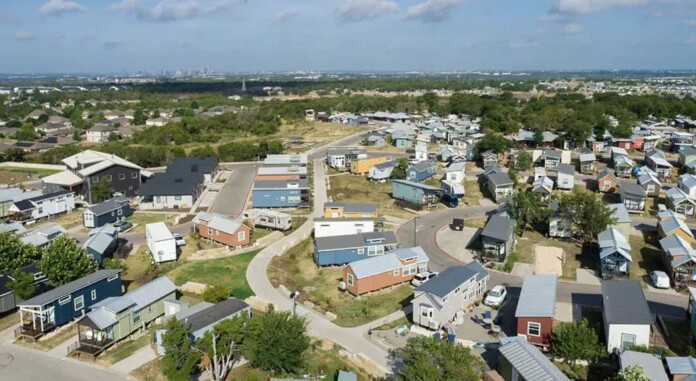
Texas Tiny Home Community Thrives With 2,000 Neighbors: Easing Homelessness in Austin

Community First! Village in 2023 – Mobile Loaves Fishes

In Travis County, beyond the zoning laws of Austin city, a village of tiny homes has been easing the chronic homelessness in Austin for years, but after the latest round of philanthrophic fundraising, it’s slated to become one of the largest communities of its kind anywhere in the country.

In 2019, GNN reported that Community First! Village opened up to renters on the outskirts of Austin with a mission to exclusively house and accommodate formerly homeless people so they can have the freedom and security to heal from their years spent on the streets.

In addition to hosting 100 RVs and 125 micro-houses, the village also includes community gardens, bee hives, workspaces, playgrounds, recreational areas, parks, kitchens, and a dozen other group facilities.

Residents are only required to pay between $200 to $430 per month, which many of them afford through jobs that they secured within the village.

The village was created by the Mobile Loaves & Fishes charity in 2014. Though the community space currently houses 200 formerly homeless residents, the organization began constructing additional facilities last year. Once complete, the village will be able to accommodate almost 500 people—which was about 40% of the Austin’s chronically homeless population circa 2019.

In fall of 2022, the mastermind behind both the charity and Community First broke ground on an adjacent site that will take the number of tiny homes to 2,000, designed by architectural firms that offered pro-bono bids to design the best energy efficient homes.

YOU MAY ALSO LIKE: ‘Mother Theresa of Vietnam’ Overcame Decades of Homelessness to Help Hundreds of Orphans

“…No one’s ever done what they’re about to do,”  Mark Hilbelink, the director of Austin’s largest homeless-services provider, told the New York Times.

In a big feature for the Times, Lucy Tompkins documents the stories of hope and recovery that some of the residents have lived through since moving to Community First!, which is run with a Christian ethic of “Neighborhoods of Knowingness.”

SIMILAR ACTS OF HOUSING: Millionaire Builds 99 Tiny Homes to Cut Homelessness in His Community–He Even Provides Jobs On Site for Them

All the new building projects were expected to be finished by the end of 2023, the organization predicted, which was powered forward with two $35 million windfalls: one from the American Rescue Plan, and a gift from the Michael & Susan Dell Foundation.

The U.S. Department of Housing and Urban Development approved the use of federal housing vouchers, which subsidize part or all of a low-income resident’s rent, for the village’s tiny homes, Tompkins reports, making the whole thing run with far less financial guesswork when it comes to the books, and should allow residents the time to build up a set of skills that could reward them with a more sustainable career path.

A dozen imitation villages have supposedly cropped up in cities around the nation, all following the path of neighborliness and sustainability put forward by Community First!

SHARE This Incredible Effort With Your Friends In Texas…