Lampshade coated with a catalyst uses heat from the bulb to destroy indoor air pollution – SWNS
Lampshade coated with a catalyst uses heat from the bulb to destroy indoor air pollution – SWNS
People often recommend putting plants in an office to reduce indoor air pollution, but not everyone has the green thumb for the job. Instead, what if we could simply use existing office furnishings?
Lampshades developed by scientists in South Korea and which work with both halogen and incandescent light bulbs, actually clean the air of pollutants, and the research team is extending the technology so it will also be compatible with LEDs.
Project principal investigator Doctor Hyoung-il Kim says the lampshades target volatile organic compounds (VOCs), which account for most indoor airborne pollutants.
The compounds include acetaldehyde and formaldehyde and are released by paints, cleaners, air fresheners, plastics, furniture, cooking, and other sources. These compounds can continuously radiate from their source for weeks, even months after their initial application.
“Although the concentration of VOCs in a home or office is low, people spend more than 90 percent of their time indoors, so the exposure adds up over time,” Dr. Kim from Yonsei University, South Korea said.
Conventional methods to remove VOCs from indoor air rely on activated carbon or other types of filters, which have to be replaced periodically. Other devices have been developed that break down VOCs with the help of thermocatalysts activated by high temperatures or with photocatalysts, which respond to light.
But Dr. Kim noted that most of those units need a separate heater or an ultraviolet (UV) light source, which can produce unwanted byproducts.
His team wanted to take a simpler approach that would only require a visible light source that also produces heat—such as a halogen or incandescent bulb—and a lampshade coated with a thermocatalyst.
Dr. Kim says halogen bulbs convert only 10% of the power they use into light, with the other 90% being transformed into heat while incandescent bulbs emit just 5% light and 95% heat.
“That heat is typically wasted, but we decided to use it to activate a thermocatalyst to decompose VOCs,” said Dr. Kim.
The team synthesized thermocatalysts made of titanium dioxide and a small amount of platinum. They coated the inside of an aluminum lampshade with the catalyst and placed the shade over a 100-watt halogen bulb in a test chamber containing air and acetaldehyde gas.
Turning the lamp on heated the shade to temperatures up to about 250 degrees Fahrenheit (121 Celcius)—warm enough to activate the catalysts and decompose acetaldehyde.
Dr. Kim said that during the oxidation process, the VOC was initially converted into acetic acid, then into formic acid, and finally into carbon dioxide and water.
He says both of the acids are mild, and the amount of carbon dioxide released is harmless.
The researchers also discovered that formaldehyde can be decomposed under the same conditions and that the technique works with incandescent bulbs.
Dr. Kim’s group is now turning to less expensive substitutes for platinum. They have already shown that a new copper-based catalyst can break down VOCs and is also a disinfectant that can kill airborne microorganisms.
LEDs release too little heat to activate thermocatalysts, so Dr. Kim’s team is developing photocatalysts that are stimulated by the near-UV light emitted by LEDs, as well as other catalysts that transform part of the LEDs’ visible light output into heat.
It was at the very dawning of civic life among humans that a group of communal Chinese on the northeastern plains invented a sophisticated drainage system to combat flooding in their extremely wet environment.
Utilizing their master pottery skills, buried segments of ceramic pipes drained water from the elevated town of Pingliangtai into drainage ditches, and eventually a moat. Described for the first time in the journal Nature Water, its discovery is a major milestone in early human history for many reasons.
First, it’s possibly the oldest ceramic pipe system ever found in the world, and certainly the oldest in China. Second, it provides an alternative explanation for the possible trajectories of human civilization, away from a scenario where control of hydrological resources was dominated by centralized authorities and despots, to one of communal organization and mutual governance.
“There is no strong social stratification within and between settlements in the Eastern Central Plains,” says Zhuang Yijie, a co-author on the paper. “Thus, there might be no pyramidal power structure in this region”.
There really was a belief, put forward by a German-American Sinologist named Karl August Wittfogel, that control of water resources was indeed the very birth of coercive state power. This was supported, it was believed, by the mythical tale of Great Yu’s heroic taming of floods of the Yellow River and the subsequent founding of the semi-legendary Xia Dynasty.
This scholarship has been widely disproven however, and the excavations at Pingliangtai encapsulate just how communal water management was in late Neolithic China.
A wetter world
The Pingliangtai site was excavated by the Henan Provincial Institute of Cultural Heritage and Archaeology and Peking University from 2014 to 2019.
“All members of our [study] team took part in the excavation,” Zhuang told WaL. “The site was first excavated in the last century and a set of ceramic drainpipes near the southern gate was revealed at that time. However, it was in 2016 when we realized there might exist a well-planned drainage system since several ditches running parallel to houses were found”.
This realization led to this profound discovery, and the authors believe that Pingliangtai demonstrates how environmental vagaries, technological innovations, and social institutions converged to form a ‘cooperative social governance’ on water management, which provides a different model for the origins of hydro-sociality in ancient East Asia
“Because of our focus on water as intangible evidence of cooperative human actions, it also offers a unique perspective on the evolution of human cooperation,” they add.
Of the environmental vagaries, the main one was the monsoon climate. 4,200 years ago in the Hauiyang District, located on the vast, 387,000 square-kilometer Huanghuaihai Plain of Central China, the rainy season routinely brought 500 millimeters, or nearly 20 inches of rainfall per month. Alluvial flooding was common on the plain, which was scattered with raised ground that proved the only suitable place for permanent settlement.
All this water made it excellent farmland, and cultivation of millet and rice was widely adopted by communities in Huaiyang, stimulating profound socioeconomic changes in diet, land use, and population—leading to the growth of large towns on the hilltops, which also gradually became walled like Pingliangtai.
“In this wet environment, the Pingliangtai people developed innovative hydraulic technologies to tackle acute and chronic problems on water management,” the authors continue. “One of the chronic problems facing Pingliangtai society was the severe weathering of earthen architecture”.
Soil analysis shows that some of the buildings, made of mudbrick, had to be rebuilt five times due to water erosion and damage. The mudbrick was often reinforced with straw or grass, as well as calcium carbonate to make it last longer under the humid conditions.
One of those technologies, which may have made habitation there possible in the first place, was the first drainage system potentially in history to be made of ceramic pipes.
PICTURED: An in situ section of ceramic pipes at Pingliangtai. PC: Yanpeng Cao.
Another Chinese innovation
“Pottery is an essential element of Neolithic China, the earliest of which could date back to 20,000 years ago,” says Zhuang. “Late Neolithic China witnessed significant breakthroughs in pottery technologies, the most important of which is the wheel technology”.
“People at Pingliangtai were proficient in wheel throwing, thus, they could make a vast bulk of daily pottery as well as ceramic drainpipes. Polished stone tools are also found at the site… [and] ruts in the road indicated the wheel [sic], unfortunately, we haven’t found a wheel by now,” he added.
In the southeastern quadrant of the walled settlement, rows of mudbrick houses perpendicular to the road had drainage ditches in front and behind, connected in places with segments of ceramic drain pipes in much the same way one would see a culvert under a road today. Another series of ditches were made along the north-south axis of the site, likely alongside the road. The ditches were routinely dredged, as evidenced by the buildup of fine silt at the bottoms.
Measuring 30-40 centimeters in length and 20-30 in diameter (12×15 and 8×12 inches respectively) the segments of pipe fit one over the other wide-end to thin-end like cups. Most of the pipes followed the road down to the southern gate of the settlement, where the largest and most active ditches were discovered by the archaeologists.
Altogether, this drainage system fed a moat around the city like a medieval French castle. Zhuang couldn’t say for certain that the moat was the ultimate endpoint of the whole system, nor could he say for certain that the moat was only used for drainage and not also as a means of defense.
“Pingliangtai was a medium-sized community; our estimation of the population based on the number and capacity of the rowed houses suggests 460–600 people at the time,” the authors write, pointing out that this would have necessitated diligent communal engagement with all of these public works, including the wall.
They estimate that because the drainage system was operated collectively starting at the level of the individual household, there would have been a very low level of social stratification—a hypothesis supported by the fact that grave goods from a town cemetery near the southern gate revealed very little difference in wealth between those interred.
Chinese imperial history has featured many episodes of top-down, despotic organization of labor related to irrigation and water management. Qin Shi Huang, the first emperor of the Qin Dynasty, ordered the construction of the Grand Canal, which would become the longest canal or artificial river in the world by 600 CE during the Sui Dynasty.
Nearby Pingliangtai, and around the same period, the Liangzhu Culture and its city-state in the pre-imperial Chinese world completed China’s oldest water-control enterprise in the form of an impressive series of dams, levees, and ditches. However, in total contrast to Pingliangtai, the site was extremely stratified, with evidence of palace complexes, an elite society, and luxury goods.
“In contrast to the… viewpoint that often posits a linear relationship between social power and the organization of hydraulic enterprises, water management at Pingliangtai on the Eastern Central Plains was not simply a top-down or bottom-up operation,” the authors conclude. “Rather, the collective human actions or ‘collective struggles’ on water management at both household and communal levels in a precarious monsoonal setting gave rise to the cooperative social governance without a centralized hierarchy”. WaL
PICTURED ABOVE: Excavations on the housing blocks at Pinliangtai. PC: Yanpeng Cao.
Quote of the Day: “Happiness is a direction, not a place.” – Sydney J. Harris
Photo by: Surface
With a new inspirational quote every day, atop the perfect photo—collected and archived on our Quotes page—why not bookmark GNN.org for a daily uplift?
A new survey of pet parents looked into some of the most popular myths about pet care—and some may surprise you.
A whopping 92 percent of respondents still believe myths about their furry friends, according to the poll of 2,000 dog and cat owners.
Contrary to popular belief, 68% of dog parents didn’t know that a wagging tail doesn’t always signal happiness. Wags can also signify interest or alertness.
Another 38% falsely believe that a cold, wet nose means a dog is healthy. In reality, a wet nose can simply be a result of a dog licking it, which can improve their sense of smell.
Similarly, 42% of cat parents incorrectly believe that their feline friends can see in complete darkness. While cats can see in very low light, they cannot see in total darkness.
Another common myth is that cats always land on their feet, which 41% believe to be true—but a cat’s ability to land on four paws can depend on its overall health and wellness.
Commissioned by Stella & Chewy’s, the random double-opt-in survey conducted by OnePoll found that pet owners still follow certain guidelines they believe about their pet’s diet.
One common myth is that all human food is bad for pets, which is false. Seven in 10 pet parents admit to feeding their pet human food sometimes—with dog parents being most likely to do so (77% vs. 54% of cat owners).
Many cat parents were under the impression that cats shouldn’t eat any human food (30%). However, there are some human foods that cats can safely eat, like tuna, salmon, lean meat, cheese, spinach, bananas, berries, carrots, melon, scrambled eggs, and rice.
Everyone has heard the popular belief that cats enjoy milk, but people should also be aware that some cats are actually lactose intolerant.
“Half of pet parents admitted that they don’t know much about raw diets,” said Nelson. “Frozen raw and freeze-dried raw pet food are two great alternative diet options for pets, and have a wide array of benefits including increased energy and strong joint health,” said Rob Nelson, Vice President at Stella & Chewy’s. “A raw diet is also the closest thing to a pet’s ancestral diet and is easy to serve.”
New nanofilms could significantly reduce the energy needed for cooling buildings or vehicles.
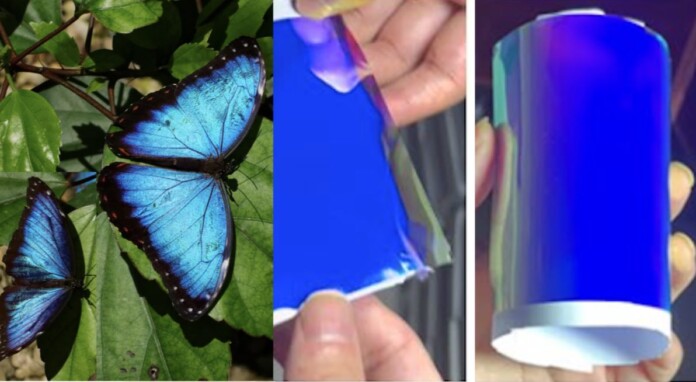
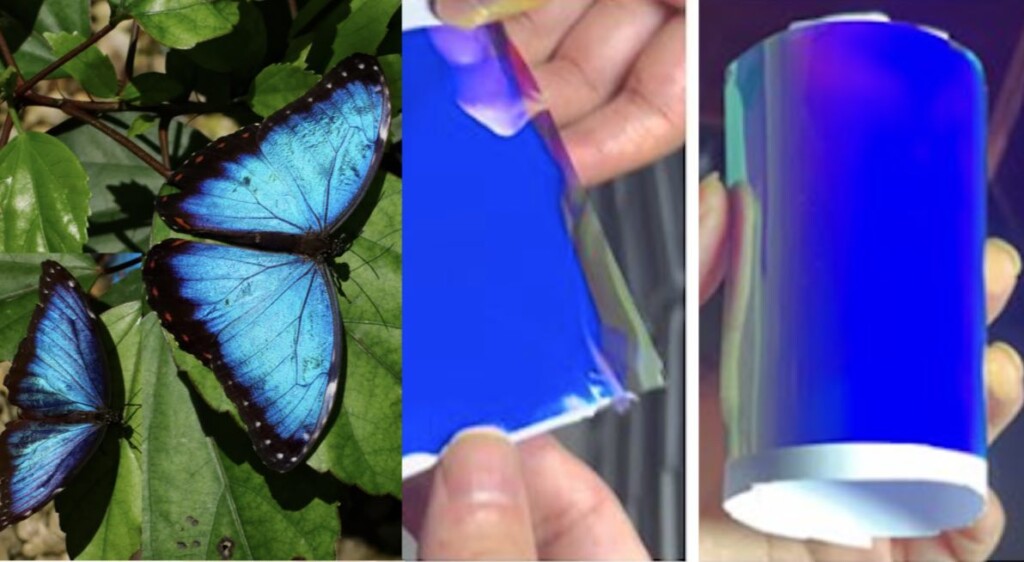
Just like white clothing feels cooler than other colors due to reflecting the sun instead of absorbing it, other colors, like blue or black, heat up when they absorb light. But new colored cooling films inspired from the nanostructures in butterfly wings can eliminate much of the heating effect, while still adding vibrant color.
The new films, which don’t absorb any light, could be used on the outside of buildings, vehicles, and equipment to reduce the energy needed for cooling.
“In buildings, large amounts of energy are used for cooling and ventilation, and running the air conditioner in electric cars can reduce the driving range by more than half,” said research team leader Guo Ping Wang from Shenzhen University in China. “Our cooling films could help advance energy sustainability and carbon neutrality.”
An article published in the journal Optica details that the films are lowering temperatures to about 2 °C below the ambient air. Furthermore, researchers also found that when left outside all day, the blue version of the films was approximately 50°F cooler (26℃ ) than traditional blue car paint.
If the films are used on buildings, this would represent a huge energy savings by lowering air conditioning use.
“With our new films, excellent cooling performance can be achieved, no matter the desired color, saturation or brightness,” said Wang. “They could even be used on textiles to create clothes of any color that are comfortable in hot temperatures.”
Enter the Morpho butterfly
A car with blue paint appears blue because it absorbs light that heats up the car. Morpho butterflies, however, produce their highly saturated blue color based on the nanostructure of their wings. The design of the cooling nanofilm mimics these structures to produce vibrant colors that don’t absorb light like traditional paint.
To create their Morpho-inspired nanofilms, the researchers placed a disordered material (rough frosted glass) under a multilayer material made of titanium dioxide and aluminum dioxide. They then placed this structure on a silver layer that reflects all light, thus preventing the absorption of solar radiation and the heating associated with that absorption.
The film’s color is determined by how components within its multilayered structure reflect light. To create blue, for example, the multilayer material is designed to reflect yellow light in a very narrow range of angles while the disordered structure diffuses the blue light across a broad area.
Although this type of passive photonic thermal management has been accomplished before, it has only been used with white or clear objects because it is difficult to maintain a wide viewing angle and high color saturation.
“Thanks to the layered structure we developed, high saturation and brightness can be achieved by optimizing the structure,” said Wang.
To test the new technology, the researchers created blue, yellow and colorless films, which they placed outdoors at Shenzhen University on roofs, cars, cloth, and cell phones. Using thermocouple sensors and infrared cameras to measure temperature, they found that the cooling films were more than about 27°F cooler (15℃) than the surfaces they were placed on in the winter and about 63°F (35 ℃) cooler in the summer.
The researchers point out that replacing the silver film with an aluminum film would make the films less expensive and manufacturable by a scalable fabrication method. Now that they have demonstrated the cooling and color performance of the films, the researchers plan to study and optimize other properties such as mechanical and chemical robustness.
FLY Some Energy Inspiration to Start-ups on Social Media…
After 268 days in his kayak, a 65-year-old has completed his epic ‘Reverse the Bad’ expedition, becoming the first person to solo kayak the Greater Loop across Canada and the United States.
The journey of almost 6,800 miles (11,000km) required Mark Fuhrmann to paddle for 1,643 hours—which is the equivalent of paddling 68 days straight without stopping.
A smiling, but exhausted Fuhrmann, stepped out of his kayak on August 2nd for the last time, greeting well-wishers with the memorable line: “Can I get a beer please?” (He got more than one.)
Paddling for positivity
The Canadian native who lives in Oslo, Norway set out from Halifax last year on June 2nd with an aim of raising much needed funds for Doctors Without Borders and Captains Without Borders, while pushing a message of “positivity for our troubled times.”
“It’s been a hell of a trip,” he exclaims, “but worth every minute of exertion, discomfort and pain. Not only to raise money and awareness, but also to connect with nature, people, and something deep within myself.”
“I’m truly grateful for the immense and touching generosity of an army of supporters en route—but that doesn’t mean I’m planning another trip anytime soon!” he joked.
He said what struck him the most about his challenging 14-month journey was the kindness from all the people he met along the route. “99.9% were genuine, good people.”
Extreme endurance
Fuhrmann, who also completed a charity kayak run from Oslo to Greece in 2017, says the last leg of the journey was the toughest of all. He had to navigate through 23 days of continuous fog, while tackling extreme tides and currents in the Bay of Fundy—and he struggled to find anywhere to pitch his tent on the rocky, treacherous coastline.
“Some evenings I had to drag my kayak up three or four meters of rock inclines, while others I was lucky enough to sleep on moored lobster vessels.
“There were some challenging waves too, as well as a lot of ferries and fishing boats to avoid. It’s been incredibly draining… and I’m looking forward to a good night’s sleep, in an actual bed,” he said, after crossing the finish line.
“I think we have to celebrate the fact I survived,” he says with a big grin.
Mark chose the two charities for his Reverse the Bad expedition because his late wife was a doctor.
He’s raised almost $7,000 on his GoFundMe page, as well as channeling many donations directly to the two charities. You can help ‘Reverse the Bad’ and learn more on his website.
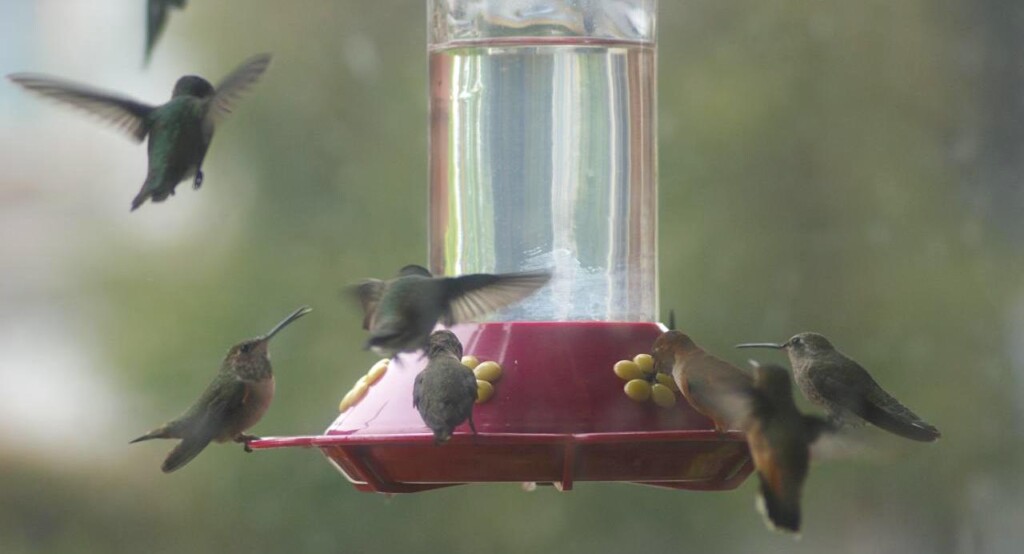
In the last decade since recovering from colon cancer, an elderly woman in Mexico City has opened her doors to sick, injured, or orphaned hummingbirds.
Today, you can find dozens of the them flying around her apartment while she nurses them back to health.
The video by Gerardo Carrillo shows Catia Lattouf feeding mostly baby birds through tiny tubes. Many have survived attacks by grackles, a bird she says is non-native to Mexico.
She has about 60 hummingbirds on any day, and has become the go-to nanny in the neighborhood since videos have circulated on TikTok.
FLY THIS SWEET News Nectar to Hummer-loving Friends on Social Media…
Quote of the Day: “The greatest remedy for anger is delay.” – Lucius Seneca
Photo by: Free Walking Tour Salzburg
With a new inspirational quote every day, atop the perfect photo—collected and archived on our Quotes page—why not bookmark GNN.org for a daily uplift?
Victoria Geatons explores Gloagburn Farm sunflower trail in Perthshire – SWNS
Victoria Geatons explores Gloagburn Farm sunflower trail in Perthshire – SWNS
A Scottish farmer grew a quarter million sunflowers after discovering they would survive in his northern climate—and he created a massive trail in his field that has brought in visitors from as far away as Australia.
Crawford Niven first came up with the idea for a flower lined pathway three years ago—and began planning for its eventual fulfillment on his farm in Gloagburn Farm, near Perth, Scotland.
The 26-year-old admitted he was skeptical at first that sunflowers would flourish so far north. “I didn’t think they could grow in Scotland.
But the crop has gone on to thrive—and he now has 13 acres of them.
Thousands of visitors have wandered the trails on his estate, walking among the 7-foot stalks.
“It offers a photo opportunity,” said Niven. “People love it.”
Last year, he created a trail in the shape of Scotland, but this time he decided to go with a more natural ‘random’ pattern.
SWNS
Crawford, who posts farming videos on a YouTube channel, said the bloom will last about four weeks, predicting that the trail would close next week.
It takes about 30-60 minutes to walk the full trail—and there’s a kid-friendly 20-minute version with games, and free admission for children 12 and under.
Scientists in Australia have identified a molecule that could hold the key to developing peptide-based drugs targeting obesity, osteoporosis, and inflammatory diseases.
Researchers at the Victor Chang Cardiac Institute are shedding light on how the small molecule regulates the sensors that are central to many processes in the body—including how nerve cells in the skin can sense when we are being touched.
They believe it will now be possible to design new therapeutics that could either ramp down or dial down the activity of the sensors, also known as PIEZO ion channels.
The first targets would be obesity and bone diseases such as osteoporosis.
“These are really key molecules that constantly provide information to the brain such as where our bodies are in space, sensing touch and even pain,” said lead author Dr. Charles Cox.
“This interacting molecule we have identified represents a switch enabling us to regulate these channels, widely expressed throughout the body, which is why it could be useful for a whole range of diseases in the future.”
Dr. Cox and his collaborators used cutting-edge cryo-electron microscopy to find out how this protein binds to PIEZO ion channels.
Now that it’s been identified, it’s believed the protein can now be modified and developed into peptide-based therapeutics.
“We believe we will be able to boost the activity in the channels that are involved in the strength of our bones – which could not only help prevent osteoporosis it could help those already suffering,” said Dr. Cox.
“This novel mechanism could also help combat obesity an important risk factor for all cardiovascular diseases. As we eat food, our stomachs get stretched and molecules are triggered, telling the brain when the stomach is full. By boosting the activity of these molecules, we may be able to trigger the brain into thinking it was full far earlier mimicking satiety.”
Cox and his team believe the molecule could also be adapted to target inflammatory diseases as well as cardiovascular disease in the future.
Leonard Fournette may be a Super Bowl champion on the football field, but last week he was a super HERO for kids at a special summer camp, where he stole the hearts of campers and staff.
“This is the greatest thing I’ve done thus far,” said the former Tampa Bay Buccaneer running back.
Camp Simcha, in Glen Spey, New York, has become a summer haven for children of all ages who are dealing with cancer, disabilities, and chronic medical conditions. Administrators kept the visit a secret until the NFL athlete arrived by helicopter to roaring enthusiasm.
Fournette led football drills with his signature heart and energy and danced with the campers in a lively makeshift nightclub.
He also shared an uplifting speech with the campers, urging them to keep showing their “incredible spirit”, and signed autographs and posed for photos, ensuring that each child had a memorable experience.
“We’re family now,” he said, promising to return because he enjoyed himself so much.
“To see the sheer joy and happiness in our campers’ eyes as they danced and interacted with him was genuinely heartwarming,” said Nachman Maimon, director of Camp Simcha. “His kindness and passion for giving back resonate deeply with our mission.”
Camp Simcha
His visit to the Catskills-based summer camp was coordinated by New York State Assemblyman Simcha Eichenstein, ensuring that this camp, annually organized by the international support network Chai Lifeline, will be remembered and cherished for a long time.
“We all have our own problems—even myself,” said Fournette, who is currently a free agent without a team. “But, the battle these kids face every day–and for the rest of their lives–they’re the champions in our heart.”
WATCH the inspiring video below…
SHARE The Joy With Fournette Fans on Social Media…
FREE WILL ASTROLOGY – Week of August 19, 2023
Copyright by Rob Brezsny, FreeWillAstrology.com
LEO (July 23-Aug. 22):
Unless you are French, chances are you have never heard of Saint-John Perse (1887–1975). He was a renowned diplomat for the French government and a poet who won the Nobel Prize for Literature. Now he’s virtually unknown outside of his home country. Can we draw useful lessons for your use, Leo? Well, I suspect that in the coming months, you may very well come into greater prominence and wield more clout. But it’s crucial for the long-term health of your soul that during this building time, you are in service to nurturing your soul as much as your ego. The worldly power and pride you achieve will ultimately fade like Perse’s. But the spiritual growth you accomplish will endure forever.
VIRGO (Aug. 23-Sept. 22):
“Life is not so bad if you have plenty of luck, a good physique, and not too much imagination.” Virgo author Christopher Isherwood said that. I’m offering his thought because I believe life will be spectacularly *not bad* for you in the coming weeks—whether or not you have a good physique. In fact, I’m guessing life will be downright enjoyable, creative, and fruitful. In part, that’s because you will be the beneficiary of a stream of luck. And in part, your gentle triumphs and graceful productiveness will unfold because you will be exceptionally imaginative.
LIBRA (Sept. 23-Oct. 22):
“You know how crazy love can make you,” write Mary D. Esselman and Elizabeth Ash Vélez in their book Love Poems for Real Life. “On any given day, you’re insanely happy, maniacally miserable, kooky with contentment, or bonkers with boredom—and that’s in a good relationship.” They add, “You have to be a little nuts to commit yourself, body and soul, to one other person—one wonderful, goofy, fallible person—in the hope that happily-ever-after really does exist.” The authors make good points, but their view of togetherness will be less than fully applicable to you in the coming months. I suspect life will bring you boons as you focus your intelligence on creating well-grounded, nourishing, non-melodramatic bonds with trustworthy allies.
SCORPIO (Oct. 23-Nov. 21):
“I don’t adopt anyone’s ideas—I have my own.” So proclaimed Scorpio author Ivan Turgenev (1818–1883). Really, Ivan? Were you never influenced by someone else’s concepts, principles, art, or opinions? The fact is that all of us live in a world created and shaped by the ideas of others. We should celebrate that wondrous privilege! We should be pleased we don’t have to produce everything from scratch under our own power. As for you Scorpios reading this oracle, I urge you to be the anti-Turgenev in the coming weeks. Rejoice at how interconnected you are—and take full advantage of it. Treasure the teachings that have made you who you are. Sing your gratitude for those who have forged the world you love to live in. You now have the power to be an extraordinary networker.
SAGITTARIUS (Nov. 22-Dec. 21):
The Tibetan term lenchak is often translated as “karmic debt.” It refers to the unconscious conditioning and bad old habits that attract us to people we would be better off not engaging. I will be bold and declare that sometime soon, you will have fully paid off a lenchak that has caused you relationship problems. Congrats! You are almost free of a long-running delusion. You don’t actually need an influence you thought you needed.
CAPRICORN (Dec. 22-Jan. 19):
If you’re like many of us, you have a set bathing routine. In the shower or bath, you start your cleansing process with one particular action, like washing your face, and go on to other tasks in the same sequence every time. Some people live most of their lives this way: following well-established patterns in all they do. I’m not criticizing that approach, though it doesn’t work for me. I need more unpredictability and variety. Anyway, Capricorn, I suspect that in the coming weeks, you will benefit from trying my practice. Have fun creating variations on your standard patterns. Enjoy being a novelty freak with the daily details.
AQUARIUS (Jan. 20-Feb. 18):
In July 1812, composer Ludwig van Beethoven wrote a 10-page love letter to a woman he called “My Angel” and “Immortal Beloved.” He never sent it, and scholars are still unsure of the addressee’s identity. The message included lines like “you — my everything, my happiness . . . my solace — my everything” and “forever thine, forever mine, forever us.” I hope you will soon have sound reasons for composing your own version of an “Immortal Beloved” letter. According to my astrological analysis, it’s time for your tender passion to fully bloom. If there’s not a specific person who warrants such a message, write it to an imaginary lover.
PISCES (Feb. 19-March 20):
At age 32, artist Peter Milton realized the colors he thought he used in his paintings were different from what his viewers saw. He got his eyes tested and discovered he had color blindness. For example, what he regarded as gray with a hint of yellow, others perceived as green. Shocked, he launched an unexpected adjustment. For the next 40 years, all his paintings were black and white only. They made him famous and have been exhibited in major museums. I love how he capitalized on an apparent disability and made it his strength. I invite you to consider a comparable move in the coming months.
ARIES (March 21-April 19): The Lincoln Calibration Sphere 1 is a hollow globe of aluminum launched into Earth orbit in 1965. 58 years later, it continues to circle the planet—and is still doing the job it was designed to do. It enables ground-based radar devices to perform necessary calibrations. I propose we celebrate and honor the faithfulness of this magic sphere. May it serve as an inspiring symbol for you in the coming months. More than ever before, you have the potential to do what you were made to do—and with exceptional steadiness and potency. I hope you will be a pillar of inspiring stability for those you care about.
TAURUS (April 20-May 20):
“Live as though you’re living a second time and as though the first time you lived, you did it wrong, and now you’re trying to do things right.” Holocaust survivor and author Viktor Frankl offered this advice. I wouldn’t want to adhere to such a demanding practice every day of my life. But I think it can be an especially worthwhile exercise for you in the coming weeks. You will have a substantial capacity to learn from your past; to prevent mediocre histories from repeating themselves; to escape the ruts of your habit mind and instigate fresh trends.
GEMINI (May 21-June 20):
Gemini author Jamie Zafron wrote an article titled “To Anyone Who Thinks They’re Falling Behind in Life.” She says, “Sometimes you need two more years of life experience before you can make your masterpiece into something that will feel real and true and raw. Sometimes you’re not falling in love because whatever you need to know about yourself is only knowable through solitude. Sometimes you haven’t met your next collaborator. Sometimes your sadness encircles you because, one day, it will be the opus upon which you build your life.” This is excellent advice for you in the coming months, dear Gemini. You’ll be in a phase of incubation, preparing the way for your Next Big Thing. Honor the gritty, unspectacular work you have ahead! It will pay off.
CANCER (June 21-July 22):
You’re entering a phase when you will generate maximum luck if you favor what’s short and sweet instead of what’s long and complicated. You will attract the resources you need if you identify what they are with crisp precision and do not indulge in fuzzy indecision. The world will conspire in your favor to the degree that you avoid equivocating. So please say precisely what you mean! Be a beacon of clear, relaxed focus!
WANT MORE? Listen to Rob’s EXPANDED AUDIO HOROSCOPES, 4-5 minute meditations on the current state of your destiny — or subscribe to his unique daily text message service at: RealAstrology.com
Quote of the Day: “Live as though you’re living a second time… the first time you did it wrong, and now you’re trying to do it right.” – Viktor Frankl
Photo by: Dmytro Tolokonov
With a new inspirational quote every day, atop the perfect photo—collected and archived on our Quotes page—why not bookmark GNN.org for a daily uplift?
To any government reading, there’s a plant that provides habitat for nearly all the species of the sea, anchors the sediment on the seafloor, dissipates wave energy, regulates ocean acidity, and that holds 35-times more carbon per cubic inch of rootstock than tropical rainforest—and best of all, it’s neither fictional nor rare.
Posidonia oceanica, or seagrass, plays all these important roles for marine ecosystems, and scientists and conservationists working at the Med Sea Foundation on the island of Sardinia, Italy, believe that by restoring their seagrass meadows they can safeguard their own coasts, as well as the world, from climate change.
The new project launched by Med Sea looks to plant 1 million seagrass plants by 2050 across 19 square miles (50 square kilometers) of coastline on Sardinia’s Sinis Peninsula—and also throughout the Mediterranean.
Seagrass accounts for one-tenth of all the carbon stored in the ocean, but they are fragile ecosystems and are easily damaged by human activities.
To that end, Med Sea has paired their planting with the installation of 60 anti-trawl barriers which are massive blocks of concrete or stone that will destroy the trawl nets and anchors of any boat that tries their hand at this illegal coastal fishing method.
Posidonia oceanica also plays an indispensable role in the protection of coastline from wave energy, as well as the formation and consolidation of the sediment and sand that form the beaches which draw over two million tourists to the island every year.
Med Sea is receiving support for their planting enterprise from the University of Exeter in the UK, an electric-vehicle racing organization called Extreme-E, and Sotheby’s Auctioneers.
Other countries are also recognizing the value of seagrass and restoration activities are underway, or perhaps have already concluded, in Wales, and in the state of Virginia.
WATCH a mini-doc about the project with great underwater video quality…
A snake new to science has been named after Harrison Ford in honor of his passionate environmental advocacy and for the matter of a small character he played in a small film series called Indiana Jones.
Tachymenoides harrisonfordi was discovered by German herpetologist Edger Lehr on Peru’s remote Otishi Plateau, an area prowled by narcotraffickers, and the story of its discovery was in itself worthy of a scene in one of Ford’s classic films of the adventurous archaeologist.
One of the least explored grasslands on Earth, Peru’s Otishi National Park lies accessible almost only by helicopter high in the Andes Mountains. The area has been coined “cocaine valley” and Lehr told Conservation.org all about the harrowing brushes with the narcotraffickers that colored the expedition so dangerous that he decided to end it a week ahead of schedule.
“I carried a walkie-talkie so we could communicate if the team was separated,” Lehr recounted. “On the ninth day of the trip, I suddenly heard unfamiliar voices coming through the speaker. We were in this incredibly remote location, so we immediately knew that there were other people around who were using the same radio frequency — channel eight. The voices seemed to hear us, too, and they sounded shocked.”
At times they saw they were being monitored via drone, and discovered footprints around their camp one morning. They heard engine sounds at various intervals, and after discovering a new lizard species and an unmapped waterfall, they called it quits—receiving emergency evacuation by a Peruvian Air Force helicopter.
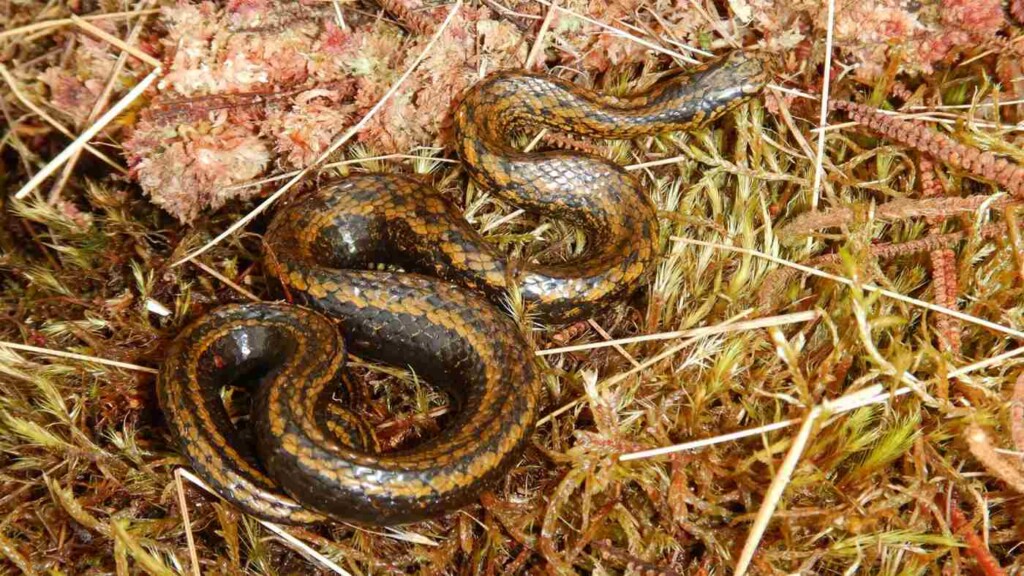
The reward for their daring and perseverance however was the first official description of Tachymenoides harrisonfordi. The 16-inch-long snake belongs to the family Colubridae, which is one of the largest snake families and made up of almost entirely non-venomous snakes.
For a long time, Colubridae was known as a “wastebasket taxon” where any snake that didn’t fit into the other major snake families was classified. Now however, molecular phylogenics has stabilized the family into a much more sensible organization with 8 sub-families.
With golden scales running down the top of its body, becoming more plentiful near its head, the snake camouflages well with its environment.
While some biologists advocate against giving scientific names after famous people, Lehr says that species can only be protected if they are known, and the species name harrisonfordi will help to draw attention to the value of it and its pristine, albeit dangerous, habitat.
Tachymenoides harrisonfordi – credit Edger Lehr, University of Illinois
Of course there’s also the irresistable reference to Ford’s famous character’s getaway in the opening scene of Indiana Jones: Raiders of the Lost Ark, where, after narrowly avoiding death by poison blowdart in the jungle, Indy leaps into a seaplane’s cargo hold only to find the pilot’s pet python in the back.
“I hate snakes Jock! I hate ’em!” he says famously.
“The snake’s got eyes you can drown in, and he spends most of the day sunning himself by a pool of dirty water—we probably would’ve been friends in the early ‘60s,” Harrison Ford said in a statement about the snake. “In all seriousness, this discovery is humbling. It’s a reminder that there’s still so much to learn about our wild world—and that humans are one small part of an impossibly vast biosphere.”
A board member of Conservation International, this in the third animal species named after Ford. An ant and a spider were also given the species name harrisonfordi, but there’s a little something extra about giving it to a snake, even if, in reality, Ford quite likes the slithering reptiles.
SHARE The Awesome Story Of Adventure And Science With Your Friends…
Mr Fred Rogers - CC 2.0. Intergalactically Speaking, retireved via Flickr (Copy)
Mr Fred Rogers – CC 2.0. Intergalactically Speaking, retrieved via Flickr
It’s a beautiful day in the neighborhood, haven’t you heard? Mister Rogers said so—and now his simple advice on how to be a good person has been backed by sophisticated polling data.
As part of the Gallup National Health and Well-Being Index, saying hello to more than 1 neighbor was shown to correlate with greater self-perception of well-being.
Averaged across five dimensions that included career, communal, physical, financial, and social well-being, the increase which greeting a neighbor had led to around a 2-point increase on a scale of 0-100 up until the sixth neighbor, at which point further greetings had no measured impact.
Interestingly, when the well-being scores are looked at individually and not averaged together, the sixth neighbor is where the perception of well-being in life peaks for social and communal well-being, but not financial well-being.
No; perception of financial well-being kept on climbing and climbing, only to cease at the 11th such greeting; a profound revelation—repeated positive social interaction benefited perception of personal finance even more than personal sense of community.
Men were more likely to greet neighbors than women, as were people with children under the age of 18 in the household, and people with a household income of more than $120k a year.
Individuals aged 40 to 65+ were the most common greeters of neighbors, and 27% of the over 4,000 participants greeted 5 neighbors or more in a day.
“Recent Gallup research in partnership with Meta has shown that the U.S. compares favorably with other nations around the world in social interactions,” the polling company states, “with those in the U.S. more likely than those in countries such as Mexico, India, and France to interact with the people who live near them.”
“Notably, greeting neighbors is also linked to career wellbeing (liking what you do each day), physical wellbeing (having energy to get things done), and financial wellbeing (managing your money well),” the report continued. “The associations found among these latter three elements are likely more multifaceted in nature and could be reinforced in part through the correlations found with social and community wellbeing.”
WATCH what used to be our daily reminder below…
SHARE This Study (And Fred Rogers) Wisdom With Your Friends (And Neighbors)…
Tigger Porter, center, with high school students in Corona, Calif., who overhauled her family's 1969 Jeepster Commando. (Corona-Norco Unified School District)
Tigger Porter, center, with high school students in Corona, Calif., who overhauled her family’s 1969 Jeepster Commando. (Corona-Norco Unified School District)
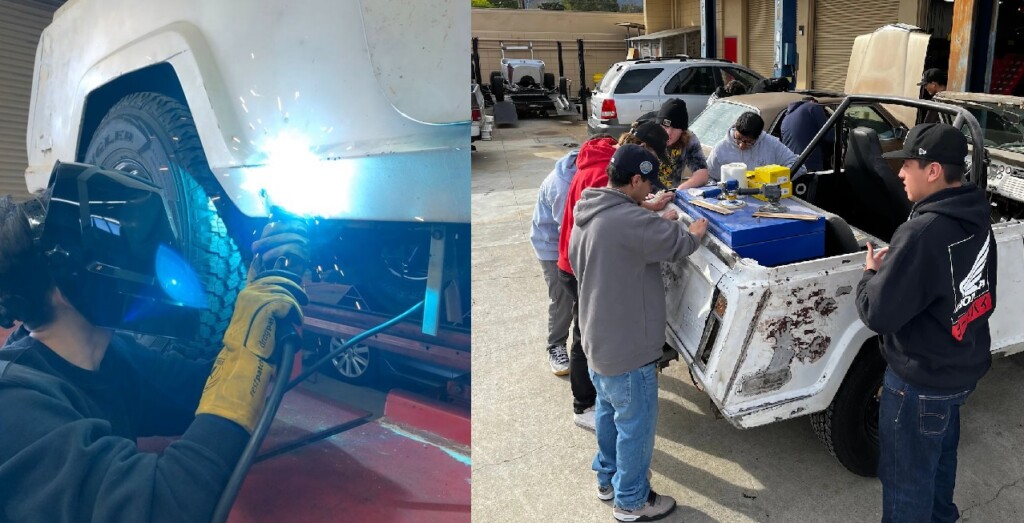
From a California high school comes a touching story of family, dedication, and engineering as a mob of students finished restoring a 1969 Jeep that was very special to a nearby family.
Shane Porter, husband and father of two fine young men, was struggling with two cancers when he bought a 1969 Jeep Commando as a family fixer-upper. He hoped to create fond memories in what he knew could be his last few years.
From 2016 to 2022 the family tinkered away, and then Porter, a 30-year employee at the California Department of Forestry and Fire Protection, passed away at 57. The Jeep wasn’t finished, and neither Tigger—his wife of more than 35 years, nor his sons Michael and Tim, could bring themselves to lay a finger on the car.
The barely-functioning automobile sat there for months, with the family unwilling to either part with it or keep repairing it, until one day a family friend and head of the automotive technician class at Corona High School paid the family a visit and said the Jeep would be a stellar project for his students.
The 1969 Jeepster Commando after Shane Porter first purchased it in 2016. (Tigger Porter)
The teacher, Bob Mauger, got a great reception from his advanced class which includes juniors and seniors, as well as from the Porter family.
Once inside the school, Mauger and his class realized that the Jeep needed way more work than they first thought. The class provides free labor on cars—typically those that belong to family members of the students—provided that the owners buy any new parts.
Students spent more than a year working on the vehicle. (Bob Mauger)
“The kids are learning how to give back,” Mauger told the Washington Post. “They’re not just learning how to fix their own car, but they’re learning how to be a good human. That’s what the world needs.”
The engine needed to be rebuilt with many new parts. There were structural issues as well, and the cooling system needed refurbishing along with the transmission and transfer case. There were also electrical malfunctions and a bad infestation of rust. The rebuild took 15 months, with the class regularly involving other areas of the school’s trades program like metal shop class, and Mauger regularly paying out of pocket for parts.
On July 27th, the class presented the Porter family with the car, sparkling with a new coat of metallic paint.
Tim and Michael were getting ready to depart for the Army and Air Force, and were blown away by the opportunity to actually drive the car they spent so many hours working on with their father.
“It was going to help the kids learn, which is what my husband was all about,” said Tigger Porter, who graduated from Corona High School in 1984. They had no idea who we were, but they did it. This was truly a work of love.”
SHARE This Heartwarming Story Of Family Memories Made Whole On Social Media…
Quote of the Day: “If you count all your assets you always show a profit.” – Wilson Mizner
Photo by: Andre Adjahoe
With a new inspirational quote every day, atop the perfect photo—collected and archived on our Quotes page—why not bookmark GNN.org for a daily uplift?
Economists told CNN recently that Taylor Swift’s Eras Tour is becoming such a massive phenomenon that it’s having demonstrable impacts on the US economy at large, but it’s not only stadium venues, record labels, and ticket vendors benefiting.
Everywhere she goes, Swift is making big donations to US food banks allowing them to feed hundreds of thousands of needy Americans.
The Eras Tour kicked off in Arizona, where she presented a hefty check to the Arizona Food Bank Network big enough to fill tractor-trailers with 40,000 pounds of fresh produce, and reinforce benefit programs for children who rely on school meals and seniors who rely on food stamps.
Based on the homelessness burden in Washington state, estimated as the sixth-highest in the country as a percentage of population, the Seattle-based non-profit Food Lifeline likely received a similar size gift from Swift, though they declined, according to CNN, to state how much.
Food Lifeline said it too would be using the money for fresh produce rather than canned or packaged food.
Second Harvest of Silicon Valley also received the Swift largesse, then Three Square Food Bank serving Las Vegas and southern Nevada, then Food Bank of the Rockies in Colorado.
“It is really meaningful to get a gift from someone who, like Taylor Swift, has the ability to bring so much attention to our cause and to the work that we’re doing,” Beth Martino, CEO of Three Square, told CNN.
April saw the tour arrive in Houston, where Swift donated to the Houston Food Bank.
“I’m just so glad (Swift) supports food banks, because the need is high, especially with inflation now,” Amy Ragan, the chief development officer for the charity, tells TODAY.com. “Food banks are working hard every day. And you know, it’s been tough getting food donations at some points.”
Swift also gave each of the 50-member-strong trucking team that has done the heavy lifting and the late nights that make her show possible, a $100,000 ‘life-changing bonus, leaving them all shocked and humbled.
With Florida, Louisiana, and Indiana left on the US leg of the Eras Tour, there’s still room for more charity if there’s room in Swift’s wallet, since there’s no doubt there’s room in her heart.
SHARE This Incredible Act Of Giving Back By The Megastar Singer…
It’s a wonderful time of the year in Britain, the time to honor the Isles’ Tree of the Year.
Organized by the Woodland Trust, one of the UK’s largest nature advocacy, conservation, and educational organizations, this years’ entries revolve around a theme of honoring ancients which dwell among us in towns and cities.
The Oak of Belton Lane—referred to in some places as the Grantham Oak, is believed to be 500 years old. It could be a favorite for the award, as it has already been nominated in previous years.
In centuries past, the top half of the tree was routinely pruned for fodder and firewood, a practice which incidently helps trees live longer. Trees cut in this way, called “pollarding” often develop bizarre shapes that seem completly out of sync with the surrounding woodland. Not a problem with this tree, since the neighborhood it sits in was built in an arch around the magnificent oak.
It’s facing stiff competition, as Sheffield’s Chelsea Road Elm demonstrates the resilience of trees even in the face of urbanism. Saved from the chop of a development company after it was discovered to host breeding habitat for the rare white-letter hairstreak butterfly, it also was one of a few hundred elm trees that survived the Dutch elm disease epidemic that killed about 60 million trees in Britain.
Sheffield’s Chelsea Street Elm – Philip Formby, Woodland Trust
“They give thousands of urban wildlife species essential life support, boost the UK’s biodiversity and bring countless health and wellbeing benefits to communities.”
Another strong contender is the Crouch Oak of Addlestone, believed to have sheltered Queen Elizabeth I and her entourage as they had a picnic beneath its boughs.