Fascinating images have been released that show a winter wonderland on Mars of cube-shaped snow, icy landscapes, and frost.
It’s not any winter wonderland in which you’d like to be walking, as the snapshots of the landscape reveal temperatures of -123°C.
The photos of Mars’ coldest season were taken by the HiRISE (High Resolution Imaging Science Experiment) camera onboard the Mars Reconnaissance Orbiter.
NASA explains that the most “fabulous” discovery comes at the end of winter, when all the ice that built up begins to “thaw” and sublimate into the atmosphere. As it does so, this ice takes on bizarre and beautiful shapes.
“When winter comes to Mars, the surface is transformed into a truly otherworldly holiday scene. Snow, ice, and frost accompany the season’s sub-zero temperatures. Some of the coldest of these occur at the planet’s poles,” NASA wrote in an image release.
“Cold as it is, don’t expect snow drifts worthy of the Rocky Mountains. No region of Mars gets more than a few feet of snow, most of which falls over extremely flat areas. And the Red Planet’s elliptical orbit means it takes many more months for winter to come around: a single Mars year is around two Earth years.”
The Mars “thawing” causes geysers to erupt where translucent ice allows sunlight to heat up gas underneath it, and that gas eventually bursts out, sending fans of dust onto the surface.
Scientists have begun to study these fans as a way to learn more about which way Martian winds are blowing.
The Mars Reconnaissance Orbiter has been orbiting and studying Mars since 2006.
The spacecraft is designed to study the geology and climate of Mars, provide reconnaissance of future landing sites, and relay data from surface missions back to Earth.
WATCH NASA Explain it Below…
SHARE This Beautiful Martian Snowscape With Your Space-Loving Friends…
Typical of sciencefiction is the scene wherein a space warrior sustains an injury and some kind of medical spray instantly repairs the damage. This could soon be sciencefact, thanks to a medical science breakthrough.
Researchers at the Univ. of California San Francisco have engineered molecules that act like a “cellular glue” for direct bonding of tissues—a long sought goal of regenerative medicine.
In a first-of-its-kind demonstration, the UCSF team produced customized adhesion molecules which bound select cells in a predictable manner, giving them de-facto control of the regenerative potential of the body.
“We were able to engineer cells in a manner that allows us to control which cells they interact with, and also to control the nature of that interaction,“ said senior author Wendell Lim, PhD, director of UCSF’s Cell Design Institute. “This opens the door to building novel structures like tissues and organs.”
Adhesive molecules can be found all throughout the human body creating communicative-bonds and immune pathways between tens of trillions of cells, but manipulating them has been beyond the reach of scientists so far.
Cellular bonding creates the characteristics of the structure they create. Tighter bonds form complex, solid organs like the liver or lungs, while looser bonds permit structures like immune molecules to do their disease fighting work with flexibility.
The artificial adhesion molecules designed by Lim et al. come in two parts: one which sits on the outside of the cell and determines which other cells it binds to, and another which sits inside and determines the strength of the bond.
“It’s very exciting that we now understand much more about how evolution may have started building bodies,” Lim said.
“Our work reveals a flexible molecular adhesion code that determines which cells will interact, and in what way. Now that we are starting to understand it, we can harness this code to direct how cells assemble into tissues and organs.”
Quote of the Day: “Your life does not get better by chance, it gets better by change.” – Jim Rohn
Photo by: Zoltan Tasi
With a new inspirational quote every day, atop the perfect photo—collected and archived on our Quotes page—why not bookmark GNN.org for a daily uplift?
A remarkable story from the Christmas blizzard blanketing the Northeastern United States featured the kind of ‘smash and grab’ we all need to hear about.
The school’s alarm went off at Edge Academy on Christmas Eve, but due to the ‘worst snow storm in a generation‘ the local police near Buffalo, New York, were unable to quickly respond.
When the Cheektowaga Police did arrive, they found one of the windows had been broken out—but checking the school building, they found nothing out of place.
They thought maybe the damage was caused from the hurricane-force winds—untill they saw a handwritten note left on a table.
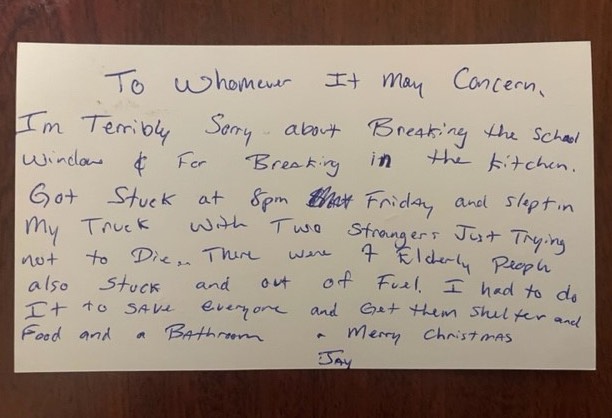
The note started with an apology for causing damage to the window—and having to borrow the snow blower to rescue others who had run out of gas while trapped in their cars.
“Got stuck at 8 p.m. Friday and slept in my truck with two strangers. Just trying not to die.”
“There were 7 elderly people also stuck and out of fuel. I had to do it to save everyone and get them shelter and food and a bathroom.”
Cheektowaga Police Department
The note was signed, Merry Christmas, Jay.
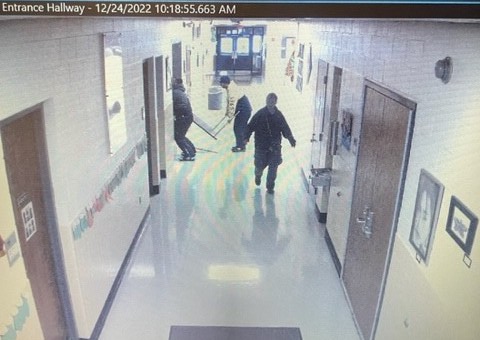
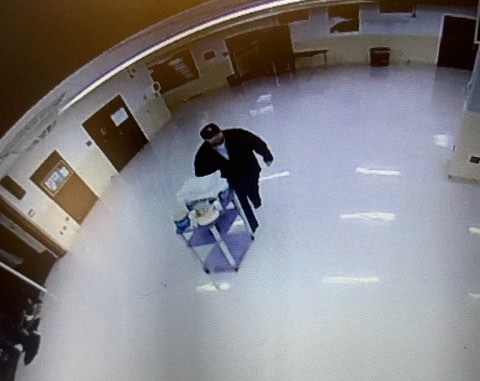
When officers watched the video surveillance from the school, they were astonished. “We witnessed people taking care of people,” said a report on the Department’s Facebook Page.
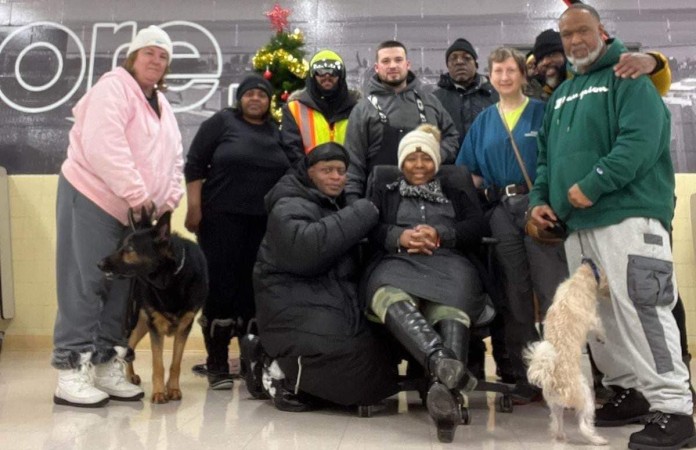
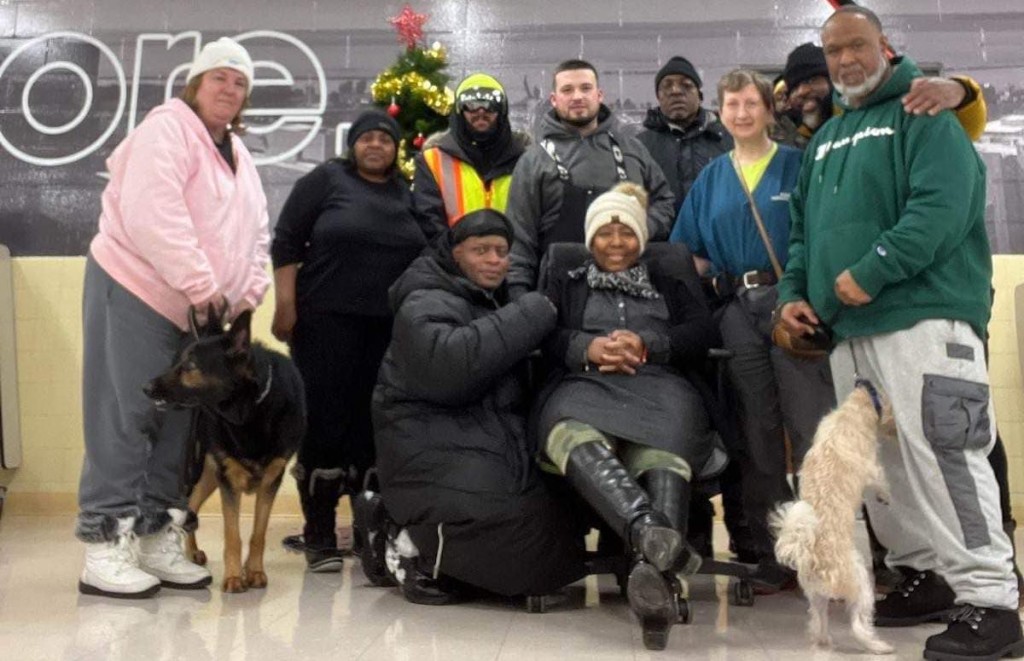
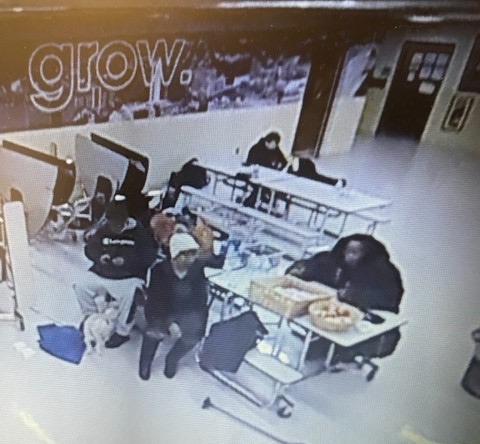
After breaking in, Jay went back out into the storm and found others who were freezing in their cars, and brought them inside—24 in total, and 2 dogs.
In the school, he found granola bars, water, and blankets in the nurses office, and gathered apples, juice, and cereal from the kitchen.
Kids played in the gym and adults watched football games and storm updates on television, while the hours on Saturday turned into a Christmas Day Sunday, spent sheltering at the school.
Cheektowaga Police Department
“When they were finally able to leave safely, you never would have known anyone was there,” said the police on Facebook. “This group of amazing people cleaned up all the tables… and the building they found shelter in.”
Cheektowaga Police Department
“There was a freezer full of food but no one touched it. They only ate what was necessary to stay alive.
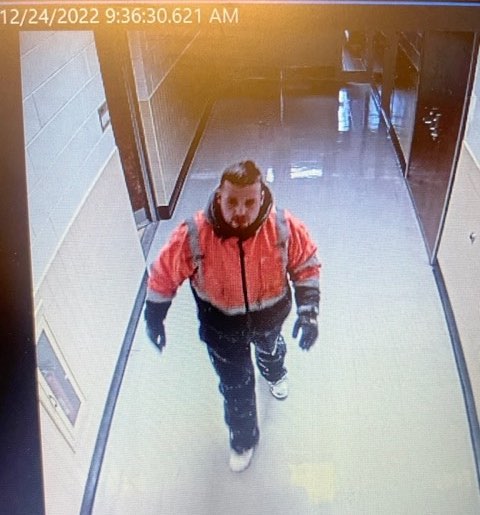
Soon, police wanted to identify the mysterious ‘Jay,’ so they could commend him for “actions that one-hundred-percent saved lives”.
Cheektowaga Police released this photo to find ‘Merry Christmas Jay’
After they did find the 27-year-old, they announced on Facebook: ‘Because of Jay Withey, people are still alive.’
Sandy Black was one of those people. She said, “It was an ordeal but thanks to Jay we all had a place to stay warm.” (See the video below…)
Jay even used the school’s snowblower to dig out other stuck cars, to help clear the streets for plows.
“I’m just grateful that I had the opportunity, and I had the will to do it,” Jay told ABC News.
Cheektowaga Police Department
The group is “like family” now—and is already planning a reunion in Spring.
Mario Johnson vowed to return to the school after Christmas to replace the snacks they ate and the water they drank. He also inquired about the cost of the window.
Not only did the school declined to press charges, they told Mario not to worry about it, when he offered several times to pay for the broken window. “They’re just happy that we were safe and warm.”
A new U.S. law that will allow the Federal Communications Commission to regulate prison phone calls needs only President Biden’s signature to put an end to a largely unknown, yet famously predatory, prison practice.
Telecom companies that specialize in providing phone service for inmates have long made the process of signing up for their service and placing calls as expensive as possible, with a nationwide average of about $3 per call.
The telecom fees are often too great for inmates to be able to afford regular calls to loved ones or lawyers—and too costly for families to keep in touch with those behind bars.
Private prisons have profited by granting monopoly telephone contracts to the company that will charge families the most.
The Martha Wright-Reed Act, as the legislation will be called, gives the FCC the authority to “ensure just and reasonable charges for telephone and advanced communications services in correctional and detention facilities.”
“The FCC has for years moved aggressively to address this terrible problem, but we have been limited in the extent to which we can address rates for calls made within a state’s borders,” FCC Chairwoman Jessica Rosenworcel says in a statement.
President Biden is expected to sign the Democrat-sponsored legislation, which passed both the House and Senate, and will include both video and phone calls.
This year, don’t set inflated goals to make up for every choice you didn’t make in 2022.
This year, I want you to cultivate a power and presence within you that allows you to choose your good all the time, in every circumstance of your life.
You are worth so much more than one year can offer. You are worth so much more than a few paltry achievements, even if they sound like the moon to you.
That said, a worthy goal or two, can help you realize how powerful you are. Sometimes we have to want something, in order to spread our formidable wings—or even to discover that we have them.
As a career and success coach, I love to use any goal as an excuse to part the veils, and step between the worlds. Whenever we commit to a dream or desire, it means we are willing to walk past resistance, distraction, the drone of old stories, and inner ogres. I want you to have the experience of being invincible—and realizing your strength and abundance in this life.
I know you will have days that throw you off. But I want you to learn the skills of getting on course, even more than I want you to reach just one particular goal. I want you to adopt attitudes that release magic and velocity.
The secret of being invincible is learning practices in which nothing can defeat you. It’s not about the goals you set, but the attitudes you employ. It’s an outcome of beautiful choices.
So, I want to look at 3 mental habits that will help you get “there,” wherever there is for you—and help you with every other area of your life as well.
Choose Kindness Over Self-Cruelty:
It’s time to fire the Marine drill sergeant screaming orders, setting stop watches, and shoving your face in the mud. Maybe it works for a war. But I don’t want you living in a war. I want you planting an orchard that flourishes for generations. You will accomplish more through love than you ever will through fear.
Self-brutality may induce temporary changes, but they are not sustainable results. The ulcer gets in the way, the nervous breakdown, or the divorce. Abuse always brings more pain, not less. You may achieve a result, only to spiral out of control in a bigger way.
I blazed through Harvard Law School on autopilot and the high-pitched drive of anxiety. But I could not sustain that success. It wasn’t coming from a renewable place within me. I had to crash.
Only love gives you endless energy. Only love will go the distance.
As you dare to stretch, be kinder to yourself than you have ever been. Kindness reminds you of your unquestionable worth, no matter what you’ve done. And then it encourages you to do what you came here to do.
Kindness isn’t a doormat, but a launch pad. Kindness gives you permission to try over and over without any fear of failure. But real kindness doesn’t let you off the hook. Self-love doesn’t let you give up on yourself or choose less than your best.
In these years, I’ve discovered that I am slower to achieve “big” success. There are the times I have to sit by the side of the road and feel my feelings—instead of push past them. But I am in this game forever now. I am resilient. I’m also going for a broader success too: I don’t just want to end up on the mountain top. I want to end up as my own dear friend, my bestie, along the way.
And I don’t want to wait to reach my goal in order to celebrate my life. I want to reach the mountain top with a thousand pink tulips already in my arms.
Choose Again and Again:
Rigidity will break your spirit. If you have to do something perfectly, there’s no breathing room for expansion. I’d rather you know going in, that you are going to stumble. You are going to miss a workout or a parent teachers’ meeting. You are going to scarf down a brownie or dive into a trough of butter pecan ice cream. You are going to be out of control and endearingly human.
For me, invincibility comes down to flexibility. It’s the willingness to begin again and again. If you blew your goal yesterday, don’t waste a second of time berating yourself or fearing consequences. The present moment can heal most anything. Choose again. Choose now. Drop the ball in Times Square all over again, ten times a day if you need to, 10-9-8…and give yourself a clean slate, a new beginning, another chance. It’s not weak to give yourself chances. It’s dedication. It means you want your goal, even more than you want to be perfect.
Here’s something else to consider: I believe I found more peace of mind in losing my way and finding it again than if I’d never lost it at all.
This devotion helped me build self-trust. I saw that even if I tripped up, I could count on myself to come back.
Also, I’ve found that not doing what I desire, teaches me how much I desire it. It teaches me how much I want to climb this mountain—whatever it takes. Then, it becomes less about discipline; I am simply thirsty for the dream and craving my own integrity.
If you do not dedicate yourself to something you will dissipate your potential. It’s too easy to drift without focus or stay in the swamp of numbness or soul-sabotaging casualness. Commitment activates awareness. When you dedicate yourself to an intention you become alive and present. You show up—or you evaluate why you are not showing up.
Dedication also helps you to realize that you don’t have to be in the mood to pursue the goal.
I’ve shown up to write a book, even when I’ve felt nervous, tired, and hostile. I wandered around the blank page like a homeless person looking for grub. I showed up believing nothing good could come out of the bog of my sad mind. And like many writers before me, I was wrong. Talk about poetic justice.
Dedication helped me to ignore my ego, the guardian that strives to keep me safe. On days when I felt absolute dread, I still found myself discovering another self, one who was weightless, giddy and skipping towards the horizon.
You will be stunned to discover your full capacities. We all house secret genies. We all have embedded powers we have yet to set free. Sometimes it takes a tiny bit of discomfort to discover the sweeter comfort of becoming our true selves.
I wish each and every one of you an invincible new year. You have so many gifts to give—and your life is poised for success. May you know courage, strength and the ability to walk yourself through anything—with love.
Tama Kieves, an honors graduate of Harvard Law School, left her law practice to write and help others create their most extraordinary lives. She is the bestselling author of 4 books including A Year Without Fear: 365 Days of Magnificence and her latest Thriving Through Uncertainty. A sought-after speaker and career/success coach, she has helped thousands to thrive in their life, calling, and businesses. Sign up for your FREE digital fortune cookies and a free copy of her popular webinar Dare to Decide at www.tamakieves.com/dare.
SHARE the New Years Motivation With Friends and Family on Social Media…
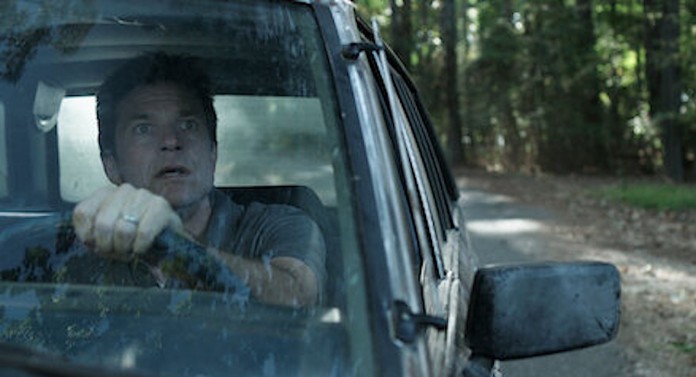
Jason Bateman created and starred in Ozark – Netflix
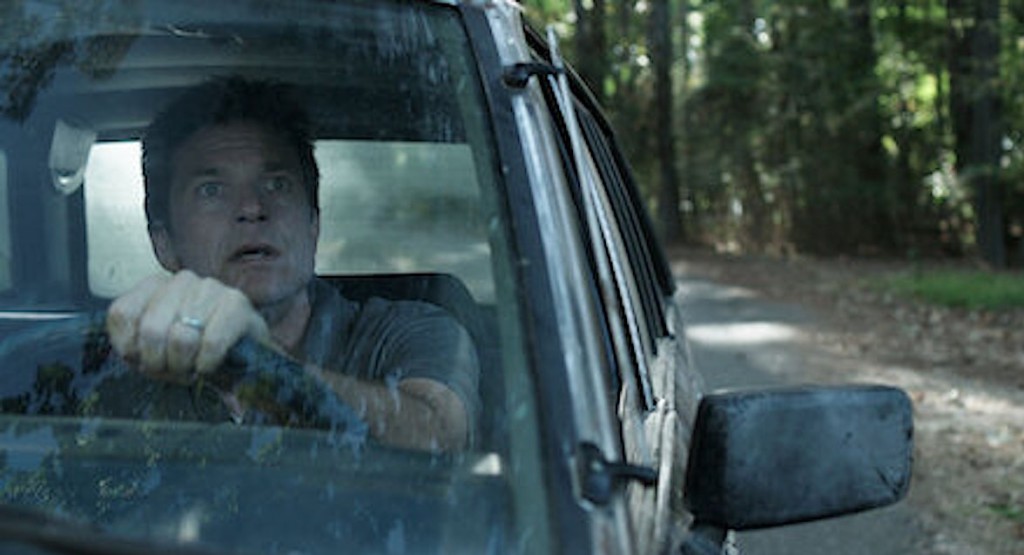
Jason Bateman created and starred in Ozark – Netflix
Despite recent setbacks, a new survey suggests that Netflix is still a heavyweight contender in the television world.
More than 2,000 American adults were surveyed by OnePoll, and each chose their favorites from among all the television series they watched in 2022.
In addition to securing the No. 1 choice with Season 4 of Ozark, Netflix represented half of the overall top ten list, as well as half of the best scripted series choices.
The streaming service did well with their new releases, too. Three of their shows—Wednesday, Mo, and Inventing Anna—appeared in the list of highest-ranked series premieres.
Although Netflix famously never reveals official viewership data for its content, the company was recently forced to disclose its biggest customer losses in almost a decade: roughly 200,000 subscribers in the first quarter of the year and 970,000 in the second quarter.
In October, however, the company said they’d bounced back with 2.4 million new subscribers, possibly influenced by reviews of the Ozark finale in May and the conclusion of season 4 of Stranger Things in July.
The poll also reveals other trends in this year’s television landscape.
Despite actual week-to-week ratings that showed HBO’s House of the Dragon beating out Amazon Prime’s fantasy offering Lord of the Rings: The Rings of Power, respondents in this survey were more likely to choose Rings of Power as their favorite.
Although critics loved the Tony Gilroy-penned Andor over the rest of the Disney+ series this year, viewers surveyed were more drawn to Marvel’s She Hulk: Attorney At Law.
Out of 40 shows lauded by respondents in the poll, the broadcast TV networks only produced 4 winners—which is just 10%. A favorite show on ABC, Grey’s Anatomy, which is the network’s O.G medical drama now in its 19th season, was ranked No. 5 in Best Scripted and Best Overall Series.
CBS’s The Amazing Race, Season 33, ranked sixth in Best Unscripted Reality Series shows. And the ABC Emmy-winning sitcom Abbott Elementary (having completed two seasons) stood out among the Best New Series releases.
BEST OVERALL SHOWS OF 2022
Ozark, Season 4 (Netflix) – 8%
Stranger Things, Season 4 (Netflix) – 8%
Wednesday (Netflix) – 8%
Yellowjackets (Showtime) – 7%
Grey’s Anatomy, Season 19 (ABC) – 6%
Inventing Anna (Netflix) – 6%
Love is Blind, Season 3 (Netflix) – 6%
The Lord of the Rings: The Rings of Power (Amazon Prime) – 6%
The Last Movie Stars (HBO Max) – 6%
Married At First Sight, Season 15 (A&E) – 6%
BEST SCRIPTED SERIES OF 2022
Ozark, Season 4 (Netflix) – 8%
Stranger Things, Season 4 (Netflix) – 8%
Wednesday (Netflix) – 8%
Yellowjackets (Showtime) – 7%
Grey’s Anatomy, Season 19 (ABC) – 6%
Inventing Anna (Netflix) – 6%
The Lord of the Rings: The Rings of Power (Amazon Prime) – 6%
The Crown, Season 5 (Netflix) – 6%
Yellowstone, Season 5 (Paramount Network) – 6%
House of the Dragon (HBO) – 5%
BEST UNSCRIPTED/REALITY SERIES OF 2022
Love is Blind, Season 3 (Netflix) – 6%
The Last Movie Stars (HBO Max) – 6%
Married At First Sight, Season 15 (A&E) – 6%
Love is Blind, Season 2 (Netflix) – 5%
The Great British Baking Show, Season 13 (Netflix) – 5%
The Amazing Race, Season 33 (CBS) – 5%
Below Deck Sailing Yacht, Season 3 (Bravo) – 4%
The Rehearsal (HBO) – 4%
We Need To Talk About Cosby (Showtime) – 4%
Lizzo’s Watch Out For The Big Grrrls (Amazon Prime) – 4%
BEST NEW SERIES OF 2022
Wednesday (Netflix) – 8%
Yellowjackets (Showtime) – 7%
Inventing Anna (Netflix) – 6%
The Lord of the Rings: The Rings of Power (Amazon Prime) – 6%
House of the Dragon (HBO) – 5%
The Legend of Vox Machina (Amazon Prime) – 5%
Star Trek: Strange New Worlds (Paramount+) – 5%
Mo (Neftlix) – 5%
She-Hulk: Attorney At Law (Disney+) – 5%
Abbott Elementary (ABC) – 5%
Quote of the Day: “Approach the New Year with resolve to find the opportunities hidden in each new day.” – Michael Josephson
Photo by: Klim Musalimov
HAPPY NEW YEAR to you! – From the GNN team
With a new inspirational quote every day, atop the perfect photo—collected and archived on our Quotes page—why not bookmark GNN.org for a daily uplift?
“It’s like a Christmas present from Mother Nature,” exclaimed one onlooker.
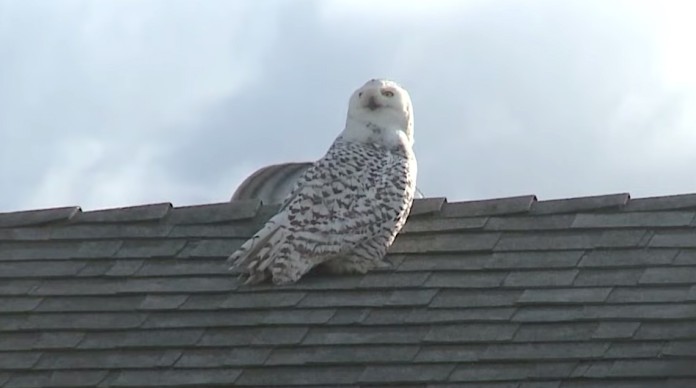
She stood among rows of birdwatchers and photographers who flocked to a California neighborhood for a rare glimpse of a beautiful snowy owl.
These huge white birds rarely make their way to sunny Orange County. In fact, the frozen Minnesota tundra, thousands of miles away, is their normal destination during their winter migration. There, they are difficult to spot with their white plumage that camouflages well with snow and gray trees.
Perched atop a neighborhood roof in Cypress, however, the owl was easy to spot. Arriving last Tuesday, it is the first evidence of an errant individual from that species in Southern California in over 100 years.
One sighting in 1918, without photographic evidence, is the only history of a snowy owl in that part of the country, though they occasionally dip into the northernmost part of the massive state.
“It’s not unheard of for a migratory bird to become turned around or blown off-course,” Dee Dee Salisbury, a volunteer for the California Department of Fish and Wildlife, told the LA Times on Thursday.
“Most of the northwest U.S. did just experience a blizzard/storm this past weekend, so there’s a possibility it could have followed the cold front down.”
Other experts believe the bird could have hitched a ride on a south-bound freighter ship, and been content to hang out for the long journey.
Birdwatchers from all over the region traveled to the neighborhood, where the owner of the home has been a great sport about the line of silent people outside their window staring upwards with telescopic camera lenses and binoculars.
Regardless of how it got there or how long it remains, its arrival certainly made it easier for any birdwatchers who had embarked on a ‘Big Year’ in 2022, trying to tally sightings of as many species as possible—like in the delightful film, The Big Year, with Jack Black, Steve Martin, and Owen Wilson.
WATCH the local news coverage from KTLA, and experience it for yourself…
KNOW Any Birders? Share This Amazing Happenstance On Social Media…
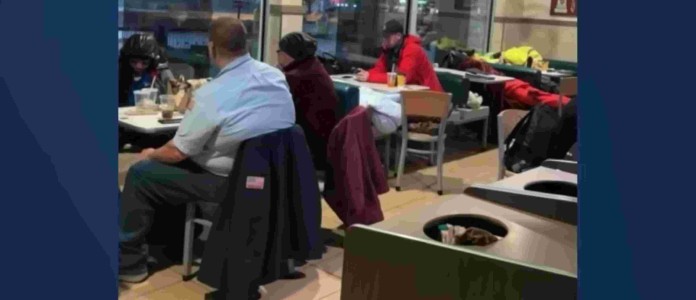
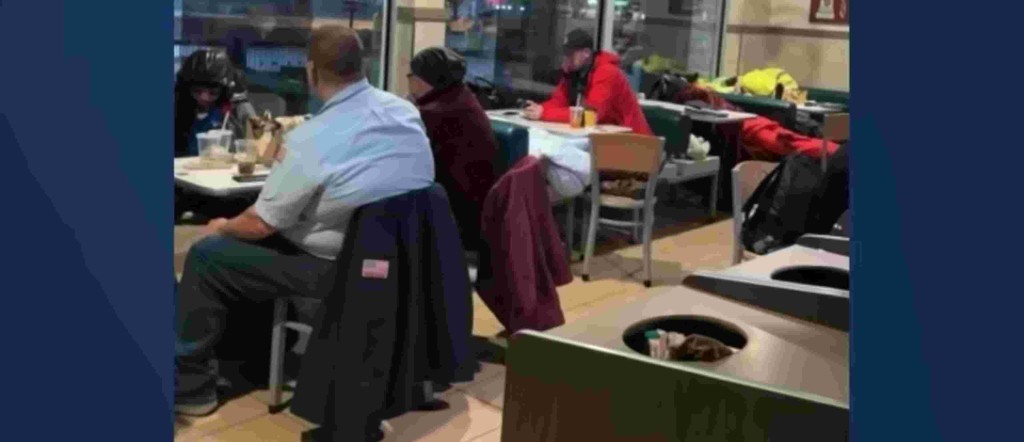
When three employees of a New York McDonald’s were forced to accept the fact that they weren’t going home during the Christmas storm that blanketed the northern US, they opened up the store to stranded motorists—and ended up hosting 50 people over Christmas weekend.
Amherst, like neighboring Buffalo, received upwards of 40 inches of snow—and it wasn’t long before police began dropping people off at their store on Sweet Home Road and Sheridan Drive last Friday night.
“We accepted the fact that we weren’t going home, so we might as well open up,” said Kristin Kosha, one of the workers there. “We figured someone might need some help.”
Expecting maybe a dozen, more than 50 New Yorkers sheltered in their store which, even before the act of kindness, was known as the “Sweethome McDonald’s” after the street on which it was built.
“We fed them, and had the coffees and hot chocolates going,” she told ABC-7 Buffalo.
“Saturday we had the Bills football game on, and they chatted amongst themselves and mingled—while we kept them fed.”
Dozens of stories of humans helping humans were published over the Christmas weekend, as a patch of terrible weather coincided with the holiday that celebrates goodwill towards man.
In Buffalo, a resident opened his home up to a tour bus of 10 South Koreans when they got stuck and knocked on his door asking for shovels, while elsewhere, a group of strangers found shelter by breaking a window and entering a school, before leaving a note asking for forgiveness for their impromptu lock-in.
Back in Amherst, people from all over the state ended up at the McDonald’s, including a 7-month-old baby and her mother, utility crews, and several animals.
Kosha, along with her colleagues Jeffrey Spangler and Amanda Kendall, said they just did what anyone would do, claiming ‘you don’t really think about it.’
An act of kindness is like lighting a candle in a dark room, reminding everyone that such a point of light will always penetrate the darkness.
They happen every day all over the world for a variety of reasons, and while they don’t always make headlines, they do make heartlines—and these ten stories are like a North Star that shines a path for us all to follow in 2023.
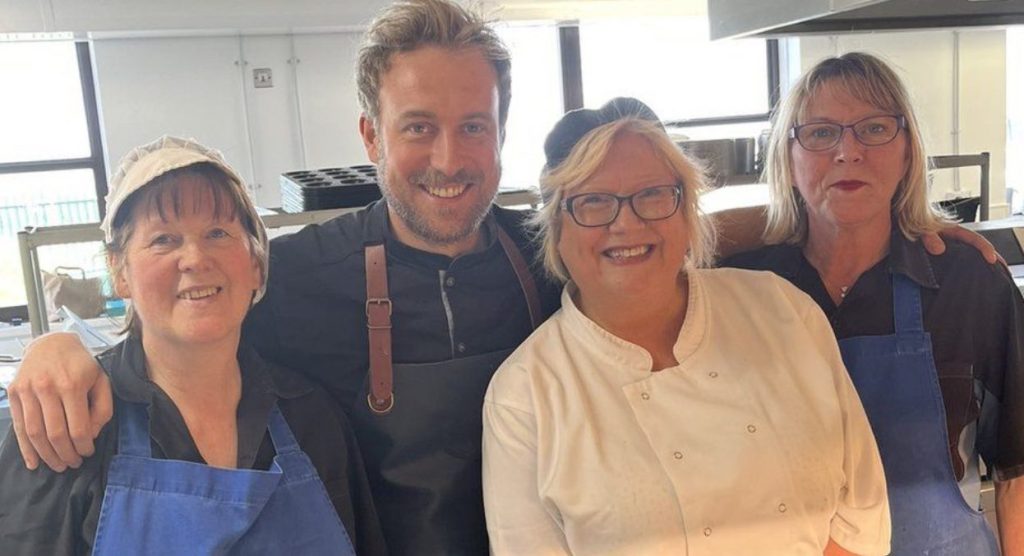
1) Gordon Ramsay Shocks School Cafeteria Manager Who Called in to Talk Show Asking For Substitute Chef For the Day
Tina told the radio show: “I’m cooking here on my own, I work in a school kitchen and my chef has gone off sick and I have another one off with covid, and I just wondered if Gordon would help me today and give me a hand?”
Although Ramsay had prior engagements, he sent one of his chefs, Rob Roy Cameron, directly to Bedfordshire to grant Tina’s whale-of-a-wish.
2) Watch the Moment a Guy Jumps Out of His Car to Give Umbrella to Couple Stuck in D.C. Downpour
Not only did the driver go out of his way, jumping out into the rain to help provide some shelter for a stranger, the woman being drenched on the sidewalk used the umbrella to shelter a person in a wheelchair instead of herself.
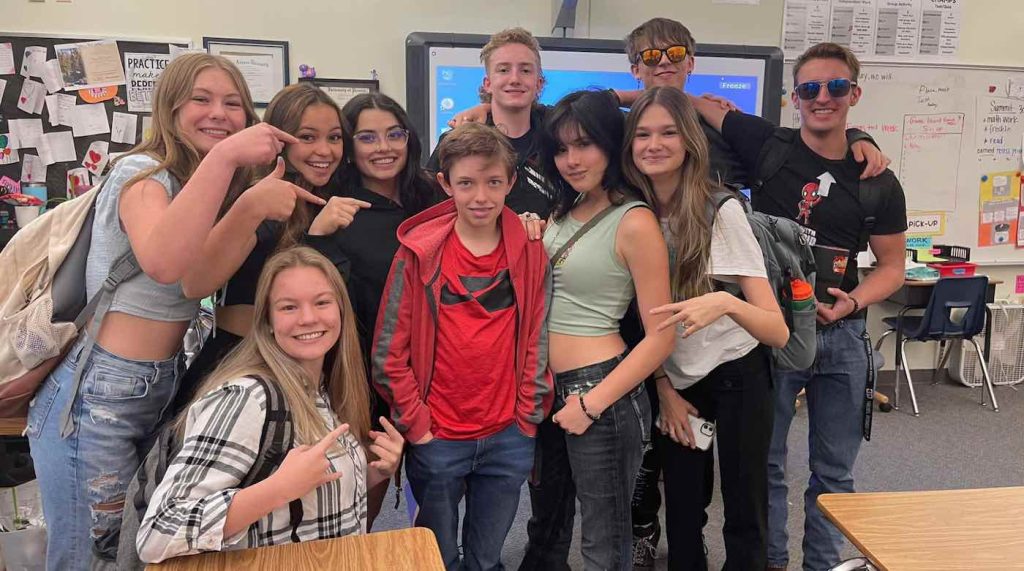
3) High School Teens Swoop in to Support 6th Grade Stranger, When No One Would Sign His Yearbook
Courtesy of Simone Lightfoot – KDVR
A sixth grader at a charter school in Colorado, was depressed and disgusted with himself because almost no one would sign his class yearbook.
After it broke his mother’s heart, she posted a photo to a school Facebook group, and was “overwhelmed with how much love and encouragement” she received from the parents.
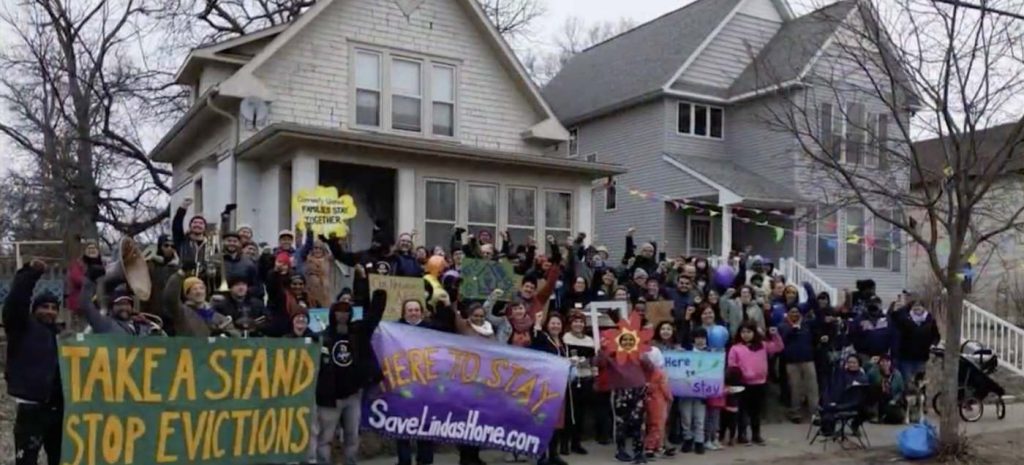
Known for having a heart of gold and a pair of green thumbs, Linda Taylor was a beloved neighbor in her Minneapolis community for 19 years, a volunteer who helped the homeless and needy as a “bright star”.
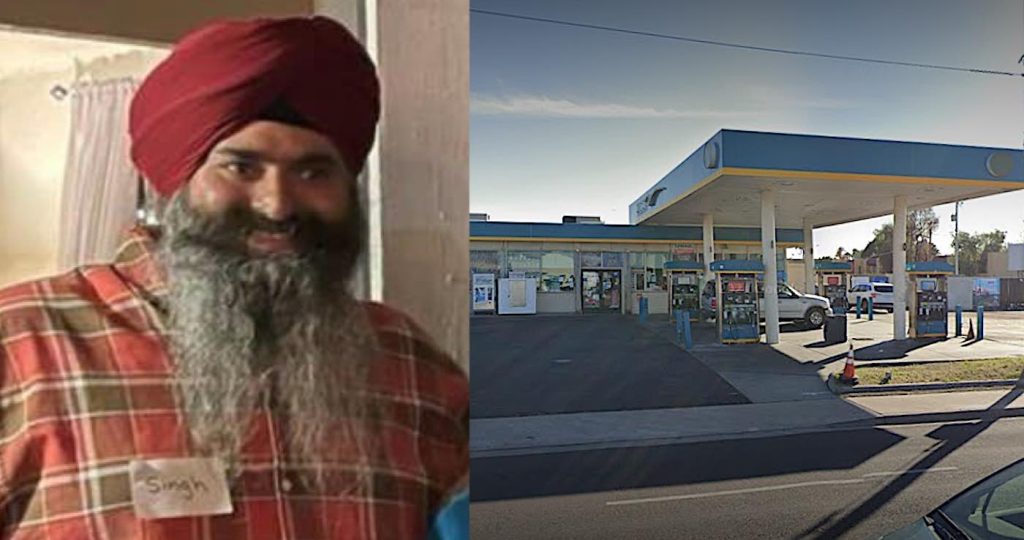
5) Sikh Gas Station Owner Sells Gas 50 Cents per Gallon Cheaper than What it Costs to Help Customers
Jaswiendre Singh
In June, a Sikh man in Phoenix chose to lose hundreds of dollars a day by selling gasoline for 50 cents cheaper than what he paid for it—all to relieve pressured motorists.
Jaswiendre Singh praises God for his ability to help his neighbors.
“God gave me help. It doesn’t matter. We are not here to make money right now. I’m very happy to help the other people,” he told AZ Family.
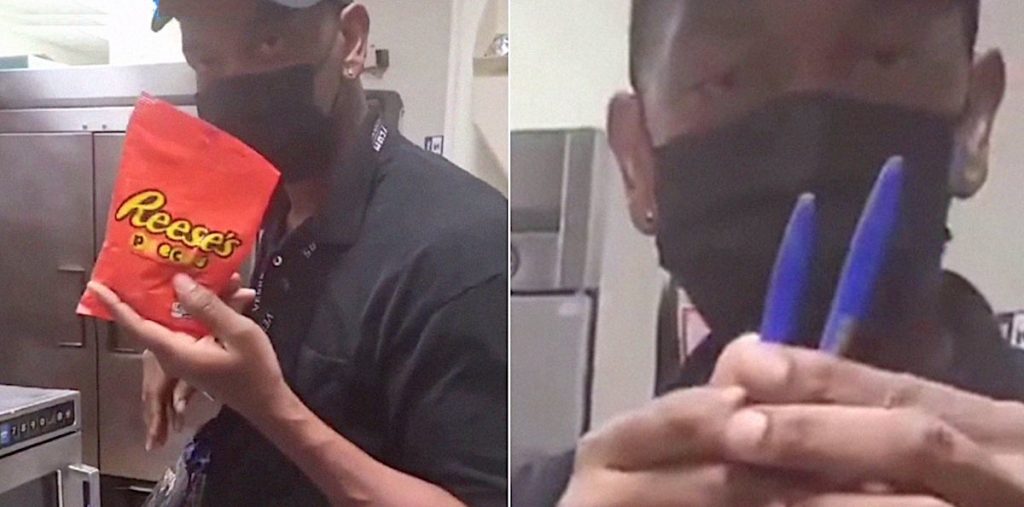
6) Burger King Worker of 27 Years Gets $270K From Strangers When They See Lack of Company Goodbye Gift
Burger King worker Kevin Ford / TikTok video
In July, social media got fired-up for Kevin Ford, a fast-food employee, who posted an Instagram video unwrapping a thank you gift he received for 27 years of perfect attendance on the job.
Let it be noted that in the original unwrapping video, Kevin was happy and grateful, saying “thank you” for every item he received in the gift bag.
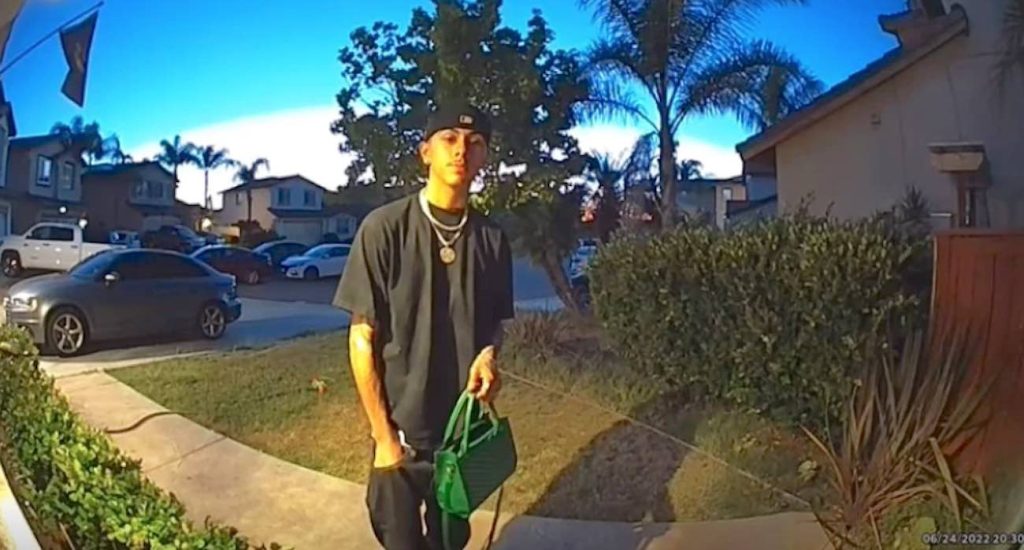
7) Teen Finds Woman’s Purse and is Rewarded With $17,000 After He Delivers it to Her Door
In July, a 17-year-old teen in San Diego returned a purse left in a grocery store parking lot—and although he expected nothing in return, hundreds of strangers provided him with a big reward.
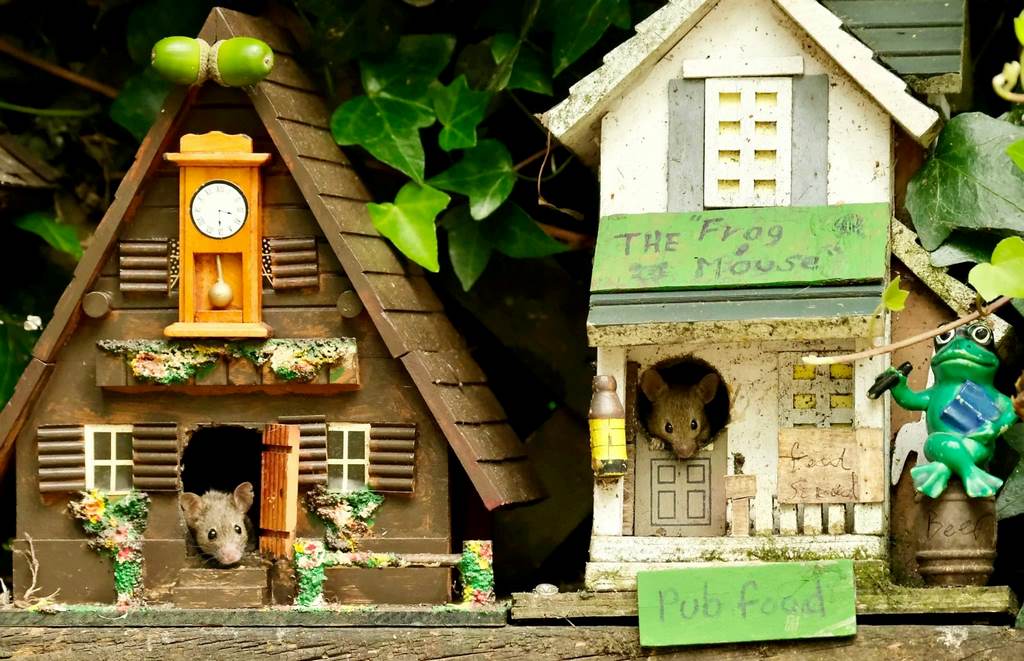
8) Mice Families Move into Dream Village Built By Gardener–And Are Hand Fed Flowers Everyday
– SWNS
In an example of inter-mammalian kindness, an Englishman created a wildlife area at the bottom of his garden to boost his nature photography—and that’s where he first found two families of mice.
9) Southwest Airlines Workers Looked After a Passenger’s Pet Fish for 4 Months After it was Banned From Flight
Jamee, Kira, and Ismael with Theo in box – released by Southwest
In one of the most disrupted and difficult years in the history of aviation, a pair of Southwest Airline employees volunteered to become mom and dad to a stranger’s fish, after the passenger was told she could not embark with the animal.
10) Best Friends Win Million Dollar Lottery and Spread the Wealth in Hometown to Help Others
Lottery winners Joann MacQueen and Marlisa Mercer – released.
In an example of extra-territorial kindness, Canadian besties JoAnn MacQueen and Marlisa Mercer won a million dollars playing the lottery, and immediately decided to keep the good vibes rolling by giving heaps and heaps of it away to the community.
FREE WILL ASTROLOGY – Week of December 31, 2022
Copyright by Rob Brezsny, FreeWillAstrology.com
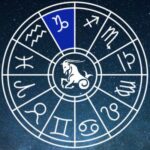
CAPRICORN (Dec. 22-Jan. 19):
In accordance with your astrological omens in 2023, I’ve chosen a quote from Capricorn storyteller Michael Meade. I hope you will make it one of your core meditations in the coming months. He writes, “All meaningful change requires a genuine surrender. Yet, to surrender does not simply mean to give up; more to give up one’s usual self and allow something other to enter and redeem the lesser sense of self. In surrendering, we fall to the bottom of our arguments and seek to touch the origin of our lives again. Only then can we see as we were meant to see, from the depth of the psyche where the genius resides, where the seeds of wisdom and purpose were planted before we were born.”
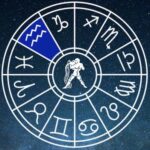
AQUARIUS (Jan. 20-Feb. 18):
In addition to my career as a horoscope columnist, I have written novels and other books. I have worked as a singer-songwriter in rock bands and performed a one-person show in theaters. As I survey my history, I always break into sardonic laughter as I contemplate how many businesspeople have advised me, “First, you’ve got to sell out. You’ve got to dumb down your creative efforts so as to make yourself salable. Only later, after you have become successful, can you afford to be true to your deepest artistic principles.” I am very glad I never heeded that terrible counsel, because it would have made me insane and unhappy. How are you doing with this central problem of human life, Aquarius? Are you serving the gods of making money or the gods of doing what you love? The coming year will, I suspect, bring you prime opportunities to emphasize the latter goal.
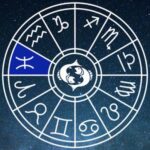
PISCES (Feb. 19-March 20):
I’ve chosen a sweet taste of advice for you to keep referring back to in 2023. It’s in rapt alignment with upcoming astrological omens. I suggest you copy my counsel out in longhand on a piece of paper and keep it in your wallet or under your pillow. Here it is, courtesy of author Martha Beck: “The important thing is to tell yourself a life story in which you, the hero, are primarily a problem solver rather than a helpless victim. This is well within your power, whatever fate might have dealt you.”
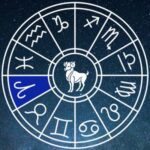
ARIES (March 21-April 19):
“Perfectionism is the voice of the oppressor,” writes Aries author Anne Lamott. “It will keep you cramped and insane.” I think that’s a key theme for you to embrace in 2023. Let’s express the idea more positively, too. In Navajo culture, rug weavers intentionally create small imperfections in their work, like odd-colored beads or stray pieces of yarn. This rebellion against unattainable exactitude makes the art more soulful. Relieved of the unrealistic mandate to be flawless, the rug can relax into its beauty.
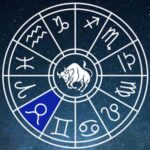
TAURUS (April 20-May 20):
Here are my four decrees for you in 2023, Taurus. 1. You are cleared to be greedy if it’s in service to a holy cause that fosters others’ well-being as well as yours. 2. It’s permissible to be stubborn if doing so nourishes versions of truth and goodness that uplift and inspire your community. 3. It’s proper to be slow and gradual if that’s the best way to keep collaborative projects from becoming slipshod. 4. It’s righteous to be zealous in upholding high standards, even if that causes less diligent people to bail out.
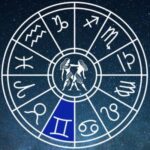
GEMINI (May 21-June 20):
In 2023, many interesting lessons will arrive via your close relationships and collaborations. You will have the potential to learn more about the art of togetherness than you have in a long time. On occasion, these lessons may initially agitate you. But they will ultimately provide more pleasure and healing than you can imagine right now. Bonus prediction: You will have an enhanced talent for interweaving your destiny together with the fates of your allies.
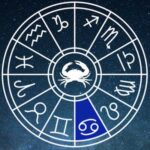
CANCER (June 21-July 22):
Here are some projects I’d love to see you pursue in 2023: 1. Teach your allies the fine points of how to cherish you but not smother you. 2. Cultivate your natural talent for appreciating the joys of watching and helping things grow: a child, a creative project, a tree, a friendship, or your bank account. 3. If you don’t feel close to the family members that fate provided you with, find others you like better. 4. As you explore territories that are further out or deeper within, make sure your Cancerian shell is expandable. 5. Avoid being friends with people who are shallow or callous or way too cool. 6. Cultivate your attraction to people who share your deepest feelings and highest ideals.
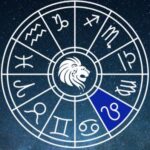
LEO (July 23-Aug. 22):
Mystic teacher Terence McKenna said, “You have to take seriously the notion that understanding the universe is your responsibility, because the only understanding of the universe that will be useful to you is your own understanding.” This will be key advice for you in 2023. You will be wise to craft an updated version of your personal philosophy. I suggest you read a lot of smart people’s ideas about the game of life. Make it your quest to commune with interesting minds who stimulate your deep thoughts. Pluck out the parts that ring true as you create a new vision that is uniquely your own.
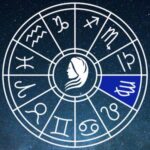
VIRGO (Aug. 23-Sept. 22):
How should we refer to your romantic adventures in 2023? We could be whimsical and call them “Ritual Mating Dances on the Outskirts of History.” We could be melodramatic and call them “Diving into the Deep Dark Mysteries in Search of Sexy Treasures.” Or we could be hopeful and call them “A Sacred Pilgrimage to the Frontiers of Intimacy.” I think there’s a good chance that all three titles will turn out to be apt descriptors of the interesting stories ahead of you—especially if you’re brave as you explore the possibilities.
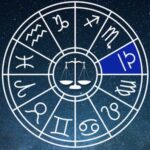
LIBRA (Sept. 23-Oct. 22):
“Coddiwomple” is an English slang word that means to travel resolutely and dynamically toward an as-yet unknown destination. It’s not the same as wandering aimlessly. The prevailing mood is not passivity and vagueness. Rather, one who coddiwomples has a sense of purpose about what’s enjoyable and meaningful. They may not have a predetermined goal, but they know what they need and like. According to my analysis of the astrological omens, the next six months will be an excellent time for you Libras to experiment with coddiwompling.
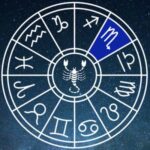
SCORPIO (Oct. 23-Nov. 21):
In the theater of ancient Greece, the term anagnorisis referred to a pivotal moment when a character discovered a big truth they had previously been unaware of. Another Greek word, peripeteia, meant a reversal of circumstances: “a change by which the action veers round to its opposite.” I bring these fun ideas to your attention, dear Scorpio, because I think 2023 could bring you several instances of an anagnorisis leading to a peripeteia. How would you like them to unfold? Start making plans. You will have uncanny power to determine which precise parts of your life are gifted with these blessings.
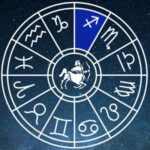
SAGITTARIUS (Nov. 22-Dec. 21):
Winters are cold in Olds—a town in Alberta, Canada. Temperatures plunge as low as 24 degrees below zero Fahrenheit. But an agronomist named Dong Jianyi has built a giant greenhouse there that enables him to grow vegetables year-round. As reported in GNN, he spends no money on heat, but relies on innovative insulation to keep the inside warm. In 2021, he grew 29,000 pounds of tomatoes. I propose we make him your inspirational role model for 2023, Sagittarius. My guess is, that like him, you will be a wellspring of imaginative resourcefulness. What creative new developments could you generate? How might you bring greater abundance into your life by drawing extra energy from existing sources? How could you harness nature to serve you even better?
WANT MORE? Listen to Rob’s EXPANDED AUDIO HOROSCOPES, 4-5 minute meditations on the current state of your destiny — or subscribe to his unique daily text message service at: RealAstrology.com
Quote of the Day: “The important thing is to tell yourself a life story in which you, the hero, are primarily a problem solver rather than a helpless victim.” – Martha Beck
Photo by: Daniel intodawoj
With a new inspirational quote every day, atop the perfect photo—collected and archived on our Quotes page—why not bookmark GNN.org for a daily uplift?
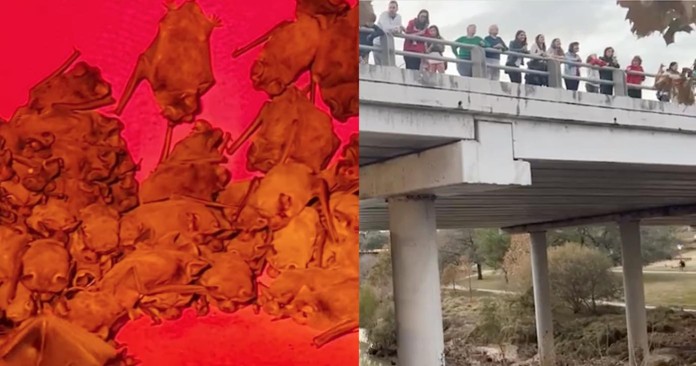
There are a lot of animals far easier to love and care for than bats, but that didn’t stop Houston Humane Society from rescuing nearly 1,600 of them from freezing to death.
On Thursday a cold snap in Texas caused these tiny winged mammals to plummet from the sky onto the cold pavement where they would have likely all perished if not for the volunteers who collected them en masse for rehabilitation.
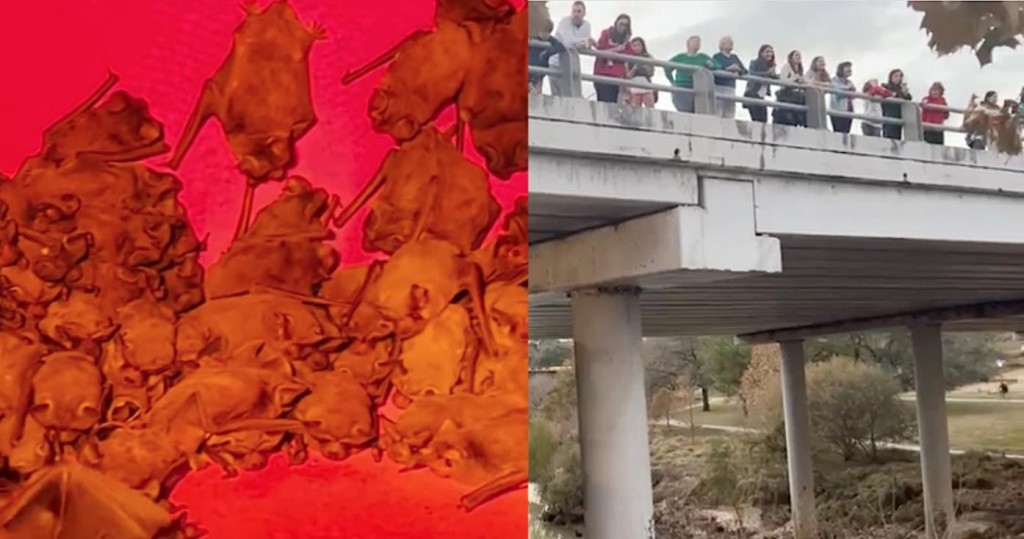
Mary Warwick, the wildlife director at the Houston Humane Society was out according to AP doing some holiday shopping when she began to worry about the Mexican free-tailed bat colony under the Waugh Bridge. Sure enough she found nearly 100 lying stiff on the ground.
Twice a day she would go collect them, put them in carriers on her car’s heated seats and then transfer them to incubators in her attic. Volunteers from another bat colony brought in 900 more this week.
Many of the bats, according to the Guardian, needed only a quick hydration boost and some warmth, while others needed to stay in the incubator’s heat a while longer.
The Houston Humane Society completed to mass-releases of the bats back under their bridges, one in Pearland Fite Road Bridge, and the other at Waugh Bridge.
In total 1,544 bats were collected and saved by the volunteers, an effort reminiscent of the Texas turtle rescue from last year, when thousands of turtles were cold stunned and could have died.
GNN followed the story of animal hospitals, private volunteers, game wardens, and Elon Musk’s company SpaceX all joining together over two weeks to save and rehabilitate sea turtles that were being stunned into listlessness by the winter storm that arrived on the Gulf coast.
An Italian motor company has unveiled a supercar that will run on garbage.
Italian supercars tend towards the polluting side of the spectrum of manufacturing, with massive 12 cylinder engines that care little for miles per gallon.
Bertone are known for iconic designs such as the sharply angled “Italian Wedge” shape of the Lamborghini Countach, but their new GB110 is the first high performance car that will be supplied with fuel made out of plastic waste.
The limited edition run of 33 vehicles has been launched to mark Bertone’s 110th anniversary.
Bertone has not released a price tag for the car, but says it will be “akin to a piece of art,” and allow potential owners to choose a series of modifications to suit “unique tastes and identity.”
Jean-Franck Ricci, CEO of Bertone, says they “have partnered with the company Select Fuel which has developed a patented technology to convert polycarbonate materials into renewable fuel.”
“We believe that de-pollution will require different solutions with combinations of technologies,” Ricci said.
“Plastic waste needs to be treated as a valuable resource. Through our partnership with Select Fuel we take what was once waste and convert it back into its original form.”
Boasting a hefty 1,100 horsepower, the GB110 is claimed to be able to pull off 0-60 mph in 2.79 seconds, with a maximum speed somewhere over 236 mph.
“We recognise that plastic waste is a major environmental problem,” Select Fuel said in a statement. “We have committed to developing technologies that convert polycarbonate materials into renewable and sustainable fuels.”
“Our fuels are used in everything from the transportation industry and renewable aviation fuel to motorsport and high-end sports cars including the Bertone GB110.”
SHARE This Super Recycling Speed Demon With Your Friends…
Japanese oncologists have used artificial DNA in a whole new way to naturally kill cancer cells by helping the immune system identify them.
The whole reason cancer is as lethal as it is is because the immune system doesn’t act upon cancer cells and tumors, disguised as they are to look like normal cells.
By creating a hairpin-shaped pair of DNA molecules called oHPs, the researchers found a way to expose the cancer to the immune system’s targeting procedure, and thus stop and even reverse human cervical cancer and breast cancer-derived cells, and malignant melanoma in mice.
Nucleic-acid treatments for cancer are inherently risky due to the potential for the host immune system to attack healthy cells carrying the same genes or signals as the cancerous ones.
As normal as they may seem to the immune system, cancer cells don’t function like normal cells. They overproduce or underproduce certain material, in this case the target was an overproduced informational molecule called microRNA-21 (miR-21).
When the artificial oPHs encountered the miR-21, they unwound them, and rejoined to form longer DNA strands which were naturally determined as being dangerous due to their overabundance by the host immune system.
“The results of this study are good news for doctors, drug discovery researchers and cancer patients, as we believe it will give them new options for drug development and medication policies,” said Professor Akimitsu Okamoto from the Graduate School of Engineering, Univ. of Tokyo.
“Next, we will aim for drug discovery based on the results of this research, and examine in detail the drug efficacy, toxicity and potential administration methods.”
SHARE This Awesome Breakthrough With Your Friends On Social Media…
The iPhone 14 has saved several lives this winter with some pretty impressive safety features that are worth noting as the U.S. continues to be battered with one of the worst winter storms in memory.
A tech news outlet reports that the iPhone 14’s SOS call which connects via satellite rather than through telecom towers saved a man in Alaska recently.
Traveling from Noorvik to Kotzebue by snow mobile, he became stranded without network coverage. Apple’s Emergency Response Center received his SOS call via satellite and connected his position to the Northwest Arctic Borough Search and Rescue Coordinator.
The GPS coordinates contained in the SOS led the volunteer rescuers right to him, and he went home unharmed.
Another safety feature has a two-fold benefit this winter—the Crash Detection Feature. An iPhone 14 or Apple watch has certain parameters of motion sensing that allows it to determine if the user has been in a collision.
The phone will automatically call 911 unless the user selects not to. This saved the lives of two passengers who plummeted off a canyon road in Angeles National Forest, California, before tumbling 300 feet to the canyon bottom. Alone and without cell service, Crash Detection alerted 911, while the passengers followed it up with an Emergency SOS.
As it turns out the phone is also capable of translating that motion data while the user is on the slopes.
Record numbers of 911 calls were being handled in mountain ski towns across America as skiers’ iPhones were placing calls from their pocket based on the considerable changes in speed and direction achieved by experienced skiers.
Apple recommends turning the Crash Detection feature off before hitting the slopes, or you can remember to pull your phone out after a rapid braking and select not to place the call. In the case that you were, say, catapulted through the air to land disastrously, you might be grateful you left the feature on.
SHARE This Important Safety Information With Your iPhone User Friends…
With a new inspirational quote every day, atop the perfect photo—collected and archived on our Quotes page—why not bookmark GNN.org for a daily uplift?
In a pilot program to address the homelessness problem in Kansas City, the state gave them part-time work which helped many of them secure the housing they desperately needed.
Kansas City Missouri has seen a decrease in litter collection as the pandemic created a slowdown in court cases and community service clean-up programs.
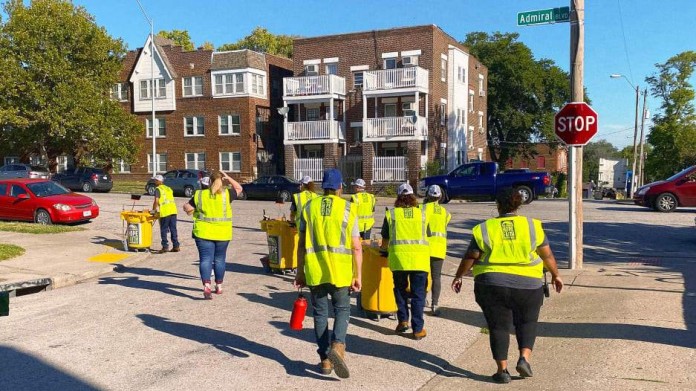
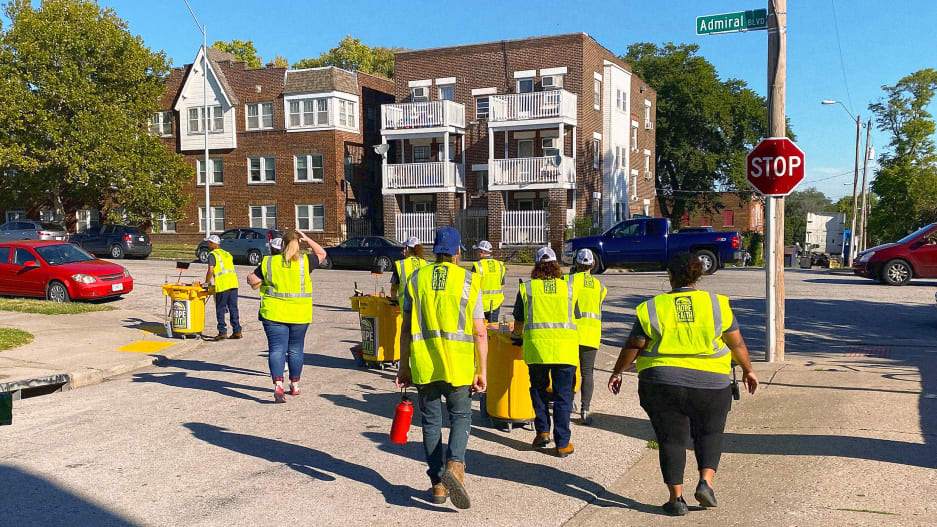
By putting 26 of the city’s roughly 1,800 homeless folks to work cleaning the streets they happen to sleep on, it cleared two hurdles in one sprint, removing more than 67,000 pounds of trash by the end of the work period, and giving the homeless workers the ability to put “employed” on a housing application.
“We really wanted to focus on people that were homeless in the truest sense of the word,” said Doug Langner, executive director of Hope Faith, a Christian non-profit that helps over 200 homeless in the city.
“It was an awkward feeling at first: they’re punching-in in the day, [and] they punch out and are back on the streets that night,” he told Fast Company.
Hope Faith was able to afford to employ 5 homeless workers at $15 an hour, 4 of whom secured long-term housing at the end of the 3-month work-trial period.
Another non-profit Creative Innovative saw 6 of their 21 workers make it into housing.
In January the program will expand to 46 trash collectors, half homeless and half long-term prison inmates reentering society, funded by 7 non-profits.
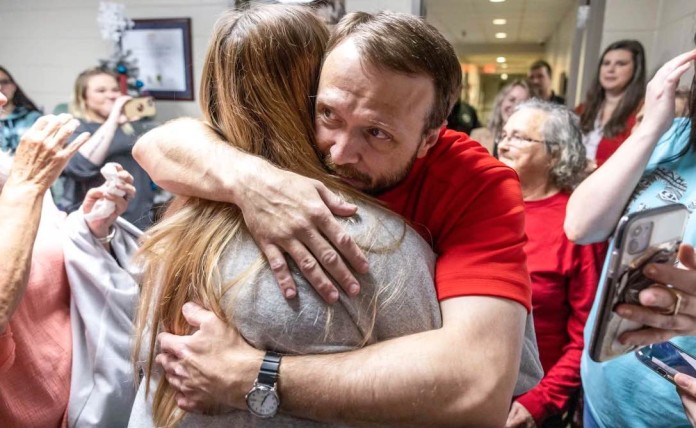
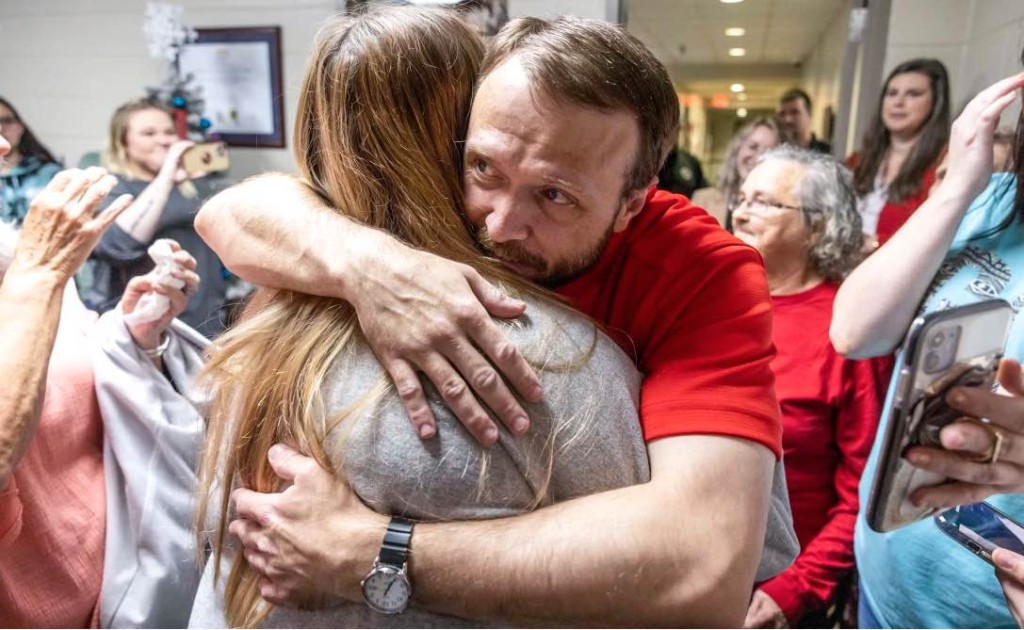
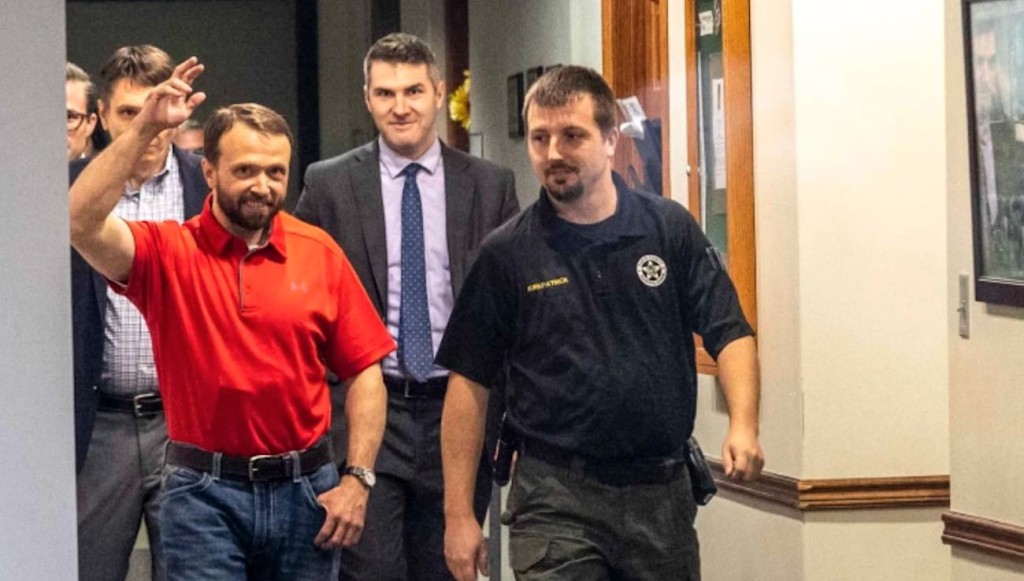
Two men wrongfully-imprisoned for more than two decades were able to spend Christmas with their families after a podcast and non-profit advanced evidence of their innocence.
Darrell Lee Clark and Cain Joshua Storey were just teenagers when they stood trial for a murder of their 15-year-old friend he died of gunshot wounds at a party in 1996.
Clack had all the charges against him dropped after a motion for a new trial was field on his behalf by attorneys from the Georgia Innocence Project. He was released Thursday along with Storey.
“You never think something like that is going to happen to you,” Clark said in the statement.
“Never would I have thought I would spend more than half my life in prison, especially for something I didn’t do. I’m just glad the truth finally came to light after 25 years. I’m so thankful for the Georgia Innocence Project and Proof Podcast for what they did. Without them, I would still be in prison.”
Susan Simpson and Jacinda Davis host a podcast called “Proof” and they began interviewing the state’s two key witnesses about the case last year.
The details go like this. At a party, 15-year-old Brian Bowling shot himself in a game of Russian Roulette with a gun allegedly provided by Storey. Manslaughter was to be the original charge, but Bowling’s distraught family urged for the charge to be stiffened to murder, and charged Clark who had a corroborating alibi of his absence from the whole situation, in a conspiracy to murder.
The Proof podcast hosts interviewed the party hostess, who admitted that the police had coerced her into making false statements regarding Clark and Storey’s testimony. The second witness was a hearing-impaired man, and Simpson and Davis got him on record as not being able to separate the Bowling murder details with a very similar case from ten years later in 1976.
Furthermore, according to this hearing impaired witness, he never saw Clark run through Bowling’s yard, which was the original cornerstone of his charging in the case.
Georgia Innocence Project
“An autopsy in the case would have solved it, yet they refused to get an autopsy,” said Mr. Storey’s attorney Luke Martin. “That autopsy would have shown this was a self-inflicted gunshot wound.”
The Georgia Innocence Project also reported, according to NBC, that a coroner, who was untrained as a doctor, testified that it was his “gut feeling” that the gunshot was not self-inflicted.
A Redditor following the case commented on a thread about Clark and Storey’s release that this coroner later went to federal prison for wide-scale fraud he committed while working as a coroner, including for sending bills to families for autopsies.
“We are elated, thrilled that he is finally home after all this time. It’s even better that it’s in time for the holidays,” Clark’s attorney Meagan Hurley said. “Twenty-five years is an incredibly long time to spend incarcerated for a crime you didn’t commit.”
Hurley credits the Bowlings, who agreed to hear what the podcasters and attorneys had to say.
CELEBRATE The Release Of These Innocent Men On Facebook…




















 Tama Kieves, an honors graduate of Harvard Law School, left her law practice to write and help others create their most extraordinary lives. She is the bestselling author of 4 books including