














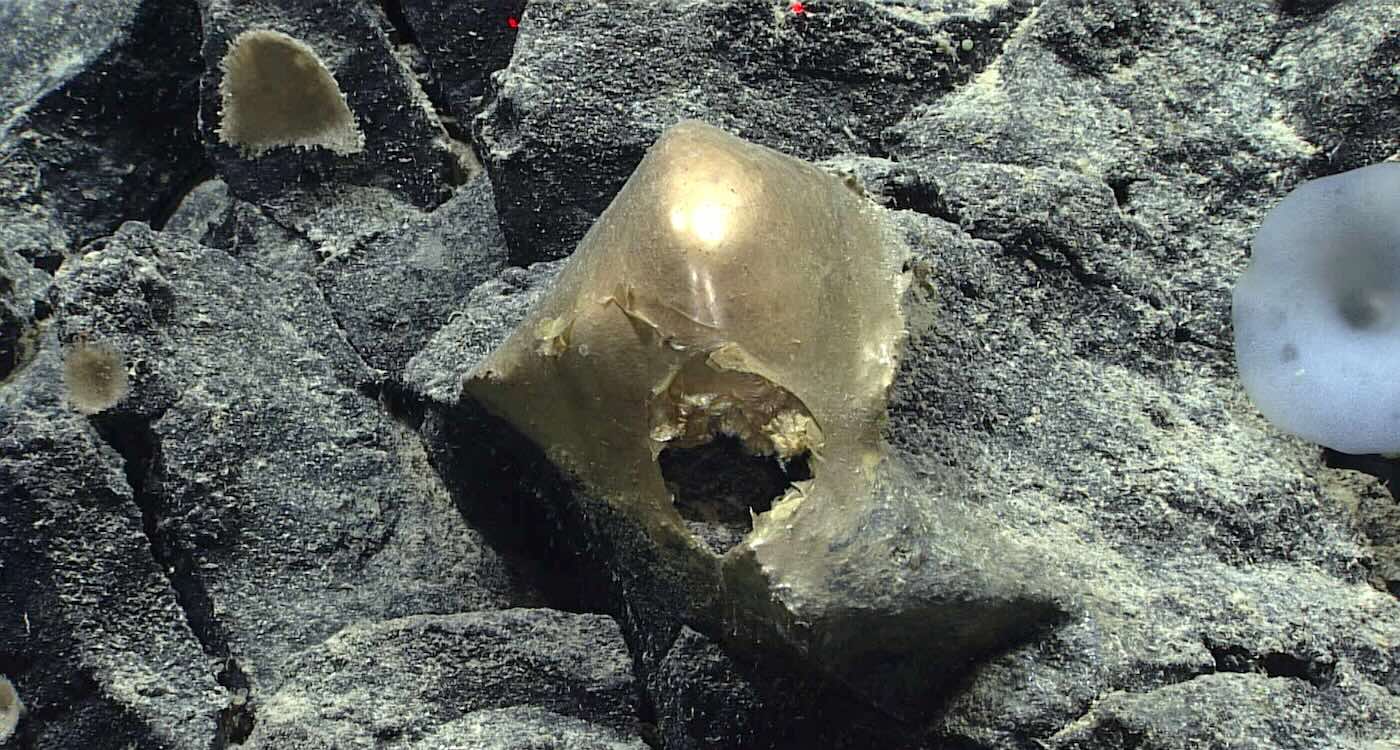
The mystery of the ‘golden orb’ found at the bottom of the ocean has been solved by scientists after two-and-a-half years.
U.S. researchers from NOAA—the National Oceanic and Atmospheric Administration—were left confused and excited by the sighting in 2023 made during their Ocean Exploration program.
During live video footage of the deep sea floor, a member of the Seascape Alaska 5 expedition crew is heard muttering, “It’s like the beginning of a horror movie”. Another commented, “I’m pretty sure this is how the first episode of the X-Files started.”
“It’s common for scientists to find organisms they don’t immediately recognize,” said a NOAA spokesperson in a media statement this week about the discovery made by their Okeanos Explorer ship.
“Most of the time, these mysteries are solved quickly as members of the scientific community chat and pool their knowledge. However, some discoveries turn into real puzzles—like in the case of the ‘golden orb’.”
(Watch the video below with puzzled researchers speculating in real time…)
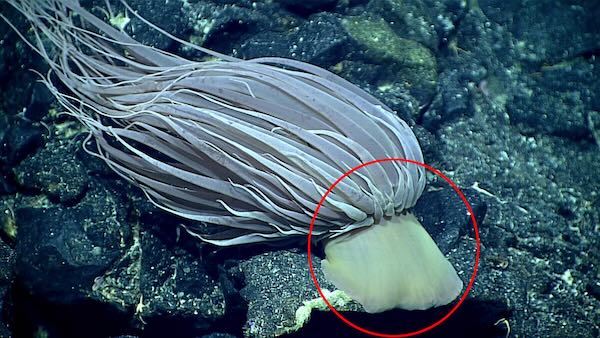
Finally, however, scientists have determined that the confusing golden mass, discovered over 2 miles deep in the Gulf of Alaska (3,250 meters), is a remnant of the dead cells that formed at the base of a giant deep-sea anemone, Relicanthus daphneae.
“Mystery solved: The ‘golden orb’ is not an egg, a sponge, or remnants of a space alien, but a relic of a deep-sea anemone.”
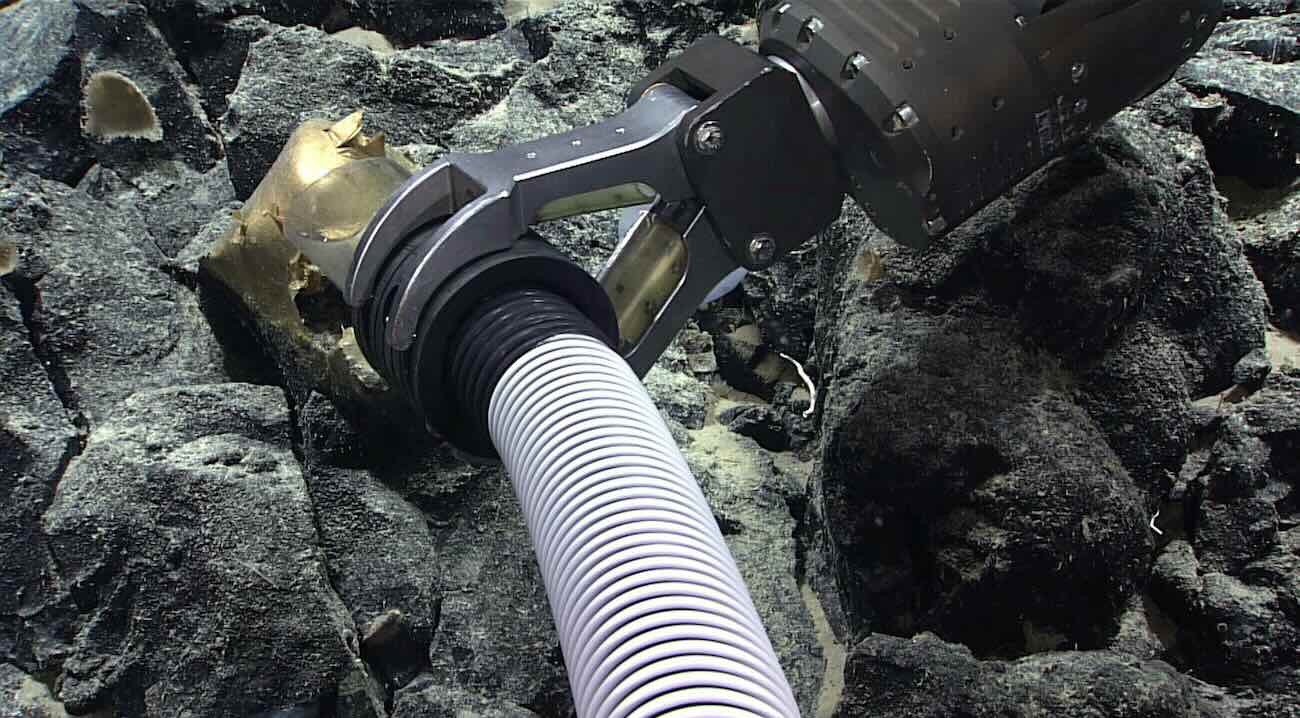
A piece of a previously unknown specimen
They believe the bright leftovers were the part of the anemone that attached to the rock substrate.
Because the enigmatic discovery had attracted a lot of speculation and public interest, the team collected the orb using a suction sampler and sent it to the Smithsonian National Museum of Natural History for further examination and study.
“Identifying the ‘golden orb’ was a multi-year, complex effort.
“In a world accustomed to instant gratification, waiting for scientific research to provide answers can be frustrating. But science takes time.”
“I suspected that our routine processes would clarify the mystery,” explained Allen Collins, Ph.D, zoologist and director of NOAA Fisheries’ National Systematics Laboratory, which is physically located within the Smithsonian National Museum of Natural History.
MYSTERY WHALES: These Rare Whales Had Never Been Seen Alive, Then Scientists Saw Two Near California
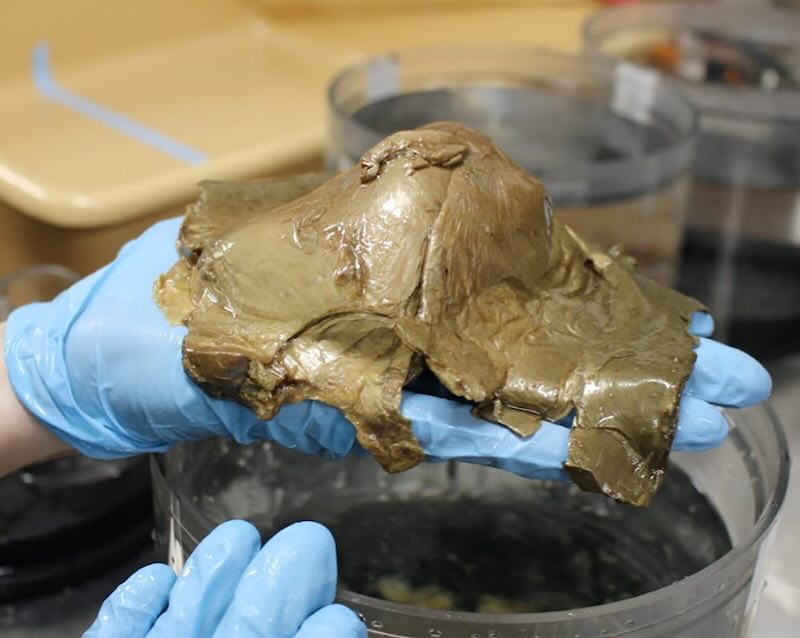
“But this turned into a special case that required focused efforts and expertise of several different individuals. This was a complex mystery that required morphological, genetic, deep-sea and bioinformatics expertise to solve.”
Initial DNA barcoding was inconclusive, likely due to picking up DNA from other microscopic life on the specimen. Moving deeper, whole-genome sequencing confirmed animal DNA and contained a large amount of genetic material from the giant deep-sea anemone, according to the paper published this week. Sequencing the mitochondrial genomes of both specimens confirmed they were genetically almost identical to a known Relicanthus daphneae reference genome.
“While this discovery confirms the identity of the previously unknown specimen, the Earth’s deep ocean still holds many secrets.”
“So often in deep ocean exploration, we find these captivating mysteries, like the ‘golden orb’.
WOW, LOOK:
• Bizarre Deep-Sea Creature – a ‘Death Ball’ Sponge – Discovered in One of the Most Remote Corners of the Planet
• Mauritius Restores Reefs with Heat-Resistant Coral and Sees 98% Survival Rates
“With advanced techniques like DNA sequencing, we are able to solve more and more of them,” said CAPT William Mowitt, acting director of NOAA Ocean Exploration.
“This is why we keep exploring—to unlock the secrets of the deep and better understand how the ocean and its resources can drive economic growth, strengthen our national security, and sustain our planet.”
Watch the NOAA explainer video below…
SHARE THE WONDER With Nature Explorers on Social Media…