All News - Page 452 of 1734 - Good News Network
Home Blog Page 452

She Invited a Homeless Man For Dinner – Now Her Crowdfunding Has Secured Her New Friend a Tiny Home

david l kim r Andrew Embury
David and Kim/Andrew Embury

When you see a homeless person on the street, do you ignore them? Hand them some spare change? Direct them to the nearest social service center?

One Canadian woman went even further than that. At the time, she may not have realized the profound impact her simple act of kindness might have, but her compassion has had life-changing repercussions.

Kim Cormier was working outside her Kingston, Ontario home when David McDonald’s scooter blew a tire. Even though he was a stranger, she agreed to keep an eye on his stuff so it wouldn’t get stolen while he went to fetch a new inner-tube.

When McDonald got back from his errand, not only were his things still there, Cormier invited him in for supper. Over the meal, McDonald, Cormier, and her partner Andrew Embury fell into an easy—if unexpected—camaraderie that was the start of what’s become a beautiful friendship.

For McDonald, the road to homelessness began in 2010 when he suffered a series of personal and financial reverses. The gas station he owned went under. Soon after, his truck and his home followed. Then he and his long-term partner broke up.

By 2016, McDonald was homeless and living in a Toronto park. “I couldn’t imagine being homeless. I cried,” McDonald told CBC. “And so it was hard for me to accept help… charity.”

While McDonald does receive a financial stipend from the government, he declined homeless services because he says “other people are worse off” than him and needed them more.

Kim Cormier

From that Toronto park, McDonald bounced around, staying with relatives when he could, finally ending up in a one-bedroom shared apartment. But faced with daily dangers of theft and threats of violence, he found himself back on the streets—dividing his days between a tent and a derelict transportation trailer.

In the ensuing months, McDonald and Cormier stayed in touch. She and her partner began helping McDonald out with donations of clothing, shoes, and a solar-powered backpack that enabled him to keep his cell phone charged.

Eventually, the couple told McDonald he was welcome to set up quarters in their backyard. Thanks to a sister, McDonald got a new tent equipped with a mattress, couch, and a refrigerator.

An outdoor fireplace has been serving as McDonald’s impromptu kitchen and he’s been given restroom and laundry privileges inside the house.

But since the tent was only suited for three seasons, Cormier came up with a plan to provide McDonald with a more permanent shelter to keep him warm in the winter as well.

With a goal of $18,000, Cormier launched an online fundraiser to buy McDonald his own tiny house.

MORE: Realtor Transforms Abandoned Properties into Tiny Home Villages That Give Permanent Housing to Chronic Homeless

“We are trying to raise as much money as possible to help take the financial burden off ourselves and David’s monthly contribution from collecting aluminum cans and his ODSP monthly housing allowance,” she explained on the campaign’s GoFundMe page.

“Once we have paid off the full price of the micro home the ownership will be transferred into David’s name and he will finally own his own home again. Our long-term goal is for David to own his micro-home and move it to a forever spot that he can live and regain a sense of independence again.”

The response—including a single donation for $2,500 from a caring Samaritan—was so overwhelming that the total amount was soon raised. McDonald’s micro-house is set to be delivered before the cold weather sets in.

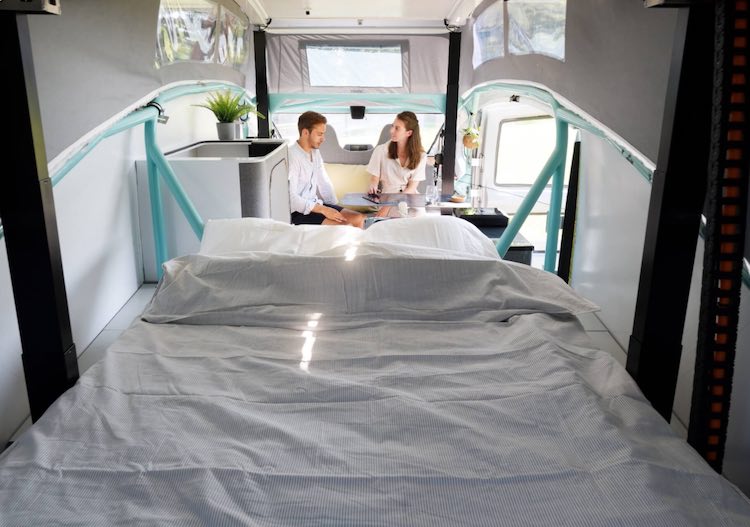
EnerDynamic Hybrid Technologies

While the brand-new tiny home can be transported anywhere, Cormier says that since she considers McDonald “part of the family,” he can stay as long as he likes.

RELATED: Jaden Smith To Open A Vegan Restaurant Where Homeless People Can Eat For Free

For McDonald, the measure of Cormier’s generosity isn’t about material things, it’s about the value of being treated with human dignity and respect.

“You have to swallow your pride when you’re homeless,” he told CBC. “She’s done more than I can ever say thank you for.”

BE GENEROUS With the Good News; Share This Story…

How India’s Air Pollution is Being Turned into Stylish Floor Tiles

Carbon Craft
Carbon Craft

In an effort to spare his generation from the choking air pollution in cities like Delhi, Angad Daryani has invented a filterless outdoor air purifier that collects air particulate matter that can be used by a company that makes custom tiling.

Existing air purification infrastructure is very expensive, and many use filters to clean out particulates, meaning they need replacement filters regularly.

Two of Daryani’s five-and-a-bit-feet-tall devices cost less than the latest iPhone, while filtering 300 cubic feet of air per minute—more than enough for a small family house.

His company Praan has raised $1.5 million in startup investment, billing itself as the world’s most-advanced, cheapest, artificial intelligence air purifier. Firms in his home country of India, but other nations like South Korea and Mexico that struggle with air pollution, have all shown interest.

Daryani plans to use the money to run a pilot program across India this autumn, deploying the device in schools, hotels, and industrial projects. His prime directive is keeping the cost low, as those who suffer most from polluted air are often the poorest in society.

MORE: Mining Zinc, Nickel, and Cobalt from Plants: “Phytomining” is the Sustainable Future

“Many of the world’s most polluted countries are among the poorest,” Daryani explained to the BBC. “Poor people work in factories, build the streets and infrastructure, and take public transport to get to work. They live and work in the most polluted environments.”

Onewhohelps at English, CC license

One of the major selling points of his purifier is that the collection chamber doesn’t need to be changed for six months, but realizing what he and his machines had in fact captured was valuable raw materials, he gave the leftover pollutants to another Indian company called Carbon Craft Design.

RELATED: Researchers Use Wastewater to Generate Electricity – While Cleaning It Up

They make stylish tiles for floors and walls that clean sometimes as much as 5 kilograms of CO2 per tile, and draw carbon emissions from the transport, tanning, paper, and lubricants industries.

Carbon Craft uses the powered air particulate like a dye, combining it with rock waste from quarrying to create a totally upcycled flooring product.

AMPLIFY the Good News by Sharing This Story From India…

“I am not what I ought to be, I am not what I want to be; but still I am not what I once used to be, and by the grace of God I am what I am.” – John Newton

Quote of the Day: “I am not what I ought to be, I am not what I want to be; but still I am not what I once used to be, and by the grace of God I am what I am.” – John Newton

Photo: by Sébastien Goldberg

With a new inspirational quote every day, atop the perfect photo—collected and archived on our Quotes page—why not bookmark GNN.org for a daily uplift?

Lost Sea Turtle Washed Ashore With Hypothermia Gets Flown Home to Spain With its Own Boarding Pass

SWNS
SWNS

An endangered turtle that washed up in Ireland with hypothermia has been returned to its native Canary Islands on a flight—and even had its own boarding pass.

The three-year-old Loggerhead sea turtle, known as Julius Caesar or ‘JC’, was discovered on the beach in County Donegal, but has boarded a flight to much warmer waters.

SWNS

Airline Aer Lingus teamed up with Exploris Aquarium, where the the reptile has been living for the last three years, to fly him to Gran Canaria for his release.

Aer Lingus pilot, Captain Peter Lumsden, said: “It is our pleasure to welcome aboard a very special passenger today and to ensure the safe transportation of JC the Turtle to Gran Canaria.

“Since they first got in contact, Aer Lingus has worked closely with the team from Exploris Aquarium and our Maintenance & Engineering and Ground Operations teams to ensure that all JC’s needs are met as we complete this important mission.

Keeping the turtle’s temperature above 19 degrees is critical to his wellbeing and he requires regular monitoring and shell lubrication so placing him in the aircraft hold was not an option.

SWNS

His specially designed crate was securely strapped across a number of seats in the cabin.

MORE: The Last Known Swinhoe’s Turtle on Earth Was Alone Until This Female Was Found – Researchers Hope for Babies

One big journey

In January 2019, weighing a few hundred grams, nine-month-old JC is thought to have gotten caught up in the wrong current and swept along the Gulf Stream.

Loggerhead turtles are endangered and are happiest in warmer climates, so the chilly waters of the North Atlantic put JC’s life in danger.

Fortunately, he was discovered by a local family and taken to Exploris Aquarium in Portaferry, County Down, to recuperate in a tropical tank with tasty snacks of fish mixture and squid.

The pandemic prevented him from his repatriation for three years, however on September 15 the now-25kg reptile was packed into a waterproof crate and boarded flight EI 782 from Dublin to Gran Canaria.

He was accompanied by his minder Portia Sampson, who ensured he was safely passed over to the Centro de Recuperación de Fauna Silvestrede Tarifa on arrival.

Less than 24 hours later, JC became fully acclimatized to his new home and was released back into the sea.

CHECK OUT: Seaweed-Eating Giant Crabs Could Help Save Florida Coral Reefs – And They’re Lovingly Named ‘The Reef Goats’

Aer Lingus previously transported another rogue loggerhead turtle, Leona, to Las Palmas, Gran Canaria in December 2014 after she was discovered in County Clare.

SWNS

Loggerhead turtles are a vulnerable and endangered species and their numbers are in decline in the wild.

According to the World Wildlife Fund (WWF) they are “the living representatives of a group of reptiles that has existed on Earth and traveled our seas for the last 100 million years.”

GOOD News Should Soar—Share This Story…

Firefighters Have Been Winning the Battle To Protect Sequoia’s Giant Trees – Using Foil Blankets (LOOK)

firefighters tree foil released public domain epa
EPA

Expert firefighting, contingency planning, and gallons upon gallons of water mean that the stands of giant sequoia trees in California’s Sierra Nevada mountains appear to be safe for future generations.

The September 9th “Windy Fire,” started by a lighting strike, burned 25,000 acres in Peyrone Sequoia Grove and the Red Hill Grove before it converged on Sequoia National Park.

There, firefighters wrapped many of the famous trees such as “General Sherman” the largest tree on Earth by volume, in fire-resistant foil capable of withstanding 1,200°F.

“The fortunate thing is the Park Service has done a lot of prescribed burning in [the park] since the 1960s, and so it’s making their job a lot easier,” Jon Wallace, a chief firefighter said during a Sunday morning briefing. “There’s also a myriad of walking trails in there, which have given firefighters places to work off of,” he added.

“The structures in the Giant Forest, the museum, all the infrastructure around the General Sherman tree, that’s all got sprinklers on it, and firefighters are running those sprinklers pretty much nonstop to make sure everything stays wet. But right now, all the protection efforts in the Giant Forest are going really well,” he said.

MORE: After Massive Wildfires, DroneSeed is Replanting Forests 6x Faster By Using Special Drones

A trip to Sequoia National Park teaches one that the giant conifers actually withstand fires very well, and many of those whose count of years stretch into the thousands would have endured many fires.

Sequoia & Kings Canyon National Parks

Their bark, like a giant spongy blanket, can be 32-inches thick, and protects them from the flames. The trees actually need levels of heat which only a fire can generate to release the seeds stored in their cones.

RELATED: NASA Helps Firefighters By Sending Pics From International Space Station to Show Key Spots of Moving Wildfires

In practice then, sequoias are literally born in flames.

Firefighter tree public domain released epa

However with year after year of California drought conditions mixed with predictions that weather events like fires will become more severe with climate change, it pays to be safe, and according to California Times News, more than 600 firefighters were battling the blaze at one point, most of them working within the Trail of 100 Giants grove.

PROTECT the Hope by Sharing This Story…

Listen to Millions of Monarch Butterflies Make One of the Rarest Sounds on Earth: ‘Just like a waterfall’

Monarch butterflies, fluttering in their millions on 3,000-mile journeys, as luminous as stained glass. Seeing them mass migrate is one of the world’s great spectacles. But what about hearing them?

Phil Torres of the YouTube channel The Jungle Diaries has recorded the sounds of millions of endangered monarchs as they warm up, then flap their bright wings along branches and on leaves and up tree trunks in the Mexican rainforest.

MORE: Historic Deal to Protect Millions of Monarch Butterfly Habitat Acres is Unprecedented

The resulting waterfall-like sound is, quite simply, a wonder.

(LISTEN to the video below.)

FLUTTER These Stunning Sounds Over to Others…

Bezos Earth Fund Pledges $1B to Conserve Land and Sea in Critical Areas ‘We can and must reverse this’

Bezos Earth Fund logo, Bezos Earth Fund / Jeff Bezos, CC Seattle City Counc
Bezos Earth Fund logo, Bezos Earth Fund / Jeff Bezos, CC Seattle City Council

Jeff Bezos has placed an additional $1 billion into the Bezos Earth Fund to be spent on creating, expanding, managing, and monitoring protected and conserved areas of wilderness.

The money will take the form of grants to organizations working to preserve lands and secure Indigenous people’s rights in the Congo, tropical Andes Mountains, and across Oceania.

The latest pledge is on top of the ten-thousand millions he’s already devoted towards combating climate change more directly, with nearly one-thousand of those millions having already been distributed as grants.

MORE: Jeff Bezos is Giving Away $10 Billion in Grants to Innovators in the Climate Battle

“When people hanker for the good old days and glamorize the past, they’re almost always wrong. By most metrics, life is better than it was in the past,” Bezos said in a statement. “But there is a notable exception—the natural world is not better today than it was 500 years ago, when we enjoyed unspoiled forests, clean rivers, and the pristine air of the pre-industrial age.”

The first round of grant money went mostly to large, well-organized global conservation names like the WWF.

However the Amazon founder isn’t just throwing money around. Unsurprisingly, the man who transformed global e-commerce has a larger plan. Research has shown that if governments simply recognized all existing Indigenous land claims, it would be the single largest conservation victory since the invention of the national park.

The regions Bezos Earth Fund is looking to preserve are, to use the parlance of a famous television conservationist, “chock-a-block” with Indigenous groups.

“Conservation is one of the most effective anti-poverty strategies we have,” said United Nations Deputy Secretary-General Amina Mohammed. “I warmly welcome this generous commitment, which will help deliver the Sustainable Development Goals.”

RELATEDSwiss Businessman is Contributing $1 Billion Towards Protecting 30% of the Planet

“We can and must reverse this anomaly,” Bezos added. “By coming together with the right focus and ingenuity, we can have both the benefits of our modern lives and a thriving natural world. I hope this commitment inspires others to make their own pledges to protect and conserve nature and help in the fight against climate change.”

Multiply The Good News By Sharing It With Your Friends On Social Media…
Old Irish Goats Return to Hills of Dublin After a Century to Join Firefighting Brigade –And They’re Loving It

Howth herd – Old Irish Goat Society
Diego Cue, CC license

After the peninsula on Howth’s Head caught fire last year, pouring clouds of black smoke over the financial district of Ireland’s fair capital, city planners knew they needed to take a sterner stance on out-of-control weeds.

So they hired a crack team of landscapers led by a dedicated forewoman to manage the weeds after quickly began to grow back over the firebreaks that had been dug.

The Old Irish Goat is, amazingly, not the name of a pub, but a critically endangered species that was Ireland’s naturally-adapted breed, which had not been present in these hills in over a century.

It is their ceaseless munching of local species that make them ideal for the job of de-weeding, and for the next three years in their new home their appetites will become the ultimate fire brigade.

Because the goat had been bred out of existence in captivity, and only roams remote hillsides in small numbers, an organization called the Old Irish Goat Society has been dedicated to keeping their DNA free from domestic goat genetics and happily supplied a small herd of 25 to take over as Howth’s Head new ‘firefighters’.

The Old Irish Goat with short legs, large horns, a thick coat, and small ears worn in the pricked position. They’re perfectly adapted to life on the Irish hills.

RELATED: ‘The Running of the Goats’: NYC Park Gets Rid of Invasive and Poison Plants With 24 Goats Enjoying a Vacation – WATCH

“Our goats come from the mountains and eat whatever’s there, scrub, heather, gorse. They’re the most suitable for this task,” the Old Irish Goat Society’s chair, Pádraic Browne, told The Guardian.

“We’re giving our beautiful little creatures a job to do, which they’re doing. They’re not just a tourist attraction, they can earn their keep.”

Howth herd – Old Irish Goat Society

Currently the firefighters consist of 14 nannies and 11 kids, to be added to with adult males until it grows to about 100 goats—a necessary reinforcement as the strength of Irish wildfires on Howth and elsewhere have been growing over recent years.

POPULAR: Hiker Reaches Top of Summit and Has the Most Beautiful Encounter With Mountain Goats

As strange as it may seem in a country as seemingly wet and cloudy as Ireland to have multiple firefighter units for a single city, the unique solution gives the chance for a largely forgotten piece of wild natural heritage to raise awareness of the fascinating breed on its own behalf.

WATCH a video about these beautiful goats…

SEND These Old Irish Goats Wandering in Your Social Media Feeds…

The power which resides in you is new in nature, and no one else knows what that is, nor do you, until you have tried. – Ralph Waldo Emerson

Quote of the Day: The power which resides in you is new in nature, and no one else knows what that is, nor do you, until you have tried. – Ralph Waldo Emerson (paraphrased from Self Reliance)

Photo: by Martin Sanchez

With a new inspirational quote every day, atop the perfect photo—collected and archived on our Quotes page—why not bookmark GNN.org for a daily uplift?


Rare Rhino Species Sees Dramatic Population Growth – From Just 100 to 3,700 Today – as Poaching Falls

Vaughn Wright

The populations of several species and subspecies of rhinoceros are increasing, some dramatically, while poaching rates in east Asia have plummeted over the decade, a new report from the International Rhino Foundation (IRF) reveals.

Involved in all things rhino, the IRF releases an annual report known as The State of the Rhino, which this year highlights that even in the midst of a rare pandemic, dedicated individuals in a dozen countries are working to keep rhino numbers healthy and recovering.

Indeed, the IRF has invested $20 million worldwide into rhino conservation projects over the last 10 years, and in many countries their work is paying off.

The largest success has no doubt come by way of the greater one-horned rhino. Native to India and Nepal, during the early 1900s there were a mere 100 individuals left. Today there are 3,700 and ever increasing in number. Over the last eight years, poaching incidents have fallen from 41 in 2013, to just 1 at present day.

In the Indian state of Assam, rhinos can be found in four protected areas, and this year the population in the magnificent Manas National Park on the border with Nepal had reached 47 individuals having only been established with 4 just a few years ago.

RELATED: Herd of Elephants to be Moved from UK to Kenya in Rewilding ‘World First’

Nepal also saw an increase of 107 greater one-horned rhinos in their country.

Javan rhinos in Indonesia welcomed four new calves into the world, increasing the critically-endangered species to 75, greatly offsetting the rate of natural death. This is almost double the number of Javan rhinos from 2011.

In Africa, the black rhino has seen an encouraging population increase of 16-17% over the past decade, while South Africa’s “Rhino court” established to hear exclusively poaching cases was reopened in April of this year, giving rangers the opportunity to testify against suspects without expensive travel to a major city, and without poaching cases falling into a court backlog.

LOOK: New Zealand Penguin Hospital Saves Endangered Birds That Were Facing Extinction

In Zimbabwe, black rhino were reintroduced after a 30-year absence and are growing steadily, while in Kenya, anti-poaching efforts have dropped the number of rhinos killed to 0 this year, down from a high of 59 in 2013.

Vaughn Wright

“We must act today, to ensure these marvelous creatures can thrive for future generations,” said Nina Fascione, executive director of IRF. “Let’s continue to build on our successes of greater one-horned, black, and Javan rhinos and reverse the declines for Sumatran and white rhinos, working together so rhinos can continue to thrive on Earth.”

MORE Great News: 100-Year-Old Galápagos Giant Tortoise Found on Fernandina Island is Indeed Member of ‘Extinct’ Species

CHARGE Over to Your Social Media Pages to Hail This Good News…

Have We Detected Dark Energy? Cambridge Scientists Say It’s a Possibility

Betmari, CC license
Betmari, CC license

Dark energy, the mysterious force that causes the universe to accelerate, may have been responsible for unexpected results from the XENON1T experiment, deep below Italy’s Apennine Mountains.

A new study, led by researchers at the University of Cambridge and reported in the journal Physical Review D, suggests that some unexplained results from the XENON1T experiment in Italy may have been caused by dark energy, and not the dark matter the experiment was designed to detect.

They constructed a physical model to help explain the results, which may have originated from dark energy particles produced in a region of the Sun with strong magnetic fields, although future experiments will be required to confirm this explanation. The researchers say their study could be an important step toward the direct detection of dark energy.

Everything our eyes can see in the skies and in our everyday world – from tiny moons to massive galaxies, from ants to blue whales—makes up less than five percent of the universe. The rest is dark. About 27% is dark matter—the invisible force holding galaxies and the cosmic web together – while 68% is dark energy, which causes the universe to expand at an accelerated rate.

“Despite both components being invisible, we know a lot more about dark matter, since its existence was suggested as early as the 1920s, while dark energy wasn’t discovered until 1998,” said Dr Sunny Vagnozzi from Cambridge’s Kavli Institute for Cosmology, the paper’s first author. “Large-scale experiments like XENON1T have been designed to directly detect dark matter, by searching for signs of dark matter ‘hitting’ ordinary matter, but dark energy is even more elusive.”

To detect dark energy, scientists generally look for gravitational interactions: the way gravity pulls objects around. And on the largest scales, the gravitational effect of dark energy is repulsive, pulling things away from each other and making the universe’s expansion accelerate.

MORE: Astronomers Spot Light From Behind a Black Hole for the First Time – Proving Einstein Right Again

About a year ago, the XENON1T experiment reported an unexpected signal, or excess, over the expected background. “These sorts of excesses are often flukes, but once in a while they can also lead to fundamental discoveries,” said co-author Dr Luca Visinelli, from Frascati National Laboratories in Italy. “We explored a model in which this signal could be attributable to dark energy, rather than the dark matter the experiment was originally devised to detect.”

At the time, the most popular explanation for the excess were axions—hypothetical, extremely light particles—produced in the Sun. However, this explanation does not stand up to observations, since the amount of axions that would be required to explain the XENON1T signal would drastically alter the evolution of stars much heavier than the Sun, in conflict with what we observe.

We are far from fully understanding what dark energy is, but most physical models for dark energy would lead to the existence of a so-called fifth force. There are four fundamental forces in the universe, and anything that can’t be explained by one of these forces is sometimes referred to as the result of an unknown fifth force.

However, we know that Einstein’s theory of gravity works extremely well in the local universe. Therefore, any fifth force associated to dark energy is unwanted and must be hidden, or screened, when it comes to small scales, and can only operate on the largest scales where Einstein’s theory of gravity fails to explain the acceleration of the Universe. To hide the fifth force, many models for dark energy are equipped with so-called screening mechanisms, which dynamically hide the fifth force.

Vagnozzi and his co-authors constructed a physical model, which used a type of screening mechanism known as chameleon screening, to show that dark energy particles produced in the Sun’s strong magnetic fields could explain the XENON1T excess.

“Our chameleon screening shuts down the production of dark energy particles in very dense objects, avoiding the problems faced by solar axions,” said Vagnozzi. “It also allows us to decouple what happens in the local very dense Universe from what happens on the largest scales, where the density is extremely low.”

The researchers used their model to show what would happen in the detector if the dark energy was produced in a region of the Sun called the tachocline, where the magnetic fields are particularly strong.

“It was really surprising that this excess could in principle have been caused by dark energy rather than dark matter,” said Vagnozzi of the study results. “When things click together like that, it’s really special.”

RELATED: Listen to the First Eerie Sounds From Mars: China’s Rover Films Itself Driving on Red Planet, Making History

Their calculations suggest that experiments like XENON1T, which are designed to detect dark matter, could also be used to detect dark energy. However, the original excess still needs to be convincingly confirmed. “We first need to know that this wasn’t simply a fluke,” said Visinelli. “If XENON1T actually saw something, you’d expect to see a similar excess again in future experiments, but this time with a much stronger signal.”

If the excess was the result of dark energy, upcoming upgrades to the XENON1T experiment, as well as experiments pursuing similar goals such as LUX-Zeplin and PandaX-xT, mean that it could be possible to directly detect dark energy within the next decade.

Source: Cambridge University

BRING Your Space-Minded Chums News of This Far-Out Research…

Six in 10 Americans Agreed They’re More Financially Confident Than They Were Before the Pandemic

Gen Z and millennial Americans are “cashing in” on lost time due to the pandemic and applying new financial lessons from these life-changing years, according to a new survey.

The new poll asked 2,000 Gen Z and millennial Americans (born in the years 1981-2003) and asked about their new spending and saving habits during the ongoing impact of the pandemic.

The results found that nearly seven in 10 (69%) are getting back to spending money on things they missed because of COVID-19. And, 75% are focusing their spending on activities that allow them to catch up with friends and family.

When lifted restrictions and re-openings began in early summer, Gen-Z and millennials took advantage, with 51% of respondents splurging on a trip away, while 49% have been spending money on drinks and dinners at bars and restaurants.

Conducted by OnePoll on behalf of Laurel Road, a digital banking platform of KeyBank, the survey also found that 58% created new savings goals because their spending habits have changed.

Six in 10 respondents agreed they’re more financially confident than they were before the pandemic and they credit their need to be more financially responsible to COVID-19.

It’s translated to a shift in how Gen Z and millennial Americans manage their personal finances, as just over 30% admit they’re budgeting for the first time, while a further 39% are using new methods, like apps or dedicated spreadsheets to keep track of their budget.

Saving more

The survey found that 61% of respondents managed to save at least $1,000 from the start of the pandemic through the start of summer 2021 and one in 10 saved over $5,000.

RELATED: Nurse With No Experience Trading Stocks Wins $10,000 Playing a New Fantasy Stock Pick Game

With those new savings, Gen-Z and millennials say they’ll put that towards paying off their student loans (38%), spend it on a vacation (37%), pay their rent (32%) and make payments on their credit cards (29%).

“It’s encouraging to see that young Americans are feeling more financially confident throughout what continues to be a very difficult and challenging time, and that so many are focused on maintaining their hard-earned savings,” said Alyssa Schaefer, Chief Experience Officer at Laurel Road.

The survey found that 77% of those with private loans now feel prepared to start paying again, compared to 62% who have federal student loans.

Respondents’ confidence in their ability to save remains high, with two-thirds (66%) noting they believe they can achieve their savings goals moving forward.

MORE: This is the Surprising Outcome When a California City Gave Struggling Folks Free Money for a Year

In fact, this is top of mind for many, as over one in five (22%) of those surveyed noted that if they had an extra $1,000 to spend for the rest of 2021 they would put it in their savings account.

TOP CHANGES TO PERSONAL FINANCE

1. Began using a new method of budgeting (apps, spreadsheets, etc.) – 40%
2. Created new savings goals – 31%
3. Now budgeting for the first time – 30%
4. Spoke with a financial advisor – 24%
5. Planning to pay off more of my student loans – 20%

INCREASE Your Friends’ Good News Budget—Share This Story…

Cozy Dining Cabins Made From Plastic Bottles Withstood the NYC Hurricane And May Be Future of Disaster Relief

Jody Kivort/Friendship Products LLC

A design for plastic bottles that can be linked together has caught on as a revolution in disaster relief. Called Friendship Bottles, they have been used to construct small dining cabins that are also able to withstand Category 2 storm winds.

Jody Kivort/Friendship Products LLC

Among the most common resource shipped on pallets to disaster-stricken areas is water. If that water were to arrive in Friendship Bottles, those whose houses were destroyed could use them to create a temporary shelter.

This function of use as sustenance-shelter is a no-brainer, according to the inventor of the Friendship Bottle Tim Carlson.

Carlson had been developing the design for the bottles for a decade before COVID-19 hit his home state of New York. But when he was seeing all the makeshift outdoor seating arrangements making his way to the pandemic-hit city, he realized it was the perfect opportunity to test his design.

According to Fast Company, he contacted Peaches Kitchen & Bar and teamed up to assemble two small cabins of Friendship Bottles with wooden support beams.

Along with being quite a striking atmosphere to sit inside, because they acted like a big prism from passing cars, the cubbies stood up to the storms that recently smashed the Big Apple, proving the concept as a disaster-ready building material.

MORE: Thailand is Making COVID-19 Protective Gear From Upcycled Bottles

Through a partnership with the Center for Architecture Science and Ecology, Friendship Bottles are being compared to other shelters used by the Red Cross and Red Crescent, including the scenarios and logistics of disaster relief efforts that might use them as delivery containers for water and subsequently as building material.

Jody Kivort/Friendship Products LLC

Elsewhere, plastic bottles are also being made into homes and shelters that are proving to be both bulletproof and earthquake resistant in Nigeria, where they are filled with sand and pressed together with readily available mud.

Friendship Bottles require no mortar or wire of any kind, offering a different kind of solution.

One thing the Friendship team feel they have as an advantage is that there are far fewer limits on what can be assembled using the bottles after they are emptied.

RELATED: New Solar-Powered Beach Robot Filters Even Tiny Plastic – And 30x Faster Than Humans

Rather than a prefabricated shelter with instructions, the bottles can be turned into bricks, which can then be made into anything.

(WATCH the video for this story below.)

WHY BOTTLE UP the Good News? Share It Wide and Far…

Kuwait is Transforming its Massive ‘Tire Graveyard’ into a New Green City

Rendering of the future city/LH

A landfill of 42 million tires in the sands of Kuwait is finally being cleaned up and recycled.

This news in itself would be a major relief to locals who have to suffer from the clouds of black smoke arising during fires. But the government isn’t stopping there. They are aiming to create a green city of 25,000 homes in line with a post-oil Persian Gulf, with a focus on sustainability and tourism.

The first step is to clear the ground. The Salmiya area, nicknamed “Rubber Mountain,” consists of hundreds of small ziggurat-like mounds of spent tires—a reaction from the one million cars which were added to Kuwait’s roads over the decade.

EPSCO Global General Trading has opened a recycling facility for the tires, where they’ve been collected, shredded, and pressed into other materials like tiling and playground flooring.

The plant opened in January of 2021, and has high hopes for exporting the recycled material out to nearby gulf neighbors.

In their place will be South Saad Al-Abdullah City, a green city characterizing a new era in the Middle-Eastern country.

MORE: New Solar-Powered Beach Robot Filters Even Tiny Plastic – And 30x Faster Than Humans

“We have moved from a difficult stage that was characterized by great environmental risk,” says Oil Minister Mohammed al-Fares. “Today the area is clean and all tires have been removed to begin the launch of the project of Saad Al-Abdullah city.”

Expected to cost €3.3 billion and require 30 years to complete, the city hopes to feature green technology presumably like the kind one can see in other cities on the Persian Gulf, both existing and not.

RELATED: Mountains of Garbage in Russia are Being Turned into Fashionable Accessories

Saudi Arabia is planning to build a zero-emissions, car-less future city that’s centered around access to big data rather than water or crops.

(WATCH the video for this story below.)

DON’T WASTE Hope for Our Future—Share This News…

“Let us live so that when we come to die even the undertaker will be sorry.” – Mark Twain

Quote of the Day: “Let us live so that when we come to die even the undertaker will be sorry.” – Mark Twain

Image: by GNN

With a new inspirational quote every day, atop the perfect photo—collected and archived on our Quotes page—why not bookmark GNN.org for a daily uplift?


Babies Mixed Up in Hospital, But Then Families Decide to Raise Them Together and They’re All Best Friends Now

Melissa (L) and Caterina (R); Facebook

From the truth is stranger than fiction files comes this story of two babies swapped at birth due to a hospital error. The mixup was discovered when the toddlers were 3, and then, the biological parents were faced with the agonizing prospect of taking the little girls away from the only families they’d ever known.

As gut-wrenching as the scenario sounds, this one has a plot twist that’s anything but a tearjerker. Rather than rip the families apart, the collective parents found a way to raise their daughters together—under one roof.

Sicilian moms Caterina Alagna and Melissa Fodera, from the fishing village of Mazara del Vallo, were both 23 years old when they gave birth to baby girls 15 minutes apart as the clock ticked toward midnight on December 31, 1998.

During the New Year’s Eve celebrations, the on-duty nurses somehow managed to switch out their two tiny charges.

When it was time for the mothers and newborns to head home, Alagna and Fodera both questioned why the infants weren’t wearing the clothing they’d brought, but the hospital staff assured them it was merely a wardrobe snafu.

Three years later, as Alagna was picking up her daughter Melissa from nursery school, she saw something that shook her to the core. Another child, Caterina by name, bore an uncanny resemblance to Alagna’s two other biological daughters.

When she recognized the little girl’s mother Fodera as the woman she’d shared the maternity ward with, the clothing incident popped into her mind—and something clicked.

The swaddling hadn’t been switched… the babies had.

MORE: Mom’s Zoo Pic is Adorably Photo-bombed by Stingray With Remarkable Resemblance to Her Daughter

15 days later, DNA tests confirmed her suspicions. It was a choice neither one of them wanted to face.

“I challenge anyone to raise a daughter for three years then give her up over a simple mistake,” Fodera said in an interview reported by the Times UK.

But rather than simply make the swap back, the families decided it would be best to let everyone acclimate to the new situation slowly. Both girls and both sets of parents began spending time together in one house. The arrangement worked out so well that, when the two families separated on the advice of experts for a six-month trial, the plan was quickly scuttled.

Caterina (L) and Melissa (R); Facebook

The switch was explained to Melissa and Caterina when they were 8 years old. The only real complication they’ve faced is the issue with their legal names. Emotionally, however, the two girls, now grown to young adulthood, couldn’t be better.

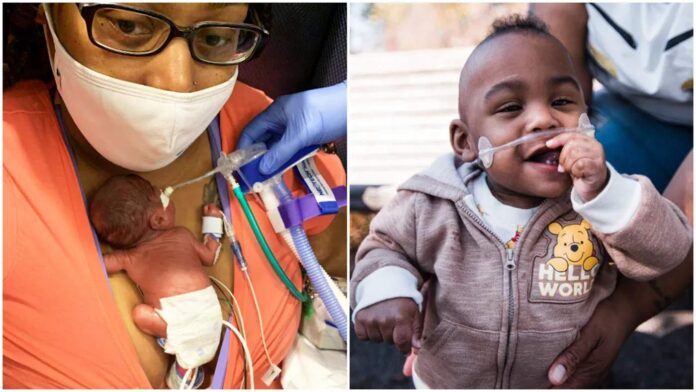
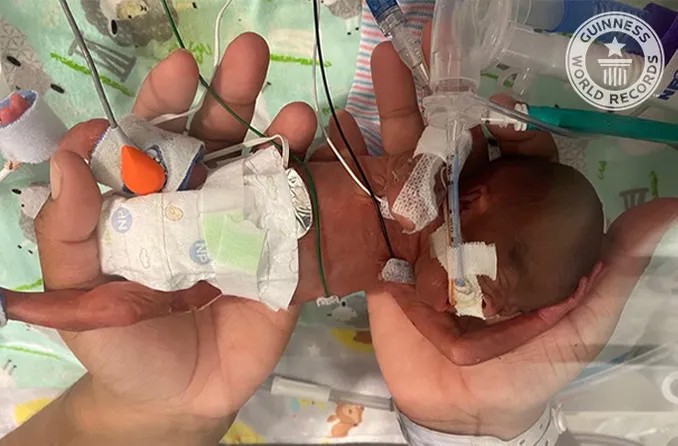
LOOK: Sweet Proposal: A Premature Newborn Baby Just Helped His Dad Ask His Mom to Marry Him

Mauro Caporiccio, author of the book Sisters Forever, also recently released as a film by RAI TV told the Times, “The girls effectively grew up with four parents and eight grandparents, and the experiment worked… Today they are more like twins than sisters and there is a kind of love which binds the two families.”

Caterina (L) and Melissa (R); Facebook

The moral of the story? We may not be able to choose the families we’re born into, but we can choose the families we make—and if that choice is made with love, that can be a special thing indeed.

SEND This Story to the Favorites In Your Life….

This Nissan Worker With ‘Enhanced Senses’ Has a Job to Ensure the Perfect ‘New Car Smell’

SWNS
SWNS

Car manufacturer Nissan employs a member of staff who has ‘enhanced senses’—to ensure its products have the all-important ‘new car smell’.

Peter Karl Eastland has a master’s degree in chemistry and forensic science from Leicester University. But he also possesses an extremely acute sense of smell, a gift he realized he had from an early age, which allows him to identify more than 15 smell categories.

Nissan recognized he has the ‘nose for the job’ and appointed him as the ‘odor evaluation lead engineer’ at its European Technical Centre in Bedfordshire.

His job is to ensure the consumer experience in the new Qashqai model isn’t compromised by any unappealing odors.

Peter, dubbed the ‘Nose of Nissan’, said: “I remember as a young kid playing games where we had to identify different food stuffs, like flavours of crisps [chips], sweets, or drinks by their smell alone.

“I was able to correctly identify the difference between the own-brand supermarket items and the leading brands’ products, even when the flavor was meant to be the same.

“At Nissan, I work with a lot of different materials, for example polymers, rubbers, and adhesives.

“Having a trained nose means that I can tell the difference between fake and real leather, or cloth and fabric.

MORE: NASA-Designed Perfume Gives You The Smell Of Outer Space – Without Leaving Orbit

“We aim to provide the best sensory experience for the customer. While tastes and preferences evolve over time, smell remains a constant.

“Therefore, it is part of our job to make sure that any material we use is always going to be perfect in terms of odor and that all of the senses are harmonized.”

Liaising with the Nissan engineering and manufacturing teams, Peter and his team test all the materials, such as the soft material used for the new 3D diamond quilted seats in a variety of conditions to replicate real-world environments.

They have to consider that the chemical properties of these materials, such as odor, can change according to temperature.

Where a potential new material or chemical is found to negatively affect the overall cabin ambience, Peter and his colleagues will identify alternatives to ensure the ‘sanctity’ of the new-car smell.

The evaluation process blends objective and subjective assessment, culminating in a rigorous process that leaves no stone unturned in the pursuit of that perfect new-car smell.

David Moss, senior vice president, region research & development, added, “That new car smell isn’t just a consequence of the manufacturing process.

RELATED: What Makes the Sea Smell So Unique?

“Months of work are devoted throughout the development phase of the new vehicle to carefully analyze the use of materials and chemicals, such as seat fabric, adhesives, and polymers, to ensure that they don’t combine to generate an unpleasant odor for the car’s occupants.

“It reflects the lengths Nissan goes to in order to make the ownership experience of any new Nissan exactly what our customers hope and expect—even in this very specialiszd area.”

SNIFF OUT Fascinating Stories for Your Mates, Share This One…

Standing More Often May Help Prevent Chronic Diseases Like Type 2 Diabetes, Researchers Say

In a Finnish collaborative study, researchers noticed that standing is associated with better insulin sensitivity. Increasing the daily standing time may therefore help prevent chronic diseases.

Insulin is a key hormone in energy metabolism and blood sugar regulation. Normal insulin function in the body may be disturbed by, for example, being overweight, leading to decreased insulin sensitivity and increased risk of developing type 2 diabetes and cardiovascular diseases.

Type 2 diabetes is one the most common lifestyle diseases worldwide, and its onset is usually preceded by impaired insulin sensitivity, or insulin resistance. This refers to a state in which the body does not react to insulin normally, and the blood glucose levels rise.

Lifestyle has a strong impact on insulin resistance and the development of type 2 diabetes, and regular physical activity is known to have an important role in the prevention of these issues.

However, so far, little is known about the impact of sedentary behaviour, breaks in sitting, and standing on insulin resistance.

In a study of Turku PET Centre and UKK institute, the researchers investigated the associations between insulin resistance and sedentary behaviour, physical activity and fitness in inactive working-age adults with an increased risk of developing type 2 diabetes and cardiovascular diseases.

In the study, the researchers observed that standing is associated with better insulin sensitivity independently of the amount of daily physical activity or sitting time, fitness level, or being overweight.

“This association has not been shown before. These findings further encourage replacing a part of daily sitting time with standing, especially if physical activity recommendations are not met,” says Doctoral Candidate Taru Garthwaite from the University of Turku.

New Findings

The study also emphasizes the importance of healthy body composition on metabolic health. The results show that increased body fat percentage was a more important factor in terms of insulin sensitivity than physical activity, fitness, or the amount of time spent sitting.

Standing, on the other hand, was associated with insulin sensitivity independently, irrespective of body composition.

“Regular exercise is well known to be beneficial for health. It seems that physical activity, fitness, and sedentary behaviour are also connected to insulin metabolism, but indirectly, through their effect on body composition,” Taru Garthwaite explains.

Causal effects cannot yet be predicted based on this study, published in Journal of Science and Medicine in Sport, but according to Garthwaite, the results suggest that increasing daily standing time may help in prevention of lifestyle diseases if physical activity recommendations are not met.

Next, the researchers aim to investigate how changes in daily activity and sedentariness impact cardiovascular and metabolic disease risk factors and metabolism by comparing two groups in an intervention study of a longer duration.

“Our aim is to study if reducing daily sitting time by an hour has an impact on energy metabolism and fat accumulation in liver and the whole body, for example, in addition to insulin sensitivity and blood sugar regulation,” says Garthwaite.

A Significant Win for the Planet: Leaded Gasoline Finally Eliminated Worldwide

Leaded gas, one of our species’ great pollutants, is no longer made or used.

The last country which sold leaded gasoline, Algeria, ceased to do so this month, 41 years after the first country—Japan—made the decision.

It was in the early days of the automobile’s ascension that gasoline producers began to add different chemicals to prevent damage to the interiors of their engines. Lead quickly began to represent the superior choice, which over the next 80 years was shot out through the exhaust pipes of cars around the world.

U.S. researchers were already certain of lead’s toxic effects by the time the EPA was created in 1973, at which time the U.S. began a 25-year phase out. Japan only needed seven years following those initial reports to ban leaded gas, with Austria, Canada, Slovakia, Denmark, and Sweden following shortly after. The U.S. and UK finally removed leaded gas in the late ’90s, after which most countries followed.

“The elimination of lead from gas is one of the great environmental achievements of all time,” Carol Browner, administrator of the EPA during the year 1996 said. “Thousands of tons of lead have been removed from the air, and blood levels of lead in our children are down 70 percent. This means that millions of children will be spared the painful consequences of lead poisoning, such as permanent nerve damage, anemia or mental retardation.”

MORE: Solar-Powered Refrigeration Trucks Will Cut Pollution From Idling Diesel Engines

Indeed the global ban is projected to prevent 1.2 million premature deaths worldwide, and save a total of $2.4 trillion in medical costs for treating lead poisoning, which can damage pretty much every major system in the human body.

A detailed summary of the leaded-gas story, published by National Geographic, claims it took 10 years after the turn of the millennium to convince 107 countries to ban it, but 10 more years to convince the holdouts. By 2016, only the war-ravaged nations of Iraq and Yemen, and the last major exporter, Algeria, were left.

“The successful enforcement of the ban on leaded petrol is a huge milestone for global health and our environment,” said Inger Andersen, executive director of the UN environment program.

RELATED: Rubber Made From Dandelions is Making Tires More Sustainable – Truly a Wondrous Plant

“Overcoming a century of deaths and illnesses that affected hundreds of millions and degraded the environment worldwide, we are invigorated to change humanity’s trajectory for the better through an accelerated transition to clean vehicles and electric mobility.”

REV UP the Hope—Share This Story Worldwide…

Chinese City Builds a ‘Food Court’ for Elephants – to Feed Future Migrating Herds, After Recent Escapades

Yunnan Forest Brigade

In order to cut back on the conflicts between humans and elephants, Chinese wildlife authorities have constructed a massive “food court” along established elephant migratory routes.

Stocked with five salty ponds, and many different kinds of plants that can satisfy their dietary needs, the elephant food court of Jinghong Nature Reserve spans 670,000 square meters, the same size as Porche’s Stuttgart car assembly plant, or around 62 European football fields.

Elephants roam vast distances every year, whether they live in China, India, or Africa. They have no concept of land ownership or borders, and can often bring economic ruin to any unlucky farmer whose fields are close at hand when an elephant determines it’s time for lunch.

Since the end of the last century, Asian elephants in Jinghong have enjoyed protected status, and have grown in number from 85 to 185. This has led to greater conflict with locals during migrations.

The food court was started last December and finished in May, and its position in a national forest reserve was cleverly selected to ensure they would pass it every year during migration. The “food base,” or “dining hall” as Cha Wei, deputy director of Jinghong Reserve, described it is meant to eliminate the need for the pachyderms to raid nearby farms.

MORE: Baby Elephant Rescued After Falling Into Indian Well 30-Feet Deep

“If provided with enough food, the elephants will not break into villages and croplands to forage, which can help resolve conflicts between local people and wild elephants,” Mr. Cha was quoted as saying by the Xinhua news agency.

RELATED: 35 Circus Elephants Arrive in Amazing Florida Sanctuary to Retire Among Forest, Grassland, and 11 Watering Holes

Last year 14 elephants trekked 500 kilometers during a migratory period that lasted 17 months, report Xinhua.

They’ve now returned to their traditional habitat of Mojiang County in Yunnan where all, including a calf born along the way, are stable and accounted for.

RAISE a Trunk for the Good News and Share This Story…