













187 years ago today, the Anti-Corn Law League was established in England by the economics-savvy liberals who understood that protectionism is immoral and useless in benefiting the economy. The League, led by Richard Cobden and heavily influenced by economist Daniel Riccardo, succeeded in seeing the Corn Laws of 1815 abolished, laying out the first laizzez-faire arguments against mercantilism to be heard in Europe, and establishing for all time the case study one their use. READ more about this successful political movement… (1838)
Endangered Red and Yellow Mountain Frogs Are Bred for First Time–Years of Work to Save the Species
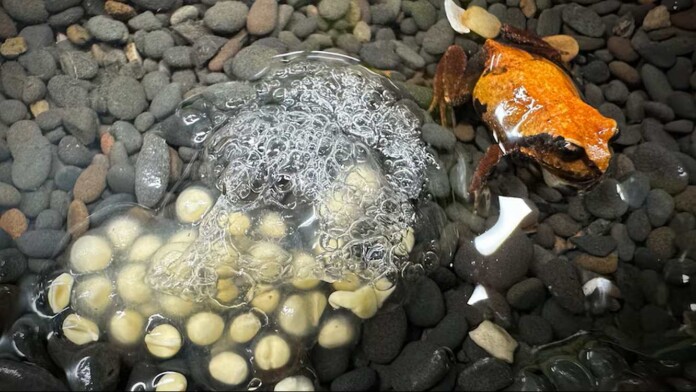
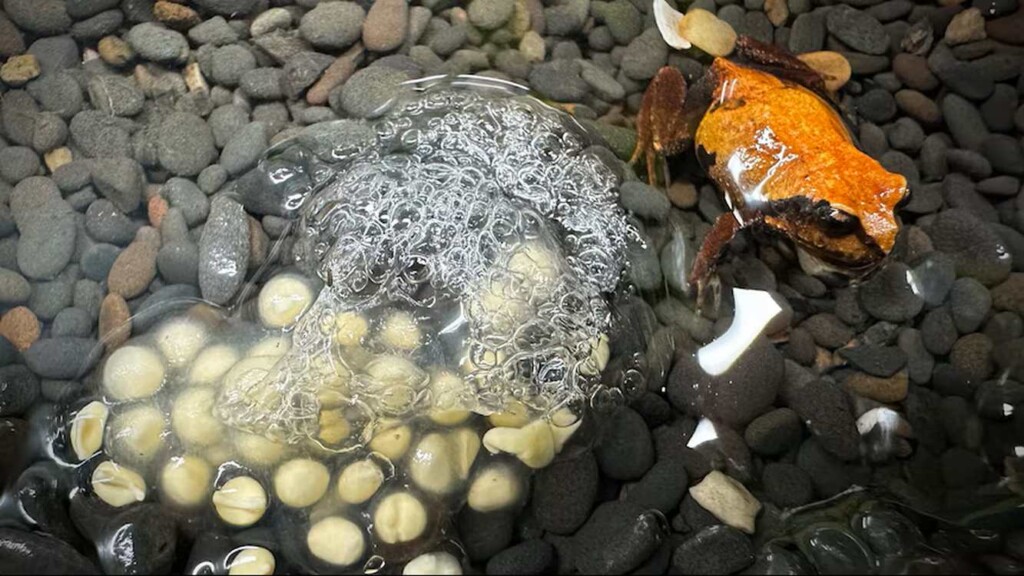
A unique and beautiful mountain-dwelling frog has been bred in captivity and released in the wild—the culmination of years of work by scientists and conservationists.
Dwelling in rainforests at higher elevation in southeast Queensland and northern New South Wales states in Australia, the red and yellow mountain frog was one of 110 priority species the government hoped to save over the next 25 years.
Captive breeding programs are rarer in amphibians than other animals, but the researchers at Southern Cross University have managed it. It required them to replicate much of the frog’s natural habitat; a challenging demand.
Unlike other tadpoles that swim around and feed, the infant red and yellows develop inside their egg sacs and emerge just three millimeters in length—another challenge as they have to be examined via magnifying lenses.
“But to get from egg to adult breeding stage has taken us four years… so it’s a much longer project than we ever envisaged,” said associate professor David Newell, whose colleague, research fellow Liam Bolitho, agreed.
“There’s temperature that we have to try to mimic, the substrate, plants, and also the sound, so we play them frog chorusing calls that we’ve recorded from the rainforest,” Dr. Bolitho told ABC News AU.
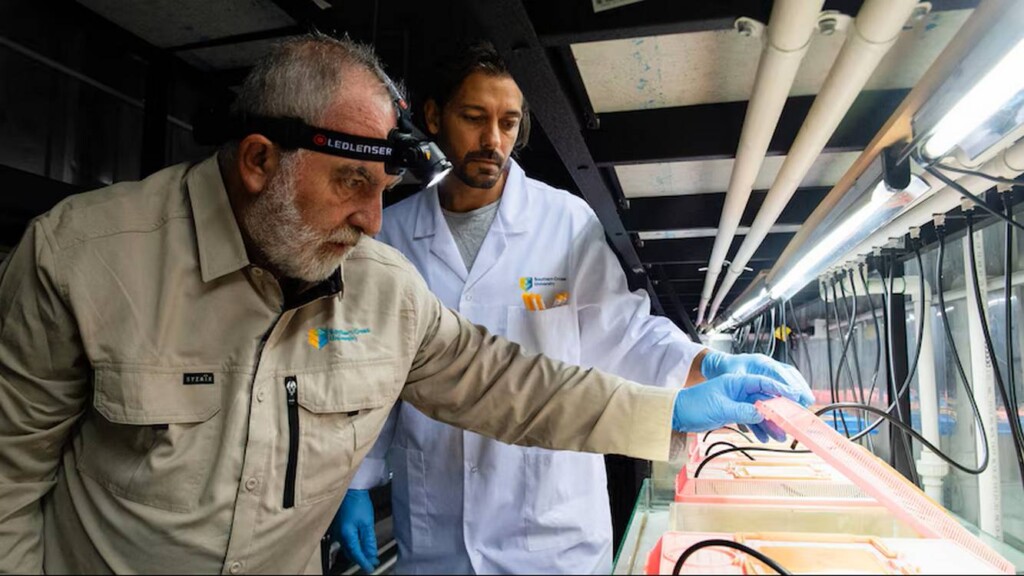
“All of these things we have to get perfectly right for them to breed, otherwise it’s not successful.”
In a very secretive place, a solemn yet hopeful ceremony was held as the research team, in partnership with national parks employees and members of the Githabul traditional owners, released 7 red and yellow frogs into a fenced off environment to begin a new chapter in their lives.
MORE AUSTRALIAN ANIMALS: Recovery of Endangered Marsupials is Utterly ‘Extraordinary’– Population Up 45% Since Australian Bushfires
Like many animals in Australia, these frogs are threatened by invasive species like feral pigs. These mammals love to wallow in the pools where the frogs lay their eggs. One wrong roll can wipe out a whole generation of tadpoles.
Droughts can also dry out pools and creeks entirely, or shrink them down and thus increase the chance that pigs will smash the eggs.
MORE TINY FROGS: Three New Frog Species Discovered as Scientists Trek to Remote Peaks in the Andes Where No Roads Go
The NSW National Parks and Wildlife department has undertaken feral pig trapping programs and fenced off several important frog habitats, while the Githabul and other local landowners vigilantly report any pig activity.
It’s a lot of work to save a 3 centimeter-long frog that few Australians will ever see, but it’s a big point of pride for this coalition of scientists and landowners who want to see this magnificent, rainforest ecosystem remain intact.
SHARE All This Effort To Save A Frog On A Far Away Mountaintop…
‘Groundbreaking’ NASA Discovery Is ‘Closest We Have Ever Come’ to Finding Life on Mars
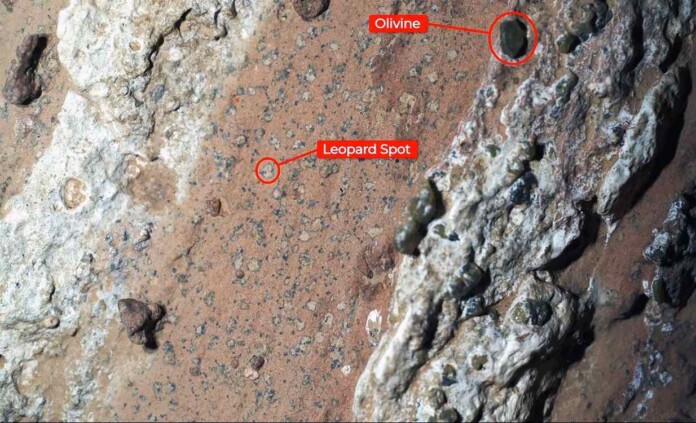
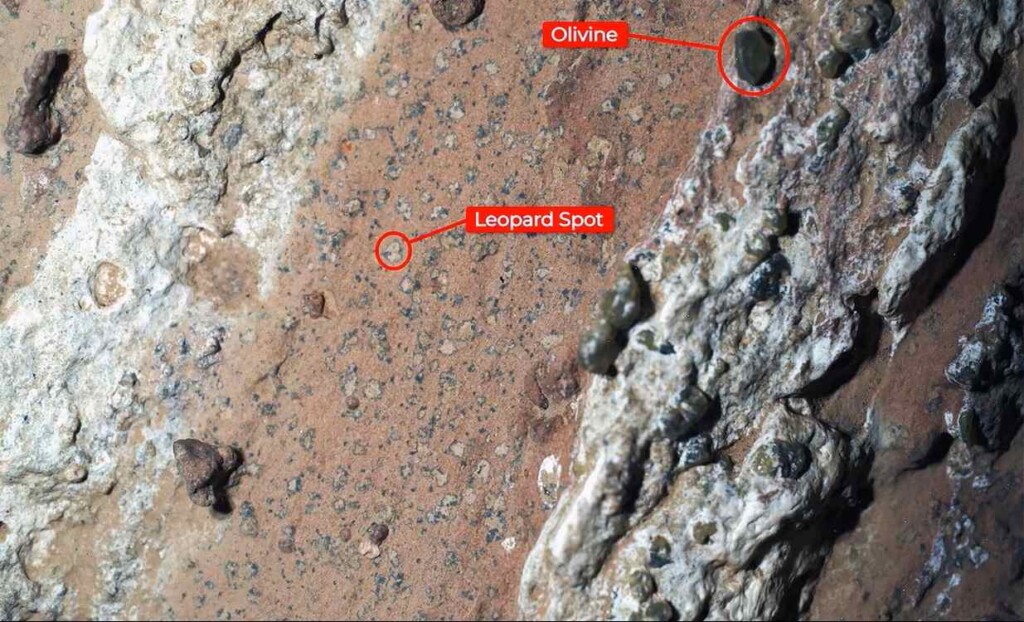
Two minerals, known almost exclusively to be linked with microbial metabolism, have been found in a recent drill sample by the Perseverance rover.
They sparked a flurry of excitement, and NASA Acting Administrator Sean Duffy was quick to point out that gold-standard science will need to be performed on what he called “the closest we have ever come to discovering life on Mars.”
The hype comes entirely from the presence of two minerals: vivianite and greigite.
Per the Mineralogical Society of America, greigite is formed by magnetotactic bacteria and sulfate-reducing bacteria in lake soils or hydrothermal vents. It’s one of several materials scientists have theorized could have acted as a catalyst for the origin of life, in part because a certain iron-based unit of greigite is present in a protein needed to drive the acetyl-COA pathway—a foundational metabolic process.
Vivianite is a hydrated iron phosphate mineral found in fossils, bivalve and gastropod shells, and in human graveyards and coffins; the result of a chemical reaction of the decomposing body with the iron enclosure. Sharp-eyed readers may think that the “vivi” in vivianite comes from the word for life, but it’s actually named after a scientist called John Henry Vivian.
Both vivianite and greigite were found in a recent core sample taken at Neretva Vallis, an ancient river channel about a quarter mile-wide that once fed the lake at the bottom of Jezero Crater, the site where Perseverance began its search for microbial life more than 5 years ago.
“This finding by Perseverance is the closest we have ever come to discovering life on Mars. The identification of a potential biosignature on the Red Planet is a groundbreaking discovery, and one that will advance our understanding of Mars,” said acting NASA Administrator Sean Duffy.
“NASA’s commitment to conducting Gold Standard Science will continue as we pursue our goal of putting American boots on Mars’ rocky soil.”
The reference to American boots isn’t just hyperbole. The recent NASA budget was directly tied to a human mission to Mars, and it included the canceling of a potential billion-dollar sample return mission that would have collected the Neretva Vallis cores, among dozens more, that Perseverance has cached across the landscape.
Instead, NASA has decided that rather than investing so much on a never-before-attempted mission, it would be far more straight forward to have astronauts collect them by hand.
Earth.com reports that the sample sediments showed a ring of vivianite penetrated by small “leopard spot” cores enriched in greigite, a pattern that matches a sequence seen in biologically mediated vivianite through the influence of extracellular electron transfer, another fundamental metabolic pathway, that has been documented in biologically-live Earth sediments.
READ FURTHER: Fluorescent Rocks in Wind Cave National Park May Show How Life Could Exist on One of Jupiter’s Moons
None of this proves the Neretva Vallis samples were made by microbes, but it’s certainly the closest scientists have ever come to detecting evidence of life.
The discovery, whether it proves to be life or not, does extend the period during which Mars was potentially habitable (or not) to at least as far forward in the planet’s history as when this river channel was wet, an important reference date for future studies.
With such a strong biosignature being found within 6 years of exploration, there’s every chance other such mineral cycling evidence will be uncovered in future samples or missions, which in turn could be informed by the conclusions drawn from these core samples.
OTHER SPACE NEWS: Tiny Planet Makes Big Splash as Surprise Study Shows it May Be Producing its Own Organic Compounds
The big question will be whether or not scientists can demonstrate that greigite and vivianite need biological life to form, or can they do so a-biotically. Alternatively, is there some signature that biotic greigite and vivianite will always carry that a-biotic versions do not?
The answers to those questions will be the most impactful ones perhaps ever made in the quest to discover whether Mars was habited by microbes once upon a time.
SHARE This HUGE MILESTONE In The Story Of Discovering Life Beyond Earth…
Smashing 6 Million Sea Urchins with Hammers Saved a California Kelp Paradise Thanks to Volunteer Divers
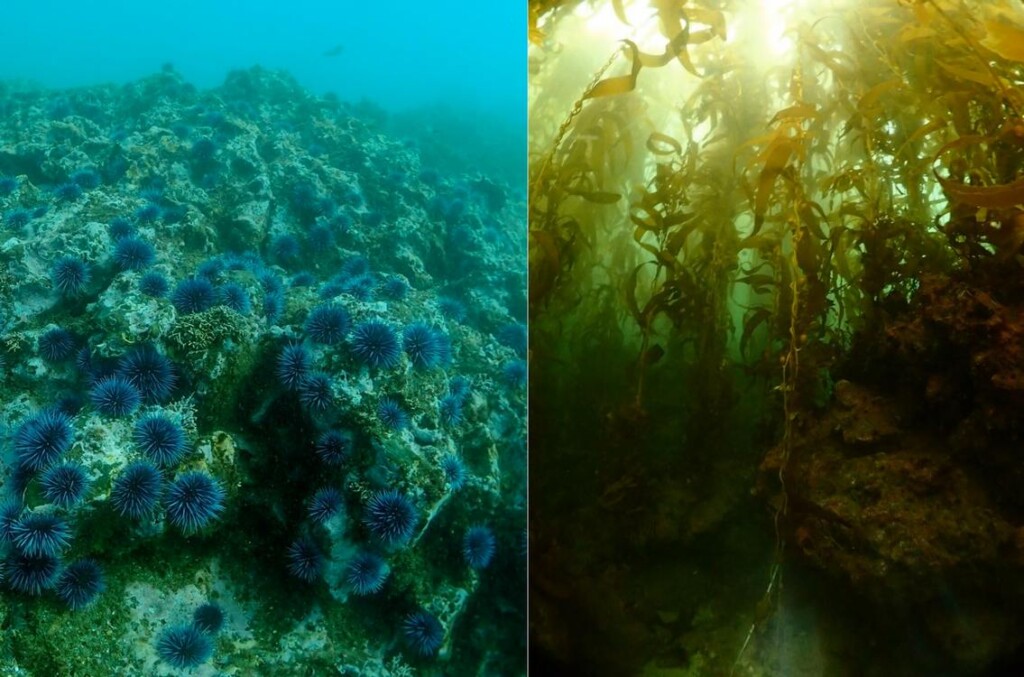
GNN has reported before that conservation works, almost wherever, and with whatever method it’s undertaken—though to be honest, hammers aren’t usually involved.
They are, however, very much the tool of choice for the Bay Foundation, an extraordinary, dedicated outfit that has brought about the resurrection of the Santa Monica area’s kelp forests, an ecosystem described as an underwater cathedral or a grove of underwater sequoias.
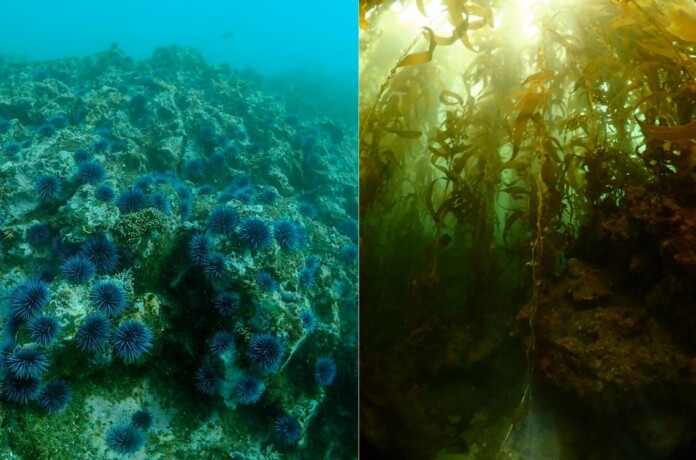
They were decimated by the endemic purple spiny sea urchin, and for the last 13 years, an all-volunteer squad of divers have spent thousands of hours below the waves smashing them.
Smashing, smashing, and smashing.
Then smashing some more.
Mass extermination of non-invasive species surely is one of the strangest conservation methods you’ll read about, but the explanation is an understandable one.
Since the early 1900s, kelp-devouring spiny sea urchins have gradually been freed from the pressures of predation. Sea otters, who also love smashing a sea urchin or two, were overhunted for their furs. Recently, populations of sea stars have collapsed due to a wasting disease.
Thusly liberated, the sea urchins grew into horde-like populations that would wipe out kelp forests in a matter of days. Their spines scrape up the seabed and prevent any kelp spores—single-cell reproductive organelles that anchor themselves in the seabed—from taking hold and regrowing the forest.
The undersea barrens where the kelp used to grow has been described by the Guardian as covered in “zombie urchins” sometimes 70-80 individuals per square meter of seabed, which linger “hungry, empty of their meat, just hanging on and preventing kelp from growing.”
The Bay Foundation’s divers began routinely going down for astonishing shifts of up to 9 hours. Armed with hammers, they smash the zombie urchins one by one, leaving the larger, healthier urchins that provide a tidy profit to local fishermen, intact.
“You just tap, tap, and sometimes you have to reach into crevices to get the urchins out,” says Sean Taylor, a volunteer diver with the foundation. “Your forearms get super tired.”
Divers told the Guardian that the work is indeed tiring: manual labor underwater, in a wet suit and scuba gear. 15,575 hours were logged in smashing urchins—a mind-boggling 5.8 million of which have been smashed; clearing 61 football fields worth of seabed.
READ MORE ABOUT CALIFORNIA’S SEAS: ‘Superpod’ of More Than 2,000 Dolphins Frolic off California Coast – (WATCH)
“Within three months, the kelp came back,” Mitch Johnson, another volunteer with the foundation said. “I’ve never seen a kelp forest that dense—and it was insane to see how quickly it returned.”
Kelp can grow almost as fast as the urchins can eat it—sometimes 2 feet per day. It can grow 100 feet high, providing a vital ecosystem service of dampening the impact of storm surges.
MORE MARINE CONSERVATION: Scientists Identify a New Manta Ray Species, Just the Third Known in the World
When fully grown, Johnson and Taylor describe swimming through kelp like flying through an unbelievably dense jungle of life, but with the canopy of a cathedral, with sunlight passing through the diaphanous kelp with a brazen hue like light through stained glass windows.
Hundreds of species inhabit the kelp forest preferentially, and the foundation is now seeing many return, like the California spiny lobster, now that the forests have regrown.
SHARE This Wild Underwater Story With Your Friends…
Recalcitrant Baby Hippo Refuses to Leave the Pool Unless it Sees a ‘Mom Stare’ – (WATCH)
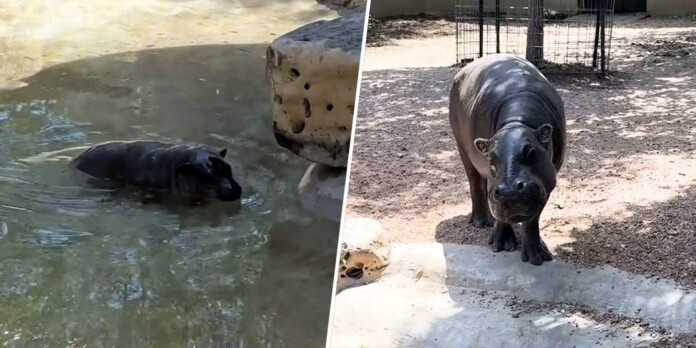
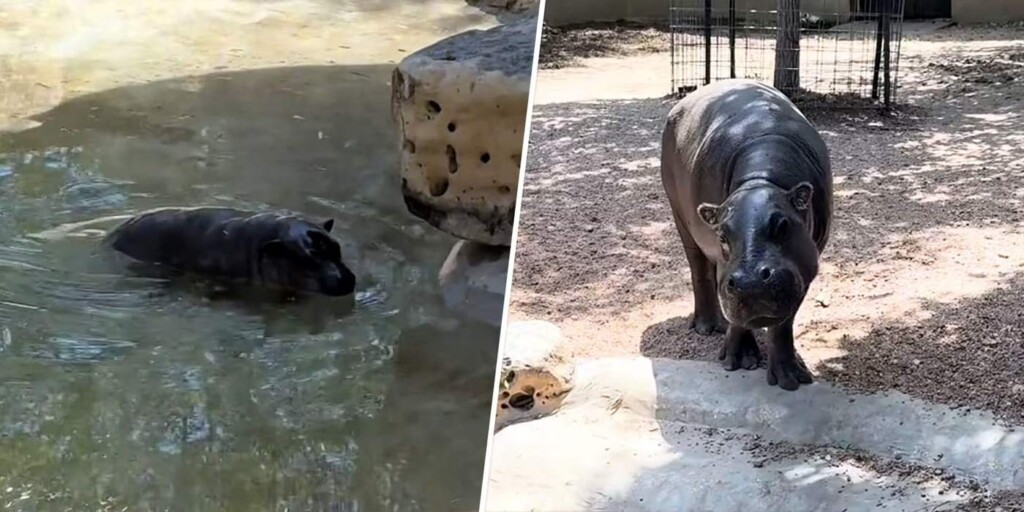
At a zoo in Kansas, keepers were having trouble with a slippery, recalcitrant, baby pygmy hippopotamus who didn’t want to get out of the pool.
It’s something they deal with every day, but in a viral video shared by the zoo, they demonstrate the best way to resolve the situation: calling his mother.
It amassed 4.6 million views on TikTok, and thousands of comments pointing out that Posie, the mother hippo, arrives and gives her son Mars the “mom stare.”
In the video, zookeepers are seen attempting to muscle Mars out of the pool so he can go inside a shelter in his enclosure for the night. The slippery devil continues to escape them and run back into the pool.
Tanganyika Wildlife Park’s staff explained to Today.com that baby hippos are covered in a slimy secretion called “blood sweat” which forms a protective layer around the newborn’s skin to shield it from the Sun’s rays.
“So between his size and that secretion, it’s really hard to pick him up and just carry him inside. So we found that we can call mom back out, or if mom is getting impatient because she wants to go inside, she’ll turn around and give kind of small little grunts,” said Curator of Research and Welfare, Dr. Samantha Russak.
Why might mom get impatient? Although Mars is nursing and so can eat when he wants, Posie eats in the early evening inside their shelter, so the longer that Mars stays in the pool, the longer Posie has to wait to eat.
BEST OF BABY ANIMALS:
- Pet Rats Driving Tiny Cars Light Up Instagram After Canadian Couple’s Adoption
- Video of Black Labrador Rescuing a Drowning Fawn Goes Viral via Surprising Twitter Account (WATCH)
- Baby Rhino’s First Video: Adorable Footage of Southern White Calf Born in Aussie Zoo
Whether it was third time she announced that “dinner’s ready,” whether she gave him the “mom stare” as some in the comments suggested, whether she used all three of his names, or whether she started counting to three, the effect she has in the video is just so recognizable.
“It seems to be universal. Moms everywhere just have that power over babies. I saw someone comment and say, ‘She must have used his full three names.’”
“The ‘mom stare’ is universal in every species,” one person wrote in the comment section.
WATCH the video below…
@tanganyikawildlifepark Better listen to mom! #babyhippo #hippobaby #marsthehippo ♬ Funny Song - Funny Song Studio & Thomas Hewitt Jones & Sounds Reel
SHARE This Hilarious Hippo And His Menacing Mom With Your Friends…
“Too low they build, who build beneath the stars.” – Edward Young

Quote of the Day: “Too low they build, who build beneath the stars.” – Edward Young
Photo by: Bobby Stevenson
With a new inspirational quote every day, atop the perfect photo—collected and archived on our Quote of the Day page—why not bookmark GNN.org for a daily uplift?

Good News in History September 17

Happy 40th birthday to The Great 8, Alexander Ovechkin. Playing left wing for the Washington Capitals since 2004, he is quite simply among the greatest goal scorers in the history of ice hockey. He has won the Hart Memorial Trophy for Most Valuable Player three times (in 2008, 2009, and 2013), the Lester B. Pearson Award for Best Player as voted on by the National Hockey League Players’ Association three times (2008, 2009, 2010) and the Maurice “Rocket” Richard Trophy, awarded annually to the NHL’s leading goal scorer, an NHL-record nine times. READ about his life and career… (1985)
‘DoorDash for Good’ Rescues 250 Million Pounds of Food from Becoming Waste


In the late 20-teens, a sort of DoorDash service for good began rescuing donated food in Pittsburgh that was nearing its expiration and diverting to other recipients who could use it.
Connecting with hundreds of local businesses, and with the help of an app they designed, 412 Food Rescue had created the largest volunteer-led food transport network in a single urban region by 2019.
25,000 volunteer drivers used a DoorDash-like app called Food Rescue Hero to find donations of food that was perhaps not saleable for aesthetic reasons, or was nearing its sell-by date, or had arrived as part of a shipping or ordering mistake. Collecting it all, the volunteers brought it back to the organization’s Good Food Project kitchen in Millvale, Pittsburgh.
They churned out sometimes 600 meals a day for nonprofits that help feed those in need, while amassing a truly monstrous mess of good—some 70 million pounds of food were turned into 57 million meals, saving 30 million pounds of emissions from the food going to waste.
Fast forward to 2025, and their impact has become truly remarkable. At the close of 2024, they had expanded to include partners in Illinois, Arkansas, California, New York, Colorado, North Dakota, and Texas, who together rescued tens of millions of pounds of food that prevented an estimated 102 million pounds of greenhouse gas emissions, which Food Rescue Hero estimates would be the same impact as removing 4,043 cars from the roads for an entire year.
In the United States, as much as 40% of the food we produce goes to waste—contributing substantially to greenhouse gas emissions along the way—while one in seven people goes hungry.
SIMILAR APPS: App Lets You Buy Leftover Food From Your Favorite Restaurants—Saving 150k Meals a Day Globally
“We were founded on the principle that people are wired for good,” says Food Rescue Hero CEO Alyssa Cholodofsky, “and our Food Rescue Hero community has validated that belief many times over.”
“Ours is a story of regular people helping each other and working together to take on some of the biggest challenges facing our world. Two hundred and fifty million pounds is just the beginning.”
MORE EFFORTS LIKE THIS: Major Grocery Chain Now Alerting Public When Products Are Marked Down, Reducing Food Waste
With 250 million pounds rescued, and 450 million pounds of emissions prevented, it’s the proof that people-powered solutions can prevail in the face of the biggest challenges we face today.
There are dozens of ways to get involved with 412 Food Rescue, for those in the Pittsburgh area, or Food Rescue Hero, their nationwide collaboration. More information can be found on their websites.
SHARE This Mammoth Rescue And Redistribution Effort With Your Friends…
Depression Patients Treated with Psychedelic Mushrooms 5 years ago Are Still ‘Symptom-Free’
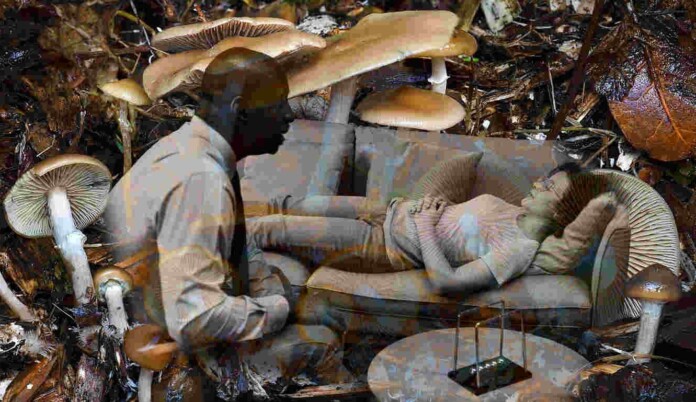
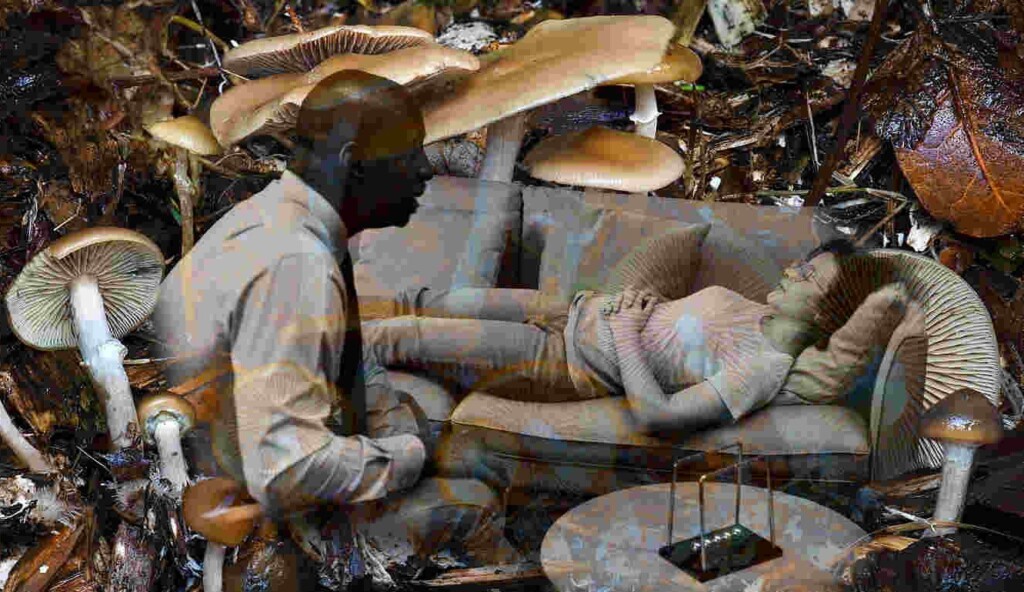
Patients with clinical depression and treated with naturally-occurring psychedelic compounds are still free of symptoms five years later, according to new research.
It’s not a surprise considering the scientific literature on psychedelic therapy, with patients suffering from psychiatric distress ranking the therapy among the most profound and meaningful experiences they’ve ever had, alongside events such as religious conversions and the birth of children.
The study involved participants from a trial published in 2021 that found psilocybin—the primary psychedelic substance produced by mushrooms—was effective at treating major depressive disorder when combined with psychotherapy in adults.
Two-thirds of clinical trial participants treated with psilocybin-assisted therapy were in “complete remission” from their depression after five years, as well as a self-reported lasting improvement across a range of wellbeing measurements.
“We found that 67% were in remission at five years compared to 58% at one year,” said study lead author Professor Alan Davis, from Ohio State University, said:
“We also saw that across the board, anxiety, depression, global functioning, self-reported depression, all of these measures were showing the same signal of continued improvement up to five years later.”
Davis co-led the 2021 study—when two participant groups, one receiving treatment right away and another on a wait-list treatment condition, received two doses of psilocybin combined with around 13 hours of psychotherapy.
“Five years later, most people continued to view this treatment as safe, meaningful, important, and something that catalyzed an ongoing betterment of their life. I think this is a sign that regardless of what the outcomes are, their lives were improved because they participated in something like this,” he said.
Of the 24 participants, 18 enrolled in the five-year follow-up, which consisted of a range of online questionnaires assessing depression, anxiety, and functional impairment; a clinician-administered depression rating; and interviews.
When analyzing data at the five-year time point, the researchers assumed the very worst in order to avoid inflating their findings, and considered everyone who didn’t participate in the follow-up to have experienced complete relapse and had returned to their pre-treatment levels of functioning.
“Even controlling for those baseline estimates from the people who didn’t participate in the long-term follow-up, we still see a very large and significant reduction in depression symptoms,” said Professor Davis. “That was really exciting for us because this showed that the number of participants still in complete remission from their depression had gone up slightly.”
Only three participants in the follow-up had reported receiving no depression-related treatment since the trial. Others reported taking antidepressant medications, trying psychedelics or ketamine treatment, or undergoing psychotherapy.
Before the psilocybin-assisted therapy, the patients lived with debilitating depression that interfered with their capacity to engage in life. But, after the trial, many described perceiving depression as “more situational and manageable.”
SCIENCE AND PSYCHEDELICS:
- Psychedelic Mushrooms Reduced Human Cellular Aging by 57%, Increased Lifespan in Mice 30%
- Another Study Shows African Psychedelic Plant Ibogaine Treats Traumatic Brain Injury in Vets With ‘Dramatic’ Results
- Psychedelic Drugs May Be Able to Treat Brain Injuries, Stimulating New Neurons to Replace Impaired Ones
- MDMA and Psilocybin-Assised Psychotherapy Approved in Australia for Treatment-Resistant Depression and PTSD
“They believed that overall, they had greater capacity for positive emotions and enthusiasm, regardless of whether their depression came back or not,” Davis clarified. “A lot of folks reported that these shifts led to important changes in how they related to their experiences of depression.”
A few of the people who had tried psychedelics on their own in the intervening years reported that the experiences were not as helpful because of the lack of a clinical support framework.
The follow-up results, published in the Journal of Psychedelic Studies, showed that, at the five-year time point, 11 participants reported no adverse effects since the clinical trial, while 3 said they were unprepared for the heightened state of emotional sensitivity brought on by psilocybin.
Acknowledging the study sample is small, Davis said there is still a lot to learn—but that this first look at the durability of the effects of psilocybin-assisted therapy offers a glimpse at the potential lasting positive effects of the treatment.
The follow-up results were published Sept. 4 in the Journal of Psychedelic Studies.
SHARE The News About These Robust And Durable Psychiatric Effects From Psilocybin…
Tooth Is Implanted in 34-year-old’s Eye to Restore His Vision After Two Decades
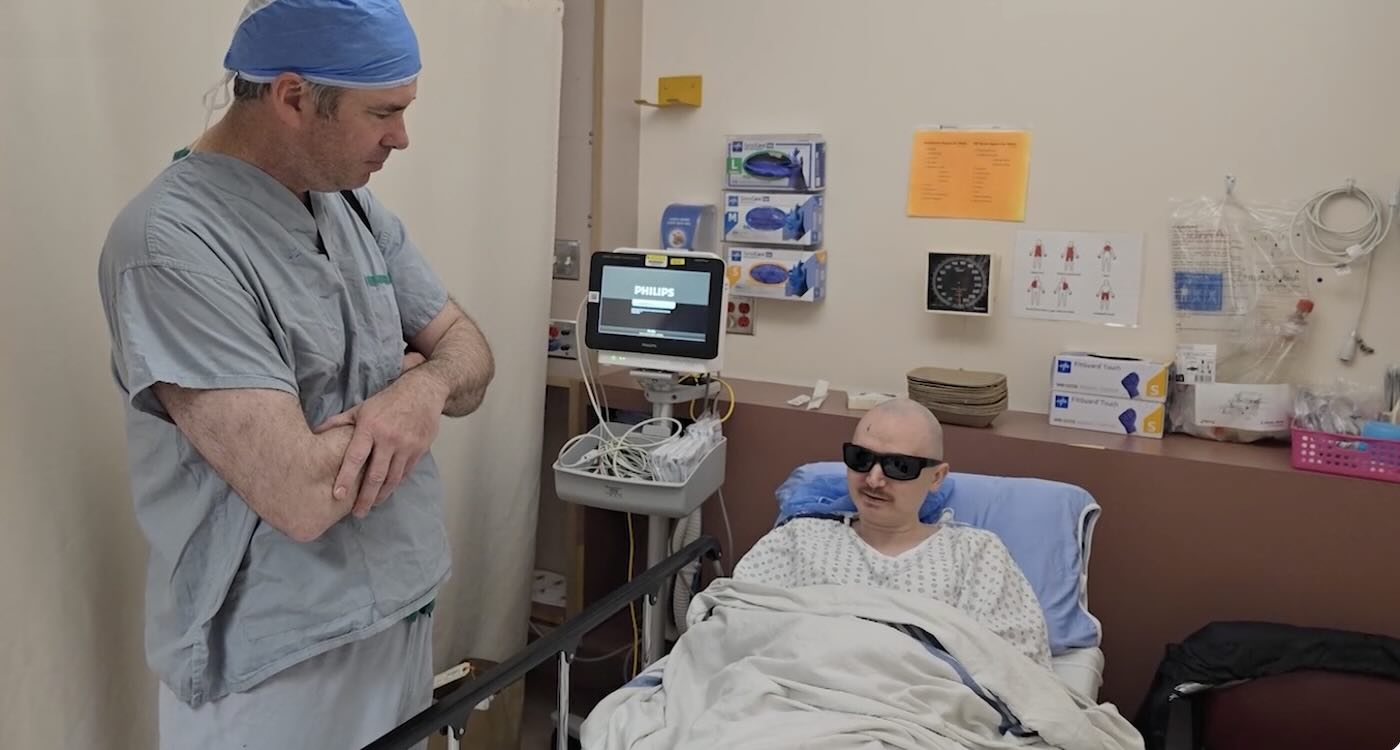
There’s an old Babylonian/Biblical legal maxim that goes, “an eye for an eye, a tooth for a tooth.”
For Canadian Brent Chapman, his new maxim is “a tooth for an eye,” because he has become the first in his country ever to receive an osteo-odonto-keratoprosthesis.
If your Latin is on point, you’ll realize that translates to a tooth-in-eye prosthetic—literally Chapman’s tooth has been surgically implanted into his eye to act as a lens fixture which has enabled him to see again.
It’s considered a last resort, and after 50 surgical transplants and procedures, that’s where Chapman was alongside his dedicated ophthalmological surgeon Dr. Greg Moloney, who has been putting Chapman under the knife since he was a teenager.
Now 34, Brent suffered a rare reaction to ibuprofen at age 13 that left severe burns on his cornea. The cornea acts like a windscreen, keeping debris and liquids out of the eyeball while allowing light to penetrate and reach the retina and optic nerve, but the burns permanently obscured the vision in his right eye while his left was lost entirely to infection.
The tooth-in-eye surgery is rare; very rare—so rare that despite being pioneered in the 1960s Chapman’s procedure is the very first ever done in Canada. According to Dr. Moloney, it’s turned to when all other options have already been tried and failed, or the initial damage to the cornea is so substantial that ophthalmologists know there’s no chance conventional replacements or grafts will succeed.
The tooth is chosen because it’s made of the hardest material produced by the body. A hole is drilled through the canine tooth and a hi-tech lens is fitted inside. The tooth is then attached to the cheek through the eye, and an aperture to the retina and optic nerve is created so that the light can enter the lens and reach it.
With glasses Chapman has about 20/30 vision, meaning at 20 feet he can see clearly what someone with perfect vision can see at 30.
Dr. Moloney spoke with CNN about the procedure, the bizarre sense in it, and the effect it has on people.
“The tooth is a really ideal structure for holding a focusing element in place. It’s hard, it’s rigid, it survives in poor environments, and the body accepts it because it’s part of its own,” said the corneal surgeon from the University of British Columbia. “It’s like watching people come out of a time capsule and reintroduce themselves to the world, it’s very emotional for us.”
Chapman agreed.
“It’s really indescribable, to be able to see the whole city and how there’s a whole world that’s just intersecting,” said the professional massage therapist, looking out at Vancouver from Moloney’s office on the 16th floor.
RARE SURGERIES: Child Born with Heart Outside Chest Becomes Solitary Survivor Thanks to Surgical Procedure Invented for Her
“When you’re blind or low-vision, you’re not seeing that, and you’re kind of in your head more. There’s a lot more mental chatter, and it can be difficult. Dr. Moloney and I made eye contact for the first time, and we both got quite emotional. I haven’t really made eye contact in 20 years.”
He’s excited to see the faces of his beloved niece and nephew, 4 and 2, and also to return to a normal work schedule. He enjoys massage work because it means that he can help others who have pain, and give back, in a sense, for all the treatment he’s received over the years.
MORE STORIES LIKE THIS: Sight Restored to People Blinded in Eye Accidents Using New Stem Cell Treatment
He can’t wait to “not make everything about me,” go to Japan, and not have to worry about plans falling through or piling various medications and emergency contacts into his luggage and phone in case his vision fails again.
“It was so unpredictable, I would make these plans, and it would be heartbreaking when I couldn’t do them,” he told CNN.
WATCH the story below from ABC 7…
GIVE A GOOD BITE Of News To Your Friends On Social Media With This Story…
Researchers Blown Away After Finding Jaguar Population up 30% Across Mexico


Imagine sitting in southern Texas and knowing that in less than a day you could drive to se the world’s third largest cat.
That is absolutely the reality in Mexico today, following a second national jaguar population census which found this charismatic cat is actually increasing in numbers across the country, reaching around 5,300 animals.
Gerardo Ceballos and colleagues conducted the first census in 2010, hoping to grasp more or less the gravity of the risk of extinction faced by the jaguar. They were estimating they’d find around 1,000 in the whole of Mexico.
But rather than the risk of extinction, their results conveyed a different narrative. They found four-times as many cats as they expected.
“It was a great surprise, terrific news,” Ceballos said. “Obviously 4,000 means the species is still in danger of extinction, but 4,000 is a lot better than 1,000.”
Then in 2025, Ceballos completed a second survey, employing over 50 national and local research institutions and community leaders, who together set up 920 motion-activated camera traps.
Staggered again, the count showed that in 15 years, jaguar numbers had increased 30%. It turns out that even though the twenty-teens saw hundreds of thousands of acres of forest cleared, there were almost as many jaguars in Mexico as there are cheetahs on the entire African continent.
“The fact that the country has managed to maintain and increase its population over the last 14 years is extraordinary,” Ceballos told the Guardian. “For me it’s great news for the country. Mexico and the world need good news.”
The populations came in as follows: the Yucatán peninsula region had the most (1,699), followed by the south Pacific area (1,541), north-east and central Mexico (813), the north Pacific (733) and the central Pacific coast (540).
ALSO CHECK OUT: Latin American States Protect Second-Largest American Rainforest as the ‘Great Mayan Reserve’
The jaguar is a compact, muscular predator, with exceptionally strong jaws that allow it to pierce the shells of turtles and the hides of crocodilians. They’re good tree climbers, avid swimmers, and will even hunt in the water. Like tigers, it employs a stalk and ambush hunting strategy, and is considered peerless in terms of its catch rate.
In short, and by comparison, the jaguar is maybe the most versatile and adaptable of any of the big cats.
MORE BIG CATS LIKE THIS: Tigers Preparing to Return to Kazakhstan in World-First Big Cat Reintroduction Effort
This gives the animal an advantage in the gradually shrinking forests of Mexico.
Ceballos told the Guardian that the spotted hunter would face multiple threats, including from the continued construction of new highways across Mexico, as well as habitat loss and zoonic diseases being passed to them via livestock which they occasional poach.
SHARE This Inspiring, Terrific News From Mexico’s Forest…
“The aim of life is to live, and to live means to be aware.” – Henry Miller

Quote of the Day: “The aim of life is to live, and to live means to be aware.” – Henry Miller
Photo by: Nighthawk Shoots
With a new inspirational quote every day, atop the perfect photo—collected and archived on our Quote of the Day page—why not bookmark GNN.org for a daily uplift?

Good News in History September 16

100 years ago today, B.B. King, the quintessential blues musician, singer, songwriter, and virtuoso guitarist, was born. AllMusic recognized King as “the single most important electric guitarist of the last half of the 20th century,” chiefly for his introduction of new styles and techniques into the repertoire, and is known as the “King of Blues”. Born and raised in the Mississippi Delta, he was attracted to music from a very young age and taught himself to play guitar. READ more about King… (1925)
Lost Painting Looted by Nazis Found Hanging on Wall in a Real Estate Listing


A painting looted by Nazis in World War II has been turned over to the Argentine police after a years-long search led the rightful owners to a property listing that showed it hanging on the wall in a living room.
A Dutch investigative news outlet contacted the real estate agency who called the authorities, but when they showed up, the painting was gone.
This tip off from the agency led to four simultaneous police raids last Monday in different parts of Mar del Plata state. One of them was at the home of a descendant of the Nazi party official Friedrich Kadgien who fled to Argentina in 1951.
Kadgien was charged by the Fuhrer with transporting to Switzerland large quantities of hard currency, diamonds, and artworks that had either been stolen by the Nazis or sold to the party under duress from their Jewish owners.
Kadgien fled to Switzerland where the country’s neutrality protected him from extradition. He eventually moved to Argentina, bringing with him Portrait of a Lady, an oil-on-canvas of Italian Countess Colleoni by the artist Vittore Ghislandi.
It was Portrait of a Lady that was identified in the photo by a Dutch newspaper called the Algemeen Dagblad, which was investigating the whereabouts of many stolen artworks that once belonged to another chief character in this story: the Dutch art dealer Jacques Goudstikker.
Goudstikker began a systematic attempt to recover his artworks, stolen by the Nazis, in the 1990s. Portrait of a Lady had already been on a database of stolen and lost art, but leads in Europe turned up nothing.
Many Nazi officials who escaped Germany fled to Argentina, and it was there that Friedrich Kadgien’s daughter Patricia and her husband Juan Carlos Cortegoso, came to inherit the work and possibly others, court documents outlined.
Just as Kadgien’s daughter was in possession of the painting, it was Goudstikker’s daughter, Marei von Saher, who is carrying on the search for some 1,200 lost works that had been acquired by her father, who recently passed away.
Von Saher’s attorney told USA TODAY that the painting was likely sold to Kadgien by the Nazis in 1944, and that it was painted in the 1700s. Her father had tried to keep it and other works, including some by Rembrandt and Van Gogh, hidden in a nook below a 17th century canal in Amsterdam before they fled the advance of the German army, but evidently they were found.
Goudstikker was a good record keeper, and had a black notebook with exquisite details of every painting he hid away—a key resource in the efforts to recover them all.
ALSO CHECK OUT: Surviving the Nazis and Fire, 2000-Year-old Caligula Mosaic Finally Returns to Museum
Just as the Dutchman had tried to hide his property from searches, Patricia Kadgien evidently tried to hide Portrait of a Lady in advance of the police raids. Arriving, the authorities found a tapestry depicting a horse hanging in its place, but wall marks and even a hook behind should that a painting may have been moved. During the raids, multiple drawings and paintings, some of which could be as old as 18th century, were taken into custody, court documents said.
Kadgien and Cortegoso were placed on house arrest, as they could be criminally charged for failing to turn over the paintings earlier. An attorney representing the couple did eventually bring the painting to the National Public Prosecutor’s Office.
MORE STORIES LIKE THIS: 101-Year-old Woman Is Amazed After Being Reunited with Her Lost Painting Looted by Nazis
“It is encouraging that the painting is now with the authorities and that it is no longer missing. I am relieved that it’s now in a safe and secure place,” von Saher said in a statement to USA TODAY.
The outlet reported that the $2.5 billion worth of artworks, antiques, jewels and other property confiscated by, or sold under duress to, the Nazis in the 1940s would today be valued at closer to $25 billion, of which Portrait of a Lady is just one small piece, a small piece that nevertheless represents a big victory and huge relief for the descendants of one particular victim.
SHARE The Remarkable Journey Of This Painting To Justice…
Activists Use Folklore to Inspire Conservation Effort to Resurrect a Ghost of England’s Past
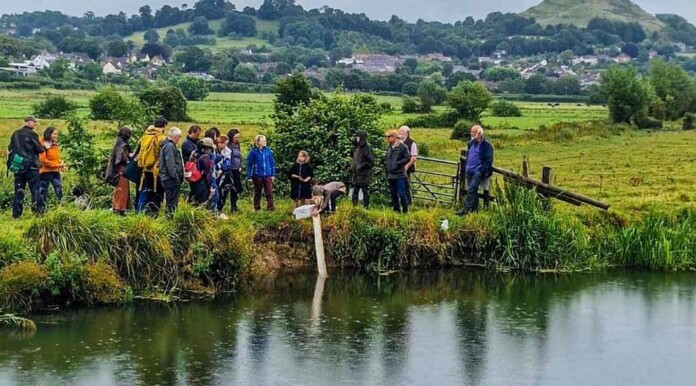
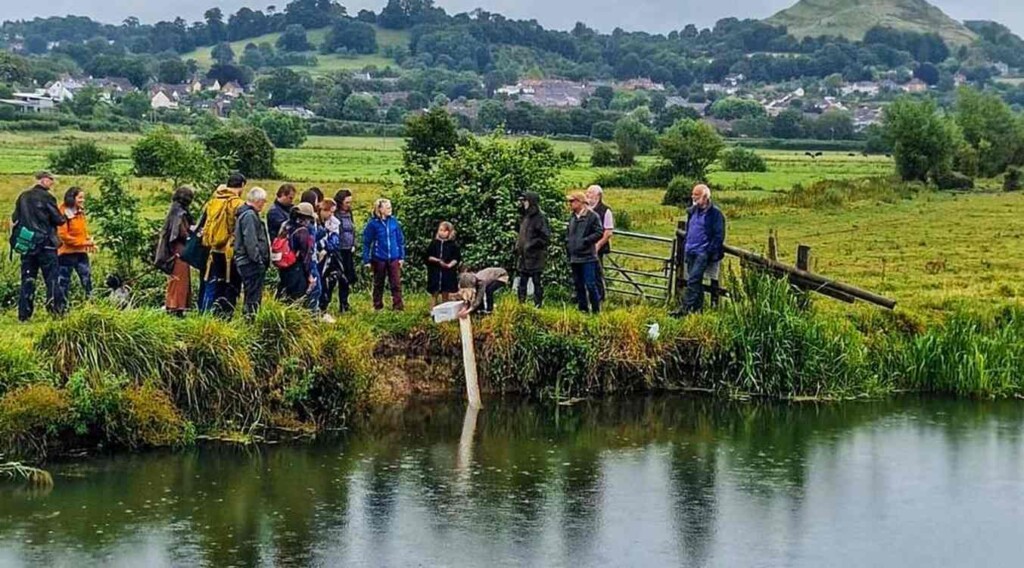
According to the reporter Amelia Hill, residents of southwest England used to be able to pay their land rent with their catch of European eel.
She continues: songs were sung about the eel, lanes and canals and beaches were named after the eel; but those days are nearly gone.
With eel populations down 99% in Somerset county, a group of conservationists dedicated as much to folklore as to science, are making a difference in reviving the eel’s presence in Somerset’s waterways as much as in Somerset’s people.
There are all kinds of different ways to run a conservation program to save an endangered species, but it’s almost guaranteed you’ll never have read anything like what the Somerset Eel Recovery Project gets up to.
Amelia Hill spoke with one of the project’s co-founders, Vanessa Becker-Hughes, for a piece in the Guardian concerning exactly what it takes to save the European eel in England from disappearing.
“I try to come at it from different angles. Sometimes we do science, sometimes we do a river blessing. But it’s all about connection,” said Becker-Hughes.
“We make straw ropes, which we put over barriers. They get wet and the little glass eels use them to climb up and over. But more than that it gets people to visit these weirs. They notice the water. They count the eels. They start to care.”
Try to find straw ropes and river blessings at the WWF.
They are direct connections to an older England, when eels would swim into the tidal Somerset wetlands by the thousands, filling local water channels in an annual migration reminiscent of the salmon run in America’s Pacific Northwest.
UNORTHODOX CONSERVATION: School Kids Help Ensure Mountain Pygmy Possum Population Bounces Back in Australian Alps
These are the kinds of memories that the project weaves into their conservation work alongside the straw ropes: something almost mythical that will get residents to remember their connection to the land and its natural heritage. To keep that enthusiasm and magic alive, the project has installed eel aquariums in 60 county schools so children can look at the keystone species in the arch of local history.
When out in the field singing songs or blessing rivers, the volunteer conservationists are also using state-of-the-art environmental DNA test kits in Somerset’s water channels to bring back for laboratory testing to estimate the population density of the eels in the area through tiny fragments of DNA spread through urine, skin, and other traces.
The animal’s decline was linked to the increased presence of weirs and other dams and barriers that prevented its dispersion. Additionally, a parasitic nematode has been confirmed to infest the area and damage the animals’ swim bladders.
MORE FOLKLORE-WORTHY ANIMALS: Yurok Tribe Celebrates Again as Ancestral Homelands are Returned–in Wake of Historic Dam Removal
The Somerset Eel Recovery Project also runs a captive breeding program for the eels, and regularly release eel fry into waterways deemed safe and suitable for their populations.
With such dedication, the project stands a good chance of making sure this iconic little swimmer and the songs written in its honor, both stand the test of time.
SHARE This Inspiring Group Of Conservationists With Your Friends…
6 Million Pounds of Compost Given to NYC Gardeners in 2025 in Ongoing Organic Waste Collection Effort


Food scraps in the Big Apple are now enjoying a second life as free compost for residents and community gardens.
It’s all down to an expansion of New York City’s organic waste collection program which started last year. In it, yard waste and food scraps are collected curbside and brought to a central composting facility before being turned into rich fertilizer.
Before, organic waste would be transferred to landfills where it would decompose and produce copious clouds of methane, a short-lived yet potent greenhouse gas.
Now, it’s brought to a facility where natural microbes consume it and the methane it produces in the process of breaking it all down into fertilizer.
Under massive white tarps at the Staten Island Compost Facility, everything from dead tree stumps to apple cores to greasy pizza boxes are consumed. Temperatures under the tarps are kept over 100°F which has been shown to kill harmful microbes and weed seeds.
The microbes are joined by insects and fungi which together turn the waste into a nutrient rich fertilizer that’s sold to landscapers and left at distribution points for residents to bag away for free.
Dept. of Sanitation officials estimate some 6 million pounds of this compost had been handed out.
MORE STORIES LIKE THIS:
- New York Turned the World’s Largest Garbage Dump into a Green Oasis of Native Grasses That Also Powers Homes
- America’s Biggest Landfill To Become New York’s Largest Solar Project
When spread on lawns and beds, it improves soil health, improves water retention—impacting stormwater systems citywide, and keeps green spaces lush and thriving.
In operation since 2014, the yard waste tree-trimmings recycling has produced some 21,000 tons of compost over the last several years.
WATCH the story below from Reuters…
SHARE This News Bite With Your Big Apple Friends On Social Media…
Watch Ohio Policeman Save Woman from Jumping off 5th Floor Ledge: ‘There’s an Angel for You’


Ohio police officers recently saved a suicidal woman threatening to jump from the 5th floor of a parking garage.
Captured on the officers’ body cameras, the harrowing, yet inspiring moments demonstrate the city’s finest in their finest hour.
Multiple bystanders called 911 after seeing a silhouette on the roof of the garage, sending officers from the Cincinnati Fraternal Order of Police racing to the scene.
Officers Newman and Ramey arrive to find a woman standing on the wrong side of the railing.
The situation, Police spokesmen said, is one which their officers are trained to encounter, and Officer Newman jumped into action. He tries soothing the woman with words of comfort, pleas to step back from the edge, and a personal anecdote that ultimately struck a chord.
“I lost my daughter many years ago, and I wish she could be here,” Officer Newman says in released body cam footage, demonstrating that the deepest sadness and despair can be overcome. The woman responds by saying that her children had also died, but quick-thinking Newman didn’t give up.
“They are angels looking over us—there’s an angel for you,” he said.
Evidently that empathy won over the would-be jumper who quickly calls out for the officers to save her. As if the encounter wasn’t already stressful enough, at that moment, the woman slipped and was suddenly hanging on with only the strength in her hands.
They managed to reach her before the worst, pull her up, and bring her to safety. NBC 5 WLWT reports that she is unharmed.
MORE BODY CAM RESCUES:
- Police Officer Jumps Fence to Save Chained Dog from Fire, Not Giving Up Even When Heat Turned Severe
- Body Cam Footage Shows Police Officer Saving Clucking Chicken From a Burning Shed
- Philadelphia Police Officer Sets Aside Fear of Heights to Rescue Child from a Roof
- Cop Saves Unconscious Driver From Burning Truck, ‘I’m either going to die here with him or get him out’ –WATCH
Cincinnati Police Chief Theresa Theetge commended her officers in an interview with ABC 9, saying that training for situations like this is made available, but at the end of the day, it’s their passion for public service that ultimately makes the difference.
“They’re supposed to be public servants; they’re passionate about their work and I think that comes through in the video,” she said.
WATCH the story below from WLWT…
SHARE This Inspiring Rescue From Empathetic Officers…
“It is not in the stars to hold our destiny but in ourselves.” – William Shakespeare

Quote of the Day: “It is not in the stars to hold our destiny but in ourselves.” – William Shakespeare
Photo by: Klemen Vrankar
With a new inspirational quote every day, atop the perfect photo—collected and archived on our Quote of the Day page—why not bookmark GNN.org for a daily uplift?

Good News in History September 15

Many happy returns to a brilliant Brit, Tom Hardy, who turns 48 years old today. The London actor got his start in Ridley Scott’s Black Hawk Down, and preceded along a course of action and adventure films to rival any actor of the 21st century, including Inception, Dark Knight Rises, and Mad Max: Fury Road. The charismatic Londoner won a BAFTA Rising Star award and was nominated for an Oscar for his performance in The Revenant, alongside Leonardo Di Caprio. READ more about this star of stars… (1977)
Teen Celebrates 5 Years of Reading to Kids with Disabilities Since Opening First Book During Pandemic
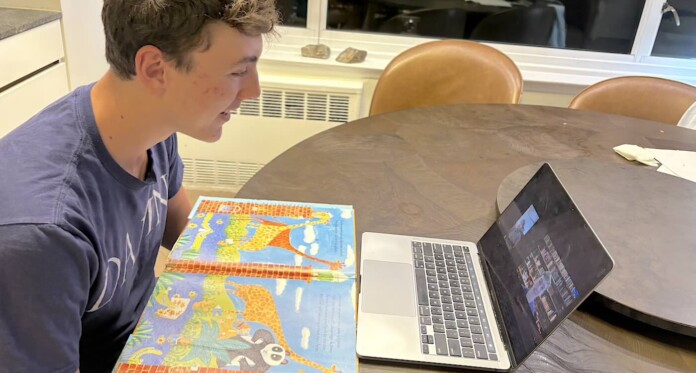
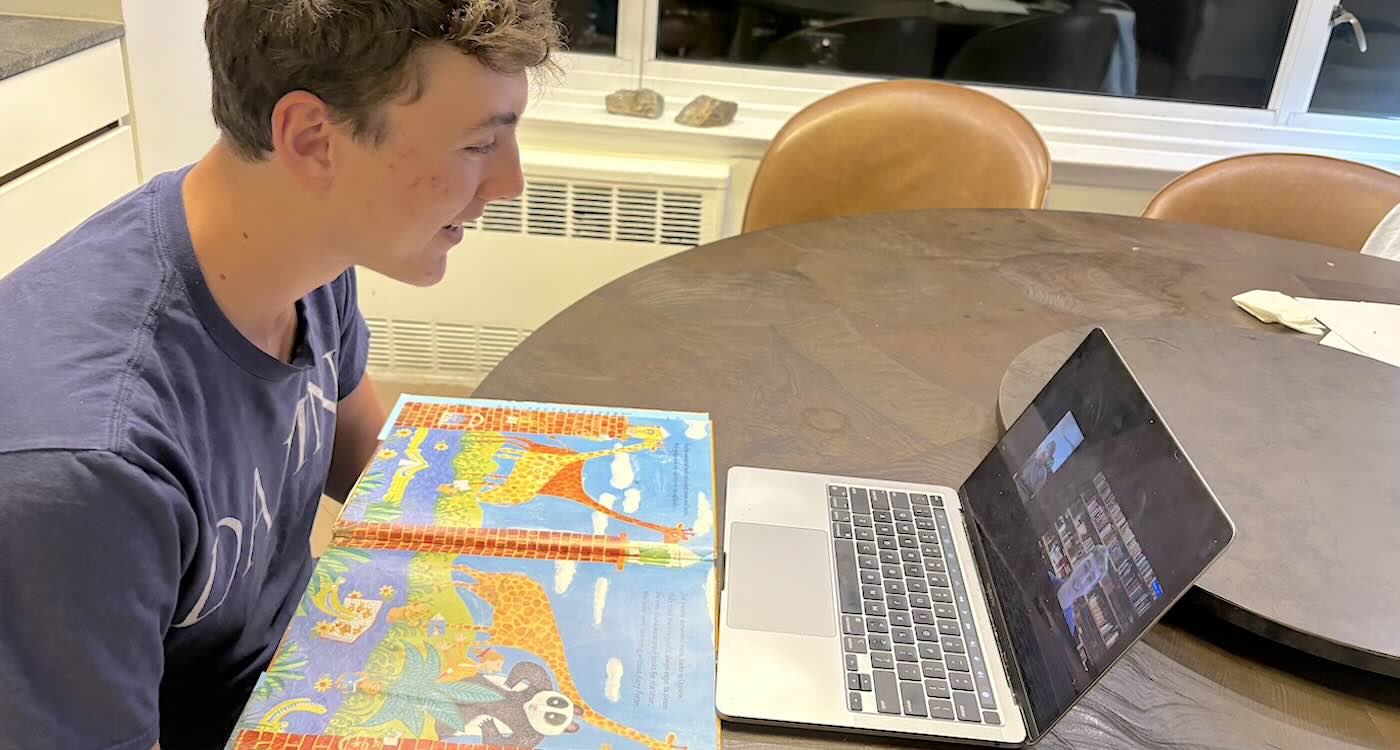
During the height of the pandemic lockdown, Asher Rosenfeld, a New York City 12-year-old began the Audibles with Asher program, hosting weekly individual reading sessions over Zoom for children and young adults with special needs.
He wanted to give them a routine and something to look forward to during a difficult time in the Fall of 2020.
Now, five years later, the bonds between them—built through Asher’s initiative—continue stronger than ever.
The resourceful 17-year-old is still seeing the same kids and young adults every week on Zoom to read books and further their friendships.
Because it’s online, it’s easy for every participant, no matter their physical or medical condition, to join from their home.
The parents of the special needs kids say it has been a lifeline for their children—and for the Upper West Side teen, it’s been a lesson in empathy, consistency, and connection.
“The same kids I started reading with at the start of seventh grade I am reading with again at the start of my senior year,” he said.
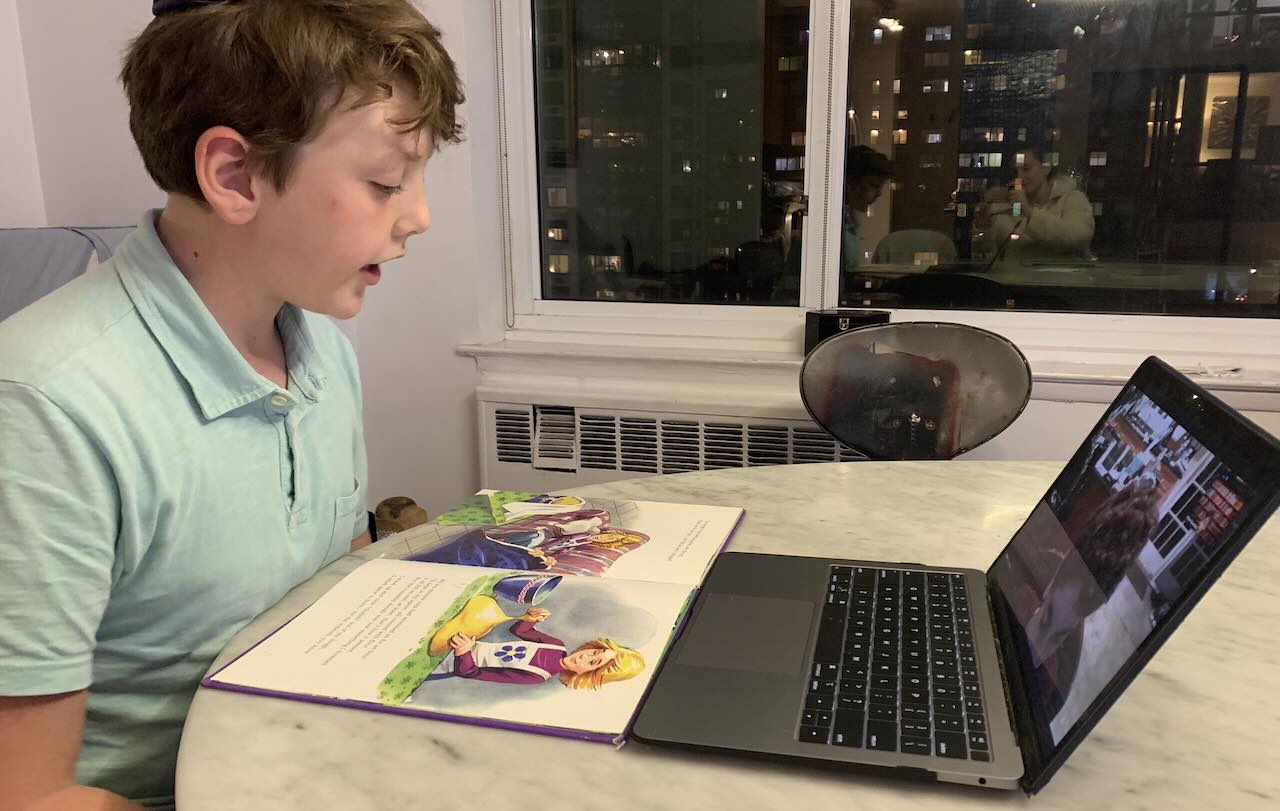
“We grew up together and have developed incredibly meaningful relationships with each other throughout these years.
“Over time, I’ve realized it’s not actually about the books, it’s about the connection that happens while we’re reading and hanging out. That’s the part that’s stuck and the part that matters most to me.”
Asher reads to each participant, then he donates and ships the books, as well. Books like “I Broke My Trunk! An Elephant and Piggie Book,” written by Mo Willems for ages 3-6 years.

MORE TEEN KINDNESS: Teen Workers Saved Their Boss’s Restaurant During Months of Her Absence After Serious Hospital Diagnosis
This year, Asher has partnered with the nonprofit Friendship Circle, an organization promoting greater awareness and understanding of the uniqueness of people with special needs.
Those who have participated in ‘Audibles with Asher’ love the experience.
“Asher is so kind and reads beautifully to my girls,” said one mom, Karen. “[They] ask if they can do it all the time!”
“Reading brings the imagination to life; it takes us beyond our everyday world and brings us into someone else’s—which is so special and so cool,” said Asher.
“I love to read and I’m thrilled to be able to share my passion reading one-on-one and connecting over stories that we can enjoy together.”
INSPIRE NEW READING PROGRAMS By Sharing This on Social Media…