









All News - Page 61 of 1711 - Good News Network
Home Blog Page 61

Boy Follows Track in His Heart to Dream Job: ‘I’ve Always Loved trains–Now I’m Qualified to Drive One’

Courtesy: Logan Smallwood

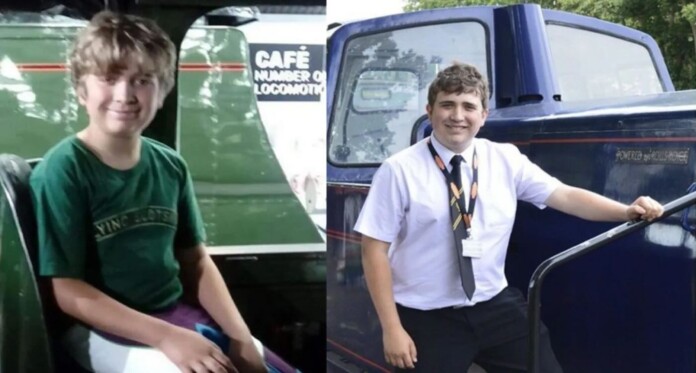
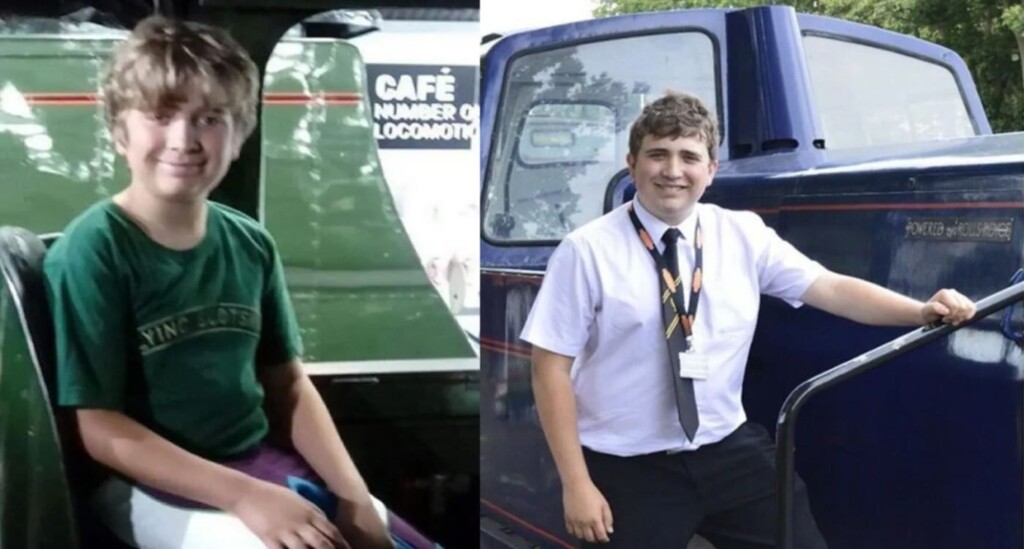
This is Logan. He loves trains, always has. And now, he’s one of the youngest licensed train drivers in the whole of the UK.

For some children, the question “what do you want to be when you grow up” is mulled over in a fit of anxious uncertainty. For others, it’s as easy as responding with their name and age. So it always was for Logan Smallwood.

Reported recently by the BBC, Smallwood’s journey from boyhood model train collector to heritage railway line driver is as straight as the standard-gauge cargo line through the Mojave.

“I’ve always loved trains… I’ve always said when I grow up, I want to be a train driver,” Smallwood told the BBC. “My great-grandad worked in the mines and he was always fascinated by trains. He gave me a coal model of a Silver Link [a kind of train] and I think that might have been what set me off.”

Born in Lanchester, County Durham in England’s far northeast, it’s the most typical thing to say that one’s grandfather worked in “the mines.” It’s somewhat quaint, somewhat depressing—reminiscent of a time when working conditions for the middle and lower classes were dirty and dangerous.
Courtesy: Logan Smallwood

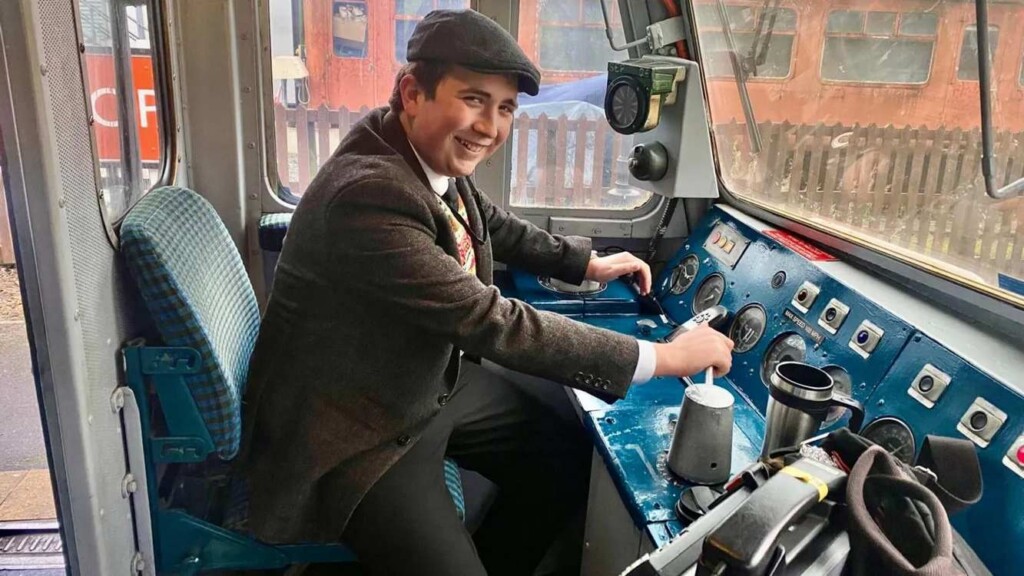
But Smallwood wears that quaintness and heritage well—as well as the tweed knit jacket he sports behind the controls of a Sentinel shunter, a 17-mph locomotive typically used to position cargo cars in train yards, but which also pulls pleasure carriages along the 18-mile Weardale Railway Line, a heritage train service that passes through an Area of Outstanding Natural Beauty, the near equivalent to a US National Monument.

Logan began working at the Weardale line as a volunteer last April, having graduated from Newcastle College Rail Academy with honors and with a diploma in Engineering Technologies. The BBC spoke to the young man after he completed his first solo shift behind the wheel.

“Weardale runs trains that I adore and it has got little steam locomotives for the bigger diesels, which is one of the attractions for me, I love working there,” he said.

BRITISH RAIL SYSTEM: Hitachi Rail Develops Battery Unit Set to Decarbonize Rail Travel on Retrofitted Trains

There’s a shortage of train drivers in the UK, and the transportation secretary recently lowered the required age from 20 to 18, legislation that Smallwood jumped at the opportunity to take advantage of.

His mother cried tears of pride when her son received the driver’s certificate on the Sentinel shunter, and believes he’s close to fulfilling his childhood dreams.

MORE IMPASSIONED YOUTH: Young Craftsman Resurrects ‘Extinct’ Musical Instrument by Consulting Ancient Literature (LISTEN)

When not driving trains, Smallwood, who’s always maintained a mountainous collection of model train sets, spends his free time at the Blackhill model club where he is one of the few members who designs the large wooden and aluminum railway layouts.

SHOW Some Love To The BBC And Logan And Share His Passion On Social Media…
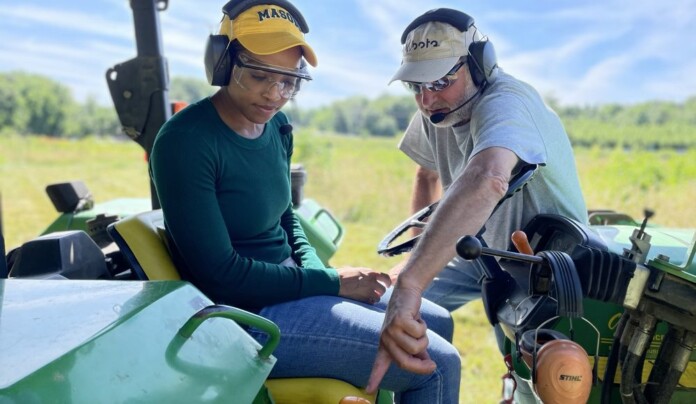
Veterans, Military Spouses Cultivate a New Mission on the Farm: ‘This is the place that relaxes me’

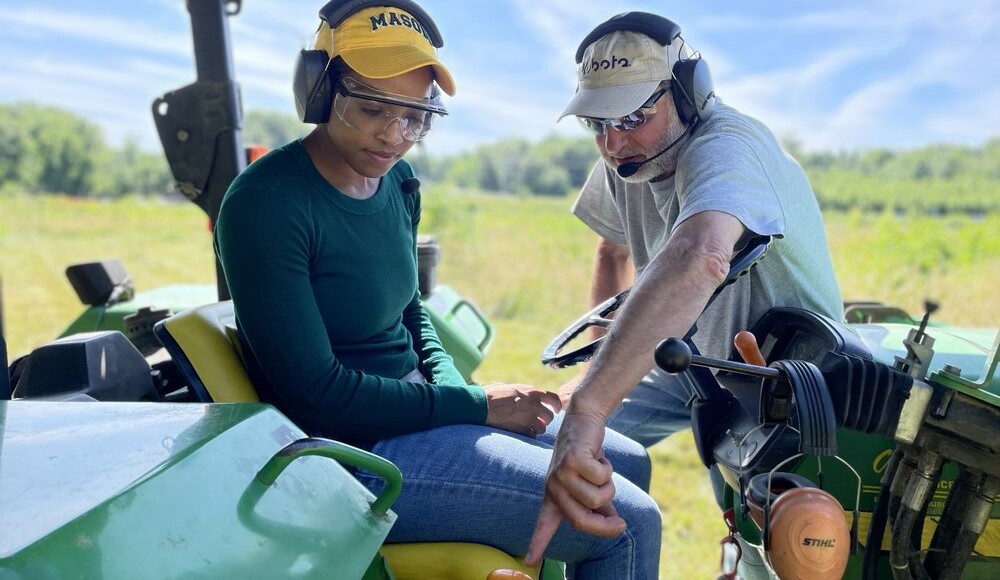
Tractor training at The Veteran Farmer's Program - credit, supplied by Pamela Hess
Tractor training at The Veteran Farmer’s Program – credit, supplied by Pamela Hess,

A Virginia farm is welcoming newly-retired military to come learn how to farm as a way of providing a fulfilling path back into civilian life.

The Arcadia Center for Sustainable Food figured that veterans were perfectly cut out for farming, as the average vet is 45% more likely to start their own business, and aside from being physically fit, are used to enduring discomfort, waking up early, and being both self-reliant and a team player.

Looking to connect their need to perform a service for their communities with the needs of thousands of retiring military who reenter society every year, Arcadia created the Veteran Farmers Training Program.

Just a few miles from the Pentagon in Arlington, Arcadia trains veterans in the fundamentals of agriculture both in the field and in the class room. The veteran-owned center is partly veteran led as well.

Ephesia Sutton was in the US Army for 20 years, and now trains veterans like herself how to grow nutritious produce for their families and communities.

“I left the military with PTSD, depression, and anxiety, and I would rather be anywhere else when dealing with those symptoms. This is the place that relaxes me,” said Sutton told Stars and Stripes from the fields of collard greens, cucumbers, bitter melon, peppers, spinach, kale, and tomatoes.

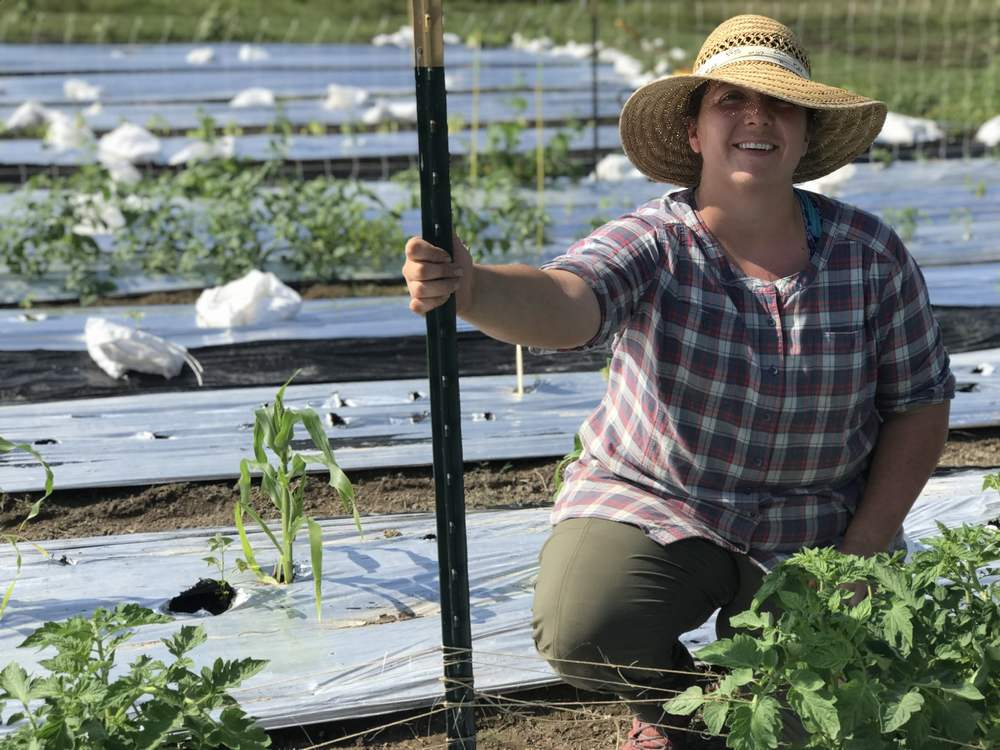
A Veteran Farmers Training Program participant – credit, supplied by Pamela Hess

“Knowing the work that I’m doing every time I put my hands in the soil is going to provide for a family, for somebody in this community, that just gives me the push to be out here every day,” Sutton said.

As military tend see the world and actions within it through the lens of “the mission,” Arcadia is attempting to tackle two massive nationwide problems beyond anything to do with the food supply.

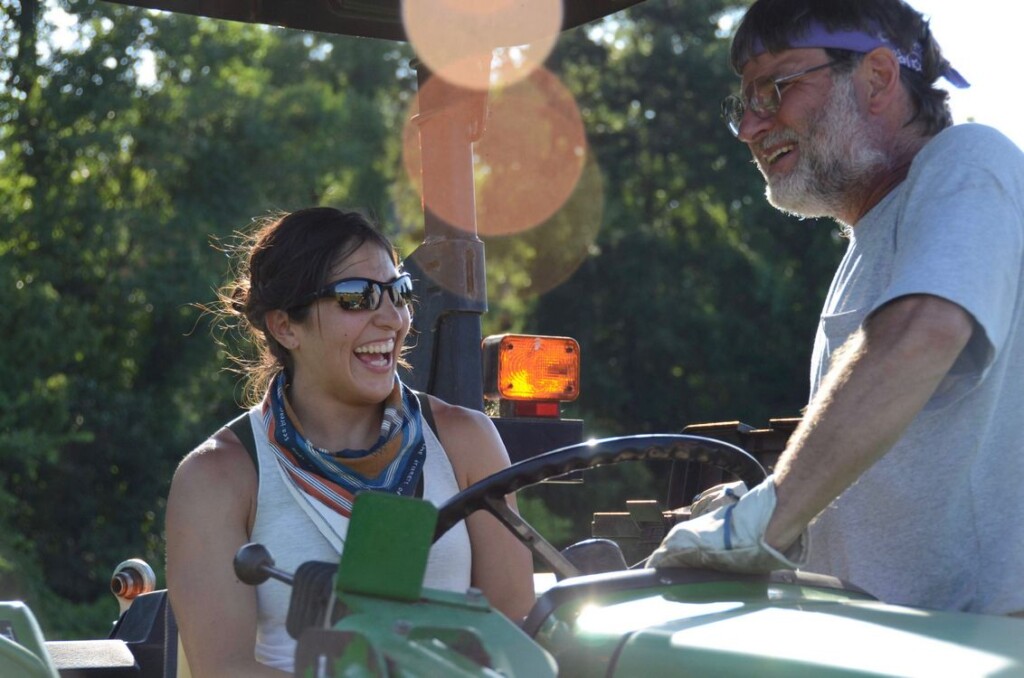
– credit, supplied by Pamela Hess

The average American farmer is 56 years old, and a dearth of 700,000 such agriculturalists is predicted to manifest over the next two decades. Meanwhile, the generation that enlisted to fight in the Global War on Terror is now retiring from the services in larger and larger numbers.

Many of these veterans are returning like Sutton—with PTSD and other emotional trauma from witnessing the tragedy and failures in the occupations of Iraq and Afghanistan.

OTHER VETERAN-LED BUSINESSES: Dream of a Carousel Helped A Marine Survive Vietnam, Then He Built One to Survive PTSD, Delighting Millions

New missions, new opportunities to serve are vital, as Sutton has learned.

The Solution according to Arcadia is to pay veterans to learn how to farm. Help them find affordable land. Provide easy market access for the food they produce to satisfy the robust and growing public demand for organic or local produce, and lastly reinvigorate the farming sector with skilled new growers, eager to begin their next phase of life.

MORE STORIES LIKE THIS: ‘A Blessing’ For Wounded Soldiers Who Help Scientists Save Coral Reefs

Stars and Stripes also spoke with military spouses, who often have to put their own lives on hold whilst their partners deploy. These too are finding new purpose and fulfillment among the rows of fruits and vegetables on Arcadia’s acres.

SHARE This Veteran-Owned, Veteran-Led, For-Veteran Endeavor With Your Friends…

Man Reunited with Class Ring 56 Years After Losing it in the Long Island Sound: ‘It’s a Miracle’

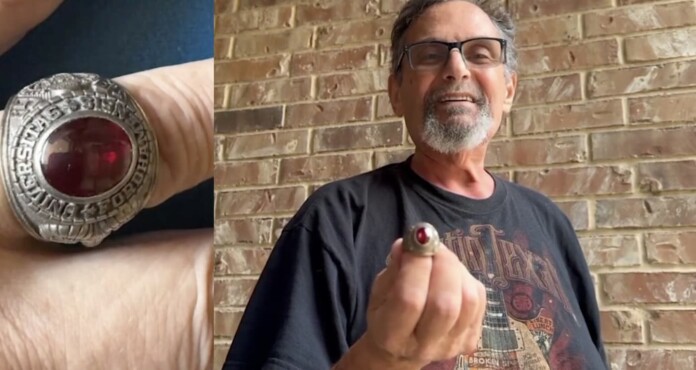
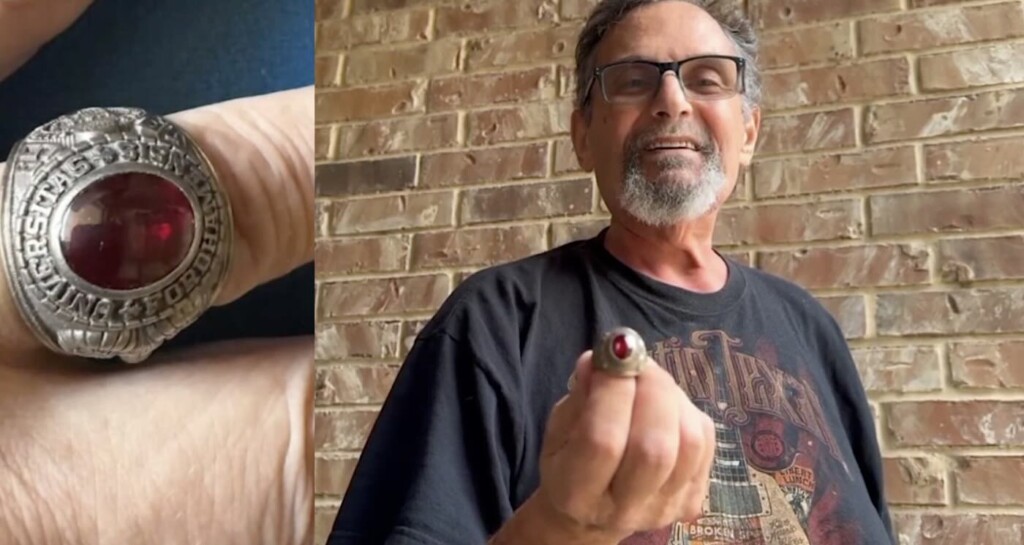
Photo via Alfred DiStefano

A man recently received word through social media that a Long Islander and his metal detector found his missing class ring, lost on a day at the beach 56 years ago.

Then just Alfred DiStefano remembers vaguely standing on a dock or a pier on Cedar Beach, Long Island Sound, when the ring slipped off and fell into the water.

Receiving it through the mail, the now Dr. Alfred DiStefano was able to look at the highly personalized white gold band and ruby for the first time since gasoline cost $0.35 a gallon.

The story begins when hobbyist David Orlowski was on the beach at low tide with his metal detector. Routinely scanning the beaches of Long Island for years, he’s found many rings in his time.

“They go in the water, shrinks your hands, and off your ring goes,” Orlowski told ABC 7.

Digging down more than a foot at the prompt of a loud ‘ping’ from his detector, Orlowski found the ring which not only bore the name of the school, Fordham University, but also an inscription of a name on the inside of the band.

Orlowski did a few minutes of searching given that he had so many clues as to the ring’s owner, and managed to find the Fordham class of 1969 reunion Facebook group. There, moderator Karen Manning was so impressed with Orlowski’s honesty, she was determined to find the person to whom the jewel belonged.

“He could have just sold it, and made some money on it, but, it restored my faith in humanity,” Manning said.

MORE OF THE RINGS: 

For his part, and true to his honest nature that Manning detected, Orlowski admitted it was his wife that urged him to seek out the ring’s owner.

“She says, ‘well, if you lost your ring, wouldn’t you want it returned?’ And so, right. The question, answered,” Orlowski told 7’s Sonia Rincon.

Dr. DiStefano considers it a miracle, and sent a lovely thank-you present to Orlowski via the return address.

WATCH the story below…


SHARE This Story Of A Lost Ring And Restore Others’ Faith In Humanity…

Young Woman Accidentally Booked an Airbnb that Turned Out to Be Her Father’s Childhood Home in Italy

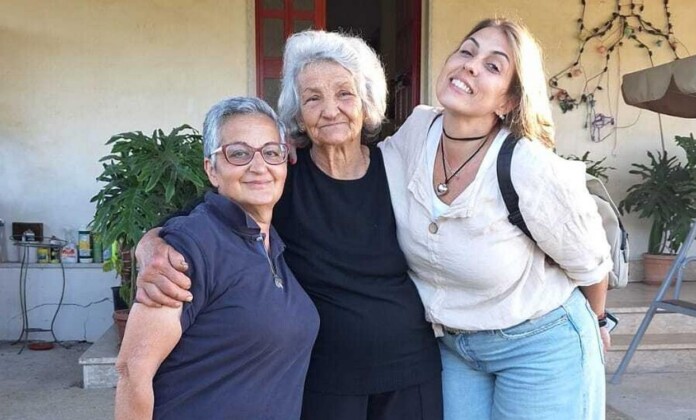
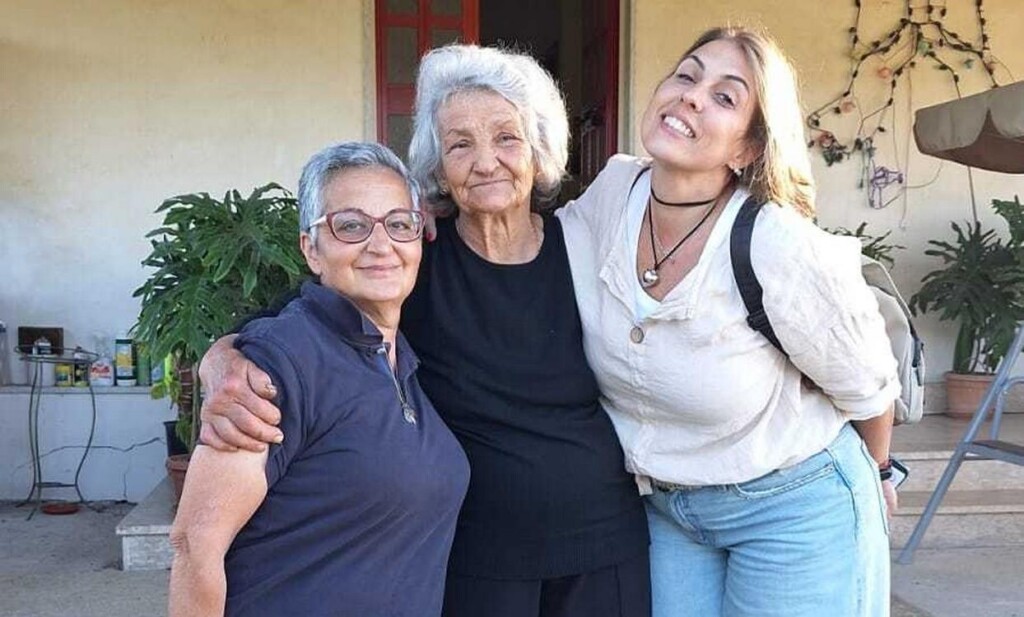
(From left to right) Enza, Margherita, and Flor - credit, handout
(From left to right) Enza, Margherita, and Flor – credit, handout

From Italy comes a remarkable coincidence generations in the making—told with a little help from Airbnb.

Between 1850 and 1950, around 3.5 million Italians immigrated to Argentina, with the 19th century seeing mainly Northerners arriving, and the 20th century seeing mostly Southerners.

It contains the second-largest Italian diaspora on Earth by number, and the largest by concentration—with some states in Argentina today containing a population that’s 30% or more of Italian heritage, and it’s reflected in the culture and surnames seen today.

From that historic berth, Flor, a young Argentine traveler, made a reverse course this summer and arrived in Castel San Lorenzo, in the Italian region of Campania.

Her aim was to explore the place her father grew up—to see the countryside he left behind when he traveled to the New World.

Booking an Airbnb in the medieval village’s historic center, Flor must have arrived with great anticipation, but nothing could have prepared her for the surprise to come.

LOST FAMILY PROPERTY: Young Woman Returns Family Photos Lost in Hurricane Helene Using Social Media to Find Owners

At her booking, she met the owners Margherita and Enza, a mother-daughter pair of “Superhosts” with an almost perfect 5 out of 5 in every category for their property.

Flor arrived with some early family photos, and found to her astonishment that she had booked the very home her father was born in; where he grew up, played, ate, and eventually left. In fact, the hosts even confirmed that their family had purchased the house from Flor’s grandparents.

LOST FAMILY MEMBERS: Woman Looking for Birth Parents Learns That Dad Was a ‘Friend’ on Facebook

Margherita and Enza helped Flor access local records and piece together her family history as best she could before bidding farewell to her history and her hosts to continue what will certainly become an unforgettable trip.

SHARE This Story Of Wild Coincidence With Your Friends On Social Media… 
“Art is not what you see, but what you make others see.” – Edgar Degas

Young Woman with Ibis by Edgar Degas (cropped) – MET Museum http://www.metmuseum.org/art/collection/search/438156

Quote of the Day: “Art is not what you see, but what you make others see.” – Edgar Degas

Photo: 1862 painting by Edgar Degas (cropped) Young Woman with Ibis

With a new inspirational quote every day, atop the perfect photo—collected and archived on our Quote of the Day page—why not bookmark GNN.org for a daily uplift?

Young Woman with Ibis by Edgar Degas (cropped) – MET Museum 

Good News in History, September 4

Shinya Yamanaka in 2010

Happy 63rd birthday to the Japanese Nobel laureate, Sinya Yamanaka, whose pioneering work in the science of stem cells led him to identify the “Yamanaka Factors”— 4 different genetic transcription factors that he used to turn any adult human cell into a stem cell. He shared the prize jointly with Sir John Gordon of England, and his discovery was described as world-changing. READ a bit more about his work… (1962)
She Used Nature to Transform Dry Stream Beds into Lush Oasis During USGS Study

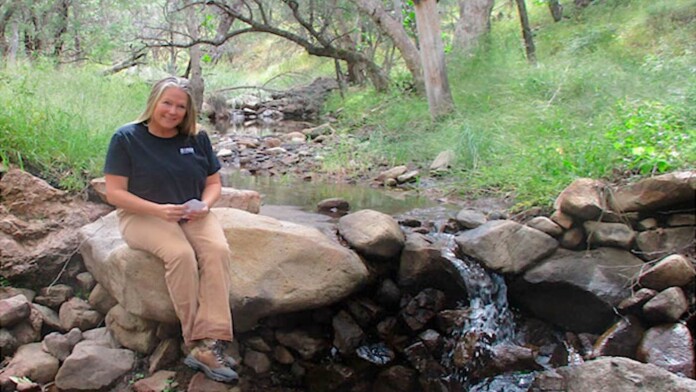
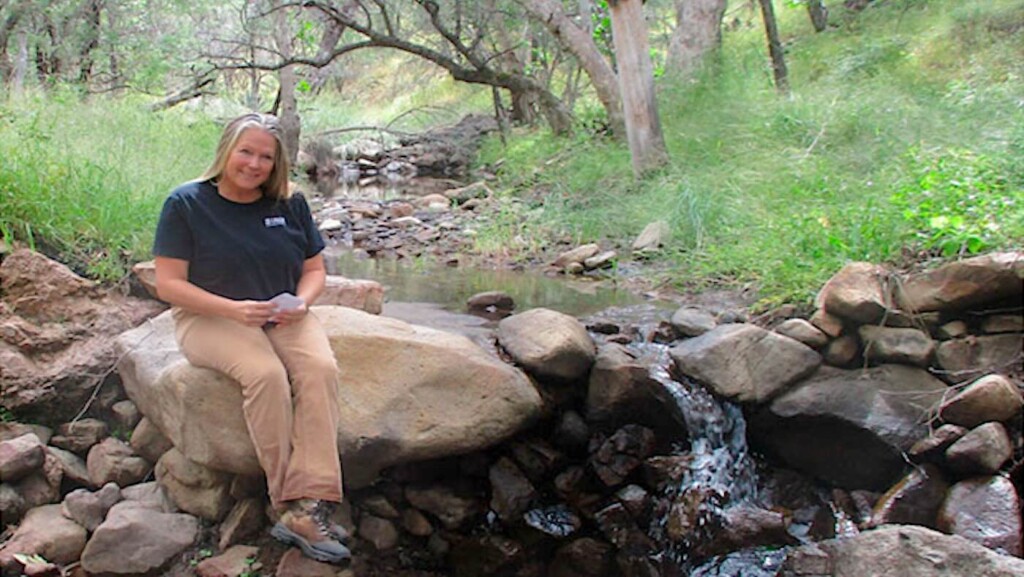
Laura Norman with check dam that transformed dry stream bed in Arizona – Gerry Norman / USGS

In America’s arid southwest, a scientist who’s studied dryland water systems for over 20 years has found the key to transforming barren desert into verdant oases.

That key is so basic, it hardly even merits being called technology, as it’s more or less nature at its natural best.

For the sake of scientists’ obsession with acronyms, it’s called ‘NIDS,’ for Natural Infrastructure in Dryland Streams. In other words, any assemblage of stones, log jams, or other waterway impediments that cause the flow of a stream or creek to slow.

Once upon a time, a mountaintop crumbled away a bit, and a flood of stones raced down the hillside along the paths of least resistance. These stones lost momentum and lodged themselves in narrow sections of those paths, which became streams and tributaries.

Beavers, going about their own business, replicated the stones’ effect in the mountains with trees at lower elevations, once again interrupting waterways.

As man gradually altered these natural systems to furnish water for their livestock and agriculture, their ability to sustain the land with water in such hot and dry environments diminished.

For 20 years, the US Geological Survey’s Laura Norman has been working in areas of Arizona and New Mexico that see some of the highest temperatures anywhere in the country.

GREENING DESERTS: Small Chinese County Reverses Desertification with Arduous Tree-Planting Method Across 240,000 Acres

Nevertheless, by employing NIDS, she’s watched whole landscapes change. Areas where Norman has worked now sustain year-round wetlands, where canopies of green trees shade running water in the middle of scrub desert.

The NIDS structures don’t block the passage of water, but merely slow it down. Slowing the flow decreases erosion and allows the water time to seep into the ground where it can recharge underground reservoirs, or aquifers. In these dark chambers, specialized desert plants reach down to drink. That moisture enters their leaves and evaporates, moistening the air and lowering temperatures below them.

MORE STORIES OF WATER USE: Beavers Saved From Euthanasia Transform and Replenish Rivers in the Utah Desert

NIDS, whether that’s a so-called “check-dam,” a bed of stones, or larger cages of stones wrapped in linked chain, trap sediment, improving downstream water quality and creating substrate in which plants can take root. Once in place, the wetland ecosystems that form around NIDS further decrease erosion and support wildlife, the USGS writes. 

Norman conducted a 27-year monitoring study on the season-on-season effects of these NIDS interventions at a desert wetland in San Bernadino. The results were stupendous, with water levels and greenery substantially higher ever year in the section that had simple cages of stones dropped into creeks on the landscape.

It’s neither new nor complicated. It was just a puzzle piece that ranchers, land managers, and native tribes either forgot or didn’t know they needed.

SPROUT Some Green Growth Of Positivity On Social Media With This Story…

The Wild Quadruple Star System Contains Not One, but Two of the Most Elusive Objects in the Galaxy

Artist's interpretation of the rare-quadruple-star system - credit, Jiaxin Zhong Zenghua Zhang
Artist’s interpretation of the rare-quadruple-star system – credit, Jiaxin Zhong Zenghua Zhang

An international team of astronomers recently found not one, but two of the strangest and rarest of all cosmic objects, and in the same star system no less.

Called brown dwarfs, these peculiar objects are invaluable resources for learning about the formation of stars, planets, and systems.

These would-be stars fail to accumulate enough mass and heat to perform continuous nuclear fusion of hydrogen molecules, and so slowly cool and harden as the years go by until they look and feel more like a planet than a star.

Being thusly cold but also small, they’re really hard to find with even a sophisticated telescope, so imagine the astronomers’ surprise when they found not one, but two—orbiting not one, but two stars.

Called a “double-double” by one member of the team, representing universities and institutes from the US, China, UK, and Spain, the cosmic quartet will provide a “unique cosmic laboratory for studying these mysterious objects.”

The system’s designation is a mouthful: UPM J1040−3551 AabBab. It’s located 1,656 astronomical units away from Earth, and the brown dwarves are estimated to be between 9 and 28-times the mass of Jupiter They’re both orbiting a much more familiar kind of dwarf: red dwarf stars.

One of the most common star types in the universe and also the smallest, the red dwarves are between 300 million and 2 billion years old, Smithsonian wrote, reporting on the discovery. This makes them relatively young, and therefore more interesting to study as the secrets of their origin are more likely to be detectable.

Though the astronomers didn’t present a hypothesis as to why there are two half-star, half-planets in the system, one might guess it’s because there wasn’t enough material for them to fully form—it was being devoured to create the two red dwarves; each of which formed into the smallest star type because material was being absorbed to form the brown dwarves.

In short, there were too many pieces of too small a pie.

An article from NASA in the year 2000 cited by Smithsonian somewhat supports the hypothesis. At the time, the Hubble Space Telescope had just completed the largest inventory of brown dwarves in the Milky Way ever undertaken, and the agency claimed the average size was in fact between 15 and 80-times the size of Jupiter.

MORE STELLAR SURPRISES: LOOK at All the Dark Matter in This New Image from the James Webb Telescope

Those in UPM J1040−3551 AabBab are a fraction of that size, suggesting there wasn’t enough material to go around to make even large brown dwarves, much less larger stars.

The discovery was made using the European Space Agency’s Gaia telescope, and NASA’s Wide-field Infrared Survey Explorer (WISE), with the help of the Southern Astrophysical Research (SOAR) telescope in Chile.

MORE STELLAR SURPRISES: Astronomers Spot Interstellar Visitor: a Comet Blazing Through Our Solar System, Just the Third Ever Seen

“This system offers a dual benefit for brown dwarf science,” Adam Burgasser, an astrophysicist at the University of California San Diego, and a member of the research team, said in a statement.

“It can serve as an age benchmark to calibrate low-temperature atmosphere models and as a mass benchmark to test evolutionary models, if we can resolve the brown dwarf binary and track its orbit.”

SHARE This Rarer-Than-Rare Discovery With Your Friends Who Love Space… 

‘We’re supposed to be good men’: Officer Buys Stranded Deaf Man Train Ticket to Get Home

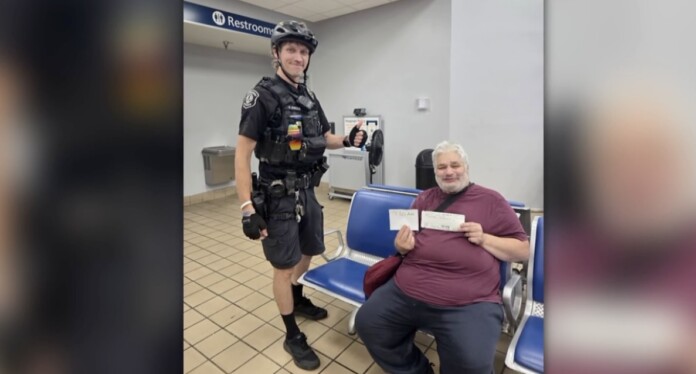
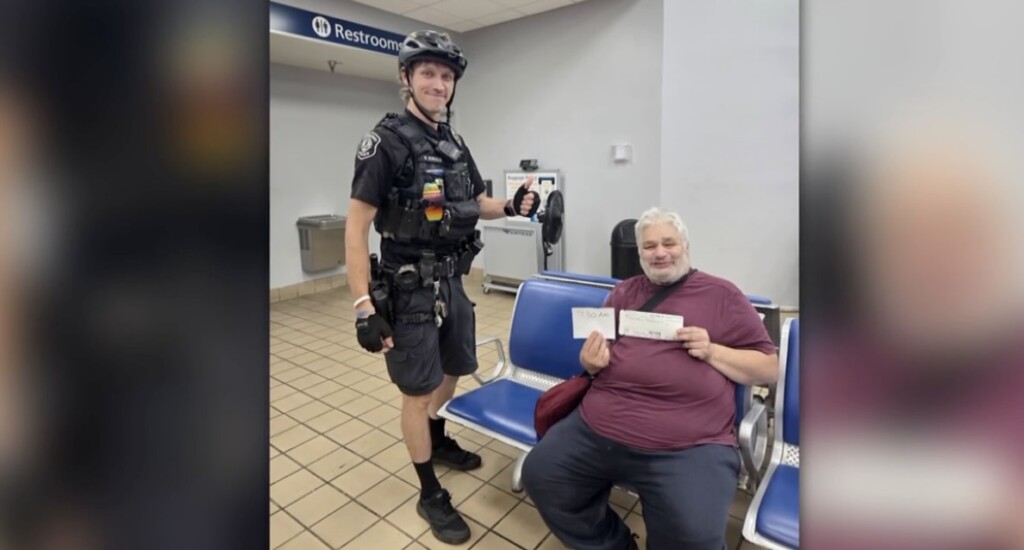
Officer Steven Harris of Pittsburgh Police via KDKA

“We’re supposed to be good men,” said Officer Steven Harris.

Harris was responding to a question from local news in Pittsburgh about why he would spend $113 of his own money to solve a stranger’s problem. It’s a suggestion that all of us, from cops to kids, should hear every now and then.

The story of how Harris got into position to solve the problem comes from the Greyhound bus depot in Pittsburgh where the Police Department received a call about a man behaving “unruly.”

Harris and Officer Keso responded to the call on their bicycles, and arrived to find a much different picture.

“He was just a male who was deaf and didn’t speak English or read English, so it just turned out he needed help to get back on a bus to New York and eventually Montreal,” Officer Harris told reporters.

Keso called a translator line police use in such situations and was able to get a French-speaker to help, though didn’t explain whether sign language was needed or not.

It turned out the man had stepped off the bus to stretch his legs, but obviously didn’t hear the call from the driver that it was time to go, and watched helplessly as the bus took off for New York—his luggage and cash still onboard.

With no options for a bus, Harris “simply” used his bank card to buy an Amtrak ticket to New York.

KINDNESS FROM PITTSBURGH: After Scam Left Elderly Pittsburgh Couple with a Pile of Dirt and Excuses, Local Landscapers Donate to Finish for Free

“We’re supposed to be good men. Good men helping other good men. That’s it,” he said.

Police Commander Tim Novosel said in response to the story that Harris loves to work downtown because “he just thinks differently than most people.”

THE GOOD GUYS OF THE FORCE: When Boy Asks Strangers for Yard Work to Save up for New Game Console, Cops Are Called–And They Buy Him a New PS5 (WATCH)

When asked why he thinks differently, Harris responded that he was raised by his great-grandmother—a different kind of woman, from a different sort of era.

When he reached for his own wallet, she must have been smiling—watching her great grandson the cop helping someone in need, trying, as she urged, to be a good man.

WATCH the story below…

SHARE Officer Harris’ Kind Deed And Wise Words With Your Friends… 

Botanic Gardens Film Giant Lily Pads Holding Over 180 lbs. in Annual ‘Water Lily Weigh Off’

- credit, Denver Botanic Gardens
– credit, Denver Botanic Gardens

The Denver Botanic Gardens recently hosted a worldwide competition to see who could stack the most weight on a water lily pad before it sank, and the results were simply extraordinary.

Known as the Water Lily Weigh Off, more than 30 zoos and gardens in 9 countries around the world took part.

The sight of frogs sitting these one-assumes-to-be-delicate aquatic plants is a picturesque necessity in any pond scene, but don’t assume these lovely lilies to be shrinking violets, they’re actually incredible strong.

The Missouri Botanic Gardens posted a video on Instagram of their largest lily floating upright under 182 pounds of weight, while that of Florida’s Bok Tower Gardens beat Missouri’s score with 183 pounds.

Watching the videos of botanists stacking sandbags, oranges, bricks, and other weighty objects on the lily pads, also known as platters among botanists, have to be seen to be believed.

The Denver staff spoke to various local news outlets about the competition, describing it  and the participants in glowing terms.

“I’m really proud of what we have been able to build out of this silly little idea we started,” says Vanessa Callahan, assistant manager of learning engagement at Denver Botanic Gardens, to KMGH-TV.

“[The participating gardens are] just showing so much creativity, so much storytelling, so much earnest about them, experiences and personality, and I’m having so much fun watching it.”

Third place went to a specimen at the Huntsville Botanical Garden in Alabama, which held 176 pounds.

MORE AMAZING PLANTS: 

The species in question were the Victoria cruziana and the Victoria amazonica, giant water lilies that can produce a pad 6 feet in diameter in a mere 3 months. The pads act like solar panels, soaking up sun to produce chlorophyll to feed the underwater plant.

The pads themselves have a “highly engineered network of radiating ribs and cross-veins,”  the Denver Gardens explains, with each of these becoming stiff and trapping air. The edges of the pads are turned up to prevent water accumulating on the pad, while the underside is covered in razor-sharp barbs that shred any encroaching vegetation.

The famous American renegade architect Frank Lloyd Wright famously used water lilies as inspiration for the support structure in the Johnson Wax Headquarters building in Wisconsin, especially because their design could withstand far more load than traditional columns.

WATCH the Missouri entry below… 

SHARE This Fun And Incredible Display Of Natural Architecture…

“Lend yourself to others, but give yourself to yourself.” – Michel de Montaigne

By Giulia Bertelli (cropped)

Quote of the Day: “Lend yourself to others, but give yourself to yourself.” – Michel de Montaigne

Photo by: Giulia Bertelli

With a new inspirational quote every day, atop the perfect photo—collected and archived on our Quote of the Day page—why not bookmark GNN.org for a daily uplift?

By Giulia Bertelli (cropped)

Good News in History, September 3

Happy Birthday to Shaun White, the three-time Olympic gold medalist in half-pipe snowboarding, who turns 39 today. He was a champion skateboarder in his teens after undergoing two open-heart surgeries as an infant. He became first person to compete in and win both the Summer and Winter X Games in two different sports–including historic wins four years in a row and tallying more X-Games gold medals than anyone. READ more about White… (1986)

Dutch Designers Create Tiny Home by Burrowing into the Bosom of a Recycled Wind Turbine

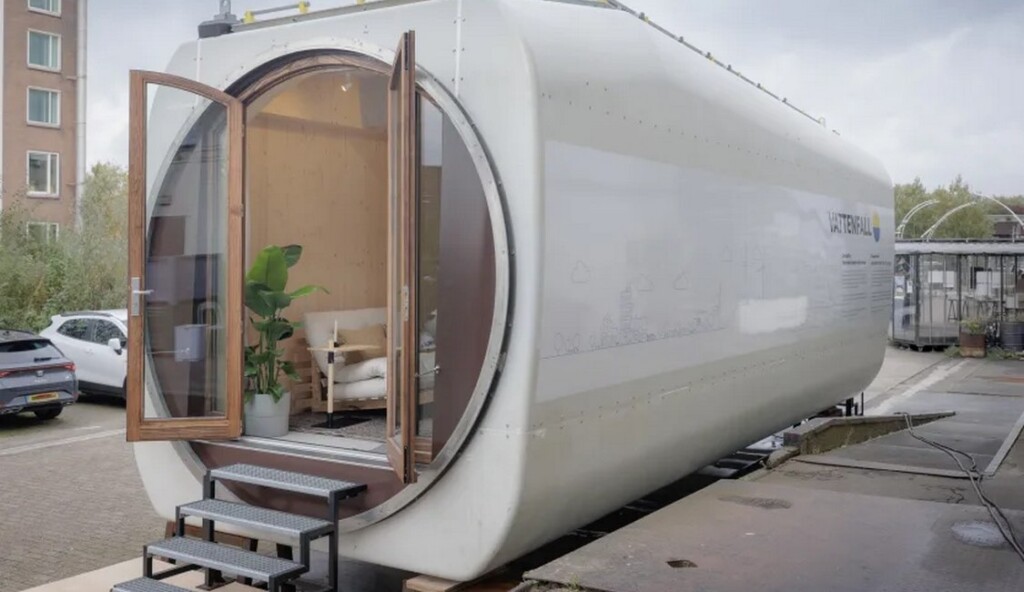
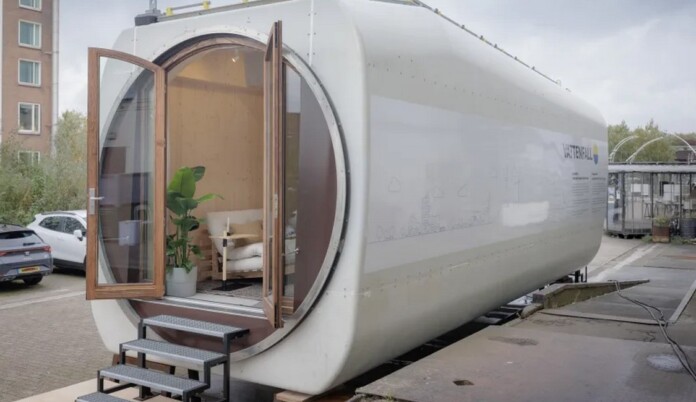
The Nestle, made from a wind turbine - credit, Jorrit Lousberg / Blade-Made
The Nestle, made from a wind turbine – credit, Jorrit Lousberg / Blade-Made

For some, a 4 bedroom 3 bath with a basement theater, wrap-around deck, and two-car garage is the dream. For others, housing that’s quaint, that’s economical—even portable, is the aim.

The market should provide options to everybody, and for those in the latter category of taste, a Dutch company is making little trailer-sized homes from the bosoms of  decommissioned wind turbines.

Known as a Nestle—a play on words referring to the turbine component known as a “nacelle”—this two room human hutch is surprisingly luminous and chic.

The 35-square-meter (376-square-foot) pods are built by a company called Blade-Made that uses decommissioned wind turbine parts that are impossible to recycle as materials to build new structures like benches, highway barriers, playgrounds, and even housing.

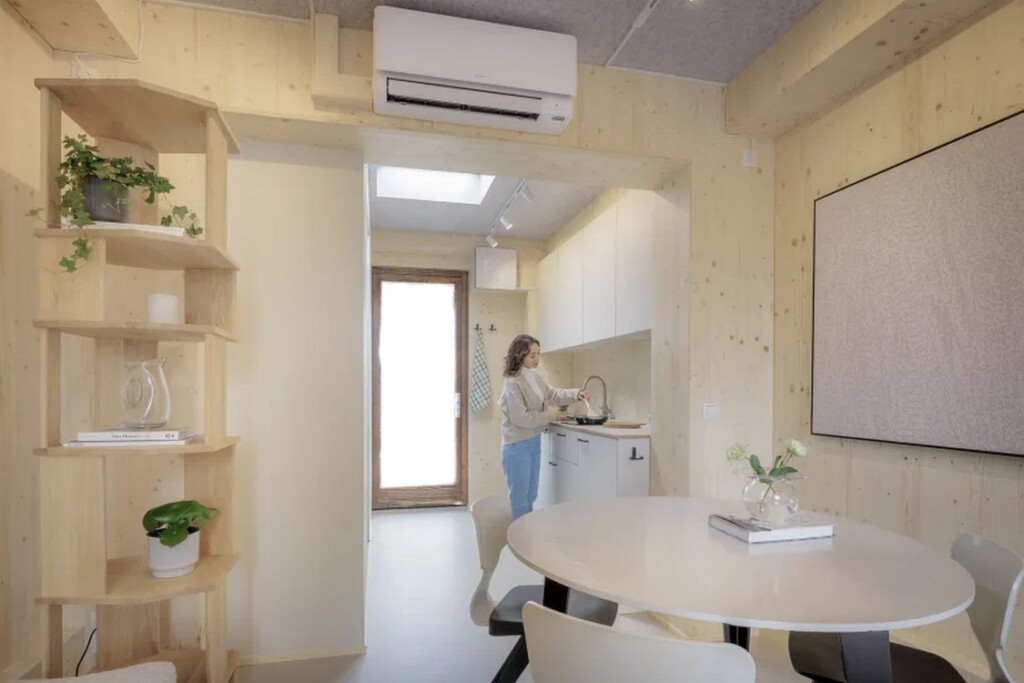
Inside, a warm north-European wooden finish on the walls and furnishings embody the project’s name, and help convince the occupant to nestle into Nestle’s living space.

Perhaps designed more as a statement on the challenges and potential of upcycling rather than as a direct-to-market product, Blade-Made has nevertheless received orders for 10 of these nacelle homes, having been certified by Dutch authorities under the nation’s building codes.

Nestle’s interior is light and airy, with fully functional plumbing and electricity – credit, Jorrit Lousberg / Blade–Made

“Everything in the built environment—everything that you see around you—has an end of life,” Blade-Made’s Jos de Krieger told CNN Style via videocall. “And we need solutions besides waste or landfill, incineration or something without value.”

A challenge facing wind energy is the millions of pounds of fiberglass-heavy material that cannot be recycled but which nevertheless must be replaced every few decades. The initial wind turbine boom has seen its first wave of mass decommissioning, and hundreds of thousands of tons of nacelles and blades will need new homes or purposes.

ALSO CHECK OUT: World’s First All-Timber Wind Turbine Blades are Cheaper, Recyclable, Fire-Resistant and Stronger than Carbon Fiber

“This is basically the most complex thing that you can do with it,” said De Krieger, who’s also a partner at the architecture firm Superuse Studios, one of the home’s designers. “So, all the other less complex things are now easier to imagine and to realize, because this has already been done.”

Many partners were involved with the debut Nestle. Woodwave build the interior, which was designed by Superuse and Reliving.nl. Business in Wind provided the decommissioned V80 turbine nacelle for use in the first model, which was sponsored by Swedish power company Vattenfall.

MORE WIND TURBINE RECYCLING: Old Wind Turbines are Repurposed into Footbridges Capable of Supporting 30 Tons

By 2050, no doubt hundreds of nacelles will be in need of replacing every month across Europe and the world, and every one of them becoming a home seems doubtful. But as is so often the case, design helps us reimagine the potential of many different things, and if by 2050 there are hundreds of people living in Nestles, humanity stands only to benefit.

SHARE This Wild Yet Tempting Idea For Tiny Housing Enthusiasts… 

Teen Buys a Bike He Didn’t Know Was Stolen–Now Rightful Owner Wants to Make Sure He Gets Another

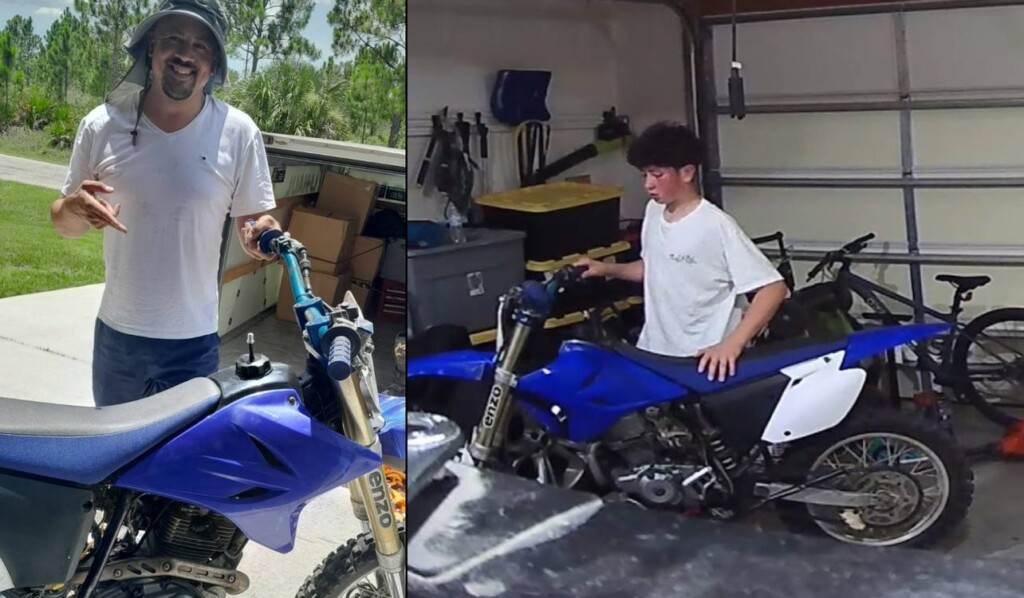
The bike's owner (left) and young Noah who unknowingly bought it after it was stolen -credit, Glen Timoteo
The bike’s owner (left) and young Noah who unknowingly bought it after it was stolen -credit, Glen Timoteo

In a feel-good story that proves hard work pays off, a stranger decided to reward a young man who accidently bought his own stolen dirt bike off Facebook Marketplace.

The teen, 13-year-old Noah from Kansas, had spent the entire summer mowing lawns and doing other chores to save up money for the dirt bike, a sacrifice of the entire inter-scholastic period for a promise of much greater joy to come: the kind of behavior that all Western society was built upon.

But the bike was actually stolen property, little did Noah know it, and tied to a 2023 storage-unit burglary in Wichita.

Referencing the criminal case number, Glenn Timoteo, the dirt bike’s true owner, organized a GoFundMe “to help Noah get the dirt bike he truly earned, and to show him that there’s still good in the world.”

“He had no way of knowing. He did everything right, following the steps his dad taught him about making a fair deal,” Timoteo wrote on the GoFundMe page. “Then came the knock on the door: police had to take it back. Noah had done nothing wrong, yet he lost both the bike and the money he worked so hard to earn.”

“I remember the pride of working for the things I earned as a kid, and I don’t want him to lose that sense of pride or his belief that hard work and honesty still matter. Every contribution, big or small, helps get him back on two wheels,” he finished.

OTHER WORTHY GOFUNDMES: 

At publishing time, donations have reached $3,275, around 55% of the total required to buy Noah his new bike.

It’s not going to save a life, but it’s certainly a worthy cause.

SHARE This Generous Soul And His Quest To Reward A Hard Working Young Man…

This Teen’s iPhone Called 911 by Itself After Severe Crash, Saves Her Life

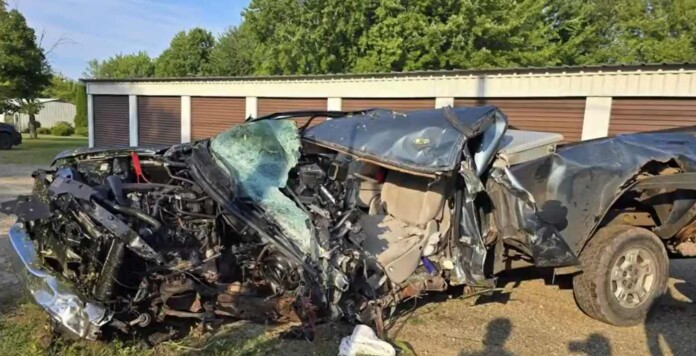
Lindsay's vehicle after the crash - credit, Leskovac
Lindsay’s vehicle after the crash – credit, supplied by the Leskovacs

A tragedy suffered, an even greater tragedy avoided: that’s the narrative on Laura Leskovac’s mind since her daughter was seriously injured in a car crash.

The greater tragedy? What would have almost certainly happened had her daughter Lindsay not had the crash detection feature activated on her iPhone 14.

Falling asleep at the wheel and obliterating her car against two poles and a tree, the phone knew what had happened and immediately called 911 emergency services.

“The person from the fire and rescue told me that 911 said the phone initiated the call, so I looked further into that to find out…” Laura told ABC 21 WFMJ. “And I discovered that iPhones […] have an automatic crash detection on it, if you have the setting on.”

Laura said the phone was connected to 911 for 22 minutes, during which Lindsay, who broke both her femurs, as well as bones in her pelvis, hips, and cervical spinal region, managed to help the paramedics find her location where she lay trapped under the car.

“We’re so blessed that she’s alive; it’s a miracle. We’re also blessed that there’s no paralysis,” Laura said.

The mother added her daughter has a long road to recovery, but that the most important thing was that she had the technology and that it was activated, for otherwise, there may have been no road left at all for the teenager.

MORE STORIES LIKE THIS: Must-Have Travel App Offers Peace of Mind, Averting Any Crisis with Real-Time Advisories and Personal Response Team

If you have an iPhone 14 or newer, you too can activate the detection system by scrolling down to Emergency SOS under the settings menu and activating Crash Detection. From that menu, you can also select which number it is your phone should automatically dial—911 in most cases—although you can change it—for example to an embassy number if you’re traveling out of country.

WATCH the story below from WFMJ 21… 

WFMJ.com News weather sports for Youngstown-Warren Ohio

SHARE This Story With Your Friends Who Have An iPhone 14 Or Newer… 

New Tourism Buildings Designed to Seamlessly Blend in at Famous Rocky Geopark

© MVRDV
The approach to Nature Rocks – credit, MVRDC ©

A Dutch architecture and design firm has renovated the infrastructure in a famous geopark, converting the bland and grating modernity into a nature-inspired welcome mat.

Jialeshui is a well-known scenic area in the southernmost part of Taiwan, known for its remarkable rock formations shaped by wind and water in Pingtung county.

The local government recently selected the design proposal submitted by MVRDV together with HWC Architects that was based around a series of key structures and paths that take the rocks themselves as inspiration.

Called Nature Rocks, MVDRV designed a network of new pathways and public spaces that improve accessibility while seamlessly blending into the rocky environment.

Over thousands of years, strong winds and sea waves have shaped the area’s soft sandstone coastline into a series of sculptural rock formations, many of which resemble animals and carry names such as Rabbit Rock, Toad Rock, and Seal Rock.

Currently, the forest just behind is separated from the rocky shoreline by a single road that cuts through the landscape—a narrow, largely straight route shared by shuttle buses, pedestrians, and cyclists. The pavilions and kiosks peppered along the road have been damaged by typhoons and seawater, and the whole ensemble looked exploitative and a bit ramshackle.

“Our goal was never to impose architecture on the landscape, but to let it emerge from the natural conditions; to break the monotony of the straight line… and to emphasize that Nature Rocks,” explained MVRDV founding partner Winy Maas.

The Nature Rocks Trail and infrastructure – credit, MVRDC ©

All of the new construction will be confined to areas that are already developed to avoid disrupting the original natural landscape. Inspired by the layered forms of the coastline, the design breaks up the existing straight road and reimagines recreational pathways as a cracked, rocky, naturalistic landscape that stitches the forest and the coastline back together.

ALSO CHECK OUT: ‘Give Nature Space and it Will Come Back’: Rewilding Returns Endangered Species to UK Coast

The rock-like fragments define various zones for circulation and public activities while some are extruded into buildings that echo the natural features of the local rock formations, blending into the surrounding environment.

At the entrance to the park, three sculptural buildings form a welcoming cluster. The largest of these “rocks” contains the welcome centre, a café, and a souvenir shop. A second building provides spaces for exhibitions and environmental education, while the third contains restrooms.

© MVRDV

The main building’s roof doubles as a terrace for stargazing and panoramic views. This entrance cluster is set within a sloping landscape of small plateaus and plazas designed for events, markets, or simply to enjoy the view.

MORE GREAT DESIGNS: Contest Winner Turns Bridge into the Longest Walking Art Gallery in South Korea

For the rest of the route, the existing road will be transformed into a more accessible route for pedestrians, cyclists, and shuttle buses, as well as clear zones for movement and relaxation. Several smaller “stops” are positioned at existing points of interest: the stone viewing deck, a sea lookout point, and the waterfall. At each stop, the site’s existing outdated structures are replaced with viewpoints, kiosks, and other facilities.

SHARE This Great Use Of Nature And Imagination With Your Friends… 

“The aim of education is the knowledge, not of facts, but of values.” – William Inge

Quote of the Day: “The aim of education is the knowledge, not of facts, but of values.” – William Inge

Photo by: Getty Images for Unsplash+ (cropped)

With a new inspirational quote every day, atop the perfect photo—collected and archived on our Quote of the Day page—why not bookmark GNN.org for a daily uplift?

Good News in History September 2

Photo by Nathan Congleton, CC license

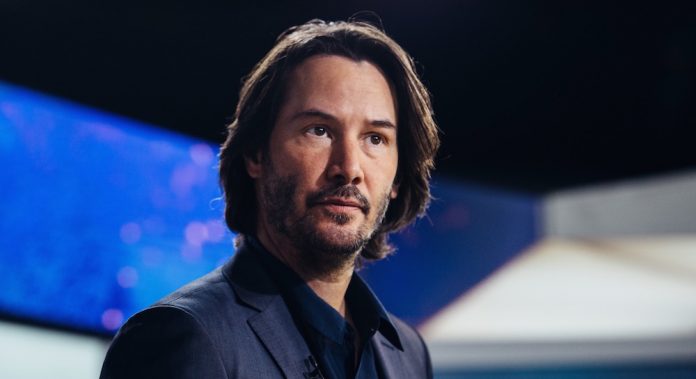
Happy 61st Birthday to Keanu Reeves, the actor who might be called one of the nicest guys in show business. The Canadian started his career with humor and light-hearted films like Bill and Ted’s Excellent Adventure, before moving onto becoming an action star with his protagonist role as Neo in The Matrix trilogy, Point Break, and the John Wick movies. In addition to his career as an actor and musician, Reeves is the co-writer and creator of the BRZRKR comic book franchise. GNN reported on its release. READ more about this charismatic star… (1964)

Denver Neurosurgeon Performs Rare Surgery to Help Former Paramedic Walk His Daughter Down the Aisle

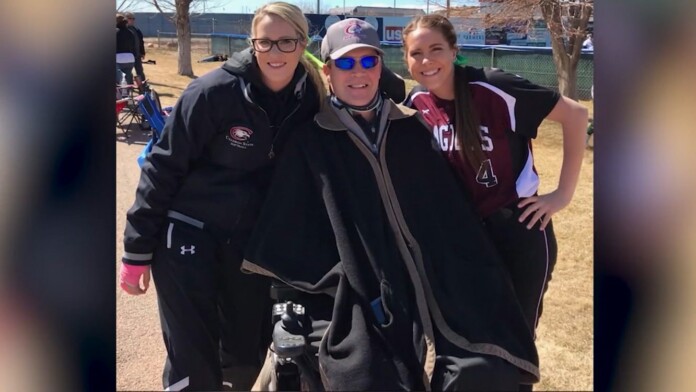
Russel McKeehan (center) and his daughter - credit, family photo.jpg
Russel McKeehan (center) and his daughter – credit, family photo

When combined with his patient’s grit and determination, a Denver neurosurgeon’s skills in performing a rare surgery may have allowed a man to walk his daughter down the wedding aisle against all the odds.

For Russell McKeehan, that simple dream for so many fathers has been something like the north bearing on a compass in a storm of health issues that started when he himself was a paramedic.

In 1995, his ambulance driver fell asleep at the wheel and rolled the vehicle, significantly damaging McKeehan’s nervous system—though he didn’t know it at the time.

It wasn’t until 2007 that the damage took full effect. McKeehan entered the hospital for chronic headaches, and woke up a few days later paralyzed from the neck down.

In 2017, after a long battle to accomodate life with his new limitations, McKeehan sought a surgical intervention from Dr. Scott Falci, a neurosurgeon at Denver’s HCA HealthONE Swedish, with hope of regaining some of his lost mobility.

The surgery was a success.

“I often joke,” McKeehan told CBS News Denver, “you can’t write soap opera as bad as what I’ve lived through.”

True enough, the surgery allowed McKeehan to regain the ability to use his arms and legs—a miracle, one might say—yet not enough to black out his unlucky stars from striking again—in the exact same way.

Driving his son’s pickup at a mere 45 mph, the truck flipped over 4 times after lug nuts that had not been fully tightened came loose and McKeehan lost control of the vehicle. He broke his neck, humerus, several ribs, and bones in his sternum. His recovery—then in its 12th year, took a major step back.

LIFE AFTER PARALYSIS: Millionaire Turned Quadriplegic Jon Ayers is Giving it All to Save Wild Cats, After Finding a New Purpose

This year, the broken man returned to Dr. Falci for another, rarer surgery; one that only 10% of patients will ever receive, in the hopes of achieving a single goal: to walk his daughter, now engaged, down the aisle on her wedding day next month.

“In my mind, I want her day to be about her and not be about me, and the more normal I can be, the more happy she can be about this situation,” he said.

OTHER STORIES LIKE THIS: Little Boy Beats Odds to Walk Mom Down Aisle Thanks to Special Harness – (WATCH)

Dr. Falci described his patient as an “amazing” and “highly-motivated guy.”

“Twelve hours after the surgery, we weren’t expecting this, he’s moving his arm, he’s pulling his arm up to his face, and he’s kicking his left leg,” the doctor told CBS. “He’s a highly motivated guy, and he’s been through a lot, and, yeah, what he’s achieved, just with self-determination and desire is amazing.”

SHARE This Inspiring Story Of Recovery With Your Friends… 

Goat-Inspired ‘Forestry Robot’ Will Examine Trees, Count Species, Collect Ticks, and Scan for Historic Artifacts

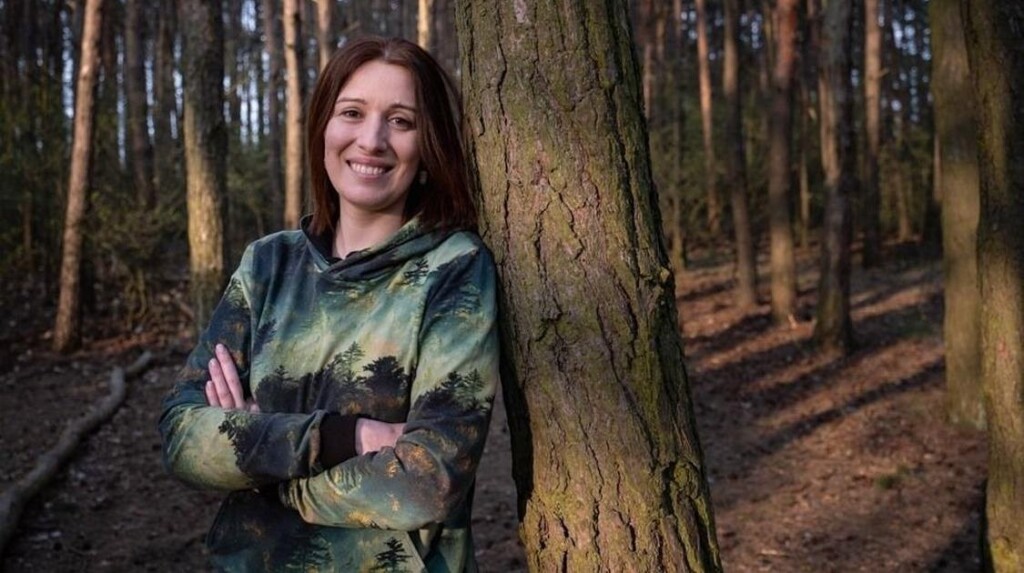
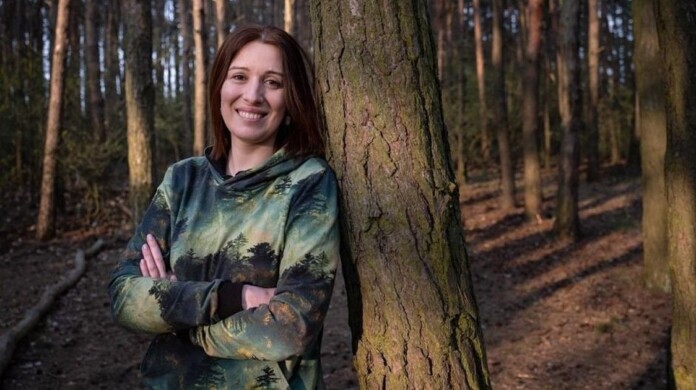
Forestry expert Anna Wierzbicka who's involved with the robot's development - credit, Wierzbicka, via Facebook
Forestry expert Anna Wierzbicka who’s involved with the robot’s development – credit, Wierzbicka, via Facebook

With 30% of Poland still covered in forests, the nation’s foresters play many critical roles—soon to be aided with the world’s first goat-inspired forestry robot.

The robogoat is envisioned to perform many crucial tasks that foresters are trained to do in difficult terrain, including compiling tree inventories, land surveys, tick collection, species counting, and even archaeological surveying.

It’s being designed at the University of Life Sciences in Poznan (UPP) with the help of scientists from Italy and Cyprus, making it a cross-continental effort predicted to substantially aid in addressing forest-related issues as the continent struggles with a severe dearth of employees in the forestry profession.

With around 2,000 protected areas of forest in Europe, there’s no shortage of work that the robot, envisioned to cost around 1.8 million euro to develop, could or should do.

These span from the flat woodlands of the country’s Puszcza Zielonka National Park to rocky and uneven ground of a Mediterranean climate. As a result, mobility was to be a chief focus of this early stage in development.

“For now, we have the idea that this will be a walking robot, with legs similar to an Alpine chamois to enable it to move over steep mountain slopes,” UPP’s Anna Wierzbicka told TVP World, a Polish news agency that used AI to generate an image of what a goat-inspired forestry robot would look like.

Counting tree species, diagnosing them for pests or diseases, as well as recording other plant and animal species will be the robot’s main efforts. It’s normally a kind of work that requires specialists, “and there are fewer and fewer of them,” says Wierzbicka.

ROBOTICS FOR FIELD WORK: ‘Cheaper, More Humane’ Drones Emerge as Key Weapon in Mosquito Control from Poland to Africa

“Additionally, inventorying such areas is hard fieldwork that also demands knowledge of plants and animals. [The robot] is a response to the decreasing availability of competent staff and would also satisfy the need to reach hard-to-access areas.”

“Ticks are also important for research reasons, so we decided that [enabling the robot to collect ticks] would be an interesting additional element that could contribute to improving our knowledge about them,” she adds.

SECRETS OF POLAND’S FORESTS: Father-Son Were Trying to Find Roman Road But Found a Shovelful of 16th C. Silver Coins Instead

Archaeologists have joined the project to contribute their excavation and survey methods to perhaps enable the forestry robot to passively be scanning the ground over which it walks for artifacts.

Wierzbicka and her colleagues expect the first prototype to be ready by 2026, and an operation-ready model to be finished before 2030.

SHARE This Awesome Robotics Project Needed For Europe’s Forests…