














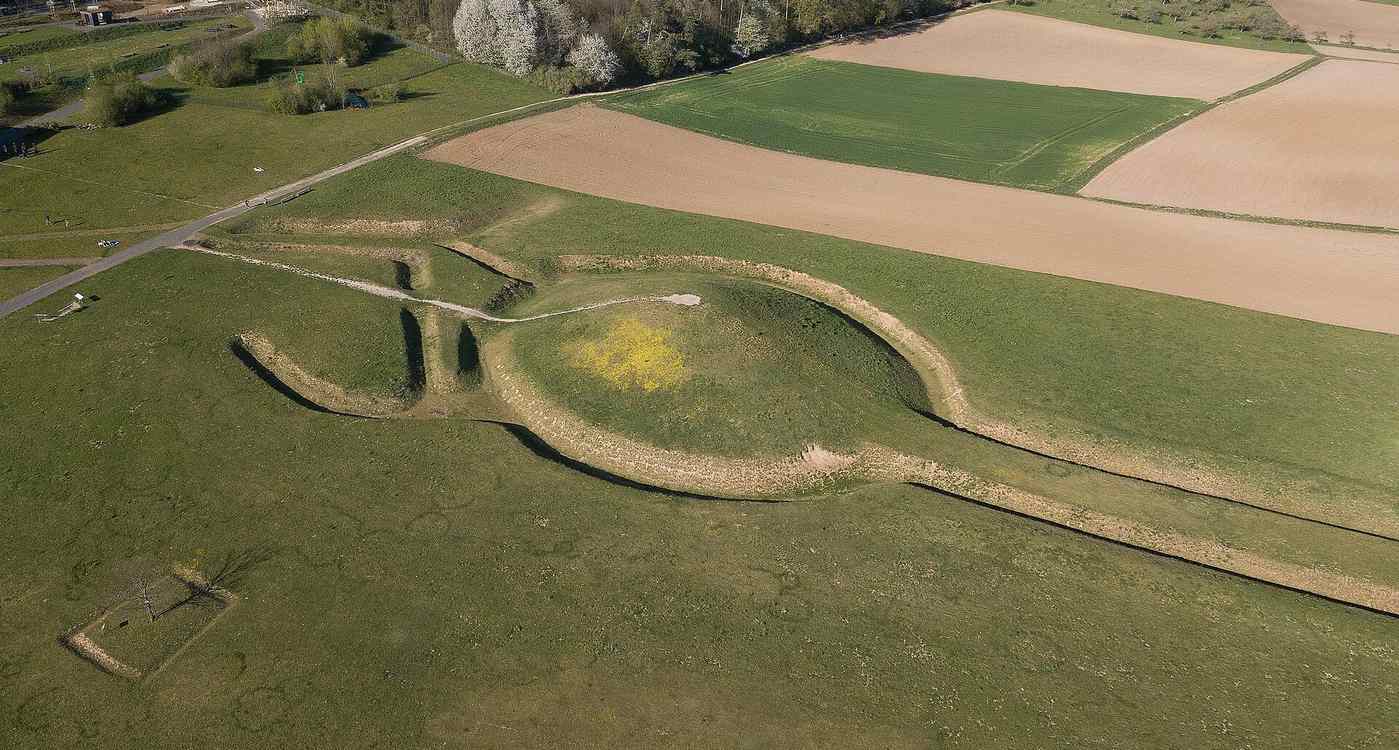
A “princely grave” with Celtic connections has been found during construction in Germany.
Found in Bad Camburg in the German state of Hesse, the assemblage of gold, armaments, and the iron wagon fittings elevate the discovery to one which has but 2 comparable examples in the whole of the country.
This, say experts at the State Office for Monument Preservation, in the state capital of Wiesbaden, makes it an “absolute top” discovery.
“You only make such a find once in your archaeological career,” said district archaeologist Kai Mückenberger in a translated quote from Hessenschau, which first reported on the discovery, made during preparations for a solar panel installation near a stretch of the A3 highway in Bad Camburg.
Mückenberger was essentially a consultant archaeologist on the solar site, and had ordered a geomagnetic survey all chop-chop, expecting to find nothing. The results of the survey showed the outline of a rectangle within a circle. He tossed around a joke that they had found a “princely grave.”
In reality, he expected to find the outline of the remains of a building, but the crews called him up saying the earth-moving equipment had found metal—an iron spearhead.
At that point, Mückenberger got serious and brought a team out to the site which excavated heavy gold jewelry, amber, bronze and glass beads, a small knife, and the iron fittings of a chariot or wagon, including the hubcaps, axle, and bands which would have encircled the wooden wheels like tire tread.
MORE STORIES FROM UNDER THE SHOVEL: Norway’s Largest-Ever Trove of Viking Age Coins Is ‘Historic Find’ By Metal Detectors
Rather than pull the items out one-by-one, they removed them in a giant block of dirt to ensure it could be done with the best preservation means available. This is when they found another startling find: a beaked bronze jug for water or wine that has been determined to have been made by the Etruscans, a central-Italian tribe who inhabited the peninsula concurrently with the early Roman republic.
CELTIC GRAVES: Metal Detectives Unearth Ancient Dagger Decorated with Tiny Stars, Crescent Moons, and Geometric Patterns
One of the 3 golden rings weighed 5 ounces. One was meant for the finger and another for the arm.
Just two other of these “wagon burials” have been found before, and this one likely dates to the first half of the 5th century BCE, contemporary with the Hallstatt or La Tiene cultures, but not from the same geographic region. Instead, the finds have tentatively been ascribed to the Hunsrück-Eifel Celtic culture, which takes its name from two low-lying mountain ranges.
However, the archaeologists in Wiesbaden say no other gravesite is comparable in quality to this one.
SHARE This Career-Making Discovery In Hesse With Your Friends…