














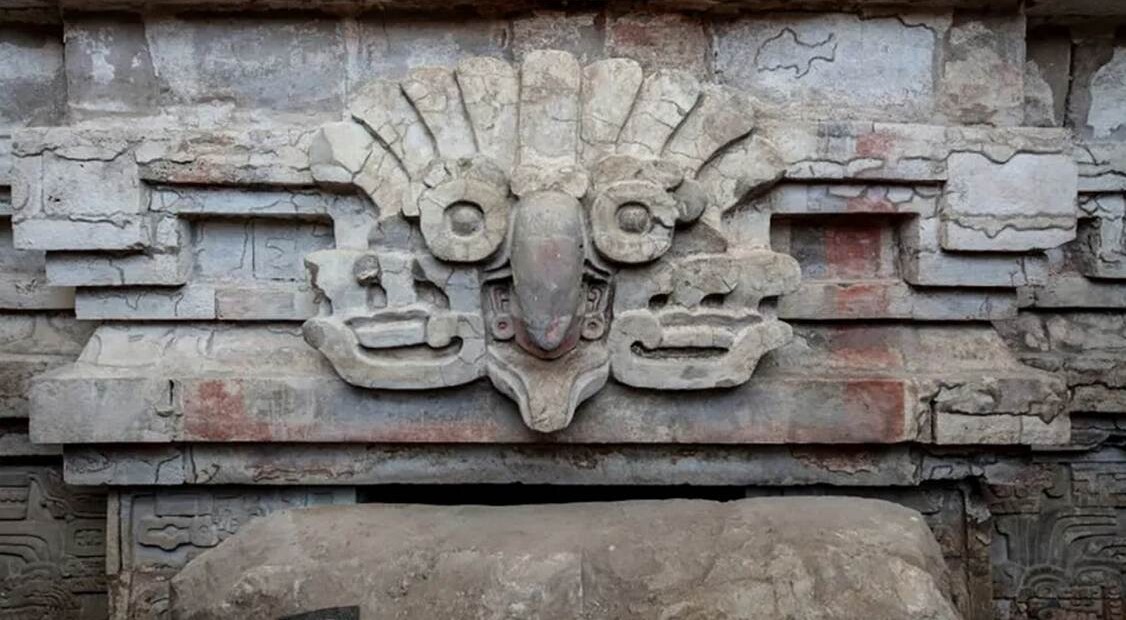
It’s being called the most significant archaeological discovery in a decade: a tomb dating back 1,400 years decorated with murals and carvings of exquisite preservation.
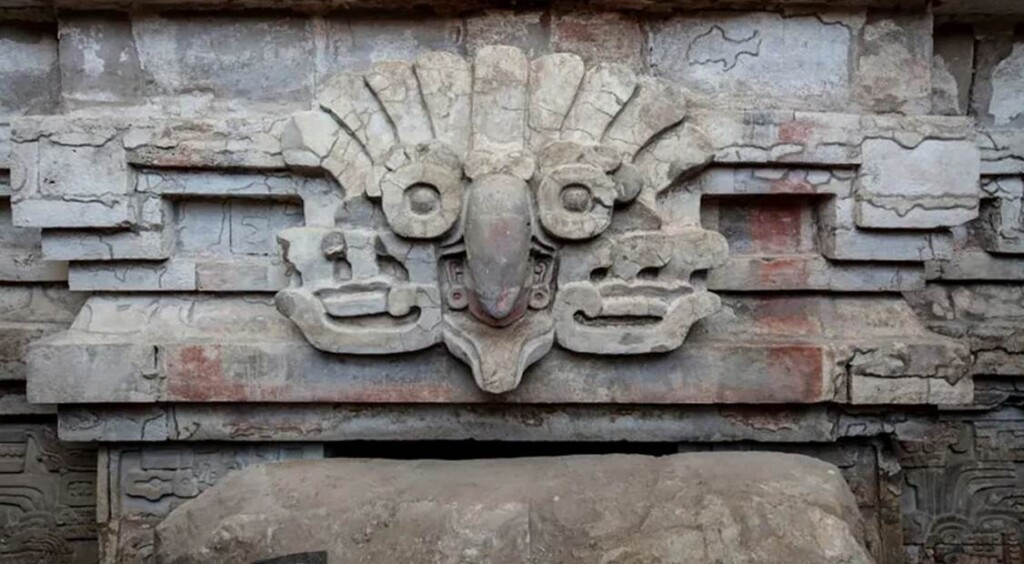
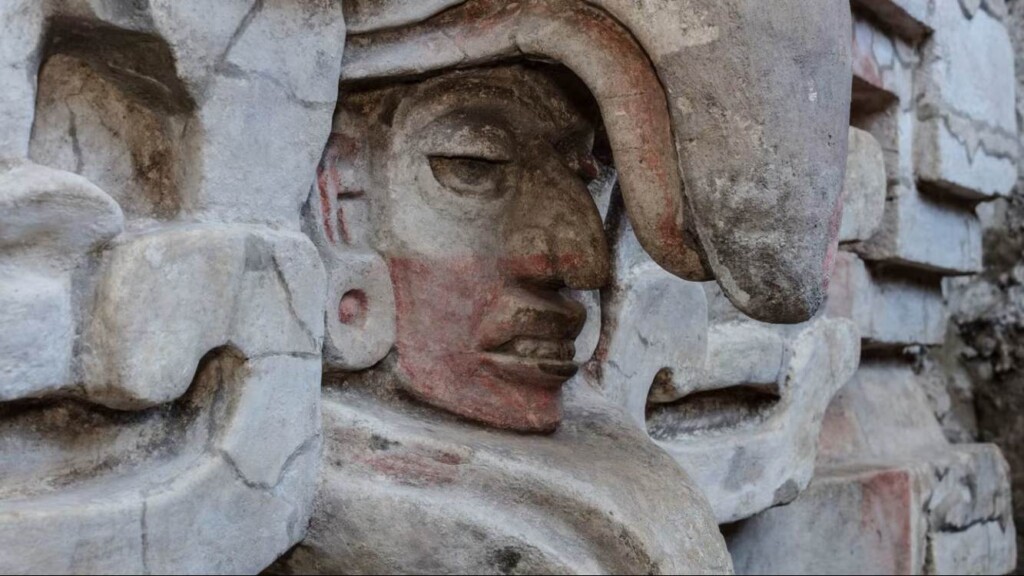
Belonging to one of Mexico’s non-Mayan native cultures, the Zapotecs, its most striking feature is a frieze of an enormous owl head, with a man’s face trapped in its beak.
The Zapotecs are a pre-Colombian people who inhabited areas making up the modern Mexican state of Oaxaca as far back as the 6th century BCE, around the time this tomb dates to.
The earliest Spanish chronicles speak of the Zapotecs existing in a state of war with the Aztecs, and today, their descendants make up a recognized racial group in the modern Mexican state numbering in the hundreds of thousands, speaking a language of the same name.
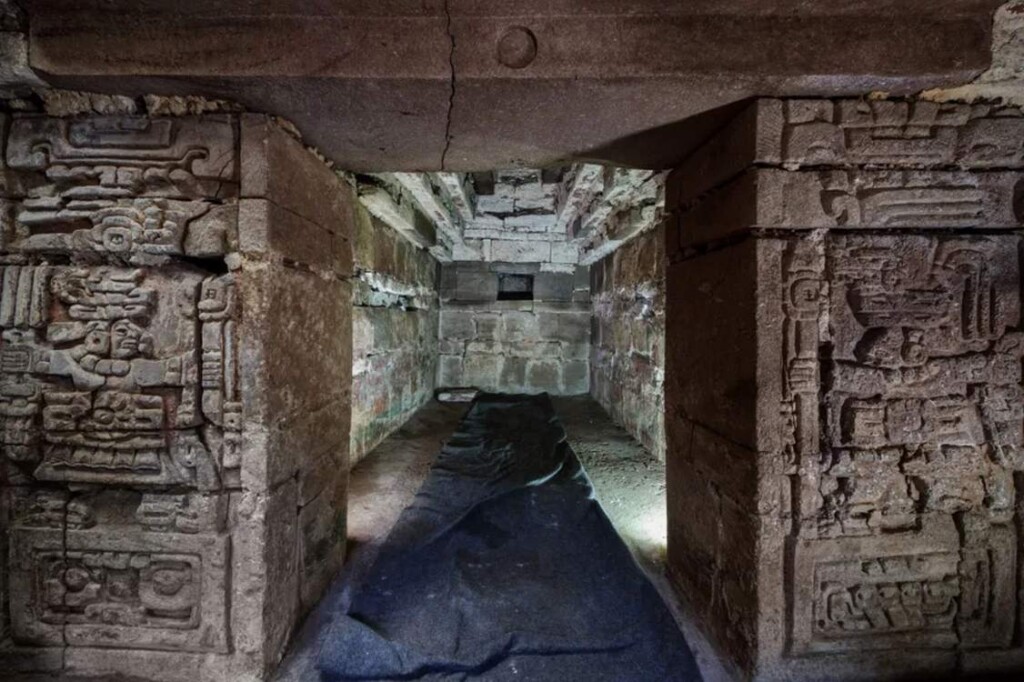
Located in San Pablo Huitzo, the tomb is decorated with murals in green, white, blue, and red pigments that show scenes associated with funerary traditions, a statement from Mexico’s National Institute of Anthropology and History (INAH) explains.
“It’s the most significant archaeological discovery of the last decade in Mexico due to the level of preservation and the information it provides,” said President Claudia Sheinbaum in a press briefing in the days following the discovery’s announcement.
The standout detail by far is the owl sculpture. In Zapotec myth, owls were symbols of both the night and death, and the beak of the bird contains a stone head—perhaps representing the one belonging to the man buried in the tomb, INAH said.
At the threshold to the burial chamber there are carvings of two human figures holding various artifacts in their hands, who may have been the guardians of the tomb, according to the INAH.
GNN recently reported on a LiDAR study that identified a collection of structures on the hills near the modern town of Santo Domingo Tehuantepec was actually a Zapotec fortress, complete with ball courts.
Pedro Guillermo Ramón Celis, organizer of a LiDAR survey, plans to return to conduct more research there, telling the press team at McGill University that as a point of reference and pride for the Zapotec people, the fortress could provide key insights into their ancestors’ ways of living, as well as an example of a civilization that resisted the Aztec’s conquering push southward.
MORE CENTRAL AMERICAN HERITAGE: Latin American States Protect Second-Largest American Rainforest as the ‘Great Mayan Reserve’
Regarding the owl-fronted tomb, Mexico’s culture secretary, Claudia Curiel de Icaza said something similar, noting how the Zapotecs alive today will be eager to hear what the tomb and its murals and carvings will tell of their ancestors’ social organization, funerial rituals and belief system.
For now, critical conservation work will be undertaken first, as the tomb and its artworks are at risk of insects, tree roots, and deleterious effects from exposure to the local climate.
SHARE This Discovery Of The Century With Your Friends On Social Media..