














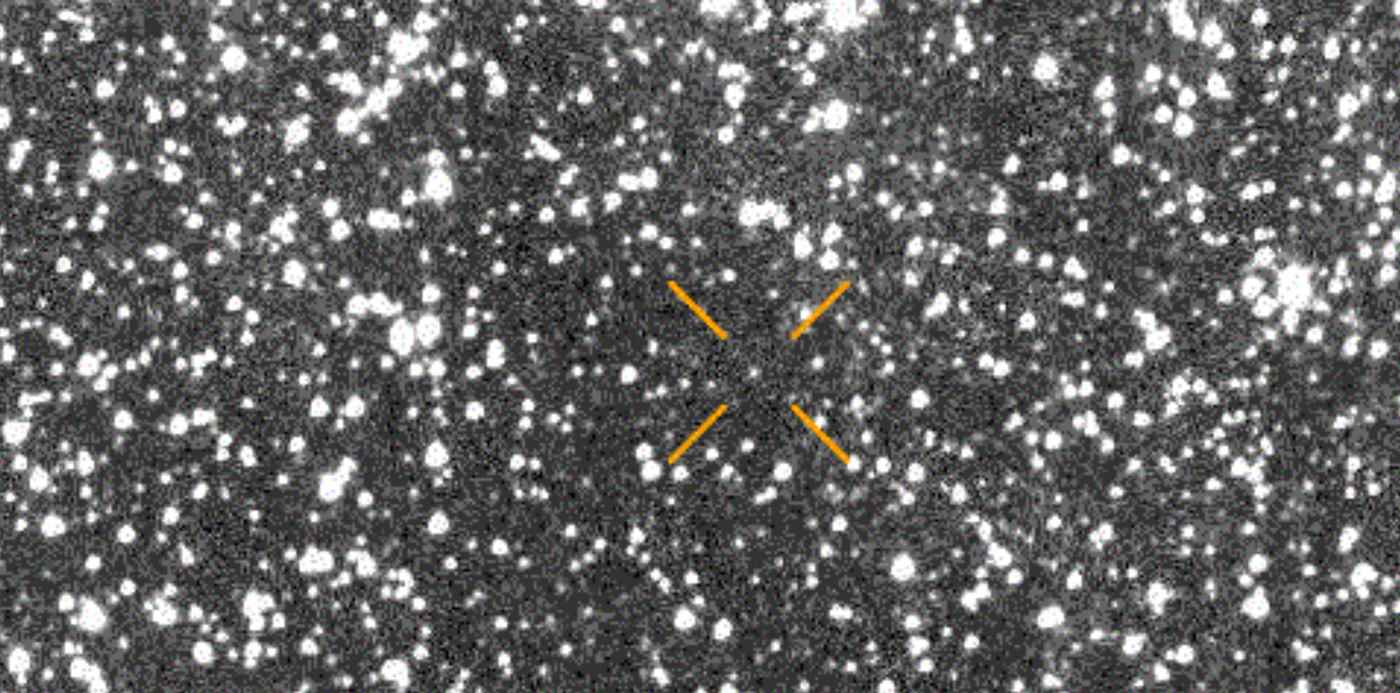
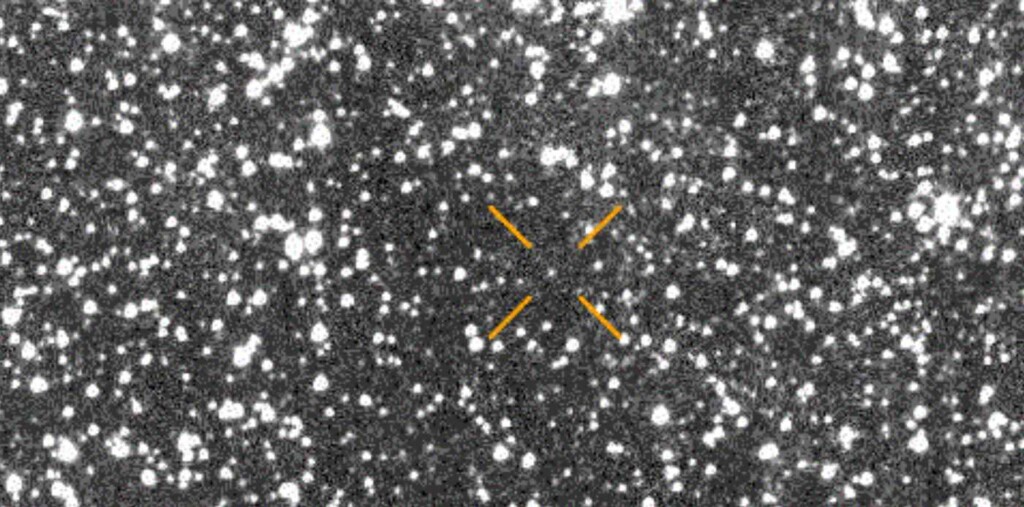
Astronomers have confirmed for just the third time ever that the solar system has been visited by an interstellar comet.
Dubbed 3I/ATLAS, it is blazing through our cosmic cul-de-sac at truly awe-inspiring speeds between the main asteroid belt and Jupiter, and will soon be gone forever.
Only twice before have astronomers seen interstellar objects in our solar system, the first being the “cigar-shaped” (or pancake-shaped) Oumuamua in 2017, and the second was a comet called Borisov in 2019.
3I was discovered on July 1st by the ATLAS Project (Asteroid Terrestrial-impact Last Alert System), a coordination effort between four NASA-funded telescopes in Chile, Hawaii, and South Africa which automatically scan the whole sky several times every night looking for moving objects.
It’s one of the flagship programs of the yet-young Planetary Defense Coordination Office at NASA which aims at equipping humanity with the tools it needs to defend our home from potentially cataclysmic asteroid impacts.
3I is over 150 million miles away, and on an almost entirely straight trajectory out of our solar system. In other words, the interstellar visitor comes in peace.
“If you trace its orbit backward, it seems to be coming from the center of the galaxy, more or less,” Paul Chodas, director of NASA’s Center for Near-Earth Object Studies, told the New York Times. “It definitely came from another solar system. We don’t know which one.”
It’s moving at 137,000 miles per hour, which would allow it to travel from the Earth to Mars in just over 58 days rather than the 2 years that most NASA spacecraft need.
3I seems to be surrounded by a cloud of ejected dust and gas typical of icy comets, which makes it hard to estimate the object’s size. A rough estimate, reports Smithsonian Magazine, puts it about 12 miles across.
CHECK OUT THESE COMETS: Two Meteor Showers Will Peak on the Same Night in July and Be Visible in the Southern US
The appearance of an interstellar comet is a timely reminder of the value which the Vera C. Rubin Observatory, a brand-new, state-of-the-art, earthbound telescope, will bring to watching our solar system.
The Vera Rubin, which recently debuted its amazing imaging capabilities, will be conducting a mammoth undertaking known as the Legacy Survey of Space and Time, which will see it image the entire night sky from its perch over 8,000 feet atop Cerro Pachón every three to four nights for the next 10 years.
EXPANDING OUR SIGHT: James Webb Telescope Debuts New Trick: Blocking Out Stars and Photographing Their Planets
This will create a colossal dataset of the current positions of galaxies and stars, and will allow researchers to detect minute changes in locales as close as our own solar system, or our nearest galactic neighbors. Any detected changes—a new transient object, a fast radio burst, a new supernova, and an astronomer could be alerted, and new research be conducted in as real time as can be garnered in the discipline that studies in light years.
Professor Catherine Heymans, Astronomer Royal for Scotland, described to the BBC that this transience is going to be a “transformative” resource for the field.
The fact that 3I/ATLAS is just the third interstellar object ever identified may not be related to the rarity of such an event but merely the limited ability humanity has had to detect them until now, given the ridiculous speeds they travel at.
SEND This Story Our Into Your Friends’ Social Media Orbits…