













For decades, 98% of transportation-related funding and infrastructure went to the 6% of people in the Philippines who own cars.
Now after years of research, advocacy, and lobbying, a national coalition has led a transformation in public transit and civic planning on behalf of cyclists, pedestrians, and non-car commuters, and has attracted international attention and support for their work.
Made up of 77,000 people across 142 citizen groups, Move As One began its revolutionary work following the government-enforced lockdowns and business closures during COVID.
With public transit in the capital of Manila shut down, authorities realized how many people in the city of 1.9 million people relied on it to get to work. Additionally, they heard from Move As One about just how close to the edge, financially speaking, transit workers were living.
When the buses stopped, with room for a pinch of exaggeration—but only a pinch—so too did the food on family tables.
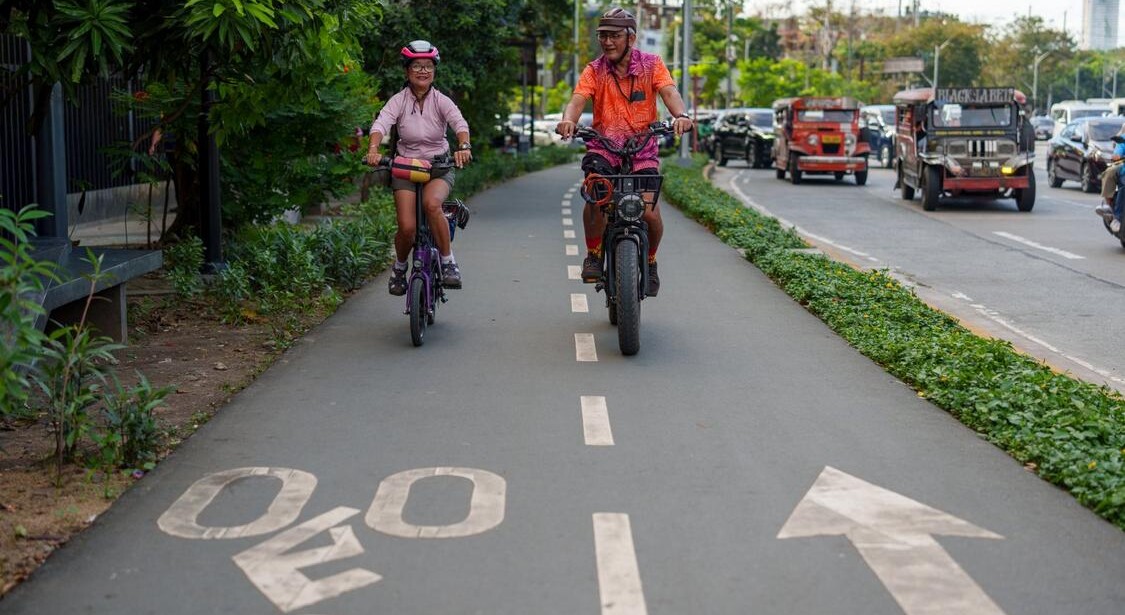
From then on citizens representing the broad swath of society that didn’t drive began to demand change—they wanted official bus routes and stops, protected cycling lanes, raised, shaded sidewalks, and options that could cater to those with disabilities. Move As One was loud, persistent, and unified, and over the last 6 years has seen remarkable change in Manila and beyond.
“With Move As One, we gave everyone a platform to connect, to meet each other, to hear each other’s common struggles, to create that shared sense of solidarity and to form consensus,” said Rycel Bendaña, the national coordinator of the Move As One Coalition.
The coalition’s door-knocking, cold-calling, testimonies before the House and Senate, and relationship-building inside city hall has influenced decisions affecting an estimated $946 million in immediate transport funding and $12 billion in medium and long-term funding, the World Resource Institute’s Meghna Ray and Jen Shin detail in a feature piece.
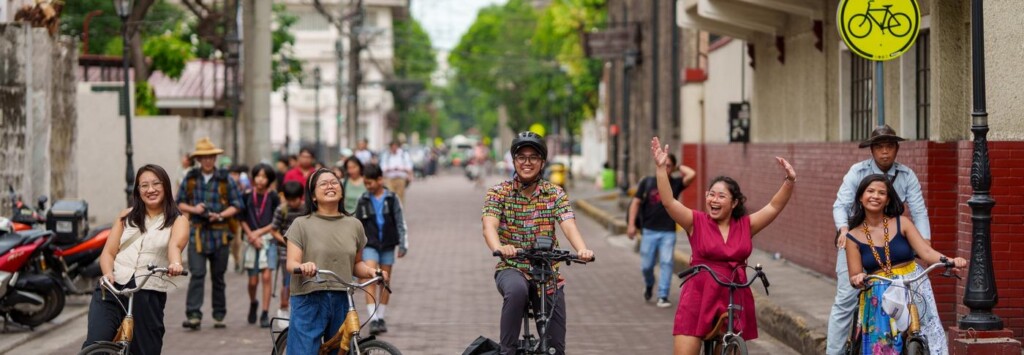
In Manila, they wrote, some of that work has resulted in the redirecting of public funds to create a pedestrian boulevard along the Pasig River and supporting a car-free zone in Manila’s historic district of Intramuros as a people-friendly public spaces.
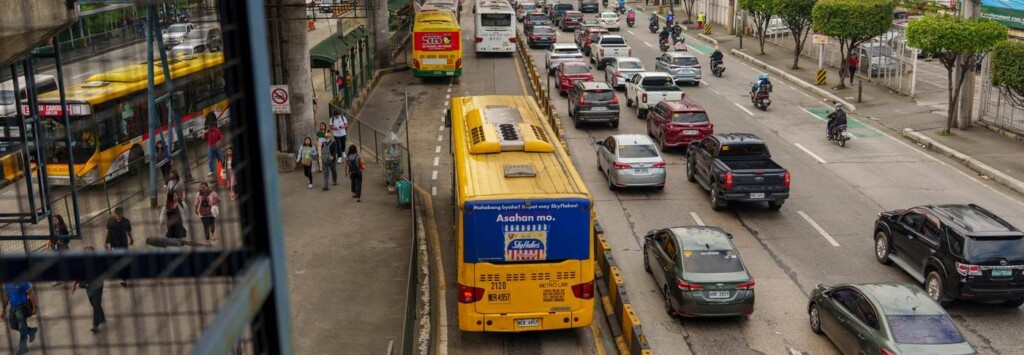
It also included the implementation of a dedicated bus route along the Epifanio de los Santos Avenue (EDSA), Manila’s main arterial highway, with dedicated stations, safer, inclusive pedestrian access, and structured boarding at various carousel-accessed stops. Across the country, more than 800 miles of bike lanes now connect neighborhoods in several cities.
MORE PHILIPPINE STORIES: College Project Sparks Student to Start Orphanages for Homeless Kids in Philippines: ‘Why haven’t I started this?’
GOOD TRANSPORT: Sub-Zero Temperatures Didn’t Affect Madison’s Electric Bus Fleet This Year–A Major EV Milestone
Mark Steven Pastor, undersecretary for road transport and infrastructure at the Philippine Department of Transportation, admitted to the WTI that Move As One has become something of the DoT’s “Swiss Army Knife,” providing anything and everything the department might need to effectively plan and carry out projects involved in transit and infrastructure.
Move As One Coalition was selected as one of five finalists for the 2025-2026 WRI Ross Center Prize for Cities, which celebrates projects and initiatives catalyzing healthy cities.
SHARE This Citizens Alliance Coming Together To Change Manila For The Better…