














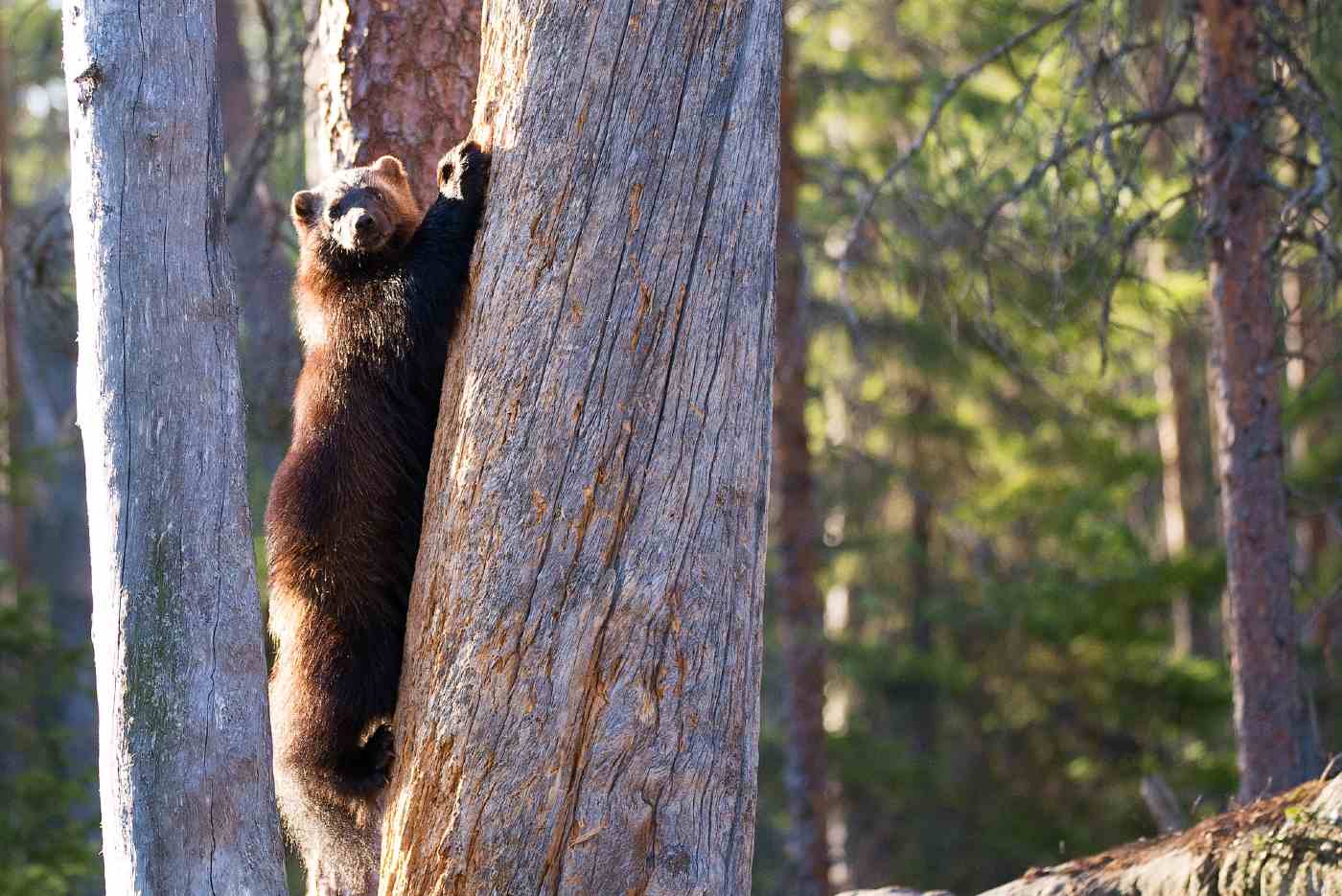
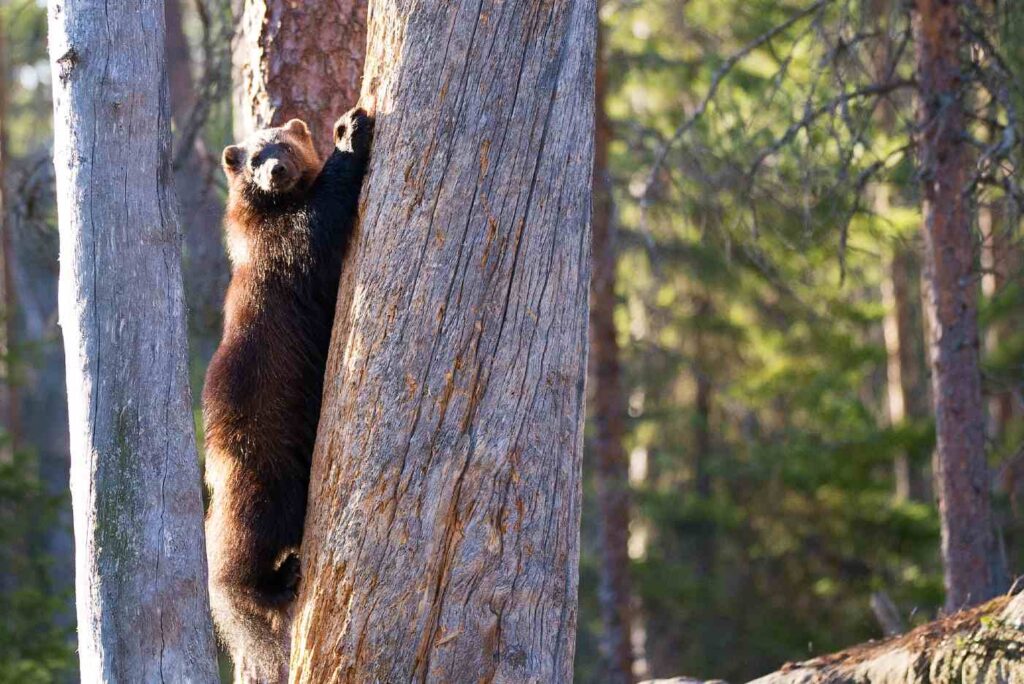
Colorado wildlife authorities have introduced a plan to reintroduce the wolverine, one of the largest members of the weasel family, back into the state where it’s been absent for a century.
Hunted to extinction, small populations of this solitary scavenger survived in Idaho, Montana, Washington, and Canada, from where they’ve gradually moved south to Utah and northern Wyoming.
Colorado Parks and Wildlife (CPW) announced the intention to form and carry out a Colorado Wolverine Restoration Plan pending public comment and stakeholder input following the passing of legislation in 2024 that mandated it.
“Colorado has great unoccupied wolverine habitat, and we have the opportunity to conserve a species that has been missing from our state,” former Republican Colorado Senator Perry Will, who introduced the original legislation, said in a news release.
Any such plan needs to come with concrete, honest details, including where the wolverines will go and where will they come from, how many can be hosted on a given area of land, what is the benefit to the natural ecosystem, and what are a rancher’s options of recourse should one predate their livestock.
The CPW argues that with the understanding that wolverines lived in Colorado for thousands of years, everything living in the ecosystem now is well-adapted to their existence.
Unlike grey wolves, which it controversially attempted to reintroduce starting in 2020, CPW doesn’t expect any livestock predation, since these mustelids, albeit strong, are just 20 to 35 pounds in body weight, hunt alone, and mainly scavenge their meals.
“A planned reintroduction… would bring in about 45 wolverines with a broad genetic background. This will have a far greater chance of establishing a robust long-term population than a single male and female wandering into Colorado, finding each other, and producing enough young to establish a population,” said CPW Wolverine Coordinator Dr. Robert Inman. “Colorado and the wolverine population will be better off with a planned reintroduction.”
At the moment, the plan would establish three different populations at high elevations. The first one north of I-70 on public land that includes Rocky Mountain National Park, the second one in a central portion of the state known as Elk and West Elk Mountains between I-70 and Highway 50, and the third in the San Juan Range in southwest Colorado.
CPW believes Colorado can hold about 100 wolverines once the population has been established, mostly because an adult male wolverine’s territory can stretch as far as 500 miles.
“Wolverines naturally exist at very low densities wherever they are found. 50 to 100 wolverines may not sound like a lot, but that is likely in the same ballpark as the historical capacity here in Colorado,” Inman said, adding there never were more than a few thousand wolverines across the whole country. “It would also represent about a quarter of the population in the Lower 48 states.”
WOLVERINE’S RETURNING: Super Rare Wolverines Haven’t Been Seen For a Century in Mt. Rainier—Now They’re Back in a Family Way
SF Gate reports that Colorado had previously considered reintroducing the wolverine, but chose instead to focus—back in 1998—on the lynx.
While the CPW is taking steps to ensure ranchers and farmers are fairly compensated if a wolverine takes one of their animals, one local industry is 100% onboard: ski resorts.
REBUILDING WILDLIFE POPULATIONS: American Marten May Be Set for Return to Pennsylvania Forests After 100 Year Absence
“[We] engaged in the rigorous stakeholding process conducted by CPW for this wolverine reintroduction,” said Melanie Mills, president & CEO of Colorado Ski Country USA in a statement.
“We support the reintroduction of Wolverine… and applaud CPW for its commitment to conservation of this remarkable species and doing so in a way that addresses our industry’s concerns.”
SHARE This Big Plan For Returning A Charismatic Animal To Its Territory…
I misread this a WEREWOLVES and was very confused why werewolves were thought to be native to Colorado.