













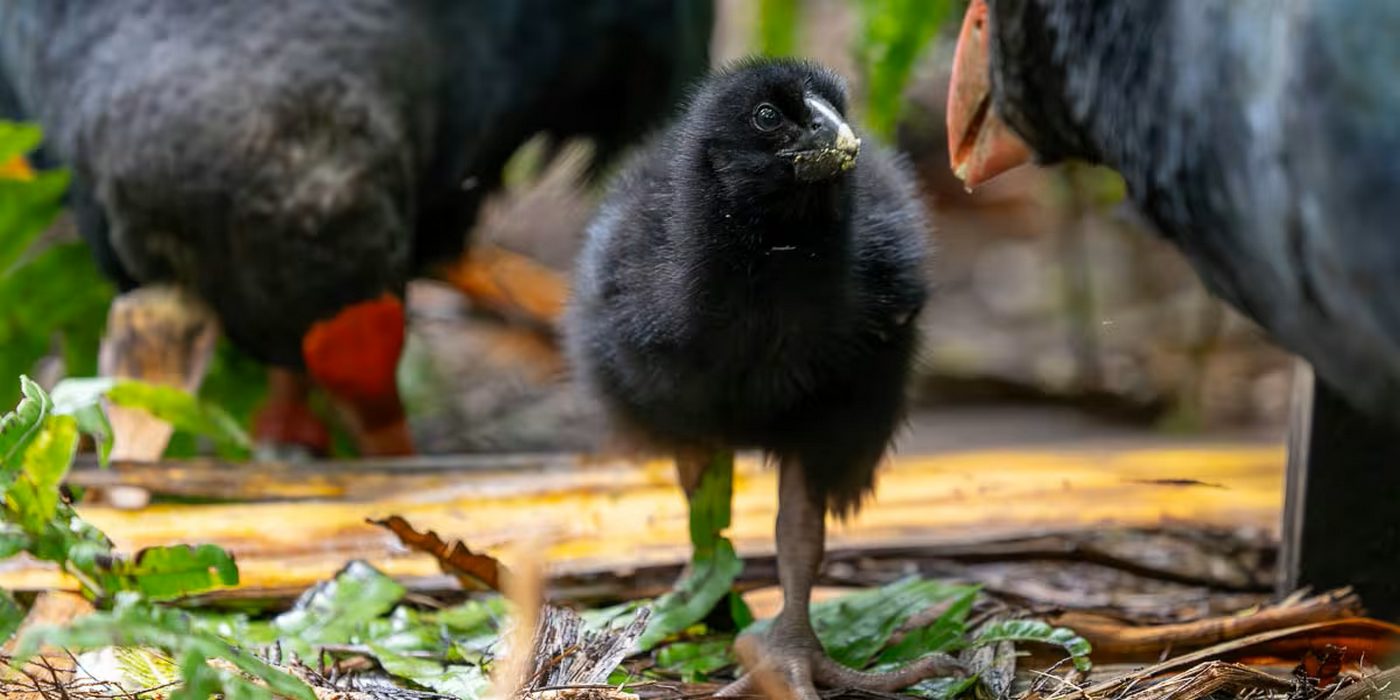

Described by park officials as a Christmas miracle, a breeding pair of endangered takahē birds in New Zealand were found to be rearing a chick, having previously been thought of as infertile.
With around 500 of these flightless birds left in the country, every chick counts.
The miracle happened in Zealandia, a fenced-in ecosanctuary 10 minutes’ drive from Wellington’s city center.
The sanctuary conservation team was searching for a nest in early November after a female bird named Waitaa hadn’t been seen at the feeders for some time.
They heard some high-pitched calls indicating the pair had—miraculously—produced a chick. Waitaa’s partner, Bendigo, was previously believed to be infertile.
Jo Ledington, General Manager of Conservation and Restoration, says the news was kept under wraps until the team was more confident the chick was doing well and the worst of the spring weather had passed.
“I’m thrilled that Zealandia can support national takahē recovery efforts not only by providing opportunities for hundreds of thousands of people to connect with this amazing species, but to also add more birds to the national population.”
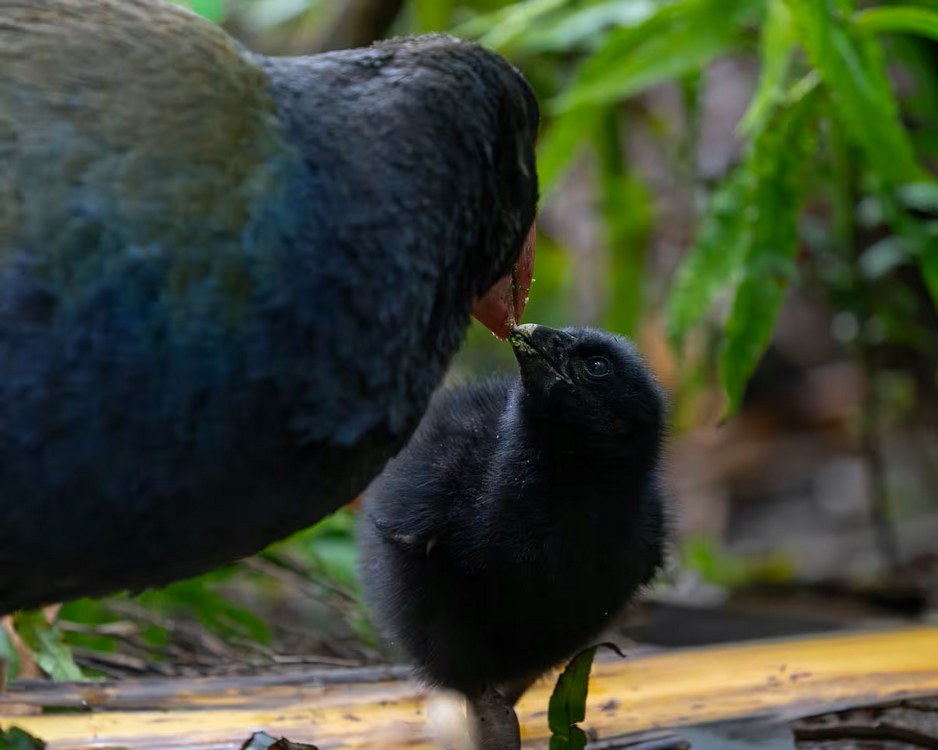
The takahē is a relative of the rail, a ground-dwelling, amphibious family of birds with short wings, large feet and long legs. Breeding once a year, they were believed to be extinct on New Zealand’s South Island before being rediscovered in 1948. A fully-grown bird sports iridescent blue and green feathers and becomes quite fat—giving them the famous appearance, when viewed straight on, of the Earth.
At Zealandia, Bendigo and Waitaa arrived last year as a non-breeding paired couple, but after a failed nesting season, it was believed they were unable to conceive. Following Waitaa’s disappearance, Ledington and colleagues set up a trail camera in an area they thought she might be nesting in. Sure enough, the chick was discovered.
THE LAST STORY ON THESE BIRDS: Prehistoric Bird Once Thought to Be Extinct Returns to New Zealand Wild
“Any chick that we can add to that population is just incredibly valuable,” Ledington told the Guardian.
It will be some time before they know the chick’s gender. It will eventually be banded and health checked, and in time, gifted a name and moved to a new home. “For now, we are delighted that Zealandia is its safe playground,” the sanctuary officials wrote in a statement.
SHARE These Three Takahēs, Along With Your Two Turtle Doves…