














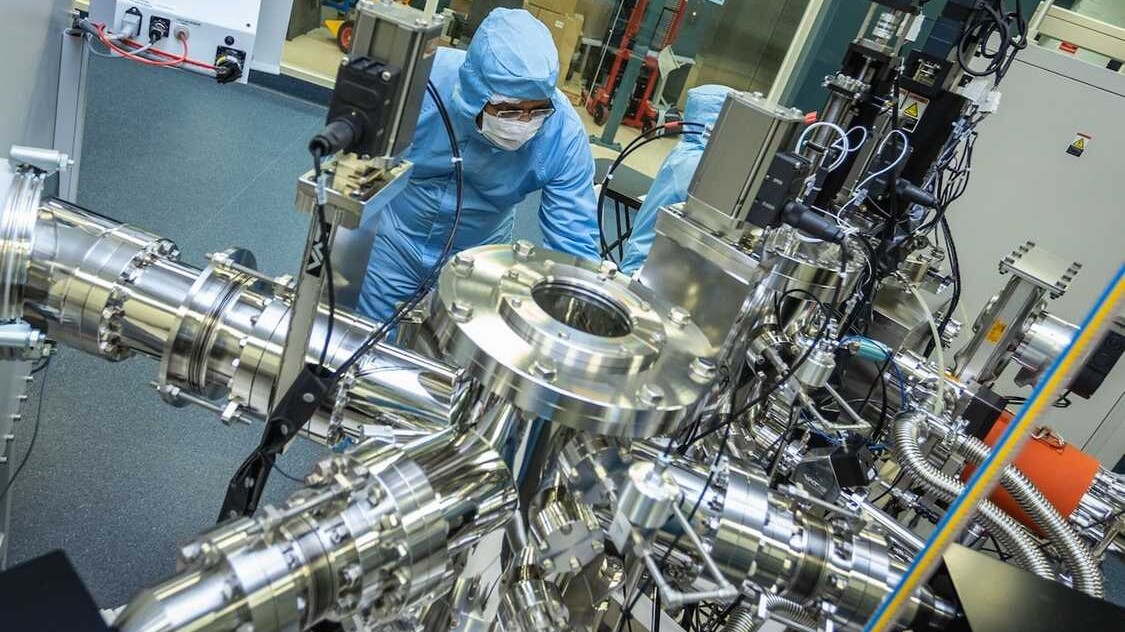
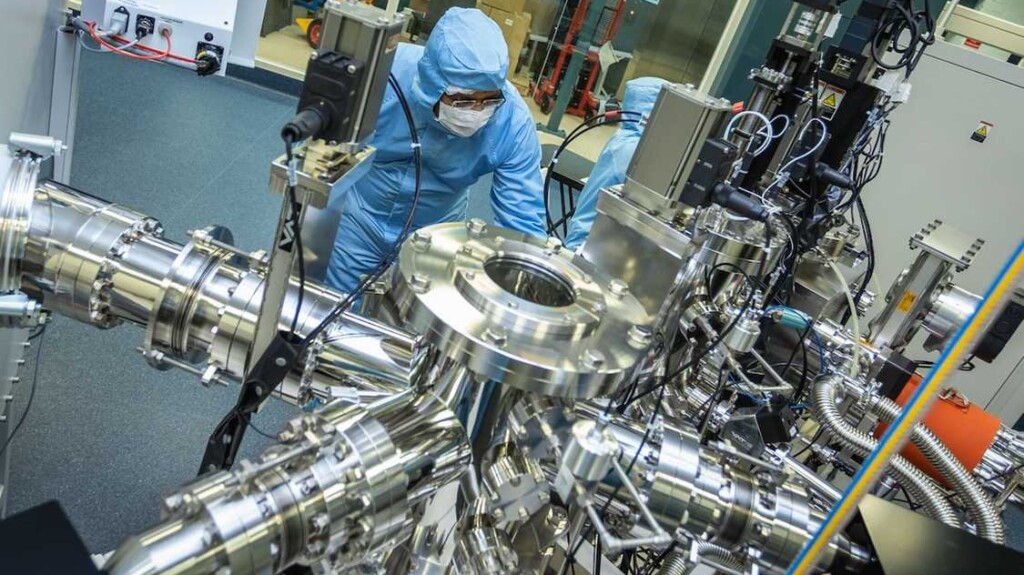
Australian researchers have developed and tested the world’s first quantum battery.
Their prototype is far from anything that will be a perspective power source in an EV or storage facility, but the experiment revealed some important directions for future research.
A theoretical concept since 2013, the prototype was charged wirelessly with a laser, one of the special properties that quantum mechanics in battery technology promises if it can be properly understood and harnessed.
Lead researcher Dr. James Quach of CSIRO, Australia’s national science agency which led the study on the device, said it’s the first quantum battery ever made that performs a full charge-discharge cycle.
Dr. Quach explained that in society today, the larger the battery, the longer the charge time.
“That’s why your mobile phone takes about 30 minutes to charge and your electric car takes overnight to charge,” he said, adding that in contrast, “quantum batteries have this really peculiar property where the larger they are, the less time they take to charge.”
Less time really is an almost worthless descriptor in this case, because the prototype created by CSIRO was fully charged within a few quadrillionths of a second.
The problem is that the discharge rate was a few nanoseconds, which despite being 6 orders of magnitude longer, could be of no use to anyone now. Quach provided some interesting relative comparisons to help mere mortals conceptualize why this could be a world-changing innovation if improved.
THE QUANTUM REVOLUTION: In German Breakthrough Quantum Communications Sent Across the Nation Using Existing Telecom Infrastructure
If it takes 30 minutes to fully charge a mobile phone, and it too had a discharge rate equal to 6 orders of magnitude, that means it wouldn’t need to be recharged even after a decade of use.
“What we need to do next is… to increase the storage time,” Quach said, touching on this point. “You want your battery to hold charge longer than a few nanoseconds if you want to be able to talk to someone on a mobile phone.”
Additionally, the prototype doesn’t hold enough voltage to power anything substantial.
BETTER BATTERIES: Samsung’s 600-Mile-Range Batteries That Charge in 9 Minutes Ready for Production/Sale Next Year
While this might all sound rather pointless, another, non-involved expert in the development of quantum batteries, University of Queensland Professor Andrew White, told the Guardian that the experiment was a huge success in getting the technology off the drawing board and into the real world for the first time.
People would be far more likely to adopt EVs if they could be fully-charged in few seconds, even if their range was severely reduced.
SHARE This Truly Impressive Science Experiment With Your Friends…