














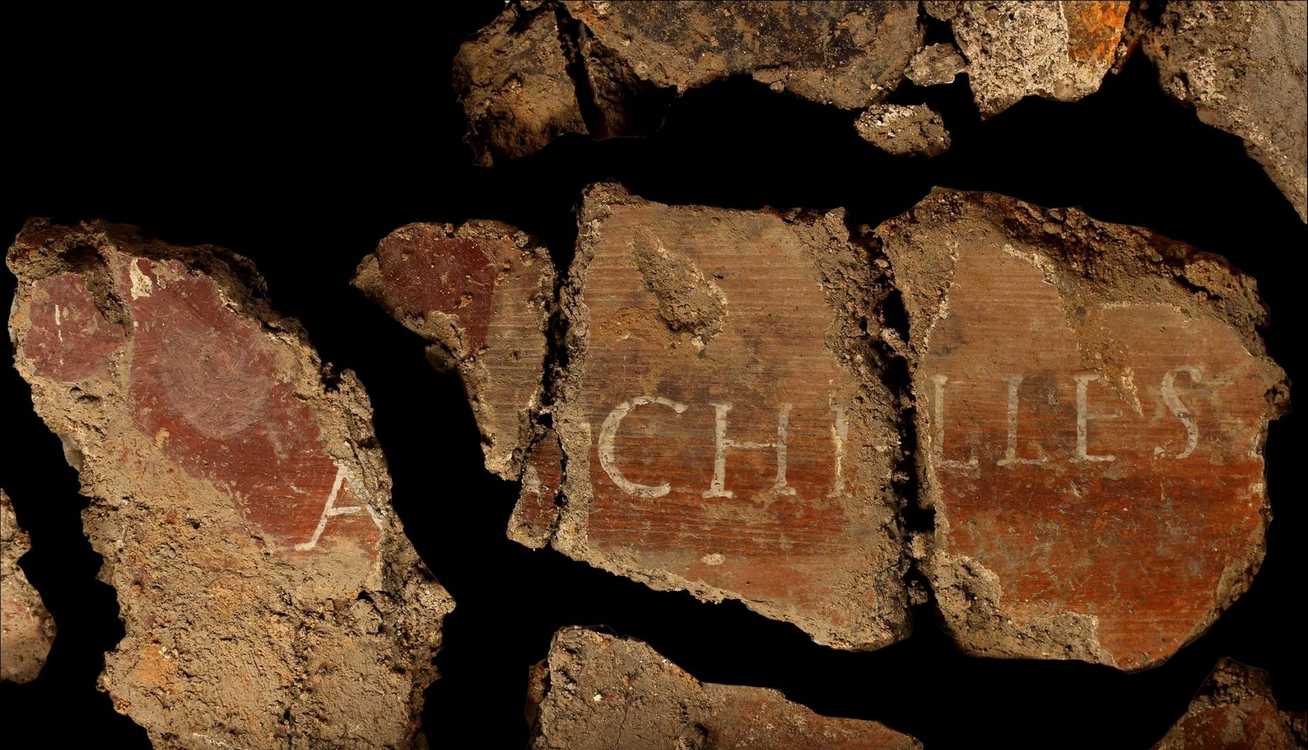
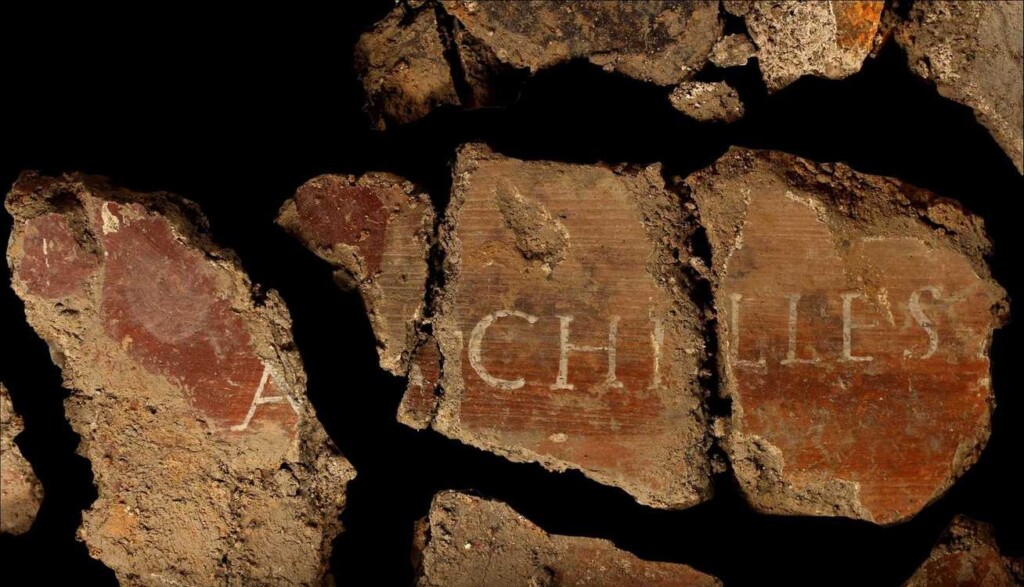
Fragments of a life-sized mural depicting a larger-than-life figure of the Iliad has been found in the remains of a Roman villa near Reims, France.
The discovery included several exquisite bronze statuettes and the remains of a colonnaded facade, indicating that high artistic expression among local Roman well-to-do even was typical, and available, even when settling far from the capital.
Durocortorum is located in northern France near Reims, and was an important settlement in Roman Gaul by the 2nd century CE. While the center of Durocortorum has long been known have been a center of political life for the region, the suburbs are much less understood.
Now, France’s National Institute for Preventative Archaeology, (INRAP), has made major progress on the excavations of a Roman home known as a domus, and its contents and character suggest that Durocortorum’s importance spread well beyond its forum.
Situated more than half-a-mile from the forum, in a humid space near the main river which crosses Reims, the Vesle, the building would have faced the street with a column-lined facade, indicating wealth and status. The remains of two such columns have been found.
INRAP wrote in a statement that the building likely suffered from a fire and was demolished in the aftermath. This preserved some of the objects within under a layer of rubble and ash that protected them from the deleterious effects of moisture and oxygen.
Among this layer were fragments of a wall-to-wall fresco, with one of them bearing the name of the antihero of the Greek-Trojan War recorded in Homer’s Iliad, Achilles, and the other Deidamia, which refers to a mythological scene from Achilles’ life before the war.
The mythological story, as shared by Greek Reporter, recounts that Achilles’ mother knew of a prophecy predicting his death at Troy, and so dressed him up as a girl and sent him to live in a commune of priestesses on the island of Skyros. Here, Achilles falls in love with Deidamia, a young commune member, who bears him a son.
Eventually, as Greece prepares for war with Troy, Odysseus, who knows his country’s best hope of victory lies behind Achilles’ spear, arrives on Skyros disguised as a merchant with the intent to trick the great warrior into revealing his identity.
Spreading out his wares of clothes and jewelry, Odysseus also places a shield and spear for sale and orders one of his men to falsely raise the alarm of armed attackers. His warlike nature being irrepressible, Achilles, still dressed as a priestess, instinctively grabs the weapons Odysseus had laid out, and was subsequently removed from the commune.
INRAP reports that only 4 depictions of this event in a fresco have been recorded, with the other 3—at Aquileia, Pompeii, and Rome—all located in Italy.
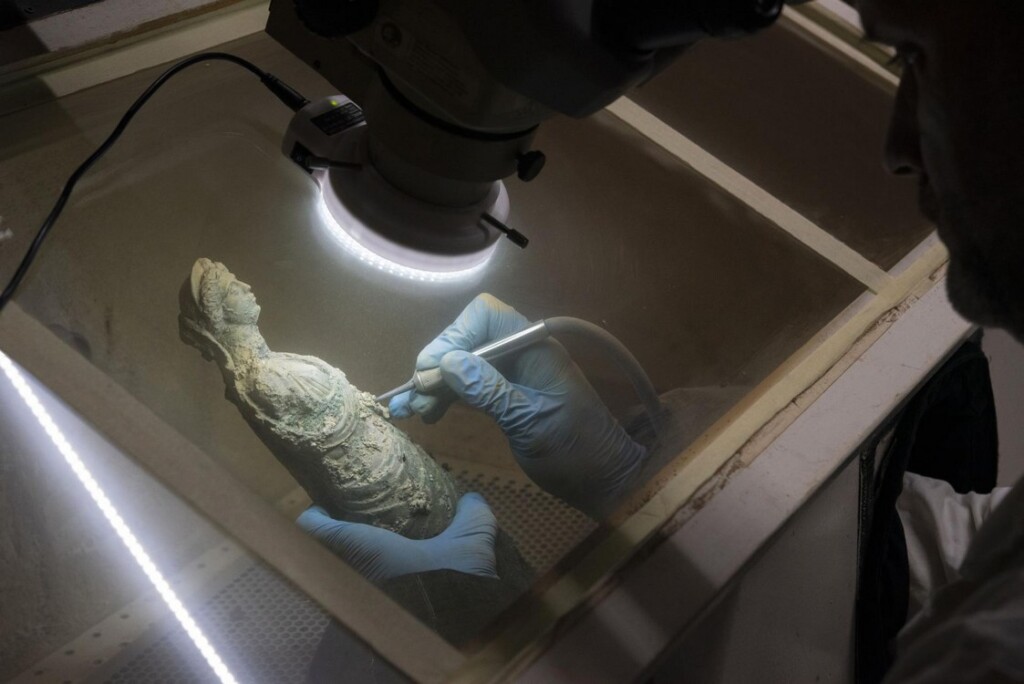
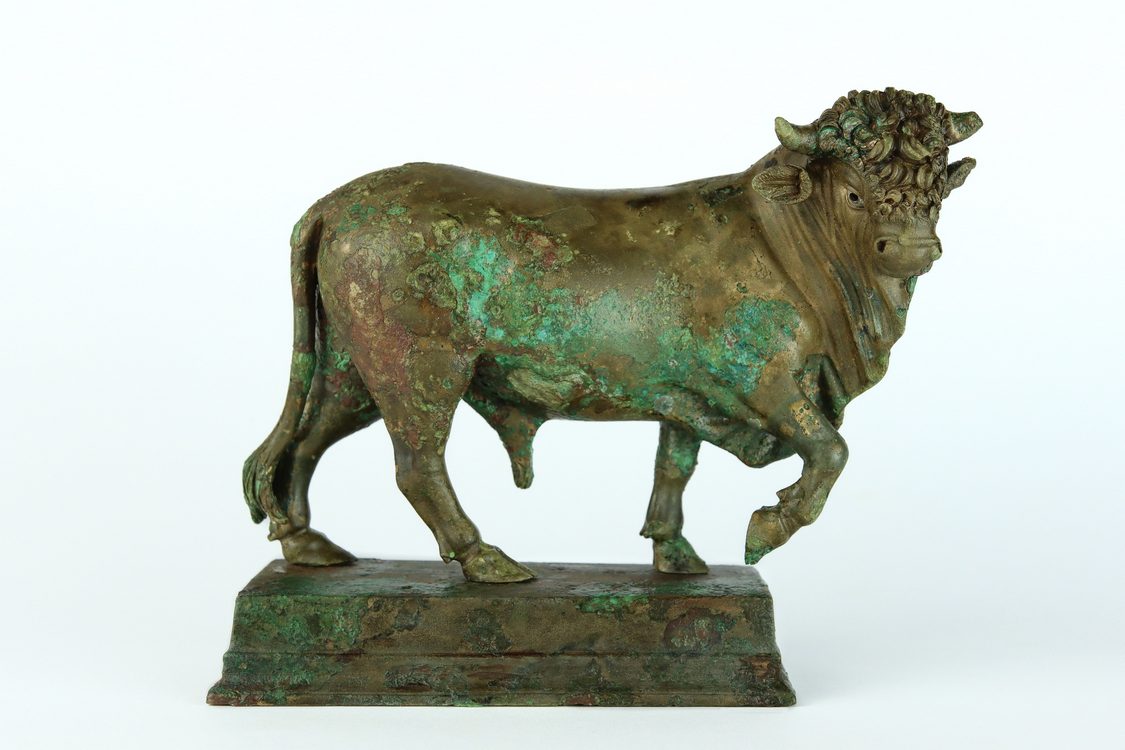
Additional finds were bronze statuettes depicting Mars, the Roman god of war, a bull, and a goddess whose identify has not been ascertained.
“The eyes of the Mars statuette are enhanced with silver,” INRAP wrote. “Its shield presents a relief decoration of the Capitoline wolf nursing Romulus and Remus. The cleaning revealed a Medusa’s head on its breastplate.”
“The bull rests on a rectangular base. His eyes, also highlighted with silver, give great expressiveness to his face.”
ROMAN FRANCE: Archaeologists Stumble Onto Sprawling Ancient Roman Villa During Construction of a Road in France
The goddess seems to be a compositional piece. Dressed in a flowing gown, she wields the club of Hercules surrounded by a serpent and resting on a lion, bears a helmet depicting a sphynx, a crown, and a city wall, and would have clearly borne a pair of wings on her back.
The quality of the statuettes and the rare richness of the decorative repertoire of the house’s painted coatings indicate wealthy owners who were either Romans themselves, or very attached to Roman culture.
SHARE These Impressive Finds With Your Friends Who Love Ancient Rome…