












The BBC recently spoke with a sleep scientist who’s spent much of his career studying the sleeping habits of the last remaining, contactable, hunter-gatherer societies on Earth.
What he found might surprise you—it might also help you get a few more Zzz.
Much of modern society is sleep deprived, and with all the challenges our technologized, unnatural environment poses to sleep, one can only imagine how hard it must be for someone who has to sleep on the dirt floor of a jungle hut in the Bolivian Amazon, under a downpour, with snakes and spiders scurrying around outside.
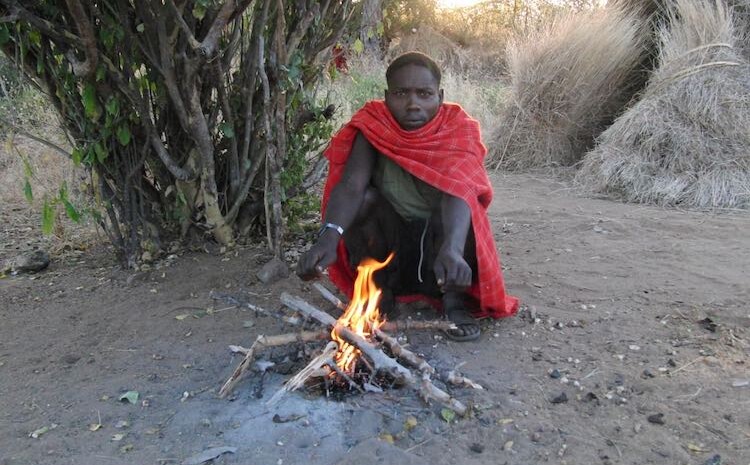
Yet take a gander at what UCLA somnologist Jerome Siegel has to say about what he saw studying the scientific bedrock of bedtime among the Tsimane in Bolivia, the San in the Kalahari, and the Hadza in Tanzania.
“If you ask hunter-gatherers, ‘do you ever have trouble sleeping?’ in their native language, they have trouble understanding the concept,” he told the BBC.
Why is that? Consider that sleep has been evolutionarily conserved across every lifeform observed thus far, from the most ancient bacteria and tiniest virus to the biggest-brained animals. Natural selection would suggest that any trait which could safely be done away with, eventually would be. Yet sleep has been with organic life, as far as we know, since the beginning.
Humans come equipped with the neurological tools and triggers to sleep in rough environments, and knowing those triggers might help a sleep-challenged reader think outside the box.
The article for the BBC was put together by Amanda Ruggeri, a science, psychology and history journalist, whose book The Sleep Myth will be released in 2027.
First, light is a key determiner in hunter-gatherer sleep cycles, and we know that artificial light exposure can delay sleep onset. To help correctly set your body’s internal clocks, known as circadian rhythms, try to get natural light exposure as soon as you wake—consider taking your morning coffee outside under the open sky, or at a window facing east. Then at night, get used to keeping your house as dark as safely possible. Turn off unnecessary lights, use dimmers, and avoid ample screen time.
Second: another key factor in hunter-gatherer sleep patterns is temperature. Professor Siegel suggests that falling temperature at night and rising temperature in the morning more accurately tracks non-industrialized societies’ sleep times than light does. They often wake a few hours before sunrise when sleep-time temperatures are lowest. Try and replicate this by opening windows, set your thermostat to fall every hour, or to come on cold in the pre-dawn hours.
Third, another sleep researcher told Ruggeri that hunter-gatherers tend to engage in social activities at sundown and after dark. Without light and without electricity, there’s no chance of productive work, so all attention is turned to socializing. The easy part of replicating this is spending time with your family or friends. The hard time is resisting the urge to check your work email, as well as letting go of expectations for your employees to do the same.
Despite not understanding what “trouble sleeping” means, hunter-gatherers do, in fact, sleep less and wake more than those in modern, technologized societies. The key is that for them, it’s normal and not stressful. For us, one of Siegel’s colleagues told the BBC, “good” sleep has become the quest for 8 uniform, uninterrupted hours, a comparative fantasy to our wilder counterparts.
Fourth, therefore, is don’t expect your sleep to be identical every night. Try and let go of the anxiety of potentially waking up in the middle of the night, or of sleeping less than you’d have liked to, and it might actually help you wake up feeling better and go to sleep more easily the following night.
SHARE This Wild Tips For Sleeping Better Straight Out Of Our Ancestors’ Playbooks…