














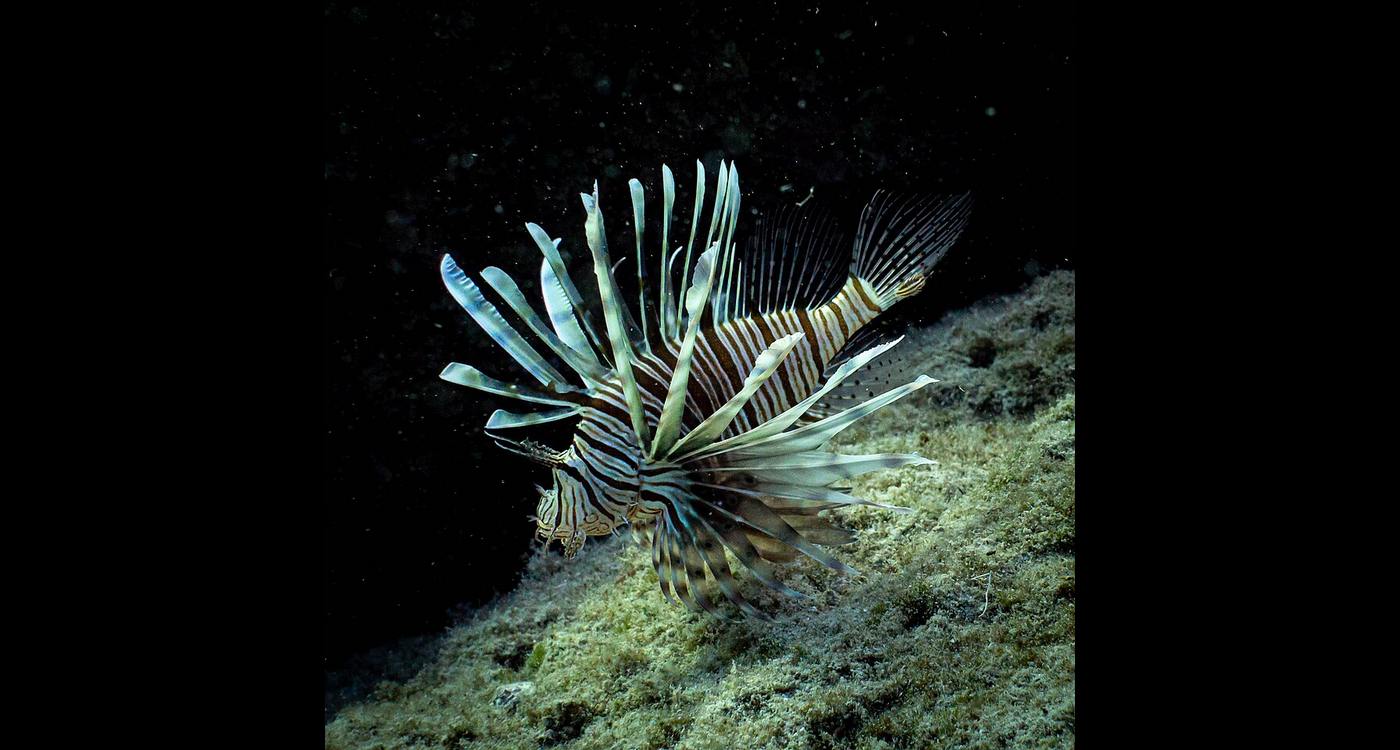
In parts of the Mediterranean, invasive lionfish have devastated local marine biodiversity, but an allegiance between fishermen and chefs may mean the invader has met its match.
On the island of Cyprus, the strategy is now clear: if we can’t beat it, let’s eat it.
Native to the Indo-Pacific the lionfish has been introduced to various parts of the world’s seas through the aquarium industry. Once set, it multiples and consumes everything around it, as it has no native predators in the Mediterranean.
Moray eels, bluespotted cornetfish, barracuda, bobit worms, and large groupers have all been documented preying on the species in its native habitat, but few if any of these live in the Caribbean, Mediterranean, and Western Atlantic where the lionfish is invasive.
These creatures can prey on the animal because they’ve developed methods to either resist or avoid the toxic spines that line the fish’s body, a hazard that its latest predator, Homo sapiens, has to pay attention to.
“First of all it has to be cleaned, it is very dangerous,” Stephanos Mentonis, who runs a popular fish tavern in Larnaca, Cyprus, told Euro News. “You have to cut the spines off… if you get pricked, you will not die but it you be [sic] in terrible pain.”
Mentonis is just one of a number of Cypriots who are beginning to see the best cure for lionfish as a little oil, maybe some oregano, lemon, and medium heat. That number extends to the very commissioner of the European Union Fisheries, Costas Kadis. He noted a social media campaign #TasteTheOcean, which ran first in 2021, that saw a number of Cypriot restaurants introduce lionfish to their menus, and fishmongers introduce it to their markets.
“By incorporating invasive species such as lionfish into our diet, we can turn this challenge into an opportunity for the fisheries sector and at the same time help limit the environmental threat caused by these species,” Kadis says.
The animal is priced competitively with regional favorites like bream and sea bass, costing half as much by weight as the latter, for example, while its meat is fluffy, tender, and slowly becoming more and more popular.
OTHER STORIES LIKE THIS:
- ‘Roomba of the Sea’ is Vacuum Company’s New Robotic Weapon to Combat Lionfish Invasion
- This Gorgeous Leather is Made From the Hide of an Invasive Predatory Fish
- The Perfect Answer for Berlin’s Invasive Species Problem – Make Them Into Delicious Cuisine
Previous efforts have seen paid scuba divers go cull lionfish around reefs and wrecks in the deeps, but this by-hand work is seen only as a stopgap to help local species recover, as a single female lionfish can lay 2 million eggs per year.
The economics of the food supply chain and fishing industries could prove to be the fatal sting for the poisonous invader.
SHARE This Story Of Overfishing For Good With Your Friends…
Scuba divers catch and sell lionfish off the coast of Florida, too. Some scissors to clip the spines off, and they can be filleted like any other fish. I guess they taste very good, too.
Well done to the western Med!
To my casual glance, so many invasive species look to have this potential solution. I hope various eyeballs are giving other pests a second scrutiny.