













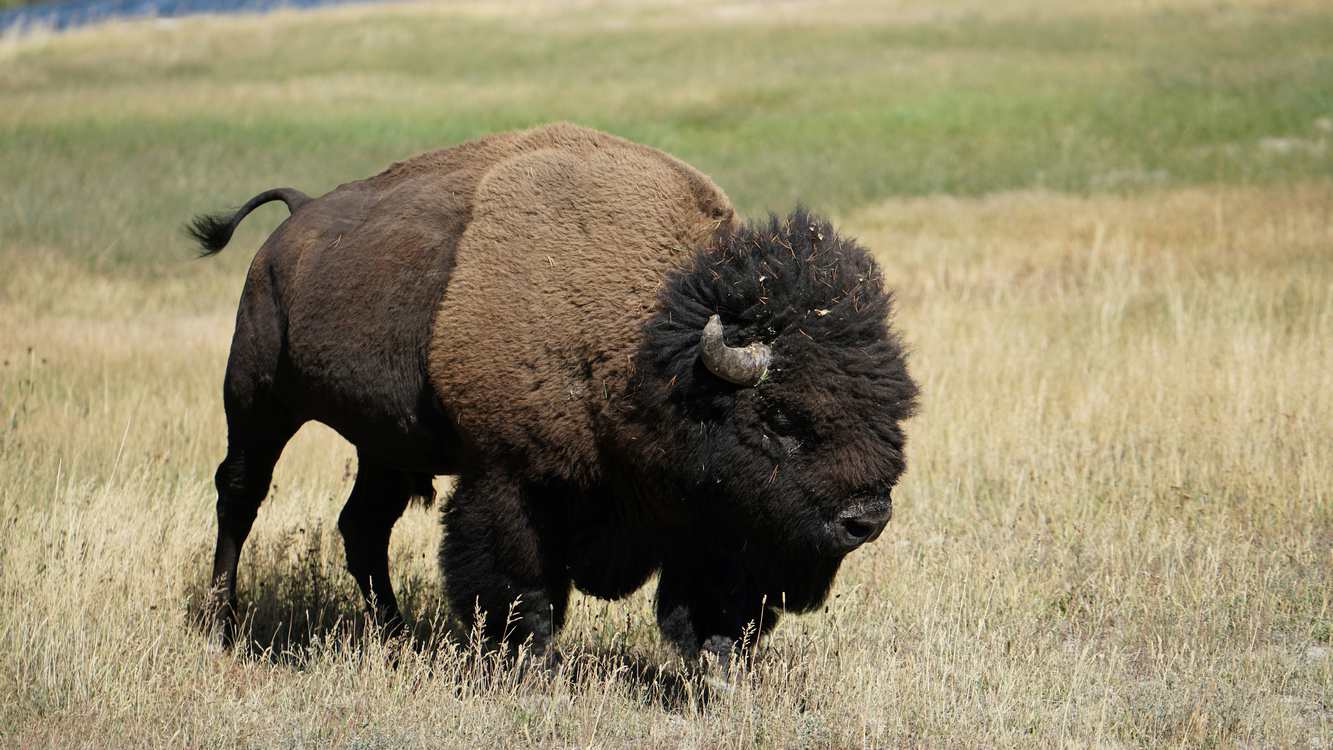
A series of reintroductions have seen the bison return to a landscape in Mexico’s Chihuahua Desert after a 200 year absence.
Having acted as ecosystem anchors for the vegetation is this vital biosphere reserve for millennia, their return is seen as a major step towards fortifying the area’s sensitive arid grasslands.
A vast bison herd roaming the plains is one of the most iconic images of natural North America, but it slips the mind easily that these mighty beasts were just as comfortable in Mexico as the Great Plains.
The same reasons why bison help regenerate tallgrass prairie can be applied to places like the federally-protected habitat of Cuatrociénegas in the Mexican state of Coahuila. The 324 square mile landscape is typified by deep pools of water, gypsum crystal sand dunes, and a rich variety of plant species that belie the surrounding aridity.
Set within Cuatrociénegas is El Santuario Wildlife Reserve, an important core area in the landscape where last year 48 bison were brought from other areas of Mexico.
“It offers you so much hope,” Gerardo Ruiz Smith, director of the Fundación Pro Cuatrociénegas, told the Mexican media outlet Vanguardia. “[S]imply bringing back a fundamental species that was there before and should be there”.
From Romania to Portugal to the American West, the bison is being sought out as a tool for correctly and naturally managing ecosystems. The animal’s habits and vast bulk lend themselves to the flourishing of grassland and woodland in several ways.
Weighing in excess of 1,000 pounds, the stamping of their hooves breaks up the ground and allows for water and seeds to penetrate into soil, increasing both water retention and plant propagation. Their wooly coats act as perfect seed carriers and dispersers as they roam over vast distances. Their dung fertilizes the soil.
Their habit of scratching on trees and rolling in dust bowls shapes the landscape for the better overtime, while their vast bodies feed all manner of predators, scavengers, and microbes when they die.
These factors are as true on the isle of Great Britain as they are for the plains on Indian Reservations in the US, and it’s why Fundación Pro Cuatrociénegas were so keen to see them returned to Cuatrociénegas.
“Today we are not just recovering a species: we are recovering balance, memory, and hope for a sustainable future,” the Fundación wrote in an Instagram post last August when the largest transfer of bison had been completed.
While the animal will benefit the landscape unquestionably, it could pose a threat to the livelihoods of local cattle ranchers operating around the protected landscape.
MORE BISON NEWSBITES: From One Surviving Male Bison, Azerbaijan Now Has 25 Calves Born Wild in 7-Year Success Story
Bison, Ruiz pointed out to Vanguardia, evolved to roam over vast distances, and so kept inside a small, roughly 10,000-acre area, overpopulation is a real concern. The area’s natural predators are for the most part gone. While a puma might snatch at a sick or infant bison, it would have been the Mexican wolf that preyed primarily on bison centuries ago.
At the moment, there is no consolidated federal mechanism for allowing bison to be used sustainably as an alternative to conventional livestock farming.
Ruiz believes that various programs of sustainable bison management from various parts of the US and Canada can act as models for the herd in El Santuario, not least because they may be able to generate a meaningful economic benefit the rural populations living around Cuatrociénegas.
SHARE This Great News For A Treasured Mexican Landscape And An Iconic North American Mammal…