













Construction of a “transformational” new railway line linking China, Kyrgyzstan, and Uzbekistan will allow goods to transit from east to west across Eurasia a whole week faster.
On the way, it’s also predicted to have a transformational impact on the economy of Kyrgyzstan, one of the slowest developing countries on the continent.
To speak of Europe later, the railway will address Central Asian transit in a dramatic way. A map will prove handy to understand why. If you wanted to send a load of goods from China to the capitals of Bishkek (Kyrgyzstan) or Tashkent (Uzbekistan), you’d have to send them all the way across Kazakhstan first before doubling back via truck, a quite absurd runaround considering China’s border with the former is actually closer than with Kazakhstan.
Now, the “CKU” will give direct transit options for most of Central Asia while unlocking substantial natural resource opportunities among a depressed, mountainous region of Kyrgyzstan.
“This railroad will virtually transform Kyrgyzstan—and not just Kyrgyzstan, but the whole of Central Asia,” Edil Baisalov, the country’s deputy prime minister, told The Times of Central Asia.
“Even under the most pessimistic scenarios, the cargo loads expected to transit this route could generate at least $300 million in annual revenue, benefiting the country significantly.”
Other estimates have placed the totals closer to $200 million, but either way it would allow the country to pay back the costs of the construction work in a few prosperous years.
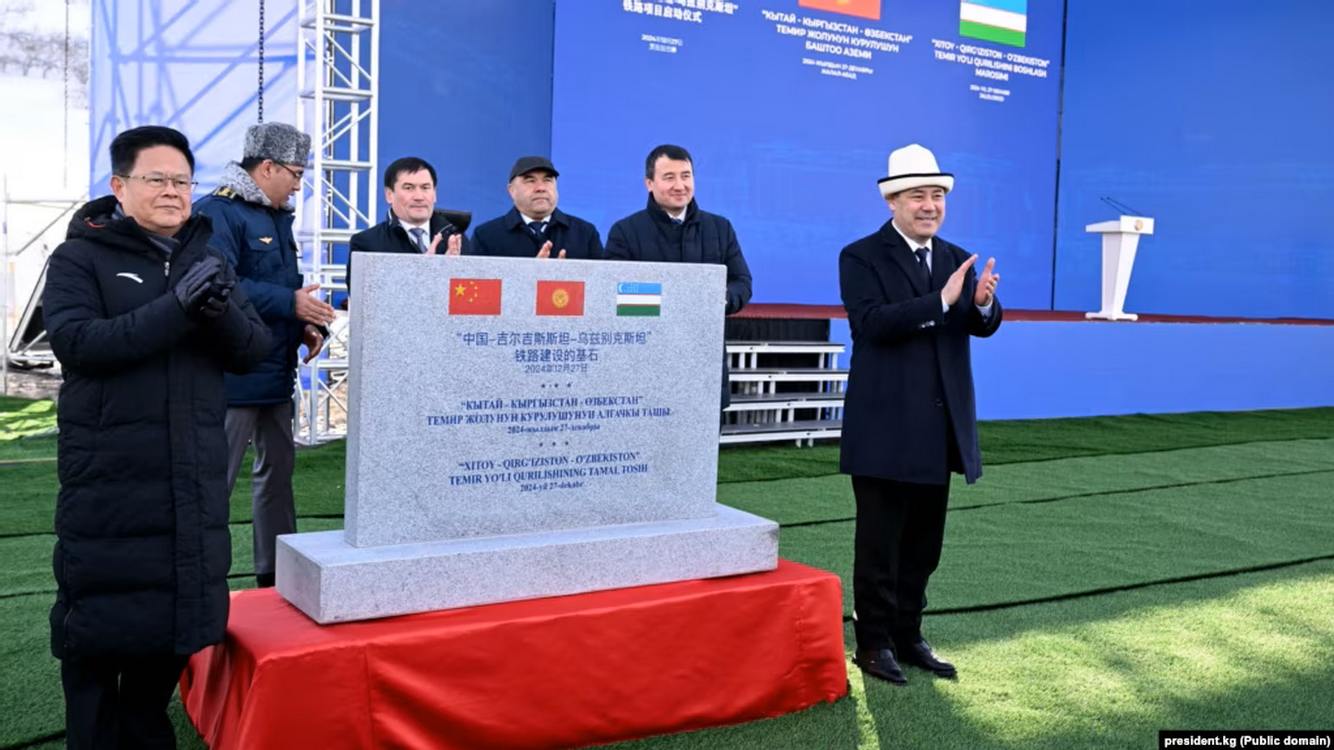
The trilateral agreement to build the 300-mile-long railway was signed on December 27th, 2024, and construction began the following year. $1.1 billion will be provided by China for the Chinese portion, and $573 million by Kyrgyzstan and Uzbekistan for their respective portions. An additional $2.3 billion will be paid by a Chinese joint venture overseeing the project.
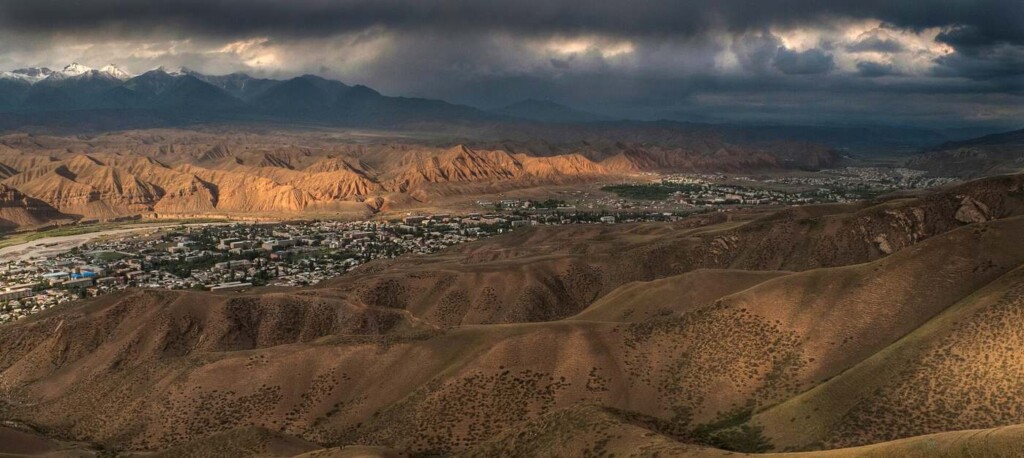
90% of the Kyrgyzstan portion will run through the poor region of Naryn, 70% of which is mountains. To get through it, the CKU railway will pass over 50 bridges and through 29 tunnels. Already the country has 5,000 people employed on this impressive engineering project.
Huge infrastructure investment like this takes years to pay off, but Baisalov sees ample opportunities for the private sector to take root along this vital corridor. Kyrgyzstan is a resource economy, yet 82% of all freight in the country is transported on roads, making it slow, seasonal, and vulnerable to fuel shocks.
With the CKU comes the opportunity to access the region’s “world class” mineral wealth, including iron and aluminum which cannot be transported via trucks.
“During the Soviet era, Kyrgyzstan’s mineral base was largely ignored in favor of deposits elsewhere. The Soviets focused only on uranium here, which was used for their first nuclear bomb, but otherwise, industrial development was minimal,” Baisalov explained, adding that as a result, Kyrgyzstan remained mostly agrarian—producing crops and animal products.
RAILWAY DEVELOPMENT: Austria and Italy Finish Digging World’s Longest Rail Tunnel–Ready to Reshape Travel Maps
Additionally, there is the opportunity for logistics businesses and warehousing to service transit along the line.
“The railroad will also stimulate manufacturing and logistics. International investors are already building logistics centers and assembly facilities along the line, leveraging the region’s labor force,” said Baisalov.
CENTRAL ASIAN STORIES: Endangered Persian Leopards Mount Comeback in Central Asia’s Most Reclusive Nation
As for the value of the railroad on a continental basis, existing transcontinental railway lines pass through Kazakhstan and Russia, and for the purpose of exporting between Europe and China, would require an extra week of transit time.
Instead, with a terminal in Uzbekistan’s Fergana Valley, the CKU will link directly with trans-Caspian routes to Turkey and onto Europe.
SHARE This International Business Corridor Set To Lift A Developing Region…