















Two new rapid tests, EndoSure and Endotest, can drastically reduce the wait time for a proper diagnosis of endometriosis—from an average nine-year wait to just days.
The saliva test just approved for use by the UK’s national health system, NHS, is being called “game-changing” by experts in the field of endometriosis.
Guidance issued this month says doctors can now use two new non-invasive diagnostic tests, which will be funded by the NHS while researchers collect more data on their success rate.
The Endotest analyses a saliva sample for tiny biological markers called microRNAs, which can indicate whether endometriosis is likely present. The 45-minute EndoSure test detects endometriosis by measuring electrical signals in the gut using sensor pads on the abdomen after the patient has fasted.
Endometriosis affects around one in ten women of reproductive age in the UK. It’s a painful condition wherein cells like those in the womb grow in other parts of the body. Perhaps worst of all, the average wait time until a definitive diagnosis is more than nine years.
Until now, it was diagnosed using a laparoscopy procedure carried out under general anesthesia and involves the insertion of a small camera through a tiny cut in the abdomen to look inside the pelvis for signs of the condition.
Announcing the new tests, Dr. Anastasia Chalkidou explained why reducing the wait time is so important.
“That delay means living with chronic pelvic pain… These technologies have the potential to change that by allowing earlier and better treatment quickly.”
Ami Robertson, 23, experienced symptoms of endometriosis at age 16, but was repeatedly told she had irritable bowel syndrome.
She was finally diagnosed using the non-invasive tests, enabling her to access treatment for the first time.
“I spent years being told my pain was something else entirely. I started to doubt myself, wondering if it was all in my head,” said the Pilates instructor from Glasgow, Scotland.
“When I finally had the test, it took less than an hour and gave me something I’d never had before: concrete evidence I could take to my doctor.
“For the first time, I was believed, and I could finally get the help I needed. Today my quality of life is night and day compared to before.”
Simran Chavda, 15 (pictured below with her mom), began experiencing severe pelvic pain at 13, but repeated doctor visits failed to identify the cause. Her mother, a GP, Dr. Sharan Uppal, said having the non-invasive test finally gave them the evidence they needed to push for a referral and, ultimately, a diagnosis of widespread endometriosis.
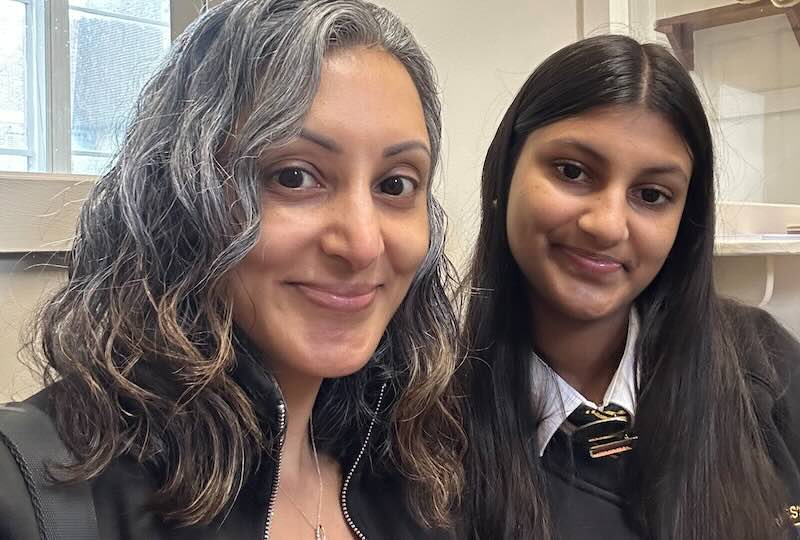
“Getting my diagnosis honestly felt like the best thing in the world.”
“The test itself was easy, it wasn’t painful at all—just drinking water and being monitored. Really simple. And I’m already starting to feel better after my surgery. I know I’m not going to be in pain all the time, and that means everything.”
Symptoms of endometriosis include heavy menstrual bleeding, fatigue, pain when urinating, pelvic pain, difficulty getting pregnant, and painful bowel movements.
For Ebony Dowdell who had periods that lasted as long as four months, it took eight years for her to get a diagnosis and treatment for her endometriosis.
She had a laparoscopy procedure in July 2024 but was still not officially diagnosed until she saw further professionals.
The 20-year-old from Southampton had robotic-assisted endometriosis excision laparoscopy surgery to remove her endometriosis in April 2025, but believes if she’d had a quicker diagnosis it wouldn’t have gotten to that stage.
“Having a diagnosis makes you feel human, you know it is not in my head and you are not crazy. A quicker diagnosis system would make a huge difference to people, and younger people would be getting diagnosed earlier too.”
The Endotest saliva sample is sent to a laboratory for analysis, but the EndoSure results, derived from electrical signals in the gut, are available as soon as the 45-minute test is complete.
Dr. Gail Busby, a gynecologist at Manchester University NHS Foundation Trust, called the tests “a game-changer”.
“They give us answers much earlier, without the need for invasive surgery, and that means we can start the right treatment sooner. An earlier diagnosis doesn’t just change one person’s life, it frees up appointments and surgical slots for everyone waiting for care.”
SHARE THE AMAZING BREAKTHROUGH With Women On Social Media…