














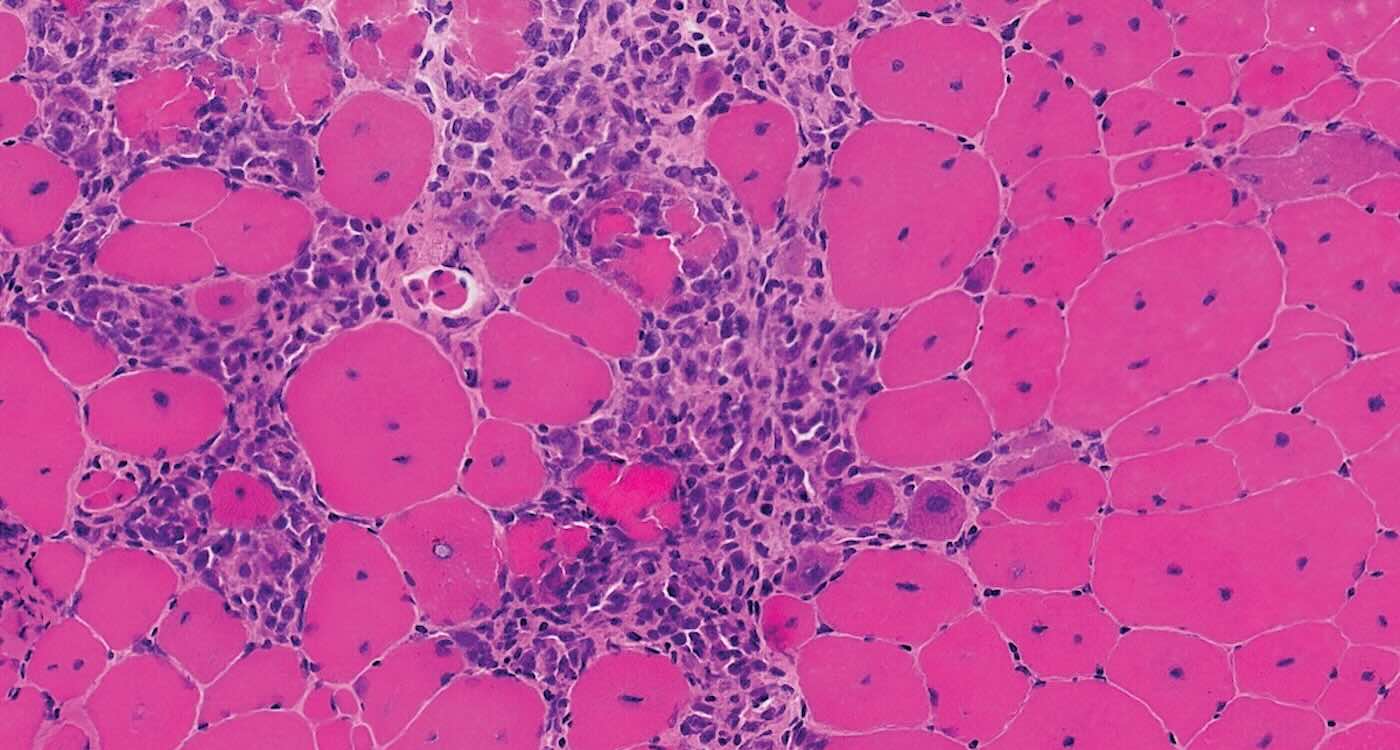
Scientists studying one of the world’s most serious inherited muscle diseases have found encouraging evidence that treating children much earlier—potentially before obvious symptoms develop—could make a significant difference.
Researchers at Binghamton University in New York are studying the drug Vamorolone in very young boys with Duchenne muscular dystrophy (DMD), a progressive genetic disorder that causes muscles to weaken and eventually be replaced by scar tissue.
And the early results might have made their jaws drop.
“We were surprised at the rapid improvement of gross motor skills,” said Professor Eric Hoffman, one of the researchers who helped develop the drug.
Duchenne muscular dystrophy is caused by mutations that prevent the body from properly producing dystrophin, a protein essential for maintaining healthy muscle.
Because the gene responsible is located on the X chromosome, the disease overwhelmingly affects boys, with damage actually beginning at birth—even though children often aren’t diagnosed until symptoms become noticeable several years later.
That delay is exactly what Hoffman and his colleagues addressed—because restoring muscle after it has already been replaced by scar tissue is extraordinarily difficult.
Instead of trying to slow the deterioration caused by DMD once symptoms become apparent, what if a treatment were given well before much of that damage occurs?
“The destructive processes in muscle start from birth,” Hoffman explained, even though symptoms typically aren’t recognized until the early school years.
Current protocols recommend anti-inflammatory corticosteroids after symptoms become evident—but biologically, that may already be too late.
And the drug is already approved by FDA
The drug that Hoffman and fellow Binghamton researcher Raju Nagaraju developed—Vamorolone, marketed under the brand name Agamree—was already approved in 2023 to treat DMD by the Food and Drug Administration.
It was designed to provide the anti-inflammatory benefits of corticosteroids while reducing some of their most troublesome side effects.

(Traditional corticosteroids can slow children’s growth and cause weight gain, mood disturbances, adrenal suppression and other complications—making doctors and families understandably reluctant to begin giving them to very young children.)
Vamorolone has an improved safety profile, particularly when it comes to growth—and that opened the door to an important question: Could the treatment safely be started even earlier?
Treating children before age 4
The recent Phase II open-label study examined 20 boys with DMD between the ages of 2 and younger than 4 who had never previously received steroids.
They were given either 2 or 6 milligrams of Vamorolone per kilogram of body weight each day for 12 weeks. Most then continued treatment for approximately two years through an expanded-access program. Researchers monitored everything from growth and motor skills to metabolism and how children’s bodies processed the medication.
The results were encouraging: improved motor function without apparent impairment of growth.
And, the improvement in children who received the higher dose was particularly striking.
Healthy children typically have a normalized score of around 10 on the Bayley III gross-motor scale—and the boys with DMD began the study at roughly 5.
After just 12 weeks of treatment, their average score had risen to around 8.
There were also no serious adverse events during the study, although there are more minor side effects.
Some children experienced weight gain and adrenal suppression, particularly at the higher dose, and researchers emphasize that this was a small study with no placebo—not a large randomized clinical trial.
Prevention may be possible
Importantly, DMD was recently added to the U.S. Recommended Uniform Screening Panel for newborns. That means doctors may increasingly be able to identify affected babies long before the muscle weakness that traditionally leads to diagnosis becomes obvious.
“Hopefully, vamorolone may become an option for these babies if these preliminary data are confirmed,” Hoffman said.
Then, instead of waiting for a child’s muscles to deteriorate and later trying to slow the damage, doctors can intervene much earlier—protecting muscle before it is lost.
SHARE THE GREAT NEWS With Patients Across the World on Social Media…